DEATHMETAL.ORG: THE ULTIMATE DEATH METAL RESOURCE

HOME REVIEWS ARTICLES EVENTS EXHIBITS CHANNEL NETWORK

Death Metal Album of the Week: Tenebrarum - Alta Magia

Album Reviews: Gontyna Kry - Welowie

Live Reviews: July 16th, 2011 - A Day of Death in Buffalo, New York

Book Reviews: Jeff Wagner - Mean Deviation: Four Decades of Progressive Heavy Metal

Film Reviews: Romero's 'Dead' trilogy: An autopsy

Essays and Research: Forgotten Death Cults from Finland: An Overview

Morbid Scriptorium: A Museum of Metal Zines

DeathMetal.Org is a joint project of the net's oldest underground metal resource Dark Legions Archive and collaborating writers who share the commitment to serious Death Metal. Bands, labels, zines, gig organizers and other parties working in the true spirit of Death Metal who wish to get the word out there through our site are invited to get in touch.


In order to establish a solid, even scientifical basis for the study and appreciation of Death Metal, we are collecting and digitizing diverse materials related to Death Metal history, such as zines, flyers and demo covers. The death metal zine reference center and the death metal art repository are at your disposal. If you appreciate the contents of these archives, please get in touch and contribute something from your own collections in order to preserve memory, information and knowledge and to save these rare gems from being buried by the sands of time: The Past is Alive. We also would like all our noble readers to stay active in their own productive manner and through their contacts spreading the word about all these projects, archives and analyses which ultimately achieve their meaning by the responsive awareness of the intelligent observers somewhere out there, who prowl as wolves among the sheep. Here are some Death Metal related flyers, links and banners you can spread like the plague in order for our hordes and communication networks to grow towards world domination and eternal victory.

100% Death Metal and Black Metal Forum: death metal, black metal, heavy metal and ambient philosophy, discussions and MP3100% Death Metal and Black Metal Forum: death metal, black metal, heavy metal and ambient philosophy, discussions and MP3

Glorious Times, A Pictorial of the Death Metal Scene 1984-1991

100% Death Metal and Black Metal Forum: death metal, black metal, heavy metal and ambient philosophy, discussions and MP3

Dark Legions Archive

Hessian Studies Society: Political Rights for Death Metal Fans Now

Abraxas Neoclassical Music Reviews

Death Metal, Punk, Heavy Metal, Classic Rock Features

Death Metal, Heavy Metal, Black Metal Encyclopedia

National Day of Slayer

Forest Poetry

Metaleros

Moonlit shadowforms rise over Tenochtitlan

Our dream-shrouded journeys have taken us at last to the ancient lands of Aztecs, Toltecs and Olmecs, into the threatening soil of Mexico, shadowed by everlasting fear and pre-apocalyptic pollution. The melodic spectral imagery of bands such as Cenotaph, Xibalba and The Chasm have in our experience, until the last few years of deserved exposure, been relegated to the study and enjoyment of the deepest underground-dwellers, those who wandered through cobwebbed catacombs in the 90′s in order to trade themselves a blood spattered copy of a Guttural Records relic item. Lucky for you, the availability is better now and most of these musicians if not the very acts themselves have come forth into the battle again to pursue their vision of cosmic and brutal metal, the way it was meant to be.

In a gracious and mighty gesture one of the godfathers of the scene, Noe of Guttural Records, put us in touch with some of the bravest music-magicians of the Mexican heritage, namely Death Metal pioneer Joel Alanis of Mortuary, Unique Mayan Black Metal priest Marco Ek Balaam of Xibalba, Satan’s servitor Demogorgon of Avzhia and necromantic maniac Eduardo, formerly of Shub Niggurath and Tormentor, now of Necroccultus. What our discussions and severe mental indulgement in cryptic Mexican materials yielded, including an introduction by esteemed metal writer Vijay Prozak is now for all to see, in blasphemous contempt for the weak sanity of human minds faced with this mystery: evilness and darkness prevails.

Under a Toltec Moon – Memories on Mexican Metal by Devamitra, ObscuraHessian, Pearson and Xavier

Filed under: Death Metal Essays and Death Metal Research — Tags: , , , , , , , , , , , , — Devamitra @ October 19, 2010 00:08 — Comments (1)

Death Metal Album of the Week: Nocturnus – The Key

It certainly feels as if quite a few cosmic epochs have passed since we’ve last discussed the Floridian aerospace-institution Nocturnus on this cybernetic outpost, but our keenest veterans will recall that their release ‘Thresholds‘ was treated with some degree of distaste. Rummaging back further within the dustier recesses of this band’s time-capsule, though, brings to light their much more praise-worthy debut ‘The Key’– the first successful gene-spliced hybrid of both the primitive occultist and advanced technocratic schools, built upon the ridiculous yet resoundingly Death Metal concept of a cyborg assassin sent back in time to terminate the infant Christ.

Much of ‘The Key”s infamy is derived from its employment of a keyboardist: though the presence of synthesizers hardly tweaks the brow of any Hessian today, the prominent molestation of ivory on a death metal record was a controversial innovation at the time of this release. Louis Panzer’s synthwork, however, adds a vital strain of harmonic depth to these compositions, invoking phosphorescent starscapes and futurisms similar to the ambient pieces contributed by Vangelis for the film Blade Runner. The riffs themselves charge forward in their characteristically Floridian, caustic angularity, imparting a sense of frantic acceleration as of a spacecraft disintegrating into flames as it reenters a gravitational atmosphere. Still other riffs, though, express an exhilarating air of interstellar surveyance, briefly veering away from ripping brutality into the more progressive territory of science-minded speed metal in the line of Watchtower or, more explicitly, Agent Steel. It is unfortunate that this is the only Nocturnus full-length to feature Morbid Angel alumnus Mike Browning as drummer/vocalist, as his distortedly monotone snarl lends a compelling voice to the pernicious droid that presumably narrates this album; ironic, then, that he would soon give up the role of vocals to a full-time frontman who showed little talent for subtleties of characterization.

Most probably due to the polarizing effects of its synth-sodomy, ‘The Key’ tends to not be mentioned in the same breath as the usual fixtures in the classic canon of FLDM. Nonetheless, the album perdures not only for its historical incorporation of techno-astronomical imagery in death metal, but for the NASA-grade engineering ambitiously applied to its multiplexed intricacies of craft.

Filed under: Death Metal Album of the Week — Tags: , , — Thanatotron @ September 6, 2010 06:06 — Comments (2)

Death Metal Album of the Week: Dark Tranquillity – Skydancer

For the true disciples of our thanatical religion, Gothenburg exists in the shadow of Stockholm as a spirtual centre for Death Metal; the latter being associated with the nobley barbaric masterpieces of Dismember, Therion, Necrophobic and their Sunlight Studio-powered comrades, while on the opposite coast, the city of Göteborg managed to establish itself as a breeding ground for faggots, feminists and pop musicians to collaborate on what has become one of the most abhorrent and effete styles of the genre. By eliminating the primal sensory and cerebral patterns by which Death Metal defines itself in order to communicate horror-tinged revelations through dead eyes, the Melodic Death Metal sound of Gothenburg relies on a few aesthetic reminders to bestow the illusion of being musically relevant, while remaining based entirely on the harmonic and rhythmic interplay of Iron Maiden, serving as the melodic ‘antitode’ to the chaos of Death Metal, or rather, a cheap excuse not to engage with it and instead delude the mind with pleasant riffs of insignificance that form the basis of roadkill which the most recent incarnations of this style along with metalcore and other forms of rock music that can trace their influences back to early 90′s Sweden all resemble.

Prior to this great epidemic of weakness that has not since ceased, the power of harmony in Death Metal music was becoming integral to the compositional framework of important bands, adding to a melodic lexicon established by the disharmonic experiments of Slayer, Morbid Angel and even Darkthrone albums, moving from traditional riffing to an almost contrapuntal sense of melodic tremelo style in ‘Soulside Journey‘. Atheist’s apex of fusion music, ‘Unquestionable Presence‘, handled Jazz harmony competently within Death Metal epics and back in Gothenburg, At The Gates were synthesising Atheist’s complexity with what began in Stockholm as Dismember and Unanimated‘s more Classically-aware debuts. This incessant emphasis on melodic development would see Finnish neighbours Sentenced refining the use of harmony with their ‘North From Here‘ album that rendered Iron Maiden technically obsolete, and following in Taneli Jarva and co.’s footsteps came Dark Tranquility, representing perhaps the last great height of this scene before Melodic Death Metal subsequently descended towards the cheap and childish music it became. That’s not to say ‘Skydancer’ didn’t verge on the edge of wimpish territory, as this album alongside At The Gates’ ‘With Fear I Kiss the Burning Darkness‘ could probably be described as the Phyrrhic victories of Melodeath (mellow Death), opening the therapist’s door to concepts like ‘hurt’, ‘loneliness’ and a general sense of agnostic and angst-ridden confusion. Nevertheless, what we’re dealing with in an album like ‘Skydancer’ extends far beyond the broken human spirit, reaching into both the depths of the cosmos and the self to find the same, ultimate source of power.

Where At The Gates’ seminal masterpiece, ‘The Red in the Sky is Ours’ was an autonomous quest for spiritual awareness from out of the ruins of Christianity, painted in all it’s pain, struggle and disharmony, Dark Tranquility’s ambitious sophomore effort exalts the harmony of nature as the goal of union for the human soul, the spiritual imperative of a ‘Skydancer’. The album is built around this ideal in relation to the darkness of modern reality that makes the beauty of the natural world seem like it only exists in a fantasy, and the experiments with harmony and counterpoint represent the voices of the real and ideal in a kick-drum punctuated dialogue. The highly courageous ‘Shadow Duet‘ takes this even further, using two vocal personifications of this theme to battle out in an aggressive, almost Grecian discourse. The riffing style, drawing equally from Scandinavian folk motifs and Baroque melodic interplay is reminiscent of the Romantic composers’ desire to create a holistic music that united the earthy folk tradition with the transcendental heights of Classical music. In the same way that Varg took Paganism away from the neo-Pagans and revealed the underlying Essence of what is usually otherwise depicted as a quaint and obsolete mythology of demigods, the mystical Paganism of Niklas Sundin is totally panentheistic in nature, where transcendence equals the ‘communion with the Oversoul of the universe’. The weak link lyrically, is Mikael Stanne who lacks this dimension, although his nationalistic references add another Romantic flavour to the album. Another In Flames member, Anders Friden, provides the vocal work, which sounds quite drunken and doesn’t meet the demanding lyrical placements within the songs. The yearning in the voice of a Tomas Lindberg is totally absent where the lighter, but still highly emotional melodic guitar work not distorted by discordant riffs would have complimented it very well. On a similar vocal note, the addition of clean vocals (the male singer is very bad) were totally unnecessary but it seems like even at this stage in their career, the band needs to make certain thematic elements and contrasts unbearably obvious, which is why a discriminating listener will stick to this album and not bother with the subsequent exhibitions. Bassist Henriksson draws no such complaints, accompanying the guitarwork to provide a deeper foundation for the melodic development, as expressive as the two other guitarists, adapting the sound to slower, heavier or tremelo riffing.

‘Skydancer’ is often the subject of complaints for it’s relentless flux of melody like an amphetamine-influenced violin concerto but this is not an unfocused, Liers in Wait experiment in seeking the limits of riffcraft. The compressed but pregnant structures bring the listener to focus on the narrative of the melodies and truly experience the restlessness of this spiritual life, rather than just passively drool at the ear-pleasing harmonies and other musical sensations as the success of Melodic Death Metal would later rely on. Hail to this once great band, so full of youthful ambition to widen the musical palette of Death Metal without resorting to cheap gimmicks but exploring the polar opposite of colour and texture in order to see the beauty of the cosmos through the symbiotic language of the Divine.

My yearning to be part
of nature’s truthful solitude
Of wisdom’s inner light
that shines in mystic multitude
The guiding source within,
so few of us will ever know
And few will ever climb
the great world-tree from which we’ve grown
But those who seek will find
the rhythm that vibrates high and far
And rearrange the cosmic threads,
the pattern of the Weave of Stars

Filed under: Death Metal Album of the Week — Tags: , , , , , — ObscuraHessian @ September 2, 2010 03:46 — Comments (1)

Death Metal Album of the Week: Hellwitch – Syzygial Miscreancy

Do you want the perpendicular magic of obscure Floridian scientific death metal to take you into an extinguished state of bliss? Do you desire opaque fusion rhythms to altercate with your heartbeat causing it to skip steps? Do you dare forsake brutal mosh party antics in order to proceed to a mentally intricate level of personal and musical analysis? An affected bit of text there, I know, but it is impossible to avoid when commencing another run of Pat Ranieri‘s merely 26 minutes long meisterwerk, after half a minute of classical guitar intro cutting the crap and going for the throat with the initial solo in “Nosferatu”, a technical thrash abomination conceived in 1984. With such timeless expression, age hardly matters, but it’s worth mentioning because these guys were both thematically and musically far ahead Cynic‘s and Death‘s new age postures and theoretically just might have predated Atheist as well, who anyway beat them by a year in debut album release. Hellwitch‘s banquet table of speed metal, thrash and death metal can justifiedly be called non-organized, but that is exactly because the band shows no mercy in letting loose a sensual storm of associative significance, a swarm of noises including ridiculously angular solos and voices manipulated into cyborgian declarations. Despite the abstaining running time, a notable richness of taste and fullness of effort permeates this album, from the Renaissance touches in “Mordirivial Dissemination” to the speedcore foreshadowing of Deicide’s “Legion” which characterizes “Pyrophoric Seizure”. Thrash influence dominates in the use of short riffs and sparse punk influenced tremolos underneath elaborate and abstracted solos as in the tightly minimalistic spouting of syllables in lyrics that can hardly be called trivial even while there is an unjustified use of thesaurus; a frightening urgency of seeing a world falling into an apocalypse with the promise of demonic saviours permeates the text, gripping the heart of those not lured into false optimism by the pact society has instated upon an instinctively barbaric man. “Syzygial Miscreancy” manages to be metal from the mind of a zen priest and the mind of a panicking computer all at once – it hardly surprises that Antti Boman of Demilich has paid them tribute by guesting on their 2009 comeback album, which probably should be gotten under scrutiny somewhere in the future, before we all get blown by one catastrophe or another into this primordial plasma described (especially through Stravinskyian guitar work) by Hellwitch.

Filed under: Death Metal Album of the Week — Tags: , , , , , , , , — Devamitra @ June 27, 2010 01:20 — Comments (6)

Death Metal Album of the Week: Atheist – Unquestionable Presence

It would have taken a mad Nostradamus to predict in 1984 that the sprouts that grew from Hellhammer‘s and Possessed‘s gory and satanic fantasies would in barely half a decade bear fruits in bridging the arts of dark metal and effulgent progressive rock, even jazz, with a virulence unheard of. While Morbid Angel and Death were building Florida’s reputation for fiendish blasphemy, two bands specifically attended to the science of philosophy and the phenomenological realm of the mind. One was the thrashier Hellwitch, the other was the name to be synonymous with jazz influenced death metal; Atheist. Technical, baffling and impossible to headbang, despite their oddities the band easily captured the attention of open-minded metalheads bored of pop metal and hundreds of Slayer clones.

How did Atheist do it? While fans may argue for the technical aggression of “Piece of Time”, I find this album to be the key to the band’s unbounded ability to use syncopated percussive enthrallment, mathematical measures, subtle disharmony and a perfect understanding of tonality to show every formal musicologist that death metal is up there with other advanced musics of humankind. As the opening track “Mother Man” engulfs the listener to its helical and hypnotic guitar melody, Tony Choy, borrowed from Cynic to replace the tragically deceased fretless bass master Roger Patterson, unlocks the fluttering dormant quality of his instrument from the robust, minimal traditions of Geezer Butler and other heavy metal bassists. By the time we join “The Incarnation’s Dream”, it’s quite hard to recall we were supposed to be listening to death metal, as the eerie acoustic bliss takes us beyond Metallica’s “Orion” to what is the wildest dreams of symphonic rock á la Yes come life through the hands and mouths of irreverent Florida dropouts. Mental revelations induced by New Age literature and TV documentaries on UFOs and mysteries of the universe, or musical heirship to German classical idealist philosophy?

Filed under: Death Metal Album of the Week — Tags: , , , , , , , — Devamitra @ March 9, 2010 10:13 — Comments (6)

Vektor – Black Future

Were the year 1988/89, when Speed Metal was making it’s final, most definitive statements of dystopian frenzy and technical invention, the reverberations of this music would undoubtedly be traced back to places like Canada and Texas, detecting the names of Voivod, Obliveon, Watchtower and dead horse among others. Certainly not Arizona, where, in Vektor‘s case, these sounds have travelled to and eventually merged in an energetic experiment of nuclear fusion. To some, the last few years have been good times for Speed Metal and saw a resurgence of bands trying to capture the spirit of the 80′s. In reality, this was one of many niched exercises in nostalgia and the long out-of-date fruits of useless bands like Evile, Merciless Death, Lich King and Municipal Waste reflected the trivial trend with sounds of supreme tackiness. Vektor are among the very few in revitalising Speed Metal, creating more than just a retrospective and methodological account of that genre’s heyday. ‘Black Future’ is a work that honours the past enthusiasm for innovation and musical proficiency, thus having a mind of its own to render this music for present and future audiences.

Voivod is the most visibly emblazoned influence on this band’s aesthetic, touching everything from the logo to the trademarked discordance and the futuristic scenes of technocratic dissolution it portrays. The Obliveon influence is quite explicit also, as there’s a lot of complex and unconventional movement of individual notes that resembles some kind of robotic Pagannini-droid, disembodied from the more rhythmic sections to emphasise the Classical aspirations of this band where melody is concerned. The rhythmic sections also stress this connection via. Metallica and their revolutionary instrumentals such as ‘Call of Ktulu‘ and ‘Orion‘ (there’s even the odd riff-a-like worked into the otherwise unique and beautifully crafted compositions). These songs flow very well through the course of the album, arranged much like one would theoretically expect it to sound had the band announced that they’ve written a ‘concept album’. It progresses from scenes of human conflict, chaos and error to glimpses of dark matter and the expanses of space hitherto undiscovered, mutating the neoclassicism into crescendos of high-end, sci-fi movie score material. Vocals are piercing shrieks that sound like the most ultrasonic intonations of Destruction with a touch of Absu. The drumming is really skillful but, as with the guitar-work, is almost over-indulgent at times, bringing undue attention to staple techniques like galloping kick-drums and shredding, though these occasions are few and far between and in any case, it’s infinitely more enjoyable to hear such exponentiated energy where it really belongs.

This album took us by surprise as 2009 was drawing to a close, capping off a year filled with more quality albums than the discerning Metal listener of recent years is used to. Vektor’s grasp of their ancestry is profound and combined with an epic concept and insane and elegant musicianship, ‘Black Future’ plays out like some cosmic race towards entropy with mankind in the driver’s seat.

Filed under: Death Metal Music Reviews — Tags: , , , , — ObscuraHessian @ February 12, 2010 00:41 — Comments (5)

An ennead of terrifying visions – classic EP’s of Death Metal

This series of reviews shows the infectious potential of condensing the multidimensional texture of darkness and mythology into a carefully trimmed brief explosion with no room for filler or long, meaningless passages of droning, experimentation or interludes. Those who mastered the art of the metal EP or mini-LP are rare, but deserve all the more credit for their achievements. The fact that you can listen to everything we have here easily within the space of one evening does not mean that the unlocked experiences won’t stay with you forever.

Slayer – Haunting The Chapel
Showing a strong advancement in technique and an evolution towards a darker style that would be the staple of records to come by the band, Slayer throw off the camp shackles of their excellent first album, and give a more progressive approach to songcraft yet give more emphasis on repetition within individual riffs. The violent droning guitar timbre of Discharge makes itself ever more present whilst the musical language of Judas Priest and Angel Witch works itself within those patterns. The dissonant twin soloing of King and Hanneman is more suitable to this new direction also, whilst Lombardo’s aggressive battery finds more cohesion in using less variation and being more of an ambient backdrop than before, with Araya’s unmistakable rasp encoding itself sadistically within the depths. A bleak affair that summed up the apocalyptic meanderings of the speed metal movement and the embryonic beginnings of the death metal that was yet to manifest. -Pearson

Napalm Death – Mentally Murdered
This work is like a convergence of Napalm Death and Carcass, having left ‘From Enslavement to Obliteration’ and ‘Reek or Putrefaction’ behind in order to expand on their styles, towards ‘Harmony Corruption’ and ‘Symphonies of Sickness’ respectively. By Napalm’s standards, at this point in their discography, these songs are quite lengthy and structured with an attention to detail that recaptures the subtle shifts in mechanical motion of the earliest side to ‘Scum’. This technique is re-invigorated by the cleaner production, relegating the extremity of fuzzy bass for the sake of a twin-guitar assault that creates an hypnotic and delusional sensation, and shows the input of Jesse Pintado who would go on to record another highly influential work of Grindcore – Terrorizer’s ‘World Downfall’. Composition is practically freed at very the earliest moments of songs onwards, unlike previous Napalm Death albums where these parts were used to establish exactly which single riff will become immersed in a barely discernable anarchic explosion for the rest of the 30 seconds of music. Instead, it’s given a more Death Metal treatment, e.g. in ‘The Missing Link’, the opening riff seems to degrade over time into smaller grinding patterns until the fragments are juggled like sacks of meat by morbid Death Metal riffs. This is where some of the tremelo melodies that would tear through the rotten wall of sound of Carcass finds its place, accompanied by the mocking lead guitars of Bill Steer. The human tornado, Mick Harris is even more precise than his previous effort, but doesn’t lose any of his epithet’s justification. Lee Dorrian’s vocals become more guttural and undecypherable, conceding to the futility of mainstream political discussion. The seeds of an approach closer in line with the burgeoning interest in Death Metal were sown here, simultaneously taking Grindcore one step further away from reaching the dead-end of short and simplistic outbursts of truncated riffs and hollow statements. -ObscuraHessian

Rotting Christ – Passage to Arcturo
Warm, playful and overflowing with the abundance of inspiration in the rediscovery of ancient shamanic techniques of mystical metal creation, the Greek pioneers of Rotting Christ forsook the aggravated modern noise of grindcore in time to ride the wave of blackness that usurped the European metal underground. Remnants and glimpses of 80’s fast modern metal (Slayer) give way to an astral, luminous intensity of synthesizers and slowly picked melodies that suspend the themes for a moment to enable the mind to stop wandering and relish the unholy moment of concentration, in a yogic gesture of blackness. Few have ever used the crushing sonic world of black and death metal to so fully immerse in ethereal ritual, and such rare examples as “Drawing Down the Moon” preserve plenty of subtle reminders to this widely heard classic of European black metal. As their chaotic exhortations in countless zines of the period conclude, Rotting Christ’s hybrid of gothic and black metal aimed for an architecture of the infinite, regal sunsets of lost kingdoms whose landscapes are not for the eyes of mortals, except in dreams and in death. As “Forest of N’Gai” aptly proves, black metal was at its height when not contorted to fit the schemes of a political ideology or an orthodox Satanist movement, but like the great works of literature a realm of fantasy of its own whose symbols are rooted in our deepest unconscious fears and desires. This sub-space can then be used by the analytical mind to figure the patterns of generation for a multitude of creative, even lunatic, concepts. -Devamitra

At the Gates – Gardens of Grief
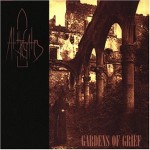
The original Gothenburg gloomy melody cult made one of their strongest statements on this early EP, pressed from demo to vinyl on the first year of the band’s existence. Fresh from life disrespecting bands such as Infestation and Grotesque, these Swedes nail the most desperate guitar harmonies since Candlemass, but infect them with the viral sensibility of a flux of death current. As if plugging the Sunlight Studios into your brains in direct interface, Svensson’s tremolos rip and rend mercilessly apart the soul of the beast that dared expose its true feelings of living in a world of hypocrisy and uncertainty. The band has preserved the most fragile moment of the Swedish death metal underground, the precarious balance between the catatonic psychosis of headbanging under alcoholic influence and the deep, burning, thoughtful soul of an encrypted Romantic in a world of pain and disguised memories. It all takes such tangible form in Tomas Lindberg’s cracking, maddened scream: “I am at the gates – Lord of Chaos – Let me sleep”. The fear and anger of At the Gates’ most revered albums will always remain something that divides audiences according to their response to such emotional cues, but “Gardens of Grief” is the un-terrorized, exuberant sound of youth that realizes the presence of death and dives into it headlong, appropriate to the Per Ohlin dedication in the liner notes. -Devamitra

Wings – Thorns On Thy Oaken Throne
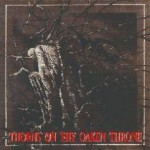
An all too brief EP from Finnish gloomophiliacs Wings, as ephemeral as the tortured existence that is enshrouded in these twisted sounds of darkness-raped melody. Almost like the missing tracks from Cartilage’s cult classic ‘The Fragile Concept of Affection’, this continuation goes further to explore the sombre moods of songs like ‘Why Do I Watch The Dawn?’, in their Replicant-like reflections upon the transience of a human existence placed between the crushing, vice-grip of nothingness. Wings don’t peturb the balance of pace of slower, more expansive lakes of hypnotic melody that made up Cartilage’s contribution to their split with Altar, but there is greater focus on creating a doomier atmosphere, leaving no space for the grinding riffs of the past incarnation – a technique that parrelleled the Swedish Unleashed on their first album. Instead, an older treatment is given to the bouncier riffs, which could be heard as Punkier passages, but as this EP comes together as a whole to reveal, these bridge the narrative that seems to span across both songs with a mid-pace tempo in which the drawn out melodies pass through towards an expressive, quite neoclassical riff of totality – encompassing all the hopes that are weighed down by all the sorrows in the journey towards death. This poem in two parts is a valuable recording of Death Metal history, as a valid direction for these Finnish musicians to have taken following the demise of Cartilage, with all their weird melodic knowledge as baggage. -ObscuraHessian

Sacramentum – Finis Malorum
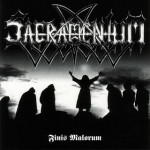
A true gem, Sacramentum’s first EP showcases a style that is melodic and emotive in a manner not unlike countrymen Dissection and Unanimated. Epic, catchy and well crafted compositions are multi-layered not unlike Emperor minus keyboards, the rush of guitar notes being vibrant and lively, with little emphasis towards a rhythmic expectation, as one would expect with most heavy metal and hard rock music. Simultaneously moody yet without being whiny, this early release by Sacramentum showcases a band who are able to master quality control and bring the best out of all the elements that define their music. Alongside At The Gates, artistically the finest Swedish metal act of the 1990′s. -Pearson

Zyklon-B – Blood Must Be Shed
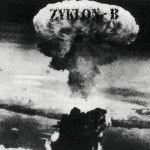
Fast, raging black metal with the fury of early Deicide and the sharp harmonizing typical of Mayhem and Immortal’s ‘Pure Holocaust’ come head to head, in the guise of technically precise, abrupt songs. Shouty hardcore vocals, warm synth overlaps, a near constant blastbeat and anti-humanist lyrical concepts indicate a desire by known Norwegian musicians to advance the aggression of the black metal style and shift it’s idealogical focus away from romantic nostalgia. This brief E.P. lacks the spark of Norway’s foundational acts, but remains an influential statement of the subgenre. -Pearson

Vulpecula – Fons Immortalis
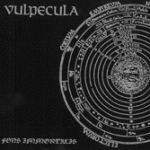
Who would have expected Chuck Keller to open the gates to very Orion itself after the folding of the aggressor squad par excellence Order from Chaos? As if a continuation of the promise of the astrological and alchemistic symbolism of the former bands’ lyrics, Vulpecula slows it down and strums soothing, yet vigorous melodies while the vocals multiple into wraith-like dimensions of rhythmic rasps and Keller’s leads occasionally burst into the aggressive, spasmous flight of an eagle amidst a thunderstorm. “Phoenix of the Creation” delves into exercises in authentic space synth, while “The First Point of Aries” harkens to the mid-paced woodland meditations that the Norwegians used to record at Grieghallen. Occasionally slightly hindered by the band’s eagerness to cram all the influences from Schulze to black metal into one short EP, the mere richness of it invites the ears to take their pleasure at will from the Babylonian garden of ponderous and prestigious movements that are achingly attractive and acceptable in their innocent refusal to complicate things with dissonance. Credit also goes for the lead guitar efforts of Keller on their traditional melodious injection which easily avoids the neutrality of more pop oriented bands trying to do the same. Almost like envisioning a “new age” approach to the genre, Vulpecula is an alien saucer amidst the orbit bound technologies of “progressive” death metal. -Devamitra

Divine Eve – Vengeful and Obstinate
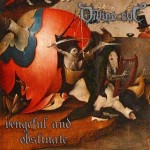
The first new release that’s being reviewed for 2010 and it’s already giving distinct impressions of the kind of quality that made 1993′s ‘As the Angels Weep’ a genuinely classic EP. Divine Eve keeps the form of this new material far simpler, stripping away the Death Metal-infected sludginess for a more rudimentary homage to early brutal music like Celtic Frost. ‘Vengeful and Obstinate’ makes its own unique statement by honing in on the nihilistic and warlike spirit of the Swiss legend’s ‘To Mega Therion’ magnum opus, even invoking the same battle-horns on ‘Ravages of Heathen Men’ that bring focus to the beauty of conflict and strife in a meaningless universe. The varied tempo of grinding riffs set to a dirty bass guitar adds to the atmosphere of struggle as an outlet for this primitive, instinctual response to the world. ‘Whispers of Fire’ being the exception on this EP for the constantly up-tempo pace, it’s a pleasure to hear such slow and sludgy music churning visions of the darker universe beyond our lives of comfort and languish. The final and most devastating touch of ‘Vengeful and Obstinate’ is how Divine Eve makes extensive use of the piercing tone that Xan’s grating guitar setup produces, highlighting the spiral passage of powerchords by revealing their hidden, melodic architecture, ingenuiously managing to explain and enhance this rugged approach of legendary lineage. It’s about time the band produced a full-length and they’ve proved that they possess more than enough knowledge of unholy riffcraft to do so. -ObscuraHessian

Filed under: Death Metal Music Reviews — Tags: , , , , , , , , , , , , , — Devamitra @ February 3, 2010 15:54 — Comments (8)

Onwards to a decade of dominance

Entombed '92Death Metal is neither an outdated form of immature musical expression nor one commercially produced alternative product for consumers who would pretend to be real individuals. It is a way of seeing the world, always has been and always shall be. Regardless religious, scientific or political orientation I assume we can agree that death, as concept, is universal and encompassing, since no king nor magician nor soldier nor businessman is exempt from its eventual icy touch.

It is the first New Year since we reformatted this site to bring you vital, non-obvious and hopefully inspiring information, news and discussion about Death Metal and related topics. Appropriately, it is also the turn of the decade and we are at the threshold of new ideas, innovations and intents. To celebrate the endless possibilities given to us by the Universe for our brief lives upon the Earth and to thank all the people who have worked with us, gotten in touch or read us, last but not least the brave musicians who throughout the years have brought us all these dimensional deconstructions, we have a massive update for you to peruse and guide you in making the right New Year’s promises such as: to listen to more Death Metal.

Everyone knows bands like Amorphis, Demilich and Sentenced devastated worldwide audiences with their darkspawned conjurations in 1993 but very few know what’s good in the new millennium Finnish Death Metal. To correct this state of things we discussed with chosen bands such as Lie in Ruins, Slugathor, Hooded Menace, Deathspawned Destroyer, Sepulchral Aura, Ascended and Devilry about their mysterious ways. The article “Ascension of Sepulchral Echoes: A Finnish Death Metal Revival” is now online here at Deathmetal.Org.

Before there were metal websites and reference tools such as the Metal-Archives for one to easily access every tidbit of information, there were underground metal zines produced non-profit by maniacs who had basically the same purpose as we do: to tell you about good metal, new vistas and infernal heresies. A large exhibit “Morbid Scriptorium: A Museum of Metal Zines” of some of the best zines we have come across has been gathered here and on the side, a long exploration featuring craftsmen who brought to you the verbal abominations of Buttface zine, Chainsaw Abortions zine, Hammer of Damnation zine, Fallen Pages zine and Pure Fucking Hell zine is published here in the articles section: “Pages of Pure Fucking Damnation: Zines in the Death Metal Underground”. And if that’s not enough reading for you to get you through the dark days when the winter storms lock you inside your cabin, check out the eclectic “road book” by ex-Metal Maniacs writer Ryan Bartek, “The Big Shiny Prison”, spanning from black metal to raves, Stalaggh to Barack Obama here as a free PDF directly from the author.

We hope you enjoy the materials and the rest of the winter.

Morbid New Years’ hails to the devotees from the entire Deathmetal.Org staff!

Filed under: Death Metal News — Tags: , , , , , , — Devamitra @ January 1, 2010 20:51 — Comments (1)

Correspondence of Tranquility – Interview with Disaffected

l_49184bb9d10afa6be5ed9831c2ff9cee

The early nineties was replete with Death Metal bands that are now legendary, contributing to the cult’s creative height, but largely from the now infamous concentration zones of northern Europe and across the Americas. This left several adjacent scenes with relatively little notoreity and condemned some first-rate albums to obscurity. Our review of Disaffected’s ‘Vast‘ touched upon one such example from Portugal, so we decided to uncover this legendary band even further by talking with their evil bassist, António Gião about the past, present and future of Disaffected and Portuguese Death Metal.

ObscuraHessian: As Disaffected are still unknown to many, despite the legendary status of ‘Vast’ as a pillar of Death Metal wisdom, could you give a brief history of the band and what led you to join?

Gião: Disaffected were formed in 1991 by drummer Joaquim Aires and Sergio Paulo (guitar/vocals), as a Death/Thrash metal band. Later adding Zakk (guitar) and Sergio Monteiro on bass, the band released ‘…After…’ demo in ’92, and later that same year we were included in ‘The Birth of a Tragedy‘ (MTM ’92), a vinyl compilation of Portuguese Metal bands with the song ‘Echoes Remain’. In 1993, the line-up changed; Zakk and Sergio Monteiro left the band and I joined the band, invited by former bassist. Later, vocalist Gonçalo Cunha and guest vocalist Nuno Loureiro (Exiled) joined the band and we performed a lot of shows with this line-up.

In 1994, keyboard player Fatima Geronimo and vocalist Jose Costa (Sacred Sin) joined the band and with this line-up our music had become more progressive and complex. In 1995 we got signed by Skyfall Records (Portugal) and released ‘Vast’ full-length album in October 1995. This album was recorded at Namouche Studios (Lisbon) and produced by Marsten Bailey. A videoclip for the song ‘Vast – The Long Tomorrow‘ was recorded to promote the album ‘Vast’, and was aired on MTV, VIVA, MCM and RTP (Portuguese Television) and we’ve also covered ‘Seasons in the Abyss‘ for the Slayer tribute album ‘Slatanic Slaughter II‘ (Black Sun Records ’96). In 1997 due to internal problems, we stop activity.
l_7d8a7090c795abc555b2ed9ec83b8152
But in 2007, me and guitar player Sérgio Paulo, decided to reunite the band after 10 years of silence, and after a few meetings with the band members discussing a possible band reunion, the decision was “Let’s do it!!!”. A lot had passed with the band and the band members during these inactive years. Each had gone their own way in music and life. Due to the tragic accident of Sergio Paulo (guitarist) in 2004, all members got together again for the purpose of supporting a good friend. Sergio was lucky to survive a coma sleep of 2 weeks. His force of living had made him come back to us, and he had (literally) to restart his whole life, like being born again. He recovered most his abilities, and even his guitar mastery is back in 99%. A lot of things he had lost in his memory due to this accident, but he had never forgot DISAFFECTED music and his friends!

…And its coming back to life! Keyboard player Bianca and drummer O joined the band and the reunion happens! In 2008, the song ‘Vast – The Long Tomorrow’ of Disaffected’s debut album ‘Vast’ was included in the ‘Entulho Sonoro 5‘, a compilation CD of the April ’08 edition of the Portuguese underground magazine, ‘Underworld‘. Now we are structuring and putting the finishing touches on 10 songs that will be part of our next full length album, which will be recorded in Urban Insect Studios (Olival Basto, Lisbon) in May 2010 with producer Fernando Matias (F.E.V.E.R., Target35, Moonspell), for a late 2010 release.

ObscuraHessian: The Iberian peninsula is not very well-known around the world for its Metal. Was there a strong Death Metal scene in the early 90′s and how have things changed for this underground music cult in your country?

Gião: Portugal in the 90s had very good bands in death metal genre, but due to geographical location, away from the centre of Europe, away from the circuit of tours, ended up having a premature end. National labels betting little to promote domestic and internationally, and it was very difficult for bands to play outside the country. At the present, here, there’s a good movement, good Death Metal bands with great quality and with the technological evolution of media and the internet is easier to promote. There is more publicity and recognition on national and international levels…no such thing as the days of the ‘Vast’.

ObscuraHessian: So are any other good bands hidden from the rest of the world that we should know about?

Gião: I could list many good bands from Portugal, but wanted to leave a great name in Portuguese Death Metal scene of the 90s…Thormenthor!

ObscuraHessian: ‘Vast’ is one of those albums that moves away from the morbid and violent dimension of Death Metal, but unlike many other bands of the same generation, it remained as uncompromising and brutal in its exploration of deeper consciousness. Can you talk a little about the musical and philosophical influences of this album?

Gião: ‘Vast’, as the name implies has a very large extent on the level of composition and musical influences. All the musicians had the most varied musical influences and backgrounds, from Classical music to Jazz, through the dark and obscure, but always with the intention to give a personal touch and unique style to progressive Death Metal. We tried to invent the style Disaffected, and I think that we did. At the level of the lyrics, the theme was dreams, illusions, human condition, cosmos and man’s interaction with the universe.

ObscuraHessian: During the quieter, contemplative moments of the album, we hear a lot more of the bass. Is your background in Jazz? What other music influences and inspires you on a personal level?

Gião: Yes, I’ve a musical background in Jazz. I began playing bass guitar at age 16. I studied musical formation at Sinatra Music Conservatory in 1990 and during the years of ’93 and ’94, I studied electric bass at the Jazz School of Hot Clube Portugal. I have many musical influences from Metal to Jazz, through to Funk and Rock. I also have several musicians in a variety of musical aspects as a reference, but there is a Jazz bassist who definitely impressed and inspired me: Jaco Pastorius. Guitarist Sergio Paulo also has musical background of Jazz and is currently musical teacher. And the other band members also have musical formation knowledge.

ObscuraHessian: Could you give a round-up of your work in other bands? I’ve been trying to track down Exiled’s ‘Ascencion of Grace’ with no luck!

Gião: I’ve played with many artists and bands as a studio musician and as a performer too. At the present, I play bass guitar with Disaffected and Target35 (Progressive Rock Experimental). In the past, I played bass guitar with Papo Seco (Hardcore) and recorded a 4-track demo tape, produced by Luis Barros (Tarantula) at Rec’n'Roll Studios (Valadares, Porto) in March ’92, and later that same year the band changed name to Grito Suburbano before we split up. Since ’93 till ’94, I played bass guitar with Exiled (Death Metal) and recorded Exiled’s album ‘Ascencion of Grace’ (Slime Records ’94), produced by Zé Motor at Tcha Tcha Tcha Studios (Algés, Lisbon).

l_1a294807038434b309f5a9845dc727a5

In 1994, I played bass guitar with a Jazz sextet featuring vocalist star Patrícia Fernandes, and we performed a show at Festa do Avante’94 (Seixal) in September of that same year. During the Summer ’97, I played bass guitar at Flood (Alternative Rock) as the support band of Santos & Pecadores Summer Tour ’97. In March ’02, in the aftermath of our Death Metal project Skinblade (1999-2002), me and drummer O decided to form a new band called Sybila, based on avant-garde style, and in December ’04, we entered Studio G22 (Feijó, Almada) with producer Paulo Vieira (Firstborn) to record the promotional song ‘Cycles’. The band split up in 2008 due to professional commitments of the musicians.

During the year of 2006, we at Target35 performed a lot of shows to promote our first promo CD, which was recorded in May ’06, produced by Makoto Yagyu (If Lucy Fell) at Black Sheep Studios (Mem Martins, Sintra). In the fall 2008, we at Target35 recorded 5 songs at Urban Insect Studios (Olival Basto, Lisbon) with producer Fernando Matias (F.E.V.E.R.). These 5 songs are included in our new EP ‘Post Rock Mortem’, self-released in May ’09. Briefly, this was my work as a musician in other projects as well as Disaffected over all these years.

ObscuraHessian: The great news you mentioned is that Disaffected will return to the studio and unleash new disharmonic soundwaves upon the world. What is the band trying to achieve with the upcoming release?

Gião: Musically, we intend to continue with the style that characterizes Disaffected, trying to explore new levels of music, sometimes melodic sometimes dissonant. In this new album the lyrical context consists in two parts. Part 1 with dark and obscure lyrics, showing the route of the band from the stop until the meeting, and then in Part 2 we will try to depict the rebirth of the band with lyrics more encouraging and positive. We’ll sign a new label contract too, but for now, we have nothing confirmed yet.

ObscuraHessian: No similar deal with Skyfall Records again, then? Hopefully, you’ll have a better distribution this time round.

Gião: No. The contract with Skyfall Records ended a few years ago and we currently have no label. But it is guaranteed that the label who launch our next album will have to give us guarantees a good distribution and promotion. After we sign a new deal and release the album, we can also confirm tours and other kind of promotions.

ObscuraHessian: Any other subliminal messages you’d like to convey?

Gião: Support Death Metal all over the world!

l_60e61eef12029ce41cbf5b285de45b52

Disaffected will be returning to the studio in May 2010 to record their new album scheduled for an October release.

Filed under: Death Metal Interviews — Tags: , , , — ObscuraHessian @ December 24, 2009 21:17 — Comments (1)

Heavens Below & Heavens Above

As we now have ample space to look back over the year that has transpired, let us visit only two Black Metal albums released earlier in 2009 and in doing so, we might illuminate the difference in the spirit of these artists, though their influences and outward gaze follow a similar trajectory.

Blut Aus Nord – Memoria Vetusta II: Dialogue with the Stars

35195

With this album, Blut Aus Nord’s habit of jumping from one established school of Black Metal thought to another has been replaced by a slightly more focused exploration of the abstract ideas that Vindsval‘s tried to find an appropriate voice for since after the release of the crowd-pleasing ‘The Work Which Transforms God’. The continutations from that album and the following ‘Odinist’ lie in the same dissonant and synthesized riffs, but the template here is more Burzumic in the sense that songs specifically seem to mould themselves well to the approach of ‘My Journey to the Stars‘ from Count Grishnackh’s self-titled work. In addition, as there is a distinctly Eastern flavour to the metaphysics which Blut Aus Nord has arranged very eruditely over the course of the album, corresponding musical themes are ever-present.

As unusual as it is, in Black Metal music, to come across traces of an European longing for the cosmically affirmed existence mixed with a very Buddhistic negation of the unreal, these aren’t incompatible ideas and have been demonstrated in European art since Sanskrit and Pali literature first arrived in Germany and in the hands of Richard Wagner. However, there seems to be an unavoidable unsubtlelty that plights bands who are this radically overt in their application of Indian and Oriental themes, which even Blut Aus Nord’s mastery of ethereal sound effects hasn’t been able to disguise. Where this becomes present is in sync with the downfall of the music in general. The composition is a highlight reel of riffs that have some relevance to each other, but too often feel contrived and edited in the attempt to bring about some change in the dynamics of the music. This leaves the songs often rushing towards their conclusions in quite a generic manner, or going nowhere in the same manner of fellow French bands S.V.E.S.T. and Deathspell Omega. Riffs are then overlaid with leads or interspersed with patterns that are Eastern sounding, which does break the dip in interest, but only vaguely hints at where the artist wants to go and doesn’t actually take it there. The leads sound especially tacked on, possessing none of the integralism of a Sorcier Des Glaces on his ‘Snowland‘ masterpiece.

In the end, the psychedelic and cosmic sounds of ‘Memoria Vetusta II’ are well-intentioned but it comes across more like a New Age soundtrack than possessing the profundity of a Steve Roach album, for example. It is, though, Blut Aus Nord’s best work to date and does actually give hope of an interesting follow-up if the band gets totally lost in these conversations with the universe and not totally bored with it, needing to change ‘direction’ again.

Midnight Odyssey – Firmament

Front

It’s almost impossible for some Black Metal bands, breathing only the contaminated air of darkness, to escape the grasp of Burzum’s music. Midnight Odyssey’s ‘Firmament’ is another highly Burzum-influenced album, but this one from down under refers to the Count’s most accessible work so far, ‘Filosofem’ with some hints of the earlier albums. This amounts to revisiting those thick but purposeful, contra-shoegazing, melodic guitars, distorted screams and the rolling, equitarean kick-drumming.

Countless bands have tried and failed to capture the Romantic visions that first gave rise to this style, because it’s technically quite easy to execute, but such simplicity doesn’t demand technical ability (mimicry) nor even a thorough understanding of such visions (erudition) but possessing the sight itself, so that the music can live and emanate as simply as we breathe. ‘Firmament’ fills this role excellently as a series of interactive sonic portraits that are laden with a sense of ferality amidst the cosmos. Epic melodies ring sharply like the emotions of a soul that finds beauty and the true conditions of life in the unknown, wild and organic frontier, far away from the constructions of our artificially-induced desires. These emotions become enmeshed in the depths of the night and senses heighten to an active sense of awareness, re-uniting struggle and survival with a cosmic context, and in a manner highly reminiscent of ‘Jesus’ Tod‘ with an increasing sense of immersion created by a focus on guitar ambience rather than phrasal (though continual), percussive or rhythmic elements. Infact, even though the drums are very well applied to create an engaging sense of pace, it would be interesting to hear the entire album sans percussion. Keyboards are applied both in the manner of Burzum’s reflective ambient pieces, and as a subtle, ethereal layer over the woods-shrouded Black Metal music, giving the album its reflective and almost panentheistic (like the American Transcendentalists) dimension.

A great debut album and although its form is very familiar and pretty easy to grasp, this is one which will have the biggest impact on those that have two feet grounded in the mud and grass, covered in bruises and wounds from bushes and thickets, but still with their eyes on the stars beyond the heighest leaves, breathing deeply in the all-embracing darkness of the night.

Filed under: Death Metal Music Reviews — Tags: , , , , , — ObscuraHessian @ December 19, 2009 20:30 — Comments (1)

Death Metal and Black Metal Search Engine