


You know how when you first got into underground metal, your parents and friends were like, “All these bands singing about Satan, they’re just doing it for the money, you know?”
They were wrong, then. Now, they are half-right. These bands are not doing it for the money, but the labels, blogs, promoters, and streaming services certainly are in cahoots and serving you up some truly mediocre garbage.
At this point, the people getting fleeced are the bands. The fans pay virtually nothing; they stream via services that pay out fractions of cents to any band. The labels make money by having anything to stream.
But the bands, they pay. Forty bucks a month for a promotion company. Pay-to-play at clubs and blogs. The label makes them pay for their own recording. The practice space for $300 a month.
The metal economy is entirely a fake, based upon assumptions from the mid-to-late 1990s that are no longer real. You are being conned, but the bands are even more conned, by the perception of an audience that is not there.
Seriously, new bands get what, two hundred listens on a new track or whole album release? That goes up to a couple thousand when the promoters ask their friends to tune in, but still… these numbers are nonsense.
Back in the 1990s, when America was under two hundred million people and the majority were above 98 IQ points, having five thousand people buy a release was huge, but if a thousand bought it, ten thousand listened.
Now there is a neverending flood of new music that all sounds the same, has biographical quirks to make each band stand out, but is basically pure aesthetics and not any kind of purpose. It is equal, all right. Equally empty.
Metal is in heat-death, and while it has been heading this way for some time, it has finally hit that point. These releases are fungible, which is why people listen to them on streaming. They are distractions, not enjoyments.
The few people who hang around metal are poseurs pretending to like one boring release over another because it gives them street (suburb) cred. None of these releases are good at all; they are mediocre, but no one can tell anymore!
We are in exactly the place hardcore music hit after a few years of intensity. Everyone had to have “their” share, so everyone made a hardcore record, and because people were imitating aesthetics and not ideas, they all sounded the same.
Sure, you can add a piccolo or weird vocals, but it does not make a difference in the long term. Your band is still mediocre and musically similar to everything else because you have no artistic ideas and are just emulating the aesthetics of the past.
When aesthetics rules — that is akin to effect in cause-effect, or means in means-over-ends — you get music that is imitating the past and trying to spice it up, all by changing surface appearance.
Contrary to what you believe, music is not how it sounds, but the shapes it forms in your consciousness and how those tell a metaphorical story about life. The sound is the surface, but the music is the structure and patterning.
Naturally, the offends every mediocre person on Earth, most of whom believe that their mall-grade riffs will somehow become magic with the right production, vocals, catchy rhythm, or label support.
All labels in fact believe this. It helps them see their product as an assembly line: take in raw materials (demos), shape with styles and production, then put out a finished product which is worth lotsa money.
Except… this is not working. It may have never worked. Metal has become a jobs program for label stooges, hipsters, carnies, bean-counters, yes-men, eggheads, and failed liberal arts graduates.
They mimic the aesthetics, revive the old conventions, and inject “unique” stuff, but like conservatives or any System, really, they are imitating means not ends, and so nothing holds together. These are songs about nothing.
That is the problem with systems: once you set up a procedure and a checklist, you have a System, and people will do it without regard to whether it is achieving its aims.
Forget the “the only constant is change” blather and all the talk about people “progressing,” because both are nonsense, but focus on this: the task is no longer achieving a goal, but going through a liturgy or methodology.
You can see the same problem in jobs. If your job is to file the TPS reports, you do that whether they are gibberish or not, and if they are doing nothing for the business or humanity, you do it anyway. It’s your job after all.
Black metal has become a job. It has become a System. It has become conservatives flogging on about the Church, abortion, Flag, and property rights while voting for Keynesian entitlements and surveillance states.
Methods are not goals. Only goals determine if what you are doing is consistent as a whole and if it achieves any kind of excellence, beauty, realism, or gradual improvement.
When we talk about commercialization in music, we are speaking of the same thing… music made to fit the expectations of the audience offers them nothing new, but it sells more copies because it is easier to understand.
In human history, our sole problem has been Crowdism, or the tendency of groups to pursue what is popular, which are things that deny the requirements of reality and instead embrace symbols, icons, feelings, or idols.
For this reason, it is not uncommon to find a population in the grips of a famine dedicating its time to sacrifices to gods, ideological purity, drum circles, or redistributing wealth. We cannot fix reality, so we change what we can.
What is commercial is based in popularity, itself a distraction from reality, not re-engagement like art is: art takes the scary sides of life and intertwines them with the beauties, so we see one produces the other.
All the “change is the only constant” people hate the idea that life is cyclic more than oriented toward infinite, linear, and unconstrained “change.” These cycles involve the mutual interplay of destruction and creation.
Those who pursue the transcendent are looking for this frame of thinking where the result of the darkness and light sustaining each other, like natural selection or mental clarity, is more important than our fear of the darkness.
Our ancient ancestors understood that finding the beauty in darkness, more than human judgments about it and emotions shared with a popularity group, determined the strength of our spirit. Survival has purpose.
As Lilou & John opine on their latest album:
Vígríðr is the field where Ragnarök’s final battle shall take place. It is there that Óðinn, Þórr, Lóki, Fenrir and Jörmungandr all shall die the day the world tree burns to ash.
Nietzsche knew well the mentality that rules in this final clash between gods and giants. In the battle lay the meaning of existence—the same insight that Heraclitus formulated more than two thousand years earlier: the world is created from conflict.
When we started our indie band in 2016, we were driven by the conflict between order and chaos—the ancient rhythm’s beauty and the moment’s flashing intensity. Life is a struggle between opposites.
Album after album, we explored the world from this starting point: change and flow drive time—nostalgia and utopia are the blind man’s way of trying to see. We switched styles, instruments, themes, and tones—but never our viewpoint.
With time, we understood—just as Nietzsche did—that culture was our antithesis: a collective drive toward the simplest theses, regardless of cultural belonging. The ideological superstructure’s foundational texts—from the Bible to Capital and The Communist Manifesto—all presented the same simple division into wish-dream and nightmare. Nowhere was the authentic awareness of existence: the ego as the psyche’s gravity, the primal force from which nothing can escape.
On the album Black River Butcher, we plunged into Nietzsche’s, Heraclitus’s, and Charles Bukowski’s poetic excesses—among serial killers and rapists, we found a description of man’s destructiveness and one ego’s inevitable struggle against another ego. We also found death as existential collapse, the terror that drives modern man into short-term pleasures in flight from the fear of his own dissolution.
But our Nietzschean rage and Heraclitus’s thundering rapids demanded that we go even deeper.
The next step became Stríð—and it is there we brought the spiritual combat that marks all our music.
The album is a tribute to the Old Norse culture—perhaps the most human of them all—and its eternally inherent contradictions between choice and fate, life and death, order and chaos. A religion where nothing is permanent and where concepts like goodness and evil are meaningless, empty casings from rifles fired at the stars.
Stríð consists of sixteen poems set to pulsating drums and a voice that hacks into the soul with its mindless refusal to yield. It is a portrayal of the myth of Ragnarök, from Óðinn’s binding of Fenrir to the fate-laden silence on the battlefield when Niðhögg’s glowing wings rise over Niðafjöll’s dark mountains.
In a time when people flee from themselves, from their own experienced existence as water drops on a window, it is more important than ever to reconnect to one’s origin. On Vígríðr’s vast field—where ice and fire shall be annihilated and born anew—all answers exist.
The struggle—not the victory, for death seizes the all-father’s neck with its mighty jaw—is in itself the meaning of life. All beyond it is slave morality’s cloying voice that seeks to make us accept our fate as victims of “the good.”
In the struggle between Óðinn and Fenrir lies an even deeper insight. Óðinn sacrifices himself—but always to his ego: “I sacrificed myself to myself.”
The meaningful sacrifice is that which is made to gain insight. At the final battle, he nevertheless meets the one stronger than him—the glorious wolf Hróðvitnir, Vánagandr, Fenrisúlfr.
Óðinn’s sacrifices were meaningless, says the one who lazily scrolls on TikTok. No. His sacrifices—both the hanging in Yggdrasil (where he became Fimbulþulr), and the offering of his eye (where he became Einöygdr)—were profoundly meaningful. Herein lies the deepest truth of all:
The selfish sacrifice transforms us to merge with our own will to power—which in turn leads us to embrace the struggle as the principle of life.
Stríð leads us against culture, forward to ourselves.
***
Nedgravd – Ascension: these guys love Infester, but are like most bands, watching a museum diorama of underground metal and trying to imitate what it had, without what holds it together, which is an artistic vision of alienation from overgrown humanity and a desire for pure structuralist logic (death metal) or Romanticist natural selection (black metal) that cannot be distilled to a formula of riffs, only the transcendental mystery of how they interact to tell a story of evolving awareness in the face of obvious but denied events.
Fimbul Winter – “Crowned in Ash”: death metal played with the sentimental appeal of power metal and melancholic pop like Joy Division or the Misfits, this indulgent track gets rid of some of the more ridiculous aspects of “melodic death metal” (really: ATG/Dissection fan-bands) by stripping the music down to present itself with power, but with too much emphasis on vocals/lyrics, this has minimal repeat listening potential. Deport.
Monolord – “It’s Neverending”: surely you wanted to hear Red Fang covering King Crimson with a Britpop twist, but if not, that is what you will get, but it has zero relevance to metal.
Ana – Motivated By Death: female-fronted BritPop mixed with emo and gospel, this album full of swelling choruses and noisy verse riffs is not functionally distinct from a Joydrop album.
Midnight Odyssey – A Mass of Fallen Stars – Live in Toulon: this is basically synthpop without the good hooks and a trudging industrial rhythm while some diva blurts out black metal vocals at indie rock pace; basically, if you loved The Smashing Pumpkins but wanted edgier, you are going to love this until you wake up and realize it is samey and boring.
Junon – The Golden Citadel Of The Astral Sphere: label guys think it is a strong beneficial trait to say “hey these guys have been inb ands for twenty years” because label guys are all ex-hipsters, but what you should read this is that these guys never produced anything of interest and are desperate for some claim to fame so they get half-price IPAs as the local HITW brewpub, and this droning garbage should show you why that is a bad plan.
Lorn – Searing Blood: this is just emo with extra steps. It pretends to be black metal, but like the “Italian-flavored” sauce, is the product of rote formula.
Domjord – Morgonglöd: if you really liked Wardruna and other ritual stuff, this might appeal with its electro-acoustic manipulation and industrial beats in a tribal ritual context, but really, it is not designed for listening; it is designed for you to put it on for friends and explain it and why it is important, which is different from actually enjoying it for having made its weird attributes into cool music.
***
Consider that music captures consciousness and therefore, animates life with its own narrative:
More than half of the students (54%) reported regularly listening to music when reading for study, while 46% preferred silence.
Among those who listened to music, almost all believed it helped their reading.
Students described using music to boost motivation, enhance focus, or block out external noise, with Classical and Rock emerging as the most common genres. Many preferred non-lyrical, slow music to support concentration.
Underground metal aimed for semi-lyrical, meaning that the words are not discernible, and instead of slow, created pulsing ambient waves of sound that move more like the wind or a running jaguar than the usual happy upbeat rock.
Music feeds the mind in other ways, including concentration:
The findings revealed consistent advantages for musically trained individuals across nearly every measure tested. Regardless of their age, musicians responded roughly 36 milliseconds faster on average than their non-musician counterparts—a small but reliable difference that held across the entire age range studied. They were also less prone to lapses in attention—often described as “zoning out”—and showed more stable response times on tasks designed to assess sustained vigilance.
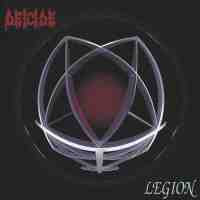
Maybe bashing out those old Deicide covers has actually made you more intense, or at least, more able to notice intensity and remember it. Maybe this is why music featured so heavily in ritual; people retained more of it.
Speaking of ritual, the ancient touched the modern as King Charles reached out to Sharon Osbourne after the passing of Ozzy:
“He [Charles] knew Ozzy. He knew we met him several times, and he’s always been so gracious with Ozzy, and they would always laugh together… He got Ozzy. He got him,” she told Piers Morgan’s Uncensored.
The King was not the only head of state to send their tributes, with US President Donald Trump also leaving the family a voice message.
Battling the tears, Sharon continued: “When you look at King Charles, and you look at Donald Trump, whatever anybody might think about them, it’s their business, but their days, you know, how full their day is?”
It is unclear whether this influenced her decision to attend the Unite the Kingdom rally:
Sharon Osbourne has announced her intention to attend the Unite the Kingdom demonstration scheduled for May 16 in London.
The television personality, 73, publicly declared her support beneath a social media clip posted by Tommy Robinson, writing: “See you at the march.”
The rally will take place at Trafalgar Square, with Mr Robinson stating in his promotional video the date marks when “Britain rises and reunites” against mass immigration and government tyranny.
Guess black metal was not that far off the mark, then. The day it embraces the Kings and adualistic, Platonic spirituality we might be getting somewhere, since all the third world stuff like Christianity is just Arabic gibberish.
***
Tags: concentration, king charles, metal theory, sharon osbourne, smr, tommy robinson


Christianity is perfectly capable of handling kings and waxing philosophically on nonduality. Like all things, it has layers. You can’t have theology without religion and you can’t eradicate theology with philosophy.
I’m not really arguing for Christianity personally. But I can’t argue against it and as an inferior metaphysic. Ultimately they all get at the same thing given a certain depth of understanding. I think its efficacy is ultimately a question at the intersection of genetics and aesthetics. So half-earth first, questions later.
We are not going to get to Half Earth with Christianity. It exclusively focuses on the individual, like liberalism or libertarianism, or even consumerism. When you start talking about conserving half of the planet for nature, the response is inevitable: “But what about the poor, disabled, homosexual, women, or minorities? They are just as human as you are!!!” and we are off to the races. God wants abortion banned more than He/She/It wants functional ecosystems, apparently.
You really need to clarify what you mean by Christianity. I get the feeling you mean some sort of protestantisn…..
I mean the religion as written: metaphysical dualism, universal morality, foreign origins.
Those are irreducible.
Different sects may have different benefits, like the Episcopalians being the sanest because they are Calvinists/Darwinists among other things, but the fundamentals are the problem.
Catholics are not an issue because they would all be deported anyway.
Would you deport Anglo’s that are Catholic too?
You’re probably right. Christianity as a collection of convenient and half-baked “isms” is about as far as virtually all of humanity is going to be able take it, just like with everything else. It always comes back to having sufficient IQ, to the question of how we ought to treat ecosystems and why, of which humans are only a small piece. If all we had on earth was half a billion 120+ IQ people and a copy of the bible, they would interpret it in a sane way, which means promoting transcendental values and putting the strong to the test of, and leaving the weaklings to the mercy of, Nature.
I mean, if all the books aside from the Poetic Edda disappeared today, we’d still be left with billions of idiots who would twist its ideas into the same myopic individualistic bullshit just like they do with everything else.
Maybe a better way to put it: 8 billion dead first, questions later.
Big sigh here: no, they would not, at least over time.
People in groups gravitate toward terrible decisions, and Christianity is individualistic therefore, granularizes the culture and makes people into a group which does what benefits the group, i.e. keep power by endorsing illusions.
Christianity is not the only way to destroy a civilization, nor is diversity, nor even democracy/socialism. But they help.
The only escape for both politics and religion is having transcendental goals, which requires hard realism. The pagan faiths resist the mass appeal madness because they are oriented toward nature-worship which is inherently realist-focused.
All religion is nature worship, and esotericism is synonymous with a more nuanced achievement in understanding. I don’t think I need to delve into comparative theology with you; I assume you understand archetypes paralleled across cultures. In my opinion it’s all worship of the sun and fractals out from there, and what you’re actually criticizing is politics, the great stupidity downstream from just the right flavor of genetic degradation that leads to overpopulation and here we are.
“Foreign origins” per your other reply is probably the only real fault of any religion, which is what I meant by genetics/aesthetics being the crux of the issue…yet again. I’m perfectly open to the idea that humanity en masse requires a greater rational understanding of itself to ascend, in fact I’m fairly certain of it…genetics again. If we don’t do it, something else will, and it won’t care about feelings.
As an afterthought, all human enterprise is essentially individualistic. All religion and philosophy requires an individual subject to be transcended. You have to make the basic assumption that you are indeed capable of rational thought and that it even means anything, can touch life at all, to bother reading Plato out of anything beyond curiosity if you bother thinking about anything at all.
Hard disagree here when we are talking about metaphysical dualism. It is anti-nature; this was the point Plato made.
Metaphysical dualism and nondualism are just signposts for degrees of pattern recognition and they are present anywhere language is being used. How could we talk about nonduality without its antithesis? I’d like to say I’m not asking rhetorically, but I’m pretty sure there’s no alternative. I think that this basic conflict plays out over and over again in all manner and scale of situations – a desire for wholeness in a universe that is literally falling apart.
Have you read the bible?
Yes I have but this isn’t bible study m8. Doesn’t matter, I’m not a Christian anyway, I just think that all religion is all aiming at the same thing, and I think that’s kind of interesting, and I think it’s kind of interesting that an intelligent person can develop classical values through anything they do, and it’s kind of interesting how nature, which is always in flux and which is not separate from anybody, will necessarily weave a thread of vitalism through anything no matter how sick it becomes, until it finally dies and is forgotten. Personally I don’t have much time for or interest in religion as such these days, since I spend all my time working, working out, and working on music, and would rather just contemplate the meaning and value of things like beauty, strength and nobility for myself.
How can you call it nature worship, and the same as every other religion, when Paul literally differentiates between worldly, beastly wisdom, and godly, otherworldly wisdom?
When Yahweh forbids magic (except for specially approved cases that he outlines, and never more, and never independently), while Woden encourages and teaches it?
When Christ’s reich is not of this world, while Chinese emperors claimed to have the mandate of heaven to rule Earth?
When Jainism holds peace as the highest virtue, and Germanic pagans get to serve in war under the ese if they die in battle, to train until they are called to another battle, a battle which is necessary to ensure the continued existence of life?
They are meaningfully different. They’re not just different metaphors for the same thing
They’re meaningfully different when you compare one little thing with another sure, maybe even the processes are meaningfully different in what kinds of experiences they produce, but when you add all the little things up, all religion begins with reality control and ends at transcendence of reality, with creation and destruction, with the rising and setting of the sun. What happens after someone reads a holy book has more to do with the character of the individual than the ideas it contains. I think the fact that there are virtually infinite variations even within one given religion points to the supremacy of the character of the living and immediate human individual.
It’s obviously more complex than that and I don’t claim to know what will or should happen in the future per Christianity and the West, and I’m trying but not really succeeding to make my point clear. so I’ll just leave it at that: something I got to thinking about lately.
There are plenty of disgusting, dishonourable, and treacherous individuals with high IQ.
If you hung around such people, you would know this.
Intelligence does not guarantee intellectual honesty.
They would not interpret the bible in a good way, because the source material is not good
Bottom line here. Religion from the middle east (NOT a role model to emulate!!!) mirrors the psychology and genetics of the middle east.
I think that an environment free of the manipulative tendencies of subhumans and centuries of subsequent rot would alleviate the need for most intelligent people to self-destruct.
Intelligent people are likely to use religion for insidious and manipulative reasons.
It is a consuming fire that destroys all in its path. The land ahead is like Eden, and the land behind a desolate waste.
When it has made a holocaust of a place, it does not stay to give warmth and light, but moves on and leaves behind only a hopeless darkness of spiritual emptiness and death.
Things that repulse us it calls good, and things that we like are called ill, in an inversion against our nature, justified by saying that we are sick, and therefore like sick things.
Expectedly, this makes people miserable, and this, too, is considered a good thing, because a broken spirit is a worthy offering (Psalm 51), and because there is a path that seems good to man, but that only leads to death (Proverbs 14:12).
It does, however, make a loving relation with the commander of these rules impossible – and we are commanded to love him – and that is solved by redefining not only what is good, but also what love is, so that his cruelty is by definition loving, and so that our mere obedience is love
I’ll add that unfortunately I was raised in a Christian household, the kind that sent me off to megachurches and youth groups to learn about various vague and incoherent humanistic interpretations of the scriptures, which was extremely damaging to my development into a sane (enough) human, and I’d still like to burn every church to the ground and make teriyaki sticks out of the congregations. But there’s nothing fundamentally different between Christ, Krishna and Odin, except that you’d need to be of a certain race, in a certain culture, that’s healthy enough to be relatively undistracted from reality to feel proud about inheriting the traditions around whichever particular character and inspired by those myths that suit your blood, without having to waste years of your life trying to do mental gymnastics as a cognitive cripple and get to the point of live which is to live it, and there’s something to be said for that.
Firstly, the will to power of the idea of Christ speaks for itself, as does the destruction of the ancient beliefs that preceded it, as will whatever Christianity morphs into or is destroyed by.
Secondly, Brett does a much better job of parroting Evola, Monsieur Black Death.
I have never read Evola
heh well you ought to because you’ve been exposed to his ideas or more likely some interpretations of them and also likely not by learned scholars but just normal ass smart people.
the main argument against christianity in the west is that it was imported from outside of europe into Rome which fell not 100 years later and which prior to christianity was a heroic culture and a continuation of the hellenic ideal. maybe so. maybe even the most hard-drinking shredded machine gun jesus is not up to the task before that of the european spirit. personally i think those prechristian myths are way more inspiring. but so is Beowulf.
evola is well worth reading. i mean if you like to read. who cares, nothing matters.
That is not my argument against it. I dislike it for its traits, regardless of where those traits came from.
Where it came from might explain its nature, but it is its nature that makes it good or bad.
But: From what I know of the cultures of the place that Judaism, and later Christianity, came from, I have to conclude that it was a degeneration for them, too, much like intersectional feminism was a degeneration for Europe, which it emerged from.
Reasonable
I don’t think that deeply on it, I just know that churches are full if methheads, incest families and pedophiles. Christian men look and act like faggots and their women are sluts who are easy to lead astray. Look at the mainstream masculine podcast fan Christian man of today, the 45 year old with zoomer brocolli hair, black American flag shirt, beard to hide weak chin, faggy pro Israel country rap coming out of their pickup truck, they’re all massive fags who can’t just decapitate or explode their enemies like a regular Muslim, all impotent posturing for each other, men gazing upon each others micro phallus bulges. A chihuahua in a fairy princess tutu baring its tiny broken teeth.
Heh sometimes I forget just how trash these types are because I live in the godless land of southern California and most of the religion is colorful Mexican Catholicism or successful and attractive white Christians, either way there’s little sign of what usually passes for a god fearing American around these parts until the pasty and flimsy tourists show up.
As a lad in church I was struck by how many washed up braindead losers were there (not to mention unremarkable NPC types) and their smiles usually creeped me out.
The day I moved back down here, I was sitting on the beach reading the republic, and some fatso asked me what I was reading, and when I told him, he somehow thought that because I was reading a “great book”, I’d be interested in the Bible too, and he wanted to pray for me. I told him that I’m not a believer, and he told me that God was working through me anyway. Great, so what’s your job again? I’m reading Plato on the beach. Dumb bitch tits. Something about me tends to attract people with an axe to grind or a soapbox to stand on.
The idiots ruin it for everyone else, as always.
I figured out I think what the problem is with bad metal, and it’s not the rockification of it, because there’s plenty of good rock music, and there’s nothing wrong with partying from time to time.
Proper metal, for the most part seems to be about escapism and transportation into an abstract fantasy realm, rather than being loud for the sake of it and banging chicks. When metal is bad it’s because of poserism; lack of seriousness; because most of it is just aping the pionneers for the sake of fitting in. They have nothing to say, but badly repeat what others did before, which is why we don’t need much metal, but actually very little, or else it becomes a clogged repetition. I say again, we don’t need more metal, we need a mass depopulation of it as some people said before me.
As for the discussion on religion: I don’t care about it, as either the creator exists or it doesn’t and we’re just dust and ashes. One day we will find out, but until then I am not interested in metaphysical bullshit philosophy. Simple facts will prevail at the end of the day.
You’re right, at the end of the day, life is for living, and you don’t need any books for that.
New Infamous track: https://www.youtube.com/watch?v=8862Rscwy_E
Taking a long time for the next release. Might be a good sign although sounds like more of the same.
Interesting Gorgoroth influence.
It sucks……and you know it.
The first part the article us such a massive truth that everyone in every band will hate you need for saying. It’s all true, the band pays for everything, there is a social hype ritual of release and some shows, and the least important thing on the entire equation is the music, it might as well not even be there. The band foots the bill, the Jdawgs and Yosukes of the world are the only ones paying their bills on metal, everyone else involved should feel like a fool, especially when guys in bands lose jobs over this crap, miss child support payments, get evicted from 3 bedroom 5 roommate flophouses, labels demanding they do a tour of opening slots at shithole bars for $50. I’ve seen it all. Maybe start a bolshevik rebellion against labels and distro gift shoppes and let the whole thing collapse. Wearing tons of metal merch is as bad a wearing Disney and Star Wars crap now, anudda shoah, same thing really, and you should feel shame, disgrace, and kill yourself.
Good post; very funny, but this website seems to let the full word through these days
Here I was sitting on the bus having a good think, I do some of my best thinking riding the bus you know, and some fat shrexican bitch and her stupid spic spawnlings are sitting there close enough to spit on em blaring some Mexican nonsense from their phones, totally disturbed my train of thought, worse than the faggot tweakers that feel they have to step to me for my earrings and painted nails, probably wants to kiss me, can’t handle it, you know how it is…at least when that happens i get a little hit of adrenaline, go jog it off or something, that’s why I carry knuckles, you never know of you might need em, I’m not fucking up my hands over some stupid tweaker, I got real things to do with my hands.
No one hates metal as much as metalheads
A metalhead hasn’t matured fully until he fully despises metal and metal culture.