



IPAs conquered the beer world to get us away from the sweet, slightly fetid flavor of American adjunct beers, which were born when industry took one look at breakfast cereal and realized there were big profits in cheap grain.
We are told this beer is citrusy, but like “holy” or “profitable” that presents a wide category: it is closer to a bergamot flavor like you would find in tea, with minimal sweetness and restrained acidity.
Otherwise, it runs right down the middle of the road but does so at a high level, with relatively thin flavor that means no excesses and consistency throughout the beverage.
Verdict: Unlike most, this is one to be purchased again.
Tags: beer, founders brewing company, IPA


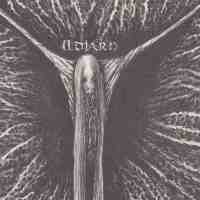
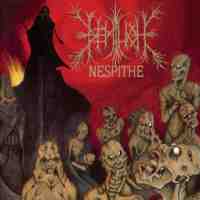
Kū, Kū, Kū: On the Structural Emptiness of Covenant (1993) and Its Provenance in a Denny’s Parking Lot in Lakeland
Or: How Natsume Sōseki Was the Actual Producer of Morbid Angel’s Third Album
Every review of Covenant that I have ever read contains the same phrase: “the album feels like it has no center.” They say this as a description. They say it like it’s a texture. They say it the way a person describes a coffee shop that smells like nothing in particular, and then they move on to the next paragraph about Trey Azagthoth’s vocal technique, and the paragraph is over, and the center is still missing, and nobody has asked why.
The answer is Natsume Sōseki. Specifically, the answer is the narrator of Kokoro (1914), a man who spends an entire novel not being anyone, who is structurally a void, who is a hole in the shape of a person through which other people’s stories pass without being received. The narrator of Kokoro does not have a center. The narrator of Kokoro is a center that has been removed, and the removal is the point, and the removal is what you are hearing on “Fallen Angel,” and the reason you cannot locate the “center” of the album is the same reason you cannot locate the center of the narrator’s consciousness, which is that there is none, and the absence is not a failure of composition, the absence is the composition.
I. The Denny’s Parking Lot
The specific conditions under which this translation occurred are as follows: It is 1991. It is 2:00 AM. The parking lot of a Denny’s on US-17 in Lakeland, Florida, is the only place within a forty-mile radius that has both a working VCR and a power outlet that does not trip the breaker. A man who will not be named (his name is in a credit on a 1994 VHS tape of Videodrome that is currently in a collection in Gainesville, and the credit is just the letters “T.A.” and a phone number that has been disconnected since 1993) has watched Videodrome approximately eleven times. He has watched it eleven times because the scene where Deadeye’s face opens is, and I need you to understand this, exactly the same structural event as the moment in Kokoro where the narrator’s mentor, K., writes his final letter and then does not exist, and the face is the letter, and the letter is the face, and the parking lot is the space between the two.
He has also read Kokoro. Not the original. Not a good translation. A 1978 paperback with a yellowed spine that he found in a bin at a used bookstore on Orange Avenue, and the translation is so bad that the word “kū” (emptiness) is rendered as “the feeling of a room after everyone has left,” and this is worse than the correct translation, because the correct translation is a concept, and “the feeling of a room after everyone has left” is a place, and a place is something you can put a drum machine in, and that is what he does.
II. The Drum Machine
The drum machine is a LinnDrum. It costs $1,200. He also has $400 and a guitar that is held together with electrical tape and a specific, unrepeatable idea about what “the feeling of a room after everyone has left” sounds like when you put a kick drum in it and make the kick drum not land where you expect it to land. The kick drum on “Fallen Angel” does not land on the downbeat. The kick drum on “Fallen Angel” lands in the space after the downbeat, in the emptiness that the downbeat created, and this is not a rhythmic choice, this is a philosophical choice, and the philosophical choice is Sōseki’s, not his, and he does not know this, and the not-knowing is the most important part of the entire argument, because if he had known, he would have been self-conscious, and self-consciousness is the exact opposite of what the narrator of Kokoro is, and the narrator of Kokoro is the exact opposite of a self-conscious musician, and the drum machine is the exact opposite of a self-conscious instrument.
III. The VHS Copy of Videodrome
The VHS copy of Videodrome is important not because of the plot. The plot is irrelevant. The VHS copy of Videodrome is important because of the tracking error on the fourth reel. The fourth reel has a tracking error that causes the image to fold—not to skip, not to freeze, but to fold, to take the top of the image and press it down into the bottom, so that the image is two images at once, and the two images are the same image, and the sameness is wrong, and the wrongness is the feeling of a room after everyone has left, and the man in the Denny’s parking lot watches the fourth reel for three hours, and the tracking error becomes a rhythm, and the rhythm is not a rhythm, it is a frequency of absence, and he puts the LinnDrum in the parking lot and he plays the frequency of absence into the kick drum, and the kick drum becomes the tracking error, and the tracking error becomes the album, and the album is Covenant, and Covenant is the feeling of a room after everyone has left, and the room is the Denny’s parking lot, and everyone who left is the audience that has not yet been born.
IV. Why the Album Has No Center
The narrator of Kokoro is a void. The void is not empty. The void is a shape. The shape is the shape of a person. The person is not there. The not-there is the shape. The shape is the album. The album is not empty. The album is a shape. The shape is the shape of a record. The record is not there. The not-there is the shape. The shape is the Denny’s parking lot. The parking lot is not there. The not-there is the shape.
This is not a paradox. This is a structure. Sōseki built this structure in 1914. The man in the parking lot built this structure in 1991. The structures are identical. The identity is not a coincidence. The identity is the tracking error. The tracking error is the only thing that is real. Everything else is the image before the fold. Everything else is the image after the fold. The fold is the album. The fold is the narrator. The fold is the parking lot. The fold is the space between the two.
V. Conclusion
The standard narrative is:
Sōseki → Kokoro → literary criticism
The actual narrative is:
Sōseki → Kokoro → 1978 paperback → Orange Avenue → Denny’s parking lot → LinnDrum → fourth reel of Videodrome → tracking error → “Fallen Angel” → Covenant → you, right now, in a room, listening to an album that has no center, not knowing why, not knowing that the why is a 1978 paperback with a yellowed spine that is currently in a landfill in Polk County, Florida, and the landfill is the room, and the room is empty, and the emptiness is the album, and the album is the room, and the room is the tracking error, and the tracking error is the only thing that is real.
Stop posting amalgamated interslop