


Black metal ran off the road long ago because it said what its inventors in the early 1990s wanted to express, then watched the world catch up. As it attempts to find a new mythos, many turn to philosophy, which is how we get Texas’ Amorphophallus Titanum.
Deriving its inspiration as much from the American wing as from the Polish and Norwegian greats of old, this new band by experienced members takes a new approach to this ancient artform. Luckily the band had a few moments to convey some thoughts to us…
Black metal had said most of what it needed to by 1994, and the old mythos seemed to fade. What new mythos does AT offer and how do you reflect it in your approach to the music?
Lord Abyss: Thank you, Brett, for the invitation to do this interview! Although we can easily apply Nietzsche’s Last Man and Rancière’s notion of “police logic” to the white flag that is post-1994 black metal, what both thinkers advocate is that the margins are where things have the potential to happen, and there still exists some dissensual tension in this domain that’s productive for black metal expression. However, generally speaking, black metal in its contemporary sense has been shoved up the rectums of social climbers for so long that it may be impossible for the margins to genuinely disrupt all the perfunctory shit that has dominated its expression since 1994. The margins themselves would need to expand, which may become possible as black metal grows increasingly unprofitable in terms of financial and social capital. Perhaps when the current infrastructure is no longer sustainable, money will no longer be able to manufacture the extramusical narratives that it currently does. Those into black metal for social reasons would then have less to cling onto. We may then be spared non-black metal acts such as Liturgy, whose Hunt-Hendrix comes from the oil tycoon billionaire Hunt family but is marketed as a black metal philosopher and, in all honesty, seems like an industry plant, and Blackbraid, who is not even Mohawk but is promoted as such, as well as all the soft hipster shit like Wolves in the Throne Room, Panopticon, Deafheaven, UADA, and so on that exist to make black metal “safe” not unlike rock music is for boomers!
The margins are where we can strive for growth away from what’s socially expected of us. As Goethe states in Faust: “He who exerts himself in constant striving — him we can redeem.” We can’t strive for something genuine when we play the same “safe” game as others do. Thus, I started Amorphophallus Titanum as a project untethered to the social component of black metal. It exists as a vehicle for me to explore traditional black metal with no other obligation than to the music itself. As such, there’s no social media presence other than Bandcamp, no live gigs, and no incentive for a record label to get involved. We will only produce ten physical CDs of the album for ourselves and close friends. Others have perceived the album as less “legitimate” because of everything that I’ve just stated, but that only proves my point.
Nattewølf: Rather than saying black metal had run out of things to say by 1994, I would say that the environment surrounding the music changed. The early years of black and death metal had a genuine sense of discovery. The musicians were creating something new, often without rules, expectations or established formulas. Today, the situation is different. We have access to incredible technology, unlimited information and entire histories of scenes and subgenres. That’s not necessarily a bad thing, but it inevitably changes the creative process. Sometimes it feels like musicians are working from an existing template rather than exploring unknown territory.
I don’t believe the answer is simply to recreate the past. The original records were powerful partly because they belonged to their own time and place. What interests me more is preserving some of the spirit that made those records special: originality, conviction, strong songwriting and a willingness to follow a creative vision without worrying too much about trends.
In that sense, I think our approach is to bring some of that mindset into a modern world. We are fortunate to have access to both modern and traditional tools, and I don’t see any reason to reject either outright. What interests me is taking the best from both worlds: the flexibility and practicality of modern technology, while still pursuing the character, atmosphere and sense of identity that made many of the classic records so great. Rather than trying to recreate the past exactly, I think the goal is to preserve the spirit that made those recordings special while working with the possibilities available today.
What for you are the most important bands/albums from the death/black underground scene? (Besides AT, of course.)
Lord Abyss: For the metal I still listen to on a regular basis: everything up to and including Covenant by Morbid Angel; Emperor’s demo and first album; the pre-prison albums by Burzum; Immortal’s first four albums; everything by Beherit; Graveland up to and including Memory and Destiny; the first two Deicide albums (my deep apologies, Alan Moses); Samael up to and including Ceremony of Opposites; the first four Bathory albums; Dismember’s Like an Ever Flowing Stream; and uhh, I have come to view Sammath’s Godless Arrogance as a kind of modern classic and Jan as one of the best black metal musicians currently around. There are more aplenty like Sarcófago, Profanatica, Sepultura, Hellhammer/Celtic Frost, and so on, but I seriously doubt most people would care about all of my favorites.
Nattewølf: To be honest, I’m probably not the best person to ask about the current underground scene, because I don’t follow it very closely. Most of the music I listen to comes from the late 80s and early 90s, and those records remain the foundation of my musical taste.
For black metal, I tend to return to the early works of Burzum, Darkthrone, Mayhem, Immortal and Emperor. Those bands established an atmosphere, identity and musical language that still resonate strongly today. Rather than constantly searching for new bands, I usually prefer to revisit the records that originally shaped my understanding of extreme metal. When it comes to black metal, I tend to spend much more time with the classic bands than with newer acts so I’m probably not the best person to ask about the contemporary black metal scene.
Splathammer: My pick when it comes to current important underground black metal bands: Inquisition, Blut Aus Nord, and Deathspell Omega.
What do you think is different about “The First Geometry” from other releases in the genre, and where do you think it is faithful to the genre in powerful ways?
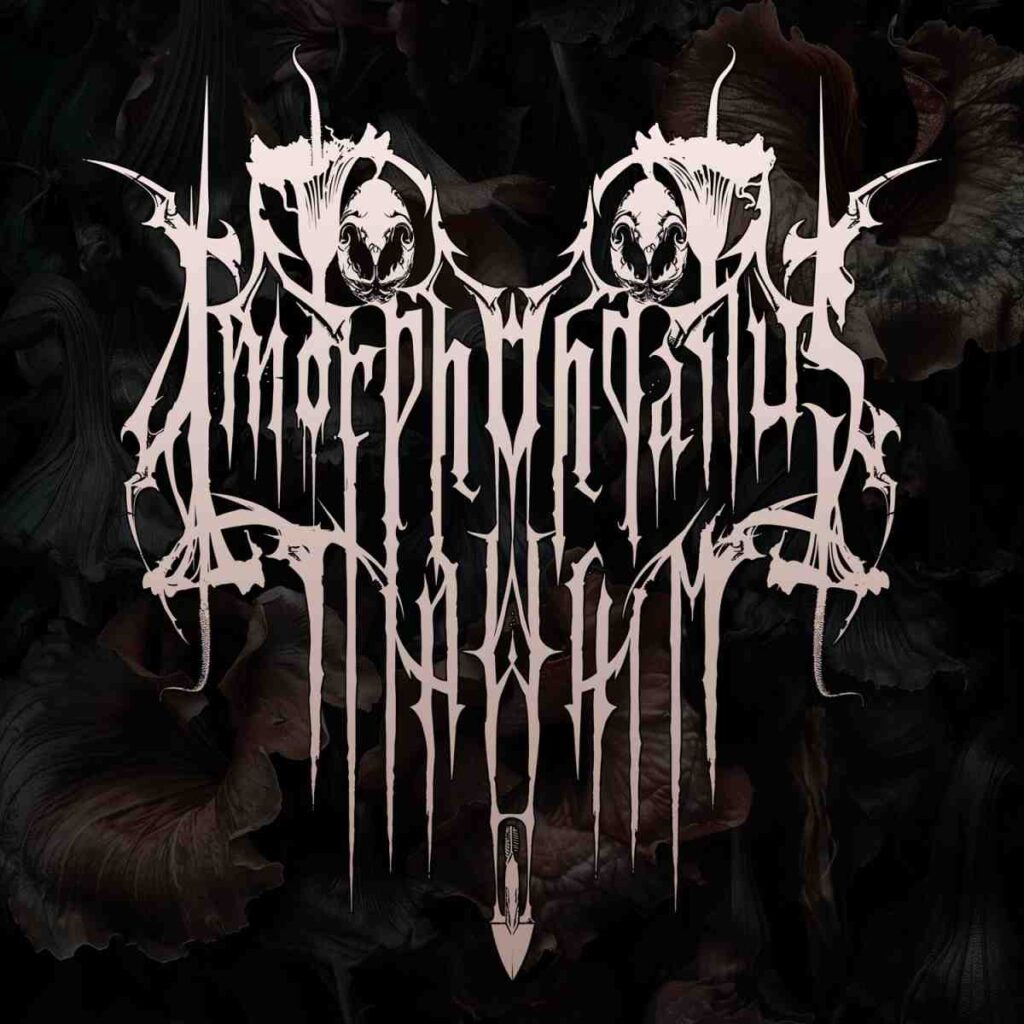
Lord Abyss: Structurally speaking, the album does not rely on the common tropes that often make black metal immediately intelligible. As such, listeners who prefer easily digestible music may find it somewhat difficult upon first listen. Although the individual riffs are often simple and the time signatures rarely venture into compounds (only twice), the emphasis was on creating flowing music, not unlike Crimson Massacre’s approach of not repeating riffs. Moreover, the songs’ consistent tempi help the riffs relate to each other more, and Splathammer’s drum phrasing and Clovenhoof’s vocal cadences grant additional unity. That is not to say the music is entirely coherent. Black metal, as Dionysian, does not practice coherence in the same way that death metal does. Nonetheless, I believe the album shares something of the Dionysian spirit that gave black metal much of its original potency. Also, there is a penis song (“Fascinus in Extremis”) which contrasts nicely with the penis in the Amorphophallus Titanum logo.
Nattewølf: I think the biggest difference is that Lord Abyss essentially composed the entire record from a very different perspective than what is common in extreme metal. He has an interest in classical music, and that naturally influenced the way he approached composition. Rather than starting with singular guitar riffs and building songs in verse-chorus fashion, many of the ideas were first developed in a broader sense where each riff or melody isn’t the focal point but rather is meant to propel the overarching expression forward.
I don’t mean that in a way that places him above other musicians; it’s simply a different creative process. I think that approach gives the album a distinct character. That being said, the piano and synthesizers are not intended to become the dominant instruments. The guitar remains at the center of the music, as it does in most extreme metal. The broader perspective is felt more in the structure of the music.
What first made you want to explore extreme metal, and why do you stay with it?
Lord Abyss: I’ve been into death metal since I was 12, being introduced to it by Alan Moses, main author of Glorious Times, and the man behind Morbid Angel’s Covenant of Death fan club. After I heard Morbid Angel’s Blessed Are the Sick, I became completely obsessed. Black metal came a bit later. In the ninth grade, the goth girl at school showed me Cradle of Filth and told me it was black metal, which initially turned me off of the genre. Samael ended up being my gateway band a year later, then I found all the classics and became obsessed with black metal, too. As I’ve gotten older, I primarily listen to classical music, but I still listen to metal on a daily basis; mainly black metal. During my time, I’ve had a lot of fortunate encounters: jamming with Mike Browning from Morbid Angel and Nocturnus, making noise with Marko Laiho from Beherit, and so on. At this point, however, I feel my time is best spent alone to focus on writing my own music, and I prefer the company of my dobermans over most people in the metal scene. The loss of Wes Weaver and others in the Texas scene has really left a noticeable void that doesn’t seem fillable. It’s best for us to go our own ways.
Nattewølf: What first attracted me to extreme metal was simply that it resonated with me on a level that other forms of music didn’t. There wasn’t any grand ideological reason behind it. I heard it, and it immediately grabbed me. What I still appreciate about many of the classic death and black metal records is their sense of honesty and intensity. Those bands were often working with limited resources, but they compensated with strong songwriting, memorable riffs, atmosphere and conviction. The focus was on the music itself rather than on perfect production or technical polish.
There is also a certain rawness that I find appealing. Not necessarily poor production, but the feeling that the music is direct and uncompromising. When I listen to the classic records from the late 80s and early 90s, I hear musicians trying to create something powerful and distinctive rather than trying to satisfy trends or expectations. That’s probably why I still return to those albums today. The qualities that attracted me to extreme metal in the first place are still there.
Splathammer: I’ve always played drums in various bands, but I’ve always stuck with metal and I’ve always had good relationship with people from the extreme metal scene. So I’d say it is more a relationship thing for me. Music-wise, I think I could enjoy playing pretty much any genre.
Are you moving forward with more AT material, touring, or public stunts involving fire?
Lord Abyss: Yes, but not in any hurry. I have recorded some sketches of new ideas, and the next release will feature much more compound time signatures now that I own a metronome worth a hoot. This summer will be dedicated to house projects and writing new music. The plan is for Nattewølf to be the producer again for the next album because he is very professional and on the same page. I should probably steer clear of cool public stunts and live performances for the time being because I’m making a major effort to pass as a respectable member of polite society.
Nattewølf: At the moment, any future activity really depends on Lord Abyss, since he has always been the primary songwriter and creative force behind the project.
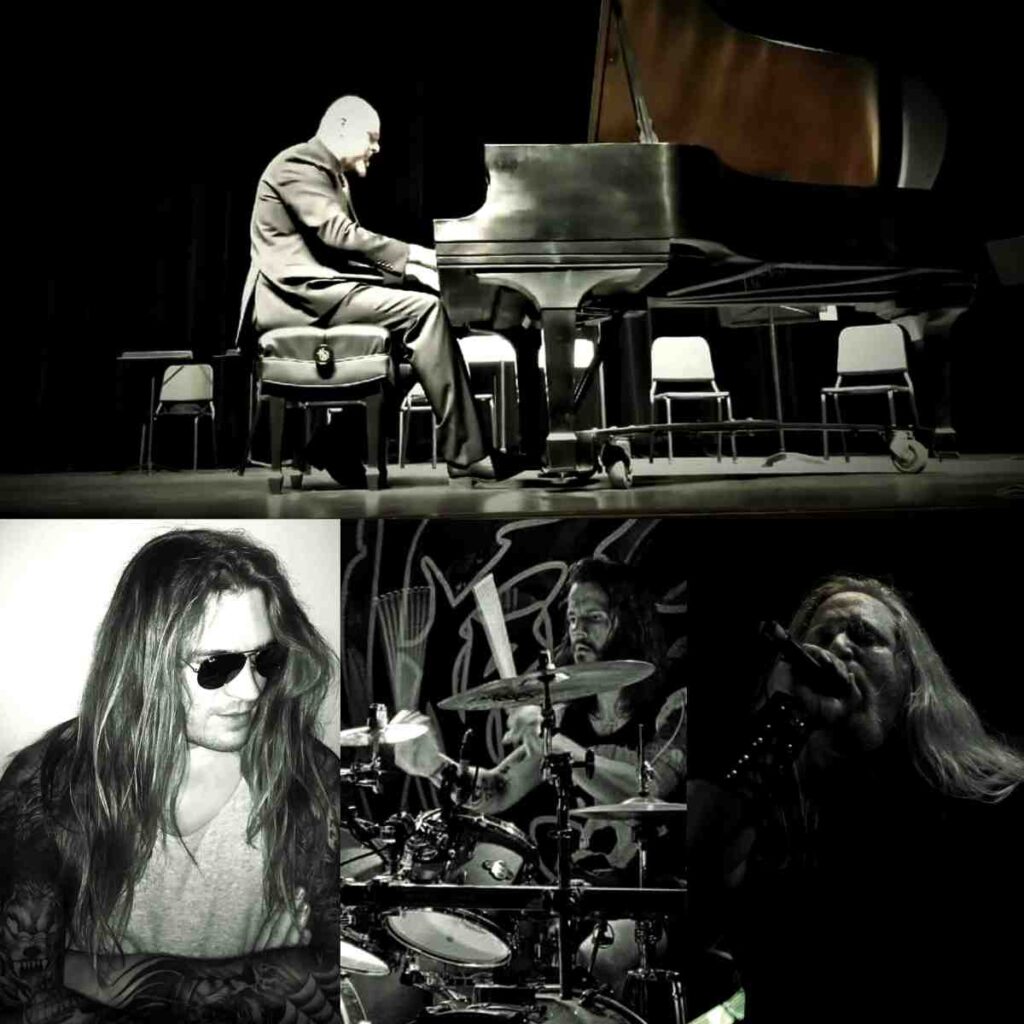
There is certainly interest in doing more with AT, but the practical reality is that we are spread across two continents. Lord Abyss and Clovenhoof are based in Texas, while Splathammer and I are both based in France, sadly now under Macron’s horrible, nation-killing policies. We have worked together on numerous projects over the years and have been close friends for a long time, which has certainly helped the collaborative side of things. Even so, the distance between the American and French members naturally makes things more complicated.
Because of that, everything tends to move at a slower pace than it would for a band whose members all live in the same area. We have to work around schedules, distance and logistics before anything can realistically happen. So the short answer is that I would never rule out future material, but a lot of it depends on Lord Abyss’s vision and on whether the logistical pieces can come together. As for touring and public stunts involving fire, I think people should probably keep their expectations modest.
| Here are some free Bandcamp download codes for you all to jam at your local massage parlours, bathhouses, and Unitarian churches! Redeem at https://amorphophallustitanum.bandcamp.com/yum : | ||
|
kbmp-ux6s uarg-5q8l l9mn-b8bj 4yrm-xn4k eum7-jav8 gl8v-ybt2 yskr-7huh 2j3a-5vav dgxg-u8r8 ptcz-efhn vqvq-kd9e 7gb6-glgu muxu-3j2q fmqa-h6wz mb8r-vylg gvnw-g3v3 yfaq-746s 3af9-5m8l d6au-btbj syfv-x74k |
p25r-jev8 79up-yuam x3wg-bvug qvjz-c9au 9fgn-xtfp ndux-j2jn 5j5j-kc9e b9r8-ghgu 52l2-3v2q rvp5-hkwz ab9f-j8lg 8a2l-yrv3 x9l6-7tb8 jysk-574n 9uj2-7eje nlgd-vu83 mpkc-65u4 b63q-gfam w3x9-3qug eaek-czau |
8f6u-xgfp 2wnd-jbjn apap-kw9e hzf5-huhk j3af-jpm8 9x9m-yry2 z4t7-7lnh npnv-5m5v w6w8-7gb8 eyht-5u4n g2e3-75je 2l6l-jf83 aey4-kpu4 7vjv-hzdz vfg7-vtxg 652d-gbm3 z7mp-ux9s |
Hendrik Moebus says that black metal is primarily a spiritual project. Do you think black metal is atheistic or theistic? Can Christians participate in black metal?
Lord Abyss: He’s clearly approaching spirituality through a pagan lens, which is perfectly consistent with black metal insofar as it affirms nature. Christians, on the other hand, are at odds with black metal’s traditional ethos. Though projects such as Moonchapel and Reverorum ib Malacht have made somewhat decent attempts, their understanding remains approximate, as they seem to only grasp the textural part of black metal. Black metal can be either atheistic in the classical sense or pagan if there is some degree of reverence for nature. The classical atheists were basically naturalists, anyway. However, if you mean most atheists we tend to encounter today, they are secular humanists who still uphold Christian morals and should be repatriated to the Middle East.
Nattewølf: While many of the genre’s pioneering bands clearly viewed black metal as something deeply connected to spiritual, religious or philosophical ideas, I have never really experienced it through that lens myself. My relationship with black metal has always been musical first and foremost. Some musicians approach black metal from a spiritual, philosophical or religious perspective. However, for me, personally, I am more interested in the music itself.
As for whether black metal is atheistic, theistic, or whether Christians can participate in it, I suspect different people within the scene would give very different answers. It is not really a question I have spent much time thinking about. My relationship with black metal has always been driven more by the music than by religious or ideological considerations.
Flipping that around, does black metal need to be Satanic, occult, or Luciferian?
Lord Abyss: It can be, because it casts off the rot of Christianity and has the potential to realign us with who we are at a civilizational level rather than embracing a foreign worldview imposed upon us. Some occultists and Luciferians like Michael Ford have made great authentic black metal. Moreover, on a personal level, I have a fondness for such thought because my father was heavily involved with the Theosophical Society and was a Luciferian himself.
Nattewølf: Those themes were certainly important to many of the pioneering bands and played a significant role in shaping the genre’s identity. However, I don’t think they are the only lens through which black metal can be approached. What matters to me is whether the music creates a convincing atmosphere and possesses a strong artistic identity. Some bands achieve that through Satanic or occult themes, others through history, mythology, nature, philosophy or countless other subjects. The quality of the music ultimately matters more to me than adherence to a particular doctrine.
Splathammer: I think there is a huge spiritual side in black metal but I don’t think it is tied to any belief in particular. But I have to say I’m not that interested in faith or absence of faith in general.
You all are taking a big risk in offering forth a philosophy-heavy, through-composed, and technically adventurous album which uses melody as a structural device instead of an aesthetic one. Did it worry you offering this up to a fanbase that often prefers one-chord war metal or disco-hybrid “progressive” metal bands?
Lord Abyss: The philosophy, if you’re asking about the album’s themes, is rather light; there are some nods to Heraclitus, Plato, Celsus, and Schopenhauer, but nothing that approaches my formal studies in the subject. For the reception of the album, it has reaffirmed my view that black metal should exist in the margins. Deathmetal.org reviewing it resulted in over 90% of the listens.
Nattewølf: To be honest, that wasn’t really something I spent much time thinking about. First of all, Lord Abyss was the primary composer behind the album, so he would be the best person to answer questions about the artistic direction. From my perspective, if you are creating music in the underground, you cannot spend too much time worrying about how people will react to it. Some listeners will connect with it, others won’t, and that’s perfectly fine. The goal should be to create something that feels genuine rather than trying to anticipate expectations. I think many of the classic records that we still talk about today became important precisely because their creators followed their own vision instead of trying to fit into an existing formula.
Do you think there is still room for newness in black metal, or is it doomed to either repetition or being hybridized with other genres? Why do you think so much of the current genre is so bad/boring (if you think this)?
Lord Abyss: The margins may bring some newness but I wouldn’t imagine it to be anywhere near a force of nature as the second wave of black metal. The “aboveground” is where hybridization tends to be championed the most, like the blue grass in Panopticon which would have been Old Yellered in the early 1990s. For the current genre, I typically hear a few good (not great) albums each year, but most don’t remain in rotation beyond a handful of listens. Off the top of my head: Valadier’s 2024 album Carmina Belli Apocalypsis is one of my favorites in the past couple of years and it doesn’t do anything new.
Nattewølf: I’m not necessarily concerned with whether a band is doing something completely new. What matters more to me is whether it has a distinct identity and a genuine artistic vision. There is probably always room for something new, but I don’t believe that “newness” necessarily comes from combining more and more genres together.
When I listen to many of the classic bands, what stands out is not how experimental they were on paper, but how distinctive they sounded. You could recognize Morbid Angel, Darkthrone, Burzum or Immortal almost immediately because they had a strong musical identity. In my view, the challenge today is not that every idea has already been explored. The challenge is developing a genuine identity in a world where musicians have instant access to thousands of bands, records and influences. There is still plenty of room for originality, but originality comes from personality and vision more than from simply adding new ingredients to the formula.
Splathammer: I think black metal is the most creative subgenre of metal at the moment. It’s pretty funny because there are a lot of purists in this scene. To me, black metal offers a lot of freedom, and we should use it.
How do we stay in touch with updates from both the band and your own musical/production efforts? Are you on social media, forums, or just plain old snail mail?
Lord Abyss: Thanks again, Brett, for the interview! Bandcamp is the only online presence for the project. https://amorphophallustitanum.bandcamp.com/album/the-first-geometry
Nattewølf: As far as Amorphophallus Titanium is concerned, I will leave that question mostly to Lord Abyss, since he handles the project’s public presence and communications far more than I do.
On my end, people can follow my work through BlightMass, my main band, a death metal project which I run alongside Jesse Jolly, a respected musician with deep roots in the Florida death metal scene and a familiar name to many fans of the genre. BlightMass is primarily based in Florida, although I am the lone French member of the lineup. While the music differs in some respects from Amorphophallus Titanium, both projects share a deep appreciation for the classic era of extreme metal and the values that originally made the genre so compelling. BlightMass is active on social media, so that is probably the easiest way to keep up with what I am doing musically. Anyone interested in the band, upcoming releases, or related projects is welcome to follow us there.
I am also involved in recording, mixing and mastering for selected projects through Grave Embrace Records, my production and recording studio. Most of the bands I enjoy working with are rooted in death metal, black metal, or other forms of extreme metal that maintain a strong connection to the old-school spirit of the genre. I make use of both modern and analog tools, because I believe each has its strengths. Modern technology offers flexibility and efficiency, while analog equipment can bring a certain character, texture and rawness that I still find valuable. Rather than choosing one approach over the other, I prefer to take the best from both worlds.
My goal is not to chase contemporary production trends, but to preserve character, atmosphere, dynamics and identity; the qualities that made many of the classic records so memorable in the first place. Anyone interested in discussing a project or getting in touch can also reach out through social media.
Thanks to the band for contributing their time and expertise to this interview. As metal decides where to go next, these type of inputs stoke the fire and separate forest branches to find hidden paths.
Tags: amorphophallus titanum, Black Metal, garden gnome, goatcraft, texas

“In his foundational work, The Birth of Tragedy, Netzsche famously categorized two opposing, yet complementary, driving forces in art and human psychology:The Dionysian: Represents chaos, instinct, emotion, intoxication, and the breakdown of individual identity to experience the raw unity of nature. The Apollonian: Represents order, logic, harmony, structure, and individual restraint (derived from Apollo, the god of rational thought)”.
I’m not familiar with either concept. What does Lord Abyss mean by black metal being Dionysian, and are there examples of the Apollonian in metal? And why does he sound like Brett Stevens?
Is this guy fucking kidding? Dude, you have to do _some_ backround reading before you try to analyze Nietzsche. Especially reading Nietzsche if you can, but hit the page on the Encyclopedia of Philosophy for starters. The Apollonian is the rule-based and higher aspirational, the Dionysian is the sensual and Romanticist.
Zeus please save us from these Wikipedia scholars.
To which “Encyclopedia of Philosophy” are you referring?
I’m not trying to analyze Nietzsche, I’m asking for some clarification in regards to how this Lord Abyss fella views his music as Dionysian.
well dont you have to kind of understand nietzsche, one of the most popular and influential philosophers of all time, to understand how this black metal nobody guy who has apparently studied philosophy himself, is able to incorporate or maybe more accurately to be guided by, nietzsches ideas? at least beyond the obvious yin/yang aspect? should we wipe your ass too?
but all joking aside, if you really do want to understand nietzsche, i have found the youtube channel essentialsalts to be pretty interesting, and his videos critiquing jordan peterson’s “interpretation” of nietzsche to be very illuminating, as peterson is the ultimate midwit and manages to get nietzsche wrong at every turn, and in the most pedestrian way possible.
Reading Nietzsche is not necessary to use the concepts of Apollonian and Dionysian.
Knowing about the entities from Hellenic myth is enough to get you started
Apparently not for OP. But if one is inclined to read ancient mythology and gain that understanding, then why not read the one guy who managed to effectively convey those ancient notions in modern philosophical language? And that’s just the beginning of his project. There is obvious relevance there with regards to metal.
Fred also has a way of expediently clearing the pernicious creep of modern thought into ancient notions, stuff that we take for granted without realizing it at all, at least that’s my own experience.
Everyone after Diogenes is sus anyway
You could get most of what you were looking for and plenty that you weren’t from the Thomas Common translation of Thus Spake Zarathustra. It came out shortly in the years after Fred’s death so we get these old, funny English words but it’s readable. https://www.gutenberg.org/files/1998/1998-h/1998-h.htm The Birth of Tragedy was the second book from Fred that I read and the last, and I only got through a chapter or two. I find more pleasure in reading what we have from the Greeks and applying that vision to what I’m seeing around me.
P much the same thing Nietzsche himself was doing.
I don’t recommend reading, but if you’re going to go down that path…well I especially enjoyed Twilight of the Idols but my introduction was Beyond Good and Evil which I read with a raging hard-on and a loaded gun to my temple. Don’t believe me? Let’s see you try jerking off with a revolver in one hand and a library copy of Nietzsche in another. Turns out it comes quite naturally. You wouldn’t know that. But I think pound for pound Zarathustra is the most useful if not always the most interesting.
I remember this. I was in Pigalle Street back in 1989. A guy in another hotel room visible from our hotel was reading a book. Every page he would do a line, then pick up a gun and hold it to his head. Then he would put the gun down and read another page. This is a metaphor for dying Europe, a victim of prole-rule and democracy (spit).
Indeed, at the moment of climax I dropped everything and screamed out “C’est la fin des haricots!”, and a man hollered back “YOU SPILL THE BLOOOOOOOD ETERNAL SOOOOOOUL”…Paris just isn’t the same these days…
Lol…why does he sound like Brett Stevens, indeed!!!! Why do all these songs sound worse than Total Death Era DarkThrone?
The first geometry is actually, in unwitting terms, sphincter-like, expansive, dilating, but relatively shallow – relative to the doughnut minds of most hominids, a reflection of their purpose which is to be pierced by the phallus. It was only much, much later, like the Romans, that the geometry gained form and gave purpose to reality.
That logo is gonna give someone amorphophallus tetanus!
That’s Latin for love big cock right?
Better than Thornspawn or Necrofier
splathammer hungry