






When hardcore was new, it was a few innovators producing really interesting music not because they broke “the rules” but because they thought outside of the form of the aggregate of what had been rewarded so far.
The problem with success is that people become conservative and are afraid from what has already found an audience, whether that is Motley Crue, Pantera, or Immortal. They clone all of the things of the past that won and glob them into a big ball.
Where early hardcore had vision, late hardcore was calcified and hide-bound to the conventions and forms (song structures, riff types, rhythms, melodies) that the audience would recognize as hardcore punk.
It reached a point of comedy. Music fans ran out and bought the new releases every way, talking about how each was revolutionary or uplifting, and they all sounded the same except for highly visible quirks like weird instruments, strange vocals, or changing up the pace. Each one broke a “rule” but in doing so, affirmed the sum total of the rules as a format for the genre. The music was boring not because there were no surprises but because it expressed nothing, although the production sure improved a lot. A whole industry rose up around the boomtown that hardcore had become, with zines trumpeting the latest revolution or insight each week, and nothing was ever satisfying because it was all empty.
Black Cilice — yes, we are picking on you, but randomly, because you are far from alone — exemplifies this. Like late hardcore, it is droning music that sounds good if you like the stuff it is cloning, but these are songs about nothing.
Each song is essentially two riffs with some stuff built around them and the drums doing the marching band thing of being distracting while vocals are too important and the guitars, rather than reaching point of crucial understanding or change in perception, imitate tropes of the past such that there is no room for real songwriting, only creative arrangement that serves no purpose in making the songs communicate anything.
Almost all of black metal and death metal are at this point, and it is time to stop endorsing the illusion. Many illusions are dying this year, like cheap food and world peace, poly-ethnic societies and Christianity, patriotism to country instead of culture, the Scopes Monkey Trial, and trust in institutions.
The sooner we stop perpetuating the lie, the sooner it dies. In any case, you will notice the title is “Sadistic Metal Review” here since this rant-collection resembles more an 1884 newspaper than the standard collection of “like everything else, but with a piccolo, so ok if you like that kind of thing I guess” reviews. We are here to say NO to purposeless metal so that the good stuff rises again.
***
Monstrosity – Screams from Beneath the Surface: not bad for a power metal album, but at its core this album orbits that sphere, with lots of heavy metal licks and grandiose riffs interspersed with slam or deathcore style rhythm riffing that is mostly formless, and while lots of work clearly went into making these songs hold together, they sound like they are written from the style only and have no internal content.
Endless Curse – Disgusting Existence: if you wanted a crossover between deathgrind, groove metal, and the bouncier dramatic moments of alternative rock, this EP might stir your neurons, since the songs are well-assembled even if somewhat binary, resulting in a listening experience where moments stand out but then fade into the background of constant thudding and groove.
Fayenne – The Calling From the Depth: imagine an underground version of the second Dimmu Borgir album and you get the approach taken here, mixing punk, metal, and progressive-ish rock riffs together in a big salad that rotates like a merry-go-round showing us scenes as varied as those in Dubliners but without much integration in the end, so it is a wandering journey through momentarily distracting chaos.
Dwelling Below – Wearisome Guardians: normie music relies on emotional moments, but metal stitches together moments of observation and expression into an overall theme which has some emotional qualities, but this band relies on driving rhythms and dissonant chords, which apparently fixates the normies, with little unrelated interludes before we fall back into the vocals-drums lockstep with guitar ranting in the background.
Daugrop / Ebbesen – Etabler Kosmisk Portal till Noregs Land.: the first band is some kind of emo wrapped in black metal, mostly just regular rock with more arpeggios, but no zeitgeist or gestalt; the second is a garage jam session based around vocals and guitar noise, but neither band seems designed for repeated listening, more like a statement and something new to brag about as you get a flight at the brewery with cartoon character labels.
Denominate – Restoration: they found a way to make metal into pop, with gospel verses and motown choruses among a cluster of “progressive” riffs that are surface-level like Opeth and jazz rhythms like Obscura, but really this is the most mundane music you can imagine that is pretending to be elite and outsider when it is really crying out for you to listen to it while shopping at Walmart wearing your “I’m So Sorry” tshirt.
An Abstract Illusion – The Sleeping City: another collection of clicés that stitches together imitation of 1970s prog without the cool melodies and key changes, ranting modern metal vocals, DSBM head-nodding riffs, and a few speed metal tropes with soaring gospel/emo vocals; how do these guys get funding and why on Earth would anyone buy this? Get that Yes album or Metallica album you wanted instead.
Hedonist – Scapulimancy: galloping speed metal verses, emo choruses, and formless imitations of Swedish riffs with a few old death metal tropes tossed in under deathgrind vocals, this band reminds me why people leave metal and immediately run straight into the fruitiest fruit salad keyboard music they can find just because no one can pose on that or at least, fewer do it without buying Apple products and ending up in debt living under a bridge with their iPads.
Dementium – Addicted to Vengeance: basically 1980s speed metal with Swedish-inspired death metal riffing among all the muted chord stop-start material, it faithfully pays tribute to the past in its own voice, although the distinctions are fine ones to separate it from the rest of the genre, but adds some searing early black metal vocals to give it some alienation, although again: speed metal.
The Harbinger – Gates of Hell: apparently some consider this death-doom, but really it is modern metal played a little slower than normal with some kind of emo lyrics, and so unless you like slow groove metal and slow speed metal, this one will bore you to absolute tears because it has about as much atmosphere as the line at Burger King.
Voidhämmer – Noxious Emissions: basically a punk band played with a few metal conventions, this band bounds through energetic but formless rhythm riffs in an attempt to maintain a contrast between a rushing mode and a dark groove, but the end result is basically as repetitive as deathgrind but played at fun energetic dance tempi so that you can wash your dishes to it or maybe run around looking for Black Friday sales.
Argus Megere – Cerburea apusulu: the standard mix of post-metal and flowing two-note melodic black metal with an impulse toward passivity instead of conflict, this album shows how much contemporary black metal aims to be an unchallenging soundtrack to self-pity and mild alienation while one contemplates another busy day of drinking Soylent and installing Docker containers.
Kanonenfieber – Die Urkatastrophe: at least this is musical, but the problem is that like “pirate metal” or DSBM, it aims at something simple that people can nod along to and chant while making cupcakes or mowing the lawn, and while it follows Swedish melodic black metal tropes in heavy metal form (think Merciless and Dissection) it covers no new ground nor really hammers out anything competitive with the past.
Degraved – Spectral Realm of Ruin: standard rumbling death metal with riffs that barely communicate with each other and lots of pounding and vocals to distract from the missing center to each composition, with competent technical execution but no direction beyond being the past and being something owned by this band, a kind of “tragedy of the commons” of the genre.
Phobocosm – Gateway: rushing Incantation death metal collides with post-metal resonance riffs and Immolation-style back/forth shuttle rhythms, but these songs are about an aesthetic moment each, and once that moment is achieved, there is nothing to do but circle around it like a homing torpedo trying to reacquire a submerged Soviet submarine, until it runs out of fuel, hits the muddy bottom, and explodes.
Citrinitas – Unending Descent: ponderous, plodding and repetitive riffs pop up against a few open strums that make it sound like hippie music merged with the inevitable descent of the city, but really, who would want to listen to this? Unless you like boring and predictable music, this band has about as much utility as a dildo with a Bible attached.
Korpsesoturi – Tahtoisin Kuolla: old school worship is great, but this band alternates between ponderous posturing and trudging verses, which makes death-doom into not atmosphere but an endurance test, maybe they should join ICE or EarthFirst instead and actually get something done.
Institution D.O.L. – Agape :93:: you know when you are at a cocktail party and you mention your best accomplishment and everyone nods for a painful second before mentioning their superior achievements? This industrial/metal/punk/disco combination fits into that loop, meaning that it tries really hard and is good for what it is, but no one cares because music has moved beyond this.
Illvilje – La meg sjå alt omkring meg falle: if you miss the days of later Darkthrone and the Total Death era, this album may qualify as the old school you like, with lots of through-composed riffs making nice narrative structures that convey an actual presence, but at the end of the day, these expressions are too pacifistic to really gain anything more than an ambient sense of dark energy.
Conjurer – Unself: basically late hardcore, this merges slude and metalcore with emo melodies and a basement-prog attitude toward rhythm and structure, which makes this reasonably listenable if you can accept that the songs are about being themselves and have little other relationship to life, plus are designed for standard Fox/CNN normies with the attention span of a stoned goldfish.
Evil Damn – Eons of Horror: essentially melodic death metal and power metal mixed in an underground-flipped aesthetic package, this band offers very little for those of you who have the first couple Rotting Christ and Necrophobic albums, and by its reliance on constant heavy metal or glam metal riffing, makes for an unsatisfying listen unless you are cracked out with nostalgia, in which case God (Odin, Zeus, Krishna) help you.
Total Annihilation – Mountains of Madness: it seems to be an inversion, speed metal with deathgrind influences in pacing and rhythm, but it adds up to a lot of sound and fury signifying nothing since the songs seem to be two riffs with variations in a circular format which has zero atmospheric or emotional transition between start and finish.
Endless Curse – Disgusting Existence: a band with very processed-sounding death vocals, speed metal song structures, and a groove metal pace, this offers a different approach to metal from the norm, but also stifles its own growth because the need to keep the groove grinding capitulates riff development to repetition interrupted by distractions to seal in the hook, producing a sensation mostly of being drilled into a wall.
Resurrected – Raping whores: promising brutal bouncy death metal in a hybrid between Grave and Pungent Stench with a side dose of Fleshcrawl, this offers no surprises but occasional riff insights paired together with songs that consist of parts supporting each other, therefore are easily listenable once you get past the pounding pummeling repetition to enjoy the musicality lurking under the surface.
Oraculum – Hybris Divina: one wants to like it, with the Immolation-styled offset chords and minor key riffing, but every riff ends in a fill of brutal death metal chromaticism and the songs loop around the clash between riffs that amounts to little more than surface difference, so it is easy to appreciate but hard to imagine reaching for this weekend after weekend as an album that exemplifies, explains, reveres, or glories in… anything.
Reverber – The Satan Creation: hybrid of Teutonic speed metal with late Judas Priest styled power metal, resulting in music designed to be listened to in the background since all of the techniques and melodies are rather similar, but nothing is terribly wrong as long as you do not mind constant bouncing and muted chord riffs followed by soaring gospel-style vocals.
Deathraiser – Forged in Hatred: as seems to be the trend these days, on the surface this is Sepultura worship from the period between Arise and Beneath the Remains, but underneath, this is pure Destruction and Exodus style energetic speed metal without terribly much structure deviating from the usual loops and not terribly much melody in guitar or riffs, just pure rhythm and comfortable skateboard energy.
***
First, Cecil’s is re-opening as a hipster bar.
The beloved bar has claimed the former ElRo Pizza & Crudo space at 2405 Genesee St. for its new home. In November 2024, Cecil’s closed its longtime location at 600 W Gray when the property’s owner opted not to renew the bar’s lease. The bar first opened in 1985, making this year its 40th anniversary.
This bar was home to a generation or so of metalheads, and many of us spent hours in high school smoking on the far patio, which apparently because it is not in the bar is accessible to youngsters.
The new location is cleaner, smaller, and fancier, but the watering hole days are over. I am going to keep drinking at The Crocker Bar because they know what a good drink looks like and how much alcohol it should contain.
Speaking of the coastal Texas flat hot concrete humid wasteland, Soundwaves has gone to the great hippie trailer park in the sky:
On Sunday, Montrose’s Soundwaves announced on Instagram that the chain’s last remaining location at 3509 Montrose Blvd. will be closing its doors. Soundwaves didn’t specify a reason for the closure, and the store’s owners couldn’t be reached on Monday for comment by email, phone, or Instagram direct message.
Another one killed by property taxes, declining record sales, and its audience turning away after it installed a “one person at a time” rule for a six thousand square foot facility during the COVID-19 panicdemic.
But in positive news, the Blast Beat Network just got Holocausted by declining interest in emo-metal:
This week Sony (via The Orchard) quietly cut nearly all full-time staff members from Metal Injection and Metal Sucks. Additionally, they also scrapped full-time positions from the heavy metal advertising network, Blast Beat Network.
Great! Now close all the other hipster sites too. Metal finally reached saturation at the same time its audience declined because the music all sounds the same. The genre has hit artistic heat-death and its Reddit audience has gone back to pop punk and rap. And get Wikipedia and Metal-Archives too!
Metal once had a clear personality, which like culture means aesthetics and ways of doing things as well as unstated innate goals, but that drew in normies who like Communists just wanted “their share.” Where once there was natural selection in force in the underground, in came the Redditors who wanted to compete with each other by having the most obscure band, so they rationalized quality onto bands that were droning garbage just so the Redditor could one-up his buddies at the local corporate dive bar. Natural selection was reversed.
There are two prongs of this fork: the emo-metal edgy-normie scene and the “funderground,” which is guys listening to droning garbage that rips off the past directly instead of incorporating it as one ingredient in a stew of past big sellers like jazz fusion, late hardcore, nu-metal, and alternative rock.
But from the good news front, physical media is returning:
As prices for streaming subscriptions continue to soar and finding movies to watch, new and old, is becoming harder as the number of streaming services continues to grow, people are turning to the unexpected last stronghold of physical media: the public library. Some libraries are now intentionally using iconic Blockbuster branding to recall the hours visitors once spent looking for something to rent on Friday and Saturday nights.
And it turns out that the reported death of compact discs was a “Dewey Defeats Truman” moment:
Reports of the compact disc’s death may have been slightly premature, according to a new analysis from Stat Significant that finds CD sales as a share of U.S. music industry revenue have quietly stabilized after years of steep decline. RIAA data shows CD revenue share fell from 7.15% in 2018 to 3.04% in 2022 but has since flatlined at roughly 3%, coming in at 3.14% in 2023 and 3.06% in 2024.
Google search traffic for “CD Player” has ticked upward over the past 16 months after two decades of near-continuous decline, and a May 2023 YouGov poll found 53% of American adults willing to pay for music on CDs — ahead of vinyl at 44% and online streaming at 50%. Respondents under 45 were more likely to express interest in buying physical formats than older cohorts. But on the supply side, Discogs data shows vinyl remains the dominant format for new physical releases; artists have not meaningfully shifted back toward CD production.
It seems that in an age of AI and social media producing endless very similar content, analog provides an oasis of sanity:
Analog media adds a layer of ownership and intimacy over our experiences of the world that is simply impossible to replicate when those experiences are mediated by a screen and via tech companies. And while we’re nowhere near a post-screen era, the appeal of analog tells me we haven’t completely lost touch with the world around us.
Some have even crossed the forbidden line — like reading Nietzsche or learning C++, a separation from self and the masses looking for easy answers — and turned to cassettes for their analog media:
This kind of music discovery delights people when I describe it to them. Sometimes they start telling me about rediscovering their old CD collection, or wanting to track down an old iPod Classic to experience their music library away from the surveillance and excess of big tech platforms. Maybe it’s just because I live in a particular social bubble in a particular countercultural pocket of New York City. But recently, the conversations I’ve had on this topic have got me feeling like the culture of music is shifting.
When I came to Tokyo, a friend took me to a store that sold cheap portable cassette players, and I knew it wouldn’t be a huge leap to take my music listening fully offline. The walkman I bought is unbranded and has a transparent plastic shell, allowing you to watch all the little mechanical gears turning inside as the tape spools around the wheels and past the playheads. It was one of the easiest purchasing decisions I’ve made in recent memory: After years of psychic damage from social media and other phone-based distractions, I was ready to once again have a dedicated device that does nothing but play music.
There are lots of advantages to the cassette lifestyle. Unlike vinyl records, tapes are compact and super-portable, and unlike streaming, you never have to worry about a giant company suddenly taking them away from you. They can be easily duplicated, shared, and made into mixtapes using equipment you find in a junk shop.
The bigger story may be that, as mentioned here before, we are drowning in an excess of media that both makes each artist less relevant and works against artistic quality, so you get a lot of samey mid-level bands, and that this i ending the streaming era:
The music industry’s long romance with an ever-expanding catalog of songs appears to be souring, as streaming platforms and rights holders confront a daily deluge that now includes 60,000 wholly AI-generated tracks uploaded to Deezer alone — roughly 39% of the French service’s daily intake, a statistic the company shared during Grammys week last month.
Streaming services now host 253 million songs, according to Luminate’s most recent annual report, after adding 51 million tracks over the course of 2025 at an average pace of 106,000 uploads a day.
98.6% of metal already sounds like AI, or might as well be AI for all the thought that went into it. We are past the artisanal age into an Age of Utility. Metal either delivers value for money in terms of hours of listening experience, or it is useless slop like the rest of the hipster garbage made by people who should be laboring in the fields.
This would sound like hype, except we are seeing the same across the board with media, for example physical books:
In the late 1990s, many book lovers often looked with scorn upon the likes of Barnes & Noble and the now-defunct Borders, favoring the dusty shelves of their preferred independent book haunt. Fast-forward to now and bookstores of any kind have been harder to come by in many communities. The old bookstore wars are over. In an age of Amazon dominance, readers have learned to root for anyone selling physical books, and that enthusiasm appears to be paying off.
The American Booksellers Association reported that more than 420 new bookstores opened this year, part of a rebirth of bookshops after the initial Amazon/big-box shock that caused so many to go under. We found it interesting to follow the timeline of this evolution by tracking ABA’s membership, which peaked in 1995 with 5,500 members across 7,000 stores before dropping as of 2009 to 1,401 members across 1,641 locations. The group’s most recent numbers from 2022 — 2,178 members at 2,593 locations — reflect an ecosystem that is rebounding modestly postpandemic.
And apparently, at least in Finland, radio continues to be relevant:
The latest National Radio Survey revealed that more than four million people in Finland listened to the radio every week last year, meaning that the medium reached over 80 percent of the population during an average week.
This is similar to the results of the previous year’s survey, showing that radio listenership remains steady.
Just like the metal bubble is over, the streaming bubble is over. Luckily, so is the Christian bubble:
Ben Shapiro’s right-wing media company confirmed the layoffs in a statement to the media on Friday afternoon, saying that impacted staffers span “a number of teams” and that the layoffs were largely concentrated at its Nashville headquarters.
The layoffs at The Daily Wire are just the latest in the entertainment and media sector. A couple of weeks ago, Disney announced layoffs totaling 1,000 people across Marvel, its PR division and Home Entertainment. Axios and Netflix also announced layoffs in March and February.
The Daily Wire provides a lot of great lifestyle content and Ben Shapiro seems to be the only conservative writer who actually understands Constitutional law and Austrian economics at the same time. But appealing to the Dennis Prager style “martyrdom as a goal” Christians has fallen off. Most likely, President Trump (PBUH) just fused Christianity and nationalism and now regular Christianity cannot compete with this new piquant version.
Speaking of finding new religion, tech startups are handing out nicotine pouches to keep their employees focused:
Nicotine pouches, which have grown in popularity in recent years, including among Wall Street bankers, have become a go-to stimulant for a subset of tech workers who claim the products help them focus and get through the workday, despite health hazards.
The well-known psychological benefits of nicotine include sharper thinking and longer focus, which is why most writers — if they can — have pipes in their mouths all day long.
In the meantime, official EOG (egalitarian occupation government) sources report the return of smoking:
I blame the sheer awkwardness of vapes — clumsy, vaguely cyborgian, charmless — for the great cigarette resurgence of 2025. In 2026, we’re going older and bulkier: People will start pulling tobacco pipes out of their purses and pockets. Snuff will take over snus. Everyone’s hungry for a little gasp of Dickensian glamour, for someone to drop the word “dapper” in a conversation crammed with acronyms and algorithms.
Vapes, just like glyphosate and GLP-1 drugs, seem to me like a “modern miracle” that is too much faith and not enough hard science. If the problem with smoking is inhaling, then switching the delivery medium will not improve the situation and may in fact make it worse. Yay boffins! Go eggheads! Praise the dominion of human intellect over nature! etc
But in the bigger picture, the world has moved on from the symbolism-dictated mass consumption model of total equality from the previous century, and now wants “value for money,” meaning music of quality. It no longer has time for stuff like the Blast Beat Network, Black Cilice, luxury Communism, anti-abortion protesters, or Christianity.
***
We all know Captain Kirk, but did you know that he has teamed up with ex-Slayer personnel for a new metal project?
Former Slayer drummer Dave Lombardo and Disturbed bassist John Moyer will be playing on Star Trek icon William Shatner’s upcoming metal album.
“It was a true privilege to contribute drums to William Shatner’s ambitious heavy metal project,” Lombardo says in a statement. “At any age, real artists keep pushing boundaries — and this one pushes them into orbit.”
As previously reported, the album features Shatner performing Judas Priest’s “You’ve Got Another Thing Comin'” alongside Rob Halford, as well as covers of Black Sabbath and Iron Maiden songs.
Seems like metal made it to the twenty-fourth century after all. Science is catching up, with tiny details made into whole worlds as usual, but here the egghead neurotics analyze why metal bands hide their faces:
Rock and metal musicians have concealed their identities before, of course. Kiss and Alice Cooper strut the stage in elaborate makeup. Slipknot and Gwar perform in grotesque masks or full-body costumes. And the use of “corpse paint” (skull-like facial makeup) and occult pseudonyms is par for the course in certain kinds of black metal, an extreme offshoot of heavy metal, characterized by shrieked vocals, tremolo guitar playing and Satanic imagery.
Affects are the energy that circulates between people, objects and ideas, binding them together.
As literary critic Raymond Williams has noted, affect often emerges before it’s fully articulated—inarticulate, but powerful. This is precisely what is at play in anonymous metal bands. When performers hide their faces and identities, they strip away one of the most recognizable cues in performance. In that absence, the audience and listeners become part of the emotional work—projecting, imagining and collectively generating meaning.
In other words, we want to be inhuman, which means rejecting humanism, which leaves only nature (humanism includes both the individual and social group, but not non-human things like Darwinism). With nine billion humans on the planet, most of us are pretty tired of the excess of humanity anyway!
Weirdly, it turns out that aggressive music — analogized to nature “red in tooth and claw” relative to soft passive neurotic humanistic/individualistic normie music — helps surgeons perform:
According to one study, by listening to AC/DC during surgery, doctors can improve their performance. Use of music in operating theaters has had mixed results but the study—which looked at young surgeons working on laparoscopic procedures at a hospital in Dresden while listening to various different kinds of background music—found background music reduced surgeons’ anxiety.
Being in a natural environment allows us to accept reality and in that saner space where everything makes sense, even if everything is not Judeo-Christian “good,” people can gain greater mental clarity and therefore, transcendent peace, or at least enough to execute complex surgeries.
One wonders what would happen if they were listening to Deicide or Ildjarn?
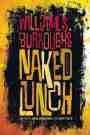
Doctor Benway is operating in an auditorium filled with students: “Now, boys, you won’t see this operation performed very often and there’s a reason for that . . . You see it has absolutely no medical value. No one knows what the purpose of it originally was or if it had a purpose at all. Personally I think it was a pure artistic creation from the beginning. Just as a bull fighter with his skill and knowledge extricates himself from danger he has himself invoked, so in this operation the surgeon deliberately endangers his patient, and then, with incredible speed and celerity, rescues him from death at the last possible split second . . .”
“Did any of you ever see Doctor Tetrazzini perform? I say perform advisedly because his operations were performances. He would start by throwing a scalpel across the room into the patient and then make his entrance like a ballet dancer. His speed was incredible: ‘I don’t give them time to die,’ he would say. Tumors put him in a frenzy of rage. ‘Fucking undisciplined cells!’ he would snarl, advancing on the tumor like a knife-fighter.”
A young man leaps down into the operating theater and, whipping out a scalpel, advances on the patient.
DR. BENWAY: “An espontaneo! Stop him before he guts my patient!”
(Espontaneo is a bull-fighting term for a member of the audience who leaps down into the ring, pulls out a concealed cape and attempts a few passes with the bull before he is dragged out of the ring.)
The orderlies scuffle with the espontaneo, who is finally ejected from the hall. The anesthetist takes advantage of the confusion to pry a large gold filling from the patient’s mouth . . . (Naked Lunch)
Apparently medicine has taken notice of metal in another area, which is healing voices through death metal growling or something like it:
These singers are disciplined and train their voices, and despite what it might sound like, Stark and Zharoff saw that these singers were not damaging their throats. These findings could translate into treatment for those who have trouble speaking, perhaps by training them to use different parts of their throats, as these singers do.
Interestingly, some research suggests that music influences the types of foods people consume, with sugar pop music being literally… sugar pop consumption inducing:
An experimental study conducted in Austria found that listening to disliked music decreased general desire to eat, but increased the specific desire to eat high-sugar food. On the other hand, listening to liked music and not listening to music was associated with a higher preference for low-sugar foods.
In other news, the idea that orderly and harmonious music drives away low-IQ people is gaining momentum, since classical music seems to scatter idiots:
Liverpool City Council has started blasting classical music from speakers throughout the Whitechapel district to tackle youth disorder in the city centre.
Both Merseyside Police and the council are behind the initiative, which sees orchestral arrangements broadcast in public spaces.
The birthplace of Boomer mascot The Beatles has finally admitted what we all knew about popular music: it is screeching noise and disorder for disorganized and neurotic minds, whether it is funderground drone or emo-metal.
We can see the proof of this in that, as civilization decays, its music gets more simplistic so it does not offend the Dunning-Kruger Effect individualism of morons.
A recent study found that Western music is not only starting to sound more alike but is also becoming less structurally complex than in the past.
Pieces that were written 400 years ago, particularly in the Classical genre, exhibit higher weighted efficiency. In other words, the music is not built around the same few patterns repeated again and again. Instead, it explores a wider range of note combinations, which makes it feel more varied, less predictable, and richer in structure.
In contrast, modern genres like pop, rock, electronic and hip-hop, as well as contemporary classical compositions and jazz, which have long been associated with complexity, show lower efficiency values. They rely more on repeated transitions, with melodic and harmonic pathways becoming more simplified.
This will not surprise metal fans, but apparently is news to normies. Well, so is everything in reality. They live in worlds of their own egos and what their buddies at the pub say, and they hate reality because it is outside of their dominion.
***
Time to sign off with some historical wisdom:
1. “Be excellent to each other.” – Bill and Ted
2. “Sodomize the weak.” – Blood
3. “Think of as all.” – Roky Erickson
4. “You get what you give.” – Deicide
5. “There are no easy answers to the problems that we face, history’s a lesson, let us learn by our mistakes.” – Kurt Brecht
6. “One law for the ox and the raven is tyranny.” – William Blake
7. “The sick must die.” – Nguy Lamont Hughs
8. “With every mistake, we must surely be learning.” – George Harrison
9. “Life is suffering.” – Siddhartha
Tags: Classical, dave lombardo, late hardcore, physical media, radio, smr, william shatner



I haven’t even heard of any of these albums thank Satan. I don’t know how you haven’t blown your brains out yet.
And shatner at it again. I remember getting torched with my buddies back in high school and laughing uncontrollably to The Transformed Man..reminds me of watching old Neely cartoons…or threebrain…
I perceived this when I was last living in NYC, right before COVID hit and ruined everything for a while, that there was beginning a revival of interest in meaningful expression and tangible mediums….cool little bookstores or record sections at the coffee shop, stuff like that. Kids these days love CDs.
You were arrested for being too brave online, and now you are confined to a single country forever, which do you pick:
a) Italy
b) Ireland
c) Eritrea
I cannot invade Africa, so Eritrea is out. The Irish are subhuman, so Ireland is out. The Italians are subhuman, but it is next to Austria, so I would go live in the Piedmont and commute to a real civilization.
By this I mean: it is inappropriate for me, a non-African, to be in Africa.
Similarly it makes no sense to settle me among the subhumans in Italy and Ireland.
But if I had to pick by location alone, I would want to be next to Austria.
Well, let’s spice things up. Instead of being confined to one of the three countries, you are instead now genetically altered to either Irish, Italian or Eritrean, pick one of these.
If you genetically alter me to be Italian or Irish, I’ll be retarded and then you can put me anywhere. Also check your wallet (wops are thieves).
>Italians retarded
You were shivering snow monkey desperately trying to hide from a sneering, frigid wind god when we enslaved you. So, I mean, a little appreciation.
He isn’t even that, just a Texan turd with maybe some vague European ancestry like every other Americunt that think they have a monolopy over other parts of the world.
Meanwhile Europe is primarily fucked over by the Bilderberg dictatorship in Brussels and the Muslim invasion to name a few… similar to what Hispanics and angry Africans are to the USA I guess… But wait, I am course totally wrong, because somehow out of nowhere it must be the potato-eaters and (now) the greaseballs, just because the Bratt dislikes them for no reason.
Yeah right, somebody change this keyboard warrior’s diapers because he ran out of relevant targets.
So nice that someone else finally gets it. Im bretts mommy, and he always steals the daipers from the trash, I’ve tried everything believe me, but even with the locks and humiliation blood rituals there’s no stopping him, he always gets the diapers somehow, and he always is escaping out the basement on account of having finally filed through the bars, I spend too much time upstairs these days, just blowing through edibles with whatever spic faggot will let me suck the cum off his toes, I have a name for it but Im not telling the likes of you what it is, I’m a fucking great whore and none of bretts cornbread anal paste smeared across the linoleum because he does it like a DOG, it’s honestly the sweetest thing and I can’t stay mad at my baby and his Internet friends coming over all the time to lick the smeared shit and smoke cigars, sometimes they roll around in it, and Brettie spreads his anus open and little garden gnomes live in there, mindlessly listening to isolated deicide riffs over and over, and the stained glass is amazing in there, and the cheese and bratwurst soup is to die for, but you’ll never go, you’ll never see past the curtain, not until you come over and lick the shit off the floor and then maybe I’ll tell you all about you know what
Maybe try rubbing some of that mouth foam on your head and see what happens. It’s worth a shot!
D-d-doug…is that you? It’s getting dark now…it’ll be ok because you’re here, you’re here, oh God Doug it hurts…I can’t think straight…it’s Paris all over again, heh heh *cough* you and your faggy smokes…such a monster without your faggy cigarettes…I must be crazy…never told anyone about the incident with Fluffy…hahhuuuhh *wheeze*…remember Paris Doug? Remember…Paris ……..
Dorky and bald as the day is long.
Look out in the middle of the road! It’s a turd! It’s a drain! It’s The Human Speedbump!
“Metal once had a clear personality, which like culture means aesthetics and ways of doing things as well as unstated innate goals, but that drew in normies who like Communists just wanted “their share.””
Pfffft metal was made by commies then the Nazi faggots like you showed up Brett.
Good point, metal and rock at large are and always have been left-leaning and a “rebel against the establishment” type thing. Nazis are a form of woke culture obsessed with inserting themselves into something whenever they can. Even if you’re not a white nationalist, but a pro-western supremacist instead, it doesn’t matter, you’re still a far right douchebag.
I’m neither left or right, but anyone on the extreme spectrum of both, is insane to some capacity. Especially considering the recent trolls who showed that extreme beliefs always lead to purity tests (I.E you’re never white enough, or you’re not gay enough. depending which side you’re on).
Never true.
These are poor synonyms for modernity and traditionalism but that might change as the essential conflict reaches critical mass and it becomes impossible for enough people to look away.
Good point. My take:
* Left = individualism/egalitarianism
* Right = order/transcendence
To have order, you must find your place in the order of nature and understand that nature is not a physical thing but a set of logical rules that produce optimal outcomes, although these are limited.
If all you know is “I want” then you will aspire to Utopia and use the group as a tool of achieving it, which is how you get egalitarianism.
Seems most people do not distinguish between order and control if it ever crosses their mind at all, and if they ever do figure it out it’ll probably be intuited in a moment of aesthetic contentment tilling the soil one particularly fine morning.
Angry Black Cilice fan detected.
Unsurprising since they come from the same metaphysical hellscape that birthed extreme music in the first place. We all know that great metal speaks to something far beyond the scope of the idiotic culture wars of modernity don’t we?
When you say “metal is great” you mean the 0.1% that’s actually listenable in comparison of the 99.9% of the quantity garbage? I mean, most bands on metal-archives do technically qualify as metal; they got the blast beats, the heavy guitars and the screaming retards etc.
Since this ratio is obviously correct, I can only deduce that metal is subculture trash, unless you’re talking about the very few who actually know what they’re doing with their instruments. So no, metal is far far from great, since it only has a few outstanding anomalies, and that’s it.
Why would we talk about anyone else?
Chicks are for fags
You know what’s weird about women is they find it really attractive when a man perceives and ruthlessly acts on his purpose. So you can be a connoisseur of metal or whatever else you like and still be a total fag if you want.
Fags are for chicks
It just sounds to me like you guys have failed too many shit tests.
How much faggotry would a fag fag if a faggot could fag faggotry?
Yes.
https://metierialist.wordpress.com/
This is almost the full list. It’s missing Uranium 235 and Infamous because it’s no longer maintained. There are published versions that exist in various places, but they’re all more or less the same
That list seems a bit dated and I roughly agree with 80% of it, but I think anyone with common sense would have a list that looks something like that, because usually the inventor of something is better than the copycat.
Dated? The last decade had like two good albums, and the current one hasn’t had a single one
There are a handful every decade that are worth attending to, and then lots of stuff the FMP/NWN metull fetuses run around chasing.
that’s about right, I may be autistic, but I’m not fucking autistic to quote from Dusk Till Dawn.
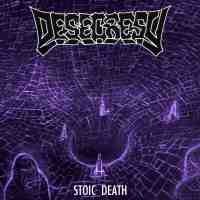
There are roughly 5 good releases for me every year, with my favorite being Desecresy.
Good, better, best: there are relatively few things I listen to regularly at this point, since oftentimes “good” is not enough and “better” is not of enduring spiritual utility enough to keep throwing on the player. There are probably two types of music fans, those who listen for novelty or uniqueness, and those who like enduring power. The latter probably listen a lot less widely but more deeply (etc).
Do you remember when the glam trend died, and suddenly there were all of these two-bit hair bands floating around who could not even get a gig at a 7-11? Same with alternative ten years later. The new kiss of death is recording a dozen albums of postmillennial pop and then getting $240 a year in Spotify residuals.
Yeah you think most people are hip to von and molested? No bro they’re listening to metalcore and they’ve glossed over some newer obituary and immolation. Maybe demilich stood out for them. I’m at a busy rehearsal complex next to a busy venue every day. Bands practicing, musicians hanging out everywhere. People aren’t listening to the good shit. At least the guy that runs the studios can lay down some mean bach on the guitar.
I’ll still chug a beer and jump in the pit to any old half decent metal or punk band giving it all they got because I like to have fun. But let’s be real, people are not listening to the classics.
People are always chasing the latest trend. 99% of them will fail. Most musicians, even talented one, achieve nothing with their skills.
Yeah you can say that again. I’ve heard hundreds of touring metal bands running through their sets at this point (the better part of the stuff coming through here is metalcore and emo bands who think they’re playing black metal) and the dedication and technical skill required to do that is commendable but the music makes me want to puke. Not to mention all the lame funk bands, jam bands, rock cover bands and folk singers, doing record release parties, basically practicing their jive for the day Rolling Stone wants to do an interview…I mean good for them and all that you know but it’s so low energy and cringe…toothless stuff.
I knew Brazilian metal was quirky but this is just ridiculous:
https://youtube.com/watch?v=oA3qHWpRXCo
Power metal is merely weak heavy metal.
Any power metal that becomes good, stops being power metal and becomes heavy metal.
If I am wrong, change my mind
Power Metal is what the bois need playing their tabletops and video games.
Counter argument: Good power metal is actually speed metal (and not Brett’s gay definition, Metallica, Slayer, Kreator etc, are thrash, deal with it). Speed metal has a smoothness to it, granted it makes it less favorable than thrash, but I thought we’re supposed to disagree with the masses around here?
Dragonforce is the epitome of this.
Helstar — Nosferatu and Cauldron Born — Born of the Cauldron would both seem to contradict this.
Metal can be pop or art. The two do not cross over. Another axis is that it can have varying degrees of suck. Another is slickness, production another.
Length, girth, angle of penetration. YUMMY metal only plz!
If I get under a bunk bed I can put my feet on the topbunk then walk them forward to where I can jack off into my mouth.
It’s time for beer reviews with hipstery artwork.
I tortured AI into making this.
Hope u like
Top 50 BM Albums × Computer / Internet / Office Jargon — Updated Run
1. Darkthrone — A Blaze in the Norton Sky
2. Mayhem — De Mysteriis.com Sathanas
3. Bathory — Under the Sign of the Stack Mark
4. Emperor — In the NetSuite Eclipse
5. Burzum — Hvis Loading Tar Oss
6. Dissection — Storm of the Site’s Downtime
7. Beherit — Drawing Down the Mainframe
8. Blasphemy — Fallen Angel of DOS
9. Sarcófago — I.N.R.I. — Internet Not Responding, Idiot
10. Darkthrone — Transilvanian Buffer
11. Bathory — Blood Firewall Death
12. Burzum — Filesystem
13. Emperor — Anthems to the Weblink at Dusk
14. Bathory — The Reboot……
15. Immortal — Printer Holocaust
16. Master’s Hammer — Runbook
17. Rotting Christ — Thy Mighty EULA
18. Samael — Ceremony of Office Suites
19. Venom — Slack Metal
20. Enslaved — Vikingligr Firmware
21. Marduk — Those of the Unlogged
22. Satyricon — Nemesis Daemon
23. Gorgoroth — Pentiumgram
24. Ulver — Bugtatt
25. Ved Buens Ende — Written in WordPerfect
26. Mütiilation — Vampires of Black Imperial BIOS
27. Deathspell Omega — Si Mainframe Reqvires, Circvmspice
28. Weakling — Dead as Dreamweaver
29. Mystifier — GUIetia
30. Profanatica — Profanatitas de Deploymentia
31. Archgoat — Whore of Botnetlehem
32. Impaled Nazarene — Tol Prompt Wordz Wordz Wordz…
33. Abigor — Netschymnen
34. Summoning — Minas Middleware
35. Ildjarn — Forest Protocol
36. Demoncy — Domaincy
37. Black Witchery — Desecration of the Holy Keylogger
38. Bethlehem — Dictius Te NetWare
39. Varathron — His Majesty at the Spam
40. Necromantia — Scarlet Evil Witching Bash
41. Sacramentum — Far Away from the SunOS
42. Nifelheim — Nifelhack
43. Arckanum — Fran Motherboard
44. Dark Funeral — The Secrets of the Black Dashboard
45. Vlad Tepes / Belkètre — March to the Black Command Line
46. Leviathan — The Tenth Subnet of Suicide
47. Xasthur — Nocturnal Processing
48. Drudkh — Autumn Errora
49. Hate Forest — Hate Folder
50. The Ruins of Beverast — RAM Upon the Impure
Any way
Do I have to fuck black pussy forever huh?
I can stop being a black man?
Can I be half Korean
Hell can I clone some bitches to fuck? Or marry…
Are chicks less intelligence than men
What the bell curve say about women Brett?
So says
The mesoleptos mathgod mutilatorcons
Mauisaurus prime raprockzilla
Mosasaur medieval metal
Murder hornet police
Is it my fault I’m not fucking jlo Rita ora Maori jap nuyorican hoes?
Can I just grow a bitch instead?
You have to hit rock bottom. Metal is dead… now we can rebuild. Long live metal! 1488 666 420 o/
Hahaha I’m not into rap at all….
How about rap metal
BLACK NATIONALIST RAPMETAL
U COOL WITH THAT?
A BLACK METAL NWA
A METAL TOO SHORT
A METAL E 40
SLAYER WU tang
The belodon evil gods
Black Hawaiian raprockzilla
Basilosaurus prime metal
Brancasaurus termite police
The Dacentrurus armatus primezilla
Rap metal police
Haha
What’s worse
Irish rap metal
Or jewish rap metal
Hahaha
Fear the mud with a iphone!!!!
Dude you ever heard of Matisyahu?