Some issues crop up again and again because they are unresolved.
Others crop up because they are stupid, and therefore attract idiots, who want to make drama out of them.
Each year, Revolver publishes a collection of features focused on female bands and band members (and often more inexplicable choices, like tattoo artists or actresses) replete with lots of big pictures splashed across its pages. Ostensibly, the goal is to provide exposure to the women of metal, and celebrate them for their talent and brains as well as their beauty—think Miss America’s “scholarship” competitions with less world peace and more devil horns. But the ladies’ musical backgrounds and achievements often play second fiddle to their luminous cheekbones or dangerous curves.
It usually ends up as Revolver’s highest grossing and most popular issue of the year. That doesn’t mean everyone likes it. Critics—I’m among them—ask why it is that the magazine sees the need to put together a “special edition” once every 12 months, instead of choosing to allocate equal coverage to start with. Revolver seldom gives in-depth coverage to female musicians or bands during the rest of the year; the women are almost always relegated to the now-regular “Hottest Chicks in Metal” one-page feature that graces each issue. The insistence upon segregation, separation, and sexuality has plenty of feminists baying for blood. – The Atlantic
Some women in metal want to have it both ways: they want to be a big deal for being women, and they want to pretend that we should just treat them like one of the boys. Neither is possible. It is impossible to notice the differences between people, including gender. Also, since we are biology, much of our agenda in life is to find attractive mates and if possible, reproduce with them.
“Women in Metal” as a thread or post has now occurred 75,000 times on the internet. Every single time it becomes this: women complaining about not being seen for who they are, while men post pin-ups of women in metal and ogle them like streetwalkers.
I have a suggestion for both groups: men, instead of trying to be all “gender neutral” by noticing women in metal “who are exceptional because not only are they in metal, but they’re women too” (you hear this line or variants of it a lot), stop pretending. Notice women for what they are and unleash your inner beast. You are here to drool. You could do it politely and maturely — well, that’s a bigger topic and out of reach for most, since metal attracts social retards along with the interesting people.
Women, try this: stop being two-faced about your gender. Either make it on your own merits, without the “and she’s a woman too” tag, or be comfortable being cheesecake and realize that it’s part of the rock ‘n’ roll culture. Rock likes easy sex because it’s growing up music for pimply teenagers. Face those facts. But stop trying to milk the woman angle when convenient, and then becoming “outraged” that someone would notice, after you’ve been whoring yourself out for years.
And to the writers at The Atlantic: I miss the old days of your publication, when you insisted that writers have both college degrees and functioning brains.
10 CommentsTags: media
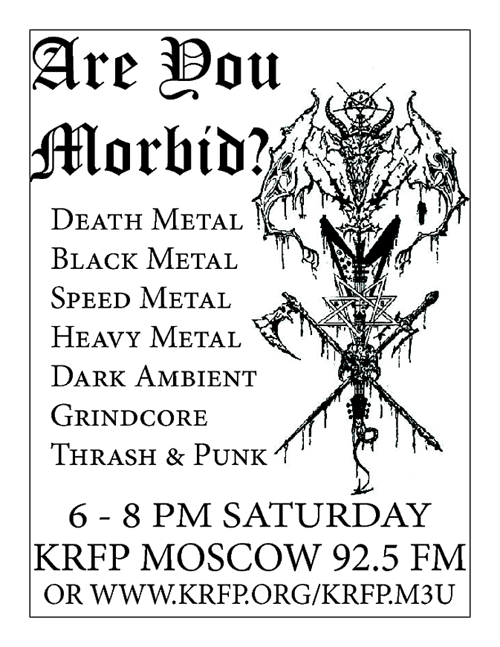 From 1995 to about 1999, the old underground tried to live on in a new modern form. Then it collapsed, and what took over was an indie/alt-rock hybrid of metal that lost the raw aggressive spirit of metal and replaced it with self-pity. Starting in 2006 or so, the revival of the underground began. A new radio show is helping blast that door wide open with a solid diet of underground death metal, black metal, grindcore, speed metal, thrash (crossover), and hardcore mixed in with dark ambient and possibly classical music. Meet Devolved, the voice and choice of music behind the show.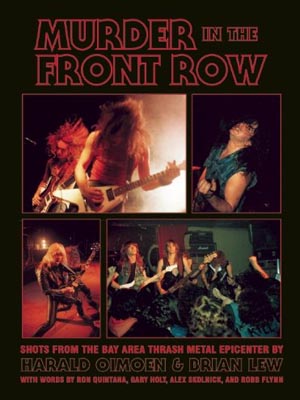
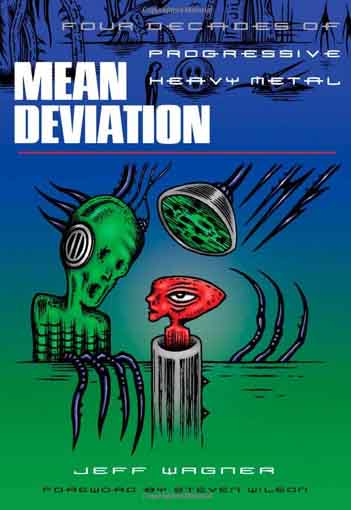 Human progress will forever be linked to those most primal memories of our species, wherein there emerged that intrepid curiosity that formed the crux on which history could be built. Moreso than the will to merely survive and subsist, it was the will to forsake the paradise of safety and pursue instead the harsh, untamed dusklands of the unknown, where intense tribulation could reveal the fiercest potentials of the few that could overcome. Within the realm of music — that most iconically Romantic of arts — this sentiment persists as a striving to expand the capacities of willful expression into an all-encompassing whole, swelling into symphonic full bloom during the 19th Century. But now, in the dreary modernity that constitutes post-World War II planet Earth, Metal music has proven to be an improbable successor to this upward-climbing composing ethos, and its 40-year history itself resembles less some linear development than it does the genealogy of a warrior race: evolving as one from troglodytic Rock origins, but then splintering into variegate subdivisions as established kingdoms become ever stiflingly overpopulated. If it is those most radical of subdivisions commanded by wildcat eccentrics, hermitic technicians, and sadistic savants that best define the nebulous label that is “progressive metal”, then ‘
 Now it’s apparent that ‘Mean Deviation’ surely has its points of contention, but then again the book’s stated aim isn’t to illustrate a concrete and ontologically-sound definition of what progressive metal is, nor is it out to namedrop every single band that may have garnered the label through whatever happenstances of popular delusion. Essentially, the book’s aim really is as simple as what its title conveys: to reevaluate the Metal timeline with a specific interest in whatever was outstandingly highbrow and/or shunned by the