What is life? Either you are working toward something or trying to find a way to pass the time. The real losers are not the people who lack the fancy objects that are the trend at the moment, but those without purpose to life, as they will always be unhappy in the deepest parts of themselves. Unhappy people demand music that is as hollow, vacuous and purposeless as they are, but such music makes bad listening for people who are here to make the most of life. We separate the tryhards and imitators from the real music amidst a shower of hipster poseur tears with the Sadistic Metal Reviews…
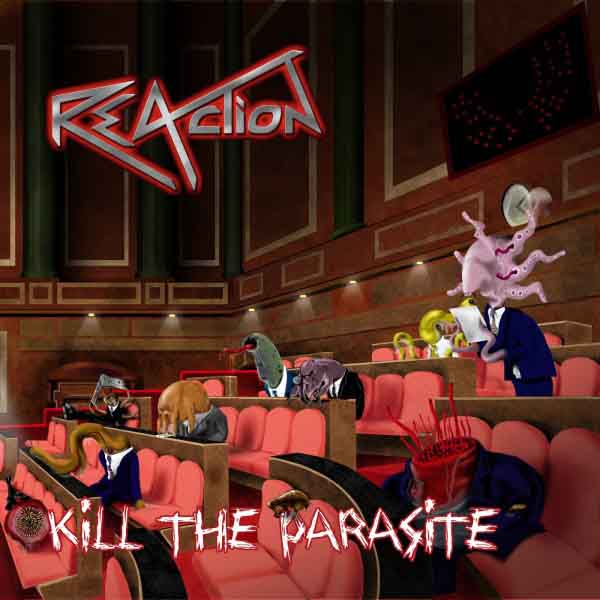
Reaction – Kill the Parasite
In the land of Pudouaccian, there are hairless creatures with smooth features and no teeth who call themselves Pudouaccians, and they spend their days attempting to “ouacc” (pronounced: whack) — a term for stimulate in lieu of reproduction — their “puds,” which is how they refer to their androgynous oversize genitals through which they see. Pudouaccians exclusively listen to music that combines the most rock ‘n roll aspects of heavy metal into a speed metal format, and tie it all together with a compelling rhythmic vocal that aims for choruses you can repeat like political slogans and verses with the energy of dishwasher detergent commercials on television. Although the title that gives a message we should all take to heart every day, because parasites are the most common creatures in nature and serve no purpose to their host except to exhaust them and lure them into continued bad decisions — like buying this album — so they become easier prey for the siphoning of their energy to support the parasite. Much of this release follows the power metal model of vocal-led melodic riffing with extended solos that comment on the song like a concordance, but a good deal of the groove plus heavy cadence riffing of later Pantera occupies the field as well. What really kills it is the vocals because when you make the vocals lead the music, songs cease to become compositions and instead become life support systems for a single instrument (vocals) which has overstepped its bounds, and thus they resemble a Hollywood actor and entourage more than a military time operating in smooth coordination to do something interesting. Many of the riff forms on this album come to us from the classic hard rock through NWOBHM lexicon, and while that should not disqualify anyone, nothing here is applied in a way specific to this band, leading us to wonder why it should exist at all.
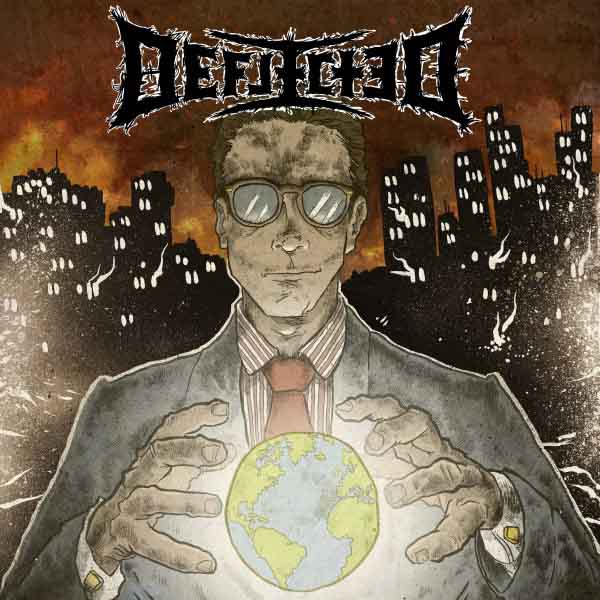
Deflected – Deflected EP
From an armchair metalosopherTM, Deflected presents an interesting challenge. It applies the Pantera brocore method of stop/start riffing with pregnant pauses creating a primitive groove, but does so in the context of South American style speed/death metal with riot shouted choruses and fast energetic riffs, then slowly works in melodic death metal influences. The primary instrument remains the voice which often more resembles what would go on in a hardcore band or the shouts of Phil Anselmo than anything from recent metal, but it runs into subtly musical accompaniment from guitars, bass and drums who try to background themselves to these metalcore-styled vocals. Unfortunately, the result by being skewed toward the vocals cannot maintain the continuity essential for atmosphere and so is forced to rely on an increasing number of stunts and riff changes which borrow freely from forty years of metal but never coalesce into a voice. As a result, these sound like songs with stuff added on, rather than entities of their own possession developing out of influences. While many of the melodic riffs enter at about the right time to provide an emotional component, it is obliterated by the randomness of the rest of the song and the ranting vocals, and comprises the generic “mixed emotions” major-minor transition common in all rock music. Even the Iron Maiden styled harmonized guitars produce nothing more than an entry point for the head-nodding rhythm in the hands of the vocals. If this band wants to get anywhere, they need to stop trying to hide their metalcore and go fully into that style, or stop fence-sitting and pick a metal style or invent a new one.
Blackwingedsheep – Red Sheep Red
When direction is too hard, mix ‘n match bits of the past and maybe you have something “new” like those horrible 1970s casseroles that mixed leftover chicken with random ingredients from cans and put cheese on top. I lived in terror of those things because any time I spent the night at a friend’s place, his Mom was sure to haul out one of those for dinner and then I would end up crouching in the dark eating small animals after feeding my portion of the glop to the dog. The worst part was that since word gets out slowly through humanity, Moms — and sometimes their misguided offspring — were cooking up these disasters well into the late 1990s at which point everyone threw in the towel and started just buying pre-prepared food in anticipation of civilization collapse. Blackwinged Sheep is a lot like those casseroles: 1980s downstroke-crazy speed metal mixed with chromatic grindcore fills, on a death metal rhythm, with choruses that emphasize high contrast melodies with broad interval leaps much like early progressive metal experiments like Pestilence Testimony of the Ancients. The result is music that spends most of its time in very concrete rhythm work and then launches into melodies that go nowhere, creating a sense of constant disruption and destabilization with no shape to it, which in turn grants the music a wallpaper effect. No matter how much they vary technique within this formula, the musicians behing Blackwinged Sheep cannot escape the formula, and so they apply it with even more extreme technique which just results in more pounding. Most of the verse riffs on this album could have come from Coroner, and the chorus space-outs from any number of newer acts. Ultimately, while this band has a good grasp of rhythm and a few impressive riffs, it fails to knit this together as anything other than a kind of vocal theater where the lyrics and voice are supposed to give form to otherwise an indistinguishable flood of very similar elements that are not particularly evocative or distinctive from each other. With the perspective of metal as a melting pot of its own styles, this band has found a way to update the 1980s content and make it easy to keep churning out the same even in the midst of self-proclaimed iconoclasm.
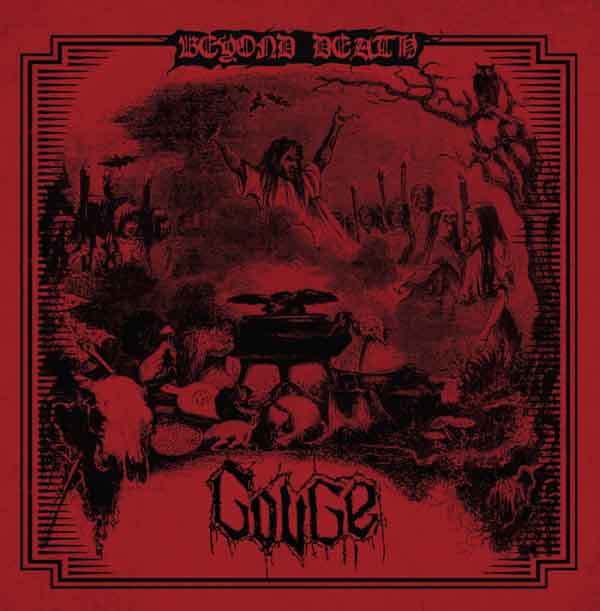
Gouge – Beyond Death
Gouge makes energetic but harmonically basic grindcore that tends to use a death metal approach to framing rhythm, but reverts to speed metal and punk riffs frequently. The result uses established riff forms and, while it presents an aptitude for transitions and keeping a compelling rhythm going, ultimately becomes nearly stupefactive because it has zero development of tone. The verse and chorus riffs are variations on the same few notes and capture no particularly compelling melodic or harmonic tension, which results in the entire composition having the effect of a chromatic rhythm work with periodic random insertions of whole and melodic intervals. For influences, clearly these guys spent a lot of time studying Repulsion Horrified whose layering of vocals and guitar shred prevails throughout this release. However, where Repulsion worked carefully to have distinctive riffs, Gouge falls too quickly into hardcore punk tropes, making it a lot more like later Napalm Death without the pretensions of progressive styling. The high-speed approach imparts a good deal of energy, but without some more to hang it on, this becomes another panic indicator like the weekly news, angry questions from the boss, or car horns all night long from the city. Others might compare this to Terrorizer for its tendency to drop back to open riffs of fast tremolo to contrast single-picked slamming patterns, a technique which keeps a constant texture pulsing faster than the drums, conveying a sense of urgency in contrast to the pace of life. However, where Terrorizer stripped down to a focal point, Gouge focuses on rhythm and tucks everything else into place, sometimes dropping in bluesy solos to hope to unite the disparate. By halfway through the album, the band has run out of steam and is revisiting old hardcore punk tropes to try to inject new life where none remains. There is a lot to like about this release — good energy, some creative riffs, good transitions, old school sensibilities — but when taken as a whole, there is no reason to listen to it again unless you like disorganization and the urgent sounds of social decay.

Haethen – Shaped by Aeolian Winds
Why did most writers leave metal to the people who eagerly type in praise for anything that they feel, being new, will bring them personal renown for bandwagon-hopping? The reason is simple: almost all metal reviews these days must mention how the elements of each song are good, but that they do not create something larger than their arithmetic whole, with that process being the essence of art itself. If you pile together a group of good riffs randomly, or put together a song that focuses so much on form that it forgets content, the result is a listening experience that is pleasant enough when distracted but unsatisfying if you set aside whatever else you are doing and listen alone to the work. Haethen combines flowing Graveland riffs with high-energy Drudkh-styled sweeping melodic passages but does so in a way that inevitably tends toward both randomness and too much fixed structure, which means that nothing is communicated. Moments of beauty occur and it is crushing to watch them wasted, but the riff technique here is so similar between songs that it is difficult to claim more than one riff of each archetype in favor of this album. The real problem is that the songs are boring, whether from predictable patterns or a lack of relationship in linear progression from the elements of them, and as a result while this album would sound great in the background of a record store or while distracted by paperwork, it does not retain strength as a listening experience alone. This is unfortunate as many respected sources have endorsed this release, and it clearly shows aspiration toward an older and purer style of black metal, but “I must speak as I find,” and Shaped by Aeolian Winds goes nowhere.
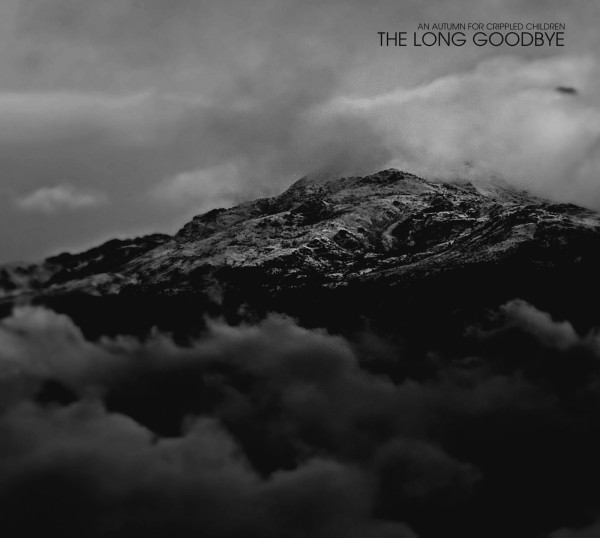
An Autumn for Crippled Children – The Long Goodbye
This album falls within the “post-metal” camp although labels like to play the carnival sideshow game and claim that whatever pap they’re pumping “just cannot be classified” and then are careful to mention that it has “elements of” followed by the keywords of their target markets, all while not mentioning what it actually is. Simple formula: 1990s indie rock for verses, 1980s post-punk for choruses. Add a detour bridge or turnaround for that proggy feel. Then put crustcore vocals over the top of it, making them really dramatic and energetic to imply some kind of torment or passion, and claim that this is related to black metal so that you can get the edgy fedora kids to buy it. The Long Goodbye is a musical and artistic sham, but mostly just false advertising: this is 20-year-old music re-shaped for a new generation because disguised imitation is the business model of the music industry. While none of it is strikingly incompetent or poorly produced, in the way that underground metal can both be, none of it is compelling either. Once you see through the first level of artifice, nothing beneath remains. Essentially the same intervals — derived from emo and progressive punk and the rest of the indie spectrum — are used throughout, as well as the same devices, with only vocals to differentiate them, and the vocals are totally non-compelling. This album is mental entropy in a convenient package, with a trendy name, trendy production and faddish packaging because it is designed as a product for morons who are in denial that they are morons and thus are, like Opeth fans, compelled to buy the most pretentious, intolerant (because anything else is just musically less advanced, which is how hipsters say “inferior” indirectly by implication and yet say it all the same) and yet innocuous music possible. Your Mom could nap to this because it is completely non-controversial. No strong emotion, just self-pity and the usual bittersweet minor-key noodling to make you feel as if the problem is that you are misunderstood and not that the world needs us to creep out of our little shells and actually, you know, do something sane and realistic instead of narcissistic and delusional like everyone else. This album attempts the artistic equivalent of changing every dictionary so that the entry for “retarded” says “genius” and vice-versa, such that soon we would elect an Emperor with trisomy 21 and throw out our Beethoven and Darkthrone to favor two-note droning crap like An Autumn For Crippled Children. In summary: A Product For Crippled Minds.
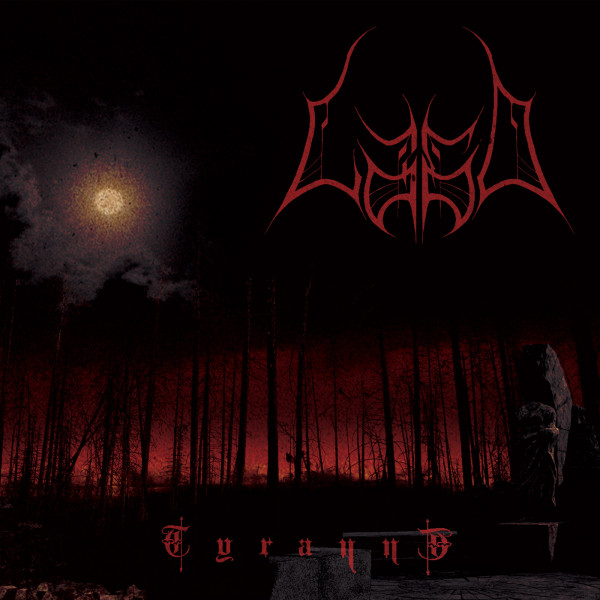
Lago – Tyranny
The forefront of the metal industry — and industry means a group of rent-seekers supporting each other in quasi-collusion to do roughly the same stuff so the profit can keep flowing and costs can continue to be externalized through enforcement of mutual interest — consists these days of bands like Ara and Lago who are trying to hybridize deathgrind in the Unique Leader style with the metalcore/progressive metal that has been floating around for several years after rising from its archetype in the late years of punk, when “progressive” pop punk bands wrote longer songs based on high contrast between riffs to the point of incoherence, as if trying to emulate Black Flag The Process of Weeding Out without the heavy thematic load that album carried. This made sense for punk since when a genre has expressed its core ideas, no more can be done with them but to convert them to technique and to add complexity to hide the basic archetypes that would be revealed by simplicity (bands, after all, have to make product or they fail, both economically and in the economics of social prestige, where the members want to be known as the guys from that hip avantgarde whatever from wherever for the rest of their lives as industry insiders or hipsters working at local bookstores). The consequence of the deathgrind/metalcore hybrid is that bands incorporate the jazz/progressive/shredder stylings (equal parts Kenny G, Dream Theater and Joe Satriani) into more pummeling material that tries to unite itself in the way older death metal did, or at least to the level that Gorguts Obscura aspired to. This tames the most random and hopeless aspects of progressive punk and metalcore but can end up emphasizing the trivial aspects of death metal instead of its ability to knit together riffs and song structures to create journeys of discovery that were equal parts psychedelia and H.P. Lovecraft styled exploration of the morbid, realist subconscious. Lago demonstrates an ability to make competent Unique Leader styled deathgrind, complete with pig squeal vocals and constant high-intensity double bass, but to work into it both the more harmonically advanced riffs and instrumental interludes that the newer progressive variants feature. The result alternates between riffs so simple in conception that they make bricks bash their heads against walls, and instrumentals much more like progressive rock than metal. While Lago is among the best of the breed, the fusion isn’t there yet, because the parts separate instead of working toward a common intent. Still, these songs come together better than just about anything else in the sub-genre, and make Lago a band worth watching for the future.
- Mistweaver – “The Greatest Threat”
Core is the new glam. This song combines flowing MTV choruses with uplifting melodies and the nu-metal form of degraded speed metal chugging riffing into a black metal song format with gentle keys interacting with tremolo riffs. This many spare parts can only be glued together by the most basic central element, which genericizes the song; in fact, the more out there music tries to be, the less its parts become compatible and the more generic it becomes at its core. This could be the latest Steel Panther video if the glam band decided to be slightly darker in theme and adopt techniques from Metallica, Emperor and Morbid Angel, who are (roughly) the most defining acts of the past 30 years. Combinging them makes everything weaker.
- Stages of Molestation – “Cadaveric Molestation”
This band made itself many fans by varying its chortling guttural death metal with really basic old school death metal informed by the Swedish and Northern California scenes. The problem here is that, while these songs are catchy, they are so harmonically, melodically and riff-structurally basic that they do not merit a second listen. The band is on to something with the style itself however.
Tags: an autumn for crippled children, blackwingedsheep, death metal, deathcore, deathgrind, deflected, gouge, haethen, lago, metalcore, mistweaver, post-metal, reaction, sadistic metal reviews, Speed Metal, Speed/Death, stages of molestation
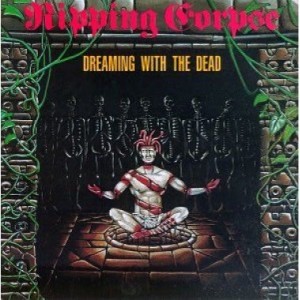
 Although the adverse effect of retaining such past influences would be that some later songs still structure themselves around anthemic choruses – a burden that most of Ripping Corpse’s contemporaries had already evolved far beyond – the band manages to employ enough compexity in their compositions to keep up with the demands of their vision. The sound of the guitars may be construed as being weak or mixed poorly, but this lighter texture lends itself well to the progression of riffs from measured punctuations of rhythm to insane variations by way of fucked up artificial harmonics and blastbeaten tremolo sequences. Tempo blurs the lines of what is considered primitive, though the act may be embellished with the jewels of modern society or justified in the name of some ideology. As layers of humanity are removed from the conscious mind, lead guitars erratically and uncontrollably rip through passages and bring a microcosmic level of culmination within a song, like the fleeting screams of demons being exorcised from a long tortured soul.