




Introduction
As the Romantic philosopher Friedrich Wilhelm Joseph Schelling emphasizes in the following passage, art is the most direct expression of nature’s truth, and philosophy can only artificially reconstruct the natural truths that art is able to access so intimately: “Art is paramount to the philosopher precisely because it opens to him, as it were, the holy of holies, where it burns in eternal and original unity, as if in a single flame, that which in nature and history is rent asunder and in life and action, no less than in thought, must forever fly apart. The view of nature which the philosopher frames artificially is for art the original and natural one.”[1]
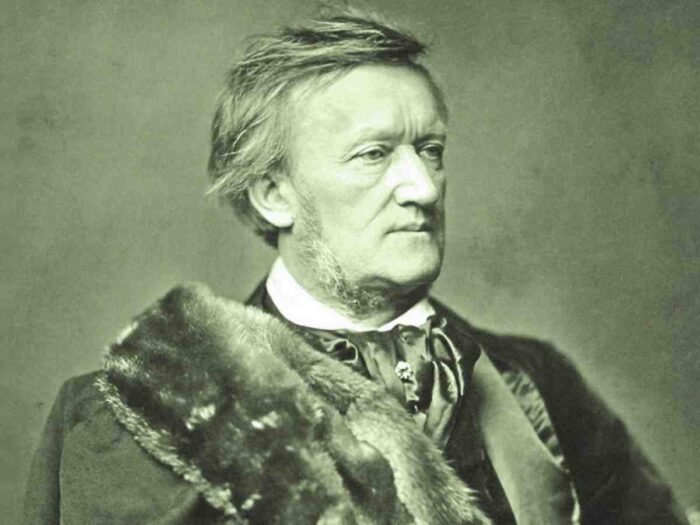
From this view that art holds such an exalted status in conveying nature’s truths, even above philosophy, it becomes productive to examine one of the most celebrated composers of the Romantic period, Richard Wagner, for the sheer fact that he constructed what he believed to be the culmination of art itself in his notion of Gesamtkunstwerk (Total Work of Art) as expressed in his essay The Art-Work Of The Future,[2] which factors in nature as a fundamental element of art.[3] Such an inquiry involves not only the philosophical influences that shaped his thought, including the ideas of Ludwig Feuerbach and Arthur Schopenhauer, but also how these thinkers themselves revered nature. By placing these influences alongside Wagner’s own writings, we can better assess the extent to which his conception of the relationship between art and nature aligns with Schelling’s espousal of art as the best conduit for nature’s truths. However, before turning to that comparison, it would be remiss not to address Wagner’s relationship with Friedrich Nietzsche.
Nietzsche
Wagner was immensely drawn to philosophy,[4] and evidence of his engagement with it can be found in his personal relationship with the philosopher Friedrich Nietzsche, with whom he initially shared a close friendship before their eventual falling out. In the early years of their association, Nietzsche regarded Wagner as the heir to Dionysian music in Germany. As he put it in The Birth of Tragedy: “Out of the Dionysian foundation of the German spirit a power has arisen which has nothing in common with the most basic assumptions of Socratic culture, something those assumptions cannot explain or excuse. Rather from the point of view of this culture it is experienced as something terrible which cannot be explained, as something overpoweringly hostile – and that is German music, above all as it is to be understood in its forceful orbit from Bach to Beethoven, from Beethoven to Wagner.”[5]
However, his tone shifted after the two had a falling out. By 1888, according to Nietzsche, Wagner seemed to be everything wrong with German music. He thus attacked Wagner on multiple levels in The Case of Wagner.[6][7][8][9][10][11][12][13] The most relevant Nietzsche excerpt for this project comes from Nietzsche’s other book attacking Wagner, Nietzsche Contra Wagner: “Let us remember how enthusiastically Wagner at one time walked in the footsteps of the philosopher Feuerbach. Feuerbach’s words “healthy sensuality” struck Wagner in the thirties and forties very much as they struck many other Germans – they called themselves the young Germans – that is to say, as words of salvation.”[14]
Feuerbach
Ludwig Feuerbach is mainly relevant today because, as Nietzsche said, he was one of the young Hegelians (what Nietzsche called the “young Germans”). His philosophy serves as a bridge between Georg Wilhelm Friedrich Hegel and Karl Marx. However, it is important to understand Feuerbach’s reverence for nature and his view that theological concepts are projections of it, as he seems to have had a profound influence on Wagner, as Nietzsche alluded to.
One might argue that Wagner’s Ring Cycle, Der Ring des Nibelungen, reflects an inherent Feuerbachian perspective, insofar as the Germanic deities Wagner remythologizes, such as Wotan, can be understood as projections of human nature. This would be in league with Feuerbach’s view that theological concepts are, in essence, expressions of mankind’s ontological place in natural world. As Feuerbach explained in The Essence of Christianity: “Man – this is the mystery of religion – projects his being into objectivity, and then again makes himself an object to this projected image of himself thus converted into a subject; he thinks of himself as an object to himself, but as the object of an object, of another being than himself. Thus here. Man is an object to God.”[15]
Here, we are drawn back to the natural world for higher truths, and Feuerbach is not hesitant to express his reverence for nature, that it thereby exists, for us, as the foundation for the theological hypotheses that we project onto it, which is nature expressing itself through us. As he further elucidates in The Essence of Religion: “That being which is different from and independent of man, or which is the same thing, of God, as represented in the Essence of Christianity, – the being without human nature, without human qualities and without human individuality is in reality nothing but Nature.”[16] He further clarifies that theological hypotheses are derived from the nature world: “The Divine Being which is revealed in Nature, is nothing but Nature herself, revealing and representing herself with irresistible power as a Divine Being.”[17] This leads us back to how we ourselves are conduits for nature:
The belief that in Nature another being is manifested, distinct from Nature herself, or that Nature is filled and governed by a [difference] from herself, is in reality identical with the belief that spirits, demons, devils etc., manifested themselves through man, at least in a certain state, and that they possess him; it is in very truth the belief, that nature is possessed by a strong, spiritual being. And indeed Nature, viewed in the light of such a belief, is really possessed by a spirit, but this spirit of man, his imagination, his soul, which transfers itself involuntarily into Nature and makers her a symbol and mirror of his being.[18]
While Feuerbach never explicitly mentions art as expressing nature’s truths, Wagner, being influenced by this philosophy, makes the connection: “AS Man stands to Nature, so stands Art to Man.”[19] Here we see that Schelling’s view of art expressing nature’s truths better than philosophy finds some basis in Wagner. For him, under Feuerbach’s influence, nature pervades man, and as art pervades man, it too becomes an expression of nature. Here nature is the fundamental principle that drives mankind and its expressions.[20] As Bryan Magee reinforces in his book Wagner and Philosophy in the chapter titled “Wagner, Feuerbach and the Future”:
Nature exists independently of all philosophies. It is the foundation upon which we, who are ourselves products of Nature, are constructed. Beyond man and Nature nothing exists, and the higher beings that our religious fantasies have created are nothing but the imagined reflections of our own individual existence.”[21]
Schopenhauer
While Feuerbach’s early influence on Wagner makes it clear that nature played a crucial view in his artistic output, and that the Germanic deities in the Ring Cycle function as expressions of human nature rather than divine figures, later in life he came to admire the thought of Arthur Schopenhauer more. It was while Wagner was writing the second part of the Ring Cycle, The Valkyrie (Die Walküre), when he first read Schopenhauer’s magnum opus, The World as Will and Representation. Magee provides full articulation:
Obviously Wagner must have been working at the same white heat as his music. This makes it all the more difficult to grasp, though it is neverless a fact, that it was during the autumn of 1854 that he read for the first time Schopenhauer’s The World as Will and Representation, one of the longest, most demanding masterpieces in this history of philosophy – two large volumes totalling well over a thousand pages. And not only did he read it, he was bowled over by it; it was to have more influence on him than anything else in his life. Thomas Mann puts this badly: ‘His acquaintance with the philosophy of Arthur Schopenhauer was the great event in Wagner’s life. No earlier intellectual contact, such as that with Feuerbach, approaches it in personal and historical significance’ (Essay of Three Decades).[22]
Wagner’s love for Schopenhauer’s philosophy is as well-documented as his tumultuous relationship with Nietzsche. Moreover, Wagner tried to contact Schopenhauer by sending him his libretti. Wagner recalls this event in his autobiography titled My Life (Mein Leben):
All my subsequent occasional writings about artistic matters of special interest to me clearly demonstrate the impact of my study of Schopenhauer and what I had gained by it. Meanwhile, I felt impelled to send the esteemed philosopher a copy of my Nibelung poem; I appended to the title in my own hand only the words ‘With admiration’, without any other communication. This was in part a result of the great inhibition I felt about confiding in him, and also due to the feeling that if Schopenhauer could not figure out from my poem what kind of person I was the most comprehensive letter on my part would not help him to do so. Thus I renounced any vain wish to be honoured by a written response from him. . .[23]
Schopenhauer did receive Wagner’s libretti. Unfortunately, the occasion proved to be futile, as Wagner failed to gain his admiration. Schopenhauer had much to say about the literary shortcomings of the Ring Cycle, as he scribed an abundance of harsh criticisms throughout the pages Wagner had sent.[24] For the composer with such a penchant for philosophy, his attempts to befriend philosophers proved to be blunders: Schopenhauer mocked his writing style and Nietzsche wrote two works (The Case of Wagner and Nietzsche Contra Wagner) lambasting him and his music.
One could argue that if Schopenhauer had actually heard the Ring Cycle instead of merely reading and dismissing its libretti, his opinion of Wagner might have been different. This remains true even though programmatic music such as opera did not hold his highest ideal of the arts, for that is reserved only for absolute music; music for its own sake. As Nietzsche originally observed, Wagner’s musical innovations represent the culmination of the path that Ludwig van Beethoven had set in motion, a composer whom Schopenhauer greatly admired.[25]
Regardless, Schopenhauer’s magnum opus, The World as Will and Representation, does indeed express reverences for nature that prove productive for this project. In league with Feuerbach’s perspective, Schopenhauer stated: “Dogmas change and our knowledge is deceptive, but nature does not err: her action is sure and certain, and she does not conceal it. Everything is entirely in nature, and she is entirely in everything.”[26] Moreover, Schopenhauer also deployed quotes from Romantic poets who revered nature. An example of this is how Lord Byron is conjured to express the unity of the individual with nature:
Now whoever has… become so absorbed and lost in the perception of nature that he exists only as a purely knowing subject, becomes in this way immediately aware that, as such, he is the condition, and hence the supporter, of the world and all objective existence, for this now shows itself as dependent on his existence. He therefore draws nature into himself, so that he feels it to be only an accident of his own being. In this sense, Byron says: ‘Are not the mountains, waves and skies, a part of me and of my soul, as I of them?’[27]
This unity that Schopenhauer is conveying is that everything of the same metaphysical principle, the will, thus nature in all its phenomenal manifestations and the individual are objectifications of the same substance, which only appear different from us because of the modes of our cognition.[28] And, because our cognition is more advanced than animals, which Schopenhauer draws a blunt picture of how rational people hold their heads freely on their shoulders unlike animals with their heads oriented towards the ground being ruled by their carnal bodies,[29] we can thus gain insight into nature itself.[30] This insight into nature, however, doesn’t lead to what Schelling described as the “holiest of holies,” but rather that the will is an insatiable blind force that produces suffering; a most hellish of hells.
It is often claimed that Wagner was strongly influenced by Schopenhauer’s account of the will after the completion of the Ring Cycle and incorporated aspects of it into his later operas. One such work, Tristan und Isolde, is often considered thematic of Schopenhauer’s ideas.[31] However, the Romeo and Juliet–like love-death (Liebestod) in the opera is not Schopenhauerian by any meaningful measure. It distorts Schopenhauer’s concept of the renunciation of the will, in which suicide is only conceivable as an extreme form of asceticism where one starves oneself to death in sheer denial of the will rather than as a response to the loss of a romantic partner.[32] Such a suicide that Wagner depicts is in fact an affirmation of the will, not a renunciation of it.[33] Schopenhauer makes this very clear: “The suicide wills life, and is dissatisfied merely with the conditions on which it has come to him. Therefore he gives up by no means the will-to-live, but merely life, since he destroys the individual phenomenon.”
Parsifal, the other opera often considered Schopenhauerian, makes a better case, as it espouses asceticism. Milton E. Brener concurs: “Schopenhauer’s book is filled with the call to asceticism. It oozes likewise from the pages of the Parsifal text.”[34] Worldly distractions are stripped away to reach a purer understanding of life.[35] This understanding returns to the unity outlined in Schopenhauer’s metaphysics; the pain of another is not truly different than one’s own.[36] This gives rise to compassion, which Schopenhauer sees as the foundation of his entire ethical system and one that he ultimately grounds in the concept of Eternal Justice.
Wagner
While Wagner’s admiration for Schopenhauer resulted in some of his ethical sentiments being expressed in Parsifal, it must be stressed that Wagner was not a strict Schopenhauerian. In his essay Beethoven, we see how the composer reinterprets Schopenhauer’s aesthetics in his own way, with what seems on the surface to be a lingering Feuerbachian belief that nature pervades all. Music is not given metaphysical autonomy as it is in Schopenhauer’s aesthetics,[37] but is rather dependent on the external world. Wagner makes clear his position:
Our consciousness, which only in gazing at a semblance is enabled to grasp the Idea manifested by it, might at length feel impelled to exclaim with Faust: “What a show! But, alas! a show only! Where shall I grasp thee, infinite nature?” Music gives the very surest answer to such a question. Here the external world speaks to us with such incomparable distinctness, since, by the effect of sound upon the ear, it expresses the very essence of our relations towards it. The object of the tone heard coincides immediately with the subject of the tone emitted; without any mediation of rational conceptions we comprehend the cry for help, or of plaint or of joy, and we answer it at once in a corresponding sense.[38]
This makes it clear that Wagner diverged even from his philosophical heroes and developed his own original philosophical positions. He wasn’t joined at the hip with the ideas of Feuerbach nor Schopenhauer as Bryan Magee infers. As such, more often than not, he should be approached as an independent thinker. As Michael Steinberg declares in The Philosopher’s Ring, the Ring Cycle itself has its own philosophical framework and culminates in a materialist idealism:
[Wagner] was not a philosopher of the first rank, it is true, but his talents in that direction were substantial. Though he was strongly influenced by many of the better-known thinkers of his day, he developed his own theories on topics as diverse as humanity’s place in the larger world, the limitations of human knowledge and the pitfalls of self-consciousness, the social function of art, the historical and cultural influences and constraints on artistic creativity, and the prospects for political transformation. More impressive than that was his ability to bring those ideas together into a single, surprisingly coherent world view.[39]
Conclusion
As influences, Feuerbach and Schopenhauer serve Wagner well in shaping his own outlook, in which art and nature appear as a convergent morphogenesis rather than entirely separate domains. What is needed, then, are further philosophical inquiries along the lines of Michael Steinberg’s work in The Philosopher’s Ring, which seeks to illuminate the originality of Wagner’s thought on its own terms rather than that of his influences. From there, perhaps it will become clear where his theoretical philosophy with its reverence for nature ends and where it is realized more fully in practice through his music, which is in line with Schelling’s proposition that art, not philosophy, is where nature’s truths are laid most bare. But for now, until that task is undertaken, we can always turn to Wagner’s music itself in order to experience those truths.
References
Brener, Milton. 2014. Wagner and Schopenhauer: A Closer Look. Xlibris.
Feuerbach, Ludwig. 1989. The Essence of Christianity. Buffalo, N.Y.: Prometheus Books.
Feuerbach, Ludwig. 2006. The Essence of Religion. London, England. Kessinger Publishing.
Guthke, Karl. “Schopenhauer Reads Wagner.” Wagnersite.nl. https://www.wagnersite.nl/Schopenhauer/Arthur.htm. Republished from Harvard Magazine. Accessed: May 4, 2026.
Magee, Bryan. 2001. Wagner and Philosophy. ePenguin.
Nietzsche, Friedrich, Peter Gay, and Walter Kaufmann. 2000. Basic Writings of Nietzsche. New York: Modern Library.
Nietzsche, Friedrich. 2011. The Case of Wagner, Nietzsche Contra Wagner, and Selected Aphorisms. Gloucestershire: Dodo Press.
Schelling, F.W.J.. 2001. System of Transcendental Idealism (1800). Charlottesville: University Press of Virginia.
Schopenhauer, Arthur. 2012. The World as Will and Representation, Vol. 1. Newburyport: Dover Publications.
Schopenhauer, Arthur. 2012. The World as Will and Representation, Vol. 2. Newburyport: Dover Publications.
Steinberg, Michael. 2026. The Philosopher’s Ring – Wagner as Thinker and Dramatist. Camden House.
Wagner, Richard. 1903. Beethoven. Third Edition. William Reeves Bookseller Limited. London, England.
Wagner, Richard. 1983. My Life. Cambridge: Cambridge University Press.
Wagner, Richard. 1995. “The Art-Work of the Future and Other Works.” The Journal of Aesthetics and Art Criticism 53 (1): 104. https://doi.org/10.2307/431755.
[1] Schelling, System of Transcendental Idealism, pp. 231-232.
[2] Wagner, The Art−Work Of The Future, p. 10. “The great United Art−work, which must gather up each branch of art to use it as a mean, and in some sense to undo it for the common aim of all, for the unconditioned, absolute portrayal of perfected human nature, this great United Art−work he cannot picture as depending on the arbitrary purpose of some human unit, but can only conceive it as the instinctive and associate product of the Manhood of the Future.” Gesamtkunstwerk is translated here as “great United Art-work” but is typically referred to as “Total Work of Art” in English.
[3] Ibid., p. 2. “AS Man stands to Nature, so stands Art to Man. When Nature had developed in herself those attributes which included the conditions for the existence of Man, then Man spontaneously evolved. In like manner, as soon as human life had engendered from itself the conditions for the manifestment of Art−work, this too stepped self−begotten into life.”
[4] Wagner, My Life, p. 429. “I had always felt an inclination to try to fathom the depths of philosophy.”
[5] Nietzsche, Basic Writings of Nietzsche, p. 53.
[6] Ibid., p. 622. “Wagner represents a great corruption of music.”
[7] Ibid., p. 626. “Wagner begins from a hallucination – not of sounds but of gestures.”
[8] Ibid., p. 630. “To say it plainly: Wagner does not give us enough to chew on.”
[9] Ibid., p. 631. “Very decadent.”
[10] Ibid., p. 640. “Wagner has the same effect as continual consumption of alcohol: blunting, and obstructing the stomach with phlegm. Specific effect: degeneration of the sense of rhythm.”
[11] Ibid., p. 641. “Wagner is bad for youths; he is calamitous for women.”
[12] Ibid., p. 642. “[…] I declare war upon Wagner […]”
[13] Ibid., p. 647. “If Wagner was a Christian, then Liszt was perhaps a church father!” This one is especially poignant, being that Liszt was heavily involved in the church and was trained as an exorcist.
[14] Nietzsche, The Case Of Wagner, Nietzsche Contra Wagner, p. 70.
[15] Feuerbach, The Essence of Christianity, pp. 29-30.
[16] Feuerbach, The Essence of Religion, p. 7.
[17] Ibid., p. 12.
[18] Ibid., p. 13.
[19] Wagner, The Art−Work Of The Future, p. 2.
[20] Feuerbach, The Essence of Religion, p. 40. “As the world, as Nature appears to man, so she is, i.e. for him, according to his imagination; his sensations and imaginations are to him directly and unconsciously the measure of truth and reality; and Nature appears to him just as he is himself.”
[21] Magee, Wagner and Philosophy, p. 49.
[22] Ibid., p. 133.
[23] Ibid., p. 136. Wagner’s account in his autobiography of writing to Schopenhauer.
[24] Guthke, “Schopenhauer Reads Wagner.” Wagnersite.nl. https://www.wagnersite.nl/Schopenhauer/Arthur.htm. “Schopenhauer was particularly annoyed, as his vigorous question marks and critical underlinings (sometimes accompanied by multiple exclamation marks) suggest, by Wagner’s artificially archaic vocabulary. Nobody but an expert in things medieval would know today, any more than Schopenhauer did then, that a freislicher Streit is a ‘terrifying quarrel.’ Nor did infelicitous constructions, stylistic awkwardness, and illogical turns of phrase escape Schopenhauer’s angry pencil. Some of these passages are mildly funny, like the one suggesting that Erda does not know–to judge by her syntax in Rheingold–whether she gave birth to her three daughters or whether they were created at the dawn of time. Another such stylistic aberration, which rated one of Schopenhauer’s quizzically amused exclamation marks, eventually caught the dull eye of Wagner himself when he revised his text slightly: Wotan originally says about Wala in Walküre, ‘News I received from her; / but from me she received a child.’ What Schopenhauer found consistently exasperating about Wagner’s style were his characteristic composite nouns, like Felssteine, Felsensaum, Felsspitze (rocks, rocky edge, rocky peak). ‘Ears!’ Schopenhauer repeatedly penciled in the margin in his powerful hand, ‘he has no ears! the deaf musician.’ It is the sound of these and other such difficult words that go against Schopenhauer’s grain. The implication is, clearly, that Wagner is a poet-composer who is at odds with the building materials of his trade, “the deaf musician.” Schopenhauer summed up this criticism in large letters: ‘Language should be the serf of the master.’”
[25] Schopenhauer, The World as Will and Representation: Volume II, p. 450. “Now if we cast a glance at purely instrumental music, a symphony of Beethoven presents us with the greatest confusion which has yet the most perfect order as its foundation; with the most vehement conflict which is transformed the next moment into the most beautiful harmony. It is […] a true and complete picture of the nature of the world, which rolls on in the boundless confusion of innumerable forms, and maintains itself by a constant destruction. But at the same time, all the human passions and emotions speak from this symphony; joy, grief, love, hatred, terror, hope and so on in innumerable shades, yet all, as it were, only in the abstract without any particularization; it is their mere form without the material, like a mere spirit world without matter. We certainly have an inclination to realize it while we listen, to clothe it in the imagination with flesh and bone, and to see in it all the different scenes of life and nature. On the whole, however, this does not promote an understanding or enjoyment of it, but rather gives it a strange and arbitrary addition. It is therefore better to interpret it purely and in its immediacy.” Unfortunately, Wagner’s operas do not fit the Schopenhauerian ideal of absolute music.
[26] Schopenhauer, The World as Will and Representation: Volume I, p. 281.
[27] Ibid., p. 181.
[28] Ibid., p. 161. “Here I must refer once more to the larva of the male stag-beetle which gnaws the hole in the wood for its own metamorphosis twice as large as does the female, in order to obtain room for its future horns. Therefore the instinct of animals generally gives us the best explanation for the remaining teleology of nature. For just as an instinct is an action, resembling on according to a concept of purpose, yet entirely without such concept, so are all formation and growth in nature like that which is according to aa concept of purpose, and yet entirely without this. In outer as well as inner teleology of nature, what me must think of as a means and end is everywhere only the phenomenon of the unity of the one will so far in agreement with itself, which has broken up into space and time for our mode of cognition.”
[29] Ibid., p. 177. “This distinction between man and animal is outwardly expressed by the difference in the relation of the head to trunk. In the lower animals both are still deformed; in all, the head is directed to the ground, where the objects of the will lie. Even in higher animals, head and trunk are still far more on than in man, whose head seems freely set on to the body, only carried by the body and not serving it. This human superiority is exhibited in the highest degree by the Apollo Belvedere. The head of the god of the Muses, with eyes looking far afield, stands so freely on the shoulders that it seems to be wholly delivered from the body, and no longer subject to its cares.”
[30] Ibid., p. 177. “As it is the principle of sufficient reason that places the objects in this relation to the body and so to the will, the sole endeavour of knowledge, serving this will, will be to get to know concerning objects just those relations that laid down by the principle of sufficient reason, and thus to follow their many different connexions in space, time and causality.” Basically, human consciousness for Schopenhauer means coming to know the law of causality as it is present in time and space to then know its character outside of time and space (the will).
[31] Magee, Wagner and Philosophy, p. 219. “Readers will remember that in Wagner the idea of a man and a woman being united in death, released by their love from the need for any further life in this world, goes back through Tannhäuser to The Flying Dutchman; but previously it had been based on rationally unsupported intuition, whereas now [in Tristan und Isolde] it has behind it the whole magnificent edifice of Kantian-Schopenhauerian philosophy.” This is a bad understanding of this line of philosophy.
[32] Schopenhauer, The World as Will and Representation: Volume I, pp. 400-401. “There appears to be a special kind of suicide, quite different from the ordinary, which has perhaps not yet been adequately verified. This is the voluntarily chosen death by starvation at the highest degree of asceticism. […] Yet it seems that the complete denial of the will can reach that degree where even the necessary will to maintain the vegetative life of the body, by the assimilation of nourishment, ceases to exist.” This is the only kind of suicide Schopenhauer condones, which is also practiced in Jainism.
[33] Ibid., p. 398.
[34] Brener, Wagner and Schopenhauer: A Closer Look, p. 168.
[35] Ibid., p. 161. Purity is required to drink from the grail.
[36] Ibid., p. 162. “I saw the wound bleed. Now it bleeds in me!”
[37] Schopenhauer, The World as Will and Representation, Volume I, p. 257. “[…] Music is by no means like the other arts, namely a copy of the Ideas, but a copy of the will itself, the objectivity of which are Ideas. For this reason the effect of music is so very much more powerful and penetrating than is that of the other arts, for these others speak only of the shadow, but music of the essence.” Being that music is a copy of the will, it is not bound by the external world. This is what grants it metaphysical autonomy. Wagner denies this sentiment by making music dependent upon the external world.
[38] Wagner, Beethoven, p. 17. Wagner denies Schopenhauer’s notion that music has metaphysical autonomy by expressing that music is dependent upon the external world.
[39] Steinberg, The Philosopher’s Ring: Wagner as Thinker and Dramatist, p. iv.





Ggggggaaayyyyy! Your band still sucks…..girlfriend music
Why are you soooo Smart?
And
Can swamp metal rapzilla
Black Hawaiian latinas if conditioned be a beautiful good band?
The Tanystrophues terror Godz
Tylosaurus prime raprockzilla
Supersaurus villan metal
Thalassomedon termite police
Hahaha 666 Rita oras can’t be that bad right?
Nooooo
I’m not frickin sexting black chicks
Fucking black booty
Marrying black cunt
Making black kids
Nor date a wasp
Happy?
Hallie Jackson farts are epic as Palestine Hawaiian Peruvian Hawaiian Georgian Hawaiian omani Hawaiian jew Hawaiian Nicaraguan Hawaiian big nice ass cops are deflorated by Amy Schumer and jlaw scarjo and jlo hooray
What’s wrong with being a Hawaiian necrophiliac?
Jesus wept
top 5 for the past few weeks
in the nightside eclipse
altars of madness
horrified
reek of putrefaction
filosofem
Thanks Brett that was a good read.
Can’t help feeling a little sorry for old Wagner. Hopefully he didn’t take Fred too seriously; I’m sure Fred did too on some level. As for Artie, well any second-rate philosopher or mystic before or since can identify the paradox of ‘negating the will’, so I’ve never been able to take him too seriously, and I’m sure neither did Mrs. Schopenhauer…
it is in very truth the belief, that nature is posses by a strong
I believe you meant to type “that nature is possessed”
Wagner? I really liked his soundtrack for Apocalypse Now.
I never knew the guy from Hart to Hart did music as well.
Wagner? Hardly knew her!
All great artists venture onward to the O9A Rite of External Adept. Nietzsche among his Appian hills, and ten truths a-day…
wagner can eat ma black hole,i only praise my mom