Death Metal Album of the Week: Nocturnus - The Key

Album Reviews: Diocletian - Doom Cult

Live Reviews: July 21st 2010 - Inquisition in Vancouver, Canada

Book Reviews: Daniel Ekeroth - Swedish Death Metal

Film Reviews: Cannibal Holocaust

Essays and Research: Pyrrhic Victories - A Brief Study of Artistic Decline

Morbid Scriptorium: A Museum of Metal Zines

DeathMetal.Org is a joint project of the net's oldest underground metal resource Dark Legions Archive and collaborating writers who share the commitment to serious Death Metal. Bands, labels, zines, gig organizers and other parties working in the true spirit of Death Metal who wish to get the word out there through our site are invited to get in touch.


In order to establish a solid, even scientifical basis for the study and appreciation of Death Metal, we are collecting and digitizing diverse materials related to Death Metal history, such as zines, flyers and demo covers. The death metal zine reference center and the death metal art repository are at your disposal. If you appreciate the contents of these archives, please get in touch and contribute something from your own collections in order to preserve memory, information and knowledge and to save these rare gems from being buried by the sands of time: The Past is Alive. We also would like all our noble readers to stay active in their own productive manner and through their contacts spreading the word about all these projects, archives and analyses which ultimately achieve their meaning by the responsive awareness of the intelligent observers somewhere out there, who prowl as wolves among the sheep. Here are some Death Metal related flyers, links and banners you can spread like the plague in order for our hordes and communication networks to grow towards world domination and eternal victory.

100% Death Metal and Black Metal Forum: death metal, black metal, heavy metal and ambient philosophy, discussions and MP3100% Death Metal and Black Metal Forum: death metal, black metal, heavy metal and ambient philosophy, discussions and MP3

100% Death Metal and Black Metal Forum: death metal, black metal, heavy metal and ambient philosophy, discussions and MP3

Dark Legions Archive

Hessian Studies Society: Political Rights for Death Metal Fans Now

Abraxas Neoclassical Music Reviews

Death Metal, Punk, Heavy Metal, Classic Rock Features

Death Metal, Heavy Metal, Black Metal Encyclopedia

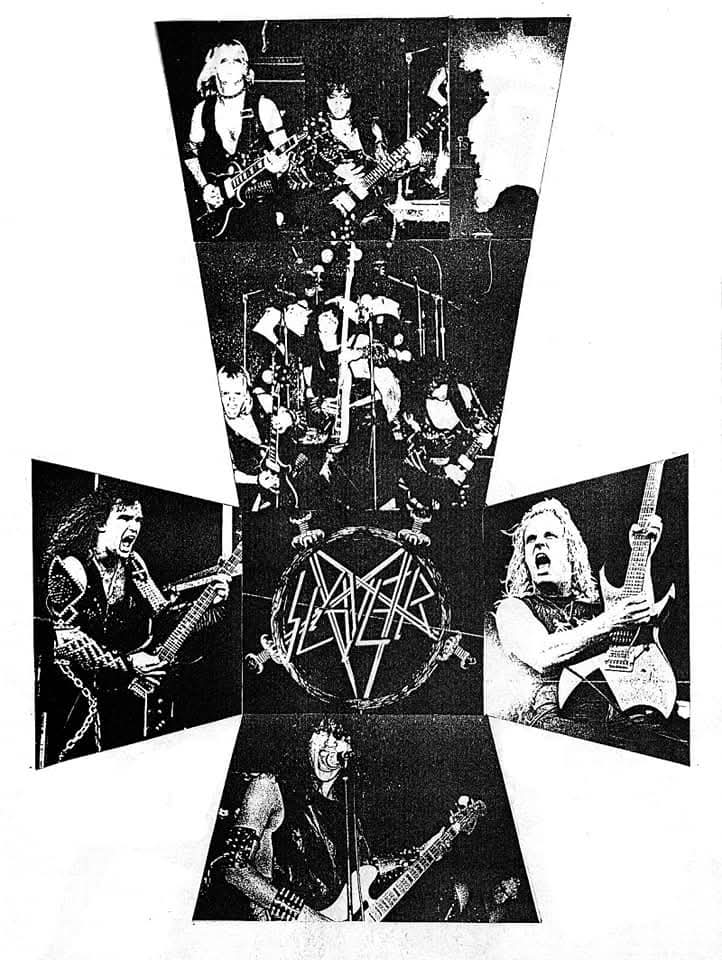
National Day of Slayer

Forest Poetry

Grindcore

Metaleros

Pyrrhic Victories: A Brief Study Of Artistic Decline

All historical events at some stage pertain to a barrier, or a Rubicon that when crossed marks a watershed in the life cycle of an organism in which an achievement cannot be matched in terms of it’s overall qualities. In particular instances, these successes are such that what succeeds can only be a steady decline, or an outcome that pales in comparison to the glory that prevailed at a particular stage of time. This feature aims to give insight into some known examples of the ‘Pyrrhic Victory’ in the metal genre and give light to releases that represent strengths of once great acts, and at the same time foreshadowed artistic saturation.

A common thread that seems to run through these turning points in the careers of metal bands is the apparent contradiction between a musician’s personal evolution and the progress of the musical style into more authentic and expressive forms in service of the concept. We all understand that a maturing musician is not going to be satisfied with the same apparently simple techniques he mastered upon his first year of guitar practice for ages. He probably has musical heroes he is looking up to and he always wanted to learn that Eddie Van Halen or Ritchie Blackmore solo.

Vital musical forms rely on creativity, spontaneity and message over matter. It is the curse of the artist that often the best of their work is at the behest of youthful lunacy and drunken madness, the early recordings where they grasp at the straws of vision without quite having formulated the techniques for achieving them – so they improvise and as Nietzsche would say, “give birth to a dancing star“. ‘Human‘, ‘Tales from the Thousand Lakes‘ and ‘Heartwork‘ are all perfect examples of a band with the full arsenal of accumulated weapons, evolved to near its maximum potential in knowing exactly how to compose all the contemporary forms of metal, from death metal and grindcore to pop progressive, even soft rock.

But here comes the paradox. Instead of sounding updated, the recording sounds more dated every passing year, because what has happened is that the band has incorporated a plethora of archaisms to a sound that used to be cutting edge. The bludgeoning dark tremolos of ‘Leprosy‘ that used to climax in nearly atonal solos become melodious post-modernist “cut up” riff salads; the doomy Wagnerian grandeur and slow movements reminiscent of historical battles in ‘The Karelian Isthmus‘ is stealthily exchanged with stoner rock and circular meditations that happen after a couple too many smoked joints; the to-the-point socio-anatomical parody of the hilariously grotesque and twisted ‘Symphonies of Sickness‘ gets discursive and bloated with instrumental worship, as if the band suddenly turned from anarchists into voters. The core question would be: did the band think these are more sensible ways of composition and a better illustration of the topic at hand – or did they forget the composition and the topic altogether in the name of randomly generating “music” with cold technique?

Sepultura – Arise

Coming off the back of the raging, deathly speed metal of ‘Beneath The Remains‘, Sepultura stay true to the compact musical execution that began making itself clear on the ‘Schizophrenia‘ album onwards. There is more variation in pace, with the lower tempo compositions often resemblant of the riotous and anthemic cycles of of ‘Beneath The Remains’ played out in suspended animation. The introduction of the now ‘tribal’ meme that first makes itself present in Sepultura’s music introduces itself through in various songs, and whilst here it is applied in a more than tasteful enough manner it sometimes gives the idea that whilst this indicates an ‘open-mindedness’ to the average listener, on deeper insight it gives light to the possibility that the band by this time may have been starting to run short of creative ideas. Whilst this is a very good record by Sepultura, prevailing characteristics get the upper hand, and in a year where speed metal had long had it’s glory days, and death metal attaining new peaks of aggression in a period of artistic blossom, it’s no surprise looking back that the dumbed down and singularly ‘angry’ mosh-fodder that was ‘Chaos A.D.’ would suceed this work. -Pearson

Metallica – Master Of Puppets

A controversial pick, Metallica’s excellent third album fulfills the incorporation of progressive themes but seems to crystallize them to such an extent that no more creative spark would emanate from their later works. Cliff Burton’s presence in the unit, and his bridging of neo-classicist influences into their progressive speed metal was a defining feature of what many hessians and metallers saw to be the main component of their excellence. Having let this seep in on ‘Kill Em All‘ and fully realise itself on ‘Ride The Lightning‘, ‘Master Of Puppets’ steps further towards punchier and anthemic songs, with a steeping emphasis on percussive, palm-muted rhythm riffs which are the dominant motif in the album’s musical execution. This is structurally still in the exact same mould as ‘Ride The Lightining’, in that despite a different order of where songs are, we get aggression in ‘Damage Inc.’ and ‘Battery’ where there was once ‘Fight Fire With Fire’ and ‘Trapped Under Ice’. Songs such as ‘Sanitarium’ continue a rock music inclined sense of songwriting that continues what started with ‘Fade To Black’ and inevitably foreshadows the growing commercialism of Metallica on later releases. The excellence of ‘Orion’ also signals a continuity shift that began with ‘Anesthesia (Pulling Teeth)’ and fulfilled itself with the ‘Call Of Ktulu’ instrumental. This is a great album that solidifies the importance of Metallica in the genre’s history, though the death of Cliff Burton and the lack of creative steam that ensued signalled the artistic decline that came in 1988 with ‘And Justice For All…’. -Pearson

Coroner – Mental Vortex

While the speed and thrash metal boom was crumbling all around in the wake of Seattle and LA-based clothing styles storming the nation, a few European stalwarts lingered on the fringes and while some of them didn’t dare to take up the arms for intricate, narrative death metal, they were influenced by its vicious aggression and psychedelic subject matter. Coroner from Zürich, around Tom G. Warrior‘s circle of the tyrants, never became a vastly recognized or influential name in extreme metal but superceded most of its peers in technicality and consistency, releasing a discography of five albums ranging from the raging “R.I.P.” to the eclectic “Grin“, where the fourth one “Mental Vortex” is where the playing abilities peak but the ultimate purpose of the band is starting to wane. When the idealism of youth fades and with it the spontaneous power of iconographic assault, the only avenue left for speed metal to challenge the moral preconceptions of hypocritical generations was to turn to psychology and explore lies and paranoia in the internal spheres, cutting up joy and sadness into fusion-esque rhythm riff salads (with the timing of an atomic clock) cut up from brilliant small pieces akin to Burroughs’ or Gysin’s style of literature. Such a hectic style provides an engaging rhythmic tension for this album, arguably one of the last triumphs of the entire genre, but it’s also cold and calculated like a scientific experiment. The vastly more popular but not much better Carcass realized essentially the same things many years later on their hit album “Heartwork” and ended up on the pages of guitar magazines, while Coroner was already entombed to the mausoleums of Noise Records’ speed metal roster. -Devamitra

Morbid Angel – Covenant

Among the most ancient, recognisable and influential cults in Death Metal’s history, Morbid Angel’s tale of decline is a prolonged one, and raised continuous questions about the band’s creative state, as though their instruments were being channelled purely at the whim of the Outer Gods. The Floridan giants finally resisted the unearthly impulses that once guided them to create powerful statements of occult awareness bound up with a Nietzschean sense of overcoming and will-to-power, such that with the releases of ‘Gateways of Annihilation’ and ‘Heretic’, the band fell victim to triviality. Incremental lapses in quality can be traced back to much earlier albums however, with the departure of guitarist Richard Brunelle being the first to impact the legendary line-up responsible for two of the finest Metal albums ever recorded, meaning that ‘Covenant’ would initiate the band’s slow decay. In addition, Morbid Angel’s growing populist tendencies were perhaps never more commercially viable than at this time, with the production left in the hands of Fleming Rasmussen, and not one but two music videos filmed to promote the album. Brunelle’s exit would mean that Trey Azagthoth would be fully responsible for filling the suffocating mix with his trademarked guitarwork, to the surprising detriment of ‘Covenant’s sound wherever the album’s conceptual direction becomes overwhelmed by a one-dimensional bluntness. Characterised by unfocused and uniform phrasing and only held in place by Pete Sandoval’s tightly militaristic drumming, the latter half of the album demonstrates little of the dynamism that could be heard on every one of their preceeding songs. The spiritual inversion of Morbid Angel, a transvaluation of religious language to re-vitalise and Paganise the path of transcendence and condemn the submissive and world-denying, corrupt parasites turns into an unaltering, blind rage that’s summarised by the lyric of ‘God of Emptiness‘, “So, what makes you supreme?”, setting a blueprint for the band to follow on ‘Domination‘ and the hordes of imitators that were given an undeserved license to record by virtue of Death Metal’s growing popularity. ‘Covenant’ in this sense is not dissimilar to Deicide’s Pyrrhic fall from the adept demonology of ‘Legion‘ to the dumbed-down ‘Once Upon the Cross‘, though Azagthoth’s wizardry would earn Morbid Angel some redemption with the primordial dance of cosmic energies to be heard on ‘Formulas Fatal to the Flesh‘ before finally digging their own grave without cursing their own reputation quite as badly as the truly shattered idols from the golden age of Death Metal. -ObscuraHessian

Filed under: Death Metal Essays and Death Metal Research,Death Metal Music Reviews — Tags: , , , — Pearson @ July 23, 2010 01:47 — Comments (4)

Satan – Court in the Act

Hailing from Newcastle, the same turf as fellow Geordies Venom, Satan’s debut album offers a more finely executed and grandiose vision of the NWOBHM, and on ‘Court In The Act’ they deliver a masterwork that arguably represents the peak of the style. Each composition is defined by intricate rhythm and lead guitar work, and a pacy ryththm section that has all the momentum of an up-tempo take on ‘Stained Class’ by Judas Priest. A very well tamed vocal retains a mostly mid-range croon throughout songs, unleashing semi-operatic falsettos wherever necessary to give greater punctuality to the conclusions of riff cycles. On repeat listens ‘Court In The Act’ can bring about various comparisons, with the proto-speed metal gallop of Judas Priest, the melodic noodling of Iron Maiden and an anthemic niche shared by Angel Witch. Witchfinder General also comes to mind, albeit lacking the Black Sabbath influence that informed said act.

Melody and song structure here is flawless, and unlike many albums of the NWOBHM there is no real incohesion or disruption halting the flow of compositional prowess. Quite an archaic use of notation that makes great use of pentatonics, yet moderates the restraints of blues and R&B music, has something more in common with European music of centuries past. If one were to imagine listening and removing the aesthetics of the modern band-set up, and replacing the electrical distortions of the guitars with perhaps harpsichord or sole acoustic guitar in it’s place a bridge can more or less be established as an imaginative transition to a modern form of music. One of the absolute best releases of traditional metal, this is highly overlooked and highly recommended.

Filed under: Death Metal Music Reviews — Tags: , , — Pearson @ July 6, 2010 16:41 — Comments (3)

Death Metal Album Of The Week: Num Skull – Ritually Abused

Continuing a series of albums of the transitional death/speed metal hybrids that were pivotal in the development of this musical field, this particular post looks at the debut full-length of Num Skull, an overlooked American act whose streetwise, thrashing and anthemic songs interlock themselves with a sense of musical structure and execution that bears a strong resemblance to European acts such as Kreator and Sabbat. Whilst not in any way oddballish, the manner in which the musical craft narrates itself bears a strong resemblance to a progressive version of the first Nuclear Assault album, and has a strong sense of rhythmic/percussive tension that is also present in the work of Exhorder, and like said act more tight, muscular and punchy in outcome. As stated earlier, the influence of European bands give Num Skull a highly disciplined finesse for making intense, engaging proto-death metal. Along with their dubiously titled 1986 demo “Num’s The Word”, this is an essential listen, and a great contribution to the furthering structural advancement of bands who would  have been embyronic at the time.

Filed under: Death Metal Album of the Week — Tags: , , — Pearson @ June 29, 2010 23:22 — Comments (3)

Tourdates of the Tormentors

Death Metal has never been averse to tolling the end of our unsustainable, technocratic age by manipulating it’s very machinery against the system, for the purposes of pure electro-sonic destruction. In the same spirit of infiltration and warfare, we’ve upgraded our upcoming events list to a compact and calendrical crystal ball of future live underground Metal massacres!

Filed under: Death Metal Events,Death Metal News,Death Metal Show Announcements — Tags: , , , , , — ObscuraHessian @ June 27, 2010 14:59 — Comments (0)

Death Metal Album of the Week: Hellwitch – Syzygial Miscreancy

Do you want the perpendicular magic of obscure Floridian scientific death metal to take you into an extinguished state of bliss? Do you desire opaque fusion rhythms to altercate with your heartbeat causing it to skip steps? Do you dare forsake brutal mosh party antics in order to proceed to a mentally intricate level of personal and musical analysis? An affected bit of text there, I know, but it is impossible to avoid when commencing another run of Pat Ranieri‘s merely 26 minutes long meisterwerk, after half a minute of classical guitar intro cutting the crap and going for the throat with the initial solo in “Nosferatu”, a technical thrash abomination conceived in 1984. With such timeless expression, age hardly matters, but it’s worth mentioning because these guys were both thematically and musically far ahead Cynic‘s and Death‘s new age postures and theoretically just might have predated Atheist as well, who anyway beat them by a year in debut album release. Hellwitch‘s banquet table of speed metal, thrash and death metal can justifiedly be called non-organized, but that is exactly because the band shows no mercy in letting loose a sensual storm of associative significance, a swarm of noises including ridiculously angular solos and voices manipulated into cyborgian declarations. Despite the abstaining running time, a notable richness of taste and fullness of effort permeates this album, from the Renaissance touches in “Mordirivial Dissemination” to the speedcore foreshadowing of Deicide’s “Legion” which characterizes “Pyrophoric Seizure”. Thrash influence dominates in the use of short riffs and sparse punk influenced tremolos underneath elaborate and abstracted solos as in the tightly minimalistic spouting of syllables in lyrics that can hardly be called trivial even while there is an unjustified use of thesaurus; a frightening urgency of seeing a world falling into an apocalypse with the promise of demonic saviours permeates the text, gripping the heart of those not lured into false optimism by the pact society has instated upon an instinctively barbaric man. “Syzygial Miscreancy” manages to be metal from the mind of a zen priest and the mind of a panicking computer all at once – it hardly surprises that Antti Boman of Demilich has paid them tribute by guesting on their 2009 comeback album, which probably should be gotten under scrutiny somewhere in the future, before we all get blown by one catastrophe or another into this primordial plasma described (especially through Stravinskyian guitar work) by Hellwitch.

Filed under: Death Metal Album of the Week — Tags: , , , , , , , , — Devamitra @ 01:20 — Comments (4)

Pestilence – Malleus Maleficarum

I watched as the Lamb opened the first of the seven seals. Then I heard one of the seven living creatures say in a voice like thunder, “Come!” I looked, and there before me was a white horse! Its rider held a bow, and he was given a crown, and he rode out as a conqueror bent on Conquest. – Revelation 6: 1-2

Summoned forth to rage fury upon the unsuspecting but no less innocent, Pestilence, on each of their first three albums ushered in a predestined Apocalypse of the mind and struck at the heart of the dark forces of the Kali Yuga thereby completing their microcosmic responsibility as “Kalki”and providing the foundation upon which a new golden age and conciousness would hopefully arise. On their uncompromising and frenetic debut album “Malleus Maleficarum”, Pestilence as corporeal manifestation of death and conqueror, harnessed the power of becoming to destroy the destroyer that is illusion and ignorance, and defiantly placed themselves within the torrential stream of becoming in a quest for truth. We as listeners are thus treated with no less than a passionate and structurally free form album that through its fluid, intelligent and precise use of riff craft probes and attacks on multiple fronts the lyrical themes tactfully explored by Van Drunen and Co.

Although one may be quick to argue that that the addition of socially conscious lyrical subject matter such as genetic manipulation and religious strife defines “Malleus Maleficarum” as a strict Speed Metal album, it is nonetheless better characterized as a highly refined and progressive speed metal album that straddles the death metal fence. Indeed, indicative of their speed metal roots is the common use of hysterical and staccato driven guitar technique reminiscent of bands such as Exodus, Destruction and Slayer that, coupled with an emerging yet competent sense of dynamics, melody, development and recapitulation of themes, successfully places “Malleus Maleficarum” outside the realm of pure Speed Metal and onto a pedestal of its own thus providing the impetus for not a few debates regarding the essential nature of this album. Not to be missed of course is the embryonic vocal performance of Van Drunen, who while courageously exploring the memes that have driven modern society into calling forth the forces of plague and death to precipitate the end of this current cycle of humanity, opts for a hoarse rasp like yell in contrast to the later visceral death metal growl he is better known for.

Considering the less than inspiring output Pestilence has recently spawned, it is worth recalling and meditating on the legendary albums birthed by the youthful genius of this legendary band if only to provide inspiration and the soundtrack for a new generation of Hessians who will march forth triumphantly into the dreary haze of an uncertain but exciting future. With that said “Malleus Maleficarum” remains essential listening 20 years after its initial release. Standing out as a thought provoking album of much symbolic depth it also remains an uncompromising and virile album that successfully bridges the gap between speed metal and death metal and reveals the genetic ancestor of the latter genre. Not only a dramatic album in its own right “Malleus Maleficarum” stands as an interesting historical document that should not be overlooked by any serious Hessian.

Filed under: Death Metal Music Reviews — Tags: , , — TheWaters @ June 9, 2010 20:13 — Comments (0)

June 2nd 2010 – Slayer, HMV Forum, London, England

Fighting the conspirations of ill health, amounting to months of delays, the much anticipated return of Slayer to England’s capital was in ominous syncronicity with the most auspicious time of the year for disciples of their church. As the Hessian-led International Day of Slayer falls upon us once again, last week’s early blasphemy proved to be an highly adequate preparation. The Slayer we all exhalt on this site was a mystical entity and their music excoriated the flesh of society’s body of lies and delusions, revealing the inner, beating heart of darkness and measurer of our mortal lives. They were also the progenitors of Death Metal, without whom many of the cults that feature in our catacombs may not have ever manifested with as advanced a template. The heat of the Spring sun, optimal for decomposition, drew the wehrmacht to Kentish Town’s Forum for an evening where the secrets of the dead promised to be revealed.

That, they would be, but not before some distractions within a chronology of events that would befit any highlight reel of modernity’s undoing, beginning with the supporting band from Sweden. The Haunted’s line-up consisted of some familiar faces, not just because they’ve been around for 10 years or so, initially Swedish Hardcore influenced Thrash before becoming the post-At The Gates band of Swedeath-influenced Speed Metal that they’re now famous for. Lead guitarist, Anders Bjorler of past-At The Gates fame, sporting a Disfear shirt in reference to both Swedish Hardcore and former bandmate Tomas Lindberg, launched with the band straight into ‘Bury Your Dead’, a signature track from their second album. Their set would mix old and new with some energy but the only problem from them is that their music sucks. This grammy-award winning combination of cliched galloping, groovy riffs interspersed with familiar and incoherently fragmented bursts of Swedish Death Metal melody, resulting in little to no melodic fluency is made even worse when the newer tracks demonstrate their love of pure nu-metal guitarwork. You know a set is bad when, despite it’s relative brevity and insignificance, every second of tedium feels absolutely unmitigated. They exit the stage with a warm crowd reception behind them but the diabolic concoction of Metal madness to follow boils the venue over with the hellish crepitance of anticipation.

Plumes of smoke veil the scene of everybody’s attention in stages of trademarked descent through noxious tributaries of the underworld. Led by battery commando Dave Lombardo, Slayer finally materialise from amidst the scarlet haze and open with ‘World Painted Blood, rendered near-flawlessy with Tom Araya’s completely static frame being the only, negligible sight to conflict with the fact that they’re still a well-oiled machine. Unlike other bands of such age and well-earned veneration, Slayer at least seem to understand the difference in purpose and spirit between their new and old recordings, rather than just the wear and tear of discographical order and simply ‘mixing it up’. The set was split roughly 50/50 in terms of timing, so there was quite some wait for the veterans to get their nu-material out of the way. The three standing band members would then congregate in a Seance-like circle formation around the beaten kit of Lombardo, ritually manifesting the schism and unleashing the demons of ancient times, channelling the wails of feedback as they did in their youth. Thus, the show really exploded with a rupturous performance of ‘Hell Awaits’ sending the violent hordes into a possessed frenzy. King and Hanneman were in brilliant, conversational form, damned to strike all the right notes and give a real sense of narrative familiarity to the chaotic and atonal guitar solos. Araya’s exoteric shouting was laid to rest and the invoked Mephistopheles conferred upon him sadistic scorn, the true voice of his priestly years, befitting such apocalyptic sermons as ‘Seasons in the Abyss’, ‘Mandatory Suicide’ and ‘Raining Blood’. The opening riff to ‘South of Heaven’ was possibly given it’s finest rendition to date, as the audio technicians menaced the sound with Kali-Yugic siddhis and lava on loan from Azagthoth. The song of the night was undoubtedly the pollutant ‘Chemical Warfare’, performed with as much vigour as on record way back in 1984. The intelligent, layered riff progressions that played out a multidimensional, mythologised communication of death, paranoia and destruction confounded the crowd but struck them hard, with the anthemic, holocaust winds of ‘Angel of Death’ to follow, releasing a tide of hatred and malevolence, and the highly multicultural crowd rose in unison to sing for the benefit of the Aryan race. The band known only as Slayer departed after covering the most recogniseable songs from ‘Haunting the Chapel’ through to ‘Seasons…’, reinforcing the memories of their greatness and perpetuating the echoes of their cryptic, Satanic messages.

Filed under: Death Metal Events,Death Metal Live Reviews — Tags: , , , , — ObscuraHessian @ June 6, 2010 06:00 — Comments (0)

Death Metal Album Of The Week: Rigor Mortis – Rigor Mortis

Whereas the structural and musical approach would not constitute for an FM-radio listener’s definition of ‘progressive’ this album is highly important and innovative in many ways. Given a nice thickening fuzz that anticipates the textural approach of the pioneers of Greek and Norse black metal, Mike Scaccia’s rhythm guitar is middle range yet lacks the crunch and the preferential techniques used in speed metal (constant palm muting, an emphasis on staccato), having  a much smoother sense of transition in execution than many speed metal and death metal peers. This also allows the other instruments to stand ground within this framework, helping a sense of musical advancement and accomplishment that is beyond mere head-banging fodder. Good word must also be given to his solo playing, which is intricate and whilst not dissonant evokes the more dignified of neo-classical shredder playing crossed with the King/Hanneman sonic attack.

Casey Orr’s bass as a result of this is made just as audible and distinct as the percussive backdrop, and almost as if to capitalise on the dark and foreboding atmospheres that Slayer and Possessed first realised on early works, we get a textural sense of craft that anticipates the outcomes of many important metal acts to follow, two major examples being Massacra and Mayhem. Bruce Corbitt’s vocal delivery is the typical rhythmic-cohesive delivery that is a mainstay of this musical field. It has lingering sense of camp in it’s mildly gore-fantasist lyrical depictions, resembling a cross between Dave Hewson of Slaughter and John Connelly from Nuclear Assault, with more of a rasp than a sung tone to it, perfectly fitting and well executed. Along with the work of Californian thrash unit Cryptic Slaughter, these Texans should be considered one of the more important missing links in the structural advancement of the extreme metal that was to flourish from the late 1980′s, and onwards…

Filed under: Death Metal Album of the Week — Tags: , , , , , , — Pearson @ June 1, 2010 21:29 — Comments (0)

Death Metal Album of the Week: Sarcófago – The Laws of Scourge

We dive again into the industrial multiplexes of Belo Horizonte and adulate the sadistic roar of the appropriately named Wagner Antichrist and Gerald Incubus, whose musical inventions did not stop with the blasphemous “INRI”, which defined the next decades of black metal. While the sophomore offering “Rotting” approached pure alcohol delirium in chaos and unsound production, yet containing both satire and atmospheric black metal in the form of “Sex, Drinks & Metal” and “Nightmare” respectively, “The Laws of Scourge” remains the most musically intact, fully developed and self-confident Sarcófago full-length album. As if the Finnish hardcore LP’s had been traded for German speed and death metal, themes of paranoia and divided, schizoid personality afflict this art while the compositions are architected upon cold, rhythmic, needle-sharp riffs occasionally enhanced by hyperdramatic, even cheesy, keyboards and concluded by Wagner’s desperate screams. Much in the vein of “Terrible Certainty” era Kreator, the old school metal patterns ride on a stream of militaristic, aggressive drumming that spaces the tension between the passages of hysteric stagediving metal too concretely energized to fully fit into the confines of shadowy underground death worship at this point, but too aware of causes and effects to simply become another Headbanger’s Ball “thrash” marketing item. A version of the classic “The Black Vomit” is included almost as if on purpose to demonstrate the technical differences between various approaches and strains into metal art, a dimensional revolving swastika whose arms are hardcore, speed metal, death metal and black metal – it’s unnecessary to determine in what ways exactly this album was worse than “INRI”, because the beautiful and terrifying moods on offer make “The Laws of Scourge” unique and indispensable as well.

Filed under: Death Metal Album of the Week — Tags: , , , , , , — Devamitra @ April 25, 2010 12:31 — Comments (1)

Death Metal Album of the Week: Slaughter – Strappado

Some early speed and death metal risked numbing its sense of continuity at times, and this could be put down to a number of factors. Much underground metal in the 80′s found a lack of conceptual focus in it’s topical and structural narrative, with thematic loopholes sometimes occurring in particular works. This was also a particular mishap apparent in some early heavy metal, where the musical restraints of blues and rock music had yet to be eschewed in favour of more direct, aggressive, and in many instances alienating forms of execution and structure. Along with classic and and seminal works from acts such as Possessed, Slayer, Bathory, Sepultura and Necrovore among others, the sole album by this Canadian act shows a simplification of previous themes and in the process crafts embryonic, yet furious death metal. Recorded early in 1986 and representing a quantum leap for the nihilism of death metal, Slaughter’s first album is a pioneering work that drones with hardcore simplicity, taking the rhythmical backdrop of Discharge and enhancing it’s pace and aggression in accordance to the standards of underground metal.

The guitars on the album are of very strong and distinct quality, with a buzz-saw cacophony that mostly churns out one-note strums with a emphasis on small melodic shifts at the end of each riff cycle, just as minimal as Hellhammer but with a more compact and streamlined execution. On first listen anyone familiar with Swedish acts such as Carnage, Entombed, Dismember, Unleashed should without doubt acknowledge this similarity. In addition it could be argued that this record has all the hallmarks of a classic Sunlight Studios production, as stylistically both Slaughter and the aforementioned Swedes took their musical foundations from hardcore. The differentiations occur in the use of musical language, with ‘Strappado’  being percussively stern and less subject to variation, and lacking the technical motifs that are a mainstay of foundational death metal. Thematically and musically this bears a strong influence on later Canadian acts such as Blasphemy and Conqueror, especially when hearing the latter’s cover of ‘The Curse’.

For some the vocals would be a minor letdown, having none of the distinctive rasp or bellow commonly expected. Dave Hewson’s vocals are almost similar to that of Mike Browning on Morbid Angel’s ‘Abominations Of Desolation’ given a context that share a common timbre with speed metal and thrash. Lyrically cohesive and minimal, themes of execution, torture, occultism and devastation permeate ‘Strappado’, and when combined with the musical onslaught, evoke mystical images of a post-apocalyptic future in which primitive tribalism reigns upon the decrepit ruins of industrial society. Brilliant.

Filed under: Death Metal Album of the Week — Tags: , , , , , — Pearson @ April 10, 2010 23:14 — Comments (0)

Older Posts »

Death Metal and Black Metal Search Engine