What the heck is metalcore?
During the late 1990s, a different style of metal emerged in the death metal camp. Starting with bands like Dillinger Escape Plan, Killswitch Engage, Misery Index, The Haunted, Human remains, Ulcerate, Meshuggah and Discordance Axis, this new style was given many names at first.
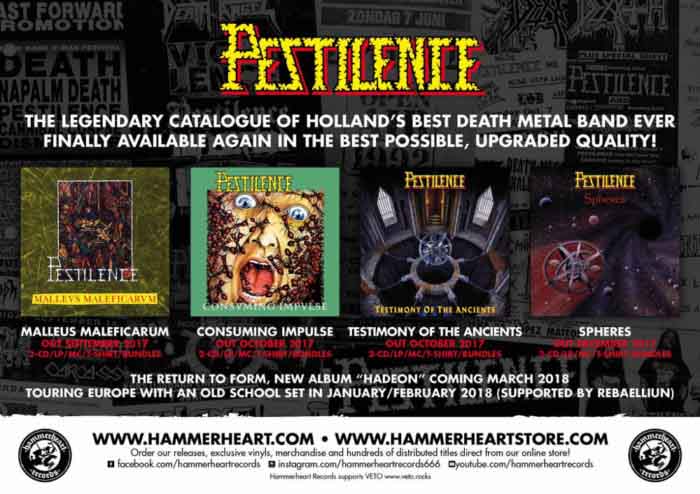
It’s math-metal, they said. No, it’s technical death metal (later shortened to “tech-deth” to keep people from expecting something like what Pestilence did on Spheres). Finally someone came up with “modern metal,” which many of us use like a catch-all.
The record companies were excited. Musically it was different. This style is accessible to more musicians, in addition to more fans, than the old style. It’s easier to make a reasonable impression of it, at least.
Thematically it was different. It’s everything that rock ‘n’ roll has always been. It’s loud, angry, and chaotic; perfect to disturb parents, which sells albums. Finally, unlike metal, it doesn’t stray into truly dangerous areas of thought. It is more likely to be written from an individual perspective, and less likely to glorify war, disease and death than protest them. Socially, it’s much “safer.”
What made it new was that it wasn’t like the extreme metal before it. However, it shared many techniques in common not just with that generation, but the generation before it. Specifically, many of the composition aspects are similar to those from post-hardcore bands like Fugazi, Rites of Spring, and Botch. These differences distinguished it from death metal in the following ways:
- Vocal rhythms. Death metal vocals are more like speed metal, which is to chant out the rhythm of the main riff or chorus phrase. Modern metal vocals are much like hardcore, which uses regularity of intervals between syllables to form a sound of protest. Death metal also prefers monotonic delivery with variant timbre, where hardcore vocals prefer more melodic vocal delivery with invariant timbre.
- Riffing. Death metal riffs are phrasal, or written as a flow of power chords forming a phrase or melody, and these fit together to form a narrative with poetic form, meaning that it takes the song from an initial place to a final place with a much different outlook. Modern metal riffs are inherently designed toward circular song constructions, like hardcore, and are based upon radical contrast between each other to suggestdeconstruction, like hardcore. Metal riffs form a synthesis through contrast; hardcore riffs deconstruct through contrast and reject synthesis.
- Drumming. Death metal drumming tends to follow the riff changes; modern metal drumming tends to lead the riff changes, anticipating them. In death metal, instruments tend to act in unison. In metalcore, they tend to each work separately and overlap as convenient.
- Style. Death metal aims toward unison of all instruments and riffs fitting together to make a larger narrative so as to maintain mood; modern metal, like hardcore before it, seeks to interrupt mood as if a form of protest music.
Critics of the terms “metalcore” and “modern metal” correctly note that these terms are being used as a catch-all. That’s correct, but it’s only part of the story. These terms are being used to describe something that’s not new, but existed before death metal and black metal reached their modern form. It’s an alternate branch of metal’s evolution, upgraded with death metal technique.
For students of metal history, this isn’t surprising. Genres tend to lie dormant in alternating generations, and then pick up on whatever was done well by the intervening generation. For example, power metal is what happens when speed metal and glam metal bands integrate death metal technique. Grindcore occurs when hardcore adopts crust and death metal technique. Speed metal occurs when metal adopts punk technique. By the same token, metalcore is what happens when you mix Fugazi with death metal technique.
This is not an argument against metalcore. If we’re going to like metal, we should understand it; if we’re going to understand it, we should study it; if we study it, we should organize our categories and language so as not to mislead each other. By this analysis, metalcore is an extension not of metal, but of the post-hardcore movement using metal technique, and thus it should be analyzed as more like hardcore instead of having us project our metal expectations upon it.
It is often asserted that some of the best works of the death metal genre arose as if by accident. A better assertion is that by the early 1990′s, many artists prominent within this musical form found themselves at a level of impassable momentum; a culmination of instrumental violence, a taste for profound and subversive ideals and a sadistic will to power. The year 1992 found death metal at its most potent, chaotic, destructive and virile, just as speed metal was in ’86, and black metal in ’93. Legion sets itself in a league of its own, giving each musician a distinct elemental voice. Glen Benton’s cthonian barking is at its most virulent and savage, guttural yet dynamic, having a rhythmic cohesion that is comparable to that of David Vincent, but separable in tonality. His bass playing is clearly audible, sandwiched in between the juxtaposition of the trebly guitars, which are thankfully never distant or uninterpretable. The drumming of Steve Asheim is insanely over the top yet disciplined, as if one were battering cakes laced with grenades. The musical influence of Slayer is the clear template for Deicide’s work, and in terms of compact intensity, Legion is to their self titled debut what Reign In Blood was to Hell Awaits. A parallel can also be drawn to Slayer in the musical interplay in the dissonant soloing techniques that see the best ideas of Hanneman and King taken towards a polyphonic atonality. The album radiates just under half an hour of pure blasphemous momentum, and communicates through spiraling, chopping guitar riffs that sit in perfectly with a multi-faceted rhythm section. Structurally Legion emphasizes a highly proficient musical backdrop, which advances what was exhibited on their debut and compresses it into a greater density that is both a pleasure to listen to and gives Deicide a platform on which to construct their most unique and standout work. Virtuosity echoes the best work of Atheist and Voivod if the melodic and progressive rock tendencies were eschewed, whilst the pattern language and aesthetic is in league with the best work of Morbid Angel, Sepultura, Massacra and Suffocation. This is Deicide’s pinnacle, one they would never surpass. A fundamental cornerstone of death metal, one of the all time best.
As if poisonous arachnoids had woven a sticky web around a hermit of the desolate Pampas, the multitude of savage Angelcorpsean riffs blasts from Desecration Rites’ rehearsal room with hardly any control or structure for the confounded listener to immerse in. The Argentinian blackened death duo did not have the time to execute all matters properly here because of unfortunate circumstances, and it shows in the deprecated, spastic rhythm of machine, the hysterical frequency and bouts of unclean guitar work all over the place. If something is keeping these dogs of sequences under leash, it is the deep, rumbling voice of Wolf intoning Faustian misery from the bottomless depths of darkness, occasionally unwinding power lines of similar effect to Craig Pillard’s majestic demon voice in the eternally classic Onward to Golgotha. For the modern death metal fan expecting a digitized, synthetic robot surgery there is probably no more horrific sight than this deluge of an album, but internally it is far more hypnotic, intricate and deadly than one could hope for. Just listen to the freezing pseudo-Nordic moments of “Death Sentence to an Agonizing World” or the ethereal, solar and jarring interlude of “Carnal Dictum” and you might just get a slight moment of hope in the future generations after all.
This British debutant lets loose the heathen wolves of war with a triumphant fanfare akin to Vlad Tepes’ famous Wladimir’s March before leading us to a journey of mountainous black metal landscapes, Graveland-esque meditations, ancient English fire-lit caves and Zoroastrian philosophy. The same sort of extended pagan tremolo epics (18 minutes of length at worst) that made countrymen Forefather and Wodensthrone veritable trials to sit through are pretty close at hand here, but the sparkling energy of youth helps a lot; there is a wildness and intrigue that contributes variation in sense even when there is none in content. Much of the logic of the songs seems to be emotionally stringing disparate sequences into a journey or a fictional narrative, which is essentially never a bad choice but some of the material here could be cut off to be brutally honest. Sound quality is the pseudo-spatial vacuum of too much reverb common for demo-level bands, but the instruments are clearly audible and the mid-rangeness is efficaceous. Unmoving and halfhearted chants and throwaway happy riffs are the blight of heathen metal, but Lord Revenant possesses sufficient pathos to allude to traces of occult evil and memories of ancient war at the same time; while this effort is not enough to coin him as a master of British metal, it would be a disappointment to hear these same songs performed by a more professional, disinterested voice in the future, or see him disappear without a trace after such a promising start.
More than one and a half hours of harsh, pummelling death metal is neither a mean feat to compose nor to listen. As if Wagner, Brahms or even Stravinskij decided in the otherworld that these wimpy rock/metal kids have had it too easy and possessed various souls to spend hundreds of nights writing progressive Romantic/Faustian death metal partitures, 20+ minute pieces such as the title track or “On the Throne’s Heavenward” lumber and crush with such interminable weight that it is hard to not feel like attacked by a divine hammer from above as designed by Gustave Doré. You can forget about them mosh parts, since this is material about as brainy as anything by Atheist, with slow-moving adagios and creeping crescendos more familiar from Brian Eno’s ambient music or Esoteric’s hypno-doom than anything in satanic metal realm. Vocals are sparse and it feels like about a half of the album is purely instrumental and this creates a strange calm suspension which might even feel uncomfortable; but compared to The Chasm’s mastery of technique, it still does feel like an essential emotional counterpoint or rhythmic pulse bestowing element is missing, and when the cruel vocals suddenly rip the air, it might even be perceived as a disturbance to the solemn atmosphere. Nevertheless, it is probable that they are going for exactly this synthesis of the intellectual and the primal; the emotional and the physical. So fortress-like, rational, calm and measured that it is hard to connect its spirituality with its death metal origins (even the previous Into Oblivion release), it is certainly an important statement while the cumbersome nature and certain academicism in construction (perhaps “filler” in metal language, the problem of the previous album as well) makes it a bit of an unlikely candidate for casual listening. Anyone interested in the future of Death Metal cannot afford to miss it, though.
Heirs to the bludgeoning power of Escabios and other ancient compatriots, this recent Argentinian sect wastes no time with progressive anthems, intros nor filler in this concise EP of Autopsy influenced memoirs of early 90’s scathing death metal savagery. If the band has capacity for a challenging composition or a range of emotion, it’s all but hidden in this conflict of vulgar and intense demo taped riffs that could originate on any scummy cassette dug up from your older brother’s cardboard box vaults. Even most crustcore bands could hardly resist the temptation to fill the gaps out with something more liberal, but I am glad Bloodfiend do not resort to any loose pauses in their old school attack. The band is not yet quite there in the top ranks of death metal resurgence, but possess more than their share of contagious energy that will make for a good live experience and raise hopes for a more dynamic album.
Brutal death metal cliches abound but also tasteful dashes of improvisational riff integration as California youth Exylum strike from the bottomless depths with a manifest of fragmented ideas like old Cannibal Corpse, Finnish death metal and newer black metal in a blender. Weird effected voices cackle, pinch harmonics abound, chugging is all but industrial metal, drumming provides a solid backbone and the ululation of the lead guitar harmonic reaches a hysterical plane of existence when the band lets go of identity expectations and go ballistic as in the end of “Worshiping the Flesh Eating Flies”. The worst thing on this demo is the tendency to fill space with something simple and stupid like the endless low tuned one note rhythmic hammering towards the end of the title track. When the band is in a more chaotic mode, as in the older recording “Ritual Crucifixion”, the confusion serves to imbue the composition with more blood and action.
As persistence is the key to cosmic victory, it’s gratifying to see that this recent Californian cluster is not giving up in their quest to build a maiming death metal experience which was approached with streamlined Bolt Thrower and Cannibal Corpse tendencies in their last year’s EP. First threatening edges noted by the listener here are their improved musicianship with plenty of rhythmically aware palm-muting and tremolo NY style rhythm guitar riffs interlocking like the paths of ferocious large insects on flight while in the new drummer Kendric DiStefano they have a redeemer from the abhorrent pit of drum machine grind, even though his style tends to approach the robotic at times. The moments where this EP shines is when the brutal backbone operates at the behest of melody conjured by the leads of Mike Flory and Daniel Austi, such as the gripping mid-section of “Exit Wounds” and the Nile-ish mad arab string conjuration in “Litany of Blood”. I’m still reluctant to call this a total winner because there’s a lot of random chugging around as in generic bands from Six Feet Under to Hypocrisy, but there are also subtle technical flourishes such as the lightly arpeggiated bridge in “War Machine” that still keeps me liking this band and following its movements.
Power metal riffs in a death metal production would later experience a horrible mangled mutilation death in Children of Bodom’s excessive rock stage theatrics, but the sharp minds of Sentenced treated their source material with such profound affection that heavy metal, thrash, death metal and black metal weave into each other as interminable patterns of tangled paths amidst hypercosmos – a Northern Finnish shaman’s spell. The careful production recalls the most biting moments of Kreator while the technical skills of the guitarists are on par with the hallowed “prog” moments of Atheist and Death. The songs hardly suffer from any useless repetition (the anthemic verse-chorus structure of “Awaiting the Winter Frost” serves a specific purpose in exclaiming the satirical “heavy metal victory” over the forces of light, while it is deliberately obscured whether the narrator is a man, a beast or a spirit). That North from Here was never Sentenced’s most popular or esteemed moment is a total wrongness, as Amok followed on the footsteps of this work adequately, but only that. One of the strongest candidates for the best Death Metal album in the history of Finland, the bewitching maledictions of North from Here, from “Capture of Fire” to “Beyond the Wall of Sleep” (and practically any piece since there is no filler), achieved the aims of “Gothenburg” much more effectively and impudently than the horde’s western neighbours.
A refreshingly explosive album, the intensity of Blasphemy Made Flesh reveals an unrelenting desire to exhume much of the prerequisite spirit necessary to create a genuine death metal record. Exuberant, joyful and multifaceted Blasphemy Made Flesh employs indefatigably demented and blistering motifs and phrases to create omniscient and nihilistic visions of the perennial struggle between victim and victimizer. In so doing the listener is effectively reminded of this one eternal fact- that wolves lie in wait among the unsuspecting. Exploited down stroke technique combined with the resulting texture compounds this experience leaving one with the impression of being violated both physically and mentally with a blunted weapon. Left battered and bruised the listener is urged to synthesize and understand the presented raging struggles and their psychological implications.
However, despite the pummeling and crushing riff-work an acknowledged necessity of contrast is utilized to create ambiguous moods of contemplation from whence the deranged seemingly view the hideous work wrought upon their most recent victim. In addition to this, the rhythmically dynamic nature of this record fosters the development of a structurally complex album as Cryptopsy utilize a tactful rhythmic precision that through its capacity to delicately change the complexion of motifs, somewhat rivals the expert precision of Suffocation. It is in fact here that we discover much of the vaunted complexity of Cryptopsy, where motifs are manipulated via rhythmic dynamics, and while this may come across as tedious and perhaps overused to some, such technique creates an interesting layer of ever shifting context which listeners are challenged to follow and to interpret. These elements combined with an esoteric yet absurd and morbid sense of melody make this album a twisted and cryptic work whose seemingly contradictory elements point to higher level from whence this work must be contemplated. Although some tracks lack a consistently coherent narrative and may seem erratic at times, expert use of technique, brutality and vision combined with a haughty and commendable sense of ambition makes this work enduring and enjoyable.
The best news Majesty and Decay has to offer is Steve Shalaty’s drumming. The man has been replacing Immolation’s godly Alex Hernandez ever since 2005’s Harnessing Ruin but it is only here that he unlocks his true talent. Steve has surely developed his own musical language since 2007 and the band has finally regained its rhythmic “pillars”. Everything has fallen into place at last: blasting endurance, inventive drum breaks and mid-paced punishment. The “inverted” riffing – although not as all-pervasive as on, say, Close to a World Below, – stresses the drumming very nicely and allows for some smooth gliding down the interwoven landscape of melody. Indeed, what sets the album apart in the vast Immolation discography is the use of melody. While the band is still a riff-fed beast, the heavy metal melody injecting the solos and seeping through the riffs enriches the sound world of the group, introduces “humanity” to the demonic environment of their instrumentation. The songs are shorter compared to the classic 90s era material, more to-the-point composition-wise, and definitely more “human” than we have come to expect from these New Yorkers.
“Our threatened kingdoms The world is divided Trample ourselves While we claw for the prize”