

One of the older and more unsung extreme metal bands to come out of North America, Virginia-based Deceased issued ‘Luck Of The Corpse’ in 1991, playing death metal in the most primitive of fashions, in ways not too dissimilar to the likes of Autopsy and Impetigo. The common perception of a musical aesthetic often dictates to the more automative listener that anything that bares an adherence to or authenticity that speaks ‘simplicity’ this conveys the perception that nothing unique is to be expected, and in the case of death metal that it conveys no sense of originality or otherwise is quickly assumed to be something that breaks no ground.
Deceased’s full-length debut serves to shatter a couple of myths, and whilst firmly rooted to the aesthetical mould of death metal’s oldest school, drummer/vocalist King Fowley’s taste for eclecticism makes itself clear in abrasive compositions. The influence of progressive metallers such as Voivod and Prong come through in varied sequences of riff patterns that use a variety of strumming techniques, from low end death/thrash melodic motifs to discordances that have nuances of discordance that also was prevalent on the likes of ‘Killing Technology’ and ‘Dimension Hatross’. The drums are very impressive, sounding very upfront in the mix, and King Fowley’s vocals are that of an animated, puking corpse. His execution and hitting of the skins is quite direct and barbaric like his fellow instrumentalist Chris Reifert of Autopsy, though has a much more varied sense of rhythmic dynamism and interchange that works in solid cohesion with the dense yet flexible musical dimension that this band craft for themselves.

Continuing a series of albums of the transitional death/speed metal hybrids that were pivotal in the development of this musical field, this particular post looks at the debut full-length of Num Skull, an
overlooked American act whose streetwise, thrashing and anthemic songs interlock themselves with a sense of musical structure and execution that bears a strong resemblance to European acts such as Kreator and Sabbat. Whilst not in any way oddballish, the manner in which the musical craft narrates itself bears a strong resemblance to a progressive version of the first Nuclear Assault album, and has a strong sense of rhythmic/percussive tension that is also present in the work of Exhorder, and like said act more tight, muscular and punchy in outcome. As stated earlier, the influence of European bands give Num Skull a highly disciplined finesse for making intense, engaging proto-death metal. Along with their dubiously titled 1986 demo “Num’s The Word”, this is an essential listen, and a great contribution to the furthering structural advancement of bands who would have been embyronic at the time.


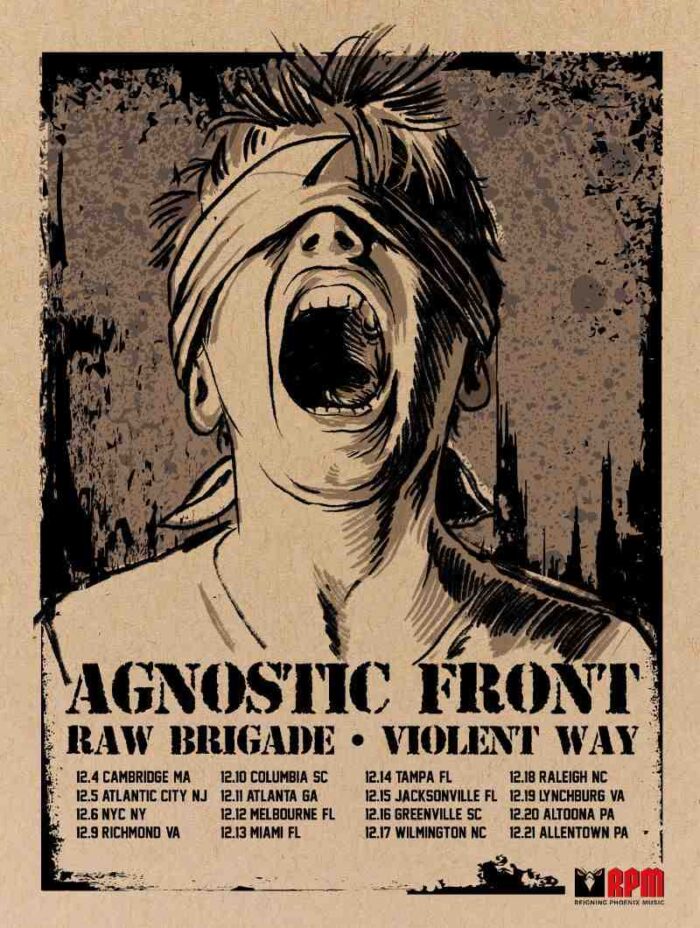
Death Metal has never been averse to tolling the end of our unsustainable, technocratic age by manipulating it’s very machinery against the system, for the purposes of pure electro-sonic destruction. In the same spirit of infiltration and warfare, we’ve upgraded our upcoming events list to a compact and calendrical crystal ball of future live underground Metal massacres!


Do you want the perpendicular magic of obscure Floridian scientific death metal to take you into an extinguished state of bliss? Do you desire opaque fusion rhythms to altercate with your heartbeat causing it to skip steps? Do you dare forsake brutal mosh party antics in order to proceed to a mentally intricate level of personal and musical analysis? An affected bit of text there, I know, but it is impossible to avoid when commencing another run of Pat Ranieri‘s merely 26 minutes long meisterwerk, after half a minute of classical guitar intro cutting the crap and going for the throat with the initial solo in “Nosferatu”, a technical thrash abomination conceived in 1984. With such timeless expression, age hardly matters, but it’s worth mentioning because these guys were both thematically and musically far ahead Cynic‘s and Death‘s new age postures and theoretically just might have predated Atheist as well, who anyway beat them by a year in debut album release. Hellwitch‘s banquet table of speed metal, thrash and death metal can justifiedly be called non-organized, but that is exactly because the band shows no mercy in letting loose a sensual storm of associative significance, a swarm of noises including ridiculously angular solos and voices manipulated into cyborgian declarations.
Despite the abstaining running time, a notable richness of taste and fullness of effort permeates this album, from the Renaissance touches in “Mordirivial Dissemination” to the speedcore foreshadowing of Deicide’s “Legion” which characterizes “Pyrophoric Seizure”. Thrash influence dominates in the use of short riffs and sparse punk influenced tremolos underneath elaborate and abstracted solos as in the tightly minimalistic spouting of syllables in lyrics that can hardly be called trivial even while there is an unjustified use of thesaurus; a frightening urgency of seeing a world falling into an apocalypse with the promise of demonic saviours permeates the text, gripping the heart of those not lured into false optimism by the pact society has instated upon an instinctively barbaric man. “Syzygial Miscreancy” manages to be metal from the mind of a zen priest and the mind of a panicking computer all at once – it hardly surprises that Antti Boman of Demilich has paid them tribute by guesting on their 2009 comeback album, which probably should be gotten under scrutiny somewhere in the future, before we all get blown by one catastrophe or another into this primordial plasma described (especially through Stravinskyian guitar work) by Hellwitch.

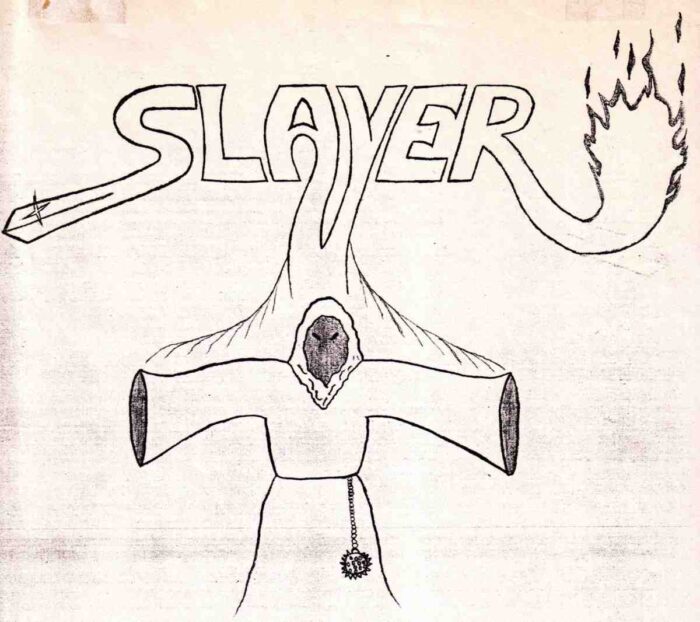
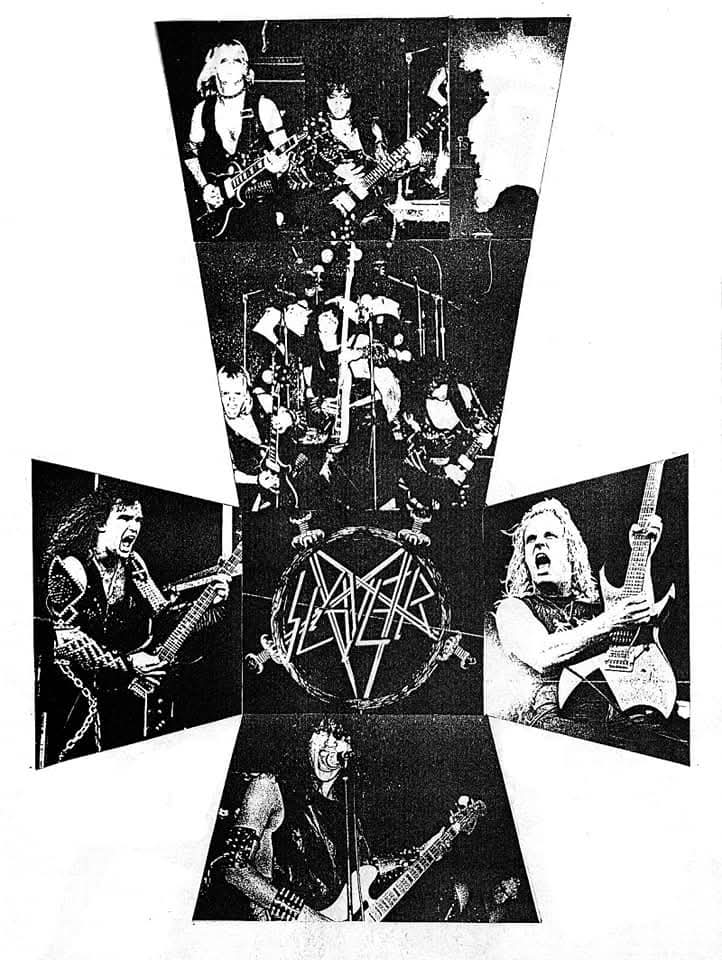
Fighting the conspirations of ill health, amounting to months of delays, the much anticipated return of Slayer to England’s capital was in ominous syncronicity with the most auspicious time of the year for disciples of their church. As the Hessian-led International Day of Slayer falls upon us once again, last week’s early blasphemy proved to be an highly adequate preparation. The Slayer we all exhalt on this site was a mystical entity and their music excoriated the flesh of society’s body of lies and delusions, revealing the inner, beating heart of darkness and measurer of our mortal lives. They were also the progenitors of Death Metal, without whom many of the cults that feature in our catacombs may not have ever manifested with as advanced a template. The heat of the Spring sun, optimal for decomposition, drew the wehrmacht to Kentish Town’s Forum for an evening where the secrets of the dead promised to be revealed.
That, they would be, but not before some distractions within a chronology of events that would befit any highlight reel of modernity’s undoing, beginning with the supporting band from Sweden. The Haunted’s line-up consisted of some familiar faces, not just because they’ve been around for 10 years or so, initially Swedish Hardcore influenced Thrash before becoming the post-At The Gates band of Swedeath-influenced Speed Metal that they’re now famous for. Lead guitarist, Anders Bjorler of past-At The Gates fame, sporting a Disfear shirt in reference to both Swedish Hardcore and former bandmate Tomas Lindberg, launched with the band straight into ‘Bury Your Dead’, a signature track from their second album. Their set would mix old and new with some energy but the only problem from them is that their music sucks. This grammy-award winning combination of cliched galloping, groovy riffs interspersed with familiar and incoherently fragmented bursts of Swedish Death Metal melody, resulting in little to no melodic fluency is made even worse when the newer tracks demonstrate their love of pure nu-metal guitarwork. You know a set is bad when, despite it’s relative brevity and insignificance, every second of tedium feels absolutely unmitigated. They exit the stage with a warm crowd reception behind them but the diabolic concoction of Metal madness to follow boils the venue over with the hellish crepitance of anticipation.
Plumes of smoke veil the scene of everybody’s attention in stages of trademarked descent through noxious tributaries of the underworld. Led by battery commando Dave Lombardo, Slayer finally materialise from amidst the scarlet haze and open with ‘World Painted Blood, rendered near-flawlessy with Tom Araya’s completely static frame being the only, negligible sight to conflict with the fact that they’re still a well-oiled machine. Unlike other bands of such age and well-earned veneration, Slayer at least seem to understand the difference in purpose and spirit between their new and old recordings, rather than just the wear and tear of discographical order and simply ‘mixing it up’.
The set was split roughly 50/50 in terms of timing, so there was quite some wait for the veterans to get their nu-material out of the way. The three standing band members would then congregate in a Seance-like circle formation around the beaten kit of Lombardo, ritually manifesting the schism and unleashing the demons of ancient times, channelling the wails of feedback as they did in their youth. Thus, the show really exploded with a rupturous performance of ‘Hell Awaits’ sending the violent hordes into a possessed frenzy. King and Hanneman were in brilliant, conversational form, damned to strike all the right notes and give a real sense of narrative familiarity to the chaotic and atonal guitar solos. Araya’s exoteric shouting was laid to rest and the invoked Mephistopheles conferred upon him sadistic scorn, the true voice of his priestly years, befitting such apocalyptic sermons as ‘Seasons in the Abyss’, ‘Mandatory Suicide’ and ‘Raining Blood’. The opening riff to ‘South of Heaven’ was possibly given it’s finest rendition to date, as the audio technicians menaced the sound with Kali-Yugic siddhis and lava on loan from Azagthoth. The song of the night was undoubtedly the pollutant ‘Chemical Warfare’, performed with as much vigour as on record way back in 1984. The intelligent, layered riff progressions that played out a multidimensional, mythologised communication of death, paranoia and destruction confounded the crowd but struck them hard, with the anthemic, holocaust winds of ‘Angel of Death’ to follow, releasing a tide of hatred and malevolence, and the highly multicultural crowd rose in unison to sing for the benefit of the Aryan race. The band known only as Slayer departed after covering the most recogniseable songs from ‘Haunting the Chapel’ through to ‘Seasons…’, reinforcing the memories of their greatness and perpetuating the echoes of their cryptic, Satanic messages.

Whereas the structural and musical approach would not constitute for an FM-radio listener’s definition of ‘progressive’ this album is highly important and innovative in many ways. Given a nice thickening fuzz that anticipates the textural approach of the pioneers of Greek and Norse black metal, Mike Scaccia’s rhythm guitar is middle range yet lacks the crunch and the preferential techniques used in speed metal (constant palm muting, an emphasis on staccato), having a much smoother sense of transition in execution than many speed metal and death metal peers. This also allows the other instruments to stand ground within this framework, helping a sense of musical advancement and accomplishment that is beyond mere head-banging fodder. Good word must also be given to his solo playing, which is intricate and whilst not dissonant evokes the more dignified of neo-classical shredder playing crossed with the King/Hanneman sonic attack.
Casey Orr’s bass as a result of this is made just as audible and distinct as the percussive backdrop, and almost as if to capitalise on the dark and foreboding atmospheres that Slayer and Possessed first realised on early works, we get a textural sense of craft that anticipates the outcomes of many important metal acts to follow, two major examples being Massacra and Mayhem. Bruce Corbitt’s vocal delivery is the typical rhythmic-cohesive delivery that is a mainstay of this musical field. It has lingering sense of camp in it’s mildly gore-fantasist lyrical depictions, resembling a cross between Dave Hewson of Slaughter and John Connelly from Nuclear Assault, with more of a rasp than a sung tone to it, perfectly fitting and well executed. Along with the work of Californian thrash unit Cryptic Slaughter, these Texans should be considered one of the more important missing links in the structural advancement of the extreme metal that was to flourish from the late 1980′s, and onwards…

On first listen some would easily assume that this release were a mere product of nostalgia of underground metal of the 1980′s, at least indicated so by the production and indication that are present here. However this is death/speed/black metal firmly rooted in the underground crossover tradition of the 80′s and retains a firmly Australian sound to it.
A good description of Vomitor‘s output would be the the epic thrashing of national pioneers Slaughter Lord and the crusty, retrograde execution and production that was witnessed on Spear Of Longinus‘ brilliant ‘Domni Satnasi’ album. Seeing as Vomitor have two members of SOL in their line-up this overlap is of no surprise, and gives ‘Bleeding The Priest’ a similar quality of riffcraft and execution, which is atavistic but is well versed in older styles of metal. The attitude of this release evokes German speed metal, doing the early works of Sodom and Kreator strong justice, and the manner in which catchy guitar sequences are utilised sometimes evokes Razor, had they been influenced by Possessed rather than Motorhead. A thoroughly consistent work, ‘Bleeding The Priest’ stands strongly as a milestone of Australian metal, a like a few other traditionalist acts within this genre serves as proof of ability to make new waves from trodden water, rather than being a ‘re-hash’. Very good.


No, we are not being extorted by the Brazilian mafia. Nor are these the most compelling album titles, I’ll give you that, so imagine my surprise when these brothers of Sarcófago from Belo Horizonte ended up delivering a torrent of cruel riffs, delirious melodies and the same chugging, rough death metal approach one heard in the underrated “The Laws of Scourge“. We have two bands here, Lou Cyfer going on to record the capable but not as good “Worship Flesh” album while Cirrhosis, which initially boasted the involvement of Wagner himself (alongside a creepy “invisible man” on bass), recorded something forgettable much later with other members. In this involving, over-vomited split one can get an inkling of the amount of talent that used to lurk behind the spotlights of the few famous Brazilian death/thrash maniacos.
Ironically this crudely produced split sounds more clearly defined and soberly performed than most Cogumelo Records LP’s, especially the Cirrhosis side holding back tension by chaining gothic melodies and ponderous, thundering interludes to “INRI” throwbacks with musical, logical expertise, which by some Dionysian accident got itself conceptualized into songs such as “Addicted to Alcohol”. While mostly simple Brazilian death worship in genesis, the seductive smoothness of Cirrhosis’ intoxicated bastards in building rhythmic, evil expectation like conjuring shadows of the so far immaterial black metal movement, particularly the Greek style, make these small gems such as “The Last Temptation of Christ” small but significant reminders of beauty and organization in universe, like the sight of a shimmering brook amidst a gnarled, arduous sylvan path.
Filed under: Death Metal Album of the Week — Tags: Alcohol, Brazilian Death Metal, Death Metal, Hardcore, Thrash — Devamitra @ May 13, 2010 00:10 — Comments (1)

In the same year that Slayer unleashed the abyssic milestone that was ‘Hell Awaits‘, San Francisco’s occult warriors Possessed unleashed this pioneering work. This was 1985. Opening to a keyboard introduction that is a rendition of Mike Oldfield’s ‘Tubular Bells‘, opening track ‘The Exorcist’ gives way to whiplashed executions and instrumentalism that of course resembles the speed metal of it’s day, with more than an obvious nod in style to the sounds of Venom and early Slayer, but a more definably neo-classicist approach to their songwriting. This structural foundation is more or less enough to give this American act, along with Master and Deathstrike the quality of being the earliest examples of death metal on their continent, taking the anti-rock phrasings of hardcore punk and welding it together with the tonal extremes of speed metal and the progressive leanings of heavy metal.
The latter is prevalent in the lead guitar work, a series of instrumental blitzkriegs that resemble the playing heard on Judas Priest or Mercyful Fate‘s classic works, with the influence of blues music marginalized and the neo-classicist element retained in the execution, put through an industrial noise filter. The distinction on first hearing would not be too far off from when one hears the guitar work from Slayer’s axemen Kerry King and Jeff Hanneman, though pertaining more towards a dissonance that Morbid Angel would use as a basis for Trey Azagthoth’s technically dazzling leadwork. As this is the most distinct feature of the musical work on this album, there is honestly little for me to say of the bass and drum work, which work as an excellent anchor for the sonic fury conveyed here. A fearsome bark by Jeff Becerra is similar to Paul Speckmann of Deathstrike/Master, with a less hoarse and guttural delivery, occasionally pertaining to a cry that anticipates the vocal work of Chuck Schuldiner (Death) and John Tardy (Obituary).
The dark atmosphere conveyed by the production is well balanced, and like Slayer’s ‘Hell Awaits’ from the same year is given the same control of quality that allows the music to breath it’s sulphuric air, and spread it’s blasphemous wings. In the history of death metal, an absolutely essential pillar and in the eyes of the reviewer, the best metal album to be released in it’s year.
Filed under: Death Metal Album of the Week — Tags: Bay Area Death Metal, Death Metal, History, Thrash — Pearson @ May 9, 2010 23:59 — Comments (4)

We dive again into the industrial multiplexes of Belo Horizonte and adulate the sadistic roar of the appropriately named Wagner Antichrist and Gerald Incubus, whose musical inventions did not stop with the blasphemous “INRI”, which defined the next decades of black metal. While the sophomore offering “Rotting” approached pure alcohol delirium in chaos and unsound production, yet containing both satire and atmospheric black metal in the form of “Sex, Drinks & Metal” and “Nightmare” respectively, “The Laws of Scourge” remains the most musically intact, fully developed and self-confident Sarcófago full-length album. As if the Finnish hardcore LP’s had been traded for German speed and death metal, themes of paranoia and divided, schizoid personality afflict this art while the compositions are architected upon cold, rhythmic, needle-sharp riffs occasionally enhanced by hyperdramatic, even cheesy, keyboards and concluded by Wagner’s desperate screams. Much in the vein of “Terrible Certainty” era Kreator, the old school metal patterns ride on a stream of militaristic, aggressive drumming that spaces the tension between the passages of hysteric stagediving metal too concretely energized to fully fit into the confines of shadowy underground death worship at this point, but too aware of causes and effects to simply become another Headbanger’s Ball “thrash” marketing item. A version of the classic “The Black Vomit” is included almost as if on purpose to demonstrate the technical differences between various approaches and strains into metal art, a dimensional revolving swastika whose arms are hardcore, speed metal, death metal and black metal – it’s unnecessary to determine in what ways exactly this album was worse than “INRI”, because the beautiful and terrifying moods on offer make “The Laws of Scourge” unique and indispensable as well.
Filed under: Death Metal Album of the Week — Tags: Black Metal, Brazilian Death Metal, Death Metal, Hardcore, Speed Metal, Thrash, War Metal — Devamitra @ April 25, 2010 12:31 — Comments (1)