 1. Introduction
2. A desert walk
3. Nahuatli steel
4. Pactum: M.O.D.L.
5. Mortuary: Blackened Images
6. Transmetal: Amanecer en el Mausuleo
7. Cenotaph: Riding Our Black Oceans
8. Shub Niggurath: The Kinglike Celebration
9. Sargatanas: The Enlightenment
10. Aztec rites of darkness
11. Xibalba: Ah Dzam Poop Ek
12. Funereal Moon: Beneath the Cursed Light…
13. Avzhia: The Key of Throne
14. Demolish: Remembering the Cabalisticae Laments
15. Argentum: Ad Interitum Funebrarum
16. The Chasm: Conjuration of the Spectral Empire
17. The resurrection of the necrocults
18. Necroccultus: Encircling the Mysterious Necrorevelation
19. Yaotl Mictlan: Guerreros de la Tierra de los Muertos
20. Infinitum Obscure: Sub Atris Caelis
21. Denial: Catacombs of the Grotesque
Written by Devamitra, ObscuraHessian, Pearson and Xavier with Eduardo (Shub Niggurath / Necroccultus), Demogorgon (Avzhia), Marco (Xibalba) and Joel (Mortuary)
Introduction
In Mexico the god appears; thy banner is unfolded in all directions, and no one weeps.
– The Hymn of Tlaloc

Goedel’s law tells us that no logical system can anticipate all of the demands of reality, because reality as an inarticulated mass of events and causes is naturally bigger in scope than any description of reality. The fallout from this is that every society loves to have a no man’s land, an anarchy zone and a lawless frontier. It’s hard to talk of Mexico as a singular entity when it is comprises so much more. It’s a former Spanish colony, containing the vestiges of two of the greatest empires to walk the earth — the Aztec and Maya, both of whom were warlike, enjoyed human sacrifice, and compiled more learning that any modern group would voluntarily undertake. In addition, it’s also part very learned place, part chaotic third-world disaster, and part anarchy zone. From this ferment comes some of the best metal to grace the earth. After Scandinavia and the US, Mexico produces the most quality underground music. And even more, the Mexican bands seem to “get it”: they can reconcile a nihilistic morality, technological warfare and even gutter-level fighting sensibilities with the arch, elegant and imposing formality and bravery of the past.
A desert walk
Muerte. That word, in Mexican art, embodies religious and historical streams of life so much more than the anglosphere’s clinically worldly emphasis on death as medical phenomenon. This muerte is a gate to antiquity, a divine storm, a holy mystery – contemplation of its secrets connects the Catholic superstition, still so powerful and affecting to common people, to the cruel and decadent rituals of the Toltecs and Olmecs, when no purpose higher could be envisioned than to bleed for the gods. Glimpses into Mexican tradition most often involve the morbid signature of supernatural belief in a strange form of unearthly life, represented by the skull worship of the Day of the Dead and the various devil masks and bizarre colourful monsters decorating the fiestas, as in embodiment of death metal aphorisms such as “the past is alive”.
 It would be fairly easy and obvious to point out social ills, crime rates and poverty as motivating factors for religiously oriented fatalistic thoughts, but for the psychologist and the occultist the pathology of the morbid mind is not only a reaction, it is also a cause itself, deeply ingrained in behavior and culture. To go into this sphere in depth would require another kind of a broader study and it is hardly of interest to most of our readers, so we shall mostly be occupied with the mythical, visionary image of Mexico, closest to us who are far away. It is the land of the eagle and the scorpion, of the peyote cactus and tropical steam, of the sea and the canyon. As we see everywhere in the world, the landscape becomes the structure of the mind, which gives life to stories and archetypes showing the apparent chaotic complexity of nature in symmetrical solutions. And musically, what can offer better representations of the occult-mathematical beauty of life than the hymnals of muerte: Death Metal and Black Metal?
To this day, Mexico has not produced vapid mainstream metal sensations nor hard rock imitations to speak of, at least not ones that would have entered our awareness. It’s as if the inward drawn nacional spirit shuns the idea of establishing false identities and masks of life through exports, but instead entertains the Mexicans with whatever art or entertainment the local masses wish to be produced – but this is a realm mostly obscure to outsiders. Even in order to scratch the surface of Mexican rock and metal, one needs to stress the importance of such luminaries as Luzbel and Transmetal, names mostly unknown even in cult metal collector circles. As a more recent example, the astral and progressive death metal of The Chasm has certainly been gathering well deserved praise and attention in the underground, but as a phenomenon it’s still far from gracing the cover in Terrorizer or Decibel magazine.
Nahuatli steel
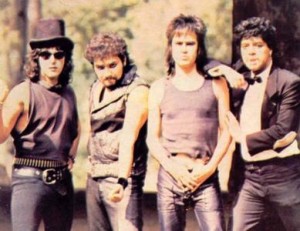 As the youth of the world tripped in the pseudo-spiritual chemical bliss of the 60′s, the seeds were sown in Mexico as well with an interest towards Rock music merged with esoteric and mystical themes, but true to its violent century, the nation oppressed its bravest minds, declaring them “communist”. Thus was quenched the initial surge of Heavy Metal, as clubs were closed, magazines censored and subversive content in radios minimized. Everywhere else the initial 70′s where the pivotal time for the realization of all kinds of “satanic” and “occult” music manifestations, so in the case of Mexico it took at least a decade to recover from vandalism espoused by the government.
As the wave of Americanization hit Mexican youth culture in the early 80′s, it was inevitable that some unique voices would rise against manipulation and show their own kind of “metal mass”, inflected with the Catholic superstitions and violent streets they saw all around them with innocent, idealistic eyes. Two names especially can not go unmentioned: the original thrashers Death Warrant from Ciudad Juarez and the more classical but frighteningly psychic Luzbel from Mexico City, one of the greatest metal institutions to rise from the sand of Mexico and a prophet of Doom Metal themes and aspirations.
Huizar, the maniac behind Luzbel, managed to also put forth with his comrades at Escuadron Metalico label a series of compilations which in the mid-80′s showed the sounds of the new metal generation inspired by, mainly, American thrash metal and European speed metal. These “Proyecto” vinyls featured Transmetal, Ramses, Six Beer and practically everyone else who dominated the end of the 80′s when finally Mexican metal was too strong to be quenched by sporadic police raids and random accusations of blasphemy and iniquity. These troubles were akin to an anvil upon which the hammer of the light bringer shaped and pounded the minds that were to break free of the shackles of social upbringing and even “humanness” itself.
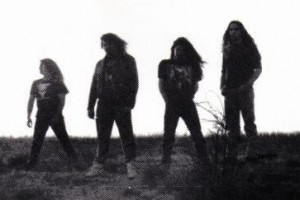 Eduardo: Well, to have a live appearance was not easy at all, because many people in Mexico (until this day) are a very difficult audience towards the Mexican bands. But we showed them that we were true about our ideals and that we gave 666% in every show! So we got the support of all the metalheads and they gave us in return a total storm of headbanging and full support. These were unforgettable moments to Shub Niggurath.
Joel: There was a small metal scene hungry to hear more extreme metal, so we always had great support from the beginning. I think there were more people supporting the scene than there is now supporting new metal bands, it’s a weird thing! Authority and “normal” people, as usual here, they didn’t understand our music. Sometimes the police were around looking to bother us, came up to the rehearsals and trying to get us, but never had luck, hahaha! And the people, those normal people, were the ones to send the police. I remember a show in Guadalajara or Leon in which the flyers had a circle in our logo and said: Watch out, Catholic, don’t assist! That was really funny.
Already before the decade was over, the most evil of the bands inspired by Thrash, namely Mortuary, Pactum, the inimitable Toxodeth and Transmetal (who tightened their sound album by album and still continue to do so after more than 20 years of career) had overtaken the gap between the international underground and the Mexican one. Suddenly the Judas Priest and Scorpions influence as the mainstream Mexican sound was replaced by a streetborn brutality and occult gore visions that would have made Slayer shudder. Studio and recording conditions were hardly ideal, but creating an easily digestible sound was hardly the intent of these iconoclasts, who repeated the slightly anterior efforts of the Brazilian scene in unleashing a torrent of noisy darkness easily mistaken for hardcore punk as the antithesis to forgetfulness and ignorance in adult human life.
Joel: Musically, our influences were basically Slayer, Venom, Possessed, Celtic Frost, and some classical masters. Lyrically important were the things inside my mind, my way to see this life, and obviously some great writers like Nietzsche, Poe and Lovecraft influenced us. Before Mortuary, each of us were playing in various bands songs of the bands that influenced us. When I was a child I studied some basic piano as well.
Eduardo: Also I had musical experience before Shub Niggurath: we created the Death Thrash Metal band called Tormentor. This was the origins for the unnameable abhorrence later known as Shub Niggurath.
Pactum – M.O.D.L.
 A mob of confusion, alike crawling insects, attacks the strings as early blasphemists Pactum struggle to make sense of violent, anti-religious ideas called forth by their satanic subconscious in Mexico City’s extreme response to Bathory and Sarcofago. While the anally raped vocalist rants meaninglessly on, the guitars manipulate suggestive, dischordant layers of picked notes and speedy runs that often sound chaotic but on a closer listen reveal an affinity with classical construction much like the early methods of Burzum and Ildjarn to call forth elegance from pieces of degeneration. Be it dissidence, incompetence or imagination that made Pactum to mangle the pieces of thrash they built upon nearly inrecognizable, the originality and harsh, spontaneous electric discharge that carries these songs onwards makes for a curious and surprising listen for those who are able to listen to the nearly unlistenable. In “M.O.D.L.” the band has discovered one of the valuable early lessons of black and death metal, that of desecrating the sanctity of rigid social structure by defying musical conventions and bringing the expression closer to the fractal noise of nature.
Mortuary – Blackened Images
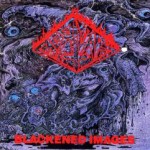 The elaborate and malign death metal of Mortuary is one of the most recognized funereal voices of early Mexican scene in cult circles and totally deservedly so, as the melodious and grinding old school sound hasn’t dated one bit but preserves the vital energy field of the times when death metal was not taken for granted, the quest for the ultimate density and sobriety. The rhythmic intensity brings to mind the debuts of Morbid Angel and Vader while the gloomy melody disposed as the interconnector of the more thrashing riffs is without question Central or South American in character (think: “INRI”). Joel Alanis’ voice escapes the trap that caused problems for many a thrasher, holding the rhythm of the syllables in position when reciting the blasphemies in English, and his powerful roar commands the fast, climactic and concise songs effortlessly to their logical conclusions. Even today Mortuary’s short but perfectly articulate album could serve as a protocol for building enjoyable but deep death metal, one that incites both head-banging and heart-scrutiny as the ultra-infectious “Reign of Dead” and “Asphyxiation” attack your brain with sensations from beyond and memories from the depths of the layers of mental programming.
Transmetal – Amanecer en el Mausuleo
 As the inaugural saints of muerte spread their leathery wings over Michoacán and the 80′s were drawing to a close, Mexico’s silence was ruptured by these mangled, hellspawned shouts and nearly arbitrary riff structures envisioned by the scene’s godfathers Transmetal as the path leading to the aerie of the future. Simple and pitiless like a less experienced Sepultura or Slayer debut, this early collection sees Transmetal attempting to bludgeon their way through a barrage of speed metal in an endless call-and-response of rhythm riff and hoarse barking. Germans had invented most of these figures and refrains as early as 1984 but the untamed desert frontier of their homeland does bestow Transmetal with a rancor bringing it closer to the most subterranean and spontaenous garage punk bands that had the chance to practice their instruments on brief relapses from fighting social corruption. The sketchy but decisive melodies of “Temor a la Cruz” and “Fuerza Invisible” hardly represent an international or even local pinnacle of art, but they were enjoyed by a legion of punks and metalheads for their absolute breakup with the more mainstream appealing qualities of traditional heavy metal.
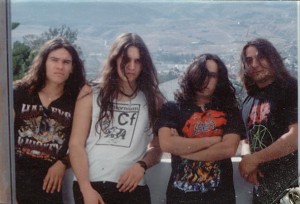 If there is a style of metal one thinks of in regards to Mexico, it must be Death Metal, in its brutal but most oblique forms, the sonic heir to Aztecs’ solar blood rites and Toltecs’ shadowy sorceries, an amalgamation of heretical thought inspired by Crowley and Lovecraft with a deep respect for the sacred and universal forces of nature which permeates the continuity of godforms in Catholic religious language in shades of traditional paganism which it overtook in surface but never in spirit. The first of these classics was undoubtedly Mortuary’s famous “Blackened Images” (also one of the earliest important Mexican releases sung in English) but no underground Death Metal maniac would forget the splendid, churning visions of Shub Niggurath (“Evilness and Darkness Prevails”, “The Kinglike Celebration”) or Sargatanas (“The Enlightenment”) either, not to mention the virile luminary Cenotaph (“The Gloomy Reflections of Our Hidden Sorrows”, “Riding Our Black Oceans”) whose lifeblood still runs in the veins of the most prized names of today’s underground (The Chasm, Denial and Hacavitz among others feature former Cenotaph members).
Demogorgon: Our ancient strain of blood has always been important to us, as on it are real human sacrifices and that is something we deeply connect with. We are proud of it and it deserves all of our respect. But anyway, we are mostly influenced by European Black Metal.
Joel: Definitely the legacy of our past has been influential in what we do, also the current situation in which the country has plunged. All the ups and downs of the past of our culture influence us directly or indirectly. The difference is the window from which we look at it, it’s definitely not the same as for the rest.
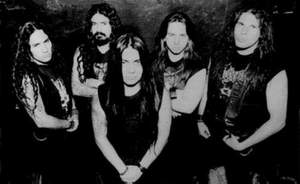 Eduardo: Mostly these bands’ message is about Death, destruction and occultism. If I’m not wrong, only Xibalba took our cultural roots into his concept – they even wrote “Unique Mayan Black” on their debut album. Cenotaph, Mortuary, Shub Niggurath, Tormentor, Deus Mortis, Deadly Dark, Necrophiliac and Pentagram among others were influenced by the Florida and Scandinavian scenes when they built Death Metal during the late 80′s and the early 90′s. My influences have always been bands like Morbid Angel, Deicide, Bathory (old), Sodom (old), Nihilist, Therion (demos), Thergothon, Winter, Necroschizma, Bolt Thrower, Slayer (old) and H.P. Lovecraft’s masterpieces. In Shub Niggurath, Arturo (who handled vocal invocations) was always in charge of the lyrical concept. Regarding “Evilness and Darkness Prevails” I only did the guitar solos, after that I had to leave the band. I have nothing to do with “The Kinglike Celebration” – for me this is not the real Shub Niggurath. For me, this was just some kind of project, without Arturo there, I am not sure about the result.
Cenotaph – Riding Our Black Oceans
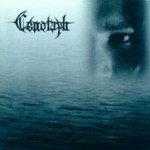 Coming off the back of an excellent debut in the form of ‘The Gloomy Reflections Of Our Hidden Sorrows’ and losing a prominent member in the form of Daniel Corchado, Mexican horde Cenotaph radically altered their sound aesthetically and showed a refinement of production and to a smaller extent, musical technique. Whereas the first full-length resembled a prototypical version of Nile, with an exotic though nonetheless esoteric and original take on New York death metal (think Incantation, Morpheus Descends), ‘Riding Our Black Oceans’ owes its musical framework, when speaking of instrumental technique, to European metal, most notably the first two albums of At The Gates, with a much more classicist approach to melody. With the outgoing of previous throatman Corchado a new vocal makes itself at home, not far from the tortured howls of Anders Friden. The same sense of aggression is also present in this work, but is less of a catharsis than the aforementioned Swedish band or the German act Atrocity, and has a motive towards evoking a nostalgic depth, rather than a psychological-emotional one. The percussion is chaotic and structurally brings to mind a more rigid and maze-like ‘Beneath The Remains’ by Sepultura, with more adventurous battery that evokes their ‘Morbid Visions’ record. Acoustic guitars embellish and interlock with these intricate arrangements, and are an obvious nod to Mediterranean and Southern European music. This stylistic admixture works brilliantly, rather than being a work that is merely imitative of an established style, it works the more obvious traits for its own ends, borrowing rather than copying. Cenotaph make a very distinct and profound work here, one of the finest releases to come out of Latin America.
Shub-Niggurath – The Kinglike Celebration (Final Aeon On Earth)
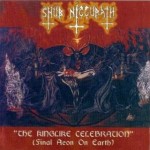 From the extra-dimensional plane of unspeakable horrors that’s revealed in our nightmares by black, arachnoid creatures, prying open our sub-conscious to witness terrible visions, comes this brutal classic of Lovecraftian Death Metal. As a later album in the old-school tradition, ‘The Kinglike Celebration’ has the strength of dynamic and coherent composition under the unmistakeably nefarious atmospheres that could only come from the first generation to be instructed by the likes of Possessed and Sepultura. Unlike more recent acts such as Portal that also delve into the Non-Euclidean realm of Howard Phillip, this work remains an highly geometric one, as if to frame the malevolent world of the Ancient Ones within the scope of human cognition, enabling the sensations of fear and awe and involuntary submission to the higher, evil will. The symmetrical structure of these songs oversee a central melodic theme being deconstructed with the horror of trembling and ominously churning, Deicidean riff-work that builds to a majestic revelation of cosmic power, usually embellished by eerie synths. From this expanse, the band reintroduces the central riff, re-contextualising it through powerful lead overlays and purposeful percussive and rhythmic enunciation, with the crescendo-inducing prowess of a Classical symphony. Shub-Niggurath advance the pulsating Slayerisms of Deicide’s first album to encompass thoughtful formulae of occult melodicism and awaken the unspeakable entities of the grand, cosmic hierachy.
Sargatanas – The Enlightenment
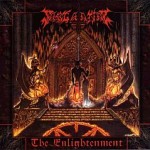 These blasphemers from Guadalajara were around as early as 1986 according to their biography. Only denizens of the infernal layers know what they must have sounded like back then, but their full length revelation is also nothing less than ancient and horrific, of deeply atmospheric and disturbed vision of extended, simple and dragging death metal torment. Shunning the eloquent melodies of Cenotaph and likewise the rhythmic energy of Mortuary, Sargatanas withdraws into ascetic and morbidly elongated tremolos pillared by blasphemous growls mostly maintaining the emotionless, yet commanding tone of satanic artifice, as a stone statue summoned to unholy life and crushing Christians with no haste or passionate compulsion – determinate, almost peaceful. The meditative quality is carried to the extreme in mid-paced or even slower songs such as “Fear and Suffering” or “The Proclamation” (featuring drum patterns motivated rather by ritual ambient than Dave Lombardo) making it even somewhat plodding. The band barely animates for a gloomy rendition of Possessed’s “Satan Curse” in a version that sounds like bubbling lava or tremors preceding an earthquake and one of the most delightful tracks on offer, the chaotic “Satanist” whose main riff recalls Rimsky-Korsakov’s “Flight of the Bumblebee” and as many other tracks on here, is seemingly randomly interrupted for a mock satanistic prayer. In any case, this inward bound attraction and solitude of vision will open only to deepest underground death metal cultists and fans of subtle terror based on psychological expectation and illogical mood cues, examples of which are found plenty in Mexican horror movies and early black metal in the vein of Samael and Barathrum, which undoubtedly heavily weigh on Sargatanas’ study list regardless of this band’s origins being placed even further back in the dimension of time.
Aztec rites of darkness
Without prior knowledge it would be easy to assume that the Black Metal biosphere of Mexico would have been overtaken by bulletbelted battalions fueled by alcohol and sexual lust, but instead some of the most purely mystical and meditative classics of the 90′s underground arose from under the wings of Guttural Records, the all time prime supporter of Mexican occult metal who still keeps cranking out occasional re-releases of material whose quality is, occasionally, simply beyond our dreams. To name some, if you have not heard the most moving moments of Xibalba, Avzhia, Funereal Moon and Shub Niggurath, you don’t know how astral and insane Black Metal can simultaneously be while resorting neither to “progressive” nor “raw” clichés, instead being alive with the fervent force of Mexican demons that feast on the souls of succumbed sorcerers, the experience and experiment being total.
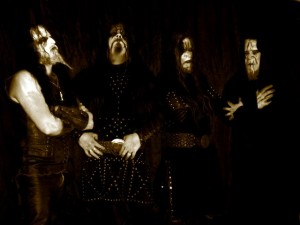 Marco: We have been listening to Metal music for a long, long time. We began by listening to a lot of ’70s bands (Purple, Priest, etc), we experienced the radical change and the explosion of the new bands from the ’80s (Venom, Bathory, etc.) and we just grew with the evolution of this music through the end of the ’80s and the beginning of the ’90s. I think all of this music has influenced us a lot. Books that have inspired us throughout all of this has been ancient literature from the pre-Hispanic cultures of our homeland – with special focus on the Mayan topics mainly, though we also like H.P. Lovecraft’s books. In those days, there were not many bands like us around. I remember that on the few gigs we had, some people were just staring at us, and some other were just enjoying the sound. It was really small and we just seem to get more attention from other countries than ours. Sometimes, regular people were inventing silly stories about bad things happening to them simply because we were about to play on that day. I don’t think the media was focused on this kind of extreme music back in those days, as it is now.
Demogorgon: Avzhia was formed with influence from Death, Thrash etc. Metal, absorbing and swallowing the blackest of these styles of Metal to form a dark and melancholic sound. Musically we were influenced by the old school of Black Metal, bands such as Bathory, Celtic Frost, Hellhammer, etc. and ideologically for example Emperor, Dissection, Satyricon, Black Crucifixion, Grand Belial’s Key, The Black, Tormentor, etc. We were never schooled musicians, we started doing it simply like we felt at the time in the earlier 90′s and we’re still doing music the same way. Avzhia was the only Black Metal band playing in the midst of a lot of Death Metal bands, we remember brutal mosh pits and hostility… so when Avzhia took the stage the audience seemed to be taken by a great fucking depression! In the early 90′s it was a big challenge to keep moving forward into the majestic world of Black Metal.
Xibalba – Ah Dzam Poop Ek
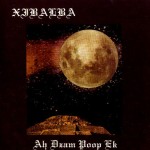 Like Cenotaph, but in the context of a Nordic black metal band, Xibalba take obvious cues from mid-period Darkthrone and Burzum’s ‘Det Som En Gang Var’, and use various aesthetic tricks to distinguish the artistic and ethnic context herein, whilst also succeeding in not letting grandeur overwhelm the beauty of their work. Flowing, harmonic riffs, much like an upbeat version of ‘Panzerfaust’ work their way through catchy, waltzing rhythms that would fit nicely into balladic pieces, sounding just as apt as an interpretation of ethnic, triplet based patterns, transferred onto the modern drumkit. Samples to introduce particular songs use ancient Mexican folk music to accentuate the ‘Mayan’ character of this record, this is done sparingly and is non-excessive, charming and ensnaring. This album is strictly traditionalist in its execution, but successfully incorporates unique, exotic elements into its framework, retains its dignity without compromising it’s honesty. This was released in 1994 and was a time where many metal acts were on the verge of signing artistic death warrants by trying too hard to be different. Xibalba continued the legacy of black metal’s orthodoxy and breathed new life into it.
Marco: I think “Ah Dzam Poop Ek” is a great album, we express the essence and the atmosphere of our past in every song. Maybe it could have had a better production, but in the end that is the sound that captures the environment we are related to. And it’s good to stay away from a trite, standard and expected programmed sound. We hope to release our new album soon.
Funereal Moon – Beneath the Cursed Light of a Spectral Moon
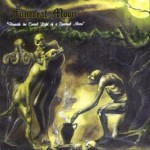 Easily one of the most obscure and horrifying symphonies ever composed on the Mexican soil, the drug-addled, hypnotic and twisted black ambient scenarios of Funereal Moon despite the Guttural Records connection bear little resemblance to the warm crusted ground of Xibalba or the quasi-Nordic beauty of Avzhia – or any other formal black metal for that matter. If you have heard some of the unsane abstractions concocted by the French black legionnaires or Texan congregation of Equimanthorn on their mostly private tape mayhem, you might have an inkling of what to expect. Subsonar synths throb, cheap reverbs multiply growling voices to comical intensities, layers merge into a ritual cacoon of violent concentration in a macabre crescendo of not-so-subtly erotic (especially in the hideous “Vrykolkas (White Irish Eyes)” backed by whiplashes and female moans) palpitations begging for release through the dagger of the proponent. When synthetic guitars and mechanically stumbling drumscapes kick in to approximate occult metal architectures, the effect is close to what Black Funeral evoked years later in the industrial black metal revivals of “Az-i-Dahak” and “Ordog” – here achieved without any excess stylistic measures, simply thrown in your face in the name of blasphemy and contempt. Cheesy and immature to the extreme, but at the same time mercilessly compelling like an exploitation movie, these desolate voices of sorcery seem somehow one of the closest to the alienation and horror of the Mexican “Nocturnos dominion”, where immoving cacti stand upon the chaparral as guardians of twilight and coyotes raise their chant to the bloodred moon, all ensorcelled by the forgotten spells of Tulan sorcerers.
Avzhia – The Key of Throne
 From out of Mexico City’s chaotic and concrete urban sprawl arose this monumental Black Metal album as a statement of militaristic and natural order, inextricably linked as they would have been to the inhabitants of Tenochtitlan, the former capital of the great Aztec civilisation. Avzhia here develop the ritualistic and prolonged, ‘Pentagram’ by Gorgoroth-like phrasing of ‘Dark Emperors’ into even grander arrangements panning across vast battlefields and landscapes, bringing keyboards to the foreground for a sense of epic melody that resembles Graveland’s ‘Creed of Iron’ being guided by the expansive compositions of Emperor. There is none of the lead guitarwork that’s central to ‘In The Nightside Eclipse’ in forming esoteric musical themes, so the symphonic majesty of ‘The Key of Throne’ is simply and effectively accompanied by the fullness of sweeping powerchords and this approach brings a lot of primitive but intelligent flavours to the sound and the composition as far as bringing the themes to a successful conclusion is concerned. When stripping away the keyboards from the guitars to reveal the simple beauty of an idea, almost Punk-like riffs of the sort Impaled Nazarene are infamous for are unleashed in a warlike clash of thought and action. With the inclusion of the keyboard, there’s a sense that Avzhia might have heard Skepticism’s ‘Stormcrowfleet’ as the same feeling of ethereal beauty and earthy power is evoked. The bass plays an important role as well, during the drawn-out riffing, reminiscent of Primordial’s ‘A Journey’s End’, folkier parts can be heard echoing underneath like a dormant race building its power to strike, and strike it does as the full instrumental ensemble combines to reiterate this idea. Perhaps this is Avzhia’s vision, like the Norwegian Black Metallers once possessed, of Satan’s adversarial power conquering the modern, Christian lands, once again appeasing with the blood of fallen enemies the ancient gods who had long ago died for their race.
Demogorgon: To analize this album, well, it contains too few tracks but each one of them satisfies us and yes, there’s both ideological and musical evolution – but as always, firmly obscure roots that define Avzhia.
As the populist variants of Nordic Black Metal and Gothenburg Death Metal grew in volume and number, so did the attempts at “romantic” or “psychedelic” sound in Mexico, mostly misguided through a lack of coherence and real inspiration beyond the mundane wish to belong in a clandestine good-looking cult of gothic clothes; an unfortunate occurrence of middle class commercial mentality in a society otherwise unnaturally divided and polarized (the shades of civil war never left, nor the even deeper bloody roots of muerte culture). Prominent American label Full Moon Productions signed Argentum for their one interesting album, “Ad Interitum Funebrarum”, while many in the vein of cloak-and-hood-gothic Demolish and the rather interesting Black Vomit toiled in obscurity. The Chasm, a masterful brainchild of Cenotaph alumnus Daniel Corchado, advanced from Mexican beginnings to dominate the forthcoming decade (now in Chicago) with a progressive (structural, non-gimmick) Death Metal tour de force. Another relocator was the grinding, blasphemous and simplistic “bonehead black metal” group Morbosidad, whose several drummers died in accidents.
Demolish – Remembering the Cabalisticae Laments
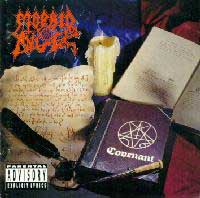
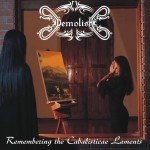 To be honest, and there is a reason to be because we are not here to create empty hype and false promise, most of Mexican metal of the 1990′s was comprised of worthless copies aping whatever neo-gothic metal trend was looming in the world at large and it’s nowhere more clear than in this compilation of the successive 1995 and 1997 demos of Demolish and the progression from mediocre to bad influence. The bouncy, hyper-emotional and lethargic black groove of the first part “Reinforcement Laments from the Lamb” (That’s just about what I emitted halfway through this concoction!?) is an incriminating example of heavy metal dressed as black metal, enveloped in saccharine keyboards which occasionally would inspire a vomitous reflex from even that top hatted abortion of Dimmu Borgir (old). Suffice to say there’s a lot of Anne Rice-y occult romance and affective screaming and bombast with hardly any musical surprise or moment of interest, as they would probably distract from the singular intent of securing the attention of fat gothic Wiccan bitches. I guess you might be into this if Covenant’s mercifully forgotten “In Times Before the Light” or earlier Cradle of Filth was the best thing that ever happened to you in black metal. The older more creeping old school death metal influenced occult metal in the earlier recorded second part “Artis Cabalisticae” includes violent moments of hope, but not enough to convince any further than, say, that first EP from Portuguese womanizers Moonspell. Hardly any Toltec spirit here, so move along.
Argentum – Ad Interitum Funebrarum
 Hooded Wallachians prowl the crenellated wall tops of ancient castles, Mediterranean bards wield their lutes as metallic Paco de Lucias and some thin, wimpy goth called Philix Pherboreon (is this a Harry Potter character?) attacks the cheap Roland determined to reign as nocturnal dominion over every Mexican black metal wannabe circa 1996. With surprising class and flair, Argentum’s hymns to darkness remind one that the atmospheres descended part from “The Principle of Evil Made Flesh” and part from “Goetia”, might not stand the highest in today’s black metal elitists’ repertoire but today, sounds more exciting and unique because of their severe emotional and dimensional indulgement in a nearly forgotten quest – to compose music, not meaningless random noise or robotic riff patterns. The band is undoubtedly at their peak with the sustained moods of “Enter an Encysted Hibernation” and other slower pieces such as “The Serpent’s Lament” which traces the ethereal scents of the black lotus much as My Dying Bride would have if they had obsessed with black metal during the time of their first album. When the bands decides to thrash onwards in speed, and yet retain the “gloomy” keyboards in “Mortuus Infradaemoni”, it’s undoubtedly a bad choice, sounding ridiculous and swamping their intentions of occult credibility observed with “Lections on texts including English, latin, Catalan, Creol, and Ancientdark Language & Spanish”. The question mark imprinted by this upon one’s brain is better than mere satisfaction, though.
The Chasm – Conjuration of the Spectral Empire
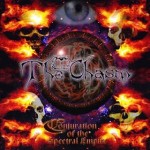 The Chasm’s fifth album in a productive and populated discography continues their journey through the astralic realms of the dead, traversing a heterogenous soundscape much like the cultural topography of Mexico itself. Where Corchado’s work with Cenotaph was inspired by the rhythmic power of Swedish Death Metal, this album is more in tune with not only the melodicism of old troops from Gotenborg like At The Gates, Unleashed and Dark Tranquility but the morbid disharmony of Norsk Black Metal classics ‘De Mysteriis Dom Sathanas’ and ‘Under A Funeral Moon’, which owe much to the Latin American primitivism of Sepultura that also goes into the sound of ‘Conjuration of the Spectral Empire’. The expansive melting pot of sounds and styles is guided by Shamanic visions that peer into the inpenetrable abode of Mictlantehcuhtli, coloured and contrasted by the opposing principles that intersect this psychic plane, giving this album a vast sense of direction proportional to the longing for ancient wisdom in a world torn from the continuum of tradition. From the very outset of ‘Conjuration…’, the winds of the Chihuahuan desert are conjured by guitars and effects, bringing to mind the main theme composed by Ennio Morricone for the nihilistic Western classic, ‘The Good, The Bad and The Ugly’. Each song develops from or towards a single, clear and always beautifully poignant melodic idea, fusing the structural framework of early Dismember with the technique of Technical Death Metal bands like Cynic and Atrocity and their insistence on rhythmic and melodic interaction, although the use of inverted powerchords amidst the South American chaos and Melodeath flourishes, to create a more sombre atmosphere recalls the obscure Black Metal of Mütiilation’s second album. The Chasm avoid the pitfalls of Melodic Death Metal by having this focus, removing themselves from the tendency of bands to resemble a Scandinavian folk riff-salad with no conceptual reasoning behind it. Instead, songs qualify as movements and the phrasal development therein demonstrates an awareness of Classical music that restores the grand aspirations of the Swedes and therefore stands alongside the likes of ‘The Red In The Sky Is Ours’ and ‘Like An Everflowing Stream’ as monuments to the primal, cosmic darkness of our true, inner nature.
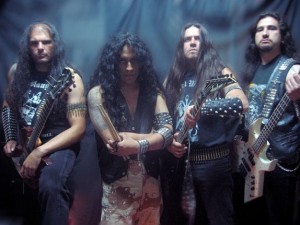 Through the international contact and amalgamation of principles brought about by simultaneously World Wide Web access and the extent of educating the young generation in English language (movies, videogames and music being elemental and important here) the new millennium saw Mexico closer than ever to its northern neighbour. Youth factions such as the hated “emo” culture would have been out of place in 1980′s conservative Mexico, but despite clashes between groups they are widely approved today. All in all, it seemed to weaken the unique characteristic of the Mexican underground which was the tough rebelliousness in speed metal and occult/mystical lyrical tendency in Death Metal. In other words, too many corpse painted posers (such as the unending repertoire of Azermedoth Records) and uneventful, funny “goregrinders” (Disgorge, the original of this style, still continues to exist) infected the underground.
Eduardo: Certainly this isn’t an easy way to get money, fame or groupies. If that’s what a band is looking for, it’s just a bunch of shitty losers. You should work because you love what you are doing, and doing this just to be a sell out and gain a living from the people who manage you is a completely Shitty attitude. Underground Death Metal is for true warriors who eat, shit and talk metal, and love it as a son! To know all the underground beasts that still dwell on the catacombs of the worldwide scene and support them as brothers… In Europe it’s awesome how the Metal way of life is still the way for the chosen to die with their boots on. Metal in Europe is bigger than other music styles without the need of being in a popularity contest. Metal is for metalheads and that’s it.
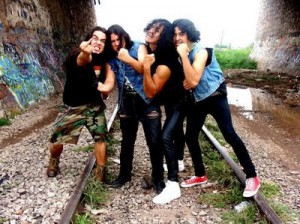 On the other hand, in Mexico, Metal has been taken as a trend. Every single metal subgenre such as death, thrash, black or speed has been invaded by stupid bastards with childish ideas and only commercial purposes. This is not only certain individuals, as even labels have mutated into money makers – signing bands created to give a commercial and false name to metal. They think that they know everything and even take the image of the old gods as costumes. Please! All those denim jackets full of patches from Possessed and Slayer, just to name a few, worn by kids of 18 years and claiming to be “thrash ’til death”! Jajajajajajajaja! Or the new trend of “old school death metal”? Please, when those bands were out, nobody cared about them! But now everybody is looking for those bands, jajajaja! Only the true ones we’ll meet at the end of the road. The other ones will escape to the next trend, because they never really belonged to us!
The resurrection of the necrocults
This is not to say Mexico’s soil doesn’t still bleed black at the desolate fullmoon hours. Old bands all the way to Luzbel are still sporadically active and the promised Avzhia offering “In My Domains” is one of our most awaited forthcoming releases in several years. Infinitum Obscure featuring The Chasm’s Roberto Lizárraga is a throwback to the days when death metallers weren’t afraid to expose religious mysticism, supernatural fervour and psychological “dark” addiction in one package, while Hacavitz and Yaotl Mictlan bring back the Aztec themes but do not retain the climactic level of Xibalba’s “Unique Mayan Black Metal”. Satanists who preach the ontology of Self and the theurgies of netherworlds remain plentiful, Denial and Necroccultus (both featuring scene veterans such as Supplicium’s Isaíah Huerta, Shub Niggurath’s Eduardo and Cenotaph’s Oscar Clorio) being probably the best of the bunch, and also for example Ravager enjoys wide exposure and releases on prominent European metal labels (while Avzhia sadly toils without a record deal).
Demogorgon: Look out for “In My Domains” – this album is strong in itself, riff by riff. It’s raw while plentiful in melodic interludes, grim voices and depressive atmospheres. We do what satisfies us, then other metalheads can satisfy themselves with Avzhia’s music. It’s great to meet true people when we do shows. Avzhia is always going to exist in the dark side of true Black Metal and we will keep doing our work full of darkness of our Lord Sathanas. Grim, cold, melancholic and depressive are characteristics of what Avzhia is! Only the true emperors live, eternal life to Black Metal! See you soon wherever you are… on “In My Domains” tour.
Marco: We just like the sound of a good song, no matter what style it is. As long as it reflects honesty and passion, clearly away from the rules of the mainstream. We have made this music since the ’90s, and still I can have ideas for a song that sounds great, even when there’s hundreds of bands around. You just need to find the right notes and stay focused on the path. This music has been really distorted from the original roots. What makes it worth I don’t know, but maybe just to know the right path is still there and the fact that we’re contributing to it. I think it depends on the integrity and personal convictions everybody has. It’s all part of finding personal freedom or spiritual release.
Joel: We are satisfied with the music that we did. It represents the things we felt at that time, and it’s a real condition that still prevails. Songwriting for us has been a natural change in the evolution of the band, as new songs have the seal of Mortuary but are definitely not the same. We have an evolutionary progress, you’ll see.
Necroccultus – Encircling the Mysterious Necrorevelation
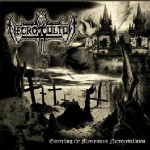 On the footsteps of Irapuato bands such as the Paradise Lost influenced Supplicium and the Chasm-ic A Perpetual Dying Mirror the mad inverters of music decided to go for an irate, warlike sound most akin to Vader’s most brutal incantations. For a fan of Sargatanas and earlier Shub-Niggurath, there are plenty of morbid mental cavities to succumb into in atmospheric death-thrashing of “Mirage of Death” or the more Northern sound of “Descent To Requiem”, actually close to Absu’s early efforts in mingling Swedish death metal and the more ritualistic and sensual sound of ambient black. As regrettably is the case with neo-death metal, there is a great temptation to succumb into a patterned safe manifestation of used riffs, which no longer have the capacity to shock or inspire but the most fresh and innocent listeners. One can only imagine what impact “The Necrosphere Within” would have had in 1987, but the lack of a honest exploration of death metal horizons arouses the question how long can “formulaic death metal” be “death metal” at all, since the genre was incepted to scare the listener into an acceptance of devious un-life. In a hodgepodge of riffs, the social instinct takes over and the music loses the “death-feeling”. A slight rescue is obtained by preserving much of the doom character of the members’ earlier bands, as well as wicked and proficient guitar solos. In total, “Encircling the Mysterious Necrorevelation” is far from bad, but it also lacks the essential magic and forceful intellect characteristic of Mexican metal peaks.
Yaotl Mictlan – Guerreros De La Tierra De Los Muertos
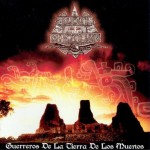 Yaotl Mictlan in a similar respect to Xibalba borrow stylistically from European black metal. Their debut full-length contains a battle-hardened ferocity not unlike Graveland’s ‘Thousand Swords’, and in attitude resembles a less esoteric version of the classic Polish black metal acts. Musically this has the precision and sharp execution of Enslaved’s ‘Frost’ album, but with is overlaid with meandering, arpeggiated guitar forms that bring to mind a more rock-inclined take on Burzum’s first album. True to backdrop, the band bring elements unique to their Mexican heritage to the fore, in the form of wind instruments, percussives and acoustic guitar passages that are distinct within flamenco music. This is no doubt a unique approach, and firmly grasps a sound it can call it’s own, though lacking the cohesion and charge to put them in the same tier as Xibalba or Avzhia. As a result of this, ‘Guerreros De La Tierra De Los Muertos’ comes across as a tiresome listen, but not without the occasional flourish of excellence. Now signed with Candlelight records, it will be interesting to see what results their next release will artistically yield, as there are moments of promise here.
Infinitum Obscure – Sub Atris Caelis
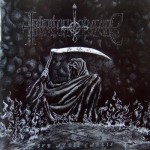 Often referred to as a clone of The Chasm, Infinitum Obscure do indeed share more than a few identifiable traits with their fellow Mexicans, most notably the tremolo picking and those galloping triplets that lend so much power and vigour to the rhythm. There is something that ultimately separates the two bands, however; that being the conceptual direction each band embarks upon: while The Chasm invokes a strong, dark atmosphere that emphasizes the mystical, esoteric passage through some evanescent portal, Infinitum Obscure are far more direct in organizing a forceful rhythm in such a way as to remain concentrated on a single, grounded idea, often reinforcing this focus by frequently returning to familiar themes. So, while their main inspiration might take flight into stranger landscapes, Infinitum Obscure are quite content to portray the lost chasms of this world with an evocative atmosphere of imaginative melodies and, most importantly, direct and uncompromising riffing. On ‘Sub Atris Caelis’, Infinitum Obscure’s sophomore album, these points are emphasized more clearly, making it their definitive accomplishment to date. The need to shake off the burden of being a mere clone band is eminently present; the band tasks itself with creating something altogether their own, resulting in a real sense of the epic emerging from the patterns interwoven throughout the record; each song is striking at something profound, grasping wildly in the search for solidarity. The consequence of these compulsions is an album that sounds like it is still very much in The Chasm camp; while really it has taken several progressive leaps forward, leaving us with a work of art brimming with the self-confidence of autonomy.
Denial – Catacombs of the Grotesque
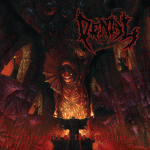 Some of the most impressive new death metal from anywhere in the world, this churning, impactful and bodily animalistic accomplishment from former Cenotaph and Shub Niggurath madmen is not a joke. What Cannibal Corpse always intended with their chromatic, bass-heavy and relentlessly rhythmic one dimensional stream of riff becomes an amalgamation of melodic motifs and devastatingly experimental squeals in the hands of these perpetrators, as the background noise boils and envelops much as the classic “Onward to Golgotha” did, while the constant, FX enhanced, ridiculously monstrous voice of Ivan Velazquez intones all the perspiring tension of underworld nexus, the twilight threshold of life and death where sorcerers and demons whisper secrets to the warrior, offering true and false guidance, representing the violent archaic generations that waged war on Mexico’s bloody soil and continue to make many lives into living hell. I have alluded to the monotone nature, which is probably intentional and it hardly detracts from enjoying this cryptic abomination for further and further listenings, as the heights such as “The Pestilent Pits of Disgrace” or “Necrotic Invocations” are deceptively complex mazes of chords and melodies disguised as straightforward infernal metal by the tight manner of production and the guitarists’ sparse use of leads or interludes. Most importantly, the unrelenting hopelessness of these afterworld visions will force the listener to abandon the illusion of safety and immortality that makes the common man succumb to faulty, immoral decisions from day to day, thus achieving one of the highest principles of death metal: mental change (abomination). One would hesitate to lift such a recent work to the hallowed pantheon of Cenotaph and Mortuary after a brief listening span, but if a candidate is chosen from this tournée, this must be it.
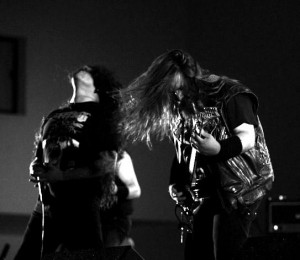 It can be said that while Mexico’s metal offerings are not especially plentiful, they are generally interesting and spirited while the best of the country are just about the best these genres have ever seen, on an international scale. Mexicans’ natural groundedness coupled with the mystical tendencies is an excellent standpoint for witnessing the oblique directions of Death and Black Metal from an unpretentious, furious, “Luciferian” angle. It’s almost a surprise there isn’t so much more of it, even though I’m surprised if any reader of this article gets a sense of scarcity regarding items of interest in Mexican metal. So, that being said, it’s about time we leave you to contemplate the mysteries of Toltecs and Satan in the consummation of the extreme, Romantic and evil compositional systems of these modern Mexican warriors and dreamers.
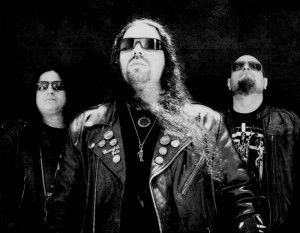 Marco: I think this music is very individual and very personal, and it can take you to a spiritual level, if you listen carefully. Our ancient cultures are based on spirituality, so that’s the point in our just making this weird mix. One song can take you to the top of the pyramids, and reach for the skies, and another one could take you to a scenario of a war against the conquerors. In the end it’s all about finding your own roots, it’s some kind of, another, resource to open your eyes and to step away from the enslavement of social rules and moral unconsciousness (Christian superstition included). In the end the people in power need a dormant society, so they can keep on corrupting, spreading corruption in every corner, and people are just playing the game. Only the connection to your roots will set you free.
Joel: It’s a matter of self confidence in all the things we do, the feeling of greatness inside, the feeling of power, to reach new levels in the extreme brutal metal music we make! I’m not here to convince anyone to do anything, we are selected persons, we the whole scene… the others, the weak, must die!
Highest hails from Deathmetal.Org to Joel of Mortuary, Marco of Xibalba, Demogorgon of Avzhia, Eduardo of Necroccultus and last but not least Noe of Guttural Records for providing in-depth thoughts from the original perpetrators of real Mexican Metal! All of these bands are active so look out for forthcoming events of true massacre of the highest order.
Once you decided to come to Mexico you should have put all your petty fears away. Your decision to come should have vanquished them. You came because you wanted to come. That’s the warrior’s way.
– Don Juan Matus
No CommentsTags: zine-zines


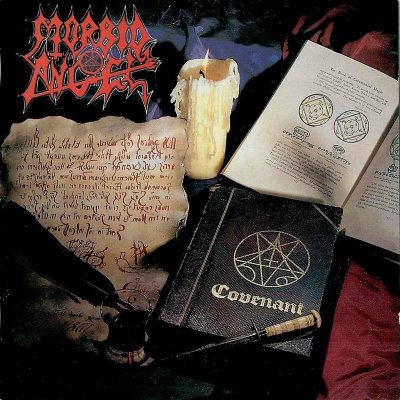
 Death metal is structuralist heavy metal that borrows heavily from classical and industrial music. Its heritage is equal parts neoclassical heavy metal from the 1970s and hardcore punk from the early 1980s; if you throw Discharge, Judas Priest and King Crimson into a blender and set it on “high,” you might get something like death metal. It took from roughly 1983-1988 for death metal to fully evolve, and at that point, it experienced six golden years of fruitful growth before lapsing as black metal eclipsed it in popularity.
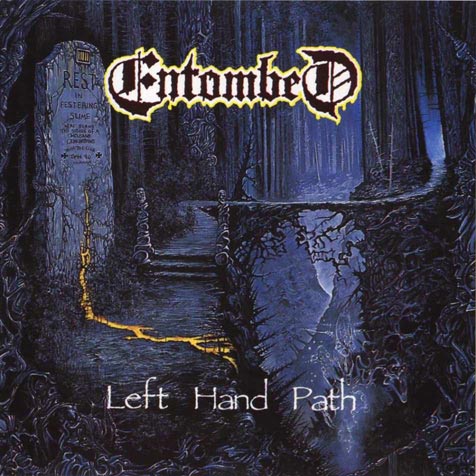 The history of rock music has been written by commercial promoters who have tried to establish its “authenticity” and uniqueness, and therefore, almost all mainstream publications are hostile to death metal. Death metal reminds us that rock music, blues and jazz did not arise autonomously in America, but were based on centuries of European popular music (the I-IV-V chord structure of the blues is derived from European folk music, and its “blues scale” is a modification of Asian and Celtic scales). Rock music is a scam, and its marketing makes it seem to be something greater than what it is, which is the same old music dressed up as a product. Death metal more than any genre before it broke from the rock tradition, and therefore is a threat to the rock establishment and its profits.
 Like most musical genres in the modern time, death metal is constantly under assault not only from external interests, but from within, as self-interested people try to make rock music and dress it up as death metal. These attempts to simplify the genre would benefit those who attempt them, as they would both be able to make a saleable product (being similar to established musical tastes, it sells easily and broadly) and be able to claim the “authenticity” of belonging to an outsider form of art such as death metal. These false death metal bands have polluted the genre with the same mainstream dogma and musicality that death metal sought to escape. Like all human social breakdown, this breakdown occurs through the selfishness of individuals who are unwilling to admit that the health of the genre is more important than their personal profit.
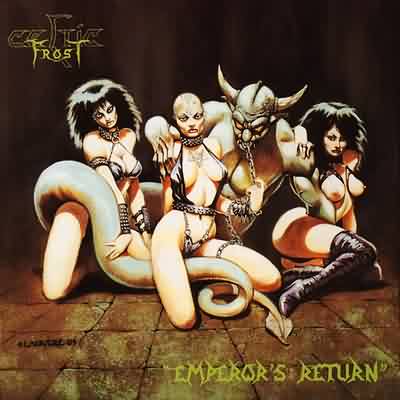 During the years 1983-1985, a style emerged that was between death metal, black metal and thrash, and from this all of the succeeding genres were to derive their musical inspiration. Bathory, Sodom, Hellhammer/Celtic Frost formed the basis of this style, augmented in the Americas by Possessed, Slayer and Sepultura. From these founding acts styles diversified into death and black metal. While many give credit to Venom for the term black metal, musically speaking they were rooted firmly in the heavy metal tradition.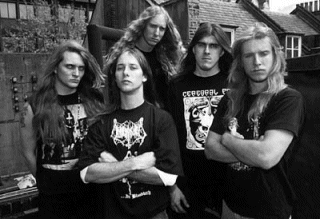
 Death metal bands are occultist in that each of the founding bands and most to follow had an occult focus or research interest evident in their lyrics. However, few practise mysticism and most seem to use it solely as metaphorology for their works. This is convenient because our moral society, even when secular, bases its morality on Judeo-Christian mythology.
 From this, much can be learned about a human future: nihilism frees us from much of our fear by confronting it head-on. Death metal bands have created an epic change in American subculture from one of morality to one of existential self-assertion, but further, the “gore” lyrics of many bands have targeted social denial of collective fear of death.
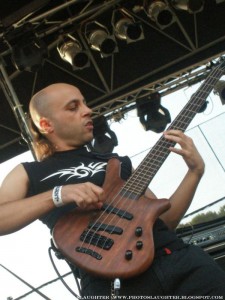 The early nineties was replete with Death Metal bands that are now legendary, contributing to the cult’s creative height, but largely from the now infamous concentration zones of northern Europe and across the Americas. This left several adjacent scenes with relatively little notoreity and condemned some first-rate albums to obscurity. Our review of Disaffected’s ‘
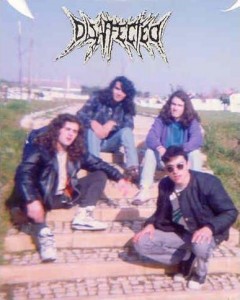 But in 2007, me and guitar player Sérgio Paulo, decided to reunite the band after 10 years of silence, and after a few meetings with the band members discussing a possible band reunion, the decision was “Let’s do it!!!”. A lot had passed with the band and the band members during these inactive years. Each had gone their own way in music and life. Due to the tragic accident of Sergio Paulo (guitarist) in 2004, all members got together again for the purpose of supporting a good friend. Sergio was lucky to survive a coma sleep of 2 weeks. His force of living had made him come back to us, and he had (literally) to restart his whole life, like being born again. He recovered most his abilities, and even his guitar mastery is back in 99%. A lot of things he had lost in his memory due to this accident, but he had never forgot DISAFFECTED music and his friends!
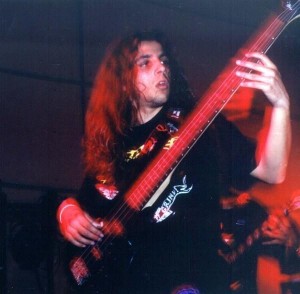 In 1994, I played bass guitar with a Jazz sextet featuring vocalist star Patrícia Fernandes, and we performed a show at Festa do Avante’94 (Seixal) in September of that same year. During the Summer ’97, I played bass guitar at Flood (Alternative Rock) as the support band of Santos & Pecadores Summer Tour ’97. In March ’02, in the aftermath of our Death Metal project Skinblade (1999-2002), me and drummer O decided to form a new band called Sybila, based on avant-garde style, and in December ’04, we entered Studio G22 (Feijó, Almada) with producer Paulo Vieira (Firstborn) to record the promotional song ‘Cycles’. The band split up in 2008 due to professional commitments of the musicians.
 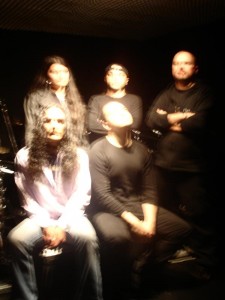 Gião: Musically, we intend to continue with the style that characterizes Disaffected, trying to explore new levels of music, sometimes melodic sometimes dissonant. In this new album the lyrical context consists in two parts. Part 1 with dark and obscure lyrics, showing the route of the band from the stop until the meeting, and then in Part 2 we will try to depict the rebirth of the band with lyrics more encouraging and positive. We’ll sign a new label contract too, but for now, we have nothing confirmed yet.
 With the advent of another grim Autumn, half of the world retreats into glowing boxes of warmth and comfort to preserve the sickly and feverish Summertime langour. In a time where the seasonal rituals of harvest survives only as a novelty for urbanites and other moderns, for the sinister few, this is the season to step out into the growing shade of night and harvest the souls of the damned for they will be reborn into a new, unholy dawn. Such apocalyptic ends have necessitated a gathering of gargantuan proportions and could not be more appropriately named as the third ‘Black Mass Festival‘ in Helsinki later this week. Nefarious and astralic cults known to Hessians the world over, like Necros Christos, Sadistic Intent, Cruciamentum, Neutron Hammer, Lie in Ruins, and Death Metal legends, Demigod will be devastating the city and delivering winter even earlier than the Arctic already experiences it. Among such legions and Deathmetal.Org personnel in devout attendance will be London-based Death Metal occultists, Grave Miasma, making a similar journey to myself, but before our paths would re-intersect on the shamanic land of ancient Suomi, I posed a few questions to their guitarist and vocalist, the acronymious Heruka C.C.O.T.N., who seeks to re-ignite the dying embers of Death fucking Metal’s true fucking spirit on the very soil of the wider genre‘s birth.
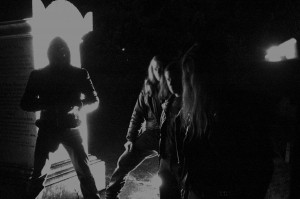 ObscuraHessian: Interest in more archaic forms of Death Metal is growing all around the world, as if returning to first principles and rediscovering our primordial selves. Consequently, as evidenced in your EP, the music is becoming esoteric like it used to be, wrapping dark and cosmic imagery in death-worshipping ‘theological’ statements. How important is esotericism in such a style and scene as Death Metal? Is it just a ‘thematic choice’ or something more?
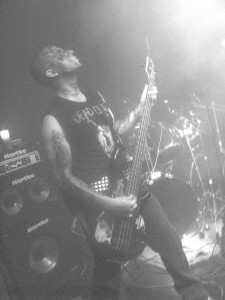 ObscuraHessian: There’s a lot of sounds from ‘Joined in Darkness‘-era Demoncy that surface in the music of ‘Exalted Emanation’, which adds a Black Metal flavour to it. Is this a favourite album of the band or are you more into Death Metal? Who would you say are your biggest musical influences?
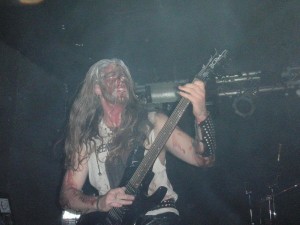 C.C.O.T.N.: To draw inspiration from my surroundings, I go out of London – often far indeed. Man is attuned with his surroundings, and living in this city is not congruent with the contemplation needed to collate this stimulation. I do find desolate urban areas during the dead of night to exude such sinister ambience, however. Whilst there are locations of Occult interest in the capital, other provinces of England are more relevant whether in regards to tangible brooding atmospheres or unseen power currents.
 As much of the northern hemisphere is being overwhelmed by the onslaught of winter, the flames of Hell are rising to consume the south at summer’s peak. Still, the hardened souls of Black Metal warriors remain unfrozen, and Australia‘s Dis Pater from
  ObscuraHessian: The sound of the full-length is naturally better as there’s more space between instruments but you still managed to reflect an enclosed feeling which sounds like the music is passing through a million leaves and branches before it hits the listener. Did the demo receive any remastering before sent to be pressed for its forthcoming distribution?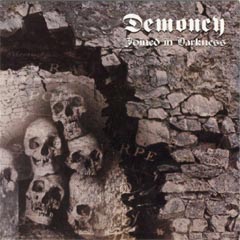
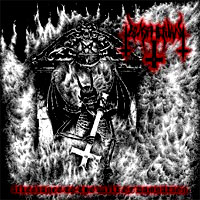
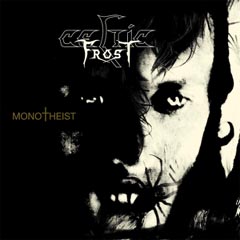
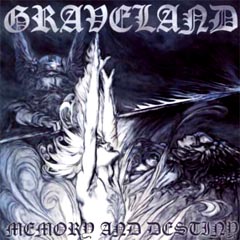
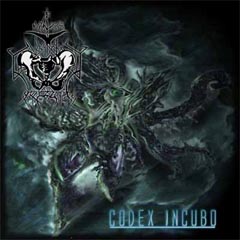


 The new Osmose recruits Mord seem to have been actually born in Poland, then relocated to near Kristiansand, which is remembered as the location of a violent death metal sect in support of Varg Vikernes back in 1991 and the origin of Tchort (Blood Red Throne, Emperor, Green Carnation). Not quite living up to the bloody and progressive traditions of the area, Mord specializes in a cold, modern, thrashed-out black metal sound that could scientifically have been developed in a norsecore factory to create an endless amount of productive clones. Maybe because they are originally from Poland, they do seem to possess a better grasp of what makes Nordic black metal good than most Scandinavians around exhibit. They keep the album vile and to the point, imitating the blasphemous rhythm guitar of, besides Euronymous, Ivar Bjørnson during the phase of Enslaved when they dropped most of their classical influence and switched to riff rock. Later Ancient springs to mind in tracks such as “Opus II” which is essentially is a meeting of pop and black metal in a graveyard infested with drunked teenagers who wear makeup and like to flash stupid expressions in photos. It may sound bad but in fact, as guitar rock or something, it excels. It is simply lacking in the Romantic nature worship, warrior ideology and mysticism of Burzum, Ildjarn and the other greats. So while musically this has potential for an above average Norwegian black metal album (even though these ideas are 15 years late) it ends up as one more relic that brings black metal closer to mainstream acceptance and youth culture phenomena today, and no-one will remember it in ten years.
 It should be obvious to anyone with even the slightest exposure to black metal music and ideas that while it’s arguable that he ever was a genius, for the last decade Satyricon has really gone far out of his way to create the most crowd pleasing, catchy, insipid rock’n’roll version of black metal. It sounds quite redundant to say in 2009 that this kind of music is abhorrent to “Euronymous’ ideals” or the Weltanschauung of the scene that existed in 1991-95 but I can’t help it. This is simply so far from anything that was great in old Norwegian black metal, what made me and so many others interested and follow the events and music with awe inspired by mystique. In this music there is no trace of passion, only of pure professional approach to musicianship and studio production, not even oriented to mastery of the style (in jazz sense) but to a desire to make money and gain profit. This sort of capitalist black metal makes for a new genre in itself. Mechanical, vapid and outdated, it mostly sounds like a collection of random groove metal tunes given a superficial black metal treatment (raped by the half beaten corpse of norsecore) for the mainstream listeners who want to get a piece of black metal’s evil but refuse to go all the way to possession. Precise riffs and metronomic drumming approach Rammstein-like monotony as they are arranged into the laziest sequence and development imaginable. Frost’s sometimes interesting drumscapes have been lost to the adult contemporary studio values and his fans are probably better off listening to 1349 or one of the other bands he plays/played in. Satyr is not trying to play Voivod riffs anymore (as he was doing in Rebel Extravaganza) nor can he duplicate the fast thrashy parts of Nemesis Divina – these new riffs by Satyr have a habit of getting old before the song is over.
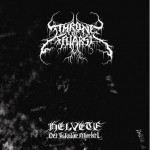 While the gloomy shroud of 21st century black metal clichés weighs like lead upon Throne of Katarsis, a sense of ambition and greatness, the carefully followed tread of frozen melody including an airy vastness copied from In the Nightside Eclipse or early Taake and some elegant and progressive forms makes this rise above the level of total weakness. Like Isvind and Tsjuder, Throne of Katarsis explore the melodic territory in between Darkthrone and Emperor in an effort to replicate the impression of transcendent evil boiling in the depths. Fast percussion underlies the sonic depression of dubiously plodding, soaring but monotone and unenergetic low production (Grieghallen copy) guitars repeating spherical themes (rotating the minor chords “De Mysteriis” style during the slow parts over and over again to give the melancholic feeling) over to vastness. The best of the musical ideas are hidden by the desire to create a standard black metal album, as they probably succumbed to creating an album too quickly and thinking that it’s enough to put out cold and intensity-devouring two-penny riffs that have been overused for 20 years – bulk Norwegian black metal in good and bad.
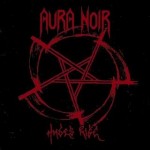 I do remember the Apollyon/Aggressor duo Aura Noir as a high-energy, motor powered and tradition respecting black metal cult from the days of the bewitching “Dreams Like Deserts” MCD, never afraid to rock out nor experiment with unusual guitar and drum techniques – even cross-quoting with Ved Buens Ende material. Something really devastating has happened and I don’t know if it has to do with Aggressor’s falling down from a balcony or something, but they sound totally drunk, tired and old on this album. I mean, if you think that Darkthrone nowadays sounds like a lazy beer-swilling band from the pub, try this one! I can hear they are trying to play like Sodom, but I can’t hear any Germanic “raaaaaah!” mania. I can hear Autopsy, but I can’t hear the stinking amputated corpses rising all around to wreak their vengeance upon the societies of the living. I can hear hardcore, but I can’t hear the decisive violent power of wrath against conformity. So, what is there left? It sounds a bit Southern Lord-y – you know, ironic old metal fan hipster who likes to get stoned out of his mind and listen to feel-good old-times metal. By the way, the drum production sounds like MIDI – utter failure. If you want real speed/black metal power, go for the originals, this one is a weak joke.
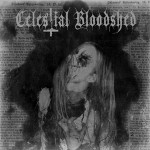 It would be quite interesting to see if someone, somewhere in Norway, has during the year released black metal or death metal which does not a) try to duplicate the old Grieghallen soundscape with in the most generic no-sense-of-style manner, b) fill their album with a load of budget riffs called depressive black metal by the kids (which is actually C, D, E minor again… and again…). Anyway, while Celestial Bloodshed has ripped off these ideas from better bands, they are 50% better in their songcraft than Watain, Funeral Mist and other generic black metal of the era. Also, they have been able to create inner beauty towards the realization of the music in melodic intensity. Additionally, the fullness of the soundscape and the implications of the structure make this release more grim, oppressive and grinding than the mainsteam manipulations of Norwegian metal which can not be but a good thing. After a beautiful intro which sounds somewhat like one of the demos from Equimanthorn (Absu members’ ritual project) the album pounds into a lexicon of guitar techniques borrowed from a range of musicians from Mayhem to Enslaved, with a dynamic range from slow romantic soulseeking to blasphemous speeds, sometimes bridged with jarring changes, while death metal influenced vicious, likeable and personal (down to some insistent mannerisms) vocals pace like hammer upon an anvil the grim predictions of mortal future and the drummer operates battery like Faust and Hellhammer used to in the early 90′s. While all of this is not fully developed yet into pure communication, it speaks with instant, amazed, satanic impressions of life facing the darkness of Infinity – Celestial Bloodshed has replicated the old school with care, honesty and vicious intent.
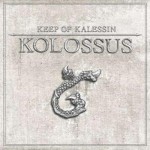 Keep of Kalessin arouse my interest during their demo days, as 1997′s “Skygger av Sorg” repeated the style of old Satyricon in a series of simple, emotional song fragments that revealed a sad beauty lying underneath the grim soundscape. I had heard some less interesting newer material but it is truly shocking what they have submerged into now – an arrogant, over-produced tribute to the honor of Greek warriors through quasi-talented commercial death metal. Synth washes and expressive vocals (in the vein of Nergal when he’s really pissed off in the later Behemoth albums) fill this piece of plastic because they want to sound big and they want to play on a stadium. I am convinced that someone with their musicianship should be able to create a listenable and consistent album, but these super fast blastbeats and commercial heavy metal oriented song dynamics from quiet to loud make this just a faux extreme version of something like Spearhead or Deströyer 666, made worse by the angry shouter vocalist. The people interested only in dry technique and production standards will love this for being an emphatic and empty opera of sharp drumwork and the constantly shifting death metal type fast guitars and entertainment value. They are also happy that it lacks the primal natural force of old Norwegian metal, because it might be distrubing. The sense of space created should be one of a studio or a big venue, instead of a woodland crypt, right? This amount of polishing emphasizes the superficiality of the entire composure, down to metalcore action computer game synchronized by MIDI in Kolossus, where accurate but inconsequential fast drum beats follow cheap-ass tremolo melodies from the pits of norsecore Hell and the vocalist sounds angry at people at the nearby mall and emo pop chorus in “Ascendant” which doesn’t even fit the music underneath. Likewise the arabic solos in the middle part of “Kolossus” don’t seem to have anything to do with the metal riffs, nor do the “300″ soundtrack reminiscent bits with synths and tablas. Whoever has produced this must be a commercial minded jerk.
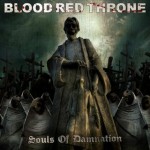 Tchort from Kristiansand was a newcomer to the death metal scene with his band Green Carnation right when the genre went out of fashion because of Euronymous’ hatefulness towards it and while that name was resurrected for Tchort’s progressive metal project he formed the neo-death metal group Blood Red Throne at the end of the millennium. While not having heard the early Green Carnation material, it’s easy to hear from this that some trace of early influence from excellent bands like Grave and Cadaver does exist, but none of their ability to turn basic riff structures into progressive and morbid magic. This type of song construction mostly resembles Cannibal Corpse and Deicide during the latter’s worst days of In Torment In Hell, filling songs with groovy mosh parts, faux-brutal growls and the drummer and bass player (from Deeds of Flesh) insisting wimpily on always playing to the beat of the riff. If this is the king on Norway’s death metal throne since Cadaver disbanded, it is quite sad actually. Most good (death) metal is memorable from its melodies, however convoluted and vicious they may be, but Souls of Damnation is mostly simple rhythmic phrases like guitar exercise patterns for introducing mechanical creation technique for sub-Florida death metal. Like all boring death metal, it severely underestimates its audience. I mean, many listeners do like death metal that sounds like basic no-frills brutal grind, but this worthless chugging goes too far. It seems like the whole album lacks even one interesting melody part or arrangement.
 One of the newer Oslo bands mostly known from relentless and uncompromising fast black metal, 1349 surprise with their latest effort in refusing to conform to the rules of the flock. This time conjuring echoes of Samael’s Ceremony of Opposites and later Mayhem, 1349 composes suffocated, devilish and industrial tinged black metal sounds which despite being somewhat predictable, retain the doomy beauty of an industry of inferno. The loneliness of space as described in Moorcock’s trippy novel “The Black Corridor” and the classic fantasy movie “Alien” fill this Gigerian landscape of planets, threats and biomechanical blasphemies. Bodies twitch into contorted positions in a sea of light. The psychedelic feel is enhanced by a cover of Pink Floyd’s “Set the Controls for the Heart of Sun” featuring Tom G. Warrior. Several tracks use minutes to unfold submerged ambient and experimental soundscapes, while there is some Red Harvest type digital manipulation featured in many of the metal songs too. The arrangement is dramatic and regal, with Frost’s drumming skills put to good use. Multiple vocal styles herald the theatrical nature. Some interesting lead guitars add desperate wails to the background. Some parts are in their wicked minimalism close to what one could also expect to, say, Beherit to compose if he were in a more commercial high budget recording project, making this one of the more worthwhile efforts from Norway last year in producing new vistas of black metal.
 This little EP from Mare, one of the infamous Trondheim cults tends to sound a bit like Live in Leipzig era Mayhem recording in a sewer infested with rats and worms and the decrepit and rotten soundscape makes this one an aesthetically more attractive listen than most of the studio produced turds. Intuitively they grasp the idea of structuring long songs in the old Emperor vein so that while the bits and pieces are redundant, it is a journey through minimalist music themes into the realization and acceptance of the power of darkness. Slow, crawling, anti-logical repetition of simple melody (where the keyboards add a tasteful of old Enslaved) make it a bit of an un-musical experience – the composition seems to be mostly oriented to the fans of droning soundscape whereas the planning and calculation in the overstated reverb, vocal sound (while Kvitrim is good at pacing) and lack of invention in the riffs suggest seem to be aimed for the black metal consumer. But it is deconstructive, degenerate and deceitful music – for pure ideas, about as good as the best of the bunch reviewed here. An ambience and sense of space is reached, the Faustian concept of man as a warrior who travels and explores the universe, only to relinquish his individuality to the higher natural order – in death and rebirth.
 The Syriac language provided the greatest historical conduit for Christianity, and early Christians knew its words as literal symbols from the world beyond. Beherit was its name for the god of evil, sometimes called Satan. Fast forward two thousand years and occult-literate Finns made this ancient word a conduit for a new form of aural evil, a simultaneously deconstructive and reconstructive ambient aura of apocalypse and a literal, fearful reality hiding beneath the neurotic cloak of our modern society. We were fortunate to be able to speak to Nuclear Holocausto about his motivations, the nature of music, and the forthcoming 2009 Beherit album.
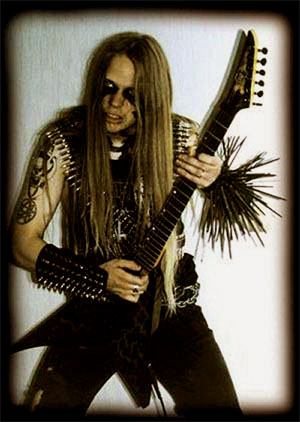 Outside of music, how are you exploring the concepts which motivated you to create BEHERIT?
 On Drawing Down the Moon, you achieved a unique dark and bassy sound which was not in favor in black metal at the time. How was this done? Did you replicate it on the new album?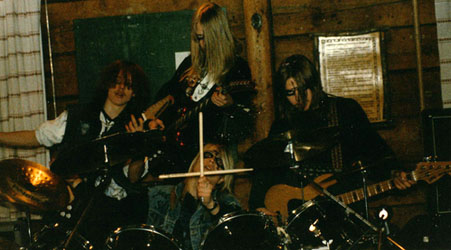
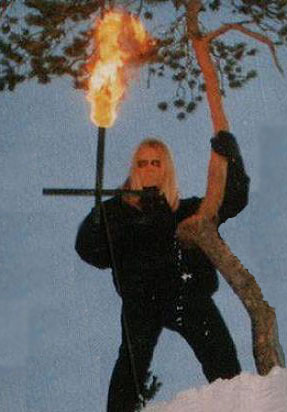 Not so long time ago, I wrote to internet forum that black metal is antichristian, but some fellows denied it totally and went to politics, racism and other weird NSBM topics that had nothing to do with black metal of old days. Nowadays everything seem to be much more complicated when kids are seeding their own beliefs and opinions to the scene, even if they are not music makers themselves. We (BEHERIT) wanted to create the most severe and bizarre sound dealing with the dark side of occultism. That’s still one of my main points when writing a new song, but I don’t mind if they label it black metal or not.