In the United States at least, there’s a lot of talk about “death panels” and “eugenics” because of some political thing or another. We just have to ask: if we’re talking about metal bands, what’s so wrong with having a death panel to clear out the garbage? As long as you appoint competent people to the death panel, they’re going to kill off the stupid, bland, symmetrical, tasteless and blockhead bands, and leave behind the interesting, talented, insightful and visionary. If you support good metal, please use this link to tell President Barack Obama that you want death metal death panels.

Cock Sparrer – Here We Stand
With age, comes self-referentiality: scenes no longer write to the world at large, but comment on themselves to themselves. This album manages to avoid the staleness of that fate, and like middle period Iron Maiden, is melodic and exercise-inspiringly rhythmic in a way that the best power pop is, but it keeps itself rooted in a hybrid between The Clash-style light punk and the more pungent Oi from which this band originated. Every second of this record is highly crafted and without an ounce of extra fat, both hitting hard and being gratifyingly fun to listen to in an emotional but not maudlin way like the best of punk. Lyrics are positive, encouraging people to take a stand and move past the destruction around them, but it’s not a wallowing as much as a dismissal. This band has not just aged, but matured, and they’re riding a fine line between pop punk and truly dangerous music, but in the meantime, it’s here for us to enjoy and anyone who likes a good insurgent punk tune will love this.

Bahimiron/Unchrist – Last of the Confederates
Trying to forge a sound out of black metal is difficult because like a new universe, it expanded and diversified so rapidly as to become a wide field of options formed from the same basic elements. Bahimiron have taken the grimy, gnarled, ugly and digestive black metal of their debut EP and infused it with an Impaled Nazarene-style sense of all-ahead-go, taking the best of “war metal” and making out of it simple melodic hooks like were found on the first two Gorgoroth albums and other classics of violent, primitive black metal. About every other song really captures a sense of epic emotion rising out of disorder, and the others, like the first Krieg album, succumb to their own chaos and fade into the background noise. There’s a good sense of dynamic here, especially on the majestic “Blackest Morning Coming Down” and “Texas Witch Hammer,” which are the real reasons to own this CD. The latter ends with a Burzum-style lead rhythm solo that sounds straight out of Ancient and an Oi band making sweet love. Unchrist, on the other hand, are trying to be — much like Phil Anselmo’s project Christ Inverted — a classic deconstruction act, tearing music down into its very basics and doing so at high speed with unique aesthetic. Like all things deconstructive, it converges on the ghetto into which punk fit itself, and despite catchy rhythms never goes anywhere. This fits it squarely into that place reserved for all extreme bands that are competent but never found anything to express, where we all shrug and ask “Why would I listen to that?”

Red Fang – Red Fang
Imagine making a modern version of the punk/blues hybrid of early Motorhead, like mixing in 20% more Z.Z. Top and then rendering the whole thing through a computer programmed in modern indie album-oriented rock. There’s a fair amount of metal, except in song composition; there’s a lot of bluesy fills, bouncy driving hard rock rhythm and solos, punk riffs and then vocals straight out of the more recent Phrase For a Name style bands. A good deal of the vocal delivery and riff styling comes from the hard-driving honky-tonk blues/hard rock bands of the 1970s, and this rounds out this style to make a listenable and high intensity stream of sound, although over time it does not develop depth (like, we presume, a fine wine). Forget progress, subtlety, sincerity, emotion or artistry: This is straightforward gritty bar fight hard rock for your inner beast, designed for you to want to start drinking hard and smashing skulls. Don’t question it.

Atrocity – Contaminated
I love metal, but see no need for about 98% of the genre. The reasons for discarding this majority vary with each release, from artistic irrelevance, incompetence, vapidity, and simple boredom. In the case of Atrocity (US), I’d like to like this CD but it’s like a droning fever in the background. The primary influences on this are probably Repulsion and Slaughter; there’s a lot of two-chord riding rhythms and chaotic noise, interspersed with Slayer-style chiasmatic chord exchanges. Active bass really guides these songs, forming a doppler convergent nightmare sound, but repetition is high. The album is really high energy. It’s not high on organization or form however, which makes it sound like a less advance version of Angelcorpse.

Taranis – Flandriae
Black thrash…is like Destruction, but twenty years too late, with a full black metal rasp. If you’re looking for nostalgia, this does OK, but the Slaughterlord album or later Merciless is more powerful. Like Destruction, there’s so much emphasis on a foot-tapping, shout-chanting chorus that everything else gets simplified. However, this band use chords like an American band: sparsely, emphasizing a few clear notes and then dropping the rest into fast muted strum of open strings. It’s not terrible, just simple-minded, and you already have that Destruction album. Rasp to it and you’re ahead of the game.

Stinking Lizaveta – Sacrifice and Bliss
Postmodern fragmented rock jams that maintain a hard-driving rock rhythm but try to do the unexpected, the songs on this CD are spacious and noisy and tempting to like, but they try so hard to be “different” they forget a voice of their own. In fact, much of the music on this CD seems to be having its own dialogue such that each time a change occurs, the song must comment on that change to obscure any similarities it has with other music. These changes however are aesthetic; underneath the skin, this is standard indie rock that has been broken and re-arranged with a cut-up technique that leaves us peering toward its inner structure through layers of repetition. There’s not much to dislike, but the whole is formless and so becomes an exercise in trying to extract a motif from something whose technique is its own outlook.

Thor’s Hammer – Three Weeds From the Same Root
This fusion of skinhead punk music with simple, Darkthrone-cum-Graveland style black metal mirrors the early development of Graveland, but takes a punk direction instead of a metal one. The result is punk improved: while most of it is riff chorus, transition material gets us past binary riffs to three melodic fragments in motion in some cases; riffs vary pacing and use tremolo to better melodic effect; dynamic and pacing vary to create contrast. If you like Discharge, Cock Sparrer, GBH or any other classic punk hardcore, this CD represents a huge improvement on that style. Subtle melodies interweave with riot-incitement percussion and classic hardcore riffs, giving depth to music that is otherwise pure muscle on the street power. The problem is that it’s still highly repetitive punk-based music, so while much of the majesty of black metal is transferred, many of the people who enjoyed black metal for its depth will find this one-dimensional.

Anael – From Arcane Fires
Channeling early Samael and Darkthrone’s “Goatlord” in the same moment, Anael make a CD that is half indie-rock like Wolves in the Throne Room but uses its open tonal leaps to create waves of atmospheric harmony. It is a good effort; despite its repetition, this CD keeps the sense of feeling high. Unfortunately, that feeling goes nowhere, so it is like entering and exiting an atmosphere, and when the song ends, another repeats the process in highly similar ways. However, it’s a welcome break from the chromatic flailing of burst intensity bands.

Corpus Rottus – Ritual of Silence
Energetic death metal similar to a cross between Deicide and Malevolent Creation, the music of Corpus Rottus keeps momentum and charges forward in constant pummeling roar, but never manages to anchor this energetic rhythm into the sense of tonal dynamic that could give songs distinctiveness. Like Fallen Christ, this music seems to blur together because songs use similar patterns, tempi and textures. All of it is extremely well-played and better than anything from the deathcore era, but this will remain a B-level band for lacking a topography of harmonic meaning or poetic configuration to each song.

Sotajumala – Teloitus
Metalcore is the leftovers of the punk and metal movements. Like a hipster, it thinks it can hide emptiness with external adornments like costume, details of technical playing, and even outlandish behavior, but nothing can hide the lack of clarity in thinking. It’s like a politician who makes speeches about how he organizes files in his office. It’s a withdrawal from life itself. This band is straight down the middle metalcore, sticking in random metal riffs from four generations of metal, but its basic organization is that of punk, or deconstructionism. See how different this riff is from the last. Here’s a guitar solo to distract you. Now we’re going to chant. This riff goes in circles; this next one goes straight ahead. It’s basically random except for key and tempo, and those fail to compel.

Pensees Nocturnes – Vacuum
What if we crossed Mutiilation with progressive symphonic metal? That is the question asked by this rather interesting release. If it has a weakness, it’s a lack of solidly distinctive metal riffs, mainly because it is focused on making the whole thing work together. This artist does best when letting the melodies expand and doesn’t limit them in length or ambition “just because” they’re played on a guitar. Like many symphonic bands, Pensees Nocturnes unleash some of their best work in synthesized keyboards or violins, accenting some metal riffs that are now cut from archetype, namely influences as diverse as Gorgoroth, Ancient and Kvist. However, what this band really understands is the theatrical nature of metal: how each song must tell a story with internal conflict resolving into new contexts, like a poem, and it must do it through dramatic gestures that reinforce this story in a way that we feel it and know it at the same time. This can become a container for generic music, however, since the centrality of guitars is de-emphasized. For this reason, this release is head and shoulders above the rest of the genre, and if it more distinctive guitar riff voices can be built into the mix, will be a powerful force in the genre.

Ninth Kingdom – Where No Kings Shall Roam
This band has great potential, but hovers over a great pitfall as well. Their power is a facile ability to write riffs within several different styles and fit them together into a clean narrative. The pitfall is that this enables them to string together just about anything without some central direction, or narrative of some kind, which leads perilously close to the “circus music” that all deathcore and Cradle of Filth-style metal ends up being, where random riffs form a song without contributing to a central meaning. The melodic technical metal aspects of this CD fit in shoulder to shoulder with the best bands coming out of Europe in this style, and their wise use of faster death metal riffs to break up song development keeps them from falling into either uniformity or too much “hard rock” like, say, COF. It makes more sense to compare these guys to later At the Gates than the latest crop of Dimmu-inspired melodic disorganized black metal. For Ninth Kingdom however, their strength is their weakness; they are good at writing riffs and transitions, but need to slow down and shape their abundance of music into clearly-defined songs that communicate something unique to each song. The most conventional song on this CD, “A Storm on the Horizon,” is probably their most powerful statement. I will be watching this local band as they grow.

Sepultura – A-lex
Taking a slightly different approach to metalcore, Sepultura stick punchy punk rock riffs onto rigid drumbeats and then finish them off with metal touches like basic harmonization, layered rhythm, and chaotic interlude riffs of a chord or two. Like that genre of bands that tried to update death metal without becoming reliant on expectation of complements to offbeat emphasis, Sepultura just keep driving ahead with ranting vocals over a guitar/drum interplay that is extremely linear. Occasional sung choruses drift in randomly; so do noisy, squealing transitions. Drums keep trucking. Songs are simple and begin and end well, but it’s the middle part that runs long. Verse/chorus song structures are the norm, interruptions the adornment. If you can imagine Chaos A.D. with less bombast and more mechanistic forward drive, that’s about where this once great band is now.

S.V.E.S.T. – Urfaust
One man does something, another man sees, and he imitates, then tries to figure out a way to put the meaning into what he’s doing. Unfortunately, meaning comes from intent. S.V.E.S.T. carefully pidgin imitate the Norse and Black Legions past, and make some noisy melodic stuff that is very sweetly poignant, if you listen to the parts, but adds up to a whole bunch of nowhere.

Origin – Antithesis
Once you get past the fireworks, this album is wallpaper. It displays techniques in the same order and adapts them to whatever fragmentary notion of song differentiates each of these. Sweep, sweep; fill; chug-chug; offtime chord chiasmus; sweep sweep; squeal; fast riff, repeat. I consider this album the definitive deathcore archetype because it shows us mixed death metal, melodic death metal, heavy metal and rock riffs in a cycle of randomness that resembles the way punk bands liked to assemble their riffs, not the period doubling style of death metal where each riff makes each previous riff make sense in an expanding context. As a result, it’s highly literate circus music, and joins later Behemoth, Cradle of Filth, Cannibal Corpse and others in writing incoherent stuff and making people like it because it’s technical and has catchy rhythms. Deathcore, unlike death metal before it, is deconstructionist like punk, and leaves us with a sense of the helpless, although some of these sweeps are excellent guitar practice for a moderately advanced player.

Asag – Asag
This is black metal in the Funeral Mist style, which is to put really raw sawing riffs on top of very danceable rhythms and hope no one notices. The result is messy on the surface but if you start tabbing it out, tends toward the ridiculous. They tend to stay within a very narrow harmonic range as well, which makes this essential rhythm music with a few melodic intervals and harmonized chord progressions to keep your attention. There is as the old cliche goes “Much sound and fury, signifying nothing.” They know their black metal moves and put them in a semi-sensible order, but you don’t actually get much out of it as a listener on than the sensation that somewhere, black metal is occurring.

Samael – Above
A painful kind of harmonic symmetry emerges in rock music when bands do not design melodies, but tail basic riffs with melodic fills. As a result, there is a great temptation of beauty, and then a sense of disappointment when one realizes that complementary phrases end in very basic differences. This makes the music breathe boredom like alcohol from a whisky drunk as he sweats, even if the stuff on the surface seems interesting. Samael have returned to metal here by combining Gothenburg, late-model black metal and really basic punk/death metal hybrid riffs. It’s a commendable return to form but musically it’s boring, something they try to counterbalance by keeping a driving rhythm going, which tends to normalize the experience. This is where music is different than passing a test: this CD passes all tests, but still is nothing you will reach for time and again. A better example of this style is the final Sacramentum album.

Cadaver – Necrosis
Bands returning to the death metal genre after a long absence try to update it in some way or another to distinguish themselves, show they’ve progressed, and find a way to appeal to a wider audience. Here, Cadaver try to combine the deathcore sound with the kind of charging technical take on d-beat punk that Impaled Nazarene used to do. If you can imagine Disfear, Impaled Nazarene and Neuraxis in a blender, that’s about corrupt — punk riffs levitate verses, tightened death metal riffs conduct choruses, technical fills end each, and songs fade out into melodic punk alternating with death metal rhythm riffs of the single- or double-chord variety much like later Master. It’s a musically impressive album and catchy as all hell, but when compared to old Cadaver, it lacks the mysterious atmosphere and sense of joyful exploration. This is much more of an adult album, meaning that it aims to be consistent and to remember the milk at the grocery store, but its sense of wonder at the world has been absorbed by a functionalism that is both the source of its consistency and the gateway to its missing openness.

Obscura – Cosmogenesis
I really wanted to like this, but it’s circus music. Technical circus music, but still, it has ludicrous happy melodies that would fit been played from an ice cream truck. These are played in challenging rhythms, but because that involves so much emphasizing and complementing offbeats, they are played at a bouncy pace like Iron Maiden and Parliament writing video game music together. It bounces. It flounces. It knows its scales and chord construction, but it goes nowhere because it’s looking outside-in: it’s trying to use technicality to make art, instead of making art and finding a voice in technicality for that impetus. The circus music aspects come also from their tendency to throw as many diverse possibilities into a song as possible, ending up with a tour of unrelated elements tied together by key and rhythm, yet having no significance other than that proximity. This is far better than the recent Cynic, but that’s like shooting fish in a barrel.

Infernum – Farewell
If later Graveland albums had been less opulent in layers of keyboards, battle noises, and guitars, they might sound like this: a stripped-down and more melodic Graveland reminiscent of Thousand Swords and Following the Voice of Blood merged in an early Emperor filter. Because it’s stripped down, it doesn’t get lost in working through all those layers, and instead develops a very simple point. Like most Graveland, it repeats themes in an attempt to find their ultimate evolution, which keeps it from falling into irrelevance. It’s like the old themes become starter cultures and from it grows a mass of new themes, like throwing yeast into a vat of corn syrup. As a result however, this album seems instantly familiar, and brings on that reality distortion field that is one of the most glorious things about Graveland: you forget you’re listening to amplified guitars conveyed through MP3 on a 2009 personal computer, and think you’re in a deep valley hearing the voice of the wind forming figures around the rocks above.

Suffocation – Blood Oath
Much of what we know of death metal now came from Monstrosity, Malevolent Creation, and Suffocation, who invented the style that Cannibal Corpse distilled and popularized. Suffocation, in particular, was the first band to come roaring out of obscurity with intensely percussive songs where drums led guitars in a series of complex riff conglomeration and destruction. When Doug Cerrito left, a lot of that got replaced by faster riffing and more straight-ahead songwriting. In use of harmony, especially use of scalar harmony to hold songs together, Suffocation has improved to the point where rock and jazz musicians can recognize their musicality more easily. However, they’ve dropped out the focus on rhythmic work; Mike Smith’s excellent drum work now plays along with melodic guitars and muted strum speed metal style full stops. Songs are built around a vocal chant, usually with a creeping rhythm, and the ensuing repetition loses much of the power this band once had. If they return to making the intricate structures, and consequent theatre of pummeling dynamics, that distinguished their best work, Suffocation could easily be the top death metal band performing today.

Asphyx – Death…The Brutal Way
A good summary is that this album upholds the style and feel of the first two Asphyx albums, but more resembles the last few in that while it’s well done, it’s restating known themes. It sometimes does this in a self-aware way, like an artist looking at a past work and trying to copy it from outside. Where it thrives however is in delivering rushing rhythms, like combatants sizing each other up at a run, that ride forward into thunderous climactic theatre. Where most death metal is dusty from the city, this album surges with a post-human viewpoint that creates legitimate fear amongst the herd. However, it never loses sight of making enjoyable rolling thunder music that beats us with the most reductionist approaches to music and yet makes us like them and see them as artful. This band has never released anything but solid music, and although this CD probably lags toward the non-essential end of their release spectrum, it crushes all of the other death metal band comeback albums handily.

Nidrike – Blodsarv
You know how people will take a tiny little Mazda and give it ten grand of ground effects? This band is an improvement on Deathspell Omega, who have the same style: create a harmonically simple song and trick it out with melodies, long discursive passages that seem exciting in their radical leaps of tone but ultimately converge on the same spot, like a tetherball wacked by a retard on meth. Clearly a lot of effort went into this CD but it all went into building up the songs, not coming up with some insightful or unique angle of attack, so at the end of the day you’re back to the same essential chord progressions most black metal uses, even if there’s lots of finger-wiggling to make it seem like an epic melody is going to bust out of that Mazda and pwn your ass.

Death – Scream Bloody Gore
The more experience I have in life, the more I like this album. For starters, Chuck wasn’t left alone on songwriting: he had scene legends like Chris Reifert (Autopsy) and Kam Lee (Massacre) to help him, but also, had just completed jaunts with Repulsion and Slaughter (the proto-death metal band, like a cross between early Master and Necrophagia, but better). What’s great about this CD is that it’s the same old Death, which is a fusion between speed metal and nascent proto-Death like Master, but that it’s pure spirit. There are no pretensions to musicality here, so it’s pure rigid chord progressions and thunderous rhythms, but unlike later Death, it uses the death metal “riff salad” that tells a story better than any modulating-harmonic but static-form rock music could. True, there’s a wipeout or two in the solos, and often these very basic riffs are pretty messy, but the CD keeps up the high energy pace and inventive transitions between riffs that are variations on known themes from NWOBHM and punk, which makes it solid as hell. The second half sort of runs together into mush; I’m guessing that it was partially written or refined in the studio. But unlike the other great Death album, Human, this CD is chaotic and organic like a tradesman’s riot. Human is good but it’s like an introductory textbook to music theory because each song has two parts — (1) getting ready for the big picture and (2) here’s the big picture — and so for all its “musical complexity” it’s a simpler, easier and less interesting composition than this early fire-spitting version of Death.

Karnarium – Karnarium
When conducting audience surveys, it’s easy to confuse a desire for primal music with music that is so basic it becomes boring. The point is to “sound” primitive, not to be primitive. Karnarium confuse the two; it’s a hybrid of early Grave and Cannibal Corpse, resulting in alternating blasts of percussive riffing and fast death metal riffs which limit themselves to four notes. We would all like to like this, but it does not provide any lasting enjoyment of the style, only a battering repetition of discontinuous themes which leaves life more confusing and less coherent than before. Songwriting needs to be focus for this band because they have their technique down but fail to stitch together a meaningful code of these fragmented riffs.

Conjuration – Funeral of the Living
Let’s try being Barathrum or Countess, except as a doom metal/black metal band. Are you excited yet? Umm… yeah, we’ll toss in the extra evil, extra loud and extra repetitive spells, and try for a saving throw with a bluesy undertone to our chord progressions a lot like Cathedral. Are we having fun yet? It ends up sounding like Saint Vitus as if created by Cianide. It’s not bad but song development occurs with typical metal harmonization and abrupt breaks, and the riffs and rhythms are straight out of the late 1970s. Guitar sound is flamingly awesome however. The only problem is the whole MCD is kind of boring. I think they should play this in old age homes and have everyone clap in time.

Inveracity – Extermination of Millions
So that’s where Suffocation went: they got reincarnated as Inveracity. This band is not as fully coherent as Suffocation was for their first three albums, but captures the essence of their technique with a powerful forward drive, much like Deeds of Flesh. They could get from B+ to A by making their songs more clearly express a central theme and a journey toward a concluding mood, which would give them more than a sound a personality and a vision of reality that others could participate in. As it stands, the technique speaks for too much, but it’s done well — an A+ — with more of the melodic leads stitched in among fast ripping power chording, as Deeds of Flesh started doing with Inbreeding the Anthropophagi. Watch this band for future development.

Mordicus – Dances From Left
An interesting hybrid of death metal and speed metal, this album sounds like Destruction riffs put in the less disjointedly repetitive song structures of American speed metal bands like Testament. It flows quite well. The riffs are not unusual to someone familiar with Destruction, Kreator and Forbidden, but they fit cleanly into well-constructed songs. Clearly thought went into this record, which makes it unusual for the speed metal genre. In use of layers and lead melodic riff accents, this album shows a heritage of death metal. Like later Merciless, it is highly melodic and often quite graceful, but the tendency of this genre to like percussive guitar strumming and pounding chorus rhythms may drive away listeners accustomed to the greater subtlety of black and death metal. Still, this is a good record.

Chord – Flora
This project reminds me of the Mitch Harris project Lull, except that Chord have an appreciation for slow-building development through contrast and dynamic variation in songs, where much of Lull was either too abrupt or too linear. However, they’re still facing the challenge of noise (which, since it’s a type of communication using sound for its inherent properties, is probably music, but noise devotees freak out if you call it “noise music”) which is making something that a listener could enjoy repeatedly and not as a novelty. Like Justin Broadrick’s epic Final, Chord choose the distorted guitar and possibly modded electronics as their medium, and specialize in making reverb waves and then harmonizing to them. In the background, dark metallic abrasion noises churn far below the waves of light and atmosphere that are the feedback and sustain-fed echoes of the secondary notes and harmonics in chords and notes, creating a mental scene of a moribund industrial city at war under a vivid sunrise. There are overtones of the Fripp/Eno projects and their tendency to pit counterpoint noises against steadily increasing but repetitive patterns, creating a sense of cosmic order through creation and destruction that is quite beautiful. Of all the noise releases I’ve heard, this is probably the most listenable outside of middle-period K.K. Null.

Himinbjorg – Europa
A tribute to Bathory in a style halfway between Blood Fire Death and Hammerheart, with some updated technique borrowed from the early 1990s Norse revolution, this CD is what Viking heavy metal should be if we update it for the current era. Immediately evident is the restrained musicianship; these gents are not playing at the top of their technique, but have chosen a simplified version to achieve direct communication. The music resembles nothing else except in style, and maintains a good sense of harmony while creating the epic rhythm and melodic riffs that give metal its power. Vocals are probably going to be too Donald Duck for some, and the music is too heavy metal for the black metal fanbase, which could explain why this otherwise excellent CD remains undernoticed.

Electrocution – Inside the Unreal
Welcome to good B+ grade old school underground metal. Thankfully, this band have avoided the “modern death metal” (read: metalcore with death metal riffs) trap and just gone for old school material in the vein of Necrophiliac, Morpheus Descends or Oppressor but have upped the ante with technical improvements. Drums lead songs more accurately through more permutations of riff, and maintain an atmosphere of cadence and not kickhappy offbeat-anticipation patterns. Guitars collaborate tightly and deliver variations on the known styles of death metal riffs from the simple booming patterns fit into complex textures mold. Where this CD could improve is in some variation of the intervals used in writing riffs; too much of it falls into the whole-half variation that eventually gives it a feeling of tendency and an ashen lack of melodic or harmonic potential. For pure rhythm riffing however, this solid death metal album delivers the thrills.

The Warlocks – The Mirror Explodes
Mix Lou Reed, Sonic Youth and early REM and you get this indie for indie’s sake release. It’s quite good power pop wrapped in an aesthetic of decay and loneliness. As with most things, I don’t see the fucking point in the posing. Just be the The Beatles II and write songs about life with a nuance of the positive. I like their ability to stretch out a verse with noise and subtle variations on their main riff, creating a drone in layers that expands Ride-style to wrap a vocal track in lush sound. Unlike most bands, The Warlocks know how to draw out tension like moments before orgasm, keeping the sugar lust explosion of pop away until we’re good and exhausted by their waves of shuddering guitars softened by a lazy room mix. Musically, I like this. Artistically, I fear it’s going to get lost in a horde of others with the same “aesthetic” and “outlook” on life.

Katharsis – Fourth Reich
Unknown to most of us, this band resurrected the war metal tradition: speed up Bathory, mix in some Blasphemy, and make frenetic music which goes nowhere. True, this is more explicitly in the house that Darkthrone built, but even the longer songs cannot hide the lack of direction. Good songs throw pieces on the table like clues to a mystery, and slowly bring out a response to that mystery, so the listener feels as if they are in a combat situation and want a good outcome — but are learning what that would be from the experience conveyed by the music. Instead, this is “hot tub” black metal — it has two stages, getting into the hot tub, and getting out. The song begins and then you’re in the midst of it, with some fairly gratifying riffs, but then it ends without having anything changed in the listener’s mind. You were in the hot tub. In the hot tub, you found life exactly as it was before. Now towel off, and skip this record.
No Comments
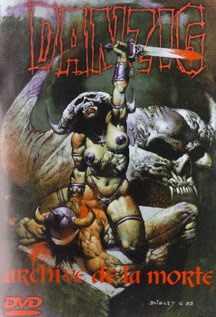 Few underground bands will achieve a video document of this quality. It consists entirely of MTV-style song videos, professionally filmed and edited, which are either miniature movies in which the band is featured or high quality live recordings. The sound quality is excellent, as is the image quality, but having someone take the time to edit and shape the video experience as one might find in a cinema puts these in a different league. However, this DVD has a weak spot, and it is the choice of material. Where a disc of sloppier and less coherent videos from classic Danzig, namely the first two albums, would be a gigantic hit, there’s only one song from that era on here, and while the material from his later albums is good, it’s also more typical hard rock/heavy metal and thus does not show this band at their most adept and inventive phase. Furthermore, this DVD is literally an archive, and gives us six songs with up to three versions of the video for each, which makes it not only unsuitable for casual viewing but very limited. Couldn’t someone tack on some crappy handheld video of a live set at the end, as, well, that would be more the whole of the Danzig experience than this narrow snapshot? The videos are quite artistic, and feature heavy symbolism and plenty of evil moments. It culminates in “Mother ’93,” which is essentially the album track dubbed over some hammy but expertly edited live video. If you are a Danzig fanatic, this provides you with the videos you saw on MTV and the uncensored versions that you probably wanted desperately at the time. For the more casual fan, this video will probably seem like a hasty and unthinking compilation of material that documents the less triumphant moments of an otherwise influential act.


 The new Osmose recruits Mord seem to have been actually born in Poland, then relocated to near Kristiansand, which is remembered as the location of a violent death metal sect in support of Varg Vikernes back in 1991 and the origin of Tchort (Blood Red Throne, Emperor, Green Carnation). Not quite living up to the bloody and progressive traditions of the area, Mord specializes in a cold, modern, thrashed-out black metal sound that could scientifically have been developed in a norsecore factory to create an endless amount of productive clones. Maybe because they are originally from Poland, they do seem to possess a better grasp of what makes Nordic black metal good than most Scandinavians around exhibit. They keep the album vile and to the point, imitating the blasphemous rhythm guitar of, besides Euronymous, Ivar Bjørnson during the phase of Enslaved when they dropped most of their classical influence and switched to riff rock. Later Ancient springs to mind in tracks such as “Opus II” which is essentially is a meeting of pop and black metal in a graveyard infested with drunked teenagers who wear makeup and like to flash stupid expressions in photos. It may sound bad but in fact, as guitar rock or something, it excels. It is simply lacking in the Romantic nature worship, warrior ideology and mysticism of Burzum, Ildjarn and the other greats. So while musically this has potential for an above average Norwegian black metal album (even though these ideas are 15 years late) it ends up as one more relic that brings black metal closer to mainstream acceptance and youth culture phenomena today, and no-one will remember it in ten years.
 It should be obvious to anyone with even the slightest exposure to black metal music and ideas that while it’s arguable that he ever was a genius, for the last decade Satyricon has really gone far out of his way to create the most crowd pleasing, catchy, insipid rock’n’roll version of black metal. It sounds quite redundant to say in 2009 that this kind of music is abhorrent to “Euronymous’ ideals” or the Weltanschauung of the scene that existed in 1991-95 but I can’t help it. This is simply so far from anything that was great in old Norwegian black metal, what made me and so many others interested and follow the events and music with awe inspired by mystique. In this music there is no trace of passion, only of pure professional approach to musicianship and studio production, not even oriented to mastery of the style (in jazz sense) but to a desire to make money and gain profit. This sort of capitalist black metal makes for a new genre in itself. Mechanical, vapid and outdated, it mostly sounds like a collection of random groove metal tunes given a superficial black metal treatment (raped by the half beaten corpse of norsecore) for the mainstream listeners who want to get a piece of black metal’s evil but refuse to go all the way to possession. Precise riffs and metronomic drumming approach Rammstein-like monotony as they are arranged into the laziest sequence and development imaginable. Frost’s sometimes interesting drumscapes have been lost to the adult contemporary studio values and his fans are probably better off listening to 1349 or one of the other bands he plays/played in. Satyr is not trying to play Voivod riffs anymore (as he was doing in Rebel Extravaganza) nor can he duplicate the fast thrashy parts of Nemesis Divina – these new riffs by Satyr have a habit of getting old before the song is over.
 While the gloomy shroud of 21st century black metal clichés weighs like lead upon Throne of Katarsis, a sense of ambition and greatness, the carefully followed tread of frozen melody including an airy vastness copied from In the Nightside Eclipse or early Taake and some elegant and progressive forms makes this rise above the level of total weakness. Like Isvind and Tsjuder, Throne of Katarsis explore the melodic territory in between Darkthrone and Emperor in an effort to replicate the impression of transcendent evil boiling in the depths. Fast percussion underlies the sonic depression of dubiously plodding, soaring but monotone and unenergetic low production (Grieghallen copy) guitars repeating spherical themes (rotating the minor chords “De Mysteriis” style during the slow parts over and over again to give the melancholic feeling) over to vastness. The best of the musical ideas are hidden by the desire to create a standard black metal album, as they probably succumbed to creating an album too quickly and thinking that it’s enough to put out cold and intensity-devouring two-penny riffs that have been overused for 20 years – bulk Norwegian black metal in good and bad.
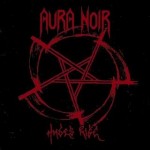 I do remember the Apollyon/Aggressor duo Aura Noir as a high-energy, motor powered and tradition respecting black metal cult from the days of the bewitching “Dreams Like Deserts” MCD, never afraid to rock out nor experiment with unusual guitar and drum techniques – even cross-quoting with Ved Buens Ende material. Something really devastating has happened and I don’t know if it has to do with Aggressor’s falling down from a balcony or something, but they sound totally drunk, tired and old on this album. I mean, if you think that Darkthrone nowadays sounds like a lazy beer-swilling band from the pub, try this one! I can hear they are trying to play like Sodom, but I can’t hear any Germanic “raaaaaah!” mania. I can hear Autopsy, but I can’t hear the stinking amputated corpses rising all around to wreak their vengeance upon the societies of the living. I can hear hardcore, but I can’t hear the decisive violent power of wrath against conformity. So, what is there left? It sounds a bit Southern Lord-y – you know, ironic old metal fan hipster who likes to get stoned out of his mind and listen to feel-good old-times metal. By the way, the drum production sounds like MIDI – utter failure. If you want real speed/black metal power, go for the originals, this one is a weak joke.
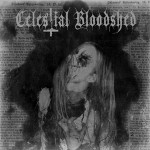 It would be quite interesting to see if someone, somewhere in Norway, has during the year released black metal or death metal which does not a) try to duplicate the old Grieghallen soundscape with in the most generic no-sense-of-style manner, b) fill their album with a load of budget riffs called depressive black metal by the kids (which is actually C, D, E minor again… and again…). Anyway, while Celestial Bloodshed has ripped off these ideas from better bands, they are 50% better in their songcraft than Watain, Funeral Mist and other generic black metal of the era. Also, they have been able to create inner beauty towards the realization of the music in melodic intensity. Additionally, the fullness of the soundscape and the implications of the structure make this release more grim, oppressive and grinding than the mainsteam manipulations of Norwegian metal which can not be but a good thing. After a beautiful intro which sounds somewhat like one of the demos from Equimanthorn (Absu members’ ritual project) the album pounds into a lexicon of guitar techniques borrowed from a range of musicians from Mayhem to Enslaved, with a dynamic range from slow romantic soulseeking to blasphemous speeds, sometimes bridged with jarring changes, while death metal influenced vicious, likeable and personal (down to some insistent mannerisms) vocals pace like hammer upon an anvil the grim predictions of mortal future and the drummer operates battery like Faust and Hellhammer used to in the early 90′s. While all of this is not fully developed yet into pure communication, it speaks with instant, amazed, satanic impressions of life facing the darkness of Infinity – Celestial Bloodshed has replicated the old school with care, honesty and vicious intent.
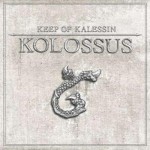 Keep of Kalessin arouse my interest during their demo days, as 1997′s “Skygger av Sorg” repeated the style of old Satyricon in a series of simple, emotional song fragments that revealed a sad beauty lying underneath the grim soundscape. I had heard some less interesting newer material but it is truly shocking what they have submerged into now – an arrogant, over-produced tribute to the honor of Greek warriors through quasi-talented commercial death metal. Synth washes and expressive vocals (in the vein of Nergal when he’s really pissed off in the later Behemoth albums) fill this piece of plastic because they want to sound big and they want to play on a stadium. I am convinced that someone with their musicianship should be able to create a listenable and consistent album, but these super fast blastbeats and commercial heavy metal oriented song dynamics from quiet to loud make this just a faux extreme version of something like Spearhead or Deströyer 666, made worse by the angry shouter vocalist. The people interested only in dry technique and production standards will love this for being an emphatic and empty opera of sharp drumwork and the constantly shifting death metal type fast guitars and entertainment value. They are also happy that it lacks the primal natural force of old Norwegian metal, because it might be distrubing. The sense of space created should be one of a studio or a big venue, instead of a woodland crypt, right? This amount of polishing emphasizes the superficiality of the entire composure, down to metalcore action computer game synchronized by MIDI in Kolossus, where accurate but inconsequential fast drum beats follow cheap-ass tremolo melodies from the pits of norsecore Hell and the vocalist sounds angry at people at the nearby mall and emo pop chorus in “Ascendant” which doesn’t even fit the music underneath. Likewise the arabic solos in the middle part of “Kolossus” don’t seem to have anything to do with the metal riffs, nor do the “300″ soundtrack reminiscent bits with synths and tablas. Whoever has produced this must be a commercial minded jerk.
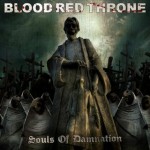 Tchort from Kristiansand was a newcomer to the death metal scene with his band Green Carnation right when the genre went out of fashion because of Euronymous’ hatefulness towards it and while that name was resurrected for Tchort’s progressive metal project he formed the neo-death metal group Blood Red Throne at the end of the millennium. While not having heard the early Green Carnation material, it’s easy to hear from this that some trace of early influence from excellent bands like Grave and Cadaver does exist, but none of their ability to turn basic riff structures into progressive and morbid magic. This type of song construction mostly resembles Cannibal Corpse and Deicide during the latter’s worst days of In Torment In Hell, filling songs with groovy mosh parts, faux-brutal growls and the drummer and bass player (from Deeds of Flesh) insisting wimpily on always playing to the beat of the riff. If this is the king on Norway’s death metal throne since Cadaver disbanded, it is quite sad actually. Most good (death) metal is memorable from its melodies, however convoluted and vicious they may be, but Souls of Damnation is mostly simple rhythmic phrases like guitar exercise patterns for introducing mechanical creation technique for sub-Florida death metal. Like all boring death metal, it severely underestimates its audience. I mean, many listeners do like death metal that sounds like basic no-frills brutal grind, but this worthless chugging goes too far. It seems like the whole album lacks even one interesting melody part or arrangement.
 One of the newer Oslo bands mostly known from relentless and uncompromising fast black metal, 1349 surprise with their latest effort in refusing to conform to the rules of the flock. This time conjuring echoes of Samael’s Ceremony of Opposites and later Mayhem, 1349 composes suffocated, devilish and industrial tinged black metal sounds which despite being somewhat predictable, retain the doomy beauty of an industry of inferno. The loneliness of space as described in Moorcock’s trippy novel “The Black Corridor” and the classic fantasy movie “Alien” fill this Gigerian landscape of planets, threats and biomechanical blasphemies. Bodies twitch into contorted positions in a sea of light. The psychedelic feel is enhanced by a cover of Pink Floyd’s “Set the Controls for the Heart of Sun” featuring Tom G. Warrior. Several tracks use minutes to unfold submerged ambient and experimental soundscapes, while there is some Red Harvest type digital manipulation featured in many of the metal songs too. The arrangement is dramatic and regal, with Frost’s drumming skills put to good use. Multiple vocal styles herald the theatrical nature. Some interesting lead guitars add desperate wails to the background. Some parts are in their wicked minimalism close to what one could also expect to, say, Beherit to compose if he were in a more commercial high budget recording project, making this one of the more worthwhile efforts from Norway last year in producing new vistas of black metal.
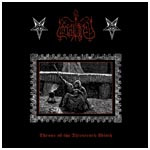 This little EP from Mare, one of the infamous Trondheim cults tends to sound a bit like Live in Leipzig era Mayhem recording in a sewer infested with rats and worms and the decrepit and rotten soundscape makes this one an aesthetically more attractive listen than most of the studio produced turds. Intuitively they grasp the idea of structuring long songs in the old Emperor vein so that while the bits and pieces are redundant, it is a journey through minimalist music themes into the realization and acceptance of the power of darkness. Slow, crawling, anti-logical repetition of simple melody (where the keyboards add a tasteful of old Enslaved) make it a bit of an un-musical experience – the composition seems to be mostly oriented to the fans of droning soundscape whereas the planning and calculation in the overstated reverb, vocal sound (while Kvitrim is good at pacing) and lack of invention in the riffs suggest seem to be aimed for the black metal consumer. But it is deconstructive, degenerate and deceitful music – for pure ideas, about as good as the best of the bunch reviewed here. An ambience and sense of space is reached, the Faustian concept of man as a warrior who travels and explores the universe, only to relinquish his individuality to the higher natural order – in death and rebirth.
 Do you see comparisons to other genres and black metal?