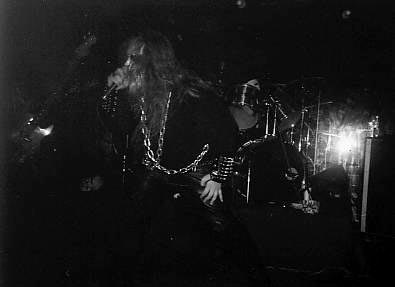
When the stars are right, when the planets of alien coordinates align in perfect syzygy, when the arcane progress of dark matter warps the cosmos into gravitations of sinister consequence, the Dead Gods may once again rise from their eonian slumber… but only if the proper rites are set in motion by those giftedly prescient of mortals. Chainsaw Abortion-ist Brian Pattison was one such a prophet who had succeeded before in the act: 1990′s Day of Death, an atrocity survived by none but a fanatical few, and the tale obscurely recounted within the scripture known as Glorious Times. Now 21 earth-years after that most notorious of receptions in the death metal saga, a wiser but no less maniacal Pattison determined the time was ripe for another extra-dimensional conjuration, with no less a death-god than Kam Lee in mind as his ultimate summoned entity. Naturally, the Buffalo territory of New York would again provide the setting, with the chosen temple for this installment being the rather profoundly-named Club Infinity.
An unprecedentedly cavernous venue, Club Infinity can house up to 500 or so bacchants before it becomes a legal deathtrap — yet attendance for the day must have been less than half of that numeral. Apparently, the local Buffalonians who would normally haunt the premises for their fix of alcohol and loud noises had absconded to a different corner of the land, lured up and away by the promise of an outdoor barbeque/live music festival of some sort. As it were, only the blackest-hearted diehards heeded the call to this cursed slice of suburbia, where memories from beyond time would once again climax in a lurid celebration of the horrific, the macabre, the rapacious and warfaring facets of existence from which fleeting mortality truly derives its meaning. Our lives — and indeed our deaths — would bear the distinct and indelible imprint of this Day as a scar that never heals, and whose free-flowing ichor blazes a sanguinary trail across ages…
Lethal Aggression: New Jersey’s crossover-thrash godfathers themselves had been the honorary headliners for the pre-Day of Death celebration, which of course had been successfully realized the previous Friday night; but for Saturday’s Day of Death proper, Lethal Aggression actually re-emerged from their dens — bleary-eyed and wracked with raging katzenjammer — at an ungodly brunch hour to be the very-fucking-first band in the proceedings, which was a display of tenacity mostly lost on the scant gathering of earlybirds. What followed was a forthright little blitzkrieg of their trademarked “drugcore” anti-anthems, which was made all the more special for the occasion with the return of classic-era guitarist Dave Gutierrez (though he may have been initially unrecognizable due to his new blue-dyed and bespiked hair), who additionally was commendable for drawing the wicked Lovecraft-inspired design for the Day of Death T-shirts. Towards the end of their timeslot, though, it became clear that vocalist John Saltz had most anticipated getting to the last song on the list — “No Scene” — as he had accidently launched into that whole vocal line during the beginning of penultimate song “Spooge”, causing the band to screech to a stop and start all over. In retrospect, the mixup should not have been too surprising, as the apathy-decrying, poseur-scourging lyric matter (the key verse being, “All you do is come to shows, sit around and stare”) was uncomfortably relevant enough to boil our blood. And this was an absolutely necessary kick-in-the-ass to start everything off on the right track.
Hubris: Being the first of four local bands to open up a 13-band procession is a task about as unpleasant as serving in the infantry during a foray into an uphill battle, and yet the cadre known as Hubris still mobilized for their set like the hungriest of mercenaries — corpse paint, wicked demeanors and all. Though they are a relatively new constellation in our Northern skies (to wit, all of their embryonic recordings thus far feature a drum machine because they could not, until recently, secure a faithful skinsman) Hubris’ style of black metal extrapolates directly from the most abrasive entries in the classical Scandinavian school, falling into a nebulous scape between Marduk’s Opus Nocturne and Immortal during their soulraping halcyon years with Demonaz. But at 4 p.m. in a sun-baked, poorly ventilated enclosure, the band’s blizzarding invocations of carnage-strewn battlefields and holocausted settlements were all but guaranteed to a tepid reception. Frontman Hellskald vehemently refused to let the standers-by off easily, however, and at numerous intervals demanded choruses of quasi-fascistic fistpumping from every slouched, beer-nursing figure in the near and far vicinity. It would be difficult to not be impressed by the young band’s charisma, and Hellskald’s exiting exhortation to “Rape angels! Drink their blood! Castrate God!” would basically set the tone for the remainder of the rituals to follow.
Seplophile: Attribute it to that everflowing stream of youthful vigor if you will, if that would most efficiently explain how Seplophile had the mettle to burn through one of their own setfuls of brutal death, just a few hours before they would entirely re-animate the godlike monolith of morbidity ‘From Beyond’ with living legend Kam Lee. Despite Seplophile’s ostensible “newcomer” status, they are a band that follows “The Old School Spirit” as their unshifting lodestar, and their drive is incited by memories of the vital role that the Buffalo scene had once taken in the death metal genesis (that is, before everyone and their grandparents emigrated to Florida). Their discography to date apparently features none but a single demo ‘…And Death Shall Have His Dominion’, so the boys did not exactly have a hell of a lot of material to choose over, but their formulas exhibit a certain potency of form and execution that echoes the advanced blastations formerly mastered by the early incarnations of Cannibal Corpse and Cryptopsy. If anything, the set was a reassurance that this fledgling local band had talent in abundance for the daunting role of Kam Lee’s backing band, and that would only further whet our bloodlusts for the Massacre to come.
Resist Control: Reportedly one of the all-time favorite newer Buffalonian bands of Brian Pattison himself, Resist Control followed swiftly on Seplophile’s heels with high-octane, classic hardcore-thrash madness that veers more towards the vehicle of purposeful, distinct narrative rather than uncontrolled paroxysms of angered words and misplaced epithets. This is the type of band that would incite violent, all-consuming pits amongst any gathering of punks and skins on a normal night, but of course since Resist Control were haplessly saddled on the first quarter of a 12-hour-long engagement, they were mostly just gawked at by those who weren’t caught up at the bar or the merchandise tables with all the luminous death metal celebrities. Still, the band gave voice to outrage as sonorously as a good “canary in a coalmine” ought, and it would be well-off if they could soon branch forth from their hometown Buffalo circuit and reach more disenchanted ears out in the rest of the Amerikan wasteland.
Sam Biles: Caught in similar circumstances with antihero-of-the-day Kam Lee, Sam Biles is an illustrious frontman who for some reason or other stands separated from his classic backing band — Hideous Mangleus, in this case — and so performed his best-loved songs at Day of Death eponymously, with the aid of youthful and capable hired hands. Somehow, Biles had managed to secure and implausibly import a star-crossed trio of Texan luminaries to stand in as his henchmen: on guitar, Francisco of HRA; on bass, Dave of PLF; and on the drumthrone, Matt of Blaspherian. This ad-hoc convocation had actually never before rehearsed with Biles, and yet their set for the evening came together with such natural beauty that a blind man would no less envision the old gang of Feev and the Brothers Bonde back at their respective spots (except — dare we say it — with tighter musicianship?). Preposterously outfitted with all of cast-iron armbands, leather pants and a fucking Ratt T-shirt, Biles prowled the peripheries of the stage like a caged beast whilst animating every disturbingly hilarious lyric with guttural prowess — and of course, the Tejas Squadron behind him did not once skip a stroke, faithfully re-enacting the catchiest death-throes behind material like “Question Your Motives” and “Burning Children” (“Remember kids, don’t play with matches! Aaaaaargh!“). If the audience gathered for the night had any doubts about Biles’ solo appearance, their apprehensions were completely quashed before the first song even ended; and by way of analogy, it could be correctly assumed that Kam Lee wouldn’t need Rick Rozz, Terry Butler or Bill Andrews to pull off the old Massacre songs with masterful [dis]grace.
Avulsion: The final of the local marauders to be showcased for the Day, Avulsion are elder guardians (est. ’92) of the Buffalo death metal tradition, though their essence is thoroughly imbued with eclectic dosages of hardcore and grind. Shrewdly tongue-in-cheek yet convicted in their anti-humanist manifestos, this band effectively mimics the torments of alienation through truncated songs patched together from ambiguously buzzing tremolo riffs. But perhaps their most distinctive asset is the uncanny throat-power of their frontman, who is able to switch so rapidly between a strident punk shout and a rattling growl that it was easy to be fooled into believing there was more than one lead vocalist at work. After completing a formidable listing of original compositions in record time, Avulsion thought well enough to conclude their set with a cover of Carcass’ “Empathological Necroticism”, which certainly tweaked the ears of all those yakkers in the vicinity who were only half-listening otherwise.
Goatcraft: The horned and cloven-hooved brainchild of keyboardist Jason “Lonegoat” Kiss, Goatcraft is purest piano metal unbounded from the conventional backdrop of screaming strings and timekeeping clangor, essentially comprising foreshortened sonatas that weave narratives and paint airs with bleak minimalism — obviously, this performance would be the one looked upon as the “oddball” on the bill by a large portion of the audience, if only for their bewilderment over aesthetics! Matters were not made much more agreeable due to the fact that The Lonegoat did not have access to his personal keyboard for the night, and thus had to make do with a rented piece of junk that would hiss and sputter at loathsomely frequent intervals. Though the technical difficulties as well as the piss-drunken interjections of certain audiencemembers shot through any semblance of good ambiance for this listening session, the one-man-band remained steadfastly transfixed at his post, only uttering a few words of exposition when necessary, or still more rarely betraying a glare from beneath a heavily corpsepainted and bloodsoaked brow. It may be a sad inevitability that those few ambitious souls who elect to play solo, ambient Metal in a concert setting will never have the right kind of audience, as people who walk the hessian path between Classical and Metal appreciations are still unmercifully uncommon, especially in regards to the U.S front. But for any matter, Goatcraft is still a promising work in progress; expect to hear more from this satyrid maestro in further compositions both personal and collaborative.
Druid Lord: The newest creative vehicle of former Acheron axemen Tony Blakk and Pete Slate, as well as their skin-hammering Equinox comrade Stephen Spillers, Druid Lord is a death/doom affair that draws its most prominent tributaries from the sludge-tainted fountainheads of Winter’s Into Darkness and Autopsy’s Mental Funeral, with perhaps the faintest hints of vintage Cathedral coursing noxiously through the solution. But whatever feeble combinations of band names one chooses for describing Druid Lord, it remains that this band gathers its purpose in delineating true imageries and sensations of Horror: the same inspiration for all music branching from the germinal genius of Black Sabbath. For their Day of Death appearance, Druid Lord had driven up north nonstop from their vantage point in the opposite pole of the country (Orlando, Florida), which might have added an honest dimension of bodily-excruciation to their already torturous live show. Though their 2010 LP Hymns for the Wicked lists Druid Lord as being a three-piece, they have since added Ben Ross as a rhythm guitarist, allowing The Great Slate to solo to his evil heart’s content whilst dense riffing frequencies are maintained. Bassist/vocalist Tony Blakk, already bedecked with plenty of frontman’s credentials for his years in Equinox, was practically thespian here in his snarled descantations of grisly fates. But for the song “All Hallows Evil”, he stepped aside to allow Kam Lee to take over on vocals — a very honorary guest appearance that would only be shared for the night by Derketa. Speaking of which…
Derketa: As of late, reunions in classic death metal have occurred on such a frequent scale that even the over-sanguine among us are becoming rather desensitized; an entity like Derketa, however, is so improbable a phoenix to rise from the ash that only the ignorant could fail to take notice. Formulated in the foundational ’80s era by Sharon Bascovsky and Terri Heggen, Derketa holds historical leverage alone for being the first female death metal band; of course, they earned their musical leverage by their demo recordings and the ‘Premature Burial’ EP, which featured decelerated-tempo, incredibly growly songs that sounded somewhere deep within the realms of Hellhammer and Nihilist. But the immediate intrigue that the band’s output garnered seemed to cause the very pressure that broke them apart, although Bascovsky put forth several honest attempts to keep Derketa’s name alive over the years, finally succeeding in a full reunion by 2006. Only five years later did the revitalized cult feel strong enough to begin live outings: the first three in their native Pittsburgh, and the forth to be Buffalo’s Day of Death 2011 — significantly, the girls (minus current bassist Robin Mazen, who was busy with Demonomacy back in Florida) had been in the audience for the fest’s 1990 edition. When it was finally time for Derketa to commence with their first out-of-state appearance and the opening sequence for “Premature Burial” was sounded, practically the whole fan-populace in the venue came flying to crush in front of the stage. Guitars sounded appropriately huge and menacing (although in the beginning only Sharon and Robin could be heard, as Mary Bielich’s distortion pedal had shorted out), and it’s apparent that over the years Sharon has trained her vocals to be even more fearsome. It was especially uplifting, though, to see Terri reprise her role as the original female death metal drummer — still the rarissimus avis of the genre — and as she was able to borrow Rottrevore’s massive drum kit, her blows were as sonorous as they could be. A brand new song called “Rest in Peace” (dedicated to Seth Putnam and others in a growing list of “dead metal guys”) was showcased: it could be the most doom-influenced track they’ve composed yet, which probably hints a lot at the overall aesthetic to expect on the imminent debut LP, In Death We Meet. And, as mentioned before, Kam Lee made one more guest appearance for the song ‘Last Rites’, growling along with his brightest female disciple for what must have been a very high point in the band’s lifespan.
Rottrevore: After Derketa and Sam Biles-technically-Hideous Mangleus, Rottrevore were the last in a series of revitalized Pennsylvanian cults to preside over Day of Death with their characteristically Northeastern, bowel-wrenching odes to the evil in man. Known best amongst the underground for their solitary full-length opus Iniquitous — an onerous, eldritch epitaph crafted after the most primeval echoes of the Stockholm and New York schools — the band almost inexplicably vanished from the scene shortly after the release, issuing no signs whatsoever from under their official banner save for the ‘Disembodied’ compilation pressed by Necroharmonic some time ago. This being so, their sudden resurgence back into action this year — signing with Spain’s Xtreem Music, dusting off unreleased songs, logging studio time with Erik Rutan for a new EP — is more than remarkable, and Day of Death would be honored with the first Rottrevore performance in nearly two decades. Frontman Chris Weber did not at all contrive much fanfare and flamboyance about the distinction, however, and preferred to be businesslike in his dispensation of aural punishment. Their set of course included all the choicest bits from Iniquitous (this humble narrator was partial to ‘Unanimous Approval’ and ‘Incompetent Secondary’, but everything honestly sounded true-to-form), and there was also a peppering of the new material which sounded to be very close in spirit to the classics, which is a very good thing indeed. This reunion show turned out to be a success in any respect, and the fact that it was all only a preview of what is to come can only confer the best of prospects.
Deceased: Who could have imagined that our most beloved Virginian bizarro-deathmeisters Deceased would be the only holdovers from the first incarnation of Day of Death? Granted, in the 21 years that have elapsed since then, the band has metamorphosed into an almost entirely different beast: the latest album Surreal Overdose features a tightly-crafted continuation of the ripping speed metal that has become their standard since the mid-’90s; and of course, King Fowley now vocalizes at the helm rather than behind the drumkit, backed by a quartet of mostly drafted-for-the-live-show mercenaries (including, for the very first time, guitarist Danzo of New York City-area hilaritythrashers Vermefüg). With a varied listing of the old savage classics mingled with everything up to the newborn creations, Deceased had a canonical time-travelling drama to offer their audience, although their stage time had to be disconcertedly hurried along due to some fascist schedule-policing on the venue’s part. This constraint was especially bogus for a born raconteur like King, who barely had an adequate moment to address his audience between songs, yet he still strived for those full Deceased theatrics we’ve all come to expect, complete with fucked-up monster masks and all such related tomfoolery. Perhaps, in recognition of the spirit of Day of Death, Deceased should have traded out some of their later-period songs for more selections off the early milestone ‘Luck of the Corpse’ and so on, since the audience was uniformly comprised of old-school hessians hellbent on tradition. But whatever the case, it was gratifying to have one of the original fest participants return for the second incarnation — and how many bands other than Deceased truly demonstrate the longevity of the underground death metal practice?
Insanity: It would not at all be a droll exaggeration to nominate San Francisco’s Insanity as the least fortunate band in all of death metal, following from their absurdly tragical biography as the one-time most promising vanguards of the newly developing extreme style, poised at the very cusp of self-realization yet cruelly denied their seat in the pantheon due to terminal illnesses, crippling accidents, and the ever shifting sands of label-backed patronage. Fate is a bitch, as superhumanly tenacious frontman Dave Gorsuch knows only so well at this point, and Her cantankerous whims sure enough wrought hell on Insanity’s maiden voyage across the Northeast. The very first tour date in Toronto had to be cancelled due to issues with bordercrossing policies, and during that same time bassist Falko Bolte was sniffed out for drug possession and was summarily locked away in a local jail, for as long as it would take for his sentence to be issued. Shaved down to a trio with no low-end support, Insanity nonetheless soldiered onward to Club Infinity intent on following through on the warpath they had carved. Guitarist Ivan Munguia took over Falko’s vocal duties on the spot, and both guitarists turned up the bass on their amplifiers with the hopes of plastering up the frequency gap in their wall of sound. It was evident then that failure was decisively averted once the opening strains of ‘Attack of the Archangels’ sounded out across the hall, electrifying the East Coastal audience who had before only dreamed of bearing witness to California’s most mythical entity. Since Insanity’s complex, many-riffed compositions emphasize guitar theatrics over everything else, the lack of Falko did not distract too much from the live reenactments, and the normally-silent Ivan’s backup growls turned out to be commendably feral, especially for the newer material which draws more than usual from call-and-response vocal forms. But the high point had to be marked by the song “Fire Death Fate”, which might be declared the most well-known of all Insanity songs if mostly for the fact that Napalm Death did a cover of it on their ‘Leaders Not Followers’ tribute album: a rather late piece of evidence concerning the remarkably deep-rooted influence that Insanity exerted on British extreme metal. In all, Insanity’s appearance was laudable in spite of the hindrances that seem to perennially plague them, and your humble narrator would go on to follow the band for two more dates of the tour, which were similarly sublime beyond all belief and yet met with shockingly low turnout. But that, friends, is a story for another odd time and place…
Nokturnel: After Goatcraft and Sam Biles’ One-Off Backing Band, Nokturnel were the last of the fiends who flew up from Texas to play a set — although, most old-schoolers remember the band from when they were still based in their native New Jersey, rattling out an intriguingly odd permutation of Voivodian death-thrash on the oft-overlooked opus Nothing But Hatred (another lamentable victim of the doomstruck vessel that was JL America Records). But sadly, nothing at all from the back catalogue was to be on the menu for the night: Nokturnel were quite literally debuting a new drummer and it was simply not in their longterm interest to teach him anything other than their contemporary songs, which are structured and conceptualized out of a much different mindset than the ’90s fare. It was a let-down for the diehards — come to think of it, *everyone* who was gathered for Day of Death was essentially a diehard in some way (especially that magnificent bastard who adamantly demanded to hear “Nuke Seattle”: may you have Satan’s blessings) — but sets will be sets, and it was still fun to watch Tom Stevens shred like a maniac (until his guitar strap came flying off its peg in the middle of everything). We were, however, treated to some completely new material: “Demonic Supremacy” and “Ancestral Calling”, the latter of which was astonishingly pulled off despite the drummer’s inexperience of ever rehearsing it. But at the end of it all, when Tom and the gang were packing it up, the restless energy in the room very palpably spiked to the critical mass: with Nokturnel down, the strike of the fatal hour was fast approaching with the grand finale…
Kam Lee/Seplophile: Primogenitor, mastermind, chieftain, elder god — in death metal, these honorary titles can only officially be coronated onto one Kam Lee. As vocalist for the overwhelmingly foundational bands Death and Massacre, it was Kam who devised the guttural vocal approach closest associated with the genre; and — as is only natural for a Samhain-born son — it was also Kam’s profound knowledge of literary and cinematic Horror, as well as the darker facets of world history that gave concept and soul to an artistic movement. Though his deathgrowls became the stuff of legend early on in the ’80s tapetrading network, his best known contribution is arguably the full-length Massacre album From Beyond, and the fact that this meisterwerk would be fully re-concerted for Day of Death [or should it have been called “Asscrack-of-Morning of Death” at this point?] imparted a dizzying sense of disbelief on the intimate, rabid crowd clinging in front of the stage. But indeed, it wasn’t a collective delusion: the familiar hearkening of “Dawn of Eternity” resonated true through us all, and surely enough Kam Lee stepped forth from the shadows, with Seplophile’s instrumentalists trailing close behind. Previously, Kam had worn a Bone Gnawer shirt for lounging around with his fans and peers off-stage, but for this set he switched to one bearing a “Herbert West: Reanimator” logo — of course, very appropriately referring to the film based on the Lovecraft novella of the same name, with its central theme of profligate science hideously inverting the laws behind life and death. What followed was a set that went by a true-to-album, track-by-track order of those nine anthems we all know better and love better than family; Kam’s live execution captured the full, terrifying intensity of the recordings of his youth, and his ribald yet quickwitted banter in between is always prime entertainment. All the while, the axemen of Seplophile darted to and fro across the stage like winged nightgaunts, and considering how the band had only three rehearsals with Kam to prepare for the night, their performance was almost too good to be true. When “Corpse Grinder” finally ground everything to a halt, Kam and the boys made a hasty exit… but everyone knew the slaughter couldn’t possibly be over yet! And in no time, of course, the spotlights flickered back on and Kam had indeed returned with a few bonuses in store. There was “Provoked Accurser” from the fabled single of the same name, a cover of Impetigo‘s “Boneyard”, a ridiculously fun cover of “Skulls” by the Misfits (which Kam introduced with a paean to punk’s crucial relation to death metal’s genealogy), and finally the ‘Inhuman Condition’ EP’s cover of Venom’s “Warhead” (similarly introduced with reverent words for the Newcastle trio, and how they were responsible for Kam’s fateful crossover from punkship to metaldom). Kam also took advantage of his stagetime to relate some news concerning future exploits: apparently, he has rekindled his alliance with veteran Massacre/Obituary guitarist Allen West, and the duo are in the midst of a scheme Kam has decided to name “Corpse Rot” — a portmanteau of the Massacre song “Corpse Grinder” and the Obituary song “Slowly We Rot”… naturally! And with that, the stars again shifted into benign coordinates and the glorious spell was broken, yet the harrowing tale would be scribed immortally within the Necronomicon of death metal’s saga. For this Day would surely be the last Day that Kam Lee would perform those classic Massacre songs live in concert, and those who missed it, have missed it for all eternity.
-Thanatotron-
No CommentsTags: American Death Metal, Brutal Death Metal, death metal, Death Metal Culture, Grindcore, Progressive Death Metal, Thrash
 There is a certain door that any contemporary thrash band seeking quality must go through, a certain threshold that requires imagination and the indispensable talents of assimilation to really cross; in metal today, we see countless fragile trends that depend upon a rigid nostalgia and a lifeless worship of what has already happened, fully ignorant of the fact that what has true staying power is never something that was an idle imitation of something that was actually born of genius. In contrast to these bands, specifically the ones which belong to the so-called ‘retro-thrash’ trend, Ares Kingdom is of the opposite mindset; Ares Kingdom does not want to merely copy its primary influences, but to implement and authentically incorporate these influences into a relatively bold and forward-looking composition. The basic idea of Incendiary is quite simple: destroy the phoenix so that she may be reborn, an idea which is not so far from the opening narration of the Destroyer 666 track, Rise of the Predator. The execution, on the other hand, is what brings the band closer to actually demonstrating this vision than any other insignificant band that elects to portray death and apocalypse for aesthetic reasons alone; from the dismal album artwork to the indifference in Alex’s vocals, from the sad, painful melodies to the caustic and fiery riffs and solos that Chuck Keller (
 Of the artists who remain from times past, under whose names were unleashed the most disturbing and poignant sounds that defined Death Metal,
  Another excellent tonal poem by this Mexican symphonic horde sees a sense of orchestration and riff balance that has all the consistency of ‘
 The unstoppable Rob Darken took again some time from swordfights and armour forging to take a look at the barbaric-modernist thematic system devised by composers such as Richard Wagner and Basil Poledouris, with a metallic energetic pulse rarely witnessed since Following the Voice of Blood; the last of the fast Graveland albums. The lack of Capricornus hardly matters because the authentic or perfectly synthesized drumkit recalls the same Celtic tribal warmarches and the raw, unsymmetric heartbeat of a primal man hunted by wolves, perfectly countered by the dark druid’s usual cold and hardened vocal delivery. A deeply neo-classical realization how to build heaviness through doomy speeds and chordal supplements still elevates the Polish seeker-initiator into a force far beyond today’s puny black and heathen metal “royalty”, looming beyond as a frightening presence of unrealized wisdom; nothing less than the Manowar of black metal, with no hint of irony or self-loathing. There exist two directions of expansion since the ethereal melodic chime of alfar nature in “From the Beginning of Time” is Summoning-esque (“
 Recent history has borne witness to developments in Black Metal that sets the music more at war against itself than with it’s traditional enemies and time has accumulated vast quantities of debris resulting from this internal crisis of identity and credibility. The shape of all the rubble is appropriately rocky, resembling the multitude of “fairy land” daydreams based on genres of alternative popular music incorporated to gain the approval of outsiders who possess no more understanding of the wolfish, warlike and mystic poetry of Black Metal’s spiritual essence, but want to claim this ‘niche market’ as their own. Even the cloak of demonic symbology, long-since regarded as a joke to even the casual listener – little more than a generic garb for posturing and associating with the genre’s ancestors – has been accordingly stripped of all occultic luminance, which shined too fiercely over the eyes of the humanist infiltrator, such that the tears of depressive-suicidal ideologies would instantly evaporate. None of these signs of the times, however, have influenced the veteran duo of Dagon and Incubus, who, in an ultimate statement of Satanic zealotry and inhuman purity, tunnel back to the hypnotic primitivism of Black Metal’s first waves, re-formulating and refining the style of early Bathory to produce an album that reveals the inherent mystical wisdom which inspires Black Metal’s sinister imagery, with no recourse to obvious cliches nor over-intellectualisations in order to clutch at some idea of artistic credibility and potency. Based on the technique of Immortal’s ‘
 The New York City borough of Brooklyn might be better known to the universal consciousness as “The Hipster Capital of the World”, “A Fantastic Place to Collect STDs”, or “Where Culture Goes to be Sodomized”, amongst other colorful and imaginative epithets. Naturally, any self-touting Metal bands originating from this region ought to be approached with utmost scrutiny, as these are all almost invariably revealed to be alternative rock acts hiding beneath a masquerade of long hair and Dionysian discord. Breaking decisively away from this brand of perfidious whoredom are nouveau death metallers Mutant Supremacy, who occupy a peculiar nexus in between
 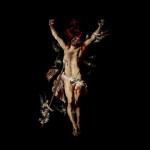 True to form, Profanatica release a focused, energetic and iconoclastic opus that shatters and mocks any infantile and moralistic conception of reality. Both compositionally and aesthetically powerful, the production on Disgusting Blasphemies against God is both clear and full, lending itself nicely to an analysis of its subtleties and providing the clarity necessary to gain a chuckle at the expense of nearby spectators privy to the album’s intrusive vitriol. Ledney’s vocals are hilariously clear yet retain a threateningly violent quality that is becoming of this style of Black Metal. As Ledney vomits forth his blasphemic ritual, listeners are treated to a notably ominous musical atmosphere that is uncomfortably somber, deranged and challenging. Utilizing single note tremolo picking, reminiscent of a cross between a more consonant Havohej and the effective and simple melodies of VON, Ledney in is his genius, develops motifs, that while perhaps more obvious and accessible, remain potent and successfully create an intriguing state of anxiety. These motifs both seamlessly emerge from, and return to sinister Incantation style riffs which work together to develop a unity and structural coherence that while primal and simple is undoubtedly effective. The interplay between these musical variable creates an overall experience that portends the celebration of the powerful, living and animated chthonic mysteries and perhaps more pressingly the apotheosis of their necessary destructive capacities.
 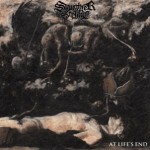 Toronto’s death dealers unearth the forgotten formulas of 80s-90s extreme metal in their second offering, a follow-up to the debut cassette “A Litany of Vileness”. This punk-driven death metal statement delivered by veterans of Canadian scene (former members of The Endless Blockade and Rammer) shows no mercy: it is short, volatile and dirty. Yet, at the same time the material is well weighed and balanced, blessed with the genuine feel of old-school art. The production helps conveying old metal nostalgia whereas Spartan songwriting confronts useless acrobatic tendencies of the modern scene. The band’s uncompromising music is perfectly collaborated with artwork by Moscow artist
 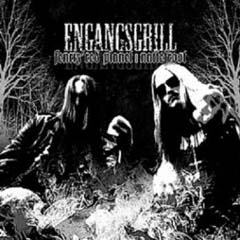 We’re going to talk about the first band here, Fenriz’ Red Planet, because Nattefrost is forgettable 1970s punk rock dressed up as early 1980s black metal. This band is a hybrid between doom metal, 1970s heavy guitar jam, and what they call stoner doom now but was recognizable in St. Vitus, Pentagram and Sleep for many years. The production approach and song style is closest to 1970s heavy guitar rock, like Cream or even Led Zeppelin, in that songs are verse/chorus works with a big fat diversion stuck in the middle that may run through a couple of riffs but comes back into key and rhythm so the cycle can spin again. But over half of the riffs are straight out of old school 1980s doom metal, and that would be St. Vitus and Pentagram but also late-blooming NWOBHM with a doom edge like Witchfinder General and Budgie. It’s not exciting; if anything, it sounds like a demo where the band hasn’t yet finalized direction and aesthetic. However, it is good; these songs have character and a spirit to them which you cannot get anywhere else. You can hear a few lifts from Fenriz’ folk/metal project Storm and one or two similar themes to Darkthrone, but this CD doesn’t need to namedrop to stand on its own. They named it “Engangsgrill,” which apparently is a type of disposable barbecue, which fits exactly the kind of sloppy rock/metal hybrid you have here: pickup trucks headed to the country with a keg, a bong and some friends, followed by a weekend of the best neighborhood bands jamming, society gets forgotten until on Monday morning you drive back with a mouth full of ash and the kind of diluted hangover that comes from cheap beer in constant consumption.
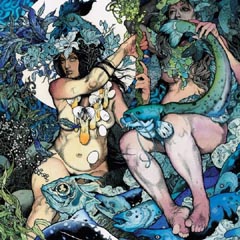 Oh neat, an emo/stoner metal hybrid with lots of indie and punk rock touches. If you can imagine Neurosis and Jawbreaker making sweet love with newer Sleep, and throwing in tons of stuff from the heavy metal and indie rock canons, you’ll have a good image of what this cheeseball release has to offer. From the way the labels and the big industry reviewers — who have about five minutes to hear each CD, and put them on in the background while socializing for two weeks, then forget about them — went on about this CD, you’d think it was the second coming of innovation itself. Instead, it’s stale and completely loses what’s good about metal and punk, converging on a mean that’s closer to your run-of-the-mill hipster band. This is awful.
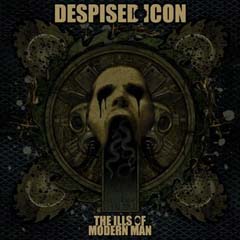 Metalcore is rock songwriting with technical death metal technique, and a desire like punk music to string together radically “different” riffs as if it can surprise us, and since it’s random in structure, built around what’s left: vocal phrases that end on the expectation of the offbeat like a sales pitch. Despised Icon is as a result about 80% the fratboy-pleasing, gurgling, blasting, very simple riffs played in difficult time of technical death metal, like Immolation, and the rest is bouncy moronic rock music that I got into metal to escape. Consequently, it has no attention span and cycles like carnival music between different styles and tempos, then crams it all into a barely-disguised verse/chorus structure. What is the point of typing this all out? To point out how to fail at metal. This is the abyss of music and is every bit as stupid as your parents claim your music is. If you want to fail at life, try listening to this random accumulation of parts — each part is in itself OK, not great, but together they add up to a conversation made by borrowing a phrase from 30 works of literature — and as a result project a scatterbrained, neurotic, pointless and non-constructive view of the world. No wonder people hate metalcore; it’s the nadir of underground music.
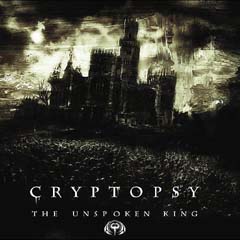 This is what’s left of the band that made None So Vile? The neatly structured, compact death metal has been replaced with blasting metalcore. Metalcore, as you may know, is kind of a garbage plate for underground metal and punk. Based around the interpretation of technical metal into punk structures that Human Remains showed us, metalcore loves randomness in circular song structures, so you get ten minimally-related riffs linked by a breakdown and a few slow chants, and then the whole thing repeats, and then the song ends. It’s music for a fragmented mind and as a result, has the IQ of a headless chicken watching daytime TV. Cryptopsy utterly fails to make coherent music out of this style as their countrymen Neuraxis eventually did, and instead defecate this collection of random riffs based around an egodramatic vocal track. It’s total garbage for morons.
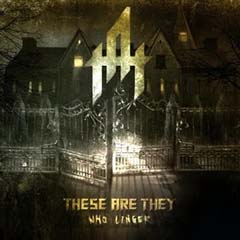 Imagine Iron Maiden doing a simplified version of 1990s Demigod or Amorphis. This CD is unique in that it successfully applies both (a) the old school death metal style and (b) a heavy metal, harmonized-guitar, bouncy riff style — and does it by coming up with a melodic phrase and answer, and using these to make layers of verse and chorus. Play riff; play notes of riff in variation of rhythm; harmonize guitars and repeat, then cycle. The choruses do the same. Nothing sounds out of place, and the deep guttural voice guides it along, but it seems entirely out of place when the heavy metal riffs and trills come into play. In addition, the riff salad of death metal isn’t here; like rock or indie, this rides one pattern for verse and one for chorus, and much variation is not to be found, which probably places this out of the range of old school death metal fans. Still, these are quality riffs and excellent use of basic harmony, which makes this easy listening and because it is not random, a great improvement on the metalcore-heavy stuff we hear daily. For albums like later Bolt Thrower, which tried to make a heavy metal/death metal hybrid, this is probably the best so far.
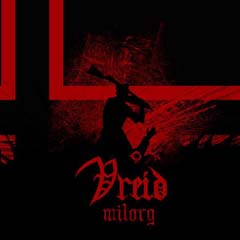 Black metal was about writing unique melodies and building song structures to fit them. Vreid is about mimicking the past with more intensity in each riff, but relying on predictable melodic strips and linear song structures in circular repetition, resulting in songs that are binary like nu-metal: a softer part, then a harder part, then a response to that which softens the hardness, then a restatement at full blast, fade out and win. Most of these riffs come from the 1970s and 1980s generations of metal and get a “black metal” treatment, so end up sounding like rock music in its Sunday black metal evil clothes. The music is driving by a chanting vocal which rides the beat like the shouts of the drummer commanding the slaves to row. Every now and then they launch into an extended melody like a pentatonic version of early ancient, and they have the raw rhythmic power of an early Marduk or Zyklon, but it doesn’t add up to more than most rock music, and considerably less than the formative works of Nordic black metal.
 Throbbing notes rhythm a rhythm that then reverses, examines a portion of itself in detail, and then picks up in a new direction which dovetails with the old; the throb remains, like symbols etched in the air with a torch caught on the slower memory of film. In this way, Black Funeral achieves an odd ambience similar to that of Impetigo, where a higher note is strummed repetitively at an offset rhythm where most bands would hammer a lower note on the beat, but by the nature of the larger melodic structure of the riff, this throb does not bounce jauntily like a rock rhythm; it hangs, like a reminder of mortality. Vocals are chant-ish black metal rasps and the mechanistic pedaling of the drum machine fits this sound like a glove, getting further inhuman as it distances us from musical expectation and clean aesthetics. Like the humming beeps of an alien machine exploring the night, this album rediscovers humanity by removing it from the picture and showing us the empty space in which we must construct as inevitable death closes in. While most experts agree “Vampyr” is the height of this band — and who am I to disagree? — this perhaps less proficient album is more haunting and bizarre, yet fits it into a pattern similar to our reminiscences of isolated nights when the future angled away from us like the shadow of an unknown doorway.
 If the recombinant album name and band name didn’t clue you in, here’s the skinny: this band is totally postmodern, meaning that they fit together all sorts of random influences and then link them together with the basics of rhythm and harmony. As a result, it’s like a fast ride at Disneyland: constant changing stimulus of radical difference so much that after a while you lose any idea of where you are, and end up thinking you’ve come very far, when at the very end as the buggy slows you realize you’ve been circling around the same relatively small space. Unlike most bands of this type, which I’m going to call crypto-metalcore because it’s (a) without death metal’s style of organization, preferring instead the hardcore method of having riffs have as little in common as possible and no narrative (b) of mixed riff styles and (c) depends on rhythmic buildup/breakdown for tension because you’re not going to get it in contrast between riffs, Decrepit Birth is good — it’s like an Iron Maiden album hidden in Deeds of Flesh with Blotted Science and Negativa offering critique. However, I can’t listen to this carnival music; it breaks down concentration and replaces it with elaborate versions of territory trod long ago.
 What happened here? Eight years ago — before old-school “revival” was even a blip on the radar — this band had the apparent potential to give proper life to archaic death metal form. Their first album/demo was a brooding, infectious and grimly cohesive piece of work, enough so to make this sound almost brazenly cheap by comparison. Toss in every imaginable death metal riff style coined between 1989 and 1993, lay them out on a rhythmic smorgasbord and put them through enough mood changes to make a pregnant teenager blush and you’ve come damn close to this; add enough embarassing Bloodbath-sounding material (listen to the opener) to something otherwise “authentic” and you’ll never want to hear “old school” again. – kontinual
 There are some of us who believe that rock and roll music, instead of being a thing deliberately created, is an aggregate of what was left over when we tested everything else against a captive audience. Star Fucking Hipsters prove this by carefully absorbing everything they can into the great sponge of melancholy indie pop. These songs usually start off with fast punk or speed metal (Slayer) riffs, and then pass through a few exciting transitions borrowed from anything industrial, black and reggage or between, but then we get to the core: darkish, self-pitying, somewhat helpless indie pop. True, it’s in pop punk format like The Descendents meets Blink 182 with Jane’s Addiction advising on behalf of the emo CIA, but basically, it’s pop. And when we get to that point we see this album is like a confused and lonely person in the city, covering themselves with newspapers or whatever fashions they can yank out of the wind, hoping no one will ever get a glimpse inside. If that’s its goal, this is supreme art, but more likely it is the emoting of such people hoping we’ll justify their existence for them. As pop, it’s not bad, a little toward the “poignant” side of minor key melodies sliding into major key to give you a sense of hope. But it’s really the same old thing, or the latest incarnation of it in whatever styles have stuck over the past twelve years, and so I can’t imagine why you’d listen to this instead of any of the 100,000 other albums this “good” in the rock style.
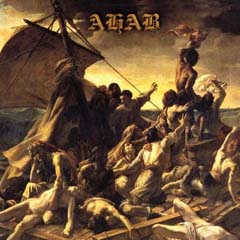 Funeral doom of a style similar to Skepticism if merged with Esoteric, with a tiny bit of Paradise Lost or Sleep in the wings, Ahab is a studied take on the slow and depressive atmospheric music that many people seem to enjoy. Stylistically, it is probably the most advanced of its kind; musically, it is perfectly competent; artistically, it is not particularly compelling. Its melodies have less of a sense of mixed emotions than do those of Skepticism, and its songs develop in predictable cycles within cycles, leaving us with atmosphere by default once all else has been blocked out. Like American rock bands, Ahab also has to throw in that sense of “contrast” where any dominant idea gets a contrarian voice thrown up against it, where bands like Skepticism bear down with enhancement and variation inside their major ideas. Few want to be the voice to stand up and say this, but most doom metal is boring, and not just because it’s slow. Ahab, while better than most, falls under this umbrella.
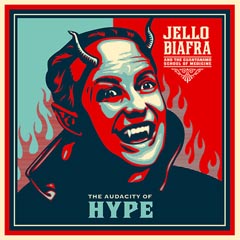 Purists will kill me for this, but this is Biafra’s best work — it’s musical. Where the Dead Kennedys sounded disorganized and messy without really building on that as an aesthetic, he’s slowed down to a pop-punk combo that uses hardcore riffs (Discharge, Exploited) to balance its melodic lead picking (Circle Jerks, The Plugz). That, plus Southern Fried guitar solos and lead guitar noise, forms the underpinning for a more interesting Biafra performance than has ever been heard before. On this CD, Biafra develops his vocal lines both melodically and in timbre, giving the performance of his life with verve and energy. You’ve heard these riff types before, and many of the note progressions are “pop culture” stalwarts that show up in movie soundtracks and commercials, but here Biafra and his band develop each into a song that’s half-rock and half-hardcore, creating a foundation that will introduce a new generation to the sounds of hardcore punk.
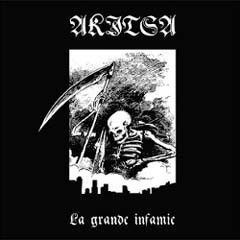 Most of us love the idea of black metal: a few totally socially alienated people, armed only with the truth, pick up guitars one weekend and make a simple mind-virus that helps slay all of the vastly powerful illusions that make our modern world miserable. The problem is that this is far from the truth: most of the people who have made great simple black metal were expert players or at least savants who self-schooled themselves in a unique and powerful style, and their work is very deliberate and designed to make us enjoy life as much as convey some idea. But as in all things, each generation picks up where the previous generation appeared to leave off, so the source of the idea is always lost. Akitsa sounds like a cross between The Exploited and early Dark Funeral, with simple melodic riffs offset against sawing basic power chording; the melodic riffs are too candy-sweet and the power chord riffs are too much of a style we can get anywhere. “Silence” appears to be heavily influenced by “Thy Winter Kingdom” from the first Behemoth CD. The rest of the CD is alternating Burzum influences with later model droning melody. It is both not bad and not really compelling enough to want to hear again.
 I wish this album were a joke, but like most modern and postmodern art, it’s an attempt to “demonstrate” an “idea,” and that idea has no correlation to the reality of an artist both entertaining and informing his listeners. Instead, you get a lot of fast chromatic playing over serial drumming with occasional breaks into jazz-style breakdowns that are either sloppy or misinformed about music theory. The result is a dissonant atmosphere after the band lulls you into contentment with repetition. Over time, the basic pattern increases in a period-doubling format, creating a linear expansion on a basic idea that resembles holy books that write about the universe expanding from a breath, except here the expansion leads to nothing but a reflection of itself. When Burzum did this with Det Som Engang Var, it built a mood that gained resurgent power of time; here it is purely deconstructive and fragments the listener’s attention span by forcing it through a narrow slit of musical awareness. People will like this because it’s unique, and talk about how genius it is because no one else “dared to be different” to such a degree, but as a work of meaningful art and a listening experience, it is worthless.
 This band claims “active” status in the early nineties, with zero material to show for it. It may very well be true; current personnel have some of the more run-of-the-mill Stockholm bands to brag about in their ancestry. Excited yet? This falls somewhere between Amon Amarth and Dismember’s Massive Killing Capacity, smothered in the “soft” mimicry of the Sunlight sound that seems so common for these fence-sitting bands. The plod is painful and simple and the song development as bluntly screwball as the song titles, lending an air of crafted irony to the whole presentation lest somebody seriously stack it up against any of its predecessors. One wonders whence this stuff keeps coming — I’m wont to call this the “Swedish mid-life crisis” and leave it at that. – kontinual
 What is post-rock? For most, it’s slow atmospheric rock beats with emo, punk, indie and noise riffs slowed down to provide texture. On this CD, Junius blend in a modern taste of the ancient with a Dead Can Dance influence. The result is like a river, winding around obstacles to rejoin itself, but only suggesting a topography. This music is comforting and melancholic, but not really exciting. It is pretty, but will find it hard to escape a lukewarm rock underpinning that reigns in its tendencies to escape for the outer limits. A reasonable comparison might be if Danzig decided to do a space rock album: you can appreciate it aesthetically, but sense how the voice isn’t really there, and how as much as these guys want to be ancient, they’re stuck in a modern paradigm.
 For the last time: if I wanted indie rock, I would have gone to a different part of the record store. Take your Sisters of Mercy gothic vocals, your bad indie rock open chord guitar riffs, and your basic song structures interrupted by dramatic outbursts, and put them there. I don’t want to fall into the old trap of saying “this isn’t metal,” because what I really want to say is that this is indie rock and should be integrated into that genre for the modicum of black metal stylings and ideas it still possesses. Sure, they’re going to call it a “post-rock” influence, but other than a little flexibility of rhythm, what’s going on here is the same stuff emo, indie and shoegaze bands were pumping out in the early 1990s.
 This CD resembles death metal in no way other than the vocals, which are the kind of reverbed whisper shout that made the first Sepultura EP so memorable. But the music… well, it’s stranded in the 1980s. Throw a lot of Metallica, Kreator, Slayer and Destruction in a blender — like every other band from that era — and you’ll get this mismash of riffs very similar to both the aforementioned bands and a huge heritage of heavy metal. To their credit, this band string them together well rhythmically but otherwise seem entirely random. Before someone convinces you this is a forgotten classic, ask them if classic means “good” or just that it was around in the early 1990s.
 We all want to love anything with the enigmatic Nocturno Culto on it. In fact, many of us were hoping he would pull off a Nemesis Divina where his skills converted an unexceptional band into a relative masterpiece. Not so on Sarke — his performance is phoned in, mainly because these songs are sparse, undeveloped, and entirely derivative of their influences in a 1989 way. In fact, the whole CD has the vibe of a collection of songs that have been kicked around since they got written in the 1980s, finally put onto vinyl years after the genre has passed them by. You’re familiar with these chord progressions and general rhythms, since many of them come out of punk rock and hard rock, and you’re probably not unacquainted — unless you’ve been under a rock labeled BLACK METAL GO HOME for the last two decades — with Culto’s interpretation of them. It’s all quite vanilla; nothing to really be appalled at here except how little you care about this flat regurgitation of the past.
 We live in a time of fools. Given no real truths to chew on, they raise themselves on lies, and make competing lies so they can be heard. Then they tell us what metal bands to listen to, and they cannot tell the difference between good music and derivative shit. They will, for example, convince themselves that Drautran is folk metal, when really it’s indie rock songs dressed up in black metal chord forms with a little extra violence. Unlike metal songs, where riffs fit together and make sense, these are rock songs with some metal riffs dropped in between the sing-song verse chorus. They take their riffing inspiration from Enslaved’s Frost but none of the compositional coherence is here. Listen to this if you want to distract yourself, fragment your concentration and dull your possibilities of ever understanding the difference between good music and crap.
 Every now and then, people who lack direction in life and so pay attention to surface features more than anything else, hoping to use these to justify their emptiness, will try to tell you how good a band is because it’s unique and nuanced. Usually this includes some kind of infantilism, like extreme minimalism or incoherence. This tedious little recording fits the bill. People like it because it’s obscure, kvlt, whatever… the truth is that it’s melodically simplistic, goes nowhere in song development, and showcases no really unique ability except to waste your time. They try to eat up as much tape as possible with intros, chants, and very basic keyboard melodies, but basically there’s nothing here. Maybe that’s the artistic point — emptiness — but then again a blank tape would have been more effective, and pleasant.
 Interesting approach by this Mexican band: take a more technical version of the full speed burst style semi-melodic black metal that Sarcofago made, and intersperse it with flowing keyboard-enhanced choruses in the style of countrymen Xibalba and Avzhia. The result suffers from the radical shift between two very identifiable poles, but the music although very basic develops gently through this style, and as a result is more credible than most of what we get sent here at the Dark Legions Archive Metal Reviews and CD Recycling Center. This is a band worth keeping an eye on.
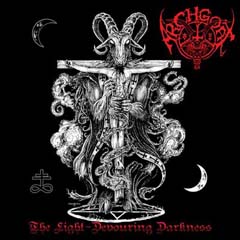 I’m convinced that a lot of contemporary death and black metal is music designed for children, because not only is it painfully simple and repetitive, but it also uses gentle rhythms of chord change — while playing at top speed. It’s like listening to a fan slowly playing an early Mozart piece. This album is similar. Sounds a lot like Blasphemy meets Impaled Nazarene, with the lower register production and slamming tempo changes of Belial. So as a retrospective of Finnish metal technique it’s great, but for anything else, it’s kind of a droning lullaby. What excuses it is that this CD shows purpose in its songwriting, and captures a mood, but for many of us the droning outweighs its significance.
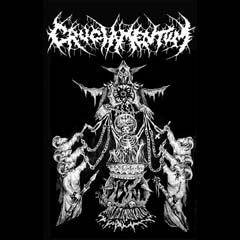 During the past two years, underground black metal shifted from emulating the early 1990s — fast melody — to emulating the late 1990s, specifically Demoncy’s “Joined in Darkness.” The Convocation EP does its best to revive that sound, with an injection of Finnish death metal and possibly American doom/death like Incantation, Winter and Infester. Although it keeps its goals limited, which is appropriate for a demo, this release shows promise in songwriting in that (a) every piece works together (b) together they create a vision of some idea, experience or emotion we can recognize from life itself and (c) while a good deal of it covers known death metal archetypes, it does so without borrowing straight from one source and so gives us a sense of exploring these ideas from a new angle. Low rasp voices, downtuned rigid guitars, and drumming that sounds like it’s straight out of drone/hardcore punk fusion gives this CD a sense of growing out of the past toward something even more ancient.
 The early nineties was replete with Death Metal bands that are now legendary, contributing to the cult’s creative height, but largely from the now infamous concentration zones of northern Europe and across the Americas. This left several adjacent scenes with relatively little notoreity and condemned some first-rate albums to obscurity. Our review of Disaffected’s ‘
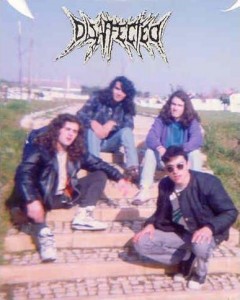 But in 2007, me and guitar player Sérgio Paulo, decided to reunite the band after 10 years of silence, and after a few meetings with the band members discussing a possible band reunion, the decision was “Let’s do it!!!”. A lot had passed with the band and the band members during these inactive years. Each had gone their own way in music and life. Due to the tragic accident of Sergio Paulo (guitarist) in 2004, all members got together again for the purpose of supporting a good friend. Sergio was lucky to survive a coma sleep of 2 weeks. His force of living had made him come back to us, and he had (literally) to restart his whole life, like being born again. He recovered most his abilities, and even his guitar mastery is back in 99%. A lot of things he had lost in his memory due to this accident, but he had never forgot DISAFFECTED music and his friends!
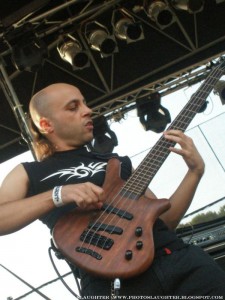
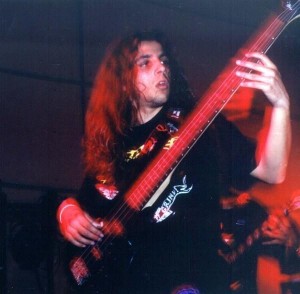 In 1994, I played bass guitar with a Jazz sextet featuring vocalist star Patrícia Fernandes, and we performed a show at Festa do Avante’94 (Seixal) in September of that same year. During the Summer ’97, I played bass guitar at Flood (Alternative Rock) as the support band of Santos & Pecadores Summer Tour ’97. In March ’02, in the aftermath of our Death Metal project Skinblade (1999-2002), me and drummer O decided to form a new band called Sybila, based on avant-garde style, and in December ’04, we entered Studio G22 (Feijó, Almada) with producer Paulo Vieira (Firstborn) to record the promotional song ‘Cycles’. The band split up in 2008 due to professional commitments of the musicians.
  Gião: Musically, we intend to continue with the style that characterizes Disaffected, trying to explore new levels of music, sometimes melodic sometimes dissonant. In this new album the lyrical context consists in two parts. Part 1 with dark and obscure lyrics, showing the route of the band from the stop until the meeting, and then in Part 2 we will try to depict the rebirth of the band with lyrics more encouraging and positive. We’ll sign a new label contract too, but for now, we have nothing confirmed yet.
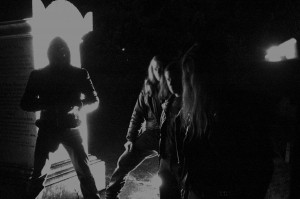
 With the advent of another grim Autumn, half of the world retreats into glowing boxes of warmth and comfort to preserve the sickly and feverish Summertime langour. In a time where the seasonal rituals of harvest survives only as a novelty for urbanites and other moderns, for the sinister few, this is the season to step out into the growing shade of night and harvest the souls of the damned for they will be reborn into a new, unholy dawn. Such apocalyptic ends have necessitated a gathering of gargantuan proportions and could not be more appropriately named as the third ‘Black Mass Festival‘ in Helsinki later this week. Nefarious and astralic cults known to Hessians the world over, like Necros Christos, Sadistic Intent, Cruciamentum, Neutron Hammer, Lie in Ruins, and Death Metal legends, Demigod will be devastating the city and delivering winter even earlier than the Arctic already experiences it. Among such legions and Deathmetal.Org personnel in devout attendance will be London-based Death Metal occultists, Grave Miasma, making a similar journey to myself, but before our paths would re-intersect on the shamanic land of ancient Suomi, I posed a few questions to their guitarist and vocalist, the acronymious Heruka C.C.O.T.N., who seeks to re-ignite the dying embers of Death fucking Metal’s true fucking spirit on the very soil of the wider genre‘s birth.
 ObscuraHessian: Interest in more archaic forms of Death Metal is growing all around the world, as if returning to first principles and rediscovering our primordial selves. Consequently, as evidenced in your EP, the music is becoming esoteric like it used to be, wrapping dark and cosmic imagery in death-worshipping ‘theological’ statements. How important is esotericism in such a style and scene as Death Metal? Is it just a ‘thematic choice’ or something more?
 ObscuraHessian: There’s a lot of sounds from ‘Joined in Darkness‘-era Demoncy that surface in the music of ‘Exalted Emanation’, which adds a Black Metal flavour to it. Is this a favourite album of the band or are you more into Death Metal? Who would you say are your biggest musical influences?
 C.C.O.T.N.: To draw inspiration from my surroundings, I go out of London – often far indeed. Man is attuned with his surroundings, and living in this city is not congruent with the contemplation needed to collate this stimulation. I do find desolate urban areas during the dead of night to exude such sinister ambience, however. Whilst there are locations of Occult interest in the capital, other provinces of England are more relevant whether in regards to tangible brooding atmospheres or unseen power currents.
 As much of the northern hemisphere is being overwhelmed by the onslaught of winter, the flames of Hell are rising to consume the south at summer’s peak. Still, the hardened souls of Black Metal warriors remain unfrozen, and Australia‘s Dis Pater from
  ObscuraHessian: The sound of the full-length is naturally better as there’s more space between instruments but you still managed to reflect an enclosed feeling which sounds like the music is passing through a million leaves and branches before it hits the listener. Did the demo receive any remastering before sent to be pressed for its forthcoming distribution?


 Krieg emerged at a time when few New World black metal bands had made a name for themselves, and none had come up with an iconic style to match the distinctively “Scandinavian” attributes of the founders. Raw and reckless, chaotic and vitriolic, early Krieg was like a fusion between primitive black metal and noise, but over time the band has matured and gotten closer to its shoegaze and drone-rock roots. Frontman Imperial gave us the skinny on life, the evolution of Krieg, and metal as an art form in this exclusive interview from his Western New Jersey headquarters, a former Nike missile site that’s now a converted studio and hydroponics lab.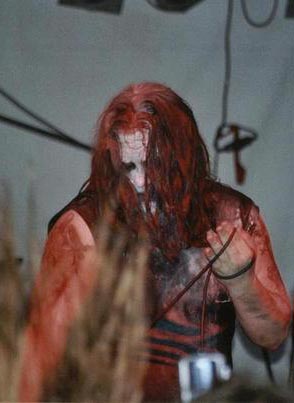
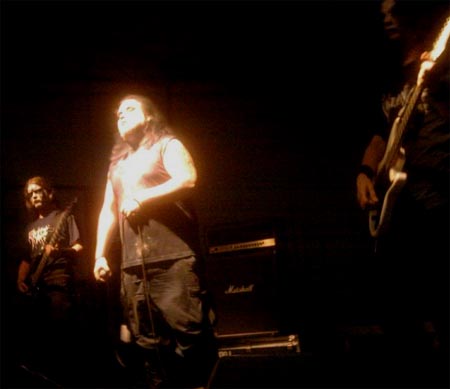
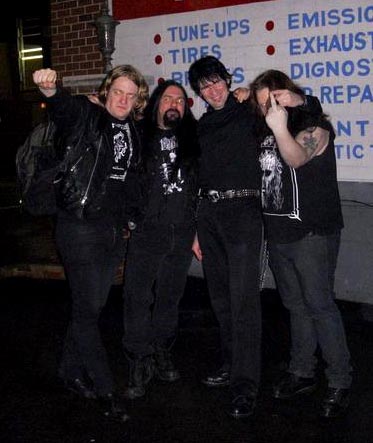 There has been three phases of Krieg: 1995-2002 which was more of a primitive beginning forged into a noise ending ala Whitehouse if they were a black metal band. Patrick Bateman was the end of this phase in which I felt I could do no better with creating harsh sounds. 2002-05 which might have been the busiest time for me was when I figured I could write emotive pieces but my guitar skills were lacking so I employed friends to help bring these visions to light.