God is love, they tell me, and that universal brotherhood is the way to peace and happiness. But I’d rather have answers than peace, and I’d rather have really intense peaks of experience than absence from conflict. This is most true in music: absence of hatred, war, chaos, loss, tragedy, sodomy and demons means boredom and lots of twee “mixed emotions” poignant ironic dweeb-rock that some scenester in plaid and chains is going to lord over me like the hidden magics of Merlin. Attention hipsters: your music isn’t special. In fact, you’re only pretending it’s special because it’s not and you want a reason to feel really cool and to try to make me feel like the dweeb. But then again, I’m not the one wearing an ironic ensemble designed to tell the world I’m not a sheep. Because telling the world you’re not a sheep is not only transparent, it’s also one good way to get trolled by a large corporation. We’re here to dodge the sheep/anti-sheep dichotomy and just look for interesting music. Welcome again to Sadistic Metal Reviews.

Iron Age – The Sleeping Eye
Many things have two masters, but this band has two souls. The first sounds a lot like Manilla Road, with more of the aggression of later Destruction and the progressive vibe of Atrophy, with the nu-hardcore vocals of later At the Gates. The second is early alt/indie progressive speed and doom metal that sounds like a cross between Sabbat (UK) and St. Vitus, or any of the doomy hard-rock influenced bands like Sacrilege (“Turn Back Trilobite”). Lead guitar is the real standout, with solos that seem to wander around the obvious but chart a path right for the major theme and then spell it out offhandedly, as if unveiling a card trick, without losing the musician’s sense of spirit and audience that keeps them from being gimmick. Riffs are more of the European style, with one or two chords offset against a rhythm played in fairly inconsequential chords or open strings. From this the band modulates into its second soul, one in which a good Sabbathian doom riff must play out evenly against a changing backdrop of tempo, which through its permutations selects variations and complements to that theme. Compared to underground metal, this sounds sparse and somewhat like a Model T, with tempos and architectures of an earlier time. However, it’s quite good and puts both most doom metal bands and most speed metal bands from the post-1994 era to shame.

Evoken – Antithesis of Light
From the epic doom category inhabited by Skepticism and Disembowelment, Evoken make dark long slow heavy metal with melodic underpinnings and plenty of slow chords and arpeggios. They create as a result a mood of lightness and suspension of belief in the midst of a glacial motion, grinding forward into minor key melodies. On the whole, it is lighter and more conventional heavy metal than Skepticism, which is its closest stylistic cousin. The music is good but not particularly compelling.

Wardruna – Runaljod – Gap Var Ginnunga
Remember how hippies used to gather at any kind of “cultural” event to play music, and how, just like with the Grateful Dead, it was impossible to tell the difference between songs? Wardruna updates the hippie model by using traditional Norse instruments and chants in what are basically organic dub pieces. Organized around a beat, they grow through layers of vocals, jawharp, and other instruments, but layers come and go in a cyclic pattern which means that at some point the dub fades toward the horizon. It’s a neat experiment but not very listenable, mainly because in order to keep content bland, it does not let these songs breathe or grow.

Hopewell – Good Good Desperation
Technically, I s’pose, this is post-rock. Really it’s just a very cool updated hippie jam from the 1970s. Think MC5 in collision with the Grateful Dead as if executed by Motorhead and you get the general idea. Advantages are that it’s instrumentally dense rock music that’s still easy to listen to; downside is that it’s still stranded in rock ‘n roll land where everything must bounce and be dramatic. This sort of kills the overall dynamic. Parts of this are a David Bowie love fest, and other parts are reminiscent of a dark rock version of Sisters of Mercy. But on the whole, the bouncy ironic party atmosphere — like Talking Heads colliding with Faith No More — swallows up everything else, reducing it to a predictable cycle.

Caspian – Tertia
Post-rock with few vocal additions that works at building a mood through ambient repetition, using layers sparsely and mostly working a noisy but gentle mantle of sound, this CD is one of my recent favorites — for background use. It’s not too dissimilar to the forest style of black metal where you have droning riffs build up, then a solo that sounds designed for traditional instruments, and a slow fading away. It’s also very close to guitar ambient like Robert Fripp, but with active drums in the background and frequent use of punk/black metal/shoegaze hybrid riffs. It’s soft like a fountain in a garden, sweet like that well-intentioned nerd who tried to take your sister to a date at the Natural History museum, but also, kind of boring on repeated listening.

Meshuggah – Contradictions Collapse
With all the attention given to retro speed metal, it’s important to mention the best releases from Meshuggah. Clearly this band always intended to work jazzy technique into Metallica-style speed metal with Prong influences, meaning a more flexible sense of rhythm and harmony, in addition to a death metal-descended vigorous riff salad that often re-uses riffs at different tempos or broken into puzzle pieces and reassembled in different order and scalar direction. Solos are the kind of diminished scale, oblique harmony noodling that made jazz fusion fun for the first few years. There’s a bit of bombastic bounce in the Exhorder/Pantera style of howling verses and riot shout choruses, which makes this album sound dated. I can also pick up Destruction and Nuclear Assault influences. Hetfield influenced these vocals. This is by far the best thing this band have done because it shows them at their most honest making music they’d like to hear and judging by the subtlety of it relative to their later works, this was the last time they were freed from a cynical vision of their audience as wankers who love anything that sounds “technical” as it builds up their own egos. Other than the style being abrasively 1980s I’d listen to this, which I cannot say for anything else this band did save None, their EP before they got fully cynical and dollar sign oriented.

Heaven and Hell – The Devil You Know
This album represents a huge improvement on other Sabbath-related efforts over the last decade. Borrowing a page from the AC/DC book, it focuses on simple rhythms and movie soundtrack “epic” riffs mixed in with the heavy metal standards. Lyrics manage to capture a sense of the vaguely sinister and ironic, and vocalist Ronnie James Dio delivers them with even-handed clarity and force. The magical sense of songs developing into some protean animal unknown to their origins is not here, but the full dose of classic heavy metal feel with the relentless energy of contemporary AOR makes up for it. Instrumentalism is reined back; Iommi’s solos are fragmentary and cut from whole cloth, and bass follows guitar, which sticks to middle-of-the-road power chord riffs, but the result is not bad. It’s easy to listen to and enjoy with half a brain, and for that has some pleasant melodies and rhythms, all while keeping an almost trademark heavy metal sense of obsession with the dark, conspiratorial, occult, and inverted symbols. If you can imagine Mob Rules hybridized with Blow Up Your Video with a touch of Motorhead at the fringes, you can see why this album has more appeal than the hidebound retro attempts of other classic bands.

Lugubrum – Winterstones
We all try to like this. It’s Burzum-technique applied to a doom metal band. So it trudges, then picks us up with a little melody, then goes back into the deep harmony. Again and again. Without making any really clear points, or showing us an adventure not of our own projection. So after awhile, hey look what’s on TV — you know, they’re showing those commercials again with the annoying chick with the hipster hair. I was doing something, and there’s some kind of music on in the background, but it seems really generic. What the heck? Oh, Lugubrum. Not a bad effort but nothing I want to hear again. This artist needs to take some risks and show us what’s in his/her/its soul.

Christ Inversion – Obey the Will of Hell
The musicians behind this demo studied their black metal well, but never quite figured out how the composition of the music differs from regular old heavy metal and punk. There’s too much emphasis on verse/chorus structures in the punk style, and leaning on harmonic “sweet spots” with trudging repetition the way heavy metal makes choruses, ending up with something that sounds very much not like black metal. Songs are pretty basic and relatively musical but not memorable. Vocals are pitch-shifted and irritating, and riffs show a ton of BEHERIT influence but none of the grace. I guess it’s OK. I also guess I don’t care since I can find 400,000 demos that meet this description.

Land of Kush – Against the Day
After a lengthy 1970s ambient noise track from which you can smell the idealism and psilocybin lifting like a cloud of morning fog, this band detours into spacious ambient rock with chanted murmur vocals over insistent beats with serial changes and extensive instrumental soloing. This is enjoyable to listen to but it’s hard to imagine putting on except as background reality tuning, which it does well: dropping us into the hopeful deconstruction of the 1970s with the savvy layering of our contemporaries. It’s like Morcheeba without the affected digital disco urban funk.

General Surgery – Corpus in Extremis
It’s unlikely the broom will ever evolve beyond what it is now and has been for a thousand years. For certain needs, the response doesn’t need to change. General Surgery have tried to escape being a Carcass tribute band by shifting their vocals to later Carcass style and trying the modern death metal thing, which basically means death metal that writes its songs like metalcore and tries to distract/annoy like nu-metal does. There’s a lot of tribute to the old school in various riffs, but just as much tribute to sped up heavy metal and modern metal. It reminds me of the recent Seance and fails for the same reasons: too busy, too ambivalent about its own style and lacking any kind of refinement of message to an insightful, profound, gradually-revealing passage through experience transferred.

Eyes of Ligeia – What the Moon Brings
In that interesting intersection of indie rock and doom metal, Eyes of Ligeia is a veteran I remember first appearing in the middle 1990s — and to their credit, they’re making the same style of music but have improved it in every way over the years. Not many bands are able to define what they want and then instead of getting wide-eyed with trying to make their style fit an audience, divert their energies toward making their content and form mate each other more ideally. Eyes of Ligeia drone quitely under rasping black metal vocals, using either carefully picked open chord riffs or power chord earthmover doom riffs, but using both in complementary pairs with background keyboards that provide a deepening sense of mood. Reminiscent of ritual music, this repeating loop of sound produces a hanging atmosphere like overtones to a chord slowed down to the milisecond scale. For many of us, appreciation of this band is natural even if we find the sub-genre — doom metal — to be too repetitive for our tastes.

The Chariot – Wars and Rumors of Wars
Thrash bands broke into two groups, the punk-style and the metal-style, although both were mixes of metal and punk.Same way with metalcore: ranty, new style hardcore defines the sound of this metalcore band. The “core” in hardcore comes from the love of abrupt riff changes and random riff combinations, with really enigmatic choruses, and here it’s put to good use so that we hear loud angry ranting that changes abruptly like a car wreck, then there’s a recognizable pseudo-emo chorus. Do we need another band like this?

Drudkh – Microcosmos
Boring candy. That’s what you need to know. Every part of this CD sounds sweet, but it’s also boring as hell because like music they play in grocery stores, there’s no change in mood. There is no journey in these songs. They turn on; there’s a mood; they throw in all sorts of stuff to obscure the fact that it’s static and dimensionless; then it ends. Sum total change in outlook: nothing. It’s Britney Spears, like Aura Noir without the aggression. Notice how heavy metal shredder guitar coexists with Burzum derivations, Graveland folkish parts, and the occasional prog metal riff. And then a cheesy heavy metal solo that meanders. What does it mean? It’s the anti-meaning, which is to say there’s no direction other than self-reference. That’s why it’s boring. It’s candy because these are like pop songs very pendulum-like in their transition between recognized forms of non-threatening order. The prog parts remind me of Kong, the black metal parts of Abyssic Hate and Ved Buens Ende crossed.

Brutal Truth – Evolution Through Revolution
Like Sounds of the Animal Kingdom, this album shows Brutal Truth with more refined technique but a lack of gestalt that decreases the status of this album as something pushing a genre forward. Instead, it’s waving the flag but does so without finding an angle of its own on the genre, so it ends up being standard grindcore played with Brutal Truth technique by arguably the most proficient musicians in the genre. There are moments of sheer brilliance in riffology, and the cynical nature of these songs more resembles early DRI than the boiled tasteless political partisanship of recent grindcore, but nothing is going to really floor you despite having many powerful aspects.

Teitanblood – Seven Chalices
After everyone in the underground was done praising this new work as a resurrection of the spirit of the 1980s, there was a brief lapse in the hype as people re-thought their extravagant praise. Now it’s time for some reviewer to come along and haul out two names: Deathspell Omega, and Blasphemy. This CD doesn’t sound anything like Deathspell Omega, but it uses the same tactic of working its aesthetic like a Hollywood fashion designer. Lush layered voices, monastic chants, interludes and lots of guitar noise during songs make this “sound like” (to our conscious minds) it has depth, richness, different experience. But like Deathspell Omega, once you strip away all that art director frippery, you find a pretty ordinary CD. In Deathspell Omega’s case, it’s a long-melody fetish derived from early Ancient. In Teitanblood’s case, it’s a desire to use Bathory’s ideas, especially vocal ideas, in a form of death metal that emphasizes doomy passages alternating with a slamming interruption of cadence. The result is laborious. Get ready to let your monkey brain get distracted by the aesthetic while very unexceptional music bleats on by like a stream

Tragedy – Nerve Damage
People kept hearing me listen to Transilvanian Hunger and they’d say, “No way dude, you need to check out Tragedy, they started this style.” I have come to the conclusion that they never heard Discharge, GBH or Sarcofago; however, they’re partially correct. Tragedy is a very metal-oriented take on what it would sound like if Disfear covered a whole bunch of Blink 182, Offspring, Ramones and Sex Pistols songs. These are melodic bouncy punk that eschews the UK82 stylings for rock-style pocket drumming and Motorhead vocals with emo chord progressions melded into standard punk. Harmonically, it’s rock music on a series of power chord shapes. Structurally, it’s sugar pop with a big dose of AC/DC and old punk. For this type of music, it’s great and extremely catchy and fun listening, but it’s going to bore anyone who got into Transilvanian Hunger or Tangerine Dream (its inspiration) and grasped how much a non-linear atmosphere expands the enjoyment of music.

TheSyre – Exist!
This CD has absolutely nothing to do with black metal and death metal. I would style it instead as a hybrid between later Metallica, Amebix and Strapping Young Lad. Most of it is speed metal riffs that ride a bouncy rhythmic pocket, then deviate into harmonically oblique fretruns borrowed from the classic days of metal and rock but informed with an odd, rock-opera sensibility that gives each one place in an evolving narrative. As a reviewer, I have avoided this band for years because for the most part I avoid speed metal, and this is very speed metal in a style like a crossing of …And Justice for All with Kill ‘Em All: hard-edged muted-strum riffs rebounding from a bold heartbeat rhythm. The odd uses of harmony are SYL-ish, but the Motorhead-cum-Exploited vocals are pure Amebix as is the expanded but theatrical song structure to this thirty-two minute piece. If this recording has an undiscovered strength, it is its ability to make refreshing and new some classic riff patterns and put them into complex songs; if it has a weakness, it’s that like Amebix, it divides up its epics with aesthetic elements like sound samples and rhythmic pauses, and so doesn’t achieve the degree of musical integration it might like.

Orthrus – Tyrants of Deception
Imagine if Helstar, Forbidden and Coroner had a big orgy and decided to spawn an offspring with death metal vocals and speed but the German-inspired speed metal of the late 1980s. Within that context, this CD plays it right down the middle: nothing new, but well-executed, if not ambitious enough to make you reach for it again.

Pest – Rest In Morbid Darkness
This is the most schizophrenic band heard recently. It thinks it’s black metal, but really it’s head cheese made of ground up Slayer riffs with big thick chunks of heavy metal, speed metal and underground remnants. It’s good if you listen to each riff, but not really distinctive, and after a few tracks it becomes clear there’s no direction other than upholding an already well-known form.

Nagelfar – Hunengrab Im Herbst
Melodic black metal. They nailed the technique, but then wrapped it around very linear songs. They avoid carnival music, but don’t make it beyond one dimension of mood. Semi-comical vocals also make this dismal, as do recycled riff styles from speed metal.

Necromantia – The Sound of Lucifer Storming Heaven
This immensely creative music uses black metal vocals but is basically Judas Priest styled heavy metal with a dose of Queen or maybe Vangelis to give it an epic character. It is admirable for its variation and mastery of the rock/heavy metal form, but might not appeal to underground listeners.

Solis Aeterna – Sol Triumphalis
If you can imagine Lord Wind with simpler instrumentation and longer phases of repetition, you can visualize the style of this entry project, although it has a worldview all its own. What makes this enjoyable is that it attacks with the bombast of a movie soundtrack, but then dissipates until it resembles a background drone. The objective seems to be a mental tuning of the listener toward moods in which one can appreciate the eternal. Like Burzum’s Baldr’s Dod, Solis Aeterna applies entry-level synthesizer sequencing skills to layers of background rhythm and slow-changing tones, over which lead keyboards riff in rough time with the tribal drums. This project will improve in clarity as time goes on, but it might be best for simply unfocusing the mind as if listening to rain at midnight.

Incest – Misogyny
This Texas band produced one demo and then vanished. They attempted to make avantgarde death metal in a style like Timeghoul and Goatlord colliding with Nuclear Death in the wings. Vocals are from the “stand back ten feet and howl at the mike” variety, and drums are surging bashing in the punk style, but guitars make spidery lead riffs wend their way between the punchier power-chorded material. There are many attempts to mix melodic riffing with more putrescent, organic rhythms, and a desire to make song structures that interrupt the cycling of riff and chorus with a series of breaks to interludes which make good use of the aforementioned melodic proggishness. This is more interesting than all but a few things we get sent yearly, but it never really manages to take wing because it comes across more as a theatre of the violent and maladjusted than something we’d want to listen to, and the lack of melodic development reduces each song to a circularity of the inconsistent. Still, I wish they’d developed this further as there’s potential here.

Crematory – Wrath from the Unknown
People have always talked about how important this band is, but it — sounding like Obscurity, Lobotomy, Suffer or Grave — resembles some of the more battering and simplistic Swedish death metal, meaning that this is almost purely rhythm riffing with little melodic or harmonic organization, and as a result, songs are unified around the synchronicity between a slower rhythm and a series of faster ones. Like the heavy American bands, Crematory favor trudging and pounding patterns with lots of walk-up and breakdown action in the middle, battering us about with the change in tempo and rhythm but in a desperate bid to be nihilistic reducing music to the threshold of simplicity. While it is not bad for that style, it is also completely uninspiring in light of the better options out there.

Actors and Actresses – Arrows
This is indie rock shaped into shoegaze with the pace of a modern jazz band, like an early version of REM playing through the haze of Ride while covering the slower songs from Sting or a postmodern Dizzy Gillespie. The major asset here, besides musicians who can do coffeehouse sparse without coming across as dead air merchants, is the purring Morrisonian vocal track, which guides us all like a hypnotic trailblazer through this forest of pop sounds reformed. It is calming, however.

Mutiilation – Sorrow Galaxies
Someone decided to make the Hollywood version of a Mutiilation album. Instead of those long, deepending moods, we’ve now got carnival music, that like carnivals tries to distract you with something new and unrelated every second. It’s like walking between the stalls at a state fair: here’s a roundabout riff, then the bumper cars, then a droning Drudkh-style black metal riff, then the fortune teller, then a Burzumy moment — and a break for cotton candy — then back to the circular passage through songs. These are very sing-song, pleasant and not dark at all. It’s questionable why you’d listen to them since you can get the same thing from Dimmu Borgir with better production and keyboards.

Gorefest – Rise to Ruin
Let me up out of this one, O narrator. No matter what people claim is “new” in metal, it always sucks and involves simpler, catchier rhythms and more rock ‘n roll touches. This CD is no exception. It’s chock full of two chord riffs that feature a lot of repetition and sudden reversal in a rhythmic hook, and then a sort of extended jam session in the middle. Like all bad metal, everything is calibrated to the ranting, riot shout pace of the vocalist, which might “work” for Sepultura’s Chaos A.D. but here just dumbs down a great band. It’s death metal if you mix it with Led Zeppelin and a crowd chanting for free bread. While no part is horrible, the sensation of listening to all of it is dizzying numbness of the forebrain.

Voivod – Infini
No one wants to give this thing a bad review because it’s like kicking Piggy, Voivod’s dead guitarist, when he’s down. However, it’s painful to listen to this thing. It sounds like Motorhead, updated through Prong, covering the Doors. Lots of really dramatic vocals, rhythmic riffs like boots scudding across a waxed floor, jaunty choruses, and occasional flashes of the lush dense chording that once defined Voivod. Percussive structure is equal parts plain and dramatic. Anytime you find yourself zoned out on the fairly unexciting riffs and the Nirvana-ish whiny vocals, there’s a constant pounding drum to remind you that you’re listening to music and you-are-glad-you-paid-for-it. Piggy was brilliant; some of the work on this is almost to that level; however, Voivod was heading downward since Negatron and this album continues the fall.

Dawnbringer – Sacrament
While this band is compared to At the Gates, a better comparison would be to Children of Bodom hybridized with Aurora Borealis. Chord progressions are very indie rock and technique comes from decades of melodic metal, while vocals sound like Motorhead, but the whole package would be more at home in the pop genre than metal. Simple-hearted melodies are in themselves good for their three-note span, but melodic development gets either so gratifying it’s impossible to appreciate, or is so predictable the other shoe dropped before the first. Nothing in particular to dislike here, but no reason to hunt it down.

Sick – Satanism Sickness Solitude
Very basic black/death metal written as if it were punk music, with simple loops of verse and chorus riffs, Sick incorporate some cyber elements like samples and vocoder but are essentially really basic metal not much changed from the early days of Metallica. While they do better than average at being this type of band, nothing really memorable stands out here, not just stylistically but compositionally — we’ve heard these combinations of notes and rhythms before, and no amount of “industrial” touches or even 400 lb transvetite divas could save us from the ordinariness of this offering.

Cryptic – Once Holy Realm
This is death metal made to sound like black metal, and it has a lot more common with a faster rippling less percussive version of standard Tampa metal than any esoteric origins. Melodic riffing fits into this framework, as does as a blackmetal rhythm, but song structures are closer to death metal riff salad and notes seem to be picked from very evident progressions. Like most reviews, this one concludes with “you won’t miss anything.”

Textures – Drawing Circles
Abstract song titles, cool conceptual name, obviously a lot of power thrown into production — oh hai, it’s post-Cynic “post-metal” metalcore that is like a cross between Jawbreaker and Spyro Gyra. And I really wanted to like this. The hackneyed punk riffs meet the hackneyed metal riffs and then explode into jazz-fusion cliches with angry Phil Anselmo(tm) vocals ranting over the whole mess. It would be impossible to give less of a shit. Where do the metalheads who like progressive/technical music go? This stuff has little in common with metal; it’s basically punk rock in that later quasi-emo style (Jawbreaker) with a lot of Pantera and nu-metal mixed in with the technical influences. That isn’t a direction, and you need to have a direction to articulate anything worthy enough of technicality.

Amorphis – Tuonela
This album is painful because it’s so well-executed, but so soulless and comical. It’s basic rock music that slightly reminds me of VNV Nation because Amorphis use picking of high notes in the background to highlight bassier foreground riffs, like if U2’s The Edge started taking on the sequenced keyboard trills VNV use in the background of their songs. There is something in the Scandinavian mentality that has them living in a paradise of social order, and longing for the grittier, weirder world of rock. Here it manifests itself in a stadium heavy metal version of the same kind of odd, introspective indie rock found on Quorthon’s “album.” They can’t quite leave metal behind, or underground metal at least, but want to make this really edgy (no pun intended) indie rock. On a musical level, it’s not particularly exceptional but is well-composed and can stand shoulder-to-shoulder with the big bands for mastering the art of songwriting that makes a crowd get together and enjoy the music. Lots of bluesy solos, and odd honky-tonk keyboards overlay this busy, bombastic somewhat sentimental music. I can’t stand it but when I take my car in for an oil change, I’d prefer to hear this over the radio heavy metal in the newer, jump-metal style. But compared to classic Amorphis, on the level of expressing something artistic that is not caught up in the desires and confusions of the individuals and sees a transcendent picture of reality… this is a train wreck.

Magnum Carnage – More Unreal Than a Box of Precious Metal and Radioactive Ore
It’s hard not to like this audaciously homebrew release. If you can imagine an American version of Carcariass, meaning fast chaotic melodic heavy metal with death and black metal stylings, that’s what you’d have here. It’s more American — like a hybrid between North and South American types — in that it throws everything it can into each song and likes really abrupt breaks between genre influences. Sometimes it sounds like the Doors, sometimes it’s Judas Priest (“Painkiller” era), sometimes Led Zeppelin and then equally as frequently, a hybrid between Fallen Christ, Angel Corpse and Dissection. Mostly it’s a showcase for extremely interesting solos, fast riffs and some deft harmonic changes that give the listener the sense of a pit dropping out beneath the music and then a new pseudopod of sound rising from within it.

Gifts from Enola – From Fathoms
Let’s make one thing clear: one variant of post-rock is “techno played on guitars.” That means a layered style of composition, where themes are introduced and overlap to make patterns of their combination, and their coming and going has emotional significance. It’s an effective method. However, it’s also one that’s prone to formula since with the riff-length available to popular music, it means very simple three note fragments and literal-key soloing, which over time runs out of tricks. Gifts From Enola start with a swingin’ rhythm, and slowly add stuff in the mix so you can watch the colors change much as you would when cooking with a dough mixer. Watch the cinnamon red mix into the beige! See what happens as the egg dulls the ochre! It’s not bad but it aims for an atmosphere, and achieves degrees of lessening or intensifying, but beyond that, it is limited: the goal was not dynamic change but dynamic change serving the goal of a relatively static, semi-ritualistic emotional conditioning. It’s not terrible at all but like much music that tries to replace structure with creative repetition, rapidly becomes static. The surface creativity of this album is amazing as they blend sounds from pure noise to post-punk/emo guitar work to a dozen popular music genres including the world’s first disco grindcore, but underneath it is basically the same stuff we’ve been choking down since 1931. What’s nice about it: no vocals.

The Syre – Resistance
By casting aside any sense of genre allegiance, this French Canadian powerhouse have made their best album to date: equal parts indie, bluegrass, punk, oi, Motorhead-style metal and Devin Townsend or Probot style experimental material, this CD like a minstrel show adopts the guise of its influences to act out a theatrical journey through the different modes of human thought. Dominating by its rapidly changing aesthetic, this album is a concept piece that’s every bit as foot-tapping as Amesoeurs but has the raw aggression and bouncy determination of bands like Revenge or the aforementioned Motorhead. Clearly a lot of thought went into this. Its music does not aim to be groundbreaking, but like a concept album or modern folk, tries to unite theatre and music with idea and create an almost Jungian symbolism of the same. For those looking for an alternative to the now-hackneyed black metal, this is a deliverance in a form where one wouldn’t think to look.
No Comments


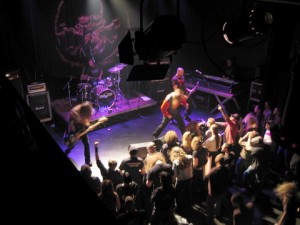 Entombed played a set that disappointed, and this was partially due a lack of their better material being played. Much of the setlist consisted of numbers that were lifted from their third full-length, Wolverine Blues and then onwards, with a lack of attention given to their more pioneering work that was put out on their first two albums, Left Hand Path and Clandestine. Songs were less death metal than they were an aggressive take on stoner rock, songs being much more inclined to the verse/chorus school of rock songwriting, the rhythms more inclined to provoke the shaking of hips and the tapping of feet than they were to bang heads. Whilst this was all good and competent, certainly the great soundtrack of an alcohol fueled evening in the capital of Eire, none of these works, as far as the reviewers opinion is concerned had the violent charge nor the momentum that characterized their legendary debut. Some credit will be given to the vocalist, whose onstage presence and frantic onstage manners gave more depth and urgency to songs that otherwise were devoid of it, and the guitarists tone was brilliant, the same buzzing, ‘chainsaw’ like tone that they helped pioneer back in the early nineties through maximum amplification. Entombed concluded their set with a brilliant rendition of Left Hand Path the staple and title track of their debut album, and it put a redeeming conclusion to what was an expertly performed, yet borderline mediocre set on occasions. It would be wonderful to hear what paths could be treaded if they realise the urgency that made their earlier music essential.
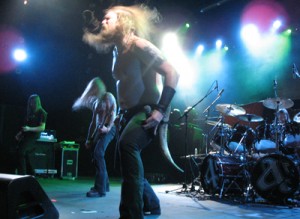 Amon Amarth played an excellent and intense set, mostly consisting of the melodic, fluid and anthemic traditional metal that they have come to be easily associated with. Infectious melodies and precise, double-bass lead drum rhythms bring to mind a hybrid of Blind Guardian and late period Immortal, whilst the muscle and simplicity of their music brings to mind fellow countrymen Unleashed in both the subject matter and the simplicity of the song structures. Musically Amon Amarth have an obvious strong commercial potential, sound highly accessible by the subgenre’s standards, and whilst they are not exactly breaking any new artistic ground, they are still workmanlike and this shows in what was a very well received and well performed set. Johan Hegg is a good front man and throughout the set uses the opportunity to incite the audience to terrace chant amidst his bellowing, whilst taking turns to consume from the mead horn that is his custom to bring on stage with him. Admittedly I would not consider these to be an act of the highest caliber, though they are unique in that they have one foot stood in the primitive and barbaric, with one firmly in the ability to reach out to a large audience. It was a privilege to be involved among the audience that night.
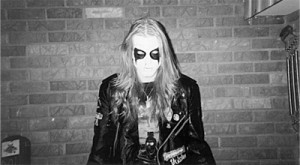
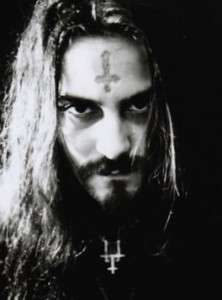
 It’s probably not big news to anyone that if you fight for the truth, you are going to offend people and you are going to get into problems. Parents, teachers and men of religion spent decades fighting against rock music that was basically about the problems concerning dating and loneliness, until heavy metal came along and changed matters for far worse. The songs dealt with social reality in a dark way and actually incorporated mythology and influence from philosophy.
 And so the Psychic Saw meaningful ends