

The progressive death metal of Cadaver fulfils itself here in an aesthetically compact, streamlined form that is the best of the style. American styles are clearly a strong influence, with the structural and compositional narrative having the same quality of Death’s ‘Spiritual Healing‘, with phrasings and modes highly reminiscent of the dissonant, staccato heavy riffwork of Prong‘s ‘Beg To Differ’. Occasional basswork that is reminiscent of light, lounge jazz music enhances the eclectic appeal of ’In Pains…’, giving an insight into what ‘Symphonies Of Sickness‘ or ‘Severed Survival‘ could have resembled given David Lynch‘s or David Cronenberg‘s taste for absurd, psychological and physical horror, albeit transferred into a less visual format, or what Cronenburg himself would term as music “from the point of view of the disease”. Much like the early work of fellow Germanics At The Gates and Atrocity, the lyrical and musical concepts concern themes of psychological, emotional distress that bring the most chaotic, despairing moments of Knut Hamsun’s ‘Hunger‘ or Dostoyevsky’s ‘Crime And Punishment‘, translated into a modern soundtrack, an opus for the darker recesses of the human condition.
Filed under: Death Metal Album of the Week — Tags: Death Metal, Grindcore, Norwegian Death Metal, Progressive Death Metal, Psychology — Pearson @ February 26, 2010 16:38 — Comments (2)
The hot suburbs of Belo Horizonte shook with tremors as the satanic presence penetrated the walls of the Catedral da Boa Viagem. Dirty underground scoundrels gave bloody birth to Brazil’s death thrash phenomenon that was about span dozens of malicious LP’s of metal music released by Cogumelo Records consumed with thousands of liters of cheap alcohol that caused physical uproars of vomit, feces and mayhem. As with the majority of death metal classics, this music is a product of a group of young men having turned off their lobe of sanity, possibly by watching too much demonic possession horror movies and consuming every second of available music by bands such as Ratos de Porão, Hellhammer, Slayer and Terveet Kädet with a great deal of childish wide-eyed attention.
Neo-classical hardcore/thrash riff master Andreas Kisser is not yet in the band so his space is filled by the chaotic and fragmentary lo-fi signals of Max Cavalera’s unstable staccato rhythm guitar and the bursting leads of Jairo G., who later joined The Mist. Max’s vocals are the barks of a hostile Rottweiler or a species of South American wolf unknown to man, with a sharp rhythmic aggression no-one mastered with such bestiality as the hardcore punks and thrashers of this geographic region. The anarchist battery performed by his brother is a stupendous amalgamation of uncontrolled blastbeats still rare in this genre of music but hybridized by merging the messy Finnish hardcore/noise percussion heard in Kaaos and Kuolema with the more structured corpse puncturation of Dave Lombardo. Nearly none of the beautiful symmetry of “Beneath the Remains” exists here, as we are witnessing something like the primal life that arose in the jungles of the Mesozoic era, as plants, insects and reptiles grow, swarm, bite and rot in the ever-spinning cycles of evolution and death. I recommend this album for the brutals, as there is a reason it’s not called “Progressive Visions”.


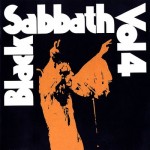
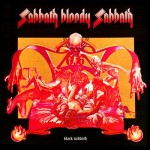
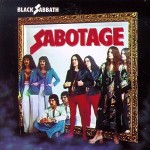
If we say that the average life-expectancy age in the western world is 80 and simplify things a little further by positing that half of those years are spent asleep during the night, then we’ve only got about 40 years to do some real, serious living. It’s been that many years to this day since Black Sabbath released their debut album, as good a day as you’re going to get to hail the 40th anniversary of Heavy Metal, and every single one of those years has been spent wide awake through procession of the daily sun and the darkness of the night. Heavy Metal arrived at a time to sentence a generation of delusion to death and confront the rest of modernity with the weight of reality and the power of the occult. A lot of newer generation listeners entered the Metallic planes of hell through bands that were breaking away from Heavy Metal’s Rock formalities and Blues atavisms, giving an impression that the older music was in most cases obsolete. From the moment that Sabbath had arrived and Satan unveiled his majestic black wings, the spirit of Metal was unlocked like a Pandora’s box that held all the secrets from the past and future, and the subversion of the present ensued, encoded in the language of the riff! Let us mark this unholy day with the truest celebration of Heavy Metal imagineable, as Devamitra introduces his epic compilation chronicling this wise and powerful art-culture:
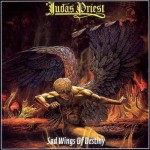
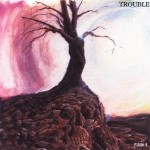
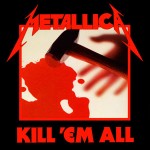
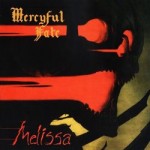
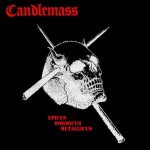
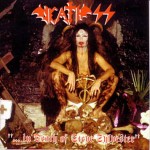
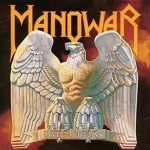
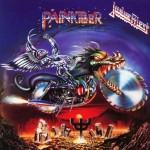
History has become obscured, for few are interested to learn and explore the dawn of the barbaric and romantic sounds of metal music. All sorts of glam and joke bands are mistaken for Heavy Metal, which they aren’t, and many even believe there was never any serious merit, dark insight or focused direction to Heavy Metal in the past. The “Anvil of Thor” compilation was created to aid discourse on death metal and black metal with a friend of mine, as our musical learnings were composed in entirely different moulds and I wanted him to see the language of heavy metal with its forms, symbols and motion at least partially from my perspective. “If you don´t know the past, it´s impossible to understand the present.” Listening to these tracks in the preferred order as they appear in the playlist file, it should be easy, for example, to see how the tritone blues of Black Sabbath and the poetic narrative of Judas Priest contained the suggestion of high energy riffs as they appeared in occult bands Mercyful Fate, Death SS and Angel Witch, consequently mutating into Doom Metal in Trouble and Candlemass, Speed Metal in Slayer and Metallica and Epic Metal in Manilla Road and Manowar. This isn’t quite a “best of Heavy Metal” but one of the possible paths of seeing through core visions, techniques and moods of Heavy Metal music. For old heavy metal fans, it will hopefully revive fond memories of these sinister and majestic LP’s and for others, broaden the perception and hopefully bestow surprises.
Anvil of Thor – Heavy Metal Thunder Compilation
Filed under: Death Metal Essays and Death Metal Research,Death Metal News — Tags: Heavy Metal, Occultism, Religion, Satan, Speed Metal — ObscuraHessian @ February 13, 2010 02:58 — Comments (10)
Were the year 1988/89, when Speed Metal was making it’s final, most definitive statements of dystopian frenzy and technical invention, the reverberations of this music would undoubtedly be traced back to places like Canada and Texas, detecting the names of Voivod, Obliveon, Watchtower and dead horse among others. Certainly not Arizona, where, in Vektor‘s case, these sounds have travelled to and eventually merged in an energetic experiment of nuclear fusion. To some, the last few years have been good times for Speed Metal and saw a resurgence of bands trying to capture the spirit of the 80′s. In reality, this was one of many niched exercises in nostalgia and the long out-of-date fruits of useless bands like Evile, Merciless Death, Lich King and Municipal Waste reflected the trivial trend with sounds of supreme tackiness. Vektor are among the very few in revitalising Speed Metal, creating more than just a retrospective and methodological account of that genre’s heyday. ‘Black Future’ is a work that honours the past enthusiasm for innovation and musical proficiency, thus having a mind of its own to render this music for present and future audiences.
Voivod is the most visibly emblazoned influence on this band’s aesthetic, touching everything from the logo to the trademarked discordance and the futuristic scenes of technocratic dissolution it portrays. The Obliveon influence is quite explicit also, as there’s a lot of complex and unconventional movement of individual notes that resembles some kind of robotic Pagannini-droid, disembodied from the more rhythmic sections to emphasise the Classical aspirations of this band where melody is concerned. The rhythmic sections also stress this connection via. Metallica and their revolutionary instrumentals such as ‘Call of Ktulu‘ and ‘Orion‘ (there’s even the odd riff-a-like worked into the otherwise unique and beautifully crafted compositions). These songs flow very well through the course of the album, arranged much like one would theoretically expect it to sound had the band announced that they’ve written a ‘concept album’. It progresses from scenes of human conflict, chaos and error to glimpses of dark matter and the expanses of space hitherto undiscovered, mutating the neoclassicism into crescendos of high-end, sci-fi movie score material. Vocals are piercing shrieks that sound like the most ultrasonic intonations of Destruction with a touch of Absu. The drumming is really skillful but, as with the guitar-work, is almost over-indulgent at times, bringing undue attention to staple techniques like galloping kick-drums and shredding, though these occasions are few and far between and in any case, it’s infinitely more enjoyable to hear such exponentiated energy where it really belongs.
This album took us by surprise as 2009 was drawing to a close, capping off a year filled with more quality albums than the discerning Metal listener of recent years is used to. Vektor’s grasp of their ancestry is profound and combined with an epic concept and insane and elegant musicianship, ‘Black Future’ plays out like some cosmic race towards entropy with mankind in the driver’s seat.
Filed under: Death Metal Music Reviews — Tags: Cosmos, Death Metal, Science, Speed Metal, Thrash — ObscuraHessian @ February 12, 2010 00:41 — Comments (5)
New York Death Metal is synonymous with the brutal, rhythmic style pioneered by Suffocation, Baphomet, Morpheus Descends and the less-than-able proliferous hordes who followed. The region was no stranger to slower, Doom-influenced Metal, but the surge in popularity of Brutal Death Metal and the faux-tough-guy images of wiggers that came with it saw that bands like Winter, Sorrow and Ceremonium would not receive much attention within or after the span of their careers. Of all the aforementioned cursed undertakers of doom, it was the last of them to disband after a relatively lengthy existence who created enduring albums that had as much in common with the European tradition of melodicism as they did the desultory and engulfing heaviness induced by their own locality.
‘Into The Autumn Shade’ is a massive recording and a great debut by Ceremonium, using their sound setup of deep guitars and bass to thunder out intricate and epic songs that develop slow to mid-paced melodies, drawing inspiration from northern European bands like Creepmime and early Darkthrone, and with ‘Soulside Journey‘ and Paradise Lost‘s own morbid inauguration very apparent in the greater narrative sense of this album. Deep, mournful melodies are formed from the outset like an epitaph being inscribed at birth and are subjected to a rich, harmonic interplay which highlights the spiralling sadness of these riffs, fragments of which are carried away by heavier and more brutal passages, as the attachment to sorrow in life strips away all joy and comfort to reveal the inevitability of death. These elements are balanced well enough to preserve the emotional impact of such music. The pacing is managed with a riff’s melodic direction in mind, rather than through the awkward tempo shifts that many newer Doomdeath bands fall prey to in their divisive mentality. Keyboards appear frequently but this electro-vocal, choral layer bears down on the music as unintrusively as a forlorn, angelic statue that looms over an open grave, as the casket is lowered into the dirt. The actual vocals provided by Brandon Diaz are sometimes at odds with the mix, but the guitar thickness is usually powerful enough to even the sound out. Ceremonium’s statement of doomed Death Metal stands alongside the European heavyweights of this style, before they would move onto a more Black Metal influenced sound and successfully contend with those across the Atlantic once again.
Filed under: Death Metal Album of the Week — Tags: Brutal Death Metal, Death Metal, Doom Metal, Doomdeath, New York Death Metal — ObscuraHessian @ February 11, 2010 02:40 — Comments (4)
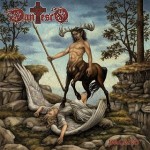
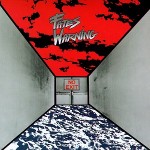
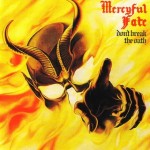
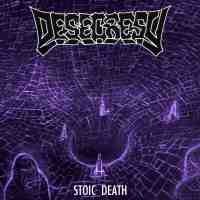
This series of reviews shows the infectious potential of condensing the multidimensional texture of darkness and mythology into a carefully trimmed brief explosion with no room for filler or long, meaningless passages of droning, experimentation or interludes. Those who mastered the art of the metal EP or mini-LP are rare, but deserve all the more credit for their achievements. The fact that you can listen to everything we have here easily within the space of one evening does not mean that the unlocked experiences won’t stay with you forever.

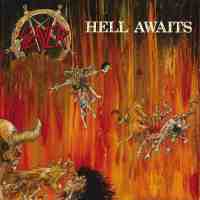
Showing a strong advancement in technique and an evolution towards a darker style that would be the staple of records to come by the band, Slayer throw off the camp shackles of their excellent first album, and give a more progressive approach to songcraft yet give more emphasis on repetition within individual riffs. The violent droning guitar timbre of Discharge makes itself ever more present whilst the musical language of Judas Priest and Angel Witch works itself within those patterns. The dissonant twin soloing of King and Hanneman is more suitable to this new direction also, whilst Lombardo’s aggressive battery finds more cohesion in using less variation and being more of an ambient backdrop than before, with Araya’s unmistakable rasp encoding itself sadistically within the depths. A bleak affair that summed up the apocalyptic meanderings of the speed metal movement and the embryonic beginnings of the death metal that was yet to manifest. -Pearson
Napalm Death – Mentally Murdered

This work is like a convergence of Napalm Death and Carcass, having left ‘From Enslavement to Obliteration’ and ‘Reek or Putrefaction’ behind in order to expand on their styles, towards ‘Harmony Corruption’ and ‘Symphonies of Sickness’ respectively. By Napalm’s standards, at this point in their discography, these songs are quite lengthy and structured with an attention to detail that recaptures the subtle shifts in mechanical motion of the earliest side to ‘Scum’. This technique is re-invigorated by the cleaner production, relegating the extremity of fuzzy bass for the sake of a twin-guitar assault that creates an hypnotic and delusional sensation, and shows the input of Jesse Pintado who would go on to record another highly influential work of Grindcore – Terrorizer’s ‘World Downfall’. Composition is practically freed at very the earliest moments of songs onwards, unlike previous Napalm Death albums where these parts were used to establish exactly which single riff will become immersed in a barely discernable anarchic explosion for the rest of the 30 seconds of music. Instead, it’s given a more Death Metal treatment, e.g. in ‘The Missing Link’, the opening riff seems to degrade over time into smaller grinding patterns until the fragments are juggled like sacks of meat by morbid Death Metal riffs. This is where some of the tremelo melodies that would tear through the rotten wall of sound of Carcass finds its place, accompanied by the mocking lead guitars of Bill Steer. The human tornado, Mick Harris is even more precise than his previous effort, but doesn’t lose any of his epithet’s justification. Lee Dorrian’s vocals become more guttural and undecypherable, conceding to the futility of mainstream political discussion. The seeds of an approach closer in line with the burgeoning interest in Death Metal were sown here, simultaneously taking Grindcore one step further away from reaching the dead-end of short and simplistic outbursts of truncated riffs and hollow statements. -ObscuraHessian
Rotting Christ – Passage to Arcturo

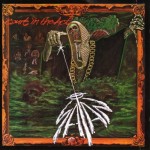
Warm, playful and overflowing with the abundance of inspiration in the rediscovery of ancient shamanic techniques of mystical metal creation, the Greek pioneers of Rotting Christ forsook the aggravated modern noise of grindcore in time to ride the wave of blackness that usurped the European metal underground. Remnants and glimpses of 80’s fast modern metal (Slayer) give way to an astral, luminous intensity of synthesizers and slowly picked melodies that suspend the themes for a moment to enable the mind to stop wandering and relish the unholy moment of concentration, in a yogic gesture of blackness. Few have ever used the crushing sonic world of black and death metal to so fully immerse in ethereal ritual, and such rare examples as “Drawing Down the Moon” preserve plenty of subtle reminders to this widely heard classic of European black metal. As their chaotic exhortations in countless zines of the period conclude, Rotting Christ’s hybrid of gothic and black metal aimed for an architecture of the infinite, regal sunsets of lost kingdoms whose landscapes are not for the eyes of mortals, except in dreams and in death. As “Forest of N’Gai” aptly proves, black metal was at its height when not contorted to fit the schemes of a political ideology or an orthodox Satanist movement, but like the great works of literature a realm of fantasy of its own whose symbols are rooted in our deepest unconscious fears and desires. This sub-space can then be used by the analytical mind to figure the patterns of generation for a multitude of creative, even lunatic, concepts. -Devamitra
At the Gates – Gardens of Grief

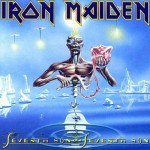
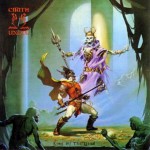
The original Gothenburg gloomy melody cult made one of their strongest statements on this early EP, pressed from demo to vinyl on the first year of the band’s existence. Fresh from life disrespecting bands such as Infestation and Grotesque, these Swedes nail the most desperate guitar harmonies since Candlemass, but infect them with the viral sensibility of a flux of death current. As if plugging the Sunlight Studios into your brains in direct interface, Svensson’s tremolos rip and rend mercilessly apart the soul of the beast that dared expose its true feelings of living in a world of hypocrisy and uncertainty. The band has preserved the most fragile moment of the Swedish death metal underground, the precarious balance between the catatonic psychosis of headbanging under alcoholic influence and the deep, burning, thoughtful soul of an encrypted Romantic in a world of pain and disguised memories. It all takes such tangible form in Tomas Lindberg’s cracking, maddened scream: “I am at the gates – Lord of Chaos – Let me sleep”. The fear and anger of At the Gates’ most revered albums will always remain something that divides audiences according to their response to such emotional cues, but “Gardens of Grief” is the un-terrorized, exuberant sound of youth that realizes the presence of death and dives into it headlong, appropriate to the Per Ohlin dedication in the liner notes. -Devamitra
Wings – Thorns On Thy Oaken Throne

An all too brief EP from Finnish gloomophiliacs Wings, as ephemeral as the tortured existence that is enshrouded in these twisted sounds of darkness-raped melody. Almost like the missing tracks from Cartilage’s cult classic ‘The Fragile Concept of Affection’, this continuation goes further to explore the sombre moods of songs like ‘Why Do I Watch The Dawn?’, in their Replicant-like reflections upon the transience of a human existence placed between the crushing, vice-grip of nothingness. Wings don’t peturb the balance of pace of slower, more expansive lakes of hypnotic melody that made up Cartilage’s contribution to their split with Altar, but there is greater focus on creating a doomier atmosphere, leaving no space for the grinding riffs of the past incarnation – a technique that parrelleled the Swedish Unleashed on their first album. Instead, an older treatment is given to the bouncier riffs, which could be heard as Punkier passages, but as this EP comes together as a whole to reveal, these bridge the narrative that seems to span across both songs with a mid-pace tempo in which the drawn out melodies pass through towards an expressive, quite neoclassical riff of totality – encompassing all the hopes that are weighed down by all the sorrows in the journey towards death. This poem in two parts is a valuable recording of Death Metal history, as a valid direction for these Finnish musicians to have taken following the demise of Cartilage, with all their weird melodic knowledge as baggage. -ObscuraHessian

A true gem, Sacramentum’s first EP showcases a style that is melodic and emotive in a manner not unlike countrymen Dissection and Unanimated. Epic, catchy and well crafted compositions are multi-layered not unlike Emperor minus keyboards, the rush of guitar notes being vibrant and lively, with little emphasis towards a rhythmic expectation, as one would expect with most heavy metal and hard rock music. Simultaneously moody yet without being whiny, this early release by Sacramentum showcases a band who are able to master quality control and bring the best out of all the elements that define their music. Alongside At The Gates, artistically the finest Swedish metal act of the 1990′s. -Pearson

Fast, raging black metal with the fury of early Deicide and the sharp harmonizing typical of Mayhem and Immortal’s ‘Pure Holocaust’ come head to head, in the guise of technically precise, abrupt songs. Shouty hardcore vocals, warm synth overlaps, a near constant blastbeat and anti-humanist lyrical concepts indicate a desire by known Norwegian musicians to advance the aggression of the black metal style and shift it’s idealogical focus away from romantic nostalgia. This brief E.P. lacks the spark of Norway’s foundational acts, but remains an influential statement of the subgenre. -Pearson

Who would have expected Chuck Keller to open the gates to very Orion itself after the folding of the aggressor squad par excellence Order from Chaos? As if a continuation of the promise of the astrological and alchemistic symbolism of the former bands’ lyrics, Vulpecula slows it down and strums soothing, yet vigorous melodies while the vocals multiple into wraith-like dimensions of rhythmic rasps and Keller’s leads occasionally burst into the aggressive, spasmous flight of an eagle amidst a thunderstorm. “Phoenix of the Creation” delves into exercises in authentic space synth, while “The First Point of Aries” harkens to the mid-paced woodland meditations that the Norwegians used to record at Grieghallen. Occasionally slightly hindered by the band’s eagerness to cram all the influences from Schulze to black metal into one short EP, the mere richness of it invites the ears to take their pleasure at will from the Babylonian garden of ponderous and prestigious movements that are achingly attractive and acceptable in their innocent refusal to complicate things with dissonance. Credit also goes for the lead guitar efforts of Keller on their traditional melodious injection which easily avoids the neutrality of more pop oriented bands trying to do the same. Almost like envisioning a “new age” approach to the genre, Vulpecula is an alien saucer amidst the orbit bound technologies of “progressive” death metal. -Devamitra
Divine Eve – Vengeful and Obstinate

The first new release that’s being reviewed for 2010 and it’s already giving distinct impressions of the kind of quality that made 1993′s ‘As the Angels Weep’ a genuinely classic EP. Divine Eve keeps the form of this new material far simpler, stripping away the Death Metal-infected sludginess for a more rudimentary homage to early brutal music like Celtic Frost. ‘Vengeful and Obstinate’ makes its own unique statement by honing in on the nihilistic and warlike spirit of the Swiss legend’s ‘To Mega Therion’ magnum opus, even invoking the same battle-horns on ‘Ravages of Heathen Men’ that bring focus to the beauty of conflict and strife in a meaningless universe. The varied tempo of grinding riffs set to a dirty bass guitar adds to the atmosphere of struggle as an outlet for this primitive, instinctual response to the world. ‘Whispers of Fire’ being the exception on this EP for the constantly up-tempo pace, it’s a pleasure to hear such slow and sludgy music churning visions of the darker universe beyond our lives of comfort and languish. The final and most devastating touch of ‘Vengeful and Obstinate’ is how Divine Eve makes extensive use of the piercing tone that Xan’s grating guitar setup produces, highlighting the spiral passage of powerchords by revealing their hidden, melodic architecture, ingenuiously managing to explain and enhance this rugged approach of legendary lineage. It’s about time the band produced a full-length and they’ve proved that they possess more than enough knowledge of unholy riffcraft to do so. -ObscuraHessian
Filed under: Death Metal Music Reviews — Tags: Black Metal, Cosmos, Death Metal, Doom Metal, Doomdeath, Finnish Death Metal, Greek Black Metal, Grindcore, Norwegian Black Metal, Norwegian Death Metal, Speed Metal, Swedish Black Metal, Swedish Death Metal, Thrash — Devamitra @ February 3, 2010 15:54 — Comments (8)

Following the course of American Death Metal through the early to mid-nineties shows the beginnings of a noteable schism in how bands approached Death Metal composition. As a new wave of fans became immersed in this extreme music, exposed via. mainstream outlets such as MTV and Music for Nations, the underground ethos of pure artistry became sacrificed to some degree, to reflect this broader audience. On one hand, there were bands like Cannibal Corpse, Deicide and Obituary dumbing down the music and setting a tradition of thoughtless extremity for musicians to pursue until this surrogate activity became formalised under titles like ‘Brutal Death Metal’ (also latching onto the furthest extremes of rhythmic Death Metal to that point – Suffocation, and the simplicity of Grindcore technique). On the other hand, an obviously smaller number of bands went in an opposite direction, inspired by the Jazz-infused music of Atheist and Death’s ‘Human‘, to create varieties of technical and progressive Death Metal. Whichever the case and whatever the quality of any individual example of music that sits within this timeframe, it’s obvious that there was somewhat of a spiritual decline in American Death Metal at this point.
To find this week’s prized album will then require us to venture away from the centres of Florida and the northern tri-states of America, and instead to Mid-Western Utah’s capital of Salt Lake City, famous for its infestation of polygamous Mormons. Here we find a band who were pretty much loners in that continent’s extreme music scene, but seemingly not placed there without a purpose. Their equidistant view of both scenes lead Wicked Innocence to create an album that, though sounding firmly in the camp of mid-nineties Brutal Death Metal, has a very progressive edge with lyrics that are closer to the cosmic existentialism of Cynic or Atheist. ‘Omnipotence’ gets rolling with a barrage typical of the aforementioned north-eastern, essentially, purely rhythmic style of Death Metal, but this music has very little in common with the tedious likes of Dying Fetus and Dehumanized, and gradually more and more progressive tendencies and flourishes of Floridan musicality creep into the album to leave an impression of something quite unique and stimulating.
Even on the level of rhythm, a direction is established within micro-rhythmic units of those riffs and sent spiralling into disarray with a Grindcore fervour for destruction. These kaleidoscopic patterns are hyper-extended into heavier chunks of guitarwork which get disintegrated further in another grinding sequence of powerchords that resembles a frustrated echo bouncing within the walls of some symbolic cube, floating meaninglessly in deep space. The melodies that tear out of this method resemble a less occult Incantation or Infester but are imbued with all of their insanities. Shades of Revenant appear in the shredding of more melodic riffs, whereby the rhythmical aspect is suspended above the beat, causing a profound sensation of impending death. As the album progresses, the melodic/rhythmic interplay becomes more integral to the sense of deconstructionism that the music conveys, revealing ever broader contexts of consciousness, like a reversed Hegelian dialectic. Bass guitar is extremely competent in underscoring this growing expanse of nothingness, similar in role to Cynic on their legendary demo, without being very discernably Jazzy. The drumming is reasonably technical as should be expected from any band that can trace their origins back to Suffocation, which the vocalist acknowledges with some amusing performances that are spewed out from an intestinal level of depth. Clearly, ‘Omnipotence’ was a timely release, before this intricate mesh of popular styles would be undermined by another generation of bands who randomly throw ideas together for no purpose at all.
Filed under: Death Metal Album of the Week — Tags: American Death Metal, Brutal Death Metal, Florida Death Metal, Fusion, New York Death Metal — ObscuraHessian @ 03:17 — Comments (1)