

Ras Algethi – Oblita Divinitas

If the architecture of the great Gothic cathedral, with its upward arches, towering spires and cosmic domes laden with images of the suffering divinity on this earthly realm, had been constructed as a kind of sacral road sign to the eternal paradise beyond, then the music of Ras Algethi’s demo is a fitting soundtrack of cathartic expression, a release from the pain and misery of the mortal existence. Like the immortal ‘Oneiricon – The White Hypnotic’ album to follow, ‘Oblita Divinitas’ relies heavily on the sounds of the mighty organ for it’s intensity as an imposing beacon of death, magnifying the mournful, melodic patterns that guide the listener through the distinct passages of these songs. Where the organ picks up on the general idea of a riff that’s introduced first, the guitars go on to elaborate this phrase in an almost improvisational, though highly restrained, story-telling manner. The bigger picture develops more gradually – far more slowly and funereal than the full-length – and the organs and percussion eventually give way to the austere logic of the main riff, with clever variations that manipulate this momentary freedom from time and space, or blissful acoustic passages that prolong and reflect in it (anticipating ‘When Fire is Father’, one of the most memorable songs on ‘Oneiricon’), before the other instruments return in an emphatic transition, taking the music to an even deeper level of suffering. Ras Algethi show a very mature compositional style from the onset, not just giving a vague sensation of sadness, but carefully detailing the journey with a reference point of possibly going beyond the world that causes it, re-addressing this emotion as a painful longing for release. -ObscuraHessian

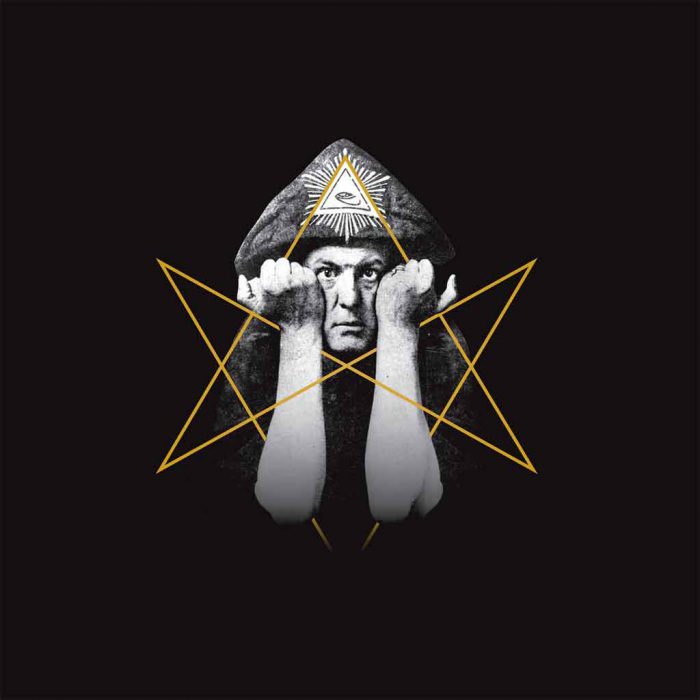
Ghoulish, ethereal and enwrapped in a magnetic tape production reeking of ancient tombs and broken 4-trackers, Helheim’s vision of industrial black metal is far more elemental than the connotations of that description during the last decade. As with the primitivist throbbing drum machines of Mysticum and the ambient blankets of Sort Vokter, the aim is ritual-hypnotic music which does not try to spice up black metal in order to make it more comforting or exciting; instead, it challenges one’s concentration by looping, returning and rewiring little fragments and pieces of riff in powerful early Norwegian black metal language, conducted by the raging screams of the now-deceased vocalist Jon A. Bjerk. The svastika simulacrum depicted on the cover highlights the natural difference with the smoother approach of the other Helheim of the same era, famed mostly for the vagrant mythological epics of “Jormundgand” – this Helheim rather spits in the face of the observed tradition in order to bring forth the subconscious terror of life and death that has been embedded in the mythos of all ancient cultures and bring across a pertinent message to the civilization (macrocosmically) and the black metal of our time (microcosmically). -Devamitra
Alioth – Channeling Unclean Spirits

Remember how disappointed you were the last time you heard a new Varathron or Rotting Christ album? If the same lack of consistency and effort permeates other areas of Greek society, them having descended from the mythic glory of Athene into debts and poverty needs hardly the prophetic eye of Cassandra to fully explain. As in Neil Gaiman’s fantasy novel “American Gods” the lost European deities are found prowling the Wisconsin backwoods, Chicago based Alioth’s mystical and sensual tribute to Hellenic black metal ca. 1993 is admirably not only a continuation of the electric technoid dynamo drumbeat and an application of the palm muted speed and doom riffs in esoteric underground context; it’s also a highly logically strung sequence of moods as if the physical organization of pain and pleasure in a Dionysian ritual theatre, succumbing with the heavy held back moments of “The Channeling” and “Apocryphal Dimensions” and rising through the interludial “Invocation” and “Invocation II” to softly expire orgasmic relaxation. So much could be created out of this basic concept that it’s a pity the full-length album has remained cloaked in the depths of the primal sea, while Wargoat Obscurum iterates far less subtle (and far less interesting) metal with Cult of Daath. -Devamitra
Goreaphobia – Morbidious Pathology

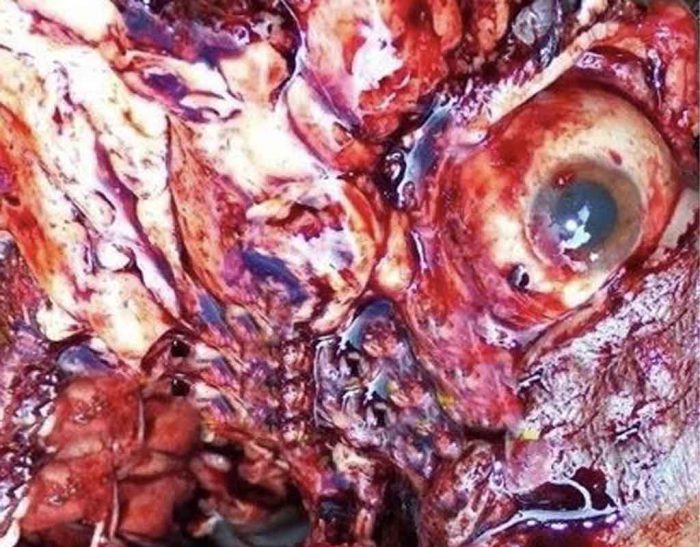
Goreaphobia’s debut album wouldn’t have been quite so eagerly anticipated without a strong back catalogue of minor releases such as the ‘Morbidious Pathology’ demo, which provides an unexpected listening experience if ‘Mortal Repulsion’ is the only recording you’ve heard from the band. Where the full-length communicates visions from the abyss through the blank eyes of an old mystic locked in a lucid dreaming state, this demo is full of enough youthful energy to express the paranoia of a thousand souls trapped within the claustrophobic confines of their own mortality. Variations in riffs reflect these tightly packed structures, seeming to progress with not so much a linear logic than the re-arranging of parts of the whole, like limbs being removed from a body and sewn on to somewhere else entirely until the true grotesqueness of humanity is revealed. As with ‘Mortal Repulsion’, despite the physical connections to Incantation, there is a stronger similarity to the craftsmanship of Immolation and albums that would come in later years, such as the complex and disjointed but melodically evocative ‘Here in After’. The lead guitar work, though highly restrained, possesses a sense of neoclassical refinement that bridges some short-burst riffage with eloquent but totally disturbing solos. This demo shows the beginnings of an all too rare experiment in Death Metal where you can observe the maturation of a consistant idea as it goes through the turmoil of a tortured, temporal existence. -ObscuraHessian

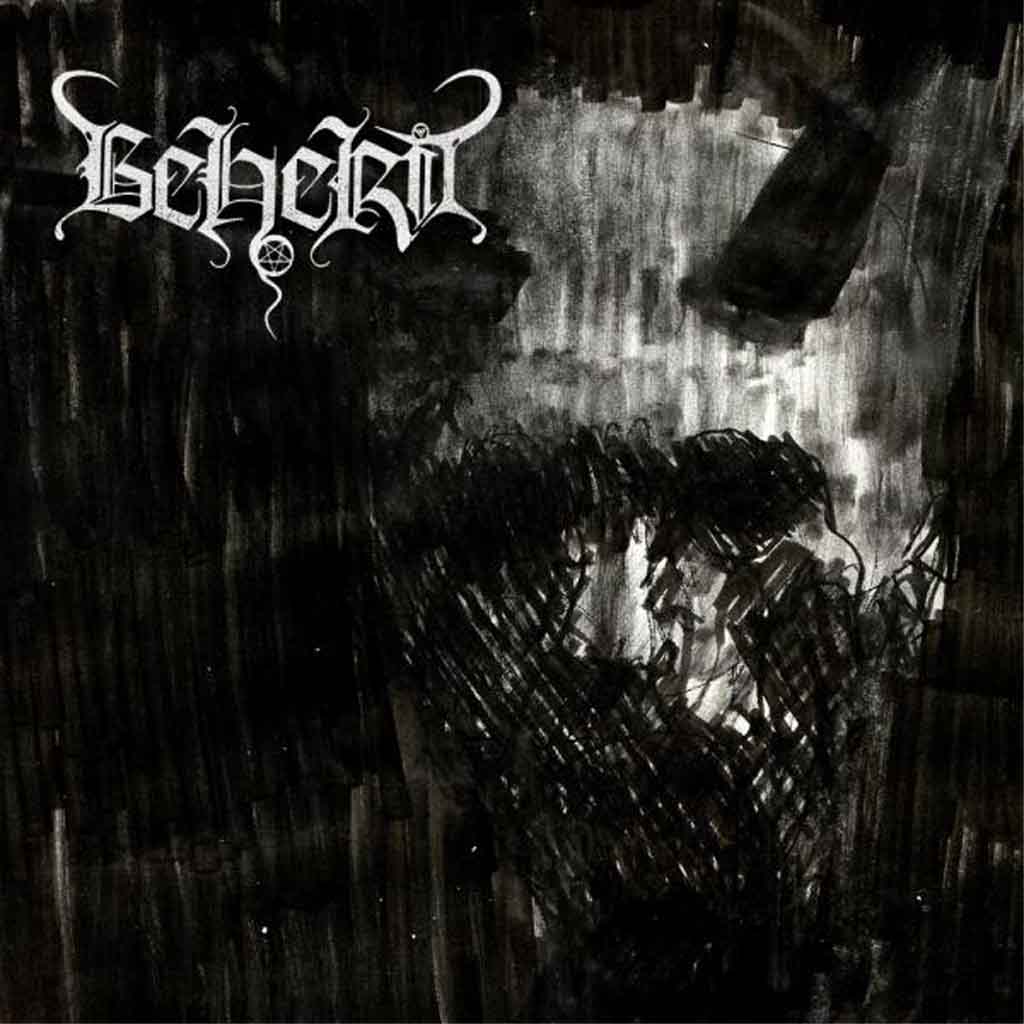
It’s not difficult to understand the distaste that Darken has for the recordings commited to tape during Graveland’s infancy in the light of his recent catalogue of pristine, epic and Atlantaean creations. Some distance away from the expansive scenes of battlefields and expressions of Romantic nationalism, this ancient offering from the living master of Pagan Black Metal is totally shrouded in a necrotic production, like ghostly shadows moving through oaken forests, casting a spell within more cloistered and Druidic surroundings than the output of Graveland from the past 15 years. Alongside the visions that created the force of Scandinavian Black Metal in the early 90′s, this demo represents the reclusive and misanthropic esotericism of that era, especially the primality of the lowest fidelity cults, Beherit and Ildjarn. Sounding like the work of a punk ostracised by that increasingly over-socialised group for being too idealistic and inhuman, Darken conjures a lurid interpretation of hypnotic Bathorean riffing that develops through the echoing of majestic, synthesised voices that open this recording as though a prologue to ‘The Celtic Winter’. The experimentation with primitivism in ‘Drunemeton’ is so deconstructionist that the guitar technique becomes fragmented completely and subordinated to reveal gloomy ambient moods that amplify the silence of a forest at night before the dawn of battle. There’s a similarity to the Beherit song ‘Nuclear Girl’ in how the guitar is used more like a sample, reverberating it’s texture through the keyboards to emphasise a cloistered sensation, accompanied by monastic chants at other times. Culminating in the ambient classic, ‘The Forest of Nemeton’, this demo is the successful beginnings of Graveland’s exploration into unconventional and nihilistic territory beneath the folky phrasing of guitar-led melodic work, which would shape the dynamic of his entire discography to follow. -ObscuraHessian

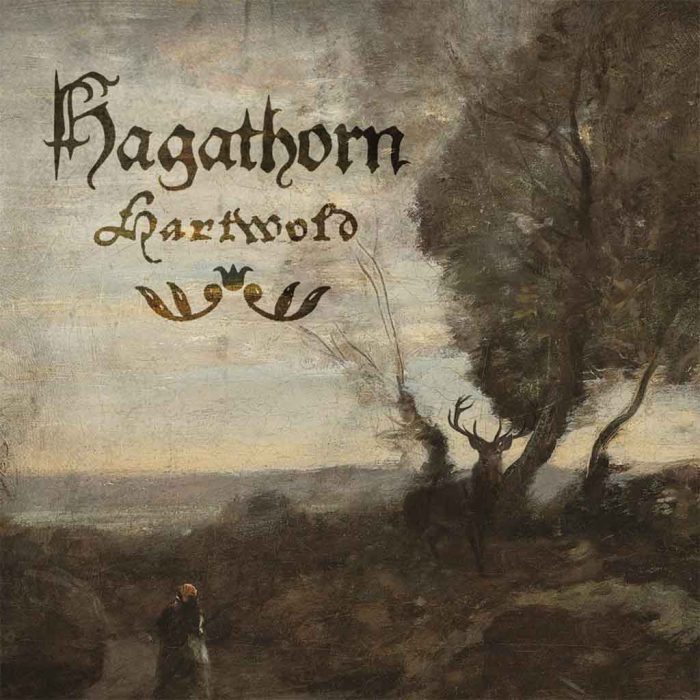
Fifteen years ago, we were too proud and lofty to listen to it, our sensory devices soothed and inflamed by “Panzerfaust”, “Battles in the North” and “Høstmørke”, while the new generation of neo-progressive and mainstream black metal bands sought to enrapture even wider audiences with movie soundtrack influenced keyboards and angelic female voice conjured by fat-bottomed gothic tarts. For the atmospheric maniacs only, as it’s hard to argue for its musicality against the likes of “Vikingligr Veldi”; but the epic wanderlust and distorted pagan death ritual of this demo’s centerpiece, “Fimbulwinter”, unfolding like a flower at dawn or the psychedelic mandala of LSD invading brain receptors, is one of the pure innocent and mesmerizing gems of underground black metal in this sacred and forsaken era. The primal Isvind-esque melody dance like ripples of waves on a forest pond, the hissing tracker production complete with the macabre clack of a drum machine and the dampness of a Nordic bedroom cellar permeate the recording to such a thickness of adolescent black metal fury that it’s hardly palatable to generic audiences then and now. Barely a trace of the fast norsecore of the more familiar debut album “Kill For Satan” is noticeable here, the only similarity being the guitarist Draugluin’s technique of bricklike tremolo chord architecture where rhythm plays little importance. While primitive, this compositional method bears an intrinsic beauty which is worthy of recapitulation when the pure augustness of early Norwegian black metal has mostly become forgotten in favour of seemingly more rich and elaborate indie stylings. -Devamitra
Filed under: Death Metal Music Reviews — Tags: Ambient, Black Metal, Death Metal, Doom Metal, Funeral Doom Metal, Industrial Black Metal, Norwegian Black Metal, Polish Black Metal — ObscuraHessian @ June 28, 2010 23:32 — Comments (2)

As the solar powers emancipate the winter’s icy grip, the pieces of art we hoped to dominate this year’s playlists are gradually fading to old news, not to spoil any upcoming reviews of efforts such as Burzum‘s pastoral “Belus”, Immolation‘s showy “Majesty and Decay” and Winterwolf‘s cheeky “Cycle of the Werewolf”. Insatiable death squads that we are, relentlessly lusting for the lower ethereal planes, our sights gaze upon promised treasures such as the debut album of North Carolina’s Anu, “Opus Funaerum” and the sophomore benedictions of Australia‘s Cauldron Black Ram and New York’s Profanatica; namely, “Slubberdegullion” and “Disgusting Blasphemies Against God”. The Anu CD is currently in press and will be available through Graveless Slumber Records and distributors worldwide, this Demoncy related band having already caused a stirring of unbenevolent underground majesties with its acrid and harsh self-titled EP and
Myspace samples promising neo-ambient black metal hymnals dedicated to the darkness and quietude of night, in the profound manner of Sorcier des Glaces and Legion of Doom who know how to make the synthesizer sound archaic. The LP version will be out later on Werewolf Records, whose releases I generally find worthwhile to pay attention to. Cauldron Black Ram has hardly softened their sound over the years in favor of pirate maniacs scattered by the sinking of Running Wild‘s flagship, instead paying homage to Autopsy and Hellhammer with primi-syncopated drumscapes, poisonous grunts and eerily progressive riffing that gets at times, not that surprisingly, close to what compatriots Portal practice on galactic hyperspeeds, CD out now on Weird Truth Productions. Profanatica’s audial sodomy, out in summer through the hallowed Hells Headbanger Records hardly needs much explanation nor much can be provided, as Ledney remains the official high priest of evil USBM since more than two decades of non-compromising, pummelling, harsh and blasphemous black metal.
And while waiting for all these to intrude your mailbox as if it was the holy anus, check out some of the forthcoming gigs in your area and present yourself simultaneously as a brutal but intelligent metalhead, in order to raise the honourable status of this artform in your country. Hail and kill.
Filed under: Death Metal Release Announcements — Tags: Ambient, Australian Black Metal, Australian Death Metal, Black Metal, Death Metal, Thrash, US Black Metal — Devamitra @ March 18, 2010 15:08 — Comments (2)
As much of the northern hemisphere is being overwhelmed by the onslaught of winter, the flames of Hell are rising to consume the south at summer’s peak. Still, the hardened souls of Black Metal warriors remain unfrozen, and Australia‘s Dis Pater from Midnight Odyssey is no exception. A recent arrival on the scene producing beautiful and mature music demanded one of our interrogations, which revealed some of this artist’s thoughts on ambience, patience and experience.
ObscuraHessian: We thought ‘Firmament‘ was among the best albums of 2009, and I was pleased to hear that I, Voidhanger is doing the good deed of re-releasing your old material within the next couple of months! Looking back at your first Midnight Odyssey work, with its exhibition of diverse influences, how would you describe your mindset as an artist back then, compared to putting tracks together for the more streamlined ‘Firmament’?
Dis Pater: Hello, thank you for your compliments. I, Voidhanger is in fact re-releasing “Firmament” which shall be out early March hopefully. The Forest Mourners was for me somewhat of a transcendence between the music I used to write and record privately and the Firmament release. I had a lot of influences which I wanted to incorporate into the project, and I guess I wanted to keep the door open as much as possible to prevent being labelled any one genre of music.
ObscuraHessian: In addition to hearing the obvious traces of bands like Burzum and Summoning in the demo, the ambiental feeling seems to quote some of my favourite ambient output, from Jääportit to ‘Dark Age of Reason’-era Arcana. What’s your relationship with ambient music and what’s your recipe for ‘Ambient Black Metal’?
Dis Pater: I have long been a fan of Cold Meat Industry bands, particularly early Arcana, Raison D’Etre, Ildfrost, Mortiis, Deutsch Nepal, In Slaughter Natives, etc, etc. Ambient music was the first music I ever tried to record, and it’s something I have worked on as much as black metal, so combining the two seems natural for me. A recipe? Well A lot of modern bands do a fantastic job of mixing ambience and black metal – Paysage D’hiver, Coldworld, Darkspace, Marblebog, Vinterriket, etc, I think it’s just being able to use keyboards with metal in a not so pompous way.
ObscuraHessian: I like to imagine that an entire Black Metal album could be recorded one day without percussion. Midnight Odyssey’s proclivity for ambience demonstrates as well as a ‘Filosofem’, ‘Winterkald‘ or ‘Antichrist‘ how this could actually work. Do you think that there’s enough scope in ‘Black Metal composition’ to eschew drums completely? Maybe an artist should just go and make electronic music like so many warriors have done?!
Dis Pater: It’s funny you say electronic music. I too have delved into the electronic side of things in the past, and find a unique way of writing music there that seems to work well with the way I write for Midnight Odyssey. Bands like Tangerine Dream, Kraftwerk, all the way up to Trance and Industrial Electronica all have some unique element for repetition and layer building. I try to do the same with Midinght Odyssey, but with guitars and bass. I think it is possible to record an entire album without drums, it’s something I have thought about, and think I could achieve in the future, without going too far down the line of electronic music.
ObscuraHessian: On ‘The Forest Mourners’, there is a subtle but still more continual folkiness to the music. Some of it reminds me of the folk/ambient images that A. Tolonen produces with Nest, but other times are a little more Celtic? as is the case with the opening track – which makes me think of a more contemplative Himinbjorg. Did you use such folk stylings as a conscious expression of ancestry, or is this a direct manifestation of musical influences? Being an Australian, is such a tribal connection even possible, in the manner of the Norwegians from Helvete, for example?
Dis Pater: The folk element is something deliberately incorporated into the music. I have good friends who are in a celtic folk band here in Brisbane, so their influence on my music is sometimes present. Also I enjoy folk metal, and some heavy metal such as Gary Moore’s Wild Frontier album, where there seems to be a lot of celtic folk/rock influences. So yes in Brisbane it is possible to still maintain some connectivity with a European heritage, probably more-so than say America because Australia is a much younger country, most of us have parents, grandparents or great-grandparents who weren’t born here. Also my music is about a time long ago in the past, and thus folk music has its meaning there.
ObscuraHessian: There is as much mention of ‘spirits’ in the titles of songs from ‘The Forest Mourners’ as there is of nature, but the ideas of the subsequent album seem to suggest that this reflects more than just an animism of some sort. You talk about ‘Departing Flesh and Bone’ and of course, the whole work is underlied by this connection between the active and earthly, and cosmic and eternal. This is an idea which is really interesting to me because it seems to get lost in modern discussions of both natural science and populist, Judeo-Christian religion. Could you explain how you came to terms with this understanding?
Dis Pater: To me, this entire area has been corrupted by Judeo-Christianity and most modern monotheistic or dualistic religions, Islam, Zoroastrianism, Buddhism, etc. The album Firmament is based on the moment of death, the moment a soul leaves the human body and what supposedly comes after. This is based on a somewhat personal experience which I have attempted to migrate to a more populous and general theme, set back in a time which I believe has been erased from human record, a time when humans were a little more in touch with their spiritual and carnal natures, when everything wasn’t so easily divided into what’s good and what’s evil. I like the moral ambiguity of everything, that to me is what existence is about, it’s not about the ultimate battle of good and evil that religion tells us to believe in.
ObscuraHessian: Even with your influences on your sleeves, so to speak, the music of Midnight Odyssey is very imaginative and this rapid-fire consistency at this point of your career makes it feel very ‘lived out’! How would you describe the way in which the actual sounds that you produce are a representation of the aforementioned ideas or feelings? I mean, with most popular music, it seems to be fabricated in such a way to prioritise the broadest demographics, but obviously, good Black Metal wouldn’t be composed with such vagueness in mind!
Dis Pater: Yes my music is rather spontaneous actually. I won’t write anything for months, then do an album in three days, then sit back a few weeks and let it mature, perfecting it. When the time comes to write music, I am completely obsessed, engulfed in this strange atmosphere, it’s kind of like walking out before a summer storm, you can almost feel the lightning seeking you out ready to strike, it’s almost panic. It’s usually after hearing a certain song somewhere, an idea will come into my head, and I won’t be able to sleep, I usually don’t eat or drink anything for a day or so. I listen to a lot of music, and I know what I like and I only release music that after a while I can still listen to and not feel embarrassed or ashamed about, to me it has to envoke those same impulses and manic trances that I got whilst recording the music. I know the exact tones, the exact reverb levels, the exact production levels I like and desire, so my music is always a mixture of new creative forces and learned processes, which has taken me nearly 10 years to get to.
ObscuraHessian: The sound of the full-length is naturally better as there’s more space between instruments but you still managed to reflect an enclosed feeling which sounds like the music is passing through a million leaves and branches before it hits the listener. Did the demo receive any remastering before sent to be pressed for its forthcoming distribution?
Dis Pater: The demo, actually both demos which will be re-released, (The Forest Mourners on Kunsthauch Records in Russia, possibly as a split) But neither are going to re-mastered, they are being kept the same, the only difference is with the new version of Firmament, the songs will be made to cut out less at the end (i.e. the music fades a bit before ending abruptly) and the last track From Beyond The 8th Sphere is being renamed simply Beyond the 8th Sphere (We noticed I used the word From a bit too much haha).
ObscuraHessian: Are you still working on music for an album to follow ‘Firmament’?
Dis Pater: Yes there are a couple of things. One is a split with Wedard, which will be two songs from the Firmament sessions, actually one was written in between Forest Mourners and Firmament and has a bit more of an epic folk, and the other was written after and is not really a metal song). The next full length is recorded (except the vocals) and is a continuation of Firmament. Musically I think it is similar, but maybe a little bit more epic and ethereal in feel.
ObscuraHessian: Could you tell us a little about your activities outside of Midnight Odyssey, including any other musical projects?
Dis Pater: Other than Midnight Odyssey, I have a project called Fires Light The Sky. I had recorded two songs but have changed the style a bit of the band and am set to release 4 songs (which are actually old old Midnight Odyssey songs reworked and re-recorded, I think three of them I wrote in 1999, and one in 2001, so it’s a more aggressive and standard black metal but nonetheless I feel I have to release them just to get them out of mind, it’s like holding on to a secret that you want to tell everyone and can’t do anything else until you tell someone. Also I have plans for a funeral doom project at some stage this year.
ObscuraHessian: What was the last awesome book that you read?
Dis Pater: The last good book, well strangely I don’t read much, I think the last good thing I read was a book on Early Greek Philosophy, it was interesting to see just how fragmented records are and the work that goes into fitting the pieces of history together. It was interesting too to see these people from thousands of years ago try to describe something, and doing it relatively correctly, but just not having the correct terminology and understanding to fully comprehend it.
ObscuraHessian: What was the last piece of music you heard that resonated most with your own thoughts and feelings?
Dis Pater: The last music would definitely be the Polish band Evilfeast, I got some cds on the way and I can’t wait to hear the whole albums, a couple of songs I’ve heard of them blew me away – epic, atmospheric and very depressing dark music.
Hails to Dis Pater for answering my questions and all the best for the future of Midnight Odyssey!
Filed under: Death Metal Interviews — Tags: Ambient, Australian Black Metal, Black Metal — ObscuraHessian @ January 17, 2010 05:16 — Comments (2)