Unholy Prophecy

schoolbus

The forest warmed as the late afternoon sun stroked it from above. Insects rose out of their protective hiding place in the underground and ascended thermals into the high trees where birds pursued them. Far from the solar fire too bright for humans to glance into the sky at all, a school bus surrounded by dead leaves hid under the canopy of light-absorbing leaves.

“Christ on sandwich bread,” said Dennis as he vaulted into the bus. He looked around and realized he was speaking to an empty space. Shrugging, he began preparations for the ritual. He took one of the wax-streaked dimestore candles from the ad hoc plywood shelving where the driver used to sit, and put it on an old kitchen table that was propped up in back between sofas. Lighting it, he cleared the leaves and bugs from one seat, and perched on it to enjoy the ninth cigarette of the day. As he was finishing, the emergency door at the rear of the bus batted open.

“World’s gone crazy,” said Mark Reissdorf, with his inseparable best friend Thomas Nagel in tow. They each took seats on one of the four sofas that formed the seating area at the rear of the bus. Dennis and Thomas gathered dead and fallen branches, cramming them into the fire pit as Thomas wedged a newspaper from his pocket between them. Soon a fire blazed and smoke leaked from the bus into the woods.

Finally they heard more footsteps through the leaves and Mark leaned out the door to give Sam a hand in. Sam stood taller than any of them, but also carried extra weight, the consequence of being both the bullied youngest sibling in the Bormanns household and as a result, the one his mother soothed with treats. He dug around in his insulated vest and found a plastic sandwich bag which he flung onto the table before them. “It’s from Canada,” he said. “Where’s R?”

Thomas shrugged, and Mark and Dennis made me-too motions with their eyebrows. Sam grunted, then began rooting around in the bag.

“It’s not time,” said Thomas.

“Shut up,” said Sam. He towered over Thomas, but the smaller boy held his ground. “We have to stay true to the ritual. Defenders of the Faith.”

“You’re right,” said Mark, holding the syllable for just long enough to crucify it with a short word as if punctuation: “Fag.”

They all started giggling at that point. Then the front door of the bus opened — only R used that one — and he stepped in, chilly in his sweater and jean jacket. Where the other boys had long hair, R had none whatsoever. He had in fact shaved his entire body only because he discovered that it freaked out over 85% of the people he encountered on a regular basis, where tattoos and piercings hovered in the 60s, drug use in the 50s, and casual sex in the teens. When R stepped into a room, most people recoiled in fear. He loved that.

Mark threw more wood onto the fire, which now blazed up in the fire pit and filled the bus with smoke. R took a bong and a bottle of Old Valley Road bourbon out of his backpack. Sam tossed in the bag of weed. Mark pulled out a handful of pills and a knife, and Thomas tossed in a bag with traces of cocaine. R — his real name was Ron Carpenter, but he told everyone in freshman year that his name was actually DLANOR and he was from Sumeria, so no one trusted any name he gave — pulled out a key from his pocket and unfastened the padlock on the plywood box. Inside was a portable stereo. He plugged in his off-brand MP3 player and cranked the volume to ten. No one mentioned the week they had spent burying wire to snake a line off the nearest streetlight, nearly a half-mile away, but they all swelled with pride at the ability to have their music in this remote place.

The sounds of Hellhammer filled the bus. They simply did not trust any music or — well, anything — from any more recent time. The 1980s was when it fell apart. People like to talk about what a great decade it was, but really it must have been a terrible decade, like looking out your window to see a tsunami of Ebola-infected sewage coming your way.

The ritual had begun.

“Today was unbearable,” Thomas said, taking his privilege as the physically weakest in what had become a combination support group, revolutionary meeting and occult rebellion. “Let me tell you all about it.”

***

His day began, he related, with going to his high school and sliding into his first class in a stupor of boredom. The teacher did not even notice, having a rubric which demanded she cover a certain amount of material per minute, and confronting late students only interrupted that. He performed the minimum, being half-awake at the time, since he had spent most of last night roaming the empty places of an adult world he did not understand or wish to enter. When his parents settled down after a few mixed drinks, and his brothers and sister were camped in front of the TV, he grabbed the packet of cigarettes they kept in the kitchen drawer and headed out. He just walked: through the parking lots, across the empty roads, trying doorhandles in buildings, down the alleys. If anyone had a problem with it, he had his flick knife and used to be a star on the track team, so it would be a fair combat at least.

“You can’t sit there,” said someone in his second-period English class. Still groggy, he asked why. “All the football players sit here.”

“Fuck off,” he said. It was his favorite retort to people, who he would like to murder with great pain and cruelty, but in his inner heart he knew what he really wanted to murder was the world. The all of it. The ugly parking lots everywhere, stupid triplicate forms, waiting in line for morons to tell you what to do, brain-dead churches and politicians and the people who followed them like sheep, and everyone else strung out on booze like his parents or heroin like his friends from the past year. They were all cowards. Thomas was a small kid and he knew that if one of the football players made an issue of it, he would be at a major disadvantage. But he always fought back, leaving them with enough wounds that they thought twice about trying again, a wisdom he learned during the early years of bullying in elementary school.

Instead, Danny the Irish-Polynesian football player came into the room, took one look at Thomas taking up the first seat in the front table, and turned to the kid who had warned Thomas and punched him in the shoulder. “Good job keeping my place for me,” he said and stormed off.

More football players came in. A couple threw books at the kid who failed to guard the place. No one else sat at the table. Thomas shrugged it off, and sat through the class. He heard whispers behind him but ignored them as the usual screwing around of idiots. Then Mr. Danforth heard a knock at the door and went into the hall to talk with the fat piggish administrator who had a form for him to sign. Thomas had just settled into the lull of the background hum in his brain when an unstoppable form hit him from behind, knocking the table forward against the wall and sending Thomas crashing into it. Right before he smashed his head against the edge, he tightened his hand around his pencil and instinctively stabbed upward. A howl came in response and more books and papers crashed to the floor as the table slammed into the teacher’s desk.

“What the hell is going on here?” said Danforth, coming back into the room with a sheaf of papers to muddle over later during a bottle of discount white wine. Two students stood covered in blood in a snarl of wrecked furniture and ruined papers.

“I, uh, fell,” said the kid who had warned Thomas, with Danny standing right behind him. But Danny had blood pouring from a wound in his armpit that looked suspiciously like a pencil.

“He stabbed me,” said Danny, pointing at Thomas. Danny eyed him warily. Thomas wanted him to attack again, so he could strike with the pencil. Again and again. Murdering his parents, his teachers and the people who designed this ugly, boring, codependent place.

“I didn’t move,” said Thomas. “You must have fallen on me. I guess you just stumbled on a pencil too.”

“Well what were you doing sitting in my seat?” Danny finally managed.

“There are no assigned seats. Get over yourself,” said Thomas.

“Thomas, why don’t you ever just go along with what people want?” asked Danforth. “Go to the office. Marsha will take you. Danny, go to the Nurse.”

The nerdy kid who had warned him scoffed. “Told you so,” he said.

“At least I’m not a suck-up to jocks because I’m a mouth-breathing nerd,” said Thomas. “You’re as dumb as they are. Just math-dumb not football-dumb.”

“Fuck you, Thomas,” said the kid.

“You go to the office too,” said Mr. Danforth.

Marsha walked ahead of them carrying the yellow slip of paper which said they were rejects. “You really know how to make a small incident a big one,” she said. “Why didn’t you just do what other people want?”

Thomas sighed. “Because other people are usually crazy. Most people wanted the new dam built that flooded the woods, most people wanted the new road that makes town loud, most people actually like that stupid class, and most people watch football and drink Coors Light. I can’t do it,” he said, and suddenly felt a little bit weak.

She turned to him and he saw her eyes, a gentle blue, had faded. “You better get to the Nurse,” she said. “I’ll tell Danforth you were bleeding. That’s true, at least.”

Lunch had been no different. Some guy in a Polo shirt wanted to take his chocolate milk, and Thomas used one of the jiu-jitsu moves he studied on the weekend and threw him. That was a problem, since behind him was a chair and behind that, a glass window. Both shattered as the unlucky dumbshit went sprawling. Thomas did not get to finish his chocolate milk. As the campus cop escorted him from the premises, he caught Marsha’s eye. It looked worried and amused. He shrugged and bowed ever so slightly, which caused laughter at her table. Most likely they were making fun of him.

He went to his job at the movie theater after that. Clean the floor, they said. He took several dozen wet floor signs, found a movie that would not be out for another hour, and swabbed the whole floor then began drying it. A woman exited the individual theater and Thomas took her arm and guided her around the wet floor. “It’s tricky,” he said.

“Is that blood all over your face?” she asked. Thomas shrugged. He noticed she did not go into the theater and the next thing he knew, the manager was tapping his arm. “Why is so much of the floor wet? We’ve had a complaint.”

“I swab it down first, then get it all at once with the bucket,” said Thomas. “That way I’m not putting dirty water back on the floor to swab the next section.”

“Why don’t you just do it–” said the manager, but Thomas finished his words. “– like everyone else. My way is more efficient. I can show you — ”

” — No, no,” said the manager absent-mindedly. He was short like Thomas and Thomas always liked him for that, and hoped he had found a beautiful short wife. This guy was better than most.

“You know what, I don’t give a shit,” said the manager. “You’re going to have to go home because we had a complaint.”

“Even if it’s a… uh… ah… not really true one?” said Thomas, searching for words.

“Yes, because if someone else complains, I look like a stupid asshole,” said the manager. “Your whole goal is to not make me look like a stupid asshole.”

“Even if it’s less efficient?”

The manager threw up his hands. “Yes… I mean, no. Do what is efficient. Just don’t cause complaints. Like, next time, use an empty theater.”

“Right,” said Thomas. On his way out, he passed Marsha. “Going to a movie?” he asked.

“Going to visit my Dad,” she said, and pointed to the door he had just left. Thomas slapped his palm over his face and when he looked up she was gone.

The only saving grace came as he exited the kitchen area behind the concession stand. “Hey, Tom, wait up,” said Mikey, who wanted to be called “Mike,” the longest-haired of the crew. “Can you swap a bud for some blow?”

“Better be the real deal,” said Thomas, feeling for a moment more grown up than his milktoast parents who never did anything dangerous like drugs, crime or violence.

“Hell yeah it is,” said Mikey. “Hey, I heard you served that Danny guy in class today…”

***

“Jesus, what a lot of drama,” said Mark.

“Jesus would have hated all of those people,” said Dennis. As the token Christian in the group, or so it was suspected, they tolerated him like they might a homosexual: warily. Dennis was pretty sure he was not gay but sometimes he wondered about Sam. Not like it mattered, he thought. A gay guy who was not a stupid asshole would be OK, but most gay people would be stupid assholes, because most people were stupid assholes and no one got a pass.

Sam shrugged, busy packing weed into the bowl of his custom modified EZ-rip bong. First he painstakingly separated weed from stems, the fresh herbal scent enveloping him like a memory of flowers, and reduced the weed itself to dust. He then intermixed this with blonde tobacco he got at the local tobacconist by swiping it and then buying enough lighters to cover the cost, paying for them, but leaving the lighters behind. He wouldn’t steal from Mr. Walton. The guy was OK — he actually looked up what Sam could buy at his age and applied the letter of the law. “If you ask me,” Walton had drawled, “We don’t need any of these frickin’ laws. But they don’t ask me.”

“What about you, Sam,” asked Dennis.

“Long day at the computer store,” said Sam. He had dropped out of school, then taken the GED, then gone on to work at a local computer parts store. Now he fixed computers for little old ladies and businessmen alike, and was generally appreciated for his attention to detail — forestalling future secondary complications — although it was universally noted that his manner was diffident, almost standoffish, in the way of people who distrust socialization itself.

Mark passed over a joint he rolled with some of the dirt-cheap weed he got from his cousin who grew it in the hills. It would get you high, like a 40 oz malt liquor would get you drunk, but it was such a blunting and numbing experience that it seemed to replace fun with a grinding duty to be wasted.

“Theme of the day was barriers,” Sam began after a few moments. “I fixed a computer, then all of a sudden, things were wrong.”

***

“Did you get that laptop set up?” asked his boss.

“Yeah,” said Sam. “Needed a memory upgrade. Got it. Want me to install the usual anti-virus and repair software?”

“Sure,” said the boss, and disappeared between the shelves. Sam got to work. This one was more interesting than usual: two layers of security, and many cryptic files named only with alphanumerics in incremental form, like 1C5AFE3C0D1F.docx, stored in a generic folder. This one looked like a mess. He set about making a system backup, then preparing to install the suite of software that shielded the machine against hacks, spoofs, viruses, subversions, and errors.

He was about halfway done when his boss reappeared. “Ah,” Sam heard over his shoulder.

“–what?”

“Not that one. You can’t look in there. Just package it up for delivery.”

OK, thought Sam. He slid it onto the thin metal shelves and filled out the ticket, then turned back to his other tasks. But the memory tormented him: all those files, obviously inscrutable for a reason. Why? And the high security — for what? One did not lock doors beyond which lay only the mundane. His mind spit out a plan before his ego could approve it, but then he found himself drawn to it, cursing his lizard brain for having come up with such a perfect attack.

He dashed through the next computer, filled out the form, and slid it on the shelf, dallying next to the cryptic laptop which he plugged in to the wall, linking a network cable to its port. Then he re-arranged some bags, dropped his keys, straightened up again and left before the boss could get off the phone.

Back at his workstation he quickly fixed a point of sale machine in from a subscriber, then used it to sneak along the network and send a wake-up signal to the laptop. Then he ran a program that snaked past its security and showed him the file system. He began to download the mystery files. As he was opening the first file, he heard the door chime on the front door, seventy feet away. He paused as a voice burbled at the counter.

Walking as if heading to the stash of tools near the front, he got a glimpse of the check being handed over. His mystery laptop. The guy who owned it looked boring, reserved, maybe even a little bit withdrawn, but not paranoid as he expected a spy or criminal mastermind to be. Sam had other problems however. Within a half-minute his boss would reach over to the laptop, and have to unplug it and possibly explain to the customer why. Sam stepped back into the doorway of the loading dock, where he knew no cameras were, and lit a cigarette, blowing smoke into the fire alarm.

As the boss racked up the cost and entered the credit card, an ear-splitting siren blared through the store. Sam ditched the cigarette in a nearby flower pot. As employees rushed toward the door, he walked to the counter, then dropped his wallet. Straightening up halfway, he hunched over the machine and yanked out both cables, letting them drop, then joined the others outside.

“Weird,” said the boss. “Must have been a smoke test.” As it turned out, one of the new employees had inverted a power connector and popped a capacitor, which was accepted as the source of the smoke. The customer left, happy, and Sam wandered outside to pitch out the cigarette. When he came back to his desk, the boss was waiting for him. “We have lots of these high security jobs,” he said. “Here are another four that need doing today.”

It became a longer day than Sam intended. Toward the end, as he waited for one machine to restore its operating system, he peeked into the files he found. Columns of figures, debits and credits, on a weekly basis. He shrugged, but then looked closer. There were duplicate files for each week, but the numbers were not the same, and even without much life experience Sam knew he would rather pay tax on the second set than the first.

The boss came back inside. “Listen team, we’ve had a bit of a shakeup. I need you three to take weekend shifts, and shifts during the week are getting halved.” Sam realized his only chance to keep his salary was to take weekend shifts, so he doubled up on those as he penciled himself in to the sign-up sheet. Still, it felt unfair. The stroke of a pen and his weekend was obliterated. The voice of his boss and someone at least would be out of a job, since the total hours might support two workers but not four. And he thought they had been doing well?

His eyes slid down the counter and to the open door of the office. The computer in there might have answers. Maybe even double sets of numbers. As if sensing his discontent, the boss walked over and pushed the flimsy door shut, locking it.

Indirectly, the lowered hours brought him great fortune. Arlo sold him a fat bag of Canadian weed for a good low price, since he now needed money to hit the clubs and he would not get it from his four-hour shifts. These guys are all screwed, thought Sam, as he walked into the parking lot. He nodded as he passed the boss getting into his car. “Thanks for taking those shifts,” he said.

***

R stoked the fire. “Those are some of the most bum-ass days I’ve heard of it,” he said. “All I had was a short day at work, then wandering around looking for drugs for you guys, and playing guitar.” He showed the calluses on the ends of his fingertips.

He worked at a place that installs solar panels. When he got really stoned, R (his mother called him Ronald, before she passed on from unspoken-of ailments) talked excitedly about solar cells. How they work by allowing photons, which are particles of light, to knock electrons free from atoms, and these then form a flow of electricity. How much energy is stored in each. But then the moment fades and R is back to his sullen, defiant self, like the rest of them both detesting the time he is in now and fearing them more obligatory adulthood to follow.

“I thought you were studying for your license?” asked Thomas.

“Not today,” said R. He shrugged and Thomas returned the gesture.

Inside the bus, the cheap portable stereo blared on, both more background noise and a focal point which like a string running through random objects, tightens and pulls them together into a story, with each piece revealing the reasons for its presence and the action implicated by its effect on the other objects in the string. As twilight settled on the world, it turned all colors to gray, as if it were revealing the actual lack of interest, sincerity and purpose to it all, Dennis thought.

The bong came around again. Thomas and Sam did a line, then dropped the dust into the bowl and inhaled it with the smoke. A glass of vodka floated from somewhere. “Good stuff,” said R. “Tastes more like rubbing alcohol than diesel. That’s how you know it’s quality.”

“About the same for me,” said Mark. “Went to school, fell asleep in all but two classes, then went to work where I stocked groceries for four hours, then I’m here.” He reached into his backpack and pulled out a bottle of cooking sherry, then added it to the table. He had scored that from a heap of expired goods.

“The best drink is a free drink,” said Dennis, eyeing the bottle. “I’ll tell you mine, but you have to promise not to laugh.”

***

Dennis got schooled at home. This was a condition of his parole, involving an incident with a car going too fast with alcohol, marijuana and underage women in it. He was proud of the arrest, really, and hoped to wipe it from his record at 18 and go on to, like his father, settle into a comfortable business and make an unchallenging life for himself. One night late in the evening, surrounded by the cathedral shapes of the campfire, he had wandered into a lysergic chasm and faced his inner self, and realized what he found was more like the shuffling obedience of his father than the wild maniacs he imagined he socialized with.

First chapter was photosynthesis. Dennis liked this because he found it fascinating how light could fuse together carbon and water molecules to make sugars, the building blocks of all life. The leaves in these trees came from a diet of sugar created by sunlight, rain and the carbon dioxide he and other living things exhaled. He got too into talking about that, because his mother cut him off and changed to a different subject.

His mother, embarrassed as always by her son’s failure to be a responsible citizen like his older brother Randall, made him recite the material he had memorized and then presented him with the least of life’s delights, the pre-printed test from the back of one of his history books. He had an OK grasp of the material, he thought. “Now?”

“It’s a weekly test and I won’t be able to give it tomorrow,” she said.

OK. He gave it his best shot, and felt pretty good about it, but when he came back from the kitchen where he got a soft drink, his mother was shaking her head as she ticked red marks down the page. “This isn’t good enough,” she said. He saw the grade: 61, or a D.

“Can’t you just, uh, give it a little bump?” he asked.

“No,” she said. “If I do that and you go back to school and fail, they will think I acted against the court’s instructions and I could get in trouble. You just were not good enough, Dennis. This will set you back a week before you can get back on track.”

He knew he was supposed to panic. There were a dozen weeks remaining however. “Fine,” he said. He sat there until she gave him something else to do, and when she petered out at about the same time Mrs. Taggart came by with the latest gossip from church, he slipped out the back door.

The court ordered him to stay busy, a state policy being “idle hands do the devil’s work” but not officially so, and this mandated his appearance at a job for life burnouts like himself. The Helping Hand thrift store hired people like Dennis to receive and sort donations, then sell them to well-meaning suburbanites for money that went into a hilarious anti-drug program that Dennis had suffered through, laughing and groaning in equal doses internally as choked his way through interminable days of videos and group activities.

Dennis wanted to get on register. At the register, he could listen to the radio, even if it was just alt-country, and stay away from the dirty back yard where they heaped up the stuff they could not sell before shoveling it all into the dumpsters that would get towed to the county landfill once a week. He asked Maisie, but she said his skills were not up to speed. “You need to be at least as fast as David on the keys,” she said. “You’re just not doing well enough.”

Grumbling a bit, but not too much, he spent his shift unloading stuff from the cars that stopped in the front driveway and sorting it out. He had gotten pretty good at it when Sean his supervisor flagged him down. “You’re not including children’s clothes in the instore pile? Because we can’t use those anymore, new state law.”

“I didn’t hear about that,” said Dennis.

“It’s on a circular in your box,” said Sean. “You know, in the employee area in back. Except I can tell from looking at it that you haven’t checked it for a week.” Sean was a few years older, definitely bigger and stupider, but always seemed to do things that pleased the adults, so he was super and Dennis was… well, gopher. Odd jobs man. A guy you trusted to do only really simple stuff because otherwise he would screw it up.

Dennis shrugged. “Are you sure you’re even cut out for this job?” said Sean. “I mean, asking as a friend, maybe you should be doing something else. Something where you’re able to keep up. I wouldn’t want you to, you know, feel left out.”

Left out. That summarized the sensation well: standing alone in the heap of junk, cast off from the lives of people who had matured past it or died or moved, looking for children’s clothes to cast aside and just knowing that Sean or Maisie would stare at it for ten seconds and find the one set of My First Non-Waterproof Pants or whatever and they would tell him again how he was no good at it. Dennis worked the heap until his shift was over instead, then took his final break to overlap with the passing of the hour, and left over the back fence, his box still stuffed with all the printed notices and neurotic whining these people felt they had to send to everyone even though fully half the staff could barely read.

He sneaked into the lot surrounding the school. Mark was on the roof, smoking a cigarette when he was supposed to be sweeping up the gym, a punishment for a prank involving a firecracker and a toilet several days before. Dennis waved, but Mark did not see him. Dennis as usual experiences the cold shiver of sensation that perhaps here he is not good enough either, or that they know he is either slumming it with them or they are slumming it with him, the nerdly dork who has done many things in life, none of them right. He sighed and walked until he was just about beneath the outer wall of the school.

“Dennis,” came a voice from behind him. He turned. Sean bore down on him with wide strides. “You forgot to clock out,” he said. “Maisie sent me to make sure you weren’t doing anything you’re not supposed to.”

As the lecture went on, Dennis shrugged at Mark on the roof, who by now has taken notice. Mark pitched aside the cigarette, and gestured with his hands: closer to the wall. Dennis backed up so that he and Sean were parallel to the wall, then stepped to his right until his should nearly touched the brick. Unconsciously Sean did the same. Dennis looked up to see Mark inching closer and lining up, then tossing over the water bucket he used to mop the gym. The heavy plastic bucket pitched forward as if ready to soak Sean, then straightened so that its bottom faced downward.

I should warn him, thought Dennis, but something inside him shrugged. Not good enough, Sean. The bucket hit Sean on the top of his head and although only a quarter filled with water, knocked him out cold.

“Give me five and I’ll be out of here,” Mark called on down.

As they went through the woods toward the bus, Mark rubbed his cold hands together. “Sure was good to see a friendly face. You guys are the only ones who understand just about anything. That school is so retarded it thinks it’s a genius, when really it’s a fat blob waving its flippers at the sun.”

***

Inside the bus there was silence. Then: “Heavy,” said Thomas. R agreed, passing over the joint.

“So,” he said. “I lied. I took my commercial license exam today, and I totally failed it. Too much smoking weed, not enough boring book. I took a walk along the river after that, looking for floaters, but as usual this town let me down.”

“Sucks, man,” said Dennis. He punched up the stereo with something new, an old recording by an obscure Finnish death metal band. The energy pulsed through the bus just as the beer, liquor, wine, dope and coke flooded their bloodstreams. But even more, they had finally forgiven each other for the failings each had exhibited that day.

Above them the roof of the bus made small metallic sounds as it gave up the heat of the day. Now that the sunlight had diminished and people could again look toward the sky, the trees emitted a cooling mist and scent of earthy wholeness created from the conversion of water, carbon dioxide and sunlight into sugars. The forest takes in the sun that would kill them if exposed directly to it for too long, the water the rest of the world cannot use, and makes them into new life with the breath of people like these lost boys and angry men in the bus.

The alcohol and drugs converted tension into relaxation, if not hallucination. But as the music gained power, it converted their rage into a love. First of metal itself, then of the world that can produce such music, and finally of truth itself — the truth they find in this music, and imagine must exist outside of it somewhere else — that reduces the lunacy and irrelevance of their days into a nuisance occupying its proper role, like that of ticks and leeches, not the most important thing ever as authority figures want it to be.

As the forest quieted and hallucinogens seeped into their brains the music seemed louder. They were travelers in a world of icy power chord riffs and gurgling roars, temporarily passing through a clearing where a 1950s schoolbus rusted under the ancient trees. Its light spread farther as the light faded from the day. R fell out of the bus first, laughing with intoxication, pulling Mark after him. Thomas leaped out next, then Sam, with Dennis almost piling on top of them.

Soon they were circling in the light cast from the opaque windows of the bush, swinging each other in circles and colliding like atoms transfering electrons, passing energy along in a new form as it escaped the ashen world where all momentum dies.

6 Comments

Tags: ,

On Appreciating Music and Reverse Engineering

04 Apr 2012, Athens, Greece --- April 4, 2012 - Athens, Greece - The famous ''Antikythera Mechanism'' is the earliest preserved portable astronomical calculator.The ''Antikythera Shipwreck'' exhibition takes place at National Archaeological museum in Athens. All antiquities recovered in 1900-1901 and 1976 from the legendary shipwreck off the islet of Antikythera, South of the Peloponnese will be presented for the first time in a temporary exhibition. The recovery of the shipwreck itself was the first major underwater archaeological expedition. It was undertaken by sponge divers with the assistance of the Greek Royal navy(1900-1901). The wreck is dated aproximately in 60-50 BC. (Credit Image: © Aristidis Vafeiadakis) --- Image by © Aristidis Vafeiadakis/ZUMA Press/Corbis

Music analysis and judgement (of any of its attributes or as a whole) can be done from different vantage points and with different emphases. Generally speaking, there are a few main approaches that are common in pop and metal reviews. Some judge it by its production qualities and its popularity, that is, mainly as a marketable commercial product. Others that are inclined to “feeling” the music will base their reviews on technically uninformed emotional impressions of the music. Others with a limited but comprehensive understanding of the technical will judge music as if it were a contraption, even being able to separate emotional impressions from material achievements of music. These are broad categories but individual reviewers usually fall in grey areas in between them with stronger tendencies towards one or another.

DMU’s approach has traditionally been one of judging music as romantic-era (19th century) literary and music critics would: an attention to evocative results as a function of technical means with a holistic emphasis. What this means is that what is most important is the final and total result and not the individual merits.  Additionally, we focus on the lasting evocative power arising from a layered and technically (at the composition level) competent work that moves beyond the technicality itself while not disregarding the musical balance it provides. In music we see the construction of Gothic cathedrals and not modern skyscrapers.

A useful analogy can be made between detailed music appreciation and reverse engineering in software engineering. Some might jump at the thought of comparing the two since “music is not a computer program” but these are nonsensically reductionist complaints. Anyone who truly understands how an analogy works knows that the source of its power arises from the insurmountable distance between the two obviously disparate objects being placed beside each other. The distance and disparity only serves to bring to the fore and underscore the characteristics we are interested in, achieving greater clarity by a negation of the irrelevant. The objects are not equated, they are superimposed. More precisely the main object under analysis is transposed into the space of the second one being used as an analogy.

To understand reverse engineering we must understand the order and direction of original construction. A vague idea is conceived usually behind a foggy screen since the builders have not yet figured out the details of how they will bring this into reality. Then, a step a time and usually with deviations from the original concept, the “material” shape of the concept comes into being. At the other end, when we are presented with a piece of software to reverse engineer, that is to say, to analyze and understand in terms of its parts, what we can see is the materialized concept only. The first step is to understand what this piece of software exactly does as we do not know how it was built. We get to understand what it does by categorizing input and output relations, which direct us towards an understanding its behavior in different situations — different contexts. The result of  a successfully reverse-engineered software program is a piece of code whose compiled object behaves the same as the original one in every conceivable way possible. This code is most probably different from the original one, but this is irrelevant since the importance of this code is the understanding and reproducing of the final piece of software. Original software building moves from details and into the solidification of a vision. Reverse engineering moves from the solidified vision and into the details.

In other words, what matters most is the total end result (as in music or software engineering) and not the judging of parts for their own sake (but only in relation as to how they affect that end result). This is why it is important as an analyst to move in a backward manner. But for this to be valuable, the person must understand this holistic result first, and this is only achieved through study and knowledge. This is comparable to the analyst of software who needs to not only see the input and output relations but understand higher-level concepts and probabilistic tendencies derivable from those. In the same way the analyst of music must through his own lenses and knowledge grasp a picture of the whole in its relations between harmony, rhythm and melody derive a map of sequences of movements and balances.

Going from the general to the specific enables us to keep a holistic view in focus. It helps us place the sum of the parts over the individual parts themselves. Trying to pick out the traits first and then judging the whole by making a recapitulation of these is not only obfuscating the whole which some with a more limited understanding judge to be impossible to put in objective terms but can be deceiving of just what the true quality of this work actually is.

To illustrate this point we can observe how appreciation of many so-called progressive acts is carried out. The positive reviews of these usually entail a shopping list of traits to be filled. Tempo changes, signature changes, contrasting moods, variety of instrumentation, instrumental competence, catchy and captivating melodies perhaps, too. An album like Dream Theater’s Images and Words fits these requirements to the letter and yet the result is a messy carnival train wreck that expresses nothing in particular precisely because there is no view of the whole in mind as a musically-balanced entity, but only as a sequence of cool moments.

https://www.youtube.com/watch?v=Mh3c0eys-8o

This phenomenon can also occur through ignorance of what music constitutes. This happens in pop and the so-called symphonic metal, which I will re-baptize with a more honest name: metal-like pop, or just metal pop. In this vein, an album like Nightwish’s Endless Forms Most Beautiful is received by its fans and judged primarily in terms of how catchy it is. How effective its hooks are and how much they will like its melodies. Arguably a more musically honest affair than the pseudo prog of Dream Theater, this reduces music to only one of its many aspects and judges the whole by its effectiveness.

https://www.youtube.com/watch?v=ewd0z6fJbR4

Finally, I would like to mention the often mis-appreciated Obscura by Gorguts. Ignorant and pretentious journalist twats like Anthony Fantano spewing almost nonsensical and musically irrelevant descriptions such as “intense technicality”, “noisy surprises” and “dizzying structures” of Gorguts’ music in Coloured Sands represent the epitome of the post-modernist hipster’s appreciation of the band’s music. While popular arguments in favor of Obscura include how “technical” it is (while most fans barely even grasp what this actually entails, they think it has to do with how difficult it is to play or hear), how foreboding its atmosphere is while remaining “brutal” (an obviously superficial judgement of quality) or even worse, how “original” (by which they mean different) it is. They’ve basically reduced a masterpiece to “difficult to play and listen to, brutal and quite different from most stuff out there”.

The merits of Obscura are far more subtle than that, as are any real merits resulting from true excellence. The degree to which it sounds superficially different comes from a use of the riff that I would call mystical. That is to say, the riffs and their harmony here no longer represent what they traditionally do, but they remain significant in terms of the operations they build in the context of their neighboring riffs. They stop being translucent symbols that show the way into a harmonic and melodic conclusion and they become opaque, acquiring new meaning — a specific musical function dictated by their author– determined by their positions at different moments that instead causes the mind to reach that conclusion on its own through coherent indirection and dissimilitude of expression within a consistent language. In this, Obscura is the death metal counterpart to Darkthrone’s Transilvanian Hunger.

https://www.youtube.com/watch?v=kXpnR695uj4

Stepping away from the dynamic picture that music is and listening for the total results and relations in the big picture enable us to know exactly what to look for as explanations for these. In a way it implies focusing on an interplay between the subjective (our impressions of the whole) and the objective (the music structures themselves) to locate music — itself an expression of beauty, to which the dichotomy of objective and subjective is inapplicable — somewhere in between.

https://www.youtube.com/watch?v=1Q3LeWKYyCQ

15 Comments

Tags: , , , , , , , , , , , , , ,

Sadistic Metal Reviews 05-26-2015

napalmexplosionSMR

Flooding publishing news, the waves of garbage promos present an ecological problem that can only be dealt with extreme measures. A swift bombardment of napalm would suit all these studios producing garbage albums every day. Even those with high quality production are only hiding behind it. Having a crispy sound, good double bass rendering and perfect sound engineering does not make the music better when it is the equivalent of rat feces, it only makes the odor stronger and more difficult to bear.


Blunt Knife Idol – (2015)
Grindcore is the most misunderstood underground genre after black metal. The simpler something appears on the surface. Blunt Knife Idol things that if they play a groovy or a brutal riff with blast beats or racing double bass drums a grindcore song is automatically produced. Music for empty-headed “headbangers” who want to show their friends how “brutal” and “extreme” they are. Fucking rad, man.


Impurity – Into the Ritual Chamber (2015)
Hard rock with croaking vocals. Not particularly good hard rock at that. Just flat-sounding and never actually doing anything besides existing. Not as distinctive as Sarcófago, but just as bad and far blander. Sometimes, Impurity tries to give songs a twist by inserting a completely random and unrelated blasting section only to finish it with a stadium rock move… or a flute. Other songs start off with the minimalist “black metal” style and then transition into hard rock riffs. Structure-wise it is pretty unpredictable, but it’s only because there is no particular plan behind this. It does not feel like it even makes any sense, parts are just pasted to continue. Stay away from this old turd.


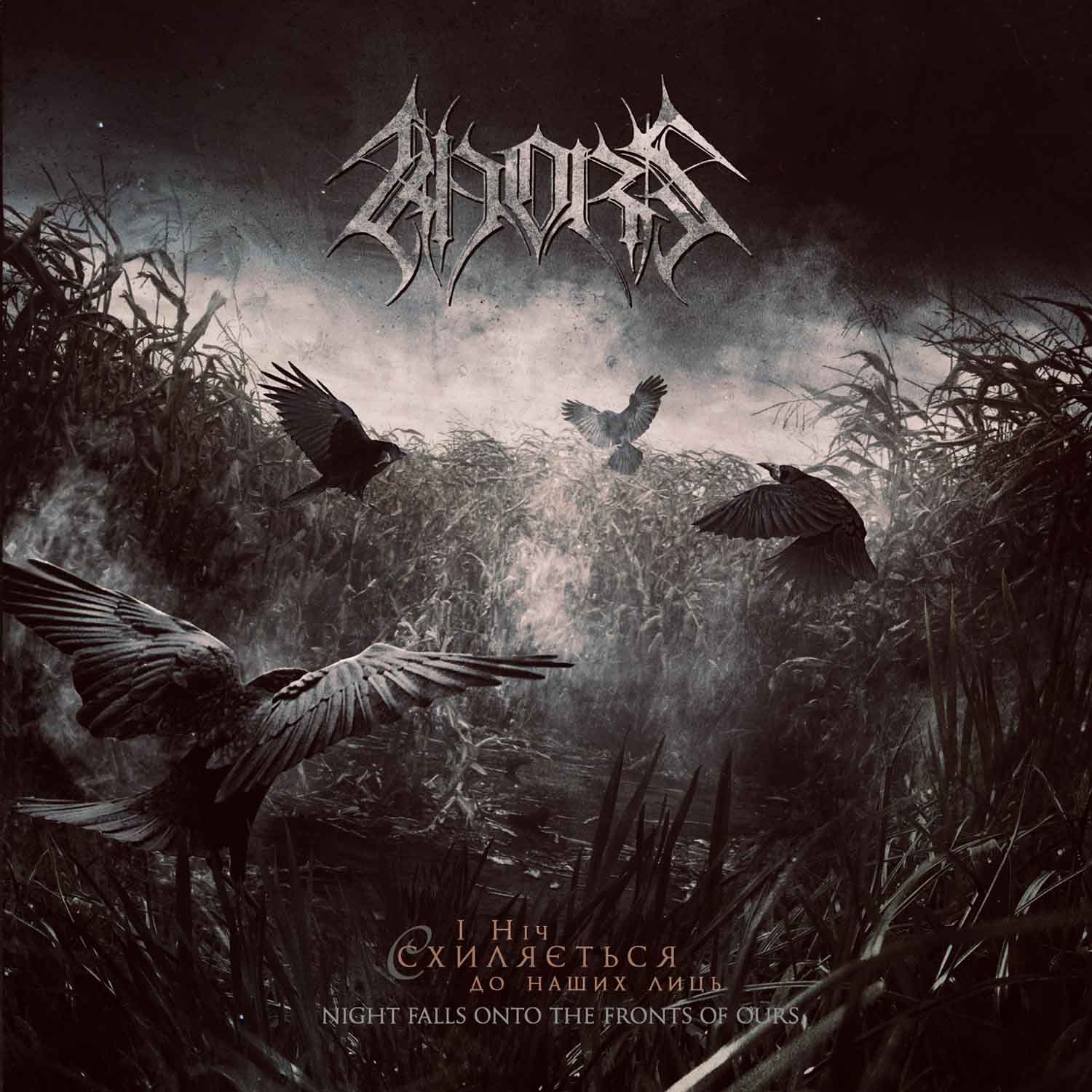
Khors – Night Falls Onto the Fronts of Ours (2015)
Starting out as a light, slavic-styled black rock band, Khors now play depressive alternative rock with double bass drums and black metal vocals in a manner similar to that of Swedish band Katatonia. The difference is that in Cold Khors lacked the content that Katatonia present time-efficiently in their pop-structured songs. Khors pretends to deliver little content inside long-drawn structures in the black metal manner. This makes for ambient rock that is only “atmospheric” but little else. Now they went all the way and became one more alternative-rock-with-harsh-vocals band like the previously mentioned Swedish band or like the Finnish Amorphis. Despite this, Night Falls onto the Fronts of Ours seems to reach its goal within its mainstream constraints. It does not fail, it is just rubbish mainstream music.


My Silent Wake – Damnatio Memoriae (2015)
Funny, confused, tough-guy music for fans of Sludge and the Pink Frothy AIDS approach to songwriting in “diverse” styles stitched together in self-indulgent manner. Each song here is meaningless but has a strong “attitude”. This satisfies most of the Homer Simpsons among metalheads, which is why this will have enough impact. This stretches from the idiotic to the simple music that pretends to be more refined or sensitive. My Silent Wake are a sure commercial bet for labels and a sure formula for artistic failure.


Possession – 1585-1646 (2015)
When you try to make black metal with a punk mentality, you will end up with a very long and repetitive punk song. This is NOT what primitive black metal is, folks. Like most music of its kind, and like most extreme music, this is 80% posturing, 15% music and 5% of something to say. The only reason this sort of band is given any chance is that with the commercial long tail effect the internet provides, niche tastes can be offered a product. Statistically, some clueless idiot is bound to like this heap of messy punk riffs put together by a talentless band.

5 Comments

Tags: , , , , , , , , , ,

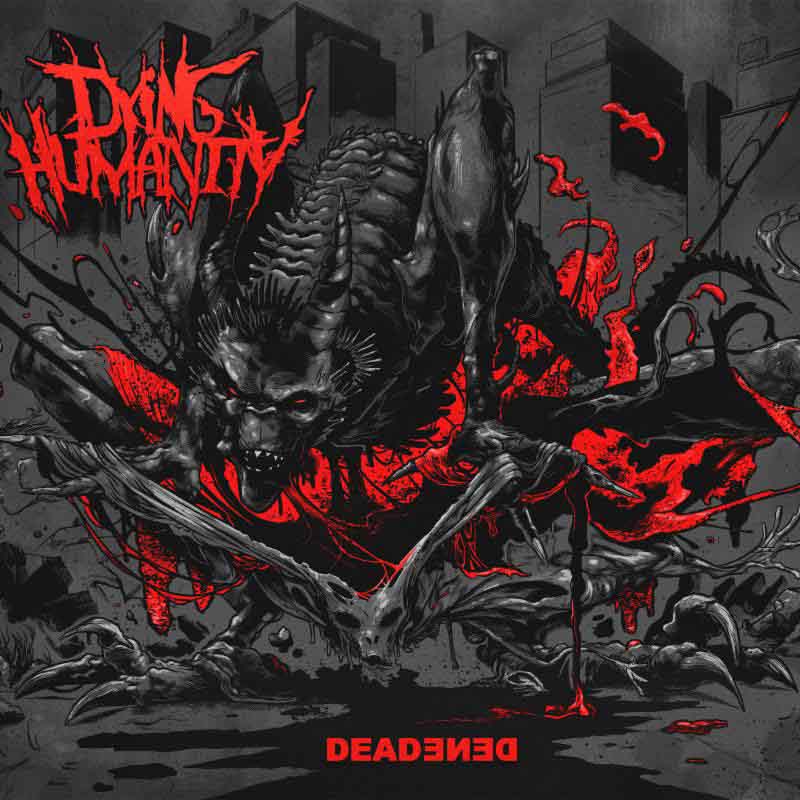
Dying Humanity – Deadened

deadened01

Dying Humanity are the perfect metalcore product. They’ve got all the moves, they know every trick in the book. Trope-masters Dying Humanity present us with a compilation of metalcore cliches titled Deadened which at its most lucid moments almost reaches the sobriety of Blinded by Faith‘s Chernobyl Survivor. Here and there we find nods to more mainstream acts like Killswitch Engage and then back to more extreme modern metalcore and other so-called melodic death metal bands following in the steps of Slaughter of the Soul. Tying mostly unrelated melodies in riffs in that last style, Dying Humanity supports them by the same square, straight-up d-beats ala Adrian Erlandsson.

While Dying Humanity will not appeal to fans of the old school, it will not appeal to fans of any kind of music that revels in attention to logical construction and detail. Deadened may nonetheless prove to be a satisfying commercial success with the casual head-banging crowd which only needs a catchy dose of sterile, well-produced music that has as much staying power as a Big Mac.

1 Comment

Tags: , , , , , , , , , , ,

A Brief History of Grind and Space: Extreme Metal and the Internet

joeperkins01

Introduction

Extreme metal, specifically grindcore music from the beginning of the 21st century to the present day, has been composed and distributed between digital-communities. Grindcore has often existed exclusively within online communities and abandons its previous ‘live’ traditions. This online phenomenon is sometimes described as ‘cybergrind’, defined only partly by its musicality (i.e. rhythm, structure, notation), but more importantly by the cyberspace in which extreme metal music is staged through the Internet. This will detail a brief history of grindcore’s online migration and transient occupation of various cyberspaces on the Internet. I will discuss a few of the reasons for grindcore’s online relocation and evaluate the more discursive nature of the music that warrants it’s suggestively ‘non-musical’ prefix (cyber) in an attempt to provide a more encompassing study surrounding the music.

Space – Cyber

The beginning of the 21st Century saw an online musical phenomenon that made a serious impression on the music business. Grindcore’s online relocation was indeed partly an impression if not a reaction against commercial music businesses and provided a community for self-published and non-profit grindcore to exist. Rosemary Overell’s book,

In an interview with Mike Glenn, ‘programmer’ for Myspace based grindcore band, ‘wecamewithbrokenteeth’; “It was definitely an internet phenomena, although I really don’t keep up with the ‘scene’ anymore. I believe WCWBT kinda took the ‘cybergrind’ thing to a new level and spread it to the masses more so than other acts … our online fan base was definitely our strongest”. My interview was undertaken on Facebook, whereby the ‘wecamewithbrokenteeth’ page is located and acts as their ‘official’ cyberspace. Benedict Anderson may have described this online phenomenon as an ‘Imagined Community’, or self-conceived nation (1991). However, the music’s online exclusivity suggests that it was far from imagined, but as close to a real environment as necessary (for both artist and consumer); the transient nature of cyberspace is more freely adaptable than the set-in-stone physicality of the ‘stage’. In Lysloff René’s, Musical Community on the Internet, he states that:

Many websites do represent the loci of complex networks and social relationships that are in fact dispersed in geographical space. What bought us all together were the metaphorical places that stood as monuments to the social relationships created through them. Thus, Internet research entails a form of travel, in a metaphorical sense to radically different kinds of social place … I argue that on-line communities … are as ‘real’ (or imagined) as those off line. – René, L. (2003)

‘Cybergrind’ exists as a non-profit community whereby free distribution amongst fans is encouraged to promote the music to a wider audience. This was also articulated by Glenn, “The few things we did release were free, I’m a heavy music pirate myself, so why the fuck not? I’m cool with YouTube and all that, anyway, to get your name out there is a plus in my eyes.” An online record label, ‘Grindcore Karaoke’ (2011), enable free downloads for all of their featured-artists. Vocalist for ‘Agorophobic Nosebleed’, J Randall, initiated this non-profit organization. This label ‘employs’ grindcore artists globally, such as Birmingham based ‘Kuntpuncher’, and Japan based ‘Self Deconstruction’. Their first release was ‘Grindcore Lu’au’ by ‘Wadge’ and advertised weekly uploads; their last upload was ‘CLVB DRVGS’ ‘Beach Blanket Bong Out’, published on the 10th March, 2014, however the music remains available for download (last accessed 22/04/15). Tom Bradfield, owner of Grindethic records, has expressed how online relocation has inevitably affected the industry, specifically record labels; “I suspect that even if piracy was somehow eradicated (which it won’t be), then the move to downloading would still have happened anyway. The hard thing is convincing people to pay for something they can easily get for free.” Therefore, the power the Internet has provided a convenient platform for artist self-promotion, but potentially threatens industry establishments such as Grindethic records.

René (2003) describes this phenomenon as a ‘new materiality’; “On-line music production and dissemination set up the conditions for a prestige economy in which ‘goods’ … are exchanged by electronic means. As with other on-line communities … the Internet provides a new materiality through which social interaction and group formation can take place and from which new possibilities for subjectivity and group identity can emerge.” Therefore, grindcore labels/artists may still be adapting to this ‘new materiality’ the Internet continues to provide.

‘Extreme Metal in Lebanon’, as researched by Mark LeVine, exists on the Internet for political reasons. In his book, Heavy Metal Islam: Rock, Resistance, and the Struggle for the Soul of Islam (2008), LeVine describes the band, ‘Oath to Vanquish’, as one of the “most distinctive Death Metal/Grind bands in the MENA”. The Lebanese government banned certain Heavy Metal CD’s at the beginning of the 21st Century, however they remained increasingly available on the Internet, a platform less hindered by political censorship. LeVine describes the Internet as a ‘liberating Power’ and musicians as part of a “cyber-intifada”. The band tackle political issues in their music lyrically, “through the veil of allegory and unsettling imagery”. ‘Oath to vanquish’ are signed to UK-based ‘Grindethic’ records, however according to LeVine, “the farther you are from the mainstream in Lebanon, the greater the risk of persecution.” According to LeVine, extreme metal in Egypt is similarly restricted, “many young Egyptians found more useful things on the web, from political blogs to heavy metal forums, that help them resist or at least survive, government oppression.”

The absence of ‘live performance’ due to a rise in online-presence has raised certain authenticity debates, some of which I shall discuss now. In my own interview with Tom Bradfield (Grindethic), he wrote that:

The Myspace era was probably the turning point for underground bands being able to exist outside of the live environment. Before the Internet there was no point in having a band that didn’t play gigs … Now there was a way to expose yourself to potential fans and build a support base without needing to play live. This coincided with home recording becoming more affordable so bands could produce demos of ever increasing quality without studio time necessarily being a prohibitive cost. – Tom Bradfield.

The absence of live performance and the internet-as-stage may be what Chanan describes a loss of authenticity due to various techniques of reproduction:

Technique of reproduction detaches the musical work from the domain of the tradition that gave birth to it, and destroys what Benjamin calls the aura which signals its authenticity; except that it also creates new types of musical object which do not belong to a particular domain but rather anywhere that a loudspeaker (or earphone) may be found – some of these recordings cannot be performed live at all. This process also redefines the audience, which comes to be constituted quite differently from before. It is no longer limited to traditional concepts of community. – Chanan, M. (1997) 

However I believe that the ‘aura’ is still present in a cyberspace, but I agree that there is obviously a detachment from traditional conceptions of ‘liveness’ and ‘community’. Grindcore has therefore transcended this barrier of authenticity by its often-unfeasible existence in a ‘live’ and ‘real world’ environment. This further points to grindcore’s inherent anti-establishment disregard for previous ‘formats’ (I will later discuss this in relation to musicality) and is therefore a liberating factor for both musicians and listeners. In the same way that the Beatles’ never performed ‘Sgt. Peppers’, whereby live performance wasn’t felt necessary or wasn’t possible; Glenn states, “We never actually played live shows, although I’ve heard stories of people claiming to be us and playing shows under the name, haha. WCWBT was strictly an online thing.” Similarly, Tom Bradfield told me about one of his own bands:

I joined a band called Repulsive Dissection where the members had come together for the first time over Myspace. We were variously located in Ukraine, Japan, UK and Sweden, so the idea of playing live was never seriously considered … The internet allowed us to send material backwards and forwards online and collaborate on writing. We could all record separately and compile our efforts at the end, and to this day I’ve never met the guitarist in person. – Tom Bradfield.

Weinstein (2000) states that, “Most bands never sign a record contract. They are the losers in a Darwinian struggle for access to the facilities of the mediators: The record companies and the concert promoters”. However, Bradfield argues that it is in fact; the record labels are now equally involved in a ‘Darwinian Struggle’, although they’re power as ‘gatekeepers’ (or trend-setters) within the industry are still apparent in providing a ‘stamp of approval’:

I’m sure mass consumption of music, and all media in general, can only be heading towards streaming everything online, but a new generation of artists will embrace this and find new ways to present their music. How labels will survive this change is harder to foresee. I think there will still be a need for labels to exist as a way of putting a stamp of approval on the top bands and helping to raise them above the rest. – Tom Bradfield.

Australian grindcore band, ‘The Bezerker’, existed online for both performance limitations and to simultaneously self-promote through successful social media such as Myspace and their own website. They also departed from ‘Earache Records’, famed for signing traditional grindcore artists such as, ‘Napalm Death’ and ‘Carcass’. This short text by Brian Fischer is the first time I have seen the term, ‘cyber-grind’ used in any published writing, although does little to describe what ‘cybergrind’ actually is:

The bezerker is an extreme metal entity from Melbourne that plays a noise form of cyber-grind. The band is the brainchild of … Luke Kenny, a one time metal and grind drummer who was forced to give up his instrument after sustaining near-fatal injuries in a motor vehicle accident… Kenny began to produce music that was a cross between “gabba” techno and industrial grind … The Berzerker split from Earache in 2008 and their fifth album came out on September 1, 2008 through the band’s website exclusively. – Fischer-Giffin, B. (2002)

‘The Bezerker’ may have departed from the established ‘Earache Records’ due to the apparent trend towards the self-sufficient sustainability of Internet based promotion and publication.

Musicality – Grindcore

The Oxford dictionary defines ‘Cyber’ as, “Relating to or characteristic of the culture of computers, information technology, and virtual reality”. In which case, one could argue that grindcore music is now in a ‘cyber age’, where computers are an interface not only for music production, but also for mediation, collaboration, and consumption. Certain musical aspects can be attributed to the style as a contributory defining factor:

“I’m proud to say it’s the fastest, and nothing can be faster, sorry Dave, [Dave Lombardo, Slayer] but it’s just not fast enough mate” – Mick Harris, Napalm Death

Derek Roddy (2007) describes ‘blast beats’, a traditional musical signifier of grindcore as a genre defining feature: “Until now, blast beats have been a musical myth … a part of musical expression since the 1980s with the European grindcore movement … a form of musical expression on it’s way to becoming it’s own genre.” The speed and physical performance of grindcore ‘blast beats’ could be seen as, “a fulfilling achievement that one can be proud of”. Drum machines are often programmed to perform ‘blast beats’ at a speed and metronomic precision previously unachievable in ‘human performance’. Drum machines are used as an instrumental signifier of the ‘post-human’ speed and technical precision predominantly unachievable in human performance. (Refer to my transcriptions of ‘Wecamewithbrokenteeth’ and ‘Malodorous’). This renders Mick Harris’ (Napalm Death) statement that ‘nothing can be faster’ as limited to a ‘live’ grindcore tradition. The processual nature of genre shows a dramatic transformation of opinion to what constitutes ‘grindcore performance’, when drum machines replace human; ‘Sorry Mick, it’s just not fast enough mate’!

“We’ve sort of abandoned musical standards, we don’t write songs to the ‘rock’ sort of format. We’re pretty much the end of the line, I don’t think you’re going to get a band that’s more extreme than us.” – Shane Embury, Napalm Death

Napalm Death, along with the other grindcore artists strive to be the most ‘extreme’ in terms of musicality. Overell (2014) describes this as a sense of ’more-than-ness’. If the performance is then eradicated from the ‘brutal’ experience, surely this lack of ‘liveness’ constitutes less extremity. The ubiquitous use of drum-machines in cybergrind is a way of sonically identifying the music as ‘digital’ or ‘cyber’. Thus the music’s existence is inherently impossible in a real-world environment such as a stage; it is also reliant on computer based interfaces i.e. VST instruments, DAW’s, Audio Interfaces which are becoming increasingly more popular. Harris (2006) states that, “Only in slower forms of extreme metal is ‘putting on a [live] show’, in a conventional sense, possible.” Harris does not elaborate on his use of the word ‘conventional’, although could be referring to the use of electronic instruments and physical constraints of an ‘acoustic’ musical performance. ‘Wecamewithbrokenteeth’, gained popularity through Myspace around 2005 and built their fan base through social networking. Their music was produced on FL Studio, and until 2006, only used computer generated instruments, minus vocals, such as FLslayer for synthesized Guitar tracks; the low-end pitches would have been impossible to effectively produce on a detuned electric guitar. The vocal parts are the only ‘live’ recorded part of the music.

There are many ways in which ‘extremity’ is now raised within the Genre. The first is musicality, where musicians are striving to make the fastest, shortest or most sonically dense Grindcore possible. (Refer to my transcriptions of Napalm Death and Clotted Symmetric Sexual Organ). The second and more controversial way in which extremity is pushed is lyrical subject matter, resulting in subgenres such as ‘Porogrind’ and ‘Goregrind’. As mentioned in Nasum’s online biography, a change in aesthetic and lyrical content results in a deviation from ‘true grindcore’. Tom Bradfield states, “The one thing I’m bored of is all the misogynistic rape/gore type lyrics that are still pretty prevalent.” Bradfield is more concerned with ‘punkier origins’ or traditional grindcore aesthetic, “For many though I think the punkier origins of grindcore lend it to a more political direction which I still think works well with the inherent aggression in the music.”

Despite this, the lyrics in Grindcore music are often unidentifiable due to the vocal style. This is however, unimportant; Simon Frith’s (2007) theory on Metal vocal style; “ The tone of voice is more important … than the actual articulation of particular lyrics. We can thus identify with a song whether we understand the words or not, whether we already know the singer or not, because it is the voice – not the lyrics – to which we immediately respond.” Weinstein (2000) adds that, “Special sounds, especially screams, serve to emphasize the power and the emotionality of the voice”. Tom Bradfield states that, “To be honest I’m not particularly interested in the lyrical content of bands, even if it aligns with something I personally believe in. First and foremost I care about the music itself, and the concepts or message behind the band doesn’t sway me too much either way when it comes to signing them.”

There were many complex eco-systems in action during the emergence of Grindcore, of which I will give a brief description now. Common belief is that grindcore was initiated in Birmingham with Napalm Death. The local aspect of Birmingham’s grindcore is often romanticised but its rapid globalization was apparent from its early years. ‬‬‬‬‬‬‬‬‬‬‬‬I have provided one a brief case study into the globalisation and subsequent migration of grindcore into cyberspace. Popat (2005) argues that the nature of the Internet is solipsistic, “Communities of interest [Music] are most likely to arise since communities of locality and social structure, for example, mean little in the remoteness of the online environment.” However, I feel that this could be conceived as creating some form of online social ‘locality’. The locality is in this case, a specificity of taste and tied by interest. She continues, “Although a vast number of people with different interests and concerns may be using the Internet, it is likely that they will only tend to communicate with others sharing their interests”.

‘Clotted Symmetric Sexual Organ’ (C.S.S.O) were a Japanese grindcore band active from 1993 – 2001. Their composition, ‘P.S. I Love You’, was released on a compilation or ‘Split’ CD entitled ‘Grindworks’, featuring other grindcore artists Nasum (Sweden), Retaliation (Sweden), Vivisection (Japan) and C.C.S.O (Japan). The CD was released in Sweden on the label, ‘Grindwork Productions’, whom only ever released two albums; the compilation mentioned and Swedish group, Nasum’s ‘Domedagen’ (1994). ‘P.S. I Love You’, resonates with the jazz standard by Gordon Jenkins (1934), and later the Beatles (1962). As articulated by Shane Embury, grindcore abandons previous ‘rock formats’, and therefore the reclaiming of ‘P.S. I Love You’ is a way in which C.C.S.O subverted the ubiquitous ‘love song’ as a reaction against conformity and ‘popular’ musical idioms. The total length of the composition, 10 seconds, also suggests a reactionary musical form established by Napalm Death as a grindcore idiom. This particular case demonstrates the global impact of grindcore in 1994, and how it’s ‘rarity’ elicited an online re-release through the ‘The Grind Show” on YouTube (3 October 2011). The video has 124 views (last accessed 14 February 2015) and published by ‘The Grind Show’, a YouTube channel and cyberspace seemingly dedicated to sharing rare grindcore recordings. The obscurity and lack of popularity for this particular track is by no means a reflection of cybergrind’s popularity in general (I will demonstrate this in later case studies), but more a reflection of a communal effort in preserving grindcore of the past, or ‘non-cyber’ grindcore into a virtual and residual ‘mosh-pit’ or communal appreciation and canonization of ‘extreme’ music that is no longer active as a ‘Live’ tradition (C.C.S.O haven’t performed live since 2001).

This canonization within cyberspace also exhibits bands such as ‘Napalm Death’ despite their ongoing ‘live’ presence and commercial releases. This is quite often an exception whereby ‘Napalm Death’ transcends both ‘live’ and ‘cyber’ communities, most likely due to their wide acceptance as satisfying the definition of ‘grindcore’. This online existence is celebrated as a further disassociation from previous ‘rock formats’. Ironically this music has now fallen into a Cyberspace, and more importantly, it has been canonized within ‘The Grind Show’ musical-program, thus adopting an extra-musical narrative as part of a contemporary grindcore community. Of course, most ‘popular music’ can be found somewhere on the Internet, but it’s online exclusivity (apart from several hard-copies available second hand on Discogs) could infer it’s belonging to a cybergrind community. This dissemination could also be seen metaphorically as a larger scale ‘split’ recording, whereby Artists share a physical platform or space for economic viability, building a larger fanbase, and generally building a larger sense of community.

Following on from talking about musicality, collaborative techniques used in a traditional group environment are varied in online grindcore. Tom Bradfield spoke to me about his experience collaborating over the Internet:

I joined a band called Repulsive Dissection where the members had come together for the first time over Myspace. We were variously located in Ukraine, Japan, UK and Sweden, so the idea of playing live was never seriously considered.  We came close once but a visa issue scuppered plans at the last minute. The Internet allowed us to send material backwards and forwards online and collaborate on writing. We could all record separately and compile our efforts at the end, and to this day I’ve never met the guitarist in person. – Tom Bradfield.

A similar musical experience was realized by grindcore artists, ‘Malodorous’, who compose in remote geographical locations for a ‘web-based’ collaboration. Sita Popat argues the Internet as an enabling factor for opportunities in remote interaction and collaboration “on a scale never before imaginable”. She explains that the possibility to communicate and transfer media “simply, quickly and relatively cheaply between people around the globe.” She also believes that the Internet provides a uniquely asynchronous collaborative process can potentially work in favour of creativity. “This process promotes ‘reflective’ communications and the considered response. It does not rush the communication into a reaction, and as such it allows time for crossing that proscenium thoughtfully.”

Overell’s writing, although partly focused on affective space, does not mention the Internet as a space in itself, although focuses exclusively on grindcore as a ‘live’ tradition. She discusses the benefits of long distance communication for organisation of international events, “Via email, Sensei nominated suitable dates and Joel organized gigs at Melbourne venues.” Rene describes the ‘culture of simulation’ to what Arturo Escobar calls ‘cyberculture’. Rene goes on to describe that, “although the Internet may be rooted in familiar terrain, it still holds the promise of new cultural narratives and social formations.” The Internet has proven to be as much of a social phenomenon, if not more than grindcore music itself. Popat quotes Dix et al, “[The Internet] is much more a social phenomenon than anything else, with users attracted to the idea that computers are now boxes that connect them with interesting people and exciting places to go, rather than soulless cases that deny social contact”.

This implies that our methods of communication and interaction are transient, and as a consequence, musical output evolves accordingly to its situation. I have argued that ‘extreme metal’, for aforementioned political and economical reasons, has particularly settled in an online environment for what Overell might call ‘brutal belonging’, within an affective space. Despite the more traditional ‘live’ setting for grindcore music, Tom Bradfield agrees that, “for most underground bands, the majority of fans they make online will dwarf the number of total number of people that ever see them play live.”

Bibliography:

  • Anderson, B. O. R. (1991) Imagined communities: reflections on the origin and spread of nationalism. 2nd edn. New York: Verso Books.
  • Born, G. (2010) ‘For a Relational Musicology: Music and Interdisciplinarity, Beyond the Practice Turn’, Journal of the Royal Musical Association, 135(2), pp. 205–243. doi: 10.1080/02690403.2010.506265.
  • Chanan, M. (1997) Repeated Takes: A Short History of Recording and Its Effects on Music. United Kingdom: Verso Books.
  • Cottrell, S. (2010) ‘Ethnomusicology and the Music Industries: An Overview’, Ethnomusicology Forum, 19(1), pp. 3–25. doi: 10.1080/17411912.2010.489279.
  • Dixon, S. (2002) ‘Absent Fiends Internet Theatre, Posthuman bodies and the Interactive Void’, Performative Arts International.
  • Feld, S. (2001) ‘A Sweet Lullaby for World Music’, Globalization, pp. 189–216. doi: 10.1215/9780822383215-011
  • Fischer-Giffin, B. (2002) Encyclopedia of Australian heavy metal. United Kingdom: Brian Fischer-Giffin.
  • Frith, S. (1996) ‘Music and Identity’, in Questions of cultural identity. Thousand Oaks, CA: SAGE Publications,
  • Frith, S. (2007) Taking Popular Music Seriously (Ashgate Contemporary Thinkers on Critical Musicology). Aldershot, England: Ashgate Publishing, p. Towards an Aesthetic of Popular Music.
  • Keith, K.-H. (2006) EXTREME METAL: MUSIC AND CULTURE ON THE EDGE. OXFORD: Berg Publishers
  • Laderman, D. (2010) Punk Slash! Musicals: Tracking Slip-Sync on Film. Austin: University of Texas Press
  • LeVine, M. (2008) Heavy metal Islam: rock, resistance, and the struggle for the soul of Islam. New York: Crown Publishing Group.
  • Michelsen, M. (2004) ‘Histories and complexities: Popular Music History Writing and Danish Rock’, Popular Music History, 1. doi: 10.1558/pomh.v1i1.19.
  • Overell, R. (2014a) Affective Intensities in Extreme Music Scenes. England: Palgrave Macmillan. doi: 10.1057/9781137406774.
  • Overell, R. (2014b) ‘Brutal Belonging in Brutal Spaces’, Affective Intensities in Extreme Music Scenes. doi: 10.1057/9781137406774.0007.
  • Parnham, J. (2011) ‘A Concrete Sense of Place: Alienation and the City in British Punk and New Wave 1977-1980’, Green Letters 15:, pp. 76–88.
  • Pedlety, M. (2013) ‘Ecomusicology, Music Studies, and the IASPM: Beyond “Epistemic Inertia”’, IASPM@Journal, 3(2), pp. 33–47. doi: 10.5429/2079-3871(2013)v3i2.3en.
  • Phillipov, M. (2012) Death Metal and Music Criticism: Analysis at the Limits. United States: Lexington Books.
  • Popat, S. and Beardon, C. (2005) Invisible connections: dance, choreography and Internet communities. 1st edn. London: Taylor & Francis.
  • René, L. (2003) ‘Musical Community on the Internet: An On-Line Ethnography’, American Anthropological Association, Vol.18, No. 2, pp. 233 – 263.
  • Roddy, D. (2007) The Evolution of Blast Beats. World Music 4all Publications.
  • Thrift, N. (2007) Non-Representational Theory: Space, Politics, Affect. United States: London ; Routledge, 2008.
  • Weinstein, D. (2000) Heavy metal: the music and its culture. Boulder, CO: Da Capo Press.


Joe Perkins, 2015
www.joeperkinsmusic.com
6 Comments

Tags: , , , ,

Today’s Recommended Playlist

castleruins01

For those of us who think that life is much more than buying the latest technology gadget we don’t need, watching the latest Hollywood TV commercial disguised as a movie or taking photo “selfies” pretending to be into something you really aren’t, romanticized medieval fantasy, ancient myth and legend provide not an escape from reality, but a highlighting of what is worthy of praise in life and human beings. This is the fantasy of Homer, Tolkien, Virgil or Lovecraft. Underneath the enveloping myth of the story, their stories preserve eternal truths about human nature and show it in a more realistic way than the candy-flavoured, shock-oriented realism of George R.R. Martin.

Today, we shall explore the idealist fantasy that sings to us in poetry of the gods, of virtue, and of the indelible kinship to nature as a whole that man has almost forsaken. In an inverted world in which greed has slowly attained a position of honor and in which ideals, philosophy and non-profitable values are systematically mocked, we sometimes find ourselves in need of a reminder that we are not just deluded madmen upholding untenable precepts of a long-forgotten age or even worse, believers of ideas that have never been in line with reality at any point in history.

Between the bushes we stared
At those who reminded us of another age
And told that hope was away
Forever
We heard the elven song and
Water that trickled

What once was is now
Away
All the blood
All the longing and pain that
Ruled
And the emotions that could be stirred
Are away
Forever

We are not dead
We have never lived


https://www.youtube.com/watch?v=M8cApDQm2rg

24 Comments

Tags: , , , , , , , , , ,

Nethertale´s Abyssal Throne Out Now!

abyssalthrone1

Abyssal Throne is now in stores. On Monday, May 4th, Nethertale is releasing an average album, a supposed conceptual work of some appeal to mainstream metal fans in the vein of technical wanking death metal, which is accompanied by a soon to be released novel written by its own vocalist. A run-of-the-mill work of a band that will bring more of the same to please the crowds of metal posers. Available now in Tipo stores, Leyenda rock, Pentagram and Loita underground … Surrender to the Commercial Mainstream!

23 Comments

Tags: , ,

Tinker, Tailor, Soldier, Spy (2011)

tinker_tailor_soldier_spy_movie_poster

Compared to Tinker, Tailor, Soldier, Spy most films appear to simply be extended commercials with music videos for the emotional parts. Telling the story of Soviet infiltration of the British secret services through an interlocking series of clues, this film takes the approach that Agatha Christie might use for one of her cerebral murder cases and applies it instead to international espionage. It will never outsell The Avengers because in this film, every detail is part of the mechanism that builds up to an intense finale for its ultimate revelation. Even more damning, themes in this movie illustrate human narcissism, how the West was destroyed by the same individualistic self-interest that made it strong, and the importance of honor, loyalty and truthfulness.

Gary Oldman stars as John le Carré’s character George Smiley, modulated from the outsider nerd in the book to a methodical and highly analytical man who finds much of society around him to be short-sighted and erroneous. Like the best characters from literature, he endures civilization as it is but upholds it as it is at its best, creating a worldview that would approve of the mythological analysis of the human soul as found in Slayer lyrics or the darker days of grindcore. Exiled from his position at MI6 because of his refusal to endorse a new and magical source of Soviet secrets, and passed over by those who built careers on it, Smiley hunts for a “mole” or double-agent who is compromising British intelligence whenever it tries to operate in enemy territory. Unlike those who have taken over his former role, he searches through the type of logical analysis and study of the relationship between details that made sleuths like Sherlock Holmes, Ellery Queen, Hercule Poirot, the Continental Op, Phillip Marlowe and Miss Jane Marple legends in their field.

Sadly for most modern audiences, this film requires attention. No detail is spurious and every scene follows from the systematic and interlocking pursuit of details. In addition, the filmmakers layer that story with parallel themes of love and loss, loyalty and motivation, and strength of character versus the tendency to appeal to pleasant but erroneous notions that receive the aplomb of journalists, politicians and the faceless voting masses. While its logicality deserves praise, the emotionality of this film in bringing out the loneliness of its characters and the equal isolation of the struggle for truth, as not a motivator but a shaper and revelation of personality, enhances a solid story into an epic one. The acting is brilliant without being self-absorbed — no one in this film looks like they are acting, or resembles other characters they have played in other films — and the soundtrack is minimal and on point, the cinematography both bleak and elegant, and the directing and editing show a perfect sense of timing that both preserves atmosphere and cuts out anything but the powerful. Of the films made in the 2010s, this will either be the best or in the top three, because movies this intense rarely come along at a rate of more than a handful per generation.

10 Comments

Tags: , , , , , , , , , ,

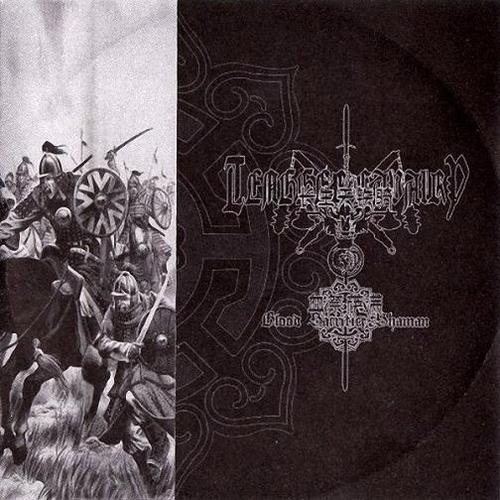
Tengger Cavalry – Blood Sacrifice Shaman

Blood+Sacrifice+Shaman

Tengger Cavalry is a band from Mongolia whose main selling point is that they make extensive use of Mongolian traditional instruments in a metal context. Now, it may be that I am prejudiced both towards East Asian metal and the prominent use of folkloric music in metal, but there are statistical reasons for that. East Asians are not known for their originality in metal (not only…). And very often, when a band sells itself mainly because it uses traditional instruments we can smell the stink of gimmick all over it. Some kind of prejudice is based on the probability of an event given our experience. Sometimes enough experience justifies the validity of this probability. And sometimes we may find ourselves erring in our prejudice. But Tengger Cavalry are not the exception, they are the rule.

The “metal” element in this music is provided through a Rammstein-styled modern stadium heavy rock, a little ala Rob Zombie. The rest is comprised of simple, repetitive melodies played on folk instruments that are never developed . Decorations are provided by different kinds of instruments, while the Rammstein element is used as a backbone. This would work very well as a soundtrack for Arcade machine slasher games, providing a momentary sugar-high with no lasting nutritional value.

The production value here is necessarily very high quality. The music is incredibly catchy and all the same irrelevant, placing Blood Sacrifice Shaman in the same category of embarrassingly cartoonish party-rock-pretending-to-be-metal as late Chthonic and Babymetal. Recommended as T.V. commercial jingles for on-line games and such.

https://www.youtube.com/watch?v=9kaKdzDwkwc

3 Comments

Tags: , , , , , , , ,

The historical background of MetalGate

heavy_metal_is_rebellion

From a recent interview with our editor:

You and the other reviewers are notorious for having incredibly harsh reviews. What would you say are your favorite metal albums of all time?

These metal albums have stayed in weekly rotation over the years:

  1. Massacra – Final Holocaust
  2. Slayer – Show No Mercy
  3. Incantation – Onward to Golgotha
  4. Sepultura – Morbid Visions/Bestial Devastation
  5. Deicide – Legion
  6. Beherit – Drawing Down the Moon
  7. Cianide – A Descent Into Hell
  8. Atheist – Unquestionable Presence
  9. Demilich – Nespithe
  10. Demoncy – Joined in Darkness

The reason my analysis is different than that of other metal sites is that populist writers prioritize surface novelty and underlying similarity to mainstream rock, where I look at metal as a form of art in its own right. It should be measured by the quality of its internal organization and ability to artistically represent a vision of power. The popular “best of” lists specialize in bands that will be forgotten in a few years because when the novelty is gone, they are the same old stuff you could get anywhere else.

I keep a copy of Sepultura Morbid Visions/Bestial Devastation in every room in the house. I dislike being too far from one at any given time.

What contemporary bands should we be paying attention to?

In music as in all things, I am an elitist. This means that I want the best music available because time is short and there is no point wasting it on the trivial. Keep an eye on Demoncy, Sammath, Blaspherian, Kjeld, Desecresy, Kaeck, Blood Urn, and Kever.

Some accuse your site of manufacturing a controversy with MetalGate but the SJW infiltration of political correctness in metal has technically been going on since the late 90s. Do you think metal can actually be tamed by leftists and what is your perspective on the attempts to make metal safe?

SJWs are incapable of understanding the aesthetics of metal, which is why all leftist music tends to be metal-flavored riffing wrapped around rock or punk. Metal music sounds the way it does because its outward form represents what its composers wish to communicate. Ignoring lyrics and imagery, which are entirely secondary to composition much as production is, the music itself conveys an abstract and distant sound that makes beauty out of ugliness through a respect for power. In metal, what is powerful creates excellence, and from within that comes the elegance of form and portrayal of reality that makes great art.

Rock takes the opposite view. It is basically intense repetition with an ironic twist at the end, which means that it differentiates itself through “message.” People love catchy lyrics that embody some idea they find appealing at the time, but these are always experiences based in the individual, which is why almost all of rock music is love songs or “protest music” that wails about how inconvenient it is that some complex idea stands between the individual and a good time. You cannot both be pro-nationalist and listen to rock music.

Metal came about when Black Sabbath wanted to interrupt the hippies — what they called SJWs back when they opposed The Establishment — with some “heavy” (hippie slang for intense, epic and terrifying) realism. The West was falling apart, and the popular movements insisted that if we just focused on peace, love and happiness, all our problems would magically vanish. This focus on reality makes metal appear right-wing to leftists. It embraces consequentialism, worship of the ancient, distrust of the narcissism in the individual, and the idea of conflict itself, so that those who are strongest win. This inherently clashes with the individualist groupthink of the left, which seeks to avoid conflict and manage people indirectly through guilt.

When SJWs make metal, it ends up sounding like punk rock or rock because those forms of “protest music” reflect the individualist and yet group-oriented mentality of the SJW. Like the Christians with their “white metal” in the 1980s and the many times commercial record labels have tried to launch rock bands disguised as metal to capture the metal audience, social justice workers (SJWs) are trying to force entry by liberal ideas into metal so they can take over the space of culture that it dominates, and its audience, and indoctrinate them in leftism. Both media and labels support this because it is cheaper to make rock bands than metal bands.

Metalgate rose to resist this conspiracy and call it what it is, which is an attempt to control our minds through propaganda in music, as well as a gambit to replace what we know of as metal with a “safe” version based in indie rock. Most people do not know it, but metal generates a lot of income because metal fans are loyal to the genre over the course of their lives. Record labels could make a lot of money if they could sell the same old pap with metal flavoring. Luckily metalheads are resisting as they have resisted every attempt to assimilate their genre into rock ‘n roll, break its spirit and make it repeat the same dogma that exists in every other genre of music.

8 Comments

Tags: , , , , , , , , , , , , , , , , , , , , ,

Classic reviews:
A B C D E F G H I J K L M N O P Q R S T U V W X Y Z