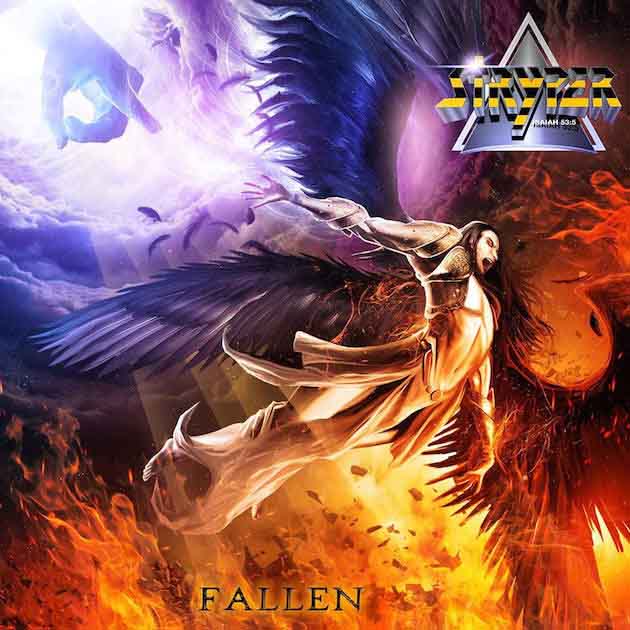
Christianity as an ‘attack’ on metal might not be as trendy as it used to be, but Stryper never got the message. They reformed in 2003, and someone out there has to be buying their albums, right? The Billboard 200 seems to think so, and the existence of Fallen means, at the very least, that there is still an audience of Christian evangelists that a shrewd marketer can take advantage of. Add to that a more technically skilled visual artist for your cover and some minor updates to your image to make you trendy for this decade, and you get a more religiously acceptable way to listen to some modern pop music and then quickly forget about it.
Make no mistake about it – Stryper is certainly Christian propaganda. I don’t think anyone goes to Stryper looking for an intelligent portrayal of Christianity’s tenets (as opposed to said propaganda), but I could be mistaken about this. They certainly won’t succeed, because Fallen sticks to a fairly basic set of lyrical/ideological templates. A couple of songs here are simple retellings of scriptural events. A few others are songs of victimhood and impending eternal salvation, which are also theologically shallow. Like many other Christian musicians, Stryper also falls victim to the tendency to write thinly disguised secular love songs, but that’s hardly a selling point. I wasn’t expecting otherwise from this band, but given how many anti-Christian bands fall through the DMU meat grinder, it’s occasionally interesting to see another side’s agitprop in comparison to their rough equivalent here, like generic simplified Satanic or nationalist themes.
Backing this up is a fairly generic hard rock band that admittedly trends more pompous and theatrical than average for the style. This is likely a throwback to the band’s “glam” past, but it makes for an understandably vocal heavy experience. Michael Sweet is a reasonably talented singer, but he seems to obsess with multitracking his voice, especially during Fallen‘s multitude of Big Dumb Choruses™. Besides the vox, there really isn’t much to latch onto here. It’s possible that more traditional metal technique has crept back into Stryper’s sound since their halcyon days of commercial success in the 1980s, but with 30 years of production wizardry in the mean time, it can be hard to tell. The band also throws in a cover of Black Sabbath’s “After Forever” for what are presumably lyrical reasons, and even in its more vocally bombastic form here, it outdoes Fallen‘s originals in mood and organization. It does not bode well for you to be outdone by your choice of covers.
In the long run, Stryper is too inoffensive to draw my hatred, but I am certain the local community will be more than willing to savage this album.
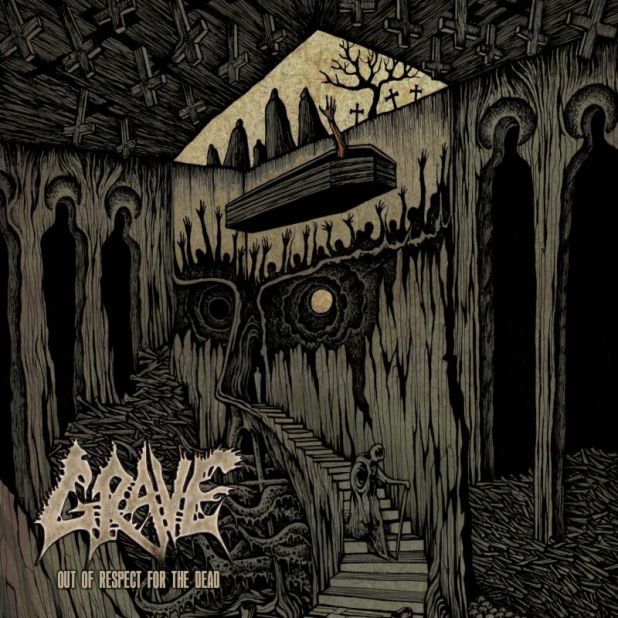
As a death metal listener, I always ended up favoring the more melodic, complex substyles as exemplified by the work of bands like At The Gates and Necrophobic. Grave isn’t those, never was them, and probably will never will be. I can’t really fault them for their lack of ambition, but the impression I derived from previews of this album’s tracks seems generally accurate. Out of Respect for the Dead is an adequate recording, considering that it’s a retread of a basic style with few detours into others, but the aforementioned lack of ambition makes it difficult to appreciate the expertise Grave displays in their small niche.
As a deathpop album, this succeeds and fires on more cylinders than much of the other deathpop I’ve listened to in recent months. The song structures, while generally basic and reliably verse/chorus, show some expertise in hiding it through simple techniques like varying up the bridges and not forcing the vocalist to repeat the title of the song every 15 seconds. Furthermore, Grave tends to shove their most memorable riffs towards the beginning of each track; while this is a compositional limitation to be overcome, it’s a good idea from a commercial stance since it’ll at least recapture the attention of audience members whose interest might end up fading otherwise. Other hooks are carefully sprinkled throughout the tracks – the occasional “big” riff combined with some skilled use of tempo and texture shifts helps to maintain a basic level of musicality and memorability throughout the album. The product remains simple and accessible enough in spite of its consistent death metal aesthetic; and thusly Grave is guaranteed to sell albums, although I don’t know how much money they’re actually making off their musical legacy since the death metal niche is still not particularly large.
These successes are assuredly not enough to push Grave to the top of the Swedeath pile. They’ve clearly practiced their style to the point that it’s probably trivial for them to pump out a new album semi-regularly. However, most of the strong points of these songs merely make me wish that Out of Respect for the Dead was more ambitious in its songwriting. A failure in that regard is arguably more noble than a lack of effort, although from a philosophical stance that’s not a debate of particular importance or merit, especially when other bands have succeeded. If you absolutely need ultra-basic death metal in the Swedish vein, though, this will probably satisfy your needs.
When issues arise like those of ideological fascists in metal, whether of the SJW or far-right types, the inevitable division between art and propaganda arises. Having written about this for over two decades, I make the following distinction: art has artistic purpose, which is to reveal; propaganda has dogmatic purpose, which is to condition and manipulate the mind through projecting a sense of self-congratulatory correctness onto the perceiver.
Luckily, others have written about this topic, and well. From Canadian author Robertson Davies writing at First Things comes this cogent analysis:
When I was a boy, I was a voracious reader. My home had plenty of moral literature on its shelves, and I was urged to read it for my betterment. There was lots of other literature, as well, but I was not forbidden, only discouraged, from reading it as it was said to be “beyond me,” which I quickly discovered meant that it dealt with life pretty much as life was, and not as the determinedly moral writers wanted me to think.
…I could not stomach Little Lord Fauntleroy, who presented me with a political puzzle especially hard for a Canadian: What was that boy, and what did he do? He was an American, but by chance he inherited a title and went to England and became a Lord, and thereafter was remorselessly democratic toward anyone who kept it firmly in mind that he was a Lord, and behaved accordingly. The Little Lord existed to hammer home two things that were presented as mighty truths: We must be democratic and we must recognize the moral superiority that goes with poverty. It was easy, I thought, to be a democrat if everybody toadied to you, and I wished that the Little Lord could spend a few days at the school I went to, where to be known as a tireless reader (for I could not conceal it) was to be an outcast. Many of my persecutors enjoyed the blessing of poverty, but it did not seem to improve their characters. They were savage, jealous, and without bowels of compassion.
My sanity was saved by the books I read on the sly. Dickens, where evil people were plentiful and often rich, successful, and attractive. Thackeray, where snobbery seemed to be the mainspring of much of the action. Thomas Hardy, where life was complicated by opposed moralities and the uncontrollable workings of Destiny, and where God was decidedly not a loving Father. I did not know it at the time, but of course these were the works of literary artists who observed life with keen eyes and wrote about what they saw, as their widely varying temperaments enabled them to see. When I myself became a writer, it was these whom I chose to follow, as best I could, and not the aggressive moralists.
SJW is a form of aggressive moralism. Nazism, which is an attempt to mold far-right values to a Leftist-style ideological structure, makes that same error (which became fatal for it). Similarly Communism and Socialism are moral appeals, meaning that they base themselves not on practical reasoning — “this works” — but on what should be, based on the feelings of individuals united into large angry groups dedicated to tearing down all people above them. Similarly, Christianity in metal attempts to be a dogmatic ideology, and so we get ludicrous songs about fighting for the Lord which like the propaganda above, present the world in black/white distinctions: one side all is goodness and purity, and the other is bad, stupid, rich and horrible.
When approaching these types in metal it is essential to see this distinction. The victimhood music of indie-rock bands for example presents us perfect, innocent, suffering victims of the type that appeared in moralist Christian literature, opposed by equally dark, evil and cruel forces of large corporations and right-wing tyrants. These overly-simplified moral models exist to make people want to be the good, and to polarize against the bad, without digging into any of the complexity of life that a realistic perspective provides. They are baby food for the brain, as manipulative as television commercials, and as deceptive as the seductions of a whore.
Art will always be better than propaganda, but people like propaganda because it makes them feel good about themselves. When you are presented with absolutes like good and evil, and those are put into simple terms of intent rather than achievement of goals, it makes every idiot shuffling in off the street into a hero just by wanting to be like the good guy in the propaganda. This is why propaganda is easily recognizable through its extreme polarization between the bad enemy scapegoat and the good virtuous long-suffering victim who is secretly a hero, just like the average person with a half-failed life wants himself to be, but will never take steps to be alone and can only do so in a large angry mob.
The assault on metal has taken many forms. During its early days, it was rock bands pretending to be metal to try to capture the authentic feel and thus the bourgeois rebel audience. Later the Christians came in, feeling that a message of evil needed to be replaced with a good one. The white power types have tried for years, often with sympathy from legitimate metal bands, but have never taken ground because metal emphasizes realism over politics. Now the SJWs — who are more similar to Communists than Nazis, but use the same methods — are trying to exact same approach. It helps to see this, recognize it as the attempted mind control that it is, and show it the door.
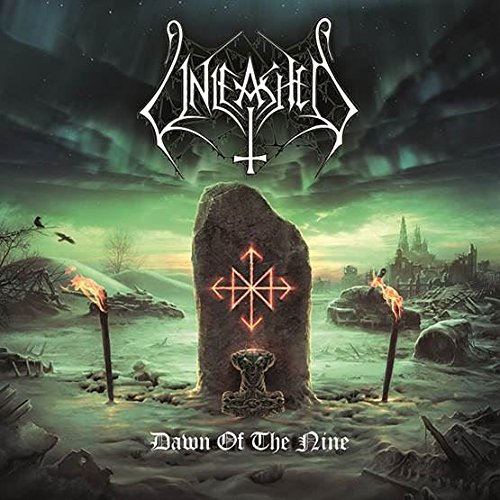
There is no real difference between Dawn of the Nine and an album from a more mainstream Viking themed death metal themed heavy rock band (which, at this point in the history of the universe, means Amon Amarth). Sure, Unleashed is less consonant and theoretically more chromatic, but you’re still listening to an especially standardized and formulaic pop music product, even if Unleashed arguably sticks closer to their original sound than the rest of Nihilist’s progeny. Still, Dawn of the Nine is at least one way to feed metalheads the infamous “death’n’roll” sound without them complaining… at least not immediately.
On this album, like others before it, Unleashed sticks to the arena rock end of the pop sphere. Consonant, monophonic melodic riffing over generic drumming, no real bass, and unvarying vocal technique probably brings to mind many of the other generic, basal Swedeath styled albums we’ve rejected over the years. The songwriting here, though, is unusually fixated on the repetition of simple choruses to a degree that few bands dare approach, even when they’re just as obvious. Therein lies the tragedy of Unleashed, at least in the present – the guitarists have developed a sense of melody and rhythm that would be well suited towards writing good narrative (albeit probably more traditionally styled) metal. At points, there are some genuinely interesting musical elements being thrown around, but rarely if ever are they developed upon because, shockingly enough, it’s time for the song’s chorus. Other times, the musicians toss around extremely basic musical ideas for what are presumably commercial reasons, but that at least is common throughout the industry, and even then you can justify the occasional basic break in the middle of a track as part of an effort to write a more dynamic and interesting song.
What particularly strikes me about my own opinions on Dawn of the Nine is how close they are to previous site writings on new Unleashed recordings. The emphasis on tired, overly basic rock tropes weakens the entire album beyond what its also predictable strengths of musicianship and production can recover. It’s usually not this incredibly obvious on the recordings of this band’s contemporaries, though, but someday they too may need to pander especially hard to the blockheads to retain their underground cred.
On a small ship in the Sea of Sardinia, I watched my companion cautiously. I had just seen him kill two men, one with a silenced pistol hidden under his battered sweater, and the other with his bare hands. We had changed cars five times since I left the airport, walked through a dozen train stations and busy stores, always leaving through the back door with a whispered command: Hurry!.
Now our journey had taken its final stage, leaving the coast on a small boat and nipping through a series of coves, always watching land, water and air for any who might follow us. As I wondered this, a ripple on the horizon announced another small boat approaching. On it was a solitary figure, menace and fire in his cold eyes.
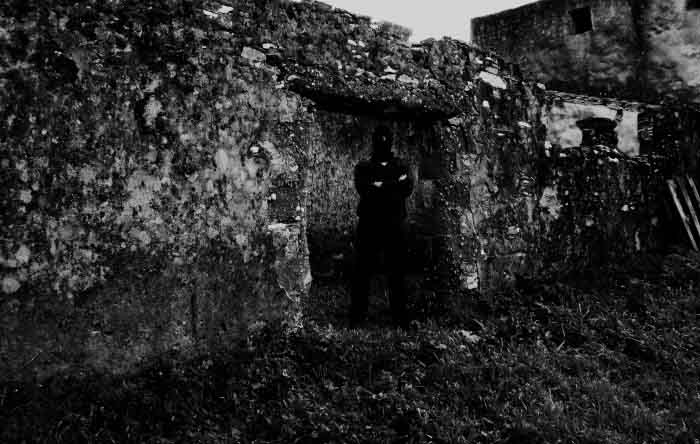
I gathered up my notebooks and prepared to meet the obscure and sinister personality behind Italian black metal cult band Infamous…
Is there any point to making black metal — or any music like it — in 2015?
Black Metal is a radical form of expression and, in my opinion, the most expressive form of musical art. It is an essential need to express myself!
It is my belief that this form of art can be conceived and understood only by “particular” souls. Surely, if you try to get rich or famous with this music genre, you have done everything wrong! Black metal is not for the masses and not for the bourgeois defeated by their lives. Black metal is a fire that burns inside of you! It is a weapon against weakness, a spiritual enlightenment, and the hammer that smashes this world of worms and disgusting merchants.
If you don’t feel this inside you, maybe you should change genre!
Your latest, Rovine e Disparazione, seems much closer to traditional black metal than previous works. What prompted this change?
I think that the reason of this “change” is linked to the departure of Alessandro. With his keyboards, he created a great amount of “mystic” atmosphere in the first releases, especially in Of Solitude and Silence. The guitar riffs and the other songs structures, instead, are born from the same inspiration and move in the same way of the previous works.
So far, there are three Infamous releases — Of Solitude and Silence, Abisso and Rovine e Disparazione — of which this reviewer is aware. Can you tell us what you intended to do with each one, and how it turned out? For example, did you hope to create a new style of black metal, refine your own style, or expand upon earlier ideas (of your own) or introduce new ideas?
Each song which makes part of the three different Infamous releases is born thanks to a precise inspiration aiming at translating my emotional state in music.
I have no ambition to start a new subgenre of the black metal style. What I really like is the most traditional way in this kind of music and I’m going to follow this traditional path, but with my personal sense of melody and “aesthetic.”
Many times, some reviewers have compared my project with other bands of this world. What is interesting is the fact that, at the end, they have recognized that Infamous sounds personal!
I mean, what is important is not to create a new style but a good and emotional song in a traditional way. In short, the creation of a perfect synthesis of traditional and personal music, which is not necessarily innovative!
This is sort of a silly question, but people will wonder, so I ask. There seem to be two versions of Of Solitude and Silence: a CD-R with an excellent cover, and a pro-CD with a more “regular” black metal cover that looks like a quicker job. How did these two editions come about? Is this album still in print? If not, will it be re-editioned?
The first edition was published by a small underground Italian label (Novecento Produzioni) and limited to 200 copies. No one wants to print a Pro-CD in Europe in this small quantity. However, this first edition is definitely sold out. The second edition was published by the excellent German label Obscure Abhorrence in Pro-CD, limited to 500 copies. It is true that the artwork looks different from the first one, but the reason is that they were created by two different persons… I prefer the first artwork but also the second is not bad!
The second edition is still available from the Internet site of the label or directly from me!
What I really like is the most traditional way in this kind of music and I’m going to follow this traditional path, but with my personal sense of melody and “aesthetic.”
In addition, recently, the Italian label Bylec-Tum has published, on limited tape format, the third version of this album with a series of exclusives bonus tracks.
Can you tell us where Infamous was founded, by whom, and who is in the band? Do you perform live or is this a studio band only? Do you choose anonymity for any reason other than longstanding black metal tradition (musicians calling themselves Quorthon, Warrior and Angelripper)?
Infamous was born in the Sardinian hills in the torrid summer of 2009, with the recording of the first demo “Torrid Summer Misanthropy.” Infamous is a one man band, obviously it is impossible to play live…
I choose semi-anonymity; S.A. is the acronym of my name and surname.
I thought that it would have been more serious to avoid the grotesque nicknames typical of the Satanic B.M. scene.
What are the influences on your style, both metal and non-metal, and both musical and non-musical? Are there influences from any punk genres in your work? Since the question will inevitably be asked anyway, is there an influence from Ildjarn on your work?
I’m surely influenced by “modern” Finnish Black metal. For me, this is the most important scene and I’m heavily influenced by the sense of sinister melody which is typical of their style.
But this is not my unique influence. When I was more young I listened to tons of Oi!, R.A.C., and other metal sub-genres. I think that Oi! and R.A.C., in particular, have forged my compositional style and my sense of “melody.”
Now, I turn my attention to your question, concerning Ildjarn. I was really shaped by his previous works, especially by his first demos and the first full-length. I listened to his art hundreds of times… Together with other Norwegian 90s bands, Ildjarn is one of my preferred bands!
In line with the non-musical influences, I think I am influenced by all my open-air activities like mountains or woods trekking, fishing and sports in general. I consider myself as hunter of natural landscapes. Obviously, this aspect has a huge impact on my music!
Do you listen to Ottorino Respighi, an Italian composer from the last century? The style of Of Solitude and Silence reminds me of his most popular work, “The Pines of Rome.”
Um… no! This is the first time I have heard the name of this composer.
Maybe, at the time of Of Solitude and Silence Alessandro took his inspiration from this composer, but I don’t know…
Why did you switch to title(s) in Italian? Abisso and Rovine e Disparazione are in Italian in contrast to Of Solitude and Silence which is in English. Do you write lyrics in Italian as well?
Of Solitude and Silence, outside of the title, has songs half in Italian (“Rex Verminorum” is in Sardinian language, a local variant of the ancient Latin) and half in English.
Abisso has only the title in Italian language. Each song, in fact, is written (from the session musician WLKN, not by me) in English.
Starting with Rovine e Disperazione, I have begun to use only Italian language because it is more easy and spontaneous for me; while, English language is more “melodic” and easy to insert in the music but, obviously, is not my language.
What influences your sense of melody? It seems unique, like a mixture of black metal, folk, Oi and sentimental 1980s Goth-pop, but also with its own inspiration that’s nowhere on the map.
As I have mentioned above, I’m influenced by Oi!-R.A.C. and Black Metal, but not by “1980s Goth-pop.” I think the Northern European Oi! scene of the 90s is my second main influence, obviously after Black Metal. Maybe, a little bit by Neo-folk but in my music, at the same time, there are not large spaces where I could insert neo-folk. It is possible that in the future this component will be increased.
What do you attempt to capture, express or communicate through your music? Or… is this even the goal of music? Is music communication or decoration? What is the goal of your art?
When I started, I was interested to vomit my hate and my need of destruction for this rotten world.
Infamous was born to give voice to this emotional war, misanthropic destructive hatred and the contemplation of nature, especially its beauty-purity.
Now, everything is evolved into an anti-modern propaganda and into a search of values for resist to this decaying world!
Do you think there is a sound in black metal that is specific to Southern Europe? And to the countries individually such as Greece, Italy and Spain?
In my opinion, each population has its land and each land has its traditions, sensibility and so on… According to this view, it is perfectly normal that every nation or geographic area has a common way of expression. Generally, everyone can distinguish a Norwegian disc from a French release, and a Swedish album from a Greek one!
I consider myself as hunter of natural landscapes. Obviously, this aspect has a huge impact on my music!
I think that Italy has developed its own personal style which is not very similar to the other Southern European scenes. However, it is undeniable to admit cultural and stylistic convergences with the rest of Southern Europe.
Personally, I love old and contemporary Greek Black Metal!
Do you have a long-term plan of what you want to achieve from album to album and as a body of work?
Ahaha, absolutely not! Inspiration to create music comes suddenly and, for me, it is impossible to have a long-term plan!
Rovine e Disperazione consists of five tracks named after either “Rovine” (ruins) or “Disperazione” (despair). Why did you decide to do a sequence like this? Are these numbered tracks part of the same song, or impressions of the same thing?
Rovine e Disperazione is comprised of different songs about a single concept!
The concept of this album concerns the disgust for the modern world, its spiritual decadence and the ideology of materialism (“Disperazione” I, II). It is the rebellion that has the aim of embracing a superior and heroic way of life, based not in the cult of the decadence, but in the traditional (pre-Christian era) values of Honor, Strength and Spiritual rectitude (“Rovine” I, II, III)!
This is my manifesto for the maximal resistance against the modern decaying world!
In the booklet, there are two important phrases (written in Italian) to understand this concept:
“Lascia agli altri le vie dell’infamia” = Let the others go through the ways of infamy
“Vi siete inchinati abbastanza davanti ai mercanti, ora ergetevi! Sfidate i ratti e i vermi che stanno ai vostri piedi!” = You have bowed enough to the merchants, now it’s time to stand up! You have to defy rats and worms that are at your feet!
Do these have any influence in your musical world? Ancient, Varathron, Burzum, Sentenced, Sacramentum, Landser, Summoning, Kvist, Eucharist.
Each band that you have mentioned has had an influence on my music. However, the most important influence comes from Finnish bands like Sargeist, Horna, Satanic Warmaster, Hammer, Nekrokrist SS or non-Finnish bands like Drowning the Light, Mutiilation, Xasthur and many others…
How do you compose a song? Do you start with a melody and develop structure/arrangement from that, or do you start with riffs and add melodies to them? Or is there an idea, lyrical or visual, before you start even making the music?
First of all, I compose music, starting from a simple riff and then slowly, or sometimes very fast, the rest emerges spontaneously. When a musical composition is definitely ended, I start writing texts; generally, each text follows a concept!
This is the path that allows me to recognize immediately if a riff has the emotional power to be part of a song…
For people new to your music, how should they get to know Infamous and how should they stay on top of band news, contact, and music?
You’ve just recorded a new album, Tempesta. What is the theme of this album? How does it differ from the past? Where did you record it, how long did it take, and did you have other musicians involved?
About the concept for Tempesta, in the booklet you can read this:
Tempesta (Storm) is a radical hate declaration against all the subhumans defeated from the disvalues of this decaying modern society. I hope, therefore, a “Storm” that will destroy everything that continues to infect our blood and our minds.
The main enemies in this concept are the economicist view, the bourgeois way of life and modern human weakness in general!
Tempesta follows a natural and spontaneous “evolution” of the classic Infamous style!
On this album you can hear a more powerful sound, an atmosphere of struggle and victory that extols to the revolt! The recordings lasted half a year at various sessions, and I used the voice of Filippo Magri in “Tempesta II”, who is a friend and someone I respect!
Your previous album, Rovine e Disperazione, seemed to take a more Ildjarn-influenced direction as opposed to earlier works, which had longer melodies and remind me of Varathron Walpurgisnacht if it were expressed with a stronger, more naturalistic mentality. Does Tempesta continue this pattern?
In this album I think that the Ildjarn influences are implemented, especially in “Tempesta II” where percussion is heavily influenced by the Norwegian artist. Also for the harsh sound and radical extremism of disgust against the modern man, Ildjarn represents a landmark!
From the progression from early works through Tempesta the general atmosphere of mysticism, which refers to the idea of a primordial nature in its purest form, is partially changed. I have radicalized certain sounds and the general attitude and probably now everything sounds more agressive. This is a natural and spontaneous evolution.
As I understand it, this release is limited to 100 CD-Rs. Why did you choose to go this route, as opposed to a larger label? Will you ever seek a label to do bigger re-issues of your discography?
Yes, only 100 copies!
This is a radical anti-commercial choice!
I’m not interested in big productions!
This is the path that allows me to recognize immediately if a riff has the emotional power to be part of a song.
I consider that nowadays those who want to listen a CD, generally, can download it from internet…
Then I took a radical decision and I chose to produce everything by me; every step is taken personally and the choice of the number of copies to be printed is now proportionate to the copies that I can sell. Simply, if I had printed 1000 copies, 900 would remain collecting dust in my basement.
Few are willing to buy original CDs, especially for bands not yet known. This happens a bit “everywhere” but in Italy the situation is even worse.
Why do you think black metal is in such a slump these days? Vattnet Viskar and Myrkur get a ton of publicity, and good underground bands get ignored; is this related?
Everything is for sale in this world and if you try to be famous you have to spend some money! This is the only key to a successful career! You have to consider your band as a company and your music-art as a business. I’m about to throw up as I write this… But this is the truth!
Obviously I am not interested to take a part in this circus, I never dreamed the fame and do not want to look like a rock star. All this is so pathetic! I would destroy all this! I use my music to sing my hate against those that spoil the Black Metal and trying to making it a cute, harmless and fashionable music genre.
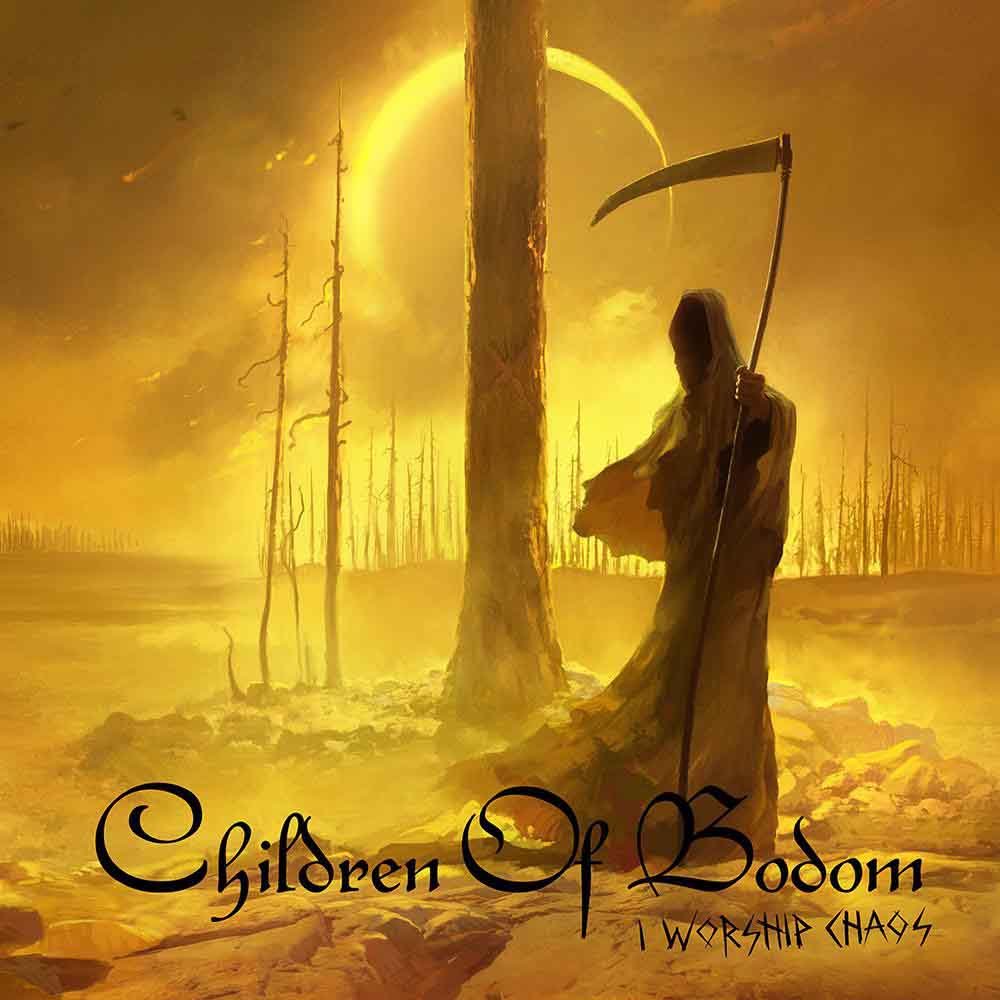
I think I missed this band’s big moment in the limelight. By the time I became aware of underground metal in any fashion, they’d already received a lot of flak for not playing the same style of vaguely neoclassical themed pop melodeath that they started their career with, and I steered my musical inquiries away. Apparently they’ve metamorphosed into some sort of bizarre fusion of such with overt Pantera style groove party rock, which sounds like an obvious awful, misguided idea that even the more mainstream-leaning metalheads would reject out of hand. That I Worship Chaos often juxtaposes various styles of former pop metal tends to support this hypothesis. (more…)
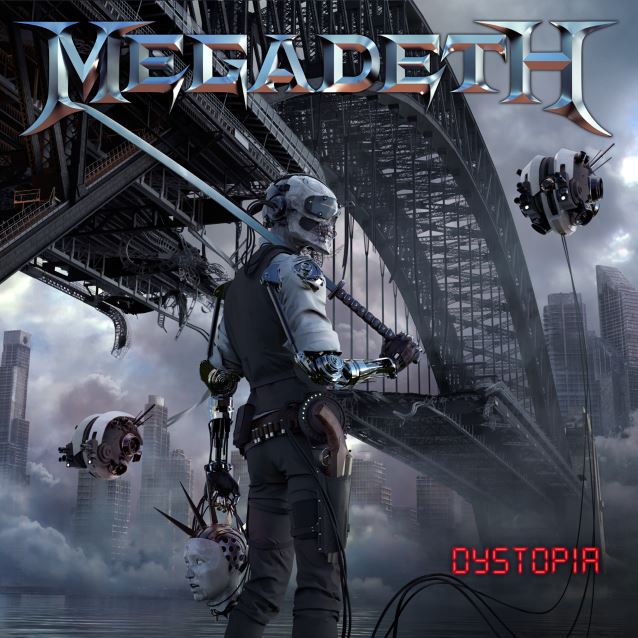
In their glory days, Megadeth was always commercially #2 to Metallica – more technically proficient by far, structurally simpler, and literally #2 on the American Billboard 200 when they made their own dumbed down Black Album equivalent in Countdown to Extinction. Post-reformation Megadeth has been somewhat inconsistent about what part of their career they want to evoke, but if “Fatal Illusion” is any indication, Dystopia may very well be full of ’80s self-worship. There are some new aesthetic tweaks, like heavily processed, harmonized vocals from Dave Mustaine, but the overall structure of the song is an adequate facsimile of previous Megadeth and ’80s speed metal for commercial purposes. The current lineup of Megadeth notably features Kiko Loureiro (of Angra) and Chris Adler (from Lamb of God) in addition to its two founding Daves (Mustaine and Ellefson), although this track in isolation doesn’t really offer enough information on what their contributions to the band will sound like.
Take your TARDIS back to the hazy 1960s. A buttoned-up Dale Carnegie America has encountered the new rebels: like the beatniks, but simplified, the hippies shock society by systematically violating its standards. They smoke marijuana, have promiscuous sex, listen to loud protest music, and live in squalor, much like the Bohemians of the 1900s that the beatniks were imitating.
Now spin the dial forward to 2015. Television lauds the hippies, who are now old and grey and telling us how we should think. Rock music is used in every commercial, played in every grocery store, and government agrees with the protest lyrics — as do the large, buttoned-up corporations. Promiscuous sex is the norm and marijuana is legal in many states and tolerated with a wink and a nod in others. How do you rebel against the rebellion?
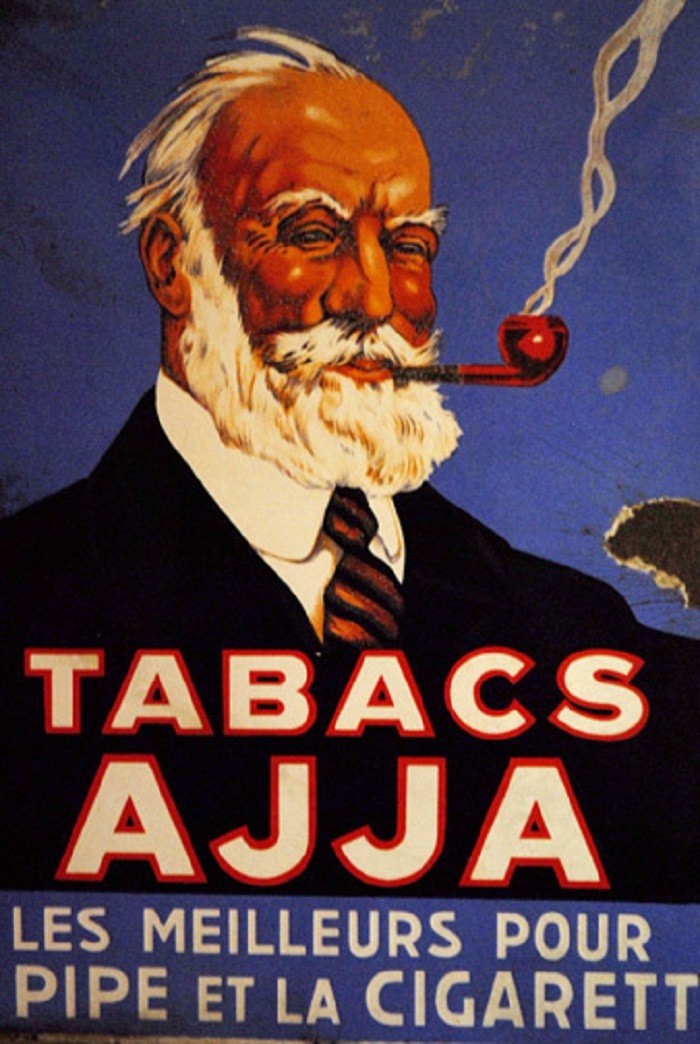
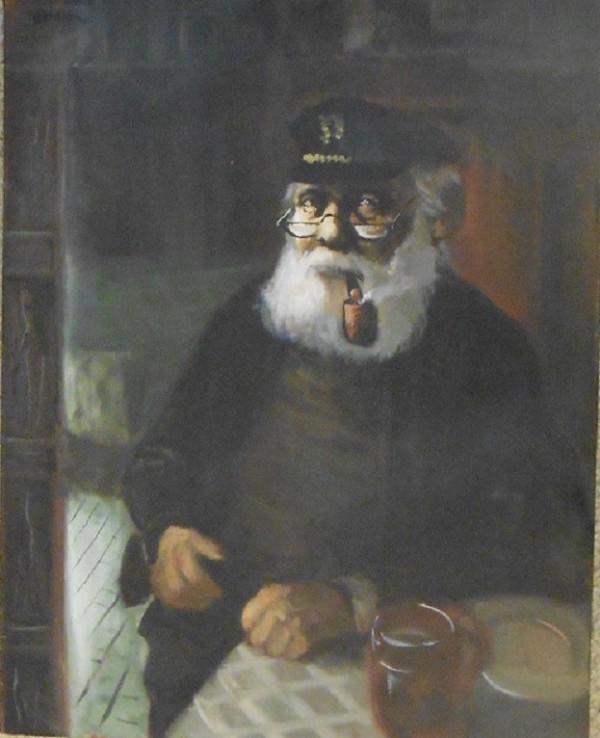
One way is to smoke a pipe, which violates the taboo of our current social pretense of “health” and moral “goodness”:
Interestingly enough, a side-effect has arisen as marijuana becomes more prominent at Stanford. As support for it rises, that for tobacco seems to be waning and a prejudice rapidly forming against it. Recently the Faculty Senate postponed voting on an all-campus smoking ban (tobacco only, recall), that would in essence push all forms of tobacco smoke to the other side of Campus Drive. The only spaces allowed for smoking would be designated outdoor areas and, interestingly enough, faculty/staff residential areas. Slight hypocrisy aside, the ban was designed to be a preventative measure against any sort of respiratory problems resulting from potential second-hand smoke.
The radicals are now in charge and have become old and boring. Anyone singing their song is just bleating. But they have their taboos, too. They fear tobacco and alcohol, masculinity and strong warlike music such as heavy metal. If you think humanity should have a future, you owe it to yourself and the rest of us to rebel against this new generation of buttoned-up nannies and their attempts to control us.
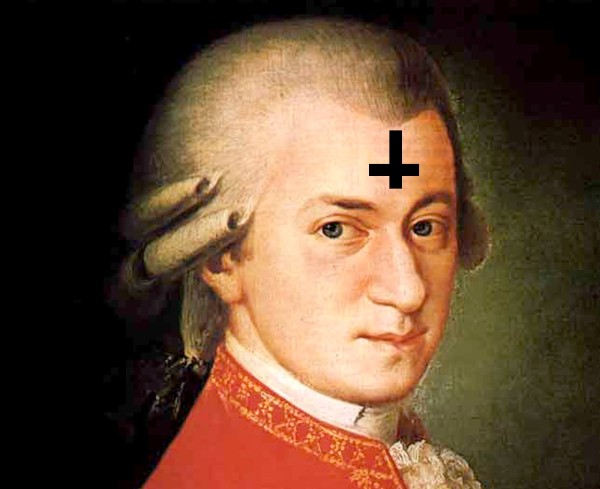
For 20+ years, first with the Dark Legions Archive and next with the Death Metal Underground, the writers behind this site have encouraged comparison with heavy metal and two things: European Romanticism in art, music, and literature; and European classical music, which overlapped with Romanticism both in a specific time period and in themes it revisits even to this day. The similarities are abundant and apparent but offensive to those who want to believe the blues-rock spectrum was part of an authentic tradition, when in fact it was a commercial product simplifying earlier styles, and that — of course — metalheads cannot have any associations more profound than the sacred indie rock and its origins in 1960s protest music.
Now, others are taking up the call. Perfect Sound Forever, one of the oldest e-zines on the net, addresses the metal-classical linkage in an article in its current edition:
I’m here to show you that rock and roll and classical are very much relatives in an, albeit, diverse musical family. First off, the sort of person who enjoys classical music is the same sort of person who would enjoy metal or heavy rock music. Research by scientists at Heriot-Watt University has found that not only are peoples’ personalities linked to their taste in music – classical and heavy metal listeners often have very similar dispositions.
“The general public has held a stereotype of heavy metal fans being suicidally depressed and a danger to themselves and society in general,” explained Adrian North, the professor who led the study. “But they are quite delicate things. Metal fans, like classical listeners, tend to be creative, gentle people, at ease with themselves. We think the answer is that both types of music, classical and heavy metal, have something of the spiritual about them — they’re very dramatic — a lot happens. ”
Perhaps more will be known about not only the similarities between these genres, but — because every cause has an effect — what similar ideas or emotions motivated artists to make such similar music centuries apart.
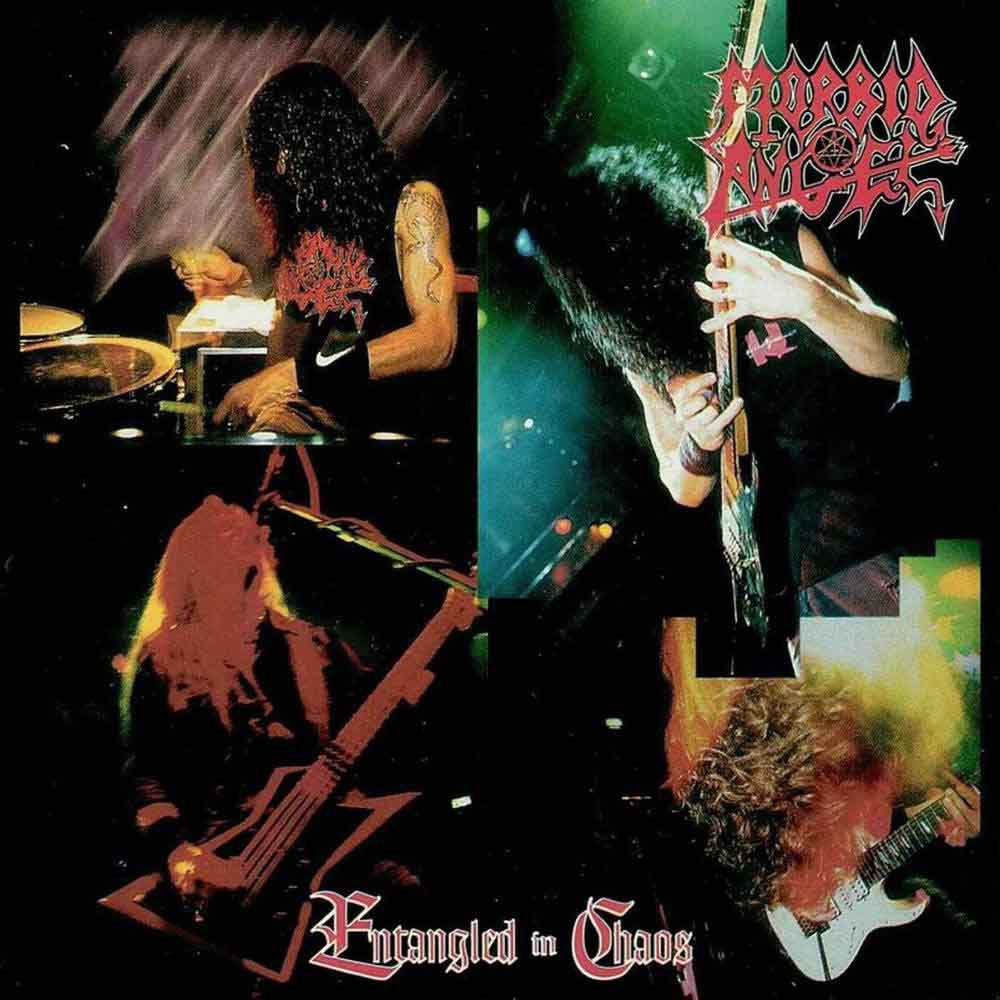
With Earache Records promising us a re-release of this live album on vinyl in October, and an otherwise quiet week of upcoming relevant releases, I thought it might be a good idea to give this a more detailed look. Live albums are fundamentally interesting on a few levels – their attempts to capture something of the experience of a concert, their value as documentation of a period in a band’s career, the chance to possibly hear reinterpretations of favored songs, and so forth. Entangled in Chaos came out at the tail end of Morbid Angel’s commercial golden age and before the band tried to reinvent itself with Formulas Fatal to the Flesh. The product is low on references to the previously banal Domination for whatever reason, although whether that’s due to timing or creative reasons is beyond my knowledge.
These rerecordings end up more polished and standardized than the originals for the second time in MA’s discography, as the long holdovers from 1986 already got the Lemon Pledge treatment when they first entered the studios. Sometimes, the end results are rather stripped down; for obvious reasons studio adornments aren’t available, and Trey Azagthoth’s guitar solos are consistently altered from their original forms. Hearing the band’s earliest material with a production closer to Covenant or Domination is mildly interesting, to say the least, although the concessions to a live environment often cost these tracks some of their power and more musically interesting aspects. The performances are otherwise faithful to a fault, as such strict reproductions leave little room for reinterpretation… with the caveat that this is difficult to do successfully in a metal context and in this case might’ve resulted in an undesirable Domination II or similar.
There are not very many essential live albums in the realm of metal, and you can probably do without Entangled in Chaos in most cases. If you absolutely need to hear Morbid Angel playing relatively faithful but not particularly passionate renditions of their first era or are otherwise a collector, though, this rerelease may be to your tastes.