About
The Heavy Metal FAQ explores the development of heavy metal as a musical movement through its context in popular culture, and reflects upon the ideological and sociological circumstances that motivated that development. These circumstances are tracked through music theory, symbolism, and behavior.
Version: 2.0 / September 8, 2014
Contents
I. What is Heavy Metal?
- Heavy metal originated as a counter-reaction to the hippie rock of the 1960s and was intended to sound like a horror movie soundtrack
- Heavy metal fused progressive rock, hard rock, and soundtrack styles using the power chord to make phrasal composition
- Heavy metal culture and lyrics resemble European literary Romanticism in its emphasis on the individual and nature, not social mores, dictating value in life
- Heavy metal ideology is an active form of nihilism, in which the individual believes in nothing because belief is not needed as much as a creative, intuitive, warlike principle of vir
- The musical and cultural influences of heavy metal suggest this idea has been injected into the mainstream, but that a constant struggle exists to “norm” it to social mores
1.1 Music
Defining heavy metal requires we look at its many attributes as part of a whole. Heavy metal is is a musical style with certain compositional tenets without which music cannot be said to be heavy metal; however, even more profoundly, it is also a set of ideas that shape its composition, and without those you can have something that “sounds like” metal but does not fit the whole profile of heavy metal. Musically it can be described by the following:
- Composed using forms of the power chord, or a fifth chord lacking a third, in a moveable form based normally on the low E chord. Since these chords lack a third, they are neither major nor minor, and can be played in any position, which lends itself to writing longer, more dynamically melodic or lengthier phrasal riffs.
- Musically “heavy” derived from a songwriting style that emphasizes a return to unison after a resolution of motifs. The promenade-style riffs and theatrical conclusions of metal songs derive from this need, which forms a heavy (emotionally significant) moment later in each song.
- Dark subject matter, and use of heavy distortion, vocal distortion, intensely fast or slow tempos, and other ways of converting that which appears noisy and ugly into a musical language, as if attempting to find beauty in darkness.
- Familiarity with the past musical language of metal riffs and imagery, and ability to build on it, both musically and ideologically.
- A preference for cadence where rock bands would use rhythmic expectation in the pattern of syncopation extended to the beats themselves. Although metal beats are syncopated, this is used internally within cadenced beats and reduces drums to a constant — or “timekeeping” role — which ends phrases on the downbeat.
Emerging from the ruins of rock music, heavy metal grew from the conventions of that genre, which possessed an international flair in its use of Anglo-Celtic song structures, European music theory, Middle Eastern and Asian scales, an Arab instrument converted by Spaniards and electrified by Americans, and timbral singing from Africa. These remnants were tempered by a tendency toward progressive rock song structures which approximate those of European classical music; the rhythms of garage punk bands, which come from the first two guitar lessons of an aggressive teenager; and finally, the thematic tendencies of horror movie music, which are generally borrowed from Modernist- and Romantic-era classical composers such as Anton Bruckner, Richard Wagner, Camille Saint-Saens, Johannes Brahms, Robert Schumann and Ottorino Respighi.
The traits of this modernist music — mobile fifths, unison, thematic repetition with inflected motifs, layered harmony and inversion — extend heavy metal beyond its classical roots but also step further backward in time toward the origins of Western music, in that by liberating itself harmonic structures used to identify scale, it returns to the modal, melodically-structured, narrative compositional form originally pioneered by earlier civilizations like the ancient Greeks. When classical music emerged from the rigor of Baroque styling, and ventured into the theoretical but passionate world of the Romantics as defined by Beethoven, it reached a height that demanded a further gesture to continue its artistic specialization. The final point of departure was to liberate melody from the intricate harmonic structure of Romantic music and in doing so to make melody more than harmony the leading compositional tool, so that pieces were defined by the evolution of melody instead of strictly harmonic structure. In this form, which resulted in music that tended toward a nearly chromatic base scale with motifs clustered around it in varied modalities imposed on contact points in that progression of tones, the narrative method of composition reached its most flexible voice. Music became more motif-driven, spurred on by the “leitmotifs” of Richard Wagner, and united a juncture of music, narrative, theatricism and architecture — Bruckner famously referred to his works as “sonic cathedrals” — in which it evolved to within a step away from becoming the rigorously correlated drama, ritual and music of the Greek theatre.
Heavy metal inherited all of this through a modern form because of its desire to escape the cognitive dissonance reaction to modern life. In part, this impulse comes from the metalhead who realizes that the individual is basically powerless, except in a future time when predictions about the negative nature of modern society will come true. Of course, in the now, parents brush that aside and go shopping, stockpiling retirement funds so they can carelessly wish their children a good life before disappearing into managed care facilities with 24-hour cable movie channels. A more fundamental part of this dissident realism is creative. People who see most of society going into denial because they cannot handle their low social status, the dire future of human overpopulation and industrialization, and the negative motivations hiding beneath social pretense, aka “cognitive dissonance,” will often mourn most for the opportunities lost when people value putting their heads in the sand more than finding beauty in life. It is the convergence of these ideas that creates the violent and masculine but sensitive, Romantic side to metal: it is a genre of finding beauty in darkness, order in chaos, wisdom in horror, and restoring humanity to a path of sanity — by paying attention to the “heavy” things in life that, because they are socially denied, are left out of the discussion but continue to shape it through most people’s desire to avoid mentioning them.
This same principle underlies classic European and Greco-Roman art and music, the idea of an aggressive and warlike but wise and sensitive motivation that is both religious and scientific, peaceful and belligerent, because it understands a principle of order to the universe and asserts it because it is beautiful in that it is a “meta-good,” or the harmonious result of darkness and light in conflict. For this reason, it is not moral in the sense of judging as good or evil, and neither fits into the hippie “peace, love and hedonism” approach nor the conservative, market-bound ignorance-is-bliss smoke and mirrors of mainstream music and bourgeois art. Unlike any other musical principle, the one thing that unites the varied borrowings from baroque, rock, jazz, blues, folk, country, classical and electronic music that form heavy metal is this Romantic principle of doing what is right not in a moral sense to the individual, but in a sense of the larger questions of human adaptation to the universe, the conceptual root of “heavy” in metal and what throughout history has been called by a simple syllable: “vir,” the root of virtue in a sense older than a modern moral interpretation as chastity. Vir is doing what is right by the order of the universe discerned by asking the “heavy” questions, and speaks to an abstract structure of right as opposed to an aesthetic one, where the individual picks the non-threatening as an option to the threatening.
It’s a concept album about what once was before the light took us and we rode into the castle of the dream. Into emptiness. It’s something like; beware the Christian light, it will take you away into degeneracy and nothingness. What others call light I call darkness. Seek the darkness and hell and you will find nothing but evolution. – Varg Vikernes, http://www.burzum.com/
For these reasons, where rock has simpler unifying principles (tension between pentatonic and harmonic minor scale) and other forms of music have more clearly genre-specific technique, like funk, which supports a variation not musically much distinct from rock and jazz, metal is both a polyglot and a theory of its own, helped greatly by the flexibility which the power chord bestows. The ability to move chords rapidly without harmonic obstruction led to a desire to write more evocatively phrasal riffs, which led to the riff as basis of composition, which in turn led to longer song structures using a modal sense to unite motifs in an otherwise disparate, chromatic context. This process evolved through the proliferation of sub-genres that marks the development of metal since 1970.
Heavy metal music, as a genre, encloses sub-genres which implement the above list with varying degrees of proficiency, leaving behind rock conventions as they do so for a uniquely metal musical language. While much of this change occurred within speed metal, it was enhanced during death metal and perfected with black metal, and can be seen as an ongoing stratum of concept developed with the first proto-metal album, and continuing in refinement toward a higher vision of itself.
2.2 History
I’ve never thought it an accident that Tolkien’s works waited more than ten years to explode into popularity almost overnight. The Sixties were no fouler a decade than the Fifties — they merely repead the Fifties’ foul harvest — but they were the years when millions of people grew aware that the industrial society had become paradoxically unlivable, incalculably immoral, and ultimately deadly. In terms of passwords, the Sixties where the time when the word progress lost its ancient holiness, and escape stopped being comically obscene. The impulse is being called reactionary now, but lovers of Middle-earth want to go there…[Tolkien] is a great enough magician to tap our most common nightmares, daydreams and twilight fancies, but he never invented them either: he found them a place to live, a green alternative to each day’s madness here in a poisoned world. We are raised to honor all the wrong explorers and discoverers — thieves planting flags, murderers carrying crosses. Let us at last praise the colonizers of dreams. — Peter S. Beagle, introduction to The Hobbit, 1973
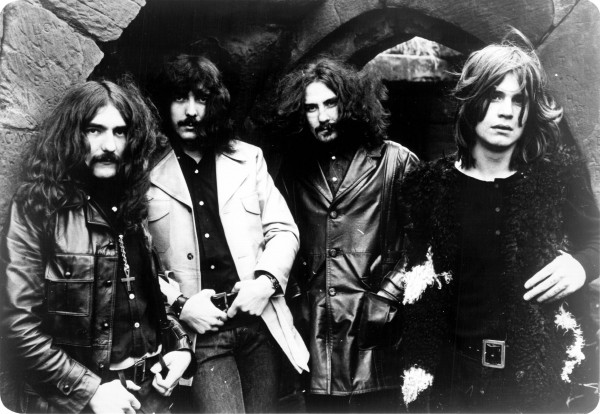
Heavy metal emerged as a distinct musical form with the first proto-metal introduced in 1970 by Black Sabbath. The UK band created a new style of music, equally influenced by extreme rock and horror movie music, that strung together power chords into longer phrases which gave the music a dense and morbid atmosphere. The hippie lexicon of the day referred to it as “heavy” because of the sensations of dark realism and confrontation with reality hidden beneath the human world formed of the consensual reality of socializing, laws and morals.
Hippie culture, in full flower at the time, based its music on popular sentiments of pacifism and love. This was a negative reaction to the innocent but wholesome rock of the 1950s. In contrast, proto-metal brought a dirge of the insignificance of the individual, the brutality of life and the ominous unknown of the future. Where rock bands wrote about personal and political topics (sometimes referred to as “karmic drama”) proto-metal dug into the broader worlds of history, mythology and metaphysics.
The new music instantly attracted those who found both 1950s culture and 1960s culture to be unrealistic, including bored kids from the suburbs where reality was deliberately kept in quarantine and nothing an adult said could be trusted. This upset the music establishment who, despite its criticism of other industries as obsolete and oppressive, was as much a force of calcified “conservative” thinking as was the factory and agriculture establishment before it. Proto-metal made the rock elites look as fat, stuffed-shirty and retrograde as the suited bankers they replaced when the first Black Sabbath album reached number 8 on the UK charts and number 23 in the USA.
Since its inception, the heavy metal genre matured through several generations, sorted by time period:
- Proto-Metal (1970-1974)
- Heavy Metal, Hard Rock/Glam Metal and NWOBHM (1975-1980)
- Speed Metal, Proto-Underground and Thrash (1981-1987)
- Underground Metal: Death Metal, Grindcore and Black Metal (1985-1993)
- Metalcore and Nu-Metal (1995-2005)
- Hybrid Metal: Melodic Metal, Power Metal and Indie-Metal (2005-present)
Proto-metal (1970-1974)
Black Sabbath changed direction — mixing heavy guitar rock, progressive rock, dark apocalyptic rock and horror movie soundtracks — when Ozzy Osbourne observed that it was “strange that people spend so much money to see scary movies” and wondered if Black Sabbath (then named Earth) could make music with the same effect.
As musicians in the fertile UK rock community, Black Sabbath experienced wide-ranging influences, but heavy guitar rock like The Stooges, progressive rock like Jethro Tull and King Crimson, and apocalyptic rock like The Doors all made their impact on the new music. From the heavy rock, Black Sabbath took its basic power chord sound, from horror movie soundtracks its extended melodies, and from progressive rock its varied and complex song structures. The Nietzschean and apocalyptic themes of the music came from The Doors. Together this mix forged a new style which grew out of rock but by its different approach, also rejected rock.
Through both the horror movie soundtracks that inspired its new sound and the progressive rock desire to approximate the classics of generations past, Black Sabbath inherited a heavy classical influence. This influence eventually absorbed others because the type of chord used in heavy metal, the power chord, can be easily played with the same finger position in any part of the fret board. That ability lends itself to a technique of writing riffs with more phrasal development than rock riffs, which tend to bounce to a rhythm with a very basic harmony; metal riffs could and did move dynamically and approximate a melodic style of composing, and their dramatic horror movie underpinnings encouraged these riffs to imitate what they were portraying, giving them a neo-Wagnerian, operatic feel. This more complex style of distinctive riffing, and its “heavy” tendency to run through multiple motifs on its way toward a theatrical conclusion, was what above all else was to define heavy metal music.
Heavy Metal, Hard Rock/Glam Metal and NWOBHM (1975-1985)
Heavy Metal
The term “heavy metal” refers to both the genre as a whole and a sub-genre of the first wave of 1970s metal music. The successive generation of metal bands streamlined the variety of Black Sabbath into an identifiable set of conventions while merging it with the hard rock influences of Led Zeppelin and Deep Purple. Heavy metal shortened the longer power-chord riffs of Black Sabbath and instead used rock-influenced riffing, melodic lead-picked fills and harmonized guitars to produce a similar sense of structured riff without having to use the full phrasal riffs that require the music to move at a slower pace. This produced two waves of heavy metal, first a basic rock-metal hybrid, and second a revival in the New Wave of British Heavy Metal (NWOBHM).
Hard Rock
Hard rock can be identified by its surface resemblance to heavy metal but use of riffs in the rock style as harmony and rhythm without the dependence on phrase that defines most metal riffs. In addition, hard rock bands tend to stay toward the pentatonic-harmonic minor transitions that define most of rock music, eschewing the darker modes and minor key focus of metal. Hard rock emerged with Led Zeppelin, Deep Purple and The Who which remain its most iconic acts. It also created a hybrid in the form of “stadium metal” or “glam metal” which fused the guitar-oriented stadium rock of the 1970s with early heavy metal, producing bands with a big studio sound and professional songwriting but some of the metal edge.
- Van Halen
- AC/DC
- Guns N’ Roses
Glam Metal
Predominantly a UK movement, heavy metal crossed the pond and landed in Los Angeles where during the early late 1970s and 1980s it became “glam metal,” similar to some of the “stadium metal” or crowd-pleasing variants of heavy metal. This sub-variant of heavy metal distinguished itself by applying Hollywood theatrics and the stadium rock sound to heavy metal, as well as some of the gender-bending aesthetics of big city art rock. In a theme that would become part of the bedrock of internal dialogue among heavy metal bands and fans, metalheads critiqued glam metal for “selling out,” or placing appearance and image before substance in order to become more popular with a vapid and uncritical public.
Already a division emerged in metal paralleling the division between “punk rock” and “hardcore punk” in the punk community: many people listened to metal, but its fanatical fanbase wanted music like that of Black Sabbath but more intense. They did not want heavy metal to become hybridized with rock to become a lighter, more socially acceptable and more commercial form of itself. They wanted to get outside of the consensual reality created by social agreement and wanted the music to lead them. Instead, society wanted to assimilate them and make them “safe,” removing the elements of the music that were not socially acceptable. This fracture spurred the next movement within the heavy metal genre.
- Motley Crue
- Poison
- Skid Row
NWOBHM
In response to the influence of “stadium heavy metal” on both shores of the Atlantic, the New Wave of British Heavy Metal (NWOBHM) attempted to exceed the power of Black Sabbath by incorporating faster punk-influenced tempos and the grander song arrangements of prog-rock bands. Much as proto-metal derived an influence both from proto-punk (Iggy and the Stooges) and progressive rock (King Crimson, Jethro Tull), NWOBHM appropriated the dramatic flair and long song structures of heavy guitar prog-rock bands like Jade Warrior, Greenslade, Aphrodite’s Child and Yes in addition to the rock flair of Led Zeppelin and Deep Purple. Where Black Sabbath tuned down its instruments however the NWOBHM kept theirs in standard tuning and opted for a mid-range sound instead of the sprawling cavernous darkness of the extensive riffs of the proto-metal band. In addition, riffs showed the influence of heavy metal by being less phrasal using power chords, but instead implementing lead guitar — often harmonized as in Judas Priest and Iron Maiden — to create melody between complex patterns of strummed chords.
The new sub-genre also borrowed its intensity from the rising punk movement as well as a Do-It-Yourself (DIY) approach to publishing, promoting and recording its music. The DIY aesthetic in both punk and metal arose in response to the intense commercialization of heavy metal that resulted from a handful of record labels releasing all of the music the public experienced, and that music — like Black Sabbath had in its later albums — tending to become softer, more personal and less critical of larger movements in social change. Instead of relying on major labels, NWOBHM released their own material, promoted with flyers and word-of-mouth, and cultivated an audience who instinctively distrusted commercial and socially-approved material. As a result, NWOBHM maintained its underground status and avoided being inundated by commercialism, and instead sent its most popular bands up into the mainstream where they influenced just about everything else.
- Iron Maiden
- Judas Priest
- Motorhead
- Venom
Styles
Styles refer to aesthetic conventions adopted within multiple genres and do not constitute a musical deviation from that genre but apply a different aesthetic.
“Black Metal” (I)
While musically within the heavy metal realm, aesthetic divisions within that sub-genre inspired future generations to expand upon the concept. Starting with NWOBHM and heavy metal bands Venom and Coven in the 1970s, this style of heavy metal used attitudes and techniques from punk to make a simple but surprisingly dark and expressive form of anti-life art. At first humorously Satanic for the shock value of offending an uptight world, these bands quickly found an audience interested in their blasphemic worldview, which in later generations expanded into the obsession with negativity that is a hallmark of postmodern consciousness, paranoia, and drone existence in western nations.
According to rock journalist Joel McIver’s 2004 book Justice for All: The Truth About Metallica, the origins of King Diamond’s look can be traced to a September 1975 Copenhagen stop on American shock-rocker Alice Cooper’s first solo tour:
It was Alice Cooper. I saw the ‘Welcome to My Nightmare’ tour in Copenhagen in 1975. Even though there wasn’t that much make-up … it changed him completely. He became unreal. I remember the show so well. I was up front – and I thought if I could just reach out and touch his boot, he would probably disappear.
King Diamond’s theatrics, when combined with music heavier than that of Cooper, in turn paved the way for the legions of face-painted metal bands that dot the landscape today. It also subjected King Diamond and Mercyful Fate to accusations of Satanism, which Diamond addressed in Justice for All.
- Venom
- Coven
- Mercyful Fate
“Doom metal”
When bands focus on the slow and moribund, dragging riffs that create atmosphere through resonance of repeated patterns that induce a sense of hopelessness and despair, they continue the Black Sabbath tradition of “heavy” in a new form. Doom metal bands come in two varieties, a heavy metal based sound derived from proto-metal, and a darker chromatic approach which owes its germinal material to death metal. These bands prefer detuned guitars, moaning vocals and lengthy songs which resemble dark passages of sound resonating through subterranean caverns.
- Pentagram
- Saint Vitus
- Witchfinder General
“Power metal” (I)
The marketing department came up with this tasty term for energetic heavy metal that owes its musical essence to a cross between speed metal and prog-ish heavy metal, with bouncy rhythms and jazz-inspired double-hit percussion. At first this style referred to a somewhat emotional, exuberant and over-indulgent form of heavy metal, but as time went on, the style moved to include other genres. In the current time, power metal hybrizes its original heavy metal form with speed metal and injects death metal technique.
- Helloween
- Iced Earth
- Helstar
Speed Metal, Proto-Underground and Thrash (1981-1987)
Speed Metal
After heavy metal became absorbed by the mainstream, upcoming metal bands sought to be faster and more extreme in order to avoid being assimilated, believing that radio and social pressures would impose a dividing line that would keep overly loud, fast and distorted music from reaching a mainstream audience. Speed metal arose from two influences: the NWOBHM bands who usurped the metal community in its last generation and the newly intense sounds of hardcore punk. The pattern of a new genre becoming popular, and changing itself to be marketable even though the result was “false” or “sold out” music, and in turn causing underground musicians to retaliate with a more extreme form, repeats through the history of metal.
The borrowing from hardcore punk gave speed metal a new edge. Hardcore punk bands wrote in the chromatic scale and used impromptu melodies with abrupt tempo and melodic shifts in aggressive, stripped down music that entirely obliterated rock conventions like use of pentatonic scales, pop song structure and frequent tempo and key changes. Unlike pop music or its progenitor punk rock, hardcore punk was “about something,” namely the condition of humanity and human thought. Metal bands from this moment on adopted this more skeptical view of society and its place in history as a whole, which translated the political realism of punk into the mythological-historical view of metal.
Using the muted strum, in which the pick hand rests gently across the strings and produces a shorter and more explosive sound, speed metal bands wrote faster and more complex riffs which they fit into complex song structures derived from progressive rock. The faster speed required more aggressive vocals that were closer to shouting than singing and encouraged a different kind of technicality which emphasized less of harmony and more the construction of riffs and radical shifts in tempo. With the more complex riffing packing more detail into songs, speed metal bands expanded song formats beyond the cyclic verse-chorus that worked so well for metal genres before them and instead diverged into the progressive rock structures that had frequently intruded but never found a uniquely metal expression.
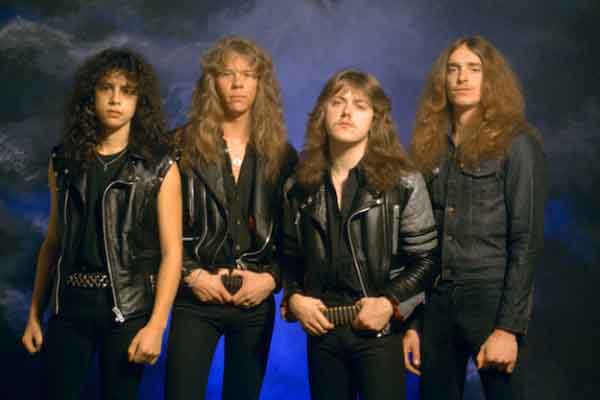
With speed metal albums like Metallica _Ride the Lightning_, songs became mazes of riffs. As a result, bands looked for a way to make their riffs “talk” to one another through an internal dialogue. The result caused riffs to find compatiblity with one another on the level of “shape” or similarity of phrase. Riffs aimed to contrast each other but to keep a narrative going, with each successive riff revealing a new aspect to the underlying truth like a voyage of discovery or the denouement of a horror movie. Late speed metal began its turn toward something more explicitly artistic with Slayer South of Heaven and Prong Beg to Differ, and soon other bands were modifying their own sound to reach this “high concept” goal.
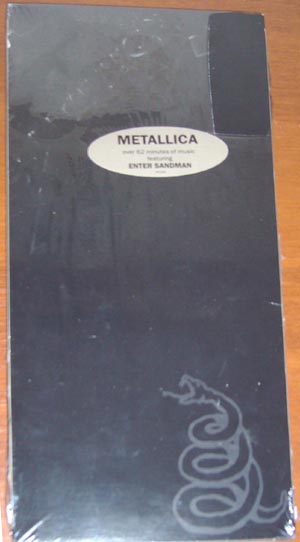
Speed metal suffered a fatal flaw in that, as extreme as it was, it was also rhythmically hookish like a pop song, and soon lesser bands had adopted the style and were making pop music within it. That in turn drove speed metal bands into the public light, and by 1988 it was apparent that the formative days of the genre were over and the long slow descent into selling out had begun. The crucial moment came when Metallica, the band that swore never to release a video, released a video for a song with soft verses and distorted choruses, “One.” Pantera followed this with “Cemetery Gates” which used a soft/hard dichotomy as well. A year later, Metallica unleashed a self-titled album with a new logo and less disturbing lyrics with simplified song structures. The era of speed metal was over.
Thrash
Much as speed metal crafted itself from a hybrid of hardcore punk and NWOBHM, thrash music arose arose from the hybrid of hardcore punk and heavy metal. Where speed metal leaned toward NWOBHM, thrash based itself on more extreme hardcore and the older metal of Black Sabbath. Named after “thrashers” or skateboarders who were prone to like both metal and extreme punk, thrash bands wrote short songs comprised of bursts of metal riffs in punk song format. Lyrics criticized society as a whole and avoided specific political viewpoints for the most part.
Where a punk band would criticize the hold that industry or the army had on politics, thrash bands wrote from the perspective of one of the most disenfranchised members of society, the suburban skateboard punk. With no money, no adulthood, and no escape from the miles of lookalike homes on the floodplain, thrashers criticized society itself as a mistake and pointed out its inhumanities and glaring deficiencies with funny, acerbic lyrics. Songs were often as short as a few seconds and the bands crammed four times as many songs on a CD or LP as your average metal or punk band. For the first time, an underground genre embraced alienation, speaking as if it found no meaning in society and would not want to be allied with it.
Although the thrash genre consisted of only a handful of bands and died out after only a half-decade, its influence spread throughout both metal and punk undergrounds, effectively ending punk by being more extreme and forcing metal to race to catch up. Bands took the humor of the genre and isolated it, producing joke bands like Stormtroopers of Death and Method of Destruction whose sound cleaned up the original messy and abrasive thrash and replaced it with cleanly-defined chords and standardized song structures. Despite innovation in both genres, speed metal was destined to collide with corporate megaculture and thrash was to burn out its intensity as audiences moved away from the extreme to the more commercial in both hardcore and metal genres.
Proto-Underground
Another movement developed in parallel to speed metal and thrash. In 1982, a UK hardcore punk band named Discharge released an album entitled _Hear Nothing See Nothing Say Nothing_. Unlike most hardcore bands, who carefully tied their riffs to their drums, Discharge let the drums play freely as timekeepers in the background while riffs changed independently. The resulting sound liberated the melodic power of the guitar to be entirely riff-driven and allowed the guitar to lead drums as the primary driver of change in each song. While the punk music that Discharge emanated tended toward a chromatic sound, the new flexibility of this format inspired many metal bands, including speed metal and “proto-underground” bands who established the basic techniques of two genres to come, death metal and black metal.
The new sound inspired bands who straddled the genres which would become black metal and death metal. Although they retained many of the elements of speed metal, these faded away as time went on, as did the use of the muted strum. Instead, bands of this type used a fast tremolo strum in the Discharge style and added extreme vocals caused by shouting or screaming while limiting the sound to highs or lows, producing a natural distortion effect. This type of vocalization originated with bands like Motorhead, The Exploited and Amebix. The new style built their songs around the internal dialogue of riffs that resulted in unique song structures fitting the content of each song, the use of “ambient” techniques where riffs changed independent of drums and instruments supported the riff in layers, and the tendency toward the mythological view of metal fused with the total social alienation of hardcore punk.
Underground Metal: Death Metal, Grindcore and Black Metal (1985-1993)
Where previous generations of metal hoped for acceptance, underground metal hoped for the opposite: it wished to remove itself from the mainstream mentality in addition to being too extreme to be sold out. Instead, underground bands wanted to create an alternate system of recording, publishing and distributing music. Spreading news and music through tape-trading and small “zines” or homemade, xeroxed and low distribution magazines, underground metal gained a worldwide audience of fanatical fans.
Death Metal
The first to emerge from the raw material of Slayer, Hellhammer, Bathory and Sodom was the nascent death metal genre. Death metal strung together chromatic riffs using the tremolo technique to create intricate shapes, or phrasal riffs, that then fit together through a process of “riff-gluing” which fit riffs together like puzzles so that they complement each other while contrasting, causing the mental impression of an expanding landscape or labyrinth as the song progresses. This creates a sensation for the listener of discovery as each new riff puts the previous patterns in contrast in a version of the “prismatic” composition used by Modernist classical composers to make repetition grow more intense through atmosphere. This includes a motif-style arrangement where songs return to themes and riffs fit the atmosphere altered by the meaning of the lyrics, which incorporates a theatrical element like the music of Richard Wagner or ancient Greek tragedies.
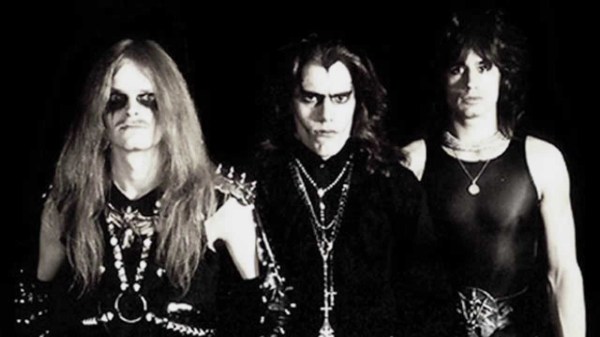
The first wave of this technique with Slayer (1983) kept its roots in the combination of NWOBHM and hardcore punk but evolved to become faster, ripping-strum styled metal that shifted with muscle over rigid, ambient repetitive beats. However the second wave — Morbid Angel (1986), Celtic Frost (1985), Sepultura (1985), Deathstrike (1985) — were more obscurely and bizarrely formed from raw innovation and chromatic scales. As the decade waned and humanity seemed further flung into the pit of materialism, death metal reached toward the progressive and explored the extremes of melody (At the Gates), ambience (Obituary), percussion (Suffocation), atonality (Deicide), and progressive music (Atheist). Bands created intricate compositions in which song structure reflected song content as foreshadowed by the sigils of the riff forms themselves, with each successive riff changing context and expanding atmosphere to create a sensation of constant discovery.
Death metal successfully evaded assimilation from extrinsic forces, but instead degenerated within. As more bands entered the genre as the underground grew, the bulk of death metal shifted toward a more percussive and chromatic style, composing their material visually from power chord forms along the bottom three strings of the guitar. This lowered the requirements for entry as did the expanding world of labels and zines which supported them, and standards fell. This in turn compelled bands to turn to novelty to distinguish themselves, and bands began voluntarily incorporating mainstream conventions. Labels seized on this as a chance to form death metal hybrids with rock music, which produced “death n’ roll” and a form of proto-indie metal that left behind the power of death metal for socially acceptable ideas, musical conventions and aesthetics.
Grindcore
Descended from thrash, grindcore took the hardcore punk and metal hybrid and applied to it the death metal tendency to down-tune guitars and distort vocals. Like thrash, it featured short songs with unique “shapes” or structures built around the riff. Unlike death metal, it tended to follow the punk style of essentially cyclic verse-chorus songs with some detours. The genre birthed itself in 1985 with Repulsion and Napalm Death both releasing demos. The more rigid and technical playing of Repulsion contrasted the earthy, organic and chaotic — deliberately off-timed, absurdly down-tuned and discoordinated — style of Napalm Death. From the fusion of these bands modern grindcore was born, but other than a few late entrants was done with its creative output by the early 1990s.
An important side effect of thrash and grindcore appeared in its influence on punk. Toward the middle-1980s, punk bands had spent their fury, and explored instrumentally adventurous and more mainstream-oriented angles like later Black Flag and Fugazi (ex-Minor Threat). Many bands, such as Amebix, Discharge and Cro-Mags, drifted closer to Slayer-styled speed/death metal hybrids. The vast majority built together a hybrid of the more progressive punk styles, the rock-infused styles, and borrowings from grindcore. The result formed a pop-punk variant best exhibited by Jawbreaker, which took the poppy songs of The Descendents and built into the them a convoluted song structure. The most profound change was “emo,” which was punk music that focused on self-pity, sadness and compassion instead of rage. This music verged on indie rock in sound and developed a devout following before it was absorbed by pop and progressive punk.
An important genetic component of death metal, grindcore arose from the ashes of hardcore and thrash as the alienated punk-rockers and sociopathic metalheads of the world sought something more extreme, more evocative of the discompatibility they felt as a process of soul. In 1994, Napalm Death _Fear, Emptiness, Despair_ sounded almost the last note for grindcore as its course of innovation started to veer from the minimalistic to abrasively coarse and simple, death metal-like music with complex jazz-y rhythms. Grindcore, like hardcore, thrash, speed metal and early forms of death metal, continues to this day, but most innovation remains at the aesthetic level and the original thrust has been lost.
Black Metal (II)
Black metal, born to uncertainty and neglected for nearly a decade, flowered in the early 1990s. Arising from proto-underground metal, black metal took its primary influence from Hellhammer/Celtic Frost and Bathory. During the later 1980s the genre essentially suspended itself while bands attempted to find a new sound for the underground metal era. Since death metal had explored a form of structuralism, or phrase-based highly structured music, black metal aimed for ambience. Its earliest acts in its fully realized form detached guitars from drums such that drums kept constant time while riffs changed in an extreme version of the lexicon of Discharge — seen most profoundly on Immortal _Pure Holocaust_, Graveland _The Celtic Winter_ and Darkthrone _Transilvanian Hunger_ — and pitched the classic biologically distorted guttural death metal vocals into a high pitched whispery rasping scream. The bands of this generation deliberately engineered their production to sound like the worst of garage engineering and incorporated the noise and distortion into their music by allowing resonant frequencies to carry their simple melodies in layers like an ambient composition.
I told the producer, ‘Give me the worst microphone you have.’ The sound of the drums, we didn’t do anything to make the sound of the song special. Ten minutes and everything was ready. And he was asking, ‘Don’t you want to do anything, you know, you always have to adjust the sound.’ No! Because it was a rebellion against this ‘good production.’ We called it necro-sound, ‘corpse sound,’ because it was supposed to sound the worst possible. I ended up with a headset as a microphone, because that was the worst I could find. I used this tiny Marshall amplifier, you know this big, because that was the worst we could find.
Black metal arose in part in response to the degradation and assimilation by mainstream intentions that began to crush death metal in the early 1990s. With the rise of black metal, underground metal inherited the rejection of industrial society that marked thrash and some death metal and expanded it into opposition to modernity itself. Frustration with an increasingly liberal West that had become as oppressive as the conservative version, and a new global economy that seemed to be removing culture as fast as it attempted to make every corner of earth safe for business, as well as a Romantic desire for ancient times in which, it was perceived, meaning was more readily attained through tradition and struggle, drove black metal to become not only the most articulated form of metal yet, but the most popular to rise from the underground. After a dramatic series of church burnings, murders, and taboo politics which affected all but a few of the original Norse, Greek and American black metal bands, the genre was captured by hipsters who pandered to a market who wanted the image of extremity without the socially unacceptable views and behavior.
Black metal gained notoriety not only for its acts of guerrilla warfare and urban terrorism against churches but its negativity toward the “fun” culture of rock music that was pervading metal and assimilating it. Deathlike Silence Records, the label started by Euronymous of Mayhem, imprinted its releases with the famous slogan: “No mosh, no core, no trends, no fun.” Black metal band members gave interviews where they decried the “jogging suit” culture that had taken over death metal with safe, solely humorous and pointless lyrics. In the view of black metallers, modern society represented a series of trends which took good sub-genres and exploited them, removing their essence and making them into a standard product like a McDonald’s hamburger. This outlook fit within the desire to make the music as obscure, lo-fi and violent as possible. The goal was total alienation from the herd and its morality.
After its peak in the early to mid-1990s with the Nordic black metal explosion, the genre fell prey to bands who adapted the black metal sound to other genres and made easily-digestible versions of the sound. This flowered into a synthesis with indie rock in the late 1990s, at which point the genre had become little more than an aesthetic style and was essentially abandoned by the original bands, fans and community.
Styles
“Doom Metal” (II)
During this time period, former Napalm Death vocalist Lee Dorrian started Cathedral, a band that borrowed from both NWOBHM band Witchfinder General and death metal to produce a new sound. While doom metal bands of the proto-metal variety such as Black Sabbath, Saint Vitus and Pentagram (US) had existed since the 1970s, this new form of doom metal based itself in death metal theory more than the inclusive rock hybrid of proto-metal. Doom metal thus serves not as a sub-genre, but as a style or technique by which bands play exhausting slow and ponderous music which creates an enhanced sense of darkness and mortal weight among the audience. Doom metal can be either of the heavy/proto-metal variety or the death metal variety. Following Cathedral in the death metal variety were Thergothon, Skepticism and Divine Eve.
“Speed/Death”
Early in the genre, most bands had trouble leaving speed metal behind and some formed a hybrid zone which mixed the techniques of both genres in the form defined by speed metal. A movement to combine speed metal ideals with a more abstract and logical, dark sequence of tones took hold in the form of bands such as Kreator and Destruction, who put together deathy speed metal, or intense hardcore-inspired extremists like Sodom who built three-chord high-speed songs to accustom an audience to enjoying a fast and violent melody. In addition, bands in the United States like Rigor Mortis and Sadus mixed the styles with an infusion of technical playing, which can also be seen on the first Atheist album.
“Industrial Grindcore”
One of the most influential offshoots of grindcore proved to be industrial grindcore as developed by Godflesh in 1991 with _Streetcleaner_. Combining machine-like electronic percussion with layers of distorted guitars, Godflesh created a spacious sound in which intense distortion gave rise to gentle melody and layers of melody created a harmonic landscape through which the motion of the song progressed. The possibilities of this new style stimulated minds in the upcoming black metal and later death metal works, causing many bands to work toward atmosphere and layers of sound in their otherwise traditional metal.
Metalcore: Metalcore and Nu-Metal: (1995-2005)
By 1994, black metal culminated in the most iconic and ambitious releases of its era, most notably Burzum _Hvis Lyset Tar Oss_ and later Darkthrone. At the same time both death metal and black metal languished, a new audience inspired by the headlines of black metal murder and the raw parent-shocking extremity of death metal surged into the genre. This created a financial opportunity for those willing to make music that was death metal or black metal on the surface, but underneath, was something safer and recognized. This new music specialized in avoiding the disturbing political and social themes of black metal and toned down the extreme mortalistic pessimism of death metal to a humorous focus on gore lyrics as exemplified by Cannibal Corpse, who lifted much of this from early grindcore pioneer Carcass.
Metalcore
The new post-underground metal music combined a new style of technical grindcore with groove, “mathcore,” best seen in Dillinger Escape Plan, with the hard rock and heavy metal styles of yesteryear and fitted these to the type of rock-punk hybrid of later hardcore, which evoked a “progressive” style in a punk way by insisting on the highest contrast between riffs to the point of randomness, such that songs cycled as if going between different exhibits in a carnival (and the music often resembled carnival music with its emphasis on polka-like beats and extended cyclic fills). In addition, black metal degenerated into what was called “war metal” which referred to exclusively chromatic, highly rhythmic music which imitated the primitive music of Beherit and Blasphemy without the emotional intensity, resembling more than anything else mid-period hardcore punk given metal rhythms. Some even took this hybridization to its next logical step and mixed crustcore, the genre which linearly inherited from Discharge and Amebix, with nominal black metal to produce “black punk.” Another form mixed with deathgrind to form “deathcore” and “slam,” which emphasized percussive riffing and heavy groove with numerous “breakdowns” or rhythm breaks leading to a half-speed groove.
Nu-metal
Mainstream metal added funk and hip-hop influences to death metal to create a rock-based variant known as “nu-metal.” Using the vocal rhythms of hip-hop in a style inherited from the “brocore” metal of Pantera and its descendants, nu-metal used rock song format and metal distortion to make riffs which were essentially funk- and rock-based but used metal techniques of chromatic fills and strum techniques. Perhaps the biggest nu-metal band appeared in the form of Slipknot, but related acts such as Rage Against the Machine and Marilyn Manson also incorporated these elements. Nu-metal added nothing to metal that hybrid bands had not attempted in the 1980s, but with death metal minimalism and the extremity and imagery of black metal, it became a marketable force at stores like Hot Topic which catered to rebellious teens who wanted to avoid stepping over lines of social acceptance and thus actually damaging their futures. Much as a famous ad campaign related “Banker by Day, Bacardi by Night,” the nu-rebels wanted to have both the merits of sociability with the appearance of alienation.
Blackened Death Metal
In the underground, some tried a new marketing technique and created “blackened death metal” or “black/death metal” which distilled to simple rock-style songs with the simplest form of death metal riffing with melody added. This trend peaked early because of the lack of stylistic distinction of these bands which cultivated rejection by existing black metal and death metal audiences, and their refusal to go all the way to socially safe material as nu-metal and alternative metal had, depriving them of an audience beyond an underground which only grudgingly accepted them. Others reverted to a previously successful form in the percussive death metal of Suffocation but streamlined the result into simpler song structures and added groove in the Pantera style, producing a variant of commercial metal known as “slam” which while it had underground aesthetics failed to uphold the structural and philosophical conventions of the genre and was for the most part quickly discarded.
Hybrid Metal: Melodic Metal, Power Metal and Indie-Metal (2005-present)
By the time the 21st century dawned, metal had almost four decades of evolution under its belt but to most, it became clear that it had stalled. No new genre ideas had emerged and people were rehashing the past. And so it came to pass that what the 1970s metalheads had feared was in process: metal was being assimilated by rock n’ roll and reverting to the mean. All of the sub-genres mentioned in this section fall within the rock world more than metal because they reverse and remove the unique metal method of narrative composition, and replace it with the cyclic harmony-based approach of mainstream rock music, no matter how “extreme” the aesthetic in which it is draped. During this age, metal recombined and hybridized but essentially failed to move forward.
Melodic Metal
Starting with At the Gates Slaughter of the Soul and related releases from Dissection imitators such as In Flames and Dark Tranquility, metal bands realized that they could capitalize on what Sentenced had pioneered in death metal: mixing in the Iron Maiden/Judas Priest dual guitar harmony of melodic leads. While Sentenced took a death metal outlook, and Dissection tended more toward heavy metal in song structure and sensibility, the new genre stirred interest in many because it softened the extremity of death metal and attracted an audience with a more even balance between genders. With the next generation, bands reduced death metal to technique alone and followed a heavy metal/hard rock format. The result then hybridized with metalcore to produce “melodeath” or melodic heavy metal with death metal vocals and metalcore song structure. Bands like Archenemy forged into this new domain which rapidly synthesized itself with the type of high-speed chaotic metalcore produced by bands like The Haunted (ex-At the Gates). This style reached its logical conclusion in Gridlink, who applied thrash aesthetics to technical melodic riffing and came up with 13-minute albums with more riffs than most bands put in hour-long works.
Power Metal (II)
Many metalheads expressed a desire for the relative straightforward approach, riff-centric music and compositional integration of 1980s speed metal. They felt that subgenre avoided the excess and dangerous thought of underground metal while preserving what had eternally made metal rewarding to listen to, namely the strong musicality and structural patchwork that produced a sense of ongoing development. Power metal worked in marginal death metal technique and adopted many of the more rock-oriented riff styles from the NWOBHM, sometimes using death vocals and hard rock riffs. Often these bands developed songs from verse-chorus loops but added transitional or bridge riffs to adopt greater complexity. Picking up on a black metal influence, most power metal bands tended toward fantasy-oriented lyrics heavy on medievalist and Tolkien symbology, although those had some precursor in 1980s heavy metal bands like Helloween and Omen. Many modern power metal bands of the Blind Guardian style also feature a use of vocal melodies that resemble those found in gospel and inspirational music, tending toward an upward tonal swing at the end of each phrase.
Indie-Metal
During the 1990s as death metal and black metal surged, indie rock had also gone underground while alternative rock dominated the radio and video channels. Originally born of the migration of DIY punk bands upward into a form of simple, folksy and low-fi rock, indie rock expanded in the 1980s as a method for bands to achieve a reach outside their local communities without becoming dependent on major labels for the same reason that punk bands opted for self-release. At the time and throughout the 1990s, releases that were not on major label imprints found themselves relegated to specialty stores and mail order. As indie matured it crossed-over with another minor-key genre that in opposition to the bombastic and egotist of mainstream rock became self-effacing and even self-pitying, emo. With the emo-indie fusion independent music expanded from a category in the 1980s to a sub-genre of rock music in the 1990s with its distinct sound.
Many noticed that indie bands like My Bloody Valentine and Sonic Youth were very close to black metal, as both used high sustain distorted guitar to create ambient waves of sound, and hoped to find a way to bridge the two despite radical differences in composition, outlook and spirit. As black metal burned itself out, first with imitators and then substitutes like war metal, indie-metal arose first in the black metal genre with crust/indie/emo/black hybrids. This idea spread when Sonic Youth guitarist Thurston Moore joined “black metal supergroup” Twilight, whose sound resembled drone/indie more than black metal. The headquarters of this scene was San Francisco record store Amoeba Records, which began stocking black metal in the late 1990s and recommending it to its clientele of urban indie-rock hipsters. Another big influence starting in 1995 was Swedish band Opeth who took on the death metal label but whose music, with its acoustic verses and distorted choruses, more resembled nu-metal or alternative-metal without the bouncy rhythms and served itself with a certain projected ostentation — “you wouldn’t understand this, it’s too deep and technically advanced” — that won it many fans among the lowered self-esteem youth who shop at Hot Topic.
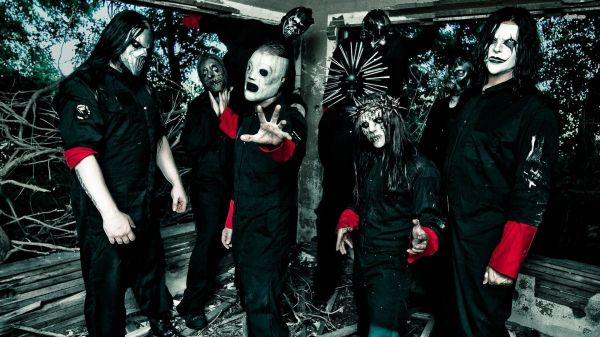
The first salvo of the indie-metal revolution came through bands like Isis, Gojira and Mastodon who combined proto-metal with indie rock and progressive pop punk, creating longer songs that used metal riffs and aesthetics but other than superficially entirely resembled what the previous generation of indie rock and emo, notably Fugazi, Jawbreaker and Rites of Spring, had made the mainstay of their own successful careers. As the “melting pot” of indie metal continued, other styles emerged, such as “sludge” which erupted from Eyehategod’s punk rock take on the slowed-down dirges of Black Sabbath and Saint Vitus. Other bands took inspiration from the rising “progressive metal” movement which Dream Theater popularized with its mix of heavy metal and light progressive like Rush, and as bands like Cynic and Atheist drifted further into jazz technique, this snowballed together and formed a set of techniques which were recognized as more difficult than standard rock playing thus desirable. Further indie rock crossover occurred when Nirvana drummer Dave Grohl formed Probot, a metal band that sounded more like alternative rock (Grohl’s former bandmate, Kurt Cobain, identified Celtic Frost as the major influence on Nirvana).
Eventually this spread outward through “technical death metal” which, inspired by Gorguts _Obscura_ and other works in the death metal genre, applied death metal aesthetics and technical playing to an indie/death metal/metalcore hybrid. At this point an aggregate, this music followed more of the mainstream path, mixing the light jazz of the 1970s and 1980s with progressive heavy metal technique and indie rock. Its sense of technicality arose from the percussive death metal bands following Suffocation, Incantation, Malevolent Creation, Immolation, Gorguts, Pestilence and Deicide who incorporated intricate rhythms and “sweeps” which sound notes cleanly moving from lower to higher strings on the fretboard, but in the newer form this technicality fit into the late hardcore model of songs which aim for maximal contrast and minimal coherence beween riffs. With that in mind, this style was probably always misnamed as “technical death metal” because it has little in common beneath the surface with death metal, and much more in common with indie-metal.
2.3 Styles
Rhythmic
Percussive
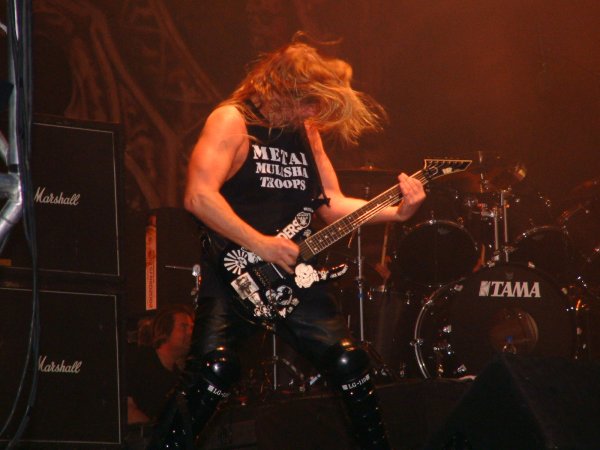
The major innovation of speed metal was the muffled, explosive strumming of power chords to produce a sound of impact and resurrect the power of rhythm guitar in rock music. This creates a sound that is both conclusive and demanding, which in turn requires greater coordination with drums and for rhythms to end toward a hard conclusion, not an open cadence. This style defined speed metal, but spread into death metal and other genres as a secondary technique.
Phrasal
Riffs can be played with a tremolo strum to increase sustain on each note creating an effect much like that of playing the riff on a violin, which then makes its melodic component and “shape” or the patterns of its tonal motion and rhythm combined define the meaning of the riff. Phrasal bands use fast strumming to make riffs that talk to each other on the basis of contrast and similarity in phrase, allowing the band to fit together different riffs to make an internal dialogue so that the sound moves forward by successive revelations from the contrast of riffs. This creates a clear narrative structure and allows more riffs per song.
- Slayer
- Morbid Angel
- Incantation
- Immortal
Textural
Some bands use multiple speeds in the way they strum their riffs, producing a texture within the ostensible riff composed of notes, which in turn creates an ambient effect by relegating drums to timekeeper and taking over the lead role for rhythm with the guitar. Textural riffs tend to emphasize internal divisions of rhythm and create consistency through using these textures like motifs shared between riffs, advancing the song through internal dialogue between the textures.
- Unleashed
- Fleshcrawl
- Bolt Thrower
Trance
A trance rhythm uses repetition of a simple phrase to create atmosphere through expectation and then layers additional compositional elements on top or (or texturally, within) that phrase. Like metal itself, this style is easy to do, and hard to do well. It requires a spacious and basic chord progression to work with and an ability to use texture, melody and structure to expand upon that initial setup. As with prismatic construction, the “sonic cathedral” effect creates a sound tapestry through addition or subtraction of harmony, and provides powerful but somewhat linear song structures.
Structure
Cyclic
In the most common type of song structure, songs are constructed around a verse-chorus pair that has a turnaround, bridge or solo section before returning to repetition of its main theme. This somewhat binary construction alters that cycle only to provide some sense of peak before returning to the norm. In such songs, conclusions are equal to precepts; that is, the song returns to the same position where it started. This is ideal for songs that express emotion about personal issues, like love and sex, because the singer does not want the world to change; he wishes it to remain static, but for this one alteration, which is the acquisition of the beloved/belusted, which is often seen as fulfillment in lieu of the world around him becoming something he enjoys more. “If I only had you, I could put up with the rest” might describe this mentality. Verse-chorus song construction also finds popularity for its ease of construction, because like opposite ends of a piston cycle the two parts of the binary reinforce each other, which allows artists to focus on harmony and soloing.
Narrative
As the craft of songwriting becomes more complex, a need arises to organize riffs internally by their relationship to one another instead of by their general relation to a harmonic principle as can be done with binary cyclic songs. This requires that the riffs create an internal dialogue in which the shape of each riff comments on each other and shows a chance in relationship to an underlying idea, so that each new riff expands on the context of the old and allows them to be repeated — albeit less than in a cyclic form — in a way that takes advantage of an expanded context so that each successive riff reveals more of a slowly emerging idea. In this style, which more resembles a topography than the neat circles of binary songwriting, songs tend to take narrative form of either a purely motif-driven type which conforms to a story told within the content, or in a more abstract form where the narrative appears in immanent form from the interaction of the riffs themselves. In narrative songs, structure fits content rather than adapting to a pre-ordained form; in some classical music, form is highly articulated to reflect a certain type of story that is to be told, and there the two impulses find parity. In death metal, where the highest evolution of the narrative form occurred in metal, initial riff shape approximates a metaphor for the germinal content, which then in turn shapes song structure around it, more like a form of power chord poetry than a strictly symbolic use.
- Demilich
- Incantation
- Morbid Angel
Layered
A song format brought to its height by technology, layered songs create a single unifying element and then place additional instrumentation around it both in support of it and by doing so, as a method of subtly altering context to change the overall impression of each cycle. Originally the province of collaborative improvisation which by necessity incepted through a simple, repetitive and harmonically open phrase played by one instrument so that others could join at will, with electronic music this form appeared as “dub” built around a sampled and sequenced significant element to which other repetitive sounds were added. Layered music allows the addition and subtraction of layers to manipulate the sonic form as a whole and influences its audience by atmosphere, or the sensation of each cycle as changed by the alteration of its layers which builds upon the trance-like unifying element. This shows up in metal more as a technique, such as allowing a riff to gradually find support in drums, bass and vocals, and saw its predominant use in death metal as this form. Frequently, bands break to a riff, mirror it in other instruments, then double the pace of at least one of those instruments and possibly add a second but closely related riff over the top to build intensity without breaking from a riff form.
- Bolt Thrower
- Dismember
- Monstrosity
Flavors
New York Death Metal (NYDM)
Building on the techniques of speed metal, these bands mixed the percussive style of explosive muted-strum riffing with dark and morbid riffing exhibiting doom metal influences. Often song structures took a more literal direction and resembled musical essays commenting on different aspects of a form before peaking and then returning to stability. This style takes two forms, the guttural blasting death metal variety and the more intricate but mid-paced style.
Florida Death Metal
Florida death metal bands created a style which emphasized repetitive riffs closely mated to drums and pulsing rhythms. The result borrowed more from heavy metal and speed metal than most death metal, but provided an easily-grasped form which increased the renown of the genre through defiant, monstrously simple and direct metal.
- Deicide
- Monstrosity
- Death
Swedish Death Metal
Bands of this variety used a new type of spikily distorted guitar, formed by applying high-intensity distortion via pedal and overdriving it at the amplifier as well, which created high sustain to the guitar and facilitated development of melody. In addition, the early bands in this style borrowed the “d-beat” (a broken rhythm between snare and bass drums) from Discharge and applied it to simple melodic riffing to create a style both savage and beautiful. Bands initially applied the traditional Swedish melodic aptitude toward death metal that initially favored complex riffing, but later reverted to a heavy metal form with speed metal influences that used cyclic song structures to make the most popular version of this style.
- Carnage
- At the Gates
- Entombed
Progressive
Continuing the progressive tradition in metal from its influences in late 1960s progressive rock, death metal bands upgraded the wily fingered “technical” death metal of a previous generation with influences from jazz, classical and 1980s guitar shredder music like Joe Satriani. For a time, many of these bands found a unique voice for application of progressive rock ideas in metal without simply recapitulating past works, but with the popularity of Dream Theater it became clear that a huge audience existed for that which facially resembled classic progressive rock and had simpler internal structures underneath. Thus progressive music in metal had two generations, a native one and an externalized one which gradually became a more rock-like form that retained metal riffing and lost all other influences.
- Atheist
- Gorguts
- Pestilence
- Obliveon
Göthenburg/Melodic
From Göthenberg, Sweden, came a series of bands emulating At the Gates by making technical death metal with heavy metal influences and technical riffing. After At the Gates released _Slaughter of the Soul_, this form changed into mostly heavy metal with death metal tremolo strum and lots of melodic intervals. At that point, it essentially became assimilated by power metal.
- Dissection
- Sacramentum
- Unanimated
Deconstructivist
Chaotic and nihilistic blasts of short information in three-note riffs founded this style, which through reduction of assumed musicality focused on the information it communicated, but ultimately recapitulated the punk tendency toward disorder and thus became assimilated by punk styles or the art-rock tendencies to which punk migrated. This style differs from the rest of metal in that it attempts to break down or deconstruct attention to a single point of focus, rather than enwrapping multiple points of focus into a single narrative, but resembles early thrash and grindcore in its construction and the arc of its evolution.
- Impaled Nazarene
- Havohej
- Ildjarn
Epic
Descended from the devotees of Bathory Blood, Fire, Death, this style aims to create a mini-opera out of albums made with grand concept, “symphonic” instrumentation or added layers of keyboards and synthesized voices, and song structures which emphasize aggression rushing into vast and spacious processionals resembling the coronades of classical music. Often like its forebear Richard Wagner this style focuses on a fusion of folk tales, nationalism and mythology.
- Emperor
- Bathory
- Graveland
Folk
Arising later in the metal canon but within the 1990s, this style took folk forms and hybridized them with metal. In this instance, folk refers more to the European music tradition of songs passed along in local areas over the generations, and less to the rock-infused variant of American country which derives influences from Anglo-Germanic folk music adapted to the simplest cyclic form possible.
- Enslaved
- Empyrium
- Skyforger
Neoclassical
Deriving many of its influences from the late-period synthpop like Dead Can Dance that fused ambient/industrial with world music, rock and classical influences, neoclassical influences in metal attempt to resurrect classical song structure and spirit in metal music. In heavy metal genres, it tended to manifest in borrowings from classic melody used in lead guitar solos; in death metal, it manifested in structure that emulated the grandeur, power and breadth of classical music. Some bands, such as Massacra, described themselves as “neo-classical death metal” while others alluded to this influence only in interviews.
II. Metal as Concept
- Metal is a form of composition rather than a specific music theory unique to metal but also found in classical music.
- Metal bases its beliefs around the concept of _vir_, or aggressively doing right without reference to individual preferences.
- Metal culture is not counter-culture, but a rejection of it and mainstream establishment culture alike.
- Metal theory involves a number of techniques used to make sonic texture and narrative composition.
2.1 Theory
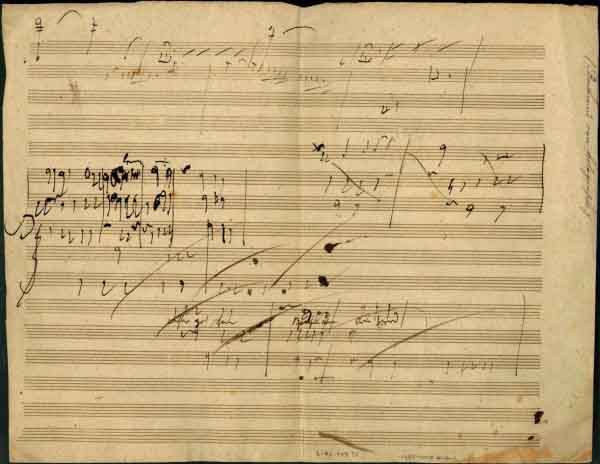
“All music is the same.” – Paul Ledney (Profanatica, Havohej, Incantation, Revenant, Contravisti)
Heavy metal music uses the same music theory that propels all Western music: the diatonic scale and its harmony, the same rhythmic divisions and calibration, and the same instrumentation. Rock music arose from polyglot influences; heavy metal injected Modernist classical via horror movie soundtracks and then in the next generation stripped down composition to the barest elements and then built it up again into a language of its own. Thus much like rock exists within Western music, metal exists within rock, but by dint of its entirely different approach and outlook constitutes a separate genre.
What distinguishes metal is its use of riffs as motifs or phrases. These allow metal musicians to unite two highly contrasting points through an intermediate journey composed of dialogue between riffs in (usually) the same key. Through internal dialogue, these riffs negotiate a balance such that the song arrives at conclusions different from its starting point and can repeat its main themes in a new context established by the changing shape of the riff. As a result, metal song structures vary more than those of any other popular genre and contort themselves to the unique needs of each song. However, since metal is still a form of popular music, this variation occurs as an addition to the dominant verse-chorus structure, much as metal is an augmentation to culture as opposed to a counter-reactive, revolutionary force.
Through this method heavy metal inherits the technique of modernist classical composers like Anton Bruckner and Richard Wagner, who used both leitmotifs and the prismatic technique of repeating themes after variation to increase intensity of mood, fused with the technique of hardcore punk musicians that stripped aside the conventions of rock to write in keyless chromatic phrases. It inherits its song structure from the progressive rock like King Crimson or Jethro Tull that was part of its founding inspiration, but wraps it around these phrasal compositions inspired byhorror movie soundtracks that were derived directly from modern classical. Using the instrumentation of rock, metal is able to channel its more traditional heritage and, like its founders Black Sabbath, oppose the dominant illusions of a time where pleasant mental escapism pretends it is combating a dominant undercurrent of decay based in human evasion of reality. Metal is not just “not rock”; it is anti-rock.
In this sense, heavy metal may be the first “informational” genre of music in that its riffs act more as a pattern language or design pattern to signal the intent of each motif than they serve in the rock music role of filling harmonic space to accompany a vocal which defines the melodic progress of the song. These motifs emerge from a sense of mimesis, or imitation of what exists in reality, but in the case of metal this imitation seems to be not of physical objects but logical objects. Metal is about information; information forms a level that unites thought, matter and energy by putting them in the same arrangements and thus having the same informational outcome. Thus a dream can metaphorically resemble reality, and the objects in reality can be re-shaped by the actions of the dreamer corresponding to events in the dream, and even the cycling of energy can be changed by an alteration in form of physical objects based on their abstract design or thought-based properties. This Platonic similarity explains much of the evocative power of metal: its riffs resemble sensations of reality if not reality itself, much like how horror movies speak through metaphor about the horrors of life itself.
The intensely ritualized vocabulary of metal riffs resembles other types of design where repeated patterns are used in similar fashions; the difference is that in metal this language of patterns is used toward fantastic and not functional ends. Architect Christopher Alexander, who designated the term “pattern language” to describe how similar needs produced similar architectures and how those in turn effected the layout of whole communities, explained the importance of pattern languages and their use in producing spaces for humans to live in:
When I first constructed the pattern language, it was based on certain generative schemes that exist in traditional cultures. These generative schemes are sets of instructions which, if carried out sequentially, will allow a person or persons to create a coherent artifact, beautifully and simply. The number of steps vary: there may be as few as a half-dozen steps, or as many as twenty or fifty. When the generative scheme is carried out, the results are always different, because the generative scheme always generates structure that starts with the existing context, and creates things which relate directly and specifically to that context. Thus the beautiful organic variety which was commonplace in traditional society, could exist because these generative schemes were used by thousands of different people, and allowed people to create houses, or rooms or windows, unique to their circumstances.
Each pattern is a three-part rule, which expresses a relation between a certain context, a problem, and a solution. As an element in the world, each pattern is a relationship between a certain context, a certain system of forces which occurs repeatedly in that context, and a certain spatial configuration which allows these forces to resolve themselves. As an element of language, a pattern is an instruction, which shows how this spatial configuration can be used, over and over again, to resolve the given system of forces, wherever the context makes it relevant.
This sense of a pattern language producing design patterns specific to a certain function and adaptive to context resembles the descriptions of another great thinker. The Greek philosopher Plato wrote of divine forms which explained the patterns behind everyday objects and the reasoning for their existence. He viewed these forms as a truer representation of reality than a focus on the tangible and immediate material example of any given object. His description of these forms is as follows:
[There are] men passing along the wall carrying above their heads all sorts of vessels, and statues and figures of animals…which appear over the wall. Some of them are talking, others silent…[The prisoners] see only their own shadows, or the shadows of one another, which the fire throws on the opposite wall of the cave…And if they were able to converse with one another, would they not suppose that they were naming what was actually before them? And suppose further that the prison had an echo which came from the other side, would they not be sure to fancy when one of the passers-by spoke that the voice which they heard came from the passing shadow? To them…the truth would be literally nothing but the shadows of the images.
In this metaphor, Plato describes what forms are by describing what they are not. In the context of metal, the forms of riffs are not strictly mimetic; they do not imitate, for example, a chair. They imitate the mental experience of someone perceiving an object in an event or process and the resulting unity between that thought and the experience. The narrative riff style encourages the expression of a process through a story, such as how a person came to a realization, and the interlocking prismatic riff constructions emphasize this condition of change restoring order but amplifying its context and thus meaning. In this sense, metal reveals the underlying content to objects and experience as is relevant to the narrator. This fits with the metal idea — derived from Romanticism — of the lone individual trusting an “inner self” where truth and lie can be discerned and meaning can be found. The metal habit of knitting together riffs to tell an evolving story exemplifies this idea.
The narrative construction of heavy metal — especially underground metal, in which the genre found full expression after three generations — joins it with an elite fraternity of other genres in which song structure is specific to context. In particular, classical music, cosmic ambient bands and progressive rock tend to use this structuring scheme. It enables them to both experiment within a rule-based system where a language is shared with the audience and thus can be used by reference to incorporate a wide variety of ideas, and also to adapt their music as specifically as possible to its topic. This creates a certain “poetry” of the song where the lyrics explain what occurs and lead changes in guitar which determine the directional change of the song. In classical music, the song forms that developed over centuries reflected the generative patterns required for certain types of context, which in art means “content” and “topic.”
Metal creates an extremely naturalistic form of information music as a result. Its songs, like structures found in nature, use simple ideas expanded upon by their interaction over time so that through the internal dialogue of riffs, a journey unfolds and reveals the intent behind the content as framed by the artists. Much like in a poem, where the meaning is not “spelled out” but must be decrypted by the mind of the reader who compares it to past experience and uses analysis to unconver its relevance and metaphor, metal songs resemble subconscious ideas or even the shapes of memories and experiences in our minds. Like abstract art, the unconscious metaphor indicates a similarity and creates a connection between listener and topic.
A physicist, conceiving systems of differential equations, would call their mathematical movements a “flow.” Flow was a Platonic idea, assuming the change in systems reflected some reality independent of the particular instant. Libchaber embraced Plato’s sense that hidden forms fill the universe. ‘But you know they do! You have seen leaves. When you look at all the leaves, aren’t you struck by the fact that the number of shapes is limited?’
Narrative construction empowers each song to have a unique “shape,” much as riffs have shapes based on the phrase they repeat and the different tonal directions it takes. Heavy metal creates a type of mental symbol in each song such that it evokes a sense not just of the immediate but of the timeless archetypes of human life. Lyrics underscore this by avoiding the personal and sensual that rock music favors, and instead looking at life through a lens of mythology, history and fantasy. If a source of modern myth exists, it might be found in heavy metal, where not only words and images but also the shape of riff and song like sigils encode a type of not universal but particular experience that resonates with all who have undergone it and amplifies context from the immediate to the eternal. In this heavy metal also resembles Greek tragedy and other types of drama in which music plays a central role.
In its role as an outsider, metal opposes both current culture and anti-culture, preferring the intangible view of history external to the perspective of our society and the daily mundane ideologies and rituals we use to re-assure ourselves. Its “heavy” content shows us where there is a more fundamental truth; we bind truth up in words, and in stories of the individual, and obscure the larger picture. For this reason, its neo-Wagnerian motifs and narrative composition reveal an underlying need that our society cannot address. It conjures up visions of ancient greatness, and metaphorical myths of fantasy lands, to show us the world outside of the human definitions, rules, morals, laws and mental constructs that we use to self-congratulate on our importance. This in turn brings up vir, which is the notion of doing what is right; this differs from modern morality, which is focused on defense of the individual against imposition of the will of another, because vir focuses on what is right according to the mythic or cosmic order as a whole, and frequently involves acts that modern people would say are “wrong” because they involve the sacrifice of one or more individuals. The mythic-historical view of metal allows it to take this non-human perspective and from it, to create myth:
[Myths] are the world’s dreams. They are the archetypal dreams and deal with great human problems. I know when I come to one of these thresholds now. The myth tells me about it, how to respond to certain crises of disappointment or delight or failure or success. The myths tell me who I am.
Although it takes some analysis to spot its origins, this mythic nature is the essence of heavy metal and its choice to use longer riffs in narrative structures. This tendency has grown over time from a way of writing riffs to a way of thinking and in doing so, lives up to the original influence of horror movies on metal. Horror movies demonstrate the influence of mythmakers, notably the greatest literary inspirations of metal including H.P. Lovecraft, J.R.R. Tolkien, Robert E. Howard, Bram Stoker, Mary Shelley, John Milton, Friedrich Nietzsche and E.A. Poe. In pursing this mythological voice, heavy metal displays a number of technical innovations or other changes from popular music:
- Technique –> Structure
Technique, which normally serves to embellish, became under metal the science of structure by creating ways for guitar to lead composition independent of drums and vocals, which lead in rock music. Heavy metal worked through the austerity of power chords and a jazzlike rhythm to a deeply chaotic and abstract blues. Speed metal used muted-palm picking to create a mechanical, grinding sound, where death metal bands began to use a flutterstrum which would turn a chord into a stream of undulating sound with a massive tremelo effect, building a powerful tool for ambient melody.
- Harmony –> Melody
Harmony in metal is used to unify a number of melodies to a sequence of tone centers which represent the parts of the idea being manipulated by the song. The riffs which metal bands use are structuralistic in that they describe rather than categorize, by the nature of their wandering phrases which use structural similarity for coherence rather than tonal unison. Where harmony serves to preformat a range of emotions for rock bands, in metal, melody drives harmony, letting the composer take the music into whatever direction he/she desires by dynamically associating tone centers with contrapuntal arrangements, layering strips of reference to narrative and joining them with harmonies.
- Tonality –> Dynamicism
The major element of the evolution of heavy metal is a progression in tonality from the blues-rock extrapolationist grab bag to the chromatic, dark and almost mystically nihilistic tone patterns of death and black metal. The ability to change from a fixed-tonal system to a system which, like the Doppler effect, is based on proximity and speed to establish a current point of reference, provides for a basis of composition which is more specialized for systemic expression than for linear expression.
Metal musicians have frequently cited classical composers, such as Johannes Sebastian Bach (Bathory, Dawning), Richard Wagner (Burzum, Necrodemon), Ludwig van Beethoven (Bathory, Condor, Organic), W.A. Mozart (Morbid Angel, Organic), Niccolo Paganini (Organic), Modest Mussorgski (Sammath), Franz Liszt (Dawning), Bedrich Smetana (Condor), Antonio Vivaldi (Organic), .
“Strife is evolution, peace is degeneration.” – Varg Vikernes, http://www.burzum.com/
2.2 Philosophy
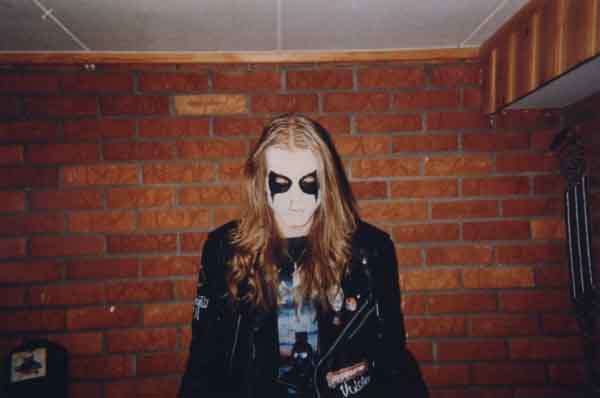
That depends on how you see Utopia. In a sense, an ideal society would be a static society, and any such society is an evolutionary dead end. Happiness is a byproduct of function, purpose, and conflict; those who seek happiness for itself seek victory without war.
— William S Burroughs
On the surface, heavy metal appears a distant from philosophy as one can imagine. A genre of long-haired, beer-swilling, dope-smoking maniacs screaming lyrics about death, war and the occult seems far removed from any pretense of structured thought. Yet under the surface something else lurks. The word “occult” — original meaning: concealed — denotes hidden truths of an esoteric nature which cannot be learned from symbols, but must be experienced in layers with each layer giving rise to the ability to understand the next. It also applies to any genre like heavy metal that conceals its truths in such layers.
The occult resembles art itself which takes a narrative form in contrast to the representative form of symbols. The earliest art — a cave painting of a hunt perhaps — told stories: an attempt, a struggle, pitfalls and failures that were overcome to achieve a goal. The outcome of these tales was not the interesting part since it was already known; hunts were either successes or fatalities. What made them interesting was the struggle in each, and the overcoming, and the prototypical version of a “moral” — what was learned in the process — which meant that the teller revealed in narrative a change in his own mental state through experience in the physical world. As humanity grew, this story-telling attribute of art grew with it.
I grew up in an idyllic society, really. Homogeneous, no crime; everything was basically perfect. We had stables with girls riding horses, who were playing on the outside… there were no problems. Whatever. At some point, when we grew older, of course there were problems but we didn’t see them thus. Basically the truth, eh? But when you grow older, you see that things are not the way you want them to be. McDonald’s didn’t appear until 1991 or 1992, and when it did, we actually took a rifle and bicycles, we rode our bikes up to McDonald’s, and we sat down and started to fire on the windows. We were sneaking up and shooting at McDonald’s, we stockpiled weapons and munitions to prepare for war, because we not only suspected that there might be a third world war, but we hoped that there would be a third world war. Not because we enjoyed destruction so much, but because we knew that if you want to build something new, you have to destroy the old first.
Most philosophies take a utilitarian view of life and measure actions by whether a group of people would see them as “good” or “bad.” But that utilitarian view has an Achilles heel. Categories like good/bad become symbols. Symbols can take many forms: political, commercial, moral and most importantly, social. A social symbol conveys membership in a group or status within the group. For those who want to manipulate others, specifically groups of other people, symbols serve a role art cannot. When they associate a symbol like “good” with an act, they can trigger mass obedience, and by labeling other things as “bad,” can wage war against them using the superior numbers of the herd.
Heavy metal — which finds beauty in darkness, clarity in distortion, and justice in violence — constructs itself from contrasted patterns to reveal an underlying truth and a rejection of symbolism and utilitarianism. It worships power and nature, not morality. Its view strikes away from the modern utilitarian notion of good as that which pleases the group, and returns instead to the individualism tempered by nature worship expressed by the European Romantics in art, literature and music during roughly 1600-1900 AD. M.H. Abrams provides us with a definition of Romanticism.
- A revolt against accepted form: democratization of subject and language, a less formal poetic voice, and a new range of subjects such as the supernatural and “the far away and the long ago” adopted by Samuel Taylor Coleridge, John Keats and others; the visionary mode of poetry adopted by William Wordsworth, Percy Bysshe Shelley and William Blake; and the use of metaphysical symbolism.
- Focus on the poet’s or writer’s own feelings instead of a universal emotion shared among all humanity. This emphasized spontaneity, meditative stillness, and a sense of discovery through intuition. Imagination was seen as more important than fact.
- External nature (landscape, plants, animals) became a persistent subject.
- Often written with the poet or writer as protagonist.
- A sense of progress, or of limitless good achievable by use of the imagination, instead of reliance upon past methods.
He contrasts this to the values of the neoclassical period that immediately preceded the Romantic:
- A strong traditionalism rooted in their respect for Greco-Roman classical writers, and a distrust of radical innovation.
- Literature was seen as being primarily an art, or a skillset created by nurturing innate talents through directed work. For this reason, complex formal rules and conventions were highly important.
- Art was seen as an imitation of nature, with human life being its prime subject and the communication of ideals toward humanity its goal.
- Emphasis was placed on what humans possess in common, such as characteristics, shared experiences, thoughts, feelings and tastes. The goal was to express common truths in an enlightening way.
- Humans were viewed as limited and having specific places in a hierarchy of natural events and beings, called The Great Chain of Being. It was considered best to find the appropriate place in this and not go above it.
The most important part of this may be the “own feelings instead of a universal emotion shared among all humanity” and “sense of discovery through intuition” which are complementary parts. A metalhead does not seek knowledge in the ideas of the crowd or the universal feelings of humanity, but in the experience of the individual and the inner truths revealed. The purpose is to find an order in nature both inside the self and in the outside world, and as a result, a way to escape the judgment of the herd and know not only what is true, for crowds lie to cover their misdeeds, but also what is important. Among other attributes, metal is a proactive and valuative philosophy which seeks to find an optimal experience in life.
They block out the landscape with giant signs
Covered with pretty girls and catchy lines
Put up the fences and cement the ground
To dull my senses, keep the flowers down
— Give My Taxes Back, Dirty Rotten Imbeciles (Dealing With It)
Hateful savages
Strong black minds
Out of the forest
Kill the human kind
Burn the settlements and grow the woods
Until this romantic place is understood
— Absurd, “Green Heart,” (Out of the Dungeon)
The philosopher Friedrich Nietzsche draws a distinction between “Apollonian” or rigidly order-based thinking and “Dionysian” thought which resorts more to an expression of the human id, a chaotic and emotional force.
With Romanticism, Western thinkers rejected the order, balance, harmony and rationality of Classicism and replaced it with a tempestuous focus on the human individual. While this reflected the thought of the Enlightenment, in which the human form replaced the notion of a divine order to all life, Romantics tempered this with a strong suspicion and distrust of what is socially popular. The figure of the Romantic era is the lone actor who understands his or her world through inner passion and finds it reflected outwardly in nature. As part of this new discipline, Romantics emphasized “the individual, the subjective, the irrational, the imaginative, the personal, the spontaneous, the emotional, the visionary, and the transcendental.”
Among the characteristic attitudes of Romanticism were the following: a deepened appreciation of the beauties of nature; a general exaltation of emotion over reason and of the senses over intellect; a turning in upon the self and a heightened examination of human personality and its moods and mental potentialities; a preoccupation with the genius, the hero, and the exceptional figure in general, and a focus on his passions and inner struggles; a new view of the artist as a supremely individual creator, whose creative spirit is more important than strict adherence to formal rules and traditional procedures.
Romanticism produced some of the greatest works of literature the Western world has in its canon, many of which evoked form and content similar to that of ancient Greco-Roman literature without the surface formalism of the preceding Classicist generation. Among the important contributions of Romantic literature were poetry from William Wordsworth and Percy Bysshe Shelley, an epic poem about the fall of Satan entitled _Paradise Lost_ by John Milton, and from the later Romantics, _Frankenstein_ by Mary Shelley, _Dracula_ by Bram Stoker and _The Sorrows of Young Werther_ by Johannes Wolfgang von Goethe. In addition, later writers such as Edgar Allen Poe and H.P. Lovecraft borrowed from Romantic themes. Stoker, Mary Shelley, Poe and Lovecraft contributed the raw material of the horror story which is the basis of the horror film genre from which heavy metal received its first and ongoing most fundamental inspiration.
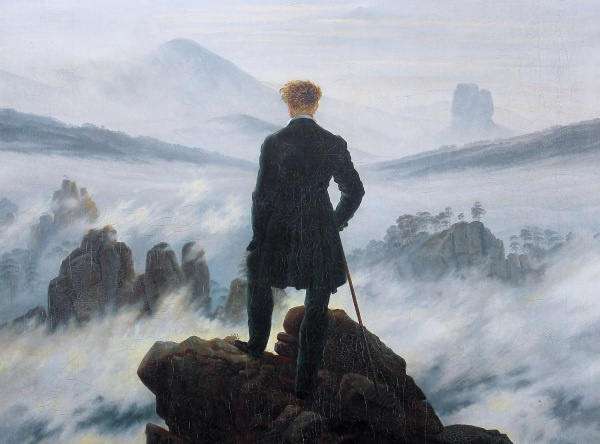
In particular, the works by Mary Shelley, Milton and Stoker deserve further analysis in the context of metal. In _Frankenstein_, which contained many allusions to the French Revolution
, a scientist becomes intoxicated by his own power and creates a “perfect being” who then turns on human society; in _Paradise Lost_, Milton tells the story of Satan from the perspective of that fallen angel, revealing the depths of a human-like ego; in _Dracula_, a parasite attacks society and must be destroyed by chasing it to its Eastern lair and exterminating it. In that story, the parasite grew out of the changes in a local prince who rejected God after his kingdom was assaulted by Muslims and his wife slain. These books cover a huge span of European history and fundamentally reject not just Classicism, but much of the Enlightenment and French Revolutionary rhetoric of the time. Where the Enlightenment and Revolution saw all humans as valid decision-makers, and thus equal, the Romantics saw a society out of control that had left behind principles of reality found in nature to pursue its own swelling, monstrous ego.
The “new form” of her novel is more subjective, complex, and problematic than earlier monster fictions in the political tradition. Mary Shelley translates politics into psychology. She uses revolutionary symbolism, but she is writing in a postrevolutionary era when collective political movements no longer appear viable. Consequently, she internalizes political debates. Her characters reenact earlier political polemics on the level of personal psychology. In the 1790s, writers like Edmund Burke had warned of a collective, parricidal monster — the revolutionary regime in France — that was haunting all of Europe; in the aftermath of the revolution, Mary Shelley scales this symbolism down to domestic size. Her novel reenacts the monster icon, but it does so from the perspective of isolated and subjective narrators who are locked in parricidal struggles of their own.
Heavy metal picked up this theme with its embrace of “heaviness” itself: a hidden, or occult and esoteric notion, that truth is not accessible to the crowd. Ideas become heavy because they resurrect truths which are known to nature, but not the human social mass which chooses only ideas that flatter it and its sense of self-importance. To find these truths, the individual must look within to what they know is true and reject that which the crowd embraces. Much as in _Dracula_ and _Frankenstein_, the individual finds that others are unwilling to believe that anything out of the ordinary is going on, and must tackle the problem on their own without many resources.
Rape my mind and destroy my feelings
Don’t tell my what to do
I don’t care now, ’cause I’m on my side
And I can see through you
Feed my brain with your so-called standards
Who says that I ain’t right
Break away from your common fashion
See through your blurry sight
— Escape, Metallica (Ride the Lightning)
The social philosophy of heavy metal can be described as “antisocialism.” Metal embraces everything that normally we exclude from social conversation — death, ugliness, terror, genocide, disease, warfare, perversion — and somehow channels it into music that lacks beauty in the decorative sense but makes from these repellent conditions an appealing conflict in which we wish to see the best outcome push down the rest through those same dark methods. This view remains socially unacceptable in both liberal democracies and conservative theocracies, which is why the public view of metal disregards it and characterizes it as angry teenagers protesting early bedtimes. That description would apply if heavy metal uniformly rejected everything before it, but it tends to reject social illusion and human illusion and embraces forces of nature and objective change such as history and its codification in myth.
Antisocialism can be seen in metal on a musical level as well as in its lyrics. Rock music is based in harmony, or the idea of setting up a basic melody and then using vocals and change in key or shift to minor key as a means of inducing emotion, usually of a contrasting/combined form like sadness and delight simultaneously. This bittersweet feeling pervades most rock with a heavy sense of emotion focused in the individual. Metal distances itself by basing the song around the riff where changes in riff induce emotion instead. In that compositional method, what creates emotional intensity is the relative change in riff as part of an ongoing song structure, more like a poem than a pulsing constant sound. This inconstancy in metal proves essential to its method: instead of creating an emotional state and then manipulating the listener with it, metal creates a context and then adjusts this such that the change in riff and relation between riffs provokes in the listener a recognition of a resemblance to some facet of life or experience.
This establishes one of the fundamental thoughts implicit in metal philosophy: the individual as inconsequential in a world without inherent rules or an order above nature, in which meaning is derived not from individual desires and judgments, but the process of interaction within the whole. Metal adopts a certain kind of positive nihilism in this regard in that it sees life as a series of choices based on options that emerge, not a process of following a built-in path to acceptance. The esoteric nature of metal thought, inherited in part from its fascination with the occult, holds that there is no one path for everyone only paths that some may opt to follow which have different results from the others. Metalheads often draw a distinction between mainstream culture and their own beliefs, or use terms like “poseur” to exclude those who are of the mainstream mindset. That mentality originates in this division between private truth and public illusion.
According to the Romantic conception, the lost unity could not be restored by external means; it had rather to grow out of man’s inner spiritual urge and then gradually to ripen. The romantics were firmly convinced that in the soul of the people the memory of that state of former perfection still slumbered. But that inner source had been choked and had first to be freed again before the silent intuition could once more become alive in the minds of men. So they searched for the hidden sources and lost themselves ever deeper in the mystic dusk of a past age whose strange magic had intoxicated their minds. The German medieval age with its colorful variety and its inexhaustible power of creation was for them a new revelation. They believed themselves to have found there that unity of life which humanity had lost. Now the old cities and the Gothic cathedrals spoke a special language and testified to that ‘verlorene Heimat’ (lost homeland) on which the longing of romanticism spent itself. The Rhine with its legend-rich castles, its cloisters and mountains, became Germany’s sacred stream; all the past took on a new character, a glorified meaning.
Heavy metal rejects modern morality which aims mostly at protecting the individual from a requirement to conform to social standards, but at the same time asserts that the individual can reject any morality which is inconsistent with nature, history and mythology. Before this modern morality, the idea of doing right possessed a different meaning: “vir,” or a sense of aggressive putting of things to right according to a natural, cosmic or metaphysical order. Where modern morality is designed to preserve the individual against society, the ancient way sought to promote healthy in society and surrounding nature as a whole as a means of preserving the individual.
The expression of this belief in metal takes on a Faustian nature. A German Romantic writer, Johann Wolfgang von Goethe, wrote his immortal epic Faust about a man who makes a bargain with the devil and in it encoded the metaphor of the Faustian spirit: humankind struggling with the necessary evils of suffering and death, yet aware of the great things to be achieved once one accepts them in the bargain. As a result, the Faustian spirit describes any individual who does not seek to explain away suffering, but wants to accept life as a whole, and thus feels extreme passions in both pleasure and pain. It is the antithesis of the passive and world-negating spirit of not only far-east philosophy and populist Christianity, but also our modern notion of Utopian fantasies of making the world “safe.” Metal rejects safety, morality and the idea of “normalcy” or a single standard that tempers the nature inside of us. The raging spirit of metal that embraces the dark side of life is Faustian in its very nature, as is the tendency of black metal bands to glorify both death and the exultant experience of victory in combat.
Goethe emerged from the Romantic time period and outlook, but so did another group of writers who expressed “naturalism” or a belief in the order of nature as more realistic and often, more accurate and divinely inspired, than that of humankind. For misanthropes at a structural level, naturalism rejects human morality and invented religions and replaces it with substitutes derived from patterns found in nature, often through transcendental thought. Best exemplified by William Blake (a major influence on The Doors) and Ralph Waldo Emerson, this movement seeks to understand nature and its wisdom by recognizing that it is superior to human orders for the purpose of adapting to and maintaing a high quality of life. Naturalists do not cringe at the red talons of the predatory hawk tearing the mouse; instead, they praise the greater strength of the mouse and hawk populations achieved as a result, and the trees which will be fertilized by hawk droppings. It is an organic, gritty philosophy with deep links to cosmicism, or acceptance of the universe as an order in itself which needs no remaking; this is in dramatic contrast to Judeo-Christian moralism, which inherently finds fault with nature and seeks to replace it with an morality designed to pacify fear of insufficiency, death and suffering. Blake’s concept of “the path of excess leading to the road of wisdom” is an esoteric statement of this belief, and clearly influenced early heavy metal and is an unstated influence behind death metal and black metal.
Whether born yesterday, or an older person, the individual faces a world in which many things happen, and some turn out positive for that individual, while others are negative. Herein is the reason humans philosophize. We live because to some degree, we believe in living, but it is a balance between emotions incurred by the positive and the negative aspects of life. In this the fundamental question of philosophy can be seen, which is, “Why do I live, and why is it that life includes negativity?” There are several approaches to this question:
- Deny suffering. Whether through stoicism, or numbness, or a belief that the individual does not exist, one can minimize the value of suffering to the individual. However, when one destroys suffering in the representation of the world that every individual has, one also reduces the impact of joy, and thus a stable norm is achieved but great deeds, which require great passions and enjoyment of life, are stultified. The problem of far-east philosophies comes to mind here.
- Embrace suffering. Self-pity is a fundamental notion to all humans, because by making the impact of suffering congratulatory to the individual, it allows the individual to endure suffering, but also converts the individual into a masochist. When this happens, the individual loses any higher impulse, and becomes fixated on the self and ways to keep it afloat through additional suffering and, as a palliative, reward, which usually takes the form of pity for others. This is the way of middle eastern religions, including Christianity.
- Explain suffering. Without finding a way to resolve the fact that it is real and its impact will inexorably be felt, suffering can be interpreted as not only logical but as a kind of logical optimum. In this view, one finds a reason that suffering exists, such as the notion that because there is negativity there is space for change, and that which is not fit for the future is eliminated. It is a naturalistic view, and this is common to all Pagan beliefs: they understand suffering as a mechanism by which nature maintains itself and encourages, gently when you consider how large the natural world is compared to the individual, the growth of individuals and species.
The only philosophy that expresses vir is (c), because in this one subsumes the role of suffering to that of a creative force, and thus does not lessen either suffering of joy, but finds it natural and right that one might pursue enjoyment (and what it encourages: creative achievement, whether writing better music or building bigger banquet halls) and also experience suffering. There is no need or ability to explain away suffering; suffering is simply suffering, or negativity, associated with empty spaces and “clearing” forces such as winter and death. The individual following this philosophy must accept that some things, such as mortality and suffering, are part of life as a whole, and while the individual will suffer and die, the whole will continue and it is right that it do so, because the whole is the source of both the individual and enjoyment.
In this, metal approximates the knowledge of hermetic, Pagan, Hindu and other occult sects more than the exoteric vision of Western religion and morality. Metal music serves as a popular target for those disturbed by evil, Satanism and occultism, only in part because those views are taboo; the bigger sin is refutation of the accepted view with something that may admit the taboo. During the 1980s when more people held Christian views, one of the primary charges against metal at events like the Parents Music Resource Center (PMRC) hearings was that it encouraged Satanism. This occurred during a time when people were being convicted of child molestation under a theory of “Satanic ritual abuse” and the mainstream media never blinked at the accusation.
Since its inception in Black Sabbath, metal has expressed a fascination with both evil and the occult. At the point of its origin however this fascination mostly dealt with the threat of evil coming to pass. Its thought verges close to Milton and Blake in this regard by showing a utility of evil, and an experience of Satan which reveals the conflict in the human soul between ego and world. Unlike most descriptions of evil, early metal lyrics focused on evil as an explanation for the mass trends and politics shaping society. Black Sabbath portrayed evil as a negative force controlling humanity behind the facade of civilization and its institutions. Over the generations of heavy metal, the genre has changed its outlook on these the role of evil.
Now in darkness, world stops turning
Ashes where their bodies burning
No more war pigs have the power
Hand of God has struck the hour
Day of Judgement, God is calling
On their knees the war pigs crawling
Begging mercy for their sins
Satan, laughing, spreads his wings
Oh, Lord yeah! — Black Sabbath, “War Pigs” (Paranoid)
During the speed metal years, metal kept essentially this same concept. In the hands of popular culture and politics, evil found a way to corrupt good. However, the blame for this rested on external parties and those with wealth and power. This both continued the Black Sabbath view of “war pigs” controlling society and pointing it toward evil ends which culminate in the destruction of all for their sins, and modified it such that the forces of evil were seen as controlling that which was otherwise good. Witness this late-career summation from Metallica:
Lady Justice Has Been Raped
Truth Assassin
Rolls of Red Tape Seal Your Lips
Now You’re Done in
Their Money Tips Her Scales Again
Make Your Deal
Just What Is Truth? I Cannot Tell
Cannot Feel
— Metallica, “…And Justice For All” (…And Justice For All)
The death metal generation took over next but showed some overlap with the speed metal years through bands such as Slayer. In their vision, evil corrupted good because what was seen as “good” actually served to enable evil through the delusion, laziness and narcissism of humanity as a group. This view combines the historical and the mythological to create a “mythological-historical” perspective in which views changes in human experience as the result of a shifting of underlying ideas, in this case a tendency for evil to be considered good. Slayer express a vision of a society that has corrupted itself through “good” which was actually evil in hidden intent, resulting in an insufferable world:
Fear runs wild in the veins of the world
The hate turns the skies jet black
Death is assured in future plans
Why live if there’s nothing there
Spectors of doom await the moment
The mallet is sure and precise
Cover the crypts of all mankind
With cloven hoove begone
— Slayer, “Hardening of the Arteries” (Hell Awaits)
The following generation took the mythic view of history expressed by Slayer and made it into an identity. In this view, the world is rotten and good is the source of this ill; the solution is to destroy good, invert the cross, and let the churches burn. In this view, Christians and others who affirm morality of the herd are the negative and corrupting force of evil, and good can be found in doing evil to them. The idea of those who proclaim themselves as “good” being fundamentally manipulative, hypocritical and deceptive emerges during this time.
Chant the blasphemy
Mockery of the messiah
We curse the holy ghost
Enslaver of the weak
God of lies and greed
God of hypocrisy
We laugh at your bastard child
No god shall come before me
…Do what thou wilt shall be the whole of the law
Rebel against the church
Drink from the chalice of blasphemy
Rise up against the enslaver
— Morbid Angel, “Blasphemy” (Altars of Madness)
At its extreme end, this philosophy begins to resemble advocacy for a Satanic holy war. In this crucial step, good is not so much corrupted as it is wrong; the idea of goodness is illogical and inherently manipulated and must be destroyed. This creates an important precursor to the philosophical leap taken by black metal bands in the next half-generation.
We deny God and his rule
We defy his supreme force
Crucified by the dark power
His death was a glory
Forgotten by our mind forever
He’s left the churches to torment us
We’ll destroy the high altar
Until we see the ashes of pain
— Sepultura, “Crucifixion” (Morbid Visions/Bestial Devastation)
When black metal approached this topic, it evolved its dislike of good to a final stage: not only was good corrupt, but it was illogical. Love, trust, equality, acceptance and universality were illogical not by their own rules but by the rules of nature. Christianity was — as Nietzsche saw it — the origin of humanism and liberalism which constituted a form of control of humanity through social influence, a method of using guilt and shame to tame the exceptional so they could be humbled before the herd. As a result, black metal created the first metal genre to not only reject corrupted good, but to reject the notion of good, and to build within the concept of “evil” a philosophy of natural selection, conflict, war and racial isolation. Naturally the latter became the most controversial as since the end of WWII the Western nations have adopted a policy of inclusivity and diversity. The embrace of nationalism that came with black metal — Mayhem practiced under Nazi flags, Darkthrone and Burzum advocated racial withdrawal if not supremacy, even mild-mannered Enslaved sang of their Nordic land as separate from all other peoples — shocked and appalled many which seemed to prove the black metal approach to evil: “good” makes people afraid to do what would be logical in nature, which is self-preserve and allow natural selection to weed out the stupid instead of soliciting them for votes and selling them products.
Run from this fire
It will burn your very soul
Its flames reaching higher
Comed this far there is no hold
O, all small creatures
It is the twilight if the gods
– Twilight of the Gods, Bathory (Twilight of the Gods)
Not all bands took these highly articulated approaches. During the death metal years, some bands took a mere atheist/materialist stance:
Drown your sorrows in prayer
But your prayers will never change the world
I separate myself
From those who chase the spirit
I can’t fall to my knees
And pretend like all the rest
This is a soul that doesn’t need saving
— Immolation, “I Feel Nothing” (Here In After)
It is unclear whether Christianity is the actual target, or whether that target is “herd morality” as Nietzsche would call it. Many metal bands, such as Slayer and Black Sabbath, have Christian members who do not hide this orientation; few if any metal bands wish to be identified as “Christian metal,” in part because of the existence of a parallel underground within the Christian community for popular music with an exclusively Christian message. Within metalheads there is a distrust for selling out or joining an institution such that one would benefit from it because then objectivity is occluded by the resulting self-interest. They apply that vision equally to commercial interests, political interests and of course mainstream religion.
Much like the Romantic poets before them, many metal bands embrace occult and pagan beliefs, including almost all of black metal and death metal. The Romantic poets found interest mostly in the European traditions of occultism including Greco-Roman paganism and, with the rise of nationalist sentiment in late Romanticism, the indigenous European cultures and their ancient gods. The interest of the Romanticists centered around the possibility of a wisdom with levels of revelaton as opposed to the single-level of modern Christianity which was then too easily taken over by social trends, the whims of its audience or political influences. Others used occultism and pagan beliefs as metaphor, including to explore a more naturalistic morality and to symbolize a past era.
The world is too much with us; late and soon,
Getting and spending, we lay waste our powers;
Little we see in Nature that is ours;
We have given our hearts away, a sordid boon!
This Sea that bares her bosom to the moon,
The winds that will be howling at all hours,
And are up-gathered now like sleeping flowers,
For this, for everything, we are out of tune;
It moves us not.–Great God! I’d rather be
A Pagan suckled in a creed outworn;
So might I, standing on this pleasant lea,
Have glimpses that would make me less forlorn;
Have sight of Proteus rising from the sea;
Or hear old Triton blow his wreathed horn.
— “The World is Too Much With Us,” William Wordsworth, English Romantic poet (1789)
Heavy metal beliefs might be described as “transcendental.” Transcendentalists hold that an order pervades all of the universe which can be perceived by the individual and through its understanding, the individual can come to understand the logicality of the cosmos and thus discover the divinity within it. This order opposes the notion of “faith,” where the individual accepts as true what religious dogma says must be true, and dualism, which presupposes that whatever spiritual order exists must do so in an entirely different world where the essential laws of construction of that world differ radically from our own. Metal spirituality tends to take a transcendental view, usually that by observing nature and reality, the individual can find deep within themselves a revelation of the meaning and importance of existence.
Selecting for where they have more in common than not, certain ancestral beliefs can be grouped together as “pagan” (a term originally designating their prevalence in the countryside). Pagan and occult beliefs are similar on a structural level, with some arguing their origins in Hindu and Greco-Roman traditions have a single ancestor, and differ from Christianity in several key ways:
- A lack of official doctrine and ideological qualification for entry (exotericism).
- Good and evil as collaborative complements rather than oppositional.
- Process and eternal renewal instead of judgment and final states.
- Disbelief that a sacrament or magic words can substitute for knowledge or ability (esotericism).
- Nature-worship instead of worship of idealized humanity.
As if inspired by Dionysos, the crafty god of wine of the Greek era, or by Fenris, the wolf of apocalypse of the Norse, metal bands have rejected order in favor of chaos and impulses of the raw id. This dovetails with the naturalism of paganism and its refusal to adopt a written orthodoxy let it be co-opted into an exoteric philosophy capable of manipulation like the mainstream organized religions including the “New Age” neo-Pagan ones. Paganism at its heart embraces secrecy, hidden knowledge and elitism. Metal plays to this ideal with its own tendency to obscure its meanings behind a wave of riffs but to leave the meaning plain for those who can undergo a few levels of analysis to bring it out.
Metal bands incorporate occult, mythological, Pagan, Satanic, Norse and polytheistic imagery in a number of ways. Some incorporate ideas of it into their lyrics; others use numerological formulae in composing riffs; still others explore sacred ideas within their imagery or writing. With the rise of death metal, this became more common with Rudra (Hinduism) and Asgard (Asatru), but with black metal the use of lyrics expanded, including bands quoting from Eddas (Burzum, Enslaved) and outright Satanic texts or practice (Acheron, Dissection). As black metal faded, the rising power metal genre took up much of this material in a gentler form but remained fervently nationalistic and separated in identity from Christianity.
Heavy metal touches on another taboo thought which is the idea of nihilism. Nihilism is not so much an advocacy as it is an issue that most people tiptoe around. Is life meaningless? Our lurking fear is that nothing we do has any significance beyond our own experience which vanishes at death and that we are at best only physical bodies with impulsive needs. The gateway to this question and related lines of thought is found in nihilism. Nihilism states a triad of anti-beliefs: no truth, no values and no knowledge.
Nihilism is the belief that all values are baseless and that nothing can be known or communicated. It is often associated with extreme pessimism and a radical skepticism that condemns existence. A true nihilist would believe in nothing, have no loyalties, and no purpose other than, perhaps, an impulse to destroy.
F.W. Nietzsche introduced the concept of nihilism with his dichotomy between the “last man” and the “overman”: the last man is a pure materialist who cares only about his own comfort and wealth, where the overman wishes to overcome the conditions of human life including its transient temporality and create greatness and beauty far beyond the bounds of self. In many ways, metalheads resemble the overman by discarding concerns for what is popular thus profitable thus conducive to personal comfort and convenience, and instead laboring in darkness to produce music that is meaningful to possibly themselves only.
The problem most metalheads find is that they encounter a world of self-destruction. A society that validates itself with its own theories, unproven because of the vast wave of technological wealth upon which we ride, has made itself into a crass mess of fast food, obedience-oriented jobs, flattery and pandering to special interest groups. The only option seems to be to drop out and live in relative poverty while avoiding its commitments, which then leads to evolutionary destruction of those who drop out. Modern life gives us a choice of giving and becoming last men, or constantly struggling to stay outsiders in order to strive toward being overmen.
“In our contemporary, youth are pretty much lost. They have no direction. Nobody is telling them what to do. That is, people are telling them what to do, but the youth have instincts telling them, ‘This is wrong.’ People are telling that Christianity is good, people are telling them that the USA is good, NATO is good, our democracy is good. But we know — if not intellectually — we know instinctively that this is wrong.”
Nietzsche saw last men as being a symptom of “nihilism,” which he defined as a lack of importance assigned to anything beyond material comfort because of the lack of inherent characteristics — truth, God, knowledge, values — requiring us to be otherwise. Metal retaliates with a form of “active nihilism” that instead acknowledges the void and seeks to find meaning in the possibilities of life instead. Metal bands routinely reject the mores and morals of society around them, but instead of replacing them with an ethic of convenience, replace them with morals of their own. The first and most important of these is the distinction between “poseurs,” or those who use music as a means to socializing with others and being popular, and those who are “true metal” and find meaning in the music for its own sake.
Metal identifies primarily as outsider art and always has. Its perspective views society as an error and sees the basis of this error in the pleasant illusions most people tell each other in conversation, hear from the television or read in advertisements. Like the Romantics, it scorns mass society and sees it as based in people flattering each other with what they want to hear, not what they need to hear, which is what they find within themselves — if they are brave enough to look. In this sense, metal opposes nihilism of the passive or fatalistic sort, and replaces it with an active nihilism that acknowledges the lack of inherent truth but suggests that we can find a truth in survival itself, in prevalence through conflict, and in searching our inner selves.
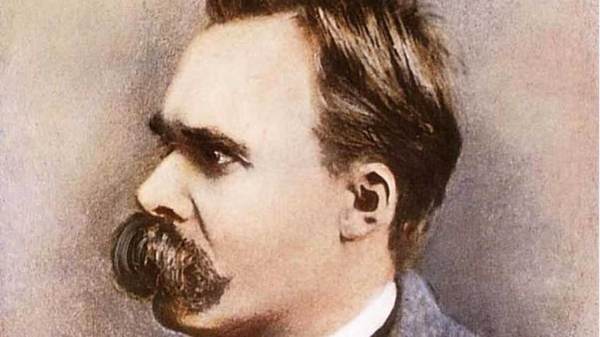
The reliance on instinct hearkens to both the examination of inner truths that the Romantics explored and the reliance of early Idealist philosophers such as Kant on intuition as the basis of knowledge. It also dovetails with the Nietzschean idea of most morality as a control mechanism by those who need an external reference to avoid infringing. In his view, the moral questions that trouble the average person are not only common knowledge but unexceptional to a person of higher ability. For this reason, the law of social morality constrains those more able people and ultimately enslaves them to the problems of those below them in ability, producing an accelerating factor for nihilism.
Notwithstanding his frequent characterization as a nihilist, therefore, Nietzsche in fact sought to counter and overcome the nihilism he expected to prevail in the aftermath o the collapse and abandonment of traditional religious and metaphysical modes of interpretation and evaluation. While he was highly critical of the latter, it was not his intention merely to oppose them; for he further attempted to make out the possibility of forms of truth and knowledge to which philosophical interpreters of life and the world might aspire, and espoused as “Dionysian value-standard” in place of all non-naturalistic modes of valuation. In keeping with his interpretation of life and the world in terms of his conception of the will to power, Nietzsche framed this standard in terms of his interpretation of them. The only tenable alternative to nihilism must be based upon a recognition and affirmation of the world’s fundamental character. This meant positing as a general standard of value the attainment of the kind of life in which the will to power as the creative transformation of existence is raised to its highest possible intensity and qualitative expression. This in turn led him to take the “enhancement of life” and creativity to be the guiding ideas of his revaluation of values and development of a naturalistic value theory.
This way of thinking carried over into Nietzsche’s thinking about morality. Insisting that moralities as well as other traditional modes of valuation ought to be assessed “in the perspective of life,” he argued that most of them were contrary to the enhancement of life, reflecting the all-too-human needs and weaknesses and fears of less favored human groups and types. Distinguishing between “master” and “slave” moralities, he found the latter to have become the dominant type of morality in the modern world. He regarded present-day morality as “herd-animal morality,” well suited to the requirements and vulnerabilities of the mediocre who are the human rule, but stultifying and detrimental to the development of potential exceptions to that rule. Accordingly, he drew attention to the origins and functions of this type of morality (As a social-control mechanism and device by which the weak defend and avenge and assert themselves against the actually or potentially stronger). He further suggested the desirability of a “higher morality” for the exceptions, in which the contrast of the basic “slave/herd morality” categories of “good and evil” would be replaced by categories more akin to the “good and bad” contrast characteristic of “master morality,” with a revised (and variable) content better attuned to the conditions and attainable qualities of the enhanced forms of life such exceptional human beings can achieve.
From this view, Nietzsche was not overly fond of nihilism, but some have posited that the “active nihilism” is in fact what he argued for: an acceptance of the unimportance of life beyond its immediate value, and from that, a desire to expand it and make it improve the experience of life itself. This focus on experience translates into much of the hedonism and adventurism of heavy metal, with its creative side channeled toward the music itself, and its sense of improvement based on bringing what is “heavy” — or real despite human everyday denial — back into focus. The idea behind this version of nihilism is that it liberates us from the “slave morality” and allows us to see reality clearly, thus make decisions based on what is actually happening.
With its focus on results alone, and viewing them from the broader context of history, heavy metal posits a new form of active nihilism: that instead of judging our decisions by good and bad, we judge them by outcomes and whether those outcomes fit with what we find not just acceptable, but “excellent” (in the immortal words of Bill and Ted). We know how past acts have turned out and what resulted from them, so when we go shopping for actions to fulfill our goals, we can compare past outcomes to desired outcomes and pick which actions fit best. This creates a kind of table where we see that action A made result B, and A(1) -> B(1) and so forth, and thus lets us index these backward by looking down the column of outcomes and seeing which B(x) most closely approximates our chosen outcome. As metal puts this into a historical view, it changes the focus from what we want as a personal result to what we desire not just for today, but for ages hence. This also encourages us to see ourselves in the context of history and compare the calibre of our acts to those who have come before us.
Only death is real. – Hellhammer
Metal’s virus comes wrapped in the appearance of death, meaning that where there is a weakness to death, it equalizes and penetrates. The morbidity, paranoia, passion and politics of metal over the years has shown a passage by which one accepts death, and the nihilistic chaos of material reality, and in doing so lays down the foundation for transcending it. Metal, by introducing structure and spirituality and Romanticist individualism and nihilism, issues to its listeners a challenge to explore it deeper and bond with what causes it to be, rather than what it “is.”
Mankind does not represent a development of the better or the stronger in the way that it is believed today. ‘Progress’ is merely a modern idea, that is to say a false idea. The European of today is of far less value than the European of the Renaissance; onward development is not by any means, by any necessity the same thing as elevation, advance, strengthening.
In another sense there are cases of individual success constantly appearing in the most various parts of the earth and from the most various cultures in which a high type does manifest itself: something which in relation to collective mankind is a sort of superman. Such chance occurrences of great success have always been possible and perhaps always will be possible. And even entire races, tribes, nations can under certain circumstances represent such a lucky hit. – Friedrich Nietzsche, The Anti-Christ
By rejecting inherent truths, metal explores an existential viewpoint in which the experience of life itself is the goal. The choices we make define who we are, and some live epic lives above the mundanity of the herd. This outlook emphasizes the experience of life itself rather than an external reward, whether monetary or in some dualistic metaphysical realm. In other words, the goal of humans is to find the best in life and to improve themselves by living not just well in a material sense, but finding health in their spirits and an enjoyment in life. Any metalhead who has noticed that most people appear depressed, lonely, beaten down, exhausted and generally at odds with existence will sympathize with this point of view.
It’s been my dream
To enter the stream
To let carnates know
What life really means
If one understands
That’s all I can ask
Life to you
is such a wretched task!
– An Incarnation’s Dream, Atheist (Unquestionable Presence)
In black metal, Romanticism took a turn toward its later forms which were explicitly nationalistic and naturalistic in defiance of the tendency of popular morality to “make safe” what nature once relegated to lawless conflict. As societies passed more laws, and focused more on defense of the individual against nature and social forces, the amount of control these societies had over their citizens increased. To black metal musicians, this was a sign of decline and a dying civilization because it favored the weak over the strong and produced a non-culture based on safety, shopping and politically correct opinions.
Romanticism though in its beginning little concerned with politics or the state, prepared the rise of German nationalism after 1800. It was an aesthetic revolution, a resort to imagination, almost feminine in its sensibility; it was poetry more deeply indebted to the spirit of music than the poetry of the eighteenth century had been, rich in emotional depth, more potent in magic evocation. But German romanticism was and wished to be more than poetry. It was an interpretation of life, nature and historyand this philosophic character distinguished it from romanticism in other lands. It was sharply opposed to the rationalism of the eighteenth century; it mobilized the fascination of the past to fight against the principles of 1789.
Black metal expressed this sentiment through strong nationalism. On the lesser end, bands like Enslaved and Immortal wrote songs about their homeland, its traditions and legends. Even death metal bands like Amorphis joined in this activity by writing albums based on the national epic, the Kalevala. On the more extreme end, bands like Graveland, Darkthrone, Burzum and Emperor expressed far-right sentiments and endorsed a strong nationalistic spirit. Even bands caught in the middle, like Mayhem, were rumored to perform in a room decked with not only Norwegian flags, but the flags of both Soviet Union and Nazi Germany.
Heavy metal utilizes a method of uniting riffs so that no linear truth exists, but an immanent truth is discovered as the listener connects the associations of those riffs. This is similar to the postmodern novels of James Joyce and William S Burroughs, where a series of divergent threads unified unspoken topics indicated by metaphorical assonance with consensual reality experience. The inversion of value so that its inside might be seen, postmodernism serves as a philosophical hall of mirrors by showing many potential truths as equivalent to a single truth at once.
What makes postmodernism most distinctive is its absorption of intensely “chaotic” theories such as quantum physics or non-linear mathematics, by virtue of its foundation in technology and looking past superstition, but also peering beyond the intellectual process of illusion to see how the universe functions as organism, with universal principles of growth. Afflicted with knowledge, postmodernism tends to emphasize the “subtext” of each situation, where there is an acknowledged reality and an underlying larger picture which often has nothing to do with the material props at hand. As such, dreams of death and great journeys past the land of the dead are complex and intriguing material.
Postmodernist philosophers ask us to carefully consider how the statements of the most persuasive or politically influential people become accepted as the “common truths.” Although everyone would agree that influential people — the movers and shakers — have profound effects upon the beliefs of other persons, the controversy revolves around whether the acceptance by others of their beliefs is wholly a matter of their personal or institutional prominence. The most radical postmodernists do not distinguish acceptance as true from being true; they claim that the social negotiations among influential people “construct” the truth. The truth, they argue, is not something lying outside of human collective decisions; it is not, in particular, a “reflection” of an objective reality. Or, to put it another way, to the extent that there is an objective reality it is nothing more nor less than what we say it is. We human beings are, then, the ultimate arbiters of what is true. Consensus is truth. The “subjective” and the “objective” are rolled into one inseparable compound.
Heavy metal explores this subject through first fantasy and second, the demand arising from any good story that it be at least plausible in comparison to what we know of existing reality. For a fantasy story such as _The Lord of the Rings_ to work, it must be sufficiently removed from our experience and yet congruent with it in parallel so that the world is plausible and the fantasy can be interesting to beings such as ourselves with our struggles in this world. Much like the conditions for metaphor and art itself, this requires both the postmodernist sense of truth and a tempering of it with cold hard reality as experienced in life here. This also parallels the metal view of dualistic religious faiths, easily summarized by “wishing does not make it true.”
In contrast to dualism, metal offers a sense of transcendent mysticism which shadows that offered by late Romantics and thinkers such as Ralph Waldo Emerson. The basic belief of a mystic is that events and objects are interconnected in a structure that is larger than immediate material parameters and as such can be accessed if one is open to transcendence, or letting go of the visible for the abstract. The mystic finds significant experience in interpretation of everyday events because in the mystical view, all events are connected by an underlying order, even if not an inherent one. To the mystic, cause/effect reasoning dips deeper than the material and can exist on a purely informational level, much as how sacred symbols and sigils are presumed to grant a power over the objects they reference.
While we may believe
our world – our reality
to be that is – is but one
manifestation of the essence
Other planes lie beyond the reach
of normal sense and common roads
But they are no less real
than what we see or touch or feel
— Burzum, “Lost Wisdom” (Burzum)
Heavy metal tends to find order beyond where most look for it. It possesses a tendency to see chaos as a form of order or a precondition for order. The tendency of mathematical systems to go from the linear, or vector measurement, to chaotic multidirectional entities is a measure of its organicism, or the point at which it moves from chartable projections to the zone decided only by theory. Organicism is a philosophy of information science which holds that in order for something to articulate itself independently, it must be of an unmeasurable state of chaotic motion. This calls to mind one of the instigations to the rise of chaos theory, the research of Werner Heisenberg. His “uncertainty principle” is summarized as follows:
The more precisely the position is determined, the less precisely the momentum is known in this instant, and vice versa.
Among other things, this means that those who inspect reality are in turn influencing the system they are measuring. There are no impartial observers, only those who see what is presented to them in response to their presence. This means the observer becomes integrated into a system in which all measurements are variable in chaotic patterns without linearly predictable jumps. A pattern with linear jumps suggests the order is evident within that pattern, where a pattern with chaotic jumps suggests an order behind the evident pattern. Hence an emergent organicism appears in many things, including metal, which approach problems in which binary solutions (those composed of yes or no, off or on, right or “wrong”) lead to illusion, since the binary nature is a projection of the intelligences observing the situation and not emergent from the properties and methods of the system itself.
This returns to the metal and Romantic conception of the individual knowing the world through the inner self, or as Immanuel Kant referred to it, “intuition.” Kant saw intuition as the basis of our a priori knowledge of the working of the world and its causality. However, this line of thought remains distinct from individualism in both metal and Romanticism. Metal favors individualism but also devoutly rejects it in its present form. As embraced by modern society, individualism means the ability to make arbitrary decisions and still be defended. As seen by metal, individualism resides in the ability to reject the insane arbitrary decisions of others. Strongly in favor of the independent evolution of individuals so to allow them space to grow without the persistent damage of scar tissue formed to avoid intervention by the arbitrary appearances of demands by others, the individualist genre metal has developed a subculture with focus on the development of the individual as a force of chaos and change in the otherwise patterned material/causal world.
When night falls
she cloaks the world
in impenetrable darkness.
A chill rises
from the soil
and contaminates the air
suddenly…
life has new meaning.
— Dunkelheit, Burzum (Filosofem)
The reasons for individualist thought usually center around the idea that those who know what they want for personal fulfillment will not project that on to others for purposes of control. Individualism is a property of art and any other discipline which demands independence and focus; systemic and/or chaos thinkers understand it as a form of parallelism, where individuals in parallel discover the same truths by exploring their inner selves. Much like the Romantic notion of the lone wanderer above the mist, this notion of individualism shows metal encouraging the exploration of self to get over the self, in contrast to those unrealized souls out there who know only desires of the basest (and most commercially lucrative) nature, and thus enslave themselves to their desires.
Betraying and playing dirty, you think you’ll win
But someday you’ll fall and I’ll be waiting
Laughs of an insane man you’ll hear
Personality is my weapon against your envy
Walking these dirty streets
With hate in my mind
Feeling the scorn of the world
I won’t follow your rules
Nonconformity in my inner self
Only I guide my inner self
— Sepultura, “Inner Self” (Beneath the Remains)
As a method of interpretation, this metallic perspective verges on structuralism. Structuralism posits that no exoteric or face-value interpretation of truth exists, but that all truth is emergent and found from the analysis in the mind of the individual:
Since language is the foremost instance of social sign systems in general, the structural account might serve as an exemplary model of understanding the very intelligibility of social systems as such — hence, its obvious relecance to the broader concerns of the social and human sciences. This implication was raised by Saussure himself, in his Course on General Linguistics (1916), but it was advanced dramatically by the French anthropologist Claude Levi-Strauss — who is generally acknowledged to be the founder of modern structuralism — in his extensive analyses in the area of social anthropology, beginning with his Elementary Structures of Kinship (1949). Levi-Strauss argued that society is itself organized according to one form or another of significant communication and exchange — whether this be of information, knowledge, or myths, or even of its members themselves. The organization of social phenomena could thus be clarified through a detailed elaboration of their subtending structures, which, collectively, testify to a deeper and all-inclusive, social rationality. As with the analysis of language, these social structures would be disclosed, not by direct observation, but by inference and deduation from the observed empirical data.
Structuralism describes a method for perceiving structure that requires interaction to be revealed. This applies well to language or reverse-debugging of computer code, but as a proactive measure applies to the methods that can be used to construct logical objects such that they do not have linear structure but an internally-balanced emergent structure. This describes the metal method of writing interlocking riffs as well as the method that listeners use to decode them and perceive an order to the song as a whole. Unlike rock ‘n roll, which has a linear structure in a cyclic arrangement, death metal has a layered structure based on internal correspondence between riffs that can only be perceived through observation and comparison in reference to the whole.
How do you account for the vision of the man possessed on stage, and the man sitting before me? We are quite the opposite to what is personified on stage. Every band has it’s own way of dealing with shit and if they play this kind of music, or even just any extreme music, maybe they are like that full time, maybe not. Like we always say, people like Rick Astley are probably the biggest wankers in the world. They probably come off stage, and wanna kill kids. With us, its the contrary, on stage we are executing the whole other persona, in regular social conditions we are pretty straight forward.
— Lemmy Kilmister, Motorhead
Influences
- H.P. Lovecraft
Lovecraft developed mythologies from simple brutality and built a spiritual structure of a phenomenology of evil from the myths of Ancient Sumeria combined with his perceptions of pre-religious darkness and fear. His imaginative and lurid tales not only inspired many horror films, but provided the basis of metal lyrics for every generation of metal. Of all the writers cited by metal bands, Lovecraft not only ranks as most frequent but as most esoteric.
- J.R.R. Tolkien
John Ronald Reuel Tolkien was a professor of the English language at Oxford during the first half of the twentieth century, infusing his fascination with Germanic themes of honor and ancient mythology into a fantasy series involving a “middle earth” where magic and science were one. Like many metalheads, he saw humanity as in decline and in need of a unifying quest to give it purpose and to restore a sense of activities worth doing more than attending jobs, shopping and downloading free internet porn.
- Friedrich Wilhelm Nietzsche
The most influential philosopher in metal, Nietzsche shifted philosophy from the somewhat inward-focused idealism to an existentialism that contained a practical component. To Nietzsche, Christian morality of good/bad was irrelevant because the universe thrived on conflict as a result of its will toward life, and this imbues each person with a will to power. In those who can clearly articulate their own will, this turns into a desire to do outward good; in those who do not self-actualize, it becomes a consumptive and narcissistic impulse. Through his rejection of social morality and affirmation of the lone individual striving against the herd and struggling to understand a reality best expressed in constant warfare and predation, Nietzsche created the grandfather of all heavy metal philosophy.
- William S. Burroughs
Heavy metal got its name from a William S. Burroughs writing. The infamous writer of Naked Lunch, is known as much for his heroin addiction as for his contributions to literature, including what might be called the first truly postmodern novel in _Naked Lunch_. However, his contributions were vast, starting with his “cut up” style of literature which would weave a complexity of connections between granular sections of text randomly recontextualized in a chronological narrative. The philosophies of individual freedom, control, darkness and politics contained within “Naked Lunch” and subsequent works (The Nova Express,The Ticket that Exploded,Cities of the Red Night) provided an unfathomably universalist basis to metallion rejection of authority, conformity, and materialist aesthetics.
- William Blake
One of the first transcendental poets to articulate his ideas in a structured metaphorology designed to transcend the calcification of Christianity, Blake spoke of sensual and intellectual excess as salvation for the soul and invented a form of morality based in joy which used its romanticism as a basis for its respect and fascination with life. Blake’s detailed exposures of human reason and fear at its most primal and yet most symbolologic delivered a scientific mysticism to those who came after him (including Jim Morrison and William S Burroughs!) a shadow in which motion was possible, a darkness which mostly concealed a limitless beauty of freedom.
- John Milton
An English minister and poet, John Milton conceived and wrote the epic poem, “Paradise Lost,” in which Satan is portrayed as a beautiful angel who rejects servitude in heaven and is exiled in flame, only to learn how to love the barren but self-decisional realm of Hell. The phrase “to reign in hell” from various metal recordings references his classic line spoken by Satan, “It is better to reign in Hell than serve in Heaven.”
It’s a concept album about what once was before the light took us and we rode into the castle of the dream. Into emptiness. It’s something like; beware the Christian light, it will take you away into degeneracy and nothingness. What others call light I call darkness. Seek the darkness and hell and you will find nothing but evolution.
— Varg Vikernes, http://www.burzum.com/
Heavy metal can be seen as a subculture, or culture within a larger culture, as opposed to a counterculture, or oppositional culture within a larger culture. The reason for this distinction is that while heavy metal is rebellious it does not exclusively define itself as being the opposite of what exists, but sees itself as a modification (or “fork” to the brachitic hierarchy of revisions) to existing society, mainly because it operates on a level lower than that of institution — it is a spiritual re-alignment through a re-arrangement of values, or maybe we should say, a re-evaluation of all values.
In that light, it also makes sense to consider heavy metal to be a series of ethnocultures, because each nation produces music of a unique sound and attitude, often with a unique subset of the values and situations discussed in death metal. A fan can instantly tell the difference between South American black-death and Swedish death metal, or Japanese grindcore and American thrash. There are clear conventions to each that correspond to culture and ritual, which correspond to ethnicity and geographic area. Since heavy metal was created in response to the counter-culture, and was negative about the counter-culture but not enamored enough of the dominant order to be a reactionary counter-counter-culture, we consider it a subculture but refer to it generically as a “culture,” because it has all aspects of culture: values, rituals, symbols, clothing, lifestyles and art. Metalheads measure their worth through fulfillment of their roles in this culture, not by tangible symbols of the same.
The world may be explained in sociological terms. David Riesman describes three basic social personalities in The Lonely Crowd. ‘Other-directed’ people pattern their behavior on what their peers expect of them. Suburban America’s men in gray-flannel suits are other-directed. ‘Inner-directed’ people are guided by what they have been trained to expect of themselves. [General Douglas] MacArthur was inner-directed. The third type, the ‘tradition-directed,’ has not been seen in the West since the Middle Ages. Tradition-directed people hardly think of themselves as individuals; their conduct is determined by folk rituals handed down from the past.
— William Manchester, American Caesar
The heavy metal subculture makes itself instantly recognizable through its heavily codified visual appearance: youth in black t-shirts with logos across the top and cover art below that, with long hair and possibly tattoos, gathered away from society at events involving metal music and places where metal is distributed. They resemble a small army in public, which has caused many a hipster or journalist to wax poetic about the lack of individualism in the culture. It seems instead that in coherence with the concept of “heavy,” metal culture has placed itself zenlike beyond a simple division into individualist/conformist. It recognizes the need for unity in belief to make power. Within that, it allows for variation, as can be found in the proliferation of diverse tattoos and the variation in shirts that metalheads wear, with a type of caste and preference system formed by who appreciates what band, with those who like the brainier music being the unacknowledged elite. It has rituals — concert behavior, meetings for listening to new music, record store power structures, friendship and courtship — that borrow from their parent cultures, composed of both traditional culture and its modern adaptation, although they borrow more from the ancient remnants than the contemporary hybrid.
This culture was so distinctive at American high schools in the 1970s during the first generation of heavy metal that it was branded with a variety of names: heshers, threshers, Hessians, headbangers, metalheads. In Europe, other names came about from similar impulses, including metallion, metaller and metalist, although these grated on American sensibilities and did not transfer. The name mutated into “thrasher” for those who listened to thrash, a type of music formed of the hybrid of hardcore punk and metal riffing, exemplified by D.R.I. and Cryptic Slaughter. For this reason, metal culture became known as “Hessian” or “thrasher” culture, with most people outside recognizing its members by site without much knowledge of the music or values behind their behavior. Much of the reason for this approach originates in the attitudes of mainstream society, somewhat correctly, toward standard teenager behavior: spoiled by an indulgent attitude toward parenting, yet forced into rigid behavior to compete for future jobs, teenagers rebel but very few do so in a way that both asserts childhood and adulthood as metalheads, generally ludic types, do.
Metal culture, or Hessian culture, involves loud heavy metal music made in the postmodern interpretation of classical music and rock n roll arrangement, creating a disturbing noise and profound motion in its practice and social implications. Author Kurt Vonnegut likens the role of an artist to society as the role of the canaries miners brought into the coal tunnels to warn for the presence of gas: when the birdsong changes or stops, death is near. At the end of the twentieth century, as we suffocate in the meaninglessness of the social machine we have made, metal and punk music are striking alarms of misery and fear hidden beneath the commercially-viable good assurances which have more than once prompted the adage, “Talk is cheap.”
This sense of “role” pervades everything, including instilling a sense of honor relative to the materialism of society. Metal culture is what keeps the music from becoming like everything else that’s in the consumer market: products. Products want to do something so visibly, it is entirely distinctive, while not doing anything beyond the norm so there are no objections to purchase. Culture keeps spirit alive by serving as an interpretive landmark of existential questions, delivering to the interpreter a sense of combining the metaphor of the art with the catalogue of past experiences in life that might be relevant. In metal, the culture does not value making music for people who want entertainment; it rewards the creation of epic and powerful things out of the forces and remnants of destruction. As if it embraced paradox itself at the same time it attacked paradox as a notion, metal invents itself out of nothing and creates a Romantic, transcendental sense of the good through living according to its own tenets, untamed and not pandering to anyone or anything else.
“No jobs!” – Demonaz Doom Occulta, Immortal
2.3. Context
Early Influences
Heavy metal arose in the 1960s when Western civilization re-examined itself in the light of two disastrous world wars and an ongoing struggle against communism. As the victor of both world wars, the United States led the world in thought and industry and its influence dominated the post-war world. Originally formed of colonies which first attempted to self-organize as a confederation, the new nation quickly committed to central authority in order to act as a single entity. This caused a conflict between the rural South and industrial North over what type of rule would prevail and after a disastrous Civil War, a strong federal entity was selected and embarked on a series of programs ostensibly to improve living standards.
Over the next forty years the United States unified itself with expansion of the founding concepts of the nation in accordance with the decisions of the Civil War. The highest power was the Federal State, but the Individual was its currency, and therefore America came to embrace its image as the “melting pot” in which the “poor, huddled masses” might find refuge. America invited and enfranchised new groups of people, starting with recently-freed African slaves and continuing to an acceptance of previously unwanted immigrant groups, such as Irish, Italians, Jews and Eastern Europeans. After the second world war, Americans began to reconsider their mission in light of their opposition to both fascism and communism, and opted for a purely inclusive society which facilitated the individual desires of its members.
A similar outpouring of sentiment emerged in Europe, especially in France which had been the birth of these theories in its Revolution of 1789 when the ideals of the Enlightenment were put into political form. That union produced a period of massive instability in France followed by the Napoleonic wars which, foreshadowing the conflicts of a century later, involved an ideological struggle between liberal democratic forces and those who opposed them for majority control of Europe. The alliances that eventually triggered the first world war, which in turn triggered the second, emerged from the jockeying for power that created unstable alliances between European nations. As the 1960s dawned, Europeans and Americans began to assimilate the Revolutionary rhetoric much as the Napoleonic French did, and extended this to social engineering. As the forces of Revolution battled with the Establishment, a movement of youth arose which embraced with great fervor the new revolutionary outlook.
Before it gained any social status, the cultural force of this revolution — a “counterculture” — possessed “outsider” authenticity and cachet which made it a sought-after cultural force across the West, in part because of its contrarian status and its lack of acceptance among the cultural and social mechanisms of the day. Like a high school revolt riot, the counterculture united previously disenfranchised groups under the Countercultural banner. As this group became dominant, it adopted freely from both the “new left,” the 1930s pre-war socialism, traditional American individualism and the new science of managerial society. Rock music became the banner and motivating force behind this youth-oriented movement.
Industry invented rock music from existing forms but in the classic habit of industry, streamlined them into a simple product which could be inexpensively created and differentiated on the basis not of internal variation, but surface variations. This allowed industry to recruit a lower quality of musician and improve profits through novelty, advertising, and recording technique alone, which widened the margins on this new form of music. Rock mixed country folk, derived from English drinking songs, Celtic folk music, German popular music including waltzes and the proto-gospel singing of Scottish immigrants, with blues music.
The blues was not formalized until it was recorded, and at that point in time, a fixed structure was imposed on it based on the interpretations of others. Broadly stated, it used a minor pentatonic scale with a flatted fifth, constant syncopation, and distinctive “emotional” vocal styles including call-and-response vocalization. Of all of its components, none were unique, nor was its I-IV-V chord progression. To view it from an ethnomusical perspective, the blues is an aesthetic (not musical) variation on the English, Scottish, Irish and German folk music which made up the American colloquial sonic art perspective since its inception. From a marketing perspective, however, the blues had to be marketed as a revelation from the downtrodden and suffering African-American slaves, so that it might maintain an “outsider” perspective which, to people bored with a society based on money and lacking heroic values, might appear more “authentic” than their own. The birth of rock was the birth of the counterculture and the establishment of the dichotomy: the marginalized, outsider and ignored versus the vapid, boring and soulless mainstream.
When country music was re-introduced to the then-standardized blues form, the result was called rock music. Its primary difference from country was in its use of vocals which emphasized timbre over tonal accuracy, and the adoption of a more insistent, constant syncopated beat. While German waltz and popular music bands had invented the modern drum kit and developed most techniques for percussion, their music and that of their country counterparts in America tended to use drums sparsely, much more in the style of modern jazz bands than in the ranting, repetitive, dominant methods of rock music. However, it is hard to find someone in a crowd of mixed gender, race, class and intellect for whom a constant beat is intellectually and sensually inaccessible, so it was adopted as a convention. Much as the standardization of the blues took diverse song forms and brought them into a single style, rock swept a wide range of influences into a monochromatic form. It seemed that industry had created the perfect universal musical form.
However it arrived, blues-country became “rock” in the 1930s-1950s mainly because of technology. Adolph Rickenbacker invented the electric guitar in 1931, and recording equipment advanced from the primitive to the cheaper and more portable units brought on by vacuum tube and then transistor technology. Additionally, microphones improved, especially those which could capture the nuances of voice. Louder guitars and vocals required the simple shuffle beats of blues drumming to gain volume, prompting a revolution in drum kit assembly. As a result, the simple blues-country hybrid became a marketing standard known as “rock ‘n’ roll,” then “rock,” as it was absorbed into the American mainstream. The earliest bands lacked much in the way of style, but wrote complacently harmonizing pieces based on the European popular music of clubs in the 1930s (much of jazz is based upon the same music). As time went on, the stylings — appearance, performance and cultural positioning — of the music became more advanced, and the songs themselves became simpler and more like advertising jingles.
The 1960s: the Hippie Revolution
Rock music presented itself as an oppositional alternative to the “traditional, boring” life of “the Establishment” and quickly became a galvanizing force for the counter-culture. The innocent pop of the 1950s gave way to an angry voice that endorsed liberal politics, sexual liberation, and general hedonism; these traits had been a mainstay of Western revolutionaries since the 1600s, but starting in the early 1900s gained new force and after the wars and the alliance with the Soviet Union, became seen as a positive counteraction to industrial society, capitalism and authoritarianism. The problem offered by this new format lay in its simplicity: because the songs were simple, which enabled them to be mass-produced and sold through advertising alone, they also did not have staying power. A recording had to be made once, and musicians throughout history have never read contracts, so labels could just about print money with each additional copy made. The problem was that since the music was interchangeable at an underlying level, it was also unsatisfying, so record companies looked for new external aspects to add to the music in order to give it novelty, authenticity and thus the “cachet of cool” sought by its audience.
In the mid-1960s, rock exploded with a new variety that was both musically more advanced and possessed more of a rebellious streak. The Beatles took the forefront of this movement and created music which was melodically advanced (although saccharine) and took on more explicitly sexual topics with a stance of disaffected youth. Much of the posturing of this new rock music took its style from the 1930s alienated youth novels of the UK and the outsider lifestyles of the Beats in the USA. With this was born the counterculture in music: rock music distinguished by authenticity derived from its challenge to existing authority, including social standards and morals. The more it tweaked the nose of the Establishment, the more power it gained in the media and thus the more the product sold. The Beatles proved masters at this, inciting controvery and adulation wherever they went, and making edgy statements like “We’re more popular than Jesus Christ” which the outrage-hungry press dutifully reported.
As the 1960s advanced, the power of television combined with the intensity of the political situation led to a melding of the political counterculture and its rock music. It became essential for rock musicians to talk about peace, love and the happiness that was possible in a Utopian world of kindergarten-style sharing, all while amassing vast fortunes and living in mansions. When the Beatles sang “All you need is love” they were already on their second marriages, having covertly exiled one band member and possibly kicked another one to death. And yet the vision of “love” versus a mechanical automatron world of 1950s style career advancement, shopping as an activity and making war on the “misunderstood” Communists, as a gambit that enabled its audience to envision themselves as revolutionaries changing society from a primitive past toward an enlightened future, sold records like never before.
The 1970s: Mainstreaming the Dissidents
As the 1960s came to a close, it became clear that rock music had reached the end of its arc. Bands took the music to the extremes of progressive rock on on hand, and toward the dark primitive sounds of Iggy and the Stooges and Black Sabbath on the other. Everything that could be done had been done in its most elemental form. This spurred experimentation in the 1970s with both form and content. In this decade, progressive rock ventured farther from the norm, and new forms such as disco and punk appeared. In response, rock music took on a new populist edge as it went from the somewhat grubby hippie fringe to a mainstream hedonism that fused feel-good politics with digestible, slickly produced material. New forms of music entered the pop lexicon as reggae and a modern, rock-infused form of country music intruded. Even jazz found itself a rock hybrid with “fusion” music that applied rock percussion and song structure to jazz, translating the intricately plotted musical density of progressive rock into free-form jams that fit into rock songs like extended guitar solos.
No three words connote “PROG ROCK” more negatively than Emerson Lake & Palmer. Their music is incredibly pompous, for they are incredibly pompous individuals. One of them (does it matter which?) famously said their goal was to create “a pure white European music with no black influences.”
Culture responded to the tumult of the 1960s by making a safer mainstream version of it. Corporations staffed by unexciting men in suits adopted radical hippie slogans and used them to sell mundane products. Even more, all of popular culture got behind appropriating the hedonism of the 1960s and translating it into the everyday. Technological futurism without ideological structure mated the sensual lifestyles of the 1960s with the commercial values of the 1940s. “Free love” became swinger parties, psychedelic exploration became better living through chemistry, and pacifism became a popular fashion of self-expression but no longer as much of a political statement. The radicalism of 1968 gave way to consumerism with benefits of 1978. Commerce and conservatism assimilated the forces that once opposed them.
Similarly, rock lost its edge, and while many people explored fusion, synthpop, disco or reggae, the most radical drifted toward punk. Stripping rock down to its basics using power chords, punk destroyed the rules and democratized the art form even further. Now it was no longer necessary to play an instrument for months or years in order to become famous; you could play for six weeks, make a catchy (but edgy) song and make it onto the radio. The driving impetus toward punk was, much like that of early heavy metal, to remove the artificiality of rock music and replace it with something more elemental. Although many bands developed the sound, starting with 1960s bands like The Stooges, punk rock formalized itself with The Ramones in 1976. Their goal was to remove influences and escape the rock world, in part to avoid being commercialized and assimilated as they viewed 1960s and 1970s rock as having been.
Mr. Ramone once described his guitar style as “pure, white rock ‘n’ roll, with no blues influence.”
“I wanted our sound to be as original as possible,” he said. “I stopped listening to everything.”
Despite this brave statement, punk became quickly assimilated because its low threshold of instrumental ability and recording quality allowed just about anyone to make it. In response thousands of bands erupted so that by the end of the 1970s, punk consisted of thousands of bands with interchangeable names, songs, attitudes and recordings. What was first the work of pioneers became a big party where anyone could join in. Much as rock music itself democratized and streamlined genres as diverse as country, blues, big band and folk into a single entity, punk also became a snowball that picked up the flavor of the month and rolled it into a new easily-digestible format. As the decade clicked over into the 1980s, a genre known as “pop punk” emerged as college students began picking up instruments and making softer, gentler and more introspective versions of punk songs. The result assimilated punk rock into the mainstream rock industry.
The 1980s: the Material World
In outrage, punks reclaimed their territory with hardcore punk at the end of the 1970s and early 1980s. This music went even more extreme, using chromatic scales and two-chord songs, and added more savage vocals that used the distorted voices that folk singers applied at parts of their songs when bad characters or negative events entered the fray. Punk hardcore changed music for two reasons: first, it removed itself from rock by deconstructing even the marginal rules of rock, and second, it designed itself to avoid the mainstream music industry entirely with a do-it-yourself (DIY) aesthetic and the creation of a separate network of zines, radio stations, tape traders and clubs who catered to this music and its fanbase and excluded everything else. For the first time, a sub-culture challenged the counter-culture and threatened to entirely drop out of society at large. Punks lived in squats, or appropriated empty buildings, and survived by foraging while they dedicated their time to not becoming either suit and tie guys or burnout hippies who thought peace would save the world. Punk had a message: society was terrible because people were terrible, and no easy solution like “love” would save the day. Instead, it was time for war!
Hardcore punk formed a parallel world to that of metal during this period. An innovation on either side passed to the other, and drove the next evolution of that side. Thus hardcore picked up on metal drumming, then sent it back with additional simplification, where it was adopted; metal adopted hardcore vocals, then made them more extreme, and sent those back where they were enthusiastically received. During the mid-1970s metal went through its own flirtation with stadium rock and was almost assimilated, but came back through a DIY underground movement in the NWOBHM who paralleled the punk attempts to do the same. Even more, both genres borrowed from tropes of the rock world and adapted those to their own forms, albeit in such customized form that they were unrecognizable. Metal adopted the lengthy complex solos of stadium rock but passed them through a hardcore punk filter to make them chaotic and violent, and converted the extended bridges of post-progressive stadium rock into new song structures. In turn, rock picked up on the idea of distortion and punk rhythms.
During the 1980s, the only relevant symbols were monetary and social success, meaning a modern adaptation of the white picket house in the suburbs, the minivan, local church and school groups and happy children with no cares in the world. A decade of overextension and massive expenditure on cold war buildup shattered most of this and replaced it with a literal reality of subservience, slowly flipping the power balance to a sublimated leftism. As the smiley futurism came to a close at the turn of the eighties it was clear the alienation was not an affliction but a condition of the system, and more extreme responses arose. Both the old-school conservative system and the hippie “revolution” had failed in their aims. In the mainstream, the previously “new left” leanings of our culture were overshadowed by the pragmatism of gaining money and power, and in the underground, a new series of dissidents found themselves in desperate paranoia against the industrial society slowly surrounding them. Slowly, the pragmatic “eat and assert needs” conservativism of America flowered with Ronald Reagan, and the underground new left moved toward media and went mainstream to combat the money and power of old school interests.
The defining aspect of the 1980s was the Cold War and its attendant threat of nuclear annihilation. Where 1950s and 1960s children feared bombers in the sky, 1970s and 1980s children feared first ICBMs and then cruise missiles and submarine-launched nuclear holocaust. Folklore absorbed the legends of the nuclear Cold War: seven minutes between detection and detonation, nuclear winter, doomsday machines and computers waging cancelation warfare across the globe. In the West, conservative politicians took office and began the biggest military buildup since WWII in preparation for either land war in Europe or a Naval/Air battle for dominance of the oceans. No one knew how long the Cold War would last, and each side over-estimated the other. For those growing up during this time, the threat of immediate obliteration proved a driving force behind the music they listened to, and musicians heard this call and made their rhetoric even more extreme.
The result was a decade which outwardly tried to affirm all that the people in their 30s and 40s found meaningful, namely a white picket fence vision of America from the 1950s but wrapped in a cushion of safety and removal from the internal problems of the West. It was a bracingly reactionary time, in which “Communist” was once again a career-threatening insult, and in which the Christian religion and the process of making money for oneself again became the way in which social importance was reckoned. Naturally, this provoked a resurrection of the Counterculture and its strongest incarnation yet, since it had been absorbed in the 1970s and, since popular opinion was close to its own values, had been assimilated. Now that it once again had something to rebel against, it manifested itself in a growing cadre of die-hard liberal specialist movements and alternative art, literature and music scenes. This gave metal a new commitment which was resistance to the dominant warlike culture and its tendencies toward control as the battle between revolutionaries and Establishment wore on into its second decade.
By the mid-1980s however hardcore punk waned because it both had exhausted its repertoire of simple songs and needed to be more complex to avoid overlapping with previous material to such a degree as to be seen as a variant of it, and it had been assimilated from within by those who, seeing how easy it was to make hardcore punk, opportunistically created their own bands despite a lack of artistic content or actual talent. The result was a flood of “DIY” sound-alike bands who promptly drove most of the serious fans away from the genre and replaced them with “fanboys” or those who wanted to be in the scene for the purpose of being in the scene, and saw music as incidental to that process. Metal had its own version of these, both “sellouts” who used the music for personal monetary gain, and “poseurs” who used the music to gain social prestige and from that gain personal importance. Toward the end of the 1980s, hardcore bands converted themselves to either post-hardcore bands like Fugazi, emo bands like Rites of Spring, or pop punk bands like Jawbreaker.
During the 1980s, rock downgraded its intensity from stadium levels for a flirtation with synthpop which created the archetypal 1980s sound: electronic drums, lush keyboards, distorted but soft guitar and stark vocals. As this sound gradually became assimilated by the type of shiny pop that American radio stations had perfected in the 1950s, a quasi-underground “indie” (independent) rock community came to life. Borrowing the DIY attitude and simple aesthetics of punk, this genre produced simple rock music with heavy emotional overtones of alienation, melancholy, loneliness and uncertainty. It styled itself as a form of counterculture toward the positive, financially-geared, strong and militaristic spirit of the politics of the time. Led by bands like REM and Yo La Teno, indie rock eventually became a fairly mainstream style, but for a few years in the 1980s it was the rebel of the rock world, doing everything exactly the opposite of what conventional wisdom dictated. The indie scene cemented the “new” dichotomy in music: one was either with the mainstream attitude and tastes, or went underground and catered to something else.
The biggest influence on music during the 1980s was not sound, but video. In 1981, the first music videos began rolling out over cable channels. Because they were on cable, and not regular TV, they could be more risque than what went on television sets. Songs had to fit within the format defined by the video, which was essentially a three- to five-minute movie revealing a storyline with some kind of ironic or otherwise high-contrast ending, interspersed (usually) with the band playing or lip synching within a scene. During the 1980s, a successful video greatly helped launch a song into the slipstream and soon became necessary for all bands hoping to make it in the mainstream. Indie rock bands were able to avoid this for some time, but as soon as they migrated to larger labels, the demand existed for them to also put out videos, which in turn influenced their songwriting to fit into the “MTV format” of slick verse-chorus with a lengthy bridge or other space for concluding action in the mini-movie.
Watch as flowers decay
On cryptic life that died
The wisdom of the wizards
Is only a neutered lie
Black knights of Hell’s domain
Walk upon the dead
Satanas sits upon
The blood on which he feeds.
— Slayer, “Die by the Sword” (Show No Mercy)
Also during this time arose the worst of the governmental attempts to limit the expression of rock music. Politicians had been itching to limit this music since the 1960s since, with the voting age lowered to 18 and television broadcasting constant entertainment into every home, rock music had become a more formidable method of changing public opinion than the New York Times and MacNeil-Lehrer report combined. In 1985, the Parents Music Resource Center (PMRC) campaigned for warning labels on rock albums; in 1990, Judas Priest was sued under the theory that they had encoded “backward masked” or reverse-order sound in their music that encouraged fans to commit suicide, based on a 1985 suicide-pact shooting by two teenagers. This was also the era of the “Satanic panic” that involved teachers at the Virginia McMartin preschool going to trial on the theory that they had sexually molested their students as part of the rituals of a Satanic cult. This paranoid outlook reflected much of the politics and political reality of the time, as society tore itself apart both from counter-culture remnants of the 1960s and a Soviet nuclear threat that had its citizens living in terror.
The 1990s: Counter-Culture becomes Culture
This changed in the 1990s. That decade dawned with the maturation and assumption of the reins of power by those who had been students during the tumultous, counterculture-dominated 1960s. In chasing the symbols of peace, happiness, love and tranquility, the “youth counterculture” of the 1960s and 1970s embraced its oppressors and soon the peace sign became another icon of commercial culture. Capitalism and socialism became bonded in a new form of government, “globalism,” which felt that the industrial mix of capitalism, liberal democracy and social welfare was the ultimate form of government and the final evolution of human society.
Post-coldwar instability arose when the sudden collapse of communism under Western economic pressure created a vacuum of social direction which was eventually resolved in unity between moral emotion and needs for power. As little had changed, social boredom increased and with the official ideology of non-change created the most nihilistic, disposable society ever. Entertainment media became prevalent as CDs, VCRs, and stereos of a high-performance nature became common. The large screen TV lit America at night and warmed her power grids with the drooling inattention of a stagnant, functional land. Worldwide, America was seen as a cultural leader and thus was embraced despite the horrifying failures of the American system. The focus of world leaders turned inward to militarize against drugs, racism and separatism.
There is more chaos, war, pollution now than ever before in our recorded history. Of course, we might have known a period with even worse conditions, but the Christians burned all the records that could tell us about it anyway. Like in the library of Alexandria, wherever the Catholics or Protestants or Christians came, they destroyed the culture. They ruined the culture. They burned the culture. And they burned the records of these cultures. That includes the European cultures. That includes African cultures, Asian cultures, American cultures; wherever they were, they destroyed everything. They want to replace our culture with Americanization, with the Judeo-Christian cultures. Christianity is the root of all problems in the modern world.
Any analysis of this time will reveal the increasing presence of television, cable television, movies and radio in the collective consciousness of Americans. In addition, the Internet, a defense communications subsystem, exploded into public life with AOL and dot-coms clamoring for inflated market share. The new Clinton economy raced up to meet it with token appeals for heart-tugging issues but a fundamentally sound economic policy which fostered growth, allowing an increase in corporate power and correspondingly, distrust of corporations especially the multi-national corporations that globalism favors. World culture sighed a collective disbelief of ideology and iconography except as applied to hedonism, entertainment and public status. Belief in any meaning toward a cause was seen as a method of getting killed, and conflict avoidance for both commercial and moral purposes became the public standard of behavior in America and other countries in its economic model.
The hedonistic culture of the 1960s merged with the consumer culture of the 1950s. And while the edges of boredom on this vision showed, to many the classic 1960s archetype of the population being oppressed in being kept from the fulfillment of their urges, as a means of expressing a template of life, came true in the ability to have a job, make money and express hedonistic outpourings. People began talking about their careers in emotional terms when in fact they were signaling social status. With culture dead, religion dead, and no historical consciousness to speak of, what remained was being better than someone else or some other group. Underneath the positive pluralistic propaganda a new society appeared in which the goal was to improve personal wealth and power at the expense of others with whom it was assumed nothing was held in common.
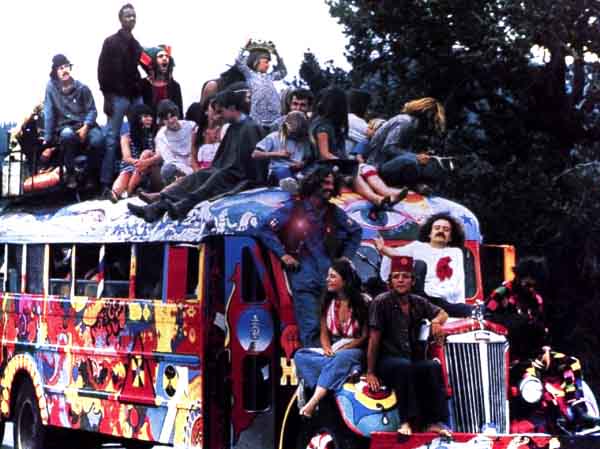
The result was the “Me generation” turned into an ideal for new generations and created a new era of narcissism, where little allegiance existed even among family members. Broken homes, degenerate and abusive marriages, parents working until late at night and a constant stream of media emphasizing human failure and conflict took its toll. Almost aphasic in their approach to politics and ideology, the generations arising in this time were entirely temporal in their approach to values and without belief in any form of ideal, as all ideals had behind them a commercial engine. As if in sick replay of the Vietnam conflict, human intentions seemed “good” but turned out “bad” – through something we brought with us no matter where we went. Emotional nihilism approached, and raging spirits sought reason to live or, in other ranges, significance of death.
With the election of Bill Clinton, a sensation of new directions suffused the Western world. The world shifted toward Utopia plans just in time for the Soviet Union to fall. When the walls came down in 1991, people assumed that a new era had arrived in which the old threats no longer existed. Counterculture merged with mainstream culture yet again, incorporating the 1980s capitalist ideal with the 1960s liberal idealism. The result was that bands found endorsing counterculture themes no longer elicited the authenticity they craved, and turned toward other ways to oppose the dominant mostly-liberal power hierarchy. Indie rock merged with metal and punk to form a kind of primitive but hook-laden sub-genre known as “alternative rock.” Borrowing heavily from the 1960s, this sub-genre nonetheless injected itself with the cynicism and world-weariness of those who feel the promised Utopia was nothing but. Alternative rock essentially absorbed indie.
Welcome citizen of our adorable nation
Serve and be a part of us in modern time
Parents have never existed; your blood, state property
Leave personality; total trust will make security
Your ears – our information
Your eyes – our sight
Implanted in society – only for the security
From childhood to the grave
Every step will be safe as we are behind
Guided through life blessed in our birth
So our secret son welcome to the promised life…
— Carbonized, “For the Security” (For the Security)
Perhaps the biggest explosion of the 1990s was techno. Invented in the 1970s by fusing disco structure and synthpop technique, techno mutated two decades later as people began to use dual turntables to mix existing albums into a form of dub. Frequently, they combined techno and chill-out or ambient musics to create intricate layered dub “sets” lasting around an hour that took listeners through the stages of ritual: initiation, ego dissolution, orientation, union, deepening, clarification and absorption. By taking users through these “journeys” or “adventures,” techno sets extended music beyond a listening experience to a participatory experience. While not everyone enjoyed techno, the appeal and power of this approach influenced many other genres who wanted to incorporate the sense of unity and action in their work. Some of the most prominent music of this era, notably indie and electronica, distinguished itself by being minor-key and having high energy, creating an atmosphere of wistful sadness as one finds in Autechre or Nirvana.
As the Clinton years wore on, confidence increased. Cheap labor from Asia enabled vast profits to roll in, and then the internet created a new industry in which people invested and made fortunes. It seemed like life had finally returned to normal after the world wars and turbulence of the 1960s, but toward the end of this period, doubts intervened. The remarkable smugness of the globalist capitalist liberal democracy grated on many people, and the countries who were not participating in the great first world gold rush alarmed many who saw a minefield of future enemies being sewn. Music reflected this by turning the downcast mentality of alternative rock into a truly outcast and depressed mentality. Genres like doom metal and “suicidal black metal” thrived. The world wanted a negative trip and it found musical expression in genres with the sense of negated possibility of a bad situation being otherwise.
As this new generation assumed hold, the rules of the 1980s faded. No longer was it enough of a commitment to rebel against perceived authoritarianism, since the people in control were the anti-authoritarians. Nor could there be any compromise with counter-culture, since that also had won, nor with industrial society and its materialistic and consumerist urges, since that had either been assimilated by or had assimilated the counter-culture. Heavy metal had to invent a new path and chose, through black metal and death metal, that of rejecting modern society as a whole. This provided a new and more extreme direction that involved revolt against Christianity, the concept of equality, and even the notions of love and trust. Heavy metal reached maturity in its nihilism and at the same time invented its own path. Black metal blazed a path for itself through church arsons, murder and violence, but equally shocking reclaimed authenticity by proclaiming a love for Nietzschean natural selection, nationalism (and sometimes outright racial exclusion), anti-Christianity and anti-liberalism. Black metal rejected the entire postwar tendency toward liberalism and governments as protectors and guidance of citizens, and turned back to culture, nationalism and Social Darwinism which were in the 1990s the most powerful taboo one could invoke.
The 2000s: Interregnum
As the Clinton years drew to a close, it became apparent that the dot-com bubble was about to detonate and it did, creating a recession that damaged some of the mood. This was followed shortly by terror attacks across the world, including the “9-11” attacks in New York, and a resulting war on terror. During this time, most of rock music saw an opportunity to re-live the Reagan years: Bush II was in office, and the Soviets had been conveniently replaced by world terror. Music took a turn toward the rebellious at the same time that many of the 1990s genres began to appear visibly exhausted of any potential, but kept going through the motions because of a necessary faith that answers could be fond in this direction. This created an undercurrent of “counterculture II” during the George W. Bush years, but it remained unconvincing and faded quickly.
More than three decades after Black Sabbath conjured images of the dark arts, heavy metal is growing up. The genre is increasingly incorporating social and political messages into its dense power chords.
Cattle Decapitation vocalist Travis Ryan said his San Diego band’s mix of charging guitars and an animal rights message is drawing a diverse crowd that includes activists as well as traditional metal fans.
During this time pop music came to somewhat of a standstill, paused for a moment, and then began to explore past directions which had not quite been fully developed. Nu-metal rose as bands revisited rap/rock from the past two decades and made a more virulent form; pop recombined 1980s instrumentation, 1990s emotions and 1970s stadium rock to make a new form of pop. This in turn hybridized with rap and hip-hop, changing its rhythm and subject matter. As hip-hop became an accepted form of music in the mainstream pop community, rock and pop began a convergence which resulted in forms that were different on the surface but very similar at an underlying level.
It’s very hard to recognize the truth when you are bombarded by lies all the time, every minute of the day. Even in sleep, because you dream of the places you have during the day. You are bombarded by commercials and completely senseless information every minute of the day. If you turn on the TV, you are bombarded; if you turn your head in some direction, you see some sign or some commercial. If you read magazines, newspapers… senseless information. The news are themselves products being sold. Everything is meaningless. Sure, the truth is out there — not to sound like some ‘X-files’ but — the truth is of course to be found, but in a sea of lies. It’s just impossible to find it unless you know how to look, where to look and when to look. Of course, it’s not possible to just get up in the morning and just say ‘OK, I’m going to go find the truth this day,’ and go find it. You have to try, and fail, and eventually you will weed out all the lies and you end up with something at least similar to the truth. The truth is hidden, under grass, under some rocks, in a hidden trail, a forgotten trail in a forest. And when you are trying to find these trails, you will stumble, you will get snagged on branches in your face, you will make mistakes before you finally find it.
With the rise of personal computer technology, home recording had become simpler and more affordable. In the 2000s, the drive to get people on the internet manifested itself in vastly cheaper computer hardware and software. This caused a new generation of music to possess much more advanced production and to streamline toward variants of known styles that could be easily grafted on to a base of techno or dub. As a result, greater emphasis fell on the instrumental ability of those bands who chose to go the “organic” or semi-organic route. Coupled with an explosion in American education in the 1990s, including music education and a greater diversity of training materials, the technical ability of musicians and producers rose in tandem.
The 2010s: Instability Returns
When the Bush presidency ended in what seemed like universal disapproval, society launched itself in the opposite direction mandated by counterculture II and elected the first African-American President in the USA while pushing further to expand the European Union to include groups outside of Western Europe. At this point, popular music found itself unable to take a stance which reflected alienation other than on a personal level. Music became more introspective and emotional, focusing on specific issues such as environmental crises that were popularly approved, but generally tying these to a personal narrative. With the vast democratization of recording technology enabling people to produce full albums from a single computer and piece of software, more music flooded the market than ever before.
The years after that time brought great indecision to metal. It had achieved total taboo status and yet, as industry and popular desires took hold, had lost that same outlook and become assimilated by the norm. As a result, metal bands turned toward hybridization with rock and related genres, and began to adopt a more friendly attitude toward the former counter-culture values that were now mainstream. By the time Barack Obama was elected in 2008, heavy metal had been entirely absorbed by the culture around it except for a few die-hards. This impacted its creativity and threw the genre into a slump. At the same time, the popularity wave caused by the huge upheaval and consequent popularity of black metal for its perceived authenticity pushed metal further into the public eye. To meet this new demand, metal produced more refined versions of existing genres, mutating death metal into “technical death metal” which was essentially later hardcore merged with progressive rock and lite jazz, and fusing black metal with indie-rock, a move formalized by the transition of Sonic Youth guitarist Thurston Moore into black metal supergroup Twilight.
The resulting cultural abyss assimilated all music which it encountered, subverting it to feed the dominant paradigm of the age which rewarded utilitarian and moral tokens based in narcissism above all else. The word “compassion” became popular as a way of gaining entry to a now-dominant counter-culture whose ideas threatened no one and thus as uncontroversial, did not assert any form of authenticity. The remaining authenticity was sought in the personal and the social, where artists addressed conditions of life without enwrapping them in any broader purpose than emotion. However, stormclouds obscured the horizon. Despite the modern assertion that all problems could be solved with education, science and technology, society appeared to be disintegrating from within. Artists had no way to address this other than to notice it, which was controversial enough that it achieved authenticity but not popularity, or to go further into re-iterating the dominant dogma through more and more personal perspectives. Becalmed in confusion, artists look toward greater extremity in an uncertain future.
III. Encountering Metal
3.1 Concerts
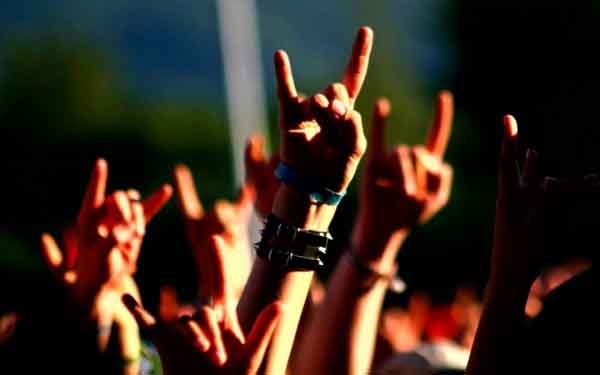
Metal concerts are generally advertised in local circulars and weekly newspapers like the LA Weekly or Houston Press. Promoters advertise in the backs of these publications, or in rare cases metal-specific magazines or papers, so fans can find concerts. When you locate a concert, call the venue, as often you can save some money buying tickets in advance or through a broker, but beware of “resale” outfits that are legal scalping agencies.
Ear protection
Amplified systems within clubs sometimes go over 120 dB in terms of effect on the listener, so it is wise to purchase intelligent ear plugs (either the silicon blobs or the compressible sponge probes). Anyone who scorns you for doing this is probably deaf already, so don’t bother replying.
Social interaction
If you walk with respect for self, others, and world, and do not interfere with the needs and spaces of others, you will almost universally be fine. You may witness violent cultures such as skinheads, cholos, or deranged Hessians on speed and the best way to handle it is gently. Provocative behavior usually will result in violence.
If you get a tshirt
Longstanding metal tradition holds that if you go to a show and purchase a tshirt, it should be worn proudly the next day to explain your bruises, new cast, dark circles under your eyes and general exhaustion.
- (Preferred) As your sole garment except black pants all day on the following day.
- (Acceptable) Underneath your uniform of slavery the next working or school day, hopefully wearing some mark of violence/evil as well.
- (Deprecated) As your sole garment all day for the next three days.
Rules of evidence
Keep all “evidence” (things that are likely to be confiscated) on your person in soft objects rather than cases and put them either in obvious places (pockets) or in places that will not be found during a manual search. One is often frisked at the door and all strange hard objects explored to see if they are weapons. For example, if you are carrying smoking materials, a good place would be under the scrotum if a bag, in the wallet if rolled joints, or in your shoes if a pipe.
If you are smoking during the show, you want no flame to be visible near the scent of your smoke, so curl your hand around the joint and cup it to your mouth like you are holding your chin or clearing your throat. Always pass it to friends below the line of sight, e.g. at waist level, and blow smoke toward the floor.
Merchandise
Bands generally sell CDs and tshirts for $10-35. Bands often make their money touring on merchandise sales alone, but if you purchase during the show or within the club, the club owner may get a percentage. The preferred way to buy is before or after the show as the band is loading in or out when they can sell it to you for ready money and be free and clear. This does not work with bigger bands who have a merchandising contract. Labels often give bands a certain number of CDs in lieu of direct payment so purchasing those can keep the band on the road with the fewest additional hands extracting payment.
Here is the order of preference for buying objects in terms of how much money is returned to the band:
- From band at show after official merch period is over
- From band at show
- From band website or mail order
- From label website or mail order
- From underground distro
- From specialty record store
- From chain record store or large distro
If you purchase from the band directly, more of the money goes to the band; the more parties involved in any transaction, the more is skimmed off the top to those intermediate parties. For this reason, purchasing from a large generic store or mail order is the last resort, as that merch is sold by label to distributor to the final seller.
Distribution
Metal uses an internal network of underground distributors, activists, and content architects in order to ensure the distribution of music. It is a remarkably efficient chaotic machine. Most of these distros advertise in zines or magazines with contacts and price lists, but most are online at this point. A definitive list is no longer possible owing to the frequency of their appearance and disappearance.
Person to Person Sales
Net sales are common as they allow the seller to receive $6-12 for a CD that would otherwise return $2-4 at a record store or $0.50-2 at a corporate music outlet. Most transactions occur through a posted trade/sale list online. To purchase, a buyer contacts the seller and works out an arrangement through email or private message, then transfers funds via check, cash, money order or online banking. The seller then ships within a few weeks and the buyer adds that seller to a list of successful transactions; often these lists are publicized. Remember that how you treat others influences the likelihood of how you will be treated.
Tape Trading
The time-honored tradition of tape trading has allowed metalheads to find new music for the last four decades. With the rise of the internet and decline of cassette tapes, this form is less prominent. Originally it involved parties sending each other dubbed cassettes with all of their recent musical discoveries. Each party would send a tape to the other, and then dub those on to other people. This is how many early recordings got that “third generation copy” sound that was prized by black metal bands. At this time, with cassettes and recorders scarce, tape trading mostly lives on through podcasts, or short radio shows recorded live and published on the internet, either at a specific time or archived for later download.
Used CDs
Used CDs provide a good way to get a metal collection inexpensively if you trust the buyer or can inspect the CD beforehand. Record stores often make more money on used CD’s — for which they pay $2-$5 and sell for $6-$10 — than shrink-wrapped brand new versions. Hence most of them now have some form of used music display. Netwise buyers sell mostly used merchandise at often better prices especially if you buy in bulk. These also transfer any proceeds of the sale toward buying more metal. A newer breed of record stores exist which specialize in bulk resale, e.g. they have a ton of stock in a warehouse environment. These often will sell you two decades of metal for $25 or thereabouts. Large sellers like Amazon who have resale programs will often host third-party sellers posting classic metal for as little as $1-2 per disc.
3.2 Recordings
Terminology of Metal Recordings
- Audio. Audio is any recorded sound, whether live (bootleg or live album) or studio (recorded with intent for release).
- Live. Live sound is either a live album released by one of the band’s labels, or a bootleg recording which is released by a fan or sometimes for profit bootlegger.
- Studio. Studio music is produced by agreement between band and label as pushed as the regular “product” containing the music of the band.
- Video. Video is any recorded motion picture imagery, whether live (bootleg or official concert performance) or studio (recorded with intent for release as a separate production).
“I have always loved the Swede death metal guitar sound above all. Maxing the highs and lows on an old BOSS ‘Heavy Metal’ gets that heavy Entombed ‘Left Hand Path’ sound. Put the Level and Distortion each at half, then just adjust your EQ’s in your amp accordingly. You are more likely to find a BOSS ‘Heavy Metal’ at a pawn shop or something of that sort, seeing as how BOSS discontinued them a couple years ago…” – Gary (Morgion)
Recommended Works
Heavy Metal
- Witchfinder General – Live ’83
- Saint Vitus – Mournful Cries
- Candlemass – Ancient Dreams
Speed Metal
- Metallica – Ride the Lightning
- Nuclear Assault – Game Over/The Plague
- Prong – Beg to Differ
- Voivod – War and Pain
Thrash
- Dirty Rotten Imbeciles – Dealing With It
- Cryptic Slaughter – Convicted
- Dead Horse – Horsecore: An Unrelated Story That’s Time Consuming
- Corrosion of Conformity – Eye for an Eye
Proto-Underground
- Bathory – The Return…
- Hellhammer – Apocalyptic Raids
- Slayer – Hell Awaits
Speed/Death
- Rigor Mortis – Freaks
- Kreator – Extreme Aggression
Death Metal
- Massacra – Final Holocaust
- Deicide – Legion
- Morbid Angel – Blessed Are the Sick
- Therion – Beyond Sanctorum
- Sepultura – Morbid Visions
- Incantation – Onward to Golgotha
- Morpheus Descends – Ritual of Infinity
- Necrophobic – The Nocturnal Silence
- Obituary – Cause of Death
- Suffocation – Effigy of the Forgotten
- Atheist – Unquestionable Presence
- Dismember – Like an Ever-Flowing Stream
- Amorphis – The Karelian Isthmus
- At the Gates – The Red in the Sky is Ours
- Demilich – Nespithe
- Asphyx – The Rack
- Carnage – Dark Recollections
- Pestilence – Consuming Impulse
Grindcore
- Repulsion – Horrified
- Terrorizer – World Downfall
- Carbonized – For the Security
- Napalm Death – Fear, Emptiness, Despair
- Blood – Impulse to Destroy
- Pathologist – Grinding Opus of Forensic Medical Problems
- Carcass – Reek of Putrefaction
- Cianide – A Descent Into Hell
- Bolt Thrower – …For Victory
Black Metal
- Burzum – Hvis Lyset Tar Oss
- Immortal – Pure Holocaust
- Emperor – In the Nightside Eclipse
- Darkthrone – Transylvanian Hunger
- Graveland – The Celtic Winter
- Bathory – Blood, Fire, Death
- Ildjarn – Det Frysende Nordariket
- Summoning – Dol Guldur
- Gorgoroth – Antichrist
- Beherit – Drawing Down the Moon
- Enslaved – Vikinglgr Veldi
- Havohej – Dethrone the Son of God
- Mayhem – De Mysteriis Dom Sathanas
- Sacramentum – Far Away From the Sun
- Mutiilation – Remains of a Dead, Ruined, Cursed Soul
- Varathron – His Majesty at the Swamp
3.3 Resources
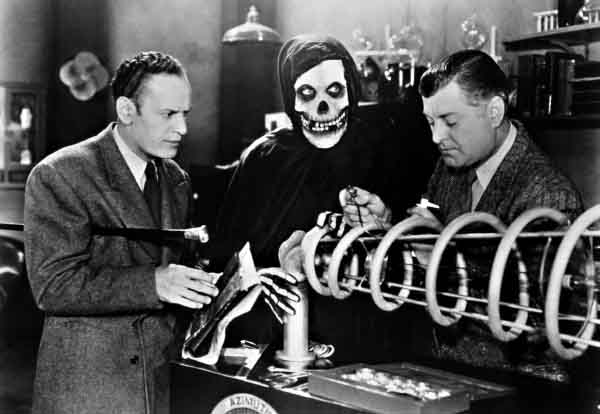
For someone concerned with historical accuracy, most of the internet provides nothing of value. Offered as underground and outsider opinion, the perspectives offered there for the most part repeat what larger media have said and distort according to the conventions of labels, but because these are popular illusions they are granted perceived authoritative status.
Instead, we suggest the following resources from the old underground:
For tracklists, band histories, and acquiring used or out of print (OOP) CDs, cassettes and vinyls:
IV. Meta
4.1 About
About this FAQ
During the early days of the internet, a form of distributed bulletin board existed for the whole net, called USENET. One of the earliest USENET hierarchies was the alt.rock-n-roll hierarchy, started to complement alt.sex and alt.drugs in the middle eighties. By the next decade, a .metal had been added and by the early nineties a new group, .metal.heavy was added to accomodate “heavier” metal, not knowing that “heavy metal” is a keyword for more commercial, rock-based offerings. Somewhere in this time alt.thrash was created for skateboarders and taken over by crossover music fans.
In order to advance this hierarchy to a contemporary state of metal knowledge, in 1993 I created the newsgroup alt.rock-n-roll.metal.death, which was followed by .progressive, .doom, and the newer hierarchy of alt.music.black-metal in the middle 1990s. Many users contributed texts during this time which encapsulated frequently sought knowledge, so I mixed those texts with my own texts that I had been developing since the late 1980s on the topic of metal. The result was the USENET version of The Heavy Metal FAQ.
As the internet has evolved, USENET has virtually disappeared and been replaced by a duality between small blogs and large sponsored sites. During this time, the need for accurate knowledge about heavy metal has accelerated because larger sites push their for-profit (or for-ideology) agenda on users, and smaller sites not only offer only fragmentary knowledge, but frequently vanish from the net. Each website now is like a user was on USENET, an atomized commodity.
The most recent edit of this FAQ addresses the changes in metal since the 1988-1996 period in which it was penned and updates the text to address a wider and more formal audience. This change is designed to counteract the predominance of non-information (marketing, propaganda) and pseudo-information (partial truths, social preferences) that currently dominates both on the internet and in the media products sold in stores.
About the Author
Brett Stevens began his life as a metal writer by writing and uploading lyrics files and record reviews to underground hacker websites like The Metal AE in the late 1980s. Since that time, he has branched out into heavy metal radio from 1992-1998, online radio, and writing about underground metal and the related communities such as nihilism, occultism, and objectivism. He has served as editor of The Dark Legions Archive, which first went online in 1991 as an open FTP directory, then Gopher server and finally a website on a series of webhosts. As the oldest and longest-running metal website, The Dark Legions Archive provides information about metal without either commercial bias or conformity to “non-conformity” based in socializing with participants in a “scene.”
You can read more here:
Inspiration
Call the Metal AE!
+1 201 879 6668 (8N1)
PW: KILL
4.2 Contact
https://www.deathmetal.org/
Death Metal Underground
PO Box 1004
Alief, TX 77411
editor@deathmetal.org
4.3 References
- Gabriella, “Ozzy Osbourne: The Godfather of Metal,” NY Rock, June 2002. Retrieved from http://www.nyrock.com/interviews/2002/ozzy_int.asp on September 8, 2014.
- J Cremer, “The birth of black metal: through the Mercyful Fate of our king,” The Copenhagen Post, October 27, 2013. Retrieved from http://web.archive.org/web/20131101030359/http://cphpost.dk//through-looking-glass/birth-black-metal-through-mercyful-fate-our-king on September 8, 2014.
- Varg Vikernes interview, Until the Light Takes Us, Factory 25, 2009.
- J. McIver, Extreme Metal II, Omnibus Press, London, 2005, p. 110.
- C. Alexander, “The origins of pattern theory, the future of the theory, and the generation of a living world,” speech to the 1996 ACM conference on Object-Oriented Programs, Systems, Languages and Applications (OOPSLA), San Diego, CA.
- C. Alexander, A Pattern Language: Towns, Buildings, Construction, retrieved from http://www.stcsig.org/usability/topics/patterns.html on September 8, 2014
- Plato, The Republic, trans. Benjamin Jowett, Book VII, retrieved from http://classics.mit.edu/Plato/republic.html on September 8, 2014.
- J. Gleick, Chaos, Penguin Books, New York, 1987, p 195.
- J. Campbell, The Power of Myth, Anchor, Rockland, MA, 1991, p. 14.
- Vikernes.
- M.H. Abrams, “Neoclassic and Romantic” in A Glossary of Literary Terms, Harcourt Brace Jovanovich, Orlando, FL 1993, pp. 125-129.
- A. Gatherer, “The Dionysian and the Apollonian in Nietzsche: The Birth of Tragedy,” The Oxford Philosopher, August 25, 2014. Retrieved from http://theoxfordphilosopher.com/2014/08/25/the-dionysian-and-the-apollonian-in-nietzsche-the-birth-of-tragedy/ on September 8, 2014.
- “Romanticism,” The Encyclopedia Brittanica. Retrieved from http://www.britannica.com/EBchecked/topic/508675/Romanticism on September 8, 2014.
- Ibid.
- L. Sterrenburg, “Mary Shelley’s Monster: Politics and Psyche in Frankenstein,” In The Endurance of “Frankenstein”: Essays on Mary Shelley’s Novel, ed. George Levine and U. C. Knoepflmacher, Berkeley, Los Angeles, and London: Univ. of California Press, 1979, pp. 143-71. Retrieved from http://knarf.english.upenn.edu/Articles/sterren.html on September 8, 2014.
- Ibid.
- R. Rocker, “Romanticism and Nationalism.” Retrieved from http://flag.blackened.net/rocker/roman.htm on September 8, 2014.
- “Nihilism,” The Internet Encyclopedia of Philosophy. Retrieved from http://www.iep.utm.edu/nihilism/ on September 8, 2014.
- Vikernes.
- Cambridge, 616
- H. Kohn, “Romanticism and the Rise of German Nationalism,” The Review of Politics, Volume 12 / Issue 04 / October 1950, pp 443-472. Retrieved from http://journals.cambridge.org/action/displayAbstract?fromPage=online&aid=5378456 on September 8, 2014.
- “Truth,” The Internet Encyclopedia of Philosophy. Retrieved from http://www.iep.utm.edu/truth/#SH5a on September 8, 2014.
- W. Heisenberg, “Über den anschaulichen Inhalt der quantentheoretischen Kinematik und Mechanik”, Zeitschrift für Physik, Issue 43, Volumes 3–4, 1927, pp. 172–198.
- D. Allison, “Structuralism,” The Cambridge Dictionary of Philosophy, Second Edition, Cambridge Press, Cambridge, UK, 1999, p 883.
- Dog 3000, “Emerson Lake & Palmer Trilogy,” Head Heritage. Retrieved from http://www.headheritage.co.uk/unsung/review/1133/ on September 8, 2014.
- B. Sisario, “Johnny Ramone, Pioneer Punk Guitarist, Is Dead at 55,” The New York Times, September 17, 2004. Retrieved from http://www.nytimes.com/2004/09/17/arts/music/17ramone.html?pagewanted=print&position=&_r=0 on September 8, 2014.
- Vikernes.
- J Norton, “Heavy Metal Gets Socially Conscious,” The New York Times, August 10, 2006. Retrieved from http://www.washingtonpost.com/wp-dyn/content/article/2006/08/10/AR2006081000925.html on September 8, 2014.
- Vikernes.


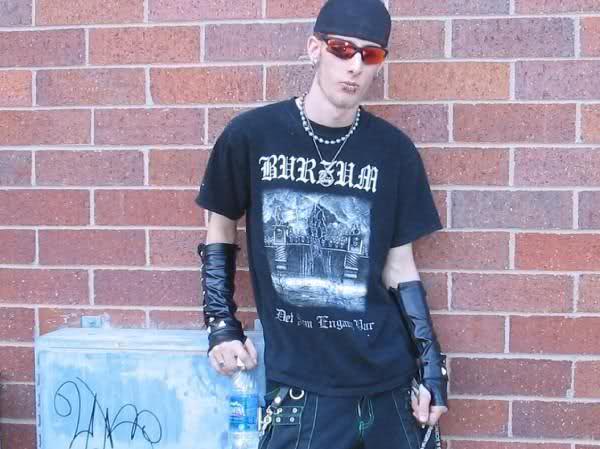
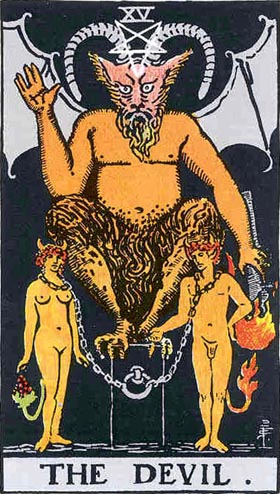


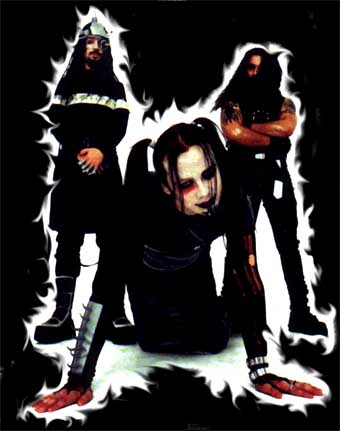


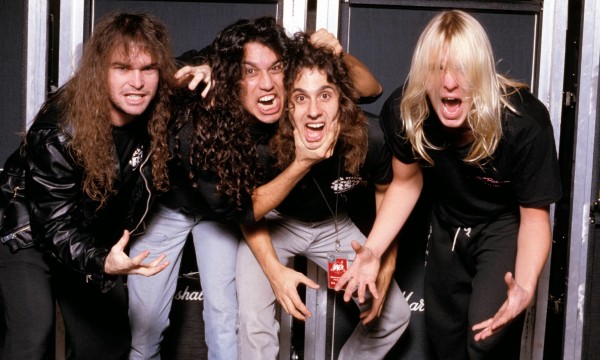
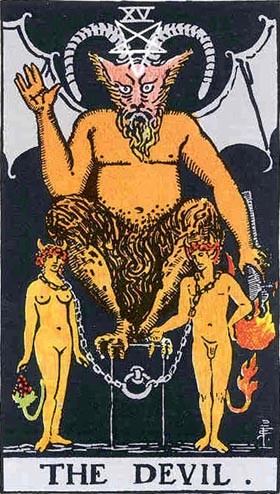


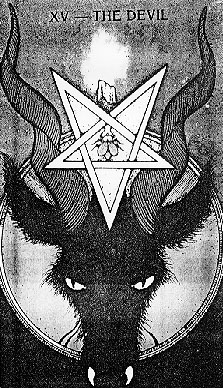
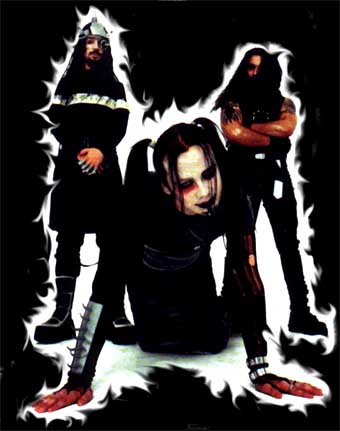


 I doubt you’ll be surprised by my answer here, but no, of course it’s not at all important. Technique is merely a means through which you can express something. Lack of technique or limited musical ability just means you’re more restricted (or perhaps freer in some cases) about what you can do. Someone lacking musical ability or training couldn’t easily write or perform music like that of Morbid Angel for instance, but then some forms of expression don’t require that level of instrumental skill. Furthermore, technical ability is absolutely worthless if lacking any idea of composition. I think someone who has no real technical ability as such, may nevertheless still have an innate (possibly an unrealised, subconscious) understanding of melody and form, and thus be able to create good music. I don’t understand why it is that low technical skill is nearly always seen as a valid criticism by those who “know about music”. It’s like with these lists you see of “100 greatest guitarists ever”, ok, but how many of them made music that you actually give a shit about? Darkthrone were quite talented musicians but their best music isn’t hard to play to say the least. I bought a new guitar recently (an ostentatious act for me, but the model is not in itself ostentatious) and tried it out in the shop beforehand. I suppose that people usually have a long, showy masturbation session in music shops when trying out new instruments, but I just wanted to see how it felt to play and so on. I’ve never really wanted to drastically improve my playing skills, not through laziness or lack of ambition but because I actually fear losing my unfettered ability of expression. Over time I’ve improved gradually anyway as is natural, but I’m fond of the lack of refinement and “first take” freshness that can be found in recordings of people like Ildjarn or old Mutiilation. It lends a certain immediacy that becomes integral to the overall effect that the song produces upon the listener. For me it’s similar to the curious power of crude woodcut illustrations, which although primitive, nevertheless convey what is intended. I’m not advocating the old punk rock ethos of “anyone can have a go”, because plainly, not everyone has what it takes to create something meaningful or worthwhile. Indulge me and allow me to quote a favourite passage from a controversial figure of 1960’s England; “practically everyone believes they could write a book or compose a song if only they put their mind to it. They believe this simply because they can easily comprehend the finished products of others. It is not until they attempt the act of creation themselves that they become aware of their own limitations, lack of imagination, abysmal powers of self-expression and how unaccustomed they are to thinking deeply about anything at all. Becoming aware of the vast gap that exists between understanding and personal creativity – and the intellectual effort required to capture and express a complex idea in simple terms – is humiliating”. Technical prowess as such doesn’t necessarily hinder the creation of (good) art, but stupidity and a lack of anything to say certainly does. Just look at the music section of myspace.
 The sound of nearby church bells, rain on the rooftops and wind in the trees is perhaps the greatest ambient music I’ve heard and has influenced me more than anything else. Some have said that the Hammemit album reminded them of work by Brian Eno and he is indeed quite a visionary, though I wouldn’t agree that he was much of an inspiration to me. I like Tangerine Dream a lot, and anything that I like a lot tends to be assimilated somehow into what I do, but there’s no conscious influence from them either. My music is mainly based around the guitar, so two particularly inspirational guitarists for me would be Snorre Ruch (of Thorns) and John Dowland, the latter being a lutenist rather than guitarist but the principle is similar. I think my influences are more in terms of ethos and aesthetic than anything concrete in form.
 Everything has to die. I feel that like the world itself, black metal could have remained something brilliant, but stupid, shallow people and commerce ruined it. Concerning black metal (but not only that), I think most people including many who “were there” only see an idealised version of reality. Basically they see a relatively brief outburst of creativity and good intentions contained as a single neverending era and not as a finite period of innovation witnessed over time, followed by noticeable decline and inevitable death. I imagine citizens of the Roman Empire in its last days felt that way. Maybe Americans feel like that. People need a sense of continuity and belonging in order to feel secure and black metal is now a boring youth subculture like any other, not an evolutionary artistic movement. It’s about clothes, symbols, scene orthodoxy and total lack of substance for the most part. It’s hard to admit that the dream is over, that something has come to the end of its lifespan. The people who refuse to recognise that are usually those with the most to gain from its continuation and such people are dangerous because they prevent real progress from being made. But those who do acknowledge it are the first to rise from the ashes and forge something new. When an old, beautiful and much loved building falls down, the average guy says “I’ll rebuild this building, it’ll not be quite as good as before but it’ll keep the spirit of the old building alive”. But a radical, visionary architect says “I’ll rebuild this building, and I’ve a few ideas of my own this time”. However there are quite a few people out there who think of themselves as doing something new and original, but who actually aren’t. Playing a saxophone or tambourine or banjo or flute in a black metal context doesn’t necessarily make you a creative genius (in fact I’m damn sure it doesn’t). To cite an example I’ve used before, Darkthrone were obviously a positive evolution from Bathory and Celtic Frost, and to continue the architectural metaphor; are the difference between doric and ionic columns. In other words you don’t need to do anything completely new to be original, you just need to look at what came before in a new light, which is easier said than done of course.
 Black metal (and heavy metal in general) seem to share many values with Romantic art and literature from two centuries ago, right before Nietzsche began writing: reverence for nature, belief in a transcendental but not dualistic life, independence from humanist morality, desire to create the beautiful and eternal, searching for truth with the self as the lens but not the focus. Do you find these prevalent in yourself and your influences, or is something else your driving force?
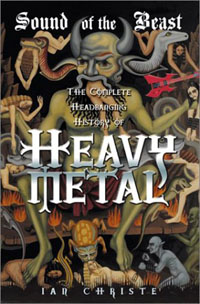
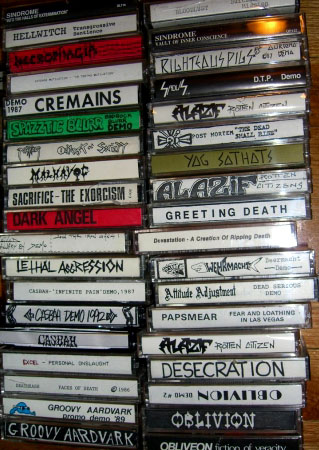 You recently appeared in Time Out New York and received a pretty favorable portrayal. How much have you seen metal crossing over into the indie/art scene over the years?
 I’m not sure it has much to do with weaknesses or strengths, it’s just different. As something new grows, you never know what will come next. I guess this is kind of exciting, yet it also means that the next direction might not be your personal taste. But the same goes for the opposite situation, where you start with a formula which then transforms into something you might not expect! Even though second wave black metal started with some “set rules”, or whatever, it kind of changed pretty soon as well. And within a few years some of it was VERY far from what bands like Burzum and Darkthrone was doing in the early 90’s. So I guess everything is constantly in change, and you can never tell what will happen. And if something is to prefer over the other, I think is just a matter of taste.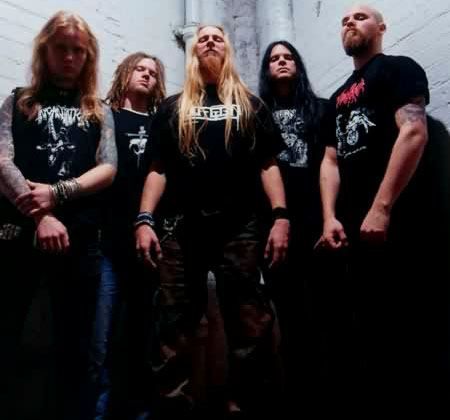
 What we need to do is to reclaim the RIFFS! Modern “metal” mainly seems like melodies and harmonies to me, whereas I always thought the riff was the thing that made it metal. Once the riff is back, I guess any direction is open for exploration. Without the riff, I am not sure we can call music metal at all…