Kaiser Kuo is a Chinese metal pioneer (Tang Dynasty and Chunqiu), blogger and columnist, who currently lives in Beijing. Having grown up in the United States, he was kind enough to offer his rare perspective to our questions on metal, media, and China.
First, we would appreciate it if you would kindly describe a bit about yourself for the benefit of our readers. Since this is a metal site, a brief history of your involvement with the genre would be helpful as well (as would some forgiveness from you for the metal-relatedness of many of the questions).
My pleasure, and thanks much for reaching out. I’m very happy to talk to you guys about what’s going on in the Metal scene in China. It’s something that the popular media doesn’t pay much attention to, and in the West, when stories get written about the Chinese rock scene, they tend to dwell on the punks and ignore the very vibrant and extremely creative Metal scene here. There’s also a lot of popular misunderstanding about what Metal means in the Chinese context, and this is a great forum to help clear some of that up I hope.

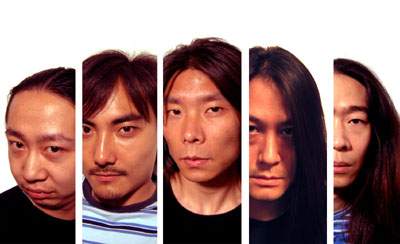
I get credited a lot for having been an early, if not the earliest, “Metal missionary” in China. I was born in the U.S. and from junior high on was really into two genres of music, Metal and Progressive Rock. I was one of those rare kids who was listening not just to Judas Priest, early Scorpions, and NWOBHM bads, but also to Yes and ELP. Rush was the band that, for me, wedded the two genres and I was a complete Rush fanatic all through high school and college and I owe them a tremendous debt for inspiring me in my early years as a musician. During college I played in a Prog Rock band, and through a fluke connection of my father’s — he was doing business in China — we were invited to come to China and play. It never happened, but that was because we couldn’t get it together on our end. Meanwhile I had this burning urge to go to China and see what I could make happen in music. So as soon as I graduated in 1988, I headed to Beijing ostensibly as a student of Mandarin, but really my goal was to hook up with the local musicians. I co-founded Tang Dynasty with a very talented guitarist/singer named Ding Wu and a bassist named Zhang Ju in early 1989. I went back to the States later that year, returning to China only for a few months at a time in the early 90s, and moving back to China to rejoin the band in 1996. I left the band in 1999, and in early 2001 co-founded the band I’ve been with since, Chunqiu, which people describe as a traditional Heavy Metal band with very distinct ethnic Chinese influences.
I know very little about metal in China, but I’ve read that Tang Dynasty is often considered a leader of the “movement.” How do you view your personal role in shaping the music?
I don’t think there’s anyone who doubts that Tang Dynasty was where Metal really got started in China. I certainly had a part in it: I introduced the other guys in the band to much of the music that would influence them (bands like Queensryche, for example), and I did come up with the name of the band. But they changed me as much as I changed them. Playing with Tang Dynasty I really found that the fusion of traditional Chinese music and Western Metal works: it’s not something I ever tinkered with before co-founding Tang Dynasty. A lot of credit is due not just to Ding Wu, the band’s singer and rhythm guitar player; but also to our first producer, Landy Chang from Rock Records in Taiwan, who saw the potential in the band and really helped shape the direction of the music.
And mutual fear brings Peace,
Till the selfish loves increase;
Then Cruelty knits a snare,
And spreads his baits with care.– William Blake, Songs of Experience: The Human Abstract
If you had never lived in the US, do you feel metal in China would have effectively been stunted until much more recently?
I have no doubt that it would have taken off, but it might have been a bit later and there might not have been quite such a home-grown success story, Tang Dynasty, to look up to for young Metal players. Tang Dynasty gave Chinese players and fans their first Chinese guitar hero, Lao Wu (Liu Yijun), and showed them that Metal despite its clearly western origins could be recognizably Chinese and still really authentically ass-kicking. I think if I hadn’t started proselytizing in the late 80s, by the early 90s there were enough other American musicians coming to China and exposing people to Metal that there would have been a kernel to the scene anyway, and it would have snowballed like it did with the availability of cheap pirated discs in the mid-90s and Internet MP3 downloads and sharing by 2002/2003 all the same.
What has caused more run-ins with Chinese officials (if any): playing metal or having a well-regarded Internet presence?
There really haven’t been “run-ins” at all, either for me personally or for the Metal genre in China as a whole. The worst that will happen is a bit of censorship of lyrics, but it’s not really onerous. Unfortunately Metal is still just too marginal in China to really catch the attention, for better or worse, of Chinese officials. They have much bigger things to worry about. And certainly the kind of stuff I do and say on the Internet isn’t something that’s going to get Chinese authorities breathing down my neck. It’s all pretty innocuous.
Having experienced both extensively, is there anything you prefer about life in the “liberal, bourgeois West” to life in China (during any time)?
Sure, there are things about the West that I still really enjoy whenever I’m back there. The air quality comes to mind! It’s always a thrill to go to record stores; I like owning CDs and not just having digital music on my iPod, so that’s one thing I miss. There aren’t any world-class record stores in China. And even though there’s a great live scene here, it’s still rare that major international acts come to Beijing, let alone smaller, more interesting acts. But for 99% of what I want out of life, China either meets or exceeds my needs. There’s a dynamism and buoyancy to life here that comes from living in a place where life just gets better pretty much every day. It’s a really exciting place to live still, and I’ve been able to play the kind of role here that I simply wouldn’t have been able to play had I never come to China.
How do you feel heavy metal fits into this general Western cultural current; is it drastically different from rock music in itself?
Like rock itself, Metal has subdivided into so many subgenres that it’s really impossible to make generalizations about how it fits into Western culture anymore. There are attitudes, habits of mind, behavioral and even ideological tendencies that correlate pretty strongly to every subgenre, so that Deathcore fans are really, really different than people who like, say, Progressive Metal like Symphony X or Dream Theater. You have everything from misanthropic nihilists to just plain music geeks who might be really mainstream in other ways. Once upon a time you could make generalizations, but not any more.
Is there any more or less differentiation between rock and metal in a more information-tight society?
I don’t think that in the last 30 years, deliberate information control in China has had ANYTHING to do with either the development of rock and metal or differentiation between and among all the different genres and subgenres of music. The simple truth is that musical tastes in China are mainly dictated by marketing and by cultural aesthetic preferences. The former, when it comes to music, tends to favor the kind of candy-ass Mandopop and Cantopop (which sometimes has the nerve to call itself rock!), and the latter — the cultural aesthetic preference — is still relatively unsophisticated outside of the fringe scenes in a handful of cities. Sad, really, but in this case I don’t honestly think it’s the government’s fault in any meaningful way.
Along those lines, there have been stories recently in mainstream press covering the “rise” of heavy metal in Islamic nations. Do you think there is any parallel in this to metal’s gaining in popularity in China?
I think Metal faces a whole lot more difficulty in Islamic societies, particularly in really theocratic or heavily religious polities. In China there are occasional flare-ups of anti-western sentiment, but they’ve never in my memory had a cultural dimension. They’re always political. You see self-described punks rockers or Metalheads in China — people who clearly have close cultural affinities to the West — take part in these sometimes. There’s a decoupling of politics and culture. I don’t think that’s so true in Islamic societies. If Metal has failed to gain popularity in China it has nothing to do with either religion or state controls.
Metal lends itself to lyrics of a “blasphemous” nature as well as anything, but there are plenty of other genres that are just as noisy and iconoclastic that could seemingly have a similar effect when directed at the status quo. Are punk/hardcore and related genres gaining in popularity in China as well?
Metal lyrics in China don’t tend to be “blasphemous,” in part because there’s nothing that really stands in for Judeo-Christian dogma to blaspheme against. The state hasn’t made an enemy of Metal, and so Metal doesn’t make an enemy of the state here. I have strong suspicions that other genres, like punk (and to a much lesser extent, hardcore, which isn’t well represented in China that I know of) tend to write more iconoclastic lyrics — defiant, anti-authoritarian, even politically critical — out of a cynical knowledge that doing so gets the noticed by the western media, which laps that kind of shit up.
I can’t read Tang Dynasty’s lyrics… I’m wondering if you could please comment on some of the general themes they cover, and from where you drew influence for them.
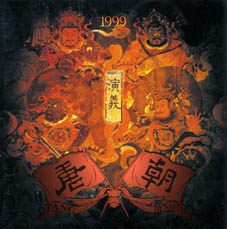
First of all, I’ve never had a hand in writing lyrics either for Tang Dynasty or Chunqiu. Tang Dynasty drew lyrical influences from the Chinese poetic tradition (which really reached a peak in the eponymous dynasty, 618-907 A.D.), and like Chinese poetry, the lyrics are highly imagistic and even pretty sentimental. There are a lot of themes of heroism, romanticism, that sort of thing. There’s also quite a bit of Buddhist influence, especially in the lyrics for some of the songs on the second album, Epic. Chunqiu also goes in for the imagistic approach, and also draws on timelessly Chinese poetic themes, as well as mythological, heroic, historical, and philosophical themes in it.
 In your view, is “protest music” a limiting term, and does it apply to heavy metal in any way?
I don’t think “protest music” is genre-specific, and I don’t think there are many genres of music that either abjure it altogether. So there are Metal bands who do it, and those who don’t. In China, to the extent that protest applies to Metal, it’s really a protest against social conformity and slavishness to mainstream pop music tastes, not political protest. I’ve never really gone in for the latter through music, but that’s just me. I figure that if I have something I feel strongly about politically or socially, I can offer more nuance and substance in an essay than in a song with rhymed verses ad a repeating chorus. I’m not into slogans. I know that at least in China, the country’s had too much by way of slogans already.
In a recent article, you touched on the “virtues of piracy” and called for a general openness in China to Western media. Can you please elaborate on what benefit to China you see coming from this openness, particularly in regard to entertainment media?
I think piracy — physical disk piracy, file sharing, MP3 downloads and all that — helped to really create an appetite for and knowledge of western entertainment media. There’s a point at which it goes too far, of course, and I’m inclined to think we’re at or past that right now, but there’s no doubt in my mind that the availability of western entertainment media at prices Chinese consumers could afford is during the 90s and the earlier part of this decade built a market that the same companies grumbling so loudly now will be able to tap into in a very lucrative way down the road.
In the West there was (was — I would call it gone now), of course, a substantial “underground” for heavy metal tape trading well up until digital media democratized the creation and distribution of music in general. Can any difference be discerned between something like this and piracy such as in China?
There was certainly a whole lot of tape trading in China in the early days, but back then we were talking about a fan base so small that and so geographically confined — just to Beijing, really — that it wasn’t substantial. What happens now with the easy distribution of digital music is the same thing but on a much more massive scale, practically without cost and frictionless to boot. It’s something that has upended the music industry as we know it, and if I really knew the way forward out of this I’d be a rich mother by now.
See too, I said, the forgiving spirit of democracy, and the ‘don’t care’ about trifles, and the disregard which she shows of all the fine principles which we solemnly laid down at the foundation of the city–as when we said that, except in the case of some rarely gifted nature, there never will be a good man who has not from his childhood been used to play amid things of beauty and make of them a joy and a study–how grandly does she trample all these fine notions of ours under her feet, never giving a thought to the pursuits which make a statesman, and promoting to honour any one who professes to be the people’s friend.
Yes, she is of a noble spirit.
These and other kindred characteristics are proper to democracy, which is a charming form of government, full of variety and disorder, and dispensing a sort of equality to equals and unequals alike.
– Plato, The Republic
To what degree have you seen ethnic nationalism used as a reactionary measure in China recently, particularly within heavy metal music (where it has often been made a component over the years, though a controversial one)?
I don’t think I’ve seen instances of “ethnic nationalism” in Chinese Metal. The few instances I’ve seen where Han Chinese musical or visual elements — or, for that matter, elements drawn from minority nationalities of China — it’s never been reactionary in any sense of the word I’m aware of. That’s not to say that it hasn’t been misinterpreted in that way. A lot of people assumed that Tang Dynasty, or even Chunqiu, was some cipher for anti-modernism and a desire to go back to some mythic golden age, but that was never the case: The name of the band in the case of Tang Dynasty was meant to evoke the age’s cosmopolitan nature, and its embrace of things foreign. This was really the source of that dynasty’s legendary greatness. It’s not “nationalistic” in any sense. Quite the contrary. I think using a genre like Metal, which is unarguably western in origin, to assert Chinese nationalism would be a complete contradiction and wouldn’t convince anyone in their right mind.
Is heavy metal malleable enough to act in multiple ways at once — say, both against “democracy” but for freedom in different instances and in different places — or are there more “correct” interpretations of its basic impetus?
Yes, I think it possesses that malleability but I haven’t really seen it employed to ends like you describe. I think only in rare instances is it harnessed for political ends at all. But in China it’s definitely used to vent the same sorts of emotions as in the west — things we’re all familiar with.
What conceivable event might make you move from China at this point?
Right now, it’d be pretty hard to think of something that would compel me to move short of massive civil unrest — something I rate as extremely unlikely — or a conflagration involving the U.S. triggered by a precipitous move toward independence by Taiwan that Washington unwisely decided to intervene in. Other than that, I do plan at some point to go back to the U.S. when my (now four-year-old) daughter starts college eventually. But that’s what, 13 years off, so who knows what’ll happen between now and then?
What will (or what does) an open China provide to the world that an open West has not already provided?
An open China has clearly already provided the world with inexpensive consumer goods and is moving up the value chain to become, within our lifetimes, a major force in innovation. By that I don’t just mean tech innovation, though that will doubtless be an important part of it; I also mean cultural innovation, plumbing the depths of traditional Chinese culture to give the world a taste of, among other things, a rich literary tradition of which the world now knows very little.
Being heavily involved with digital media, what drawbacks can you envision for children fully entrenched in the digital age in China? In the United States?
It’s the same in China as it is in the U.S., or perhaps even worse because there’s such a lack of compelling entertainment alternatives. Don’t get me wrong: The Internet’s the greatest thing ever, and it’s been a tremendous force for good wherever it’s seen wide adoption. But kids spend way too much time playing online games, and that’s just plain unhealthy when you’re playing for days straight and skipping meals, not sleeping, and screwing up in school. The Internet promotes too much of a sedentary lifestyle. I should know: I need to spend way less time in front of my Mac and way more time in the gym. Other than that, there are the usually dangers of digital stalkers and sex offenders — not as bad of an issue in China, to be sure — plus various scammers.
Thank you very much for the interview; parting words/shots, etc. can go here.
Thanks for having me! I’ve been on a mission to get people around the world aware of the really great Metal scene in China, which has dozens and dozens of talented acts and a few real stand-outs, like Kungfu Voodoo, Suffocated, and of course Chunqiu. You can download our stuff on iTunes. Unfortunately we don’t have other distribution outside of China currently.
No CommentsWho looks upon a river in a meditative hour, and is not reminded of the flux of all things? Throw a stone into the stream, and the circles that propagate themselves are the beautiful type of all influence. Man is conscious of a universal soul within or behind his individual life, wherein, as in a firmament, the natures of Justice, Truth, Love, Freedom, arise and shine. This universal soul, he calls Reason: it is not mine, or thine, or his, but we are its; we are its property and men. And the blue sky in which the private earth is buried, the sky with its eternal calm, and full of everlasting orbs, is the type of Reason. That which, intellectually considered, we call Reason, considered in relation to nature, we call Spirit. Spirit is the Creator. Spirit hath life in itself. And man in all ages and countries, embodies it in his language, as the FATHER.
– Ralph Waldo Emerson, Nature (1836)
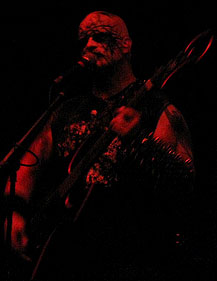 The phrase “welcome to hell” would be a sentiment fitting for the night in two ways- one positive and one negative. The negative, of course, was the journey to every scenester weekend hippie’s favorite city – that pit of insincerity and neurotic dysfunction known as Austin, Texas. The positive meaning was the sets conjured up by Averse Sefira and, to a lesser extent, Nodens, who brought a much less earthly hell to Austin that night, a Hell of black and true evil, an evil of passion ferocity, as opposed to the grey, human hell that was the surroundings of the club.
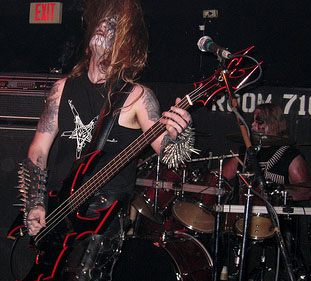 After some tear-down and set up, the lights dimmed, an ambient piece began to play, and the most anticipated band of the night took the stage, adorned in corpse paint and spikes. The ambient intro faded, and Averse Sefira wasted no time in tearing into what is likely going to be their signature song in a year or two, “Vomitorium Angelis”. The band proceeded to play an eight-song set culled from their most recent two albums, that showcased the violent and intolerant as well as the triumphant and joyful, and even the radiantly beautiful through use of high-speed dissonant melodic riffing over a pounding and precise percussion which was contrasted with the more playful right-hand rhythms provided by Sanguine Mapsama on guitar. Rather than enslaving himself to the “on the beat” tremolo-pick like many black metal guitarists do, Sanguine approached rhythm, with the touch of a jazz musician, using the beat as a guideline that could be deviated from when needed to give his riffs much more life- the best example of this came in the build down before the explosion in “Detonation”, which showed him lightly and sensitively playing at low volume, with little distortion, throwing in improvised arpeggios and improvising the details of the rhythm in the larger framework, making this passage far more effective than it is on album. Smaller examples of this rhythmic freedom were found throughout the night, and made this performance far more effective than the album versions of the songs. The glue that held the freedom of Sanguine’s guitar and the oppression of The Carcass’s battery together was Wrath’s bass, which followed The Carcass’s rhythm, but Sanguine’s melodies, thus creating a unifying factor between the two otherwise seemingly disparate elements.
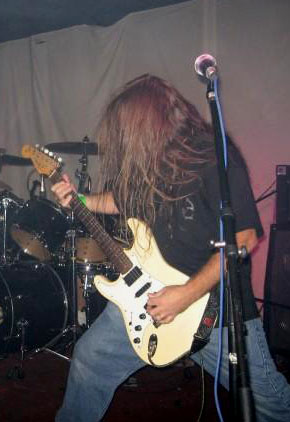 Coya was billed on the flier for this show, but were replaced by Opia, who were already on stage at 9 pm when I arrived. They consisted of a drummer/vocalist and a guitarist. I quite admired this, because it is not easy to get up in front of a mostly empty room to play with such a sparse line up. I’ve also always been impressed with drummers who managed to be a main vocalist. They played solid, minimalist speed metal. After a couple songs, the guitarist took the microphone from the drummer and performed the vocals for the next song. For the following song, they switched instruments completely, with the drummer resuming vocals while taking on guitar duties, and the guitarist taking on the drums. This rare display of musicianship reinforced the raging wall of sound they were producing.
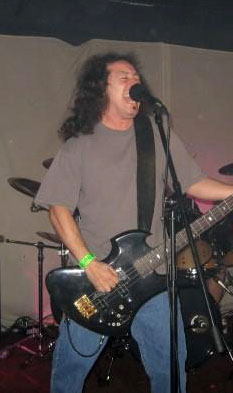 Finally, Insecticide emerged, and all hell broke loose. Playing classic crossover thrash reminiscent of later COC colliding with Dead Brain Cells with Cryptic Slaughter on retainer, Insecticide incited the crowd into a frenzy. The crowd changed completely in the 15 minutes between Temple of Wrath leaving the stage and Insecticide taking it. Although fewer people were present, this was a different audience that was left over, a more deliberate and experienced cross-section of the metal crowd. There was more movement for this band alone than all four preceding bands combined.
 After a round of alcohol to suppress the academic background noise from that same day, we took the bus to the shit hole of the south of Sweden, Malmö. Once a great cultural market city, today a polarized ghetto, famous for its sky rocketing crime rates and ethnic segregation. Despite the social decay, Malmö has got a fascinating city life and impresses with its architecture, public events, and first class symphony orchestra. Likewise it’s the center of many metal and electronic acts, and tonight it was none other than At the Gates who would enter the stage at Kulturbolaget. A small, compact club greeted us once we stepped in, while the black/thrash metal band Obscurity was playing uninspiring satanic hymns in the old Bathory vein. The monotonous noise melted in with the screams and laughter from the nearby bar, setting me in a state of mind where the outside world seemed to be just another peripherical dream.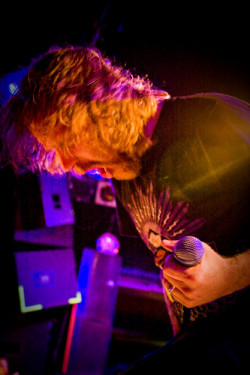
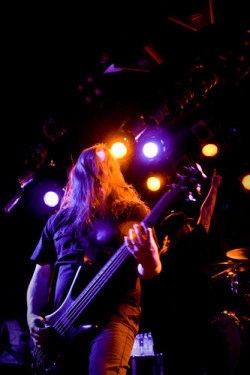 This is the essence of death metal: a rejection of a morally principal approach to life, and the celebration of the raw, physical nature of mankind. The wild, dissonant power chords perfectly layered like a mental journey, backed by the typical death metal percussive rhythms and bridges, launched a macabre symphony together with the painful vocals, and stirred the crowd into unisonal head banging. Few things offer you the experience of feral freedom, like banging your head in rhythm to the sound of death metal, and feeling that the rest of the social world suddenly is reduced to noise. At the Gates provoked us into such a mood through its atonal riff patterns and ascending harmony, proving that they were still masters of the genre. The band was right in avoiding a sell-out by only playing later songs, but naturally, the crowd liked performances like “Under a Serpent Sun” best.
 The whole performance gave a very respectable, professional and worthy impression, and the band received admirable appreciation from the audience after the finale. When the concert was over, the Gothenburg crowd slowly descended out on the streets, among traffic lights, illegal taxis, and the enormous, clear night sky. The rush of energy, passion and alcohol still boiled in my blood, as I contemplated a new perspective on a band, whose music I’d otherwise reserved to lonely nights when the world had seemed more insane than usual. Death metal, not only as music, but also as an existential passion, was pointing my life in a new direction. Through this concert, At the Gates had proved that Swedish death metal is not a legacy, but an ongoing strife to deal with life intimately and choosing endurance as value in a world reduced to hollow social values. Despite the downfall of the genre and much of its audience, the music continues to emphasize the heavy in life, and the presence of death in our immediate everyday life. “Kingdom Gone” is the scream of mankind out into black space, without response, yet with the certainty that life needs to go on.
 BLOOD lyrics are more like stories, using metaphor, or are insights into psychological and religious topics instead of political topics; why did you take this approach?
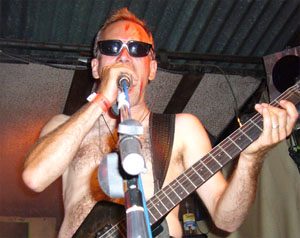 Dysangelium was released in 2003, and in 2007, Impulse to Destroy got re-released. What’s next for BLOOD? Are you going to tour Texas ever?
 No one has or will create death metal like Suffocation. Taking the muffled hard-stop strumming of speed metal, mixing it in with the structural cryptograms of death metal, and amplifying the intensity, Suffocation innovative the percussive death metal that spawned the goregrind genre and countless imitators. Drummer Mike Smith was kind enough to give us an interview on the state of the band and its future.
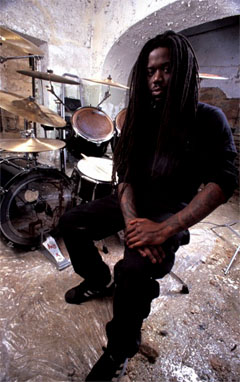 In the Effigy of the Forgotten group photo, a Morpheus (now Morpheus Descends) tshirt is visible. Did this band influence your style?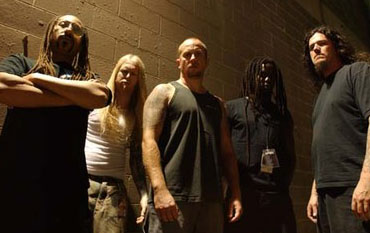
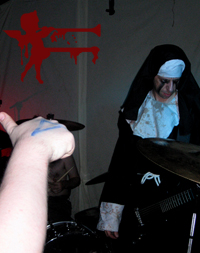
 When black metal went more toward an orthodoxy that by nature of emphasizing its strengths, simplified its technique to the point of crumbling complexity, Summoning went another direction, and made slower, reverent music about a former (and possibly future) time of honor and conflict. In the history of metal, Summoning represents one of the more potent variants of ambient metal and an encouraging aesthetic for anyone tired of modern time. Protector, one half of the dynamic duo that Summoning became, went on to participate in several other projects focusing on a classic theme of black metal: an ambient consciousness from which a sense of beauty and thus meaning in life emerges.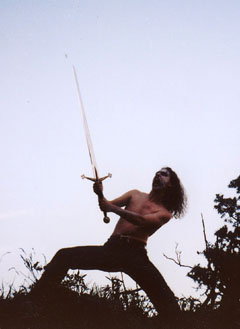
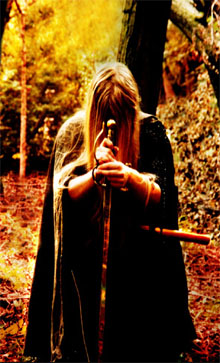 I was never really in any community. When I started listening to metal music at the age of 15 I think I was almost the only one who listened to that music in my school and for a long times I did not know a single person that did not consider that kind of music as pure noise. The same goes for dark electronic music; I am not really in contact with people who are into that music as well and I discovered it on my own as well. And I think I don’t need any communities to make my music, I rather prefer the possibilities that keyboards offer to be able to make music alone without being dependent on a band. Of course, I like to talk about music as well, but for me more than two people in a band is often more disturbing than useful and is the reason for many band splits.


 Has metalhit.com helped you promote and/or sell any of your own works? Were the results comparable to conventional music industry models? (N.B. I recognize that you, like many other underground musicians, may not be in this field “for the profit,” but I think we should recognize that for an artist to keep existing, the band must at least not lose money, and it needs to make money for those in the support infrastructure of labels, distros, venues, magazines, etc. — “selling out” is a different story, because even if Metallica’s black album had only sold six copies, it would still be a sell-out; this is not a question about the ethics of profit, in other words, although feel free to throw in any ideas you have there)