Why metal and SJWs are natural enemies

stranded_in_hell

The casual observer seeing how metalheads and SJWs, who descend more from crustfund punk and emo than metal, might ascertain that the two groups are radically different. This observer might even note how many of the “tryhard” types are in fact thinly-disguised SJWs. But at first appearance, the reason for this separation will be misunderstood.

An average person will see metal as wild and lawless, like a combination of the Wild West and medieval Europe, where SJWs are more like modern Europe: very morally righteous, sensitive and inclusive. This difference separates metalheads from SJWs, but it is not the primal reason why the two are different. It serves as a guidepost to that end however.

Black Sabbath launched themselves during the height of the hippie period. At that time, the popular narrative that people told themselves was that history from the Napoleonic Wars to 1945 was just one big mistake, and the way to defeat it was love, through people power and pacifism and universal acceptance. Apparently none of these people studied history or they would have known how frequently this trope comes up, and how it usually ends! Black Sabbath saw through what these hippies were saying an argued it was more of the same, and that humanity was in denial of reality and has been choosing various “human realities” instead of actual reality, to its doom.

In human experience, our most common error is self-delusion. When that is discovered, we usually choose another self-delusion. The classic example is the alcoholic who runs into the arms of a tent revivalist, and becomes addicted to another set of false promises. Another is the woman who flees her marriage only to find out years later that the new boyfriend she chose is a lot like the last husband. Voters run from one party to another, as they go from one cell phone company to another, thinking that “the other guy” might have answers. And he never does. The reason why is that he is also selling an illusion, because only illusions sell.

This leads us to why metal is different from rock and why it is the natural enemy of SJWs: metal is against illusions. SJWs want you to pick one illusion over others, but metal points out that whatever is popular is illusion and is wrong. We need some other way of looking at the world than what “most people” want to believe is true about it because it makes them look good, feel important and think they are unique. Humanity is basically a large organic machine for producing lies, and every group wants us to substitute their lie for the dominant lie, but all of these lies have their root in the same idea: that what we feel, judge and emote is more important than reality itself.

Look at politics. It is a wasteland. As notorious shock realist author Tom Wolfe once wrote in a letter to a friend:

The Republican Party as now constituted is obviously too stupid to survive…. What is to be done? Of course, that was Lenin’s line and the only lucid one he ever wrote. The answer is nothing. America’s position is unassailable. We are the imperial Rome of the 3rd Millennium. Our government is a CSX train on a track. People on one side (the left) yell at it, and people on the other side (the right) yell at it, but the train’s only going to go down the track. Thank God for that. That’s why I find American politics too boring to write about. Nixon is forced from office. Does a military junta rise up? Do the tanks roll? Give me a break.

Let us separate “rock music thinking” from “real world thinking.” Not in the way that our great-grandparents did, where rock was bad and work was good, but in the manner of people who recognize that popular music is entertainment which pretends to be profound, but is the opposite of art which explores profound subjects through realism. Entertainment wants you to think it has all the answers, but ultimately it is a social phenomenon, like chatting up a girl near the keg at a frat party. It says what flatters its listeners. It wants them to think they are profound, interesting, vivid, heck… it wants them to think they are the stars on the stage… because that sells rock music, and lets all these musicians and labels and journalists keep up the nice cushy lifestyle instead of the job managing a Target or 7-11 they would have had, had rock not come along.

Rock music thinking is advertising. It wants you to think that you can be all the cool in the world for just this one next purchase, whether a tshirt or CD. It needs to offer you highly dumbed-down and simplified ideas that make you feel like you are in control of the world. Why get into the nuances of international politics and millennium-long analyzes of the health of empires? Just say “love is the answer.” All the people will flock to that, not so much as they are idiots — although most of them are — but because they are self-deluding. They want that easy, convenient answer because it makes them feel in control.

SJWs are part of rock music thinking. They have gone from “love is the answer” to “tolerance is the answer,” forgetting that like so many Utopian quests this one will involve denying human nature and human needs, and as a result will require increasing degrees of force to make it work. They also ignore the somewhat banal reality that people mostly do not like each other and tend to associate in groups of people like themselves as a barrier to the broader world. In consequence, what SJWs preach is illusion just like the other illusions. Look at them all.

The public conservatives in this world are arch-dumbshits who think that if they adopt liberal ideas about equality, but keep industry and war going on, we will somehow turn out OK. Their great fiction is that if you just go to a job and spend all of your life there, and then manage your affairs responsibly, society will somehow follow your lead. Actually, they never think that far, because they are dumbshits, as mentioned above.

Liberals also fit in the dumbshit category. They think that if every person is just “free” and “equal,” society will magically self-organize into a permanent Burning Man of love and happiness. They ignore the fact that most people are inveterate liars who avoid the truth compulsively, and that what makes happy societies is forcing those stupid fucks to obey reality instead of their own neurotic, fruity minds. Liberals also like to give away things for free, taking from the useful and giving to the useless and spending themselves out of money, at which point their societies collapse. Europe and the USA are about to collapse from this phenomenon. More dumbshits.

Nazis — and I really don’t want to get into splitting hairs about who’s a fascist, a neo-Nazi, a white nationalist, a racialist or just a bigot — are also in the arch-dumbshit camp. They are SJWs of the far-right. Where SJWs think that tolerance is the answer, Nazis think that intolerance is the answer, and that if we just remove the mud races and Eternal Jews everything will be OK. This ignores the problem that most white people are stupid as bricks and dishonest as whores, and that our society needs a redesign from the top-down not bottom-up. I think Nazis more resemble Communists than they want to think. They are right in that diversity has never worked throughout history, but wrong in who they blame, which joins them in the dumbshit camp.

The far-left might be even stupider. None of them realize that the ideas they are chasing are from 1789 and 1867, but go back even farther to the religious fanatics of the 1500s. They are claiming very old and debunked ideas as a “new way” that will somehow magically avoid all the problems that human society has known since the dawn of time. If we all just went vegan, listened to posi-techno, and gave everyone free money, they think, all causes for conflict would be eliminated. But life is a cause of conflict because that is how it negotiates change so that the more realistic prevails over the self-deluding. Humans don’t want to be reminded of that, because it points out that Darwinistic natural selection (DNS) might take our lives at any moment if we delude ourselves, yet self-delusion is our nature. I see the far-left as overgrown children trying to pretend life is not happening to them.

Libertarians are like Nazis: extreme dogmatics who do not realize the leftist roots of their own philosophy. The idea of the free market I get and support because it allows better products and services to become available without some bureaucrat giving them the rubber-stamp. In fact, the libertarian idea of replacing most of society with a market has merit. The problem is that then we’re back at conservative anarchism where we assume that magically, the tiny group of people doing the right thing will win out over the self-deluding herd. Ain’t gonna happen. Libertarianism is another form of voting where the good people neutralize themselves by never, ever stooping so low as to tell others what to do, and then the masses roll right over them on their way to the Budweiser, light cigarettes and sugary cheeseburgers.

I’m not sure there are any other philosophies in politics worth considering. Anarchism is fun because in small groups, people who know and like each other can collaborate, but it falls apart after that. Communitarianism and distributism and all those other hybrids are ways to try to make socialism work within some kind of cultural context, but those fall apart because the idea of getting free stuff beats out any conditions placed on it. Traditionalism is interesting, but it’s basically Nietzsche for Christians, which makes it less useful, and the idea that religion can substitute for the structure of society — which is generally culture, leadership and religion, informed by economics — is laughable in itself. Same for Rastafarians and atheists I suppose.

Delusionists want to ignore the obvious: this world is hell. We have made a disaster out of civilization and are leading ourselves to collapse. There is no escape from the end, at least until we stop our fundamental error, which is assuming that delusion can substitute for realism, which is just like the alcoholic insisting that he’ll be OK if he only drinks clear liquors, or the tent revivalist telling you that all will be okay if you just believe and ignore the world around you (including the hand in your pocket). Humans tend toward self-deception because it flatters us that we are in control. Politics reflects this with many varieties of denial.

The point I make in insulting every political group that I can think of is this: metal wants to end human delusion, and everyone else wants their type of human delusion to be “validated” by everyone else. This is why metal hates SJWs; SJWs are apologists for our current society because they believe that with just a little tweak to our delusion, we make make the illusion work, when metal reminds us that we are the new Roman Empire falling because we have introduced too much internal conflict and lack a shared purpose. You can only have a shared purpose if you are focused on reality, and as human societies grow and become wealthy, they empower their people to deny reality and become self-deluding. Metal wins over all these silly varieties of illusion.

21 Comments

Tags: , , , ,

Malevolent Creation – Dead Man’s Path (2015)

Malevolent Creation - Dead Man's Path (2015)

Malevolent Creation has been in my listening backlog for many, many years on the strength of a few tracks from Retribution. I never got to them, because I was constantly distracted by trendier bands (brands). When I first acquired Dead Man’s Path, I theorized that since the band’s been around for nearly 30 years and retains some of its original members, this was not going to be a major stylistic departure from those past works lest long-time fans abandon them in droves. The flipside of this, as evidenced by my experience with similar types of recent releases such as Repentless, is that I expected that regardless of the final quality, I expected a streamlined version of MC’s past style.

My listening throws this into question. Malevolent Creation’s early works tended towards the ancestral end of death metal, with obvious speed/thrash metal roots poking out of an otherwise standard monophonic, dissonant approach. Dead Man’s Path recalls something of this, but as predicted, it turned out more conventionally musical, with more consonant melody and a denser production (out with Scott Burns and in with Dan Swanö). Add in a somber march of an intro, and a renewed emphasis on vocal patterns, and you have a release that has definitely streamlined itself. It doesn’t rock the boat much, and it does still pass the aesthetic litmus tests that define death metal, but the production and packaging isn’t particularly interesting to write about beyond its most basic qualities.

Unlike most of the bands that take this approach, however, Malevolent Creation does a good job of applying their musical practice to write better songs. To my understanding, they were never a particularly complex act, and most of these songs rely at least in part on obvious verses and choruses. However, good use of tempo and rhythm shifts in particular keep things from getting too skull-crushingly obvious and predictable. The band members also showcase enough compositional awareness to move integral song elements around between tracks to obfuscate the formulas a bit. I would personally have liked to hear more variation in riff styles, as some of the songs here (“Corporate Weaponry” in particular) suggest that such could be successfully incorporated while retaining the strong points of the band’s approach. That, however, is a small flaw in an otherwise very solid package.

To be fair, I was not expecting the strengths of Dead Man’s Path to be so covert, but they are the sort of elements that take some time to properly dissect and understand. However, this makes it a more valuable and perhaps integral work than most of what passes through the review queue here.

8 Comments

Tags: , , , ,

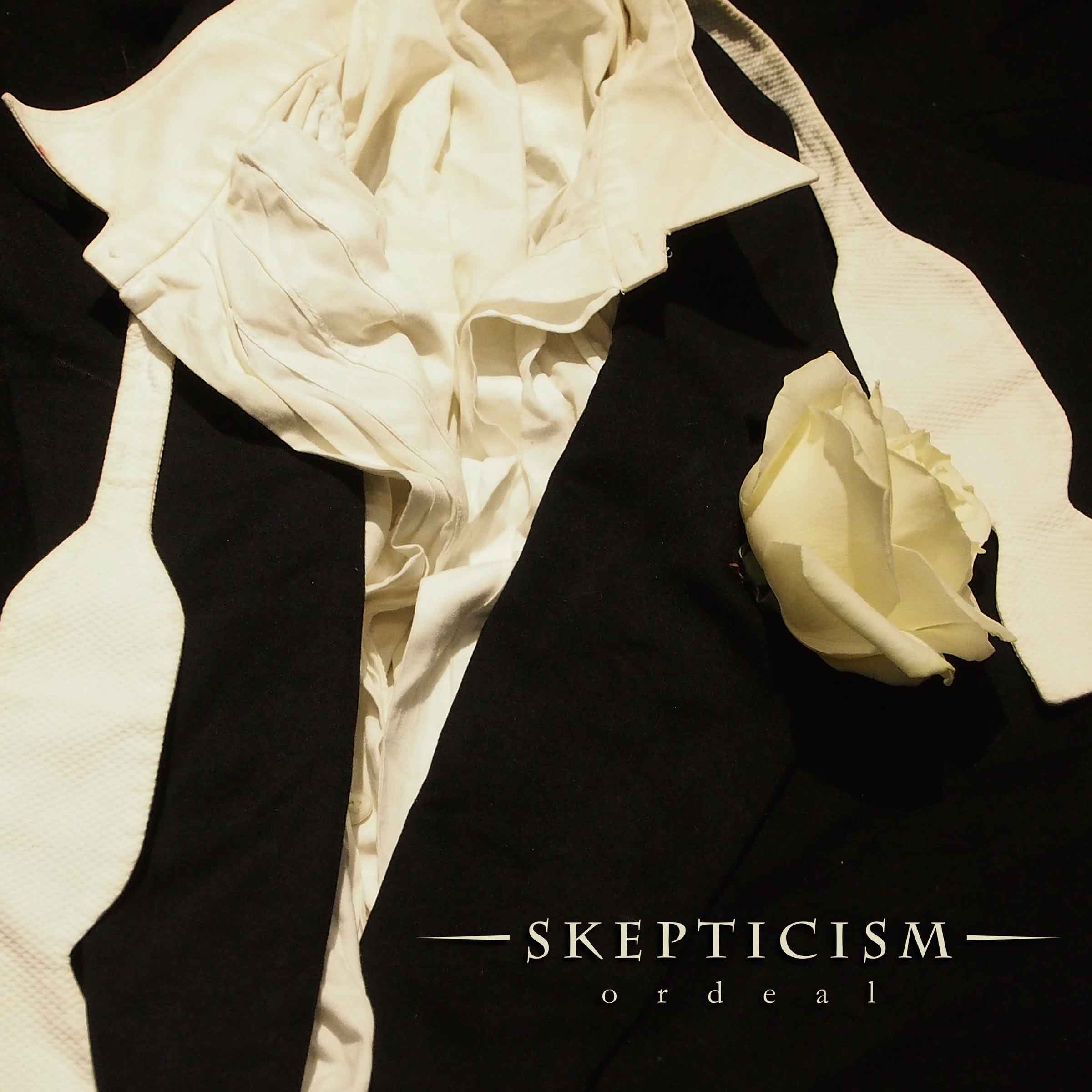
Skepticism – Ordeal (2015)

skepticism_ordeal

Our previous editor got his hands on some version of Ordeal and was not particularly fond of it; in particular he criticized it for being “self-referential” and lacking in well thought out composition. In doing so he cast a great shadow over my hopes for this album, but one I could not even acknowledge until I had listened for myself and determined whether or not his criticisms were accurate. It was a very persuasive argument in the mean time; the very title of the album, the fact it contained two rerecordings of previous Skepticism tracks, the gimmicky recording technique, and so forth come together to predict validity without actually being sufficient indication of the contents within.

Actually listening to the album immediately put me into mind of one major lesson I derive from my own personal review efforts: I respond more quickly to music that reminds me of my own efforts as a musician, and Skepticism with their funeral doom style is the antithesis of myself. While my experience with the band’s previous efforts is limited, their particular take on the subgenre is still interesting on some level, as their overall choice of tonality and instrumentation seems to absorb all the doom and depression one might expect and replace it with the musical equivalent of barren, but sublime natural landscapes – mountain peaks, desert canyons, and so forth. That’s the ideal, at least; given that Ordeal‘s sloth makes it superficially resemble ambient music, and that plenty of both metal and ambient musicians turn towards Earth’s ecosystems for inspiration, it seems a reasonable goal. Still, something deeper and more fundamental wasn’t clicking, and in an attempt to more quickly absorb the structures of this album into my mind, I turned to pitch-shifting algorithms.

While playing Ordeal at three times its intended speed ended up making everything sound daft, it helped to reveal the underlying structures of Skepticism’s music. It turns out that, at least from a mathematical perspective, these compositions are definitely janky, as they are full of sudden shifts to subtly different material at odd intervals. In a style as slow and orderly as this, that seems a poor fit and makes for anything but an organic approach. This exercise also suggested, rather more sinisterly, that Skepticism’s compositions are perhaps assembled at a higher speed and then stretched out as necessary to create longer tracks. While I can’t confirm anything about how the music was constructed, I would not be fretting about it so much if the end result was not held back by its own awkwardness, and if the laggardly tempos didn’t make appreciating any musical moments a chore.

Since the rest of the band’s discography is at least superficially similar to this, I can at least extend Skepticism a hearty congratulations for making me doubt the value of the rest of their discography. That, if anything, is a (dubious) honor, but hardly one worthy of praise.

3 Comments

Tags: , , , ,

Slayer – Repentless (2015)

Slayer - Repentless (2015)

It probably bears mentioning that I consider Hell Awaits to be Slayer’s peak. While it could’ve used a larger recording budget, it showcased some of the band’s most elaborate and well-written compositions. The band didn’t generally follow up on this approach on later albums, but you can hear the lessons applied on the rest of Slayer’s classic ’80s material, and therein lies a lesson. At their peak, Slayer had obvious songwriting formulas, but were able to go build more elaborate and memorable works due to their solid understanding of song structure.

Repentless is Slayer’s 3rd attempt to recapture something else of that era. The production standards are admittedly better (although Slayer generally had good producers working for them in the past as well), but everything else is the stereotypical speed/death assault that the band helped pioneer. Paul Bostaph and Gary Holt serve as adequate substitutes for the departed Dave Lombardo and the deceased Jeff Hanneman (R.I.P), carrying on general stylistic trends without rocking the boat too much. That this is a commercially viable endgame for popular metal bands is something I expect to be one of the major themes of my tenure here at DMU. Even now, though, cracks are showing in the war ensemble – Tom Araya’s vocals are a major stylistic weak point on Repentless. His shouts have become more “extreme” and insistent in recent years, but his ability to vary his vocal techniques has all but collapsed. This album’s prosody is the worst casualty yet, as he delivers these monotonous shouts in unvarying rhythms; the effect is essentially the same as shouting nursery rhymes into a megaphone from your neighborhood rooftops.

Araya’s weaknesses are particularly damning on an album that relies so heavily on vocals to retain the listener’s attention, especially when everyone else on the recording is so competently unremarkable. We live in the age of self-referential Slayer, a long darkness that our learned scholars perhaps debate the duration of in their moments of distraction. Repentless is essentially a more formulaic version of previous Slayer albums that themselves were a simplification of their own predecessors. It’s very likely that the songs here sound marginally more like classic Slayer than those on Christ Illusion or World Painted Blood, but their unwillingness (or inability) to expand on basics renders them ultimately pointless. I can’t fault the band for continuing, though; previous recordings, while underwhelming, more than satiate an omnivorous fanbase who will probably go back to Reign in Blood after a while.

18 Comments

Tags: , , , , ,

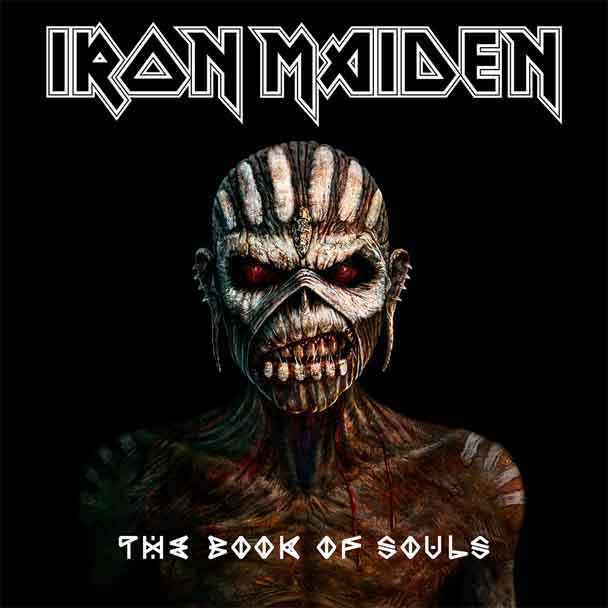
Iron Maiden – The Book Of Souls (2015)

Iron Maiden - The Book Of Souls (2015)
Iron Maiden’s main strength in their 1980s heyday was their ability to incorporate progressive rock tropes (and therefore useful techniques for song variation and extension) into what was otherwise a fairly standard, if well executed poppy heavy metal sound. Not the rarest trick in the book, but more than enough to turn the band into a commercial juggernaut whose influence can sometimes be heard even in the deepest dregs of the underground.

On first impression, The Book of Souls ages gracefully, offering an aesthetic mostly similar to the band’s earliest recordings with Bruce Dickinson if understandably and obviously brought up to modern production standards. Like the rest of the band’s latter day material however, it leans ever closer towards its prog-isms, resulting in several enormous tracks and inflating the content into a full-fledged double album. The unfortunate weakness of these epics is that they are replete with filler of questionable value to a track, and as the length of these albums and tracks grow ever longer, so does the tedium, as Iron Maiden’s ability to extend a track beyond 7-8 minutes or so has not advanced along with them. Tracks end up overwhelmed by moments stunningly reminiscent of old hooks and hit singles (for instance, the intro of “Shadows of the Valley” seems to channel “Wasted Years” from Somewhere In Time), and the true nature of the band’s recent weakness reveals itself.

Iron Maiden has become a band split between two souls that they are unable to effectively reconcile. Their urge to extend their songwriting and write metal epics is held back by their need to continuously sound like Iron Maiden and the corresponding need to push hit singles. Paring down some of the worst excesses would probably be the most profitable option, since the band has demonstrated many times through their career that they can handle some degree of extension. Even then, Iron Maiden is competing with their own past; a past that is more virile (if not as slickly produced or musically experienced) and still easily experienced at their live concerts. I expect this album to jump off the shelves of record shores for still being recognizably Iron Maiden, for having some memorable and well-written moments and for being a valid way to financially support the band, but as a work of music, I don’t expect it to retain much listener interest after its marketing blitz subsides.

14 Comments

Tags: , , , ,

Deverills Nexion – The Sinister Tarot (2015)

deverills_nexicon_-_the_sinister_tarot

Here’s the problem with critiquing programmatic music: any criticism levied at a piece or album can be explained away, by its adepts or its authors, as a failure to understand the external reference points, or their connection to the music.

As its title suggests, The Sinister Tarot is based on a Tarot cycle, a subject on which this author is entirely ignorant; an ignorance that undoubtedly hampers his comprehension of the album. However, it is clear that Deverills Nexion have created a work that is meant to be experienced as a series of separate but ultimately related images, therefore, “development” as traditionally conceived is not to be expected.

This would not in and of itself be a problem if the individual songs, or “images,” were compelling enough on their own, regardless of whether or not one is acquainted with the program. This, however, is most often not the case. Songs tend to begin by establishing a sonic template, as opposed to a theme, and then wander around it for a while before fading away. These sonorities, though varied, are usually not very interesting on their own, or at best mildly so, consisting mostly of cheap synth pads and aimless guitar playing. These are occasionally enriched by other typical elements of the dark ambient palette, such as chanted vocals and nature samples. The unsurprising nature of the sonic range would again not necessarily be a problem were it not approached in so uninspired, almost idly derivative and predictable way.

Burzum’s Hliðskjálf used a similar set-up, and an even smaller sonic palette, but it worked because it was driven by truly remarkable themes, a feat The Sinister Tarot cannot boast of. The few melodies that do appear are unexceptional, lead to very little, and are easily forgotten. The album’s lack of strong melodic direction ends up looking like a technique with which to hide a lack of content: place the texture at the forefront of the music and let things glide quietly by. This is often a problem with ambient music, in which it stylistically accepted, and almost expected, for melody to be given the backseat. But the best practitioners of this style have always managed to overcome this challenge by using the texture itself as a compositional device; as an element to be treated and developed with as much care as melody or harmony. This is how artists such as Tangerine Dream create works of profound stillness and yet, simultaneously, of gripping intensity. However, this is not the case here. In fact, after a few songs dissipate slowly, one after the other, the listener is left with the worst possible feeling for an art form, such as music, that exists in time: that nothing has actually happened.

On the rare occasion in which a song does not end exactly where it began the transition is often unsatisfactory. These few instances of minimal development, such as in “The geryne of Satan” and “A Deverills man at the Bladuds Head,” are a case of too little and too late; tension rises momentarily only to disappointingly stutter back into the album’s habitual plod. The Deverills Nexion are definitely capable of writing some beautiful raw material, as evidenced by Ere the dancers depart and Bestride a corpse with my face, but even these tracks seem to simply sit there without accomplishing much, fidgeting impatiently. These moments of beauty sadden this particular author, as they are testament to the project’s potential, which, alas, remains but a ripple in a puddle.

https://www.youtube.com/watch?v=7efkGOL2CyM

5 Comments

Tags: , ,

Metalhead pipesmokers unite!

rené_magritte_-_the_treachery_of_images

The old saying goes that those who love to use tobacco smoke cigarettes, and those who love tobacco smoke cigars and pipes. The cigarettes give you a quicker hit because the lungs, with their much vaster absorption area, deliver nicotine to the brain within about three seconds. The cigarette ends within three to seven minutes and the craving subsides momentarily. With pipes and cigars, the nicotine slowly oozes in through the mucus membranes in the mouth, tongue and (sometimes) throat, creating a stronger dose of nicotine but without the sudden “falling off a cliff” sensation. Many metalheads smoke cigarettes, but more are branching out to pipes and cigars for the flavors, more intense dosage and less damage to the body.

Please do not read this as an anti-cigarette rant. They are wonderful, in their own right, and much less work than cigars or pipes. However, burning any leaves and inhaling them directly into your lungs 10-20 times a day would cause some kind of long term health problem as gunk — tar, ash and irritants — builds up on the alveoli. On top of that, our industry and lawmakers have decided to mandate all sorts of processing of the tobacco, so who knows what else is being inhaled. If you would not mind going into a fast food joint, taking home their lettuce, dehydrating it and sitting next to a giant pile of it burning all day, cigarettes might not bother you. And keep in mind that there are brain-boosting benefits to nicotine in addition to resistance to neurodegenerative disorders, an effect which you do not get with the charred salad.

Cigars are beyond the scope of this article, but pipes are its focus. Pipes are essentially little wooden, stone or clay cups for burning tobacco with an inhalation tube attached. The smoker fills the pipe loosely with tobacco, then ignites it with some of the many means available to us ex-hominids, inhaling the smoke into his mouth and savoring it before blowing it outward into the personal space of those around him. While the topic of smoking pipes merits a full book, this article provides an introduction to pipe smoking designed to be as simple and low-cost as possible.

***

To get started, you will need:

  • A pipe. Generally between $35-$65 for a good starter pipe. Look for 0.7inch diameter bowls and filterless stems. This tool may help.
  • Tobacco. This comes in tins and bulk, usually found at Brick and Mortar (B&M) shops, and Over the Counter (OTC) usually found at drugstores and supermarkets.
  • Pipe cleaners. Each time you smoke, you will want to clean your pipe. Pipe cleaners have two ends, so that is two smokes per cleaner. It is not a terrible habit to include a bundle or package of these each time you buy tobacco.
  • A pipe nail. Demystifying this tool: it can be as simple as a key. You use one end to cut up tobacco, allowing it to collapse into an ember, and the other to tamp it after you light it for the first time. Tobacco rises like a demon unleashed when touched with fire, but compressing it allows it to smoulder so you can sip the pipe.
  • Fire. I favor the compressed cardboard matches in matchbooks, but you can use anything. For some, lighters and zippos taste horrible, so they prefer the match. The only trick is to burn off the tip before lighting.

To avoid the usual drama, let us launch into the process of smoking:

You go to some place with little wind, but some air circulation, where you have a comfortable chair. Sitting in it, you take out your tobacco. Holding the pipe over the tobacco container, let the shreds of tobacco fall into the pipe. When it is half-full, gently tamp with a finger. When it reaches the top, pinch from the center to one side and then the other, compressing the tobacco and letting it fall back into place. (Much has been written on this topic, usually under the unfortunate appellation of packing a pipe, when the correct word to use is fill: put tobacco into the pipe so there are no fully empty spaces, but fall short of compacting it so air — necessary for fire and smoke — can flow through. Ignore all other advice.)

Put the pipe in your mouth, holding it gently with teeth and firmly with lips. Light a match, and hold it vertically at a slight angle so the flame climbs the stalk of the match, then when the head has burned off, move the match over the tobacco in slow circles while inhaling. Take the smoke into your mouth and the top part of your throat if you wish, but try to avoid it leaking further down toward the lungs. You can compress it by gently blowing out the air from the front of your mouth, which draws in smoke from the pipe. The best way to inhale that I have found involves flaring the nose and drawing in air slowly but steadily.

My favorite cycle runs in seven second increments. For bigger mouthfuls, draw in your smoke, then keep it in your mouth for three seconds, then exhale and wait another four seconds. For slower sips, take one for about a half-second, then wait at least three seconds before the next. It helps to have a slight background circulation of air to keep the pipe oxygenated and smouldering well.

Many smokers do a “char and light” where they torch the top layer of tobacco, then tamp it lightly because it has risen up as it burned, and then light again to get the resulting compressed tobacco to blaze. At two-thirds through the bowl, it may be helpful to use a poker or the pointy end of your pipe nail to chop up the resulting ember and set it ablaze again. The lighting requirements vary between tobacco types, which will be addressed below.

When no more smoke comes out of the pipe, and you sense that the tobacco has been converted mostly to ash, tap it out into convenient bushes or a metal trash receptacle without a plastic bag. The ash will be hot and melt plastic. To tap out, hold the pipe in your hand and swing it downward to shake the ash out of the bowl. You may have to stir it with poker or nail beforehand.

Then comes the most important part of the ritual. If your pipe lacks a filter, run a pipe cleaner from the mouthpiece into the pipe and leave it there for a few minutes to absorb both direct and ambient moisture. This will keep your pipe fresh-tasting for its next use.

Pipe smokers vary. Some are hard-hitters who blaze through a bowl quickly, where others are sippers who have a pipe going all day for an hour at a time. If you re-light too frequently, or smoke too fast, the pipe may get hot; if this happens enough and to a great enough extreme, it may cause a condition known as “burnout” where the material of the pipe chars and cracks. To help avoid this, smoke on the seven-second method and also, allow some nice thick gunky tar to line the bowl, especially on the bottom. I always smoke some OTC aromatics, which are full of sugary flavoring that bonds together the goo and forms a kind of tar cement, down to the bottom of the bowl to layer it with a nice thick coating of glop. This glop chars over time and becomes a sort of pipe creosote that insulates against extremes.

***

Tobacco originates as leafy plant in the genus Nicotiana, which when cured, dried, pressed and shredded becomes a delicious flammable method of nicotine delivery. The great variations in what are called generically tobaccos occur in the different strains of tobacco plants, and the different methods used to grow, cure, dry, press, and cut the leaves.

That process produces a number of tobacco types, which are then combined in varying amounts into different blends, which you might think of as “tobacco recipes” because they achieve a unique flavor through the ingredients — different types of tobacco — mixed within them. These blends are also distinguished by their cut or how they are sliced, which is related to the flavor and tobacco characteristics in each blend. Many blends are then coated in flavoring known as “aromatic”; if the primary flavor to the smoking blend is the flavoring and not the underlying tobacco, the blend is referred to as an aromatic tobacco.

For the end user, tobacco is then shaped by another force — the consumer market — and placed into the following silos:

  1. Over-the-Counter (OTC). OTC tobaccos are designed for convenience. They are usually either aromatics or a type of shag-cut tobacco that is also used for Roll Your Own (RYO) cigarettes. These burn most easily, cost about $2 an ounce, and are generally mild in both flavor and nicotine level.
  2. Luxury. Like most things in our society, the good stuff only starts when you step off the mainstream and pony up some more cash. You would not buy Budweiser to drink, nor Marlboro to smoke, so you will choose a pipe tobacco made under the brand name of an established firm. A handful of producers make these tobaccos now, but they tend to be stronger and rely more on the flavor of natural tobacco, although many are also aromatics but with a wider variety of flavors than OTC.
  3. Boutique. A cottage industry has sprung up in making this variety of luxury tobacco which aims for unique and intense flavors, sometimes combining aromatic and unflavored tobaccos. These are more expensive than “regular” luxury and are made by a handful of blenders who also own mail-order tobacco shops.
  4. Vintage. In the past, everything was better. People have been saying that for generations, and apparently each were correct: the tobaccos of only 20 years ago were stronger and more flavorful. Luxury tobaccos, once considered regular tobacco, have been stored in sealed tins (if you buy one on eBay, make sure it is also “unopened” as opposed to re-sealed) and are now much sought-after.

I recommend starting with a solid OTC like Carter Hall, Prince Albert, Captain Black, Five Brothers or even Drum. These are the easiest to learn to pipe with, and give you a feeling for what mild levels of nicotine and flavor are like. In addition, they are low-cost so you will not howl and scream if you accidentally ruin a bowl or spill some.

You may find that these are pleasing enough for you and that you are content to smoke them for life. There is nothing wrong with this; many have done so and it provides the least fetishistic and complex smoking experience. Five Brothers stands out from most of these because it does not use aromatic flavoring or propylene glycol (PG), a moisturizing agent added to many OTC tobaccos. If your OTC tobacco comes out of the can or pouch and seems damp, it probably has a good dose of PG. Many aromatics, including those sold at the luxury level, also have this treatment.

From that point, the next stop is an entry-level luxury tobacco. I suggest going with a Dunhill blend because they are widely available, not overly flavored, and tend to be sliced for easy burning. You can generally get a tin of 50g/1.76oz for about $9 online or $15 in the real world, if you are in the United States; this will vary with local tobacco taxes. You may notice that you are paying quite a bit in taxes throughout this whole process, and wonder if that is in fact the impetus for the whole societal jihad against tobacco. Keep wondering. In places like Canada and Europe, they pay multiples of what you pay here. Scary.

At this point, I would stop moving up the ladder. Boutique blends are a variety of luxury blend that costs more and has more unique, ironic, oddball, quirky, and otherwise off-the-beaten path blends. However, it tends to be lower in nicotine content and it is unclear whether these weird little blends are actually that distinct from their archetypes. There are only so many types of tobacco and while many different combinations can be made, most of them resemble a few fundamental types. I have never ventured into Vintage tins and can say that, while undoubtedly these older blends were of a finer quality, that may not have been preserved over the years. Nicotine levels especially degrade. To my mind, the piping experience cannot be separated into “taste” or effect but must include both, and so the fetishism with flavor — even if grounded in science and experience — strikes me as perhaps being a mistake.

Tobacco comes in several cuts which reflect how the leaves are presented:

  • Shag. Cut laterally across the leaf, leaving an interlocked mess like peat moss that loads easily and burns well.
  • Ribbon. “Normal.” Thicker slices that seem to be vertically up and down the leaf.
  • Flake -> Ready Rubbed. Flake occurs when tobacco is pressed in blocks and then sliced; Ready Rubbed is the result of “rubbing out” those slices.
  • Plug. Tobacco is pressed together and allowed to mature that way, then cut into little pucks.
  • Cake. Like a plug, but loosely packed, resulting in a crumbly “coffee cake” style.
  • Cube. Cross-slicing the tobacco produces tiny cubes; sometimes hard to keep lit.
  • Twist -> Slices. Tobacco is twisted in plugs or flake is re-twisted in tubes, then cut into little “coin” shaped bits called slices.

The above simplifies a fairly complex process. You might also enjoy these viewpoints from P&C blender Russ Ouellette and Lane Limited manager Leonard Wortzel.

Multiple types of tobacco dot the landscape. These refer to the strain of tobacco plant and how it was cured and prepared. These are:

  • Burley. Think cigar leaves. This air-cured tobacco has a nutty flavor and higher nicotine and oil than most others. It is used to complement other tobaccos in blends, and is known for its tongue “bite” from high alkalinity.
  • Virginia. High sugar content and sweet natural taste make this type a favorite in many blends. Although this tobacco comes in many colors, its flavor stays within the mild range and makes it the basis of many blends.
  • Cavendish. This term applies to any tobacco that has been aged and cured with a heating process that brings out a fuller taste.
  • Latakia. This is Oriental tobacco which has been cured with smoke from burning oak, pine, juniper and yew wood to give it a bittersweet taste.
  • Oriental/Turkish. Sweet and low in nicotine, this is tobacco grown using the Eastern method of low soil nutrients and plenty of sun, which produces its fragrance and flavor.
  • Perique. Fermentation in its own juices after Burley tobacco is pressed into barrels gives Perique a spicy-sweet flavor. This is generally an additive to other blends to give them some spark
  • Dark Fired. Leaves are cured with smoke under carefully managed heat and humidity, producing a blend both strong in nicotine and flavor. It is used as an additive more than a main ingredient because of its intensity.

For more information, check out Russ Ouellette’s descriptions.

These are used in the following blends:

  • English. Mostly Virginia, with Latakia for body and Oriental tobaccos to provide spice.
  • Scottish. Similar to an English blend, the Scottish blend uses less Latakia and more Virginia, with little or no Orientals.
  • Balkan. Strong in Orientals and Latakia, this tobacco blend uses Virginia to balance those dominant flavors.
  • American. Although there are some similarities to the English, the American blend uses more Virginia with possible Cavendish or Kentucky style tobaccos.
  • Danish. These resemble the English, but with a deeper flavor and less spice, using more Burley and Cavendish but emphasizing stronger, more balanced flavors.

You will probably find yourself shopping by blend, which could be a substitute term for flavor. What type of smoke do you wish to taste tonight? There are several indexes for ranking different blends:

  • Harshness. How much acridity and bite there is. Strong smoke can be hard on the smoker, and “bite” is created by the alkalinity of the tobacco, which raises the pH and increases absorption of nicotine but may also cause a tangy burning sensation on the tongue.
  • Strength. You are smoking a nicotine-bearing plant. How much nicotine is delivered? A tobacco with high nicotine may be worth pounds of low-nic fruity aromatics.
  • Note. This refers to the smell left behind after the tobacco is burned. This influences both your taste of the tobacco, and what your friends, family and coworkers experience.

The de facto standard for tobacco assessments is Tobacco Reviews. Like other crowd-sourced sites such as Wikipedia and Metal-Archives, or reviews on Amazon, it is good for basic factual information and opinions from people whose judgment you have verified and who — as a result — you trust. It is not good for randomly reading reviews because most of them are written by twitchy, bitchy and queeny internet consumers who complain about all the wrong things, like all the irrelevant, and miss the point. Some of the tobaccos rated highly by this site’s users are excellent, but others are simply quirky hipster fodder. Tread carefully, and consider using the various pipe forums out there: Puff, Pipes, Smokers Forum, and Tamp and Puff. The private reviews at this location have endured because they are frequently strikingly accurate. The main point is: find someone whose opinions you respect and tastes who align with yours, even if the exact opposite of yours, and you can figure out what you will like.

***

A word on lighting pipes: some prefer magnifying glasses and sun, others coals from the fire, still others matches and apparently, most like either butane lighters or Zippos. As a diehard match user, I can say that matches fail in the wind, and there is more wind that you might think, but that they seem to create the least influence on taste. Perhaps a laser is appropriate.

The pipe world is full of both facts and lore. Lore refers to anything passed on by groups of humans in social circumstances; the idea is that if it survives a dozen generations, it might be true. In the meantime, you will be wading through mountains of nonsense and worst of all, unnecessary complexity added by people who wish to seem profound or wise. Pipe-smoking is simple: you are lighting dried leaves in a tube and inhaling. The rest is mere adjustment.

The following resources may be helpful for those seeking to know more:

Here are some good places to go shopping for pipes and luxury tobacco:

Places to buy OTC tobacco, which online is sold in bulk:

Resources for those who wish to grow or blend their own tobacco:

Tobacco blenders and brands:

If you do not see your favorite blend, it is probably an imprint licensed to and manufactured by a larger group, or a boutique variety manufactured by one of the tobacco shops linked above.

For kicks, here is a list of famous pipe smokers. You can add me on there when I get famous, but be sure to mention I detest wimpy tobacco and think it should leave the hall.

Finally, the best metal for pipe smoking…

http://www.youtube.com/watch?v=DnUZ5xpcKHw

10 Comments

Tags: , , , , , , , ,

Antaeus – De Principii Evangelikum (2002)

Antaeus_-_De_Principii_Evangelikum

After a very promising debut album which the band explained as consisting of a collection of demos and other recordings, Antaeus released their first “proper” album in 2002: De Principii Evangelikum. Antaeus play a saturated black metal that foreshadows the developments of Sammath and shares with it an antecedent in Uranium 235 Total Extermination. For all the violence expressed here on the face, the riffs ride very short melodies that make up for the constant percussive assault. The more one gets familiar with the album, the more this balance is perceived. Like most black metal albums, the front assaults or deceives the listener (some albums present a saccharine front that actually contains very thoughtful and detailed music, even if not reflected in quantity or variation of patterns) that only reveal their whole worth after both repeated listens and emotioal immersion in the music.

De Principii Evangelikum does sound like a consolidated Antaeus, insofar as they choose a very particular approach narrowed down from their previous album, Cut Your Flesh and Worship Satan. In a Faustian gambit, Antaeus ripped all pretension of ambience and took the frontal assault that only figured as one aspect of their earlier music. As such, this is a condensation of that style that even if it limits the expression range of theband, it allows it to refine a very particular language and also sets it in a track in which a band attempt to perfect a sound until they get it. A parallel would be Sammath’s more-than-a-decade long efforts that finally culminate in 2014’s Godless Arrogance, a kindred spirit of De Principii Evangelikum.

As a first full-album effort, De Principii Evangelikum show us a highly focused band that knows what they want and that have matured musically. It is the realization and not the concept that is still being experimented on. In De Principii Evangelikum this is practically realized in potency and convincing excellence. The question is, is this all the band is aiming for?

2 Comments

Tags: , , , , , ,

Twilight Fauna/Jennifer Christensen Split 2015

7_foldover

That good music makes its way to the promo stack occasionally is not a huge surprise. We do not expect it to happen in more than one in twenty or thirty occurrences, but sooner or later, something good does come. And then, we expect a great album (not a true classic, but perhaps a highlight in the year) to arrive at an expected rate of about one every two or thee months. What we do not expect is a two-track split in which the first is a modernist piece composed for strings in the manner reminiscent of Górecki’s 3rd String Quartet or Messiaen’s Quartet for the End of Time.

The second track, “Crossing the Threshold” by Twilight Fauna, is one of those supposedly black metal ambient pieces that amounts to little more than sounds here, noises there, sometimes violated by a heavily distorted guitar that adds nothing to what’s going on. All for the sake of ambience. It falls into the same category of poorly-done but pretentious music like Ulver’s and Sun O))), themselves a parody of what Robert Fripp did much better in The Gates of Paradise or his work with Brian Eno in Evening Star. I’d recommend these guys to study the work of early Tangerine Dream and Klaus Schulze, the master. If what they want is actually something more black metal, but elongated and that does not sound like some sort of pointless intro, they should check out Paysage d’Hiver’s work. Because the track has not been made public, we can only share their own release earlier this year through bandcamp for reference.

“Sickness Unto Death”, by Jennifer Christensen, is a patient work that I would venture to describe as minimalist. But rather than the circular pop minimalism of Philip Glass, this is more of the religious and dark nature typical of Górecki’s music. Clearly structural in construction but never rushed, motifs pass you by and interleave as passing scenes and a whole flora and fauna of a world evolved from a single primeval cell arise in distinguishable affinity. Now, as much as I not only enjoy but appreciate the higher quality of Ms. Christensen’s work here, I am wondering why would she release this in a split with a dark-ambient-going-on-black-metal band.

If she is somehow planning on turning her efforts in this direction, her classically trained mind and obvious talents for dark minimalist music would be interesting if applied to the whole spectrum of ambient instrumentation. Or even to two guitars, drums and backbone bass — that kind of black metal with a solid musical base would be much appreciated. After listening to her track many times, we know that the attitude and the spirit for this kind of music is definitely not missing. But the question is, does she actually understand the black metal spirit? Independently of this, I am looking forward to listening to more music composed by her, metal or not.

https://www.facebook.com/jenniferchristensenmusic?fref=ts

6 Comments

Tags: , , , ,

Classic reviews:
A B C D E F G H I J K L M N O P Q R S T U V W X Y Z