If you like anything, you hate what destroys it. The worst are things that destroy it from within. These usually pretend to be it, then use it for their own purposes, corrupting it. Like a cancer or disease.
 The best example in our time of course is the hipster. The hipster is the eternal party of one: he or she does everything to make him or herself look good to others. They “like” music because they want to look like the image of that music. They then have to be a very big deal, so they make their own art or music which is shallow and surface-oriented, but they trick it out to make it look cool.
In metal, we have the equivalent. They come in many forms. Some like to think they’re smart, so they like dumb kiddie music tricked out like prog rock. Some like to think they’re cool, so they like angry pointless three-chord bands with weird names and gimmicks. Some like to be political, so they pick bands that are anarchists or Nazis. They’re not thinking about the music; they’re thinking about how cool it makes them look. The best music to make you look cool is basically the same crap you get on MTV, but with a cool image. They are a cancer on metal.
And they have some favorite bands. Not coincidentally, these bands are the worst depthless and pointless stuff to hit metal. Note bene: This list is about music I hate, not people I hate. Some people whose music I like hate me, and some people I hate make great music. Some people who I like also make terrible music. I can only tell it as I see it and hope the pagan gods sort out the fracas.
Here’s the list:
Dethklok
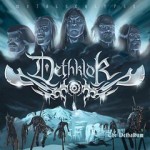 How can you hate a cartoon? It’s supposed to be funny. It makes fun of metal’s weaknesses. Ergo, by the passive-aggressive inversion, if you dislike this you’re afraid to laugh at yourself. And who likes someone who can’t laugh at himself? Except that joke bands have always been stupid, with the joke/hype/trend coming before the music, and Dethklok is no exception. Recycled riffs. Moronic pop song structures. TV commercial jingle-like melodies. And bad guitar playing that dumbs metal down to MTV levels. Let’s turn it around on them: who has a need to look like they can laugh at themselves? Why, people who cannot, of course. But they don’t want you to know that.
Cannibal Corpse
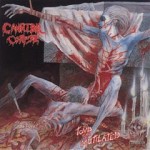 When I was a wee liberal, I never thought much of Cannibal Corpse until I read their immensely misogynistic lyrics. Then I decided to hate them. Upon reflection, however, what I really hate about this band is its falseness. They studied metal in the early 1990s, and came up with a pre-chewed version. Taking their style from Suffocation, and their songwriting from Malevolent Creation, they bashed out these simple hymns and instead of having an idea behind them like “only death is real,” they just tried to be offensive and gross. How junior high school! Even more, they have gotten more repetitive and grind-you-down-with-simple-stuff as they years have gone on. I couldn’t hate this band more. But, having met them and seen they are nice intelligent fellows, my only conclusion can be that this band is a pure money-maker — and they about admitted as much.
Opeth
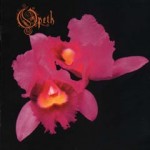 Life isn’t fair to you. You have few friends. You haven’t succeeded at anything, school or otherwise. Even your parents think they consumed too much Bisphenol-A before conceiving you. But you’ve found a new weapon; you’re going to show everyone you’re better than them. Enter the fake progressive rock band. Opeth take very simple songs and dress them up with prog rock lite flourishes, and “unexpected” changes like ZOMG going from acoustic to distorted on the chorus, because they know that all you low self-esteem cases want a reason to seem smarter and more profound than the rest of us. Well, now you have it. Opeth “sounds like” prog even if it has none of what made prog great: real musical development, song structures that build upon themes instead of being random, and truly mindblowing chops. Instead, you get watered down Rush riffs and random songs, all with a lot of guilt and bleeding-heart sympathy because they, Opeth, know you are a loser. Stop comparing homosexuals and Mac users to Opeth. It’s an undeserved insult to homosexuals.
Meshuggah
 I was talking with a Texas technical deathgrind master and he wrote a formula for me: Meshuggah = lots of clueless fans x lack of musical knowledge. If you have played guitar and learned theory, you know how trivial this band is. It’s basically a jazz percussion approach to metal rhythm guitar. Lots of offbeats within offbeats, if you know what I mean. No melody, no song development. In fact, song structures are linear in that they follow the sub-division of beats to a riff, expanding over time in a circular fashion. It’s really boring. But if you want to seem like you got the ultimate in technical metal, you’ll think you’re really cool for liking this distracted, random, artless band. Same critique applies to Necrophagist. They both attract people who want to be cool and smart, but have no knowledge of how the world works, which is why people are Meshuggah fans for exactly two years and then go on to liking Deerhoof and Yoko Ono.
Cradle of Filth
 What’s the best new thing? Something that’s the old thing… but “sounds” new! You can make anything sound different with different production, playing at different speeds, using black metal voices or more distortion. And so if you take Iron Maiden, throw in some fast melodic death metal riffs, but keep it nice and tasty pentatonic, you’ll have the perfect product. People can be undercover conformists. They can look like rebels for listening to this angry sounding music, but underneath it, there’s that same old happy Iron Maiden that millions of people the world over like. Cradle of Filth is the perfect product and millions bought it, then immediately forgot them, to the point where you don’t hear about them at all. But this was a huge trend and basically boring music with a lot of drama surrounding it.
Ulver
 In theory, I would like this band as they have a formal background in music and clearly know theory. However, they have no souls. They made the plasticine “Nattens Madrigal” by imitating black metal bands, but playing indie rock songs in the black metal style. Sweet, twee, poignant, ironic melodies and pop song structures defined that CD. Ever since then, Ulver has made a career out of being “different.” They make electronica that sounds like an angrier version of all other electronica! They make concept albums that sound like two indie rock CDs with the lyrics re-written! They make bold public statements and image changes like Bono of U2! What they don’t do, however, is understand metal and what makes it great. Instead, they try to make metal into the genre they belong in, which is indie rock, and dumb it down accordingly. Again, conformity disguised as non-conformity, because if you tell everyone you’re a non-conformist, you can’t possibly be a secret sheep, amirite?
Necrophagist
 Musical illiteracy is a ripoff musician’s best friend. People do not understand how melodies should develop over the course of a song, and how technical playing without a goal creates chaos and fragments your consciousness, not builds on it. Necrophagist play melodies, all right. They play short blasts of melody over and over again, very quickly. Then the song jumps to something unrelated and obviously “different.” It’s like a sampler plate at a restaurant, a little bit of everything so you don’t have to choose what you want. Then it jumps back. And back again. And then it’s over. The vocals are like the chant of an auctioneer. The riffs are advancing guitar exercises. Drums are what you’d expect from a failed jazz drummer on tons of meth trying to cover Nine Inch Nails. The end result? A lot of distracting, directionless crap. But people like it because it’s more technical than what you are listening to, therefore they must be smarter. QED, muddafugga.
Baroness
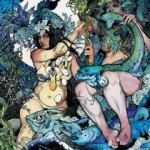 If your douchey alt-rock band fails, throw on the distortion and play really slowly with obvious stoner themes. Now, thanks to the magic of record company marketing, you’re the latest metal trend! Work hard before your 15 minutes (or 18 months, at which point all your fans get promoted to head waiter) of fame evaporates. You’ll make money by making them feel like they’ve discovered the one secret rebellion that will really upset their parents. It’s like a giant tribe of stoners, descending on the world, man. They’re going to make everything right or at least feel all-right. Do you realize you’re listening to the same sad crap your grandparents grew out of in the 1970s?
In Flames
 First there was At the Gates, who made The Red in the Sky is Ours, and blew us all away. Then came black metal. Then came Dissection. Then someone wondered what would happen if you took Dissection and dumbed it down, made it a little more like regular rock ‘n’ roll, and claimed it was new and exciting. I guess that person was a genius because people still take In Flames seriously, although at the time their first CD came out metalheads universally viewed them as clueless, wimpy and latecoming carpetbaggers. These guys are ripping off Iron Maiden on every album. They get away with it because their fans want to think they’re new and fresh and evil, not warmed-over 1978 heavy metal. These retreads from the mid-1990s keep puking out the crap and for some reason, people still discuss them.
Rammstein
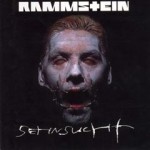 Once there was a band called Ministry. They realized that no one had done IDM with guitars yet. So they made this style of really simple metal/punk/rock with industrial beats and weird background samples, and a huge audience went crazy for it. The same year, Nine Inch Nails made an album that was equal parts dance and hatred, with lots of keyboards and some buzzy guitars. Ever since then, people have been trying to recapture this audience because they’re still out there. Rammstein is the industrial hard rock version of Mickie Krause, with a heavy dose of Tool in the backdoor. They like to be shocking. It’s really a tiresome play that happens every generation as kids try to shock their parents and teachers. But you can’t shock the world at large because it doesn’t care. It’s more apathetic, cynical, nihilistic and cruel than any candy-industrial rock band is going to be. So Rammstein are in the big picture like greeting cards. They tell you a little bit of truth, put some flowers and kittens around it, and you pay a 1500% markup and go home happy, but confused. Just go listen to Ministry already.
Cynic
 This band started out really well with a solid demo that sounded like it was one third speed metal, one third death metal, and about a third jazz fusion. No problem; we all want to be Atheist. But then immediately the neurosis started. First they tried to get more fruity sounds in their instrumentation, then they added the harmonized vocals, and finally, they just admitted they didn’t want to be death metal and quit, after a decent first album, Focus. Then in 2009 they decided to really ruin their reputations except among morons. They piled together a bunch of jazz cliches and metal cliches, and threw them at each other, then overplayed the rest. This is because they know their fans know little about music but want to seem like they do. If you take a few guitar lessons, you really want to show you’ve got that knowledge, so you start listening to Big Important Concept bands and genres like jazz, which is sort of like degraded classical music for people who need ideas pre-chewed. Cynic fans like to act outraged that anyone cannot see the greatness and complexity of Cynic, and use that to imply that the rest of us are stupid, when if they took the time to tab out these songs, they’d see that they are random bits stuck together with excessive guitar licks.
Wolves in the Throne Room
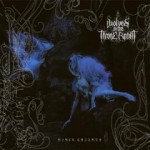 You’re at home listening to your new outrageous indie rock CD when your Mom comes home and catches you. It turns out she has the same CD. In the car. She and her friends listen to it, your Dad likes it, even your grandfather thinks it’s OK, because indie rock is the same crap they’ve made since 1952 or so, just with more wailing and self-pity (and minor chords). So you storm out of the house thinking, “I’ll show them!” You go to the record store and decide to skip past all the music for healthy people, you’ll get metal. And then you find Wolves in the Throne Room. It’s like that outrageous metal, but it’s safe. It contains safe moral opinions that people at your church and Democratic fund raiser would agree with. It’s basically indie rock, but they play it like it was black metal. And it’s totally boring, so you can have it droning in the background while you wonder if anyone ever anywhere has suffered as much as you have.
Boris
 Wait — it’s Yoko Ono! No, it’s Deerhoof! No, it’s another chick wailing her head off with the coordination of a trisomy 21 patient. She wants us to think this is profound and progressive and new because normally, people don’t try to repackage SUCKS as SUCCESS. But that’s her gimmick, and the gimmick of most modern art. This is unusual because it’s illogical. If you don’t understand it, you’re little people — fetch me a sandwich. Only the enlightened pure and true understand our indie rock that we play (occasionally) as if it were black metal. Nevermind that black metal already existed. We want to remake it in our new and improved style. Which suspiciously resembles normal indie rock, but did we mention, there’s a chick wailing like a burnt Down’s syndrome kid? The fans can’t tell the difference because they learn to play guitars and basic music theory, but never think about what gives music meaning, because that would require they look into their own souls. And you can’t look into your soul, and still think you’re the whole world. Hipsters love this music because each one of them is a party of one and the rest of the world just doesn’t exist! So they call it brilliant. On and on, South of Heaven.
Sunn o)))
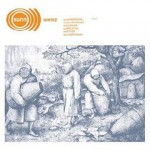 Stephen O’Malley is a fantastic person, a great artist, the world’s best stoner and truly, an insightful individual. However, he sold his soul to the devil with this hipster project. If you live in Austin, or are intimately familiar with the apps on your iPhone, this might be for you. It’s concept art. That means that they think up an idea that would be unusual, and make it in musical form, even if it’s boring, because it has symbolic value that us peons cannot decipher because we have tiny peon brains. So when someone plays a guitar really slowly for ten minutes and never develops a song out of it, you either get it because you’re a genius, or you’re an intolerant backward moron with a peon brain. They even get funky and throw in “found sounds” and sometimes have an orchestra show up and try to riff on the two notes allotted for each song. The word “sophomoric” describes people who take a little knowledge and use it to pretend they understand the world. It also describes all Sunn o))) fans.
Pantera
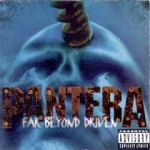 We’ve saved the best for last. Rocket back to the late 1980s with me. Your hair metal band just failed because you look gay even to homosexual rights activists, and not in the good way. In the supersonic stupid way. You’re out of money, and this band named Metallica has just raised the stakes for metal bands by being harder and faster. They’re harder and faster, while you’re prancing and pouting. So what do you do? Turn that fear of your masculinity outward, and become a tough-guy version of Metallica. This is what Pantera did with their first “real” album, Cowboys From Hell. Metallica riffs in simple songs with lots of ‘roid rage posturing. It got worse after that as Pantera added more trends to their faux metal charm bracelet, dabbling in death metal and blues rock, until their music ended up a mishmash of completely random influences. People like this band because it’s a good introduction to basic rock guitar. They can understand it, and it also appeals to their wounded masculinity. If you buy a Pantera album, the thinking goes, you’ll become more tough and angry like Phil Anselmo. People from the real world know that’s not true, which is why most of Pantera’s fans are skinny teenagers trying to figure out which fraternity will be most likely to help them score someday.
There you have it: a catalogue of fail. Or rather, fail that is highly praised by those who know not much of anything. Naturally, products designed for idiots that make idiots feel like geniuses are big sellers, so you’ll have to suffer seeing this bands around for a while yet. But as time goes on, it’s amazing how the crap gets filtered out and the really powerful stuff endures.
Tags: Baroness, boris, cannibal corpse, cradle of filth, cynic, dethklok, in flames, meshuggah, necrophagist, opeth, pantera, Rammstein, sunn o))), Ulver, wolves in the throne room
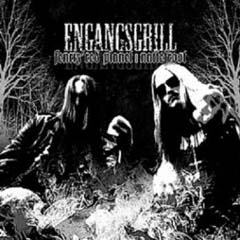 We’re going to talk about the first band here, Fenriz’ Red Planet, because Nattefrost is forgettable 1970s punk rock dressed up as early 1980s black metal. This band is a hybrid between doom metal, 1970s heavy guitar jam, and what they call stoner doom now but was recognizable in St. Vitus, Pentagram and Sleep for many years. The production approach and song style is closest to 1970s heavy guitar rock, like Cream or even Led Zeppelin, in that songs are verse/chorus works with a big fat diversion stuck in the middle that may run through a couple of riffs but comes back into key and rhythm so the cycle can spin again. But over half of the riffs are straight out of old school 1980s doom metal, and that would be St. Vitus and Pentagram but also late-blooming NWOBHM with a doom edge like Witchfinder General and Budgie. It’s not exciting; if anything, it sounds like a demo where the band hasn’t yet finalized direction and aesthetic. However, it is good; these songs have character and a spirit to them which you cannot get anywhere else. You can hear a few lifts from Fenriz’ folk/metal project Storm and one or two similar themes to Darkthrone, but this CD doesn’t need to namedrop to stand on its own. They named it “Engangsgrill,” which apparently is a type of disposable barbecue, which fits exactly the kind of sloppy rock/metal hybrid you have here: pickup trucks headed to the country with a keg, a bong and some friends, followed by a weekend of the best neighborhood bands jamming, society gets forgotten until on Monday morning you drive back with a mouth full of ash and the kind of diluted hangover that comes from cheap beer in constant consumption.
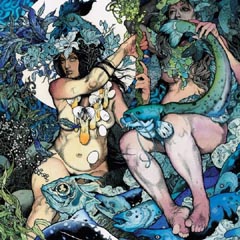 Oh neat, an emo/stoner metal hybrid with lots of indie and punk rock touches. If you can imagine Neurosis and Jawbreaker making sweet love with newer Sleep, and throwing in tons of stuff from the heavy metal and indie rock canons, you’ll have a good image of what this cheeseball release has to offer. From the way the labels and the big industry reviewers — who have about five minutes to hear each CD, and put them on in the background while socializing for two weeks, then forget about them — went on about this CD, you’d think it was the second coming of innovation itself. Instead, it’s stale and completely loses what’s good about metal and punk, converging on a mean that’s closer to your run-of-the-mill hipster band. This is awful.
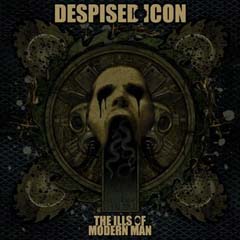 Metalcore is rock songwriting with technical death metal technique, and a desire like punk music to string together radically “different” riffs as if it can surprise us, and since it’s random in structure, built around what’s left: vocal phrases that end on the expectation of the offbeat like a sales pitch. Despised Icon is as a result about 80% the fratboy-pleasing, gurgling, blasting, very simple riffs played in difficult time of technical death metal, like Immolation, and the rest is bouncy moronic rock music that I got into metal to escape. Consequently, it has no attention span and cycles like carnival music between different styles and tempos, then crams it all into a barely-disguised verse/chorus structure. What is the point of typing this all out? To point out how to fail at metal. This is the abyss of music and is every bit as stupid as your parents claim your music is. If you want to fail at life, try listening to this random accumulation of parts — each part is in itself OK, not great, but together they add up to a conversation made by borrowing a phrase from 30 works of literature — and as a result project a scatterbrained, neurotic, pointless and non-constructive view of the world. No wonder people hate metalcore; it’s the nadir of underground music.
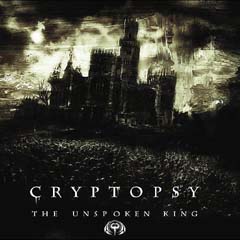 This is what’s left of the band that made None So Vile? The neatly structured, compact death metal has been replaced with blasting metalcore. Metalcore, as you may know, is kind of a garbage plate for underground metal and punk. Based around the interpretation of technical metal into punk structures that Human Remains showed us, metalcore loves randomness in circular song structures, so you get ten minimally-related riffs linked by a breakdown and a few slow chants, and then the whole thing repeats, and then the song ends. It’s music for a fragmented mind and as a result, has the IQ of a headless chicken watching daytime TV. Cryptopsy utterly fails to make coherent music out of this style as their countrymen Neuraxis eventually did, and instead defecate this collection of random riffs based around an egodramatic vocal track. It’s total garbage for morons.
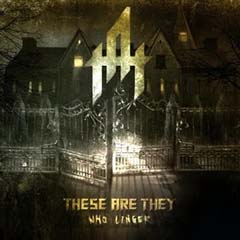 Imagine Iron Maiden doing a simplified version of 1990s Demigod or Amorphis. This CD is unique in that it successfully applies both (a) the old school death metal style and (b) a heavy metal, harmonized-guitar, bouncy riff style — and does it by coming up with a melodic phrase and answer, and using these to make layers of verse and chorus. Play riff; play notes of riff in variation of rhythm; harmonize guitars and repeat, then cycle. The choruses do the same. Nothing sounds out of place, and the deep guttural voice guides it along, but it seems entirely out of place when the heavy metal riffs and trills come into play. In addition, the riff salad of death metal isn’t here; like rock or indie, this rides one pattern for verse and one for chorus, and much variation is not to be found, which probably places this out of the range of old school death metal fans. Still, these are quality riffs and excellent use of basic harmony, which makes this easy listening and because it is not random, a great improvement on the metalcore-heavy stuff we hear daily. For albums like later Bolt Thrower, which tried to make a heavy metal/death metal hybrid, this is probably the best so far.
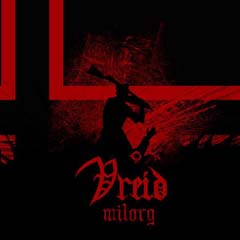 Black metal was about writing unique melodies and building song structures to fit them. Vreid is about mimicking the past with more intensity in each riff, but relying on predictable melodic strips and linear song structures in circular repetition, resulting in songs that are binary like nu-metal: a softer part, then a harder part, then a response to that which softens the hardness, then a restatement at full blast, fade out and win. Most of these riffs come from the 1970s and 1980s generations of metal and get a “black metal” treatment, so end up sounding like rock music in its Sunday black metal evil clothes. The music is driving by a chanting vocal which rides the beat like the shouts of the drummer commanding the slaves to row. Every now and then they launch into an extended melody like a pentatonic version of early ancient, and they have the raw rhythmic power of an early Marduk or Zyklon, but it doesn’t add up to more than most rock music, and considerably less than the formative works of Nordic black metal.
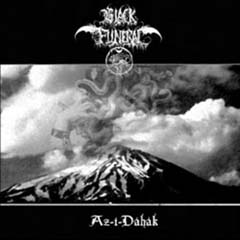 Throbbing notes rhythm a rhythm that then reverses, examines a portion of itself in detail, and then picks up in a new direction which dovetails with the old; the throb remains, like symbols etched in the air with a torch caught on the slower memory of film. In this way, Black Funeral achieves an odd ambience similar to that of Impetigo, where a higher note is strummed repetitively at an offset rhythm where most bands would hammer a lower note on the beat, but by the nature of the larger melodic structure of the riff, this throb does not bounce jauntily like a rock rhythm; it hangs, like a reminder of mortality. Vocals are chant-ish black metal rasps and the mechanistic pedaling of the drum machine fits this sound like a glove, getting further inhuman as it distances us from musical expectation and clean aesthetics. Like the humming beeps of an alien machine exploring the night, this album rediscovers humanity by removing it from the picture and showing us the empty space in which we must construct as inevitable death closes in. While most experts agree “Vampyr” is the height of this band — and who am I to disagree? — this perhaps less proficient album is more haunting and bizarre, yet fits it into a pattern similar to our reminiscences of isolated nights when the future angled away from us like the shadow of an unknown doorway.
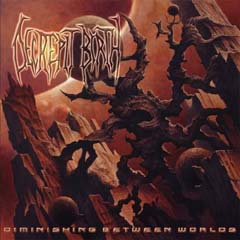 If the recombinant album name and band name didn’t clue you in, here’s the skinny: this band is totally postmodern, meaning that they fit together all sorts of random influences and then link them together with the basics of rhythm and harmony. As a result, it’s like a fast ride at Disneyland: constant changing stimulus of radical difference so much that after a while you lose any idea of where you are, and end up thinking you’ve come very far, when at the very end as the buggy slows you realize you’ve been circling around the same relatively small space. Unlike most bands of this type, which I’m going to call crypto-metalcore because it’s (a) without death metal’s style of organization, preferring instead the hardcore method of having riffs have as little in common as possible and no narrative (b) of mixed riff styles and (c) depends on rhythmic buildup/breakdown for tension because you’re not going to get it in contrast between riffs, Decrepit Birth is good — it’s like an Iron Maiden album hidden in Deeds of Flesh with Blotted Science and Negativa offering critique. However, I can’t listen to this carnival music; it breaks down concentration and replaces it with elaborate versions of territory trod long ago.
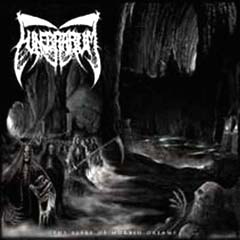 What happened here? Eight years ago — before old-school “revival” was even a blip on the radar — this band had the apparent potential to give proper life to archaic death metal form. Their first album/demo was a brooding, infectious and grimly cohesive piece of work, enough so to make this sound almost brazenly cheap by comparison. Toss in every imaginable death metal riff style coined between 1989 and 1993, lay them out on a rhythmic smorgasbord and put them through enough mood changes to make a pregnant teenager blush and you’ve come damn close to this; add enough embarassing Bloodbath-sounding material (listen to the opener) to something otherwise “authentic” and you’ll never want to hear “old school” again. – kontinual
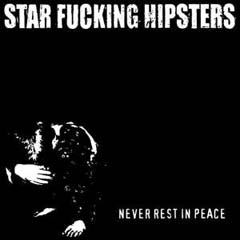 There are some of us who believe that rock and roll music, instead of being a thing deliberately created, is an aggregate of what was left over when we tested everything else against a captive audience. Star Fucking Hipsters prove this by carefully absorbing everything they can into the great sponge of melancholy indie pop. These songs usually start off with fast punk or speed metal (Slayer) riffs, and then pass through a few exciting transitions borrowed from anything industrial, black and reggage or between, but then we get to the core: darkish, self-pitying, somewhat helpless indie pop. True, it’s in pop punk format like The Descendents meets Blink 182 with Jane’s Addiction advising on behalf of the emo CIA, but basically, it’s pop. And when we get to that point we see this album is like a confused and lonely person in the city, covering themselves with newspapers or whatever fashions they can yank out of the wind, hoping no one will ever get a glimpse inside. If that’s its goal, this is supreme art, but more likely it is the emoting of such people hoping we’ll justify their existence for them. As pop, it’s not bad, a little toward the “poignant” side of minor key melodies sliding into major key to give you a sense of hope. But it’s really the same old thing, or the latest incarnation of it in whatever styles have stuck over the past twelve years, and so I can’t imagine why you’d listen to this instead of any of the 100,000 other albums this “good” in the rock style.
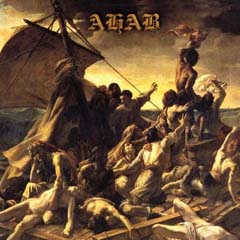 Funeral doom of a style similar to Skepticism if merged with Esoteric, with a tiny bit of Paradise Lost or Sleep in the wings, Ahab is a studied take on the slow and depressive atmospheric music that many people seem to enjoy. Stylistically, it is probably the most advanced of its kind; musically, it is perfectly competent; artistically, it is not particularly compelling. Its melodies have less of a sense of mixed emotions than do those of Skepticism, and its songs develop in predictable cycles within cycles, leaving us with atmosphere by default once all else has been blocked out. Like American rock bands, Ahab also has to throw in that sense of “contrast” where any dominant idea gets a contrarian voice thrown up against it, where bands like Skepticism bear down with enhancement and variation inside their major ideas. Few want to be the voice to stand up and say this, but most doom metal is boring, and not just because it’s slow. Ahab, while better than most, falls under this umbrella.
 Purists will kill me for this, but this is Biafra’s best work — it’s musical. Where the Dead Kennedys sounded disorganized and messy without really building on that as an aesthetic, he’s slowed down to a pop-punk combo that uses hardcore riffs (Discharge, Exploited) to balance its melodic lead picking (Circle Jerks, The Plugz). That, plus Southern Fried guitar solos and lead guitar noise, forms the underpinning for a more interesting Biafra performance than has ever been heard before. On this CD, Biafra develops his vocal lines both melodically and in timbre, giving the performance of his life with verve and energy. You’ve heard these riff types before, and many of the note progressions are “pop culture” stalwarts that show up in movie soundtracks and commercials, but here Biafra and his band develop each into a song that’s half-rock and half-hardcore, creating a foundation that will introduce a new generation to the sounds of hardcore punk.
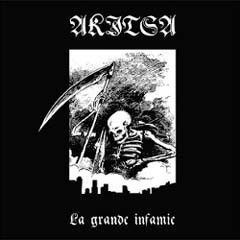 Most of us love the idea of black metal: a few totally socially alienated people, armed only with the truth, pick up guitars one weekend and make a simple mind-virus that helps slay all of the vastly powerful illusions that make our modern world miserable. The problem is that this is far from the truth: most of the people who have made great simple black metal were expert players or at least savants who self-schooled themselves in a unique and powerful style, and their work is very deliberate and designed to make us enjoy life as much as convey some idea. But as in all things, each generation picks up where the previous generation appeared to leave off, so the source of the idea is always lost. Akitsa sounds like a cross between The Exploited and early Dark Funeral, with simple melodic riffs offset against sawing basic power chording; the melodic riffs are too candy-sweet and the power chord riffs are too much of a style we can get anywhere. “Silence” appears to be heavily influenced by “Thy Winter Kingdom” from the first Behemoth CD. The rest of the CD is alternating Burzum influences with later model droning melody. It is both not bad and not really compelling enough to want to hear again.
 I wish this album were a joke, but like most modern and postmodern art, it’s an attempt to “demonstrate” an “idea,” and that idea has no correlation to the reality of an artist both entertaining and informing his listeners. Instead, you get a lot of fast chromatic playing over serial drumming with occasional breaks into jazz-style breakdowns that are either sloppy or misinformed about music theory. The result is a dissonant atmosphere after the band lulls you into contentment with repetition. Over time, the basic pattern increases in a period-doubling format, creating a linear expansion on a basic idea that resembles holy books that write about the universe expanding from a breath, except here the expansion leads to nothing but a reflection of itself. When Burzum did this with Det Som Engang Var, it built a mood that gained resurgent power of time; here it is purely deconstructive and fragments the listener’s attention span by forcing it through a narrow slit of musical awareness. People will like this because it’s unique, and talk about how genius it is because no one else “dared to be different” to such a degree, but as a work of meaningful art and a listening experience, it is worthless.
 This band claims “active” status in the early nineties, with zero material to show for it. It may very well be true; current personnel have some of the more run-of-the-mill Stockholm bands to brag about in their ancestry. Excited yet? This falls somewhere between Amon Amarth and Dismember’s Massive Killing Capacity, smothered in the “soft” mimicry of the Sunlight sound that seems so common for these fence-sitting bands. The plod is painful and simple and the song development as bluntly screwball as the song titles, lending an air of crafted irony to the whole presentation lest somebody seriously stack it up against any of its predecessors. One wonders whence this stuff keeps coming — I’m wont to call this the “Swedish mid-life crisis” and leave it at that. – kontinual
 What is post-rock? For most, it’s slow atmospheric rock beats with emo, punk, indie and noise riffs slowed down to provide texture. On this CD, Junius blend in a modern taste of the ancient with a Dead Can Dance influence. The result is like a river, winding around obstacles to rejoin itself, but only suggesting a topography. This music is comforting and melancholic, but not really exciting. It is pretty, but will find it hard to escape a lukewarm rock underpinning that reigns in its tendencies to escape for the outer limits. A reasonable comparison might be if Danzig decided to do a space rock album: you can appreciate it aesthetically, but sense how the voice isn’t really there, and how as much as these guys want to be ancient, they’re stuck in a modern paradigm.
 For the last time: if I wanted indie rock, I would have gone to a different part of the record store. Take your Sisters of Mercy gothic vocals, your bad indie rock open chord guitar riffs, and your basic song structures interrupted by dramatic outbursts, and put them there. I don’t want to fall into the old trap of saying “this isn’t metal,” because what I really want to say is that this is indie rock and should be integrated into that genre for the modicum of black metal stylings and ideas it still possesses. Sure, they’re going to call it a “post-rock” influence, but other than a little flexibility of rhythm, what’s going on here is the same stuff emo, indie and shoegaze bands were pumping out in the early 1990s.
 This CD resembles death metal in no way other than the vocals, which are the kind of reverbed whisper shout that made the first Sepultura EP so memorable. But the music… well, it’s stranded in the 1980s. Throw a lot of Metallica, Kreator, Slayer and Destruction in a blender — like every other band from that era — and you’ll get this mismash of riffs very similar to both the aforementioned bands and a huge heritage of heavy metal. To their credit, this band string them together well rhythmically but otherwise seem entirely random. Before someone convinces you this is a forgotten classic, ask them if classic means “good” or just that it was around in the early 1990s.
 We all want to love anything with the enigmatic Nocturno Culto on it. In fact, many of us were hoping he would pull off a Nemesis Divina where his skills converted an unexceptional band into a relative masterpiece. Not so on Sarke — his performance is phoned in, mainly because these songs are sparse, undeveloped, and entirely derivative of their influences in a 1989 way. In fact, the whole CD has the vibe of a collection of songs that have been kicked around since they got written in the 1980s, finally put onto vinyl years after the genre has passed them by. You’re familiar with these chord progressions and general rhythms, since many of them come out of punk rock and hard rock, and you’re probably not unacquainted — unless you’ve been under a rock labeled BLACK METAL GO HOME for the last two decades — with Culto’s interpretation of them. It’s all quite vanilla; nothing to really be appalled at here except how little you care about this flat regurgitation of the past.
 We live in a time of fools. Given no real truths to chew on, they raise themselves on lies, and make competing lies so they can be heard. Then they tell us what metal bands to listen to, and they cannot tell the difference between good music and derivative shit. They will, for example, convince themselves that Drautran is folk metal, when really it’s indie rock songs dressed up in black metal chord forms with a little extra violence. Unlike metal songs, where riffs fit together and make sense, these are rock songs with some metal riffs dropped in between the sing-song verse chorus. They take their riffing inspiration from Enslaved’s Frost but none of the compositional coherence is here. Listen to this if you want to distract yourself, fragment your concentration and dull your possibilities of ever understanding the difference between good music and crap.
 Every now and then, people who lack direction in life and so pay attention to surface features more than anything else, hoping to use these to justify their emptiness, will try to tell you how good a band is because it’s unique and nuanced. Usually this includes some kind of infantilism, like extreme minimalism or incoherence. This tedious little recording fits the bill. People like it because it’s obscure, kvlt, whatever… the truth is that it’s melodically simplistic, goes nowhere in song development, and showcases no really unique ability except to waste your time. They try to eat up as much tape as possible with intros, chants, and very basic keyboard melodies, but basically there’s nothing here. Maybe that’s the artistic point — emptiness — but then again a blank tape would have been more effective, and pleasant.
 Interesting approach by this Mexican band: take a more technical version of the full speed burst style semi-melodic black metal that Sarcofago made, and intersperse it with flowing keyboard-enhanced choruses in the style of countrymen Xibalba and Avzhia. The result suffers from the radical shift between two very identifiable poles, but the music although very basic develops gently through this style, and as a result is more credible than most of what we get sent here at the Dark Legions Archive Metal Reviews and CD Recycling Center. This is a band worth keeping an eye on.
 I’m convinced that a lot of contemporary death and black metal is music designed for children, because not only is it painfully simple and repetitive, but it also uses gentle rhythms of chord change — while playing at top speed. It’s like listening to a fan slowly playing an early Mozart piece. This album is similar. Sounds a lot like Blasphemy meets Impaled Nazarene, with the lower register production and slamming tempo changes of Belial. So as a retrospective of Finnish metal technique it’s great, but for anything else, it’s kind of a droning lullaby. What excuses it is that this CD shows purpose in its songwriting, and captures a mood, but for many of us the droning outweighs its significance.
 During the past two years, underground black metal shifted from emulating the early 1990s — fast melody — to emulating the late 1990s, specifically Demoncy’s “Joined in Darkness.” The Convocation EP does its best to revive that sound, with an injection of Finnish death metal and possibly American doom/death like Incantation, Winter and Infester. Although it keeps its goals limited, which is appropriate for a demo, this release shows promise in songwriting in that (a) every piece works together (b) together they create a vision of some idea, experience or emotion we can recognize from life itself and (c) while a good deal of it covers known death metal archetypes, it does so without borrowing straight from one source and so gives us a sense of exploring these ideas from a new angle. Low rasp voices, downtuned rigid guitars, and drumming that sounds like it’s straight out of drone/hardcore punk fusion gives this CD a sense of growing out of the past toward something even more ancient.

 The early nineties was replete with Death Metal bands that are now legendary, contributing to the cult’s creative height, but largely from the now infamous concentration zones of northern Europe and across the Americas. This left several adjacent scenes with relatively little notoreity and condemned some first-rate albums to obscurity. Our review of Disaffected’s ‘
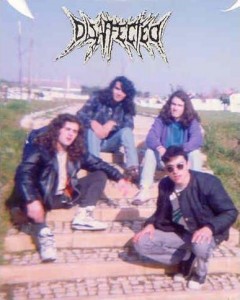 But in 2007, me and guitar player Sérgio Paulo, decided to reunite the band after 10 years of silence, and after a few meetings with the band members discussing a possible band reunion, the decision was “Let’s do it!!!”. A lot had passed with the band and the band members during these inactive years. Each had gone their own way in music and life. Due to the tragic accident of Sergio Paulo (guitarist) in 2004, all members got together again for the purpose of supporting a good friend. Sergio was lucky to survive a coma sleep of 2 weeks. His force of living had made him come back to us, and he had (literally) to restart his whole life, like being born again. He recovered most his abilities, and even his guitar mastery is back in 99%. A lot of things he had lost in his memory due to this accident, but he had never forgot DISAFFECTED music and his friends!
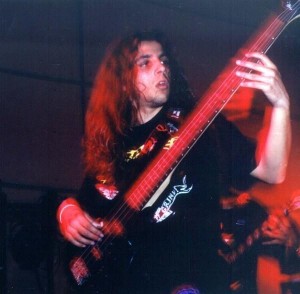 In 1994, I played bass guitar with a Jazz sextet featuring vocalist star Patrícia Fernandes, and we performed a show at Festa do Avante’94 (Seixal) in September of that same year. During the Summer ’97, I played bass guitar at Flood (Alternative Rock) as the support band of Santos & Pecadores Summer Tour ’97. In March ’02, in the aftermath of our Death Metal project Skinblade (1999-2002), me and drummer O decided to form a new band called Sybila, based on avant-garde style, and in December ’04, we entered Studio G22 (Feijó, Almada) with producer Paulo Vieira (Firstborn) to record the promotional song ‘Cycles’. The band split up in 2008 due to professional commitments of the musicians.
  Gião: Musically, we intend to continue with the style that characterizes Disaffected, trying to explore new levels of music, sometimes melodic sometimes dissonant. In this new album the lyrical context consists in two parts. Part 1 with dark and obscure lyrics, showing the route of the band from the stop until the meeting, and then in Part 2 we will try to depict the rebirth of the band with lyrics more encouraging and positive. We’ll sign a new label contract too, but for now, we have nothing confirmed yet.
 With the advent of another grim Autumn, half of the world retreats into glowing boxes of warmth and comfort to preserve the sickly and feverish Summertime langour. In a time where the seasonal rituals of harvest survives only as a novelty for urbanites and other moderns, for the sinister few, this is the season to step out into the growing shade of night and harvest the souls of the damned for they will be reborn into a new, unholy dawn. Such apocalyptic ends have necessitated a gathering of gargantuan proportions and could not be more appropriately named as the third ‘Black Mass Festival‘ in Helsinki later this week. Nefarious and astralic cults known to Hessians the world over, like Necros Christos, Sadistic Intent, Cruciamentum, Neutron Hammer, Lie in Ruins, and Death Metal legends, Demigod will be devastating the city and delivering winter even earlier than the Arctic already experiences it. Among such legions and Deathmetal.Org personnel in devout attendance will be London-based Death Metal occultists, Grave Miasma, making a similar journey to myself, but before our paths would re-intersect on the shamanic land of ancient Suomi, I posed a few questions to their guitarist and vocalist, the acronymious Heruka C.C.O.T.N., who seeks to re-ignite the dying embers of Death fucking Metal’s true fucking spirit on the very soil of the wider genre‘s birth.
 ObscuraHessian: Interest in more archaic forms of Death Metal is growing all around the world, as if returning to first principles and rediscovering our primordial selves. Consequently, as evidenced in your EP, the music is becoming esoteric like it used to be, wrapping dark and cosmic imagery in death-worshipping ‘theological’ statements. How important is esotericism in such a style and scene as Death Metal? Is it just a ‘thematic choice’ or something more?
 ObscuraHessian: There’s a lot of sounds from ‘Joined in Darkness‘-era Demoncy that surface in the music of ‘Exalted Emanation’, which adds a Black Metal flavour to it. Is this a favourite album of the band or are you more into Death Metal? Who would you say are your biggest musical influences?
 C.C.O.T.N.: To draw inspiration from my surroundings, I go out of London – often far indeed. Man is attuned with his surroundings, and living in this city is not congruent with the contemplation needed to collate this stimulation. I do find desolate urban areas during the dead of night to exude such sinister ambience, however. Whilst there are locations of Occult interest in the capital, other provinces of England are more relevant whether in regards to tangible brooding atmospheres or unseen power currents.
 As much of the northern hemisphere is being overwhelmed by the onslaught of winter, the flames of Hell are rising to consume the south at summer’s peak. Still, the hardened souls of Black Metal warriors remain unfrozen, and Australia‘s Dis Pater from
  ObscuraHessian: The sound of the full-length is naturally better as there’s more space between instruments but you still managed to reflect an enclosed feeling which sounds like the music is passing through a million leaves and branches before it hits the listener. Did the demo receive any remastering before sent to be pressed for its forthcoming distribution?

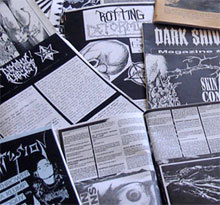
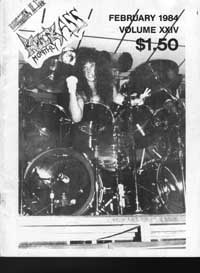 The violent, obsessive and obscurant phenomenon of death metal arose in the middle of the 1980’s from the minds of alienated and intelligent artists, writers and musicians while the powers of the world were engaged with the nuclear paranoia of the Cold War, while computer technology broke through to everyday life in Western societies, while preachers were fighting against Satanic messages in party-loving hair metal albums and while musicians in the vein of U2 were participating in massive events that attempted to bring world peace and end famine with decades old clichés of British rock music. NWOBHM and British punk were dying out, replaced by the tough street gang aesthetics of hardcore and the satanic postures of early speed and black metal. The public stances of groundbreaking bands were growing to be more and more incompatible with mainstream rock media, which since the demise of the “counterculture” had abhorred ideological consistency as a threat to the marketing forces for which it owed its livelihood.
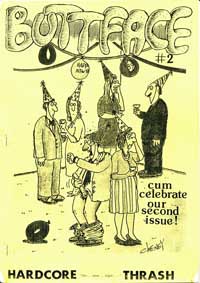
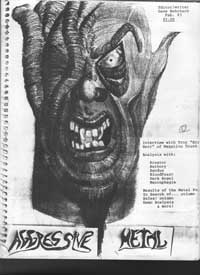 Death metal in the 80’s was as avant-garde and extreme as metal went. In keeping with the independent spirit, death metal fans corresponded with each other and compiled newsletters that were at first minimal and crude, spreading the viral infection of an art form which was long abhorred by fans of classic metal and power metal. Thus, the crown jewels of death metal media originated perhaps from lands separate from the Anglo-American centers of youth subculture dissemination, where enthusiasm for the new style existed alongside speed metal and crossover interest: Metalion’s Slayer Magazine (Norway), Laurent Ramadier’s Decibels of Death (France), Desexult’s Blackthorn (Denmark), Headbanger Zine (Peru), Alan Moses’ Buttface (Australia), Streetcleaner (Germany), Isten (Finland) and lots of others with enormous local influence. Contemporary US zines that didn’t lag behind included, for example, Aggressive Metal/Screams from the Gutter, Ripping Headaches and Chainsaw Abortions.
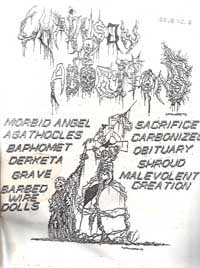 Brian: For me, I think the idea for Chainsaw Abortions just came because I’ve always loved music, hearing new things and spreading the word about things after I discovered them. In those times doing a zine was the best way to do that. My only contacts when I started were the local bands here in Buffalo, then from letter writing and tape trading my connections quickly grew. Of the zines that I bought back then, I really liked Death Vomit from Virginia and Ripping Headaches from Florida, plus of course Buttface from Australia.
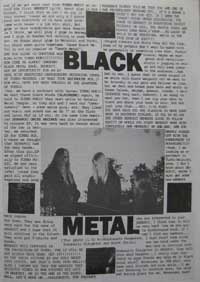
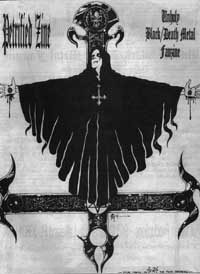
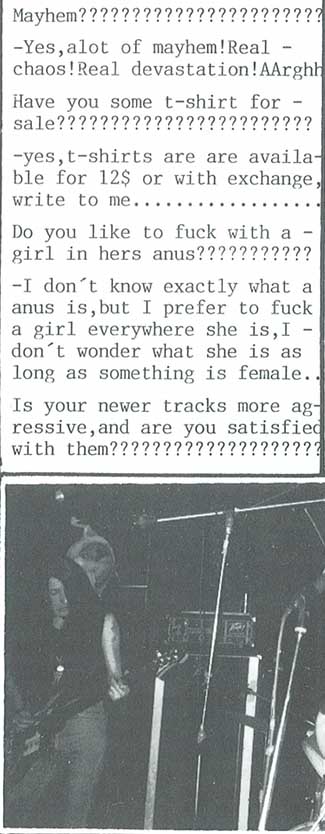 With their down to earth, entertaining but always informative reviews and interviews the zines of the era opened for many ignorant small town kids the landscape of the underground, the indivisible fabric of ideals, images, and hard work by their intricate visual and literal presentation of the latest frontier of metal. Often black and white, cut and pasted by hand and then photocopied, the zines were constructed with care and attention to build an aura of mystery and power, laid out symmetrically with blasphemous figures and gory art, encasing the alien appearance of foreign bands in sheets of terror resembling an ancient tome. The DIY method had an invaluable asset in that it was relatively independent from monetary concerns and possible for basically any fan with the required intelligence, attention span and literary abilities. Actually many zines seemed to even manage without these.
 Typically, when starting out, the editor of the zine was a young fan without widespread indoctrination to the scene in the sense of agendas, friendships and contacts, while of course being impressionable and receptive to new drifts and ideas. One accustomed to the 21st century neurosis which causes every black metal fan to consider himself an expert on religion and politics may note that the reviews in the old zines were sparse, usually a few sentences describing the style with a brief note on its perceived quality, while interviews tended to concern the mundane activity of the band in recording and rehearsal conditions, including aspects of everyday life. Far from boring and trivial, it was the sort of discussion the target audience could best relate to and helped the spawning of new bands, as fans realized that the masters of death metal mostly weren’t trained musicians or professionals of the business, but other fans and maniacs themselves who passed their time between school and work engaging in art, violation and a healthy distaste for conformity.
 Niko: I used to do tape trading in the late 80′s and more or less related to that I got my hands on some early issues of some Finnish fanzines, for example Isten and Axe. I found them very inspiring. At the time there was no Internet as we know it today and it was very difficult to find information about bands you were interested in, or bands you didn’t know even existed. So it all pretty much started from a personal obsession to find out information about bands and artists I was interested in myself. I didn’t have any contacts in the beginning, apart from a number of tape traders, but the flyer circulation was a very handy and effective way to learn about various activities as well as spread information about your own. It was all somewhat difficult in the beginning as I was young and obviously didn’t know anything about how to edit a magazine and have it printed, but once I managed to get the first issue of Hammer of Damnation out the ball started rolling.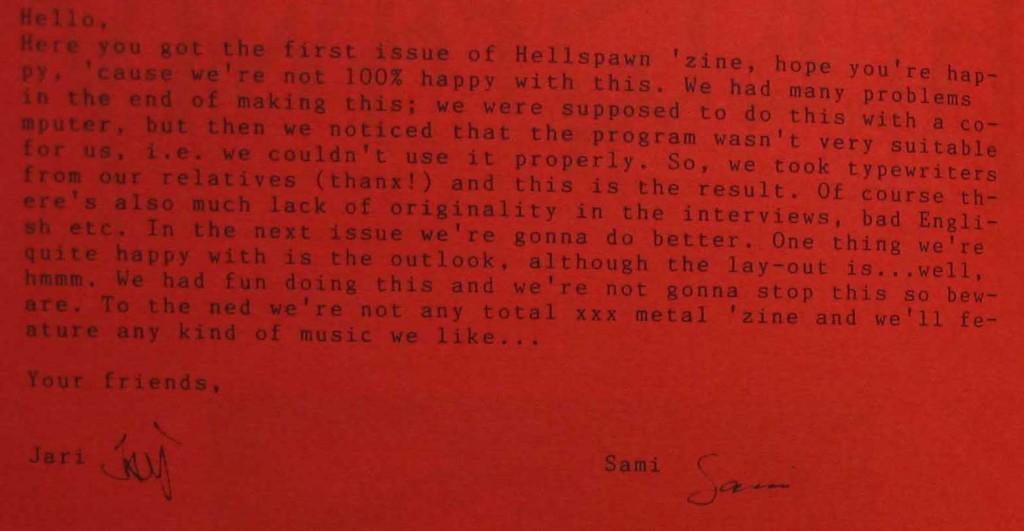
 Alan: Almost all of the experiences in doing a zine that I had were positive. Perhaps the only negative thing was when customs would sometimes steal from me (money, t-shirts, tapes – really anything that took their fancy) or a band would rip you off and not send you whatever it was you paid for. I mean back then you had this nightmare of waiting for shit, and you had to just trust people and the most you could do to protect your ‘well hidden cash’ to wrap it in carbon paper to avoid detection by x-ray. Jesse Pintado did that to me infact, the shit, heh. I sent him $5 for a demo and never got it, imagine his surprise when I showed up in Tampa in 1990 for the whole damn ‘Harmony Corruption’ recording sessions, haha! It was OK though, on the last day there he said he was sorry, I told him it was OK. If I had stayed in Australia and never got to do all this stuff, then I would have been pissed off of course. My zine policy was that we would only review what we liked. I wasn’t going to waste space writing about what I don’t like about this band that I think sucks. So we stated that anything like that we would pay to return, you know, so the band could send it out to someone who could actually do something with it. A lot of people didn’t grasp the concept and would get mad. I mean, would you rather someone blast your band and lose you fans, or would you like them to shut the hell up and mail it back to you? That’s a damn no-brainer. There were one or two people that I met later down the road, even that I used to write to, years before, and we didn’t get along that well. I won’t name names. Most everything about it all was positive, I didn’t do phone interviews because of the expense calling from Australia then was insane. Now international calls from Australia are cheaper than calling someone on the same street I live on! But it was cool just to bullshit with my traders buddies, or Lori Bravo, Trey, David, Mitch Harris… there were a number of people I would call just to talk to and get news from.
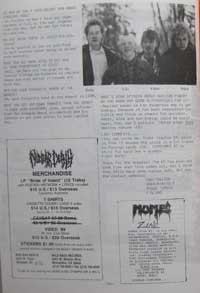 Brian: I’m not trying to sugarcoat the past, but I can’t think of a negative experience that I had. Positive experiences were plentiful… I enjoyed doing phone interviews back then, because the bands were still small, it wasn’t a strictly business call. I interviewed Trevor Peres (Obituary) and after the interview we just kept on chatting about the scenes in Florida and Buffalo and just music in general, same when I interviewed Steve Digiorgio (Sadus) and Sharon Bascovksy (Derketa).
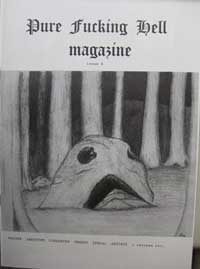
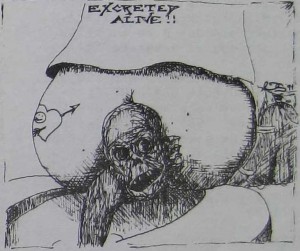 Pete: Well, the money was needed only for printing and time wasn`t an issue. There was no computers and such, I wrote the interviews for Pure Fucking Hell with typewriter and band logos & photos I got from the bands if they had any. Then I “designed” the pages, like where the text, possible photos and band logo goes and when all the pages were ready the whole thing went to print. If you knew a good printing place and used a bit of your brains doing the pages you could get a surprisingly good end result with that kind of procedure.
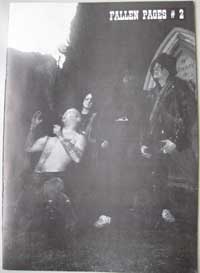
 The beginning of the 90’s was greeted by an explosion of death metal into mass media attention, MTV airplay and new fans. There were probably more death metal zines than ever, the likes of Balance of Terror (Canada), Biopsy (Finland), Fallen Pages (Finland), The Grimoire of Exalted Deeds (USA), Hammer of Damnation (Finland), Hellspawn (Finland), Putrefaction (Sweden) and The Requiem (USA) catering to the hordes yearning for information from the realms beyond Morbid Angel and Obituary who thrived at the peak of their fame.
 Timo: There were many zines back then and surprisingly many of them were Finnish: Intestinal, Biopsy, The Untouchables, Hammer of Damnation and of course the mightiest: Isten. Slayer magazine from Norway was superb as well. I enjoyed many foreign zines but in 1990-1993 the Finnish ones were prime of the prime, interesting writing and good English skills combined in a fine way.
 Timo: It was totally positive for me, I can’t truly name anything shitty about those years. I got to know great people from bands, witnessing new art being born and in my own small way helping to create a scene that will be interesting to research for anthropologists of the future. I could feature the bands I wanted and loved: Rotting Christ, Blasphemy, Beherit, Impaled Nazarene, Necromantia, Carcass, Nocturnus etc. and made great friends with some of those people. Fallen Pages was the second publication in the world to interview My Dying Bride, I thought that their demo had potential in it. I have to say that I could not see the careers that Burzum or Cradle of Filth would have judging by their early promo tapes they sent to me – I actually ignored them.
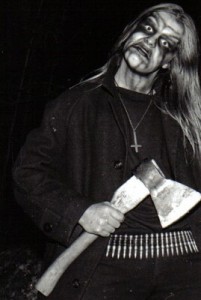
  Black metal coverage was also picked up by the mainstream press in the wake of the terror of those Norwegians they called the Black Circle. French bands of the Les Legions Noires community (Vlad Tepes, Belketre) and the Polish Slavic heathens around the Temple of Fullmoon sect (Graveland, Veles) added their own violent, occult and occasionally political statements to the chaotic melting pot of obscurity. Rhetoric was at a completely new level now compared to the death metal years. Defying any kind of reason and common sense, bands declared war on each other and society at large, used their anonymity and obscurity to suggest the presence of dangerous cult fanaticism and deliberately alienated every average death metal fan. While there is no denying the fact that black metal was a serious matter for these groups, and rightly so, the intensification of image eventually led to role play and narcissism.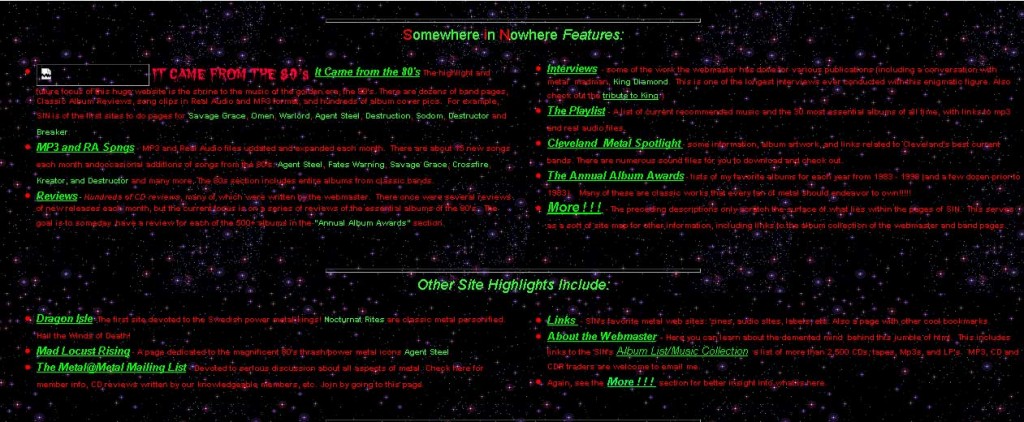
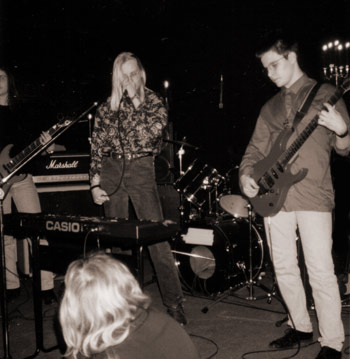 Niko: I grew tired of the whole metal scene in the early 90′s, partly because it all turned boring due to thousands of emerging bands sounding all very similar to me, and partly because I was discovering electronic and experimental music that seemed more & more interesting to me. I did go on with the zine for some time, featuring less metal and more other stuff that interested me, but after a while I put an end to it. I think what eventually killed it for me was that I was tired of having this “obligation” to review all the stuff I received, and to try to be analytic about music instead of simply exploring and enjoying it, etc. It was becoming an unpaid job, I didn’t find anything creative or enjoyable about it anymore. Actually I still don’t enjoy writing about music or trying to analyze or describe it, something about that process kills part of the excitement.
 Timo: Fallen Pages gave me direction in life, I would not be sitting on this chair now had I not been able to see things in an international perspective from very early age. And having to handle schedules, layout, printing, writing and monetary issues. Back in 1990 Rovaniemi was very, very far even from Helsinki. And even further away from Europe. Now with Internet it is different for kids living in distant places, but looking at it now, it is weird that the small town produced people and bands like Beherit and Lordi. And Fallen Pages and Black Crucifixion.