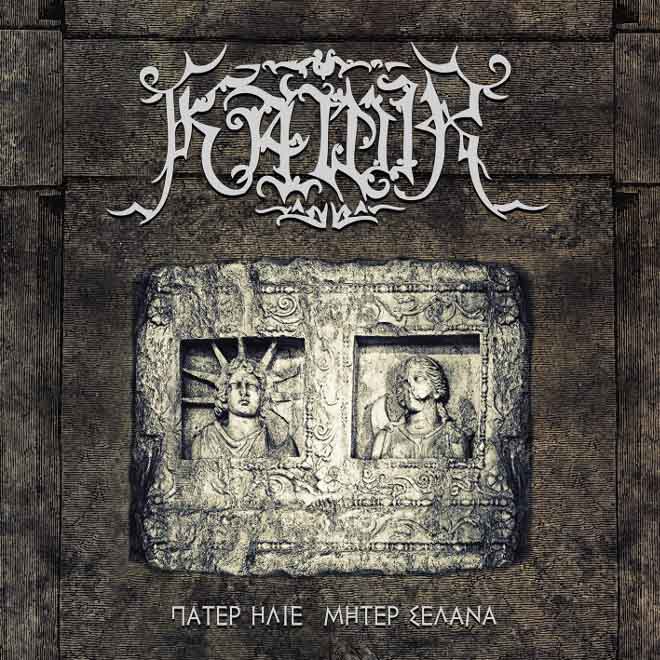


“Immigration in the Abyss, Immense to the Heart”
Invoke and summon the elder ones,
darkest realms await your arrival.
Succumb to passion, the temptation
to penetrate and probe the abyss.
Employ the wisdom of the ancients
Overcome thyself, transcend and rule
Utilize the chaos, discover.
And finally give birth to ones-Self.

Penetrate the mysteries of life,
Existence, and explore Arcane cults.
Do they not remain? Vanished, unseen,
But felt and unforgotten within.
Share in the beauty of the descent!
“Tonight my voice will echo in the Abyss”
Have we not explored and discovered?
Have we not elevated ourselves?
Our minds, conciousness eminent now,
immersed in lofty symbolism.
A keen eye, astute and compelling,
Such language, a modern aversion,
Forbidden, a cryptic inner realm.
A revelation! Hessians, a gift!
Romantic longing, a melody
To touch the spirit! May it now soar!
Powerful, competent and focused
Restrained beauty, a wandering soul.
“The promises beyond, a new reality I adore”
Filed under: Death Metal Album of the Week — Tags: Black Metal, Greek Black Metal, Heavy Metal, Melodic Black Metal, The Abyss, Transcendence — TheWaters @ November 26, 2010 08:56 — Comments (2)

Perhaps some could argue that the likes of Angelcorpse popularized the notion of a ‘modern death/black metal’ hybrid, that is to say a mixture of the technical and musical dynamics of classic American death metal, with an underscore of malevolence that whilst not too obvious suggests black metal influences too.
With ‘Graves Of The Archangels’, Athenian horde Dead Congregation put forth a powerful full length that acts as a clarion call for the steady rise in qualitative artistic output we are seeing by practitioners of this musical genre. In terms of execution we have here a work that in it’s proficiency and riff sequences gives us a reminder of where Morbid Angel were in the late 1980′s and early 1990′s, whilst the bleak necrotic vibe of Incantation’s best work also permeates the album. Those familiar with earlier, pre-album works by Rotting Christ and Varathron, fellow countrymen of this band will perhaps note a distinct similarity to have been thrown into the cauldron. Whilst these comparisons, which to the reviewer were comparable on first listen fit a time frame that is of the same era, almost 20 years ago, more recent takes on death and black metal leave a distinct mark on this work, most notably acts such as Averse Sefira and the previously mentioned Angelcorpse taint the guitar harmonies, and the sharp yet simultaneously murky production. The later part of this recently passed decade marked a sharp turn in the amount of quality death metal being released worldwide, and alongside the likes of recent works from Cruciamentum, Grave Miasma, Sanguis Imperem, The Chasm, Averse Sefira, Asphyx, Goreaphobia and a plethora of other artists, ‘Graves Of The Archangels’ deserves a rightful place in that pantheon.

Awakened in remorse
To rebuild from destruction
Recreate life’s evolution
Returning from the brutality of a Bolt Thrower show to recollect the events that defined it brings to mind the task of Ernst Junger, depicting the graphic scenes of martial violence and destruction in his soldier’s memoirs, ‘Storm of Steel’. Not merely the sounds of war and chaos, but the philosophy of death is what one has to confront on such a stage, and this sums up the depth of the Bolt Thrower experience. The great elemental gods of Britannia fired the opening salvo of the evening, unleashing a torrential downpour on the troops to be in attendance once conscripted into the dismal but still functional ULU venue, around the University College London site and home of the un-elite Utilitarian philosophy. A single flash of lightning, probably striking the Cenotaph for the war dead a few minutes away in Whitehall, would indicate that this night belonged to only one elite group, and the slowly multiplying hordes as if signalled to the venue by this storm omen, proved that the headliners were in everybody’s iron sights.
In the meantime, some fairly well-known bands would run through comparitively uninteresting sets in order to plug new albums or just an association with Bolt Thrower on this Next Offensive European tour. For the one unknown band, clearly grateful to the Coventry squadron for being able to provide opening infantry support, Ancient Ascendant took to the stage with some confidence and raged through their set infront of the minimal crowd at this time. The sound was not good and the technical setup of the venue’s sonic equipment would be a recurring issue throughout the night, usually leaving bands with an unbalanced sound. Even less impressive was Ancient Ascendant’s music, which was practically educated by the newer schools of Death Metal exclusively, sounding like a more frivolously melodic version of Bloodbath. A lot of generic rhythmic business with some predictably inserted flourishes of lead guitar lines and none of the compositional sense that at the very least ripping-off the old school Death Metal formula would have imbued the songs with by default. Even the next band, The Rotted’s only listenable song was from the older generic Gorerotted project, which is not much less moronic than The Rotted who are really damn retarded in this incarnation, with their stripped down songs consisting of one riff from a later Cryptopsy song played out as blasting Punk music. It’s also quite strange and not recommended to watch old, drugged up men performing breakdowns.
Considered by many as nothing more than a brief distraction, this wa
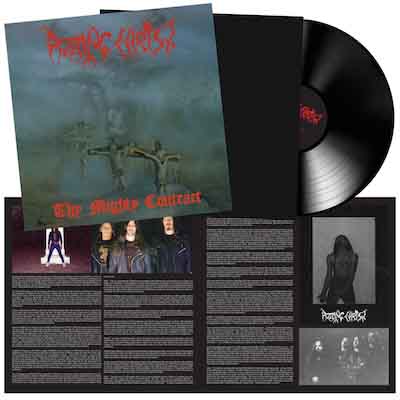
s soon forgotten as the once powerful entity of Promethean Greek Black Metal took to the stage and the floor swelled with eager hordes. For someone that reveres the older fraction of their catalogue as highly as the Nordic classics, the Rotting Christ set provided both frustrating disappointment but also possibly the biggest surprise of the evening (not the appearance of Diamanda Galas). The transition from ancient Heavy Metal-inflected compositions of blackened mysticism to a boring and cheap form of fast and extreme Rock music with pseudo-cultural embellishments that would make Vangelis either laugh hysterically or summon the wrath of Mars upon Sakis and company, was made quite some time ago when the band sold out to Century Media and although the recent jump to Season of Mist has only marginally improved the quality of their music, the bulk of their songs is blockheaded rhythmic work that wouldn’t sound out of place on a System of a Down joke and disembodied keyboards typical of mainstream Black Metal bands to accompany the minute flickerings of nostalgia that is the signature Rotting Christ melodic style, the same tactic used by fellow Greeks, Septicflesh. Within this disastrous but obviously crowd-pleasing selection of tracks was something quite unexpected given the current direction of the band and their most recent live performances. Almost as though the old spirit of Necromayhem broke free from his sealed confines, the band launched mercilessly into ‘Sign of Evil Existence’, flooding the crowd with a sea of beautiful, extended phrasal work, causing an absolute frenzy and evoking the first old school invocations of the night. Not content with such a brief introduction to arguably the pinnacle of their early discography, ‘Fgmenth, Thy Gift’ continued the magic of ‘Thy Mighty Contract’ with the folky but regal opening riff surging into those magestic, ascendant patterns of guitar. The higher register key of these older songs manipulated the flatness of the sound setup brilliantly, with every note perfectly audible and a memorable contender for song of the entire show.
Benediction were next on stage, an aging group of Death Metal punks fronted by Dave Hunt of Anaal Nathrakh, Mistress and Never Mind the Buzzcocks fame, who nearly talks as much shit on stage as Barney Greenway, including an embarrassing appeasement of some girl’s sob story about a now deceased Benediction fan, thankfully met with a shout of ‘Only death is real’ from the front of the crowd. The set itself was a typically reliable collection of songs spanning most of their discography, better suiting the live environment than on CD, inducing as much violence from the crowd as their primitive, bouncy Death Metal can, like ‘Harmony Corruption’-era Napalm Death meeting ‘Tower of Spite’ by Cerebral Fix. It wasn’t much of a loss to have a guitar cut out during their stint, as the rest of the band seemed to push onwards, building up as much aggression as possible and justifying their placement on the bill, though it was huge relief to hear the end of Benediction at long last, for the lights to dim and the next offensive to commence proper.
Anticipation was immense for the legendary Grindcore/Death Metal ensemble and the battle hordes pushed forward like a scene from Braveheart, rivalling the force of a 90,000 strong audience gravitating towards the celebrity status of Metallica. Faint sounds of approaching war lingered from the amps over the field as Bolt Thrower finally took to the stage and launched straight into the sombre yet mammoth opening riff to ‘IVth Crusade’. The deliberate, sinister pacing of the double bass began to roll through and the crowd imploded into deadly chaos and aggressive force. As bodies began raining from the skies like mortar fire, crushing necks and leaving temporary indents of fallen victims, the atmosphere became thick with the smell of blood, sweat and the disturbing fragrances of shampoo. A large bulk of the set consisted of tracks from the last album but these were all delivered with enough power and rousing, anthemic vigour to blend seamlessly with the more skillful dynamics and evocative melodies of the older songs, from the brilliant rendition of ‘World Eater’ into ‘Cenotaph’ to the unforgettable lead guitars of ‘…For Victory’. Bolt Thrower commanded the crowd, Karl Willets looked like a war-torn veteran but still yet to be tamed as the ferocity of his vocals didn’t let up for an instant. Jo-Anne Bench is undoubtedly the most menacing female presence in the entire Metal scene, and the poorly balanced sound worked well
to render the songs with more bassy fury than can be heard on record. The subtle rhythmic variations of Baz’s guitars on the other hand were not as discernable, but for a seemingly undiscerning crowd, this did nothing to quell the primal violence that tore bones asunder in a ritual of combat replication. The signature riffs were also fairly muted but managed to somehow shine through like the sun between Afghan mountain peaks, and as the band returned for an encore, the perfect choice of songs scorched the stage like a vast napalm attack, with the ominous theme of ‘War’ transforming into ‘Remembrance’ as though the sorrows of Arjuna had been cast aside as he takes to the empty plains of Kurukshetra, seeing the world as it is.
Even as the band exited, the feelings of confrontation and pugilism reigned as brawls ensued and battered humans walked out to count their wounds. The show proved how bands such as Bolt Thrower who retain their integrity, remain possessed by this same eternal process of nature’s evolution and deliver like a well-trained soldier, with precision and consistency will rule for the longest time. We will remember them.
Filed under: Death Metal Events,Death Metal Live Reviews — Tags: Black Metal, British Death Metal, Death Metal, Greek Black Metal, Grindcore — ObscuraHessian @ May 2, 2010 13:20 — Comments (2)
This series of reviews shows the infectious potential of condensing the multidimensional texture of darkness and mythology into a carefully trimmed brief explosion with no room for filler or long, meaningless passages of droning, experimentation or interludes. Those who mastered the art of the metal EP or mini-LP are rare, but deserve all the more credit for their achievements. The fact that you can listen to everything we have here easily within the space of one evening does not mean that the unlocked experiences won’t stay with you forever.

Showing a strong advancement in technique and an evolution towards a darker style that would be the staple of records to come by the band, Slayer throw off the camp shackles of their excellent first album, and give a more progressive approach to songcraft yet give more emphasis on repetition within individual riffs. The violent droning guitar timbre of Discharge makes itself ever more present whilst the musical language of Judas Priest and Angel Witch works itself within those patterns. The dissonant twin soloing of King and Hanneman is more suitable to this new direction also, whilst Lombardo’s aggressive battery finds more cohesion in using less variation and being more of an ambient backdrop than before, with Araya’s unmistakable rasp encoding itself sadistically within the depths. A bleak affair that summed up the apocalyptic meanderings of the speed metal movement and the embryonic beginnings of the death metal that was yet to manifest. -Pearson
Napalm Death – Mentally Murdered

This work is like a convergence of Napalm Death and Carcass, having left ‘From Enslavement to Obliteration’ and ‘Reek or Putrefaction’ behind in order to expand on their styles, towards ‘Harmony Corruption’ and ‘Symphonies of Sickness’ respectively. By Napalm’s standards, at this point in their discography, these songs are quite lengthy and structured with an attention to detail that recaptures the subtle shifts in mechanical motion of the earliest side to ‘Scum’. This technique is re-invigorated by the cleaner production, relegating the extremity of fuzzy bass for the sake of a twin-guitar assault that creates an hypnotic and delusional sensation, and shows the input of Jesse Pintado who would go on to record another highly influential work of Grindcore – Terrorizer’s ‘World Downfall’. Composition is practically freed at very the earliest moments of songs onwards, unlike previous Napalm Death albums where these parts were used to establish exactly which single riff will become immersed in a barely discernable anarchic explosion for the rest of the 30 seconds of music. Instead, it’s given a more Death Metal treatment, e.g. in ‘The Missing Link’, the opening riff seems to degrade over time into smaller grinding patterns until the fragments are juggled like sacks of meat by morbid Death Metal riffs. This is where some of the tremelo melodies that would tear through the rotten wall of sound of Carcass finds its place, accompanied by the mocking lead guitars of Bill Steer. The human tornado, Mick Harris is even more precise than his previous effort, but doesn’t lose any of his epithet’s justification. Lee Dorrian’s vocals become more guttural and undecypherable, conceding to the futility of mainstream political discussion. The seeds of an approach closer in line with the burgeoning interest in Death Metal were sown here, simultaneously taking Grindcore one step further away from reaching the dead-end of short and simplistic outbursts of truncated riffs and hollow statements. -ObscuraHessian
Rotting Christ – Passage to Arcturo

Warm, playful and overflowing with the abundance of inspiration in the rediscovery of ancient shamanic techniques of mystical metal creation, the Greek pioneers of Rotting Christ forsook the aggravated modern noise of grindcore in time to ride the wave of blackness that usurped the European metal underground. Remnants and glimpses of 80’s fast modern metal (Slayer) give way to an astral, luminous intensity of synthesizers and slowly picked melodies that suspend the themes for a moment to enable the mind to stop wandering and relish the unholy moment of concentration, in a yogic gesture of blackness. Few have ever used the crushing sonic world of black and death metal to so fully immerse in ethereal ritual, and such rare examples as “Drawing Down the Moon” preserve plenty of subtle reminders to this widely heard classic of European black metal. As their chaotic exhortations in countless zines of the period conclude, Rotting Christ’s hybrid of gothic and black metal aimed for an architecture of the infinite, regal sunsets of lost kingdoms whose landscapes are not for the eyes of mortals, except in dreams and in death. As “Forest of N’Gai” aptly proves, black metal was at its height when not contorted to fit the schemes of a political ideology or an orthodox Satanist movement, but like the great works of literature a realm of fantasy of its own whose symbols are rooted in our deepest unconscious fears and desires. This sub-space can then be used by the analytical mind to figure the patterns of generation for a multitude of creative, even lunatic, concepts. -Devamitra
At the Gates – Gardens of Grief

The original Gothenburg gloomy melody cult made one of their strongest statements on this early EP, pressed from demo to vinyl on the first year of the band’s existence. Fresh from life disrespecting bands such as Infestation and Grotesque, these Swedes nail the most desperate guitar harmonies since Candlemass, but infect them with the viral sensibility of a flux of death current. As if plugging the Sunlight Studios into your brains in direct interface, Svensson’s tremolos rip and rend mercilessly apart the soul of the beast that dared expose its true feelings of living in a world of hypocrisy and uncertainty. The band has preserved the most fragile moment of the Swedish death metal underground, the precarious balance between the catatonic psychosis of headbanging under alcoholic influence and the deep, burning, thoughtful soul of an encrypted Romantic in a world of pain and disguised memories. It all takes such tangible form in Tomas Lindberg’s cracking, maddened scream: “I am at the gates – Lord of Chaos – Let me sleep”. The fear and anger of At the Gates’ most revered albums will always remain something that divides audiences according to their response to such emotional cues, but “Gardens of Grief” is the un-terrorized, exuberant sound of youth that realizes the presence of death and dives into it headlong, appropriate to the Per Ohlin dedication in the liner notes. -Devamitra
Wings – Thorns On Thy Oaken Throne

An all too brief EP from Finnish gloomophiliacs Wings, as ephemeral as the tortured existence that is enshrouded in these twisted sounds of darkness-raped melody. Almost like the missing tracks from Cartilage’s cult classic ‘The Fragile Concept of Affection’, this continuation goes further to explore the sombre moods of songs like ‘Why Do I Watch The Dawn?’, in their Replicant-like reflections upon the transience of a human existence placed between the crushing, vice-grip of nothingness. Wings don’t peturb the balance of pace of slower, more expansive lakes of hypnotic melody that made up Cartilage’s contribution to their split with Altar, but there is greater focus on creating a doomier atmosphere, leaving no space for the grinding riffs of the past incarnation – a technique that parrelleled the Swedish Unleashed on their first album. Instead, an older treatment is given to the bouncier riffs, which could be heard as Punkier passages, but as this EP comes together as a whole to reveal, these bridge the narrative that seems to span across both songs with a mid-pace tempo in which the drawn out melodies pass through towards an expressive, quite neoclassical riff of totality – encompassing all the hopes that are weighed down by all the sorrows in the journey towards death. This poem in two parts is a valuable recording of Death Metal history, as a valid direction for these Finnish musicians to have taken following the demise of Cartilage, with all their weird melodic knowledge as baggage. -ObscuraHessian

A true gem, Sacramentum’s first EP showcases a style that is melodic and emotive in a manner not unlike countrymen Dissection and Unanimated. Epic, catchy and well crafted compositions are multi-layered not unlike Emperor minus keyboards, the rush of guitar notes being vibrant and lively, with little emphasis towards a rhythmic expectation, as one would expect with most heavy metal and hard rock music. Simultaneously moody yet without being whiny, this early release by Sacramentum showcases a band who are able to master quality control and bring the best out of all the elements that define their music. Alongside At The Gates, artistically the finest Swedish metal act of the 1990′s. -Pearson

Fast, raging black metal with the fury of early Deicide and the sharp harmonizing typical of Mayhem and Immortal’s ‘Pure Holocaust’ come head to head, in the guise of technically precise, abrupt songs. Shouty hardcore vocals, warm synth overlaps, a near constant blastbeat and anti-humanist lyrical concepts indicate a desire by known Norwegian musicians to advance the aggression of the black metal style and shift it’s idealogical focus away from romantic nostalgia. This brief E.P. lacks the spark of Norway’s foundational acts, but remains an influential statement of the subgenre. -Pearson

Who would have expected Chuck Keller to open the gates to very Orion itself after the folding of the aggressor squad par excellence Order from Chaos? As if a continuation of the promise of the astrological and alchemistic symbolism of the former bands’ lyrics, Vulpecula slows it down and strums soothing, yet vigorous melodies while the vocals multiple into wraith-like dimensions of rhythmic rasps and Keller’s leads occasionally burst into the aggressive, spasmous flight of an eagle amidst a thunderstorm. “Phoenix of the Creation” delves into exercises in authentic space synth, while “The First Point of Aries” harkens to the mid-paced woodland meditations that the Norwegians used to record at Grieghallen. Occasionally slightly hindered by the band’s eagerness to cram all the influences from Schulze to black metal into one short EP, the mere richness of it invites the ears to take their pleasure at will from the Babylonian garden of ponderous and prestigious movements that are achingly attractive and acceptable in their innocent refusal to complicate things with dissonance. Credit also goes for the lead guitar efforts of Keller on their traditional melodious injection which easily avoids the neutrality of more pop oriented bands trying to do the same. Almost like envisioning a “new age” approach to the genre, Vulpecula is an alien saucer amidst the orbit bound technologies of “progressive” death metal. -Devamitra
Divine Eve – Vengeful and Obstinate

The first new release that’s being reviewed for 2010 and it’s already giving distinct impressions of the kind of quality that made 1993′s ‘As the Angels Weep’ a genuinely classic EP. Divine Eve keeps the form of this new material far simpler, stripping away the Death Metal-infected sludginess for a more rudimentary homage to early brutal music like Celtic Frost. ‘Vengeful and Obstinate’ makes its own unique statement by honing in on the nihilistic and warlike spirit of the Swiss legend’s ‘To Mega Therion’ magnum opus, even invoking the same battle-horns on ‘Ravages of Heathen Men’ that bring focus to the beauty of conflict and strife in a meaningless universe. The varied tempo of grinding riffs set to a dirty bass guitar adds to the atmosphere of struggle as an outlet for this primitive, instinctual response to the world. ‘Whispers of Fire’ being the exception on this EP for the constantly up-tempo pace, it’s a pleasure to hear such slow and sludgy music churning visions of the darker universe beyond our lives of comfort and languish. The final and most devastating touch of ‘Vengeful and Obstinate’ is how Divine Eve makes extensive use of the piercing tone that Xan’s grating guitar setup produces, highlighting the spiral passage of powerchords by revealing their hidden, melodic architecture, ingenuiously managing to explain and enhance this rugged approach of legendary lineage. It’s about time the band produced a full-length and they’ve proved that they possess more than enough knowledge of unholy riffcraft to do so. -ObscuraHessian
Filed under: Death Metal Music Reviews — Tags: Black Metal, Cosmos, Death Metal, Doom Metal, Doomdeath, Finnish Death Metal, Greek Black Metal, Grindcore, Norwegian Black Metal, Norwegian Death Metal, Speed Metal, Swedish Black Metal, Swedish Death Metal, Thrash — Devamitra @ February 3, 2010 15:54 — Comments (8)

Septic Flesh’s first album fits very neatly into the old Hellenic scene as a collosus of melodic majesty, but where this one differs from the other noteworthy Grecian offerings is precisely what makes it suitable listening for our ritual of death-worship this week. Not unlike the infamous Nordic Black Metallers in the earliest stages of their musical careers, a lot of the Greek Black Metal bands began playing more rotten music before unleashing their fusion of epic Heavy and Black Metal, and Septic Flesh would be no exception two albums later with their own output of blackness, ‘The Ophidian Wheel‘. ‘Mystic Places of Dawn’ however, retains a little more of this band’s origins in Death Metal and Grindcore even though what ensues on this record is some of the most melodically articulate and enchanting music produced by this ancient country in modern history. The Greek underground was definitely a pandaemonic entity, and where some would exhalt Lucifer or some unknown underworld monarch, the band in question carved out their own mysterious and forgotten mythology of a far less ‘blackened’ conception, leading to the diverse approach of this release.
The opening track launches from deep below the Aegean sea floor and is quick to demonstrate Septic Flesh’s background in Death Metal with intense, rhythmically conscious blast-beats and kick-drumming that approaches the speed of Proscriptor on Absu’s famed percussive exhibition known as ‘Tara‘. Amidst this brutality are epic melodies that, although following familiar scalic patterns, are beautifully woven together between windtunnel shredding and grind-encrypted riffs. The slower tempos that dominate the rest of this work explore ethereal sensations of reflection upon lost spiritual wisdom, with keyboards taking cues from Rotting Christ. Older, sometimes tribal, sometimes Classical sounds produced by additional instrumentation goes further to create an atmospheric Metal approximation of the mystical, neoclassical and world music of Dead Can Dance on albums such as ‘Within the Realm of the Dying Sun‘ or ‘Aion‘. Caught in a dream of the past that might enliven the yearning of our waking lives for civilisation to once again resonate ancient and cosmic knowledge, Septic Flesh took Greek underground Metal to new heights, managing to seamlessly encapsulate all the major styles of Metal in the process.
Filed under: Death Metal Album of the Week — Tags: Black Metal, Death Metal, Greek Black Metal, Greek Death Metal, Mysticism, World — ObscuraHessian @ January 21, 2010 02:23 — Comments (1)