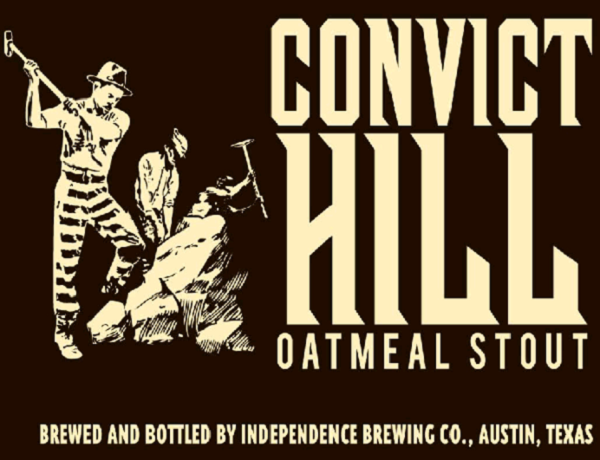
Independence Brewing Co. – Convict Hill Oatmeal Stout

convict_hill_oatmeal_stout

As much as I enjoy a bitter beer, or an idiosyncratic one, Convict Hill Oatmeal Stout confuses the outward appearance of refined taste with the taste itself. An intensely sour and dark beer, it swings away from the pleasurable dimensions of beers toward small rooms full of “experts” who like highly demonstrative, artificed tastes. Such drinkers are looking for a beer to talk about how much they enjoyed, rather than enjoying it, while overpraising it like metalcore in a big heavy metal magazine. They will discuss its oddities, use vague terms like “creamy,” and generally miss the point: this beer is designed toward unbalanced extremes to make talking points, and has character within.

As a result, it makes a terrible everyday beer, and while it might be good as a Guinness substitute in a black and tan where a dark and bitter beer is necessary to offset the Bass or other pale ale used in contrast, by itself constitutes the same kind of unpleasant drinking experience that eating straight dark chocolate provides to the culinary palate. Like gourmet food that carries the pretentious epithet an acquired taste, this oatmeal stout misses out on the balance of a really good version of this sub-type, in which harvest flavors balance the bitterness to create a sense of transition, and instead aims toward something for gritted-teeth hipsters to use as a conversation topic when explaining the superiority of their taste to yours. At that it succeeds because there is so much to talk about but none of it is interesting. Take for example the separation of flavors so that the aftertaste is a tarry version of the foretaste; or perhaps, the strange fermentation overtones as if something random were included in the vat, or the process did not quite complete. Independent breweries are quite trendy now but this beer shows that it is not the size of the brewery, but the intent of the brewer, that makes a great beer instead of a faddish mediocre one.

Quality rating: 2/5
Purchase rating: 1/5

No Comments

Tags: , ,

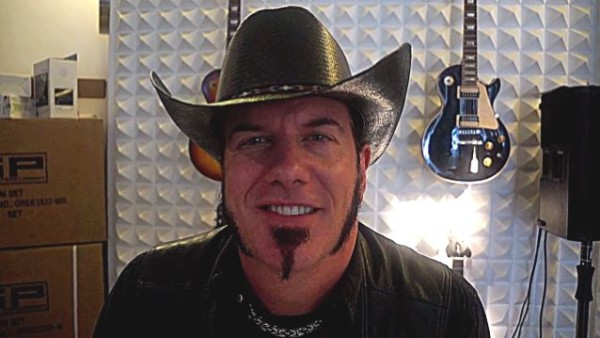
Interview with Joshua Wood, managing editor at Metal-Rules.com

joshua_wood_-_managing_editor_-_metal-rules_com

Among internet metal sites, Metal-Rules.com has a unique niche as being both popular with newer fans and proud of classic metal. During the last few melees over censorship, I encountered the Managing Editor there, a relaxed fellow by the name of Joshua Wood. Since we are both metal nerds, it seemed an interview was in order, and to his credit, it ended up being more interesting and more metal than people might suspect. Give a big hand in welcoming Joshua Wood, and read on…

What first attracted you to heavy metal?

Easy! Kiss Destroyer, 1976. The excitement, the fire, the blood, the power and the electric energy of it all. The top mainstream bands of the time were all soft rock and disco and along came…Kiss! They just totally blew everyone away.

What first attracted you to writing?

It’s funny, I don’t really consider myself a ‘writer.’ I’m just a guy with lots of strong opinions about metal! My main goal always was, and I suspect always will be, to support the underground and ‘real’ Metal bands, as per our site’s tagline, ‘Supporting Real Metal’ since 1995.” I’m not a critic; I want to support a band I enjoy and feel could use the support and or exposure. I don’t waste my time criticizing bands I don’t like, why bother? Live and let die, they can find their own audience. I’d rather write a positive review of a band and help them instead of slagging one of many, many crappy bands. As a result I write very, very few negative type reviews, whereas some mean-spirited critics seem to revel in finding new and amusing ways to insult bands. Those reviews are funny to read though!

How did you get involved with Metal-Rules.com? Today, as I understand it, you are the Managing Editor. How did you get into this job?

I started as a ‘Guest Writer’ (like all of our staff) back in 2001. Overtime I contributed and showed I was reliable, could meet simple deadlines, brought some creativity to the table and generally showed a passion to support the site. Back then there were very few website dedicated to metal, especially the metal I loved, not the nu-metal that was infecting the scene at the time and it was the perfect forum to show that there were still killer new bands out there besides the crappy/trendy sub-genres. Over time, I became the Managing Editor. It is strictly volunteer.

Sometimes when some crappy rap-rock and mallcore band sends me stuff or is asking for help I feel like saying, “Dude! Do you even LOOK at our site? We are so against the kind of music you make, why did you waste your time contacting us?”

What does the job entail? What are the fun parts, and the harder parts?

I tend to oversee our writers/photographers, give people encouragement, support and direction. I contact labels, agents, bands promoters on behalf of the site, give out assignments and of course add and edit the content to the site. It’s always fun talking to fellow like-minded metal heads about metal and I suppose doing the book and DVD reviews is my favourite part. I’ve written over 1000 reviews for the site over the years! We have a private Metal-Rules Staff Facebook page where we discuss the months assignments, who is covering or reviewing what so we keep it all straight.

The least fun part is having to reject bands or labels that just don’t fit our mandate or interest, but I always try to be supportive and suggest they try other avenues. Sometimes when some crappy rap-rock and mallcore band sends me stuff or is asking for help I feel like saying, “Dude! Do you even LOOK at our site? We are so against the kind of music you make, why did you waste your time contacting us?” lol. Sometimes fixing the countless little mistakes of submissions can get laborious, but I just put on an album and type away!

What sort of metal do you like? Do you distinguish by genre, quality of bands or some other traits that they have?

I’m a fan of many forms/styles/sub-genres of hard rock and metal. It’s almost easier to say what I don’t like which are:

  • Grunge
  • Rap-Metal
  • Nu-Metal
  • Mallcore
  • Metalcore
  • Screamo
  • Industrial
  • Alternative
  • Crossover
  • Punk
  • Shoegaze
  • Ambient
  • Post Rock
  • Post Black

I’ve been actively buying and collecting metal since the late 70s so I have a substantial personal collection of just over 10,000 items, albums, books, DVDs, cassettes, magazines, etc, including a decent stock of rarities, and I love it all! If you include authorized digital promo copies my collection swells to 15,000 items. Thrash, Death, Black, Doom, Power, etc have lots of every style to suit my mood. I do distinguish between genres but I try to keep it to a dozen or so broader genres, but I also enjoy micro-analyzing the subtle differences in bands styles, scenes and sounds.

I’m also the co-chair of the Heavy Metal committee for CARAS (Canadian Academy of Recording Arts And Sciences) the group who host/present Canada’s national music award program, the Juno awards…the equivalent to the Grammys. I tend to use those analytical skills in that role to see what really qualifies as ‘metal’ when it comes time to screen submissions for the awards program. You would be surprised the amount of crap that people consider ‘metal’ and submit to us!

What do you think distinguishes heavy metal from rock music?

That is a tough question! I think Metal has a bit more aggression, speed, power attitude, rebelliousness, negativity, skill, dynamics, sincerity, than the ‘average’ rock band.

Can you name the metal bands that have influenced you most, as well as the writers and other non-musical influences who shape what you do?

The bands that influence me the most are some old favourites, W.A.S.P., Manowar, Thor, Anvil, Raven, and Yngwie Malmsteen. These guys get it. The never bow to trends, they never break, they are all underdogs, survivors, productive and reliable! Many younger fans make fun of those bands but they could learn a lesson or two on how it done to persevere and survive to create real metal art. I doubt many of the new, trendy bands will ever have a 15-20 album, 30-40 year career like the above list.

Martin Popoff is a big influence, we have become personal friends over the years which is cool. Non-musical influences would be the normal day to day stuff, playing sports (soccer) my career, family, hobbies and volunteer work. It all keeps me busy, I wish I had more time to dedicate to the site as you can tell by how long it took me to respond to your kind request for an interview!

I recently wrote that modern metal — nu-metal, post-metal, metalcore and indie-metal — have one thing in common, which is that they are composed like rock bands but use metal riffs sometimes. What do you think distinguishes older heavy metal, underground metal and modern metal from each other?

I think I would agree! I feel much of the younger modern Metal bands confuse ‘heaviness’ with volume and screaming. I understand that there is a natural extension of Metal to want to go after, louder, more extreme etc but often they loose site of some of the key elements that attracted me to Metal…the riffs, technicality, proficiency, speed, power all that stuff. Some bands are so busy trying too hard to look or sound what they think Metal is, that they miss the point.

I’ve seen groups like the PMRC or MTV come and go and after waging deliberate anti-metal campaigns (and losing) so I lumped the SJW into that category.

How important is technicality to you in assessing bands? What about production?

To me technicality is extremely important. I love bands like Dragonforce, Immortal Guardian, Joe Stump, Pathfinder, Dream Theater. I love guitar heroes; I have dozens of guitar/instrumental shred albums so that ranks very highly for my enjoyment. As for production, I don’t feel like I have a very refined ear. It amuses me that some people can say, “The production ruined the album or made it unlistenable”, but that is pretty subjective. I’ve never heard a truly horrible production job that radically diminishes my enjoyment of an album. I listen to two-track Death Metal demos from 30 years ago and I listen to full-on, 120 digital track albums from Prog Metal bands with orchestras and infinite layers of sound (like Devin Townsend for example) and I enjoy each for what they are.

Of all the things that you have written, what are your favourites?

I have a few editorials (and or rants) I have done that are more for my own amusement to point out trends or odd facts. One recent one I did was a piece that stated Slayer has copied W.A.S.P. their entire career. Of course, most people in their right mind would disagree but it was fun to find 10 or so interesting little facts and coincidences about the two bands and do a creative piece. Again, the book reviews are really fun to write. I’ve written close to 300 now. Film/DVD reviews are great as well, they can be more in-depth than just another CD review that ten other websites have already reviewed that month as well. Our site we believe has the largest collection of metal DVD and book reviews on the web, with the exception of the big (not-metal) sales portals like Amazon.

A few years back I was contacted by Dr. Niall Scott of the University of Central Lancashire in England. He is the Chair for the International Society for Metal Music Studies (ISMMS) and he said he uses my book review section for a reference which I thought was very nice, so the book reviews is probably my #1 fave for now. It’s nice, as the only site that really does many metal themed book reviews people constantly send me books to review which is an awesome perk.

What do you think of #MetalGate? Does metal have its own response to these issues, and not need an outsider view, or should it take influence from other rock genres and consider the SJW agenda?

I have to admit I was not knee deep in that battle. For one, I’m not heavily involved in social media, I don’t do Twitter or any of that stuff so it sort of went under my radar. Secondly, I really don’t care about or put stock into people who criticize Metal. People, the music industry, the church, the government, academics, parents, the media, watchdog groups and even (so-called) fans have been attacking metal from the beginning so I tend to ignore those ignorant fools. I was like, ‘Yup, another bunch of clueless morons with nothing better to do taking aim at Metal’. It was almost a non-issue for me. I’ve seen groups like the PMRC or MTV come and go and after waging deliberate anti-metal campaigns (and losing) so I lumped the SJW into that category. There are but a vocal minority seeking attention by using music (or art, or literature etc) to promote a specific social agenda…it’s like buzzing housefly or yapping little dog, you just ignore it even though you have the power to crush it. I would not want to dignify the SJW clan with a response because the wolf does not concern himself with the opinion of the sheep. Like Jack Black and Tenacious D said, “You cannot kill the metal!” However…. I do admire and support the warriors who picked up the sword and went into battle in the name of metal!

To directly answer your question: No, metal should never compromise and consider the agenda of others; that would be the polar opposite of Metal is. Metal is not about compromise, friendship, or trying to be some happy, all-inclusive, friendly, hippy, group-hug, drum-circle (despite what Sepultura did on Roots!) It never has been and never will be. Embracing that agenda would be one of the worst possible outcomes and it would dilute the purity and beauty of the genre. I think Alice Cooper said it best. He said, (roughly paraphrased) “Metal is not about politics. It is about sex, money and violence. Leave the politics to the punks.”

Can you tell us more about “Metal Mental Meltdown”? Is it true that you’re planning a digital version?

That is a whole other story. The brief version is that I created a heavy metal board game back in 1999. I sold it around the world and it was my full-time job for a short while. Overtime the game ran its course and I returned to the real world of work. I had written some genre-based extension packs but time, energy and money were the enemy. I have often flirted with ideas of some sort of digital version, an app, an on-line game but have yet to put it in motion. The hard copies are still for sale.

What is your radio show, Megawatt Mayhem, like? How do you pick bands to be on the show?

Megawatt Mayhem is one of the world’s longest running metal radio shows. We have been on air for over 29 years every Saturday night on CJSW 90.9FM in the city of Calgary, here in Western Canada. We are a two-hour magazine style show with news, views, reviews, interviews, concert listings and local bands. We have an open door policy for local bands, if a Calgary or area band wants to visit, as long as they have some recorded product of a minimal level of quality we invite them on. The host of the show champions local acts, I am more selective, but it is part of our mandate as a local station to support local artists. We have interviewed tons of bands from the brand new local band in the garage to Metallica.

I also host a more melodic Metal show called Attention Surplus Overdrive which features the more melodic side of the genres; guitar heroes, Prog Metal, symphonic Metal, Melodic Metal etc… it runs for three hours late at night so I can play entire albums by Nightwish or Steve Vai or whoever. I’ve been doing it for almost two years now. It is on the same station, right after Megawatt Mayhem, so I do a really fun five-hour stint every Saturday night/Sunday morning!

If people are interested in what you do, where do they go to find more information and keep up with the latest from you?

Anyone can drop me a line via one of my five (!) Facebook pages! lol. I’d be glad to discuss my involvement in the Metal industry over the last 20 years, from being a promoter, an Assistant Producer of a huge Metal festival, a hosting a Metal nights, and countless small metal-themed projects with anyone who wants to chat!

  1. Joshua Wood (Personal page)
  2. Megawatt Mayhem (heavier radio show)
  3. Attention Surplus Overdrive (Mellower radio show)
  4. Metal Rules (Webzine)
  5. Metal Mental Meltdown (Board Game)
5 Comments

Tags: , , ,

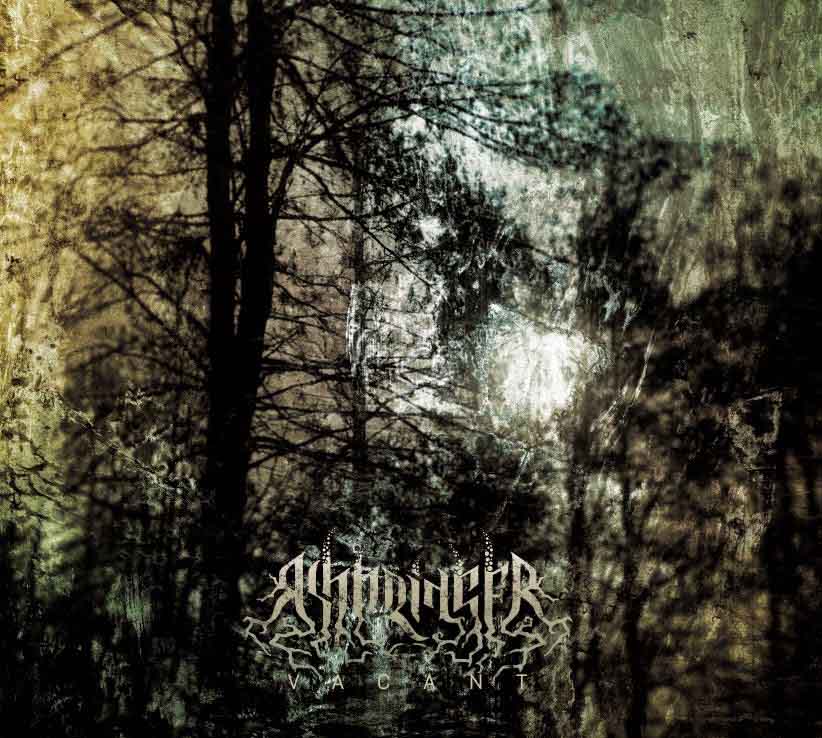
Ashbringer – Vacant (2015)

ashbringer

While most modern bands err on the side of so-called experiments and “open-mindedness”, Ashbringer tries to adopt a conservative posture in a manner that kills music with stagnancy. This may be either a product of a skewed appreciation of the classics or simply a good-intentioned but overzealous drive to keep coherence in check that might arise from an ignorance of music-writing procedures. Such procedures can and have been ignored by people with either great experience and understanding, or savants like Varg Vikernes who display an amazing instinctive talent for musical creation. Unfortunately, there is a myth that drives hordes of musicians of average talent (because that is the definition of average) to attempt to emulate the actions of those who are natural geniuses. Such combination of presumption with an unwillingness to educate themselves give us many sincere but ultimately deficient metal records (see early The Chasm).

In Vacant, Ashbringer present us songs which bear the mark of an intention of maintaining coherence by repeating the same idea and only venturing forth to use the same motif played in several different ways, offering carrying a whole song or entire super-sections mostly in this manner. The extent of these variations are limited to texture change and register change. Correctly sensing that this only creates a static picture seen through different-colored lenses, other ideas are introduced, but these do not bear a clear relation between each other beyond the concordance of similar technique, tonality and consistency in style. Akin to a series of unrelated pictures in a row in an album  without a clear history to relate them, variety is forced, taking the songs out of painful and amateur-like stagnation in a forceful manner.

The few exceptions of progressions and and useful transformations are far and in between and should be saved by the band for future reference (the 5th and 6th tracks which should be one song as the first does not have the material to be an interlude but only a first-section to the following one), and Ashbringer could learn something about the use of related but changing and essentially different ideas. These should be related not by style, but by musical structure and patterns. The suggestion is perhaps a little too German-minded, but it is a more concrete beginning that is easier to grasp. Baby-steps before you can actually black metal.

The combination of true humbleness in creating music with a healthy dose of careful ambition is what is necessary here and in metal in general. A cycle of study, practice, introspection and revision in music-writing is what metal most needs as is shown by the limitations of this sincere but incredibly deficient album. These guys obviously have the intention of creating metal that is both elaborate and profound, technically proficient, musically satisfying and spiritually inspiring. They just need to face they aren’t musical geniuses and turn their heads to a more strict study and observation of the greats on the technical side at different levels of music composition.

https://www.youtube.com/watch?v=5IdkOmAazxo

No Comments

Tags: , , , , , ,

David Vincent leaves Morbid Angel

david_vincent_-_morbid_angel

On the heels of much conjecture, and his own denials that an expulsion had taken place, David Vincent has announced his departure from Morbid Angel with a softly-worded press announcement:

Austin, TX – June 19, 2015

DAVID VINCENT Encourages
Fans To Stay Morbid

I had good communication with Trey yesterday and we agree that there are incompatibilities with regards to us working together.

Trey and I have accomplished amazing things together over the past 30 years and I wish him the best with his future projects. Out of respect for the legacy of these accomplishments, I encourage Morbid Angel fans to not take sides because, I am not.

I look forward to sharing my new endeavors with all of you in the near future. Until then, stay Morbid! ~David Vincent

While this may be disappointing to many, it represents new ground for Morbid Angel, which just hired Steven Tucker again, lost drummer Tim Yeung and guitarist Destructhor, and appears to be re-organizing itself more toward its last good material produced, 1998’s Formulas Fatal to the Flesh. Given the immense dissatisfaction with the most recent Morbid Angel album which took the band in a more Rammstein/nu-metal direction under Vincent’s guidance, this re-organization looks like the band orienting itself more toward metal material.

3 Comments

Tags: , , ,

Slayer retrospective

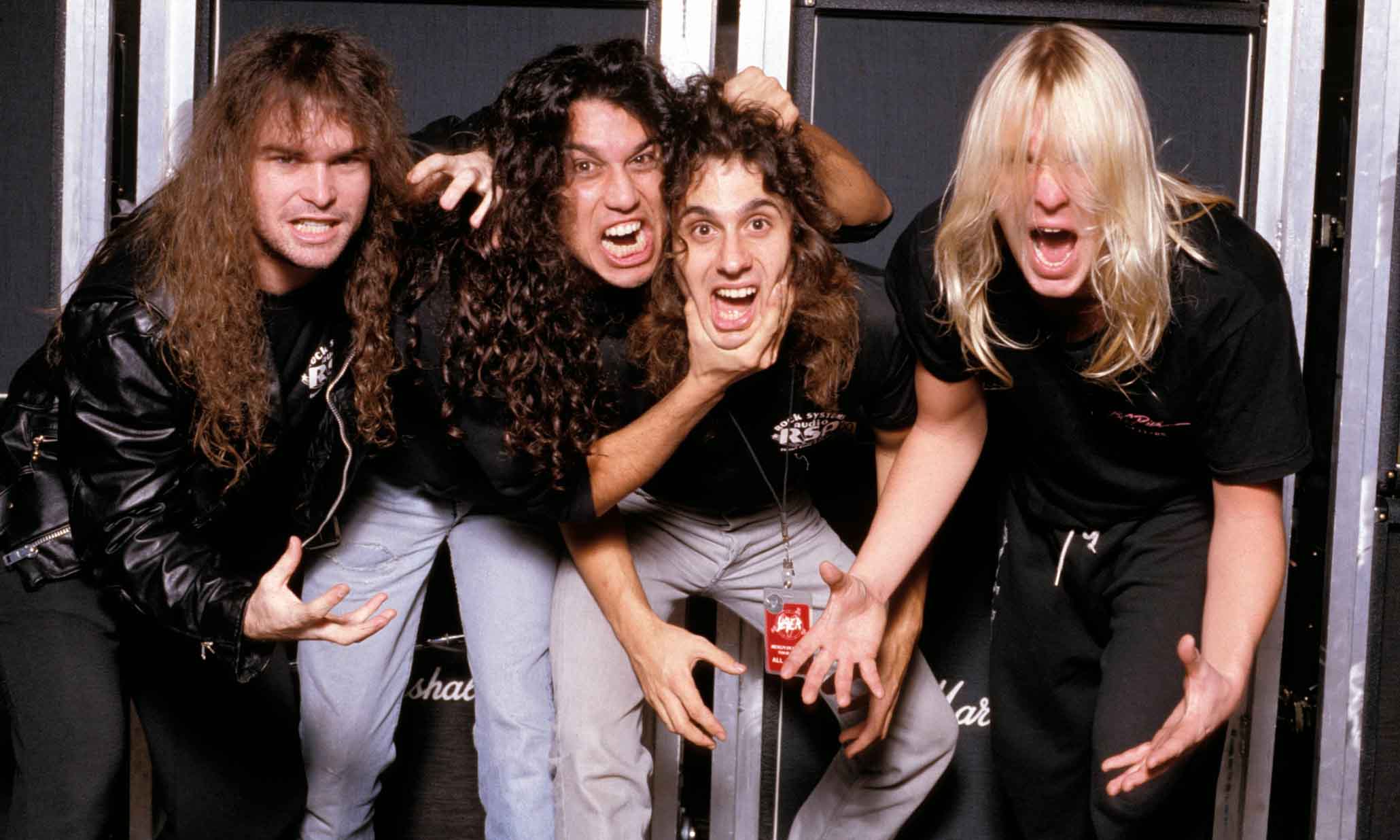
UNITED STATES - JANUARY 01:  Photo of SLAYER  (Photo by Ebet Roberts/Redferns)

UNITED STATES – JANUARY 01: Photo of SLAYER (Photo by Ebet Roberts/Redferns)

Some people find it odd that Slayer attracts such fanatical devotion from its fans, even 27 years after the last album most people consider classic from the band, South of Heaven. The answer for me is that Slayer stands for something: not just what metal should always be — unsociable, powerful, intense and pushing beyond all boundaries — but what metal should do, which is tell the truth in a realistic but mythological way. Almost all people fear truth and spend most of their time distracting us from it. Slayer turns it into a battleground which inspires the listener to want to get in there and fight it out.

I rank Slayer up there with other heroes like William S. Burroughs, early James Joyce, Jane Austen, Mary Shelley, Fred Nietzsche, Louis-Ferdinand Celine, Michel Houellebecq, Plato, Ernest Hemingway, William Faulkner, William Blake and other absolute saviors who brought some clarity to a life that started enmeshed in lies and that had to gradually claw its way toward clarity. These people gave much of their lives so that humanity has a shot at survival. (Note present tense). Like those literary warriors, Slayer took a look at the world of human denial and shattered it, grasping instead the raw currency of nature: power, conflict and predation. Their goal was not solely to become popular, but to do so by telling the truth that people suppress every day.

For those like me who grew up in a time of denial, such an approach was not only refreshing but became clear it was the only approach worth tolerating. Back in those days, what really scared us was the Cold War and the threat of possible if not probable nuclear annihilation. Humanity finally had enough missiles to do itself in, and had wired those to increasingly hair-trigger decisions which would decide the fate of not just us, but the future. 30,000 years of nuclear winter and death by radiation seemed very final. In addition, our society was torn apart, with the Reaganite big hair Christians on one side and the spaced-out, gibberish-spewing 1968 hippies on the other.

Most importantly however Slayer was what everyone always felt heavy metal should become. Heavy metal is music that rejects social pleasantries for a study of power itself, including the awesome power of nature manifested in death, disease, predation and violence. Slayer sounds like mechanized warfare with the patterns of a summer hurricane. They threw out all the rules and started making heavy metal like punks, with no reliance on traditional song structures, and expanded its vocabulary infinitely. On top of that, Slayer never backed down from being the ultimate hard line of reality. When people started talking about Jesus or how peace would save us (maaaaan), Slayer was the antidote. It drowned out the insanity and replaced it with cold, hard reality.

Walking through the years of classic Slayer:

1983

Show No Mercy corrected the previous fifteen years of metal by summarizing it and turning it up to 11. Using the techniques of hardcore punk and a Wagnerian sense of riff structure, this album took heavy metal from the looping song structures of the late 1970s back to the experimental, prog-style outlook of Black Sabbath. This reduced the rock influence, and brought primacy back to the riff from where it had been languishing with the voice in glam and later NWOBHM. The term “heavy metal” means two things: the genre as a whole, and the sub-genre of music which is still roughly blues influenced (itself passing down the English and Germanic popular music in a form the music industry invented to sell more records). While still the second type of heavy metal, this album showed Slayer developing the techniques that they would later use to — along with Hellhammer, Sodom and Bathory — invent death metal from the ashes of speed metal which died as soon as it was born.

1984

Haunting the Chapel was the weird little EP that came along with the other Slayer albums I bought when I could find them. I put it on and heard “Chemical Warfare” and thought, this sounds exactly like society and why I hate it: the pain of tedium, the sure destination in collapse and self-destruction, the ignorant removal of nature, and the misery of all trapped within it. Other heavy metal tried to be apocalyptic, but this song showed an actual destruction of humanity by our own hand, which was and still is the most likely scenario. Like “War Pigs,” it contrasted a mythology of demons and wizards with the motivations of people in real life, which were every bit as good/evil as the epics of Tolkien. As a high school kid, I was thankful some adult finally told me the truth about something — and it was Slayer!

Although this was a live in studio album designed to promote the band, it has many beauties. It is the ultimate 4 AM after a profound night waiting for the sunrise music. A friend of mine refers to it as his “day drinking” album, but I have never heard a more ridiculous term than day drinking. Alcoholism knows no clock.

https://youtu.be/U94mkCBSsCc

1985

Back in high school, some friends of mine and I would cut class and sneak off to the woods to smoke cigarettes and talk about metal. We used to refer to Hell Awaits as LLEH STIAWA to disguise our communication from authority figures, when passing notes in class. This was where Slayer really began, for me. They refined the aesthetics on the first album and changed song structure from the rock/blues/folk origins to the free-form style of hardcore punk bands, which let the riffs take over and guide the development of the song, a compositional technique which is the basis of death metal. Ornette Coleman, who recently died, once said, “I think one day music will be a lot freer. Then the pattern for a tune, for instance, will be forgotten and the tune itself will be the pattern, and won’t have to be forced into conventional patterns.” Slayer was the first pattern-oriented heavy metal band and discovered what free jazz tuned into, but took it to the next level. Thinking about the difference between this album and the first Slayer album started my career as a music writer (such as it is).

https://youtu.be/lBf7gSwzVnk

1986

I started out as a hardcore kid, cranking more Amebix, DRI, Cro-Mags and the Exploited than heavy metal. All of that changed when I discovered Slayer. Reign in Blood showed me hardcore taken to its logical conclusions: a society ridden by a deep spiritual disease, corrupted and scapegoating as it spirals toward collapse. Facing the emptiness and literality of reality is our only hope, but even that requires a mythos of some form. Not only was Reign in Blood written on the most hardcore topics ever, except put through the mythological filter of metal, but it was written like hardcore if the bands decided to be good at their instruments and compose epic opera-style clashes between good and evil instead of Songs To Hate The Man From Your Squat. Sandwiched between two epic tracks that called to mind the intensity of black metal that came later, this album roars through atonal masterpieces of pure rhythm and structure, using the power of the musical phrase to create metaphorical associations in the mind of the listener. Some bands sing about things; Slayer made music that sounded like those things, come to life as demonic meth-driven zombies created by humans and now returned to destroy them. This album took that sound to the furthest extreme, and nothing since has topped it.

1987

1988

This album first made me fall in love with Slayer. I was blown away by the other material, but here Slayer added a layer of dark poetic sensation like they had on the bookend tracks on the previous album, but they let the whole album carry that vibe. The result is the first really nocturnal album in metal: a meditation on nothingness, a howl of the Steppenwolf, from within a lonely darkness where to avoid the lies is to see the truth that puts the individual on a collision course with society. When your civilization denies reality, your own choice — if you have what my old gym coach called “intestinal fortitude” a.k.a. “the guts” to do so — is to oppose the fantasy with hardcore reality, but like a good heavy metal band to make it epic by turning it into a mythology of itself. South of Heaven did that in an inventive album which sounded like night raids on a dying world. Poetic, dark, apocalyptic and yet it makes you want to strive. Healing and motivational.

https://youtu.be/NbGqPRFyHtg

1989

I remember Slayer being in Thrasher magazine as a big event this year. At that time, music was still divided between the big labels and the type of music they would promote, which were the big decade-long trends that were sort of like genres, except they were musically very much the same as everything else. Mainstream magazines simply did not mention Slayer and barely would cover Metallica because they disliked the threat to their power. You could find Slayer in the record stores, which were either mainstream like Sound Warehouse or independents that barely made it by, and maybe in zines but otherwise the media kept mum on this new threat, just like they did at first with hardcore punk (as opposed to punk rock). I think I saw Slayer several times over this year and the past, and almost died on a few occasions but that failed to diminish my enthusiasm.

http://www.thrashermagazine.com/articles/magazine/march-1989/

1990

I remember Seasons in the Abyss coming to record stores on the same day as Megadeth Rust in Piece, and sneaking out of school every period to go to the local Sound Warehouse to see if they had it on the shelves yet. Finally an employee pointed me to a cart with new albums not yet stocked, and I saw my prizes and seized them, paid (and was carded — these were the PMRC days! — also the days of low-cost “novelty” Missouri DLs) and got out of dodge. This was where Slayer and I began to part ways, because Slayer actually headed back toward rock music on this: the vocals led the songs, they were more verse/chorus, and the focus was on harmony rather than clashing riff patterns. Much of this material continued where South of Heaven left off but added the more powerful vocals and the confining necessity of certain basic harmonies that always shifts songs back toward the sound of three-chord rock. While the transition never completely occurred, the sensation remained. Still some great material on this LP however.

https://youtu.be/PEHzU3iRl9Y

1991

Finally, Slayer hit some big time and what did it was computers. In the late 1980s, the Macintosh made desktop publishing very easy because it had a built-in graphical interface. More zines started popping up, and the big music magazines felt the heat. I first heard the term “niche genre” at this point, and realized the new strategy was to sell something different to everyone at all times, kind of like postmodernism is an attempt to see any object from all angles. Although Decade of Aggression includes the slower and more emotional Seasons in the Abyss songs, it was a great time for Slayer to release a live album using the production values and performance standards of Reign in Blood on their older material as well. They decided to have very clear production for this live album, and to pan the guitars to opposite extremes so wannabe shredders could tab all the stuff out at home. The result is one of my favorite albums to listen to for outdoor activity and other trying times. I have probably fixed 100,000 machines to this album and, where I can enjoy the Seasons in the Abyss material, it is on this two-CD set.

Slayer: One of the few people who gave me a vision of reality and yet added to it a layer of inspiration in metaphor. You lived ten lifetimes in the one you endured here, like all greats. Slayer also brought heavy metal back to the table after it wimped out and then took a false step with speed metal, which while great in its own right, was not far enough from the herd to gain its own voice and quickly got assimilated (1992). Slayer lived on by birthing much of the underground metal to follow, and being an influence on virtually all of it. As long as I live, you will not be forgotten, and then others will carry on the magic of what you did…

4 Comments

Tags: , ,

Deiphago – Into the Eye of Satan (2015)

Deiphago - Into The Eye of Satan - medresx300

Playing a mixture between the primitive South American black metal of Sarcofago, the unrelenting and mindlessly simplistic assault that borders on comedy of Marduk and something of its own, Deiphago’s Into the Eye of Satan is both a highlight and representation of half-cooked modern nostalgia metal. The references to the influences are pretty clear for someone to see and even though Deiphago escapes them and proposes something of their own, the sections in which we hear the older voices are two transparent. Rather than an integration of influences, we hear quotes to other composers in the midst of Deiphago’s maddened ramblings.

These raptures proper of a madman that Into the Eye of Satan exposes us to are as endearing as they are nonsensical. It makes one think of the epileptic attacks that Colombian’s Parabellum subjected the listener to. The difference is that the Latin American savant band actually produced coherent music within the wild and often disorienting music that nonetheless had a clear large-scale plan. Deiphago on the other hand attacks the listener with pure chaos, subjecting it to passages that border on noise improvisation and structures that appear to  consist of haphazardly placed extreme-sounding sections. The theme here is chaos, the destruction of music and ideas themselves while the picture is not completely given up on. While not incurring in the sin of trying to become atmosphere itself nor becoming self-referential symbols, Into the Eye of Satan sadly still falls short of a year’s highlight due to what I perceive to be compositional laziness and/or lack of controlling musical notions in spite of a solid artistic vision.


5 Comments

Tags: , , , , , , ,

Interview with Mike Browning 05-30-15

morbid_angel_-_demon_logo

As mentioned in our first article on the topic, the “first album” from Morbid Angel remains a vague category because the band recorded two first albums, each given a name starting with the letter A which fits into the alphabetical sequence to which their albums have conformed to this day. We took a few moments to speak to original drummer/vocalist Mike Browning (Nocturnus, After Death) about Abominations of Desolation versus Altars of Madness as the true first album of this essential band…

You were one of the original players on Morbid Angel’s Abominations of Desolation (referred to as AOD), which was released before most of the publicly acknowledged death metal classics. What was the band lineup for AOD? How does it feel to have participated in such a historic and musically intense recording?

The line-­up on the AOD album was:

  • Mike Browning -­‐ drums and vocals
  • Trey Azagthoth -­‐ guitar
  • Richard Brunelle -­‐ guitar
  • John Ortega -­‐ bass

At the time back in 1986 everything was just still called metal and it didn’t matter if you were more on the death or power metal side, it was still all considered Metal and the Metal crowd was unified and everyone got along for the most part, so to us back then we were just recording another new metal album and we weren’t concerned with being the fastest or the heaviest, we just did our own thing and kept it as original as possible. Back then the main thing was to be real and not fake in what we were doing.

Was it intended to be the first Morbid Angel album? How do you know? Was this fact …inconvenient… for anyone?

It still amazes me that this is even questionable, but here is the thing, we were offered a RECORD CONTRACT to record an ALBUM under the name MORBID ANGEL by Goreque Records, a label owned by  David Vincent and his partner Mark Anderson. We signed the contract and Bill Metoyer of Metal Blade  producer/engineer that recorded and mixed more albums than I can even think of, was hired to  engineer the album.

So Goreque Records rented us a UHaul truck and we packed up our gear and went  to a studio in Charlotte, North Carolina. We were furnished with hotel rooms and I met David Vincent and Mark Anderson for the first time face to face and the next day we started to record the album, after  about 5 or 6 days there we were finished with the recording and David Vincent sent all of us but Trey back to Tampa and kept Trey there by himself for the mixdown, little did the rest of us know that the whole time David Vincent was really brainwashing Trey and telling him how bad the album was and that  he should quit the band and come join his band. When Trey came back from the mixing, he acted like a  completely different person and everything went downhill from there.

What was the reaction to its release at the time (1986) and five years later in 1991?

Well that is the thing, the album never got released because I ended up catching Trey with my girlfriend and I beat him up for it and that was the end of me being in Morbid Angel because Trey and Richard moved from Tampa to Charlotte and did get in a band with David and his drummer Wayne Hartsell. I know that John Ortega had a copy of a rough mix that we had at the point that we all left to go back to Tampa, so when Trey got back he said that David Vincent told him that the bass playing was so bad on the album that we had to fire John Ortega if we wanted the album to still come out on his label and replace him with Sterling Scarborough, we didn’t even know who Sterling was, but again it was David’s idea for us to replace Johnny with Sterling, so Trey did it and the band only lasted a couple months once this happened.

When [AOD] came out in 1991 I think it confused a lot of people as to what it was because there was no information or pictures as to who was actually playing on the album, except for a couple of  lines in the front right corner of the cover that said it was AN ALBUM that was recorded in 1986, but never released, so even on the Earache version it says that it was an unreleased album, not a demo, it just also didn’t give any info on who was on it!

When did Morbid Angel decide to record Altars of Madness (referred to as AOM), and what were the changes between songs on that album and AOD?

I guess about two years later, so they had two years to actually work on most of those same songs and make them tighter and faster, they only changed a few words here and there to most of them and a lot of the drum parts were similar only faster.

When Earache released AOD, did they make any changes to the original recording?

I really don’t think they did, of course it never really got released back in 1986, so there is nothing to compare it to except the rough mix that John Ortega had and released as a bootleg.

Who is Sterling von Scarborough?

John Sterling Scarborough was his real name, but he went by Sterling Von Scarborough. He was a bass player from Atlanta that had a band called Incubus and David Vincent knew him and told Trey that we had to replace John Ortega, so he recommended Sterling and so Sterling came to Tampa and tried out for us and became our bass player. He was never on the AOD recording and he joined the band after we recorded the AOD album. We only did one live show with him at a place called The Volley Club in 1986 and Ammon (now Deicide) opened for us that night. Unfortunately that show was never recorded and it was the last show I ever played with Morbid Angel as well.

Why do you think Earache released AOD in 1991, five years after it was originally recorded? Why do you think they chose to claim AOM as the first album instead of AOD?

From what I heard was that they released AOD in 1991 to stop all the bootleg versions of it that were being made, from that one tape that Ortega had, all the bootlegs of it were made from that, so generation after generation they got sounding worse and worse. Earache and David and Trey made a deal to release the AOD album because David had the master reels, so he sold them to Earache and they gave Trey some money as well and they released it to stop the bootlegging.

Funny thing was I was on Earache Records at the time in Nocturnus and they never even told me that they were putting it out, I didn’t even find out about it until after it was already out and in the stores. That album has, guitar, bass, drums and vocals and I am doing 2 of those 4 things and I was never even told that it was gonna be released!

Did Morbid Angel take a different  compositional (choice of notes, not production or vocals) direction with AOM versus AOD? Why did they do that? What did the original direction offer that the new one did not?

Well it was a couple years later that they had quite a bit of time to work on those songs and a few more and with everything but the guitar being new, of course it was going to have a new and different sound, especially when you change vocalists. And if you notice, David tries to sing a lot more like me, but he gave that up and went for a completely different style on Blessed Are The Sick. They also had a big budget and recorded the album in Morrisound which is a studio known for Metal, that studio that we recorded AOD in was actually some kind of a country music recording studio, so the guys that ran that place had never even had any type of metal band even in there before, so of course you are gonna have a huge difference in the production because of those things alone.

Rumor has it that you formed a band named “Ice” with Trey Azagthoth, pre-­Morbid Angel. Wow… a moment in death metal history! What did you want to do with that band, and what was inspiring you at that moment?

Trey and I met in high school back in 1981 and I even remember his mom buying him his first guitar, a wood colored Gibson SG and we started jamming together in my mom’s back room of my house, so we put a little high school band together and even played the high school talent show. It was literally the beginning of what would become Morbid Angel.

I find that musical “inspiration” extends beyond other albums, but includes them. Were there any non‐musical experiences, books, ideas, plays, movies, thoughts, etc. that influenced you, and how did they parallel what you found in the music that influenced you?

Both Trey and I were into the occult, so when he moved into my area of Tampa and started going to school at my school and we met and started talking about what we were both into and we both were musicians that liked the occult and most especially we were both into a book called The Necronomicon and we really believed every bit of that book was true and real, so we decide to put a band together that was based on music that would please these Sumerian Gods that were in The Necronomicon. We were totally serious about what we were doing and the whole purpose of the band was to make music that would bring forth these Ancient Ones back to the Earth.

Did you and other members of Morbid Angel meet in high school, as is the rumor? Where was that? What was it like (hell?) and how did that help you bond?

It was only Trey and I as far as that ended up in Morbid Angel that knew each other in high school. Morbid Angel itself started around 1984 with me, Trey and Dallas Ward on bass.

The High School we went to was called HB Plant High school and it still is in South Tampa, there was an area where all the cool cigarette smokers and hippy type people hung out at the high school called The Alley and everyone would hang out there before school and at lunch and we met there and would always talk about music and The Necronomicon.

As “Ice,” what kind of material did you play? What songs did you cover? How did they mold your style? What was your practice schedule like? Did this influence how Morbid Angel did things later?

We really only played cover songs at first, like Judas Priest and Scorpions and Black Sabbath, because there was no Slayer or Celtic Frost or even Hellhammer yet back then. We did start messing around with some original stuff, but when I graduated from high school, Trey moved again at that time to the North end of Tampa, so for probably a good 6 months I didn’t even see him, so I started jamming with some other guys playing metal covers and Trey met Dallas and Charles, a singer and they had a drummer that was older than all of them and he lived in another town north of Tampa and he only came into town on some weekends to jam with them, so when I started talking to Trey again I decided to quit the cover band and start playing with Trey and these new guys Dallas and Charles and they already had a name for the band and it was called Death Watch. The singer got arrested and went to jail, so that is when we became a three-piece and Dallas was singing and we called the band Heretic, but we quickly found out that there was already another Heretic, so that’s when we finally became Morbid Angel.

How do you conceptualize death metal? Was progressive rock an influence? What about classical or  jazz?

I don’t really think most of the music I have done was only considered to be death metal, because it had a lot of different elements to it, especially with Nocturnus. But I would say that death metal is a very heavy, fast and aggressive type of music with lyrics mainly focused on death, gore and a lot of anti-Christian themes. For me progressive rock has always been an influence, I really liked Rush when I was in high school and they were about as progressive as you could get back then. I also liked classical because I had been in the school band, from grades 6-­‐10 playing percussion, so I learned to play all kinds of percussion like tympanis and bells playing classical and marching band music. I never really got into the jazz style of music, although I wish I had now, because jazz has some of the most amazing drummers and really off timing drum parts.

Your musical style is both highly proficient and idiosyncratic. How did you learn to play? What deepened your understanding of music? How important was the rising death metal scene in changing how you understood music?

It started even before that though because my mom had a 70s rock band that she sang for and they used to practice in the same back room that Trey and I ended up practicing in and I was only about 9 or 10, so I used to sit back there and watch them rehearse and I always liked watching the drummer play the most, so when they offered band when I got in 6th grade I wanted to take the drums of course!

Playing that style of music like marching band and classical stuff and also seeing my mom play in a band really gave me the early understanding of what it was like to play music and be in a band. I was into bands like Led Zeppelin and Styx when I first started and then I got into heavier stuff like Black Sabbath and Deep Purple and then Judas Priest and Iron Maiden and from there I discovered Slayer, Venom Mercyful Fate, Hellhammer and I wanted to be in a band like that, but I also wanted to be different, I have never been into copying anyones style and being like someone else, so I guess why even today I still kind of just do my own thing whether it makes money or not has never been a concern to me, I only play music because I get enjoyment out of it and if other people like what I do, then that is awesome to me!

How was AOD recorded? It sounds rough but preserves the texture of the instruments, instead of trading detail for loudness and polished sound like AOM. What made you choose to record it this way?

Back when we recorded AOD in 1986, we really didn’t know much about recording or what equipment was best for recording, so even though we went into a real professional 24 track studio, we still weren’t that prepared to do a well polished album. I had only been singing a couple months and some of the songs were just put together and we were also under a time constraint because we were in another state recording in an unfamiliar place and we only had so much studio time to get it all done.

If we had better equipment and more knowledge on recording, it probably would have sounded much better, but we were just a bunch of crazy kids with a record contract! I was also never included in the mixdown of the music, so all I got to hear was pretty much the raw unmixed tracks until Trey came back with the album mixed and finished. At least the album has a certain energy to it that was still able to come through, even with all the problems that we did have.

Can you tell us about your current projects, such as (but not limited to!) Afer Death 666? How are these efforts different from typical death metal, AOD and AOM? If people want to find out more about what you’re up to these days, where should they go?

Right now I have 2 bands with the same members in both bands, one is Nocturnus AD, which is a continuation of what I wanted to do with Nocturnus after we recorded The Key in 1990, it is much more technical sci-­fi stuff than what is on AOD and it has keyboards and it is tuned in E-flat which is what Nocturnus was tuned in back in 1987­‐1992 and the other band is just called After Death and as I mentioned it does have the same members, but After Death is a little heavier on the occult side of things and the music is less technical and more atmospheric and tuned in D.

The thing I keep up with most is my Facebook page, which is just under Mike Browning and it has the most up to date info on it, but we also have Facebook pages for Nocturnus AD and After Death and we also have a website www.afterdeath666.com , which has info for both bands on the site.

http://www.youtube.com/watch?v=L2EAo90fGzE

http://www.youtube.com/watch?v=6mfvSSl9L9M

11 Comments

Tags: , , , ,

Obsession’s Carnival of Lies to be reissued

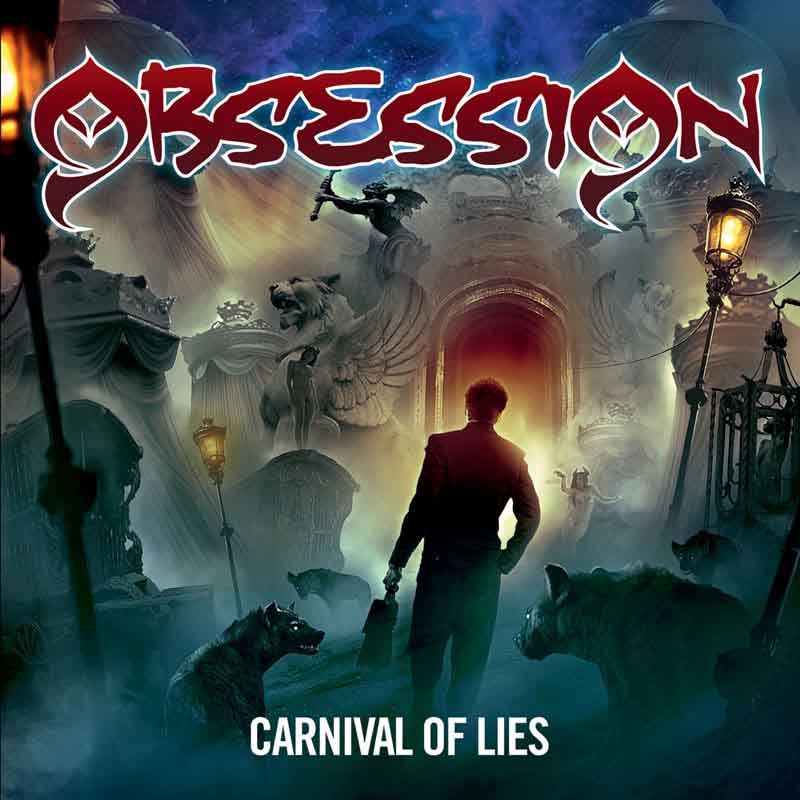
carnivaloflies


US. heavy metal band Obsession will be releasing a re-issue of their album Carnival of Lies (a reunion album originally released in 2006 that is now out of print) through Inner Wound Recordings. Carnival of Lies is set to be released on July 27th in Europe and on Jul 24th in the U.S.

Track listing

  1. Smoking Gun
  2. Carnival of Lies
  3. In for the Kill
  4. Playing Dead
  5. Imagining
  6. The Offering
  7. Pure Evil
  8. I Don’t Belong
  9. Written in Blood
  10. Guilty as Charged
  11. Marshall Law
  12. Panic in the Streets
  13. Judas


Obsession “Carnival of Lies” line-up:
Michael Vescera [Animetal USA, ex Loudness, Yngwie Malmsteen] – Vocals
Jay Mezias – Drums
Scott Boland [MVP] – Guitars
John Bruno [X Factor X] – Guitars
Chris Mccarvill [House of Lords, ex Dokken, Jeff Scott Soto] – Bass

Obsession online
Website: www.theobsession.net
Facebook: http://www.facebook.com/obsessionmetal


No Comments

Tags: , , , , ,

Desolate Pathway announce Sorrows Path guitarist to guest on new album

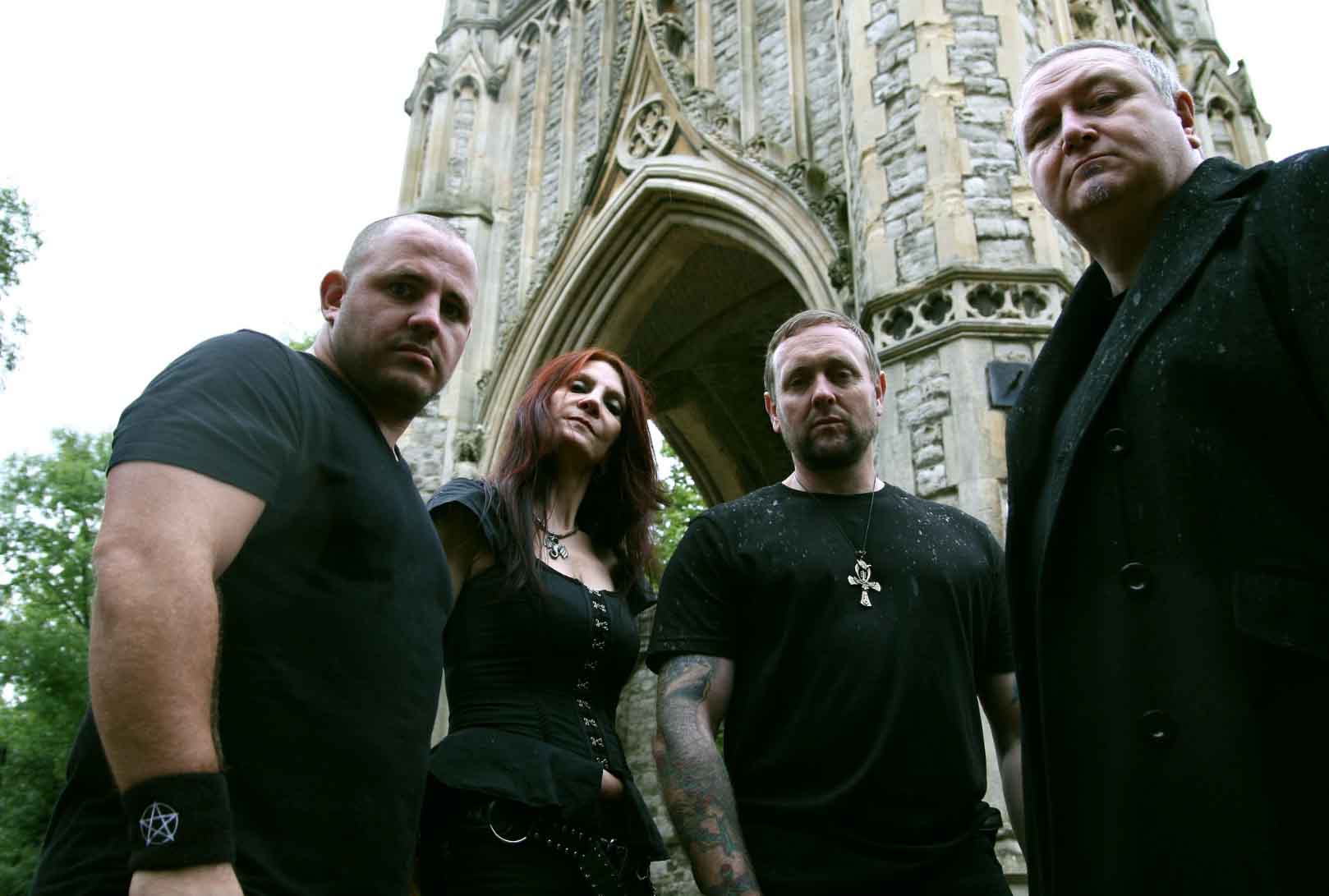
desolatepathwayband02

UK epic doom metal band Desolate Pathway are delighted to announce a guest guitarist for their upcoming album: none other than Kostas Salomidis of Greek stalwarts Sorrows Path.

Guitarist Vince Hempstead commented:

We would like to announce with honour that Kostas Salomidis from the amazing Greek Doom band Sorrows Path has recorded 2 guest guitar solos for our 2nd album planned for early 2016. Last week, Kostas recorded the guitar solos at Fragile Studios in Athens with producer Vangelis Yalamas, and the results are amazing. A great way to connect with our Greek mythology-based new recordings.


The band are also due to hit the road several times this year. Dates are as follows:

  • Jun 18th: The Cave, Addlestone, Surrey, w/ Hagstone & Famyne
  • Aug 29th: Power and Glory Festival, Hatfield w/ Stampede, Savage, Martyr, Sacrilege, Lord Volture, Toledo Steel, Salem, Dealer and more
  • Aug 30th: The Carlisle, Hastings, w/ Lord Volture & Toledo Steel
  • Sept 19th: The Carlisle, Hastings w/ Famyne
  • Oct 31st: Fest of Hades, Wakefield w/ Hamerex, Kaine, Aonia, Promethium and more.
  • Nov 13th: The Haunt, Brighton, w/ Temperance, Seventh Sin & Proscenium*
  • Nov 14th: The Anvil, Bournemouth, w/ Ded Orse, Bitter Divide & Seventh Sin*
  • Nov 28th: The Unicorn, London w/ Sir Admiral Cloudesley Shovell

* A Black Phoenix Rising Promotions special

No Comments

Tags: , , , , , ,

Classic reviews:
A B C D E F G H I J K L M N O P Q R S T U V W X Y Z