 Burzum composer Varg Vikernes has posted a “goodbye” to his old self as a metal composer and in a sentimental posting, announced his retirement from metal and his intent to pursue ambient music alone.
Burzum appeared from nowhere in 1991 with a demo tape made up of a dozen guitars-and-bass-only tracks in rehearsal quality. I made a few more or less successful metal albums, but they all always included at least some ambient music. With time I moved further and further away from metal, and today only the ambient music remains. Today (2013) I think I am done playing metal music for good.
Many of you followed Burzum through the years, some even from the beginning, and I think metal-Burzum deserves a proper “good bye”. So, just like I started out I will finish metal-Burzum with a guitars-and-bass-only track in rehearsal quality. “Back to the Shadows” is made up of the last metal riffs I ever made (in 2012). It was never released in any way, or recorded (beyond what you hear here), and it will not either — beyond this short “video”.
Take it for what it is; a sentimental good bye to metal-Burzum.
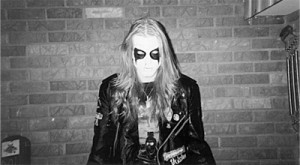
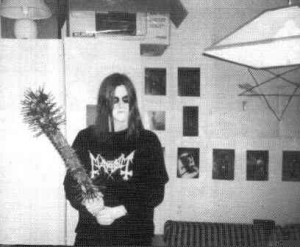
The music is playing with an image of the 17 year-old me, taken from the time when some of the first Burzum tracks were made. You can see this track as a good bye to that fellow too.
For those of us who have been watching Burzum and Vikernes over the years, this is a welcome development. Heavy metal is beautiful but it will always be attached to popular conceptions of entertainment. Ambient music, especially complex material, gets treated as culture.
While we hope to change that perception of metal and to have it be studied as art and part of culture, that’s an uphill battle when the fans routinely rush to gimmick bands and depthless clones in a hope to be part of the next popular trend.
Either way, this bodes well for more interesting compositions in Burzum’s future.
6 CommentsTags: Black Metal, burzum, dark ambient
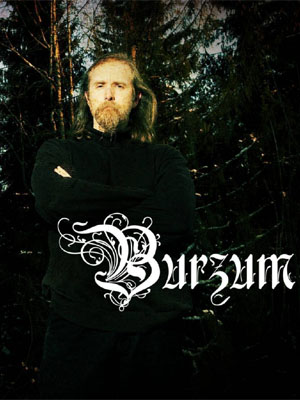 The semi-reclusive Varg Vikernes, sole composer of
  In the mainstream press, black metal has a reputation for being solely misanthropic, heavily distorted anthems of aggression and despair that are defined by their primitive minimalism.
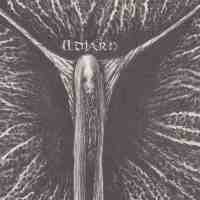
 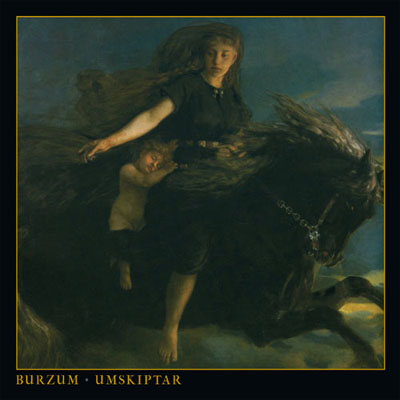 The good news is that it’s more clearly Vikernes writing this record. His previous voice, like his previous actions, seemed to get swallowed up by the notions of his “advisors.” As a result, previous albums did not sound at all like something he touched at all with his personality. This album re-engages his soul a bit more but remains a deliberate use of his talent to produce something cut to form, and the form is what is dictated by the audience. The result is to repeat the error of modern society over again: the people are led by economics or politics, instead of the other way around. While song structures vary somewhat, Umskiptar is designed around the verse-chorus model with melodic choruses and rhythmic, upbeat verses. Like many pasted-together projects, these are united with chromatic fills or conventional devices borrowed out of classic metal. While this album is not as cynically manipulative as the new Napalm Death, for example, it falls short of what made Burzum great, which was an innovative thinker opening up his mind and creativity to the audience. Like his mentor Tolkien, he took people on an adventure with what was and might be again. With Umpskiptar, the listener feels as if he is in one of those Disney-ride type “folk metal” bands that is mostly rock music with folk touches. Bands have been doing this since the 1970s… it has never succeeded, because people regress to the mean and in this case, it’s the archetype of rock and not folk. Vikernes’ early influences come out here, with muffled-chord riffs that sound straight off the first Destruction LP and what sounds like Iron Maiden influences. Musically, it’s adept enough that no part is offensive, and his use of three-part riff clusters as in traditional music is much appreciated, but it doesn’t add up. The whole is not greater than the parts and no atmosphere is created, thus the whole time we are aware that we are modern consumers listening to a modern musical product. Further, the riffs, tempi, themes and transitions are very similar, which in the absence of prior atmosphere does not cause a deepening but a sensation of floating on the surface. Many of the vocal tracks are entirely chanted in the death metal voice, which creates a ludicrous sensation of being yelled at by a drunk guy on the subway. By the time we get to “Valgaldr,” which sounds like an outtake from a bad stoner doom metal album, the lack of energy going into this album is evident. It’s ridiculous to expect an older musician to recapture his younger days. However, it’s equally ridiculous to sabotage a good musical brand by turning it from something rare and brilliant into something pedestrian with interesting “touches” and “accents.” That cuts to the real problem with this album and all post-jail Burzum: they’re boring. Not unmusical, but sparse in density with songs obviously patched-together “to be a song” and not to have any voice of its own. The new crop of teenagers he wants to sell albums to may enjoy this but it’s not distinctly better than its competition enough that it will endure as anything other than an SKU#.