Distorting the medium

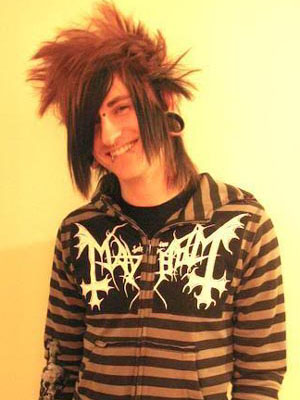
hipster_black_metal_flavored_alternative_rock_fanBy 1992, the metal underground was flirting with mainstream visibility to some degree; whether it was Slayer headlining an arena tour, death metal albums being distributed by Sony, news reports, or metal music videos on MTV.

An emerging horde of people saw how awesome death metal looked and leaped at the opportunity to be a part of a new movement and start their own bands. The problem was, these were the people weaned on The Black Album who wanted to be the next Kurt Cobain, so they chose the newest, edgiest method possible: extreme metal.

Every suburban nobody with a guitar thought if they dressed up their uneventful, radio friendly rock in a different way, they would be seen as unique, offering something new to the world that wasn’t there before. When these people make extreme metal, they keep the surface traits and miss the core. The down tuned guitar rhythms, guttural vocals and fast drums are easily cloned, but underneath the aesthetic of death metal lies something that is not too different from what the corporate rock that Metallica and Nirvana were shipping out at this time were expressing.

Some of these abominations might be in your album collection as well because, as they saw the horde forming, many established bands began imitating the imitators in a pathetic attempt to draw a new audience and get rich enough to quit their coffee shop jobs. Borrowing the rhythm guitar techniques from Bolt Thrower and Celtic Frost is no challenge, and bands like Gorefest and Obituary realized they too could make it big if they dressed up what the major labels were shipping out at this time. Thus, began the dumbing down of underground metal. Gorefest masked their rock bounce as death metal and Obituary thought reinforcing a Biohazard album with memes on rotting would lead them to success. It worked.

http://www.youtube.com/watch?v=Vnv7QNS7CMg

The hipsters of olde saw that it appeared different, but sounded similar enough to their radio fodder that they can add something derived from a morbid subculture into their “unique” fashion derived personality without threatening their social sphere. Eventually acts like Fear Factory would capitalize on this, finding much success by combining the sounds of Earache records popular Napalm Death and Godflesh into verse-chorus heavy-soft proto nu-metal. They were not using this music as a platform for artistry, but for label attention that they would use to springboard themselves into a radio rock career. They would fool their ‘death metal fans’ who were never able to discover the styles true potential into “maturing” with the artist, unaware that they were being used as another sales number until the band name became a corporate brand.

http://www.youtube.com/watch?v=4Plcbw8KfKQ

http://www.youtube.com/watch?v=LFWDZ85icyo

http://www.youtube.com/watch?v=F1ORPlxLGqY

While most people blame bands like Opeth for dumbing down metal into corporate rock, others are the blame for this process that started long before Opeth noticed it and decided to profit from it. The false ones who have been allowed into the halls of the underground have been going unchecked for too long. They might have fooled you at one point. If it’s not honest thoughts turned into music, you can be guaranteed it’s a gimmicky pose or well-disguised radio fodder meant to take as much money from as many wallets as possible. It should be no surprise that around half a decade later they all drop the aesthetic and unleash something like this upon the world:

12 Comments

Tags: ,

How metal introduces fans to foreign languages

iron_maiden_golfingMetal as a subject expands in different directions the more it is studied. Beyond being a genre of music with its own tonal characteristics, it is also an identifiable culture that extends worldwide. Fans who cannot understand each other find relation in the same style of music, often with unique local twists. However, some fans become so captivated by the different perspectives presented to them that they seek to understand it beyond just the sound.

The WSJ recently ran a piece on how metal has inspired listeners to become captivated by the languages they hear and attempt to learn them, in many cases successfully. Numerous university students have shaped their studies through what metal exposed them to – not just of other languages, but of an alternative way of viewing the world:

Olivia Lucas, a Harvard doctoral candidate who is working on a dissertation about Nordic metal, said people “simply want to understand what the culture is like that has produced this music.” It doesn’t take long, she said, to draw a parallel between the melancholy and gloom that underpins Finnish metal and the wider Finnish psyche. “Finns are comfortable with this feeling, and don’t feel pressure to be cheerful all the time,” Ms. Lucas, 25, said. Their music “embraces this view of the world.”

Although not directly stated in the article, this is actually common of metal on the whole – it seeks meaning not so much in what’s commonly seen as good, but rather what’s seen as bad. It revels in violence and destruction with a mystical undertone, not in contempt of life, but rather in favor of it. It recognizes that through struggle is how the great succeed, and the weak removed. It holds that values are eternal, and spiritual contentment is more satisfying than a momentary high. In short, it embraces everything that our current civilization seeks to rid itself of.

What these students have done, is to find through metal a gateway to a better experience of life. Through the experience of art, they have become enamored not just of another culture, but cognizant of what it might have to say about ours: we have lost our way. We have replaced towering cultural achievements with short mass-entertainment that the simplest prole can enjoy. Metal is our way back.

1 Comment

Tags: ,

Metal is metal, not a grab-bag of other clichés

alt_nu_funk_rapNot for the first time I find myself reading a cringingly bad article from the Irish press about metal. This one is entitled Alt, Nu, Funk, Rap: there are many colours in the heavy metal rainbow and it ran in the Irish Times yesterday.

Ireland’s a frustrating country in which to be a metalhead. On the one hand, it’s the land that produced latter-day genre ambassadors Primordial and cool-as-fuck proto-metallers Thin Lizzy. On the other, metal in Ireland is stuck between a mass-culture slavishly obsessed with low-grade British TV and an arts/intelligentsia scene more interested in brushing up its phony posh Hiberno-English accent and patronising 3rd rate continental post-modern knock offs. Metal is a poorly-supported fringe genre; too morbid for popular culture and too loud and unpretentious to fit in with ‘sophisticated’ culture.

Because of this, as great as many Irish metallers are, the Irish metal scene is infected with a section of people with an attitude that is both happy to accept and produce novelty trash, and is simultaneously chronically under-confident about being a metaller – berating anyone who to takes it seriously. “Sure it’s only a bit of craic.”

Other than sneering at it, Irish Journalists and other arbiters of public opinion rarely take notice of metal unless they want to leech some of its credibility; an act that apparently doesn’t require any research beyond wheeling out a few tired anecdotes about barely relevant 50s/60s bands.

It’s no coincidence that today metal is growing fastest in countries with oppressive regimes, notably Iran and China. For all its genre- splitting, commercialisation and in-fighting, metal remains, in the broader socio-political field,a transgressive form of music signifying individuality and defiance of authority.

Last month leading Chinese dissident Ai Weiwei released the first single off his “avant-garde heavy metal” album. With lyrics railing against censorship and human rights abuses in China, it’s as potent – in a political way – as the opening chords of You Really Got Me must have sounded in 1964.

Sorry pal, but metal is not some nice, cuddly, inclusive sausage-fest, where everyone can listen to whatever flavour they like and we all finish off holding hands in a circle, smiling dumbly to the sound of “Kumbaya.” It is not about giving your parents the finger and escaping the oppression of society to go live in a vegan organic farm where everyone lives by love, tolerance and inclusivity.

Some of the best metal has been made by people with beliefs considered unacceptable in polite society. Metal isn’t a rejection of authority; it’s a rejection of the idea that society is the answer to our problems. Metal says: we can’t all get along. To a metaller, a greater ill than an extreme and unfriendly ideology is a wimpy attempt to pretend that the reality is more sanitary than it actually is.

Sadly for this, much of the metal he cites as counter-examples either doesn’t exist, or is of such painfully low quality as to be of no significance. Like many a media forgery, he has used one example of something — despite it getting nowhere in the genre — as an example of a “trend.” There is of course a healthy scene in Israel, but I suspect Israeli Jews would be more annoyed than flattered to read themselves being used as examples of un-metal sounding metal.

Even worse, like a salesman after a three-martini lunch, he’s trying the old trick of making metal palatable to us by claiming that it’s something we already recognize and accept. Citing ‘alt’ ‘rap’ and ‘funk’ as leading genres of metal shows almost no awareness of what defines metal and makes no account for it as anything other than an interchangeable synonym for rock. But that’s what he wants — he fears that metal might be something by itself and for itself, beyond the control of the society and social thinking he so slavishly obeys.

Whether the writer likes it or not (perhaps that should be ‘whether he knows it or not’, given the extent of investigation done appears to be sub-Wikipedia?) metal is not about fitting into a trendy political creed, but about exploring the dangerous, the feral and the ugly for the sake of transcending moralism and understanding the world as it is, not as it should be according to any given utopian outlook.

3 Comments

Tags: , ,

In defense of metal

heavy_metal_audienceI think if you’d ask most hessians, they would say that we live in the age of kali yuga. If you get a chance to speak with lower-case-c conservative people, they express the same feeling: that something is lost. That some form of refinement, culture, and civility is gone from modern culture, if you could even call it that.

One of the complaints that repeats itself regards the state of the arts, and more specifically, music. It is simplistic, they complain. It is crass, uncultured, fatalistic, naval gazing, hedonistic, idiotic and stupefying. None of these is wrong.

It saddens me, then, when people complain about rap, rock, and Lady Gaga, they usually lump metal along with the complaint. I get it, though. The way metal appears to most of the world is not as a refined style. Some of it is also the product of the vast machine of idiocy that turned music into the nightmare that it is today. They made it safe, by making it mockable.

But some of the fault lies with hessians. Not all bands are Pantera and Slipknot. There is an entire world encapsulated in the metal genera. It is one of the only styles that keeps on expanding and developing. We have some commitment, as hessians, to support metal, in the great cultural discussion that extends through the generations.

Good metal will always be there, and will always be a legitimate art form. It would be sad, however, if those who could appreciate it (they don’t have to like it) would appreciate it, instead of buying into this elaborate hoax by the impetus of insignificance espoused by commercial music.

First and foremost, metal is a legitimate art form. A legitimate form of music. Yes, there is metal which is certainly not music. Pantera and Slipknot come to mind.

However, there is something in metal, a movement that existed since its advent in Black Sabbath’s first album, which expresses immortal truths. It feels as a sort of pessimistic conservative message.

Are things running down? Is there a process of degradation, a willful suicide enacted by modern culture? This observation was expressed by Black Sabbath, in an attempt to rain on the hippy party. We won’t go into why hippies are the end of civilization right now, but know that if some movement, since its advent, was diametrically opposed to such movement, there already is some root credibility to it. The hippies wanted to create a world without values, without temples or transcendence. Metal, on the other hand, constantly seeks transcendence, enlightenment, and a form of holiness. It is not base and animalistic, but in fact, a deeply religious experience.

In metal, there is encapsulated an idea that holiness cannot exist in a vacuum. If there is holiness in life, it must be whole. Blasphemy became an act of holiness and worship of life in its fullest.

To truly love life, you must love it completely, including the scary, red in tooth and claw parts. Metal expresses these aspects in purity and vicarious form. There is no need to describe beauty, truth, and love, because you cannot accept them until you have delved into pain, struggle, overcoming, violence, exposing hypocrisy, self reliance, heroism and individuality. These ideas are the bread and butter of metal music. It is not individualism, but individuality.

Undeniably, there is a nihilistic streak in metal. It is not the passive, fatalistic kind of nihilism, but the nihilism that views happiness, success and overcoming as dependent upon choices made by the self. No avoidance of consequences, looking ugly truths in the eye. There are inescapable things in life. Death, pain, lies, predators, and all the degeneration that arises from the human condition.

Do you deny these exist? Deny their necessity? It would be like denying rot and defecation. Ignore them and you’re in for a mess. Accept their inevitability, and you get a daily battle which never ends. It’s like mowing the lawn.

Metal is the tool which shapes this view of life. It might seem bleak, but the happy warrior never despairs. It’s an existential battle, and metal is the fuel, the blood in its veins, the fire burning in its soul.

I wouldn’t be who I am today without metal. Without these immortal truths as my guides and friends. I could be there, smoking the pipe-dreams of modernity. Drinking the kool-aid. Why chose suffering and a constant fight?

Maybe because I believe in tragedies.

9 Comments

Tags: , ,

University offers degree in heavy metal, and not all are thrilled

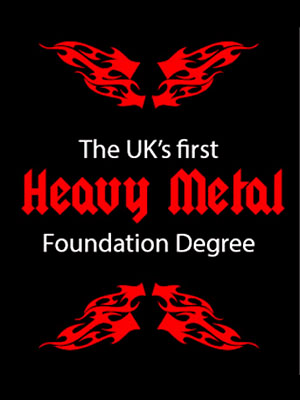
heavy_metal_foundation_degreeNew College Nottingham in the UK have recently announced that from September this year they will be offering students a foundation degree in Heavy Metal.

“We’ve created this pioneering course in response to student demand and Nottingham’s growing music and creative economy. At its heart is music performance so students will be forming bands, gigging and promoting, while academically delving into what makes metal such a music phenomenon. Applicants will be auditioned and will need to demonstrate an ability to play or sing up to Rock School, ABRSM or Trinity Grade 5 standard and have knowledge of music theory at ABRSM Grade 5,” the school announced in its class syllabus.

Further, New College opined, “Due to the largely unstructured nature of the music industry, the FdA in Music Performance (Heavy Metal) places a strong emphasis on the development of entrepreneurial skills designed to allow the students to work confidently on a self-employed basis.”

As supportive as I am of the growing area of metal studies in academia, this course sounds like a terrible idea – unless of course it consists of 21 hours a week forced listening to and analysis of Demilich’s Nespithe, in which case it’s worth every penny.

A budding metal musician would be much better off getting a degree in music – whether at a predominantly classical or jazz institute, they will get a much broader grounding in the theory and history of western music, and thereby understand better which bands and ideas are good and which are garbage. By the way, for those that don’t know, Grade 5 Rock School is not a very high benchmark for musicianship at all.

I’m sure that the college believe they are helping facilitate people into a niche and commercially lively area of the economy, but I wouldn’t be as optimistic as they are.

Its been a long time since the UK produced a viable classic metal band that could draw in a consistent crowd (let alone produced a noteworthy scene or movement), so its hard to think of a stable, growing sector in the UK metal economy other than Iron Maiden’s stage crew. Remember also that most metal musicians the world over will at least have to supplement their income with other work, if not wholly support their music through a day job. It’s also not as though, when business is slow, you can go play a few weddings or open mics when your stock repertoire consists of Slayer songs and originals that are probably only Slayer rip-offs.

I could of course be completely wrong about it; but if it were my kid choosing their degree — £7,000 a year for something that will only look bad on their CV — I don’t think I’d be too quick to let them test out the possibility of me being mistaken.

No quality metal band before now ever required this qualification to propel their career in the right direction or provide them with worthy scene credentials, and that will probably remain the case.

7 Comments

Tags: ,

International Journal for Community Music requests papers for its Metal Special issue

international_journal_of_community_musicThe International Journal for Community Music has issued a call for papers seeking research on “the heavy-metal community (and its communities) and the spaces and practices that shape heavy metal music as community music.”

So what is “community music”? In another issue, the journal defines “Community Music” by saying “community music may be thought of in a variety of ways, including (but not limited to): music teaching-learning interactions (for all people of all ages, ability levels, and interests) outside ‘formal’ music institutions (e.g., public schools, university music departments, conservatories, symphony orchestras), and/or partnerships between formal institutions and community music programs.” In other words, music as the basis for communities within communities, sort of like as a replacement for the culture we gave up for malls and television.

As the papers request itself says, its focus is on “the communities of heavy-metal fandom and the construction of heavy-metal music in community, semi-professional or amateur settings: heavy metal as community, heavy metal as leisure, and heavy metal as a place that fosters local and global senses of belonging and inclusion in an increasingly commercialized and atomized world.” This fits perfectly with the Hessianism concept of heavy metal as an “elective community,” something demonstrated when the National Day of Slayer showed people a metalhead presence in all parts of the globe.

If you are interested in submitting a paper, contact Dr. Karl Spracklen.

1 Comment

Tags: , , , ,

Killing Joke release video for “Corporate Elect”

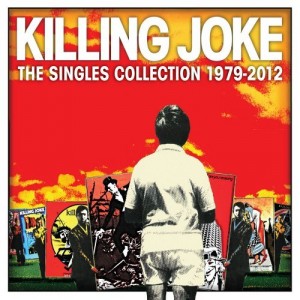
killing_joke-the_singles_collection_1979_2012Iconoclastic and idiosyncratic industrial traditionalists Killing Joke release the video for “Corporate Elect” today in anticipation of their new compilation, The Singles Collection 1979-2012, and riding on the heels of their success last year with their newest full-length MMXII released on Spinefarm Records.

Active since the late 1970s (hence the title), Killing Joke explored the murky zone between punk, metal, synthpop and industrial music. Years before Ministry, Godflesh, Nine Inch Nails or Fear Factory, Killing Joke found their own voice in this nomansland of styles and also found their own voice in terms of content, exploring ideas that most pop music couldn’t articulate much less contemplate.

The Singles Collection 1979-2012 comprises thirty-three career-spanning singles over two CDs with an additional third disc of rarities which includes previously unreleased studio tracks. The limited three-CD version will revert to two CDs containing the singles tracks. The three-disc deluxe and regular two-CD version is set for release via Spinefarm on the new date of June 4, 2013 and can be pre-ordered here.

For more information, visit the band’s official website at www.killingjoke.com.

3 Comments

Tags: , , , ,

Heavy metal musicians involved with politics

jeff_sprague-damage_incJeff Sprague is a Canadian politician who is also a heavy metal musician. By day, he works in private security and is a member of the Conservative Party of Canada. By night he fronts a Metallica tribute band titled Damage Inc.

This may seem an unusual marriage, but consider: if we recognize that heavy metal expresses eternal values that are worth spreading; in the age of democracy, politics can be an effective method of achieving this. Rather than dismissing politics, Hessians should strive to get in and turn it in a more positive direction, as this not only improves political discourse, it also increases awareness of the Hessian community.

Unfortunately for Mr. Sprague, last Thursday he initiated a late night drunk driving incident. As reported by The Province, he decided to suspend his candidacy. A disappointing end, but one that offers a theme to reflect upon: politics requires a high degree of public professional behavior, something Hessians striving to achieve political change should take note of.

5 Comments

Tags: ,

Why metal riffs delight us

hedge-labyrinthWhy is metal riff-crazy? These twisted little quasi-melodies of sliding power chords, notes and harmonics are tiny puzzles for our brains. Now science hints at why metal loves them.

Apparently, our brains love guessing what’s next in music, and perceive an intense sensation of reward if they guess correctly. For all those who identified metal’s riff-salad as a “puzzle,” you win a prize.

Like the labyrinths to which they are frequently compared, metal songs create a prediction game within the brain and cause an explosion of neural activity in a part of the brain called the nucleus accumbens. This tiny wad of cells, which sits in the pleasure/reward center of the brain, gives us a throbbing blast of “reward” every time we play the guess-where-this-riff-goes game.

Both metal and classical play this game. They specialize in intense repetition of certain phrases, but unlike rock music, the repeated phrases do not necessarily lead to the same conclusions, and in fact alter their destinations and form throughout the work. This keeps the guessing game intense and, while we’re distracted with the riffology, shows a change in themes, which if themes are metaphorical, shows a learning process by whatever protagonist may be inferred from the work.

Musicologists have often wondered at the tendency of metal fans and classical fans to be more devoted and to be more likely to enjoy the music over the course of life itself than your average rock or pop fan. In fact, the similarities between metal and classical frequently emerge among those who take their music very seriously. Could it be they’re simply getting a higher sense of reward from the riff-puzzle and its tendency toward non-repetitive repetition than they are from the relatively straightforward repetition of other styles?

12 Comments

Tags: , , ,

Classic reviews:
A B C D E F G H I J K L M N O P Q R S T U V W X Y Z