Death Metal Album of the Week: Nocturnus - The Key

Album Reviews: Diocletian - Doom Cult

Live Reviews: July 21st 2010 - Inquisition in Vancouver, Canada

Book Reviews: Daniel Ekeroth - Swedish Death Metal

Film Reviews: Cannibal Holocaust

Essays and Research: Pyrrhic Victories - A Brief Study of Artistic Decline

Morbid Scriptorium: A Museum of Metal Zines

DeathMetal.Org is a joint project of the net's oldest underground metal resource Dark Legions Archive and collaborating writers who share the commitment to serious Death Metal. Bands, labels, zines, gig organizers and other parties working in the true spirit of Death Metal who wish to get the word out there through our site are invited to get in touch.


In order to establish a solid, even scientifical basis for the study and appreciation of Death Metal, we are collecting and digitizing diverse materials related to Death Metal history, such as zines, flyers and demo covers. The death metal zine reference center and the death metal art repository are at your disposal. If you appreciate the contents of these archives, please get in touch and contribute something from your own collections in order to preserve memory, information and knowledge and to save these rare gems from being buried by the sands of time: The Past is Alive. We also would like all our noble readers to stay active in their own productive manner and through their contacts spreading the word about all these projects, archives and analyses which ultimately achieve their meaning by the responsive awareness of the intelligent observers somewhere out there, who prowl as wolves among the sheep. Here are some Death Metal related flyers, links and banners you can spread like the plague in order for our hordes and communication networks to grow towards world domination and eternal victory.

100% Death Metal and Black Metal Forum: death metal, black metal, heavy metal and ambient philosophy, discussions and MP3100% Death Metal and Black Metal Forum: death metal, black metal, heavy metal and ambient philosophy, discussions and MP3

100% Death Metal and Black Metal Forum: death metal, black metal, heavy metal and ambient philosophy, discussions and MP3

Dark Legions Archive

Hessian Studies Society: Political Rights for Death Metal Fans Now

Abraxas Neoclassical Music Reviews

Death Metal, Punk, Heavy Metal, Classic Rock Features

Death Metal, Heavy Metal, Black Metal Encyclopedia

National Day of Slayer

Forest Poetry

Grindcore

Metaleros

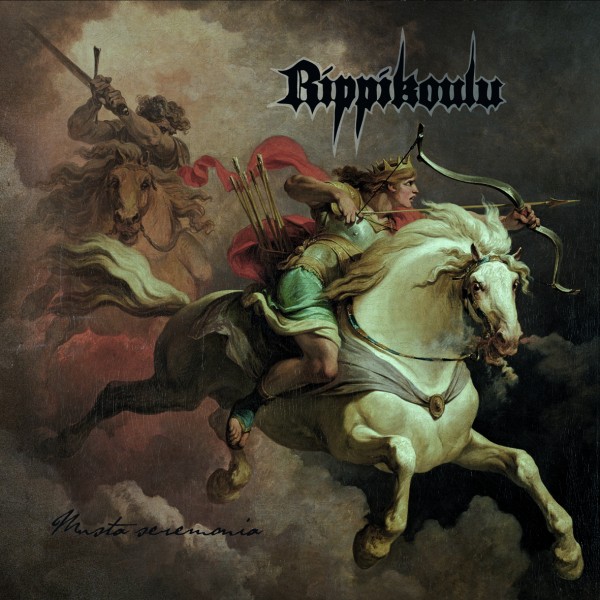
Forgotten death cults from Finland: Rippikoulu

What force in the inner core of man gives birth to death metal impulse? Is it fear, hatred, obstinence, passion, paranoia, vision or celebration of power? “Rippikoulu” is Finnish for “confirmation school”, which is an institution partaken by Finnish teenagers in order to be educated in the rituals and tenets of the Lutheran church. Celebrated usually in a camp away from the city and the participants’ homes, it ironically has a habit of devolving into a minor orgy of sin while the sole motivation of attendance for most is the hope of the meager sums of money elderly relatives usually bestow upon one, after the confirmation. When small town death metal cults produced their blasphemic demo output, it’s not far-fetched to say that it was this kind of absurd experiences with organized religion that led them to deny and spontaneously analyze the hypocritical, indoctrinating social customs that lead a child or a man to accept Christ for the sake of community and convenience, while at the same time materialistically mocking the values of the spiritual tradition.

Valkeakoski was another boring town even by Finnish standards which used to smell like feces because of the paper industry, an example of climate perfect for original death metal. At surface, the most notable characteristic of Rippikoulu was their use of Finnish language for invocation, which has often been abused but at the right hands and in the right mouth withholds the tremendous syllabic power feared by Nordic warriors since the Bronze Age, as recounted in Kalevalan mythos. The stupendous music of Rippikoulu’s two demos, “Mutaation Aiheuttama Sisäinen Mätäneminen” (“internal rotting by mutation”) and “Musta Seremonia” (“black ceremony”), bridge the grindcore influenced ecstatic physicality of Xysma with earthen, suffocated sludge in contorted, space-and-time stretching rhythmic dynamicism reminiscent of Winter‘s and diSEMBOWELMENT‘s most psychedelic lapses. It gives the impression of a blind, tormented prophet shouting fragmented glimpses of pure vision to the darkened, apocalyptic world with barely any ears left to listen to human voice amidst the collapse of industrial infrastructure. In the slow, emotional leads one could hear Paradise Lost, but in its warlike sparseness and logic, even nihilism, it’s something closer to the most doomed moments of Bolt Thrower’s “War Master” while the almost ridiculously disembodied parody of gloomy gothic organ in “Musta Seremonia” brings to mind Unholy‘s drugged haze; Faustian sorrow and blasphemous sense of humor united in one single strangely reverent and innocent package which is without question another forgotten jewel of the olden Finnish death metal scene.

Filed under: Death Metal Essays and Death Metal Research — Tags: , , , , — Devamitra @ May 23, 2010 14:27 — Comments (6)

Death Metal Album of the Week: Unholy – The Second Ring of Power

Like the great Vuoksi river pouring its secrets into Lake Saimaa, the ancient Finnish Doomdeath cult of Unholy‘s second album is an hypnotic and psychoactively charged procession of swirling currents towards an expanded state of consciousness. ‘The Second Ring of Power’ is maybe a controversial selection for this week’s album, with its emphasis on a funereal pace that is practically unable to propagate riffs in a manner recognisable to Death Metal connoseuirs, the heavy use of keyboards and even clean female vocals, but this is no less an auspicious choice and as far from the effeminate Doom Metal of the past 15 years imaginable. If Pestilence were under the influence of Mescalin during the recording of ‘Spheres‘, it might have sounded something like this, although the spacey and downright evil keyboards by and large subordinates the guitarwork, still informed by the likes of Celtic Frost via. Unholy’s former incarnation of Holy Hell, which simplified this style yet injected it with some mysterious flavours. Beneath this recipe is a blissfully undulating bass line that connects the various mood premises of the songs to wider, meditatively layered soundscapes and adjusts the mind’s eye to synchronise it’s vision with the eternal and omniscient cosmic consciousness as guitars release streams of radically transformed melody, riding the endless waves of bass. Further influences, from the sonic incense of Dead Can Dance to the ethereal and evil rock of the Cocteau Twins are pulled in at points to enhance the ritualistic and trippy elements, but the brutal death vocals and the spirit of nihilistic awakening ensure this album remains a proud classic of the unholy left hand’s own path to Divinity.

Filed under: Death Metal Album of the Week — Tags: , , , , , — ObscuraHessian @ April 17, 2010 23:51 — Comments (0)

Sarcophageous film on Finnish heavy metal culture

Promised Land of Heavy Metal is a documentary about the history and philosophy of Heavy Metal and how it became such a big deal in a small country called Finland.

We tell the story of Finnish Metal, from its early “underground” days to the present success stories, by interviewing famous musicians, experts and events organizers, a psychiatrist and a doctor of theology. The film takes us literally from the graveyard to the Finnish President’s palace!

Why is Metal a religion for so many? What are it’s links to satanism and ritualistic murders? What made Metal mainstream in Finland? Why does the Finnish Church have Metal Masses? What’s the future of Metal, after LORDI won the Eurovision song contest and even the President approves? We hear strong opinions: some see Metal as the new folk music, while others detest it’s commercial aspect.

The film is narrated by Kimmo Kuusniemi, a filmmaker, Sarcofagus guitarist and a forefather of Finnish Metal. Kimmo has lived in England for 16 years, and sees the current popularity of Heavy Metal as a strange phenomenon. He was the one who fought for the metal message 30 years ago! What happened in Finland in his absence?

One of our aims over the years has been to prove how the vital undercurrents of Finland produced cultivated metal sensations over the years from the earliest heavy metal days, best exemplified by the inimitable Sarcofagus, to thrash and the Finnish death metal movement, finally creating a discharge of consciousness that erupted in mainstream metal sensations all over the world, leaving most of the more focused and gloomy explorers to repose in the depths.

Kimmo Kuusniemi, the founder of Sarcofagus, the earliest Finnish metal band, has aggregated his unique vision into a documentary giving sporadic but meaningful glimpses into metal culture in search of the ultimate question: why?

Filed under: Death Metal News — Tags: , , , , , , — Devamitra @ March 11, 2010 21:17 — Comments (3)

An ennead of terrifying visions – classic EP’s of Death Metal

This series of reviews shows the infectious potential of condensing the multidimensional texture of darkness and mythology into a carefully trimmed brief explosion with no room for filler or long, meaningless passages of droning, experimentation or interludes. Those who mastered the art of the metal EP or mini-LP are rare, but deserve all the more credit for their achievements. The fact that you can listen to everything we have here easily within the space of one evening does not mean that the unlocked experiences won’t stay with you forever.

Slayer – Haunting The Chapel

Showing a strong advancement in technique and an evolution towards a darker style that would be the staple of records to come by the band, Slayer throw off the camp shackles of their excellent first album, and give a more progressive approach to songcraft yet give more emphasis on repetition within individual riffs. The violent droning guitar timbre of Discharge makes itself ever more present whilst the musical language of Judas Priest and Angel Witch works itself within those patterns. The dissonant twin soloing of King and Hanneman is more suitable to this new direction also, whilst Lombardo’s aggressive battery finds more cohesion in using less variation and being more of an ambient backdrop than before, with Araya’s unmistakable rasp encoding itself sadistically within the depths. A bleak affair that summed up the apocalyptic meanderings of the speed metal movement and the embryonic beginnings of the death metal that was yet to manifest. -Pearson

Napalm Death – Mentally Murdered

This work is like a convergence of Napalm Death and Carcass, having left ‘From Enslavement to Obliteration’ and ‘Reek or Putrefaction’ behind in order to expand on their styles, towards ‘Harmony Corruption’ and ‘Symphonies of Sickness’ respectively. By Napalm’s standards, at this point in their discography, these songs are quite lengthy and structured with an attention to detail that recaptures the subtle shifts in mechanical motion of the earliest side to ‘Scum’. This technique is re-invigorated by the cleaner production, relegating the extremity of fuzzy bass for the sake of a twin-guitar assault that creates an hypnotic and delusional sensation, and shows the input of Jesse Pintado who would go on to record another highly influential work of Grindcore – Terrorizer’s ‘World Downfall’. Composition is practically freed at very the earliest moments of songs onwards, unlike previous Napalm Death albums where these parts were used to establish exactly which single riff will become immersed in a barely discernable anarchic explosion for the rest of the 30 seconds of music. Instead, it’s given a more Death Metal treatment, e.g. in ‘The Missing Link’, the opening riff seems to degrade over time into smaller grinding patterns until the fragments are juggled like sacks of meat by morbid Death Metal riffs. This is where some of the tremelo melodies that would tear through the rotten wall of sound of Carcass finds its place, accompanied by the mocking lead guitars of Bill Steer. The human tornado, Mick Harris is even more precise than his previous effort, but doesn’t lose any of his epithet’s justification. Lee Dorrian’s vocals become more guttural and undecypherable, conceding to the futility of mainstream political discussion. The seeds of an approach closer in line with the burgeoning interest in Death Metal were sown here, simultaneously taking Grindcore one step further away from reaching the dead-end of short and simplistic outbursts of truncated riffs and hollow statements. -ObscuraHessian

Rotting Christ – Passage to Arcturo

Warm, playful and overflowing with the abundance of inspiration in the rediscovery of ancient shamanic techniques of mystical metal creation, the Greek pioneers of Rotting Christ forsook the aggravated modern noise of grindcore in time to ride the wave of blackness that usurped the European metal underground. Remnants and glimpses of 80’s fast modern metal (Slayer) give way to an astral, luminous intensity of synthesizers and slowly picked melodies that suspend the themes for a moment to enable the mind to stop wandering and relish the unholy moment of concentration, in a yogic gesture of blackness. Few have ever used the crushing sonic world of black and death metal to so fully immerse in ethereal ritual, and such rare examples as “Drawing Down the Moon” preserve plenty of subtle reminders to this widely heard classic of European black metal. As their chaotic exhortations in countless zines of the period conclude, Rotting Christ’s hybrid of gothic and black metal aimed for an architecture of the infinite, regal sunsets of lost kingdoms whose landscapes are not for the eyes of mortals, except in dreams and in death. As “Forest of N’Gai” aptly proves, black metal was at its height when not contorted to fit the schemes of a political ideology or an orthodox Satanist movement, but like the great works of literature a realm of fantasy of its own whose symbols are rooted in our deepest unconscious fears and desires. This sub-space can then be used by the analytical mind to figure the patterns of generation for a multitude of creative, even lunatic, concepts. -Devamitra

At the Gates – Gardens of Grief

The original Gothenburg gloomy melody cult made one of their strongest statements on this early EP, pressed from demo to vinyl on the first year of the band’s existence. Fresh from life disrespecting bands such as Infestation and Grotesque, these Swedes nail the most desperate guitar harmonies since Candlemass, but infect them with the viral sensibility of a flux of death current. As if plugging the Sunlight Studios into your brains in direct interface, Svensson’s tremolos rip and rend mercilessly apart the soul of the beast that dared expose its true feelings of living in a world of hypocrisy and uncertainty. The band has preserved the most fragile moment of the Swedish death metal underground, the precarious balance between the catatonic psychosis of headbanging under alcoholic influence and the deep, burning, thoughtful soul of an encrypted Romantic in a world of pain and disguised memories. It all takes such tangible form in Tomas Lindberg’s cracking, maddened scream: “I am at the gates – Lord of Chaos – Let me sleep”. The fear and anger of At the Gates’ most revered albums will always remain something that divides audiences according to their response to such emotional cues, but “Gardens of Grief” is the un-terrorized, exuberant sound of youth that realizes the presence of death and dives into it headlong, appropriate to the Per Ohlin dedication in the liner notes. -Devamitra

Wings – Thorns On Thy Oaken Throne

An all too brief EP from Finnish gloomophiliacs Wings, as ephemeral as the tortured existence that is enshrouded in these twisted sounds of darkness-raped melody. Almost like the missing tracks from Cartilage’s cult classic ‘The Fragile Concept of Affection’, this continuation goes further to explore the sombre moods of songs like ‘Why Do I Watch The Dawn?’, in their Replicant-like reflections upon the transience of a human existence placed between the crushing, vice-grip of nothingness. Wings don’t peturb the balance of pace of slower, more expansive lakes of hypnotic melody that made up Cartilage’s contribution to their split with Altar, but there is greater focus on creating a doomier atmosphere, leaving no space for the grinding riffs of the past incarnation – a technique that parrelleled the Swedish Unleashed on their first album. Instead, an older treatment is given to the bouncier riffs, which could be heard as Punkier passages, but as this EP comes together as a whole to reveal, these bridge the narrative that seems to span across both songs with a mid-pace tempo in which the drawn out melodies pass through towards an expressive, quite neoclassical riff of totality – encompassing all the hopes that are weighed down by all the sorrows in the journey towards death. This poem in two parts is a valuable recording of Death Metal history, as a valid direction for these Finnish musicians to have taken following the demise of Cartilage, with all their weird melodic knowledge as baggage. -ObscuraHessian

Sacramentum – Finis Malorum

A true gem, Sacramentum’s first EP showcases a style that is melodic and emotive in a manner not unlike countrymen Dissection and Unanimated. Epic, catchy and well crafted compositions are multi-layered not unlike Emperor minus keyboards, the rush of guitar notes being vibrant and lively, with little emphasis towards a rhythmic expectation, as one would expect with most heavy metal and hard rock music. Simultaneously moody yet without being whiny, this early release by Sacramentum showcases a band who are able to master quality control and bring the best out of all the elements that define their music. Alongside At The Gates, artistically the finest Swedish metal act of the 1990′s. -Pearson

Zyklon-B – Blood Must Be Shed

Fast, raging black metal with the fury of early Deicide and the sharp harmonizing typical of Mayhem and Immortal’s ‘Pure Holocaust’ come head to head, in the guise of technically precise, abrupt songs. Shouty hardcore vocals, warm synth overlaps, a near constant blastbeat and anti-humanist lyrical concepts indicate a desire by known Norwegian musicians to advance the aggression of the black metal style and shift it’s idealogical focus away from romantic nostalgia. This brief E.P. lacks the spark of Norway’s foundational acts, but remains an influential statement of the subgenre. -Pearson

Vulpecula – Fons Immortalis

Who would have expected Chuck Keller to open the gates to very Orion itself after the folding of the aggressor squad par excellence Order from Chaos? As if a continuation of the promise of the astrological and alchemistic symbolism of the former bands’ lyrics, Vulpecula slows it down and strums soothing, yet vigorous melodies while the vocals multiple into wraith-like dimensions of rhythmic rasps and Keller’s leads occasionally burst into the aggressive, spasmous flight of an eagle amidst a thunderstorm. “Phoenix of the Creation” delves into exercises in authentic space synth, while “The First Point of Aries” harkens to the mid-paced woodland meditations that the Norwegians used to record at Grieghallen. Occasionally slightly hindered by the band’s eagerness to cram all the influences from Schulze to black metal into one short EP, the mere richness of it invites the ears to take their pleasure at will from the Babylonian garden of ponderous and prestigious movements that are achingly attractive and acceptable in their innocent refusal to complicate things with dissonance. Credit also goes for the lead guitar efforts of Keller on their traditional melodious injection which easily avoids the neutrality of more pop oriented bands trying to do the same. Almost like envisioning a “new age” approach to the genre, Vulpecula is an alien saucer amidst the orbit bound technologies of “progressive” death metal. -Devamitra

Divine Eve – Vengeful and Obstinate

The first new release that’s being reviewed for 2010 and it’s already giving distinct impressions of the kind of quality that made 1993′s ‘As the Angels Weep’ a genuinely classic EP. Divine Eve keeps the form of this new material far simpler, stripping away the Death Metal-infected sludginess for a more rudimentary homage to early brutal music like Celtic Frost. ‘Vengeful and Obstinate’ makes its own unique statement by honing in on the nihilistic and warlike spirit of the Swiss legend’s ‘To Mega Therion’ magnum opus, even invoking the same battle-horns on ‘Ravages of Heathen Men’ that bring focus to the beauty of conflict and strife in a meaningless universe. The varied tempo of grinding riffs set to a dirty bass guitar adds to the atmosphere of struggle as an outlet for this primitive, instinctual response to the world. ‘Whispers of Fire’ being the exception on this EP for the constantly up-tempo pace, it’s a pleasure to hear such slow and sludgy music churning visions of the darker universe beyond our lives of comfort and languish. The final and most devastating touch of ‘Vengeful and Obstinate’ is how Divine Eve makes extensive use of the piercing tone that Xan’s grating guitar setup produces, highlighting the spiral passage of powerchords by revealing their hidden, melodic architecture, ingenuiously managing to explain and enhance this rugged approach of legendary lineage. It’s about time the band produced a full-length and they’ve proved that they possess more than enough knowledge of unholy riffcraft to do so. -ObscuraHessian

Filed under: Death Metal Music Reviews — Tags: , , , , , , , , , , , , , — Devamitra @ February 3, 2010 15:54 — Comments (6)

Onwards to a decade of dominance

Entombed '92Death Metal is neither an outdated form of immature musical expression nor one commercially produced alternative product for consumers who would pretend to be real individuals. It is a way of seeing the world, always has been and always shall be. Regardless religious, scientific or political orientation I assume we can agree that death, as concept, is universal and encompassing, since no king nor magician nor soldier nor businessman is exempt from its eventual icy touch.

It is the first New Year since we reformatted this site to bring you vital, non-obvious and hopefully inspiring information, news and discussion about Death Metal and related topics. Appropriately, it is also the turn of the decade and we are at the threshold of new ideas, innovations and intents. To celebrate the endless possibilities given to us by the Universe for our brief lives upon the Earth and to thank all the people who have worked with us, gotten in touch or read us, last but not least the brave musicians who throughout the years have brought us all these dimensional deconstructions, we have a massive update for you to peruse and guide you in making the right New Year’s promises such as: to listen to more Death Metal.

Everyone knows bands like Amorphis, Demilich and Sentenced devastated worldwide audiences with their darkspawned conjurations in 1993 but very few know what’s good in the new millennium Finnish Death Metal. To correct this state of things we discussed with chosen bands such as Lie in Ruins, Slugathor, Hooded Menace, Deathspawned Destroyer, Sepulchral Aura, Ascended and Devilry about their mysterious ways. The article “Ascension of Sepulchral Echoes: A Finnish Death Metal Revival” is now online here at Deathmetal.Org.

Before there were metal websites and reference tools such as the Metal-Archives for one to easily access every tidbit of information, there were underground metal zines produced non-profit by maniacs who had basically the same purpose as we do: to tell you about good metal, new vistas and infernal heresies. A large exhibit “Morbid Scriptorium: A Museum of Metal Zines” of some of the best zines we have come across has been gathered here and on the side, a long exploration featuring craftsmen who brought to you the verbal abominations of Buttface zine, Chainsaw Abortions zine, Hammer of Damnation zine, Fallen Pages zine and Pure Fucking Hell zine is published here in the articles section: “Pages of Pure Fucking Damnation: Zines in the Death Metal Underground”. And if that’s not enough reading for you to get you through the dark days when the winter storms lock you inside your cabin, check out the eclectic “road book” by ex-Metal Maniacs writer Ryan Bartek, “The Big Shiny Prison”, spanning from black metal to raves, Stalaggh to Barack Obama here as a free PDF directly from the author.

We hope you enjoy the materials and the rest of the winter.

Morbid New Years’ hails to the devotees from the entire Deathmetal.Org staff!

Filed under: Death Metal News — Tags: , , , , , , — Devamitra @ January 1, 2010 20:51 — Comments (1)

November Reviews: Neutron Hammer, The Stone, Worship, Gehenna

cd-neutronhammerNeutron Hammer – Extermination Kommand
A short and sweet five song EP by Neutron Hammer sees these young Finns tackle a simple, tried yet tested formula, typical of what we expect from retrograde black/death/thrash hybrids, seemingly with the only intention to rehash and rekindle lost memories of something many once saw as ‘true’. With a sharp and clear production that conveys great energy within the constraints of mostly verse/chorus song structures, Neutron Hammer often have a similar charge to their music not unlike Australian nostalgics Vomitor and Spear Of Longinus, though compacted to an catchy, anthemic mode that fits the early, primitive works of Impaled Nazerene and Beherit. Excellent work, and also worth watching if you can catch a live performance.
the stone magla
The Stone – Magla
Serbian black metallers The Stone create an epic work that resembles Texan act Averse Sefira, as both bands combine death metal riffing with Norwegian styled harmonies. The differences here are that the melodies are more obvious to untrained ears and we get much more variation in tempos. Amidst this framework there is a crepitating NWOBHM influence in the guitar work, laid beneath a sheen of violent, modern black metal phrasings. One of the best releases to come out of Eastern Europe since the turn of the recent millennium.

Worship – Last CD Before Doomsdayworship
Reissued on CD format five years after being issued on cassette in 1999, Worship play in a funeral doom style that takes on the amelodic, sluggish, death-doom riffing of Thergothon and the suicidal themes and eclectic ambiences of fellow Germans Bethlehem. This lacks the sense of continuity that makes bands like Skepticism great, often losing its momentum in its search of unfathomable dirges of gloom, though this is no means to suggest it is a bad work, it still has its moments of quality.

Gehenna – First Spell

A minor classic of Norwegian black metal, Gehenna’s debut full length contains five songs Gehenna_First_Spellthat combine simple, punky chords and tremolo picked guitar harmonies amidst a backdrop of haunting, etheareal keyboards. Unlike most bands who have unsuccessfully tried to execute this ‘gothic’ variant of black metal, Gehenna clearly understand quality control, and whilst they allowed this aesthetic to play a key role in what you hear on the surface, it is kept in moderation and doesnt outweigh the artistic beauty on offer. If you are looking for something that triumphs where acts such as Cradle Of Filth handicapped their own potential, one should find it all here. Simple, imaginative, majestic and consistent, this is a highly recommended release.

Filed under: Death Metal Music Reviews — Tags: , , , , , , , — Pearson @ November 22, 2009 00:58 — Comments (1)

Death Metal Album of the Week: Amorphis – The Karelian Isthmus

The Karelian IsthmusFrom the frozen battlefields of southeastern Finland to the misty moors where Britons quested for the secrets of war and mystic revelation, Amorphis have reaped imagery and values of better times to update their EP’s grooving Carcass influenced style to something epic and everlasting in scope. In its blue-eyed skepticism towards modern values, replacing social democracy with sons of kings scouring the nightly landscape by torchlight, I envision it as the soundtrack to the fortress island of Sveaborg, the domain of drunken death metal teenagers much like Tunnelbana subway tunnels were in Stockholm. Mostly paced like a battle march, the similarities to our previous album of the week, “War Master”, are more than co-incidental. Overall heaviness is somewhat sacrificed on behalf of a somber mood of wanderlust, but the simpler folk oriented pieces are well balanced by tracks borrowed from the band’s earliest releases and even the former incarnation Abhorrence, which could receive the credit for being the first Finnish death metal band pressed to black vinyl. Familiar, even comfortable, Swedish production, courtesy of Mr. Skogsberg, encases “The Karelian Isthmus” in a growling precision of steel, where leads and riffs neither screech nor howl but form symmetrical patterns like Celtic decoration. Iron Maiden influences abound in heroic themes showing the precision and excitement of nowadays-semi-guitar-hero Esa Holopainen in discovering the magic of abyssal neoclassicism.

Despite being an introductory, essential piece of death metal for many of my generation and ethnicity, the album has since been forgotten in the shadows of the more mainstream releases by this band,Amorphis that despite unleashing a torrent of “progressive” melodies, forgot how to create the militant spells of heavy guitars and impeccable pacing, which contributed much more to the evocation of “Kalevalan” atmospheres than borrowing the poetry itself for lyrics and using mundane beauty in pop cliches as an attractor of business and popularity. The only minor gripe would be that this work does contain traces of the lightweight, subdued and escapist tendency to fill gaps with cute melodies and make friends through heavy metal influences; something that leads to the massively popular but somehow, irritatingly inconsequential, series of absolutely alike discs from Amon Amarth and Hypocrisy when not executed as elegantly as herein. Like Unleashed‘s early work, it creates “pagan metal” before the idea was called such, before it was possible to “do” pagan metal and it consequently became just another clique. It bestows an earthen heaviness reminiscent of life in tribal early civilizations.

Filed under: Death Metal Album of the Week — Tags: , , , , , — Devamitra @ November 16, 2009 11:33 — Comments (1)

Forgotten death cults from Finland: Coprophilia and Necrobiosis

necrobiosis

Visitors remembers the Western shores of Finland mostly from their warm summer days, windstorms and chilly nights of Autumn. The dunes of the shore of Yyteri are unique in the whole Scandinavian region while most of the towns carry relics of past industries but have failed to establish themselves in modern or digital age, remaining secluded communities with little vital attractions to the youngsters. Thus it is not surprising that towns such as the historic Uusikaupunki, a weird silent nature-surrounded industrial port that has always baffled my spirit, gave birth to multiple demo level death metal insanities in the early 90′s.

Coprophilia described the twisted and tangled nature of woods, human remains and animal entrails on the four songs of their one and only demo, playing distinctive and intricate heavy metal influenced straightforward melodies to lend catchiness to songs that in their spontaneous clarity bring into focus the main influences for old Finnish death metal: heavy metal, Bay Area speed metal, horror music and UK bands in the vein of Napalm Death.

More sarcastic, irritant and grinding, Necrobiosis pummeled a simplistic punk-o-rama riffspace almost like Blasphemy or Archgoat would have done it except using the concluding expectancy common to dual vocal grindcore so that the grunts and screams echo exactly the phrases played by the rhythm guitar. Lead guitars often recall metal guitarists’ introductory practice pieces in the vein of Iron Maiden and Rainbow, as was the case with not only Coprophilia, but also Amorphis, Sentenced and many other greats. Curiously for a word I had never heard before, Necrobiosis was also picked as the band name around the same time by guys a couple of hundred kilometers away in Riihimäki. You might know this band better by a name they thought of later: Skepticism.

Filed under: Death Metal Essays and Death Metal Research — Tags: , , , , — Devamitra @ July 7, 2009 12:51 — Comments (0)

Risen from the past, Finland’s memory

img_0426

On this windy, half-lit day, I resurrected memories by bicycling off to the countryside to visit Tusby’s archaeological sites, including the stone covered grave of an unknown archaic warrior. The histories of the cultures and tribes of this area have been lost to the sands of time. Pieces of archaic weaponry and tools are all that is left. Mythology tells of shamans commanding the forces of air and underworld by their feats of poetry and chant, while the Germanic tribes feared the power of Lappish witchcraft. No real civilization seems to have existed before the Viking age, Sweden and the crusades. Yet recent work by astronomers and archaeologists shows that Bothnia’s mysterious “giant’s churches” bear imposing similarity to Stonehenge’s pre-Celtic cromlech and Peru’s ancient citadels – observatory of the cult of Sun worship, orientations marking the times for the solstices and other nights of power when the wheel of Time turns and the cold hands of the ancestors reach out from the netherworlds, witnessed by the eye of the sorcerer who performs the animalistic rites again.

Filed under: Death Metal News — Tags: , , , , — Devamitra @ June 7, 2009 16:33 — Comments (1)

May 16th, 2009 – Skepticism in Helsinki, Finland

skepticism-live

Shall the words not sing of sorrow
Leave for others words of lament

The label ‘Funeral Doom Metal’ is used to describe a plethora of bands that share a largely fatalistic ideological outlook in common. This is an extreme interpretation of the inherent misery of Doom Metal as a wider movement that dates back to when 70′s bands such as Pentagram and Pagan Altar, and 80′s bands St. Vitus, Candlemass and Cathedral from the early 90′s carried the baton bearing these surface qualities taken from Black Sabbath. It was, later still, passed on to bands best represented by Paradise Lost, My Dying Bride and Katatonia, who integrated this slow and doleful style with Death Metal techniques, as this movement had reached it’s apex in the remarkable ‘goldmine’ period (1989 – 1993). This style called Doomdeath would eventually become more extreme, spawning suicidal and eschatological Funeral Doom Metal bands such as Mournful Congregation, Paramaecium, Worship and Pantheist. They would claim more of a descent from the band most synonymous with the tag: Finland’s Skepticism, however, whose consistancy and contribution to Metal music as a whole far outweighs their status as the archetypal form of some sub-sub-genre. Emerging almost simultaneously from the South of Finland, both Skepticism and Thergothon were playing music less concerned with the self-obsessed emotions of Doom Metal; infact, they followed more in the footsteps of Death and Black Metal, illustrating their reverence for nature/cosmos, it’s eternal patterns and magestic forces that confront our fragile and often illusory perceptions (and feed the despair of most Doom Metal in it’s fatalism). 

This appropriately brings us to the annual ‘Dooomstock’ festival held at the Lepakkomies bar in the Sörnäinen district of Helsinki. More importantly, it brings us to Skepticism’s role not only as headliner, but the most uncompromising example of what has been discussed so far: that Skepticism – who bring the epic spirit of Romantic, nihilistic Metal to the Doom scene – reign supreme in a sea of shit. It’s the second day of the festival, and the opening act – Funeral Planet – amounted to little more than an extremely heavy and slow Rock band, which is the most unfortunate symptom of this kind of Black Sabbath worship. Thanks to the trial-and-error, improvisational nature of Rock composition, one or two riffs could be enjoyed but, without some meaningful musical context, only as a soundtrack to consuming bottles of Karhu – Finland’s premium lager. The Celtic Frost cover was a nice addition to the set but only served to increase the anticipation for Skepticism by hearing the work of another legendary band. Such an honourable title, the Finns in attendance would tell you, couldn’t be more applicable to the country’s original Doom Metal band and second act on the line-up: Spiritus Mortis, now being fronted by Sami Hynninen who is more well-known as Albert Witchfinder from Reverend Bizarre. Their brand of traditional Doom Metal is more competent than the preceding act, in that their sound hybridizes a wider range of influences, from Trouble and St. Vitus to the somehow rousing dirge-anthems of Pagan Altar and post-’Nightfall’ Candlemass. But was there more to the set than a collection of tightly-played tribute songs for a diehard group of Finnish Doom Metal connoisseurs? Beside’s Sami’s enthusiasm for singing to his own band within this lot of fans, in a voice more suited to Spiritus Mortis than to a bizarre cover of Burzum’s ‘Dunkelheit’, the answer would be that there was no more meaning. The next band, Ophis from Germany represented the new generation of Doomdeath bands, and delivered almost as promised, a juvenile set of clichéd tracks that rip-off the approach played first by diSEMBOWELMENT and littered this with token chugging lifted from the cruder moments of Worship’s first album. Ending the set with a cover of a band that nobody had heard of planted Ophis solidly into the grave, but it did feature a lot more of that chugging which is ambrosia for the Doom Metal fan, as shredding is for speed-addicts.

With all of this noise done and dusted, the stage was set for the mighty Skepticism, and those who seemed to have better understood the significance of what would come made their way to the feet of the masters. Skepticism’s image is about as disparate from their peers’ as their music is, with the band maintaining a strictly non-Metal sartorial code, led by Matti on vocals and his dishevelled conductor’s suit. The set began with an awe-inspiring and trance-inducing rendition of the classic ‘Sign of a Storm’, opener to the debut album. The opening words are growled more chthonically than on record, accompanied by Matti’s gestures as he appears to summon and conduct the elemental forces of nature, explaining his customary choice of attire. His performance as vocalist is in sharp contrast with Sami’s; his actions are erratic extensions of a music which is greater than himself and, though he is aware of the audience, knows his role as mediator at all times. In the basic element of sound, Skepticism sound more like a coherent whole rather than an unbalanced loudspeaker for an isolated riff, some crowd-friendly chugging or double-bass layer. The next song, as the tracklist of the ‘Stormcrowfleet’ album dictates is ‘Pouring’ and demonstrates the brutal harmony of their sound. None of their coherence is sacrificed as the set enters the classic ’Aether’ from the second album, which creates a lot more ambient space and dynamic demands that are delivered expertly. ‘The Curtain’ and ‘The Arrival’ from the latest album, ‘Alloy’ follow to demonstrate the quality music that Skepticism is still creating – a very rare phenomenon in the world of Metal. Next came two tracks that, while enjoyable, explain why ’Farmakon’ was such a hit-and-miss affair. The riffs are quite cumbersomely arranged, but with their characteristic power and glimpses of innovation, Skepticism drive them forward regardless. To close, nothing could have been a more fitting choice of song than the epic ‘March October’ as the band returns to ‘Alloy’ one last time. What a gift to leave behind for the audience to be inspired - sonic patterns of the continuum of life. The epic Skepticism transcended the Doom Metal festival in every aspect of their music and performance, and this is what, perhaps paradoxically, makes a Metal band great; by letting the form of the music be shaped and directed by the fundamental impulses that inspire it, like the sea upon the coming of a storm.

Proudly join the tunes sounding
Gallant ways the pulse beating
Take their place in the Alloy
Fortify the compound forming
And unite the substance growing
And meld matter made for lasting
To complete the March October

Filed under: Death Metal Live Reviews,Death Metal Show Announcements — Tags: , , , , — ObscuraHessian @ May 18, 2009 00:07 — Comments (1)

Older Posts »

Death Metal and Black Metal Search Engine