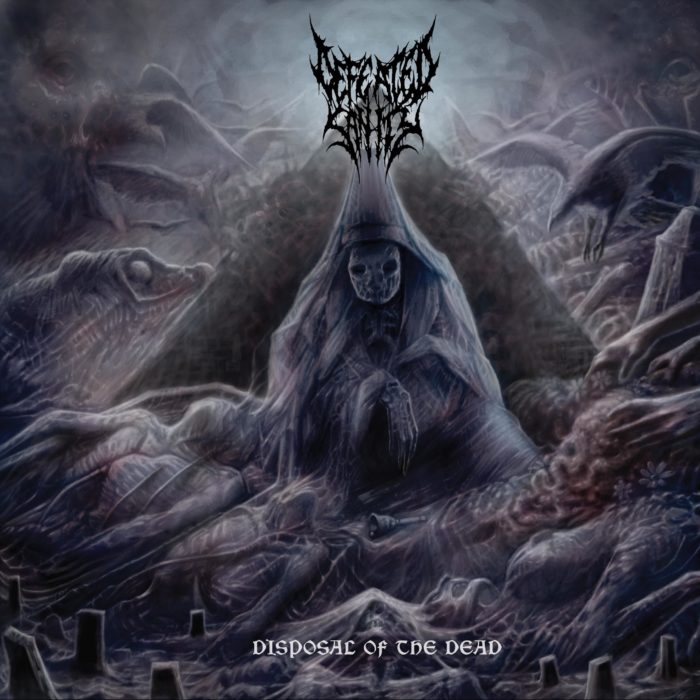
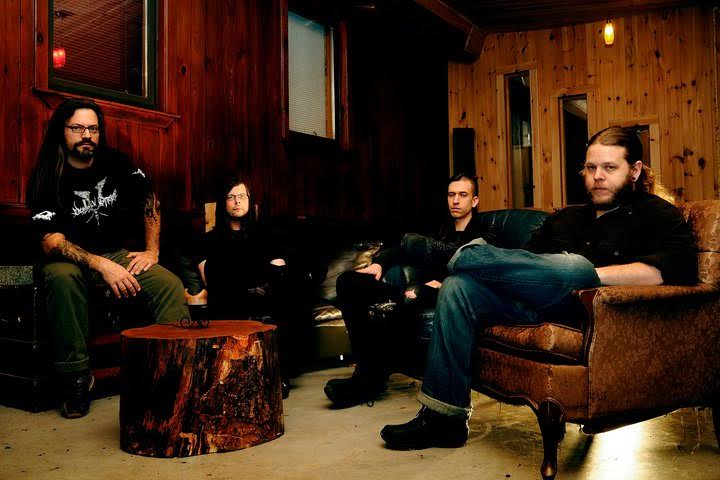
This band from Germany has been around in one form or another since the 90s. Besides having a reputation as an under-rated act, they actively tour and record. They are considered technical/brutal death metal. I would probably count them as old school death metal. Several releases are available, and it feels somewhat unfair to look at just one release and judge, but lets try. (more…)
Article contributed to Death Metal Underground by Anton Rudrick.
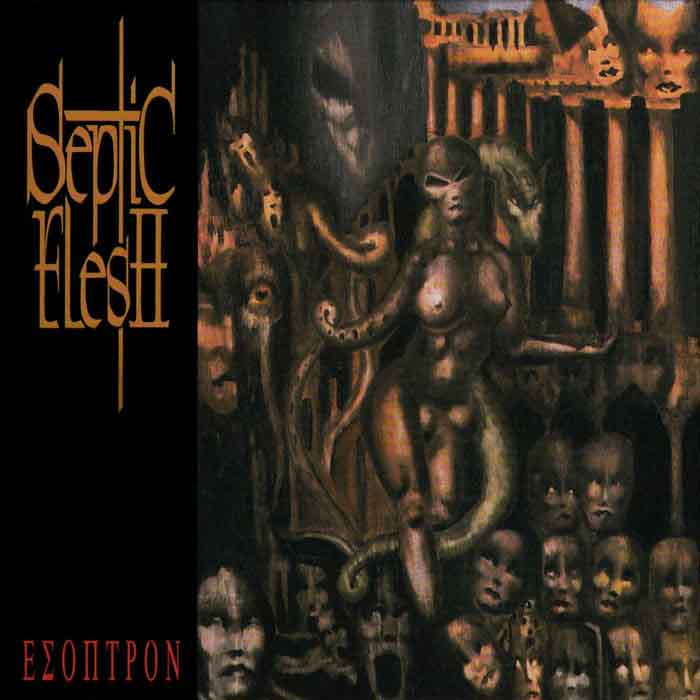
Septic Flesh have always oscillated between dark goth rock and simple death metal. Esoptron1 strode past both genres with expressive ambient interludes and enveloping everything in arcane rock akin to Fields of the Nephilim, reorienting Septic Flesh’s sound towards a suitable incarnation of their music’s abstract themes.
Burzum and Beherit each represent two summits of black metal’s many perspectives – in particular its looking back to look ahead ethos. The work of Laiho is exploratory and spiritual while the work of Varg is seeking and religious. Each composer followed a similar trajectory of mapping this landscape through metal first, then ambient. Each phase reveals strengths and weakness in each of their aims which results in a somewhat complementary synthesis between two highly individual bodies of work.
Five years have elapsed since 2010, a year that seemed to mark a slight renewal in creative forces, a kind of premonition of a metal renaissance that came after 15 years of horrid decadence following the decease of black metal as a movement. By 2013 this force was still incipient but already showed potential for future development as acts with more refined views about composition grounded themselves in tradition, promising to build monuments to a past glory for future times. Musicians from the metal underground’s classical era also formed the bulk of this rebirth, either through perfection or purification of their own take on the art.
The last two years have seen a manner of steady output that is weakened in quantity of quality releases, little manifest presence to speak of, with a few exceptions. The same can be said of the years between 2010 and 2013. This seems to be in accordance with a 3-year pendulum swing as the small cycle of metal. The long one probably signaling stronger points of birth and decay – probably decades: 1970-birth, 1980-underground, 1990-golden era, 2000-dark ages, 2010-renaissance.
It was a different time, and when Slayer, Metallica and Iron Maiden were doing their thing at the beginning of the 1980s, metal was also at a mainstream high with many poopoo acts dominating the scene. When mainstream metal drowns in its filth at the end of the decade and the 90s leave them with unmetal metal like Pantera or Soundgarden is when the underground rears its head in greater numbers.This coincides a little with what is happening now, as nu-funderground and mainstream whoring like female-fronted so-called metal flourishes in numbers just as the shock rock and glam metal (hard rock) plague in the time of Slayer.
To make matters more complicated, we have the internet, along with other means of communication and technology that allow for pockets of both good and bad music to survive with less regard to overall trends. Metal is not yet at another apocalyptic end of an era like the one that saw the explosion of death metal, we may have to wait another decade for that, but there is rise not dissimilar to the rise of underground NWOBHM and soon after speed metal. The next ebbing of the tide is at hand, but not yet its climax. What changes is not the fact that there is or there isn’t more mainstream crap, but how much excellent underground music there is. The year 1990 was a very special time marker that signaled the advent of a climax low for the mainstream and climax high for the underground.
Now, that we posit the existence of such critical years does not mean that no excellent albums occur outside of them, but that there is a sort of genre-wide, or community-wide, perhaps, pulse that pushes general tendencies. Now, according to this idea, the next “big year” in the small cycle would be 2016. Below we give an overview of these so-called big years and some band releases we are looking forward to this year.
What are your expectations in metal releases in 2016?
A quick reference to distinguished metal works in the ‘pulse’ years. Not especially comprehensive.
1971:
Black Sabbath – Master of Reality
1974: (Not really metal, Black Sabbath is WAY ahead)
Deep Purple – Stormbringer
Rush – Rush
King Crimson – Red (Editor’s note: Probably closer in spirit to future metal than others)
1977:
Judas Priest – Sin After Sin
Motörhead – Motörhead
1980:
Iron Maiden – Iron Maiden
Black Sabbath – Heaven and Hell
Angel Witch – Angel Witch
Cirith Ungol – Cirith Ungol
1983:
Metallica – Kill ‘Em All
Slayer – Show No Mercy
Iron Maiden – Piece of Mind
Mercyful Fate – Melissa
Manilla Road – Crystal Logic
Manowar – Into Glory Ride
1986:
Slayer – Reign in Blood
Metallica – Master of Puppets
Kreator – Pleasure to Kill
Morbid Angel – Abominations of Desolation
Sepultura – Morbid Visions
Fates Warning – Awaken the Guardian
Candlemass – Epicus Doomicus Metallicus
1989:
Sepultura – Beneath the Remains
Morbid Angel – Altars of Madness
Bolt Thrower – Realm of Chaos
Voivod – Nothingface
Helstar – Nosferatu
Powermad – Absolute Power
Rigor Mortis – Freaks
Pestilence – Consuming Impulse
1992:
Burzum – Burzum
At the Gates – The Red in the Sky is Ours
Demigod – Slumber of Sullen Eyes
Morpheus Descends – Ritual of Infinity
Therion – Beyond Sanctorum
Sinister – Cross the Styx
Amorphis – The Karelian Isthmus
Deicide – Legion
Incantation – Onward to Golgotha
Atrocity – Longing for Death
Autopsy – Mental Funeral
Cadaver – …In Pains
Asphyx – Last One on Earth
Cenotaph – The Gloomy Reflections of Our Hidden Sorrows
Darkthrone – A Blaze in the Northern Sky
Emperor – Wrath of the Tyrant
Graveland – In the Glare of Burning Churches
Immortal – Diabolical Full Moon Mysticism
Sacramentum – Finis Malorum
1995:
Skepticism – Stormcrowfleet
Suffocation – Pierced from Within
Vader – De Profundis
Gorgoroth – The Antichrist
Graveland – Thousand Swords
Summoning – Minas Morgul
Deicide – Once Upon the Cross
Sacramentum – Far Away from the Sun
Immortal – Battles in the North
Abigor – Nachthymmen (From the Twilight Kingdom)
Funeral – Tragedies
Dissection – Storm of the Light’s Bane
Iced Earth – Burnt Offerings
1998:
Gorguts – Obscura
Vader – Black to the Blind
Incantation – Diabolical Conquest
Dawn – Slaughtersun
Sorcier des Glaces – Snowland
Angelcorpse – Exterminate
Blind Guardian – Nightfall in Middle-Earth
Symphony X – Twilight of the Gods
Rhapsody – Symphony of Enchanted Lands
Suffocation – Despise the Sun
Absurd – Asgardsrei
Soulburn – Feeding on Angels
Arghoslent – Galloping Through the Battle Ruins
Master – Faith is in Season
Skepticism – Lead and Aether
2001:
Gorguts – From Wisdom to Hate
Absu – Tara
Martyr – Extracting the Core
Lost Horizon – Awakening the World
Deeds of Flesh – Mark of the Legion
Averse Sefira – Battle’s Clarion
Graveland – Raise Your Sword!
Krieg – The Black Plague
2004:
Avzhia – The Key of Throne
Quo Vadis – Defiant Imagination
2007:
Blotted Science – The Machinations of Dementia
2010:
Avzhia – In My Domains
Krieg – The Isolationist
Burzum – Belus
Divine Eve – Vengeful and Obstinate
Atlantean Kodex – The Golden Bough
Graveland – Cold Winter Blades
Profanatica – Disgusting Blasphemies Against God
Autopsy – The Tomb Within
Overkill – Iron Bound
Decrepitaph – Beyond the Cursed Tombs
2013:
Black Sabbath – 13
Condor – Nadia
Graveland – Thunderbolts of the Gods
Satan – Life Sentence
Argus – Beyond the Martyrs
Autopsy – Headless Ritual
Profanatica – Thy Kingdom Cum
Imprecation – Satanae Tenebris Infinita
2016:
Condor?
Sammath?
Zealotry?
Deströyer 666? (Editor’s note: I have my doubts about this one’s possible… transcendence)
As a movement arising from in the post-modernist era but against this establishment, metal has often taken connotations of mysticism. To further clarify this position we must stress that contrary to what seems to be the popular understanding, mysticism is anything but superstitious. Mysticism was the response of lone wolves, singled-out intellectuals and contra-status-quo savants to established and unquestioned dogma for hundreds of years. Come the age of post-Enlightment scientific-mechanistic materialism, it was the mystics who opposed its arrogance as well: the pretension of the mechanistic paradigm of the sciences that attempted to define reality only by what they could account for within the limitations of their formulae. Mysticism cannot be defined as a philosophical current per se, because its tradition is one of scattered individuals barely connected in a network that spans through cultures and time as well as transcending gender and race as the privilege of those who rise above the self-centered and limited vision of the societies into which they were born.
When referring to metal in this elevated manner, we are referring to the best of the best, and to those who upheld a deeper view of the genre while crystallizing the view with great musical prowess. Both need to be present, the power of a dialectical mind and the divine rapture that lights the unconscious and undefinable. As was explained, mysticism as a tradition is more of a method and a mindset that parts from the notion that experience cannot be shared and that the best attempts to communicating deeper and holistic experiences come from the use of objects and language as opaque symbols that indicate relations and motions rather than refer back to the physical object or original “logical” concept they were referring to. What Cusanus refers to as the “coincidence of opposites” and others as the all in all, the all in one and the one in all — the universe in a drop of water.
These elite metal artists that do not follow directly after each other but appear consciously independent of one another (Iommi, Quorthon, Hanneman, Warrior, Azagthoth, Vikernes, Ledney, among others) illustrate in ways that seek to evoke and communicate first, and consider artistry as an after thought, if at all. A latent danger of aesthetic lawlessness may be perceived here that has been adopted by lesser minds in their confusion about how to go about implementing this. The mystic artist does not do away with language or convention altogether, he bends it so that words and expressions create impressions. The original meaning of the figure of speech/music or term has to be known by the audience for them to understand the solidification and transposition that the artist puts the symbol through.
As a way of illustration we can take repetition, which in classical tradition is used minimally for the audience to get acquainted with an idea, is used in metal for mood-setting and an entrancing — a setting-out in a grand adventure or a passing-through the gates of perception into another plane. The proportion of repetition in relation to the length and weight of other sections as well as a consideration of their individual properties and relations between the sections, structures and riffs all weigh on the mind of the gifted and mindful artist.
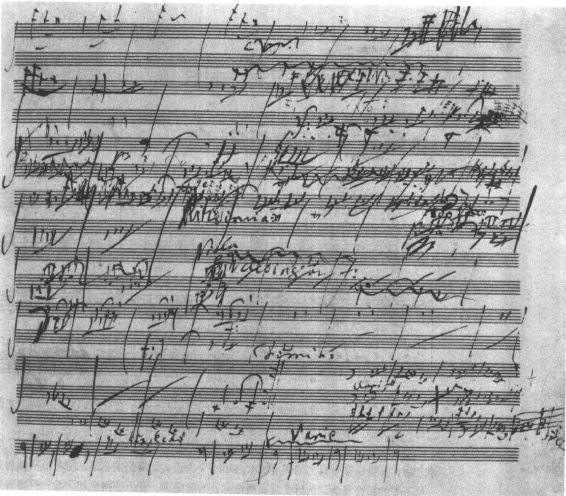
The chaos of bands like late Deathspell Omega that seek to shock and produce a random feeling of overwhelming disorientation can never communicate anything more than a blatant sense of disorder. That is the limitation of such experimental or avant-garde bands: their revolution is only skin deep and being concerned with appearances and the effect of how changing these directly affect the experience. Metal in its highest mystic expression will use the existing language as it is, allowing the significance of symbols (cadences, ascending or descending melodies, percussion, etc) retain a semblance of their original function while their actual usage is shifted to point to the indescribable and unrepresentable meaning, becoming the vehicle for new relations directed by the mind of the composer — a method illustrated but little comprehended in Ludwig van Beethoven’s process.
But understanding of this Platonic acknowledgement is not given to most and so interpretation of metal’s nature gets diluted and bastardized to terms such as “playing with feeling” or “being heavy” that barely scratch the surface. We understand these and their superficial descriptions, but when in the hands of the uninitiated, such simplification becomes the total understanding and decadence of a movement becomes imminent as ideas are perverted by inferior comprehension. Metal was started and carried forward at each meaningful juncture by one of these luminaries, and while a few lost underground gems wrought by excellent minds can be found in caves, in between, there was only uncountable fodder.
As a mystic understanding and reaching for the Dionysian through differing Apollonian guises metal seeks to discretely transmit glimpses of phenomena that recur in and around us. A reality that flows and changes state producing what we know as time, but that remains one and the same through and through from beginning to end.
“True, authentic being consists in our ability to let all that is be as and how it is, not distorting it, not denying its own being and its own nature to it.”
Many of us are fans of last.fm and other services which keep track of listening statistics. These allow me to link up various devices that I use and see what my actual listening patterns are instead of what I think they are. For example, if you asked me for a list of top death metal releases, I can easily name something like this list of the best in each genre. But that is an analytical opinion related to the art and music themselves, not a personal habit, which reflects more the day-to-day utility I find in different albums. Such is the split with Gorguts Obscura, an album I listened to extensively when it came out in accidental defiance of conventional wisdom, but then have not picked up since. Part of the reason is the unreasonably loud production, which makes it — like Sinister Hate and other albums of the “early ProTools era” — difficult to listen to alongside classic albums, and abrasively loud with lost texture of distortion. Another reason is that having heard it three times a day for five years, I may have simply absorbed it entirely. A third might be that while it is admirable as a piece of art, it may not be applicable to much of my life or thought process at this point.
I read Old Disgruntled Bastard‘s article “The postmodern Gorguts” with great interest not just because I enjoy ODB’s writing, but because he has cut into a vital topic: does Obscura belong to the old school death metal legions, or is it of a newer style that we call “modern metal”? Modern metal — comprised of nu-metal, metalcore, tech-death, post-metal and indie-rock — distinguishes itself from the old because it is composed like rock but with metal riffs mixed in among the jazz and prog affectations. The analysis of it as postmodern seems to make sense if one considers later postmodernism. Early postmodernism distrusted meta-narratives and so attempted to create its own based on the subtext, or invisible reality, as an alternative to the public text or consensual token-based narrative of our reality and civilization.
Later postmodernism simplified that to an idea of showing many different angles or perspectives of a topic, like a Pablo Picasso painting, which created a surface level of complexity of ingredients so intense that it reduced the organizing principle or internal complexity of the work to near nothingness. Compare Don Delillo’s White Noise to David Mitchell’s Cloud Atlas (itself highly derivative of Pynchon, that highly derivative of Nabokov and Burroughs) for an example of this in literature.
The public school safe answer when asked about the origins of postmodernism is that it sprang up with Foucault, but someone who traces the history of ideas — and actually writes postmodern fiction — like myself may see the origins instead in an early writing by Fred “Mad Dog” Nietzsche entitled “On Truth and Lies in a Post-Moral Sense,” in which he points out the nihilism of language: tokens work only when people mean the same thing, but people project their own desires into the meaning through the imprecise device of memory, which means that narratives rapidly become deconstructed into manipulation and the only excuse is to discard the old values and definitions, and rebuild from common sense observation of reality.
There are, after all, very few ideas in history, and much as Plato was a watershed, Nietzsche defined the different perspectives in the modern time, but this analysis is too far-reaching to be made in public, least of all on the government dime. I remember talking with Audrey Ewell (Until the Light Takes Us) over this very split and finding myself dismissed as perhaps not knowing the background material, which is very un-postmodern as it affirms an official narrative in defiance of the introspection that leads to analysis of externality by structure and not appearance, a trait shared between Nietzsche and the Romantics that lives on in postmodernism albeit faintly, and only in the important works, excluding the forgettable Mitchell for example. Postmodernism appears in movies by David Lynch and Lars von Trier, specifically the death metal-friendly Melancholia, and even in the theories we tell ourselves about daily life. Discontent with The NarrativeTM abounds, but very few agree on what that narrative is or what is the truth that it conceals, which shows a difficulty of postmodernism: it deconstructs and points vaguely in a new direction, but never finalizes the task, which relegates it to the academic realm of sipping Merlot and watching the world build up tinder for the final carnage.
Having boiled out all of that context to postmodernism as idea, let us look at William Pilgrim’s excellent article. Death Metal Underground tries to provide multiple perspectives — in the postmodern sense — on any topic, but diverges from the postmodern narrative by affirming that reality itself is truth, and we can approximate that truth, so we must undertake the almost never undertaken second part of the process which is through reasoned debate to then find answers. People love the idea of multiple perspectives, because it means that since nothing is true, they can do whatever they want and that “feels” good to the forlorn or under-confident soul. They are less enthusiastic about boiling down the data found and constructing from it an assessment of truthfulness. The article contains two essential nodal points, the first of which is the definition of postmodernism:
…a school of thought that attempts to reject overarching structural meaning and belief in greater narratives. To the post-modern mind, existence and experience consist of pluralities, splintered into fiercely individualistic cells prone to subjective rule, and inimical to any attempt at establishing a universal system of knowledge. Under this philosophy, adherence to a common-law guidebook serving as a framework for value judgments would amount to giving tacit approval to an authoritarian scheme of things.
This sounds surprisingly like one of my favorite definitions, the Internet Encyclopedia of Philosophy definition of “nihilism”:
Nihilism is the belief that all values are baseless and that nothing can be known or communicated…By the late 20th century, “nihilism” had assumed two different castes. In one form, “nihilist” is used to characterize the postmodern person, a dehumanized conformist, alienated, indifferent, and baffled, directing psychological energy into hedonistic narcissism or into a deep ressentiment that often explodes in violence…In contrast to the efforts to overcome nihilism noted above is the uniquely postmodern response associated with the current antifoundationalists….French philosopher Jean-Francois Lyotard characterizes postmodernism as an “incredulity toward metanarratives,” those all-embracing foundations that we have relied on to make sense of the world. This extreme skepticism has undermined intellectual and moral hierarchies and made “truth” claims, transcendental or transcultural, problematic. Postmodern antifoundationalists, paradoxically grounded in relativism, dismiss knowledge as relational and “truth” as transitory, genuine only until something more palatable replaces it (reminiscent of William James’ notion of “cash value”). The critic Jacques Derrida, for example, asserts that one can never be sure that what one knows corresponds with what is.
Much of interest stands out here starting with caste. Alan Pratt seems to see the two interpretations of nihilism as reflecting degrees of abstraction. On one level, people say that life has no inherent meaning — that is the correct short form translation of what he says above — and translate that into dissipation; on the other, they see this as an opportunity to escape the dead definitions of a dying civilization and re-evaluate all that is known and how it is seen as important; in other words, to go back to Nietzsche and his Romantic-tinged apocalyptic renewal.
This also introduces the fundamental problem of modern philosophy, which it tries to handle through grammars of different fields of study, consisting of the coherence/correspondence split. A sentence can be completely grammatical and parse-able but contain no meaning because it imitates outward form but refers to nothing and resembles nothing found in reality. “A = x; if A > x, then the world ends” is entirely sensible as an expression, yet gives no information and relates to nothing. Like Nietzsche, most postmodern philosophers attack language, but unlike Nietzsche, they seek to find ways around language where Nietzsche’s point was the more flexible idea that language, logic and other forms of communication and truth-assessment are dependent on those who wield them, their intelligence, honest and intent; in other words, as he said, “There are no truths, only interpretations.”
This nihilism — which sounds a lot like postmodernism itself — distrusts not just a narrative, but the idea that there can be a narrative, or in other words one explanation of reality and how to deal with it that applies to all people. This translates to a distrust of the inherent or innate, such as the idea of “writing on the wall” or any other kind of definitive sign that communicates to all people. In other words, reality is out there, and all of our access to it comes through interpretations; these vary in value, and communication between them occurs through reality, so is subject to the same weakness. This means that there is no single symbolic or token communication which can be said to be innately true, and since the world itself issues forth no data in symbolic form, “truth” is a property of human minds and dependent on the quality, discipline and application of those minds, and is not shared among humanity collectively.
This applies less to the idea of a narrative within, say, a death metal album, that to the idea of a narrative describing our world and universal values to address it. However, individual interpretations can more closely approximate an understanding of reality, even if they cannot be communicated because communication depends on symbolic parity between all parties, which in turn depends on the ability to understand those symbols in roughly the same way. In ancient times, that viewpoint was called “esotericism” because it suggested that reality revealed its truths to those who were ready for them, with both a sense of knowledge being cumulative and not open to all people. A genius or highly talented person sees a different truth than others, thus this truth is localized to that person, and cannot be shared by the act of encoding it in symbols and speaking or writing them to others.
Taking this path through postmodern reveals that while postmodernism “flouts conventions”, as the article states, flouting conventions is not the total of postmodernism; it is one attribute, and it occurs not in and of itself but for the sake of undermining the narrative. This brings us to the core of Pilgrim’s analysis of Obscura:
In its abundant jagged outcroppings and in its constant search for the next unorthodox detour, Obscura shortchanges the simple truth that holds up metal and indeed all ‘essential’ music, that of relating an idea through sound.
I will simplify this in a grotesque but accurate way: tail wags dog. Instead of technique being used as a means of expressing an idea, the technique becomes the goal and the idea is filled in afterwards to unite the different technical parts. This common criticism of metal rings true in almost all disorganized works because the band wrote a bunch of riffs, adjusted rhythm like a big paper bag to fit them all together, and then called it a “song” despite having nothing in common between its parts, and thus no emergent atmosphere or communication which makes the whole more than the sum of the parts. This leaves us with the criticism of Obscura as failing to maintain a narrative, and whether this is related to the postmodern distrust of narratives, which itself could constitute a narrative. We could create a thesis of history describing humanity as a successive series of escapes from previously limiting narratives to new ones, but that then portrays postmodernism entirely as a form of deconstruction, which while compatible with the notion of extreme skepticism fails to capture the Nietzschean notion of “re-evaluation of all values” which is the second half of the postmodern process: (1) deconstruct and (2) reconstruct, from reality (correspondence) and not internal grammars (coherence).
The only remaining question is to analyze the music itself and see if its parts in fact associate in some way as to make a meaningful whole, which is the question here; postmodernism has served as a useful filter for introduction but not really a guide to how to do this. We are back to using the same compositional analysis that would apply to any death metal release, or any through-composed music.
Specifically, Pilgrim identifies the lack of a melodic or structural center:
Conventional melody is used not as the driving force behind the songs heard on this album, but as ballast to the band’s almost painful need to expand the template of extreme metal prevalent till then.
At this point my own narrative must switch to the incredibly general in lieu of analyzing each song. My take on this album is that Gorguts wrote an album in the style of The Erosion of Sanity and then, possibly through the work of Steve Hurdle, added strong melodic continuity. Then, they chopped it and re-arranged it so that riffs introduced themselves both in “backward” order of distilling from more texturally complex to most melodically clear, and arranged them so that the melody was introduced in a pattern which broke up its normal flow in order to introduce pieces in a sequence that created another emotional impression, then assembling it from its conclusion for the final part of the song. This seems to me both not the tail wags dog approach, but also a use of technique over composition, but in this case it was effective because the music was already composed and was modified with an additional layer of complexity and perhaps, some anticipatory contrarianism, in order to make its labyrinthine journey of fragmentary melodies into more of a puzzle assembled in the mind of the listener, not unlike how postmodern novels like Naked Lunch separated a story into vignettes and multiple character/setting groups in order to disguise it and force the reader to assemble it in the abstract, before repeating it in a finale in more concrete form.
However, it seems to me that the core of Pilgrim’s essay is his listing of seven attributes of metal, and that perhaps his intent is to use Gorguts and postmodernism as a point to speak about metal as both having postmodern attributes, and opposing postmodernism by asserting a narrative construction of its own. In this, metal may be a nihilistic exception to the norm of postmodernism, in that while it distrusts the contemporary narrative, and negates the idea of inherent truth/knowledge/communication, it asserts that it can portray reality in a fragment in such a way that others can appreciate it. Regarding the charges of amateurism, Pilgrim makes some solid points. The fixation on iconoclasm and paradigm-inversion, which itself strengthens a narrative by the fact that exceptions tend to prove the rule, and deliberately “whacky” permutations of arrangement draw skepticism, and deservedly so. The third possibility offered by this author is that like most works of art, parts of Obscura are sincere and insightful, and other parts are bullshit designed “outward in,” or from appearance to core, meaning that they communicate little or were modified to express something convenient after the fact. If taken as a whole however, the album minimizes these parts by fitting them within other songs that attract less trivial attention. Where Pilgrim seems proven right to me is through recent Gorguts output which emphasizes mysticism of the trivial as a means of enhancing the self-estimation of its listeners, much as Opeth and Meshuggah built a cottage industry around making simple music seem complex to attract low self-esteem fans who want bragging and pretense rights over their friends; where he falls short is that From Wisdom To Hate, while a more rushed and uneven album, further develops the techniques on Obscura.