Bands that keep making the same album but do it well

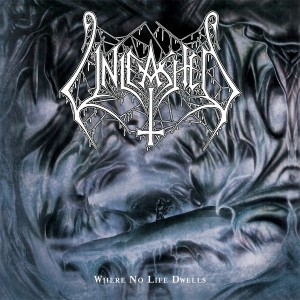
unleashed-where_no_life_dwellsAlthough AC/DC and Motorhead have been putting out basically the same album over and over for 30 years, fans of these two bands never blamed them for not being different.
Instead the audience continues to cherish this phenomenon, as this straightforward, wild and raw music style is the trademark of these bands. Risen from rock music and propelled by underground metal, this kind of music stands for the desire of liberation, freedom and simplicity in this plastic world. It will never go out of time.

In the realm of death metal, there is a band which greatly influenced by AC/DC and Motorhead also has a constant style of music. This band is Unleashed.

Unleashed was formed after the disbanding of Nihilist. Unlike the other key figures Entombed and Carnage whose members were in Nihilist, Unleashed brought the roadhouse rock style of AC/DC and Motorhead into death metal. However as a death metal band, Unleashed has more creative ideas than the old classics. You can tell that by just looking at the names and covers of their albums, each one is as exciting to look forward to as a new Pirates of the Caribbean movie. The scent of fighting in their music also demonstrates that death metal ponders on our existences in world.

The mystic and adventurous sense of Unleashed comes from the extension of the typical “verse-chorus-bridge-verse-chorus” structure the phrasal riffs of death metal. Under an emphasized theme, each phrasal riff acts like a puzzle and combine into an epic scenery. Therefore Unleashed’s musics are richer and more narrative comparing to AC/DC and Motorhead (Before the Victory which completely lost all apprehension of mysticism). To the fans of AC/CD, Motorhead who also enjoy underground metal, do not miss Unleashed.

Translated from this post.

7 Comments

Tags: , ,

Last Burzum metal recording ever

burzumBurzum composer Varg Vikernes has posted a “goodbye” to his old self as a metal composer and in a sentimental posting, announced his retirement from metal and his intent to pursue ambient music alone.
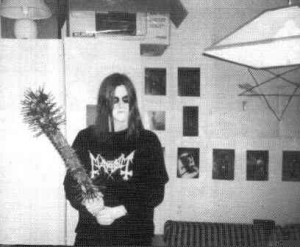
Burzum appeared from nowhere in 1991 with a demo tape made up of a dozen guitars-and-bass-only tracks in rehearsal quality. I made a few more or less successful metal albums, but they all always included at least some ambient music. With time I moved further and further away from metal, and today only the ambient music remains. Today (2013) I think I am done playing metal music for good.

Many of you followed Burzum through the years, some even from the beginning, and I think metal-Burzum deserves a proper “good bye”. So, just like I started out I will finish metal-Burzum with a guitars-and-bass-only track in rehearsal quality. “Back to the Shadows” is made up of the last metal riffs I ever made (in 2012). It was never released in any way, or recorded (beyond what you hear here), and it will not either — beyond this short “video”.

Take it for what it is; a sentimental good bye to metal-Burzum.

The music is playing with an image of the 17 year-old me, taken from the time when some of the first Burzum tracks were made. You can see this track as a good bye to that fellow too.

For those of us who have been watching Burzum and Vikernes over the years, this is a welcome development. Heavy metal is beautiful but it will always be attached to popular conceptions of entertainment. Ambient music, especially complex material, gets treated as culture.

While we hope to change that perception of metal and to have it be studied as art and part of culture, that’s an uphill battle when the fans routinely rush to gimmick bands and depthless clones in a hope to be part of the next popular trend.

Either way, this bodes well for more interesting compositions in Burzum’s future.

6 Comments

Tags: , ,

Zombiefication – At the Caves of Eternal

zombiefication-at_the_caves_of_eternalZombiefication incorporate many styles into their old school styled death metal but their ultimate forte is melodic death metal in the style made popular by early Necrophobic or Unanimated.

This band contributed a track to the Cenotaph tribute album and it’s hard not to think of the second and third Cenotaph albums which used the stylistic span between At the Gates and Therion’s Lepaca Kliffoth. In addition, Zombiefication use riffs much like early Amorphis, if Amorphis were interested in single-string picking of quick melodies.

Not all is old school however. At the Caves of Eternal features vocals that might be more at place on later At the Gates or The Haunted albums. They are nearly monotonic and do not vary style or inflection between songs, which gives them a consistency that breaks from the death metal tradition that all instruments labor toward the same effect. Drumming is more modern as well, with a jazz-fusion influence that is understated but prevalent. In addition, many of the leads follow more of a rock sense of theme and balance than the metal goal of high intensity chaos forming order despite itself.

At the Caves of Eternal uses the melodic death metal style effectively across this album, with the songs clustered near beginning and end having the most punch. If it has a fault, it is not stylistic, but in substance; the emotions and approach do not seem to vary between songs, making them variations on a theme that may be entirely musical. However, if you want to revive the old school melodic style, this album presents a potent option.

2 Comments

Tags: , ,

Burzum – Sôl austan, Mâni vestan preview

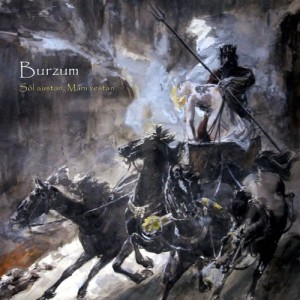
burzum-sol_austan_mani_vestanThe latest album from Norwegian one-man black metal/dark ambient band Burzum will be entitled Sôl austan, Mâni vestan (East of the Sun, West of the Moon) and will be released in coming months on the Peaceville sub-label Byelobog.

According to the press release authored by Varg Vikernes, this album will be like the other Burzum albums a concept album.

Sôl austan, Mâni vestan is near release but as of this morning samples were released, and the following teaser video combines visual and sound to reveal what to expect on this forthcoming work. Like the previous Burzum albums, it features use layered sampled sounds and keyboards, including some tribal drums, but without the constant percussion of modern pop.

Comparing it to Tangerine Dream, Vikernes described the new album as “relaxing, slow-paced, contemplative and very much original.” The topic on this one is said to be the “Pagan religious-spiritual concept of a descent into darkness and the follwoing ascend back into the light; the Pagan initiation, the elevation of man to the divine, the enlightenment of the mind, the feeding of the elven light in man.”

9 Comments

Why metal riffs delight us

hedge-labyrinthWhy is metal riff-crazy? These twisted little quasi-melodies of sliding power chords, notes and harmonics are tiny puzzles for our brains. Now science hints at why metal loves them.
Apparently, our brains love guessing what’s next in music, and perceive an intense sensation of reward if they guess correctly. For all those who identified metal’s riff-salad as a “puzzle,” you win a prize.

Like the labyrinths to which they are frequently compared, metal songs create a prediction game within the brain and cause an explosion of neural activity in a part of the brain called the nucleus accumbens. This tiny wad of cells, which sits in the pleasure/reward center of the brain, gives us a throbbing blast of “reward” every time we play the guess-where-this-riff-goes game.

Both metal and classical play this game. They specialize in intense repetition of certain phrases, but unlike rock music, the repeated phrases do not necessarily lead to the same conclusions, and in fact alter their destinations and form throughout the work. This keeps the guessing game intense and, while we’re distracted with the riffology, shows a change in themes, which if themes are metaphorical, shows a learning process by whatever protagonist may be inferred from the work.

Musicologists have often wondered at the tendency of metal fans and classical fans to be more devoted and to be more likely to enjoy the music over the course of life itself than your average rock or pop fan. In fact, the similarities between metal and classical frequently emerge among those who take their music very seriously. Could it be they’re simply getting a higher sense of reward from the riff-puzzle and its tendency toward non-repetitive repetition than they are from the relatively straightforward repetition of other styles?

12 Comments

Tags: , , ,

Vemod – Venter på stormene

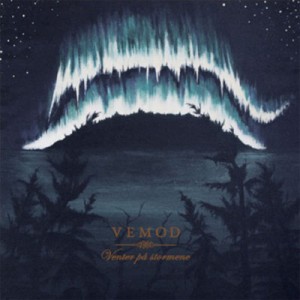
vemod-venter_pa_stormeneNostalgia is like going back to your rapist and asking for your first kiss. If I were a 2000s kid, I’d want to be part of those glorious days of the early 1990s. As a 1990s kid, I might want to “go back.”


Yet you can’t go home again. All you can do is re-heat and imitate the past, and hope that the magic comes back. But the magic came from the convergence of the time, what was going on in the world, and the art. That isn’t to say the music isn’t still relevant; it is eternally relevant. But what made it great was how it was organized in the minds of its creators, not the techniques they use. Trying to imitate the techniques is thinking backward, or going from the whole impression to try to recreate the idea it conveys, instead of finding that idea and using it to make another (not necessarily new, but more accurate) impression. I could buy ten truckloads of these retro-imitative albums and I’d still be in nowheresland, ready to trade my left testicle for the ability to buy Transilvanian Hunger or Pure Holocaust again and to experience the joy of discovering it again, like the very first time!

But it is not to be. We wouldn’t want it to be that way. Time marches us forward both toward doom and toward greater heights. Vemod adopts a mix between the Ulver-styled late Nordic material and the French-style barely-holding-on black metal of the wave after the Nordic black metal explosion. That being said, there’s nothing to criticize Vemod for. They play perfectly, many of these riffs are catchy, and they use extended interludes well. There’s just something missing at the center, sort of like there has been in modern life, where we wonder what the point of it all is. As it is, these songs leave us with a feeling of melancholy, having missed the bus to the land of adventure, and maybe a bit of dark loneliness. But after that, it is just decoration.

9 Comments

Tags: ,

New York Times on “the best voices in heavy metal”

demilich-live-finland

In the 1990s, mainstream media pretty much ignored heavy metal except to report on the hair bands. The fear of radicals of an unknown quantity scared them away. Then, gradually, media began to find some things in metal they could identify with. And so it became part of the news cycle, with NPR reporting on folk-metal bands and even double-breasted suit The Wall Street Journal getting into the game.

As a result, in 2013 it’s not surprising to see a mainstream newspaper covering metal, and including some of the more extreme varieties in its article. The New York Times ArtsBeat asks “Who are the best voices in heavy metal?” and comes up with a reasonable list, considering that they’re picking from four decades of metal and no conceivable list will satisfy any single metalhead or group of metalheads:

1. Ronnie James Dio (Black Sabbath, Dio)
2. Rob Halford (Judas Priest)
3. Bruce Dickinson (Iron Maiden)
4. Eric Adams (Manowar)
5. Geoff Tate (Queensrÿche)
6. King Diamond (Mercyful Fate, King Diamond)
7. Tom Araya (Slayer)
8. John Bush (Armored Saint/Anthrax)
9. James Hetfield (Metallica)
10. Max Cavalera (Sepultura, Soulfly)

Slayer made it in, as did Sepultura. How did that happen? It could be that, as with most things mass media, this data was culled from a series of press releases or advertising partners. It’s unfortunate that this is too often the situation, even at world-renowned major papers. Equally possible is that this is what an informal survey of the metalheads in the office produced. Either way, it’s good to see this list, and it probably deserves a list of its own.

As our domain name indicates (“deathmetal.org”), we are primarily a death metal site. This means that we treat all influences on death metal, whether heavy metal or progressive rock or even Kraftwerk, as part of our world, but not really the focus. Our focus is death metal and the genres it spawned, starting with the unholy trinity of Slayer, Bathory and Hellhammer back in 1983, following what Discharge unleashed the previous year. So we thought we’d do our own list of the best voices in death metal and associated genres:

1. Matti Kärki – Carnage
2. Antti Boman – Demilich
3. Nocturno Culto – Darkthrone
4. Abbath Doom Occulta – Immortal
5. Varg Vikernes – Burzum
6. Tomas Lindberg – At the Gates
7. Nuclear Holocausto Vengeance – Beherit
8. Frank Mullen – Suffocation
9. Glen Benton – Deicide
10. Tom G. Warrior – Celtic Frost/Hellhammer

This wasn’t an easy list. There are so many vocalists who perfected the death metal growl, or adopted it as their own style, that it’s hard to assess who should go on a list of only ten items. Yet each of the vocalists above contributed to a certain use of the vocal rasp or guttural howl, and thus they all deserve a place on this list, even if we’d like to add a few more (for example, Esa Linden of Demigod or John Tardy from Obituary).

We’d like to think the NYT will read this article, drop everything, and start rockin’ out to Morbid Tales, but that’s probably a bit much to expect. We hope someday they learn to enjoy this vibrant metal subgenre and appreciate it for the unique skills it requires, and the talents it has brought forth from these musicians.

Photo Credit: Kingsnake Club.

19 Comments

Tags: ,

Frankenslayer tears up Australia

Slayer, performing with Jon Dette as Dave Lombardo and Gary Holt as Jeff Hanneman, has launched its new tour in Australia. This fan-filmed video shows how the new ‘Frankenslayer’ performs.

‘Frankenslayer’ refers to the two original members plus two hired hands that now forms the ‘Slayer’ you see on tour. Some have a problem with this, and rumors and doubt circle around the Slayer camp.

This is a complex issue. We are the biggest Slayer fans on earth around here, and some of the few people who have given them credit for their contributions to death metal (we’re also huge fans of Hellhammer and Bathory, the other .666 of the Unholy Triad of the origins of black and death metal).

However, we’d never want them to keep carrying on for the sake of carrying on. It doesn’t take a genius to figure out that Slayer’s output has been uncertain since South of Heaven, with some real dips in there as the band have tried to adapt to the new nu-metal landscape. If their hearts aren’t in it, we’d want them to do something they enjoyed more instead. It might not be appropriate to do it under the Slayer name, but having Slayer members in the band carries a great weight.

In addition, we know that the record industry burns out bands. Musicians should spend most of their time goofing off and playing their instruments. Instead, they’re spending most of their time on media relations, business, office-type stuff and negotiating with suits. In addition, most have families now so it’s an additional burden since they have less time. The result means that band practice is like a 4-hr-per-week job and whatever comes out of it gets chopped up like sausage into the “next album.” Concept, deliberation, inspiration and imagination take a back seat to the raw demands of the trade.

We’re hoping (of course) that Jeff Hanneman recovers, but that’s for the reason that he’s Jeff Hanneman and we hope he recovers. His choice about being in Slayer after that is his choice. Similarly, we hope that Dave Lombardo can work out his contract with Slayer to be part of the band again, but that’s because he’s Dave Lombardo. We don’t make any requests on Slayer itself. It will decide, as a group or as the singular identity that is more than the sum of its parts, to carry on.

In the meantime, ‘Frankenslayer’ is obviously putting on a heck of a performance. However, there is something about Lombardo’s accusations that rankles:

Last year, I discovered 90% of Slayer’s tour income was being deducted as expenses including the professional fees paid to management, costing the band millions of dollars and leaving 10% or less to split amongst the four of us. In my opinion, this is not the way a band’s business should operate. I tried rectifying it by letting my band mates know, and Tom and I hired auditors to figure out what happened, but I was denied access to detailed information and the necessary back up documents. – Dave Lombardo/Facebook

As others have pointed out, Lombardo has been out of the band for some time, and he’s now a hired gun. He doesn’t receive his split of the band’s profits for the tour because he’s not technically a member of the band. Instead, he gets paid like any hired drummer, although we hope perhaps gets paid a bit more for being Dave Lombardo.

The problem with this arrangement is that it’s the antithesis of what a band is. Fans are showing up to see Slayer as Slayer, meaning the guys who originally created this music in the first place. Instead, we get two members and a hired troupe of musicians who are basically putting money into the Slayer bank account without being Slayer.

It’s difficult for great music to emerge from a job-style relationship. Adequate, sure, but these guys can do “adequate” in their sleep. If something positive can come out of this debacle and the ‘Frankenslayer’ Australia tour, it’s that Slayer may need to recalibrate and if they’re going to continue, try doing it as a band in love with their own music instead of a band as a day job.

2 Comments

Interview with the fan who prefers to buy CDs

physical_cd_collectionIt’s no big news when someone who grew up two decades ago prefers to buy CDs. Back then, the shiny little discs represented a break from the cumbersome technology of the past and instead were a gateway to modernity.

Not so, now. People growing up in the last decade have emerged in a world where “buying music” increasingly means downloading a song from an iTunes or Amazon account. The idea of buying physical CDs is as odd to them as buying a player-piano scroll.

However, there are always those who don’t go with the flow. We found a user named Evisceratorium at large on the internet who is willing to tell us about the decision as a new listener to go back to buying physical music instead of digital.

I understand that you’ve grown up with the digital download generation, but have switched back to buying CDs. What were your reasons for doing this?

I decided that the overall experience of buying physical music was more interesting and fun than simply pulling up a downloading website and clicking a button. It simply started as an alternate way to own music, I guess — I didn’t consider one way of doing things to be superior to any other. If I was at the record store in the mall and I saw an album that I was interested in checking out, I’d buy the CD there instead of getting it off iTunes, if only for immediate gratification and convenience.

Do you think there’s a value in having a tangible product? Do you have your collection on display, or use it as conversation pieces?

I think there’s a lot of value in owning the tangible product, especially for musical formats. It’s not just a sign of devotion to me, it’s a token piece that I get to keep and look at whenever I’d like. I’ll admit that, contrary to most somewhat similar opinions I’ve heard, I don’t buy music to support artists I enjoy. If I enjoy them, that’s fine; but frankly I usually expect to receive some item in return for my money and support, rather than something intangible. I do have my collection on display — Discogs.org says I have 280 items on some format or another as of right now – and yes, I do enjoy talking about it to other people. I like going through other people’s collections and comparing their albums to my own, too, so I appreciate it when other people talk about their finds as well!

But to be entirely fair, I don’t have this same sort of attachment to physical formats of other media like movies or books. I don’t feel like people should be obligated to acquire every single thing they want in physical form, because even I don’t really do that for things that aren’t musical; but if you’re truly passionate about something, you should seriously consider having pieces of your passion there for you to touch and observe, because it really is a great feeling.

Do you know of any others who have made the same decision?

The same general principle, yes, but I don’t personally know anyone who mirrors my personal philosophy verbatim. Most illegally download most or all of their music, or they physically buy most of it but download when the item in question is rare or out-of-print. I’ve never done that: if an album I want is out-of-print then I wait for it to become available for sale, if it’s brutally expensive I save up and then get it, or if it’s not available I don’t acquire it period. It doesn’t mean I want it any less than anybody else, but I don’t see why I can’t wait to own it like everyone else did. I think a lot of the people who download work mostly off the concept of instant gratification, which I think hampers the excitement of music quite a bit.

Besides, anyone reading this is already utilising the giant resource that is the Internet, and with a bit of digging on the buyer’s end, I would argue that (excluding most demos from decades-old bands, I’ll admit that these tend to be unattainable) most “rare” or “out-of-print” albums are a lot easier to find than most people would like to think. Expensive? Well, of course, you’re trying to get a product that came out 15-20 years ago and has been spread throughout the world since, or a product that was limited to 50 or fewer copies and is only now being relinquished by one of the fans who originally acquired one. But if you want it, it’s definitely there. Even Bathory’s infamous “yellow goat” LPs are a couple of clicks away from being yours, according to Discogs. For nearly $1,000, yeah, but if you really want it that bad, it’s there. The whole “downloading old stuff is okay because it’s not there” comes off to me as a side effect of the Internet age: a combination of impatience and a retrospective sense of entitlement. In other words, the Internet is attempting to transcend the limits that were originally set by the record labels in question and I don’t appreciate that. But I’m starting to digress from the point. Basically, no, I don’t know anyone who embraces physical formats as adamantly as I have, though most of my friends buy physical copies of albums to some extent.

Other than the reasons for which you initially started buying physical copies of music, have you discovered any other advantages?

Quite a few, actually. Physical albums are much more likely than digital files to contain vital information about the album which one might be interested in. I’ve seen tons of posts on forums where people asked about the lyrics to certain songs and the answer was right there, plain as day, in the booklets of the albums in question. More subjectively, I think they’re a lot nicer to look at, the variety between stuff like digipaks, cassettes, box sets, and LPs is nice and gives each item a more unique identity, and for me they make me develop a closer relationship to the album than if it were only a bunch of files. (You can see this in terms of interpersonal relationships, too – proximity breeds intimacy amongst people, and I’d argue that the same can be said of people and objects.) They’re something to look at when I’m bored, admire as an aspect of myself when I feel upset, and as I mentioned earlier, they’re fun to talk about.

Another important thing is that I think buying physical items, or paying for music in general, forces people to be a bit more patient with their music, which is always good. I see so many people talking about hyper-downloading all thirteen of a band’s albums, at which point I assume those albums probably either fester on those people’s hard drives or get listened to once and subsequently forgotten. I’ll admit to having terrible self-restraint, so physical albums help me to limit myself and pay a bit more attention to everything. Put a wager of your own money into the game, and you’ll be much more likely to take things slower, appreciate nuances that you might miss on a cursory listen and be able to say more about what you listen to, instead of only being able to say “oh well duh I heard that album once, I think it’s good”. I haven’t heard that much music by quantity (there are still plenty of big-name bands where I either haven’t heard them, or I’ve only heard an album or two of theirs), but I feel like I could say a lot more about what I have heard than most other people could. Life is short, but not short enough to where you should feel the need to rush everything. Art should be given ample time and appreciation for it to sink in properly, lest we run the risk of bypassing things that we’d grow to love with a bit of patience.

This doesn’t really fit into any of the questions you’ve posed, but I’d like to briefly add that I don’t see anything wrong with people “taste-testing” music. I’ve checked out numerous bands and albums via YouTube and I don’t see anything wrong with doing so. And occasionally when I review albums I don’t own, I’ll download them, listen to them for reviewing purposes and then delete them. Free streaming and downloading are unquestionably useful tools. (Though they’re not always my preference…seriously, once you have around $20 or so, go to some underground black metal distro and buy five $4 cassettes by bands you’ve never heard, it’s a lot more fun than it sounds!) It’s when people start abusing these tools to acquire anything and everything at will that I’d say they’re starting to be abused beyond their original purposes. And yes, I’m aware that metalheads are not the most opulent subculture, but I refuse to believe that most people are so hard-pressed for money after the bare necessities of groceries, clothing, education and utilities that they are rendered completely financially unable to buy a $12 CD or a $4 cassette. This may be the naivete of youth speaking, but I get the feeling that most people who don’t have the money to waste on “inessential items” such as CDs are instead just using it on equally inessential things like food that isn’t rice, bread, or ramen noodles. When you boil down to it, music is just the same as any other luxury: you’re not entitled to it whatsoever.

Can you tell us a little about yourself, your background in metal, what sort of metal you like, and how you balance your metalness with a normal lifestyle?

I just turned 16 a month or so ago, so I guess most people would say I’m pretty young to be talking about something like this. I live in an area of the United States (read: Bible Belt) where metal music is essentially nonexistent, so that in combination with my status as a minor means I can’t really go to metal shows. I’d like to think I give back to the metal scene at least a bit, though: besides my insistence on buying albums, I post on forums a lot, and I have an account on the Metal Archives (as MutantClannfear) where I’ve posted about 130 reviews, mostly of brutal death metal or deathcore albums.

I got into metal via “the ’00s nu-metal kid’s way”. I hear lots of people talking about how they started with Iron Maiden and Metallica and trickled up through power metal and thrash up to extreme metal, but I took a much more direct route. I was aware of Metallica from earlier in my life, but my real impetus for getting into metal was Slipknot. I think I first heard them in 2008 via Guitar Hero III, and that game later led me to Rock Band. The downloadable content of Rock Band led me to Cannibal Corpse, Job for a Cowboy, Lamb of God, and Whitechapel in late 2009, and that was basically where my journey began.

I’d consider myself pretty well-rounded when it comes to metal, though my favourite genres are probably brutal death metal and the more airy, atmospheric sides of black metal. But my list of favourite bands would include stuff like Dark Angel and Black Sabbath, as well, and my favourite band of all time would be Lykathea Aflame. I never really shed my roots as I still listen to nu-metal and deathcore, and even find both styles growing on me a bit the more time passes. I don’t feel like I need to “balance” my metalness out with the rest of my life, per se. I’d consider myself more of a general music fan than a metalhead, and though metal is my favourite genre of the bunch, I feel like I enjoy a bit of everything (though my tastes have primarily been modern pop music lately). Outside of the shirts I wear, I don’t try to be ostentatious about my tastes in music unless people ask. And yes, I give non-metal genres the same attitude towards purchasing physical music: in fact, the last two CDs I bought were by Ellie Goulding and Ke$ha, oops.

Sorry if this rambles a bit, but I’m a bit tired and I feel like I had a lot to say. All in all, I think the physical side of music is a thing that goes greatly overlooked now that people can effectively bypass it, and I’m damn proud to see the metal scene in particular fighting to keep it alive for as long as it has. Thank you for giving me the opportunity to participate in this interview!

And there you have it. Start buying CDs, because it’s a great way to experience music. Or vinyl, if your tastes run to that. Thanks Evisceratorium for a great interview!

14 Comments

Tags: ,

Classic reviews:
A B C D E F G H I J K L M N O P Q R S T U V W X Y Z