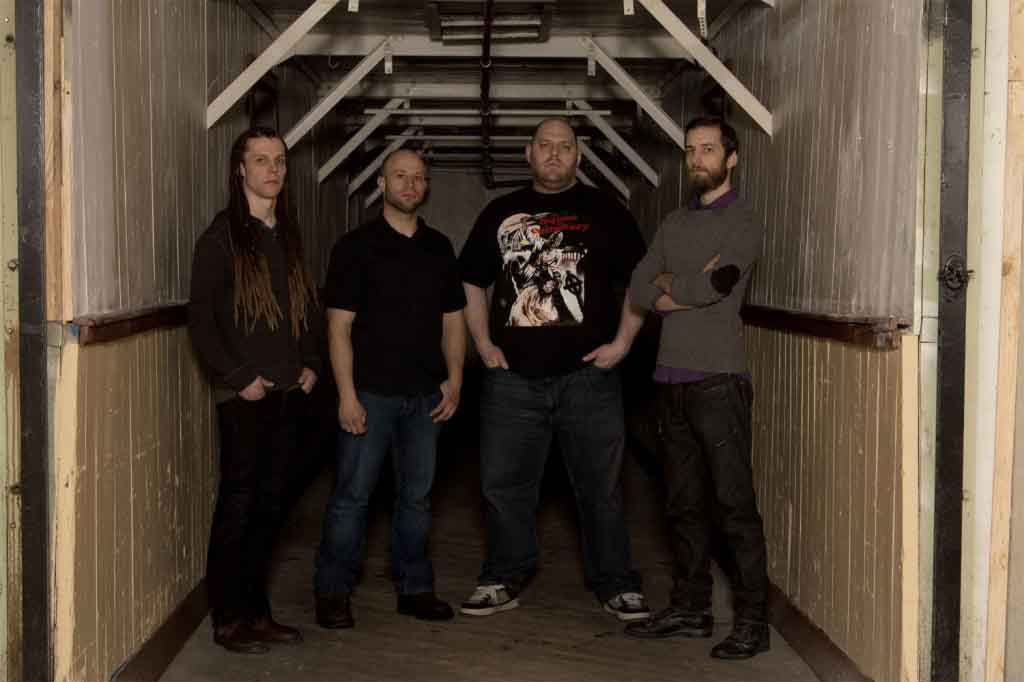
Music is never in stasis. It is composed of two parts, a form and a content. The two are related; in the best of situations, content causes the musician to innovate a new form. When the content changes, the old form is not relevant. However, some things are timeless and those forms persist.
Such questions emerge at the front of the mind when we look at Wisconsin’s Ara and their latest album, The Blessed Sleep. Whatever the changes that have been wrought in metal over the past 20 years, Ara roll back some of the tendencies toward excessive form and pointless technicality, and return the focus to songwriting. (See our review of The Blessed Sleep.)
Ara presents a challenge to what metal has become and to what many conceive of as metal. We figured we would go deeper for the whole story, and were fortunate to speak with guitarist and band cofounder Jerry Hauppa, who helped clarify the situation and told us about the inspiration and musical vision behind Ara’s latest, The Blessed Sleep.
You approach metalcore/tech-deth with a stripped-down style that focuses more on songwriting. What made you decide to do this, against the conventions of the genre?
None of us are really thrilled by the theatrics of sweeped scales masquerading as riffs in extreme metal nowadays. To the casual fan this can superficially be interpreted as sounding crazy and chaotic but we all come from older metal backgrounds where the riffs and arrangements had to have creativity and personality in order to express deviation between songs and moods. Cluttering up a song with a ton of parts can be an effective way to display chaos at times but we are trying to make sure each part serves the song well enough where nothing seems to be either filler or extraneous.
What do you think separates “modern metal” (metalcore, tech-deth, indie metal) from the older extreme metal like death metal and black metal?
The Blessed Sleep seems to have indirectly caused quite the argument about this in the comments section of your review for the record, but in my defense of death metal I clearly differ from the opinion of your readers in terms of what I feel falls under its umbrella. I think that “modern metal” is less a genre and more a statement that tries to separate any current take on the genre that threatens the ethos created in the early 90s. I agree that most of what I hear nowadays doesn’t resonate with me, but I’m not going to invalidate it by claiming it isn’t death metal or black metal because I’m afraid of what that means for me as a listener.
What I will say, is that I feel I have an uncanny ability to hear motive in music, and what I think you are getting at with the title “modern metal” is the unfortunate actions of -core acts that clearly resemble marketing ploys and the inhibiting crutches present in their writing, which throw at the listener a sense of immediate gratification through the aforementioned sweeps and of course, breakdowns. What we are trying to do is not throw the listener a bone so I feel we have more in common with the rebellious aspects of the early death metal movement than what people are considering to be “modern.”
In your view, what are the founding acts that influenced this style? What influences do you as a band have in addition to these?
The style shown on the record, or in modern metal? As for the latter, I have no idea really. I know that it seems many young bands don’t understand the history of metal and are trying to emulate a band that has emulated another band and so on, and that’s a shame with the ease of resources we have nowadays.
I guess as for the aspect of a more chaotic form of death metal, you could probably say that Cryptopsy’s Whisper Supremacy took the idea of a metal song arrangement and turned it upside down- at least for me, when I heard it, nothing really sounded like it. Today’s bands probably are really far removed from that record but the bands they ripped off might be familiar, I don’t know.
As for the influences of the band, for me, I’ve always been drawn to more complex music because I like to hear something new in a song each time I hear it. I’d say Gorguts, Anata and Cryptopsy are definite influences, as well as Theory in Practice and maybe the early explosion of Unique Leader bands. As far as how the record sounds, I could probably say I was drawn to the feel of Sinister’s Aggressive Measures record in terms of their atonal leanings and not having the guitars be tuned super low. The rest of the guys in the band have a huge list of influences, but I can say I know Erik worships Discordance Axis, Adam loves stuff like Fleshgod Apocalypse and Jim listens to everything under the sun.
How did you get the crisp sound on The Blessed Sleep? It sounds like you played it live, but somehow got a nice digital snap to each track. Where was it recorded?
We recorded with Shane Hochstetler at Howl Street Studios, and we are extremely happy with the sound. We have recorded there numerous times with other projects and he is a blast to work with and everything he does sounds amazing. I don’t really care for the sterile production of modern metal bands and really wanted this record to sound tight yet savage, so we deliberately left it without too much polish to give it its own atmosphere. As for how we got the sound, I know there are tons of guitar tracks going on all the time so it has a wall of sound that gives it the heaviness that I think a lot of technical bands are lacking.
What prompted you to found Ara, in the style you’ve chosen, and what additions do you hope to make to the genre?
I always wanted to do my take on death metal since I was a teenager, and only now am I lucky enough to be around the musicians that can make it happen. The style is I suppose an amalgamation of all of my influences in extreme metal, but as I get better at writing music I really feel as though the compositions are inherently mine and don’t directly emulate any particular band.
As far as the second half of your question, I don’t have any lofty goals where I think we can be flagbearers for any kind of genre movement, I just hope people check out the record and like it. If I had any wish that we could influence anything, I do hope the riff can come back. I miss and mourn for the riff.
Where do you want to go after The Blessed Sleep? It seems like you’ve reached a peak within this genre; are you going to grow in a new direction, or refine?
As of today I have written 11 songs for a full length and am really excited to see how the new material will shape up. The rest of the guys know four of the new songs and I would say it is decidedly different from The Blessed Sleep. There is a much greater focus on melody but not in the At the Gates way, probably more in an Anata way. I am trying to make the songs complex but with very few themes explored per song because I want each song to be its own entity. You can hear one of the new songs in the live set on the youtube video you posted, it’s the last one we played. I’m trying to balance melody with discordance in each song. Some of the newer stuff is way faster than anything we’ve done and we have some doomier stuff as well. If you like The Blessed Sleep I think you’ll be excited for the progression. Also, we are very much hoping for label support for future recordings.
What do you think draws people to your music?
The band is very new so I don’t really know yet. People like speed and we have and love lots of blast beats. We also try to be atypical so I assume people that like weird metal will hopefully like it. Time will tell.
If fans wanted to explore your music, where do you recommend they start, and what should they do next?
You can stream the whole record at arawi.bandcamp.com, so there you go. Then I suppose you should follow us on Facebook to find out what we’re up to and where we’re playing.
Will you be touring for this album? Will we see you in Texas?
I absolutely want to get on the road for this record and hopefully we can do so later in the year. Erik and I play in another band called Northless that is in the studio next month so after that is wrapped up we can get our scheduling straight and play outside our home town. We would love to play in Texas if everything works out and if so we will definitely let you know! Thanks for your time and the support!
49 CommentsTags: ara, death metal, metalcore, modern metal


 In parts of Southern Africa, a vibrant scene that hybridizes metal and extreme rock is taking hold, and defining a new vision of metal that is part local tradition and part melange of worldwide metal concepts.
 The problem with success is that it can become a cage: you get known for doing something that meant a lot to you at the time, but time goes on. You want new horizons. It’s hard to express them, and you see others succeed for doing a lot less.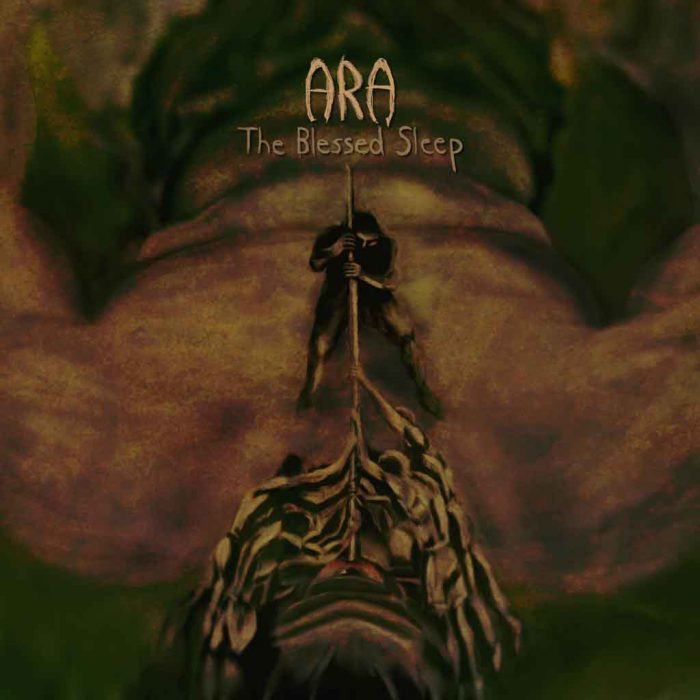
 Seminal heavy metal band Black Sabbath has released the first single from their upcoming album, 13. Entitled “God Is Dead?”, it features 3/4 of the iconic Sabbath lineup.
 The long-awaited first real album from Imprecation resembles less their 1995 debut Theurgia Goetia Summa but a more streamlined and moody creation. While the demos compiled into that album revealed a raw understructure of a morbid subconscious arising, the newer work from Imprecation focuses on deliberate and meticulous ritual.
 Any band making music of a vaguely “Swedish style” is going to attract both absurdly high hopes and cynicism, and Terminate fulfills some expectations from each column.
 Dutch-German blazing black metal act