Metallica – Orion
If words convey meaning, matter takes form, bodies are avatars and truth can never be held, perhaps a tune is the same way.
No Comments
Metallica – Orion
If words convey meaning, matter takes form, bodies are avatars and truth can never be held, perhaps a tune is the same way.
No CommentsWe have long said on this site that aesthetics and composition, while they can aid each other (particularly aesthetics enhancing presentation of composition), are not the same and aesthetics — on the whole — is disposable. A great symphony played by a metal band would still be good music, and a great metal song played on kazoo would still be a great song.
Exhibit 1: Angel of Death (Soft Rock Version)
Although this is sacrilege and the person who committed it should be raped to death by pigs, it’s not only hilarious but, in comparison to all other soft rock ever created, total genius.
Exhibit 2: Hipster music
Note how brilliantly contrived the aesthetic is — and how empty, pointless, binary and unexceptional the underlying composition is. If you played this on an acoustic guitar, it would put you to sleep.
Like all hipster music, it’s a surface treatment. Death to all hipsters — well, that’s true, but the bigger point is: the song is not the production, the imagery, the performance or the weird little artists statements these grebo queerballs make in their album liners. It’s the composition.
No Comments*** ATTENTION ALL HESSIANS ***
True Cult Heavy Metal has posted a poll asking who should be the next BIG FOUR of “THRASH,” by which they mean everything from DRI to DESTRUCTION.
Unintentionally, for sure, they forgot to add motherfucking Birth A.D.
It would be great if others joined me in going to the True Cult Heavy Metal Thrash Poll and commenting to this effect:
Great list! You might also enjoy a crossover thrash band from Texas, Birth A.D.!
http://birthad.com/
You can also send email to the author directly with words to that effect.
No CommentsAurora Borealis define “melodic death metal” in the best tradition of the old school: it’s death metal, but it makes use of melody.
It has nothing in common with the new pseudo-genre “melodic death metal” which sounds like a power-metal/metalcore crossover with an emphasis on frilly melodic fills. You and your rape rump roast can go enjoy that elsewhere.
Instead, it sounds like Fallen Christ crossed with Luciferion. It’s good stuff:
Scenes from the making of the new Aurora Borealis album:
And some classic material from early in their career:
No Comments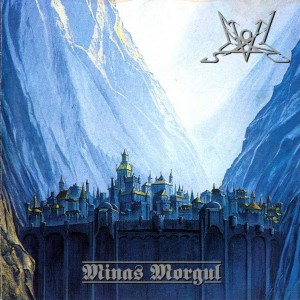
Great Death Metal, through its boundless courage, developed an uncanny ability to plunge listeners into a subterranean labyrinth, revealing the philosophical impetus that stimulated the development of the genre itself. Black metal is slightly inverted, wherein the meandering melodic and thematic developments reveal an adventurous spirit and a desire to plunge into and discover the majesty of the infinite. Indeed, although each genre is somewhat complimentary there is a stark philosophical difference that characterizes each, where Death Metal revels amongst the catacombs and forces listeners to re-evaluate life in the face of their impending doom, Black Metal having stared long enough into the abyss and having emerged from the catacombs seeks glory amongst the stars, and in so doing provides listeners with a glimpse into what once was, and must be again.
Minas Morgul is a testament to this very spirit. Individually meandering, soaring and delicate melodic phrases weave around one another, periodically converging and thus creating a breathtakingly lucid and organically familiar polyphonic structure. What the listener will find most striking is the way each melodic motif develops according to its own internal logic while simultaneously complimenting and augmenting the presentation and development of concurrent melodic lines, which themselves develop according to their own internal logic. Here the infinite abounds as listeners bear witness to the expert use of polyphony, with each rung in the ethereal melodic hierarchy subtly altering the emotional experience of the listener through its capacity for slight differentiation.
The individual melodic motifs themselves are more robust and less restrained than the cryptic sense of melody that characterized say early Darkthrone. However therein lay this albums strength, as each melody is highly communicative and capitalizes on its inherently archaic, although timeless content to appeal those psychological archetypes that define the modern Hessian, to wit, regality, a desire for adventure, wanderlust and a sense for the transcendent.
Guitars are a secondary instrument on this album, however they are utilized with such tact and melodic viciousness, if I may say so, as to ensure that the sometimes airy and sentimental melodies remain grounded, bonded to an orthodox sense of attack and ferality that has always made great metal threatening, challenging, confrontational, and insightful.
Indeed, what makes this album truly compelling is that it successfully melds together a romantic longing for those eternal values that once gave life meaning, with a feral and commanding spirit that wishes to take hold of life and explore it’s depths, and its mountainous heights! One is less likely to find an album more suitable to one’s journey of self exploration and self transcendence.
-TheWaters-
1 CommentTags: Austrian Black Metal, Black Metal, Epic Metal, minas morgul, Summoning, Transcendence
You may have wondered what Kam Lee was up to between Massacre and Kauldron, Bone Gnawer, The Skeletal and his other current musical projects (and one horror film appearance, in Deep Seeded).
The answer is that back in 1998, he released a demo by his one-man black metal project, PHLEGETHON RISING:
Master of Plagues
Legends Advent
He claims a BATHORY influence in addition to the HELLHAMMER-ish parts, but in many ways, it’s reminiscent of early DEMONCY and PROFANATICA. Good to see this reach the light of day.
Other Kam Lee projects:
Bone Gnawer – Anthropophagus Beast
The Grotesquery – Nightmares Made Flesh
The Skeletal – Vengeance Sewn
No CommentsI’ll never understand why places like Amazon, where kids can hitch a few items onto their parents’ orders and get away with it, don’t put greater emphasis on works like the following:
In fact, they seem to almost want to hide it, as if they’re afraid of the controversy that might come from encouraging citizens to blasphemy. That’s ridiculous, given that our current regime would love nothing more.
Maybe it would be fun to coerce these opposing forces into revealing themselves. Are you pro-blasphemy, or anti-blasphemy?
Here’s the review posted today:
Paul Ledney, the primary composer on this CD, spent some years in INCANTATION and REVENANT trying to make the ideal of music to him: stripping of all meaning, pure nihilism and primal id expressed through sonic violence.
On this CD, he came close. In the vein of early BLASPHEMY or BEHERIT, this is primitive chromatic riffing with unusual, almost hasty song structures, using his odd method of picking three-note “modal stripes” and repeating them at different positions in the chromatic scale.
Surrounding this are the cavernous vocals of Ledney himself, which like a whisper made into a roar surge around the music, carrying it like a rhythm instrument of deviant intent.
Sounding very much like the results of a weekend of apostate demons camping in the countryside and, in the midst of their blasphemy, picking up guitars to make unholy music, “Dethrone the Son of God” exemplifies the feral and nihilistic spirit of black metal.
I’m not telling anyone what to do, but if a horde of people showed up and started discussing this in the amazon forums, commenting on it and otherwise encouraging it to become more popular, the results might be telling. -|-
No Comments
During the 1980s and early 1990s, Houston was lucky enough to have its own metal magazine.
With the slogan “Free – Take One!” emblazoned across the top, Rivethead Magazine was a familiar sight in Houston-area record stores, especially those that were — how shall we say — metal-friendly.
Interview with Lisa of Rivethead Magazine
No CommentsIn the late 1980s and early 1990s, this was a regular metal magazine that you could get for free at record stores in Houston.
Every concert and new record release was in it. Not only that, but it covered ANUSian topics — much like the Metal AE — such as the history of metal, music theory, what defined metal, genrology, the spirit of metal and the clash between metal and the counter-culture as well as the pop-culture above it.
[[image:rivethead-houston_metal_magazine.jpg]]
The website has a comprehensive archive of their late 1980s and early 1990s issues, which focus on a mixture of heavy metal, speed metal and the birthing of death metal. The approach is professional even if the methods are homebrew:
Also see our article on Examiner.com.
No CommentsFrom a notoriously fractious and insightful source, a rant that nails it — on Facebook, of all places:
It’s from “formula” in metal music that has either been the downfall or the up rise in the genre and among many of the bands. When bands set a distinct genre – and a set “formula” is established, once those bands begin the mix or change that formula, is when they take a risk of failing.
Sure some newer fans may take to the new formula – but those already established fans in the formula have a certain “taste” for what they prefer. Change the ‘taste’ – take the risk of having the already established fan base spitting it out after the first bite. Sure, some will attempt to stick around and nibble at the edges… attempting to find a similair taste and familiar feeling…
They will even attempt to make excuses, attempt to rationalize it, and even go as far as to use controversial behaviors or feelings in an attempt to explain in a rational or logical manner their intrepid points. They wish to avoid any true explanation of the utter disgust and disappointment they are truly feeling, and thus hide behind pitiful excuses and whitewashed ideals and values.
However, in my opinion – when a band decides to forsake the formula that works, and forsakes integrity in exchange to gain “a piece of bread” (make $money) – I personally do not feel my loyalty is any longer of importance to the band. They have already decided that my personal opinion is no longer valid, and that other fans too that may share the same or similair opinions are also no longer important as well.
Integrity and pride more so than often get’s washed away in favor of the notoriety and tempting promise of “fame and glory”.
[…]
As well… with “formula” when a new genre is attempted to be made – by changing an already established genre, and trying to “mix” in something new to that genre. It is NOT likely to be accepted by those fans who already – as I said above – have an established taste for what the genre already has been dishing out.
Perfect example: DEATH-CORE is NOT DEATH METAL!
And as I said above –
some newer fans may take to the new formula – they will even attempt to make excuses, attempt to rationalize it…even go as far as to pretend to accept is as inevitable change.
Translating into cause->effect logic:
Formula means repeating what others did.
However, that “what others did” is an effect, not a cause.
The cause of what they did was the need to translate an idea/mood into music.
The effect was how they did it.
You can’t get the same effect by imitating their effect; instead, you must rediscover their cause.
But if your motive is fame/notoriety/kvltstatus/$$$ instead of “making art” (to translate that idea/mood into music), you will not understand that cause.
Metal is the spawn of early punk, progressive rock and horror film soundtracks — it’s more Anton Bruckner than Chuck Berry, more King Crimson than Blue Cheer, more Jethro Tull and Procul Harum than Led Zeppelin, and more Iggy Pop than The Beatles.
As a result, it takes integrity/authenticity seriously — it is music of the Idea, and by that I do not mean dogma or the reality-detached idea, but an enmeshment with reality.
Like Romantic literature, it is born of a time in crisis… it is mixed-blood, with some blood being the feel-good prole average (rock) and some being the rising above (ambitious music->art).
Romantic literature had both Shelley and Blake, after all. Wordsworth and Keats; Coleridge and Bram Stoker (later Romantic literature sort of diverged into Gothic lit).
What does it mean?
When metal loses its honest intent to create art, and to translate an idea/mood into music, it becomes window-dressing: pandering to the crowd for popularity points.
And then, it becomes the same callow manipulation we’re running away from, and that running away got us into metal.
Beware the rock-n-roll formula.
No Comments