Tolkien ambient black metal project Summoning have unleashed their latest recording, Old Morning’s Dawn, via Napalm Records. The pre-order links are now active and the final product will be released June 27, 2013.
Napalm Records promises that “Despite the long break, the congenial duo Silenius and Protector did not stray an inch from their patch. Their distinctive melodies are the heart of all the songs on the latest longplayer, and bring the listeners directly into the fantastic world of Middle-Earth.”
Old Morning’s Dawn follows up on 2006′s Oath Bound, which united the epic spirit of power metal with the gentle melodic atmosphere and inner savagery of black metal, making the ideal soundtrack for medieval battle or spiritual occult warfare against the modern world.
Many know Absu as the band that transitioned from mythological death metal to heavy-metal tinged black metal to finally a progressive, jazzy, and eclectic blend of metal, Celtic folk and psychedelic fusion styles.
According to percussionist/vocalist Proscriptor, “We’re attempting to divide the concerts into two sections: the first act will showcase songs spanning from our entire discography, as the second act will focus on Phase Two from the album Tara: The Cythrául Klan’s Scrutiny. For the past couple of years, many of ABSU’s followers have requested specified songs from this chapter of Tara, so it is our aspiration to give the people what they want.”
The tour covers North America in the blood of the righteous, and gives Absu a chance to show off their psychedelic rock-metal fusion trilogy: Absu, Abzu and the upcoming Apsu. As always, it is expected that the tour will showcase fantastic musicianship, chaotic pits and manic scrambling of residents for talisman artifacts of protection against the summoned evil.
4/05/2013 Millcreek Tavern – Philadelphia, PA
4/06/2013 Roger’s – Chesapeake, VA
4/07/2013 Strange Matter – Richmond, VA
4/08/2013 The Windup Space – Baltimore, MD
4/09/2013 Middle East upstairs – Cambridge, MA
4/10/2013 St. Vitus – Brooklyn, NY
4/11/2013 St. Vitus – Brooklyn, NY
4/12/2013 El N Gee – Hartford, CA
4/13/2013 Theatre Plaza – Montreal, QC
4/14/2013 L’Agitte – Quebec City, QC
4/15/2013 Wreck Room – Toronto, ON
4/16/2013 Ace of Cups – Columbus, OH
4/17/2013 Mojoe’s – Joliet, IL
4/18/2013 Rocco’s – Milwaukee, WI
4/19/2013 Station 4 – St. Paul, MN
4/20/2013 Zoo Cabaret – Winnipeg, MT
4/22/2013 Dickens Pub – Calgary, AB
4/24/2013 Biltmore Cabaret – Vancouver, BC
4/25/2013 Highline – Seattle, WA
4/26/2013 Ash Street Saloon – Portland, OR
4/27/2013 Shinneybrook Creek Cabins @ Festum Carnis – Soda Springs, CA
We can only know the present by knowing the past. In the case of heavy metal, it is a murky past obscured by both the grandiose rockstar dreams of individuals and the manipulative fingers of a voracious industry.
Metal arose through a complicated narrative worthy of a lost empire, and by knowing this history, we can know more of the music we enjoy today.
Specifically of interest are a number of threads that interweave throughout the history of the genre, both as outside influences and later as internal habits, which influence its twisting path from something a lot like rock to a genre entirely separate.
This story then is a tale of how many became one, or how they found something in common among themselves, and how it has taken years of creative people hammering on the parts to meld them into one single thing, known as heavy metal.
However, no one really likes a lengthy essay. Instead, here’s metal’s history the best way it can be experienced: by listening to it.
1968-1970 — the origins
Three threads ran alongside each other: punk, proto-metal and progressive rock. All three are on the edge of being metal, since the type of progressive rock in question is raw and disturbing and not of the “everybody be happy love friends” hippie style. This is music that thinks our society is disturbed, and that therefore many of the values we reject are worth a closer look. Some is fatalist-nihilist, like the self-destructive tendencies of punk, where progressive rock is more clinical, and metal more epic (looking for meaning in the ancients, in nature, the occult and conflict).
Iggy and the Stooges – Raw Power
Black Sabbath – Black Sabbath
King Crimson – In the Court of the Crimson King
1971-1981 — maturation
A lot happened here, but basically, metal became more like its ancestors (hard rock), progressive rock faded out, and punk got more rock-music-like. The punk from this era is more like normal rock music than the outsider stuff it originally was, but also gains some aggression from Motorhead, who may technically be metal but were born of a progressive rock band (Hawkwind) and sounded very punk and inspired the next generation of punks to be louder, lewder, etc.
Punk music arose from the earlier work by Iggy and the Stooges, but formalized itself into a pop genre that used guitars more like keyboards than like the guitar fireworks of conventional guitar-intense bands like Cream and The Who.
An exception to the metal of the period was NWOBHM (New Wave of British Heavy Metal). DIY and extreme for the day, it left behind the Led Zeppelin-styled “hard rock” vein of metal and got away from Sabbath’s detuned doom and gloom to make energetic, mythological but also somewhat excited-about-life metal.
Motorhead – Motorhead
Satan – Court in the Act
Angel Witch – Angel Witch
Iron Maiden – Killers
Judas Priest – Sin After Sin
1982-1987 — the peak
Punk got its act together, in part inspired by the more commercial bands like Ramones and Sex Pistols. This is where hardcore punk really happened. That in turn spurred a revolution because music had finally left rock behind, and by mating the nihilistic (no inherent rules) composition of punk with the longer-phrase riffs of metal (derived from horror movie soundtracks), the riff styles of death metal and black metal were born, and the progressive song structures of speed metal evolved. At the same time, essentialist movements in punk hybrids (thrash) and metal (doom) emerged, sending many back to the roots of these subgenres.
Discharge – Hear Nothing, See Nothing, Say Nothing
The Exploited – Death Before Dishonour
Amebix – Arise!
A second generation arose in the USA (all of the above bands are UK):
Cro – Mags – The Age of Quarrel
Black Flag – Damaged
Minor Threat – Discography
1983 — the big branching: speed, thrash and death/black
1983 is a crucial year, and so it gets its own entry. Metal and punk cross-influenced each other. The result was a lot more metal. If you’re familiar with nu-metal or more radio style metal, start with speed metal, as it’s the most like really violent rock music with influences from progressive rock in song structure. If you like messy punk (!!!) try some thrash. And if you’ve already given your soul to Satan, try death/black. With death/black, there’s also some influences from progressive rock, although they’re balanced with punk technique which makes for a chaotic spawn.
Speed metal took the complex song forms of progressive rock, the muted-strum guitar riffing of the NWOBHM bands like Blitzkrieg, and added to it the high energy of punk hardcore and came up with songs that kept getting faster and faster. This shocked people of the day, and was the primary reason speed metal bands were different from the NWOBHM that came before them, hence it was dubbed “speed metal.”
Thrash is a hybrid genre that takes punk songs and puts metal riffs in them. Its name arises from “thrasher,” or skater, and those were the people who embraced this style of music that was more extreme than metal or hardcore at the time. While it leans toward punk, it used metal riffs, and wrote short songs that in the punk style lambasted society but in the metal style tended to mythologize the resulting conflict.
Like thrash, this was a hybrid of metal and punk that leaned toward the punk side for song structures, and the metal side for riffs.
Napalm Death – Scum
Terrorizer – World Downfall
Repulsion – Horrified
Carcass – Reek of Putrefaction
PROTO-DEATH/BLACK METAL
In 1983, these bands contributed just about equally to the new sound. In the largest part inspired by NWOBHM like Venom and Motorhead filtered through aggro-hardcore like GBH and Discharge, the unholy triad invented underground metal to come.
Once proto-death/black metal had occurred, people began to expand on the formula. One side decided to make it more technical, and riffy, and taking after Hellhammer’s “Triumph of Death” and the increasingly mind-bending riffing of Slayer, made it use mazes of mostly chromatic phrasal riffs. On the other side, some wanted to preserve the atmosphere of the simpler songs that Bathory and Hellhammer had to offer, but injected melody and loosened up the drums to keep it from being as clear and rigid as death metal. While that latter group went off to figure out black metal, the death metal team experienced a boom of creativity and excess during 1985-1995.
Possessed – Seven Churches
Sepultura – Morbid Visions/Bestial Devastation
Necrovore – Divus Te Mortuus
Morbid Angel – Abominations of Desolation
PROTO-BLACK METAL
While death metal was just starting up, other bands were trying to figure out how to make melodic ambient metal, structured equally after early melodic metal and free-floating songs like Slayer’s “Necrophiliac.” The result had chaotic drums, deliberately bad sound quality to avoid becoming a trend or something which could be imitated, and high shrieking vocals to death metal’s guttural growl. Taking a cue from Bathory, Slayer and Hellhammer, it also embraced the occult and esoteric and rejected conventional social norms and religions.
As black metal matured, it moved into Norway, possibly inspired by the previous generation of melodic Swedish death metal bands who used high sustain through heavy distortion to make melodic songs which featured less constant riff-changing than the bigger bands from overseas.
Immortal – Diabolical Full Moon Mysticism
Mayhem – De Mysteriis Dom Sathanas
Darkthrone – Under a Funeral Moon
Burzum – Burzum
Emperor – Wrath of the Tyrant
Gorgoroth – Pentagram
Enslaved – Vikinglgr Veldi
This is just the beginning; there’s a lot more after this in all of the genres, which kept developing in their own ways. This is only an introduction to the history of it all, and is not designed to be comprehensive…
Von gained fame for the ultra-minimalist droning 1990s album Satanic Blood which raged forth in three-note songs that resembled air raid sirens of the soul going off in an infinite night of bestial darkness.
Returning after a long hiatus, the band conjure up Dark Gods: Seven Billion Slaves to bring us the greatest of rarities in metal: an honestly experimental album. Most “experimental” albums involve recycling avant-garde and progressive rock themes of the 1970s, but there isn’t anything at all like this album.
Perhaps recognizing that repeating the past would be tame, Von have instead chosen to make a form of ritual music that sounds like a collision between black metal, later Danzig and a horror movie soundtrack. The songs are just as simple but more musical, and are generally played more slowly but have a stronger sense of developing theme.
Like a soundtrack, these songs are designed to fade into the background and influence mood rather than command attention. Much like a few repeated notes signal a dark theme ahead in a movie, these songs use very similar melodies to horror movie soundtracks and presage a limitless and expanding fear. The mood is similar to Profanatica‘s Profanatitas de Domonatia or Demoncy‘s Enthroned is the Night. Much as in a horror movie we watch the characters go into the room where evil lurks, or prepare to yank aside the curtain covering what they fear, this album exudes a menacing sense of impending and inexorable threat.
Percussion works in a way that is rarely seen outside of opera. Its timekeeping functions are present when the music is uptempo, but for slower pieces it forms pure mood, a clomping footstep like the tread of an executioner. Guitars play very similar patterns repeatedly and nearly constantly, but are frequently overlaid with background chaotic noise that like distortion itself brings out submerged harmonics and gives the music added body and menace.
Melodies themselves sound like horror movie music tinged with the more listenable vein of occult or dark rock, sounding sometimes like Danzig’s later works and sometimes like the Sisters of Mercy. They fit together well and evoke moods clearly and strongly, which makes this album more interesting for repeated listens than Satanic Blood. The ritual nature of the pacing of song development, coupled with the uncanny ability that vocals had on the first album to trigger a sense of dread and despair by offsetting rhythm like an attacker outside the law, builds momentum behind this atmosphere.
Dark Gods: Seven Billion Slaves is going to take many by surprise. It’s sparse, meaning that it’s not a constant wall of sound; it is often slower and more theatrical; it is complex in that many simple riffs together tell a story more than cyclic complex riffs can. It is experimental, in that while this style could be called black metal, there’s a lot more going on, but unlike “kitchen sink” bands who throw in other genres at random, everything here is fused into one consistent and expressive style.
While this may not deliver conventional metal thrills, Dark Gods: Seven Billion Slaves shapes its minimalistic riffs into a changing atmosphere of morbid curiosity and onrushing fear. The result is overwhelming, like a vision of hell brought to earth, and with its convoluted and esoteric patterns shows us darkness revealing itself before our eyes, while we stare at the screen too scared to scream.
Sammath, Dutch-German furious black metal band, continues to work toward the release of its next album, Godless Arrogance.
To this end, the band released two tracks in demo form from the forthcoming album on Folter Records. These show the black/death thrashing hybrid that this band has become over the years.
On the new album, expect the instrumental prowess of 2009′s Triumph in Hatred with a stripped-down and vicious style more akin to 2006′s Dodengang. The band shows high confidence going into this album and it will be great to see it hit the shelves soon!
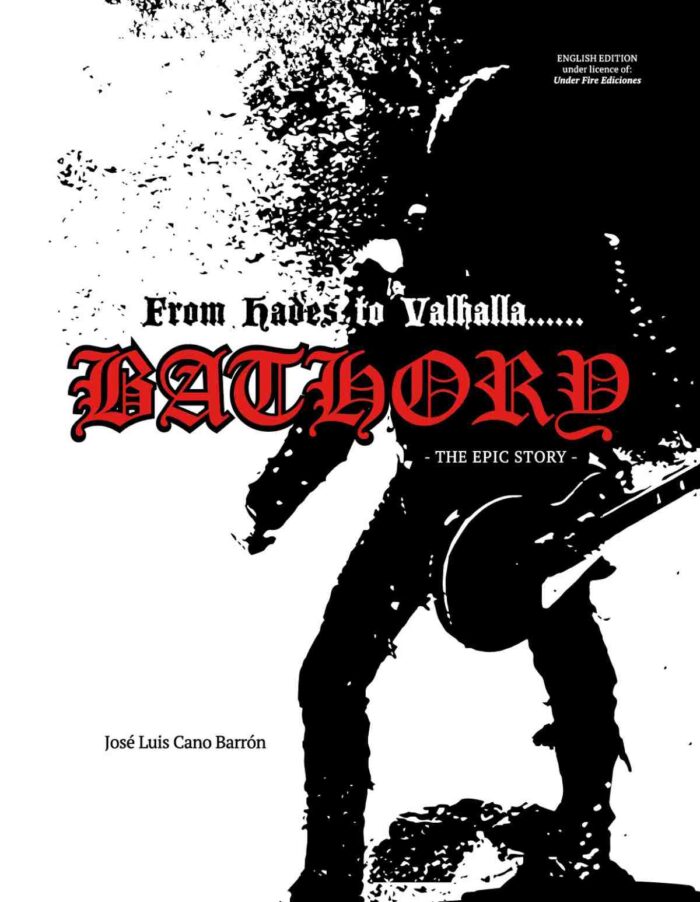
Bathory’s relation to the band’s fanbase is an infected story of contradictory interests concerning very human desires for truth and meaning. Oftentimes fans and creator pulled in opposite directions, fighting over whether to leave the Bathory mask on or reveal Bathory’s inner workings.
Debuting in 1984, Bathory’s cult status was rapidly acknowledged in the musical underground. But during a long time a certain air of mystery surrounded the band. It seemed beyond time, beyond space, and even out of national context (to a Swedish person this Stockholm wonder didn’t seem as typically Swedish as many of the later Death Metal bands). In general, main man Quorthon kept to himself, few pictures of the band existed, and there were hardly any live gigs at all, in particular once the music got closer to Wagner than to Motörhead. Bathory took one heavy metal tradition to extremes: it created a mythos out of nothing more than a few cover images and an interview or two. This obscure and ambiguous myth bound people together. They wanted to live out this vision as they found it more appealing than their world. When the fanbase went looking for answers, and found little else but songs of evil, darkness, destruction and conspiracies with Satan, imaginations ran wild and filled in the gaps with what they wanted to see, not what they saw.
People have a desire for continuity in an individual’s past. In this case, that desire was expressed among metal fans by trying to explain Bathory’s music through references to a heavy influence from a band which prior to Bathory was seen as the most extreme: Venom. In several interviews Quorthon himself has denied any Venom influence, but in many biographies the memory of early Bathory as a Venom clone is nevertheless quite persistent. (According to Quorthon, his main influences were Black Sabbath, Motörhead, The Exploited, and GBH, and later on Wagner, Beethoven, and Haydn among others.)
The will to interpret Bathory’s music as a logical continuation of Venom, and accordingly seek out a sense of “eternity” in the genre which these two bands (among others) officially created in the earliest of times, is hardly surprising. A consistent pattern which suggests some sort of intention is simply more attractive than a chaotic mess of a genesis produced by two groups entirely unknown to each other.
It is, however, easy to recognize among the authors of reviews of early Bathory albums an aspiration towards and an acknowledgement of a distinct identity of the band and its founder. Regarding Bathory’s self-titled debut album and its follow-up, a mantra is repeated: these records are the starting point for a whole genre and Quorthon is its first hero. This is, so to speak, the creation myth associated with Bathory.
Repetition of this myth is presumably what makes it go beyond historicity and is what makes it timeless. It’s a way for a metal fan to not only “create” Bathory, but also be a part of the phenomenon. Even repeated listens to Blood Fire Death is a repetition of a mythical Now, which gives us a sort of “vertical anchoring.” If myth is a celebration of life, a summary of the Past in the Now, then this is certainly what Bathory is to the band’s followers.
Quorthon himself seems to have had an enormous respect for the mythical power of Bathory. Referring to his fanbase as “The Bathory Hordes”, he tried to reach out to it in order to receive answers on how to deal with this beast:
[…] send me a letter of what you think, what you would want us to do in the future […] Remember, it is you the fans out there on whom we depend on. […] Stay united and may the northstar shine on you all, keep metal at heart!!
This kind of democratization most likely rendered him unable to control the myth of the band. As Quorthon “grew out” of Satanism, and myths surrounding his persona still insisted on his being a demonic devil worshipper, he wanted to set the record straight. And this is where things get interesting.
In 1996, Bathory released Blood On Ice, a retro album with liner notes containing a lengthy exposition on the band’s early history. Presumably, Quorthon had wished to update his biography and rid it of the misconceptions that according to him were abundant in the metal world, but it was probably also a way to pay tribute to the legend by contributing to it with a few “behind the scenes” stories.
This, however, proved to be a serious miscalculation of what the fans wanted. The unmasking threatened the consistent cultural memory of Bathory. And reactions weren’t long in coming: fans spoke of sacrilege and treachery in the many letters that were sent to Quorthon as a direct reaction to the liner notes. The memory of Bathory was now to a great extent a social concern and no longer only the creation of one man. Quorthon writes:
I realized then more than ever before that BATHORY was surrounded by the same sort of stuff only legends are made from. The element of mystery and suspense was still very important to a lot of die-hard BATHORY fans. [The truth] didn’t suit the image that a lot people had of BATHORY or myself.
Quorthon died in June 2004, but shortly before his death he founded an official Bathory website in which he denies the old image of himself as someone who eats children, drinks blood, and lives in a cage, an image that apparently still needed to be denied. Quorthon tells of an interview many years after he abandoned his satanic image: despite the time that had passed, he was still expected to pose for a photo session with pentagrams, skulls and cobweb.
Ironically, many fans have as of recently noted that Quorthon himself tampered with the truth quite deliberately. The iconic Bathory goat – which has become a sort of identity marker among fans – is, according to Quorthon, a collage created out of bits and pieces “from several horror comic magazines”. In fact, the goat is taken from a finished illustration in a book on witches from 1981. It wasn’t until 2007 that the originator, Joseph A. Smith, got to know that his drawings had been used as subject matter for tattoos and the like all around the world for decades. It also turns out that the lyrics and title to Bathory’s “For All Those Who Died” is more or less stolen from a feminist poem by Erica Jong.
The legacy of Bathory will nevertheless die hard. Quorthon created a legend so powerful neither he nor its fans could control it, an art that hovers above independently of its creator and its receivers. Yet we shouldn’t forget the core quality of its longevity: Quorthon’s compositions. These are what will always create very much alive “elements of mystery and suspense” in the mind of the listener. That’s where the magic happens. Hence the art of Bathory is stronger than both the fans’ myth-making and Quorthon’s myth-busting.
Going through Bathory’s albums again, experiencing the passionate evil melody of “The Return of the Darkness and Evil” or the haunting existential angst of “Twilight of the Gods,” they contain the same everlasting power they ever did and is what makes Bathory eternal. The mask is put back on. Continuity reappears and everything returns.
Cold minimalist black metal got a bad rap back in the 1990s when people figured out that it had basically taken Darkthrone’s techno-influenced Transilvanian Hunger and recombined it with the thrash from generations before.
Ildjarn in particular sounded like an occult nature mystic version of DRI, complete with the idiosyncratic songs made of tear-off riffs. As black metal devolved, more bands tried the brutal short fast and minimalist approach, but none quite achieved the pristine chilling isolation of Ildjarn.
Now Osmose Productions has announced a split between Ildjarn and one of the bands it undoubtedly influenced, Hate Forest. This slab of forest metal, called Those Once Mighty Fallen, presents past unreleased material from both bands, which are now both non-practicing.
Here’s the official announcement:
From the cold blackened graves their shadows rise…. Osmose Productions releases unexpected ILDJARN / HATE FOREST split CD/LP, called “Those Once Mighty Fallen”. Both dead bands are presented with their lost and forgotten recordings, accidentally found not so long ago. ILDJARN’s songs were created in the dark year of 1994 and HATE FOREST’s during cold winter nights of 2000-2001. Now, carefully re-mixed and re-mastered this audio- terror is available first time. A real epitaph to sincere, true black metal. No release date yet to communicate. – Osmose on FacePlant
As a total Ildjarn fanboi, I’ll be seeking this out with bells on. For more interest, read our interview with Ildjarn from back in the hazy 00s.
The latest offering by Austrian Tolkien-inspired black metal band Summoning was Oath Bound from 2006, an album that “re-explore[d] the medieval and naturalistic nature of black metal” and delivered “a new chapter of full-bore dark exploration that dominates almost anything from the last ten years of this genre.”
What of the new album? The Summoning homepage reports that the guitars will be recorded this November and that Napalm Records “will put a one minute trailer to advertise the new CD on [their] homepage, that hopefully will happen around december.” According to earlier news the album will probably be released during the first quarter of 2013.
In the meantime, our forum members have expressed a few requests concerning the future release, including varying the melodies and song structures within songs, cutting down on the drums and using instruments that are “less fruity”.
One of the best works of Polish black metal, Welowie has the craftmanship and melodic sophistication of Sacramentum’s best work but marginalizes the death metal influences, instead filling that loophole with the post-Discharge melodic hardcore that Graveland had a niche for carving out in their earlier work. Distant screams amidst a melancholic plethora of notational sequences reveal a sense of emotionally fraught catharsis not unlike a more musically ‘learned’ take on Mutiilation’s best works. The eight tracks on here run at just over 26 minutes in total but still in such a limited constraint manages to make the most of epic scope and artful expression within a time constraint that would more traditionally fit a death metal band. In some ways calling this work merely a ‘demo’ does it little justice. -Pearson
War Master – Chapel of the Apocalypse
A young Texan war squad shows you don’t need advanced technique or labyrinthine compositions in order to succeed at pulverizing death metal hostility, as the palm muted chainsaw grind slugs onwards with the determination of a German panzer advancing towards certain death upon the Stalingrad plains. As with most young death metal bands, their earnestness sets them apart from most of the older colleagues and the primitive, architectural weight of “Awaken in Darkness” convinces one of morbid intentions unlike a thousand Necrophagists. Dark atmospherics abound in these documents of fear and rage in chthonic shade, bringing reminders of Amorphis’ and Incantation’s early Relapse days , the five musicians being able to build a solid tribute to their influences on this demo and generate a fiendish excitement for a capable followup. The success of the band in creating an esoteric sensation out of their simple source material is worthy of praise. -Devamitra
Witchblood – Witchblood
As if possessed by the ritual thrall of Walpurgis night, this mostly solitary creation of an individual called Iron Meggido is a clash of smoothly feline aggression of Nordic Black Metal with the Romantic architectural use of Heavy Metal riffs that characterized the occult metal of Celtic Frost, Samael and Therion. Alongside the suggestive and provocative riff stand the invoking voice of an Erinys caustically timed with the bludgeoning tempi of guest drummer L’Hiver. Underlying the beauty of this demo is the illuminated fire of an artistic vision in its birth-throes, painfully struggling against the bounds of convention in order to express the ultimately inexpressible: the twilight zone of fever and mythos where the ‘supernatural’ influences the evolution of man and mind. Hopefully their talisman is effective in order for the legion of Witchblood to fly even higher on these wings of rapture.