Judas Priest launches “Epitaph” live concert film

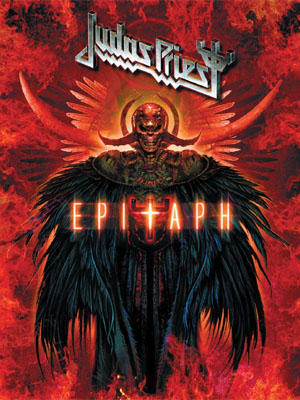
judas_priest-epitaphLegendary heavy metal band Judas Priest has announced that they will be releasing concert footage off their last tour. Entitled Epitaph, it features the band playing selections ranging the scope of their long career. The film will be screened at select theaters starting in May, culminating in worldwide release on May 28 on DVD.
Says the band: “The Epitaph world tour came to an exciting conclusion at the renowned Hammersmith Odeon (now known as the Apollo) in London. Knowing our fans around the planet recognize that venue for many legendary metal moments, and of course with Judas Priest being a British metal band it was the perfect gig for us to film and record. Big thanks as always to you our metal family of fans – so start banging your heads one more time with us as we scream together ‘The Priest is back!’”

As one of the earliest heavy metal bands, many later genres were influenced by Judas Priest. The band was one of the first to use rapid palm-muted riffs and connecting structures that later inspired speed metal, death metal, and proto-black metal bands.

1 Comment

Tags: , ,

Summoning – Old Mornings Dawn

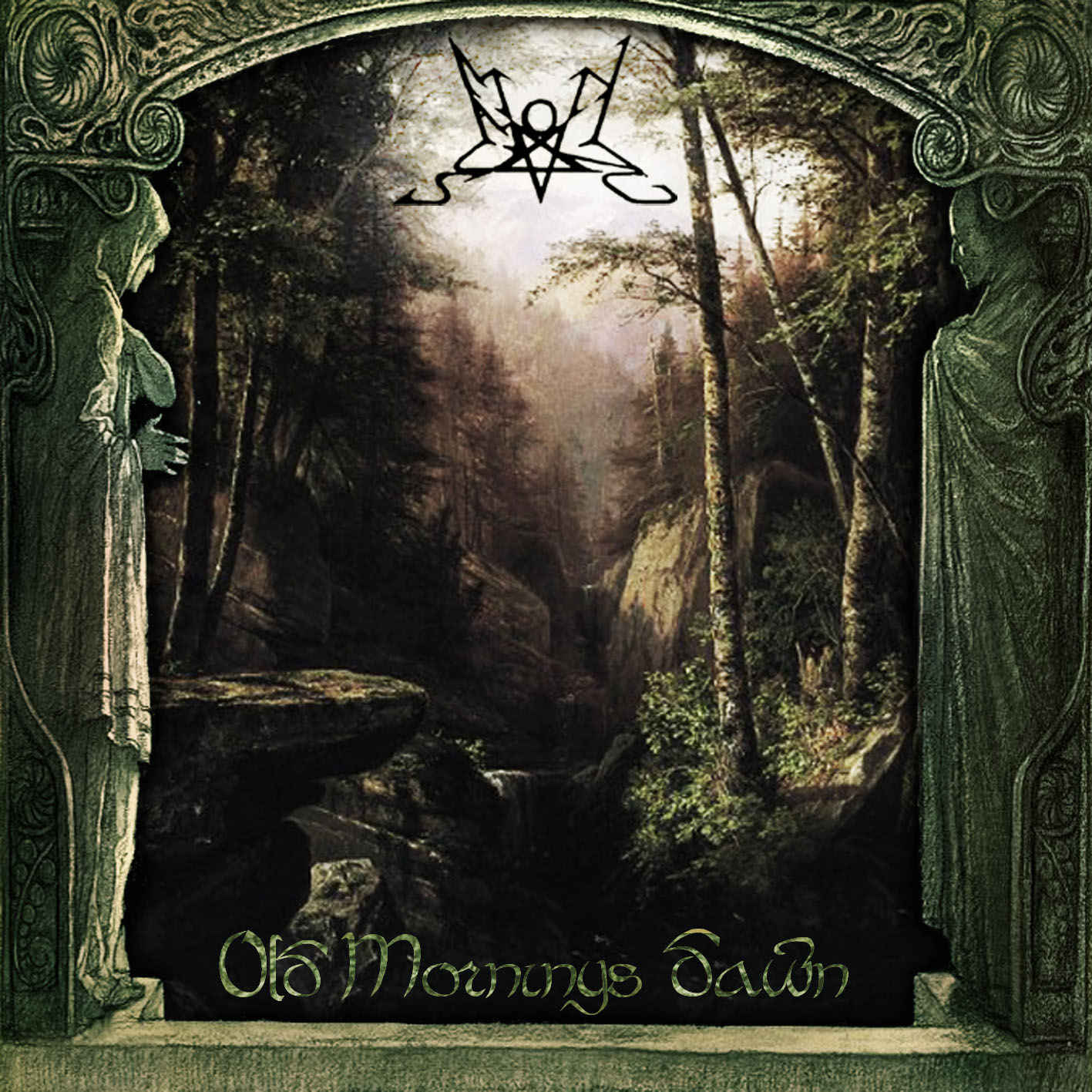
summoning-old_mornings_dawnAfter the first wave of Norwegian black metal entirely re-defined the genre into a melodic and intensely artistic form of music, it seemed metal had culminated. Its technique exploded in death metal, and with black metal, it began the process of creating narrative melodic compositions.

Summoning jumped into this heap by evolving from a relatively straightforward downtempo black metal band into a melange of keyboards, lengthy fast-picked slow melodic passages, and soundtrack-style framing of song structures in the context of atmospheric, Tolkien-inspired vaguely medievalist metal. Ever since they nailed that combination on Dol Guldur, Summoning has been a legend in the metal scene.

After the experiment in greater use of vocals and folk-like dynamics that was Stronghold, Summoning returned with Oath Bound, which edged them closer to the territory last explored on Dol Guldur before the music got more atmospheric on the Nightshade Forests EP. Seven years later, anticipation ran high for their latest, named Old Mornings Dawn.

Coming from the same creative wellspring as other Summoning works, Old Mornings Dawn channels three separate influences: the classic downtempo black metal of its origins, the “Renaissance Faire” style of folk/world music that it became, and an influence that can only be described as dark 1980s industrial goth pop. This album fits in with Joy Division, Soft Cell, Sisters of Mercy and other darker forms of synthpop and EBM, much in the same way that Nightshade Forests picked up similar influences. At the same time, hints of the Stronghold style where vocals lead composition help define these songs.

What is most pronounced on this album however is that Summoning are using the layered style that worked so well on not only Nightshade Forests but the Lost Tales EP as well, but have removed even more of the metal “forward” style narrative composition. Instead, these are circular compositions with layers, but in the best metal style, moods accrue and eventually force change into an entirely different but complementary riff. The result is a ferment of slightly differentiated influences fit into the only song structures that could incorporate them all. The result is like an exotic tour alongside a riverbank populated by fantastic figures from dreams.

Old Mornings Dawn is a creative journey into the recesses of the mind and embraces the sentimental alongside the epic, using its ambient structuring to immerse the listener in a world far beyond anything they have experienced. The result drifts farther from black metal without betraying black metal, and instead creates a voice unique to Summoning which sensibly does not try to be Dol Guldur II, but to create a niche for itself. Its decreased distance from the listener allows emotion to meld with music and create an atmosphere unique to this band and the spread of time they have chosen with their music.

12 Comments

Tags: , , ,

Bands that keep making the same album but do it well

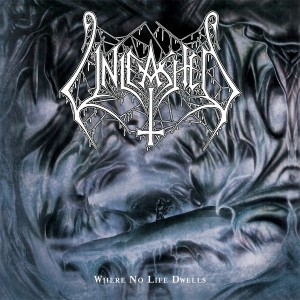
unleashed-where_no_life_dwellsAlthough AC/DC and Motorhead have been putting out basically the same album over and over for 30 years, fans of these two bands never blamed them for not being different.
Instead the audience continues to cherish this phenomenon, as this straightforward, wild and raw music style is the trademark of these bands. Risen from rock music and propelled by underground metal, this kind of music stands for the desire of liberation, freedom and simplicity in this plastic world. It will never go out of time.

In the realm of death metal, there is a band which greatly influenced by AC/DC and Motorhead also has a constant style of music. This band is Unleashed.

Unleashed was formed after the disbanding of Nihilist. Unlike the other key figures Entombed and Carnage whose members were in Nihilist, Unleashed brought the roadhouse rock style of AC/DC and Motorhead into death metal. However as a death metal band, Unleashed has more creative ideas than the old classics. You can tell that by just looking at the names and covers of their albums, each one is as exciting to look forward to as a new Pirates of the Caribbean movie. The scent of fighting in their music also demonstrates that death metal ponders on our existences in world.

The mystic and adventurous sense of Unleashed comes from the extension of the typical “verse-chorus-bridge-verse-chorus” structure the phrasal riffs of death metal. Under an emphasized theme, each phrasal riff acts like a puzzle and combine into an epic scenery. Therefore Unleashed’s musics are richer and more narrative comparing to AC/DC and Motorhead (Before the Victory which completely lost all apprehension of mysticism). To the fans of AC/CD, Motorhead who also enjoy underground metal, do not miss Unleashed.

Translated from this post.

7 Comments

Tags: , ,

Last Burzum metal recording ever

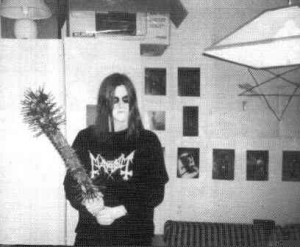
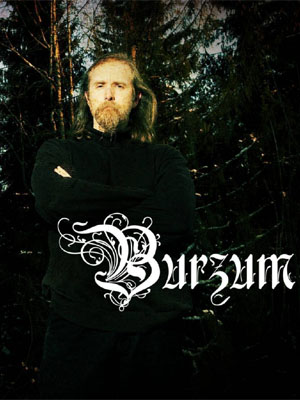
burzumBurzum composer Varg Vikernes has posted a “goodbye” to his old self as a metal composer and in a sentimental posting, announced his retirement from metal and his intent to pursue ambient music alone.
Burzum appeared from nowhere in 1991 with a demo tape made up of a dozen guitars-and-bass-only tracks in rehearsal quality. I made a few more or less successful metal albums, but they all always included at least some ambient music. With time I moved further and further away from metal, and today only the ambient music remains. Today (2013) I think I am done playing metal music for good.

Many of you followed Burzum through the years, some even from the beginning, and I think metal-Burzum deserves a proper “good bye”. So, just like I started out I will finish metal-Burzum with a guitars-and-bass-only track in rehearsal quality. “Back to the Shadows” is made up of the last metal riffs I ever made (in 2012). It was never released in any way, or recorded (beyond what you hear here), and it will not either — beyond this short “video”.

Take it for what it is; a sentimental good bye to metal-Burzum.

The music is playing with an image of the 17 year-old me, taken from the time when some of the first Burzum tracks were made. You can see this track as a good bye to that fellow too.

For those of us who have been watching Burzum and Vikernes over the years, this is a welcome development. Heavy metal is beautiful but it will always be attached to popular conceptions of entertainment. Ambient music, especially complex material, gets treated as culture.

While we hope to change that perception of metal and to have it be studied as art and part of culture, that’s an uphill battle when the fans routinely rush to gimmick bands and depthless clones in a hope to be part of the next popular trend.

Either way, this bodes well for more interesting compositions in Burzum’s future.

6 Comments

Tags: , ,

Zombiefication – At the Caves of Eternal

zombiefication-at_the_caves_of_eternalZombiefication incorporate many styles into their old school styled death metal but their ultimate forte is melodic death metal in the style made popular by early Necrophobic or Unanimated.

This band contributed a track to the Cenotaph tribute album and it’s hard not to think of the second and third Cenotaph albums which used the stylistic span between At the Gates and Therion’s Lepaca Kliffoth. In addition, Zombiefication use riffs much like early Amorphis, if Amorphis were interested in single-string picking of quick melodies.

Not all is old school however. At the Caves of Eternal features vocals that might be more at place on later At the Gates or The Haunted albums. They are nearly monotonic and do not vary style or inflection between songs, which gives them a consistency that breaks from the death metal tradition that all instruments labor toward the same effect. Drumming is more modern as well, with a jazz-fusion influence that is understated but prevalent. In addition, many of the leads follow more of a rock sense of theme and balance than the metal goal of high intensity chaos forming order despite itself.

At the Caves of Eternal uses the melodic death metal style effectively across this album, with the songs clustered near beginning and end having the most punch. If it has a fault, it is not stylistic, but in substance; the emotions and approach do not seem to vary between songs, making them variations on a theme that may be entirely musical. However, if you want to revive the old school melodic style, this album presents a potent option.

2 Comments

Tags: , ,

New Burzum track shows metal technique applied to folk

varg_vikernes-burzum-band_photoThe semi-reclusive Varg Vikernes, sole composer of Burzum, has announced his plans to release a film and a new role-playing game (RPG). As part of the film project, he has revealed a new track designed to act as part of a soundtrack for the film.
As if influenced by some of the non-black-metal soundtrack material from the film Until the Light Takes Us in which Vikernes, as in Lords of Chaos, the most in-depth story of black metal before it, Vikernes opts for a down-tempo single guitar track with no distortion.

The result utilizes a slow and gentle sweeping arpeggio behind which lower notes direct the evolution of the track, much as happened with the countertheme in “Rundgang um die transzendentale Säule Der Singularität” from Filosofem. As the song goes on, these layers interact to push change into the main theme, not in the electronica method of circular layers, but the metal one of a narrative expanding from within itself.

It is hard to tell if this is the type of material that will be on the forthcoming Burzum album Sôl austan, Mâni vestan. While many consider the “keyboard albums” among the band’s best output, a mixed-medium album could be interesting. While this new track has one foot in that world, it also has one foot in the more audience-geared world of the last few Burzum black metal albums.

19 Comments

Tags: , ,

What the heck is metalcore?

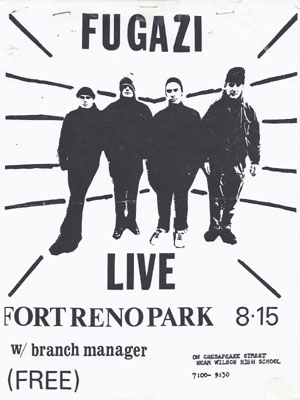
fugazi_flyerDuring the late 1990s, a different style of metal emerged in the death metal camp. Starting with bands like Dillinger Escape Plan, Killswitch Engage, Misery Index, The Haunted, Human remains, Ulcerate, Meshuggah and Discordance Axis, this new style was given many names at first.

It’s math-metal, they said. No, it’s technical death metal (later shortened to “tech-deth” to keep people from expecting something like what Pestilence did on Spheres). Finally someone came up with “modern metal,” which many of us use like a catch-all.

The record companies were excited. Musically it was different. This style is accessible to more musicians, in addition to more fans, than the old style. It’s easier to make a reasonable impression of it, at least.

Thematically it was different. It’s everything that rock ‘n’ roll has always been. It’s loud, angry, and chaotic; perfect to disturb parents, which sells albums. Finally, unlike metal, it doesn’t stray into truly dangerous areas of thought. It is more likely to be written from an individual perspective, and less likely to glorify war, disease and death than protest them. Socially, it’s much “safer.”

What made it new was that it wasn’t like the extreme metal before it. However, it shared many techniques in common not just with that generation, but the generation before it. Specifically, many of the composition aspects are similar to those from post-hardcore bands like Fugazi, Rites of Spring, and Botch. These differences distinguished it from death metal in the following ways:

  1. Vocal rhythms. Death metal vocals are more like speed metal, which is to chant out the rhythm of the main riff or chorus phrase. Modern metal vocals are much like hardcore, which uses regularity of intervals between syllables to form a sound of protest. Death metal also prefers monotonic delivery with variant timbre, where hardcore vocals prefer more melodic vocal delivery with invariant timbre.
  2. Riffing. Death metal riffs are phrasal, or written as a flow of power chords forming a phrase or melody, and these fit together to form a narrative with poetic form, meaning that it takes the song from an initial place to a final place with a much different outlook. Modern metal riffs are inherently designed toward circular song constructions, like hardcore, and are based upon radical contrast between each other to suggestdeconstruction, like hardcore. Metal riffs form a synthesis through contrast; hardcore riffs deconstruct through contrast and reject synthesis.
  3. Drumming. Death metal drumming tends to follow the riff changes; modern metal drumming tends to lead the riff changes, anticipating them. In death metal, instruments tend to act in unison. In metalcore, they tend to each work separately and overlap as convenient.
  4. Style. Death metal aims toward unison of all instruments and riffs fitting together to make a larger narrative so as to maintain mood; modern metal, like hardcore before it, seeks to interrupt mood as if a form of protest music.

Critics of the terms “metalcore” and “modern metal” correctly note that these terms are being used as a catch-all. That’s correct, but it’s only part of the story. These terms are being used to describe something that’s not new, but existed before death metal and black metal reached their modern form. It’s an alternate branch of metal’s evolution, upgraded with death metal technique.

For students of metal history, this isn’t surprising. Genres tend to lie dormant in alternating generations, and then pick up on whatever was done well by the intervening generation. For example, power metal is what happens when speed metal and glam metal bands integrate death metal technique. Grindcore occurs when hardcore adopts crust and death metal technique. Speed metal occurs when metal adopts punk technique. By the same token, metalcore is what happens when you mix Fugazi with death metal technique.

This is not an argument against metalcore. If we’re going to like metal, we should understand it; if we’re going to understand it, we should study it; if we study it, we should organize our categories and language so as not to mislead each other. By this analysis, metalcore is an extension not of metal, but of the post-hardcore movement using metal technique, and thus it should be analyzed as more like hardcore instead of having us project our metal expectations upon it.

24 Comments

Tags: , , , , , ,

The rise of metal in Africa

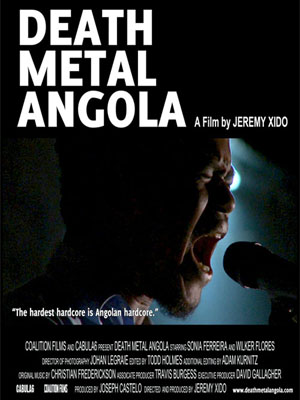
death_metal_angolaIn parts of Southern Africa, a vibrant scene that hybridizes metal and extreme rock is taking hold, and defining a new vision of metal that is part local tradition and part melange of worldwide metal concepts.


According to Africa Review, metalheads in Angola and Botswana have formed an “unexpected niche” through an energetic new metal scene.

American author Eddie Banchs comments on what makes a metal scene so distinctive. “Heavy metal is synonymous with a lifestyle which is seldom seen with other genres of music. Africa metal fans are not atypical in this regard,” he said.

According to Swedish researcher Magnus Nilsson, this new heavy metal culture was influenced in part by an alliance between heavy metal fans and country music fans. The metalheads adorn themselves with traditionally “country” accoutrements like sheriff badges, bandanas, cowboy hats and even toy revolvers.

According to the article, Botswana band Metal Orizon lead the movement by taking “Western-style hardcore rock and fusing it with familiar influences like African chants percussions to create a unique sound.” This gives the region a distinctive sound in addition to image.

In addition the article mentions several ongoing projects to document this phenomenon including the film Death Metal Angola, which documents the rise of a death metal sound unique to the region.

3 Comments

Tags: ,

Classic reviews:
A B C D E F G H I J K L M N O P Q R S T U V W X Y Z