That good music makes its way to the promo stack occasionally is not a huge surprise. We do not expect it to happen in more than one in twenty or thirty occurrences, but sooner or later, something good does come. And then, we expect a great album (not a true classic, but perhaps a highlight in the year) to arrive at an expected rate of about one every two or thee months. What we do not expect is a two-track split in which the first is a modernist piece composed for strings in the manner reminiscent of Górecki’s 3rd String Quartet or Messiaen’s Quartet for the End of Time.
The second track, “Crossing the Threshold” by Twilight Fauna, is one of those supposedly black metal ambient pieces that amounts to little more than sounds here, noises there, sometimes violated by a heavily distorted guitar that adds nothing to what’s going on. All for the sake of ambience. It falls into the same category of poorly-done but pretentious music like Ulver’s and Sun O))), themselves a parody of what Robert Fripp did much better in The Gates of Paradise or his work with Brian Eno in Evening Star. I’d recommend these guys to study the work of early Tangerine Dream and Klaus Schulze, the master. If what they want is actually something more black metal, but elongated and that does not sound like some sort of pointless intro, they should check out Paysage d’Hiver’s work. Because the track has not been made public, we can only share their own release earlier this year through bandcamp for reference.
“Sickness Unto Death”, by Jennifer Christensen, is a patient work that I would venture to describe as minimalist. But rather than the circular pop minimalism of Philip Glass, this is more of the religious and dark nature typical of Górecki’s music. Clearly structural in construction but never rushed, motifs pass you by and interleave as passing scenes and a whole flora and fauna of a world evolved from a single primeval cell arise in distinguishable affinity. Now, as much as I not only enjoy but appreciate the higher quality of Ms. Christensen’s work here, I am wondering why would she release this in a split with a dark-ambient-going-on-black-metal band.
If she is somehow planning on turning her efforts in this direction, her classically trained mind and obvious talents for dark minimalist music would be interesting if applied to the whole spectrum of ambient instrumentation. Or even to two guitars, drums and backbone bass — that kind of black metal with a solid musical base would be much appreciated. After listening to her track many times, we know that the attitude and the spirit for this kind of music is definitely not missing. But the question is, does she actually understand the black metal spirit? Independently of this, I am looking forward to listening to more music composed by her, metal or not.
Yannis: Well me and Léo met through my work. As a tattoo artist I get to know people rather quickly since we spend long hours together. We realized that we had a lot in common, especially music. Our passion toward the raw and the bleak immediately spawned an interest for us two to collaborate musically. We started Léo playing drums and me on guitar duty and started to incorporate other members as we progressed. But eventually the project died of its own. A couple of years later we were still involved in musical projects together. While I was mixing a common project Léo threw at me the idea to start a black metal project. At the time I was overloaded with family and work but, the idea stuck in my head and we gave the project a go. And thus Funeste was born. From there things started to moved rather quickly. After writing a couple of songs I already had test visuals for the mood of the project. But it was just for fun since we didn’t have plans to release anything serious. But the more we listened to the tracks and the more people gave us feedback on it, we realized that we had something special. So we decided to release the Ep as a demo since it wasn’t mixed at all. And then it exploded, people started to respond very positively to it and it hasn’t stopped since.
2. Funeste plays a style of black metal which although firmly standing on a modern conception of the genre also does a very good job at keeping a smooth continuity in the music through paying attention to the consistency of material. How conscious a decision is this? Do you think a choice in style matters a lot?
Yannis: Like you said although I enjoy the traditional aspect of any genre, I think it has to move forward. To me heavy metal has always been about being extreme and subversive. Personally I think these two things can only be quantized by the era we live in and what was done before. So yes I think our style of black metal is a more modern interpretation of the genre. That said I don’t think what we do is especially new.
As far as the consistency of the material goes, I think we don’t think to much about it. I personally hate music that is too linear and safe. Even super technical band can get boring if there’s no contrast in their music. So in terms of mood I think we’re pretty consistent but, sonically wise I like I’m not so sure. I don’t want us to be coined to a specific genre, that’s why we change things a lot from song to song. Most of this is pretty much done on intuition.
Lastly, the choice of style was important at first to give us a foundation to work on, and draw inspiration from it. But like punk, black metal is more an ideology than a specific sound. It’s music that is very emotionally driven and that wants to leave the listeners scarred In every way possible. At least that’s my interpretation of it. So based on that frame of mind, I think we thrive to use all our influences to emphasize those intentions which creates a black metal with a richer spectrum of nuances.
3. In that same vein, do you think that musical genres have inherent powers or strengths and that they can be especially useful at channeling specific messages?
Yannis: I think so. I always found Black metal very introspective in nature. Delving into the roots of the honest and darkest human emotions, this music can be vessel to all sorts of messages. To me it’s one of the few styles were a musician can expose self-hatred, awe and fear of the world, spirituality to its fullest. Although this music is most of the time executed to be a hard listening experience, i think it is a very positive outlet for the musician and the listener because the themes in black metal are very universal and in the end, it is very easy for people to relate to it.
Léo: I agree with Yannis and think it can go even further than that. Music that touches me is music that was made by someone feeling any kind of emotion, positive or negative, and transcripts these emotions through sound. Or at least this is how I make music. And link with the previous question, this is not constrained to any music genre. Some black metals songs can be transmit hope or relief, and pop songs can be depressing. Anyway, I guess this is why we like having vocals that melt into the instrumental part. Funeste is all about hearing a dark gloomy violent overall sound, and relating to melodic lines in any way that fits with your mind when you hear it. It could destroy your mood or strengthen it depending on who you are and what you
4. Would you care naming your main influences in metal?
Yannis: Oh this could be long hahaha! Well I know it’s not metal but, I grew up listening to King Crimson and Genesis and I think that at that era was the metal of their time. Intense, intricate and creative. When it comes to metal I started with the basic, Iron Maiden, Black Sabbath then in my teens got a NuMetal phase but I was always looking for darker more punishing music. At the time I was living in the suburbs of Montreal and the only place I could dig for music was Archambault, a big record store like HMV. So I would spend days there listening to anything with a cool album cover. That’s where I discovered Cradle of Filth, Dimmu Borgir, Immortal, Darkthrone. These we’re my first contacts with extreme music. Than when I moved to Montreal thing’s got better hehehe. I had more friends into extreme music, listening to death metal like Deicide and Cannibal Corpse, Macabre, Converge, Katatonia, My dying bride, Dark Tranquility. And then the internet started blooming. Oh the glory! Like most kids my age It was a revelation. And it really allowed me to find music that was tailored to my standards.
But to answer your question more specifically, the metal bands that really influenced me to carve the music I do with Funeste would be bands like Weakling, Twilight, Leviathan, Converge, Brutal truth, Cryptopsy, My dying bride, Buried at Sea, Gaza, Deathspell Omega, The body, Abandon. I also draw inspiration from any genre, weather its Massive Attack’s Mezzanine, all the discography from Songs ; Ohia, Van der Graff Generator or the classical music of Alfred Schnittke. Listening only to metal makes really narrow minded records I find.
Léo: Appart from the bands that Yannis cited as direct influence for Funeste, we both listened to many genres which (I hope) gives us some diversity when we compose. My father has a pretty big vinyl collection, and I listened to literally every kind of music that he could find. Later on I developed my own tastes and started to listen to slipknot like many people, which quickly got me interested in more extreme metal bands such as vader, amon amarth, cannibal corpse, gorgoroth, and a lot of punk-hardcore and crust bands like converge, black breath, defdump, etc. There are so many bands that make awesome music that I kind of feel bad to name only a few of them, but I love listening to any band that makes me feel some emotion. Although, music playing with darker emotions will get to me more easily.
5. What about influences outside metal? What about outside music, perhaps in literature or cinema?
Yannis: I guess I answered parts of that question in the last question. For the music we create I focus more on reality. I watch a lot of documentaries on war, poverty and other bleak subjects. Lots of true crime shows. But mostly, what inspires me the most is my own personal experience. I’ve been dealing with Generalized Anxiety disorder for a good while now. Living constantly with feelings of dread generates a lot of anger, which in the end make for good heavy metal hehehe!
Léo: Well, I like making music by myself, so I guess I’m mostly inspired by what goes on through my mind when I let it slide alongside with the music. But what you live everyday is an inspiration. If you have a bad day have a beer and you will most likely write fucking angry music. As long as it concerns me, I like watching movies a lot and taking pictures. I think I’m always writing music with a graphical environment in my mind, but I couldn’t really tell, as my composing process is mainly based on letting everything go, get in my personal bubble and plug my guitar.
6. What is your composition process? Would you care detailing it and commenting on what you believe are its strengths and weaknesses?
Yannis: We’re only two in this project and tough we live in the same city we don’t jam together. I think of us more like a two headed one man project than an actual band. The way it goes is we both compose riffs and we send them to each other, than we build unto them. And then we trim the extra fat, the stuff we don’t want or like. Then I add the bass and the lyrics and vocals. I think it’s a great way to work. We can create on our own time that way we don’t have to go through the hassle of make everyone’s schedules fit. And there’s no downside because we’re always calling each other for input and we meet for beers on a regular basis.
7. Does Funeste have a goal, a message or an intention? Does the music attempt to transmit something in particular or is music “just music”? I am not referring to music in service of an ideology, necessarily, but as music as a communicator of aspects of our condition as human beings.
Yannis: For me it’s a way relieving myself of a lot of anger and frustrations towards that I’ve been repressing for a long time. I guess my main goal is to make music that I enjoy while keeping metal relevant and as far away from the cartoonish travesty it can become. I try to write lyrics that are close to my heart. I know I should be signing about nature, satan or the fact that I wanna go back to our old Viking ways with my iPhone in one hand and my credit card in the other but , this is just not me and its not part of my heritage. I’m a city boy and always been. And the city is a very demanding and stressful place, where the well-off cohabitates with the homeless. With anxiety and depression on the rise, people losing their religion and values and replacing it with careers and selfies. This is all very bleak to me and pushes me to create music that reflects that. Also all the lyrics are written in French which was really important to me. Here in Montreal, the French Canadian underground is not very strong. Very few band writes their music in French. They’d rather write everything in English because there’s a better chance for them to ”make it” in the music business. I think we shouldn’t be ashamed of our heritage and we should promote the hell out of it, even to places that don’t speak french. If the music is good there will be ears all over the globe that want’s to listen to it.
Léo: We started Funeste with no specific goal other than make music and “evacuate” some energy through that. Also, we didn’t expect the attention we get now at all, so we don’t have specific goals related to that. But if people listen to Funeste and enjoy it in any way this we are very thankful. And we will continue making music in the same mindset.
8. Do you have a vision for the future of the band in terms of its growth?
Yannis: Create new music, grow as a musician, meet people. I’d like for us to do splits in the future as well. I still don’t know what our next release is gonna be. Another Ep? LP? who knows. One thing is for sure we’re writing new music as we speak, and it should see the light of day in the next 6 months or so. Eventually I think we’d like to get a proper line up to do live shows but this is still in discussion at the moment.
11. Is Le Triomphe du Charnier Funeste’s first release or is there anything else fans of the band should check out?
Yannis: The Ep is our first outing. Me and Léo also play in a Electro Post-Rockish band called St-Petersbourg. Our new ep that I personally mixed, is coming out this summer. Other that’s pretty much it on my side.
12. What would be the best way in which the audience can get into contact with Funeste?
Black element Production: blackelementproductions@gmail.com
13. Is there anything in particular you would like to let the metal world know about the band? Is there any particular reason why the audience should keep an eye on Funeste?
Yannis: Well, if you like bleak, unforgiving black metal, give us a try. There’s a good chance you’re gonna enjoy our EP. And keep in mind, the next song are gonna continue pushing our own boundaries to create music more and more punishing.
Much like Darkthrone’s Under a Funeral Moon preceding Transilvanian Hunger or Immolation’s Herein After before Failures for Gods and Close to a World Below, Burzum’s Det Som Engang Var(roughly translatable as “What Once Was”) before Hvis Lyset Tar Oss(“If the Light Takes Us) puts on display all of Varg Vikernes’ faculties as a composer in a way that is still relatively easy for a listener to make out the different things he is doing, unlike the next album where a convergence and purification that only a minority are able to grasp in all its excellence and magnificence. As Brett Stevens commented not so long ago in reference to Immolation’s Close to a World Below, some bands make the same album again and again until they are able to solidify their vision in a magnum opus.
Many metalheads who respect this album may do so out of a respect for how influential it is, without truly understanding that even if this album came out today, after all the others they are said to have influenced, it would still be as impressive and worthy of high praise — but perhaps it would not be noticed by the same people who today profess to appreciate it. Contrary to common belief, its worth is musical, not historical only. This is not very different from people who “enjoy” Black Sabbath or Celtic Frost, but fail to see the monument that works like Master of Reality and To Mega Therion are. In great part this error lies in associating or equating technical prowess on the instrument and an apparent “complexity” of notes with a complexity of thought and excellence in composition. These albums display an astounding clarity resulting from the exquisitely fused elements of music (harmony, melody, rhythm…) in a way that may strike the unaware as “simple”. Confusing intelligibility with limitation/blandness/simplicity is the greatest sin one can commit against masterworks of music, because the greatest works all share this as a common trait.. While this is even more true of Hvis Lyset Tar Oss, it bears bringing into question the undue musical disrespect of which Burzum in general is the victim.
The album contains tracks that make use of abrasive and extremely dissonant intervals, very consonant and relaxed harmonizations of melodies, synths as support and synths as the main instrument in ambient tracks all together and mixed in different ways and given the spotlight in different tracks. It is, perhaps, this up-front “complexity” of having so many distinct colors that at least attracts the attention of and mention by even those who do not understand black metal. The composition itself is technically nuanced but like any proper work of art, comes off as intelligible to the point of being confused with “simplicity” in its negative connotation. The complexity of the works like Burzum lies in the seamless unfolding of a story, a masterfully woven tapestry blending all sorts of disparaged puzzles and meanings within its frames not unlike Hieronymus Bosch’s The Garden of Earthly Delights. The importance of discussing Det Som Engang Var is that it is here that his thinking is most easily and obviously seen. Without understanding this album, monumental works like Hvis Lyset Tar Oss and Burzum’s stepping-into ambient(or as he described it, Anti-Black Metal) territory, Filosofem, can never be truly appreciated.
Regarding its little-mentioned lyrical topics that are actually worth mentioning in any integral metal work, they consist on a mixture of melancholy and longing for a grand and fantastic past that exists more in the mind of a romantic than in historical reality (but which makes the values and traditions it longs for no less meaningful or real), and an existentialist questioning of the self’s position in a world of men that makes little sense and which launches the brave man in search of truth behind, or rather past, human constructions. In addition to that, the tendency towards nature worship and an attraction towards the forest as the archetypal home of homes, a safeguard from the evil of men and their perversions motivated by greed and thirst for power, is ever present in Varg Vikernes’ language and allusions. These have also been the target of cynical contempt by the petty minds of postmodernists who are unable to make a connection with nature and are rather too fond of themselves as creatures of a decadent society, leading them to denounce anyone pointing at obvious truths about its breaking-apart.
Restoring the pride and respect that Det Som EngangVar has never had in truth, just as Burzum hearkens to a grand past that has never existed here on Earth but that through an evocation of opposites rather points to an idealist future, so we attempt here to find a direction for future metal to grow in undreamed of ways that do not diverge from the essence of metal and that stand on the firm example of the greats that did exist but have never been duly studied.
Funeste play black metal with a tendency to emphasize atmosphere through the creation of spaces, voids within the music in a treatment of the style that is very modern. In Le Triomphe du Charnier
one is able to identify great potential, as some of the elements in the music are very well-written, solid and balanced musically, consistent while not forgetting to create the movement necessary to give life. On the other hand, there are also more regrettable decisions here that can lead a fan of the old school to cringe. What the reader needs to understand is that those who understand the old school have this sort of reactions to many methods of the “new school” because the latter tends to lack a center, favoring whims that border on an experimentalism that is little more than ignorance of composition in its complete sense (and not just attending to its most basic and superficial necessities like playing in a key or using a particular mode).
On Le Triomphe du Charnier, Funeste often use arrangements in which three guitars playing distinct parts may be recognized. Sometimes there are only two or even as little as one guitar present. The transitions between these are reasonably smooth although sometimes tend to verge towards the modern tendency of lazy contrast excused as surprise. When the guitars are treated like melody lines, sometimes collaborating, sometimes providing accompaniment and counter-melody, sometimes just forming a mega-riff, Funeste show us the amazing arrangements that can be applied to metal guitar styles without having to sound superficially “neo-classic” or to resort to jazz-mongering.
There is a particular element on this album that stands out as the rotten apple in the barrel: the drumming. While in the three-part guitar sections a guitar may sometimes engage in some indulging and completely unjustified (musically unjustified, that is, not connected to the rest of the music very clearly, but just floating as an extra appendage) decoration takes place, the drumming patterns seem disconnected from the music most of the time. It is not enough that the drums play in the correct tempo and time signature, but this instrument also has to blend in with the rest of the music in a way that subordinates it to the whole and not as a self-important and self-agrandizing member. I am sorry if the traditional metal’s balance consisting on having the drums play a supporting role hurts the ego of drummers but mindful and reserved composition should come before anything else.
Neo-metalists of recent times take this to be a kind of close-minded imposition on their creativity and will try to release drumming from its subservient role and let it run around unchecked, affirming its presence and new-found freedom as a child who’s been chastized for the least of things throughout his life and grows up to suddenly find himself free of limitations and now runs amok performing actions of painfully self-referential significance. So it is that we find the drumming in this album attempting to take over dominance, fighting it out with the rest of the music, and accounting for the unnecessarily busy feeling of the music that is taken by neo-metallers as “creative complexity”. In truth, this is no more than lazy self-indulgence, this so-called complexity being no more than an increased quantity of notes. The drums should work from within the nature of the movement of melody and harmony to enhance the whole, adding to it not as something else occurring besides the rest of the instruments but as an indispensable breathing apparatus.
Here the main thing was to understand the combination and opposition of the three great factors in music- rhythm, melody and harmony; to understand, for example, that the cadence that is harmonically and melodically perfect will have a weaker effect if it does not occur simultaneously with the rhythmic cadence
— Johannes Brahms
Commending Funeste on its overall music-organization and especially on its very promising and mostly controlled guitar arrangements is in order. The band’s drummer is more than obviously technically gifted and definitely has talent but he or she must make decision here and now: will you write music as a “musician” looking for technical performance perfection or as a “creator” — a composer trying to give birth to an artistic expression? As a black metal drummer trying to achieve balance, it is recommended that one should first study the work of Fenriz in the albums released with Darkthrone around Transilvanian Hunger, trying to understand how and why he plays what he plays. After that a hard and long look at Adrian Erlandsson’s work in At the Gates’ The Red in the Sky is Ours will prove to be an invaluable lesson of drumming giving life to music in creative, varied yet reserved manner as well. Even though to simple minds it might seem that he is just being limited, others might understand his intention towards affording music with the necessary percussion while retaining proportion and a semblance that does not diverge too greatly from the intended concept.
Despite claims to being some sort of doom death with black metal influences, Creeping’s music is a progressive sort of rock music with little trace of the influence of metal apart from the most superficial traits. These traits can be briefly summarized in distorted guitars and vox, and rock and metal drum techniques. Creeping’s music in Revenant could be described as being through-composed with a minimalist touch to them. Once you remove this from sight and you look through them, it is evident this is not metal music. In general, their work here displays a very keen sense on smooth transitions and mood-capturing that only the most sensitive musicians are able to put together. What Creeping seems to be at a loss for is an organizing agent that condensates these living shapes into meaningful statements with heads and tails or at least a direction. As it stands, Revenant is only a sequence of related vague feelings without enough organization to convey a concrete meaning — a direct consequence of both being mostly empty of musical formations and missing the point that music and art in general are communication.
The most revealing moment when listening to Creeping is when one reaches the ending of a song and everything is put into perspective. Endings are reached uneventfully. They simply just end. The finishing sections as a group are indistinguishable from those at the beginning. In fact, they could be interchanged and it would make little difference as they do not carry any connotation. Not only are true endings missing but what we would physically try to locate as development sections of any sort (not necessarily Beethovenian) are also flat-out indistinguishable from sections at the beginning or ending. The clue here is not to look at the sections or groups of sections themselves only but also in relation to one another. How is the idea carried forward? What changed from this moment to two minutes in the future? How and why is the idea left behind towards the end? Is the idea actually changed towards the end? There is no answer to this questions in the context of this album, because none of that seems to ever have been in the mind of Creeping when writing these songs. Each section is a progression of chords with “powerful” drum beats. They took care that adjacent sections were related in character and texture (all the album uses the same texture and album) but nothing else. The album is a homogeneous creeping mass sliding down a hill like lava from an erupting mountain. It is an event, it is motion, but it is without life or purpose.
Creeping’s Revenant is one of those albums that will carry the flag of the mainstream in their incursions to try and conquer the underground by taking a depressive-sounding rock outfit and trying to make it look and sound like a convincing metal act. The fastest and most obvious way of doing this is by copying the traits that help identify underground metal through its superficial appearances. This is the second issue we take this album: that of pretending to be metal. Somewhat resembling post-metal, Creeping distinguishes itself from metal music in that it builds its music following chord progressions mainly, not phrases. What tells us that Creeping is rock music and not post-metal, though, is that it constantly follows actually-moving chord circles, effectively creating movement through that most basic device in Western music derived from the Common Practice Period classical music. Post-metal, on the other hand tends to stagnate in one harmony and try to play it in many different ways and with different decorations, usually ceding the task of promoting movement in the music solely to the drums. While there are parts where a melody can be heard, this is often just a decoration for an implied chord progression. The music in Creeping’s Revenant is utterly dependent on them, something underground metal distinguished itself from through years of rethinking itself and distancing itself from rock music in order to attain greater power of expression.
Given the way the songs in Revenant evolve and the atmosphere they seem to want to evoke in part as per the claims made that this band’s music adds a hint of black metal to their music, a comparison to Burzum’s Hvis Lyset Tar Oss is appropriate in order to dispel the former’s false claims and to put into perspective their more limited ability for communication. Creeping’s work and procedures have been described in some detail earlier here, so let’s proceed to take a look at Burzum. At a glance, there are many similarities between both. Songs in Hvis Lyset Tar Oss emphasize a smoothness of transition between sections whose borders are blurred out, except when there are major breaks in the music. Texture also consists of drums that change slightly independently of the rest of the music while still working with it, a strong bass, chord-strumming guitar and a rasping/growling vocal. Burzum’s music is further clarified by the use of a synth and another guitar that may outline melodies, phrases and themes. And themes are the key to Burzum’s music in this period (or any other, for that matter…). The discerning listener will notice that chords and progressions in the Norwegian’s music are only harmonic filling-outs of motifs in the bass line, oftentimes enhanced by a slight deviation in the soprano line. Chords are subsumed under motifs. Songs are defined by themes. In addition to that, and addressing the issue of whole-song structure and purpose, the first three songs in Burzum’s album do the same thing with visibly different approaches: present an idea, condense it into a solid and clear expression, introduce development, extend and come to an affirming closing idea smoothed through repetition rather than asserted in vainglorious expression typical of traditional metal. As a whole, and as a reflection of a cosmos that is contained in its smallest particles, Hvis Lyset Tar Oss follows that same pattern as an album. From its slowly building opening track, “Det Som Engang Var” to the more menacing and alienating expressions of the title track and the first half of “Inn in Slottet Fra Drømmen” which marks the climax of the album in frenetic expression only to dissipate into its second half, leading to the crystal-clear conclusion that is the ambient track, “Tomhet”.
In conclusion, Revenant ends up sounding like the indecipherable ramblings of an illuminated idiot. You can hear that there is, perhaps, a wisdom behind the sequence of misty phrases and bursts of adjective-noun pairs blurted out as if in poetic rapture, but there is not enough involvement of a conscience to even start to make sense of these. This is an album for the moment-oriented, people with short attention spans looking for prolonged sequences of singular atmospheric pictures, fans of masturbatory emotional neediness looking only for a cold shower of pleasure with no significance.
Cult of Endtime play a music that is actually both “melodic” and death metal. Taking the road of modified and expanded verse-chorus-bridge approach to music construction, this mid-paced death metal with a clear aftertaste of traditional metal maintains motific links within songs that ride clear phrasal riffs not unlike the manner of the early but already mature Black Sabbath. Although DMU does not usually hand out stars to shiny, mainstream packages because they usually are just uncreative or mediocre turds hidden under slick production, In Charnel Lights has definitely earned theirs.
A very well-performed and accomplished example of this style, the music stays within the boundaries of its chosen paradigm while introducing a variety of ideas without haphazard changes. This does imply a limited variation, a clutch of its chosen pop-format approach, which supports and defines it but cripples its movement at the same time. The nature of the music, then, reduces In Charnel Lights to a collection of songs. The result is pleasing and solid but can be repetitive in terms of musical ideas and in its adherence to its center it fails to bring enough variety to artistically justify a second half beyond the urge to produce more of the same.
In spite of this, the variation it does introduce is not only used gracefully and properly but is both meaningful and powerful. Each variation of idea or new idea included, each slightly differing approach to a riff was probably very carefully considered and integrated with an attention to detail worthy of praise. Cult of Endtime are extremely consistent in style although they bring different techniques under its umbrella and produce strongly coherent riff-variations with a relatively wide range of character.
Sounding like a Black Sabbath reborn into death metal, Cult of Endtime build their music on phrasal riffs with a basis on heavy-sounding support and featuring melodic passages that emphasize clarity of expression and musicality rather than technique itself, although anyone paying attention to such things would not deny the professional-level musicianship of the band. Probably one of the best, if not the best, we are likely to get out of the mainstream this year, In Charnel Lights is extremely recommended to fans of metal.
Besides being on the look out for promising bands and nurture them as the future of metal, there is also a place to examine the living corpses of decadent and useless products release by the emotionally needy and artistically impaired. Sadistic Metal Reviews to put the pretentious wankers, the clueless “experimentalists” and the postmodernist “intellectuals” in their place: in line and ready to be disposed of.
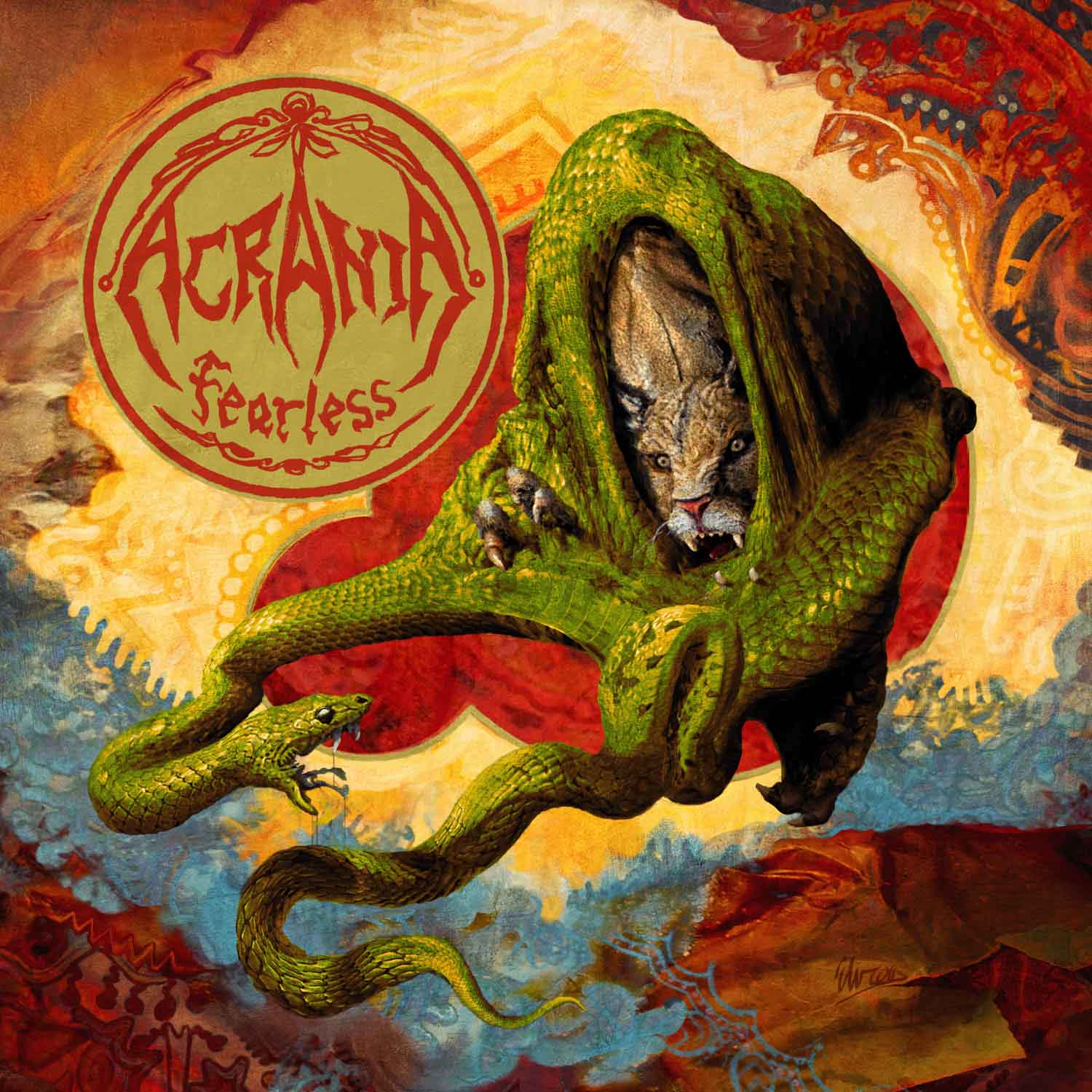
Acrania – Fearless (2015)
Latin jazz deathcore featuring conga breakdowns, sax solos, bass slams, gang chants, tough guy
empowerment lyrics, and At the Gates. This is Elements with ear gauges for those who enjoy the
bongocore of later Sepultura. To improve their future releases, I recommend the band overdose on
artificial opiates cut with chemicals usually found in anti-dandruff shampoos.
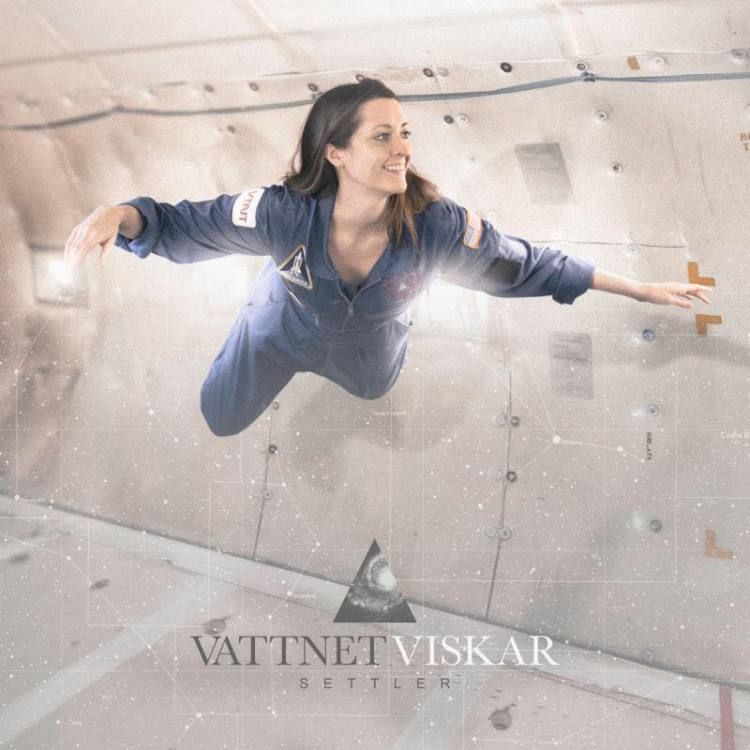
Vattnet Viskar – Settler (2015)
Vattnet Viskar are screamo in the same vein as Deafheaven. On Settler they could have attempted to use careful melodies and riff progressions to emotionally convey to the listener the existential nihilism of an ordinary woman attempting to transcend her earthly existence only to be brutally splattered upon the Earth’s surface. Instead they disingenuously pander to a liberal hipster audience for whom Mayhem and Burzum are verboten by pretending to be an acceptable “black metal” band. Major scale tremolo riffs, sludgy hard rock, and hardcore breakdowns are randomly arranged in songs grounded by emotional choruses and vocal hooks. This is not shoegaze; Vattnet Viskar and Deafheaven are as far from My Bloody Valentine as they are from Darkthrone. Post-hardcore with comprehensible screeching as the primary emotional vehicle is screamo. Those who eat this album up and genuinely think it is true black metal are just deluding themselves about progressing beyond their whiny teenage musical tastes.
Gyre – Moirai (2015)
Gyre exploit the misguided nu-metal commercial revival driven by millennial ex frat boys wishing todefend their shitty taste as mall-dwelling tweens. Moirai is a nu-metal album with djent chugging and afew speed metal solos just in case a member of the target audience is the air guitar type. PreventingGyre from achieving financial success with this artistic failure is their lack of name recognitioncompared to Fred Durst and Serj Tankian. Thus Gyre are best advised to run back to the brostep clubs and never return.
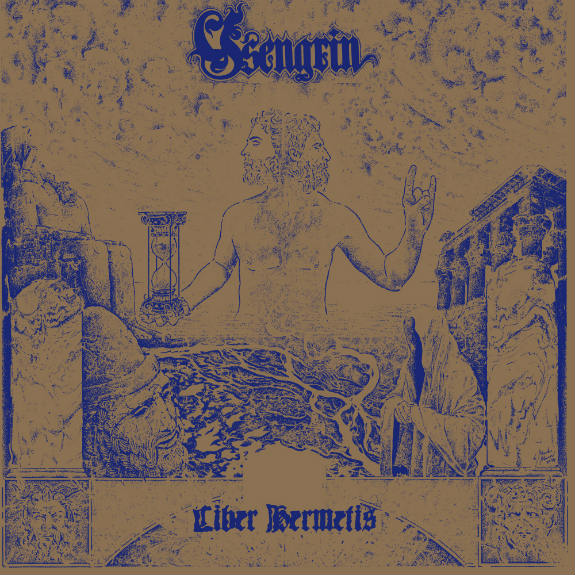
Ysengrin – Liber Hermetis (2015)
Arranging simplified, slowed down Megadeth riffs around boring acoustic interludes doesn’t make for effective thrash and doom metal. Claiming to be blackened death metal as you play those riffs through distortion pedals into crappy solid state amps to get a more fuzzy than bestial guitar tone means you fail two more genres. Go listen to Rust in Peace again instead of subjecting yourself to this unnecessary career retrospective.
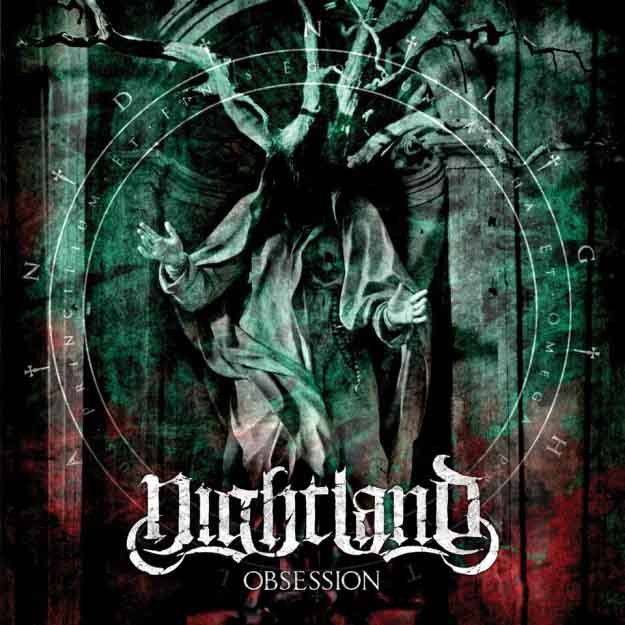
Nightland – Obsession (2015)
Slaughter of the Soul riffs? Check. Hit people breakdowns? Check. Random songwriting? Check. Metalcore with orchestral fluff played by guys in leather dresses is still metalcore. This time it’s just marketed toward fat Nightwish goths and frilly-shirted Fleshgod Apocalypse fans.
Cult of Fire – मृत्यु का तापसी अनुध्यान (2013)
Here Cult of Fire randomly mix stolen Bathory, Immortal, and Emperor riffs with Abba keyboards and pointless eastern music into a pathetic failure of black metal. This album is yet more proof of how easily the basic compositional requirements of the genre can escape even the most technically accomplished musicians.
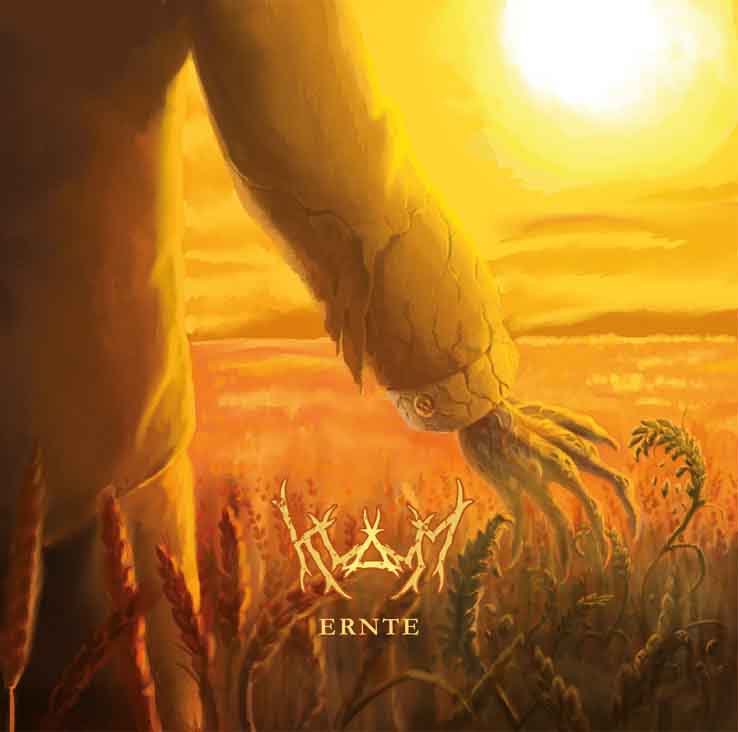
Klamm – Ernte (2015)
Blackened folk singalongs played by German hipsters? This music is the result of too much cuddling and too little beatings. Dumb to the point of being exasperating, Klamm tries to fulfill ideological cliches of what both folk and black metal represent. Press stop to leave the beer hall.
Horrendous – Ecdysis (2014)
Steal Heartwork riffs, run them through a Boss HM-2 pedal, and throw in some random Journey to pad out the tracks. Contrary to the title and cover art, this pretentious pseudo-Swedeath fails to shed its melodeaf skin. The only thing this album transcends is listeners’ patience when it assumes they are intellectually disabled by building multiple nu songs from the riffs in one very popular older song called Heartwork. Horrendous prove themselves musically no better than Archenemy and far inferior to them when it comes to musical common sense.
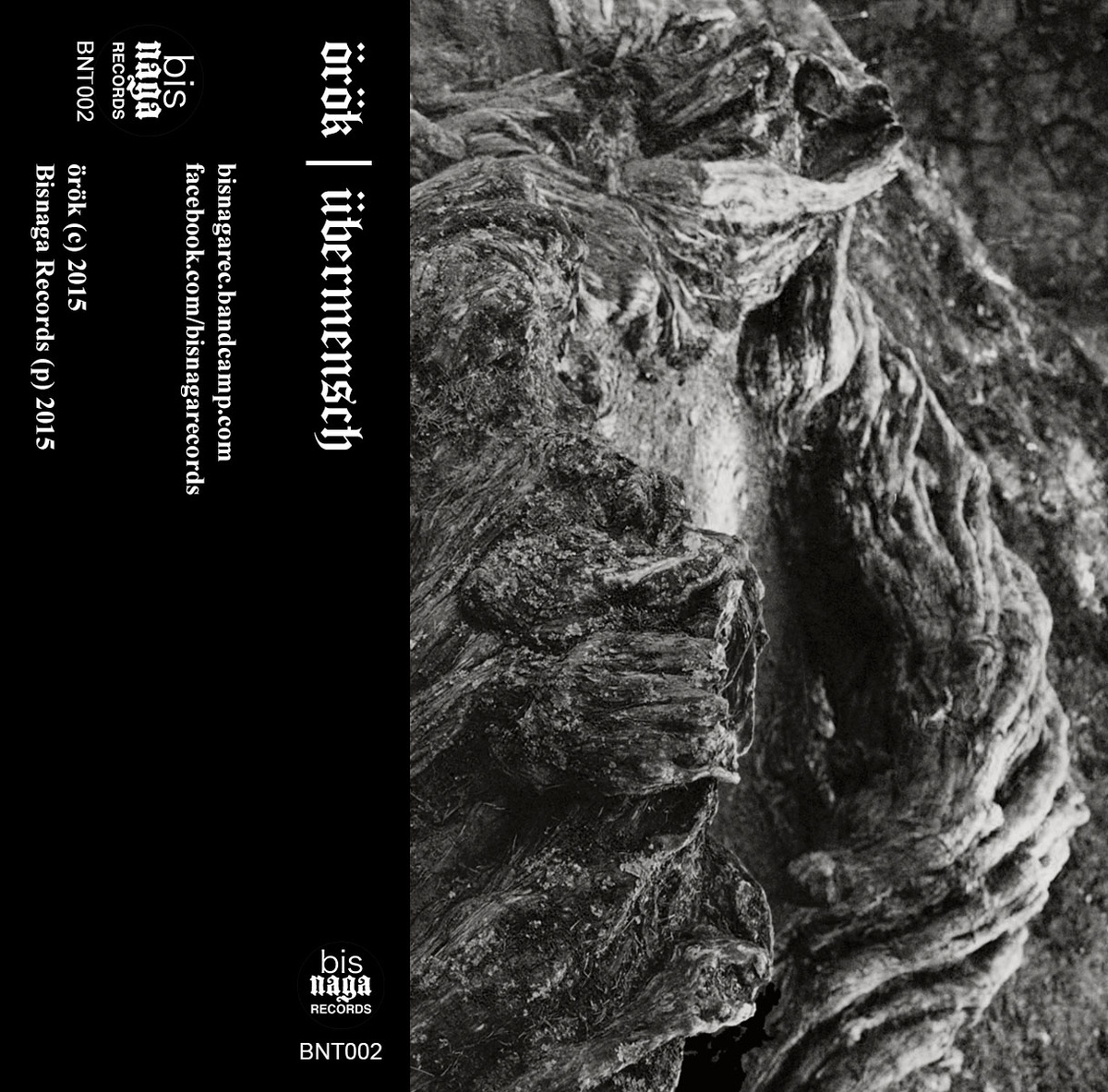
Örök – Übermensch (2015)
Coming from the spiritual-minded ambient “black” metal camp, this self-absorbed music is so ego-centric it somehow manages to be unaware of its stagnancy, vacuity, it’s lack of proposal and direction. As the title indicates, rather than an excellent specimen’s product, this is more of a diva’s self-appraisal. Untermensch.
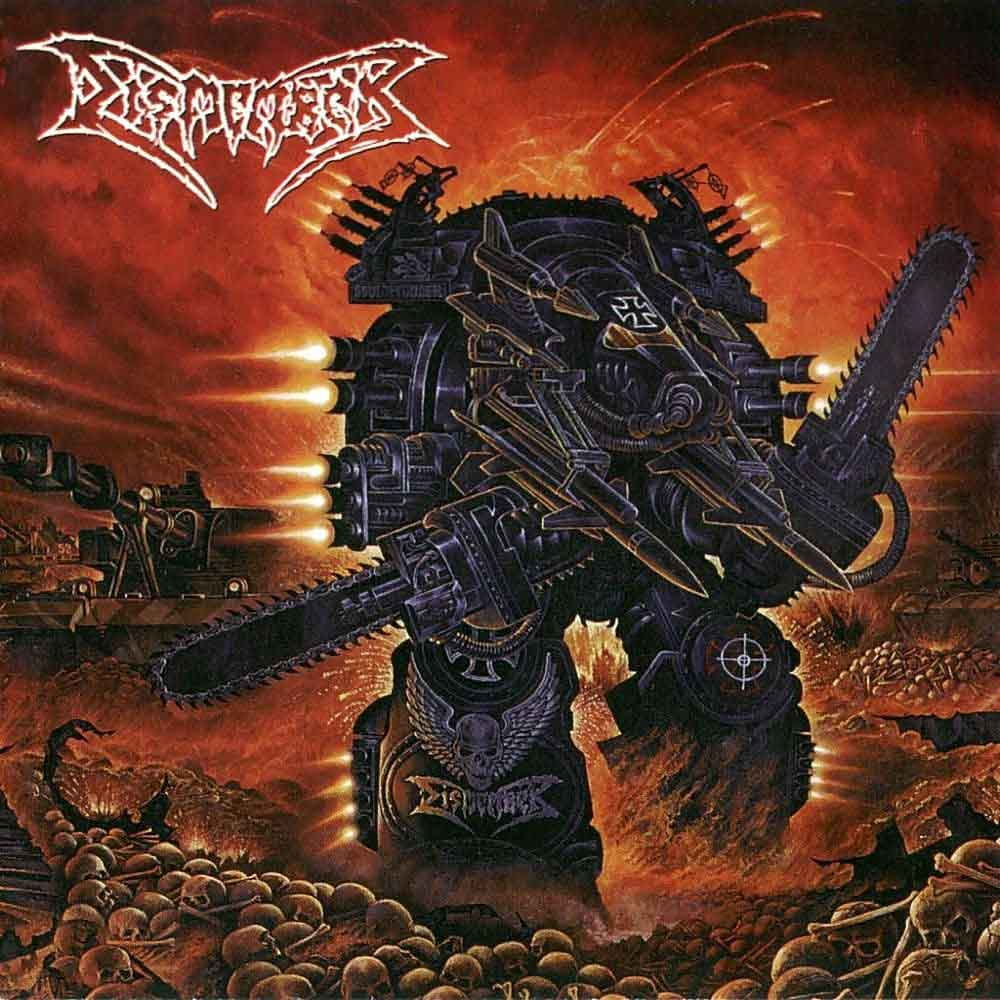
Dismember – Massive Killing Capacity (1995)
After the commercial success of Entombed’s Wolverine Blues, money-grubbing record labels pressured the rest of the big Swedish death metal bands to pander to the Pantera crowd. Dismember turned down the distortion and gazed back to seventies rockers Kiss and Deep Purple for inspiration. Unfortunately, downtuned and distorted butt rock riffs coming out of JCM 900 heads are still butt rock riffs. A few songs that rip off Dismember’s own prior good work and Metallica’s Orion make this slightly more listenable than the aforementioned Wolverine Blues but do not come close to alleviating this death ‘n’ roll turkey’s massive shitting capacity. This is Highway Star death metal.
Nebiros – VII (2015)
Mellotrons and makeup do not paint your metal black. These overlong songs are structured around
deathcore breakdowns and stolen Gothenburg riffs. This is more Heartwork for subhumans than a Pure Holocaust.
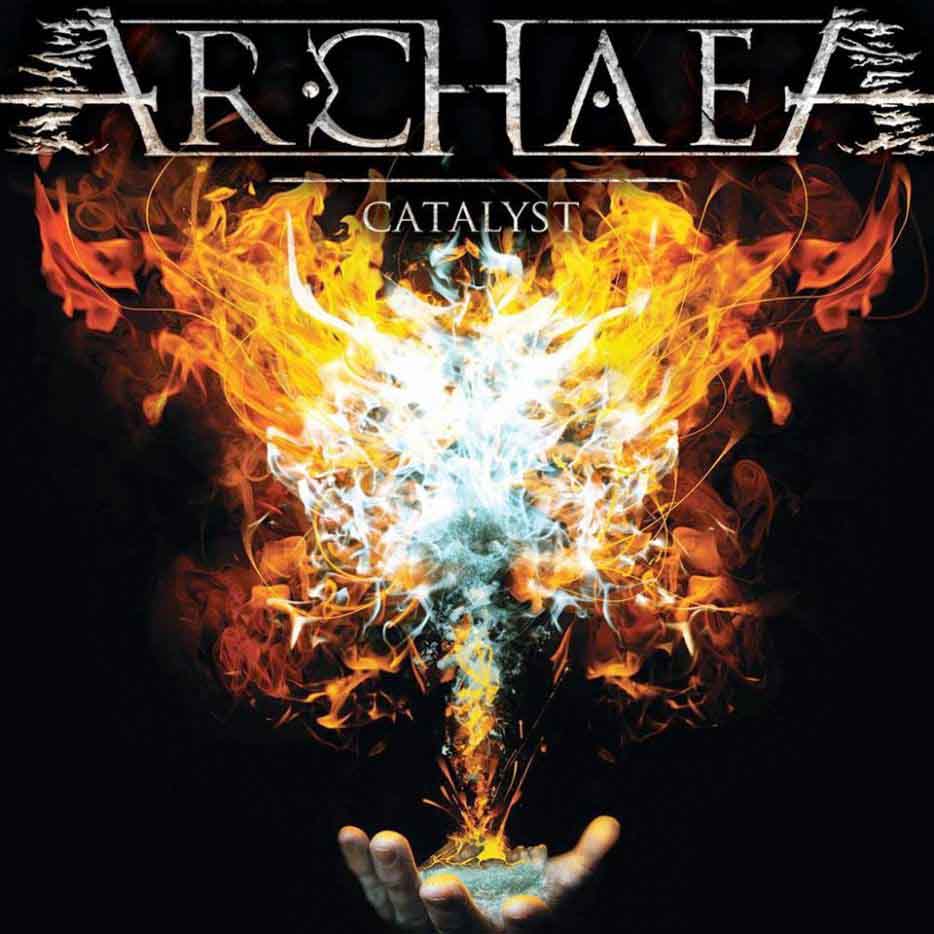
Archaea – Catalyst (2015)
One could say this sounds like Unleashed only if Unleashed were one of those deathcore bands from five years ago with the token female keyboardists. This is a stereotypical blend of polka beats, breakdowns, Gothenburg candy melodies, and keyboard leads. Listening to it makes me want to lay my head down upon the train tracks just so an overweight man in a jumpsuit embroidered with his own name will be forced to power wash my brains off to the sweet voice of Kenny Rogers.
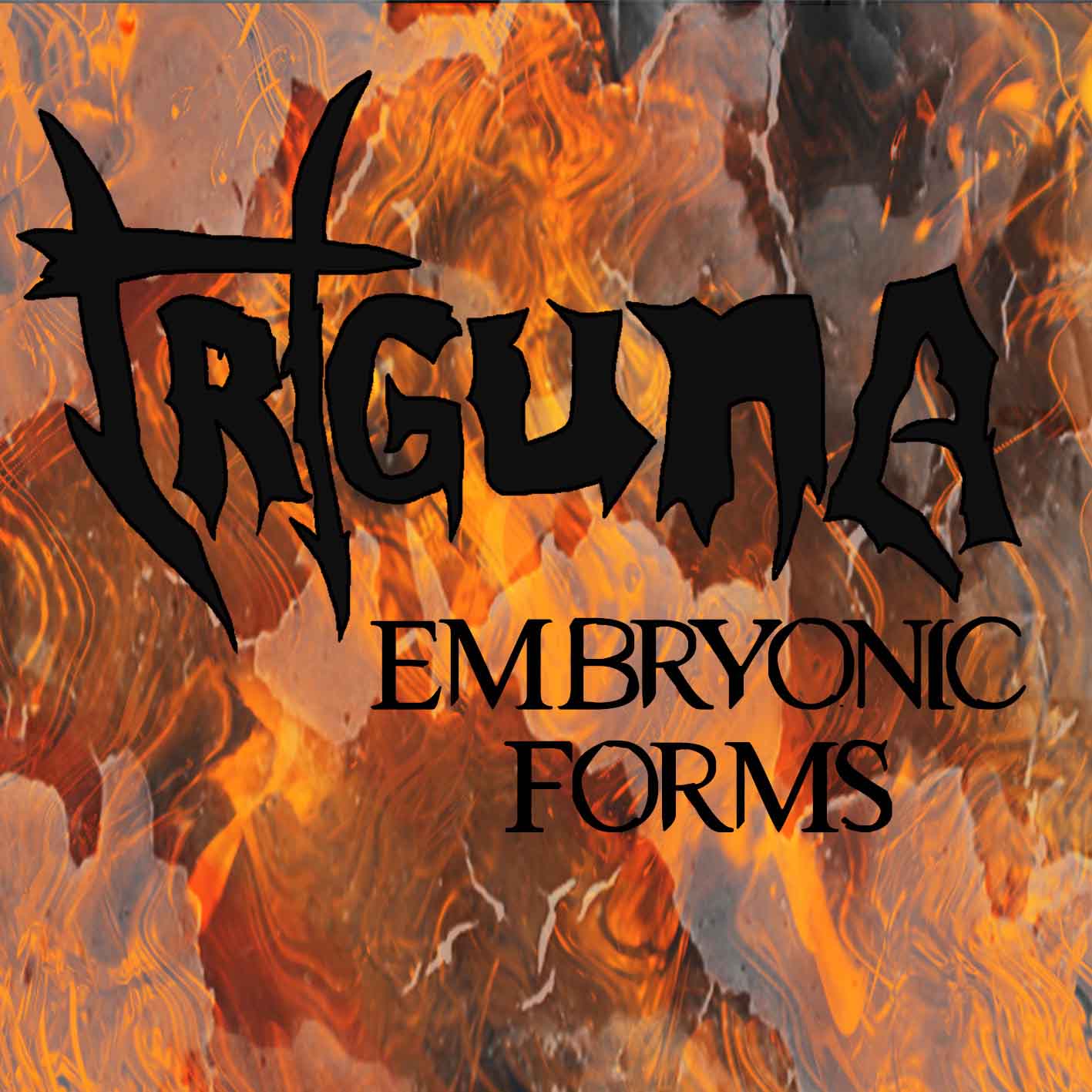
Triguna is a band that plays underground metal in that vague intersection between death metal, black metal and the phrasal speed metal of Slayer. Their independently-released Embryonic Forms is both an honest and musically-aware artistic offering that falls short for technical reasons. “Technical reasons” here should not be underestimated. The band’s instrumental skills are just enough to play he music they wrote, but it is the technical side of composition that is loose.
Technique in composition is believed by the populace to mean how many chord progressions and scale names you have memorized or how many contrasting sections you can pair up. In truth, what technical composition ideally affords is an experience and insight into musical forms, elements and their relations and effects along with historical reference points that help the composer distill the purest elements of music. Surely this can be derived by talented and innately perceptive musicians, but they are still building most things from the ground up.
To be fair, given Triguna’s apparent technical level, their decision to make varied yet deliberately dirty, simple and straightforward passages was a realistic one that allowed them to concentrate on the coherence of the pieces as wholes. So while individual sections, riffs or solos are not altogether overwhelming, the songs are solid, enjoyable and meaningful. Creating fulfilling whole music that is not minimalist, Embryonic Forms is a perfect example of the extreme case of a vision superseding technique to achieve a musical triumph. The album garners at least honourable mentions alongside the likes of Manilla Road or early The Chasm (not that I am equating them, just classifying them), and is very much recommended on my part.
Many of us are fans of last.fm and other services which keep track of listening statistics. These allow me to link up various devices that I use and see what my actual listening patterns are instead of what I think they are. For example, if you asked me for a list of top death metal releases, I can easily name something like this list of the best in each genre. But that is an analytical opinion related to the art and music themselves, not a personal habit, which reflects more the day-to-day utility I find in different albums. Such is the split with Gorguts Obscura, an album I listened to extensively when it came out in accidental defiance of conventional wisdom, but then have not picked up since. Part of the reason is the unreasonably loud production, which makes it — like Sinister Hate and other albums of the “early ProTools era” — difficult to listen to alongside classic albums, and abrasively loud with lost texture of distortion. Another reason is that having heard it three times a day for five years, I may have simply absorbed it entirely. A third might be that while it is admirable as a piece of art, it may not be applicable to much of my life or thought process at this point.
I read Old Disgruntled Bastard‘s article “The postmodern Gorguts” with great interest not just because I enjoy ODB’s writing, but because he has cut into a vital topic: does Obscura belong to the old school death metal legions, or is it of a newer style that we call “modern metal”? Modern metal — comprised of nu-metal, metalcore, tech-death, post-metal and indie-rock — distinguishes itself from the old because it is composed like rock but with metal riffs mixed in among the jazz and prog affectations. The analysis of it as postmodern seems to make sense if one considers later postmodernism. Early postmodernism distrusted meta-narratives and so attempted to create its own based on the subtext, or invisible reality, as an alternative to the public text or consensual token-based narrative of our reality and civilization.
Later postmodernism simplified that to an idea of showing many different angles or perspectives of a topic, like a Pablo Picasso painting, which created a surface level of complexity of ingredients so intense that it reduced the organizing principle or internal complexity of the work to near nothingness. Compare Don Delillo’s White Noise to David Mitchell’s Cloud Atlas (itself highly derivative of Pynchon, that highly derivative of Nabokov and Burroughs) for an example of this in literature.
The public school safe answer when asked about the origins of postmodernism is that it sprang up with Foucault, but someone who traces the history of ideas — and actually writes postmodern fiction — like myself may see the origins instead in an early writing by Fred “Mad Dog” Nietzsche entitled “On Truth and Lies in a Post-Moral Sense,” in which he points out the nihilism of language: tokens work only when people mean the same thing, but people project their own desires into the meaning through the imprecise device of memory, which means that narratives rapidly become deconstructed into manipulation and the only excuse is to discard the old values and definitions, and rebuild from common sense observation of reality.
There are, after all, very few ideas in history, and much as Plato was a watershed, Nietzsche defined the different perspectives in the modern time, but this analysis is too far-reaching to be made in public, least of all on the government dime. I remember talking with Audrey Ewell (Until the Light Takes Us) over this very split and finding myself dismissed as perhaps not knowing the background material, which is very un-postmodern as it affirms an official narrative in defiance of the introspection that leads to analysis of externality by structure and not appearance, a trait shared between Nietzsche and the Romantics that lives on in postmodernism albeit faintly, and only in the important works, excluding the forgettable Mitchell for example. Postmodernism appears in movies by David Lynch and Lars von Trier, specifically the death metal-friendly Melancholia, and even in the theories we tell ourselves about daily life. Discontent with The NarrativeTM abounds, but very few agree on what that narrative is or what is the truth that it conceals, which shows a difficulty of postmodernism: it deconstructs and points vaguely in a new direction, but never finalizes the task, which relegates it to the academic realm of sipping Merlot and watching the world build up tinder for the final carnage.
Having boiled out all of that context to postmodernism as idea, let us look at William Pilgrim’s excellent article. Death Metal Underground tries to provide multiple perspectives — in the postmodern sense — on any topic, but diverges from the postmodern narrative by affirming that reality itself is truth, and we can approximate that truth, so we must undertake the almost never undertaken second part of the process which is through reasoned debate to then find answers. People love the idea of multiple perspectives, because it means that since nothing is true, they can do whatever they want and that “feels” good to the forlorn or under-confident soul. They are less enthusiastic about boiling down the data found and constructing from it an assessment of truthfulness. The article contains two essential nodal points, the first of which is the definition of postmodernism:
…a school of thought that attempts to reject overarching structural meaning and belief in greater narratives. To the post-modern mind, existence and experience consist of pluralities, splintered into fiercely individualistic cells prone to subjective rule, and inimical to any attempt at establishing a universal system of knowledge. Under this philosophy, adherence to a common-law guidebook serving as a framework for value judgments would amount to giving tacit approval to an authoritarian scheme of things.
This sounds surprisingly like one of my favorite definitions, the Internet Encyclopedia of Philosophy definition of “nihilism”:
Nihilism is the belief that all values are baseless and that nothing can be known or communicated…By the late 20th century, “nihilism” had assumed two different castes. In one form, “nihilist” is used to characterize the postmodern person, a dehumanized conformist, alienated, indifferent, and baffled, directing psychological energy into hedonistic narcissism or into a deep ressentiment that often explodes in violence…In contrast to the efforts to overcome nihilism noted above is the uniquely postmodern response associated with the current antifoundationalists….French philosopher Jean-Francois Lyotard characterizes postmodernism as an “incredulity toward metanarratives,” those all-embracing foundations that we have relied on to make sense of the world. This extreme skepticism has undermined intellectual and moral hierarchies and made “truth” claims, transcendental or transcultural, problematic. Postmodern antifoundationalists, paradoxically grounded in relativism, dismiss knowledge as relational and “truth” as transitory, genuine only until something more palatable replaces it (reminiscent of William James’ notion of “cash value”). The critic Jacques Derrida, for example, asserts that one can never be sure that what one knows corresponds with what is.
Much of interest stands out here starting with caste. Alan Pratt seems to see the two interpretations of nihilism as reflecting degrees of abstraction. On one level, people say that life has no inherent meaning — that is the correct short form translation of what he says above — and translate that into dissipation; on the other, they see this as an opportunity to escape the dead definitions of a dying civilization and re-evaluate all that is known and how it is seen as important; in other words, to go back to Nietzsche and his Romantic-tinged apocalyptic renewal.
This also introduces the fundamental problem of modern philosophy, which it tries to handle through grammars of different fields of study, consisting of the coherence/correspondence split. A sentence can be completely grammatical and parse-able but contain no meaning because it imitates outward form but refers to nothing and resembles nothing found in reality. “A = x; if A > x, then the world ends” is entirely sensible as an expression, yet gives no information and relates to nothing. Like Nietzsche, most postmodern philosophers attack language, but unlike Nietzsche, they seek to find ways around language where Nietzsche’s point was the more flexible idea that language, logic and other forms of communication and truth-assessment are dependent on those who wield them, their intelligence, honest and intent; in other words, as he said, “There are no truths, only interpretations.”
This nihilism — which sounds a lot like postmodernism itself — distrusts not just a narrative, but the idea that there can be a narrative, or in other words one explanation of reality and how to deal with it that applies to all people. This translates to a distrust of the inherent or innate, such as the idea of “writing on the wall” or any other kind of definitive sign that communicates to all people. In other words, reality is out there, and all of our access to it comes through interpretations; these vary in value, and communication between them occurs through reality, so is subject to the same weakness. This means that there is no single symbolic or token communication which can be said to be innately true, and since the world itself issues forth no data in symbolic form, “truth” is a property of human minds and dependent on the quality, discipline and application of those minds, and is not shared among humanity collectively.
This applies less to the idea of a narrative within, say, a death metal album, that to the idea of a narrative describing our world and universal values to address it. However, individual interpretations can more closely approximate an understanding of reality, even if they cannot be communicated because communication depends on symbolic parity between all parties, which in turn depends on the ability to understand those symbols in roughly the same way. In ancient times, that viewpoint was called “esotericism” because it suggested that reality revealed its truths to those who were ready for them, with both a sense of knowledge being cumulative and not open to all people. A genius or highly talented person sees a different truth than others, thus this truth is localized to that person, and cannot be shared by the act of encoding it in symbols and speaking or writing them to others.
Taking this path through postmodern reveals that while postmodernism “flouts conventions”, as the article states, flouting conventions is not the total of postmodernism; it is one attribute, and it occurs not in and of itself but for the sake of undermining the narrative. This brings us to the core of Pilgrim’s analysis of Obscura:
In its abundant jagged outcroppings and in its constant search for the next unorthodox detour, Obscura shortchanges the simple truth that holds up metal and indeed all ‘essential’ music, that of relating an idea through sound.
I will simplify this in a grotesque but accurate way: tail wags dog. Instead of technique being used as a means of expressing an idea, the technique becomes the goal and the idea is filled in afterwards to unite the different technical parts. This common criticism of metal rings true in almost all disorganized works because the band wrote a bunch of riffs, adjusted rhythm like a big paper bag to fit them all together, and then called it a “song” despite having nothing in common between its parts, and thus no emergent atmosphere or communication which makes the whole more than the sum of the parts. This leaves us with the criticism of Obscura as failing to maintain a narrative, and whether this is related to the postmodern distrust of narratives, which itself could constitute a narrative. We could create a thesis of history describing humanity as a successive series of escapes from previously limiting narratives to new ones, but that then portrays postmodernism entirely as a form of deconstruction, which while compatible with the notion of extreme skepticism fails to capture the Nietzschean notion of “re-evaluation of all values” which is the second half of the postmodern process: (1) deconstruct and (2) reconstruct, from reality (correspondence) and not internal grammars (coherence).
The only remaining question is to analyze the music itself and see if its parts in fact associate in some way as to make a meaningful whole, which is the question here; postmodernism has served as a useful filter for introduction but not really a guide to how to do this. We are back to using the same compositional analysis that would apply to any death metal release, or any through-composed music.
Specifically, Pilgrim identifies the lack of a melodic or structural center:
Conventional melody is used not as the driving force behind the songs heard on this album, but as ballast to the band’s almost painful need to expand the template of extreme metal prevalent till then.
At this point my own narrative must switch to the incredibly general in lieu of analyzing each song. My take on this album is that Gorguts wrote an album in the style of The Erosion of Sanity and then, possibly through the work of Steve Hurdle, added strong melodic continuity. Then, they chopped it and re-arranged it so that riffs introduced themselves both in “backward” order of distilling from more texturally complex to most melodically clear, and arranged them so that the melody was introduced in a pattern which broke up its normal flow in order to introduce pieces in a sequence that created another emotional impression, then assembling it from its conclusion for the final part of the song. This seems to me both not the tail wags dog approach, but also a use of technique over composition, but in this case it was effective because the music was already composed and was modified with an additional layer of complexity and perhaps, some anticipatory contrarianism, in order to make its labyrinthine journey of fragmentary melodies into more of a puzzle assembled in the mind of the listener, not unlike how postmodern novels like Naked Lunch separated a story into vignettes and multiple character/setting groups in order to disguise it and force the reader to assemble it in the abstract, before repeating it in a finale in more concrete form.
However, it seems to me that the core of Pilgrim’s essay is his listing of seven attributes of metal, and that perhaps his intent is to use Gorguts and postmodernism as a point to speak about metal as both having postmodern attributes, and opposing postmodernism by asserting a narrative construction of its own. In this, metal may be a nihilistic exception to the norm of postmodernism, in that while it distrusts the contemporary narrative, and negates the idea of inherent truth/knowledge/communication, it asserts that it can portray reality in a fragment in such a way that others can appreciate it. Regarding the charges of amateurism, Pilgrim makes some solid points. The fixation on iconoclasm and paradigm-inversion, which itself strengthens a narrative by the fact that exceptions tend to prove the rule, and deliberately “whacky” permutations of arrangement draw skepticism, and deservedly so. The third possibility offered by this author is that like most works of art, parts of Obscura are sincere and insightful, and other parts are bullshit designed “outward in,” or from appearance to core, meaning that they communicate little or were modified to express something convenient after the fact. If taken as a whole however, the album minimizes these parts by fitting them within other songs that attract less trivial attention. Where Pilgrim seems proven right to me is through recent Gorguts output which emphasizes mysticism of the trivial as a means of enhancing the self-estimation of its listeners, much as Opeth and Meshuggah built a cottage industry around making simple music seem complex to attract low self-esteem fans who want bragging and pretense rights over their friends; where he falls short is that From Wisdom To Hate, while a more rushed and uneven album, further develops the techniques on Obscura.
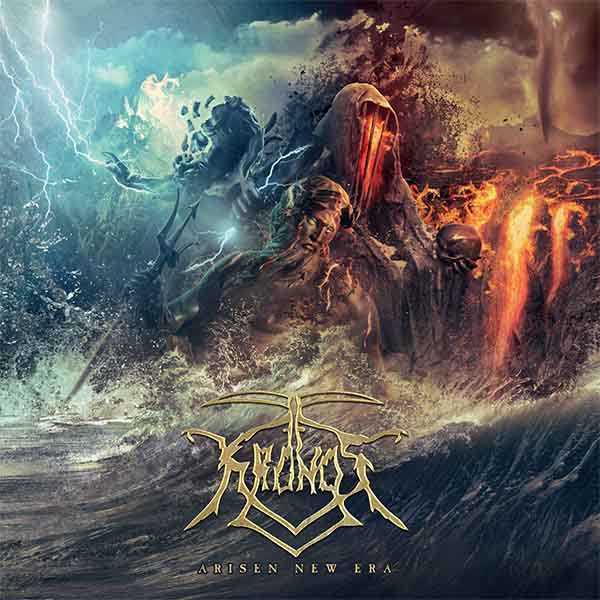
Technically-inclined death metal band Kronos have made an impression in the past by puting out solid although not particularly impressive albums. Let’s revise this wording. They’ve actually impressed the mainstream because those are easily impressed by anything with an appearance of badassery or complicatedness. The albums are solid because they are musically sound, yet the limitations of Kronos music can be noticed in a reluctance to go beyond a certain threshhold — theirs has been a timid death metal that has played it safe. In doing so they’ve remained more convincing than most bands playing in this style, but perhaps it is time they stepped up. Their new album will tell us…