Metal Photography

“There must be some one quality without which a work of art cannot exist; possessing which, in the least degree, no work is altogether worthless. What is this quality? What quality is shared by all objects that provoke our aesthetic emotions? What quality is common to Sta. Sophia and the windows at Chartres, Mexican sculpture, a Persian bowl, Chinese carpets, Giotto’s frescoes at Padua, and the masterpieces of Poussin, Piero della Francesca, and Cezanne? Only one answer seems possible — significant form. In each, lines and colors combined in a particular way, certain forms and relations of forms, stir our aesthetic emotions.“ – Clive Bell, Art

falk2

falk

Metal photography often slides off our radar because we have no point of reference. We are familiar discussing the metal scene, but not the metal photography scene. In addition, it’s hard to separate the serious from the casual in this realm.

It appears that every musician’s girlfriend automatically becomes a band photographer. Usually the result of their concert shooting culminates on social networking sites to flaunt to their friends, or possibly provide evidence that the night before existed before they all blacked out drunk.

However, there are professionals that meddle in this field. New York photographer Peter Beste distinguished himself after releasing his acclaimed book True Norwegian Black Metal which documented his trek across Scandinavia for 7 years in the black metal scene.

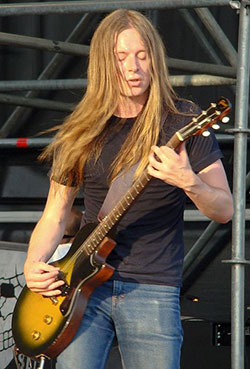
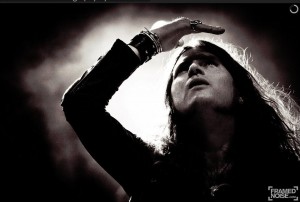
Others have taken different paths. Swedish photographer Daniel Falk from Framednoise.com and Close-Up Magazine is often in contact with the protagonists of Scandinavia’s music scene. He’s become well-known for his work in Europe and is spreading in fame to the USA.

Luckily, he’s agreed to shed some light on his craft and motivations:

What inspired you to get into music/metal photography?

I’ve always liked music. I bought my first album (ABBA!) when I was 6 years old, then I started to play the drums at 8 and saw my first Iron Maiden concert back in 1983.

The photography was more or less by coincidence though. In 2004 I bought myself a DSLR for the holidays and some months later I was invited to a friends concert and took the camera along. I was absolutely crap, got pissed, read a ton to find out WHY I sucked, bought better lenses and shot more gigs. By summer I applied as a photographer at Metalnyheter; a now defunct Swedish metal webzine and I have been shooting ever since.

I guess I just discovered something about myself; that I have a good eye for capturing moments and that I could combine it with my love for metal to create something that others appreciate.

Outside of music photography, what other projects have you shot in the past?

I really don’t shoot much else than music. I do wedding photography every now and then when people ask me to, and I went on a photo trip to Chernobyl a few years ago, but that’s basically it. I’m not the kind of person that photographs my whole life and brings heavy gear with me everywhere, I need to have a purpose in order to be inspired. I have a few projects in the pipeline but it’s hard to find the time and energy, especially since I already have to turn down requests from bands.

Have you exhibited your art anywhere?

I had an exhibition at a café/concert venue called Musikens Hus in Gothenburg back in 2008, but nothing since concentrating on my work. I had several large canvas prints at the Gothenburg Sound-exhibition back in January, but it’s kind of hard to find places that want photos of sweaty men on their walls and find sponsors for the prints.

You’re known throughout Scandinavia for event photography. How do you overcome obstacles such as poor lighting, moving subjects, ect?

I can’t lie, I have GOOD gear. I use expensive cameras that can keep noise levels down and bright lenses that allow me to shoot at the smallest clubs with piss poor lighting. Other than that it’s just down to experience. You learn by shooting A LOT. Of course, there are times when nothing works and you feel like you don’t have a single usable shot, but I still very much prefer shooting small bands that I like; to larger bands at better venues that I don’t care for. I’m not a fame-whore and have skipped several headliners at large festivals just to see/shoot a small band at another stage.

Since you started Framednoise.com, you’ve been enlisted to shoot for Close-Up Magazine. Has this opened up more opportunities for projects that you haven’t thought you’d do?

Absolutely. Through the magazine I can apply for accreditation/photo permits to concerts/festivals around Europe that otherwise wouldn’t be very interested in me as a freelancer. I also get opportunities and assignments that force me to push my own limits and step outside of my comfort zone. It also works as a kind of “seal of quality” and obviously spreads my work to new potential contacts. I have made lots of new friends.

What advice would you offer beginners that are interested in music photography?

Know your gear and its limitations. That’s my main advice. The more experience you have; the less you need rely on the automatic functions. If you have a DSLR with a simple kit lens stand close to the stage and use the bright wide end of the lens. The next step is to buy a bright lens for those small clubs, such as a cheap 30mm or a 50mm f1.8. Always shoot in RAW-format for maximum flexibility. Flash? Nopes, not until you REALLY know what you’re doing.

Start out by shooting friends and local bands, you need experience and if you can handle the small clubs, you can handle bloody well about anything! Be nice. And LOVE the music. The more you like the music you shoot; the better your photos will be and the less you’ll care about the countless hours you will spend in front of the computer editing the photos. And yeah, learn the editing part too. It’s one thing to snap a photo and another thing to push it to its full potential.

Look at photos that you like and try to figure out WHY you like them; what mood they capture and why they make you feel like if you really were that at that concert.

Are there any historical metal events, like particular concerts or locations in time, that you wish you could have been present to shoot? How would you approach such shoots?

Personally, I would have LOVED to see/shoot Rainbow back in the Stargazer era with Cozy Powell on the drums since he was one of my idols as a young drummer. More recently, I wish I had been at the last Dissection concert in Stockholm, they’re such an iconic band that have influenced so many others and considering what happened later those photos probably would have been very emotional and significant for many fans.

And Iron Maiden during the Powerslave tour. I REALLY wanted to go but my sister wasn’t too keen on having to look after her younger brother and I had to stay at home ;-( And the stage production was AMAZING! I would have loved to stand there with a really wide angle lense and capture the action. The closer the better!

Feel free to check out Daniel Falk’s photography at Close-Up Magazine and Framednoise.com.

1 Comment
Tags: , ,

Final album of Rigor Mortis released this summer

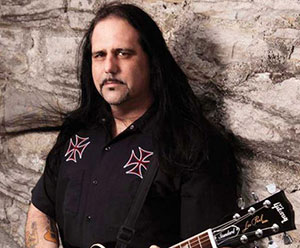
scacciaMike Scaccia and his mates in Rigor Mortis finished recording a full album before Scaccia passed away on December 22 last year. The day before, Scaccia and engineer Kerry Crafton did some initial work on mixing the album entitled Slaves to the Grave which will be the last from the band.

Of its quality Crafton says:

This record is amazing. Mike, Bruce Corbitt, Harden Harrison and Casey Orr all performed brilliantly in the recording and I believe they all did the best work of their lives. […] The depth and breadth of the material is really awesome.

While it’s difficult for the rest of us to estimate how well Rigor Mortis as a band hold up musically these days (the band’s last full-length was released more than two decades ago), Scaccia’s legacy has more than sentimental value.

Slaves to the Grave will be released sometime during summer 2013.

1 Comment

Tags: , ,

Christian “Metal” is Torture

Back in the hazy 00’s, psychologist Philip Zimbardo released his book ‘The Lucifer Effect‘, which its title derives from the metaphorical transformation of Lucifer into Satan. It was a study about how good people can do bad deeds, and its substance was mainly on his findings about how prison guards turn to abusing inmates. The ultimate point Zimbardo was trying to make was that there is no good or evil person, since each person can be seduced to “good” or “bad” undertakings.

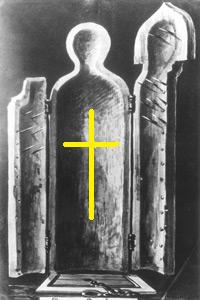
christianmetaltorturedevice

However, torture can be a very sufficient way to throw your enemy into turmoil. With the outright contradiction that is ChristianMetal“, it can catapult the listener into a world of confusion, thus becoming a very suitable device for torment.

According to Esquire Magazine, a gaggle of Navy SEALs were using the music of Metallica to torture Iraqi militants. Once  Metallica received notice that their music was actually resulting in something proactive, they issued a press statement requesting them to cease. “Part of me is proud they chose Metallica, and then part of me is bummed about it. We’ve got nothing to do with this and we’re trying to be apolitical as possible – I think politics and music, at least for us, don’t mix,” said James Hetfield.

Saddened by Metallica‘s decision, the Navy SEALs embarked onward to take things into their own hands and forged the most psychologically destructive torture device known to man: ChristianMetal“. They enlisted the imagery and audio idiocy of Demon Hunter to show the militants true patriotic strength.

Demon Hunter said, ‘We’re all about promoting what you do.’ They sent us CDs and patches. I wore my Demon Hunter patch on every mission – I wore it when I blasted Bin Laden,” one Navy SEAL stated.

One could assume that lunatic Osama Bin Laden took the easy route out. Death before ChristianMetal“.

Source: RT

6 Comments

Tags: , ,

Music doesn’t need to be explained.

“Things that are genuinely sublime speak for themselves.”

ideological_zombiesOnce upon a time I used to cringe whenever I read interviews with my favorite metal musicians, as no matter how well they started they would almost always lead up to the same sort of question and the same disappointing response. Something along the lines of: “What did you mean by this song/album?” followed by “It’s up to the listener to decide what it means.”

This is a stock response almost across the board in metal (from the brainless to the most inspired of bands) and it used to annoy me. After all the effort I was putting in trying to convince people that metal was a legitimate and thoughtful art-form, whose creators are both articulate and deliberate, it would all be undone in one swift blow by what sounded to me like an under-confident and poorly thought-out response.

Was it embarrassment at talking about their motivations? Or a lack of deliberation over the creative process (which just didn’t seem true at all when I listened to the music)? This kind of off-hand, Hallmark-card relativism belonged in rock & pop, where the music really is an empty vessel for the listener to paste in their own experiences and fantasies, but not in metal.

Surely metal bands didn’t believe this of their own work — that their decision to come to this outsider genre, to innovate and/or fervently uphold an enshrined sense of metalness against a society that wanted to assimilate, emasculate and repackage it, the meandering music and reference-laden lyrics — none of it had any significance outside of whatever the listener felt like, however trivial or stupid?

I now get that I was looking at it wrong. It’s not that the listener gets to choose what the work means, but that they must explore it in order to find its meaning. This is a standard approach toward learning called esotericism, which means simply that the learner advances as his or her own pace, and without that readiness in the listener, more cannot “be taught.”

What they do not need is to be told what it means and how to think about it. Long-winded explanations kill the sense of mystery that’s inherent to good metal. In the same way that reading Quorthon explain how the guitars on Blood Fire Death were recorded in the toilet of a garage kind of dampens the mythical, Viking warrior image of that album, too much talk about the background mental processes that go into any piece of art takes away from actually experiencing the art itself. Things that are genuinely sublime don’t need too much explanation, they speak for themselves.

The nerd in me will always enjoy finding out about how and why something was made the way it was. But unlike, say, cathedral architecture, metal doesn’t really have generations of pedagogical artistic and academic development behind it that a person can study and still be filled with a sense of how awesome it is that human endeavor conspired to make it possible.

Even when there is this kind of background to an art-form, it probably only benefits those of a technical mind to find out about how and why something is done. It’s a bit of a Promethean bargain, in which you lose the sense of wonderment in order to find out how to recreate or add to it. Metal is a relatively young genre of music with murky origins and a strange streak of conservatism about it, combating a world that is at various levels hostile or antithetical yet constantly influxing it with new, clueless people looking to join in and take ownership of it.

Amongst newbies misunderstandings will always abound, and whilst it could be argued that clearer explanation by bands of what their work stands for might stop some of this, the opposite might also be the case.

The inverse of metal is the modern art world, which with its aptly sterile settings (the white walls and straight, squared lines of a typical pretentious art gallery) has decided that the explanations are more important than the quality of the work. A turd in a tin can, a cow sawed in half or a semen-streaked bed can all pass as acceptable art, provided they are accompanied by an essay qualifying the artist’s ‘creative’ decisions.

This is where the likes of Liturgy are approaching metal from – a liberal arts background that name-checks all the right theories and schools, and values the backwards relationship between aesthetics and explanation espoused by modern art. Bands like this show us that some people are only ever going to be interested in using metal as window-dressing for their own social posturing, and that too much intellectual naval-gazing (of which there has been a lot over black metal, although not necessarily by the bands themselves) helps attract the sort who are interested in appearing clever without making anything clever.

Being a hessian does not necessarily mean being caveman thick when it comes to understanding or articulating the genre’s purpose and intentions; but something of metal’s primal energy definitely gets lost in too much chin-stroking, as well as in directing people too much to the source or meaning of it all.

Music although underpinned by logical systems is not an entirely rational process, but a visceral one; which is not to diminish rationalizing things, but to say that ultimately art needs to be this way in order to work as it does – it needs the sense of release from talking about stuff in order to express that which is both inexpressible and more than the sum of the parts.

Similarly, life as a whole is more like a journey than an exam study session; the motives and end-point are never always clear, but the actual act of going on the adventure and finding for oneself how to place things within their context is much more fulfilling than being told by someone else what it’s all supposed to mean.

5 Comments

Best of Sweden

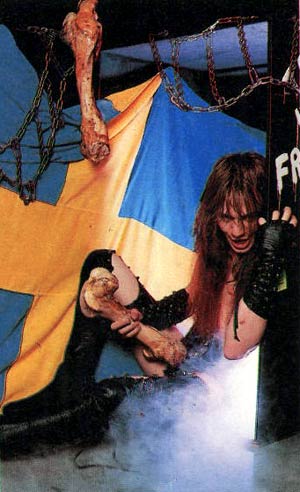
Quorthon of Bathory with Swedish flagAccording to Blabbermouth, the editors of Sweden Rock Magazine have named the 100 greatest Swedish Hard rock and Metal bands of all time, with Candlemass, Entombed and Europe topping the list.

Candlemass and Entombed were both highly influential (I actually even liked Clandestine for its goofy humour), but SRM’s list inevitably provokes a (short) DMU list.

In no specific order, I consider the following as a Top 6:

Bathory — The passionate Satanic hardcore punk band, blasting its way through the Heavens with Wagnerian leitmotifs. Totally worthy of its legendary status.

At the Gates — Mix the depressing avenues of Gothenburg with these fellows’ beautiful minds and you get the ultra-melodic, twisted art showcased on Gardens of Grief and The Red in the Sky is Ours.

Dismember — Their first album (and their demos) may have been their only worthy contribution (all right, Pieces is definitely not bad), but it takes them a long way. Like an axe-wielding ballet dancer, its impact is relentless yet sensual.

Therion — At first listen, Beyond Sanctorum may sounds like a random rock album, but pretty soon you’ll realize you’ve stumbled upon one of Metal music’s most magical releases, with riff upon riff flowing like an endless stream of imagination.

Unleashed — Described as “an exercise in the rhythms and textures of the battlefield in musical form” this anti-psychological, windswept creation might very well be the soundtrack of any ancient Norse saga (and, yes, we’re talking about the first two albums).

Carbonized — An almost forgotten side project. Their first two albums and their early demos are excellent. While For the Security paints a nightmarish world of  the Swedish welfare state (or so I assume), Disharmonization flies into space forging its own interesting world. Like some Hamlet, it may seem insane on the surface.

7 Comments

Tags: , , , , , ,

New Carcass album in early 2013

After 17 years of silence, English grindcore pioneers Carcass are to release a new studio album early next year. According to an interview earlier this month, original members Jeff Walker and Bill Steer are at it again together with new drummer Daniel Wilding.
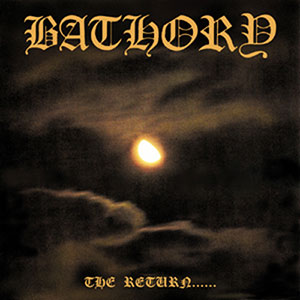
Carcass made metal history with their debut album Reek of Putrefaction (1988) and their masterpiece Symphonies of Sickness (1989) and hopes are of course that the band will revive some of the spirit from those days. On a more pessimistic note, the band’s last offering was Swansong

Walker himself says the new album “sounds almost like the missing link between the third and [fourth] albums but with some groove in there”. The attitude seems about right anyhow:

We’ve done this recording firstly for ourselves—there’s no label backing even as you read this—in fact me and Bill have spent a small fortune out of our pocket to see this through—it’s more of an artistic/personal statement than anything.

3 Comments

A Legend Out of Control

Bathory’s relation to the band’s fanbase is an infected story of contradictory interests concerning very human desires for truth and meaning. Oftentimes fans and creator pulled in opposite directions, fighting over whether to leave the Bathory mask on or reveal Bathory’s inner workings.
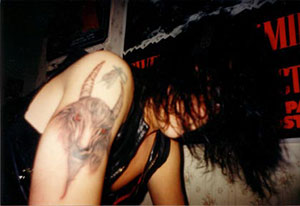
Debuting in 1984, Bathory’s cult status was rapidly acknowledged in the musical underground. But during a long time a certain air of mystery surrounded the band. It seemed beyond time, beyond space, and even out of national context (to a Swedish person this Stockholm wonder didn’t seem as typically Swedish as many of the later Death Metal bands). In general, main man Quorthon kept to himself, few pictures of the band existed, and there were hardly any live gigs at all, in particular once the music got closer to Wagner than to Motörhead. Bathory took one heavy metal tradition to extremes: it created a mythos out of nothing more than a few cover images and an interview or two. This obscure and ambiguous myth bound people together. They wanted to live out this vision as they found it more appealing than their world. When the fanbase went looking for answers, and found little else but songs of evil, darkness, destruction and conspiracies with Satan, imaginations ran wild and filled in the gaps with what they wanted to see, not what they saw.

People have a desire for continuity in an individual’s past. In this case, that desire was expressed among metal fans by trying to explain Bathory’s music through references to a heavy influence from a band which prior to Bathory was seen as the most extreme: Venom. In several interviews Quorthon himself has denied any Venom influence, but in many biographies the memory of early Bathory as a Venom clone is nevertheless quite persistent. (According to Quorthon, his main influences were Black Sabbath, Motörhead, The Exploited, and GBH, and later on Wagner, Beethoven, and Haydn among others.)

The will to interpret Bathory’s music as a logical continuation of Venom, and accordingly seek out a sense of “eternity” in the genre which these two bands (among others) officially created in the earliest of times, is hardly surprising. A consistent pattern which suggests some sort of intention is simply more attractive than a chaotic mess of a genesis produced by two groups entirely unknown to each other.

It is, however, easy to recognize among the authors of reviews of early Bathory albums an aspiration towards and an acknowledgement of a distinct identity of the band and its founder. Regarding Bathory’s self-titled debut album and its follow-up, a mantra is repeated: these records are the starting point for a whole genre and Quorthon is its first hero. This is, so to speak, the creation myth associated with Bathory.

Repetition of this myth is presumably what makes it go beyond historicity and is what makes it timeless. It’s a way for a metal fan to not only “create” Bathory, but also be a part of the phenomenon. Even repeated listens to Blood Fire Death is a repetition of a mythical Now, which gives us a sort of “vertical anchoring.” If myth is a celebration of life, a summary of the Past in the Now, then this is certainly what Bathory is to the band’s followers.

Quorthon himself seems to have had an enormous respect for the mythical power of Bathory. Referring to his fanbase as “The Bathory Hordes”, he tried to reach out to it in order to receive answers on how to deal with this beast:

[…] send me a letter of what you think, what you would want us to do in the future […] Remember, it is you the fans out there on whom we depend on. […] Stay united and may the northstar shine on you all, keep metal at heart!!

This kind of democratization most likely rendered him unable to control the myth of the band. As Quorthon “grew out” of Satanism, and myths surrounding his persona still insisted on his being a demonic devil worshipper, he wanted to set the record straight. And this is where things get interesting.

In 1996, Bathory released Blood On Ice, a retro album with liner notes containing a lengthy exposition on the band’s early history. Presumably, Quorthon had wished to update his biography and rid it of the misconceptions that according to him were abundant in the metal world, but it was probably also a way to pay tribute to the legend by contributing to it with a few “behind the scenes” stories.

This, however, proved to be a serious miscalculation of what the fans wanted. The unmasking threatened the consistent cultural memory of Bathory. And reactions weren’t long in coming: fans spoke of sacrilege and treachery in the many letters that were sent to Quorthon as a direct reaction to the liner notes. The memory of Bathory was now to a great extent a social concern and no longer only the creation of one man. Quorthon writes:

I realized then more than ever before that BATHORY was surrounded by the same sort of stuff only legends are made from. The element of mystery and suspense was still very important to a lot of die-hard BATHORY fans. [The truth] didn’t suit the image that a lot people had of BATHORY or myself.

Quorthon died in June 2004, but shortly before his death he founded an official Bathory website in which he denies the old image of himself as someone who eats children, drinks blood, and lives in a cage, an image that apparently still needed to be denied. Quorthon tells of an interview many years after he abandoned his satanic image: despite the time that had passed, he was still expected to pose for a photo session with pentagrams, skulls and cobweb.

Ironically, many fans have as of recently noted that Quorthon himself tampered with the truth quite deliberately. The iconic Bathory goat – which has become a sort of identity marker among fans – is, according to Quorthon, a collage created out of bits and pieces “from several horror comic magazines”. In fact, the goat is taken from a finished illustration in a book on witches from 1981. It wasn’t until 2007 that the originator, Joseph A. Smith, got to know that his drawings had been used as subject matter for tattoos and the like all around the world for decades. It also turns out that the lyrics and title to Bathory’s “For All Those Who Died” is more or less stolen from a feminist poem by Erica Jong.
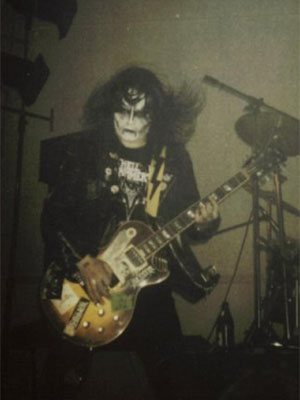
The legacy of Bathory will nevertheless die hard. Quorthon created a legend so powerful neither he nor its fans could control it, an art that hovers above independently of its creator and its receivers. Yet we shouldn’t forget the core quality of its longevity: Quorthon’s compositions. These are what will always create very much alive “elements of mystery and suspense” in the mind of the listener. That’s where the magic happens. Hence the art of Bathory is stronger than both the fans’ myth-making and Quorthon’s myth-busting.

Going through Bathory’s albums again, experiencing the passionate evil melody of “The Return of the Darkness and Evil” or the haunting existential angst of “Twilight of the Gods,” they contain the same everlasting power they ever did and is what makes Bathory eternal. The mask is put back on. Continuity reappears and everything returns.

No Comments

Tags: , , , , ,

Heavy metal fans: brighter than you think

A new survey has found that “metalheads” are more athletic, socially successfully and musically literate than fans of other genres.

According to The Australian, one of the largest surveys of Britain’s metalheads discovered that metal is considered “an overwhelmingly positive force in the lives of those who love it.”

The article categorizes metal as “escapist,” meaning that it helps its fans through hard times. Nearly three quarters of the respondents to the survey said metal had helped them through a tough period in their lives, and 79% said they felt “energized” after listening to metal.

Its most interesting factoid came from Spinefarm managing director Dante Bonutto, who counterpointed the idea of metal as escapism with a note on its practicality. “[Heavy Metal] defines itself against the mainstream, the ‘short-term’ music fans that don’t play or think too much about music…Metal defines you against that shallow form of music,” said Bonutto.

Conducted by the British Phonographic industry, the survey asked 3,600 visitors of participating metal labels, metal magazines, and music industry sites about their listening habits.

2 Comments

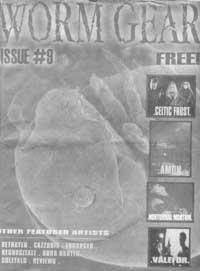
Worm Gear zine returns

Worm Gear Zine has officially relaunched, with 19 reviews and new interviews with Agalloch and Forefather! We know it has been a long time, but we are excited to have revived this stalwart bastion of extreme music. Expect more frequent updates and more of the quality writing you’ve always depended upon. We welcome all readers to this resurrected endeavor, and are eager to hear your thoughts and to get your participation in our ongoing discussion of the underground. And don’t forget to follow us on Twitter as well!

From our original review of Worm Gear zine back in 1998:

Professional layout belies the depth to which this magazine sinks into the underground, asking up-front questions in a variety of reviews, features and interviews. Excellent coverage on an individual basis of those bands and individuals lucky enough to be featured in this solid zine from Michigan.

No Comments

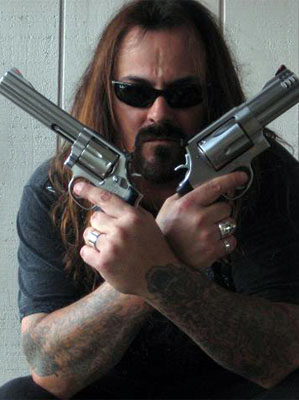
Amnesty International sues military for use of later Deicide in torture

For the last decade, the United States military has used loud rock music to torment captives from the war on terror. Isolated in dark cells, the captives are subjected to blastingly loud music on repeat for days at a time.


The international human rights agencies have been unanimous in their declaration that this is not torture until. Amnesty International spokesperson Bob Cratchit revealed that recent media sampling has provided a reason to declare this torture and end it.

The U.S. military has found the music handy at times. According to Mother Jones magazine, a song from Deicide’s album “Scars of the Crucifix” was played during interrogation of detainees in Iraq. The band said it was proud to do its part for the war effort. – AP

According to Amnesty International research, Deicide ended as a musical force after Once Upon the Cross and their remaining output is “so dishearteningly disorganized, aimless and without artistic merit as to create suicidal impulses in the listener.”

In fact, Cratchit added, “This music is so bad that most of our test subjects would only consent to listen to it when the only other option was Nickelback. Several test groups chose Justin Bieber’s ‘Baby’ on repeat over the later Deicide.”

Amnesty International acknowledges that early Deicide, from the self-titled album to the epic and devasting Legion, is ranked among the treasures of humanity. “Even Once Upon the Cross is an amazing album, although nothing like Legion.”

The US Fifth District Court held the injunction hearings and sampled the music in question. “The justices could tell right away,” said bailiff E.L. Saunders. “Old Deicide was distinctive and artistic, but the new stuff is a morass of confusion, like tormented souls locked in Wal-mart for eternity.”

The lawsuit by Amnesty International and three dozen other human rights and civil rights organizations allege that later Deicide, especially repeated, is a musical transgression that amounts to human rights abuse. Their lawsuit is pending before the courts at this time.

No Comments
Classic reviews:
A B C D E F G H I J K L M N O P Q R S T U V W X Y Z