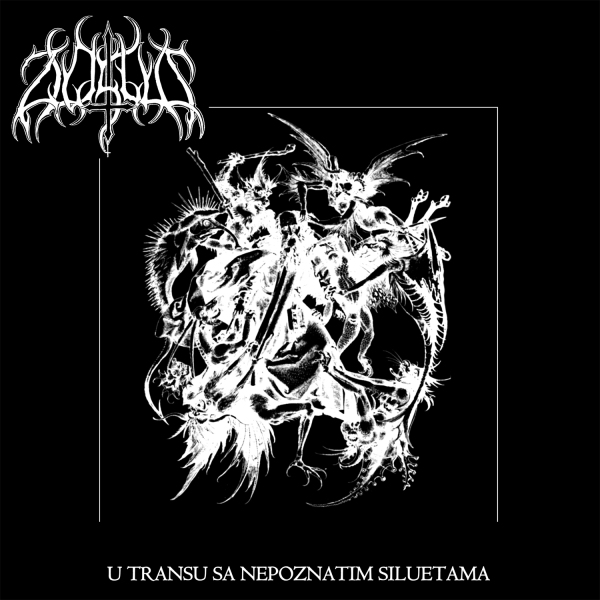
Zloslut to unleash U Transu Sa Nepoznatim Siluetama in spring 2015

zloslut-u_transu_sa_nepoznatim_siluetama

Serbian black metal band Zloslut will unleash its second album U Transu Sa Nepoznatim Siluetama in spring 2015 on Dark Chants Productions. To prepare audiences for the new work, Zloslut have released a sample track “Ukleta” (below).

We first reviewed Zloslut Zloslutni Horizont – Donosilac Prokletstva, Ocaja I Smrti, which combines black and death metal styles into a unique voice expressing an idea and atmosphere specific to this band, back in February. Since that time, the band has composed and recorded the new full album which will be released on CD and LP early next year.

Zloslut composer Utvara answered our questions for a brief profile as follows describing the new direction this band is taking and how it affects their distinctive sound.

How is the second album different from the first?

It is a completely new album, unlike the first album which was still quite linked to the older material.

First of all, we have made a step forward when it comes to production. It is not crystal clear, but it is not raw either, so expect something in between. The album is around 40 minutes in duration and comprised of 8 all-new tracks, with less instrumental composition than we had on Zloslutni Horizont – Donosilac Prokletstva, Ocaja I Smrti. This time you can expect something new in our music in the form of sampled chants and clean vocals here and there. But it is still Zloslut, primitive, ominous, dark in my own way.

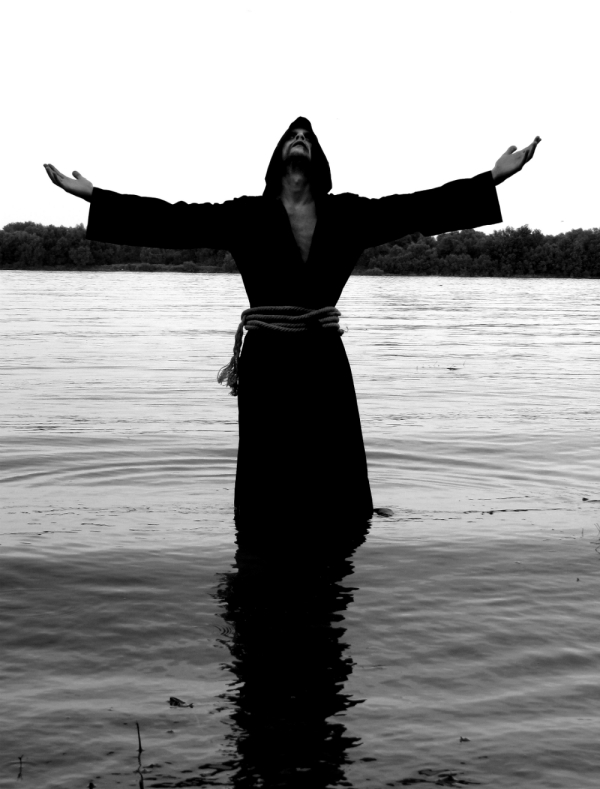
zloslut-band_photo

Where did you record it, with whom as engineer and who on mixing deck, and how long did it take?

The album writing started a little bit before the recording of the first (well, this precisely concerns only one track), but the recording phase was a question of only a few days. But all in all, it took me two months for getting everything ready from music to design.

It was produced, engineered, mastered and mixed by Nemanja Krneta (a.k.a. Zlorog), I worked with him already back in 2012 for the EP Pustoš i prevare izgubljenih duša. This guy knows what I want, so that’s why I contacted him. And I’m very happy about how everything turned out, from the recording to the final phases of the whole album.

The recording itself occured in Belgrade, Serbia, at various studios.

What are the topics of these song-titles? I don’t think “Google translate” will work on these.

“U transu sa nepoznatim siluetama” means “In trance with the unkown silhouettes”.

The tracklist is (with translations in parentheses):

  1. Odjeci Ezoteričnih Misli (Echoes of Esoteric Thoughts)
  2. Kletva Ožalošćenog (Curse of the Grieved)
  3. Crni Um (Black Mind)
  4. Transcendentalni Ples Ludila (Transcendental Dance of Madness)
  5. Ukleta (The Haunted One)
  6. Budućnost Smrću Blista (The Future Shines of Death)
  7. Istinska Odanost (True Devotion)
  8. Poslednji San (Last Dream)

The lyrics are quit poetic, if I can say that despite not considering myself a poet. All lyrics deal with occultism, death, delusion of life and mankind.

https://www.youtube.com/watch?v=p4-DpGnuv2g

1 Comment

Tags: , ,

Why Thurston Moore is right about black metal

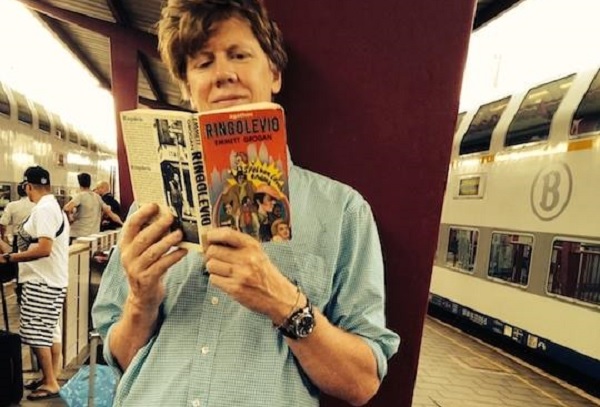
thurston_moore

Most people believe that “trolling” happens on the internet and that trolls are a group like organized crime. Instead trolling is a method and trolls are any who troll, such as when Sonic Youth guitarist Thurston Moore trolled black metal fans recently.

Having been around media and rock fans alike — two groups heavily invested in the pretense of self-styled self-image — Moore spotted a good mark for a brutal troll when he saw one. Thus with an offhanded comment, he lit the rage-fires of ten thousand fedora-blessed basements.

Black Metal is music made by pussies of the lowest order, and we felt it was necessary to investigate this aberrant anti-music behavior. We feel like the sound and attitude of black metal is a loss of self, life, light and desire in a way where it becomes so negative that a whole new bliss arrives where we become super pussy.

The guitarist elaborated later:

Black metal, it doesn’t even consider itself music. In fact, it doesn’t want to be confused with any kind of music because it’s something else entirely. It’s a voided concept from its start [laughs]. It’s all about complete disintegration of existence. It’s a music that uses the elements of rock instrumentation but it’s so anti-everything that, for me, it doesn’t matter what you say about it because it doesn’t exist. I figured I would just write something ridiculous about it. And boy, did black-metal devotees get really upset by it. You’re not supposed to be alive, so why are you getting upset?

We know that his first statement is a troll because it was the only statement included in the press release, and more importantly, it makes us of a dual meaning in the term “pussy” to wind up the angry denizens of vans down by the river. Moore has been around the alternative rock scene too long to be anything but scrupulously politically correct, so it is dubious he would ever use the term “pussy” in a sexist manner, but that does not prohibit him from playing off the common usage of the term in the metal community to mean (roughly) wimp or weenie.

It seems to me that Moore is having a bit of fun with the term and is distilling it back to its more Victorian usage where it refers to housecats as distinctive from street cats. Meaning that black metal fans are sleek, well-fed, pampered and most likely neutered. Domesticated. Not a threat to anything, probably not even mice, despite the face paint.

Black metal deserves this attack in 2014. From 1989-1994, the genre thrived amidst murder, politically incorrect statements and church arsons, but also some really excellent music. Since that time, much like modern Western civilization, black metal has been cruising on the wealth of the past. With a few exceptions like Demoncy, Beherit and Sammath black metal has fallen so far short of its historical peak that it resembles a collapsed civilization. Among the ruins of an ancient past of greatness, the remnants of a broken social experiment play and achieve nothing of any importance, but when challenged in a pub, they are quick to remind us all that they were Romans, once.

The usual crowd of poseur wannabes at the FMP and NWN forums have been cruising on the reputation of black metal for two decades now. They act like the worst street toughs ever and remind us that not only were they Romans, but once they burned churches and murdered people. However, they are most likely to come home from their jobs as Facebook consultants and hang around their loft apartments drinking craft beer and arguing over the minutiae of which indistinguishably bland “black metal” band has more “atmosphere” than the others, when in fact all post-1994 black metal sounds the same because none of it is written about anything. It is all variants on an aesthetic, and nothing more. The guts of it are gone; it has abolished itself.

Black metal was born as a reaction — both to and against death metal, which was experiencing a rare period of commercial success in the early ’90s — and thus, it had a rigid definition before it even had a body….Euronymous’s Helvete was to Norwegian black metal what MacDougal Street was to the ’60s Greenwich Village folk scene, and his views were considered gospel. Death metal was “trendy” and “fun,” said Euronymous; well, black metal rejected trends and fun…For Euronymous, the primary essential element for music to be defined as “black metal” was Satanism. “If a band cultivates and worships Satan, it’s black metal,” he said. “What’s important is that it’s Satanic; that’s what makes it black metal.”

Moore keyed into this pointlessness. When a genre can easily merge with indie rock and heroin and form a “supergroup” like Twilight, and when droning nobodies like Deafheaven and Wolves in the Throne Room are accepted as normal parts of the genre, it is dead and buried. It has lost its sense of “genre,” or having artistic purpose, and now is just another shade of wallpaper in which we can drape the usual thoughtless rock music so that it can be sold to a new generation of domesticated rebels.

Black metal had relevance when it was a movement of artists who felt Western civilization had gone down a bad path and had a suggestion of how to reform it: remove its morality of protecting the individual, which translated into protecting the vast herd of anonymous people who fear that someone might wake up and discover that all of society built on morality is a shame. It rejected all that was “good,” and embraced all that was functional yet “bad,” building on 300 years of Romanticism which encouraged the same. As an artistic movement, it had purpose, which meant that not everyone could participate. As soon as they could, the Hot Topic generation seized hold of this music and turned it into a neutered, tame and compliant version of itself so that it would not offend their personal pretense or make them actually controversial, although they gladly accepted the appearance of the same.

As guitarist for Sonic Youth, Moore knows this well. He made his career by dressing up the dissonant protest rock of the 1960s in the veil of distortion inspired by the Ramones, and essentially carries on every trait of the most-played out decade of music ever in a new form. Like a salesman, he finds a way to make you buy the same ugly vacuum cleaner in a new color because now it has a gizmo that winds up the cord faster. But he also knows music, and he is right to bash black metal. It is a pussycat, fat and perched on a luxuriant sofa, which hisses and holds out a trembling claw as we approach, reminding us that it was a tiger, once.

h/t I.O. Kirkwood / Metal Descent

70 Comments

Tags: , , ,

5 metal bands that took their blasphemy seriously

metal-blasphemy

Assuredly, I say to you, all sins will be forgiven the sons of men, and whatever blasphemies they may utter; but he who blasphemes against the Holy Spirit never has forgiveness, but is subject to eternal condemnation. — Mark 3:29

Many metal bands feature occultist or Satanic imagery and lyrics. However, some metal bands took this Bible verse as a challenge and created blasphemy on a theological level, denying God with a philosophical basis.

Since metal has always been fervently anti-dogma and a firm believer in a boundaryless existence, the notion of sin is, in itself, a sin. Here are five anthems of rejection that took the final step and committed the unpardonable sin.

http://www.youtube.com/watch?v=w9P99BCrKgc

Incantation – “Rotting Spiritual Embodiment” (Onward to Golgotha)

Taking a mortalistic approach, Rotting Spiritual Embodiment claims that the Holy Spirit dies with the body that it inhabits, thus affirming an absence of all metaphysics and a sheer physical basis to life itself. This form of materialism proves more dominating than even atheism as it denies the basis for a holy presence and argues instead that it is mere physical illusion. The crushing and darkened power chords seem to compel the embodiment — the physical form of the spirit — further and further into obscurity.


Holy apparition, seeking death to save.
Sins of the flesh, the cadaver is unfit.
Penetrate the mind and body, spirit is incarnated.
Spiritual entrapment.
Spiritual deformity…

Foolish ghost of god.
Embodied with the putrid corpse.
Trapped within the flesh.
Forever rots in misery…

Morbid Angel – “Blasphemy” (Altars of Madness)

A call to arms for blasphemy and a declaration of a life free from the clutches of religious dogma, this song takes a straightforward approach to blasphemy through invective condemning God and arguing for his invalidity. It also directly blasphemes the holy spirit in the chorus. Complete with Satanic and Thelemic philosophy, this is a sonic symphony straight from the fiery depths.


I am the god of gods
Master of the art
I desecrate the chaste
Writhe in the flesh

Blasphemy

Chant the blasphemy
Mockery of the messiah
We curse the holy ghost
Enslaver of the weak
God of lies and greed
God of hypocrisy
We laugh at your bastard child
No god shall come before me

Blaspheme the ghost
Blasphemy of the holy ghost

Do what thou wilt shall be the whole of the law
Rebel against the church
Drink from the chalice of blasphemy
Rise up against the enslaver

Immolation – “I Feel Nothing” (Here in After)

Immolation, while anti-religious, never took much of a Satanic approach to their opposition. They present their views from a more atheistic standpoint, and in the pulverizing song, “I Feel Nothing,” Immolation pose the question: Where is the Holy Spirit? The song describes a person who cannot feel the Holy Spirit within them and they refuses to force themselves to believe, so they reject its existence along with the rest of the trinity.


Your prayers,
I don’t feel them in my heart
It is not hate
That I stare coldly at the son of god
I can not force the blood of Christ
To flow through me
God is love and his love is dead

Drown your sorrows in prayer
But your prayers will never change the world
I separate myself
From those who chase the spirit
I can’t fall to my knees
And pretend like all the rest
This is a soul that doesn’t need saving

Their paradise not mine; an illusion I will not believe
Divine presence of perfection, turns sour in my gaze
Why should I feel compassion for the suffering of your God
For all the pain he allows, I give him what he deserves

In the name of the Father,
In the name of the Son
Where is the Holy Spirit, I feel nothing
As I stare upon the crucifix, I feel nothing for a God I never knew
I refuse to embrace, and live by his word

I take not of his body
I take not of his blood
I don’t need salvation
Or his forgiveness
I don’t want his kingdom
My kingdom is here

http://www.youtube.com/watch?v=AEb8S49w-Oc

Deicide – “Behead the Prophet (No Lord Shall Live)” (Legion)

When you think of blasphemous death metal, Deicide undoubtedly comes to mind among the first few entries. Not only does the band name advocate the murder of God but the entire approach of the band denies any form of inherent or mystical order. In “Behead the Prophet (No Lord Shall Live),” Deicide describe the Holy Spirit as foredoomed and proclaim a devilish victory over the holy.


Deny resurrection, behead the Nazarene son
Foredoomed holy spirit, our war at last be won
Legion crush Jehovah, see through the faceless dog
Untie our world from Satan
You know it can’t be done

Wipe away this world of unworth
Decapitation, Satanic rebirth
Off with his head to sever his soul
Beheaded prophet the suffer is yours
“Forever…..”

Virgin, mother murdered, once warned but now is dead
Destroyed heaven’s kingdom, in flames the righteous fled
Legion, thou has waited, to face the sacred dog
Satan’s revelation, this world will always be ours

End of god the way it must be
Behead the prophet, let Satan free…

No god, no lord shall live
What always has should never been
No god, no lord shall live
Behead the prophet and we win

No man to begotten, infant Jesus dead
End of god forever, cast among the souls of Hell
Thou who has imprisoned, suffer by your own demise
Execrate the revelation, MASTER SATAN RISE!

Deny resurrection, behead the Nazarene son
Foredoomed holy spirit, our war at last be won
Legion crush Jehovah, see through the faceless dog
Untie our world from Satan
You know it can’t be done

No god, no lord shall live
What always has should never been
No god, no lord shall live
Behead the prophet and we win

No man to begotten, infant Jesus dead
End of god forever, cast among the souls of Hell
Thou who has imprisoned,
Execrate the revelation,
MASTER SATAN RISE!

Havohej – “Dethrone the Son of God” (Dethrone the Son of God)

Concluding this list is a cold and blasphemous sermon from the great Paul Ledney of Profanatica, Havohej, Incantation and Revenant among others. To go too far in depth about this piece would be to undermine its experiential value to new listeners. I’ll say only this: “Dethrone the Son of God” is the spirit of rejection translated into a litany embracing hell over the “pure” but delusional spirit of believers.


Rip the sacred flesh
Sodomize the holy asshole
Drink the red blood of the mother of earth
Masturbation on the dead body of Christ
The king of Jews is dead
and so are the lies
Vomit on the host of Heaven
Masturbate on the throne of God
Break the seals of angels
Drink the sweet blood of Christ
Taste the flesh of the priest
Sodomize holy nuns
The king of Jews is a liar
The Heavens will burn
Dethrone the son of God
God is dead
Holyness is gone
Purity is gone
Prayers are burned
Covered in black shit
Rape the holy ghost
Unclean birth of Jesus Christ
Heaven will fall
Fuck the church
Fuck Christ
Fuck the Virgin
Fuck the gods of Heaven
Fuck the name of Jesus

43 Comments

Tags: , , , , , ,

Interview: Nidhogg

gamlebanken-nidhogg

History reveals little about Nidhogg, the musician known for his contributions to Ildjarn, Sort Vokter and Ildjarn–Nidhogg. These projects, while initially rejected by an increasingly faddish black metal “scene,” quickly gained fans for their use of elegant short melodies within ambient songs of abrasive noise fused with aggressive Oi rhythms and black metal riffs.

Using short songs structured around the transitions of song inspired by lyrics, Nidhogg creates albums that immerse the listener in a dark world of excitement: like the primeval forest come alive, this music pulses with the poetry of life in the wild. It embraces the world as a living organism in the pre-Christian tradition and brings out the fierce natural instinct for survival and power as well as the ambiguous lack of safety inherent to the frontier. Expansive and transcendent, like all good black metal from the Norse tradition, it transports the listener away from a failed functionalist time into a mindset of possibility and exuberant cosmic exploration.

Much of black metal would benefit from seeing into the mind of this primal artist concerning his contributions to the aforementioned nature-metal projects and his own artistic endeavors. Read on for the thoughts of one of the last embodiments of a genuine black metal mentality…

How did you first meet Ildjarn, the person?

Me and Ildjarn met when starting secondary scool at Bø Gymnas, Telemark in 1988. We had the same interest in metal and started hanging out together and experimenting musically in different directions in the basement at Akkerhaugen where we recorded “Norse” and “Svartfråd“.

Can you describe the formation of the musical project, Ildjarn, and how you became involved?

Ildjarn is his own project, and he started recording under that moniker in the early 90’s. Me and Ildjarn had played together in different constellations, and Ildjarn also played with Samoth and Ihsahn in Thou Shalt Suffer. After doing all sorts of stuff, even some noise/experimental, me and Ildjarn focused on the Black Metal sound, as it was where our hearts lay. I found some old lyric sheets which indicates that we initially called ourselves Nivlheim, but at the time of “Norse” we had landed on Ildjarn — Nidhogg, because Ildjarn had already started using the Ildjarn-name.

Nature is a big part of my life, and I’m not comfy living in the city. I’m lucky enough, now, to live right by the forest, surrounded by small lakes and mountains. Nature evokes most of all awe and calmness.

We recorded Norse in two sessions in 1993 which is discernible on the differences on my vocals between the a and the b-side. Samoth liked it and decided to release it on Nocturnal Art Productions. Ildjarn continued releasing his own records, and me and him then sporadically made music together, culminating with “Hardangervidda“.

What sort of guiding influence did you have on Ildjarn, and how was this different from your role in Ildjarn–Nidhogg?

I didn’t have any guiding influence on Ildjarn. He is very much his own man. But we had the same love for the proto-scandinavian black metal sound, shaped by athory and picked up by Mayhem with Dead, and so on.

Ildjarn — Nidhogg was a 50/50 collaboration, and we always had clear idea of where we wanted to go, both with the metal and the ambient stuff. The demos I uploaded were my concepts, like the Ildjarn stuff was his, so they were planned to be released as Nidhogg-demos.

Regarding vocal duties, what were your contributions in this area to Ildjarn–Nidhogg?

I did the vocals on all Ildjarn-Nidhogg recordings and also on Sort Vokter except for on “Hatefulle Tanker…” where I, Ildjarn and Harald all sang, and “Bak to Lysende Øyne” where both me and Ildjarn sang, but he did the prime vocals. The last song also appears on Svartfråd and I did the vocals on that version.

You previously mentioned that you were the collaborator with Ildjarn for the visual elements of various projects. What album covers did you create and is the impetus and process of creating them distinct from the musical process?

We did the layouts for many of Ildjarn’s albums on a computer I had access to. I mainly did the layout and was only artistically involved in the creation of Ildjarn transforming into a boar on the Strength and Anger-cover, Nob of NOB Art, did most of that, though. Nob was a friend of ours from Notoddden, and is the artist featured on albums such as Nocturnal Visions, “Minnesjord – The Dark Soil” and “93.” He also did the graphics for Forest Poetry along with another outstanding artist by the name of Javier Guerra who did the frontcover and at least two other illustrations Ildjarn used.

I’d also like to mention a fourth person who were also a close friend in Notodden at that time, who wrote the poem that was used for lyrics on “Eksistensens Jeger.” KK, as I’ll call him is now an established and published artist and writer. In Notodden me, Ildjarn, Nob and KK used to hang around, as three of us attended Telemark Lærehøgskole (teachers college) there. The pictures on the Sort Vokter-cover were taken in the forest behind the school, an area that stretches several miles. It was a place where especially me and Nob had many excursions, often in drug-induced states. I’m not exaggerating if I say I had some semi-paranormal experiences in that forest. This was also a feeling we tried to transfer to the cover.

What attracted you to metal in the first place?

Like all over Norway in the 80s, we were some kids in school who started listening to metal, copying tapes and borrowing music from each other. The energy and aggression was the appeal, of course. It was a rapid progression via Twisted Sister, Accept, AC/DC and such, to Metallica, Megadeth and Motörhead and then on to the more aggressive thrash as Slayer, Death Angel, Dark angel and Sabbat.

How did you first become entwined with the “black metal scene”? What was that time like, and what do you think of current “black metal” bands? What is missing from the present crop?

I was never involved in the scene, other than through Ildjarn and knowing members of Emperor. I met Ihsahn and Samoth, or Vegard and Thomas, first at a regional music talent show. They were playing as Xerasia and I was doing vocals with a band I sang in before me and Ildjarn did anything together. Later, we met in the basement at Akkerhaugen youth club, were Vegard and Thomas did all their initial projects. Besides some early exploits me and Ildjarn did together, we started started jamming as a hardcore/grindcore band with Thomas and Thorbjørn Akkerhaugen. Then when the Emperor concept was developed I was really blown away hearing them rehearse in the basement. It was clear they were on the verge of something. This was before all the ruckus started happening in the media.

When I got a tape copy of Vivaldi’s “The Four Seasons,” I played it repeatedly, and it’s amazing how it is really such a spot on musical interpretation of the progress through the year. Hardangervidda reflects a progression of time as well, from morning to night. The second half of “Sunrise” is very much inspired by Grieg’s “Morning mood.”

I think there are plenty of good acts around today, although one has to sift through more music now than before. I guess as with most genres that establish themselves, there are going to be waves and declines, but great stuff still gets released and will be released. The major challenge I guess, is to make something original in a genre that has been very much explored already. I think there are plenty of bands still around worthy of a listen, but now it’s of course a global thing, so one can just as easily find good bands anywhere else besides Norway, which is also stimulating to the genre.

What was the genesis of Sort Vokter? Were you involved from the beginning?

Sort Vokter was a spur of the moment idea and an opportunity between me and Ildjarn and two guys I knew from Notodden. Me and Harald (Heiinghund) ended up living in the same dorm and jammed some together on synth. He was a natural musician as was also Kyrre (Tvigygre). Sort Vokter was a concept we thought up in my flat, and as far as I can remember, we were all four there at that particular time.

The concept was doing very necro forest metal, or Folkloric Necro Metal, as we called the album. Kyrre worked as a studio technician in Grenland (Not Greenland ; )), and his boss granted him the studio for a weekend when we could do what we wanted. Sort Vokter was more a recorded jam session, than anything else, and most of the songs were composed/played through once and then recorded. Second or third takes would have greatly improved the album, but we were on a very tight time schedule. So “ignoring technical details” as the cover states, was more out of necessity than anything else.

Why has there been only one Sort Vokter album?

It was never meant to be anything more. We had known each other for some years before, and we stayed friends and connected until we one by one relocated from Notodden, but there was never any intention of making any sort of follow up to that one album.

You additionally worked on a synth album with Ildjarn, which was dedicated to the glory of Norwegian nature. What was the process of composing and recording this album? What does your experience of nature evoke?

Hardangervidda is a celebration of a particular mountain region in Norway, yes, where me and Ildjarn have been many times, both separately and together, since childhood. It’s vast and relatively flat, and trekking across it takes several days. The album was written in my flat in Notodden and recorded and mastered a couple of hundred meters down the same street, with help from Tore Hansen. Because it’s very layered it was never considered to record it live in studio. I had put away all the money I earned during one of those summers and bought a Roland XP-80 synth which also functioned as a 16-track midi recorder. Me and Ildjarn started working on the album in sessions, gradually tweaking the songs, doing both composition and production together. Some songs are my original ideas, some are his. There was a very clear idea from the onset of where the album was going to go, and it was really just a matter of doing all the work. The XP-80 was very easy, but time consuming to work with, as we didn’t hook it up to a computer. When we had finished the album we sent demo-CDs out to a couple of record companies. Origo sound actually said they’d consider it if we made alterations, which was of course out of the question. Ildjarn ended up releasing it on his Norse League Productions some time later.

Nature is a big part of my life, and I’m not comfy living in the city. I’m lucky enough, now, to live right by the forest, surrounded by small lakes and mountains. Nature evokes most of all awe and calmness. There’s nothing like the view after you’ve trekked up a mountain.

Last fall, Ildjarn released a split album with Hate Forest, entitled Those Once Mighty Fallen. You’ve recently been active on youtube and have released the demo recording which that recording was based from. What’s your reaction to this situation? Will you be releasing any more recordings in the future?

Well, like I’ve also stated, I was just surprised to realize it. It didn’t dawn on me until I actually checked with some old tapes laying in my basement, but how Osmose came to mislabel them, I don’t know. I think the songs may have been copied onto the same tape as some of Ildjarn’s stuff, years ago.

No, I don’t have any plans to release anything else, although I have lots of riffs and ideas laying around. I might pick up music again, since I still have the old synth, but hat will be when I’m less busy. I started on a concept-album in Notodden about the time of Hardangervidda, under the name Shadow Hungry Onto God (S.H.O.G.). This project was purely classical music, and is what I would start up with again, if anything.

Do you have any recordings of your own, separate from Ildjarn-Nidhogg, that you will release in the future?

I only have two proper recordings, one of which I don’t know where is at at the moment, from the S.H.O.G. project. The other is an edit of the B-side from a 7 inch I intended to release on my own, self-financed. The A-side was already finished, but I lost it due to an equipment failure. Since this meant that I lost weeks of work, I didn’t pick up on it again, after I relocated out of Telemark. I’ll upload the edited B-side on my YouTube-channel when I get the time. It’s quite psychedelic and nothing like anything me and Ildjarn did, except for the rhythms which are quite punkish.

Most striking within your music is the level of refined aggression sublimated through strong melodies. In our interview with Ildjarn, he told us that grindcore/industrial band Godflesh was a major influence on you. In particular, the album Streetcleaner seems to embody a similar spirit to your work. What is it about that band that resonates with you? What other bands provide the same state?

In terms of any direct influence Industrial Metal had on me, it would have to be on an industrial band me, Ildjarn and Thomas played as briefly, using the basements Oberheim drum machine for rhythms. The name was Fast Breeder. We recorded some rehearsals but never released any first demo.

Yeah, Godflesh is pure genius, in my opinion, and I actually got to speak with them when they played in Kristiansand. I liked Godflesh from the moment I heard them, Justins grinding guitar and use of feedback is perhaps the foremost appeal with Godflesh for me, but of course the whole soundscape. I highly recommend the double CD reissue of Streetcleaner and the release of old Fall of Because recordings.

I was also very much into Pitch Shifter until they changed their style, and their debut “Industrial” is amazing. SWANS is, of course, a band that one has to mention, and their “Cop” is a favourite of mine. Saw Throats “INDE$TROY” is also a classic. And the industrial/crustmonster Sonic Violence of course.

At the time I was listening much to these bands, I was also listening to the Young Gods, Foetus, Minister of Noise, Skinny Puppy, KONG, Front 242 and In Slaughter Natives. G.G.F.H. is one of my all time favourites.

What influence does classical music have on you? Are there any specific composers who inspired you?

I grew up in the 70s, which was a time when classical music was still always played on national broadcasting TV and radio. When I got a tape copy of Vivaldi’s “The Four Seasons,” I played it repeatedly, and it’s amazing how it is really such a spot on musical interpretation of the progress through the year. Hardangervidda reflects a progression of time as well, from morning to night. The second half of “Sunrise” is very much inspired by Grieg’s “Morning mood.”

For the S.H.O.G. project I’d say music that would evoke the same feeling as I was after with that, would be Peteris Vasks, Arvo Pärt, Randall Meyers and Berlioz. Just talking about the inspiration now, of course, these are untouchable composers working with symphonic orchestras. I was using dark synths underlaying the classical instruments.

Another composer that may not be very known or revered in metal-circles that had a huge impact on me is Michael Nyman. Being a member and also running film-clubs in Bø and Notodden, the movies by Peter Greenaway caught my interest in particular. Michael Nyman wrote the music to four consecutive films (and more later on), and these four film/music collaborations are often referred to together. “The Draughtmans Contract”, “ZOO”, “Drowning by Numbers” and the epic “The Cook, the Thief, the Wife and her Lover.” Greenaway also made “The Belly of an Architect” with Wim Mertens doing the music equally good, and in somewhat the same fashion.

But everything is corrupt, obviously, and I suppose the more you learn about the world, the more disheartened one gets at society. I have great faith in nature and animals though, as nature have adapted catastrophes unimaginable to us.

On that note, I’d like to mention my friend of Yayla of Türkey. If you want to check out his works here is his homepage: http://www.merdumgiriz.org/ and YouTube: https://www.youtube.com/user/merdumgirizworks

What do you think the purpose of art is? When you make music, do you have a conscious intention or goal driving you beyond the finalization of a piece?

I can’t speak for anyone else but myself, but for me it’s just an urge to express oneself through music. I started singing with a thrash band in ’87 and was hooked.

Looking back, there was always a clear intention with the music, and never any doubt as to what elements to include or exclude in the various concepts. I went in many different directions, by myself and with Ildjarn, although the metal and ambient stuff was the only released (except for a drone/folk demo I did). For instance, me and Ildjarn started working on a project we called “Myristic” which never came to fruition. The direction was very different from the metal stuff from Ildjarn — Nidhogg, but was nevertheless fully formed as a musical concept. At least for me, a composition or album is more like a road waiting to be discovered and mapped, rather than something one has to toil to invent. Once you start with an idea, everything rolls by itself, and reveals itself as you progress.

A drone/folk demo sounds fascinating. What was it entitled and when was it recorded? Can we expect this to ever surface again?

Well, I’d rather not reveal the title of it since it’s a totally unrelated project with Ildjarn session on bass. I recorded that one demo, which was also just meant to be a one off in 1994. It was a 9-track post-apocalyptic vision with references to Alfred Hitchcock’s “The Birds,” where scavenging birds were now the rulers and terrorizers of man.

I don’t think I’ll upload it as it was a totally unrelated thing.

What role did THC play in Sort-Vokter’s music? What value do you find in altered states of consciousness?

Yeah, we put that on the cover as a spoof. Ildjarn didn’t smoke, of course, like he has already stated, but I guess music and drugs were the common interests of the rest of us. It added a certain feel to the whole weekend, so to say. How much it influenced the creative side to the music, I don’t know, but it certainly makes ideas pop up easier.

Altered States of consciousness has been a lifelong interest of mine, and I currently live in place where the surrounding fields are littered with magic mushrooms in the autumn. I find psychedelics can reveal a lot, and can also possibly be a door opener to unseen realms.

I have a great regard for Terence McKenna and Rick Strassmans works, and there are also many other previous pioneers which could be mentioned. In England there were some very early nitrous-philosophers. Ken Keasy said: “I believe that with the advent of acid, we discovered a new way to think, and it has to do with piecing together new thoughts in your mind. Why is it that people think it’s so evil? What is it about it that scares people so deeply, even the guy that invented it, what is it? Because they’re afraid that there’s more to reality than they have ever confronted. That there are doors that they’re afraid to go in, and they don’t want us to go in there either, because if we go in we might learn something that they don’t know. And that makes us a little out of their control.”

Do you find anything valuable in human society? What about individual humans?

While I don’t share Ildjarn’s nihilism (for lack of a better word, Ildjarnism, perhaps) I share some of his misanthropic attitude towards humanity. It’s obvious that we are, most of us at least, dependent on each other for food, lodgings and so on, so, on a practical level, saying fuck you to society and introducing full anarchy would feel pretty uncomfortable for most of us in the end. Some structure is required if we don’t want to go back to the stoneage. But everything is corrupt, obviously, and I suppose the more you learn about the world, the more disheartened one gets at society. I have great faith in nature and animals though, as nature have adapted catastrophes unimaginable to us.

On a personal level I do find value in other people, although I don’t consider many people close friends. One good friend outweighs ten bad ones tenfold, as have been said. And family will unlikely ever fail you.

Your first love in metal was thrash. How did you discover this genre, and what did you like about it? Were you able to carry over any of its ideals to black metal?

After listening briefly to the more commercially established metal for some time, I became a Metallica die-hard fan when I discovered Master of Puppets at about the time it came out. I’m from a rural area, and Metallica wasn’t heard here until Master. Ride the Lightning and Kill ’em All were gems I discovered subsequently. Before I left for the States, I had bought Reign in Blood, The Ultra-violence and Darkness Descends, and Slayer just ruled. Stll I was a Metallica-head. I lived in the States when Justice came out, and although it’s a great album, I, like so many others, started to smell something fishy. At the same time I bought Bathory’s Under the sign of the Black Mark which was one of a kind back then and still is my favourite black metal album. Back then I guess the only prerequistite was that the music was hard or edgy and I also listened to punk and such. Ildjarn introduced me to all types of music, like The Exploited, Napalm Death (love “Evolved as One”), Misfits and many others. Thrash and black are very different, for example in vocal style. It takes a lot more to be a good thrash-singer. I did the vocals on Ildjarn – Nidhogg, and the standard “witch-scream” of nordic black metal suited my voice and not least, my capabilities. So I can’t really say we took anything from thrash to the music we made, other than sheer energy, of course.

How much of an influence have other genres, such as classical music or punk music, had on your listening and your work?

Classical music has been an inspiration, although not consciously. There are some pieces on Hardangervidda, for instance “Night” (Ildjarn’s composition), which are more or less classical compositions and not ambient. Punk has been a more direct influence, which many people have also commented on. The drum machine I used back then were pretty basic, but there’s definitely a lot of “Ompa” (European term, perhaps) going on in the rythms. Combined with Ildjarn’s distored strings and my voice, our music displayed a certain punk-attitude. In norwegian Black Metal circles this was not necessarily a good thing, especially since the scene at that time had become very dogmatic, hence the term TRUE Norwegian Black Metal.

What are your favorite classical subgenres and composers?

As for classical subgenres, I’m not familiar with the terms on that. I’ve listened a lot to Arvo Pärt, Michael Nyman, Wim Mertens, and Ennio Morricone, as well as the old masters. I also like Peteris Vasks a lot. I listen to all kinds of music, though, and after Vidar bought Juno Reactor’s Transimssions, I got into Goa Trance. I’ve been a convert for many years, and I warmly recommend the afforementioned album and Hallucinogen’s Twisted. I guess I have to blame it on the drugs : P

Still love metal, though, and I also very much like bands who carry out their own unique mission, like Foetus and G.G.F.H.

Where did the concept of “forest metal” come from? Do you identify strongly with the forest? Why?

Norway is sparesly populated, and as you can guess, pretty cold. Nature is all around us. We also have a strong tradition of folklore in Norway, and tales of such creatures as “huldra,” “de underjordiske,” “tusser,” “troll” and others are deeply ingrained in Norwegian culture. I would suggest you do a Google image search on “Theodor Kittelsen”, and you will no doubt get an impression of what I mean, and you’ll also see where many black metal covers came from. Being non-satanic, this cultural tradition of the supernatural and the old Norse culture were the inspiration behind the themes and attitude in my approach to black metal.

I feel a strong pull towards the forest, and one of my favorite things to do is venture into native forests, and observe the natural cycle of decomposition and new life springing forth. The atmosphere in such a place can often have a feel verging on the supernatural, especially as night sets in.

How much do you think forest-worship is integral to black metal as a whole? You mentioned the proto-Scandinavian sound of black metal as seen in Bathory; was there forest-worship or something like it there?

Forest-worship was primarily important to the imagery of black metal bands in Norway, and the esthetics of an old forest is totally fitting the genre. An example would be the cover of Djevel’s “Besatt av Maane og Natt.” Of course, venturing into a forest in corpse-paint to take promotional pictures and such, I guess it was inevitable that the feeling of a dark forest would also influence the feel of the music. As for Bathory, no, I don’t think Quorthon was to prone to such, at least not on his black metal albums. Later, perhaps a little bit, I’ve seen some bloody good pictures of him and his musicians in battle gear in an overgrown forest, but that’s about it, as far as I know. I guess Darkthrone were the first to incorporate forest aesthetics fully into their concept. Also lyrically.

Based on the sound of some of these demos, I sense a kinship with some Oi punk music especially in the percussion. Was this an influence, or coincidence?

Yeah, I touched on that a little before. It was no intentional thing, but I liked rythms that made me want to move, quite different from most black metal. When pacing the drum machine to Ildjarn strings, I guess you could say we tried to make it “swing,” so to speak. I think Norse accomplishes this best, and is the one of the two EPs I’m most happy with. Ildjarn liked Svartfråd better.

Do you think black metal has a spirit, or a set of values to it? Where do you think these came from? Are there any historical antecedents?

It’s hard for me to make any valid statements about this. The music itself carries a spirit, yes, but where ideology fits into the music, is an answer best put to someone else. What united all Norwegian black metal, Norse metal or Viking metal bands was a hate for Christianity. As has been realized as years have passed, this has to do with the opression of the people the church has been guilty of for the last thousand years here in Norway, more than with any wish to carry out “Satan’s cause on earth.” We still have a state church in Norway, and I think about 76 % of norwegians are members. When I grew up “Christianity” was part of the curriculum at school, and the church still has a great hold on the population through the rituals of baptizing, confirmation, marriage and burial. So the genres in question held the same basic attitude towards christianity. It was forced upon us, and now we expressed the discontent through music.

Have you noticed any similarities between black metal and its values or imagery and that of Romantic literature, art or music (from the 17-18th centuries)?

There may well be similarities there, but it’s not something I have the knowledge to comment on. There is of course a strong element of classical and progressive composition from the more symphonic bands in the black metal genre.

I don’t know if I’ve ever listened to individual songs, just put the whole thing on like a classic symphony and let it rip. I don’t know how to ask, but I wonder how you achieved this effect of albums as a whole.

I can only speak for what me and Ildjarn did together. He had a different vision for his Ildjarn solo-project than I had for mine. At the time we released Norse, we had already played both hardcore/grindcore, industrial, drone/folk and noise/expertimental. Mostly just jamming and sometimes recording an obscure demo or performing at local talent shows. Thomas Haugen also played with us in two of these bands, as well as on the last demo I uploaded, as the demo states. So already when we recorded Norse we had known each other for about five years and there wasn’t anything uncertain about where we wanted to go with that recording. As the flyer also stated: “Raw and primitive Norse metal.” Thankfully Thomas liked it and put it out as his second single on Nocturnal Art Productions.

What united all Norwegian black metal, Norse metal or Viking metal bands was a hate for Christianity.

I don’t know if you are familiar with the old rehersal studio where we recorded “Norse” (an old bank vault, no less)? This is where Emperor went through its various stages and also where Ildjarn recorded his albums, using one mic. for the whole drumset. His metal-albums and “Norse” and “Svartfråd” where recorded there. It was basically like this: If you showed interest in using the vault for rehersals or demos, you were pretty much given keys, and you could lock yourself in and out as you pleased. An article in norwegian about the place is here: http://www.akkerhaugen.no/Heavy%20Metal.htm

Hardangervidda was a totally different vision, and at the time I was attending the teachers college in Notodden, where music was one of my majors. Hardangervidda was guided totally by nature (and the instructions for the synth ; )), and there was never any doubt or disagreement about where we wanted to with that album either. The nature is overwhelming there and it has a lasting impression of most people who visit the place. Ildjarn, Nob and I went there for a pilgrimage in the closing stages of the making of the album, ventured for some hours into the area, enjoyed the sunset and slept there in nothing but sleeping bags. There’s always a lot of commotion when album covers are changed, but I really think the artwork on the vinyl edition does it more service than the original would. The pictures on both editions are by me and Ildjarn and he’s also been up there again shooting pictures for another edition. As far as I know, this edition is intended to be in colour, I guess that makes some people cringe. I’ve seen the pictures, though, and they look great. I don’t have any details about that release as of yet.

Also, are you aware of the ressurection of “Helvete” (where Euronymous ran his business)? “Neseblod records” (Nosebleed Records) have recently moved in there and a museum of Black Metal is now emerging. I’m sure you’ll find the pictures on the web-site interesting. Check it out, here’s the link: http://www.neseblodrecords.com/

I can inform you that I’m currently in contact with a small record label for the possible release of the Nidhogg demo and a future extended version of “TrollTripp”. I recording the B-side of the demo now (bass and vocals) and then we’ll turn it the right way around and hear if it’s usable. It sounds good so far.
Here’s a link to the label. Like the sound of the WROTH-demo, btw. http://intotheshunnedhouse.wordpress.com/

We were also able to get some words in with Apelseth, one of the members of Sort Vokter who participated in recording Folkloric Necro Metal. While his answers are brief, they reveal his mindset about the recording and the nature of the band.

How did you get involved with the musicians who became Sort Vokter? Did you share any interests? Were you into metal, or black metal?

Metal and some black metal

I am told you are responsible for “Tårers Sang.” Did you compose this alone? What helped you come up with the unique blend of emotions on this piece?

“Tårers Sang”; melody and guitar on “Fra Kilden til Tjernet”; sound-engineering on the whole album.

The melody came to me one full moon night, I was in the forrest. Inspired by the shades and special light that is in the forrest at those times.

What kind of atmosphere do you think this band produced? Does it correspond to any real-world events, places, or emotional blends?

It is a soundscape based on the different landscapes and emotions in the norwegian nature

Thanks to all members of Sort Vokter and Nidhogg himself for making this interview possible.

12 Comments

Tags: , , ,

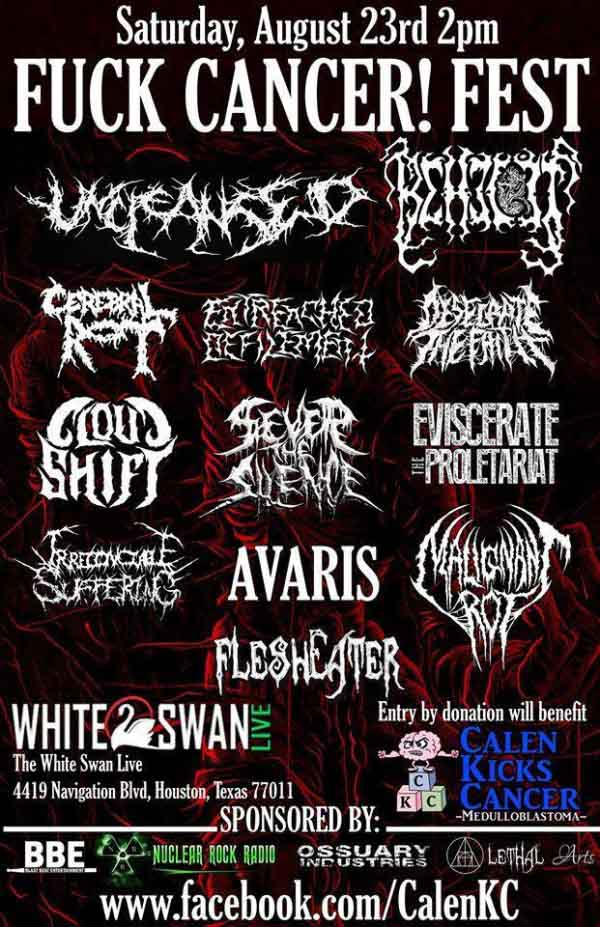
Fuck Cancer 2 fest to hit Houston August 23-24, 2014

fuck_cancer_2

Twenty-one years after the Fuck Christ tour ravaged North America, the Fuck Cancer 2 fest will hit Houston, Texas. On August 23 and 24th a passel of death metal bands descend to tear out eardrums and possibly other body parts with the proceeds going to medical costs for cancer patient Calan Cazares.

HEADLINERS:
12:00 Uncleansed
11:00 Behelit

SUPPORT:
10:00 CEREBRAL ROT
9:00 Entrenched Defilement
8:15 Desecrate The Faith
7:30 CloudShift
6:45 Sever the Silence
6:00 Eviscerate the Proletariat
5:15 Irreconcilable Suffering
4:30 Avaris
3:45 Malignant Rot
3:00 FleshEater


Fuck Cancer 2 Fest
2:00 PM August 23 – 11:30 AM August 24, 2014
The White Swan Live
4419 Navigation Blvd, Houston, Texas 77011
(713) 923-2837
booking@whiteswanlive.com

5 Comments

As the music industry contracts niche genres will rise

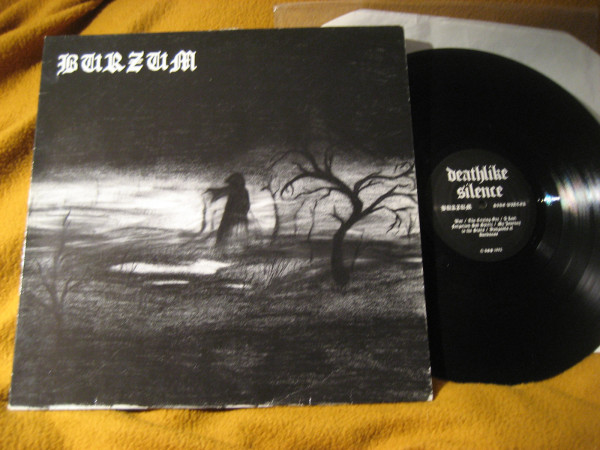
burzum-deathlike_silence

Being a squeaky clean pop country starlet has its advantages. Taylor Swift launched her own critique of the music industry by suggesting recently that customers will buy albums that “hit them like an arrow through the heart.” This implies by converse that they will buy only albums that hit this raised standard.

Her statement echoes what underground musicians have said for years: mass pop becomes popular more for being a phenomenon than for any music quality or profundity as art. People buzz around it because, like most hive mind activities, popular music gives them a space to socialize. Its popularity is its attraction, for those who feel happiest when they are doing what a million other people are doing at the same time.

Underground music on the other hand derives its authenticity from its artistic representation of reality as people prefer not to see it. Whether that is Slayer showing us the dark and seemingly demonic motivations behind history and social decay, or Burzum attempting to inspire in us a vision of a “Dungeons and Dragons” style medieval revival, underground metal peels back the layers of gloss and warm fuzzy feelings and shows us the bare reality underneath the patina of appearance. Its power is not only the revelation of reality but an emotional drive to make us want to accept this situation and make something greater out of it.

The music industry has been in a cycle of contraction or getting smaller as the mass audience drops out. When pop music provides a passing phenomenon that fascinates people for only a few weeks, the point of paying for it is lost on most. Its status more resembles that of television shows or movies than pieces of sonic art to be taken out of the rack and enjoyed for years on end. The phenomenon defines the music: its novelty and popularity make it, like other fads and trends, a temporary distraction from the pressures of life but not a sustaining or interest-stirring event.

For a half-century the music industry made fortunes by finding roughly interchangeable bands, shaping them around some unique appearance, and selling basically the same music time and again to an audience who outgrew the music rapidly and eventually stopped buying. Its business plan emerged from producing lots of new hits and hyping them to attract an audience, rather than building some kind of lasting relationship between artists and fans. When people said that the music industry was bad for artists in the long run, this is what they had in mind. Temporary and dramatic mediocrity was rewarded and talent marginalized.

The Recording Industry Association of America tracks music industry statistics. Where industry revenue totaled $15 billion in 2003, by 2013 it had fallen to only $7 billion. Even digital sales are in decline as people turn to other options. With the falling prices in movies through Red Box, Netflix and other on-demand services, music also falls. As a result the artists who inspire their fans to a longer term relationship are the ones who prevail.

As a music industry source cited in the above article says:

“What we’ve seen is fans will pay for stuff whether it’s Jack White’s record club or Nine Inch Nails doing limited releases,” remarked Light. “Albums at this point need to be souvenirs. They need to be experiental. We see it now with the phenomenon around ‘Frozen.’ This is selling albums through the roof because kids want to retain that relationship, sing the songs over and over, have that souvenir.”

When the music industry shrinks, the pop trends that crowd out quality music decline and artists benefit as a result. The demand for quality now outpaces that for quantity, and the future of the industry becomes not only niche genres like underground metal, but the artists within them who attract lifelong audiences. Although we had to hear this from the mouth of a cowboy diva, this alert to the profound change in the industry heralds a brighter future for metal, or at least metal which hits its fans “like an arrow through the heart.”

17 Comments

Tags: , , ,

Heavy metal as an industry

ac-dc-tour

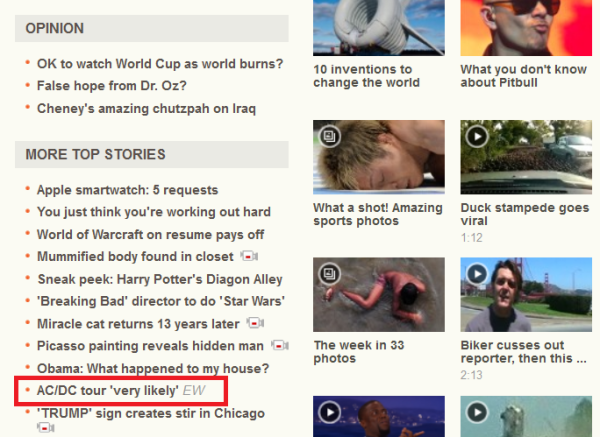
Anyone who lived as a metal fan in the 1970s and 1980s remembers The Line: some bands were rock enough to make it into the newspaper, others were “too metal.” Major newspapers never covered Slayer, rarely covered Metallica, and generally drew The Line at anything heavier than Guns ‘n Roses. Thus even major bands like AC/DC got cut out of the mix.

No more. As the image above illustrates, the front page of goody-two-shoes news network CNN shows us the latest about the AC/DC 40th Anniversary Tour. Even the biggest megaphone for mainstream news which spends most of its time nagging us about our bad habits or flashing sensationalistic messages of world decay finally acknowledges heavy metal. In the 1980s, this would have been unthinkable. And yet, now we’re here.

What’s behind metal’s legitimization? It’s not so underground anymore, being one of the bigger non-rock/pop genres. It’s also not so extreme, since rap opened up the lyrical gates to violence, lust and obscenity and nu-metal got radio accustomed to heavy crunch (and lyrics about parental neglect). But most importantly, metal is now an industry. With enough consistent fans and labels behind it, and those labels having found a way to “metalize” or “metal-flavor” just about anything (indie, rock, jazz, blues, industrial), metal now provides one of the pillars of the entertainment industry.

Even more, heavy metal is now a recognized part of our culture. Rap music represents a certain kind of rebellion or a certain kind of irony. Heavy metal raises the flag for a certain kind of rebellion that is both cluelessly adolescent and “old soul” world-weary and informed. It’s a feeling we all have, and its appeal seems to be increasing.

7 Comments

Tags: , , , , ,

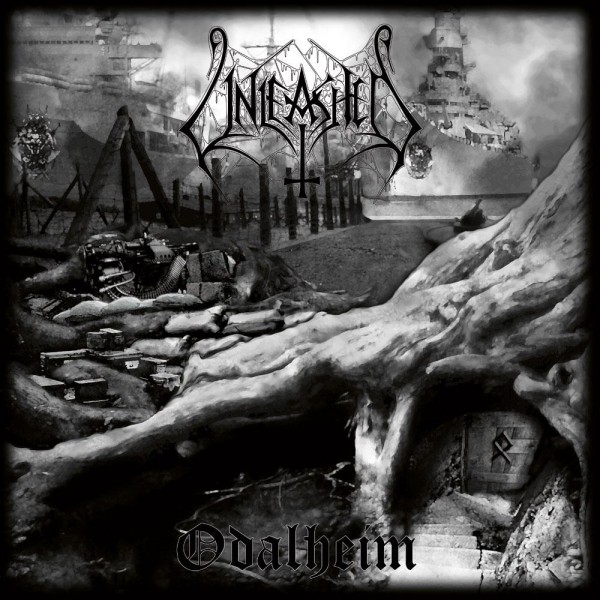
Unleashed – Odalheim

unleashed-odalheim

The most recent album from Unleashed, Odalheim, is simultaneously the best and worst of days for this band. On the plus side, Unleashed have improved at editing down their material so it all flows smoothly and doesn’t ramble. On the downside, the band have adopted a style that is equal parts Dissection and The Haunted, which makes for an almost satisfying heavy metal experience ruined by kiddie rock band style antics on the level of nu-metal.

Let us be honest: djent is nu-metal for people who like jazz fusion. It’s slightly more subtle. The djent influence filtered into metal through The Haunted after At the Gates (just down the street from Meshuggah, who are the progenitors of djent). When metalcore came about with The Haunted, it wrapped djent, math rock, and melodic speed metal into one package. The result is a binary rotation between some really excellent heavy metal riffing with melody and the kind of bouncy daycare-sensibility music that made speed metal get dumb and wrecked death metal wherever it appeared.

People who need lots of internal rhythm of a similar sort to keep their interest are dumb. This is why we laugh at bands who overplay their drums in an attempt to conceal basically boring songs. If it sucks, just add lots of internal syncopation and delay your final beats just a sixteenth past audience expectation. It’s like Pavlovian terriers watching the mailman arrive. This part of this album is dumb. There is no other word for it, thus this is the best term: dumb. Repetition disguised as surprise. Only for idiots.

Odalheim is thus the album we wish Unleashed had made years ago. Tight, efficient and beautiful. If Shadows in the Deep had been more balanced, it might rise to this level of clean impact; if Where No Life Dwells had this amount of melody, we might find it mesmerizing. However, the glitch is that this album is barely death metal, but more like a mix between melodic heavy metal and bounce-metal, itself a proxy for nu-metal.

Albums like Odalheim are why black metal railed against trends: no mosh, no core, no fun, no trends. Odalheim obediently chases the late black metal trend, the melodicy heavy metal trend, the metalcore trend and the djent trend. These musicians do a great job of linking them all together, but the end result is like soup made by tossing every ingredient in your fridge into a pot of boiling water: muddled, disgusting.

That means that, while I can admire aspects of this album, I never want to hear it again. The dumb parts drown out the melodic material and the lack of definitive style obliterates its efficiency. There is almost nothing communicated here, only a background mood composed of beauty and bounce. It repeats itself. Nothing changes. Like heat death in a crowded room, Odalheim slowly dominates by repetition. And then? And then there is no will to resist. Nor to enjoy.

http://www.youtube.com/watch?v=egkVh3UYVI0

12 Comments

Tags: , ,

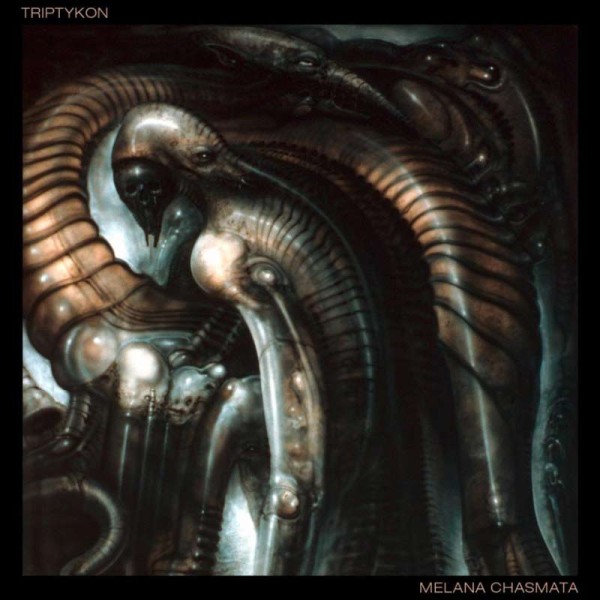
Triptykon – Melana Chasmata

triptykon-melana_chasmata

Back in 1990, Celtic Frost released Vanity/Nemesis. This album was tasked with redeeming the fans’ respect after the affair that was Cold Lake . Straddling the gap that existed between that album and the style of inventive proto-death metal that had made Celtic Frost worth hearing, Vanity/Nemesis was a rather mediocre album. It was reasonably competent and it attempted to blend in with its contemporary milieu, but the album was artificial and uncomfortable to listen to.

In many ways, Melana Chasmata is the linear descendant of that album. First, this is an album with an astute grasp on the market it is attempting to exploit: like Triptykon’s debut, production is crystal-clear, uniform, and decidedly modern. Tom Warrior’s vocals have continued their changing form begun on Monotheist and now share the monotonous, ranting tone more in common with nu-speed metal bands such as Pantera. Riffs, as well, have “progressed” in a similar fashion. Although Eparistera Daimones‘ riffs were minimal, single string sequences, some intriguing melodies arose. For the most part, these are missing on Melana Chasmata, at least on the traditional metal tracks.

Where this album genuinely attempts an artistic statement is during attempts to merge noir-electronic music with the aesthetics of metal instrumentation as was introduced on Warrior’s last two albums. These tracks are worthwhile in that melodies are allowed to develop in a subtle, restrained manner before the climax of the tracks strike, in contrast to the uniform faux-aggression of the rest of the album. Greater tonal variation as evidenced by clean vocals, mildly pentatonic clean guitar sequences, and melodies confirm Warrior’s avowed interest in artists such as Gary Numan. (For a similar, contemporary album in spirit, one might point to the comeback album from Amebix , which also attempted to merge post-90s metal with popular, but slightly “outside” music). These tracks, while superior to the other fare, ultimately lack in the same core way as the others: there is no great resolution, or purpose inherent in them.

For those who hoped that Eparistera Daimones would be but a stepping-stone back to a more traditional Celtic Frost type of composition, they will be disappointed. If death/black metal is one’s primary interest, Melana Chasmata will almost undoubtedly not be worth listening to. However, for those who will admit to being Warrior fanboys (such as the author) or those who are interested in the other aspects of music on this album, it may be worth investigating, if only for curiosity.

http://www.youtube.com/watch?v=OOAuzx3zdp0

5 Comments

Tags: , , , ,

Interview with Dallas Toler-Wade of Narcotic Wasteland

narcotic_wasteland

Most metalheads know the name Dallas Toler-Wade from Nile, the modern metal band that dropped static riffing and late-1970s guitar rock structures into death metal and paved the way for a new generation of hybrids and mythological themes in metal. However, before Nile, Toler-Wade created music with his cohorts in the band that has become Narcotic Wasteland.

Narcotic Wasteland, which just released its self-titled debut album, picks up with an even more modern style which resembles the deathcore/percussive death metal mix that Suffocation shifted to around the turn of the millennium. Its emphasis is more on memorable songs than spurious guitarplay. We talked to Toler-Wade to find out more.

You’ve just launched an entirely new project, Narcotic Wasteland. How does the style of this band differ from the band you are quite well-known for, Nile?

This band musically is getting back to the things I was writing before I joined Nile. Now you will here some similarities in some of the musical ideas, but that’s part of the reason I was interested in trying out for Nile back in 1997 to begin with.

Do you think death metal is still relevant in a time of modern metal?

I think that all music that comes from the heart with the intention of connecting to other people will always be relevant to like minded people.

What spurred you on to create Narcotic Wasteland, and how did you choose your fellow musicians?

I had these ideas brewing for quite some time. When I am home one of the things I do most is record ideas. As far as the lyrical ideas for Narcotic Wasteland I really had some things to get off my chest. I have lost a lot of friends over the years to hard drugs, and I just had this confusion, anger, and sadness boiling in my stomach that I needed to purge. But not all of the songs are about this. I don’t think any band should be limited to just one subject. they should be able to do whatever they want.

As far as the musicians that make up Narcotic Wasteland I knew I really wanted to jam with my long time friend Edwin Rhone again. We worked very well together in the past, and the sound of our hands are very similar. Edwin is a great songwriter and player as well. Edwin recommended Chris Dupre for bass and vocals. Chris is very creative, and he totally fits the sound of the music. It was really hard to find a drummer with the right style. it took a couple years, but George Kollias recommended Erik Schultek for the drums, and once again the style really fit great.

All of the guys are super cool, super talented, hard working musicians. I really think the next release with all of our heads together will make an even better record.

It sounds like you’ve gone for a more explosive production sound. How did you achieve this, and how happy were you with how the album as a whole turned out, production-wise?

I am very happy with the way this record came out. I did not want it too polished, just tight and clear with not too much flash. I did not want to put just another squeaky metal album out there. I wanted it to have attitude, and sometimes things get so clean the aggression gets mixed right out. After all it’s metal as long as you can hear everything then people will be able to hear the ideas.

Is Narcotic Wasteland a conceptual band? Or is this first album conceptual, and will you be doing something unlike that for other albums?

I really feel we have created something kind of different. I think we will only expand on what we have already created.

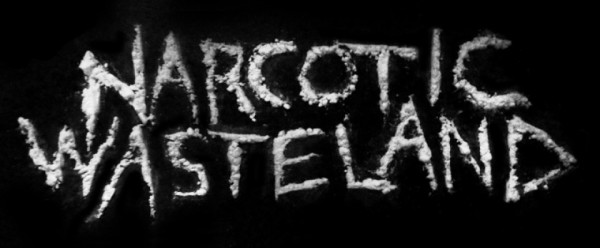
Every time I see the Narcotic Wasteland logo (of some intoxicating white powder cut into the letters of the name) I am both stunned and intrigued. Why did you go with this logo, as opposed to a “traditional” death metal style logo? Did you make it yourselves with physical powder?

I wanted the logo readable for sure. There are too many bands out there with non-readable logos. I thought it would be something heavy and real that deals with real topics. It’s death metal, and when you look at that logo it’s like looking death in the eye.

Heavy metal has always been somewhat apocalyptic. Does your music address a collapse in process (as society or at least parts of it devolve into narcotic wastelands) or are you speaking from after the collapse, telling us how to rebuild, or something else?

I think that we are living in a Narcoitc Wasteland, and yes it is causing people not only death, but financial ruin, and also people with addiction problems cause anguish for their friends and family.

Your songs are technical but not extraneously so. What guided you in composing these tracks? What effect did you hope to have on the listener?

No matter what kind of song I’m writing I really just want to connect with the listener. I have gotten messages from lots of people saying that it really hit them in the heart. For me that’s what it’s all about, and metal has always been strong emotionally.

You’ve got your debut album out and seem to be selling it at a fast clip from the website. What’s next? Are you seeking more label interest, touring, or composing new material?

We would love to play shows. As far as labels — sure why not? — but we really want to see how far we can push it on our own steam for now. The more work we do ourselves the less anyone else will need to do. So far we have done everything in house from the recording, songs, video, and website. I think it’s very important for a band to be as hands-on as they can with everything. And yes we are already working on the next release.

According to your biography, Narcotic Wasteland seems like a continuation of a musical partnership that began before you joined Nile. How does it feel to be back, and how has your music changed in the intervening years?

It is great to be working with Edwin Rhone again. I always thought we made a great guitar team. I think we have all grown musically over the years. And music will almost always change as long as you keep learning the craft. I just want to be a better writer and player for any band I am part of.

12 Comments

Tags: , , , , , ,

Classic reviews:
A B C D E F G H I J K L M N O P Q R S T U V W X Y Z