For those of us who steadfastly refuse to follow the beard trend

the_gentlemans_art_of_wet_shaving

The Gentleman’s Art of Wet Shaving.

For those of us who steadfastly refuse to follow the beard trend (like it or not, beards are trendy — thanks hipster scum), shaving is an everyday routine that, at times, feels like a chore rather than a pleasurable experience. It doesn’t need to be this way. With a small investment of $40.00 – $50.00 you can turn your daily shave into a pleasurable ritual that takes you back to a simpler time, when gentlemen prided themselves on a clean, close shave. If this interests you, throw your disposable multi-blade razor and chemical filled shaving cream in the trash and embrace the gentleman’s art of wet shaving.

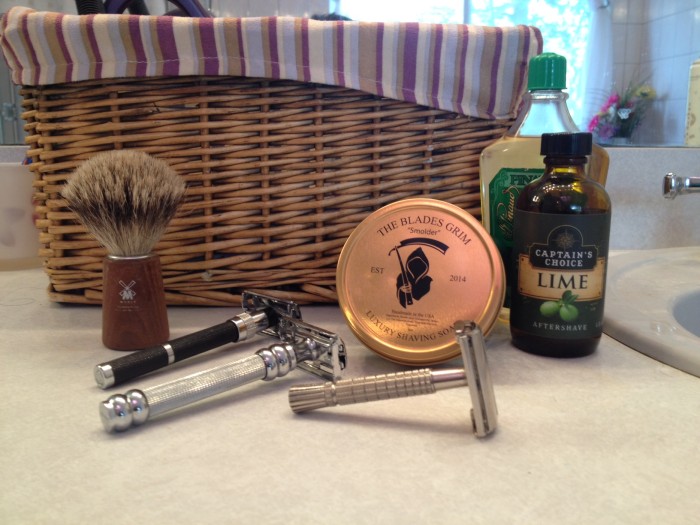
Wet shaving can best be described as “the kind of shaving your grandfather did.” It involves the use of a safety razor, a shaving brush, shaving soap, and a handful of other supplies.

GATHER YOUR TOOLS

The safety razor is the most important part of your shaving arsenal. Sadly when most think of them, the first thing that comes to mind is a bloody, nick filled face. I assure you this preconception is not true, and with proper technique using a safety razor is just as safe as shaving with the razor you are using now.

Safety razors are beautiful works of art crafted from a wide variety of metals and plastics, and choosing the one that’s right for you is simply a matter of personal choice. If you’re new to wet shaving, a great razor to begin with is the Edwin Jagger DE89811BL, it’s a gorgeous chrome plated razor that is weighty, easy to maneuver and not terribly aggressive.

Safety razors use a double-edged blade that fits into a receiver. The receiver allows only a small amount of the blade to protrude through it. That’s where the “safety” part of the razor comes into play. The blades cost about 10 cents a piece — far cheaper than those multi blade cartridges that you pay big bucks for, and range in sharpness from mild to deadly. For beginners, the Derby Extra is an excellent choice. For the more adventurous, the Feather is considered by many to be the king of the hill in sharpness.

Once you’ve chosen your razor and blades, it’s time to find the right brush and soap. Ideally, a badger hair shaving brush should be chosen because it balances stiffness and softness perfectly. A good brush is critical in helping you build a nice lather as well as raising your whiskers for a close shave, so choose wisely.

Choosing a shaving soap is a matter of personal choice, and there are literally hundreds of them in the market. Even the cheapest ones will be better than the chemically laced mass market shaving cream you’re using now. Most shaving soaps come in a tin, but if the one you choose doesn’t, you’ll have to purchase a shaving mug. I use a wide variety of soaps, depending on my mood in the morning. If you want an invigorating menthol zing to your face, try Proraso Green Label, if you want a spicy and warm feeling, try The Blades Grim “Smolder” (my personal favorite).

TIME TO SHAVE

Once you have your weapons together, it’s time for your first wet shave. Remember, if you savor the experience and embrace the ritual, you’ll never go back to modern day shaving again.

Step one: Wash your face with warm water — this helps open your pores, soften your whiskers and prepare your face for shaving. If you really want to go old school, put a warm damp towel on your face for a few minutes.

Step two: Wet your shaving brush thoroughly with warm water, shake it out and begin building lather with your soap. Using a light touch, go in a clockwise direction with the brush until it is coated with some lather. If you don’t have enough lather, wet the brush a little more. Once you have a nice lather, take the brush cover the entire shaving area of your face by using a circular motion. This will help increase lather as well as lift your whiskers. Let the lather sit on your face for a minute before proceeding to step three.

Step Three: Now it’s time to shave. You’ll want to hold the razor against your face at a 30-degree angle from the floor. This angle should just allow the edge of the blade to touch your skin.

When applying pressure, forget everything you know about using a disposable razor. Most of these use sub-standard blades that are grouped together, and you’re probably used to pushing against your skin. With wet shaving, little or no pressure is needed to achieve optimal results; you simply hold the razor gently against your skin and let the weight of the razor do the work for you.

In short, slow strokes, do a single pass with the grain of your hair growth. If you’re able to, pull the area you are shaving taught in order to get a truly close shave. Once you complete this first pass, re-lather with your brush and do a second pass against the grain. Patience is the key — take your time, and as stated before, enjoy the experience.

Step Four: Once you’re done, rinse your face with cold water to cool and tighten your skin. Don’t’ forget to clean your shaving gear thoroughly as well. If you like, follow up with a nice aftershave (not a cologne). If you want to stay in old school mode, try Pinaud Clubman. It smells absolutely hideous out of the bottle, but once it mixes it with your skin’s oils, you’ll instantly smell like a real man, not an effeminate metrosexual — think Patton, Eisenhower and Humprey Bogart here….you get the picture. As an added bonus, the Pinaud also cools your skin nicely.

The whole wet shaving process takes about 15 minutes, but in the end you’ll be richly rewarded with a superior shave, great skin and a new relaxing ritual that will certainly make your day a little bit brighter.

Once you’ve mastered the art of using a safety razor, you can really step up your game and try a straight razor. That’s where the serious fun begins.

22 Comments

Tags: , , , , , ,

Scale The Summit – V (2015)

Scale The Summit - V (2015)

Everyone has at least one person in their network who is obsessed with “smart” music; your local government will provide you with a complimentary one if you have any doubts. You can tell music is “smart” by the fact it’s either instrumentally complex, aesthetically gimmicky, or even merely composed of band members who agree with some of your socialpolitical opinions. V is not the first to the best of my knowledge, but its ties to the djent and “progressive metal” scenes give Scale the Summit a built in audience full of such people. The relatively clean guitar tones and otherwise frequent moments of gentle strumming make me question the metal label, but I’m not yet the type to judge music solely by its genre. It does mean, however, that I’ve mentally shelved this on the progressive rock shelves along with acts like Camel and Yes, which admittedly are radically different in overall approach, but at least give this album some stern competition which it desperately needs.

V is actually a collection of jazz fusion instrumentals that presumably took some time to practice and learn even for the band’s technically skilled musicians. Much has been written on the idea of jazz-metal fusions, but Scale the Summit seems quite archetypal in that regard, relying on thorough-composed songwriting with distinct sections over improvisation, but favoring lighter, cleaner tones and sounds even at their most intense. One thing that divides me is how rigidly and academically the band approaches song structure – tracks here are full of obvious “We’re going to vary the song by modulating to another key or changing the drum pattern” type moments that probably look well-planned if you consult the corresponding tablature, but don’t work out in practice for being too jarring or too frequently followed by an obvious pause. This might be something to expect from such a rhythm-heavy style, but it still strikes me as a notable weakness, and one that makes some of these songs so self-conscious that it interferes with their overall memorability and impact.

Ultimately, I find Scale the Summit to be aesthetically pleasing, and I can derive some intellectual satisfaction from piecing together the theoretical level of their music, which is more than I can say for a lot of so-called progressive metal. I can’t guarantee that I won’t plunder V for some of these technical ideas. Employing this prowess towards more interesting and less obvious (less formulaic) songwriting is going to be quite a challenge, though. I can’t guarantee you that Scale the Summit will do the same, since they seem pretty content with their current technically proficient but otherwise ephemeral style.

10 Comments

Tags: , , , , ,

Sadistic Metal Reviews 09-15-2015

top
Dismember is dead, Fred Estby was d-beaten to the cross, and not even Dave Blomqvist can sweep away these recent Swedish metal sins.

Black breath
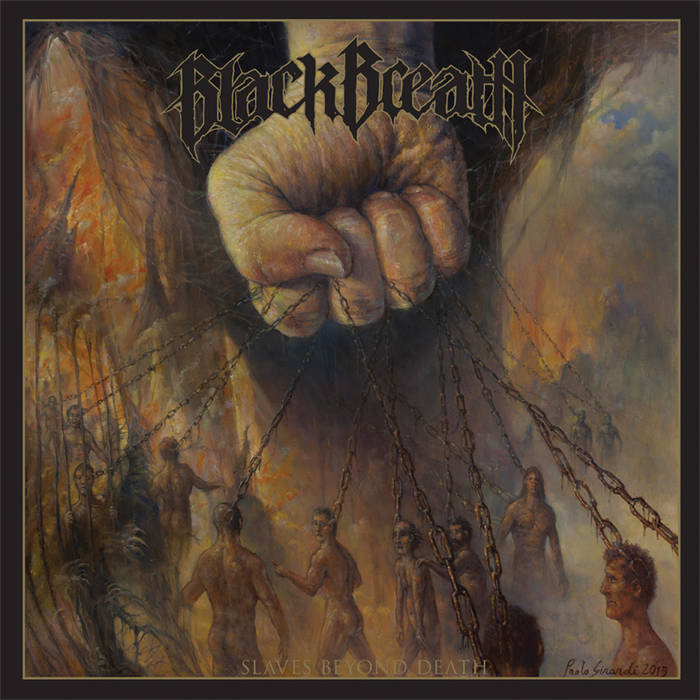
Black Breath – Heavy Breathing (2010), Sentenced to Life (2012), Slaves Beyond Death (2015)
Smegma crust derivative deathcore. There’s sludge in here too as this was released by Southern Lord, the idiots who brought us Kim Kelly Kore like Nails and Wolves in the Throne Room. No Swedes are spared by these gang rapists. Black Breath even spread apart the cheeks and felch the fecal matter from Wolverine Blues’ asshole. Listening to any of their releases is hearing them play metal hot potato by passing around that firm bowel movement mouth to mouth like a mother bird feeding her babies. Black Breath lick that shit up and down to get the turd glisteningly slick before shoving it up Kim Kelly’s meat-hooked Hellraiser cunt. From there it will be squeezed out like soft serve ice cream for Pitchfork and Vice’s hipster cones.

Demonical
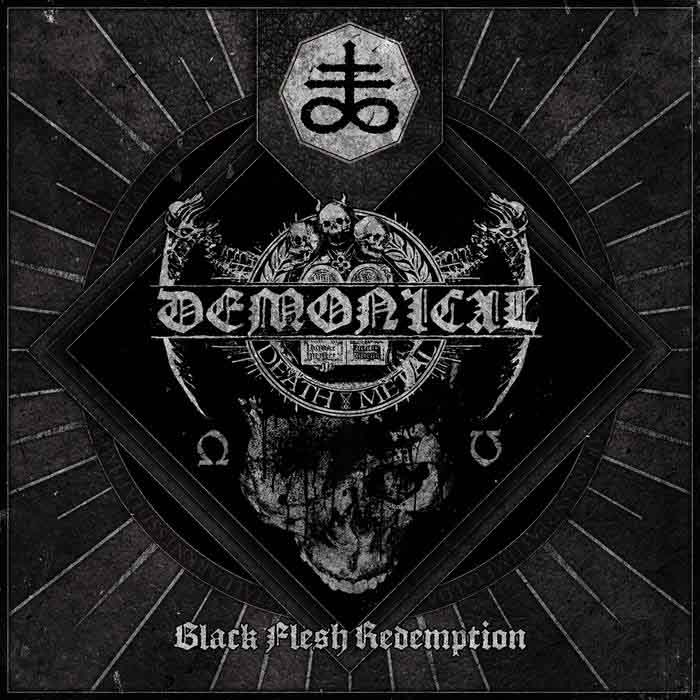
Demonical – Black Flesh Redemption (2015)
Demonical wants to play with the big boys. They have Boss HM-2 pedals and riffs Dismember rejected when writing the not-so-classic Death Metal. What they don’t have is any idea of how to write an adequate death metal song; these guys can’t even hammer out an effective two and a half minute verse chorus verse thrash basher. The four tracks each attempt to pander to a different lowest common denominator metal audience with their individual use of breakdowns, doomy interludes, and cheesy keyboards. The rhythm guitars take a backseat to the cheesy Amon Amarth vocalizations. There is about a minute of semi-enjoyable generic material on this record.. Snort the line of borax on the floor failure.

Entrails
Entrails – Obliteration (2015)
Three strikes is life in many states. Singapore will hang anyone who walks off a plane with enough junk. Medieval England executed children caught stealing anything worth more than two loaves of bread; mercy meant limbs lopped off. This is Entrails’ fourth offense. These recidivists need to overdose in a Cambodian shack on a cocktail of liquor, Valium, and chloroquine.

Interment
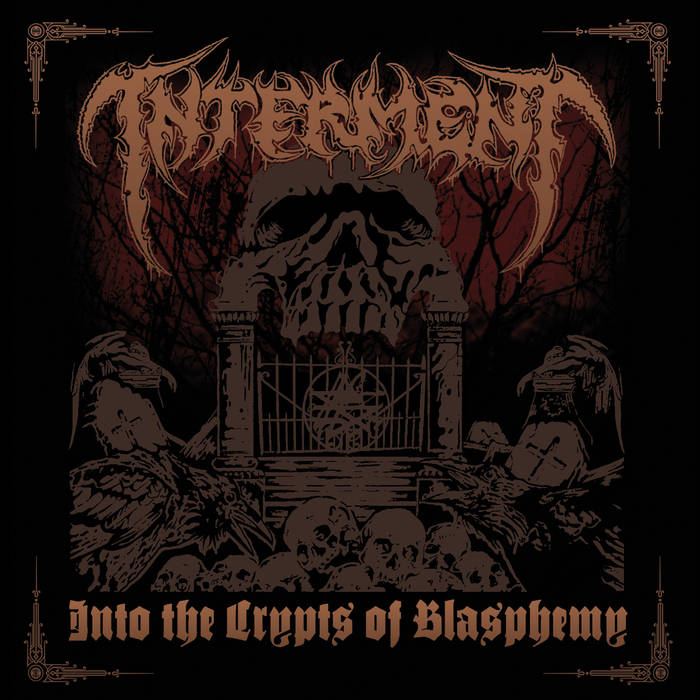
Interment – Into the Crypts of Blasphemy (2010)
Yet another fourth rate band from the early nineties finally recorded an album. The songs are again dick beat punk and the metal riffs were pilfered from Entombed and Carnage. Just like Entrails no label gave these fools money to record an album back in 1993 for good reason. Now that they’re adults with jobs, this garage band can afford studio time to bore us. Interment need to quit trying to live out their delusional teenage heavy metal dreams and spend time with their kids on weekends.

Verminous
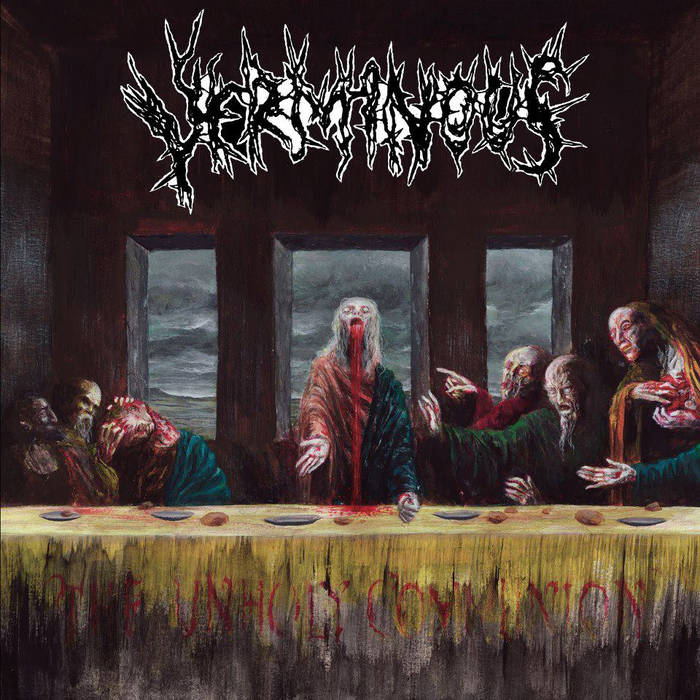
Verminous – The Unholy Communion (2013)
Verminous return with more punk rock masquerading as death metal. More bouncy hardcore riffs, more lame samples, and more gang chants. Whatever catchy riffs are on this CD are quickly worn out through strict verse chorus verse pop punk structures that make three minute long songs drag. I want to throw it at a homeless person. The lyrical themes are inconsistent too. Pop Satanism? Okay. Bukkake? Barbatos? Verminous are the Blink-182 of Svensk Döds Metall. Repeatedly listening to The Unholy Cumunion is equivalent to fucking your girlfriend wearing a used condom picked up off the sidewalk.

Drowned
Drowned – Idola Specus (2014)
Soulside Journey simplified into pop music. Drowned grokked the underground’s current nostalgia for the early nineties and rehashed a beloved classic into an easily digestible rock format. Pointless introductions and incongruent atmospheric verses are thrown in to appease doom halfwits and bore everyone else. Darkthrone is being bowdlerized for hipsters just as early rock ‘n’ roll whitewashed rhythm and blues for suburban teenagers. Truly Katy Perry death metal.

Tribulation
Tribulation – Children of the Night (2015)
Tribulation first moved from Grotesque and Merciless worship to Rust in Peace meets Queensrÿche on The Formulas of Death. Children of the Night abandons metal altogether, becoming Moog synth laden regressive goth rock. Tribulation aren’t horror score Goblin now; Tribulation are strict, just out of the closet Lestat cosplayers. Where are the clean vocal hooks for the Cradle of Filth faggots? How the hell are Tribulation supposed to get into Hot Topic next to Deafheaven? They need to put away the Vampire Diaries, pull the buttplugs out of their rectums, and hire a real singer. Then go to Safeway, buy four gallons of bleach, and chug them like forties in the parking lot. That will clean out Tribulation’s gastrointestinal tracts.

Ghost
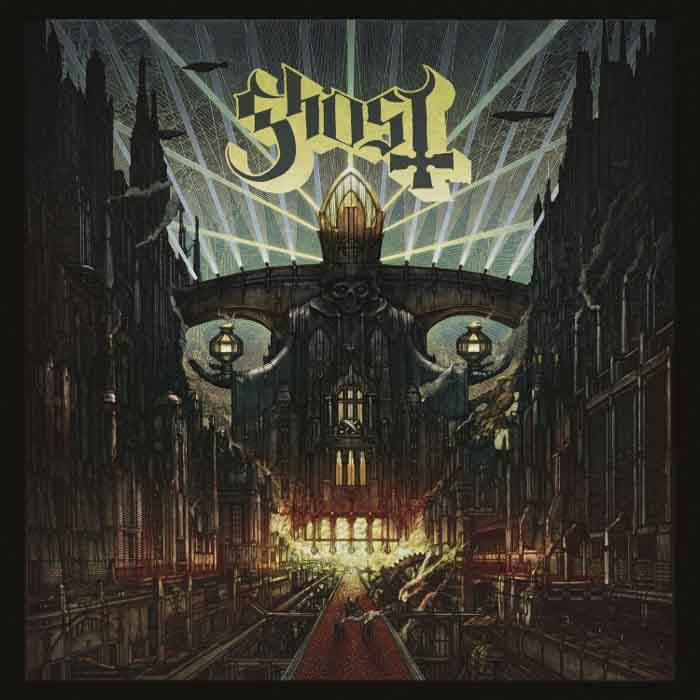
Ghost – Meliora (2015)
Repugnant failed miserably at death metal. Now Repugnant fail miserably at Duran Duran. Ghost have no musical influences from Blue Öyster Cult or Mercyful Fate; rather they play vocal pop with occasional speed metal riffs. Pop music centered around singing that makes Dave Mustaine sound like Ronnie James Dio. This has to be trolling: the vocalist sounds like Seth Putnam on Anal Cunt’s indie wuss rock parody Picnic of Love; grown men are playing dress up pseudo-metal like little girls having a Satanic tea party. Tobias Forge should lick lead paint chips off the floor and bash his brains out in the back of a police van.

Cut up
Cut Up – Forensic Nightmares (2015)
Cut Up? What kind of lazy band name is that? What happened to metal bands whose names actually referenced death? Treblinka? Autopsy? Immolation? Cut Up wondered what Dismember meant and looked it up in the dictionary. “What does Dismember mean bro?” “It means to cut people up.” Cut Up cuts up old death metal riff phrases into licks and rearranges them into death ‘n’ roll forensic nightmares. Songs are structured like Cannibal Corpse filtered through the randomness of metalcore. Ample slams and breakdowns disorient into a brain cell holocaust. The target audience is those australopithecines who believe death metal a more extreme version of beatdown hardcore. Go cut up your vegetables.
Dismember : Lethal Weapon :: Cut Up : Samurai Cop minus the amusing bits

bottom

18 Comments

Tags: , , , , , , , , , , , , , ,

SJW is “selling out” for the 2010s

hells_headbash

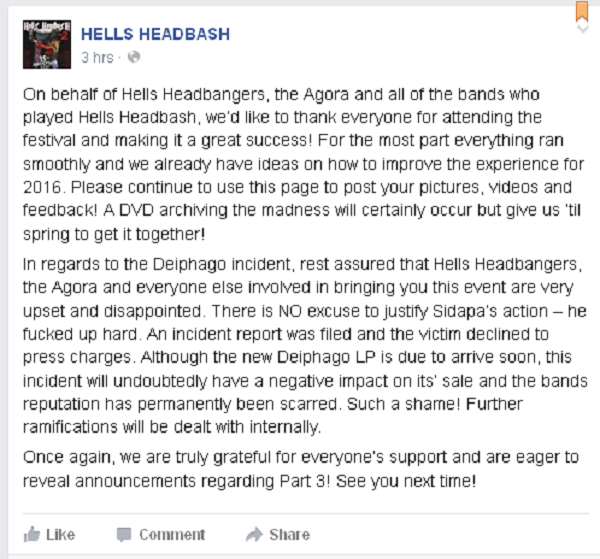
On the heels of the recent kerfuffle involving Deiphago and SJWs hyping an incident into a politically-driven media event, Hells Headbangers Records has released a statement about the incident. It reads, in part:

In regards to the Deiphago incident, rest assured that Hells Headbangers, the Agora and everyone else involved in bringing you this event are very upset and disappointed. There is NO excuse to justify Sidapa’s action – he fucked up hard. An incident report was filed and the victim declined to press charges. Although the new Deiphago LP is due to arrive soon, this incident will undoubtedly have a negative impact on its’ sale and the bands reputation has permanently been scarred. Such a shame! Further ramifications will be dealt with internally.

Although the label was just trying to do what it thought was the right thing, this statement reveals the core of SJW: it is driven by commerce and designed to signal safety. Just like big corporations spend millions to show that their cars, vacuum cleaners and toxic foods are safe, metal bands, labels and media are trying to expand their reach beyond the “scary” realm of the underground by making it “safe.” This was the same thing that selling out did in the 1980s, which was to take all those dangerous violent heavy metal bands and channel them into glam metal, which was offensive but not dangerous. There was nothing there that would sidetrack your child from going to school, getting good grades and going on to a career. Sure, he might have a bit more sex, and the bands took tons of drugs, but there were no ideas there that fundamentally challenged the bourgeois view of the world.

In the 1990s, death metal and black metal were far from safe as well. They rejected the dominant ideology of their time, committed actual crimes and more importantly, embraced political and philosophical viewpoints that are incompatible with democratic society and bourgeois existence. Forget the petit rebels of hip-hop and heavy metal, black metal bands actually scared people, and by doing so they upped the ante for what a band had to do to actually rebel. In many ways all heavy music has been stagnant since that time because no one can figure out how to be more extreme, and so they sigh and content themselves with being merely outrageous. “Selling out” meant that process where a band stops trying to have authenticity in its music and outlook on the world, and instead settles for whatever brings in a consistent audience.

In our current time, SJW is the method of selling out. If you go SJW, you will offend no one. People feel comfortable around businesses who promise that they are motivated by ideology, not profit. This also seems to guarantee that everyone will be accepted. Of course it does none of those things, being like all public relations exercises a series of cheap promises whose compliance can never be verified, but people like to be told comforting things. It calms them down and then they feel complacently optimistic when shopping at that store. This is why companies — again with shades of SJW — will fire controversial employees, hire private security, put up spikes to drive away the homeless and put up happy signs talking about diversity and how the uranium they use to flavor their food is 100% organic. Safety sells, or rather, lack of safety precludes sales.

Just like glam metal in the 1980s was preferred to hardcore punk, thrash and early death metal by parents who were afraid it was unsafe for their precious snowflakes to hear, and might lead them to a life lived in a van down by the river, precious snowflakes now want to be safe in their music. They want to be rebels… well, no they don’t. They want to appear to be rebels and at the same time, incur as little actual risk as possible. That way they can talk it up at the water cooler at work about how wild they are, and still not have to pay the price for wildness, like endangering their easy transition into the middle classes. It is not surprising that as metal has sold out in the 2010s with SJW, quality has plummeted. Who can make good music about such insincere topics?

goatcraft_censorship

Luckily a backlash has commenced. Using the tag line “Make Metal Great Again,” a small group of metal musicians have declared their intent to drive out SJWs by indirect methods, namely by demanding higher quality metal. Sell-out metal is poseur metal, which means that it is both fake and replaces real metal. Metal thrives when it replaces the fake with the real. That could in fact be metal’s mission statement. Poseur metal is fake because it is designed to signal “safety” instead of opening the can of worms of truth, realism, history, violence, disease, horror and existential doubt. Labels love poseur metal because it has high margins: cheap, without risk, and easy to clone, it returns on investment every time even if less than an out of the ballpark hit like a really great band can be. Magazines love poseur metal because they can re-type the same story every month. Web sites love it because no review is ever wrong when all the music is the same under the skin.

If you wonder why metalgate has hit such a nerve, it is that it has threatened the profit model of the entire industry. Metal ca. 2015 depends on a constant flow of mediocre poseur metal bands to make sure that all the journalists, label people, PR people, bands and studios get paid. The market has shifted from the smaller, more agile environment it was in the middle 1990s. Now metal is big business, and like Microsoft or Apple, it’s in middle age. It aims for conservative successes that do not alter the formula and will not take the risk on anything outside of the norm. Since the music is crap, the labels need some other way to sell it to people, and they came up with “safe rebellion”: it looks all leather and motorcycles, but in fact it is a PC nanny who will tell you that everything is fine so long as you keep buying SJW products and ignoring the obvious signs of impending social collapse.

There’s a lot of pushback out there against those who push against boundaries. This is to be expected, but you can tell who are the cowards in the room by the people who won’t call it what it is. It is resistance by those who are growing fat and lazy off of the easy money chain formed by mediocre metal. It is no wonder they get nasty. This is why David Ingram has a temper tantrum when other people commit the grave sin of failing to agree with him. It’s also why Viranesir, the band banned from BandCamp, found itself on the receiving end of quite a bit of vitriol:

viranesir_-_go_back_to_turkey

In theory, SJWs and the like would be above such behavior. But that is the key to understanding them: their political opinions are advertising, not something they actually believe, just like what businesses say in television commercials are things designed to make you buy the product, not truths. The advertisements lie and SJW is an advertisement. This is why SJWs are so hell-bent on controlling what others see, hear and think. It would be a corporate wet-dream to have mind control, but with SJWs, they have a type of advertising that simply takes over like a virus or plague. Is is to surprising that many SJWs have connections to racist and fascist groups? As authoritarians, they appear to have switched sides, but really what they have done is changed their justification from ideology to commerce, and are now getting paid to advertise for their new corporate masters.

7 Comments

Tags: , , , , , , , ,

Sadistic Metal Reviews 08-08-2015

01top

In the Death Metal Underground, the promos are reviewed in two separate yet equally important groups: the worthy which are investigated thoroughly and the shelf turds used to test the wounding potential of artillery. These reviews are the latter.

Mastiphal – For a Glory of All Spirits, Rise for Victory (1995, reissued 2015)

Emperor started the mass delusion among basement dwellers that adding dark wave keyboards to random metal riffs constituted black metal rather than loose stool. Mastiphal obliged, stopped jerking off to Sailor Moon, and wrote carnival music around stolen metal riffs and goth rock choruses. Celtic Frost, Slayer, Deicide, and all your other favorites get the Clan of Xymox cocks. These uncut, smegma-encrusted Poles rim that Castlevania cartridge, gape it, and slam their sweaty balls away. The breakdowns are there for pulling out and sword fighting.

Also sprach Zarathutsra : man discovering tools :: Mastiphal : man discovering anilingus

Goatblood / Nuclear Perversions – Rex Judaeorum / Wolves of Apocalypse (2015)

More three chord hardcore punk played out of time by fat hipsters who want to enslave the south side of Chicago. Good luck with that pickup beat. How about a delightful goat curry instead? True island flavor. Only long pig available? It will be delicious. The succulent belly fat from all those PBRs will melt right in.

02middle
Fat War Metal Pig Curry

1. Thoroughly restrain the long pig. Pry off the gas masks and slit the pigs’ throats over a bucket in the Jewish and Moslem tradition. If their faces are too ornamented and disgusting to look at, put the gas masks back on and savagely strike the necks until all heads are severed.

2. Let the carcasses drain of blood for the black pudding. Did you think blood libel was false? Our bodies will naturally turn theirs into excrement.

3. Be sure to cut off all metallic ornamentation. Flay all subcutaneous ink. Scalp the upper part of the body and use your blow torch to defoliate the chest hair. When butchering and gutting the carcasses, be sure to save the intestine and fat for the pudding. Discard the diseased livers.

5. Clean the intestines and cube the meat not too lean.
6. Fry the cumin, coriander, tumeric, and peppers with ghee. You may also use some of the fat obtained from the thighs and midsection.

7. Rub the curry onto the cubes and let marinate for at least twelve hours. This is a smart time to prepare the pudding.

8. Heat oil and cook the mixture in a sauce pan on low heat for hours. Cover and be careful. Do not rush with your dish’s composition but do not worry too much; like war metal, curries play themselves.

9. Serve over rice.

Ithaqua – Initation to Obscure Mysteries (2015)

Greeks broke. Greeks need foreign currency. Greeks see black metal autists who buy everything with bullet belt. Greeks know metal autist like black metal on pro-tape cassette. Limited tape trade Discogs Ebay. Rotting Christ and Varathron most true drum machine sampler Hellenic black metal. True cult early 90s. Cover them on 300 limit copies. Sell all rights of recording to label to buy case of skunky Euro piss lager. Stroke hairy Hellenic forearms. Wish you were cool. Drink away 51% youth unemployment. Kill self.

03bottom

10 Comments

Tags: , , , , , , , , , , ,

Metal as Transcendental Art

john_constable_the_hay_wain

I. Music for the sake of…

In Book I of Plato’s The Republic, Socrates is engaged in an exchange of ideas with Thrasymachus regarding the nature of justice. In this debate, Thrasymachus is noticeably anxious to drive a point that justifies his views rather than finding out the truth. In between the sarcastic remarks and false humility that characterize Socrates, the older philosopher puts forward questions and comparisons that shed light on the topic in interesting angles.

One of the most interesting arguments came after Socrates’ opponent declared that justice could be defined as “the interest of the stronger”. Socrates’ response came to a point where he postulated that all art (which he uses as an equivalent to “talent” or “occupation”) acts rather in the interest of the receiver of his work. So the true art of the physician is neither in the receiving of money nor in a perfection of medicine in itself, but in the curing of maladies and keeping the body healthy.

Socrates then extrapolated this to illustrate how justice was what a ruler imparted in the interest of the people. A ruler is given power to lead and impart justice to the best interest of the people they govern. That rulers may often become corrupt is a different matter.

This got me thinking, what about music? What is the purpose of music? What is music for? From history, we know music has served different roles, from religious expression, conducive to a form of indoctrination, to aristocratic caprice, to romantic ideology, nationalist propaganda and every other conceivable use of music as ambiance or a vehicle for anything else.

We should make it clear that not only were these approaches different, but not all were equally close to the truth about music. Most do not understand that it can only evoke sentiments, even if detailed and vivid, but not particular scenes. It can speak to the human subconscious through the filter of the conscious (which is why you cannot “get” a music that is completely new in style to you — for example, the “learning process” one goes through when getting into death and black metal). More importantly, it cannot speak of individual ideas without the aid of words because it belongs to the instinctive understanding of humans as a species. Human nature and education mold these perceptions.

The most empty of all the interpretations was that art should be done for its own sake. A laughable oxymoron, if ever there was one. As Socrates correctly argued, art is done for the sake of the less powerful that receives it, the object of its mercy. For music, that is the human spirit, the subconscious and the conscious as a whole, your state of mind, whatever you wish to call it.

II. The options that metal has at its disposal

In his Fifth Heretical Essay, “Is Technological Civilization Decadent, and Why?”, Jan Patočka briefly goes over the topic of pre-history (which he clarifies does not mean non-history), its transition into history and humanity’s ascending from an animalistic lifestyle to one where one’s considerations extend beyond personal immediate necessities.

Pre-history for humans was characterized by having survival itself as a main preoccupation. Life for life’s sake. Setting the conditions for historical life, humans moved into settlements and gradually were able to afford independence from the every-day fight for one’s life. The price of this was work. This work became a responsibility in exchange for safety and space to indulge in pleasurable activities. Patočka refers to the second one of these as the the orgiastic, a release and exchange from the toil of responsibility that provides an escape from a life of pure survival.

This sort of life could still be considered as life for its own sake. The clever reader may observe that in the previous description a full circle is described. Each activity on the stack is concerned with an individual trying to escape the previous state in order to keep going, to ensure survival.

It is then that the transcendental, the sacred, the divine, the ulterior, makes an entrance into human awareness. This is not to be confused with religion, which is only a systematic arranging of rituals and beliefs which may or may not be a way to the divine. Independently of the system chosen or the disavowal of all systems, keeping something larger than ourselves in perspective can make us redefine the way we see our individual lives. Our lives are no longer lived in redundancy, just in order to keep living, but are charged with energy and will power to build or attain something without the intention of receiving personal reward. (Remark: It is common for people to have kids in order escape their mundane lives, but their intentions are equally mundane and selfish, mostly bringing children they cannot properly raise to an overpopulated world in order to satisfy their empty lives. The transcendent  ideal goes beyond such gimmicks of self-deception .)

Thus we can descry three possible avenues for music:

  1. For mere function in context (responsibility)
  2. For pleasure itself (the orgiastic)
  3. As a medium to perceive and keep in sight something larger than our individual human lives (the transcendental)

The nature and goals of different music, perhaps to different degrees rather than in straight-up black-and-white distinctions, can be classified using these three elements. Music that is deemed superficial is that which lacks in transcendence. Mainstream (a term that only makes any sense from the 20th century on) music, specially, can be said to work in the primitive paradigm of responsibility on the side of the artist and pure orgiastic pleasure on the side of the listener. In most music, this activity is usually a combination of both on the side of the musician, responsibility to norms in order to get his pay and an attention to how much pleasure the music provides him. A reflection of life for life’s sake in an empty music devoid of any transcendent meaning.

Transcendental music and art in general would imply musicians being invested in the music for something larger than their own personal profit (monetary or otherwise) and an audience similarly invested and discerning of music that gives them that sense of going-beyond their individual lives. All the songs about common love, friendship and equality notwithstanding as they only serve to comfort weak individuals in their self-pity, not propel them forward to greater heights were the self is at least partially dissolved.

An example of a middle-of-the-road agreement would be Johan Sebastian Bach, who, like any man living off of music has to fill certain requirements. At the same time, he is renowned to have constantly searched for an ideal in music that would reflect the divine through proportions and relations, guided as well through a crystallization of rules in smoothness and logic that results from a fastidious attention to natural human perception of intervals (artists two hundred years later did the opposite…). In practice, he often got into trouble and wasn’t the best “worker” in the sense that what he produced was seldom exactly what was expected of someone in his post. But he survived, was honored by the clergy and royalty alike and his music outlasted him because the society in which he lived (Germany in the late 17th and early 18th centuries) valued the transcendent, the divine, above anything else. Cynics can stop laughing, of course Germans at the time also fought wars and had to take care of business, and so did Bach. Following a transcendental path does not mean you are exempt from the toil and eventualities of life.

That metal’s nature is that of a transcendental art can be proven by pointing out the way in which it developed. As we have previously described before, each metal stylistic development had to do with a shedding of aesthetics in which it lurched forward away from the mainstream and into more distinct characteristics that would set it apart from rock music and in a rebellious statement of intention that stated its anti-establishment position. But in contrast to punk and other protest music, metal was not anti-authoritarian out of a social revolutionary sentiment, but from a nihilist-realist point of view. It was a reducing of humans to ants in an uncaring universe by using Satanic, pagan or occult imagery to depict concepts that stay true from antiquity to this day. This is the same reason why metal is so prone to using fantasy fiction themes. Metal is not an escape, it is reducing of this pseudo-reality to what it actually is: one of many possible constructs.

Individually, this or that artist may believe or use the imagery and language they adopt, but as a whole, metal is none but that transcendent essence that refuses to bow to the arbitrariness of present human status quo. In its place it does not propose anarchy or freedom, but calls for an awareness of reality as existing outside human expectation, want, need or hope. It is a confronting of reality instead of a twisting of truths for the shielding of and maintaining of mundane activities for the sake of staying alive peacefully and pleasurably. More importantly, this confronting of reality does not imply a fatalism, but a way to emerge triumphantly, seeing through individual situations and times, recognizing our place in nature and our dependence on it.

III. Implications in Practice

How does this translate into music? Is art more than just its intention or its random interpretation by an audience?

In his discussion, Patočka made three important distinctions in order to better attack the problem of the decadent. The separation between meaningsignificance and purpose was stated functionally different. Meaning is the most difficult of these to grasp. It is not a value, nor is it the same as purpose although they could fill a same role in certain circumstances. Meaning is said to make something open to reading, to a sense, to understanding of something that is as it is. Purpose itself is the reason or intention why something is carried out or why it is brought into being. Significance is concerned with its relative role or function in relation to a particular context.

Purpose and significance are subject to times and context. Meaning is not. The meaning of something can be interpreted to have different significance in different places, or it can be used for different purposesBut what it is does not change, and so its meaning does not. The distinction between purpose and significance is of the utmost importance when it comes to understanding and judging music. The purpose of musical devices is often confused by individualists and relativists to be one of the other two. The purpose of music matters little to the music critic who is charged with judging its quality and not its good intentions. The music critic cares only about significance.

But I propose a slightly different mapping in which the human mind, not the rest of the universe, is the world of action for music. After all, music is artificial, it is made by us, for us and it is its effect over us that matters. Therefore, meaning can be redefined in the context of universally perceivable effects in patterns, textures and intervals. Universally as in across the human species. It is to be expected that there is a variance in the effect, but that does not detract from the existence and relevance of a mean.

The definition of purpose need not change, it still lies in the reason why a certain music would be made. Now, significance would shift to being the acquired role of structures and relations in different music paradigms, different genres, different traditions. That means that just as different spoken languages, music can have its own rules arising from conventions between human perception and arbitrary organization. But the more arbitrary it is and the less it conforms to natural human perception, the less capable of transcendence a music is. This does not mean that education cannot be involved. But education can reinforce and deepen what comes naturally and follows the path of human potential (Common Practice Period), or it can be capricious arbitrariness arising from the fallacy of the human mindas a blank slate (see Serialism).

Two things need to happen for a transcendental music tradition to be sustainable. The first is artists that are devoted to the transcendental aspects of music. The second is a discerning audience. Part of this discernment is a certain trust in musicians, their own vision and values as well as their abilities. This is the same sort of trust we have for leaders of any kind, be them rulers or scientists.

The reason why we do not have this trust in musicians in modern times is because as a result of historical processes, they have come to disgrace themselves. The sort of respect for artistry and trust in their distinction above ours survives today only in very dark corners of human action like specific classical music niches and extremely underground metal and ambient circles. In metal, these are the sort of circles that remain willingly untouched by labels in order to keep their art at away from vulgar and unworthy reception.  These remain the last bastion of metal against the taint of the mainstream.

It is in understanding there is something more to human nature and human experience that is both innate to us and that we share with other human beings, that we can also come to respect the power of transcendental music: music that taps into these aspects. Music that has the power of directing human conscience in a particular direction, as well. Today, underground metal is one of the few musics that go beyond the merely functional or the pleasurable. This is music that has the power of cultivation, of expanding the mind, of looking beyond your own fear of the unknown, of inevitable death and into the future of humans as a species and not just you as an individual, but as an individual channeling the species into a more aware future.

IV. The Transcendental: Art for the Sake of Human Evolution

It is no surprise that we can trace a very clear line from the 18th century to the 21st at the beginning of which art is universally sponsored by the ruling classes and institutions of power that through gradual changes becomes increasingly independent (19th century) and later on less connected to human nature (20th century). This culminates in a complete stagnation in the 21st century, our times…

The question of true transcendental art being underground or not depends on the current values of society. In the case of our modern society, its purely materialist and ultra-democratic outlook that dictates that personal caprices matter more than reality is the antithesis of the environment where a transcendental — one that reflects enduring meaning — art can be fostered.

By definition, a materialist civilization that attributes no meaning to anything except the massing of perceived riches or power, cannot produce such an art. That is to say, such a civilization does not even believe there is such a thing as the trascendental. Furthermore, this materialist outlook is based on an absurd pushing of boundaries through a rational point of view taken to an extreme. But anything taken to any extreme loses contact with reality, which is itself an amalgam of degrees of many different qualities — compromises between opposites.

A rejection of reality in favor of an artificial extreme such as materialism is then enabled to brush aside and subvert anything that does not conform to itself. This includes human nature itself. In fact, the materialist position claims there is no such thing as human nature. This enables the power-hungry, the greedy and anyone else to try and clean their conscience through a pandering of the idea that we are only the result of the cultures into which we are born and values are only social constructs. The dogma then becomes: power is the only objective measure of success. A side effect of materialism is the idea that everything we perceive is subjective and therefore not subject to judgement or control.  All that matters is if I think this or I like that. The weakling’s alternative to the dogma becomes: happiness is the only subjective measure of success.

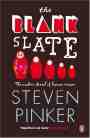
Both of these emphasize an enlarged “living in the moment” that favors egoism that, as proven by history, results in an almost complete disregard for others’ living in this same present and those yet to be born — unless an immediate reward/punishment is offered to the materialist individual. The transcendental provides precisely the opposite: a view into the characteristics that make you human, that dictate our nature, that both unite us and make us different. As Steven Pinker summarizes in his book The Blank Slate: The Modern Denial of Human Nature, this flies in the face of research that has in turn been suppressed and vilified by an establishment eager to maintain the status quo in a similar gesture to a superficial Church censoring scientific discoveries centuries ago.

Also contrary to a short-sighted reading, this should not result in us embracing the understanding of one’s own nature as licence to indulge in it, but rather a precise knowledge of how to control it and channel it in order to become better.  A transcendental view of time and values applied to our species may pave the way for not only a widespread search for individual enlightenment but a species-wide one. One in which humanity works together for its own good, which at this point would translate into a caring for the planet it is destroying in the vulgar self-interest dictated by materialism.

The importance of metal as this transcendental art is its power to maintain this knowledge and to promote universal values and even more importantly, their understanding. The reaction of materialism and the religion of scientism against the notions of transcendental value are emotional to their very core but also based on observations of how values defined arbitrarily in the past lead to social disasters. This, combined with their own superficial and strictly functional misunderstanding of the values prevented them from fully becoming aware of the underlying human need and impulse to reach for something beyond the material and the every-day.

This is why those who understand such transcendentalism treat the mainstream with opprobrium and an extreme disgust. As with anything else, the attitude of those who understand can be confused with those who follow and do not understand, those who adopt attitudes — even pseudo transcendental ones — with the ulterior motivation of immediate reward to themselves. And thus elitism and the upholding of all that is truly excellent is marred and disgraced by a civilization of insecure and selfish individuals who cannot see past their own self-interest, a selfishness that is then projected onto those who they judge because they cannot conceive of anyone actually believing and acting for the sake of something larger than themselves.
Nietzsche is reviled by the religious (who, in general, have never read him, let alone understand him) and by the materialists (or at least those have read him, those who haven’t or do not understand seem to think him some sort of atheist hero). The main reason why materialists despise him is because he is a realist. Realism flies in the face of extreme and delusional reality-deforming conceptions of life such as materialism. As a realist, Nietzsche recognizes the inherent human need to believe in something outside himself. For those who have been paying attention, it is obvious this does not necessarily imply some sort of superstition or dogma.

Nietzsche’s Übermensch (the “superman”, the “overman”, the superior human) as described in Thus Spake Zarathustra, is one that sees and goes beyond his own times. One that is not trapped by the paradigm of his contemporary society and that furthermore excels himself above his peers in a work. This sort of talking can be taken metaphorically, but it is not meant to be. Going beyond one’s own times has to do with recognizing history as a set of changing variables within a timeline on an unchanging or slowly-changing human nature where a set of set meanings remain constant for us but are, perhaps,   difficult to see.

It is in the of going over and overcoming of common man who is little more than a tamed beast, that we humankind can continue on their learning and growing path as a species. This is the nature of the transcendental. The individual transcends in his perception of his people and time and contributes to a flow of which he is only a part. Only then can the species attain a transcendental vision in which it is not only looking at its immediate problems but at its long-term development ten or twenty generations in the future. Would that we could see such a civilization arise, it would be a beautiful sight to behold.

V. The Transcendental in Action through Metal

Arising from the context of popular rock music in the late 1960s with a different musical method and a realist mentality, metal veiled its message behind mystic frontispieces that became whole with the dark romantic aura behind its motif-driven music. The classical romantic tradition that so influences it has as one of its focal points the return to an intelligibility and “naturalness” that was most readily searched for in taking hints from folk music melodies and rhythms from different rural landscapes around the world (primarily from Europe, unsurprisingly). This did not mean a ridiculous simplification of music to banal catchy lines, but a simplicity of which Plato’s Socrates spoke.

Then beauty of style and harmony and grace and good rhythm depend on simplicity,–I mean the true simplicity of a rightly and nobly ordered mind and character, not that other simplicity which is only an euphemism for folly.

— The Republic, Book III

Musically, what is transcendental must necessarily be atemporal, it must have the capacity to communicate with human beings from any historical (or pre-historical, for that matter) period, age or walk of life. This does not mean that the connection has to be instant or that the listener does not need to go through a “learning process”. In fact, in the particular case of metal as a veiled teaching, it is only through maturity in understanding it in a holistic manner that one comes to understand the truths that several great musicians with piercing views about what it is to be human reflected through it.

Despite the influence, there is a very sharp contrast between classical romantic music and metal. The difference is a consequence of the historical context, particular social class and sentiment out of which they each arose. Romantic art came from both the need of the individual to find a place and expression of his own, not in the modern selfishness of the individualist, but a place in nature and in reverence to it. A connection to what it is to be human. As classical music, its prestige and the station of those making it allowed it to pursue such things in broad daylight. To this, we should add the nontrivial matter of the nonexistence of recorded music or other conveniences that flood and distract listeners. The expression of the romantic artist could be full and undisclosed.

Metal, on the other hand, comes in a time where popular culture reigns in saturation of kitsch: superficiality and banality for the immediate pleasure of the distracted and manipulated masses. Less important but worth mentioning is that it originated in strong and independent-thinking middle-class individuals who saw through the deception of their times. Several choices in its underground character come from this. As an art form that subverts the ruling falsehood, it is not allowed to be displayed directly. The fact that being an intellectual resistance also means that not all can understand it and that its concerns go beyond the present manifestation of human society and its dogmas require that it is not fully out in the open. It must assume a mask that reflects an outer and simple intent that keeps most at bay to guard what it contains. Its identity must be more distinct and defined than its predecessor and so, willingly, metal takes on a much more limited range of expression than classical romantic music from the 19th century.

Of the harmonies I know nothing, but I want to have one warlike, to sound the note or accent which a brave man utters in the hour of danger and stern resolve, or when his cause is failing, and he is going to wounds or death or is overtaken by some other evil, and at every such crisis meets the blows of fortune with firm step and a determination to endure; and another to be used by him in times of peace and freedom of action, when there is no pressure of necessity, and he is seeking to persuade God by prayer, or man by instruction and admonition, or on the other hand, when he is expressing his willingness to yield to persuasion or entreaty or admonition, and which represents him when by prudent conduct he has attained his end, not carried away by his success, but acting moderately and wisely under the circumstances, and acquiescing in the event. These two harmonies I ask you to leave; the strain of necessity and the strain of freedom, the strain of the unfortunate and the strain of the fortunate, the strain of courage, and the strain of temperance; these, I say, leave.

– The Republic, Book III

It is also important to understand the outer and the inner manifestations of the spirit of music. There is a learning process to each kind of music, because outside is manifested the tropes of a region, culture, group, perhaps a particular “language” or set of conventions. By basing itself on patterns and harmonies the human ear feels naturally drawn to, the music is aligning itself to what is permanent to human perception, at least in this point of our evolution. But all these are developed, “discussed” in a music that speaks a very particular mind. Just as Plato might have spoken in ancient Greek about similar things we would speak of today in modern English, so it is that transcendental music from music separated by centuries might be speaking the same message under different grammatical guises — tropes and conventions of times and style. The act of the  Dionysian manifesting itself through the Apollonian as the young Nietzsche described to us in The Birth of Tragedy.

Someone might ask if it isn’t better to disavow all conventions and try to speak in  “plainspoken transcendental”. The innocence of such a suggestion comes from the incorrect belief that what is felt, what is understood and experienced wholly as a human being can be put purely, clearly and unambiguously into words. Necessity dictates that emotion and experience be transmitted to the innermost core of the individual– a penetrating of various layers of prejudice and consciousness in order to move the primal and ripple back through to the higher, if possible. Neither mere words in their plain meaning nor musical structures on their own, in the beauty of orderly symmetry and mathematical correctness can achieve this. These only speak to the higher intellect, which may or may not translate this to the deeper self.

Reaching the innermost sanctum of metal, though, requires much more than being touched by it. For that to happen, metal cannot just be a passing entertainment or the object of devoted fanhood alone. It needs to be taken seriously and read correctly in its contradictions and flagrant imagery that bespeak a connection to the transcendental beyond mere unambiguous pattern codification. It is not a science in the modern sense and is more akin to occultism and its voluntary hiding-away. Following from that, we may infer that it is far more esoteric than exoteric, this latter being ridiculous or incomprehensible when taken at face value. Only treading the serpentine and treacherous paths through cycles of internalization and externalization does the metal fan become the metal initiate.

39 Comments

Tags: , , , , , , , , , , , ,

Metalhead pipesmokers unite!

rené_magritte_-_the_treachery_of_images

The old saying goes that those who love to use tobacco smoke cigarettes, and those who love tobacco smoke cigars and pipes. The cigarettes give you a quicker hit because the lungs, with their much vaster absorption area, deliver nicotine to the brain within about three seconds. The cigarette ends within three to seven minutes and the craving subsides momentarily. With pipes and cigars, the nicotine slowly oozes in through the mucus membranes in the mouth, tongue and (sometimes) throat, creating a stronger dose of nicotine but without the sudden “falling off a cliff” sensation. Many metalheads smoke cigarettes, but more are branching out to pipes and cigars for the flavors, more intense dosage and less damage to the body.

Please do not read this as an anti-cigarette rant. They are wonderful, in their own right, and much less work than cigars or pipes. However, burning any leaves and inhaling them directly into your lungs 10-20 times a day would cause some kind of long term health problem as gunk — tar, ash and irritants — builds up on the alveoli. On top of that, our industry and lawmakers have decided to mandate all sorts of processing of the tobacco, so who knows what else is being inhaled. If you would not mind going into a fast food joint, taking home their lettuce, dehydrating it and sitting next to a giant pile of it burning all day, cigarettes might not bother you. And keep in mind that there are brain-boosting benefits to nicotine in addition to resistance to neurodegenerative disorders, an effect which you do not get with the charred salad.

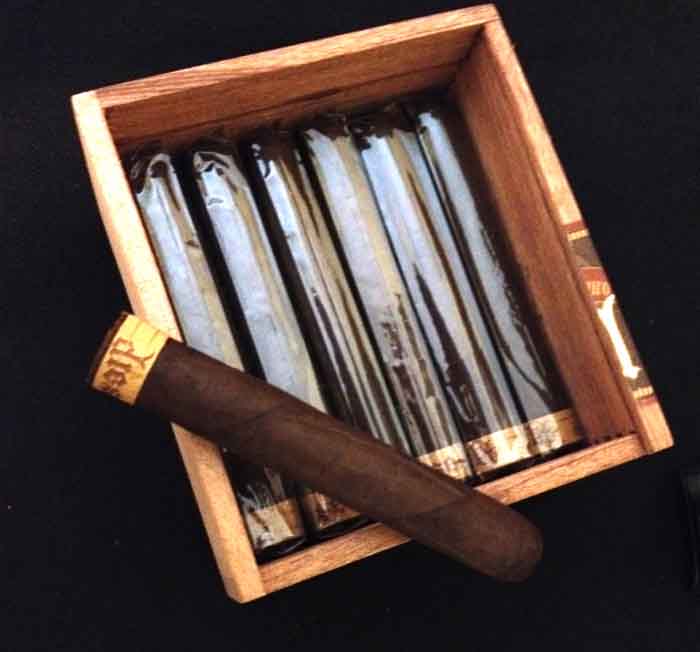
Cigars are beyond the scope of this article, but pipes are its focus. Pipes are essentially little wooden, stone or clay cups for burning tobacco with an inhalation tube attached. The smoker fills the pipe loosely with tobacco, then ignites it with some of the many means available to us ex-hominids, inhaling the smoke into his mouth and savoring it before blowing it outward into the personal space of those around him. While the topic of smoking pipes merits a full book, this article provides an introduction to pipe smoking designed to be as simple and low-cost as possible.

***

To get started, you will need:

  • A pipe. Generally between $35-$65 for a good starter pipe. Look for 0.7inch diameter bowls and filterless stems. This tool may help.
  • Tobacco. This comes in tins and bulk, usually found at Brick and Mortar (B&M) shops, and Over the Counter (OTC) usually found at drugstores and supermarkets.
  • Pipe cleaners. Each time you smoke, you will want to clean your pipe. Pipe cleaners have two ends, so that is two smokes per cleaner. It is not a terrible habit to include a bundle or package of these each time you buy tobacco.
  • A pipe nail. Demystifying this tool: it can be as simple as a key. You use one end to cut up tobacco, allowing it to collapse into an ember, and the other to tamp it after you light it for the first time. Tobacco rises like a demon unleashed when touched with fire, but compressing it allows it to smoulder so you can sip the pipe.
  • Fire. I favor the compressed cardboard matches in matchbooks, but you can use anything. For some, lighters and zippos taste horrible, so they prefer the match. The only trick is to burn off the tip before lighting.

To avoid the usual drama, let us launch into the process of smoking:

You go to some place with little wind, but some air circulation, where you have a comfortable chair. Sitting in it, you take out your tobacco. Holding the pipe over the tobacco container, let the shreds of tobacco fall into the pipe. When it is half-full, gently tamp with a finger. When it reaches the top, pinch from the center to one side and then the other, compressing the tobacco and letting it fall back into place. (Much has been written on this topic, usually under the unfortunate appellation of packing a pipe, when the correct word to use is fill: put tobacco into the pipe so there are no fully empty spaces, but fall short of compacting it so air — necessary for fire and smoke — can flow through. Ignore all other advice.)

Put the pipe in your mouth, holding it gently with teeth and firmly with lips. Light a match, and hold it vertically at a slight angle so the flame climbs the stalk of the match, then when the head has burned off, move the match over the tobacco in slow circles while inhaling. Take the smoke into your mouth and the top part of your throat if you wish, but try to avoid it leaking further down toward the lungs. You can compress it by gently blowing out the air from the front of your mouth, which draws in smoke from the pipe. The best way to inhale that I have found involves flaring the nose and drawing in air slowly but steadily.

My favorite cycle runs in seven second increments. For bigger mouthfuls, draw in your smoke, then keep it in your mouth for three seconds, then exhale and wait another four seconds. For slower sips, take one for about a half-second, then wait at least three seconds before the next. It helps to have a slight background circulation of air to keep the pipe oxygenated and smouldering well.

Many smokers do a “char and light” where they torch the top layer of tobacco, then tamp it lightly because it has risen up as it burned, and then light again to get the resulting compressed tobacco to blaze. At two-thirds through the bowl, it may be helpful to use a poker or the pointy end of your pipe nail to chop up the resulting ember and set it ablaze again. The lighting requirements vary between tobacco types, which will be addressed below.

When no more smoke comes out of the pipe, and you sense that the tobacco has been converted mostly to ash, tap it out into convenient bushes or a metal trash receptacle without a plastic bag. The ash will be hot and melt plastic. To tap out, hold the pipe in your hand and swing it downward to shake the ash out of the bowl. You may have to stir it with poker or nail beforehand.

Then comes the most important part of the ritual. If your pipe lacks a filter, run a pipe cleaner from the mouthpiece into the pipe and leave it there for a few minutes to absorb both direct and ambient moisture. This will keep your pipe fresh-tasting for its next use.

Pipe smokers vary. Some are hard-hitters who blaze through a bowl quickly, where others are sippers who have a pipe going all day for an hour at a time. If you re-light too frequently, or smoke too fast, the pipe may get hot; if this happens enough and to a great enough extreme, it may cause a condition known as “burnout” where the material of the pipe chars and cracks. To help avoid this, smoke on the seven-second method and also, allow some nice thick gunky tar to line the bowl, especially on the bottom. I always smoke some OTC aromatics, which are full of sugary flavoring that bonds together the goo and forms a kind of tar cement, down to the bottom of the bowl to layer it with a nice thick coating of glop. This glop chars over time and becomes a sort of pipe creosote that insulates against extremes.

***

Tobacco originates as leafy plant in the genus Nicotiana, which when cured, dried, pressed and shredded becomes a delicious flammable method of nicotine delivery. The great variations in what are called generically tobaccos occur in the different strains of tobacco plants, and the different methods used to grow, cure, dry, press, and cut the leaves.

That process produces a number of tobacco types, which are then combined in varying amounts into different blends, which you might think of as “tobacco recipes” because they achieve a unique flavor through the ingredients — different types of tobacco — mixed within them. These blends are also distinguished by their cut or how they are sliced, which is related to the flavor and tobacco characteristics in each blend. Many blends are then coated in flavoring known as “aromatic”; if the primary flavor to the smoking blend is the flavoring and not the underlying tobacco, the blend is referred to as an aromatic tobacco.

For the end user, tobacco is then shaped by another force — the consumer market — and placed into the following silos:

  1. Over-the-Counter (OTC). OTC tobaccos are designed for convenience. They are usually either aromatics or a type of shag-cut tobacco that is also used for Roll Your Own (RYO) cigarettes. These burn most easily, cost about $2 an ounce, and are generally mild in both flavor and nicotine level.
  2. Luxury. Like most things in our society, the good stuff only starts when you step off the mainstream and pony up some more cash. You would not buy Budweiser to drink, nor Marlboro to smoke, so you will choose a pipe tobacco made under the brand name of an established firm. A handful of producers make these tobaccos now, but they tend to be stronger and rely more on the flavor of natural tobacco, although many are also aromatics but with a wider variety of flavors than OTC.
  3. Boutique. A cottage industry has sprung up in making this variety of luxury tobacco which aims for unique and intense flavors, sometimes combining aromatic and unflavored tobaccos. These are more expensive than “regular” luxury and are made by a handful of blenders who also own mail-order tobacco shops.
  4. Vintage. In the past, everything was better. People have been saying that for generations, and apparently each were correct: the tobaccos of only 20 years ago were stronger and more flavorful. Luxury tobaccos, once considered regular tobacco, have been stored in sealed tins (if you buy one on eBay, make sure it is also “unopened” as opposed to re-sealed) and are now much sought-after.

I recommend starting with a solid OTC like Carter Hall, Prince Albert, Captain Black, Five Brothers or even Drum. These are the easiest to learn to pipe with, and give you a feeling for what mild levels of nicotine and flavor are like. In addition, they are low-cost so you will not howl and scream if you accidentally ruin a bowl or spill some.

You may find that these are pleasing enough for you and that you are content to smoke them for life. There is nothing wrong with this; many have done so and it provides the least fetishistic and complex smoking experience. Five Brothers stands out from most of these because it does not use aromatic flavoring or propylene glycol (PG), a moisturizing agent added to many OTC tobaccos. If your OTC tobacco comes out of the can or pouch and seems damp, it probably has a good dose of PG. Many aromatics, including those sold at the luxury level, also have this treatment.

From that point, the next stop is an entry-level luxury tobacco. I suggest going with a Dunhill blend because they are widely available, not overly flavored, and tend to be sliced for easy burning. You can generally get a tin of 50g/1.76oz for about $9 online or $15 in the real world, if you are in the United States; this will vary with local tobacco taxes. You may notice that you are paying quite a bit in taxes throughout this whole process, and wonder if that is in fact the impetus for the whole societal jihad against tobacco. Keep wondering. In places like Canada and Europe, they pay multiples of what you pay here. Scary.

At this point, I would stop moving up the ladder. Boutique blends are a variety of luxury blend that costs more and has more unique, ironic, oddball, quirky, and otherwise off-the-beaten path blends. However, it tends to be lower in nicotine content and it is unclear whether these weird little blends are actually that distinct from their archetypes. There are only so many types of tobacco and while many different combinations can be made, most of them resemble a few fundamental types. I have never ventured into Vintage tins and can say that, while undoubtedly these older blends were of a finer quality, that may not have been preserved over the years. Nicotine levels especially degrade. To my mind, the piping experience cannot be separated into “taste” or effect but must include both, and so the fetishism with flavor — even if grounded in science and experience — strikes me as perhaps being a mistake.

Tobacco comes in several cuts which reflect how the leaves are presented:

  • Shag. Cut laterally across the leaf, leaving an interlocked mess like peat moss that loads easily and burns well.
  • Ribbon. “Normal.” Thicker slices that seem to be vertically up and down the leaf.
  • Flake -> Ready Rubbed. Flake occurs when tobacco is pressed in blocks and then sliced; Ready Rubbed is the result of “rubbing out” those slices.
  • Plug. Tobacco is pressed together and allowed to mature that way, then cut into little pucks.
  • Cake. Like a plug, but loosely packed, resulting in a crumbly “coffee cake” style.
  • Cube. Cross-slicing the tobacco produces tiny cubes; sometimes hard to keep lit.
  • Twist -> Slices. Tobacco is twisted in plugs or flake is re-twisted in tubes, then cut into little “coin” shaped bits called slices.

The above simplifies a fairly complex process. You might also enjoy these viewpoints from P&C blender Russ Ouellette and Lane Limited manager Leonard Wortzel.

Multiple types of tobacco dot the landscape. These refer to the strain of tobacco plant and how it was cured and prepared. These are:

  • Burley. Think cigar leaves. This air-cured tobacco has a nutty flavor and higher nicotine and oil than most others. It is used to complement other tobaccos in blends, and is known for its tongue “bite” from high alkalinity.
  • Virginia. High sugar content and sweet natural taste make this type a favorite in many blends. Although this tobacco comes in many colors, its flavor stays within the mild range and makes it the basis of many blends.
  • Cavendish. This term applies to any tobacco that has been aged and cured with a heating process that brings out a fuller taste.
  • Latakia. This is Oriental tobacco which has been cured with smoke from burning oak, pine, juniper and yew wood to give it a bittersweet taste.
  • Oriental/Turkish. Sweet and low in nicotine, this is tobacco grown using the Eastern method of low soil nutrients and plenty of sun, which produces its fragrance and flavor.
  • Perique. Fermentation in its own juices after Burley tobacco is pressed into barrels gives Perique a spicy-sweet flavor. This is generally an additive to other blends to give them some spark
  • Dark Fired. Leaves are cured with smoke under carefully managed heat and humidity, producing a blend both strong in nicotine and flavor. It is used as an additive more than a main ingredient because of its intensity.

For more information, check out Russ Ouellette’s descriptions.

These are used in the following blends:

  • English. Mostly Virginia, with Latakia for body and Oriental tobaccos to provide spice.
  • Scottish. Similar to an English blend, the Scottish blend uses less Latakia and more Virginia, with little or no Orientals.
  • Balkan. Strong in Orientals and Latakia, this tobacco blend uses Virginia to balance those dominant flavors.
  • American. Although there are some similarities to the English, the American blend uses more Virginia with possible Cavendish or Kentucky style tobaccos.
  • Danish. These resemble the English, but with a deeper flavor and less spice, using more Burley and Cavendish but emphasizing stronger, more balanced flavors.

You will probably find yourself shopping by blend, which could be a substitute term for flavor. What type of smoke do you wish to taste tonight? There are several indexes for ranking different blends:

  • Harshness. How much acridity and bite there is. Strong smoke can be hard on the smoker, and “bite” is created by the alkalinity of the tobacco, which raises the pH and increases absorption of nicotine but may also cause a tangy burning sensation on the tongue.
  • Strength. You are smoking a nicotine-bearing plant. How much nicotine is delivered? A tobacco with high nicotine may be worth pounds of low-nic fruity aromatics.
  • Note. This refers to the smell left behind after the tobacco is burned. This influences both your taste of the tobacco, and what your friends, family and coworkers experience.

The de facto standard for tobacco assessments is Tobacco Reviews. Like other crowd-sourced sites such as Wikipedia and Metal-Archives, or reviews on Amazon, it is good for basic factual information and opinions from people whose judgment you have verified and who — as a result — you trust. It is not good for randomly reading reviews because most of them are written by twitchy, bitchy and queeny internet consumers who complain about all the wrong things, like all the irrelevant, and miss the point. Some of the tobaccos rated highly by this site’s users are excellent, but others are simply quirky hipster fodder. Tread carefully, and consider using the various pipe forums out there: Puff, Pipes, Smokers Forum, and Tamp and Puff. The private reviews at this location have endured because they are frequently strikingly accurate. The main point is: find someone whose opinions you respect and tastes who align with yours, even if the exact opposite of yours, and you can figure out what you will like.

***

A word on lighting pipes: some prefer magnifying glasses and sun, others coals from the fire, still others matches and apparently, most like either butane lighters or Zippos. As a diehard match user, I can say that matches fail in the wind, and there is more wind that you might think, but that they seem to create the least influence on taste. Perhaps a laser is appropriate.

The pipe world is full of both facts and lore. Lore refers to anything passed on by groups of humans in social circumstances; the idea is that if it survives a dozen generations, it might be true. In the meantime, you will be wading through mountains of nonsense and worst of all, unnecessary complexity added by people who wish to seem profound or wise. Pipe-smoking is simple: you are lighting dried leaves in a tube and inhaling. The rest is mere adjustment.

The following resources may be helpful for those seeking to know more:

Here are some good places to go shopping for pipes and luxury tobacco:

Places to buy OTC tobacco, which online is sold in bulk:

Resources for those who wish to grow or blend their own tobacco:

Tobacco blenders and brands:

If you do not see your favorite blend, it is probably an imprint licensed to and manufactured by a larger group, or a boutique variety manufactured by one of the tobacco shops linked above.

For kicks, here is a list of famous pipe smokers. You can add me on there when I get famous, but be sure to mention I detest wimpy tobacco and think it should leave the hall.

Finally, the best metal for pipe smoking…

http://www.youtube.com/watch?v=DnUZ5xpcKHw

10 Comments

Tags: , , , , , , , ,

More on Le Triomphe du Charnier

funestetriomphe

Beginning with an interesting melodic progression, picked on an acoustic guitar and accompanied by background noises of synthesized chords and muffled mechanical noises, the title track and introduction to Le Triomphe du Charnier suggests a world of underlying mystery and danger. After a noisy segue into the second track, we find that, not surprisingly, the music of Funeste is hardly acoustic guitar-oriented. Dual-guitar distorted riffs are constructed like a highway for heavy traffic, as one guitar militantly plugs away at a rhythm and sticks to one chord while the second guitar plays a melody that races along the foundation of the first guitar, taking twists and turns in cycles before switching to a new course once the harmonic tension is exhausted and the low-register rhythm guitar changes chords and opens up new paths for the flightier second guitar to navigate. This “lead guitar over rhythm guitar” approach is hardly a novel one for metal or rock music but Funeste pulls it off elegantly and with a very natural (rather than formulaic and unimaginative) feel, as the best of the classic black metal acts (Emperor and Immortal come to mind) have done. Vocals appear at the proper moment, reverb-laden and rather indistinct phonetically-speaking, but serving a purpose (through the stretched-out screams that decay slowly) as each vocal line connects riffs either from beginning-to-end or through transitions, from end-to-beginning.

During the second track which is the first fully proper song, Funeste displays an adroit sense of how to piece together their songs smoothly without relying on any uniform structure. The first really outstanding riff involves a downward chromatic drop that loops a handful of times before giving in to a less-disorienting melodic progression. After the lyrics have been vocalized, the progression then reiterates the downward drop once more before charging into the “outro”, the riffs that lead the song to its conclusion. This method of structuring a song is also traditional of great black metal; play a riff (A) that leads into a harmonically related riff (B), eventually looping back to the original riff (A) before boldly rushing into a new melodic territory altogether with a new riff (C).

Funeste still make a handful of strange choices that may be chalked up to oversight on their part due to inexperience, or the choices may be conscious and intended to disorient the listener. Either way, there are some awkward transitions like a “bridge” near the end of the third track, Le Passager Invisible, which is made of strange background noises and a slowly plucked guitar melody with minimal percussive intervention. The band meanders lethargically through this segment for a while before abruptly breaking into a high-speed tremolo-picked riff that closes out the song. This is likely to disorient the listener since smooth transitions have been the norm up to this point, and something like a steady increase in tension would be expected as the band moved from a slow, clean-sounding section to a high-speed aggressive-sounding section. Instead, we as listeners are lead delicately along a cliff edge, allowed to take cautious glances over the side and, then, before getting a chance to really let the danger of our predicament sink in, booted clean off the ledge and dropped into freefall. While the effect is intense, it is not congruous with the smoothly-flowing nature of the rest of the song and serves as a “magic breaker” that snaps us out of our imagination and reminds us that we are only listening to a song, not experiencing a journey.

Further, there is a tendency for the musicians (in particular, the drummer) to suffocate the gripping melodies of the guitars with redundant ornamentation. The drums were apparently played by someone with a love of hip-hop-style grooves and amphetamines. While there is nothing inherently wrong with enhancing your drumming skills with amphetamines, this guy’s style often detracts from rather than enhances the melodies because he overplays the two drums that have the sharpest percussive attack – the snare and kick drum – in flailing, jolting beats that sometimes resemble overlong fills that draw most of the listener’s attention and end up leading nowhere. This is an unforgivable sin as it achieves the opposite effect of emphasizing the most important part of the music – the melody – by obfuscating the note changes. Imagine reading an engaging story, written with carefully-chosen words, but sprinkled randomly with periods, semicolons, parentheses, and ellipses. That is akin to the experience of listening to well-written music with intrusive drums. Still annoying but to a lesser degree, a guitar will sometimes break into a nonsensical stream of artificial harmonics or other obnoxious noise, but these fits are few and far between and don’t detract so much from melody as just add some uncalled-for ornamentation.

Beyond musicianship alone, Funeste have added too many background “found sounds” or just strange digitally-manipulated noises that add nothing to the “atmosphere”, which I assume was the reasoning behind adding these extra layers. There are two reasons why this is bad:

1. The riffs that are more harmonically sparse lose their dynamic capacity from being drenched in washes of amelodic background noise, and begin to sound even denser than the full-on blasting sections.

2. It makes the band seem underconfident in their ability to let the melody carry itself and express emotion, mood, thought, sense, experience, which the melody is perfectly capable of doing if just given some breathing room.

Much of the time, new bands (particularly those trying to play black metal) try to get away with being so simplistic that they sound like a really stoned punk band that can’t count how many measures they’ve been through and end up making ten-minute songs out of the same two chord progressions. Others focus so much on “technicality” that they end up playing something like etudes for guitar wankers. Funeste is special for committing neither sin; they have given us some good melody-focused work here that will benefit from having the extraneous elements removed.

https://www.facebook.com/funestemtl?fref=ts

No Comments

Tags: , , , ,

Sadistic Possession Vivisection

sadistic_posession_vivisection

The Belgian frites in Possession stumbled upon Mayhem’s Deathcrush EP on Youtube a few years ago and falsely epiphanized that black metal is Black Flag with blast beats. Deathcrush was heavily hardcore influenced but Mayhem applied speed metal to the primitive sonic violence of Venom and Hellhammer to create a fierce breed of blackened thrash. Possession ignore their idols’ basic compositional achievements in chainsaw gutsfucking by repeating three chord punk riffs for four to six minutes. Celtic Frost, Sodom, and Sepultura theft continually occurs and bores as Possession demonstrate their limits as a house party cover band.

The droning powerchords are not composed into coherent metal songs but placed within autistic perseverations on historical witchery. Each release regales the listener with minutiae on a different witch’s life before lamenting her fiery death for deviant behavior. These incomprehensible lyrics are probably meant to provoke feelings of injustice in bearded liberal ex-punks who tattoo themselves as a sexual display of non-conformity to fat women in Brooklyn.

The problem is few pop-punk Wiccans tolerate unclean vocals, greatly limiting the potential market. Iron Bonehead has rectified this by dousing these waffles in corpse paint and commissioning Chris Moyen to pick the pockets of the Beherit crowd. Those monochrome goats have to sell or else next month’s supply of cost-reduced Fernsehbier will be at risk.

https://www.facebook.com/hisbestdeceit?fref=ts

possessionlogo

3 Comments

Tags: , , , , , , , ,

Sierra Nevada Brewing Co. – Sierra Nevada Pale Ale

sierra_nevada_pale_ale

Only an American company could come up with this: a bitter beer wracked by a sweet fruity aftertaste. It is the approach one takes to bribing children to eat the disgusting faux nutrition that is “health food,” namely by making the food as vile as possible and then dumping a bunch of sugar on top so they will eat it for that. On the tongue, Pale Ale tastes like a European delicacy like Grolsch for just a moment before undertones of vinegar kick in, followed by a sugary fruitness resembling a Kiwi fruit swimming in corn syrup. The result is vomitous, a race between extremes in which the middle point — the balance of flavors that makes a good brew — vanishes entirely. Instead, you get get hipster cred for liking this “acquired taste” while having a big dollop of cupcake icing to follow it, with the assumption that you will not vomit from the clash of tastes on the palate. In favor of this beer, it is cleaner than most American beers, without the murky swill of unintegrated fermentation byproducts that makes American beer taste like stagnant rainwater. On the other side, however, it is like a car with the engine in the trunk that you steer with the stereo. Absolutely no integration of flavor leaves it feeling more like watching a crowd of random people pass, than the smooth ballet of a good beer.

Quality rating: 2/5
Purchase rating: 1/5

9 Comments

Tags: , ,

Classic reviews:
A B C D E F G H I J K L M N O P Q R S T U V W X Y Z