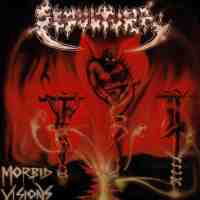
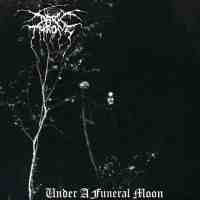
Insightful commentary on those “Best of Metal 2011” lists:
I’ve begun to realize that most of the lists currently being published are also exercises in varying, and scalable degrees of exclusionism. I say this because in the past two years major non-metal/indie oriented media outlets have taken it upon themselves to declare to their reading audiences what is the Best Metal of the Year. I’m referring to websites such as NPR, Pitchfork Media, Spin, PopMatters, Stereogum, Noisecreep, Frontier Psychiatrist, etc…There are countless other minor non-metal oriented blogs and sites that have their own list up as well, and they all pretty much loosely mirror one of the examples posted above.
This is a curiously new phenomenon: ten, seven, even six or five years ago you wouldn’t find non-metal/indie media daring to touch the very idea of the “best metal” released in those years. The cynic in me wants to ask, “Did the hipsters get tired of all the garage-rock bands ironically limping around Brooklyn?” That is mean spirited I know, but part of me does wonder, how long will this new found interest last? First let me offer this: I am not attempting to argue that these sites have no business publishing best of metal year end lists, nor am I attempting to critically analyze their selections. Each of the writers of these lists have their own tastes, preferences, and the right to promote them…but after mulling these lists over for a few weeks and listening to most of the albums on them, one thing has become very clear to me: The most popular of these lists are created by a handful of very prolific writers/bloggers, and the rest stem from the templates laid out by said writers. In particular, the highly read and discussed lists from NPR’s Lars Gotrich and Pitchfork/Stereogum’s Brandon Stosuy are parroted throughout the blogosphere. In deserving respect to these two writers, they both offer their opinions with interesting takes and lucid arguments. I enjoy reading their stuff, and dislike having to single them out — however due to their popularity, I feel they are liable to be held to a higher standard.
Without delving too deeply into Gotrich and Stosuy’s lists, the most obviously striking things about them both is that they tend to lean heavily on the new crop of post-black metal bands. There are occasional death metal albums sprinkled throughout, the odd doom record, and a good bit of math-metal (I hate that label but its what everyone uses). Okay fine, I actually like a few of their selections as well, but here’s a question: Aren’t we missing something in terms of various other styles of metal? You’ll notice that traditional metal and power metal are noticeably absent from these lists. – The Metal Pigeon
That’s the point. These aren’t metal lists, they’re replacement metal. That is to say, indie metal is taking over with the support of Big Media.
Metal is undisciplined by commercial standards. It has a gauge of trueness of spirit. That makes it a hard product to sell. Rock music on the other hand is accepting, has no specific spirit other than ironic surliness and greed, and is universal and easy to make. The labels prefer to sell rock music.
As a result, they’ve invaded metal with the indie hipster crowd because indie-metal sells. It’s familiar like rock, but seen as “rebellious” like metal, so all the extremely ordinary people who work very hard to style themselves as extra-ordinary are in love with it.
“Styles” are divisions of a subgenre not pronounced enough to warrant a new subgenre. “Sounds” are aesthetic variants of a subgenre. Just as “doom metal” means music that is either heavy metal or death metal played slowly with morbid/gothic surfacing, “sounds” differentiate groups of similar musical approach from each other. The evolution of “sounds” can be viewed as a hierarchy of specialized technique and aesthetic within a genre, the technique creating an effect that reveals the intent of the creators as communicated to the listener.
You can understand the styles of heavy metal by looking at the musical techniques and theory used, the aeshetic created, and the patterns of underlying structure pursued (as you can do in differentiated not just genres but types of music). Styles of death metal, black metal, heavy metal and crossover metal divide into “containers” for stylistic and compositional tendencies which reveal the interpretative structures in the music evoking the larger meta-perception or “life philosophy” beneath.
Aesthetic — or styles, arrangement, and production decisions — “works” where it supports the internal compositional structures of whatever music it encloses. Technique and production and performance come together to produce an aesthetic, which matches a compositional style, which in turn reflects the ideas that inspired the artist to communicate with his or her audience.
Heavy metal, in general, is music of loud, intense, nihilistic, feral, atavistic sound that reduces the individual and places them in a context of history where they are nothing (some would call this realism or nihilism). Accepting the reaction of despair to the violence and paranoia and insanity of human world living in denial of fear/death, and turning it into a living, willful, and distinctive nihilism that affirms nothingness as a gateway into more profound realms of thought — this is the goal of heavy metal, and it has many voices, or styles.
Rhythm
Syncopation
By playing off of internal rhythms, metal bands achieve syncopation — the inversion of stress in a passage. Normally strong beats are weak and the weak are strong; this effect is often achieved through polyrhythmic overlay by double-bass in death metal bands or by the chaotic, threshing blast beat of blackmetal drummers.
The variation enables an excited internal sub-rhythm to drive the song, as many bands do with double bass drums, letting snare and high hat/cymbal disassociate for key structural textures.
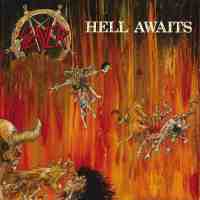
Slayer
“Hell Awaits” and beyond featured the granddaddy of double-bass technique.
Deicide
“Deicide” featured songs with anti-synchronized pump-beat percussion similar to the “Jaws” theme.
Suffocation
The master planners of moving syncopated air and bass drum integration.
Unleashed
“Shadows in the Deep” used this technique to warlike effect via guitar player forearm.
Polyrhythm
Using multiple rhythms to enhance layering effects bands create multiple dimensions of rhythmic space, using a normally linear framework in new shapes and often long or indeterminate phrases. This can occur in the dominant rhythmic instrument (guitars) or the background rhythm (drums/bass).
Some bands have taken this to extremes of chaos piling into itself, revealing an inner consistency and beauty, where others have interpreted this in the way of more contemporary ambient composers and have layered counterpoint or complementary rhythms in complex neo-electronic compositions.
Immortal
“Pure Holocaust” features raging chaotic polyrhythm and ambient melody.
Burzum
“Hvis Lyset Tar Oss” layered repetition to create epic meta-structures.
Morbid Angel
“Altars of Madness” began with an inverted polyrhythmic beat.
Mayhem
“De Mysteriis Dom Sathanas” used high-speed polyrhythms under ambient guitar.
Percussion
Explosive or definitive notes in a phrase are accentuated by percussion in drums or stringed instrument. Most often in guitars this occurs in the bands who muffle chords and strum staccato or interplay phrasing for conclusive effect, more than open-ended styles.
Metallica
“Master of Puppets” used emphatic muffled chords for percussive centering in riffs.
Suffocation
“Effigy of the Forgotten” used intricate polyrhythmic progressions to center complex songs.
Sepultura
“Beneath the Remains” combined speed metal percussive strumming and death metal speeds.
Texture
Often bands give texture to rhythms by playing multiple levels of rhythm. For example, a guitar changing chords has a dominant rhythm in the beats on which the change occurs, but the chords themselves have a layer of rhythm in the speed with which they are strummed, or in death metal technique, at which their two most essential notes are varied through strumming or hammering. Even further, often the strumming itself has an independent texture which moves with the composition as a whole.
Slayer
“Haunting the Chapel” invented the flying wrist technique of achieving hummingbird tremelo strumming.
Unleashed
“Shadows in the Deep” featured slow masterpieces of micromotion and precision.
Morbid Angel
After their monumental “Altars of Madness” which used this technique to create ambient melody and rhythm, Morbid Angel used it for prog-rock precision in the details of their epic “Blessed Are the Sick.”
Mayhem
“De Mysteriis Dom Sathanas” features ambient strumming over Bathory-style rigid percussion matrix.
Rigor Mortis
“Rigor Mortis” and more significantly “Freaks” built this technique into classical melody and structure.
Cadaver
These Norwegians made rhythmic expectancy a part of their half-sliding, half-paused progressive metal.
Melody
Consonance
“Normal” melodies are used by older styles of heavy metal and sometimes by progressive bands integrating a jazz or rock influence. They are built around the scales used by these forms of music historically and in present essence, and as such are more easily recognized by listeners familiar with more mainstream music.
Atheist
“Unquestionable Presence” built jazz harmony into a style of melodic progressive death metal.
Metallica
“Kill ‘Em All” brought metal’s separate blues legacy into focus with new styles and heavy metal essence.
At the Gates
“Slaughter of the Soul,” this band’s final work, made use of mainstreamification in the death metal sound.
Dissonance
Using dissonant alignment of notes in melodies produces a mournful yet technical sound, so many bands use this technique in both melodic and harmonic construction.
Voivod
From “Dimension Hatross” onward Voivod have built songs around dissonant melodic tension.
Obliveon
“From This Day Forward” established the ability of dissonance and atonality to build complex jazzlike compositions.
Immortal
“Pure Holocaust” and “Blizzard Beasts” feature dissonant melody and use of inversion contra rhythm.
Atonality
Atonal arrangements of notes produce bizarre and perverse melodies, causing instigation of uprising in the mentality of the listener. The “not tonal” nature of this etymology comes from the lack of a fixed scale, or use of an cycling scale of arbitrary tones.
Most metal musicians use this style of composition in conjunction with chromatic scales, dynamically acquiring tone centers through counterpoint and experimenting with classical music theory in key-less anti-melodic architectures.
Morbid Angel
“Altars of Madness” through “Covenant” used atonal solos to great effect over dissonant compositions.
Deicide
“Legion” used atonal lead guitar to emphasize the nihilism of chromatic composition.
Layered
In the style of classical composers from years past augmented with an focus geared more toward an attention span “in the now,” metal bands often use modal layers to create songs.
These layers, each forming a portion of the main melody in the song which changes over time to narrate song development, create a resonant harmony which the composer can change to develop the complex matrix of emotions required to manipulate atmospheric mood.
This style easily succumbs to being only technique, but is useful for developing a language of melody in which harmony serves a subordinate role.
Burzum
Simple in outcome but complex in how far it varies from predictable in conception, the music of Burzum unfolds longer narrative by manipulating environmental depth to melody.
Ildjarn
Short deranged pieces create atmosphere through two or three melodies sequenced in different orders to form narrative, with layers of two-note modal complements influencing direction in mood.
Harmony
Classical
Classical harmonic formations stay within the same key and manipulate different registers of mode or tone. The chromatic scales and intricate arpeggio formations of death and black metal lay their ancestry here and develop into a more direct sense of musical motion.
Morbid Angel
“Altars of Madness” evolved this technique into fast-picking and ambient relationship to beat, accentuating it with atonal lead guitars.
Deicide
“Feasting the Beast” demonstrated this technique in an ambient but violent setting.
Burzum
“Det Som Engang Var” built simple classical music out of power chord arpeggios.
Jazz
The freedom and complexity of jazz harmonics attracted many metal composers, who have worked in that area to create bizarre and startling freaks of brutality.
Atheist
“Unquestionable Presence” built jazz harmony into a style of melodic progressive death metal.
Metallica
“Kill ‘Em All” brought metal’s separate blues legacy into focus with new styles and heavy metal essence.
Demilich
“Nespithe” built bizarre harmonies from rudimentary fusionesque randomness
Rock
Oftentimes rock-n-roll influences creep into metal bands and are easily identified by their influence on the dominant rhythms, and by the more mainstream tonal ideas of the pieces. Since rock is essentially blues filtered through the cowboy hobo country music eyepiece, these bands often bear a lot in common with jazz-influence acts.
Metallica
“Kill ‘Em All” brought metal’s separate blues legacy into focus with new styles and heavy metal essence.
Structure
Cyclic
Most rock songs come of the verse-chorus tradition and consequently so does unstudied death and black metal, as well as most grindcore. The tedium of this technique is sometimes temporarily alleviated by adding another structure or riff pattern on top of the double elements of cycle but even this is transparent.
When many riffs are joined to form a progression of ideas not as much concerned with creating a piece but a sequence of moods a narrative composition occurs; others call this “riff salad” or “grab-bag metal.”
Music created with massive conceptions in mind often builds entirely unconventional structures to serve the individualized needs of each song. At this level of composition, nothing is as fits the norm as each piece has an entirely custom use in unique and intricate compositions where details matter.
Emperor
“In the Nightside Eclipse” featured drifting and meandering songs built around central melodies.
Burzum
“Hvis Lyset Tar Oss” used bafflingly simple and distinctive riffs in layers to create epic compositions.
Morbid Angel
“Altars of Madness” often sequenced seemingly jarring changes in the smoothness of compositional integration.
Metallica
“Orion” from Master of Puppets introduced this technique to the metal community at large.
Vocals
Sung
Like rock and blues before it, people sing these. With melodic voices and enunciation of words. Though sometimes it seems bizarre now, most people like ALL of their entertainment to sound this way.
Helstar
A mid-eighties hybrid of Slayer metal and Iron Maiden rock, their album Nosferatu used sung vocals to pragmatic effect.
Shouted
Hardcore punk brought us angry shouting for vocals and it re-appears from time to time in death and black metal but is limited by the clarity and monotone of vocal it produces through uniform emphasis.
The majority of modern metal works utilize this style, yet it arose from crossover music like grindcore after being inspired by the grand old growler of metal, Lemmy Kilmeister of Motorhead, whose membership in both heavy metal and punk communities affirms his historical importance.
Metal originally adopted the gravely cigarette-burnt and alcohol-eroded voice of punk rock’s more deested vocalists, favoring its obscurity and the difficulty of marketing such an indistinct image in the world of concrete images concealing nebulous actualities and negligible rewards.
By reducing timbre from absolute tone to gritty, naturalistic, distortion and shearing melody to textural variance only, this style de-emphasizes vocals while making their presence fit into the texture of the music, allowing more dynamic variation in composition.
Napalm Death
“Scum” revealed extremes of this technique for their potential in disturbing the aesthetic sensibilities of listeners.
Possessed
“Seven Churches” brought the voice forth in primal form.
The Exploited
With a sequence of groundbreaking hardcore albums the Exploited let the voice get growlier each time.
Morbid Angel
Death metal cofounders Morbid Angel implemented this technique to great effect on “Altars of Madness” and beyond.
Distorted, Rasp
A more fragile sound, more like a warning than the guttural vocals of death metal, this high pitched muffled shriek is distorted so that it sounds like warnings from the dead.
Emperor
Used vocals to accentuate melody in majestic pieces of speedy production and demonic drive.
Darkthrone
Fragments of melody in vocals harmonized with miminalist riffing to expand mood.
Antaeus
The master of searing growls with both texture and punctuation in rhythm, MkM paces each piece with violence and depth.
Mütiilation
Droning melodic vocals within distorted chaos frame the structural changes in this music.
Heavy Metal
NWOBHM
Taking over from Black Sabbath when too much Led Zeppelin clonage invaded the airwaves, NWOBHM bands used more punkish riffing with more precise, technological structures in phrasing. The imagination ran wild and fantasy/mideval concepts in lyrics developed here.
Doom Metal
As Sabbath was slow, the doom metal genre demanded slower and more dramatically manic depressive songwriting. These bands bridge power chords across glacial rhythm for atmospheric impact. Often accompanied by drugs, esp. marijuana.
Narrative
Probed right after NWOBHM made its appearance, narrative bands strung together collages of riff and transition to make unfolding retellings of experience. This style is eternal and re-emerges every generation.
Stadium
Viewed by many as the nadir of metal, stadium metal is influenced by post-progressive rock atmospheric bands who used instrumentalism and pure pop hook to make sentimental but explosive songs. In metal this translates to an epic ballad flavor to everything. Once again, an eternal style which recurs with each new cycle of metal.
Hardcore
Punk
Punk is simplified 1950s rock voiced in power chords and sequenced to a pulsing basic rhythm. Vocals and aesthetic emphasized dirt and unsteadiness, and disregard of musicality freed bands from the form and compositional dynamic of rock music. Often bouncy or humorous, punk music moves with a friendly but simple motion.
Oi
Anthemic workingclass punk with often abrasive sounds mixed with guitar work reminiscent of surf bands from the generation before, Oi came into its own as its own influence in the next generation of hardcore.
Melodic
Building tension through emphasis on melodic notes within otherwise rigid progressions, a subset of the hardcore community made music with constant unchanging percussion and fluidly shifting riffs.
Grinding
The earliest hardcore to secede from normalcy became truly a handful of power chords grinding against one another in conflicted progressions and interrupted rhythm. This music is essentially similar to grindcore after the first generation.
Speed Metal
Percussive
The major innovation of speed metal was the muffled, explosive strumming of power chords to produce a sound of impact and resurrect the power of rhythm guitar in rock music.
Trance
Bands like Prong produced the first hypnotic rhythm “mellow” metal which while violent in methods of creation produced an atmosphere of calm and allowed emotional aspects of the art within to emerge.
Epic
Some bands aspired to the fantasy- and progressive-inspired works of NWOBHM and toward that aim produced neoclassical and often lengthy works. The most commonly known example of this is Metallica’s “Orion.”
Progressive
From the 1970s progressive bands metalheads began making larger structures and wider gains in technique in the rendering of intricate but impact-oriented music. While power chord riffing remains predominant, many progressive metal bands moved beyond the accepted “progressive” sound and created theoretically literate avantgarde works.
“Thrash Metal”
Misnamed speed/death metal hybrid bands were called “thrash metal” because of their violent and self-conflicted music, aggressive attitudes and thrash-based ideological assertions. The origin of the term “thrash metal” is European big corporate media magazines trying to sell speed metal as something more extreme than what it was.
“Power Metal”
A style that emerged as the speed metal genre was dying, power metal is speed metal riffing played either in an epic heavy metal or tuffguy pseudo-death metal style.
One branch of thrash reveals more of its punk influence, and in bands like MDC or COC expressed itself with loosely hardcore songs played quickly with a metal influence in phrasing, but in punk song structures and major keys.
Thrash, metal
The other half of the thrash tree demonstrates a more metallic approach and is a proto-death-metal hybrid subgenre, found most clearly in the early works of Cryptic Slaughter and the later works of DRI.
The schizophrenic out of time rhythms and blurry, organic, lavaging rush of this style produced disorientation and loss of individual characteristics in the rising phenomena of chaos.
Loosely derived from Discharge, this genre worked melodic hardcore into a blurring ripple of speed and fury that unleashed itself in short bursts of anger.
Crustcore, rhythm
In the style of the mighty Assück, these bands created pounding furious rhythms from even intervals of the fretboard, roaring forth in some complexity but mostly disassociative, violent, random, disorienting music.
Death Metal
Phrasal
From the pure origins of death metal, the faster styles took after bands like Slayer, early Sepultura and Massacra in making architectures of intricate rhythm and melodic construction.
Derived from the slamming, explosive street-level speed metal of Exodus or Exhorder, percussive death metal evolved from the New York Death Metal and Tampa Death Metal sounds to become a generic style of impact-oriented, explosive muffled strum death metal.
Explosively percussive and equal parts speed metal and angst-ridden New York Hardcore (NYHC), this music flew from the depths with guttural vocals, edgy rhythm riffing and essaylike song structures. In two styles, one of which is more percussive than its longer phrased variant.
Some of the most “heavy metal” of the death metal movement, the Florida bands mated bold rhythm to the pulsing rhythm of early percussive death metal and created the most defiant, monstrously simple and direct metal of the era.
The first major evolution of theory occurred within the Swedish Death Metal movement, where Sunlight Studios/Thomas Skogsberg(tm) fuzztone production and longer phrases contributed to a melodicity fully evolving with At the Gates.
Continuing the progressive tradition in metal, the progressive death bands adhered to a style which was part rock with jazz and classical influences, and part the wily fingered “technical” death metal of a previous generation.
Used violin and lead diminishing melody guitar work.
Deathgrind
A stylistic hybrid, deathgrind is death metal using the simpler song structures and rhythmic expectancy riffing of grindgore. So far, nothing of stature has emerged from this style.
“Death Thrash”
This term is marketing slang for retro bands making faster speed metal music using death metal picking technique and vocals.
Göthenburg metal
From Göthenberg, Sweden, came a series of bands emulating At the Gates by making technical, jazz-and-rock influenced death metal. This only became a problem after “Slaughter of the Soul,” when At the Gates sent out the word to become commercial rock music hidden within death metal stylings.
Black metal that is heavy metal derived from this death metal style.
Doom metal
The moribund, self-pitying and sentimental style of doom metal has emerged in both heavy metal and death metal genres, where it is essentially the same music played with an emphasis on slow chord changes and resonant, recursive resolutions.
Chaotic and nihilistic blasts of short information in three-note riffs founded this style, which through reduction of assumed musicality focused on the information of its communication.
Early experiments in structuralism allowed melody to serve as a fundamental principle and therefore emphasized use of the melodic sound in riff construction and chord voicing.
For the few who sought more extremity a style of grinding metal with nihilistic clipped emanations of information in abrupt explosions of riff was created, with variants moving closer to grindcore or pure unleashed melodicity.
Descended from the devotees of Bathory “Blood, Fire, Death,” this genre works folk song nationalism and epic narrative of multi-generational movements on the level of a people, creating symbolic black metal with lengthy melodies.
Minimalism taken to the furthest extreme hybridized with metal produced an electronic music influenced genre which favored unchanging simple beats (similar to Discharge) under shifting melodic context- and lexically-sensitive phrase evolution.
Focuses on matching rhythm to expectation of a tone and then wearing it out, like the tedium of living in a dying society, anticipating radical change.
The music of Kraftwerk and its descendants, this is long melody evolving over a complex beat structure, often without human vocals.
EBM/Industrial
Emphatic and pulsating dance music that was a fundamental influence on developing techno and industrial genres, EBM sounds like what Nine Inch Nails would be if executed by Godflesh or Beherit.
Ritual
Influenced by throwbacks to mideval and music from before recorded history, ritual ambient uses simple melodic patterns in evolution and a primal sense of rhythm to emphasize its constructs.
Neoclassical
Somewhat of a summary of the genre as a whole excluding most popular music influences from EBM, neoclassical ambient/industrial uses technological instrumentation and song structure to emphasize classical influences in melodic construction.
I’ve just completed reading the 2011 “best of” lists from a number of popular websites. The results are predictably dismal. Are these people incompetent or just deaf? (more…)
Industrialization and modernization have had a drastic effect on the Western world. The combined effects of urbanization, commercial consumerism, modern science, and a host of other factors have “left us cold, alone and naked in an uncaring universe. It has stripped us of our ability to commune with the transpersonal, robbed us of our freedom to choose, and forbidden us to look inside our own minds for any kind of release (Schroll 2005:60).” Compartmentalization of the aspects of one’s life in modern society furthers a sense of incongruity and separateness. Professional life is often separate from family life; social life is often separate from religious or community activities. The multicultural and ever globalizing nature of the modern world creates its own difficulties. And strong sense of culture and community are rarely based on geographic location, but more often around a sense of one’s history and the beliefs, ideas, habits, morals, and aesthetics it affords. Thus, to find a sense of commonality one must often leave the neighborhood in order to gather with like-minded people. – Dave’s Metal Blog
He goes on to explain how heavy metal forms an ad hoc culture/religion/values system in the above vacuum. Good stuff.
Heavy metal is a culture because heavy metal is a unique spirit: a warlike desire for adventure and meaning, not safety and egodrama.
No mosh! No core! No trends! No “fun”!
Idiots continue to want to make heavy metal into rock music.
Rock music is based on individual drama — the same thing that makes people feel it’s OK to litter, vote for manipulators and then blame others, buy McDonald’s and then bemoan corporate domination. People are the problem. Not institutions.
We like to think we’re all equally capable, and so if something went wrong, it was a misfortune/victimhood. The truth is that most people cannot balance a budget, shop for good food, or avoid repeatedly doing self-destructive and pointless actions. Humanity is overrated.
Now we have idiots who want us to think that if we just relax our standards, everything will turn out just fine — like that worked for the hippies, Romans or other groups of deathbound fools:
A YouTube user named “iAMVyt” has posted a video clip online discussing the idea that metal elitism is causing the downfall of the entire genre, and that there cannot truly be an “underground” scene in the age of Facebook. Take a gander at the video clip, and feel free to share your thoughts on metal elitism and what it means to be “underground” in the comments section below. “iAMVyt” also commented on the clip:
“This is just a short video covering a couple of my beliefs about metal elitists. No, this is not criticizing everyone who enjoys metal. It is not criticizing everyone who identifies themselves as a ‘metalhead.’ It is not criticizing everyone who has a strong belief in anything involving music or metal.
“It is criticizing what I believe to be foolish views and opinions. If you do not agree with my opinions, that is FINE. If you are a metalhead and find that this video does not describe you… You are not a metal elitist.”
In the late 1980s and early 1990s, metal was a scornful, fascist genre.
These bands knew they did not want to end up like the just-sold-out speed metal (Metallica, Testament, Anthrax, Exodus, Megadeth) and the mainstream heavy metal of the time, which was laughably bad hair metal and beginnings of industrial and alternative metal (Ministry, Faith No More).They had just seen metal get popular in the late 1970s only to die, then come back in the early 1980s, then start to die again.
The black metal bands were even more extreme. They realized that as long as they made music for beer-swilling know-nothings to tap their toes to, the genre would go nowhere. It would get re-absorbed by the mainstream and turn into the same horrible shit that infested both the radio and (in goofier, hipster form) the indie charts.
Elitism is the cornerstone of quality metal. When they abandoned it in 1994, a dearth of quality music resulted, with a few exceptions (later albums from BEHERIT, CIANIDE, ASPHYX, DEMONCY, AVERSE SEFIRA, SUMMONING and a few others). Those bands rose against the grain because they believed in quality over quantity. Whether they would call it “elitism” or not, it’s roughly the same animal: we want quality music, so we push away from the pointless, commercial or derivative.
Now this idiot tells us elitism is killing metal?
More like he means poseurdom is killing metal, as it always has. Poseurs are people who want to use the music to make themselves look cool.
Opeth listeners who want to show you how “open-minded” they are, Primus listeners who want to talk about how technical their music is, self-righteous Rage Against the Machine and punk rockers talking politics, and metalcore devotees who embrace the combined hipster/bohemian bourgeois lifestyle of over-emotionality and self-righteous moral indignation… these people then are the faux elitists — the poseurs — who are ruining metal.
Did he think of that?
No, because that would require him to admit that heavy metal is truly a different view of the world.
Although I listen to many different musical styles, including classical, jazz, blues and even bluegrass, my contemporary tastes lean toward heavy metal, hard rock and alternative. In other words, loud, aggressive songs with ear-piercing vocals, massive guitar solos and heavy bass and drums. The musical talent of these artists is undeniable, but the appeal is definitely an acquired taste.
Long story short, this isn’t your parents’ music. Unless your parents were long-haired, headbanging types who wore copious amounts of black clothing and makeup, that is.- National Post
We are a new generation that pisses all over the old. 1968 was hippies telling us the same crap that metalcore bands tell us today. If you want to be the musical inheritor of your parents’ or grandparents’ failed and stupid political projection, be my guest. You’ve just admitted you want to repeat the dysfunction of the past. Sounds like what an abuse victim would do.
For 2,000 years now we’ve had helpful morons to tell us that “all we need is love.” If it were that easy, it would have happened millennia ago. “All we need is asparagus” has similar relevance to the morally complex problems we face. In addition, unless you have your head up your ass, you can see how the human individual acting selfishly is a much bigger problem than whatever failings our institutions have had. We just like to blame the institutions so we can keep being selfish.
Trust nature instead:
Every sensible swimmer knows that avoiding a school of bait fish or immediately leaving the water if a cut started to bleed is ‘best practice’ when attempting to avoid a meeting with a shark.
But Eyre Peninsula’s Matt Waller has added another tip to the ‘don’t get eaten’ handbook with his discovery that Great White’s are much less aggressive when listening to ACDC – particularly ‘You Shook Me All Night Long’.
{…}
“I started going through my albums and ACDC was something that really hit the mark.
“Their behaviour was more investigative, more inquisitive and a lot less aggressive – they actually came past in a couple of occasions when we had the speaker in the water and rubbed their face along the speaker which was really bizarre.” – ABCA
We’d love to know what the sharks think of DEICIDE and INCANTATION.
The self-obsessed rhythms and whining, self-pitying hooks of pop music would probably just make them attack the boat.
Similarly, poseur bands like MASTODON, KYLESA, GOJIRA, OPETH, etc. would have the same effect.
Lack of elitism is killing metal.
Elitism means tolerating only quality music. It’s like natural selection for heavy metal: keep the good, throw out the shit.
Metal is dying because it is flooded with insincere hipster bands, commercial trash and pointless rehashing of underground styles.
The only force that opposes that are the people who insist on quality control, a/k/a the elitists.
The opposite of an elitist is a poseur. Poseurs want to use the music to make themselves look smart, unique, interesting, different, etc.
When those people started infesting metal in 1994 or so, the downward spiral began. Now there’s only a few acts that aren’t as abysmally bad as the stuff on mainstream radio.
– Comment on the above “elitist bashing” article
Nature knows metal is a path of its own. It’s only selfish humans who keep trying to neuter it, so they can stop fearing it. Hail elitism!
Death metal is structuralist heavy metal that borrows heavily from classical and industrial music. Its heritage is equal parts neoclassical heavy metal from the 1970s and hardcore punk from the early 1980s; if you throw Discharge, Judas Priest and King Crimson into a blender and set it on “high,” you might get something like death metal. It took from roughly 1983-1988 for death metal to fully evolve, and at that point, it experienced six golden years of fruitful growth before lapsing as black metal eclipsed it in popularity.
The original underground musical genre, death metal was completely unknown to most people until 1997 when it became fodder for mainstream commentary after several school shootings. During the 1980s and early 1990s, it was impossible to find death metal in normal record stores and chains; most people ordered it from small mailorder companies, or “distros,” that stocked underground metal exclusively. The underground in fact replicated every aspect of the normal music industry, including journalists and radio stations, to avoid being tainted by “commercial” or “mainstream” music.
We say death metal is “structuralist” because, in contrast to rock music, its goal is not a recursive rhythm riff that encourages constant intensity through verse-chorus structure; death metal, like black metal after it and prog rock and classical before it, uses “narrative” song structure, or a string of phrases connected in such a way that they effect musical and artistic change throughout the song. While rock music aims to find a sweet riff and ride it, and much of older heavy metal does the same, death metal is like opera: its goal is to use riffs to introduce more riffs, and through those, to create a treelike structure of motifs which resolve themselves to a final dominant theme. In this, death metal (like the progressive rock and synthpop bands that influenced it) is closer to classical music than rock music.
The history of rock music has been written by commercial promoters who have tried to establish its “authenticity” and uniqueness, and therefore, almost all mainstream publications are hostile to death metal. Death metal reminds us that rock music, blues and jazz did not arise autonomously in America, but were based on centuries of European popular music (the I-IV-V chord structure of the blues is derived from European folk music, and its “blues scale” is a modification of Asian and Celtic scales). Rock music is a scam, and its marketing makes it seem to be something greater than what it is, which is the same old music dressed up as a product. Death metal more than any genre before it broke from the rock tradition, and therefore is a threat to the rock establishment and its profits.
Like most musical genres in the modern time, death metal is constantly under assault not only from external interests, but from within, as self-interested people try to make rock music and dress it up as death metal. These attempts to simplify the genre would benefit those who attempt them, as they would both be able to make a saleable product (being similar to established musical tastes, it sells easily and broadly) and be able to claim the “authenticity” of belonging to an outsider form of art such as death metal. These false death metal bands have polluted the genre with the same mainstream dogma and musicality that death metal sought to escape. Like all human social breakdown, this breakdown occurs through the selfishness of individuals who are unwilling to admit that the health of the genre is more important than their personal profit.
Death metal flourished from the mid-1980s to mid-1990s, and then was for most purposes replaced by black metal. Where death metal was structuralist with heavy emphasis on chromatic phrasing and hence rhythmic, black metal used narrative construction based on melody (an innovation of later and progressive death metal bands as well, such as At the Gates, Atheist, Gorguts and Demilich). As such, it is often hard to tell where death metal ended and black metal began, although in their mature form they are distinct genres. In this, and in the aesthetic components of death metal borrowed by mainstream bands as varied as Slipknot and Nirvana, death metal lives on.
Death metal arose from the end of hardcore punk colliding with a desire to renew the spirit of metal; launched in 1969, proto-metal like Black Sabbath had become lost among hard rock (Led Zeppelin) and progressive rock (King Crimson) and needed redefining. The aggressive, oversimplified, and disconnected from contemporary music sound of hardcore punk was apt and therefore infused into heavy metal. In the process, because hardcore punk relied on streams of power chords or phrasal instead of rhythmic competition, metal became an entirely new animal.
This change can be heard first in speed metal bands like Metallica, Slayer, DBC, Rigor Mortis and Nuclear Assault. Phrases got longer, songs got more intricate, and the type of riffing that repeated a rhythm using a single chord got rarer; a new form of music was in the forging. However, these bands were still too entrenched in many of the rock-influenced tendencies of metal; death metal made a clean break from these. (It is interesting to note that the ultimate point of breakaway was thrash, or hardcore punk crossover bands who wrote punkish songs with metal riffs; these reduced music so much to its essence that it had to reconstruct itself, and having grand ambitions, reached toward narrative composition instead of the hackneyed rock styles.)
During the years 1983-1985, a style emerged that was between death metal, black metal and thrash, and from this all of the succeeding genres were to derive their musical inspiration. Bathory, Sodom, Hellhammer/Celtic Frost formed the basis of this style, augmented in the Americas by Possessed, Slayer and Sepultura. From these founding acts styles diversified into death and black metal. While many give credit to Venom for the term black metal, musically speaking they were rooted firmly in the heavy metal tradition.
The golden years of death metal were from 1988 to 1994, during which time the classics of the genre and all of its variations formed. Percussive death metal thundered from the industrial east coast of America; Texas produced a harsh and grating otherworldly sound; Florida created the rhythmic and alienated Tampa style of death metal. Progressive bands from the USA and melodic bands from Sweden rounded out the style, as did innumerate hybrids, including doom metal and speed metal crossovers.
However, by 1994, the genre reached a decision point: where to go so as to keep up with black metal, which had expanded into melody as quickly as death metal had expanded into rhythmic structure, and now threatened to become more popular? The death metal genre had become calcified between diehards who insisted on a narrow definition of style, and “innovators” who wanted to make it into rock music, but both groups in their efforts to control external factors forgot internal factors, and the ideology and artistic spirit of death metal as lost. As such, it appeared senile and was forgotten for some years.
At the time of this writing, death metal is practiced by a few holdovers from the late 1980s who continue to put out quality music, but their numbers decline each year. The general health of the metal community is poor because it focuses on uniqueness of external appearance and not composition and artistic integrity. While we hold out hope for a death metal revival, it is more likely that it will simply take its place in history and we will be left with recordings.
Why do most Death Metal fans where distinctive t-shirts?
In the underground death metal subculture, the shirt you wear — bearing the logo of a favorite band or organization or concept — defines which strata of social accomplishment to which you belong within the death metal community. Your taste identifies your level within an intellectual hierarchy based on what its members are able to comprehend, or withstand, perhaps, musically.
For example, a guy in a Cannibal Corpse t-shirt might be neglected by someone wearing a Beherit t-shirt because Beherit has a more esoteric and theoretically-adventurous audience than the low-brow blockhead churning of Cannibal Corpse; t-shirts determine what bands your brain can accept and thus often, a type of caste identification within the hierarchy of fans. Those who try to forge this identity often find themselves answering difficult questions under unpleasant circumstances.
In the inverse situation, someone in an Atheist t-shirt might laugh off someone wearing a Sarcofago t-shirt as a philistine. This allows multiple communities to exist in a hierarchy within the death metal community and identify each other by sight, as well as differentiate metalheads from the hordes of drone normals who do nothing but buy Creed CDs and singing plastic fish.
How to understand Death Metal lyrics?
Death metal bands tend to use complex, Latinate language to describe the world in terms of its function and technologies, leaving the emotional terminology for rock music and blues. Its goal is not to affirm the emotions of the individual, but to point out the effects of structural change in the surrounding world. Not surprisingly, as a musical movement, death metal is also structuralist.
Unlike rock genres, there is a near total absence of gender words and love songs. Death metal is not about emotional escapism. Death metal is about reality.
Why does Death Metal have such a morbid visual style?
Symbols serve as an important anchor between the way a music sounds and what it represents aesthetically, including the ideas of the musicians as inspirational to their work. In death metal, there are several main categories of symbolism: the “occult,” the morbid, and the technological.
Death metal art — as seen on tshirts, album covers, flyers, patches, pins and stickers — includes all of these. The occult represents an opposition to morality; as a “nihilistic” genre, death metal musicians tend to be realists and recognize that no matter how much we classify something as morally bad or good, reality is unaffected, and whatever object is in question will serve reality at the level of function and not morality. The morbid represents another nihilistic outlook, which is that not only is death more real than our moralizations against it, but it will inevitably happen to us and we must be reminded by that. Where the occult uses pentagrams, ancient script, sigils and demonic imagery, the morbid uses disease, horror, submission and bodily corruption (including the mind/body turned against itself, as in zombie films) as its palette.
Technology makes an odd bedfellow with death metal art, as it is commonly used to modify one of the other two categories. Much as at the end of the Black Sabbath song “War Pigs,” Satan is shown as laughing and spreading his wings at the slaughter of young men for profit, technology is portrayed as amoral and therefore something that can turn on humanity at any minute. Combined with morbid imagery, we have art revealing human beings as both dependent on and captive of technology; combined with the occult, we have either technology in the power of the occult, or the occult as naturalistic and opposing technological humanity.
Art Death Metal bands satanic or occultist?
Death metal bands are occultist in that each of the founding bands and most to follow had an occult focus or research interest evident in their lyrics. However, few practise mysticism and most seem to use it solely as metaphorology for their works. This is convenient because our moral society, even when secular, bases its morality on Judeo-Christian mythology.
Any academic study of occultism in death metal must also take into account the range of occults employed. Judeo-christian, Babylonian, Far East, Nordic and indigenous American symbolism and ideologies appear in the lyrics and conceptual positioning of death metal bands.
When heavy metal evolved in response to the hippie culture around it, it took darker themes to a new intensity and warned of apocalypse. Fifteen years later, speed metal bands were wailing about Armageddon. But as Aldous Huxley’s Brave New World is different from George Orwell’s 1984, death metal had accepted that the apocalypse would be a whimper, and not a bang, and that its progress was inevitable.
This paranoid and soul-wrenching logic created an immediate need to overcome the superstition and self-pity of a complacent age. In consequence, as if approaching Nietzsche’s “abyss” and going under instead of over, these bands have embraced a philosophy of nihilism and a delight in the intellectual, sensual and spiritual extremes of a dying age.
From this, much can be learned about a human future: nihilism frees us from much of our fear by confronting it head-on. Death metal bands have created an epic change in American subculture from one of morality to one of existential self-assertion, but further, the “gore” lyrics of many bands have targeted social denial of collective fear of death.
Ideology serves an important place in the generation of lyrics and concept to each band. for most, the personal is political in choice of music, intellectual aspirations within it, and values as expressed in themes of darkness, death, the occult, war, genocide and suffering. Death metal reflects a lineage to hardcore music, yet its heavy metal side shows in the use of the personal rather than collective as a means of communication.
That death metal has not collapsed on its own inertia, or become morality-driven and thus socially conformist like emocore or “life metal” bands, is a small miracle in a time of overwhelming commercial motivation to human efforts. Its underground remains strong and defiantly independent. As more people in society feel the need to withdraw from decaying mainstream values and behaviors, death metal’s ideology offers a glimpse of a nihilistic but impressively un-neurotic future.
No review of the new Morbid Angel is enclosed here; by the time you read to the end, you’ll know why.
First supposition: there’s no point wallowing in what you hate.
Second supposition: if a linear trend toward worse is in existence, it is most likely that the most recent products are bad.
Combine those two.
Morbid Angel was a great and promising band for the first three albums because they were cruising on the strength of material they wrote in their lean and hungry days. By lean and hungry days, I mean their time in Tampa, working in a car wash, living together in the same house, doing an assload of drugs and most importantly, writing and playing the material that would be on the first album. As in, playing it over and over again until they got it right. This is a lot like what Slayer did in the early days.
Abominations of Desolation was a great album, but a bit disorganized. Mike Browning offered creative and prescient material; David Vincent acted like an MBA or business manager, cutting it down to the bare essence. As a result, Altars of Madness and the non-frufru parts of Blessed Are the Sick are pure power and come across without any fat on them. Having reached a degree of musical maturity, they knocked out Covenant …but just barely. The instrumental was convenient, many of the other tracks were ideas capitalized on from rejected earlier songs, they threw in an incongruous cover of “Angel of Disease” and wrote a few new songs that were powerful but not connected as a unit like those on the first two albums.
That was their great creative output.
Do you really need someone to bash the albums after that?
Let’s try this: once you enter the music industry, someone else owns your rectum. They own the right to open it up and put something into it. The reason for this is that musicians are as a whole sloppy people who don’t read contracts, refuse to understand business, and pretend that this stuff doesn’t matter in order to compensate.
As a result, they’re ripe for picking by the music industry. There’s no point blaming the music industry; in fact, they’re the heroes here because they are taking the output of dramatic, over-self-indulgent, narcissistic perpetual adolescents and shaping it into a product so those same quasi-functional people can continue existing. However, as a result, they take over the role of parent… and have to remind the musicians to make output.
In the meantime, the musicians are looking at the market. Death metal sells fifty thousand records; Pantera, Slayer, Marilyn Manson, Metallica, Megadeth, Tool, Primus, Rage Against the Machine, Nirvana, Mudhoney and Sonic Youth sell millions of records. That’s what the market looked like in 1995. So with some urging from the record label, bands change. Here they make a fatal mistake: their fans like them because they’re not Nirvana/Pantera, and trying to be something you’re not is a good way to become an inferior copy of it. (The correct response at this point is to make your albums more technical, more passionate and more realistic, but that’s difficult and requires you to NOT buy the comfy townhouse, but go back to the shitty day job at the car wash and living in a house together, making music. You have to give your life to it, for the most part. Sure, maybe you could live elsewhere in a townhouse, but each step into comfort puts you further from being able to knock off work and race home, looking forward to jamming all night and getting the music really right. Not the product — the music. But I digress.)
A lot of death metal bands, about 1994, realized they were kissing cousins of the Nirvana/Pantera/Tool crowd, and that if those guys were making an assload of money, maybe the death metal bands could too, if they just changed a bit. They changed, became inferior copies of the others, and promptly stepped out of the history books. Had they just kept making quality music, they would have lived in shitty housing for another seven years, then suddenly had an Introduction to Microeconomics moment: when you have seven albums out, and they’re all really good, you don’t sell as many records as Pantera does with one album, but you have a constant stream of fans who see you as “the real deal” and while they buy fewer albums, they buy consistently. And they buy all of the albums, so your first album charts about the same as your most recent. (This was proven by Metallica, before they went fluff, having all four of their albums and one EP in the top 200.)
With all that in mind, you know what happened to Morbid Angel. It must’ve been ugly: lots of fighting over trivial stuff, lots of negotiating about contracts they never read before they signed them, lots of hatred between band members blaming each other for the failure. And almost no time spent thinking about the music, about making music that they (Morbid Angel) would be really excited to hear, not think was on par with whatever Tool or Pantera were puking out at the time.
Do you really want a review of the new Morbid Angel? Formulas Fatal to the Flesh was good; everything else has been a failure. Domination tried to combine grunge, Pantera and death metal; Heretic was pure Pantera-doing-Tool; the live album was decent but everyone wanted to hear Brunelle solos on the older stuff; Gateways to Annihilation was just confused between styles, and now there’ s a new one, which most likely continues this progression.
We’re not looking at a musical entity called Morbid Angel anymore; we’re looking at a business. This business succeeds by hoodwinking teenage morons into buying trendy crap. This is a workable business model only because our society values morons, protects them, and wants to ensure that we’re all equal so the morons drown out the smart people. The guys in Morbid Angel agree with this. However, right now, they either puke out another commercialish album and capitalism on the raped necrophile whore of their good name, or they go back to working at the car wash.
What would you do?
Yeah, I thought so.
by Steve Brettens, Lontinuak, Pijay Vrozak and L.M. Hencken
From one of my favorite blogs, in the intersection between Men’s Feminism (sorry… men’s rights), right-wing futurist politics, and social mockery:
Metal is the modern music genre that is closest to classical music, capturing feelings of vastness, romanticism, and heroism that other genres simply don’t have. More importantly, metal is music with purpose. It’s music with a defined philosophy, an end goal, and a reason for existing – the exact opposite of pretentious avant-garde tunes that appropriate symbols, sounds and names for no other reason than to be “creative,” or because they’re “ironic”:
There are superficial reasons why metal compares so much to medieval music, to do with the lineage of the musical language it uses (metal started when Sabbath starting imitating horror movie music clichés – which themselves relied on a lot of ‘medievally’ sounding devices, because they sound ‘creepy’ to modern ears). More fundamentally, metal shares a dark but reverent worldview and mythic/allegoric way of describing life which is much more at home in the ancient world than it is modernity.
Metal’s sense of purpose makes it incomprehensible to superficial thinkers like hipsters, which is why when they try to make metal music, the results are beyond godawful.
[…]
Black metal first started in Norway in the late 80′s and early 90′s, roughly around the same time that new musical strains of youth in revolt were catching on in the U.S. The same era that gave us the misanthropic howls of Burzum and Mayhem also gave us Nirvana’s existential angst, Guns ‘N Roses’ violent machismo, and N.W.A.’s aggressive black ghetto pride. It was another great youth upheaval, not as big as the 60′s but still prominent in its own right. What’s the thin red thread connecting Kurt Cobain, Ice Cube and Varg Vikernes, and why isn’t black metal mentioned in the same breath as grunge and gangsta rap?
Answer – all these musical genres were pioneered by Generation X, the first generation to grow up in a world dominated by feminism, multiculturalism, consumerism and all the other lovely byproducts of the sixties. Feminism automatically made anyone with a Y chromosome an enemy of the state, tearing apart families and turning black America into a matriarchal hellhole, and anti-racism and multiculturalism made white men doubly marked for execution. Meanwhile, anything that was left of native American or Western culture was being crowded out by the consumerist cancer, its race to the bottom fostering nothing but cheap pop tunes, stupid movies and advertising. Gen X was born with one foot in the old world and the other in the new, giving them an acute sense that something was wrong with the world. Cobain’s singing about the pointlessness of life and Ice Cube’s rapping about getting revenge on the po-lice sprang from the same source – alienation from American society.
The same spirit of alienation fueled the birth of black metal, doubled in intensity because of the conformist nature of the society from which it sprang. We’re talking about Norway here, one of those Scandinavian countries that idiot liberals love to praise. “Oh yah, those Norwegians and Danes and Swedes are so happy. They’ve got paid daycare for working moms and they selflessly bring in hordes of refugees from the third world to give them better lives and they’re SO forward-thinking when it comes to women’s rights. How could anyone not love all that?” But while American GenXers were content to remain aimlessly raging against the Man, black metal musicians formulated an actual philosophy beyond fatalistic whining, and actually took steps to implement this philosophy. And thus, the people who claimed to be on the side of the “yoof” turned against an actual youth movement that rejected everything they held dear. – IMF
Black metal was the only outpouring of artistic or philosophical spirit in Generation X.
Everything else was a repeat of the past (Nirvana) or co-opted by commercial society, “canned rebellion” for teenagers thinking only of themselves and not about the consequences of their actions (all rap, Tool, Rage Against the Machine, Ministry).
If the answer were as simple as repeat what the hippies endorsed in 1968, kids, we’d be there by now.
Instead, black metal went to the core of conservatism — a conservation of culture, heritage, and natural environment, for the purpose of giving meaning to the individual through participation in a abstract yet realistic ongoing goal.
Liberalism offers more direct participation, in individualism. You, by being a brave individual, do your own thing — like everyone else. As it turns out, there aren’t many different things to do, so you end up a job-enslaved media sheep like the rest. But at least you were able to raise your fist for — what? feminism, civil rights, the oppressed, gay rights; heck, anything not really related to changing the course of history and humanity’s future.
Generation X grew up in the old America. We saw what 1950s-1970s America was like: somewhat boring, but honest.
Post-1968, America turned toward liberalism of the hippie type. Everything fell apart. The Glorious People’s Revolution turned out to have boring, Soviet-like consequences: cities of uniform blocks, jobs of slavery to incompetents, a failing government, an official dogma (of diversity, equality and democracy) that doesn’t work in reality, and thus a system eating itself out from within.
The same people did it, in France, Russia and the USA. No, I don’t mean a specific ethnic group from the middle east — if only life were so easy and brainless (though they always make enemies for their high participation rate). I mean the Crowd. The underconfident, dumb but not stupid, clever but not smart, stuck in the middle and raging egomaniacs. They’re damaged by broken homes, confused by a world where they are not God, and they want to rage and make an official announcement that we are all equal, so that the rest of us must respect them instead of casting them aside like the nobodies they are.
Hipsters are the same phenomenon. Boring-ass normal people decide to be egodramatic, get some social attention, and use socialization as an alternate path around reality itself. Politics can be used to the same end, as can money. But at the end of the day, you are your character, and being a hipster does nothing for that.
Black metal was a drift back to reality, as was death metal (“Only Death is True”). They cut through the fantasy world of a modern time and forced us all to wake up for a few moments. It’s important not to let that legacy die.
After something happens, people have to talk it to death to figure out what it meant. What they’re really asking is: What caused this, and what was its goal or ideal in response?
What they are looking for at that time is a summary, a “main point” which can be used to explain the movement in a broader historical context (most artistic and political movements being, only a few decades past their eventiture, minor footnotes in a larger narrative).
They want to know its relevance, in other words.
Napoleon attacked Russia? Fine: a battle; what caused it? Napoleon wanted to conquer Russia… to establish hegemony of the new post-monarchic order… and to ensure French imperial supremacy… which had fallen into disrepair… and been exploited by the monarchs… — so we have multiple factors here, centering on a restoration of power after a failure. Right, a desperate move. The significance is more than what Napoleon “wanted”; it’s the historical context in which he exists.
In the same way, we’re looking at black metal and our society offers a number of failure-prone ways to look at it. First there’s the rock-n-roll industry way, which is predictably airheaded: these dudes just wanted to make the most intense music ever, man, and so they turned to Satan and extremism. OK, that’s useless — only a true retard would accept that as a complete answer. Then there’s the inarticulate musician answer, which is that they were inspired by Venom and so copied their heroes. On top of that, we have the useless academic answer, which is that they were altering the heuristic of their neuro-linguistic token integration in order to re-interpret the world as simulacra through new, opened eyes — that’s crap. Then you have interesting side observations, like the Until the Light Takes Us filmmakers wanting to make a movie about the decomposition of an idea — that definitely happened, and it’s true, but tells us nothing about how the phenomenon came about.
And what might a historian or a philosopher say?
The Soviet Union and Eastern Bloc fell in 1990-1991. That ended the post-WWII order, and the Communism-versus-Capitalism narrative which splintered off into many degrees of socialism, conservatism, greens and others duking it out. But even more, there was no longer a reason for society to strive. The war was over — what was left? The worst of the 1980s, except now we didn’t even have conservative politicians to reign us in. The McDonald’s, the Coca-Cola, the women turning themselves into plastic whores, the men living for novelty and not bravery, the large corporations controlling more of what we think, the democratic governments so easily purchased… that is the background to black metal.
And against all of these ideas, it offered a simple solution:
Modern society: Everyone is equal. Everyone is important. What is most valuable is not pushing yourself to new heights, but getting along with others. When everyone is included, there will be no war or suffering, and we can all live good lives thanks to these excessive rights and these plasticized corporate products.
Black metal: No peace can exist, and nothing is equal or pure. Morality is garbage invented by the weak. What matters is making yourself better, pushing yourself farther than ever before. War is our destiny, and this is good, because it cures stagnation and indecision. What matters most is the best rising, the supremacy of the conqueror and predator, so that we do not become weak.
In this rebellion, black metal was revolting against the beliefs of its parents, which were that once the evil Cold War was over, we would finally have reached the promised land.
This was a promised land, incidentally, that they started promising in 1914… or rather, in 1789, because it’s the same narrative. We beat back the privileged, make everything equal, all conflict ends, peace and justice reign, yay!
Except that every age has people that think this way, and they’re always wrong, in part because if you think about such a society, it would be miserable. Paralyzed, because avoiding conflict means not finding answers. Permissive, which both cheapens everything and makes sins not a pleasure but almost a mechanical duty, like our porn and its ever-expanding quest for new extremes (where do we go, really, after the A2M explosion, enema milkshake and 919 man gang bang followed by riot bukkake?).
It sounds like something out of Aldous Huxley’s Brave New World: an artificial, pandering, whorelike world without a soul, but you have no reason to object, because materially, you are provided for.
That’s kind of how Baby Boomer parents treated their Generation X (and black metal was a Gen X thing entirely) kids — here’s some money, you live in a nice house and have the best options our society can offer. What are you upset about? Oh the minor fact that we inherited a first-world nation and left you a third-world one, sheerly by our Idiocracy-style tolerance and in fact encouraging of the reproduction of idiots, our fast food, our television nation, and so? That’s a minor fact. Minor. Don’t complain. Kids in the third world don’t have toilet paper.
Black metal was throwing off all of this: the vapidity, the obliviousness, the guilt and the manipulation.
It was saying we cannot all get along; in fact, most of us are shitheads. We need natural selection. What matters most is not peace, happiness, love, etc. but a warlike desire to get things done right according to a higher standard, and along the way, a Romantic contemplation of what it is to be an individual in the world, melancholy and isolated from the false cheer of society.
This fits right in with what Wordsworth, Blake, Emerson, Keats, Byron, Sterne, Shelley (Mary) and other Romantics wrote about only 200 years earlier, during the last great outbreak of culture in the West.
It also fit into the narrative developed by Plato and expanded on by Oswald Spengler, which says that societies go through life cycles, and when they get corrupted by “too much socialization,” they die in slow passage into third world status: low hygiene, corruption, disorganization, dysfunction and immoralism. Remember that other great mystery figure from the 1990s, the Unabomber? He said similar things.
None of this stuff was new. It was what the foremost intellectuals talked about in the 1960s and 1970s, before they wrote the books and recorded the music that influenced the PARENTS of the black metal generation; these were the artifacts they found, wrapped away carefully as if treasured but denied in a quest to pursue “adult” responsibilities, in attics and garages. And absorbed wide-eyed, as children do.
From that we got black metal.
Is it nationalistic? (Nationalism = one nation, one ethnic group, with a single culture, religion and philosophy to match. Don’t confuse it with patriotism, which is political loyalty to whatever State happens to control the land you’re on right now.)
Yes, it is, as the Romantics were. Not in a bigoted way like the neo-Nazis, but proud of their nations, and aware of the need for each nation to fix itself. We can’t kumbaya, glom together and fix each other. We have to go it alone.
From this view, NSBM is what black metal degenerated into, not its ultimate expression. Of course, not everyone agrees — Alex Kurtagic has a different take on things:
Black Metal artists also emphasize nature and landscape, but a morbid and mystical sensibility is evident even here. Whether inspired by völkisch thought or mere Satanic occultism, nature is always conceived in spiritual, mystical, and Romantic terms. The Black Metal aesthetic dictactes that night and winter are eternal. Coniferous forests are preferred to tilled fields and manicured gardens. Where the glorification of war merges with nature mysticism, the emphasis remains on the latter. Viking and Folk Metal bands, in contrast, adopt a more obviously völkisch approach to nature, allowing daylight in their landscapes and generally emphasizing the idyllic as opposed to counter-Enlightenment Sturm und Drang.
The Black Metal sensibility does not reject culture in favor of nature, but instead valorizes culture and nature, both conceived organically, over civilization, which is conceived in mechanistic and materialistic terms. In the Black Metal universe, cities were never built, the Industrial Revolution never occurred, and modernity never arrived. For all its belligerence, Black Metal is inherently nostalgic, a comprehensive negation of modernity. – Alex Kurtagic at Counter-Currents
I find his second paragraph interesting: the enemy is the senescence of civilization itself, which is conceived — well, here I split — from a desire to please the herd. The herd doesn’t create civilization; it destroys it. Rare individuals overcoming their own dysfunction and rising above the herd, that’s what creates and maintains civilization. But then civilization suicides: in an effort to make life better, it protects those incompetents, and soon creates a giant herd of Homer Simpsons, all subject to the Dunning-Kruger effect where they reject anything more complex than they can understand, and are confident in that rejection.
But that’s a study of methods, not of cause.
The cause is a lack of spirit, and the solution is to reject “safety” and “peace,” and explore the edge of risk. Feel the terror, the pain, the glory and the joy, again. Right now, we’re a society on anti-depressants that barely feels a thing, glad for the comforting numbness but also missing out on lives that, if we were paying attention, offer a lot more than we partake. Instead we pursue the same mechanical pleasures.
We are scheming on modern society, cruising on the wealth of the industrial revolution, to make us all materially fat and happy by removing our fears; our Satans, our Hitlers, and even our fears that there is no moral God guiding us, or no Utopian moral Society guiding us, but only a space in which we must make what we desire. Because we have no idea what we desire. We are living in a plastic simulation of a real world, built from the memories of our media lords and writers of government pamphlets, based on a morality that is dysfunctional and a dream of an empty, sterile pointless existence that we desire because it is both safe and greedy, letting us indulge our fantasies. Yet all of this is part of a power structure that undermines us.
Black metal is a revolution in culture against economics, politics, popularity and other forms of deferring the ideal for the tangible:
Certain performers like Orkis and Bylsma are also preferred for their ability to interpret certain ideas that — like genres have ideas in common and as a result, sounds in common — composers explored as part of their collective membership in certain time periods or recurring ideas, like the Faustian, the Romantic and the reverent/sublime outlook, all of which are shared between metal and classical.
These similarities in composition explain why metal and classical have a lot in common — and this is why the correct interpretors are needed. Rock is harmonic-rhythmic, metal is phrasal-narrative. When making rock music, you pick a rhythm, and then use a standard song form or variation to fit it into a scale, which in turn determines harmony. Rock riffs are not as active or as shaped as metal riffs, because generally they are variations within a scale whose goal is to return to the chord being played; they are based around open chords and lead rhythm playing of the scale. Metal is phrasal, meaning that its riffs take the form of phrases made of power chords, and narrative, which means that metal song structure is determined by content of each song more than by a standard form — that’s the infamous “riff salad” rock musicians bemoan in metal.
Classical music also uses narrative composition. While imbeciles will focus on its fixed forms — sonata, fugue, aria — the more important idea here is that the song follows the poetic content being expressed. This mirrors the epic poetry of ancient European and Indian civilizations, where it was understood that each adventure had stages of ritual, much like we have stages in acceptance of death or change. As a result, there was a need for an overture, a reconsideration, some changes and a recapitulation and synthesis of themes, and these got formalized in the song structures that today imbeciles regard as iron laws. The narrative style however is the common thread in classical music from its beginning to the present.
In rock music, you write to fit the scale to the rhythm, and then melody is added to accentuate that. This is easier work because all of the real variables are defined by the form. Similarly, in jazz, the form is fixed and within it the player riffs off harmony and rhythm, and inserts fragments of melody to that end — this is why most jazz artists make thousands of recordings of a song, and only one or two are considered “the real deal” by collectors: without the artist making it happen, cerebrally, the pieces fit together by random convenience. Classical works by the opposite principle, which is creating or adapting a general form to the poetic needs of a piece — expressing the change in both listener and “actor” within the story or feeling being related — and then designing a combination of rhythm, melody, theme, motif and form to express it well.
Metal is similar, although less schooled in this regard, because it seeks to express a similar worldview — underlying philosophical assumptions about life — to that of classical. Metal is reverent for the sublime; it sees the power and the horror of nature as necessary for its perpetuation, and is like nature intolerant of the oblivious and unrealistic because they create a parasitic slowdown of the exciting experiences in life. It derives much of its thematic development from the pace of horror movies, in which a few “awakened” people realize that they face a supernatural — or invisible pattern underlying all reality — foe against which technology and their oblivious, unrealistic social partners are useless. Finally, metal like classical expresses the Faustian spirit, or a sense of struggling for the rare and inconvenient beauty life offers, and fighting back those who submit to static obedience or dogma; this sense of purity through struggle is called vir, or the virtuous warlike acts of ancient man. These themes repeat throughout classical music, like metal, and while there are exceptions, it’s more than a coincidence that the best among metal and classical use these themes repeatedly. – Classical Music for Metal Fans
It’s a philosophy of triumph through living not for safety, but for adventure:
Where modern society in a desire for safety imposes values designed for an average person onto all of us, and assumes that our material and humanist wellbeing constitutes meaning in life, Romanticism explodes from within. It is not a philosophy of cautions, but of desires for the intangible, and as so it worships risk and conquest and a lack of fear toward the karmic existence. It transcends the desire to either live karmically, or live akarmically, because it sees karmicism as a means to an end and concerns itself only with the end: the ideal.
In this, Romanticism constitutes a philosophy because it posits intangible ideals as a balance weight to the certainty of death. It seeks a sense of unfolding; the discovery of something new in a prismatic space hiding behind the mundane. In doing so, it renovates life itself by working from within and renewing the brain in its aspiration and heroic transcendence of the karmic drag, in the exact opposite principle to modernity, which is materialism/humanism as supported by technology and populist political systems. – Metal as Prismatic Motion
And although we can show how it is connected to Romanticism and classical music, its bigger connection is to an ideal of transcendentalism which has been discovered and forgotten innumerable times — when societies are healthy, they discover it; when they are not, they forget it. This is the Tradition that writers like Rene Guenon refer to:
As a result, metal is sandwiched between protest music of the anarchic left and the wisdom of the conservative ancients, forming itself through fantasy into a vision of a more realistic and more enjoyable vision of life. Rock music is a product of the wealth and convenience of a modern time that allows us to have inconsequential lifestyles and opinions, while metal is a revolution against that outlook, a seemingly deconstructive art form that in actuality opposes deconstruction.
We can trace these ideas through consistent beliefs found across metal generations:
Beauty in darkness. It is not ugly, pounding music but music which discovers beauty in distortion, in anger and terror, in violence and foreboding dark restless relativistic power chords. The point is not to deconstruct, but to go through deconstruction and find meaning. This is evident in the works of Black Sabbath and every metal band since, and is what distinguishes “real” metal from hard rock.
Worship of power. Unlike pacifying rock music and jazz and “new music” classical, metal music adores powerful, vast and broad simple strokes; it loves the majesty of nature and its crushing final word. It does not have love songs. Instead, its love is directed to forces of nature, including physical forces like storms and intense human experience like war or loss, as if trying to find meaning in these.
Worship of nature. Linked to metal’s adoration of power is its appreciation for the function, including its “red in tooth and claw” aspects, of the natural world. Where most are repulsed by the idea that combat exists between animals in which one is victor, and one is prey, metal idolizes it. It finds beauty in ruins, in destruction, and in death, as if praising the cycle of life they engender again.
Independent thinking. Metal does not buy into the individualism of a modern time where the only goal is material pleasure of the self (materialism) and keeping others away by granting them the same (humanism). It prefers the independent thinking that looks for higher values in life, mountains to climb and challenges to be met. Where punk music enmeshed itself in a callow “I wanna do what I wanna do,” metal saw this as part of the same gesture of rock music and discarded it.
These are expressed artistically by the following:
Dark, morbid themes that clashed with the “love will save us” hippie mentality. These are explained by Black Sabbath as being derived from the horror movies of the day, a genre which features a union between technology and the occult (zombies, werewolves) producing a force humans cannot oppose. Normal technologies and methods cannot defeat it. They struggle against this force but their emotional instability causes them to sabotage one another, and often the dark force wins. Examples from this genre: Mothra, Dawn of the Dead, Alien, The Exorcist, The Shining, War of the Worlds.
Songs written from short cyclic phrases called riffs, which unlike rock riffs used movable chords of inspecific harmonic bonding, making the melody and rhythm of the phrase more important than key or voicing. Metal bands tend to use more riffs per song, and not in the traditional cycle of verse-chorus, in a way quite similar to progressive bands like King Crimson and Yes, both of whom used aggressive distortion.
A focus on the holism of the human effort as determined by our moral state as individuals in a way that can only be described as “religious.” Metal, in addition to sounding eerily like angry Bach-scripted church music, has a similar focus to dogmatic transcendentalism Christianity: what is our future as human beings, and how does how we shape our personalities effect it?
Bass-enhanced overdriven guitar sound, or distortion, which encloses the primary instrument used in making heavy metal. In rock, guitars and drums come together to emphasize a vocal melodic line; in metal, guitars lead a melodic line for which vocals are a complement and drums a timekeeper, enclosing it in a regularity to give listeners context. The guitar is the loudest single instrument heard and the one that invokes changes in song.
These beliefs and musical techniques reinforce each other. Using distortion and loud music, yet finding beauty in it. Using longer narrative phrases so as to tell a story, creating a holistic view in which emotion emerges, instead of citing pre-configured emotions like rock music does. A darkness and melancholy exhibited in lyrics and imagery, corresponding to aggressive music, expressing a desire to seize all of reality, good and bad together, and make something better of it. – Assimilation
Metal finds beauty in darkness.
Modern society tries to shut out darkness and, in doing so, removes beauty.
Coca-Cola or wandering in the woods, wondering if you’ll find fresh water or die of thirst.
One is safe, one is exciting.
Does black metal flirt with fascism? Black metal is conservative, and conservatism is a spectrum from libertarianism through national socialism, just like liberalism is a spectrum from anarchy through Communism.
Black metal implies that our modern time is as totalitarian as fascism or Communism, it’s just that the mechanisms are hidden from us. We are trapped in boring jobs, in ugly cities, in blight-ridden streets that are covered in commercial messages and obscene graffiti. We are not controlled directly; rather, we are sabotaged by society itself, which removes good options from us and replaces them with ever-lowering standards, so we both cannot rebel (hey, you can do ANYTHING, man) and cannot aspire. One way of doing things rules across the globe, and it controls our lives, even if it does so by making sure that the majority prefer dumb options and thus make those into law.
Modern society is a series of bad options because those are what the equal proles prefer; as the rot spreads, the controllers laugh from their ivory towers, watching civilization defeat itself because it cannot enact impulse control, and have preferences for long-term goods instead of short-term personal gain or recognition. We destroy ourselves. We do their work for them, and since most people are too dumb to figure this out, you can shout the truth on streetcorners and you will be ignored. It is a perfect system of control.
In the process we commit ecocide by growing like an obese cancer. Is black metal green? In a way that Garrett Hardin, Pentti Linkola and Arne Naess are green.
Is it fascist? In the way that Genghis Khan, Adolf Hitler and Josef Stalin were: when you are in a society of idiots, you might as well carve it up and do some conquering because these people will do nothing but pursue their hollow pleasures, live callow lives of pointless misery, and then blame whoever is in charge for their own failings.
Our world is stagnating; entropy is upon us. The old methods of 1968 will not work because they did not work, and never work. They sound good, but they, too, are hollow.
Black metal is many things. It is religious; in a pagan, transcendentalist sense that maybe the most profound Christian mystics (Eckhart, Emerson) would have understood. It is violent, and it is fascist, but not totalitarian. It is nationalist, but not racist, per se. It is an assertion of the inward spirit of humanity that wants to rise above its own fear and desire for safety, and carve from an empty wilderness of a world a new civilization, one that achieves love not by commanding it through law, but through creating it by making things worth loving.
Black metal is all that this world is not, and the order that will replace it. The next thousand years are ours.
Oh wait, I was supposed to write about NSBM. Well, it’s nothing, really. It’s what happens when the RAC people claim black metal for their own. The original bands — Burzum, Emperor, Mayhem, Darkthrone, Enslaved, Immortal — they all endorsed nationalism, like Bathory did. For them, the point was to rebuild culture; for others, the idea is to wage race war. You can see there’s a difference.




 Powernoise, Dark Ambient, Noise, Power Electronics, Martial Industrial, 100 Blumen, 5F_55, 5F-X, Asche, Ad·ver·sary, Ah Cama-Sotz, Alter Der Ruine, Antigen Shift, Autoclav 1.1, Blackfilm, Brighter Death Now, Cenotype, ch district, Cold Fusion, config.sys, Converter, Desiderii Marginis, Detritus, Dryft, Endif, Exclipsect, Feindflug, Flint Glass, Geistform, Greyhound, Gridlock, Imminent Starvation, In Slaughter Natives, Iszoloscope, Loss, Megaptera, Memmaker, Minion, Monolith, Mono No Aware, MS Gentur, Noisuf-x, Nordvargr, Nullvektor, Orphx, Perfection Plastic, Pneumatic Detach, Pow[d]er Pussy, Ordinateur, Proyecto Mirage, Punch Inc., Raison D’être, Rukkanor, SAM, s:cage, Scrape[dx], Sephiroth, Shnarph!, S.K.E.T., Soman, Somatic Responses, Sophia, Stendeck, Subheim, Svartsinn, Synapscape, Synnack, This Morn’ Omina, Tonikom, Totakeke, Twinkle, Ulf Söderberg, W.A.S.T.E., Xabec, Xotox, Winterkälte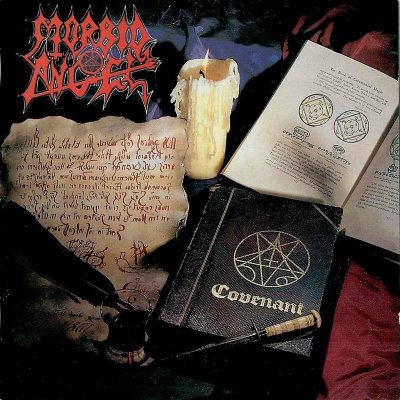
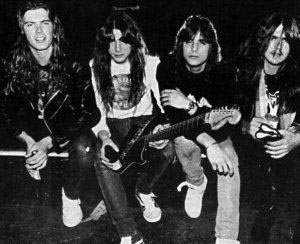 Death metal is structuralist heavy metal that borrows heavily from classical and industrial music. Its heritage is equal parts neoclassical heavy metal from the 1970s and hardcore punk from the early 1980s; if you throw Discharge, Judas Priest and King Crimson into a blender and set it on “high,” you might get something like death metal. It took from roughly 1983-1988 for death metal to fully evolve, and at that point, it experienced six golden years of fruitful growth before lapsing as black metal eclipsed it in popularity.
 The history of rock music has been written by commercial promoters who have tried to establish its “authenticity” and uniqueness, and therefore, almost all mainstream publications are hostile to death metal. Death metal reminds us that rock music, blues and jazz did not arise autonomously in America, but were based on centuries of European popular music (the I-IV-V chord structure of the blues is derived from European folk music, and its “blues scale” is a modification of Asian and Celtic scales). Rock music is a scam, and its marketing makes it seem to be something greater than what it is, which is the same old music dressed up as a product. Death metal more than any genre before it broke from the rock tradition, and therefore is a threat to the rock establishment and its profits.
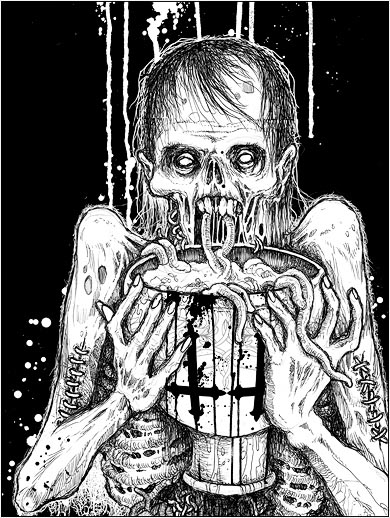 Like most musical genres in the modern time, death metal is constantly under assault not only from external interests, but from within, as self-interested people try to make rock music and dress it up as death metal. These attempts to simplify the genre would benefit those who attempt them, as they would both be able to make a saleable product (being similar to established musical tastes, it sells easily and broadly) and be able to claim the “authenticity” of belonging to an outsider form of art such as death metal. These false death metal bands have polluted the genre with the same mainstream dogma and musicality that death metal sought to escape. Like all human social breakdown, this breakdown occurs through the selfishness of individuals who are unwilling to admit that the health of the genre is more important than their personal profit.
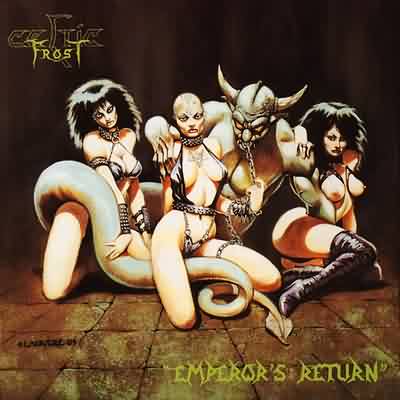 During the years 1983-1985, a style emerged that was between death metal, black metal and thrash, and from this all of the succeeding genres were to derive their musical inspiration. Bathory, Sodom, Hellhammer/Celtic Frost formed the basis of this style, augmented in the Americas by Possessed, Slayer and Sepultura. From these founding acts styles diversified into death and black metal. While many give credit to Venom for the term black metal, musically speaking they were rooted firmly in the heavy metal tradition.
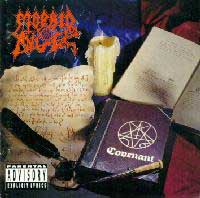
 Death metal bands are occultist in that each of the founding bands and most to follow had an occult focus or research interest evident in their lyrics. However, few practise mysticism and most seem to use it solely as metaphorology for their works. This is convenient because our moral society, even when secular, bases its morality on Judeo-Christian mythology.
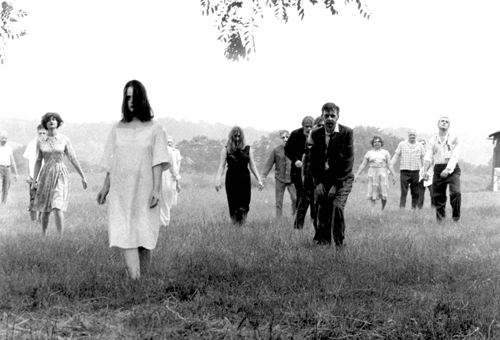 From this, much can be learned about a human future: nihilism frees us from much of our fear by confronting it head-on. Death metal bands have created an epic change in American subculture from one of morality to one of existential self-assertion, but further, the “gore” lyrics of many bands have targeted social denial of collective fear of death.
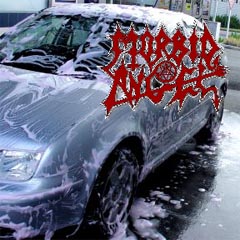 No review of the new Morbid Angel is enclosed here; by the time you read to the end, you’ll know why.