God is love, they tell me, and that universal brotherhood is the way to peace and happiness. But I’d rather have answers than peace, and I’d rather have really intense peaks of experience than absence from conflict. This is most true in music: absence of hatred, war, chaos, loss, tragedy, sodomy and demons means boredom and lots of twee “mixed emotions” poignant ironic dweeb-rock that some scenester in plaid and chains is going to lord over me like the hidden magics of Merlin. Attention hipsters: your music isn’t special. In fact, you’re only pretending it’s special because it’s not and you want a reason to feel really cool and to try to make me feel like the dweeb. But then again, I’m not the one wearing an ironic ensemble designed to tell the world I’m not a sheep. Because telling the world you’re not a sheep is not only transparent, it’s also one good way to get trolled by a large corporation. We’re here to dodge the sheep/anti-sheep dichotomy and just look for interesting music. Welcome again to Sadistic Metal Reviews.

Iron Age – The Sleeping Eye
Many things have two masters, but this band has two souls. The first sounds a lot like Manilla Road, with more of the aggression of later Destruction and the progressive vibe of Atrophy, with the nu-hardcore vocals of later At the Gates. The second is early alt/indie progressive speed and doom metal that sounds like a cross between Sabbat (UK) and St. Vitus, or any of the doomy hard-rock influenced bands like Sacrilege (“Turn Back Trilobite”). Lead guitar is the real standout, with solos that seem to wander around the obvious but chart a path right for the major theme and then spell it out offhandedly, as if unveiling a card trick, without losing the musician’s sense of spirit and audience that keeps them from being gimmick. Riffs are more of the European style, with one or two chords offset against a rhythm played in fairly inconsequential chords or open strings. From this the band modulates into its second soul, one in which a good Sabbathian doom riff must play out evenly against a changing backdrop of tempo, which through its permutations selects variations and complements to that theme. Compared to underground metal, this sounds sparse and somewhat like a Model T, with tempos and architectures of an earlier time. However, it’s quite good and puts both most doom metal bands and most speed metal bands from the post-1994 era to shame.

Evoken – Antithesis of Light
From the epic doom category inhabited by Skepticism and Disembowelment, Evoken make dark long slow heavy metal with melodic underpinnings and plenty of slow chords and arpeggios. They create as a result a mood of lightness and suspension of belief in the midst of a glacial motion, grinding forward into minor key melodies. On the whole, it is lighter and more conventional heavy metal than Skepticism, which is its closest stylistic cousin. The music is good but not particularly compelling.

Wardruna – Runaljod – Gap Var Ginnunga
Remember how hippies used to gather at any kind of “cultural” event to play music, and how, just like with the Grateful Dead, it was impossible to tell the difference between songs? Wardruna updates the hippie model by using traditional Norse instruments and chants in what are basically organic dub pieces. Organized around a beat, they grow through layers of vocals, jawharp, and other instruments, but layers come and go in a cyclic pattern which means that at some point the dub fades toward the horizon. It’s a neat experiment but not very listenable, mainly because in order to keep content bland, it does not let these songs breathe or grow.

Hopewell – Good Good Desperation
Technically, I s’pose, this is post-rock. Really it’s just a very cool updated hippie jam from the 1970s. Think MC5 in collision with the Grateful Dead as if executed by Motorhead and you get the general idea. Advantages are that it’s instrumentally dense rock music that’s still easy to listen to; downside is that it’s still stranded in rock ‘n roll land where everything must bounce and be dramatic. This sort of kills the overall dynamic. Parts of this are a David Bowie love fest, and other parts are reminiscent of a dark rock version of Sisters of Mercy. But on the whole, the bouncy ironic party atmosphere — like Talking Heads colliding with Faith No More — swallows up everything else, reducing it to a predictable cycle.

Caspian – Tertia
Post-rock with few vocal additions that works at building a mood through ambient repetition, using layers sparsely and mostly working a noisy but gentle mantle of sound, this CD is one of my recent favorites — for background use. It’s not too dissimilar to the forest style of black metal where you have droning riffs build up, then a solo that sounds designed for traditional instruments, and a slow fading away. It’s also very close to guitar ambient like Robert Fripp, but with active drums in the background and frequent use of punk/black metal/shoegaze hybrid riffs. It’s soft like a fountain in a garden, sweet like that well-intentioned nerd who tried to take your sister to a date at the Natural History museum, but also, kind of boring on repeated listening.

Meshuggah – Contradictions Collapse
With all the attention given to retro speed metal, it’s important to mention the best releases from Meshuggah. Clearly this band always intended to work jazzy technique into Metallica-style speed metal with Prong influences, meaning a more flexible sense of rhythm and harmony, in addition to a death metal-descended vigorous riff salad that often re-uses riffs at different tempos or broken into puzzle pieces and reassembled in different order and scalar direction. Solos are the kind of diminished scale, oblique harmony noodling that made jazz fusion fun for the first few years. There’s a bit of bombastic bounce in the Exhorder/Pantera style of howling verses and riot shout choruses, which makes this album sound dated. I can also pick up Destruction and Nuclear Assault influences. Hetfield influenced these vocals. This is by far the best thing this band have done because it shows them at their most honest making music they’d like to hear and judging by the subtlety of it relative to their later works, this was the last time they were freed from a cynical vision of their audience as wankers who love anything that sounds “technical” as it builds up their own egos. Other than the style being abrasively 1980s I’d listen to this, which I cannot say for anything else this band did save None, their EP before they got fully cynical and dollar sign oriented.

Heaven and Hell – The Devil You Know
This album represents a huge improvement on other Sabbath-related efforts over the last decade. Borrowing a page from the AC/DC book, it focuses on simple rhythms and movie soundtrack “epic” riffs mixed in with the heavy metal standards. Lyrics manage to capture a sense of the vaguely sinister and ironic, and vocalist Ronnie James Dio delivers them with even-handed clarity and force. The magical sense of songs developing into some protean animal unknown to their origins is not here, but the full dose of classic heavy metal feel with the relentless energy of contemporary AOR makes up for it. Instrumentalism is reined back; Iommi’s solos are fragmentary and cut from whole cloth, and bass follows guitar, which sticks to middle-of-the-road power chord riffs, but the result is not bad. It’s easy to listen to and enjoy with half a brain, and for that has some pleasant melodies and rhythms, all while keeping an almost trademark heavy metal sense of obsession with the dark, conspiratorial, occult, and inverted symbols. If you can imagine Mob Rules hybridized with Blow Up Your Video with a touch of Motorhead at the fringes, you can see why this album has more appeal than the hidebound retro attempts of other classic bands.

Lugubrum – Winterstones
We all try to like this. It’s Burzum-technique applied to a doom metal band. So it trudges, then picks us up with a little melody, then goes back into the deep harmony. Again and again. Without making any really clear points, or showing us an adventure not of our own projection. So after awhile, hey look what’s on TV — you know, they’re showing those commercials again with the annoying chick with the hipster hair. I was doing something, and there’s some kind of music on in the background, but it seems really generic. What the heck? Oh, Lugubrum. Not a bad effort but nothing I want to hear again. This artist needs to take some risks and show us what’s in his/her/its soul.

Christ Inversion – Obey the Will of Hell
The musicians behind this demo studied their black metal well, but never quite figured out how the composition of the music differs from regular old heavy metal and punk. There’s too much emphasis on verse/chorus structures in the punk style, and leaning on harmonic “sweet spots” with trudging repetition the way heavy metal makes choruses, ending up with something that sounds very much not like black metal. Songs are pretty basic and relatively musical but not memorable. Vocals are pitch-shifted and irritating, and riffs show a ton of BEHERIT influence but none of the grace. I guess it’s OK. I also guess I don’t care since I can find 400,000 demos that meet this description.

Land of Kush – Against the Day
After a lengthy 1970s ambient noise track from which you can smell the idealism and psilocybin lifting like a cloud of morning fog, this band detours into spacious ambient rock with chanted murmur vocals over insistent beats with serial changes and extensive instrumental soloing. This is enjoyable to listen to but it’s hard to imagine putting on except as background reality tuning, which it does well: dropping us into the hopeful deconstruction of the 1970s with the savvy layering of our contemporaries. It’s like Morcheeba without the affected digital disco urban funk.

General Surgery – Corpus in Extremis
It’s unlikely the broom will ever evolve beyond what it is now and has been for a thousand years. For certain needs, the response doesn’t need to change. General Surgery have tried to escape being a Carcass tribute band by shifting their vocals to later Carcass style and trying the modern death metal thing, which basically means death metal that writes its songs like metalcore and tries to distract/annoy like nu-metal does. There’s a lot of tribute to the old school in various riffs, but just as much tribute to sped up heavy metal and modern metal. It reminds me of the recent Seance and fails for the same reasons: too busy, too ambivalent about its own style and lacking any kind of refinement of message to an insightful, profound, gradually-revealing passage through experience transferred.

Eyes of Ligeia – What the Moon Brings
In that interesting intersection of indie rock and doom metal, Eyes of Ligeia is a veteran I remember first appearing in the middle 1990s — and to their credit, they’re making the same style of music but have improved it in every way over the years. Not many bands are able to define what they want and then instead of getting wide-eyed with trying to make their style fit an audience, divert their energies toward making their content and form mate each other more ideally. Eyes of Ligeia drone quitely under rasping black metal vocals, using either carefully picked open chord riffs or power chord earthmover doom riffs, but using both in complementary pairs with background keyboards that provide a deepening sense of mood. Reminiscent of ritual music, this repeating loop of sound produces a hanging atmosphere like overtones to a chord slowed down to the milisecond scale. For many of us, appreciation of this band is natural even if we find the sub-genre — doom metal — to be too repetitive for our tastes.

The Chariot – Wars and Rumors of Wars
Thrash bands broke into two groups, the punk-style and the metal-style, although both were mixes of metal and punk.Same way with metalcore: ranty, new style hardcore defines the sound of this metalcore band. The “core” in hardcore comes from the love of abrupt riff changes and random riff combinations, with really enigmatic choruses, and here it’s put to good use so that we hear loud angry ranting that changes abruptly like a car wreck, then there’s a recognizable pseudo-emo chorus. Do we need another band like this?

Drudkh – Microcosmos
Boring candy. That’s what you need to know. Every part of this CD sounds sweet, but it’s also boring as hell because like music they play in grocery stores, there’s no change in mood. There is no journey in these songs. They turn on; there’s a mood; they throw in all sorts of stuff to obscure the fact that it’s static and dimensionless; then it ends. Sum total change in outlook: nothing. It’s Britney Spears, like Aura Noir without the aggression. Notice how heavy metal shredder guitar coexists with Burzum derivations, Graveland folkish parts, and the occasional prog metal riff. And then a cheesy heavy metal solo that meanders. What does it mean? It’s the anti-meaning, which is to say there’s no direction other than self-reference. That’s why it’s boring. It’s candy because these are like pop songs very pendulum-like in their transition between recognized forms of non-threatening order. The prog parts remind me of Kong, the black metal parts of Abyssic Hate and Ved Buens Ende crossed.

Brutal Truth – Evolution Through Revolution
Like Sounds of the Animal Kingdom, this album shows Brutal Truth with more refined technique but a lack of gestalt that decreases the status of this album as something pushing a genre forward. Instead, it’s waving the flag but does so without finding an angle of its own on the genre, so it ends up being standard grindcore played with Brutal Truth technique by arguably the most proficient musicians in the genre. There are moments of sheer brilliance in riffology, and the cynical nature of these songs more resembles early DRI than the boiled tasteless political partisanship of recent grindcore, but nothing is going to really floor you despite having many powerful aspects.

Teitanblood – Seven Chalices
After everyone in the underground was done praising this new work as a resurrection of the spirit of the 1980s, there was a brief lapse in the hype as people re-thought their extravagant praise. Now it’s time for some reviewer to come along and haul out two names: Deathspell Omega, and Blasphemy. This CD doesn’t sound anything like Deathspell Omega, but it uses the same tactic of working its aesthetic like a Hollywood fashion designer. Lush layered voices, monastic chants, interludes and lots of guitar noise during songs make this “sound like” (to our conscious minds) it has depth, richness, different experience. But like Deathspell Omega, once you strip away all that art director frippery, you find a pretty ordinary CD. In Deathspell Omega’s case, it’s a long-melody fetish derived from early Ancient. In Teitanblood’s case, it’s a desire to use Bathory’s ideas, especially vocal ideas, in a form of death metal that emphasizes doomy passages alternating with a slamming interruption of cadence. The result is laborious. Get ready to let your monkey brain get distracted by the aesthetic while very unexceptional music bleats on by like a stream

Tragedy – Nerve Damage
People kept hearing me listen to Transilvanian Hunger and they’d say, “No way dude, you need to check out Tragedy, they started this style.” I have come to the conclusion that they never heard Discharge, GBH or Sarcofago; however, they’re partially correct. Tragedy is a very metal-oriented take on what it would sound like if Disfear covered a whole bunch of Blink 182, Offspring, Ramones and Sex Pistols songs. These are melodic bouncy punk that eschews the UK82 stylings for rock-style pocket drumming and Motorhead vocals with emo chord progressions melded into standard punk. Harmonically, it’s rock music on a series of power chord shapes. Structurally, it’s sugar pop with a big dose of AC/DC and old punk. For this type of music, it’s great and extremely catchy and fun listening, but it’s going to bore anyone who got into Transilvanian Hunger or Tangerine Dream (its inspiration) and grasped how much a non-linear atmosphere expands the enjoyment of music.

TheSyre – Exist!
This CD has absolutely nothing to do with black metal and death metal. I would style it instead as a hybrid between later Metallica, Amebix and Strapping Young Lad. Most of it is speed metal riffs that ride a bouncy rhythmic pocket, then deviate into harmonically oblique fretruns borrowed from the classic days of metal and rock but informed with an odd, rock-opera sensibility that gives each one place in an evolving narrative. As a reviewer, I have avoided this band for years because for the most part I avoid speed metal, and this is very speed metal in a style like a crossing of …And Justice for All with Kill ‘Em All: hard-edged muted-strum riffs rebounding from a bold heartbeat rhythm. The odd uses of harmony are SYL-ish, but the Motorhead-cum-Exploited vocals are pure Amebix as is the expanded but theatrical song structure to this thirty-two minute piece. If this recording has an undiscovered strength, it is its ability to make refreshing and new some classic riff patterns and put them into complex songs; if it has a weakness, it’s that like Amebix, it divides up its epics with aesthetic elements like sound samples and rhythmic pauses, and so doesn’t achieve the degree of musical integration it might like.

Orthrus – Tyrants of Deception
Imagine if Helstar, Forbidden and Coroner had a big orgy and decided to spawn an offspring with death metal vocals and speed but the German-inspired speed metal of the late 1980s. Within that context, this CD plays it right down the middle: nothing new, but well-executed, if not ambitious enough to make you reach for it again.

Pest – Rest In Morbid Darkness
This is the most schizophrenic band heard recently. It thinks it’s black metal, but really it’s head cheese made of ground up Slayer riffs with big thick chunks of heavy metal, speed metal and underground remnants. It’s good if you listen to each riff, but not really distinctive, and after a few tracks it becomes clear there’s no direction other than upholding an already well-known form.

Nagelfar – Hunengrab Im Herbst
Melodic black metal. They nailed the technique, but then wrapped it around very linear songs. They avoid carnival music, but don’t make it beyond one dimension of mood. Semi-comical vocals also make this dismal, as do recycled riff styles from speed metal.

Necromantia – The Sound of Lucifer Storming Heaven
This immensely creative music uses black metal vocals but is basically Judas Priest styled heavy metal with a dose of Queen or maybe Vangelis to give it an epic character. It is admirable for its variation and mastery of the rock/heavy metal form, but might not appeal to underground listeners.

Solis Aeterna – Sol Triumphalis
If you can imagine Lord Wind with simpler instrumentation and longer phases of repetition, you can visualize the style of this entry project, although it has a worldview all its own. What makes this enjoyable is that it attacks with the bombast of a movie soundtrack, but then dissipates until it resembles a background drone. The objective seems to be a mental tuning of the listener toward moods in which one can appreciate the eternal. Like Burzum’s Baldr’s Dod, Solis Aeterna applies entry-level synthesizer sequencing skills to layers of background rhythm and slow-changing tones, over which lead keyboards riff in rough time with the tribal drums. This project will improve in clarity as time goes on, but it might be best for simply unfocusing the mind as if listening to rain at midnight.

Incest – Misogyny
This Texas band produced one demo and then vanished. They attempted to make avantgarde death metal in a style like Timeghoul and Goatlord colliding with Nuclear Death in the wings. Vocals are from the “stand back ten feet and howl at the mike” variety, and drums are surging bashing in the punk style, but guitars make spidery lead riffs wend their way between the punchier power-chorded material. There are many attempts to mix melodic riffing with more putrescent, organic rhythms, and a desire to make song structures that interrupt the cycling of riff and chorus with a series of breaks to interludes which make good use of the aforementioned melodic proggishness. This is more interesting than all but a few things we get sent yearly, but it never really manages to take wing because it comes across more as a theatre of the violent and maladjusted than something we’d want to listen to, and the lack of melodic development reduces each song to a circularity of the inconsistent. Still, I wish they’d developed this further as there’s potential here.

Crematory – Wrath from the Unknown
People have always talked about how important this band is, but it — sounding like Obscurity, Lobotomy, Suffer or Grave — resembles some of the more battering and simplistic Swedish death metal, meaning that this is almost purely rhythm riffing with little melodic or harmonic organization, and as a result, songs are unified around the synchronicity between a slower rhythm and a series of faster ones. Like the heavy American bands, Crematory favor trudging and pounding patterns with lots of walk-up and breakdown action in the middle, battering us about with the change in tempo and rhythm but in a desperate bid to be nihilistic reducing music to the threshold of simplicity. While it is not bad for that style, it is also completely uninspiring in light of the better options out there.

Actors and Actresses – Arrows
This is indie rock shaped into shoegaze with the pace of a modern jazz band, like an early version of REM playing through the haze of Ride while covering the slower songs from Sting or a postmodern Dizzy Gillespie. The major asset here, besides musicians who can do coffeehouse sparse without coming across as dead air merchants, is the purring Morrisonian vocal track, which guides us all like a hypnotic trailblazer through this forest of pop sounds reformed. It is calming, however.

Mutiilation – Sorrow Galaxies
Someone decided to make the Hollywood version of a Mutiilation album. Instead of those long, deepending moods, we’ve now got carnival music, that like carnivals tries to distract you with something new and unrelated every second. It’s like walking between the stalls at a state fair: here’s a roundabout riff, then the bumper cars, then a droning Drudkh-style black metal riff, then the fortune teller, then a Burzumy moment — and a break for cotton candy — then back to the circular passage through songs. These are very sing-song, pleasant and not dark at all. It’s questionable why you’d listen to them since you can get the same thing from Dimmu Borgir with better production and keyboards.

Gorefest – Rise to Ruin
Let me up out of this one, O narrator. No matter what people claim is “new” in metal, it always sucks and involves simpler, catchier rhythms and more rock ‘n roll touches. This CD is no exception. It’s chock full of two chord riffs that feature a lot of repetition and sudden reversal in a rhythmic hook, and then a sort of extended jam session in the middle. Like all bad metal, everything is calibrated to the ranting, riot shout pace of the vocalist, which might “work” for Sepultura’s Chaos A.D. but here just dumbs down a great band. It’s death metal if you mix it with Led Zeppelin and a crowd chanting for free bread. While no part is horrible, the sensation of listening to all of it is dizzying numbness of the forebrain.

Voivod – Infini
No one wants to give this thing a bad review because it’s like kicking Piggy, Voivod’s dead guitarist, when he’s down. However, it’s painful to listen to this thing. It sounds like Motorhead, updated through Prong, covering the Doors. Lots of really dramatic vocals, rhythmic riffs like boots scudding across a waxed floor, jaunty choruses, and occasional flashes of the lush dense chording that once defined Voivod. Percussive structure is equal parts plain and dramatic. Anytime you find yourself zoned out on the fairly unexciting riffs and the Nirvana-ish whiny vocals, there’s a constant pounding drum to remind you that you’re listening to music and you-are-glad-you-paid-for-it. Piggy was brilliant; some of the work on this is almost to that level; however, Voivod was heading downward since Negatron and this album continues the fall.

Dawnbringer – Sacrament
While this band is compared to At the Gates, a better comparison would be to Children of Bodom hybridized with Aurora Borealis. Chord progressions are very indie rock and technique comes from decades of melodic metal, while vocals sound like Motorhead, but the whole package would be more at home in the pop genre than metal. Simple-hearted melodies are in themselves good for their three-note span, but melodic development gets either so gratifying it’s impossible to appreciate, or is so predictable the other shoe dropped before the first. Nothing in particular to dislike here, but no reason to hunt it down.

Sick – Satanism Sickness Solitude
Very basic black/death metal written as if it were punk music, with simple loops of verse and chorus riffs, Sick incorporate some cyber elements like samples and vocoder but are essentially really basic metal not much changed from the early days of Metallica. While they do better than average at being this type of band, nothing really memorable stands out here, not just stylistically but compositionally — we’ve heard these combinations of notes and rhythms before, and no amount of “industrial” touches or even 400 lb transvetite divas could save us from the ordinariness of this offering.

Cryptic – Once Holy Realm
This is death metal made to sound like black metal, and it has a lot more common with a faster rippling less percussive version of standard Tampa metal than any esoteric origins. Melodic riffing fits into this framework, as does as a blackmetal rhythm, but song structures are closer to death metal riff salad and notes seem to be picked from very evident progressions. Like most reviews, this one concludes with “you won’t miss anything.”

Textures – Drawing Circles
Abstract song titles, cool conceptual name, obviously a lot of power thrown into production — oh hai, it’s post-Cynic “post-metal” metalcore that is like a cross between Jawbreaker and Spyro Gyra. And I really wanted to like this. The hackneyed punk riffs meet the hackneyed metal riffs and then explode into jazz-fusion cliches with angry Phil Anselmo(tm) vocals ranting over the whole mess. It would be impossible to give less of a shit. Where do the metalheads who like progressive/technical music go? This stuff has little in common with metal; it’s basically punk rock in that later quasi-emo style (Jawbreaker) with a lot of Pantera and nu-metal mixed in with the technical influences. That isn’t a direction, and you need to have a direction to articulate anything worthy enough of technicality.

Amorphis – Tuonela
This album is painful because it’s so well-executed, but so soulless and comical. It’s basic rock music that slightly reminds me of VNV Nation because Amorphis use picking of high notes in the background to highlight bassier foreground riffs, like if U2’s The Edge started taking on the sequenced keyboard trills VNV use in the background of their songs. There is something in the Scandinavian mentality that has them living in a paradise of social order, and longing for the grittier, weirder world of rock. Here it manifests itself in a stadium heavy metal version of the same kind of odd, introspective indie rock found on Quorthon’s “album.” They can’t quite leave metal behind, or underground metal at least, but want to make this really edgy (no pun intended) indie rock. On a musical level, it’s not particularly exceptional but is well-composed and can stand shoulder-to-shoulder with the big bands for mastering the art of songwriting that makes a crowd get together and enjoy the music. Lots of bluesy solos, and odd honky-tonk keyboards overlay this busy, bombastic somewhat sentimental music. I can’t stand it but when I take my car in for an oil change, I’d prefer to hear this over the radio heavy metal in the newer, jump-metal style. But compared to classic Amorphis, on the level of expressing something artistic that is not caught up in the desires and confusions of the individuals and sees a transcendent picture of reality… this is a train wreck.

Magnum Carnage – More Unreal Than a Box of Precious Metal and Radioactive Ore
It’s hard not to like this audaciously homebrew release. If you can imagine an American version of Carcariass, meaning fast chaotic melodic heavy metal with death and black metal stylings, that’s what you’d have here. It’s more American — like a hybrid between North and South American types — in that it throws everything it can into each song and likes really abrupt breaks between genre influences. Sometimes it sounds like the Doors, sometimes it’s Judas Priest (“Painkiller” era), sometimes Led Zeppelin and then equally as frequently, a hybrid between Fallen Christ, Angel Corpse and Dissection. Mostly it’s a showcase for extremely interesting solos, fast riffs and some deft harmonic changes that give the listener the sense of a pit dropping out beneath the music and then a new pseudopod of sound rising from within it.

Gifts from Enola – From Fathoms
Let’s make one thing clear: one variant of post-rock is “techno played on guitars.” That means a layered style of composition, where themes are introduced and overlap to make patterns of their combination, and their coming and going has emotional significance. It’s an effective method. However, it’s also one that’s prone to formula since with the riff-length available to popular music, it means very simple three note fragments and literal-key soloing, which over time runs out of tricks. Gifts From Enola start with a swingin’ rhythm, and slowly add stuff in the mix so you can watch the colors change much as you would when cooking with a dough mixer. Watch the cinnamon red mix into the beige! See what happens as the egg dulls the ochre! It’s not bad but it aims for an atmosphere, and achieves degrees of lessening or intensifying, but beyond that, it is limited: the goal was not dynamic change but dynamic change serving the goal of a relatively static, semi-ritualistic emotional conditioning. It’s not terrible at all but like much music that tries to replace structure with creative repetition, rapidly becomes static. The surface creativity of this album is amazing as they blend sounds from pure noise to post-punk/emo guitar work to a dozen popular music genres including the world’s first disco grindcore, but underneath it is basically the same stuff we’ve been choking down since 1931. What’s nice about it: no vocals.

The Syre – Resistance
By casting aside any sense of genre allegiance, this French Canadian powerhouse have made their best album to date: equal parts indie, bluegrass, punk, oi, Motorhead-style metal and Devin Townsend or Probot style experimental material, this CD like a minstrel show adopts the guise of its influences to act out a theatrical journey through the different modes of human thought. Dominating by its rapidly changing aesthetic, this album is a concept piece that’s every bit as foot-tapping as Amesoeurs but has the raw aggression and bouncy determination of bands like Revenge or the aforementioned Motorhead. Clearly a lot of thought went into this. Its music does not aim to be groundbreaking, but like a concept album or modern folk, tries to unite theatre and music with idea and create an almost Jungian symbolism of the same. For those looking for an alternative to the now-hackneyed black metal, this is a deliverance in a form where one wouldn’t think to look.
No Comments


 Promised Land of Heavy Metal is a documentary about the history and philosophy of Heavy Metal and how it became such a big deal in a small country called Finland.
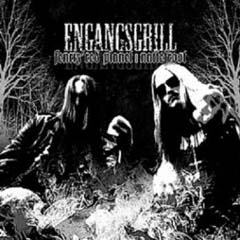 We’re going to talk about the first band here, Fenriz’ Red Planet, because Nattefrost is forgettable 1970s punk rock dressed up as early 1980s black metal. This band is a hybrid between doom metal, 1970s heavy guitar jam, and what they call stoner doom now but was recognizable in St. Vitus, Pentagram and Sleep for many years. The production approach and song style is closest to 1970s heavy guitar rock, like Cream or even Led Zeppelin, in that songs are verse/chorus works with a big fat diversion stuck in the middle that may run through a couple of riffs but comes back into key and rhythm so the cycle can spin again. But over half of the riffs are straight out of old school 1980s doom metal, and that would be St. Vitus and Pentagram but also late-blooming NWOBHM with a doom edge like Witchfinder General and Budgie. It’s not exciting; if anything, it sounds like a demo where the band hasn’t yet finalized direction and aesthetic. However, it is good; these songs have character and a spirit to them which you cannot get anywhere else. You can hear a few lifts from Fenriz’ folk/metal project Storm and one or two similar themes to Darkthrone, but this CD doesn’t need to namedrop to stand on its own. They named it “Engangsgrill,” which apparently is a type of disposable barbecue, which fits exactly the kind of sloppy rock/metal hybrid you have here: pickup trucks headed to the country with a keg, a bong and some friends, followed by a weekend of the best neighborhood bands jamming, society gets forgotten until on Monday morning you drive back with a mouth full of ash and the kind of diluted hangover that comes from cheap beer in constant consumption.
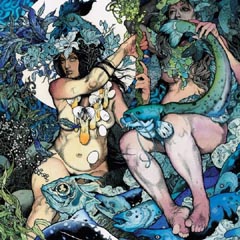 Oh neat, an emo/stoner metal hybrid with lots of indie and punk rock touches. If you can imagine Neurosis and Jawbreaker making sweet love with newer Sleep, and throwing in tons of stuff from the heavy metal and indie rock canons, you’ll have a good image of what this cheeseball release has to offer. From the way the labels and the big industry reviewers — who have about five minutes to hear each CD, and put them on in the background while socializing for two weeks, then forget about them — went on about this CD, you’d think it was the second coming of innovation itself. Instead, it’s stale and completely loses what’s good about metal and punk, converging on a mean that’s closer to your run-of-the-mill hipster band. This is awful.
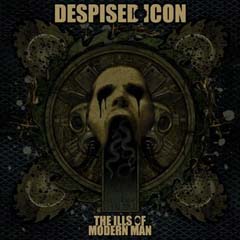 Metalcore is rock songwriting with technical death metal technique, and a desire like punk music to string together radically “different” riffs as if it can surprise us, and since it’s random in structure, built around what’s left: vocal phrases that end on the expectation of the offbeat like a sales pitch. Despised Icon is as a result about 80% the fratboy-pleasing, gurgling, blasting, very simple riffs played in difficult time of technical death metal, like Immolation, and the rest is bouncy moronic rock music that I got into metal to escape. Consequently, it has no attention span and cycles like carnival music between different styles and tempos, then crams it all into a barely-disguised verse/chorus structure. What is the point of typing this all out? To point out how to fail at metal. This is the abyss of music and is every bit as stupid as your parents claim your music is. If you want to fail at life, try listening to this random accumulation of parts — each part is in itself OK, not great, but together they add up to a conversation made by borrowing a phrase from 30 works of literature — and as a result project a scatterbrained, neurotic, pointless and non-constructive view of the world. No wonder people hate metalcore; it’s the nadir of underground music.
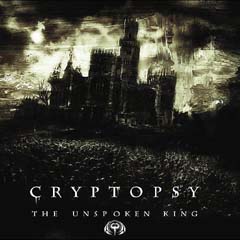 This is what’s left of the band that made None So Vile? The neatly structured, compact death metal has been replaced with blasting metalcore. Metalcore, as you may know, is kind of a garbage plate for underground metal and punk. Based around the interpretation of technical metal into punk structures that Human Remains showed us, metalcore loves randomness in circular song structures, so you get ten minimally-related riffs linked by a breakdown and a few slow chants, and then the whole thing repeats, and then the song ends. It’s music for a fragmented mind and as a result, has the IQ of a headless chicken watching daytime TV. Cryptopsy utterly fails to make coherent music out of this style as their countrymen Neuraxis eventually did, and instead defecate this collection of random riffs based around an egodramatic vocal track. It’s total garbage for morons.
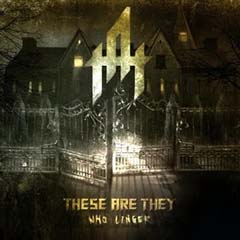 Imagine Iron Maiden doing a simplified version of 1990s Demigod or Amorphis. This CD is unique in that it successfully applies both (a) the old school death metal style and (b) a heavy metal, harmonized-guitar, bouncy riff style — and does it by coming up with a melodic phrase and answer, and using these to make layers of verse and chorus. Play riff; play notes of riff in variation of rhythm; harmonize guitars and repeat, then cycle. The choruses do the same. Nothing sounds out of place, and the deep guttural voice guides it along, but it seems entirely out of place when the heavy metal riffs and trills come into play. In addition, the riff salad of death metal isn’t here; like rock or indie, this rides one pattern for verse and one for chorus, and much variation is not to be found, which probably places this out of the range of old school death metal fans. Still, these are quality riffs and excellent use of basic harmony, which makes this easy listening and because it is not random, a great improvement on the metalcore-heavy stuff we hear daily. For albums like later Bolt Thrower, which tried to make a heavy metal/death metal hybrid, this is probably the best so far.
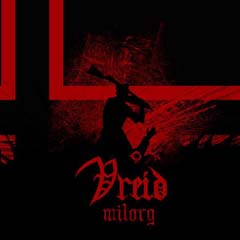 Black metal was about writing unique melodies and building song structures to fit them. Vreid is about mimicking the past with more intensity in each riff, but relying on predictable melodic strips and linear song structures in circular repetition, resulting in songs that are binary like nu-metal: a softer part, then a harder part, then a response to that which softens the hardness, then a restatement at full blast, fade out and win. Most of these riffs come from the 1970s and 1980s generations of metal and get a “black metal” treatment, so end up sounding like rock music in its Sunday black metal evil clothes. The music is driving by a chanting vocal which rides the beat like the shouts of the drummer commanding the slaves to row. Every now and then they launch into an extended melody like a pentatonic version of early ancient, and they have the raw rhythmic power of an early Marduk or Zyklon, but it doesn’t add up to more than most rock music, and considerably less than the formative works of Nordic black metal.
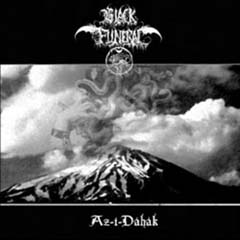 Throbbing notes rhythm a rhythm that then reverses, examines a portion of itself in detail, and then picks up in a new direction which dovetails with the old; the throb remains, like symbols etched in the air with a torch caught on the slower memory of film. In this way, Black Funeral achieves an odd ambience similar to that of Impetigo, where a higher note is strummed repetitively at an offset rhythm where most bands would hammer a lower note on the beat, but by the nature of the larger melodic structure of the riff, this throb does not bounce jauntily like a rock rhythm; it hangs, like a reminder of mortality. Vocals are chant-ish black metal rasps and the mechanistic pedaling of the drum machine fits this sound like a glove, getting further inhuman as it distances us from musical expectation and clean aesthetics. Like the humming beeps of an alien machine exploring the night, this album rediscovers humanity by removing it from the picture and showing us the empty space in which we must construct as inevitable death closes in. While most experts agree “Vampyr” is the height of this band — and who am I to disagree? — this perhaps less proficient album is more haunting and bizarre, yet fits it into a pattern similar to our reminiscences of isolated nights when the future angled away from us like the shadow of an unknown doorway.
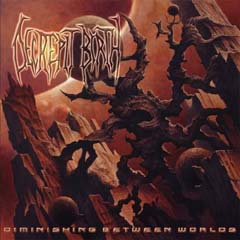 If the recombinant album name and band name didn’t clue you in, here’s the skinny: this band is totally postmodern, meaning that they fit together all sorts of random influences and then link them together with the basics of rhythm and harmony. As a result, it’s like a fast ride at Disneyland: constant changing stimulus of radical difference so much that after a while you lose any idea of where you are, and end up thinking you’ve come very far, when at the very end as the buggy slows you realize you’ve been circling around the same relatively small space. Unlike most bands of this type, which I’m going to call crypto-metalcore because it’s (a) without death metal’s style of organization, preferring instead the hardcore method of having riffs have as little in common as possible and no narrative (b) of mixed riff styles and (c) depends on rhythmic buildup/breakdown for tension because you’re not going to get it in contrast between riffs, Decrepit Birth is good — it’s like an Iron Maiden album hidden in Deeds of Flesh with Blotted Science and Negativa offering critique. However, I can’t listen to this carnival music; it breaks down concentration and replaces it with elaborate versions of territory trod long ago.
 What happened here? Eight years ago — before old-school “revival” was even a blip on the radar — this band had the apparent potential to give proper life to archaic death metal form. Their first album/demo was a brooding, infectious and grimly cohesive piece of work, enough so to make this sound almost brazenly cheap by comparison. Toss in every imaginable death metal riff style coined between 1989 and 1993, lay them out on a rhythmic smorgasbord and put them through enough mood changes to make a pregnant teenager blush and you’ve come damn close to this; add enough embarassing Bloodbath-sounding material (listen to the opener) to something otherwise “authentic” and you’ll never want to hear “old school” again. – kontinual
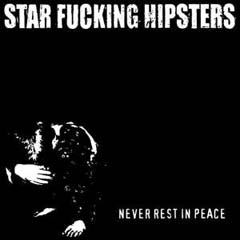 There are some of us who believe that rock and roll music, instead of being a thing deliberately created, is an aggregate of what was left over when we tested everything else against a captive audience. Star Fucking Hipsters prove this by carefully absorbing everything they can into the great sponge of melancholy indie pop. These songs usually start off with fast punk or speed metal (Slayer) riffs, and then pass through a few exciting transitions borrowed from anything industrial, black and reggage or between, but then we get to the core: darkish, self-pitying, somewhat helpless indie pop. True, it’s in pop punk format like The Descendents meets Blink 182 with Jane’s Addiction advising on behalf of the emo CIA, but basically, it’s pop. And when we get to that point we see this album is like a confused and lonely person in the city, covering themselves with newspapers or whatever fashions they can yank out of the wind, hoping no one will ever get a glimpse inside. If that’s its goal, this is supreme art, but more likely it is the emoting of such people hoping we’ll justify their existence for them. As pop, it’s not bad, a little toward the “poignant” side of minor key melodies sliding into major key to give you a sense of hope. But it’s really the same old thing, or the latest incarnation of it in whatever styles have stuck over the past twelve years, and so I can’t imagine why you’d listen to this instead of any of the 100,000 other albums this “good” in the rock style.
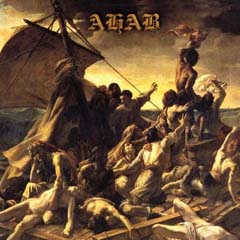 Funeral doom of a style similar to Skepticism if merged with Esoteric, with a tiny bit of Paradise Lost or Sleep in the wings, Ahab is a studied take on the slow and depressive atmospheric music that many people seem to enjoy. Stylistically, it is probably the most advanced of its kind; musically, it is perfectly competent; artistically, it is not particularly compelling. Its melodies have less of a sense of mixed emotions than do those of Skepticism, and its songs develop in predictable cycles within cycles, leaving us with atmosphere by default once all else has been blocked out. Like American rock bands, Ahab also has to throw in that sense of “contrast” where any dominant idea gets a contrarian voice thrown up against it, where bands like Skepticism bear down with enhancement and variation inside their major ideas. Few want to be the voice to stand up and say this, but most doom metal is boring, and not just because it’s slow. Ahab, while better than most, falls under this umbrella.
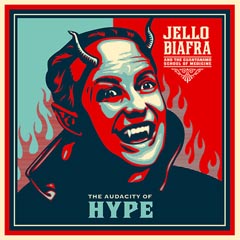 Purists will kill me for this, but this is Biafra’s best work — it’s musical. Where the Dead Kennedys sounded disorganized and messy without really building on that as an aesthetic, he’s slowed down to a pop-punk combo that uses hardcore riffs (Discharge, Exploited) to balance its melodic lead picking (Circle Jerks, The Plugz). That, plus Southern Fried guitar solos and lead guitar noise, forms the underpinning for a more interesting Biafra performance than has ever been heard before. On this CD, Biafra develops his vocal lines both melodically and in timbre, giving the performance of his life with verve and energy. You’ve heard these riff types before, and many of the note progressions are “pop culture” stalwarts that show up in movie soundtracks and commercials, but here Biafra and his band develop each into a song that’s half-rock and half-hardcore, creating a foundation that will introduce a new generation to the sounds of hardcore punk.
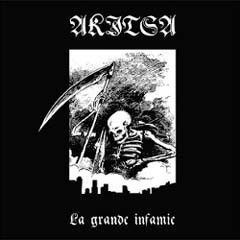 Most of us love the idea of black metal: a few totally socially alienated people, armed only with the truth, pick up guitars one weekend and make a simple mind-virus that helps slay all of the vastly powerful illusions that make our modern world miserable. The problem is that this is far from the truth: most of the people who have made great simple black metal were expert players or at least savants who self-schooled themselves in a unique and powerful style, and their work is very deliberate and designed to make us enjoy life as much as convey some idea. But as in all things, each generation picks up where the previous generation appeared to leave off, so the source of the idea is always lost. Akitsa sounds like a cross between The Exploited and early Dark Funeral, with simple melodic riffs offset against sawing basic power chording; the melodic riffs are too candy-sweet and the power chord riffs are too much of a style we can get anywhere. “Silence” appears to be heavily influenced by “Thy Winter Kingdom” from the first Behemoth CD. The rest of the CD is alternating Burzum influences with later model droning melody. It is both not bad and not really compelling enough to want to hear again.
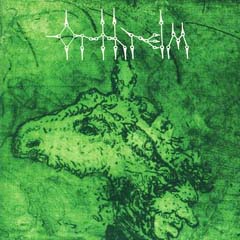 I wish this album were a joke, but like most modern and postmodern art, it’s an attempt to “demonstrate” an “idea,” and that idea has no correlation to the reality of an artist both entertaining and informing his listeners. Instead, you get a lot of fast chromatic playing over serial drumming with occasional breaks into jazz-style breakdowns that are either sloppy or misinformed about music theory. The result is a dissonant atmosphere after the band lulls you into contentment with repetition. Over time, the basic pattern increases in a period-doubling format, creating a linear expansion on a basic idea that resembles holy books that write about the universe expanding from a breath, except here the expansion leads to nothing but a reflection of itself. When Burzum did this with Det Som Engang Var, it built a mood that gained resurgent power of time; here it is purely deconstructive and fragments the listener’s attention span by forcing it through a narrow slit of musical awareness. People will like this because it’s unique, and talk about how genius it is because no one else “dared to be different” to such a degree, but as a work of meaningful art and a listening experience, it is worthless.
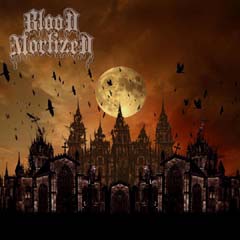 This band claims “active” status in the early nineties, with zero material to show for it. It may very well be true; current personnel have some of the more run-of-the-mill Stockholm bands to brag about in their ancestry. Excited yet? This falls somewhere between Amon Amarth and Dismember’s Massive Killing Capacity, smothered in the “soft” mimicry of the Sunlight sound that seems so common for these fence-sitting bands. The plod is painful and simple and the song development as bluntly screwball as the song titles, lending an air of crafted irony to the whole presentation lest somebody seriously stack it up against any of its predecessors. One wonders whence this stuff keeps coming — I’m wont to call this the “Swedish mid-life crisis” and leave it at that. – kontinual
 What is post-rock? For most, it’s slow atmospheric rock beats with emo, punk, indie and noise riffs slowed down to provide texture. On this CD, Junius blend in a modern taste of the ancient with a Dead Can Dance influence. The result is like a river, winding around obstacles to rejoin itself, but only suggesting a topography. This music is comforting and melancholic, but not really exciting. It is pretty, but will find it hard to escape a lukewarm rock underpinning that reigns in its tendencies to escape for the outer limits. A reasonable comparison might be if Danzig decided to do a space rock album: you can appreciate it aesthetically, but sense how the voice isn’t really there, and how as much as these guys want to be ancient, they’re stuck in a modern paradigm.
 For the last time: if I wanted indie rock, I would have gone to a different part of the record store. Take your Sisters of Mercy gothic vocals, your bad indie rock open chord guitar riffs, and your basic song structures interrupted by dramatic outbursts, and put them there. I don’t want to fall into the old trap of saying “this isn’t metal,” because what I really want to say is that this is indie rock and should be integrated into that genre for the modicum of black metal stylings and ideas it still possesses. Sure, they’re going to call it a “post-rock” influence, but other than a little flexibility of rhythm, what’s going on here is the same stuff emo, indie and shoegaze bands were pumping out in the early 1990s.
 This CD resembles death metal in no way other than the vocals, which are the kind of reverbed whisper shout that made the first Sepultura EP so memorable. But the music… well, it’s stranded in the 1980s. Throw a lot of Metallica, Kreator, Slayer and Destruction in a blender — like every other band from that era — and you’ll get this mismash of riffs very similar to both the aforementioned bands and a huge heritage of heavy metal. To their credit, this band string them together well rhythmically but otherwise seem entirely random. Before someone convinces you this is a forgotten classic, ask them if classic means “good” or just that it was around in the early 1990s.
 We all want to love anything with the enigmatic Nocturno Culto on it. In fact, many of us were hoping he would pull off a Nemesis Divina where his skills converted an unexceptional band into a relative masterpiece. Not so on Sarke — his performance is phoned in, mainly because these songs are sparse, undeveloped, and entirely derivative of their influences in a 1989 way. In fact, the whole CD has the vibe of a collection of songs that have been kicked around since they got written in the 1980s, finally put onto vinyl years after the genre has passed them by. You’re familiar with these chord progressions and general rhythms, since many of them come out of punk rock and hard rock, and you’re probably not unacquainted — unless you’ve been under a rock labeled BLACK METAL GO HOME for the last two decades — with Culto’s interpretation of them. It’s all quite vanilla; nothing to really be appalled at here except how little you care about this flat regurgitation of the past.
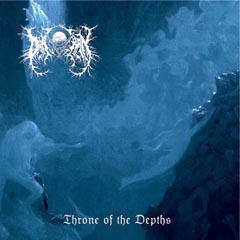 We live in a time of fools. Given no real truths to chew on, they raise themselves on lies, and make competing lies so they can be heard. Then they tell us what metal bands to listen to, and they cannot tell the difference between good music and derivative shit. They will, for example, convince themselves that Drautran is folk metal, when really it’s indie rock songs dressed up in black metal chord forms with a little extra violence. Unlike metal songs, where riffs fit together and make sense, these are rock songs with some metal riffs dropped in between the sing-song verse chorus. They take their riffing inspiration from Enslaved’s Frost but none of the compositional coherence is here. Listen to this if you want to distract yourself, fragment your concentration and dull your possibilities of ever understanding the difference between good music and crap.
 Every now and then, people who lack direction in life and so pay attention to surface features more than anything else, hoping to use these to justify their emptiness, will try to tell you how good a band is because it’s unique and nuanced. Usually this includes some kind of infantilism, like extreme minimalism or incoherence. This tedious little recording fits the bill. People like it because it’s obscure, kvlt, whatever… the truth is that it’s melodically simplistic, goes nowhere in song development, and showcases no really unique ability except to waste your time. They try to eat up as much tape as possible with intros, chants, and very basic keyboard melodies, but basically there’s nothing here. Maybe that’s the artistic point — emptiness — but then again a blank tape would have been more effective, and pleasant.
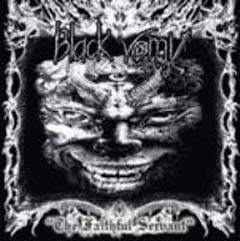 Interesting approach by this Mexican band: take a more technical version of the full speed burst style semi-melodic black metal that Sarcofago made, and intersperse it with flowing keyboard-enhanced choruses in the style of countrymen Xibalba and Avzhia. The result suffers from the radical shift between two very identifiable poles, but the music although very basic develops gently through this style, and as a result is more credible than most of what we get sent here at the Dark Legions Archive Metal Reviews and CD Recycling Center. This is a band worth keeping an eye on.
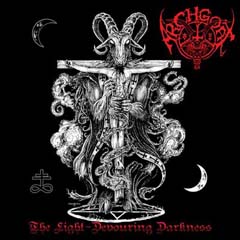 I’m convinced that a lot of contemporary death and black metal is music designed for children, because not only is it painfully simple and repetitive, but it also uses gentle rhythms of chord change — while playing at top speed. It’s like listening to a fan slowly playing an early Mozart piece. This album is similar. Sounds a lot like Blasphemy meets Impaled Nazarene, with the lower register production and slamming tempo changes of Belial. So as a retrospective of Finnish metal technique it’s great, but for anything else, it’s kind of a droning lullaby. What excuses it is that this CD shows purpose in its songwriting, and captures a mood, but for many of us the droning outweighs its significance.
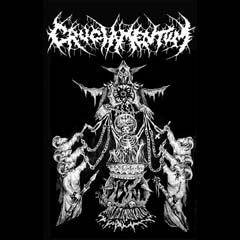 During the past two years, underground black metal shifted from emulating the early 1990s — fast melody — to emulating the late 1990s, specifically Demoncy’s “Joined in Darkness.” The Convocation EP does its best to revive that sound, with an injection of Finnish death metal and possibly American doom/death like Incantation, Winter and Infester. Although it keeps its goals limited, which is appropriate for a demo, this release shows promise in songwriting in that (a) every piece works together (b) together they create a vision of some idea, experience or emotion we can recognize from life itself and (c) while a good deal of it covers known death metal archetypes, it does so without borrowing straight from one source and so gives us a sense of exploring these ideas from a new angle. Low rasp voices, downtuned rigid guitars, and drumming that sounds like it’s straight out of drone/hardcore punk fusion gives this CD a sense of growing out of the past toward something even more ancient.
 1.
1. 
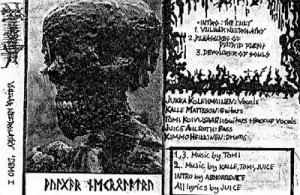 Out of the silence and the cold of wintry nights arose wolven howls, bestial growls and the electric screech of demoniac strings. Clandestine groups scattered across the lake-adorned strip of land which was too vast in area for the people to be in constant touch except by phone and letter, took to the newest musical movement to inherit the throne of the kings of headbanging and thrash: grindcore. Xysma from Turku played Carcass inspired devolved bursts of groovy noise with the mechanical straightforward approach upon which Finnish industrial corporations later built their reputation.
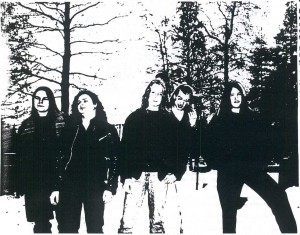 Jalas: I can agree on that this was the strongest period for the music and most of it died in the mid 1990′s when Black Metal music “took over” the underground. For me it is still a bit hard to analyze all this. I have always listened to what I want and when I want. I’m not saying that I didn’t have Black Metal seasons, but bands like Slayer and Morbid Angel were always there, lurking behind (both in my record player and as recording artists).
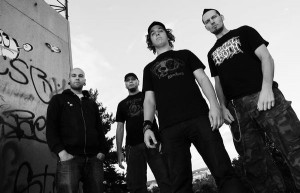 Not many of the original Death Metal fans were enthusiastic about Children of Bodom’s sappy power metal infiltration of Gothenburg techniques or Rotten Sound’s mechanical drum clinic grindcore. Nevertheless, the next generation of longhairs were inspired by these bands who had mastered the latest techniques of production perfect for a violently loud catharsis in car stereo or as a video game soundtrack. It was escapist, but not the Yuggothian dreams of a Demigod. In this case, influenced by groove metal and speed metal, commercial Death Metal sought to act as a youth counselor, harnessing hate and psychotic religion into the individualism of I don’t give a fuck and the various related ethical systems of liberalism.
 The veteran Death Metallers from Olari practiced and mastered their Scandinavia influenced art for 15 years before their first release on a label, the impressive “Architecture of the Dead” EP featuring older compositions. While this unique band seemed to receive very little promotion, disciples prayed for the day of reckoning when this constellation could bestow their malevolence in full force upon the wretched scene. The long, exhausting spell “Swallowed by the Void” was to be the definitive answer to these inquiries. Sluggish, conjuring and micro-melodic abyss anthems pay unyielding tribute to the likes of Dismember and Grotesque, aiming for an evil glory that betrays the way death metal lost the innocent meddling in dark arts prevalent in the late 80’s and discovered serious ideologies by the force of contamination and crossbreeding with Black Metal. Especially the progressive moods of the deadly closing track “Bringer of Desolation”, reminiscent of the Lovecraftian horror pathos of the longer tracks by Nile deserves an inclusion in the Death Metal canon of the decade. Serious catacomb dwelling fans of Repugnant and Necros Christos will feel completely at home with Lie in Ruins’ atmospheric, sacral method of composition which eschews fast and classical parts, but returns to the Sabbath-ian roots of primal death doom experience.
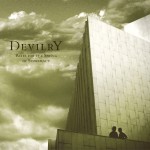 One of the most anti-social and least compromising commando squads from Finland in any musical genre, Devilry’s series of EP’s cumulated during the decade into an impressive demonstration of technical and lyrical ability that converted hordes of Black Metal listeners into old school Death Metal and vicious thrash. Like a less confused “The Laws of Scourge” era Sarcofago, Devilry abstains from long buildups to frame scenes of street violence and political upheaval in robotically symmetric percussion and inhuman, precise, spouting syllables of learned rhetoric. One of the fastest Finnish metal bands, at least in overall impression, Devilry quotes Slayer for a reductionist but holistic approach to songwriting which means that each song is built from a clearly defined set of riffs arranged to unleash the most powerful experience of intensity on the listener, while Sir Holm’s text praises the law and order of a reich that would be built according to the code of the warrior and rule of the naturally supreme. Essays could be written about Devilry’s interest in beauty, as despite the feral character of the music all songs are geometrical complexes with no loose parts hanging and even the cover picture is a serene, celestial scene incorporating Finnish functionalist architecture. Even the condemnation and hate that hangs as an eternal cloud upon the political rants of Devilry, are mostly posed as arguments of: what is not beautiful, does not deserve to be upheld, not even tolerated.
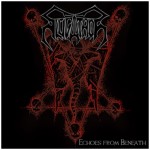 Slugathor is already a veteran of “new” Finnish Death Metal, having debuted in 2000 with the “Delicacies of the Cadaver” EP right when everyone else was concentrating in elitist Black Metal fantasies. The morbid, dirty, ugly and non-theatrical submersion to grinding but dimensional grave exhumations was initially scorned upon but eventually they even signed to one of the premier Black Metal labels of the world, Drakkar Records from France. By the time of the third album “Echoes from Beneath” Slugathor knows exactly how to manipulate intensity and the listening experience of both black and Death Metal listeners, opening cavernous vaults and passages through warped holes in time and space using mostly foreboding rhythm guitar chugging of patterns familiar from since the dawn of Death Metal, ethereal melodic background leads by Tommi Grönqvist and evil vocals by Axu Laakso that borrow technique from both Deicide and Demilich without sounding as extreme as them. Like Bolt Thrower, this band is all about heaviness, ambience and symmetry while all “display” type of elements of technical Death Metal are kept to a minimum. A special mention goes to Ilmari Jalas’ drum technique which borrows heavily from Doom Metal in building up groove to a climax where dynamics emphasize the rhythm riff so that the only possibility is to headbang convulsively.
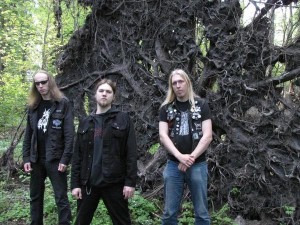 Jalas: Bolt Thrower influenced Slugathor really strongly in the beginning and always. Some people compare Slugathor also to bands like Asphyx or Obituary, but I would say that these influences are only minor and definitely more inspiration has flown, when we listened to bands such as Demigod, old Amorphis, Grave, Incantation and old Mortician. Definitely Morbid Angel also, but this was not heard so well on our music very much, I think. Also some bands, like Kaamos and Necros Christos at least influenced me in a way, because they had such unique concepts and ultimate feeling of death. Some more obscure names pop up to my mind, such as Bloody Gore (Indonesia), Darklord (Australia), all female band Mythic and so on. You know, it was all these 7″EP and demos we listened at the time besides full-length albums. Even demo-material of Dying Fetus, which could be a shock (?) to some because of their nowadays political message. But that band was brutal as hell when we first heard them. Also they were lyrically more into mutilation, etc. back then. Maybe we got into that because of teenage enthusiasm, but for some reason all this stuff still has very special place in our hearts, because they developed us to become what we are now.
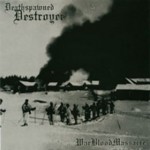 Primitive but astoundingly direct, Deathspawned Destroyer from Huittinen (home of Vordven) has with their two full lengths established Finnish parallels to grindcore influenced bands such as Blood and even Blasphemy but remained widely unnoticed because of a lack of pretension and promotion. While “The First Bestial Butchery” album indulged in gore fantasies of Finnish rural winter madness, “WarBloodMassacre” logically continues to explore real world horrors that happened within the same fields and woods we inhabit here. The shades and violent ghosts of Finnish war history 1939-1945 are not haunted, prophetic or wise in the nearly brainless, stomach churning vision of Deathspawned Destroyer. This is music and lyric of the gut, the trenches and the perpetual dirt. It is Bolt Thrower if it was created by boozing Finnish woodsmen instead of punk influenced British soccer fans. The riffs would probably tell their story as well to men who lived 10,000 years ago, provided they were fighters with hate for the scourge of slavery and love for their home woodlands. The slower parts approximate the atmospheres of Amebix brand of ethereal hardcore. The band gets a chance to try its hand at epic length composition with the more than 10 minute “Doom Before Death” and why the simplicity of structure may make progressive listeners cringe, there is hardly a criticism to be made about the way the parts are elaborated by the cruel lyrics that detail the sufferings of a prisoner of war under torture. The relentless forward driving rhythm and ghoulish voice of the band might be borrowed from the old school, but the vicious, nearly cartoonish black-and-white history flashback is something that needs to be heard to be believed.
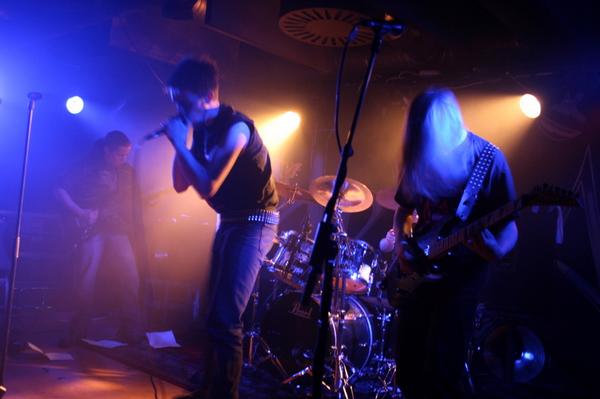 Tuomas K.: Lie in Ruins is conceptually 100% dealing with death, darkness and all things related. After all, this is Death Metal, so the lyrics and the imagery definitely should reflect that.
 Sepulchral Aura is not the first time that mastermind J. Partanen (Second Sun, Aeoga etc.) has picked up the guitar and the drums but it’s the first time he produced a minor classic for the underground to remember from this era of harsh and esoteric Finnish metal. Cryptic, obscurant and violent atonality bursts from Partanen’s figurative composing pen much like Ligeti had developed a passion for speed metal and Death Metal, far from the technical pretensions of the Cynics and Pestilences of the world. Whoever upheld the common misconception that Death Metal is not mysteries and occult metaphor, whoever thought we needed the Black Metal “kvlt” to make us interested in life’s hidden forces and spiritual darkness, had not heard the very dimensional experience Sepulchral Aura engages us in. Lead guitars are non-musical but clear and comprehensible like alien messages sent straight into the brain cortex, vocals are guttural and rasped voices somewhere between animalism and insanity, drums sound like a tribute to old Carcass except for some very idiosyncratic ways to use rhythm and nuance to underline the chaos god that devises the riffs. It is impossible to consider a discussion of this demo that doesn’t mention the legacy of Australian Death Metal and War Metal all the way from Sadistik Exekution to the furthest reaches of Portal and Stargazer. It is very much the resurrection of the sincere belief and primal energy that fueled Bestial Warlust, but in this case consecrated by the wasteland of the North instead of the haunted chasms in Down under.
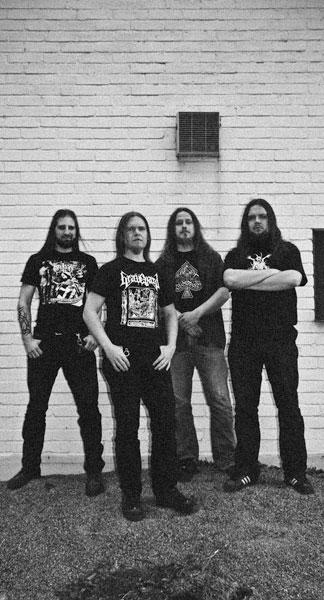 Partanen: Intent and improvisation played a major part in how the music itself turned out to be, so I cannot talk about conscious efforts of tributes to particular bands etc.
 It seems sometimes like a wonder that so many Death Metal classics have been created by youngsters working on their first demo, EP or album but clearly it is a basis for less calculated and more intense statements of the primal truths these eyes have witnessed on their journey so far on earth. While the least experienced musicians on the list, Ascended from Pori prove not one bit worse in channeling the breath of exhumed grave into the nostrils of the expectant Death Metal fan. Simple but glorious, Ascended likes to keep it slow and groove onwards through melodies that recall old Tiamat, Slayer and even a bit of Black Metal. Much like Mystifier or Necros Christos, vocals intone an animated ritual chant to the dead in an almost numbingly rhythmic and non-varied manner. Sound is sparse and clear, with a surprising gap in the lower register lending the proceedings an airy, ethereal vibe of darkness. The foreboding calm of tracks such as “Wedlock of Lust” or the multi-part “Mesmerizing Stench” should be obligatory lessons for most of this generation’s Black Metal bands in what they have missed in pacing and atmospheres of evil. Technical ability and pages of morbid theology do not substitute for the realm of visions and subdued melodies that remind mortals of that which shall be over all too soon – the summer of life, clouded by the storms of the unknown, while the reaper grins to you in the horizon.
 Perhaps no other themes in metal have suffered such an ugly abuse as those of gothic horror and its symbolic exploration of the unconscious, sexual and paranoid impulse within man. As plastic, theatrical and money-hungry hedonists swarmed like a pack of rats to invade Death Metal and Black Metal record labels, they left behind a legacy of fear which caused later audiences to abhor the careful and elegant treatment of the macabre that was the original intention of bands like Paradise Lost and My Dying Bride, before the same bands’ later development infused it with a homosexual taint. While Hooded Menace has not yet produced a work to outweigh the elders, it’s done more than its share in reviving hope in a form with plenty of potential. If there is one thing that has been sadly lacking in the last decade of Death Metal, it’s beautiful and clever melodies. Led by veterans from Joensuu’s progressive Death Metal cult Phlegethon, Hooded Menace pounds, thrashes and makes dramatic gestures of sweeping funereal melodies perfect for a Candlemass album while the lyrics are growled by Lasse Pyykkö (“Leper Messiah”) as absurdist anecdotes straight from 50’s B-grade horror movies.
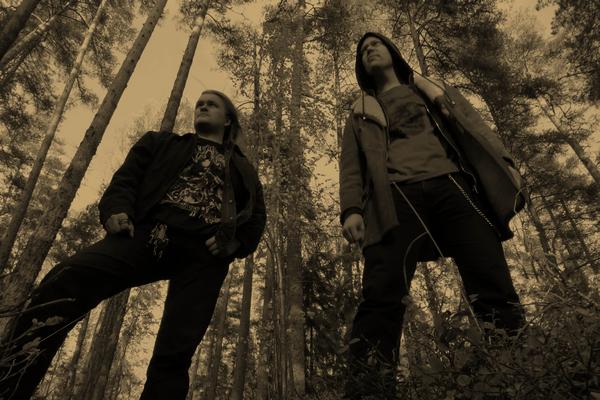 The apparent cheapness of “Grasp of the Beastwoman” or “Theme from Manhattan Baby” is offset by the care and calculation which proves that Hooded Menace has a profound affection for its infantile source material. This trait establishes a profound link with the old school of Death Metal, the musical manifestation of the gore and trash movie obsessions of kids whose awareness of the relevance of death and morbidity to philosophical discourse was only intuitive and spontaneous.
 While most media continues to highlight the hyped up Heavy, Black and Doom bands from the Land of the Thousand Lakes, we at Deathmetal.Org wish to raise a mighty salute to the legions of blasphemy and resistance who are spreading evil Death Metal amidst the wastelands of the frozen North. Unique, demanding and powerful, these bands are not in the way to become the next big thing in Death Metal, but I have the sincere hope that each reader will find something in this diverse assortment that speaks to him in the voice of transcendental communication which is the reason we have been interested in this art for all these years. These hordes will either dominate the world or rule in shadows.
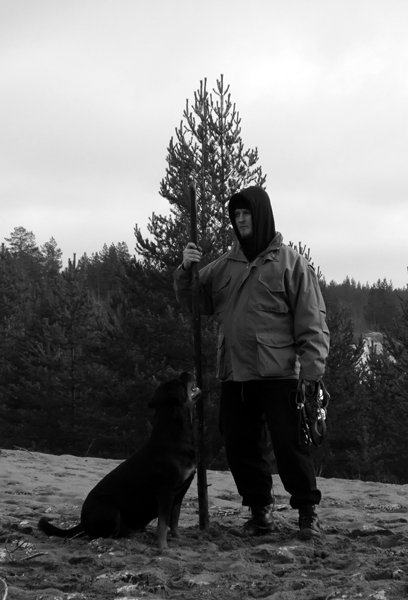 Haavisto: Once Lehtinen quit playing after the second Deathspawned Destroyer album, it meant an almost complete stop to our activity. We did two promising tracks with our new member Tuomas Murtojärvi, but we didn’t really get it properly going so the band and the Death Metal spirit has drifted away. People tend to have so much other things to do and the most important band related people have moved so far from us that when we have the occasional practice we play something totally different from Deathspawned Destroyer. The modern day Death Metal people seem anyway to be in a different world and there doesn’t seem to be a demand for old school ruckus. At least not among the “metalheads” seen in the streets around here. I haven’t followed either the recent developments in Death Metal, because the new bands don’t interest me one bit and the old ones have been devoured through and through many times. Deathspawned Destroyer rests in the shadows and maybe one day will be back and do something worth listening to… maybe. We need a guitarist who has a regular commitment to the project and who cares more about the attitude than playing right. It’s certain that things won’t work out again with the original Deathspawned Destroyer duo, but there’s no strife related to it. Hails to Lehtinen and everyone else who supported Deathspawned Destroyer and were a part of our activity in one way or another!
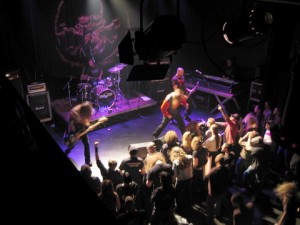 Entombed played a set that disappointed, and this was partially due a lack of their better material being played. Much of the setlist consisted of numbers that were lifted from their third full-length, Wolverine Blues and then onwards, with a lack of attention given to their more pioneering work that was put out on their first two albums, Left Hand Path and Clandestine. Songs were less death metal than they were an aggressive take on stoner rock, songs being much more inclined to the verse/chorus school of rock songwriting, the rhythms more inclined to provoke the shaking of hips and the tapping of feet than they were to bang heads. Whilst this was all good and competent, certainly the great soundtrack of an alcohol fueled evening in the capital of Eire, none of these works, as far as the reviewers opinion is concerned had the violent charge nor the momentum that characterized their legendary debut. Some credit will be given to the vocalist, whose onstage presence and frantic onstage manners gave more depth and urgency to songs that otherwise were devoid of it, and the guitarists tone was brilliant, the same buzzing, ‘chainsaw’ like tone that they helped pioneer back in the early nineties through maximum amplification. Entombed concluded their set with a brilliant rendition of Left Hand Path the staple and title track of their debut album, and it put a redeeming conclusion to what was an expertly performed, yet borderline mediocre set on occasions. It would be wonderful to hear what paths could be treaded if they realise the urgency that made their earlier music essential.
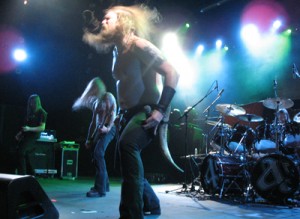 Amon Amarth played an excellent and intense set, mostly consisting of the melodic, fluid and anthemic traditional metal that they have come to be easily associated with. Infectious melodies and precise, double-bass lead drum rhythms bring to mind a hybrid of Blind Guardian and late period Immortal, whilst the muscle and simplicity of their music brings to mind fellow countrymen Unleashed in both the subject matter and the simplicity of the song structures. Musically Amon Amarth have an obvious strong commercial potential, sound highly accessible by the subgenre’s standards, and whilst they are not exactly breaking any new artistic ground, they are still workmanlike and this shows in what was a very well received and well performed set. Johan Hegg is a good front man and throughout the set uses the opportunity to incite the audience to terrace chant amidst his bellowing, whilst taking turns to consume from the mead horn that is his custom to bring on stage with him. Admittedly I would not consider these to be an act of the highest caliber, though they are unique in that they have one foot stood in the primitive and barbaric, with one firmly in the ability to reach out to a large audience. It was a privilege to be involved among the audience that night.
 Every rock fan knows
 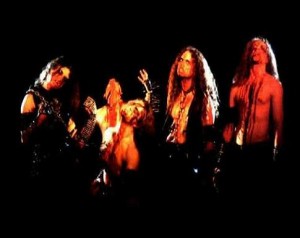 Influenced by hardcore and speed metal, these madmen from Sydney proceeded to destroy the reputability of Australian metal with their on-stage and off-stage antics, almost becoming performance art with their macabre, sarcastic terror campaign of pure noise. Already
 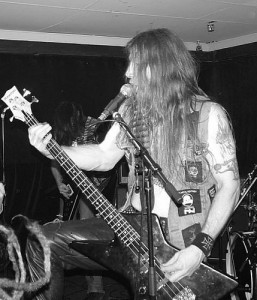 All this might have you thinking that the Nordic and Romantic styles of black metal were obsolete in Australia, but this was not to be the case. Abyssic Hate (whose “Cleansing with an Ancient Race” was a perfect match for the Immortal related Det Hedenske Folk on their split album) intended to capture the harsh poetry of Burzum and Ildjarn. Later material was somewhat unsuccessful because of humanocentric (“suicidal”) terminology, despite ambient leanings in songwriting. Nazxul was the Australian counterpart to mysticist bands like Nåstrond or
 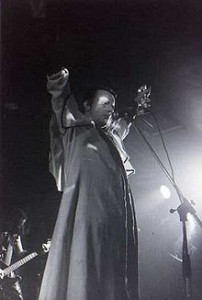 Gradually, we can note the presence of all the international metal trends and hypes increasing in Australia, filling the continent with meaningless bands. It would be a lie to say that the random band you hear from Australia is up to anything good. But there’s some you might like to hear. Asphyxia is a young technical death metal band, influenced by Nile, Kataklysm and the rest of the champions of convoluted hyperspeed – they are bit in love with the Necrophagist digital treachery fashion but they have room to develop and the players definitely deserve applause for their instrumental excursion. Midnight Odyssey uses oceanic layers of slow melody to transform black metal to a landscape of dark clouds, using keyboards in the evocative manner familiar from Schulze and Summoning. The best of the epics on “Firmament” rediscover a youthful, hopeful beauty that hasn’t been too fashionable in the image and commodity oriented latter days of black and death metal. Nazxul, who sadly lost a vital member to a motorcycle accident, released in 2009 their possible magnum opus, the immense “Iconoclast” which has established itself as one of my top black metal choices of the year despite initial skepticism towards the more standard imagery and vocabulary employed on the surface. Suggestively classical and elegant, as Emperor and Avzhia did it, Nazxul praise the unliving and the unknown with a Bach-ian playful sonority, adding themes, keyboards and guitar leads to basically simple songs the same way an alchemist adds prime materials to his boiling tincture of salvation. It is all, and much more, than most of