Darkthrone announces release of Black, Death and Beyond anthology

darkthrone-black_death_and_beyond

Former black metal, now heavy metal band Darkthrone have announced the upcoming release of a triptych analog release via Peaceville, featuring a retrospective from each stage of the band’s career. Entitled Black, Death, and Beyond, the tracklist is as follows:

Death:

Side 1:

1. Snowfall
2. Sunrise over Locus Mortis
3. Soulside Journey
4. Neptune Towers
5. Nor the Silent Whispers

Side 2:

1. Iconoclasm Sweeps Cappadocia (NRK version)
2. Sadomasochistic Rites
3. In his Lovely Kingdom
4. Black Daimon
5. Paragon Belial

Black:

Side 1:

1. In the Shadow of the Horns
2. Inn I De Dype Skogers Favn
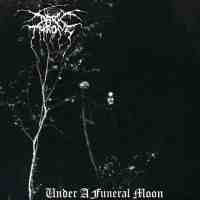
3. Under a Funeral Moon
4. I en Hall Med Flesk og Mjod

Side 2:

1. The Hordes of Nebulah
2. The Claws of Time
3. Fucked Up & Ready to Die
4. Hate is the Law
5. The Cult of Goliath

Beyond:

Side 1:

1. Graveyard Slut
2. Forebyggende Krig
3. These Shores are Damned
4. Pervertor of the 7 Gates
5. Wisdom of the Dead

Side 2:

1. The Winds they called the Dungeon Shaker
2. Grizzly Trade
3. Those Treasures Will Never Befall You
4. Stylized Corpse
5. The Ones You Left Behind

Additionally, the release will be accompanied by a book detailing the history of the band’s career, with input from Fenriz, Nocturno Culto, and former bassist Dag Nilsen, in addition to archival photos and commentary from associated artists and conspirators.

On choosing which tracks to be included on the release, Fenriz described his method, which he calls the “Fenrizolator”:

I never quit my day job; one of the reasons being that I can listen to music on headphones there all the time. To the extent that I rarely listen to music at home anymore, and if I do it’s like I can’t hear it PROPERLY. At work with headphones is where the details reveal themselves and also which songs I can and can’t use in compilations or dj’ing appear quite clearly.

Every time I get/buy a cassette or vinyl I have to transfer them to wav files via a computer programme, then I write a little note to accompany the final burnt disc. But the note first swings by my workplace where I can rate the various songs with a clever underlining-system called THE FENRIZOLATOR. And so passes the days.

He went on to state that following his system, Hans Siste Vinter was the band’s worst track, and The Cult is Alive received the highest score.

5 Comments

Tags: , , , ,

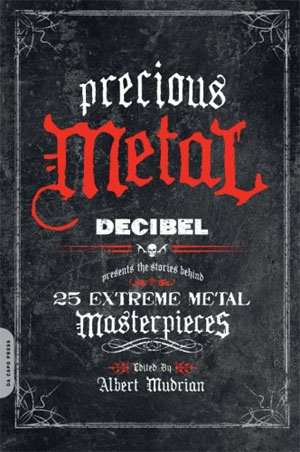
Precious Metal: Decibel Presents the Stories Behind 25 Extreme Metal Masterpieces, by Albert Mudrian


Precious Metal:
Decibel Presents the Stories Behind 25 Extreme Metal Masterpieces
edited by Albert Mudrian
365 pages, Da Capo Press, $14

The 25 Masterpieces
Black Sabbath – Heaven and Hell
Diamond Head – Lightning to the Nations
Celtic Frost – Morbid Tales
Slayer – Reign in Blood
Napalm Death – Scum
Repulsion – Horrified
Morbid Angel – Altars of Madness
Obituary – Cause of Death
Entombed – Left Hand Path
Paradise Lost – Gothic
Carcass – Necroticism — Descanting the Insalubrious
Cannibal Corpse – Tomb of the Mutilated
Darkthrone – Transilvanian Hunger
Kyuss – Welcome to Sky Valley
Meshuggah – Destroy Erase Improve
Monster Magnet – Dopes to Infinity
At the Gates – Slaughter of the Soul
Opeth – Orchid
Down – NOLA
Emperor – In the Nightside Eclipse
Sleep – Jerusalem
The Dillinger Escape Plan – Calculating Infinity
Botch – We Are the Romans
Converge – Jane Doe
Eyehategod – Take as Needed for Pain


albert_mudrian-precious_metal_decibel_presents_the_stories_behind_25_extreme_metal_masterpiecesRock journalism challenges even the bravest writer. Musicians are not known for being articulate, nor is it easy to pin them down, and lore snowballs in that vacuum. For this reason it’s great to see the series of in-depth explorations that have come about recently regarding many classic events of metal. As musicians age, given that musicians have a shorter life-span than average, this is also a race against time in many cases.

Albert Mudrian’s Precious Metal: Decibel Presents the Stories Behind 25 Extreme Metal Masterpieces presents a welcome addition to the genre of historical metal journalism. Combing through archives, the writers of each piece compiled band statements about the album and put them together in linear form, like a conversation. The result is a whole lot of information delivered in a very digestible form, with the extraneous confusion of live interviews edited right out of the picture. It’s a good starting point for anyone looking into these historical nodal points in the evolution of metal.

Mudrian seems aware how easily a book like this could become repetitive. Not just in the answers, where musicians might make roughly similar statements about touring, band formation, the troubles of collaboration and so forth, but in the similarity of bands. If for example he added another three Swedish death metal bands, it might start to get a little bit stuffy in the virtual room he’s created. Instead, he gives us space between acts and a wide variety of acts, but avoids the really awful nu-metal and tek-deth. However, the price of that spaciousness is that he includes bands like Monster Magnet and Kyuss which really aren’t metal at all.

There are some shockers in content, too. Some of these bands, despite their professions of various depraved behaviors, are insanely business-like in how they go about getting recorded and published. Sleep, Cannibal Corpse, Dillinger Escape Plan, Botch and Converge really had their act together. For a few moments, it was more like reading Forbes than Decibel, but it’s really gratifying to see this side of the business portrayed honestly. If you want your music heard, there’s a certain amount of business activity that must precede that event.

On the whole, these chapters are extremely well edited including the choice of material. They are in question-answer form, where the questions are usually prompts about historical events or general questions applied to specific moments or activities. When an incidental or minor character is cited, he or she speaks up for a few questions and then fades out. The bulk of the material favors the most articulate band members and major actors, but the writers shoehorn in as many diverse perspectives as they can. This makes reading Precious Metal: Decibel Presents the Stories Behind 25 Extreme Metal Masterpieces feel like being in a comfortable pub with these bands, on a rainy day, with a tape recorder next to the ashtray.

Each chapter corresponds to a classic album and comes with an intro paragraph. If anything, here’s where the book could benefit from some uniformity and toning down the “rock journalism” aspects. Perhaps not a just-the-facts-ma’am approach, but more of an assessment of where the band fits into history and why people like them, and leave it at that. Some of these were over the top for the actual function they serve. However, among the bombast is a lot of good information.

At that point the interview(s) compiled into a single form take over. Most of Precious Metal: Decibel Presents the Stories Behind 25 Extreme Metal Masterpieces is the bands speaking, and that is the power of Mudrian’s editing and the work of his colleagues. They’ve trimmed out the transient stuff, the window dressing and repetition, and left us with clear statements from the bands that show them in their own voices and approaching the situation at their own angle. This also helps create an epic feel to the epic interviews because it’s a compilation of the best moments of the band commenting on this album, put into one form that flows naturally.

Was the intro, “Human,” something you had conceived of before you went into the studio?
Ain: Yes, we had the idea before we went into the studio — we wanted to loop a scream and make it perpetual. We also wanted to use it as an intro for the live shows. A regular human scream would never last that long, so we wanted to loop it and make it sound like a scream from hell, like how you would scream if the pain was everlasting.
Warrior: We had talked about it, but we were basically still laymen, so we had no idea how we could put it together. So we told Horst what we wanted to do, and he proposed how to do it. But as I said, we only had six days to do everything. If one thing failed, we would’ve gone over budget or had to go home. So, in hindsight, it’s a miracle that tracks like “Human” or “Danse Macabre” came out the way we wanted them to. We couldn’t rehearse some of those parts, you know? I have no idea how we did that in just a few days, especially given our lack of experience. But therein lies one of the strengths of Celtic Frost to this day: Martin and I usually visualize certain pieces of music down to the last detail without even touching an instrument.

This excerpt reveals the power of Precious Metal: Decibel Presents the Stories Behind 25 Extreme Metal Masterpieces. In the midst of the mundane description of studio struggles, Tom Warrior articulates part of the essence of his band. Many such moments of insight, casually and offhandedly mentioned in describing some rather ordinary thing, flesh out this book and make it more than a fan’s quest but a resource for musicians and anyone else curious about the origins and process of creating extreme metal.

Not everyone will agree on certain aspects of this book and naturally any choices made along these lines are divisive. However, the book has enough to offer just about anyone who loves metal so that the purchase will not be regretted, even if there are chapters you skipped. In fact, I recommend skipping those chapters and approaching this book as a buffet. No matter what sub-genres you adore, you’re going to have at least five you’re dying to read, another five you’re very excited to read, and another five you’re curious about, and the rest will be uncertain but you might find some interesting information there, as I did.

It is impossible to find just 25 to represent metal. Some of these choices are nods to the music industry and mainstream fanbase, like Dillinger Escape Plan, or to history, like Botch, who were the vanguard of the metalcore movement. Some are near-misses like the apologetic At the Gates treatment of their best-seller, but this interview also confirms a lot that reviewers said about this album, namely that it was retro to the past generation of metal and somewhat hasty. Some others, like Converge and Eyehategod, seem marginal in that these bands spent a lot of time disclaiming metal back in the day.

On the whole however Precious Metal: Decibel Presents the Stories Behind 25 Extreme Metal Masterpieces offers a good pan-and-scan perspective of what was going on in metal at the time, and by showing us the fly-over accumulation of variety, Mudrian and Decibel show us not only what these bands were doing, but the forces against which they were struggling to define themselves. The result is a treasure hunt of a book, bristling with secrets and previously undiscovered pathways, for those who enjoy extreme heavy metal.

7 Comments

Tags: , , , , , , , , , , , , , , , , , , ,

Nocturno Culto’s Gift of Gods to release Receive

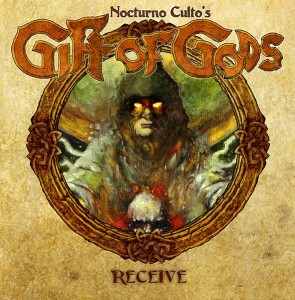
gift_of_gods-receiveNocturno Culto, who forms one-half of the nefarious duo known as Darkthrone, has a long history of side projects. Among other contributions, he worked out the intricate riffcraft behind Satyricon’s Nemesis Divina, making it a favorite in that band’s catalog.

Now he has embarked on a new side project which is a pure traditional heavy metal band called Gift of Gods. Gift of Gods will release its debut mini-album Receive on Peaceville Records on November 5, 2013.

Commented Nocturno Culto, “Finally, the mini-album is done. Gift Of Gods has been a great ride for me. I don’t want this to end now, so I will most likely work on new material. Thanks to my partner in crime, K.A. Hubred, we got to rehearse during the last two years. What to expect? I have no idea how to describe this, but it’s metal for sure.”

Receive was performed and recorded by Culto and Hubred at Culto’s home studio, and mixed and mastered by Jack Control at Enormous Door, who recently worked with Nocturno on Darkthrone’s The Underground Resistance.

So far the only reports tell us this will be traditional heavy metal with a wide range of influences and that it will lead toward the melodic side of things. This EP/mini-album will be a half-hour of material including a cover of “Looking For an Answer” originally by obscure Swedish 80s band Universe.

  1. Intro
  2. Enlightning Strikes
  3. Receive
  4. Looking For An Answer
  5. Last Solstice
  6. Outro

http://www.youtube.com/watch?v=nnVP0vaLmGY

15 Comments

Tags: , , , , ,

Helvete, famous Oslo black metal hangout, returns

helvete_store_oslo_black_metalBack during the golden age of black metal, the shop Helvete was the focal point of the Norwegian black metal movement. Run by Mayhem guitarist Euronymous, the store was the go-to spot for the genre’s elites to spread their music and ideas.

After the first media explosion of black metal occurred, Helvete shut down in response to negative reactions from the community. Shortly after, it became famous after the events surrounding Euronymous’ death and gained mythic status amongst the newer fans to journey to and attempt to understand what had occurred there.

After languishing in other business purposes for over a decade, as of this August the location of the original store will be reclaimed for its 1990s purpose: spreading black metal. Neseblod Records has decided to relocate there and is busy setting up a museum experience to preserve the history of the genre. Featuring classic releases and rare flyers and posters, the project aims to revive interest in what inspired the original black metal musicians to create what they did.

Throughout this endeavor, the project has had the support of Darkthrone‘s Fenriz, who has directly involved himself in the moving process, guiding the presentation to be as realistic and truthful as possible, which can only help increase awareness of both the history of the genre and its future exploits.

In this case, realistic and truthful means making the past come alive once again and remembering those ideals, which are timeless, and carrying them forward into a new time. At least, that’s if they want to avoid nostalgia, which pretty much killed off the souls of Generation X before they even hit their forties. Those interested in seeing documentation of the progress can head over to the Facebook page.

8 Comments

Tags: , , ,

Darkthrone members participate in Saga, a film about Viking biker zombies

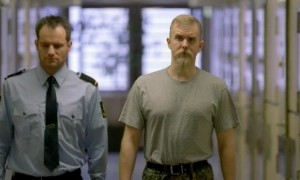
saga-a_black_metal_viking_film_with_zombiesNocturno Culto’s next project has been announced…and it may not be what you’re expecting. The legendary musician has decided to try his hand at acting, playing the lead role in photographer Jørn Steen‘s first attempt at movie production, with a decidedly unorthodox plot:

Ted “Nocturno Culto” Skjellum team(s) up with writer, producer, director and photographer Jorn Steen to make this future cult movie about a Metalmusic videodirector, Culto, who escalades to making a feature Viking-movie based upon the northern classic Eyrbyggja Saga. Actually a zombie story, the film picks up when a dead Viking breaks out of his tomb and terrorizes the locals. Culto rides a Moto Guzzi, and he gets his Biker friends to help him as extras in this Metafilm about making a Viking-feature.”

As may be expected, the film is not going to have the support of Hollywood studios, so the crew has decided to turn to the community for help in making this underground movie. Their goal is to raise 40,000€ before shooting begins in June. Those interested can visit the site for more information.

http://vimeo.com/65259330

9 Comments

Tags: , ,

Album covers: Transilvanian Hunger

[AllCDCovers]_darkthrone_transilvanian_hunger_1994_retail_cd-front

With the arrival of A Blaze in the Northern Sky, Darkthrone presented a new musical evil with the help of a new visual evil. The first four of Darkthrone’s black metal albums depicted a sole band member in a state of aggression, triumph and/or despair, in black-and-white photos stripped of all decoration, reflecting the intentionally unaesthetic music of the band.

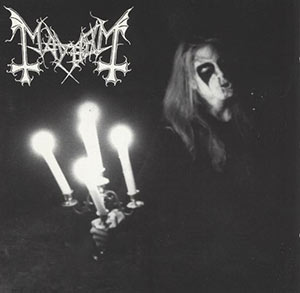
live_in_leipzigThis minimalist approach culminated both visually and musically with Transilvanian Hunger, showing a photocopied, grainy picture of Fenriz dehumanized beyond recognition, holding a candelabrum and presumably screaming his lungs out in the night. Some of its appeal lies in its ambiguity; feelings of futility, anger and power are intermixed, widening its significance.
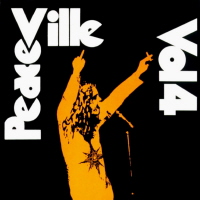
Although Darkthrone’s visual idea was immediately inspired by Mayhem’s Live in Leipzig, its monochromatic, Xeroxed quality also has an eerie resemblance to Black Sabbath’s Vol. 4 from twenty years earlier and its anguished enigmatic quality to Edvard Munch’s The Scream even further back in history. The parallel is not entirely farfetched: it echoes the troubled mind of Fenriz himself, who reportedly loves art that comes from “the exhaustion of easy life”. To black metal fans the Transilvanian Hunger cover is presumably the one archetypical image of what “necro” signifies, much like The Scream is still very much considered the face of existential anguish.

Various_Artists_-_Peaceville_Vol._4The “necro” imagery, however, may have been unintentional: In Precious Metal: Decibel Presents the Stories Behind 25 Extreme Metal Masterpieces, Fenriz asserts that mere photocopies from the TH photo session were the only thing he could find at the time to send to Peaceville Records, implying that the same picture could have been reproduced in a more polished fashion. But it doesn’t seem entirely unlikely that the use of a photocopy was inspired by Peaceville’s 1992 compilation album, Peaceville Volume 4, spoofing both cover art and title of the famous Black Sabbath album mentioned above and containing one of Darkthrone’s pre-TH songs, implying that the use was deliberate after all. (Rabid speculation is any fan’s right, right?)

In any case, the cover of Transilvanian Hunger effectively summarized its music by a single iconic image and was later emulated by hordes of lesser bands and is to this day worn on t-shirts by serious music lovers and the occasional hipster alike.

8 Comments

Tags: , , ,

The relationship between black metal, ambient and neoclassical music

nordic_dark_ambient_neoclassical_black_metalIn the mainstream press, black metal has a reputation for being solely misanthropic, heavily distorted anthems of aggression and despair that are defined by their primitive minimalism.
While this may hold true for the majority of contemporary bands, this view overlooks the foundational bands of the genre, who possessed a deft sense of melody and the focus to create longer compositions that allowed for more introspection.

Just as black metal musicians created a more minimalistic form of death metal, some were able to apply the same approach to the ambient and neoclassical genres, crafting tracks that through the use of repetition, stirring melodies, and tonal variation reveal the genre’s primal elegance without need of layers of distortion.

Given the news that Neptune Towers is being released on vinyl and Burzum is releasing an album comprised entirely of electronic music, now seems a fitting time to investigate this interesting subgenre and how it arose from black metal in several instances.

Burzum

Favoring simple but expansive compositions, contemplative melodies soar over mild arpeggios; in addition to a few tracks of industrial nihilistic deconstruction. Through the utilization of modern technology, Burzum makes narrative and meditative music that like its inspiration Tolkien, takes the participant on an internal journey to another realm.


http://www.youtube.com/watch?v=BajdtSD0eWk
http://www.youtube.com/watch?v=30lt14WQ1w0

Neptune Towers

A side project of Darkthrone‘s Fenriz, in Neptune Towers haunting melodies glide over dark drones while otherworldly noises color the backdrop. Evocative tracks signal the coming to Earth of a yet-unknown alien species or perhaps the future evolution of humanity, the soundtrack to the future.

http://www.youtube.com/watch?v=dLcMbXNbkik

Beherit

This band fuses its earlier black metal style with the industrial, pop, and ambient genres, featuring melodies that would not be out of place on a metal album, but pairs them with repetitive trance-like drums, synths, and found sounds that coalesce into epic moments before fading away like the rays of a burned out sun. Fans of multiple genres should appreciate this one.


Ildjarn

Elegant and skillfully composed tracks celebrating the beauty of nature in their simplicity reveal a greater depth of expression than would be possible with over-produced tracks. Just as he did with black metal, Ildjarn with compatriot Nidhogg reduces neoclassical music to its most basic form and builds from it an enchanting structure.


Lord Wind

A side project of Graveland, with Lord Wind martial drumming and heroic melodies bring to mind the battles of old, while synths and choruses expand the project’s horizons, providing reach to contrast with the grounded and earthy rhythms. Well-crafted neoclassic folk music, this is the further continuation of Graveland‘s second stage.


7 Comments

Tags: , , , , , , , ,

Darkthrone – The Underground Resistance (reconsidered)

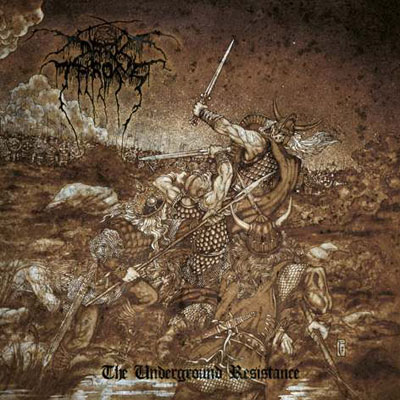
darkthrone-the_underground_resistanceA few days ago, we published a controversial review of the new Darkthrone album, The Underground Resistance. Wherever this has been mentioned, it has generated quite a backlash from people who want to assure us that they indeed do not find it so devoid of benefit, and want to remind us that we’re simply dour sourpusses who hate anything except the avantgarde.

I am aware that human beings specialize in denial, and that our method of handling denial is transference and projection, by which we invert accountability and place it on those who do not conform to social expectations, which is a vast tolerance of everything and anything that some living breathing human has put out. As a result, I don’t expect much from the first wave of reviews anywhere, but I’m also not the kind of jerkoff editor who will cut his writers off at the knees.

This left only one solution: listen to The Underground Resistance myself.

This is more difficult than it seems. I do not believe youth is the sweetest time of life; in fact, I hate nostalgia. But when I was developing (or clarifying) the most important ideas and truths I have found in this life, it was a reasonable guess that Darkthrone might have been on the stereo (back then, we used big hulking stereo amplifiers with CD players to reproduce sound from a primitive form of MP3 file stored on a physical medium with reflective bits). In fact, I can remember a number of important discoveries in which Darkthrone featured prominently by being the soundtrack to some dark and some light realizations, and at least one Darkthrone tape (ah yes, youngsters; unless you were rich, you had a “cassette tape player” in your car, to which you dubbed CDs using your big hulking stereo, and then played primitive analogues of MP3 files using magnetic flipped bits on chromium dioxide-covered plastic tape) that lived in my car during a dark era when I drove many miles at night under the threat of an uncertain future.

When I had triumphs, I threw on Transilvanian Hunger, which was a cry to war for a generation. When I studied late at night, Soulside Journey was often on the stereo (low volume, using an anachronistic physical volume knob — crazy shit, man). I remember first “getting” the black metal ideal when listening to Under a Funeral Moon, and realizing this was the revenge of the naturalists. It wasn’t bad production; it was organic sound, a blaze of it, in which the message hid like a signal/noise ratio refinement experiment. It was deliberately obscured, esoteric music in which one could hide the truths that a dying society could no longer face. I loved it, and still do, but I really hate nostalgia. Nostalgia says the best days were past; that’s nonsense, since we learn every day and constantly get better at being who we are. That last sentence contained the main point of this article.

The context in which Darkthrone exists for its longtime listeners is hard to express, however. It’s somewhere aligned with worship and built on trust. We entrusted our hopes, fears, terrors and anger to Darkthrone back in the day, and in exchange vested in them a belief in them as musicians and people. They were no longer just a bunch of guys bashing on guitars, but sages, deliverers of wisdom. Maybe this is wrong, but black metal is a somewhat messianic genre to which children run when they start to realize that the modern world is not a train to Utopia, but a train wreck of false illusions and trends which the majority of people are too zombie-drugged on consumerism and ideology to notice. We the children of this dead world were seeking some reason to keep going and to thrive, and Darkthrone gave us those reasons among other black metal sages.

As a result, it’s impossible (think of Heisenberg) to simply listen to a Darkthrone album. Too much comes with it: history, context, emotion. For many artists, this is good. For example, Robert Fripp and Brian Eno are still making ambient music and their faithful buy up each one and revel in the new space discovered. Some bands find niches and are able to keep improving. Others flatten out, having lost the point of what they were doing, and instead try to become inclusive and patch together all their influences and all the stuff they know makes people happy to listen to their songs. The result is like a hotel room, in that it fits everyone’s specifications but no one’s needs.

When I first listened to The Underground Resistance, I was tempted to consider Jon Wild’s piece inaccurate. Darkthrone have made an album of pleasant music that is equal parts Iron Maiden, Celtic Frost and random death metal and speed metal era influences. I caught Slayer references, something that sounded like a Destruction cadence, and many riff types from the last four decades of metal. I doubt any of this is wholly and completely lifted, but I could be wrong. The fact is that they’re of the same archetypes. However, that has no bearing on whether the album is good or not. If someone were to assemble songs of classic riffs, and give those riffs new life by putting them together in a song which was evocative of some emotion or concept, then that would be a victory. Originality doesn’t matter, because no matter what you’re doing, Haydn did it four centuries ago, or Mozart slightly later. That’s the great farce of music. It’s not about discovering some new theory about making music, but about making music, and much as you’d write a story or sculpt a figurine, using those skills to shape raw material into something which reminds us of something truthful in life. The best art becomes “classic” because it did that better than anyone else.

However, as time went on, I realized Jon is both far off — and dead on. The problem with this album is not the recycled riffs, or the style, or the goofy vocals. It’s that it has nothing to express except that a metal band made an album out of things they knew would work. We know Fenriz and Nocturno Culto can put together a great catchy album in their sleep, and have it humming it all year if they want. Here, they seem exhausted, a couple of old buddies who got together on the weekend to jam and when it was done, cut the tape and mailed it off. This tendency is most clear in the fills that connect riffs to one another. They are obvious in the sense of being very basically musically, not adapted to the song, not possessed of grace. They just tie together some riffs and do an adequate job, and that’s apparently all that’s required.

Remember above how I said the main point of the article was encoded in a sentence about nostalgia? We should always be growing in knowledge and power, and moving toward being better at what we do. Darkthrone still have this in them; for some reason, they’re tired of exercising it. In doing so, they’ve become a cult of their own entropy. There’s nothing wrong with this album except that it has nothing to recommend it. It is competent; it’s fun to listen to; I never want to hear it again. It is people who gave up on their own future and now are doing what the world expects of them, just like going to a job. Our world is broken and failed indeed if it has condemned such talented people to such a fate, but I hope they pull out of this tailspin because they as people and Darkthrone as a concept are worth doing better than this.

13 Comments

Tags: , , ,

Darkthrone – The Underground Resistance

Production: Static-free, slightly muddy guitar tone. Drums are clear and unremarkable.

darkthrone-the_underground_resistanceReview: Continuing Darkthrone‘s recent series of forcing anachronistic albums, all traces of black metal have been stripped from this album. Fenriz’ tracks consist of the same relentlessly bouncy riffs over which unbearably clean vocals are belted. Nocturno Culto’s are differentiated only by slightly heavier vocals.

Nothing on this album is unique; if you’ve listened to 70s and 80s metal to any extent, you will know these riffs. Devoid of originality, this album could have been recorded by any nameless metal band.

Whatever motivated these musicians to release such toweringly monumental works in their earlier careers has clearly been lost. At a certain point, the creative spark burns out and all that’s left is talent but no sense of urgency or spirit, which is how albums like this are created. Like junk food, at first glance it appears edible but afterwards leaves you feeling slightly nauseous and unfulfilled.

15 Comments

Tags: ,

Until the Light Takes Us: Review

This long-awaited independent film documentary finally hit London as part of the Raindance film festival, as metalheads and indie pricks alike filled the seats to watch what has been promoted as the least sensationalist take on the all too familiar events surrounding the Inner Circle and that Scandinavian wave of Black Metal. ‘Until the Light Takes Us’ presents the story through the thoughts of some important figures from that scene, most notably Burzum’s Varg Vikernes and Fenriz of Darkthrone, who are able to articulate more of what constituted the worldview of that movement, from two very different perspectives – Varg as the idealist finding himself trapped within his surroundings and Fenriz as a former idealist now trapped within himself. For example, the Count Grishnackh likens his experience in prison to being in a monastery, as it imposes a strong sense of discipline on him, conducive to self-development, engaging with reality at the level of ‘ideas’ and the eternal quest for ‘Truth’. Fenriz, on the other hand, looks pretty directionless and resentful of the events that culminated in his loss of spirit to the extent that he describes his current music with Darkthrone as like petting dogs (the fans) and inspiring them to share his misery, possibly offing themselves as a result.

This film is clearly a chance for those involved to speak about such things after the initial media attention and exposure had long ago infected the exclusivist purity of Norwegian Black Metal. As such, it is not really a film about Black Metal. No clear picture is put together as to be able to explain what Black Metal is, although larger conclusions can be drawn as streams of dialogue intersect and are placed alongside appropriate imagery and Nordic scenery. The anti-Judeo-Christian sentiments of church burnings and the anti-consumerist, anti-westernisation implications of Helvete’s radical ideology are explored with reasonable depth, but there is nothing much said about what they affirmed and found beauty in, which is the real impulse behind many classic Black Metal albums. Combined with what seemed to be the ultimate fate of these artists as some form of social ostracisation and self-destruction (captured by Satyricon’s Frost and his throat-slitting public art display, and Dead’s suicide), Black Metal – whatever it is – comes off as a dark curiosity ultimately yielding fatalistic results. Fair enough, that’s not the purpose of the movie, but for a Black Metal initiate, this film offers little more than surplus interview material. It’s interesting as a documentary, exploring the detrimental effects of media bullshit super-imposed on an ideological and artistic movement that stood well outside of what the media can express in it’s limited lexicon, and provides content for those interested to further research this cryptic genre.

– Written by ObscuraHessian

No Comments

Tags: , , , , , , , , ,


A B C D E F G H I J K L M N O P Q R S T U V W X Y Z