Sadistic Metal Reviews 12-05-13

sand_dunes

What are Sadistic Metal Reviews? If you treat heavy metal like a form of art or culture, it suddenly reveals its inner depth. Labels want you to see the surface only. To separate the two, we must be brutally honest. Look for the occasional gem in the sands of sonic feces.

cemetary-phantasmaCemetary – Phantasma

Claiming to be tired of the “dungeons and dragons metal stuff”, Cemetary mainman Mathias Lodmalm stops trying to rip off Tiamat and Sisters of Mercy for Nuclear Blast fan boiz and unleashes his last pose. If his progressively more AIDS-influenced output didn’t clue you in, this last Cemetary album feels like a garage band project done for the purpose of emulating Nine Inch Nails or Skinny Puppy. It shows how interchangeable most poppy industrial is, so I can see something like this album succeeding on the radio, but as luck would have it, this is just another faceless electronica product in a sea of many. The only thing this release has in common with the previous Cemetary output is the same sub-standard quality that left them entombed in the chasms of out of print Black Mark releases no one cares for.
periphery-periphery_ii_this_time_its_personalPeriphery – Periphery 2: This Time It’s Personal

It’s important to note that borrowing a few techniques from the metal genre doesn’t make you a metal band. Underneath the “harsh” vocals and “crazy” drumming are mechanical Nu riffs and mathcore noodlings. Whiny crybaby vocals and pop-choruses make this nothing more than a commercial product for socialization amongst Xanax-addled teenagers who are somewhere between dropping out of high school and becoming Che Guevara shirt-wearing low level pot dealers who often lapse into 9/11 conspiracy rants. The whole thing is organized to seem more like an emo album with its pop-punk cheerfulness and feminine vocals that reflect a feeling of being “hurt” by “mean society and girls with standards,” much like their clone targets in Sikth. If these people were more honest with themselves, they would drop the superficial “EXTREME” portions and become the next Hawthorne Heights.
satyricon-the_shadowthroneSatyricon – The Shadowthrone

If you are looking for the start of black metal’s disintegration, it can be found here. Taking liberal inspiration from bands that preceded it, this album is the blueprint for how semi-talented musicians can copy a genre’s sound while embodying none of its spirit. The songs are narrative on the surface; however, when the listener attempts to peer beyond appearance it is quickly apparent that there is nothing of depth, the musical equivalent of modern poetry. Tracks meander from one location to another, never providing any causation for why the arena is changing. The riffs are tiring in their simplicity and irrelevance, and motifs are at best uninspired. The band also deserves blame for introducing drunken popularizations of folk melodies that distract listeners from the vapid quality of metal present, which has been the operating principle of folk metal for the last 20 years. The only people who can appreciate this album are the deaf and fans that lack standards.
harm-cadaver_christiHarm – Cadaver Christi

The real way to be a reviewer is to assume that nothing is free. No one gets a promo. Everyone must pay mall prices. There are no buddy hookups, freebies from the cutout bin, and you have a budget that’s commensurate with that which the average 15-27 year old can field. It doesn’t matter that the wiper blades for your Lexus cost more than even an album from overseas; the question is what your audience can afford. Your readers. And knowing that they have finite money and time, what’s worth spending it on for them? Music is a zero-sum game. If you can buy only five CDs a month, you want to buy the best five possible. All of this is what was once called common sense, apparently, but now is voodoo quantum dark energy esoteric witchcraft knowledge to most people. That being said, I’m sure the guys in Harm are nice people but this album is dismal. It’s bog-standard Swedish-style mid-paced death metal with every cliche of bad metal involved, including the highly derivative riffs, emphasis on vocals as lead instrument (a fatal failure for metal bands), plodding pace and lack of melodic or structural development. Avoid unless you’re so average that anything else is over your head.
xysma-first_and_magicalXysma – First and Magical

Starting life as a Carcass clone, Xysma have progressively been perverting that band’s Symphonies of Sickness formula into becoming a more accessible “rock” product through perceptively mainstream blues and psychedelic moments as well as the “angsty” sounds of then “nu” radio hit band Helmet. With liner notes claiming The Beach Boys as an influence, it all comes together as a light-hearted parody of underground metal through the juxtaposition of “happy” and “trippy” moments amidst blasting death/grind fare and two-note groove riffs. Arguably the first death n’ roll band, Xysma could be held responsible for the mainstreaming of death metal through the use of elements the genre at that point have fully filtered out of its sound. While I don’t think the band meant any harm with this release, it has nothing to offer except “light-hearted fun” and seems like a bizarre interim period between their old Carcass-influenced sounds and the Helmet style they would adopt on their next album Deluxe. Similar to what Tiamat and Entombed did, Xysma saw the potential for material gain in emphasizing grooves and so got rid of the vestigial underground baggage to embrace commercialization.
inquisition-obscure_verses_for_the_multiverseInquisition – Obscure Verses for the Multiverse

Inquisition has been a constant within the American metal scene for over a decade, churning out albums that differ little in quality from one another, though with still enough distinction to be recognizably different. The band’s latest release, Obscure Verses for the Multiverse, is a continuation of the band’s recognizable style.

On this album, the band further perfects its rendition of the rock-influenced black metal genre, with many similarities to bands such as Satyricon or Marduk. Rather than a connected narration binding each song together, tracks are riff composites that sacrifice atmosphere for chaos and disorder. In compensation, riffs utilize ornamentation such as harmonics, bends, and minor chord strums in order to retain interest as drums blast away incessantly. This succeeds for approximately 30 seconds before the listener realizes that he could derive the same effect by shaking a glass container of marbles as a phone rings in the distance, simultaneously entertaining and a source of exercise.

However, this author has no desire to be unjust: the album undoubtedly will be praised by many a Wacken attendee and provide each an hour of entertainment, and truly; that is the goal of metal. After all, it certainly couldn’t be art!
sheol-sepulchral_ruins_below_the_templeSheol – Sepulchral Ruins Below the Temple

This is a really good effort but ultimately isn’t distinctive enough, and it’s not a matter of style. The style applied here is mid-period death metal hybridized with the latest trend, which has been Incantation/Demoncy worship by people who love linear riffs that internally counterbalance themselves with extended chromatic fills that crush melodic tension. Sheol have put a lot of thought into the amount of variation in each song, the coherence of the style, and in adding distinctive elements like intros, melodic accents and rhythmic breaks. However, ultimately this is a churning stampede of riffs that are relatively similar in approach and thus form, and the result is that it feels like listening to the wind while riding a train with the window open.
harm_wulf-theres_honey_in_the_soil_so_we_wait_for_the_tillHarm Wülf – There’s Honey In The Soil So We Wait For The Till

I had a grandfather who traveled the country as a journalist, interviewing union leaders. This generally happened on Greyhoud buses, because if you were a man of the people back then, you wanted to be seen in the common man’s transportation. During a disproportionate number of these interviews, someone was softly playing a guitar in the background and singing. It sounds exactly like Harm Wülf. Despite the cute somewhat edgy name and the aura of mysterious darkness, Harm Wülf is a fifteenth-generation copy of a copy from four generations ago. Soft guitar playing uses only about three strum patterns and gently loops over a verse and chorus while the half-whispered, half-sung vocals are the real focus. This is how college weenies have been getting laid since 4,000 B.C. It seems deep on the surface, but it’s really a pile of cliches, starting with the awkward and obviously imitative title. It wants to emulate a well-known post-Neurosis project, but that’s actually good. This is just rehash, reheated and disguised behind a single sprig of parsley.
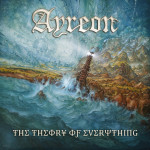
ayreon-the_theory_of_everythingAyreon – The Theory of Everything

Oddly, this band merges 1970s prog rock sounds with 1980s pop and ends up mixing in a number of diverse influences that, per the nature of ambitious merges, default to a common ancestor. Thus this album ends up being ambitious AOR with periodic metal riffs, a lot of keyboards, and a lot of cheesy vocals. If you like walking turds like Helloween’s Keeper of the Seven Keys this cheese-fest will delight you. It is not as pretentious as the 1970s progressive rock that defined the genre, but it’s also uncannily pop which makes it hard for an experienced listener to tolerate. Musically, it is better than average, other than a lack of melodic development or use of harmony and key as we’d expect from a prog band. Aesthetically, it’s the contemporary equivalent of Boston or Asia or any of those other prog-soundalikes that never crossed that line to got full-on hardcore.
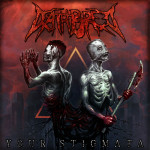
deathbreed-your_stigmataDeathbreed – Your Stigmata

Fairly standard deathcore, Deathbreed sounds death but doesn’t feel deathy. That is, there’s a lot of quoting of classic motifs from death metal, but they don’t get developed, and the band has no agenda so they end up at a musical LCD that’s basically rock made like a punk band would if using metal riffs. The result is predictable, but that’s not its problem. What kills it is that it has nothing to express. Even teenagers bleating out predictable platitudes about their trivial problems would be more realistic than this photocopy of a photocopy (with added jump-beats for the slower kids).
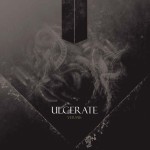
ulcerate-vermisUlcerate – Vermis

On Vermis, Ulcerate once again fool the gullible into thinking that “if it’s needlessly discordant and has growls on it, it’s the NEW and EVOLVED death metal,” only it’s not that apt. Underneath all the wankery, you’ll discover the songs never really go anywhere beyond the idea established in the beginning. All the superficially chaotic sounds render a meta-atmosphere of insanity through discordance, but the one fixed mode of expression this dwells in makes it all very obvious by the first track’s conclusion.

14 Comments

Tags: , , , , , , , , , , , , , , , ,

Empyrium – Into the Pantheon CD

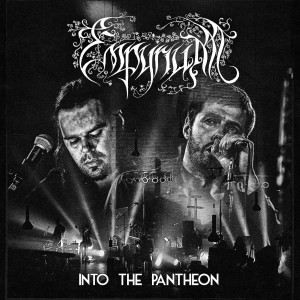
empyrium-into_the_pantheon-coverEmpyrium recently released a live concert video entitled Into The Pantheon celebrating their recent return to live performances (read our interview with Markus Stock here). They’re releasing the same concert as a CD.

For many, this will be not only the preferred way to experience this live concert, but also the preferred way to experience Empyrium. First, while the video is beautifully shot with professional attention to detail, this concert also lends itself to listening especially while deep in thought. Second, the setlist for this show compiles much of Empyrium’s most interesting material, providing both a best-of and highlight performance reel.

Into the Pantheon shows Empyrium using live acoustic instruments including pianos, strings and twelve-string guitars to create a fully-fleshed version of their sound, including operatic vocals but not the wash of keyboards doubling the guitar riff that is “symphonic metal.” This performance is closer to what Summoning and Enslaved did, which was to combine medieval music — think Dead Can Dance, but even more authentic — with slower atmospheric metal and use the combination to launch into songwriting that has been traditional to their homelands for millennia.

Technically, this is a metal album, and has metal sensibilities, much as Summoning does despite its convoluted take on the style. However, at its heart is the skaldic/bardic tradition of old Europe where singers put epic poems to music and other musicians as could be spared contributed chorus effects. Most of these songs are sung in the main by a single voice, in a less ostentatious version of operatic vocals (closer to the visceral and honest performance that Attila used to crown De Mysteriis Dom Sathanas), but this voice is accompanied by the aforementioned instruments, including a heavily distorted guitar that lays out the darker and more urgent themes using the best techniques of death metal and black metal.

Often however the instrument that leads is the acoustic guitar, plucking simple melodic patterns that are then echoed by violins and piano, and encouraged through harmonization of vocals to urge the melodies on. These develop, and then fragment, with multiple instruments each taking one approach, and as these conflict, a dissonance and sense of longing fills the songs, like wanderlust with fin de siècle wistfulness. The vocals return to guide these home and they do so, dropping from their atmospheric cloud of sound a clear counter-theme which provokes them into resolution.

The songs on Into the Pantheon are memorable, distinct and elegant, all while being metal enough to be of interest to anyone short of war metal fans. Like the dramatic presence of Candlemass with the somber mood of Skepticism, these songs seize the atmosphere and re-shape it in their own image. They then promptly escape any over-consistency by developing within these dark tunes storylines that include the light and beautiful, and many emotions between that and the abyss. The result is the classic European art of telling epic story through lyrics and song.

Since this late-career retrospective gives the ability the ability to both carefully choose songs and update them with all that they’ve learned about music since the early days, Into the Pantheon presents Empyrium in their best light and creates a platform on which they can build if they choose to release future works. But for now, this is a strong contender for inclusion on the list of quality albums released in 2013, and well-crafted enough to last years beyond that as a listening experience.

2 Comments

Tags: ,

Label spotlight: I, Voidhanger Records

We got a promo pack of these over the weekend, so I’ve been tossing the tracks onto the playlist and picked a few favorites.

converge_rivers_of_hellTempestuous Fall – Converge, Rivers of Hell

This CD compiles different doom metal bands. Tempestuous Fall is funeral doom with folk metal touches, like Skepticism crossed with Green Carnation or Falkenbach. The result is really elegant passages of slow guitars over which keyboards play a faster, almost medieval melody, while vocals chant and drums provide dramatic emphasis. Aesthetically this is a promising approach and Tempestuous Fall craft pleasant but melancholy melodies to fit it.


sartegos-as_fontes_do_negrumeSartegos – As Fontes Do Negrume

If you can imagine a black metal band with the technique of a primitive band like Mystifier or early Rotting Christ, but that used melodic progressions more like Ancient or Enslaved, Sartegos is a reasonable approximation. These are often winding songs that bring out the melody in their riffs, but not before sliding into some mid-paced aggression. Vocals are disturbingly grim as well.


the_wakedead_gathering-the_gate_and_the_keyThe Wakedead Gathering – The Gate and the Key

This is old school death metal but of a faster variety, with riffs like Unleashed but more in an American style, such that momentum is conserved and transferred. Deep bassy guttural vocals accompany faster riffs like mid-period Incantation or Malevolent Creation but these are fragmented by extensive doomy, melodic parts that create contrast. This band does a lot well, but some of their shorter riffs are too predictable, and the result delves too deeply into the repetitive part of old school death metal.


converge_rivers_of_hellMidnight Odyssey – Converge, Rivers of Hell

This song (from the Converge, Rivers of Hell compilation) alternates between extended phrase atmospheric black metal and acoustic-y stuff that sounds a lot like Craig Pillard’s Methadrone. This lengthy track mostly features the latter, which tends to operate in cyclic patterns with layers induced by using background keyboard tones to complement the foreground guitar. Using relatively few themes, it spins each off into melodies and then applies those in a variety of forms, some blasting and aggressive and others slowed-down and mellow. The result is similar to the longer tracks on Enslaved’s Frost but with more of a spacey vibe like that found on the early Manes material.

3 Comments

Tags: , , , , ,

Empyrium – Into the Pantheon

empyrium-into_the_pantheon-coverEmpyrium have cross-bred funeral doom, folk/power metal and 1980s Gothic synthpop but have removed the electronic sounds, producing an organic take on the nascent Romanticism in the modern spirit. This is music for return to the forest, but in a less aggressive form than Ildjarn or Burzum; it’s on the level that power metal fans and even Nine Inch Nails listeners can appreciate.

Into the Pantheon is a live concert in which this reclusive and only sporadically active band picks its most forest-friendly tracks and plays them in a single unified format. With production thus level between them, Into the Pantheon serves as both greatest hits and a modernization of their classic sound.

What is great about Empyrium is how well it meshes. Vocals are dramatic and funereal in the way that Sisters of Mercy and Fad Gadget made famous, but are accompanied by light orchestration and minimal percussion, with acoustic guitars taking the lead. At crucial points however, the full power of the fulminant distorted guitars take over and create a surge of energy but unlike rage, this is directed at a dark and melancholy place like a contemplative forest walk in twilight.

Empyrium win fans over through their musicality and a vision of doom metal that is tasteful and elegant. Unlike Candlemass, vocals do not dominate the music but appear as a complementary effect; unlike more modern doom bands, guitars are not over-active or musically flashy. Instead, here there is the art of classic songwriting, on a subdued pace that emphasizes beauty emerging from within in the clash of darkness and light.

Where a funeral doom band like Skepticism overwhelms with a poignant morbidity, Empyrium is more like the music which has traditionally emerged from popular off-mainstream European artists. It’s heartily personal and heavily emotional, but could easily transition from this genre to an acoustic performance in a pub near a lost mountain path, or in the court of a king. It has an eternal character to it underneath the modern genrification.

Empyrium has not given many public concerts, and we are told that this 2011 recording represents the return of the band to active life. Hearing how emotional and yet violently lusting for life these anthems are, it makes sense to want this band to continue with its renovation of metal. Not all will take this path, but its outlook can be infectious, and improves on the three-notes-to-rage formula that mainstream forces wish it would take.

2 Comments

Tags: , , ,

Funeral Circle – Funeral Circle

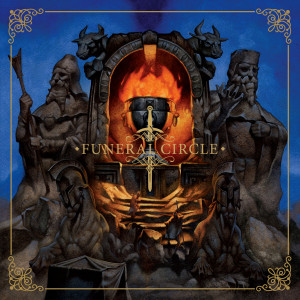
funeral_circle-funeral_circleI remember when I first realized that it doesn’t matter if a band clones its style. I was listening to the first General Surgery and thinking that, while it was basically a Carcass clone, it was also good. Pathologist followed that.

Funeral Circle is an unabashed and faithful Candlemass clone that manages to extend this style in a new direction through the band’s personality, which is slightly less purely dark than Candlemass’s. As a result, we end up with a doom metal band that puts more of an emphasis on epic atmosphere than purely doom atmosphere.

While this release does not have the fully formed personality that Candlemass did, it creates a middle of the room entry point to epic doom. Melodies sometimes borrow from alternative rock, folk and country; riffs are brought from the past with a sensibility derived from power metal, just slowed down. Sometimes, as in power metal, we hear a melodic sense similar to that of religious music.


Funeral Circle as a result is an enjoyable venture into creativity where atmosphere is the goal instead of crushing riffs or catchy choruses. This makes for a listening experience that like ambient music, hopes to store itself in the background and color consciousness, not abruptly direct it.

2 Comments

Tags: , , ,

Interview: Markus Stock of Empyrium

markus_stock-empyrium

The mysterious entity known as Empyrium has attracted its share of attention over the years by upholding the strongest nature-mystic tradition in metal, and dark ambient into which it migrated.

Like other nature mystics in metal, Empyrium expand the metal lexicon with lush dark organic soundscapes and dynamics that more represent the whims of nature than the mechanical sounds of city or ideology.

Into the Pantheon shows Empyrium in a live setting, both with a concert DVD and a documentary film made about the band and this event. Eagerly awaited by fans who remain loyal to this publicity-shy act, Into the Pantheon delivers a subtle but powerful live experience.

We were fortunate to be able to catch up with Markus Stock of Empyrium for a quick interview.

Interview with Markus Stock of Empyrium

Interview with Markus Stock of Empyrium

1 Comment

Tags: ,

Interview with Markus Stock of Empyrium

markus_stock-empyrium

The mysterious entity known as Empyrium has attracted its share of attention over the years by upholding the strongest nature-mystic tradition in metal, and dark ambient into which it migrated.

Like other nature mystics in metal, Empyrium expand the metal lexicon with lush dark organic soundscapes and dynamics that more represent the whims of nature than the mechanical sounds of city or ideology.

Into the Pantheon shows Empyrium in a live setting, both with a concert DVD and a documentary film made about the band and this event. Eagerly awaited by fans who remain loyal to this publicity-shy act, Into the Pantheon delivers a subtle but powerful live experience.

We were fortunate to be able to catch up with Markus Stock of Empyrium for a quick interview.

How did Empyrium come about? Did you have a concept when you went into this practice, or did it develop naturally?

When we started Empyrium back in 1993 we were just 15 year old kids and didn’t have a detailed plan or concept whatsoever at first. We just followed our heart and made music that came naturally to us…now, 20 years later, we still follow that rule, but of course we are much more experienced and skilled these days.

Were you influenced by past metal bands who’ve used acoustic instruments among the distorted guitars, like Cemetary and Pyogenesis?

Yeah, we were. I loved the first Pyogenesis MCD (on Osmose) when it came out. Big influences also were My Dying Bride, early Paradise Lost, very early Cradle Of Filth, Darkthrone and Emperor (especially their unbelievable split with Enslaved).

Some have hypothesized that metal is in a slump, and for it to break out, it’s going to need to get closer to genres like classical or folk music where there’s a greater range of instrument used, thus more musical possibilities. Did you have a similar idea in your own path?

Actually, no. Today I don’t view Empyrium as a Metal Band anymore. We have influences from many, many genres and styles of music. I think the whole “let’s mix our metal with folk/classical/hip-hop/funk/whatever” went a little overboard and today I enjoy Metal much more when it retains some purity of the genre. Nothin wrong with some classical elements or keyboards but the electric guitar and the pounding drums should be the centerpiece of a Metal Band.

Into the Pantheon is an immaculate concert with high technical performance but also emotional intensity. How did you practice for this? And how much did you just “wing it” to keep the mood strong?

We practiced alot. I wrote a score for each live musician involved so they could prepare themselve at home and then we rehearsed about a week in a smal venue that was rented for us. It was important to me to be well prepared.

Do you see an affinity between yourselves and other atmosphere based metal bands like Summoning?

Oh yes. I loved the whole Summoning stuff. I hear they made a new album I need to check that, though I find it hard to retain this kind of 90ies atmospheric today.

Most would identify your style as some kind of doom metal, like My Dying Bride or Paradise Lost, but at the pace of a funeral doom band, like Skepticism or Winter. What made you choose the tempi at which you play, and what does it suggest, artistically?

Like mentioned earlier I can see influences and similarities to bands like Paradise Lost and My Dying Bride in our very early works but Skepticism or Winter? Definitely no.

Empyrium has a reputation for being secretive. Are you secretive? If so, why?

No I am not. This is because we haven’t played live in more than 15 years of band history. But, I am not lurking in a cave, deep in the woods, pondering in solitude and silence over my future plans.

Metal bands seem to have this life cycle where they start out with fresh ideas, and then become more like their influences, then get big and quality plummets after that. Have you observed this? How will Empyrium beat this cycle?

We have actually finished a new album and with a break between the last album and this one of almost 10 years – believe me, if you follow your heart and do the music that comes out of you it will be fresh again.

In addition to the live concert, there was a DVD made about the band. How did this come about? What did you think of the final product?

I think it’s a nice addition to the live part of the DVD and was a lot of work. Personally I can’t see myself talking over such a long period of time but fans will definitely love the detail and the work that went into this documentay,

Once this DVD and documentary hit the stores, there’s going to be a reaction. How much does it influence you? Will it inspire you to tour, or release more music?

There will be no tour with Empyrium. A few selected live appearances but no tour. As mentioned earlier we have a new album in the pipeline to be released maybe early next year.

What are your non-musical influences? Are there works of art or literature that capture the vision you’re trying to create in sound?

Of course. Movies, literature, paintings – everything I consume inspires me. Nature and landscapes have always been a big influence on Empyrium. Past, present and future.

It must be challenging to integrate so many instruments and voices of such different loudness and timbre into your works. How do you compose your songs? Do you start with an idea, or a melody, or a riff?

It usually starts with just one theme – a small melody or a riff…from there we go and build up a song. With newer Empyrium material it’s is often that a song is based on one single theme and we go from there and build it up, let it collapse again, change small details etc. to make the theme work over the period of the song. You’ll hear that when the new album hits the streets.

In your view, what is heavy metal “about”? Does that change for doom metal?

Heavy Metal is about energy to me. Wild, touching, deep and archaic emotions at the same. As mentioned earlier, I don’t see Empyrium as a Metal band – we are more about the silence and the thoughts that come to you in silence. It’s much more introverted versus the the extroverted spirit of Metal.

4 Comments

Tags: , , , ,

The Ruins of Beverast – Blood Vaults

the_ruins_of_beverast-burial_vaultsThe worst reviews are the ones that say a band is right in the middle: “They do a few things well, but there’s not really some unifying theme, so this album is great if you’re a huge fan of those things they do well.”

A better review reflects conflict. This is one of those reviews. Dear Ruins of Beverast: you have potential, but you need to edit your material. In a huge way. In such a huge way that I don’t think most people will finish listening to this album. And change the name. What’s wrong with “Beverast” instead of a sentence-band name?

Many of the ideas on this are great. However, they’re spaced out with filler that amounts to repetition of some very tired ideas. Further, this allows this one-man band to gimmick its way through, so instead of carefully composed songs we get extended interludes that do nothing but dilute the mood. When The Ruins of Beverast decide to shred, the result is bare-bones riffs that build up to a climax.

After that, confusion reigns, so this composer avoids that point. That in itself is a mistake. Building to a peak requires a snowballing of intensity, and that produces the type of dynamic change that made black metal so much fun. But after that, what must be done — as in any Tolkienesque journey — is to Romanticize the quest and then contrast the end result to the inception.

If songs don’t lead to a path that shows a clear growth process, they become circular. With circularity, the conclusions resemble the precepts. That means that we’re hearing sheer atmosphere pieces with no actual development, since any “development” that is created doesn’t uncover a mystery or lead to new heights, but plunges back into itself.

This composer is afraid of his own work. When he writes a good riff, it takes him to some point where he must go somewhere with it, and that freaks him out. What’s there? It might just be darkness. But in the darkness he does not see romance, only permanence. So he goes back to gimmicks with chanting, distorted voices, interludes, etc. It strips him of his own strengths.

If someone took the twenty minutes of promising material from Blood Vaults and arranged it with some verve, the result would be three to four very powerful songs. Instead we have an extended detour into pointlessness that sacrifices the best abilities of this songwriter to his worst fears.

5 Comments

Tags: , , , ,

Earthen Grave – Earthen Grave re-issued as double LP/CD

earthen_grave

Former Trouble member Ron Holzner joins celebrated violinist Rachel Barton Pine in Earthen Grave, a doom metal band with heavy metal energy and hard rock groove. It fits in the niche between depressive heavy metal doom like Derketa and stoner doom of the Spirit Caravan variety, but has some of the gravitas and theology of Trouble and other depressive heavy metal doom bands from the 1980s.

Earthen Grave, the band’s debut, has been re-issued as a double-CD or double-LP on the Ripple Music label, appearing in stores and online on July 9, 2013. The completely re-mastered debut release now contains a new song, “death is another word….” with drummer Chris Wozniak (formerly of Lair of the Minotaur).

While Earthen Grave has not gotten the overflowing press attention that has accompanied many other doom metal bands, this band offers more of a pure older-school feel to its doom metal, and does not pander to the me-first mentality that many people want to hear in their music. The result is pure bleakness and self-negation that periodically rocks out and then launches into a series of musically erudite solos. As a result, Earthen Grave may appeal to the musicians among us first, and later spread to the rest of the metal audience.

** – EARTHEN GRAVE featuring Rachael Barton Pine

3 Comments

Tags: , ,

Classic reviews:
A B C D E F G H I J K L M N O P Q R S T U V W X Y Z