Interview: Nidhogg

gamlebanken-nidhogg

History reveals little about Nidhogg, the musician known for his contributions to Ildjarn, Sort Vokter and Ildjarn–Nidhogg. These projects, while initially rejected by an increasingly faddish black metal “scene,” quickly gained fans for their use of elegant short melodies within ambient songs of abrasive noise fused with aggressive Oi rhythms and black metal riffs.

Using short songs structured around the transitions of song inspired by lyrics, Nidhogg creates albums that immerse the listener in a dark world of excitement: like the primeval forest come alive, this music pulses with the poetry of life in the wild. It embraces the world as a living organism in the pre-Christian tradition and brings out the fierce natural instinct for survival and power as well as the ambiguous lack of safety inherent to the frontier. Expansive and transcendent, like all good black metal from the Norse tradition, it transports the listener away from a failed functionalist time into a mindset of possibility and exuberant cosmic exploration.

Much of black metal would benefit from seeing into the mind of this primal artist concerning his contributions to the aforementioned nature-metal projects and his own artistic endeavors. Read on for the thoughts of one of the last embodiments of a genuine black metal mentality…

How did you first meet Ildjarn, the person?

Me and Ildjarn met when starting secondary scool at Bø Gymnas, Telemark in 1988. We had the same interest in metal and started hanging out together and experimenting musically in different directions in the basement at Akkerhaugen where we recorded “Norse” and “Svartfråd“.

Can you describe the formation of the musical project, Ildjarn, and how you became involved?

Ildjarn is his own project, and he started recording under that moniker in the early 90’s. Me and Ildjarn had played together in different constellations, and Ildjarn also played with Samoth and Ihsahn in Thou Shalt Suffer. After doing all sorts of stuff, even some noise/experimental, me and Ildjarn focused on the Black Metal sound, as it was where our hearts lay. I found some old lyric sheets which indicates that we initially called ourselves Nivlheim, but at the time of “Norse” we had landed on Ildjarn — Nidhogg, because Ildjarn had already started using the Ildjarn-name.

Nature is a big part of my life, and I’m not comfy living in the city. I’m lucky enough, now, to live right by the forest, surrounded by small lakes and mountains. Nature evokes most of all awe and calmness.

We recorded Norse in two sessions in 1993 which is discernible on the differences on my vocals between the a and the b-side. Samoth liked it and decided to release it on Nocturnal Art Productions. Ildjarn continued releasing his own records, and me and him then sporadically made music together, culminating with “Hardangervidda“.

What sort of guiding influence did you have on Ildjarn, and how was this different from your role in Ildjarn–Nidhogg?

I didn’t have any guiding influence on Ildjarn. He is very much his own man. But we had the same love for the proto-scandinavian black metal sound, shaped by athory and picked up by Mayhem with Dead, and so on.

Ildjarn — Nidhogg was a 50/50 collaboration, and we always had clear idea of where we wanted to go, both with the metal and the ambient stuff. The demos I uploaded were my concepts, like the Ildjarn stuff was his, so they were planned to be released as Nidhogg-demos.

Regarding vocal duties, what were your contributions in this area to Ildjarn–Nidhogg?

I did the vocals on all Ildjarn-Nidhogg recordings and also on Sort Vokter except for on “Hatefulle Tanker…” where I, Ildjarn and Harald all sang, and “Bak to Lysende Øyne” where both me and Ildjarn sang, but he did the prime vocals. The last song also appears on Svartfråd and I did the vocals on that version.

You previously mentioned that you were the collaborator with Ildjarn for the visual elements of various projects. What album covers did you create and is the impetus and process of creating them distinct from the musical process?

We did the layouts for many of Ildjarn’s albums on a computer I had access to. I mainly did the layout and was only artistically involved in the creation of Ildjarn transforming into a boar on the Strength and Anger-cover, Nob of NOB Art, did most of that, though. Nob was a friend of ours from Notoddden, and is the artist featured on albums such as Nocturnal Visions, “Minnesjord – The Dark Soil” and “93.” He also did the graphics for Forest Poetry along with another outstanding artist by the name of Javier Guerra who did the frontcover and at least two other illustrations Ildjarn used.

I’d also like to mention a fourth person who were also a close friend in Notodden at that time, who wrote the poem that was used for lyrics on “Eksistensens Jeger.” KK, as I’ll call him is now an established and published artist and writer. In Notodden me, Ildjarn, Nob and KK used to hang around, as three of us attended Telemark Lærehøgskole (teachers college) there. The pictures on the Sort Vokter-cover were taken in the forest behind the school, an area that stretches several miles. It was a place where especially me and Nob had many excursions, often in drug-induced states. I’m not exaggerating if I say I had some semi-paranormal experiences in that forest. This was also a feeling we tried to transfer to the cover.

What attracted you to metal in the first place?

Like all over Norway in the 80s, we were some kids in school who started listening to metal, copying tapes and borrowing music from each other. The energy and aggression was the appeal, of course. It was a rapid progression via Twisted Sister, Accept, AC/DC and such, to Metallica, Megadeth and Motörhead and then on to the more aggressive thrash as Slayer, Death Angel, Dark angel and Sabbat.

How did you first become entwined with the “black metal scene”? What was that time like, and what do you think of current “black metal” bands? What is missing from the present crop?

I was never involved in the scene, other than through Ildjarn and knowing members of Emperor. I met Ihsahn and Samoth, or Vegard and Thomas, first at a regional music talent show. They were playing as Xerasia and I was doing vocals with a band I sang in before me and Ildjarn did anything together. Later, we met in the basement at Akkerhaugen youth club, were Vegard and Thomas did all their initial projects. Besides some early exploits me and Ildjarn did together, we started started jamming as a hardcore/grindcore band with Thomas and Thorbjørn Akkerhaugen. Then when the Emperor concept was developed I was really blown away hearing them rehearse in the basement. It was clear they were on the verge of something. This was before all the ruckus started happening in the media.

When I got a tape copy of Vivaldi’s “The Four Seasons,” I played it repeatedly, and it’s amazing how it is really such a spot on musical interpretation of the progress through the year. Hardangervidda reflects a progression of time as well, from morning to night. The second half of “Sunrise” is very much inspired by Grieg’s “Morning mood.”

I think there are plenty of good acts around today, although one has to sift through more music now than before. I guess as with most genres that establish themselves, there are going to be waves and declines, but great stuff still gets released and will be released. The major challenge I guess, is to make something original in a genre that has been very much explored already. I think there are plenty of bands still around worthy of a listen, but now it’s of course a global thing, so one can just as easily find good bands anywhere else besides Norway, which is also stimulating to the genre.

What was the genesis of Sort Vokter? Were you involved from the beginning?

Sort Vokter was a spur of the moment idea and an opportunity between me and Ildjarn and two guys I knew from Notodden. Me and Harald (Heiinghund) ended up living in the same dorm and jammed some together on synth. He was a natural musician as was also Kyrre (Tvigygre). Sort Vokter was a concept we thought up in my flat, and as far as I can remember, we were all four there at that particular time.

The concept was doing very necro forest metal, or Folkloric Necro Metal, as we called the album. Kyrre worked as a studio technician in Grenland (Not Greenland ; )), and his boss granted him the studio for a weekend when we could do what we wanted. Sort Vokter was more a recorded jam session, than anything else, and most of the songs were composed/played through once and then recorded. Second or third takes would have greatly improved the album, but we were on a very tight time schedule. So “ignoring technical details” as the cover states, was more out of necessity than anything else.

Why has there been only one Sort Vokter album?

It was never meant to be anything more. We had known each other for some years before, and we stayed friends and connected until we one by one relocated from Notodden, but there was never any intention of making any sort of follow up to that one album.

You additionally worked on a synth album with Ildjarn, which was dedicated to the glory of Norwegian nature. What was the process of composing and recording this album? What does your experience of nature evoke?

Hardangervidda is a celebration of a particular mountain region in Norway, yes, where me and Ildjarn have been many times, both separately and together, since childhood. It’s vast and relatively flat, and trekking across it takes several days. The album was written in my flat in Notodden and recorded and mastered a couple of hundred meters down the same street, with help from Tore Hansen. Because it’s very layered it was never considered to record it live in studio. I had put away all the money I earned during one of those summers and bought a Roland XP-80 synth which also functioned as a 16-track midi recorder. Me and Ildjarn started working on the album in sessions, gradually tweaking the songs, doing both composition and production together. Some songs are my original ideas, some are his. There was a very clear idea from the onset of where the album was going to go, and it was really just a matter of doing all the work. The XP-80 was very easy, but time consuming to work with, as we didn’t hook it up to a computer. When we had finished the album we sent demo-CDs out to a couple of record companies. Origo sound actually said they’d consider it if we made alterations, which was of course out of the question. Ildjarn ended up releasing it on his Norse League Productions some time later.

Nature is a big part of my life, and I’m not comfy living in the city. I’m lucky enough, now, to live right by the forest, surrounded by small lakes and mountains. Nature evokes most of all awe and calmness. There’s nothing like the view after you’ve trekked up a mountain.

Last fall, Ildjarn released a split album with Hate Forest, entitled Those Once Mighty Fallen. You’ve recently been active on youtube and have released the demo recording which that recording was based from. What’s your reaction to this situation? Will you be releasing any more recordings in the future?

Well, like I’ve also stated, I was just surprised to realize it. It didn’t dawn on me until I actually checked with some old tapes laying in my basement, but how Osmose came to mislabel them, I don’t know. I think the songs may have been copied onto the same tape as some of Ildjarn’s stuff, years ago.

No, I don’t have any plans to release anything else, although I have lots of riffs and ideas laying around. I might pick up music again, since I still have the old synth, but hat will be when I’m less busy. I started on a concept-album in Notodden about the time of Hardangervidda, under the name Shadow Hungry Onto God (S.H.O.G.). This project was purely classical music, and is what I would start up with again, if anything.

Do you have any recordings of your own, separate from Ildjarn-Nidhogg, that you will release in the future?

I only have two proper recordings, one of which I don’t know where is at at the moment, from the S.H.O.G. project. The other is an edit of the B-side from a 7 inch I intended to release on my own, self-financed. The A-side was already finished, but I lost it due to an equipment failure. Since this meant that I lost weeks of work, I didn’t pick up on it again, after I relocated out of Telemark. I’ll upload the edited B-side on my YouTube-channel when I get the time. It’s quite psychedelic and nothing like anything me and Ildjarn did, except for the rhythms which are quite punkish.

Most striking within your music is the level of refined aggression sublimated through strong melodies. In our interview with Ildjarn, he told us that grindcore/industrial band Godflesh was a major influence on you. In particular, the album Streetcleaner seems to embody a similar spirit to your work. What is it about that band that resonates with you? What other bands provide the same state?

In terms of any direct influence Industrial Metal had on me, it would have to be on an industrial band me, Ildjarn and Thomas played as briefly, using the basements Oberheim drum machine for rhythms. The name was Fast Breeder. We recorded some rehearsals but never released any first demo.

Yeah, Godflesh is pure genius, in my opinion, and I actually got to speak with them when they played in Kristiansand. I liked Godflesh from the moment I heard them, Justins grinding guitar and use of feedback is perhaps the foremost appeal with Godflesh for me, but of course the whole soundscape. I highly recommend the double CD reissue of Streetcleaner and the release of old Fall of Because recordings.

I was also very much into Pitch Shifter until they changed their style, and their debut “Industrial” is amazing. SWANS is, of course, a band that one has to mention, and their “Cop” is a favourite of mine. Saw Throats “INDE$TROY” is also a classic. And the industrial/crustmonster Sonic Violence of course.

At the time I was listening much to these bands, I was also listening to the Young Gods, Foetus, Minister of Noise, Skinny Puppy, KONG, Front 242 and In Slaughter Natives. G.G.F.H. is one of my all time favourites.

What influence does classical music have on you? Are there any specific composers who inspired you?

I grew up in the 70s, which was a time when classical music was still always played on national broadcasting TV and radio. When I got a tape copy of Vivaldi’s “The Four Seasons,” I played it repeatedly, and it’s amazing how it is really such a spot on musical interpretation of the progress through the year. Hardangervidda reflects a progression of time as well, from morning to night. The second half of “Sunrise” is very much inspired by Grieg’s “Morning mood.”

For the S.H.O.G. project I’d say music that would evoke the same feeling as I was after with that, would be Peteris Vasks, Arvo Pärt, Randall Meyers and Berlioz. Just talking about the inspiration now, of course, these are untouchable composers working with symphonic orchestras. I was using dark synths underlaying the classical instruments.

Another composer that may not be very known or revered in metal-circles that had a huge impact on me is Michael Nyman. Being a member and also running film-clubs in Bø and Notodden, the movies by Peter Greenaway caught my interest in particular. Michael Nyman wrote the music to four consecutive films (and more later on), and these four film/music collaborations are often referred to together. “The Draughtmans Contract”, “ZOO”, “Drowning by Numbers” and the epic “The Cook, the Thief, the Wife and her Lover.” Greenaway also made “The Belly of an Architect” with Wim Mertens doing the music equally good, and in somewhat the same fashion.

But everything is corrupt, obviously, and I suppose the more you learn about the world, the more disheartened one gets at society. I have great faith in nature and animals though, as nature have adapted catastrophes unimaginable to us.

On that note, I’d like to mention my friend of Yayla of Türkey. If you want to check out his works here is his homepage: http://www.merdumgiriz.org/ and YouTube: https://www.youtube.com/user/merdumgirizworks

What do you think the purpose of art is? When you make music, do you have a conscious intention or goal driving you beyond the finalization of a piece?

I can’t speak for anyone else but myself, but for me it’s just an urge to express oneself through music. I started singing with a thrash band in ’87 and was hooked.

Looking back, there was always a clear intention with the music, and never any doubt as to what elements to include or exclude in the various concepts. I went in many different directions, by myself and with Ildjarn, although the metal and ambient stuff was the only released (except for a drone/folk demo I did). For instance, me and Ildjarn started working on a project we called “Myristic” which never came to fruition. The direction was very different from the metal stuff from Ildjarn — Nidhogg, but was nevertheless fully formed as a musical concept. At least for me, a composition or album is more like a road waiting to be discovered and mapped, rather than something one has to toil to invent. Once you start with an idea, everything rolls by itself, and reveals itself as you progress.

A drone/folk demo sounds fascinating. What was it entitled and when was it recorded? Can we expect this to ever surface again?

Well, I’d rather not reveal the title of it since it’s a totally unrelated project with Ildjarn session on bass. I recorded that one demo, which was also just meant to be a one off in 1994. It was a 9-track post-apocalyptic vision with references to Alfred Hitchcock’s “The Birds,” where scavenging birds were now the rulers and terrorizers of man.

I don’t think I’ll upload it as it was a totally unrelated thing.

What role did THC play in Sort-Vokter’s music? What value do you find in altered states of consciousness?

Yeah, we put that on the cover as a spoof. Ildjarn didn’t smoke, of course, like he has already stated, but I guess music and drugs were the common interests of the rest of us. It added a certain feel to the whole weekend, so to say. How much it influenced the creative side to the music, I don’t know, but it certainly makes ideas pop up easier.

Altered States of consciousness has been a lifelong interest of mine, and I currently live in place where the surrounding fields are littered with magic mushrooms in the autumn. I find psychedelics can reveal a lot, and can also possibly be a door opener to unseen realms.

I have a great regard for Terence McKenna and Rick Strassmans works, and there are also many other previous pioneers which could be mentioned. In England there were some very early nitrous-philosophers. Ken Keasy said: “I believe that with the advent of acid, we discovered a new way to think, and it has to do with piecing together new thoughts in your mind. Why is it that people think it’s so evil? What is it about it that scares people so deeply, even the guy that invented it, what is it? Because they’re afraid that there’s more to reality than they have ever confronted. That there are doors that they’re afraid to go in, and they don’t want us to go in there either, because if we go in we might learn something that they don’t know. And that makes us a little out of their control.”

Do you find anything valuable in human society? What about individual humans?

While I don’t share Ildjarn’s nihilism (for lack of a better word, Ildjarnism, perhaps) I share some of his misanthropic attitude towards humanity. It’s obvious that we are, most of us at least, dependent on each other for food, lodgings and so on, so, on a practical level, saying fuck you to society and introducing full anarchy would feel pretty uncomfortable for most of us in the end. Some structure is required if we don’t want to go back to the stoneage. But everything is corrupt, obviously, and I suppose the more you learn about the world, the more disheartened one gets at society. I have great faith in nature and animals though, as nature have adapted catastrophes unimaginable to us.

On a personal level I do find value in other people, although I don’t consider many people close friends. One good friend outweighs ten bad ones tenfold, as have been said. And family will unlikely ever fail you.

Your first love in metal was thrash. How did you discover this genre, and what did you like about it? Were you able to carry over any of its ideals to black metal?

After listening briefly to the more commercially established metal for some time, I became a Metallica die-hard fan when I discovered Master of Puppets at about the time it came out. I’m from a rural area, and Metallica wasn’t heard here until Master. Ride the Lightning and Kill ’em All were gems I discovered subsequently. Before I left for the States, I had bought Reign in Blood, The Ultra-violence and Darkness Descends, and Slayer just ruled. Stll I was a Metallica-head. I lived in the States when Justice came out, and although it’s a great album, I, like so many others, started to smell something fishy. At the same time I bought Bathory’s Under the sign of the Black Mark which was one of a kind back then and still is my favourite black metal album. Back then I guess the only prerequistite was that the music was hard or edgy and I also listened to punk and such. Ildjarn introduced me to all types of music, like The Exploited, Napalm Death (love “Evolved as One”), Misfits and many others. Thrash and black are very different, for example in vocal style. It takes a lot more to be a good thrash-singer. I did the vocals on Ildjarn – Nidhogg, and the standard “witch-scream” of nordic black metal suited my voice and not least, my capabilities. So I can’t really say we took anything from thrash to the music we made, other than sheer energy, of course.

How much of an influence have other genres, such as classical music or punk music, had on your listening and your work?

Classical music has been an inspiration, although not consciously. There are some pieces on Hardangervidda, for instance “Night” (Ildjarn’s composition), which are more or less classical compositions and not ambient. Punk has been a more direct influence, which many people have also commented on. The drum machine I used back then were pretty basic, but there’s definitely a lot of “Ompa” (European term, perhaps) going on in the rythms. Combined with Ildjarn’s distored strings and my voice, our music displayed a certain punk-attitude. In norwegian Black Metal circles this was not necessarily a good thing, especially since the scene at that time had become very dogmatic, hence the term TRUE Norwegian Black Metal.

What are your favorite classical subgenres and composers?

As for classical subgenres, I’m not familiar with the terms on that. I’ve listened a lot to Arvo Pärt, Michael Nyman, Wim Mertens, and Ennio Morricone, as well as the old masters. I also like Peteris Vasks a lot. I listen to all kinds of music, though, and after Vidar bought Juno Reactor’s Transimssions, I got into Goa Trance. I’ve been a convert for many years, and I warmly recommend the afforementioned album and Hallucinogen’s Twisted. I guess I have to blame it on the drugs : P

Still love metal, though, and I also very much like bands who carry out their own unique mission, like Foetus and G.G.F.H.

Where did the concept of “forest metal” come from? Do you identify strongly with the forest? Why?

Norway is sparesly populated, and as you can guess, pretty cold. Nature is all around us. We also have a strong tradition of folklore in Norway, and tales of such creatures as “huldra,” “de underjordiske,” “tusser,” “troll” and others are deeply ingrained in Norwegian culture. I would suggest you do a Google image search on “Theodor Kittelsen”, and you will no doubt get an impression of what I mean, and you’ll also see where many black metal covers came from. Being non-satanic, this cultural tradition of the supernatural and the old Norse culture were the inspiration behind the themes and attitude in my approach to black metal.

I feel a strong pull towards the forest, and one of my favorite things to do is venture into native forests, and observe the natural cycle of decomposition and new life springing forth. The atmosphere in such a place can often have a feel verging on the supernatural, especially as night sets in.

How much do you think forest-worship is integral to black metal as a whole? You mentioned the proto-Scandinavian sound of black metal as seen in Bathory; was there forest-worship or something like it there?

Forest-worship was primarily important to the imagery of black metal bands in Norway, and the esthetics of an old forest is totally fitting the genre. An example would be the cover of Djevel’s “Besatt av Maane og Natt.” Of course, venturing into a forest in corpse-paint to take promotional pictures and such, I guess it was inevitable that the feeling of a dark forest would also influence the feel of the music. As for Bathory, no, I don’t think Quorthon was to prone to such, at least not on his black metal albums. Later, perhaps a little bit, I’ve seen some bloody good pictures of him and his musicians in battle gear in an overgrown forest, but that’s about it, as far as I know. I guess Darkthrone were the first to incorporate forest aesthetics fully into their concept. Also lyrically.

Based on the sound of some of these demos, I sense a kinship with some Oi punk music especially in the percussion. Was this an influence, or coincidence?

Yeah, I touched on that a little before. It was no intentional thing, but I liked rythms that made me want to move, quite different from most black metal. When pacing the drum machine to Ildjarn strings, I guess you could say we tried to make it “swing,” so to speak. I think Norse accomplishes this best, and is the one of the two EPs I’m most happy with. Ildjarn liked Svartfråd better.

Do you think black metal has a spirit, or a set of values to it? Where do you think these came from? Are there any historical antecedents?

It’s hard for me to make any valid statements about this. The music itself carries a spirit, yes, but where ideology fits into the music, is an answer best put to someone else. What united all Norwegian black metal, Norse metal or Viking metal bands was a hate for Christianity. As has been realized as years have passed, this has to do with the opression of the people the church has been guilty of for the last thousand years here in Norway, more than with any wish to carry out “Satan’s cause on earth.” We still have a state church in Norway, and I think about 76 % of norwegians are members. When I grew up “Christianity” was part of the curriculum at school, and the church still has a great hold on the population through the rituals of baptizing, confirmation, marriage and burial. So the genres in question held the same basic attitude towards christianity. It was forced upon us, and now we expressed the discontent through music.

Have you noticed any similarities between black metal and its values or imagery and that of Romantic literature, art or music (from the 17-18th centuries)?

There may well be similarities there, but it’s not something I have the knowledge to comment on. There is of course a strong element of classical and progressive composition from the more symphonic bands in the black metal genre.

I don’t know if I’ve ever listened to individual songs, just put the whole thing on like a classic symphony and let it rip. I don’t know how to ask, but I wonder how you achieved this effect of albums as a whole.

I can only speak for what me and Ildjarn did together. He had a different vision for his Ildjarn solo-project than I had for mine. At the time we released Norse, we had already played both hardcore/grindcore, industrial, drone/folk and noise/expertimental. Mostly just jamming and sometimes recording an obscure demo or performing at local talent shows. Thomas Haugen also played with us in two of these bands, as well as on the last demo I uploaded, as the demo states. So already when we recorded Norse we had known each other for about five years and there wasn’t anything uncertain about where we wanted to go with that recording. As the flyer also stated: “Raw and primitive Norse metal.” Thankfully Thomas liked it and put it out as his second single on Nocturnal Art Productions.

What united all Norwegian black metal, Norse metal or Viking metal bands was a hate for Christianity.

I don’t know if you are familiar with the old rehersal studio where we recorded “Norse” (an old bank vault, no less)? This is where Emperor went through its various stages and also where Ildjarn recorded his albums, using one mic. for the whole drumset. His metal-albums and “Norse” and “Svartfråd” where recorded there. It was basically like this: If you showed interest in using the vault for rehersals or demos, you were pretty much given keys, and you could lock yourself in and out as you pleased. An article in norwegian about the place is here: http://www.akkerhaugen.no/Heavy%20Metal.htm

Hardangervidda was a totally different vision, and at the time I was attending the teachers college in Notodden, where music was one of my majors. Hardangervidda was guided totally by nature (and the instructions for the synth ; )), and there was never any doubt or disagreement about where we wanted to with that album either. The nature is overwhelming there and it has a lasting impression of most people who visit the place. Ildjarn, Nob and I went there for a pilgrimage in the closing stages of the making of the album, ventured for some hours into the area, enjoyed the sunset and slept there in nothing but sleeping bags. There’s always a lot of commotion when album covers are changed, but I really think the artwork on the vinyl edition does it more service than the original would. The pictures on both editions are by me and Ildjarn and he’s also been up there again shooting pictures for another edition. As far as I know, this edition is intended to be in colour, I guess that makes some people cringe. I’ve seen the pictures, though, and they look great. I don’t have any details about that release as of yet.

Also, are you aware of the ressurection of “Helvete” (where Euronymous ran his business)? “Neseblod records” (Nosebleed Records) have recently moved in there and a museum of Black Metal is now emerging. I’m sure you’ll find the pictures on the web-site interesting. Check it out, here’s the link: http://www.neseblodrecords.com/

I can inform you that I’m currently in contact with a small record label for the possible release of the Nidhogg demo and a future extended version of “TrollTripp”. I recording the B-side of the demo now (bass and vocals) and then we’ll turn it the right way around and hear if it’s usable. It sounds good so far.
Here’s a link to the label. Like the sound of the WROTH-demo, btw. http://intotheshunnedhouse.wordpress.com/

We were also able to get some words in with Apelseth, one of the members of Sort Vokter who participated in recording Folkloric Necro Metal. While his answers are brief, they reveal his mindset about the recording and the nature of the band.

How did you get involved with the musicians who became Sort Vokter? Did you share any interests? Were you into metal, or black metal?

Metal and some black metal

I am told you are responsible for “Tårers Sang.” Did you compose this alone? What helped you come up with the unique blend of emotions on this piece?

“Tårers Sang”; melody and guitar on “Fra Kilden til Tjernet”; sound-engineering on the whole album.

The melody came to me one full moon night, I was in the forrest. Inspired by the shades and special light that is in the forrest at those times.

What kind of atmosphere do you think this band produced? Does it correspond to any real-world events, places, or emotional blends?

It is a soundscape based on the different landscapes and emotions in the norwegian nature

Thanks to all members of Sort Vokter and Nidhogg himself for making this interview possible.

12 Comments

Tags: , , ,

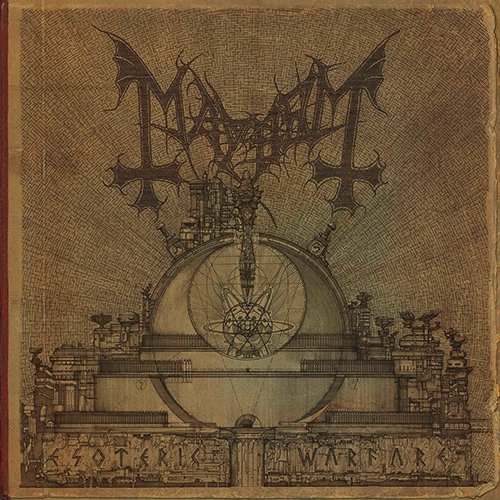
Mayhem – Esoteric Warfare

mayhem-esoteric_warfare

Black metal band reformed as nu-metal powerhouse Mayhem released their latest album Esoteric Warfare on June 6, 2014. Much like late-career albums from Triptykon and Massacra, the latest Mayhem shows that as a metal band ages the probability of it becoming Pantera or Southern Fried rock approaches one.

Although the album communicates little to no artistry or depth, it offers a strong example of how to successfully appeal to one’s commercial audience by being both digestible and using lots of hard and heavy sounds the audience recognizes as dangerous… if they came in any other form than a commercial product. Esoteric Warfare creates a blueprint for success by appropriating nu-metal’s populist simplification of the speed metal style of mono-dimensional lower-string muted riffing and sprinkling it with the pixie dust of commercial black metal aesthetics..

The band thus builds its appeal entirely from catchy central riffs which are so reduced in complexity that one is capable of comprehending them on first listen. The rest is garnish: the introductions, acoustic breaks, spoken word sections, black metal fireworks, seemingly random caesuras and even some death metal technique that randomly flares in the midst of the thudding rhythmic hook. This album belongs more to the exoteric, or easily and equally grasped at first contact, than the esoteric like older black metal, which deepened in revelation the more the listener devoted his or her consciousness to exploring it.

With the latest generation, the rock-metal hybrid that industry has always wanted rears its ugly head here. The new innovation is this tendency to break up the monotony with garnish, which allows the monotonic lower register riffs to drone on with strategic breaks to remind the listener that the entirety of an album does not necessarily need to sound indistinguishable however much the band may be seemingly trying to lead it in that direction. Complete sonic pointlessness does not dissolve, but rather mutates into a more friendly and funky exterior, thus allowing the listener an escape from a complete degradation of metal as an art form into a complete degradation of jazz as an art form. Whether that constitutes progress will be left to the view of the reader.

http://www.youtube.com/watch?v=Nk2i0sS1Gmo

14 Comments

Tags: , , , , , ,

Dementium adds voice to Puerto Rican metal revolution

dementium-band-puerto_rico

As part of an ongoing revolution, Puerto Rico launches a quality metal band every few months. In this case, Dementium — featuring Organic Infest bassist/composer Jose “Chewy” Correa on bass — create a fertile mix of styles from the late 1980s, mixing majority speed metal material with death metal influences. However, the core of this album breathes the more intense varieties of speed metal like came from Exodus, Kreator and Destruction.

Using the tried-and-true German formula of fast verse riffs with periodic melodic insertions balanced against slower choruses full of rhythmic hook, Dementium stack riffs against one another in songs that generally conform to a verse/chorus structure. However, these solid constructions detour into related riff clusters like a person lapsing into daydream, and these variations prove to be varied and to enhance the mood. This kicks the band out of the strident chanting repetition that killed many of these bands.

Although the style comes from the past, a number of updates shine through. For example, percussion fits more into the later Metallica pattern of sparse but energy-inducing rolling beats. Riffs take advice from later death metal and Correa’s melodic bass underscores the compositions like a cross between Sadus and Iron Maiden. Vocals mix the Kreator shriek and the Sodom chant with the bouncy energy of later Exodus. It provokes a desire to see the style grow with this promising new band.

For more information, see the Dementium Facebook page.

http://www.youtube.com/watch?v=ESl9S4yvmHU

21 Comments

Tags: , , , ,

Listening single-mindedly is the only way to appreciate metal

emperor-in_the_nightside_eclipse

Metal worth listening to is worth listening to properly. You listen properly by listening single-mindedly. This means that you set aside everything else and put your focus on the music. Although our society places a false premium on time, this is even more important when you have little time: make the most of your time by making your listening experience the most intense one possible. Since attention spans are on the decline, actual listening is rare. Instead, there’s a hearing of background noise while doing something else. The rise of YouTube has exacerbated the issue.

Ideal listening conditions require one to keep all distractions out of reach and out of earshot, allowing as little other sensory input as possible. This means no distractions, no facebooking, no chitchat, no multitasking — leave that to the kitchen while preparing multiple dishes — and listening to entire albums from start to finish. This is most important and cannot be stressed enough. Create a ritual aspect through the act of listening.

Immersing oneself in the depth of an album, one senses the ebb and flow of momentum, the pacing and construction. Also audible are characteristics — you get to see which are effective and why — and one is able to consider the album as a whole, rather than as a collection of similar sounding songs in the same style. Even an average band sequences songs on an album in a particular way for a reason, even if they have not mastered use of theme and leitmotif. The truly great ones lead you on a journey, enable epiphanies, and insights that go beyond music.

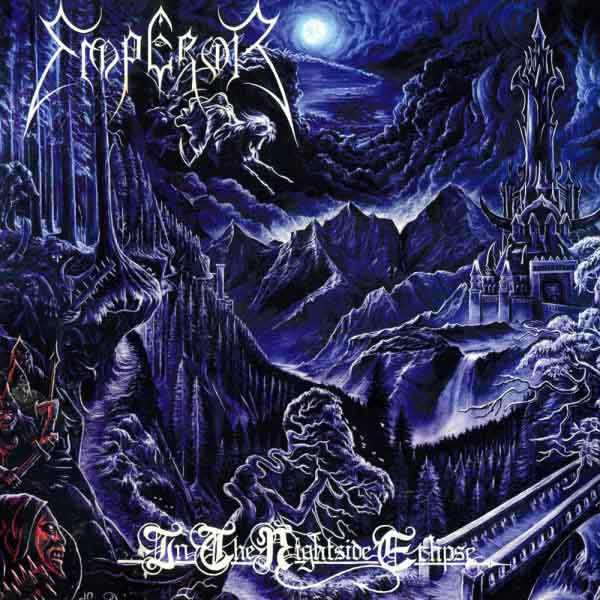
When listened to single-mindedly, In the Nightside Eclipse elevates the spirit into the farthest cosmic realms; Farseeing the Paranormal Abysm plays out like a vision of the coming battle before the fact and a return to genesis with clearer, wiser eyes not unlike the role played by the “Bhagavad Gita” in the Mahabharata. Great metal at its best attempts to communicate facets of the ineffable: the vastness and timelessness of the universe, the pervasive nature of the primal life force.

To even begin to experience this, one needs to make a concerted effort at listening. This effort and immersion also reveals which music is timeless, which albums have almost everything in the right place but do not ascend into the pantheon and which are to be hung on a wall for the “collectors” only. A realization dawns about the elements that make albums great, beyond a purely musical value. Superficialities and externalities go out the window. You see into structure, or how all the parts fit together to make a greater whole.

On the other hand, it has become a common tendency to stream a song on YouTube while doodling on Facebook, watching video and playing video games all at once. The best you can hope for there is to pay random attention to how it “sounds,” maybe notice a few hooks or sudden, jarring changes make themselves felt, and declare it a gem. Then jump to the next song on the list of suggestions, repeat procedure. It is no surprise that so many record reviews now are breathless and full of praise yet notice nothing but surface traits of an album.

Casual listening can aid in the initial discovery of bands like you skim a novel you pick up in a bookstore as you decide whether to buy it (or put it on a mental list for later to get from the library). While distracted listening can aid in initial discovery of bands, prolonged reiteration of the same obliterates your ability to distinguish an exceptional album from a merely acceptable one. Listening habits decay and quality of metal declines in parallel. If your time is precious, reward it by listening to only the very best and giving all of yourself to the experience.

33 Comments

Tags: , ,

Blaspherian – Demos (2013)

blaspherian-demos

Death metal requires from its artists more than finding two parts in harmony that complement each other. It requires the creation of a visual experience, or a topographic one, through the interaction between riffs themselves. It helps to remove harmony from this equation and to use melody, harmony and other techniques selectively to highlight certain functions of the riff, like techniques used in language when writing a novel. This restores the ideas or sensations behind music to their rightful place, and puts the charms of music in their rightful place of servitude to the experience — sensation producing mentation — of music itself.
(more…)

2 Comments

Tags: , , ,

Incubus – Incubus re-issued by Vic Records

incubus-incubus_ep

In the mid-late 80s death metal was still a vital force in which the standards of the genre were established. The new genre differentiated itself from speed metal several years before, but techniques common to both genres still overlapped without seeming artificial as they would when re-introduced later to make death metal more audience-friendly. This period gave rise to many bands which command universal respect today, but there were also a number of smaller projects which nevertheless imparted the same artistic drive and skill.

Recently reissued Incubus self-titled EP Incubus takes a short three-track voyage through the hinterlands of death metal’s darker yet constructive twisting of prior genre forms. Taking the work of Slayer, Hellhammer/Celtic Frost, and other proto-death metal bands, and moving it into more extreme directions, this is the same trajectory from which Morbid Angel spawned an entire lineage within the genre.

Adept at tempo shifts, in addition to a layering of guitar tones ranging from the subterranean to the celestial, in only three tracks Incubus wrangles a distinctive creation with the trademark frenetic energy of death metal and the more hookish speed metal. Artistically coherent in a way that is rarely if ever seen today, this reminder of genuine purpose married to cultivated skill is very much worth hearing again, or particularly for the first time. Incubus will be released on June 16th via Vic Records.

3 Comments

Tags: ,

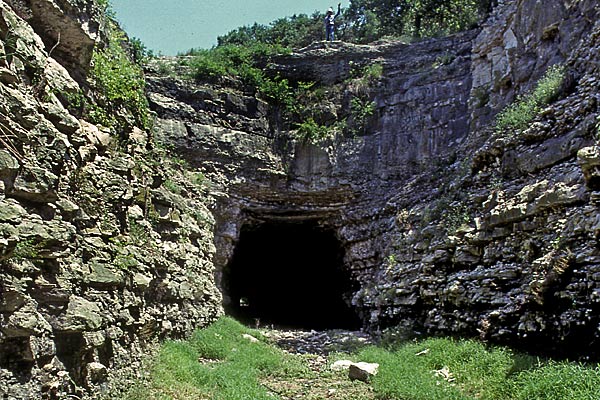
What is the underground?

ancient_texas_tunnel

This issue is about to explode into public discourse because the rise in new-style metal bands has forced this question upon us all.

What is the underground?

Before even reading this article, keep in mind that there are some excellent resources. First, The Heavy Metal FAQ provides a complete answer. Second, Underground Never Dies! is a whole book dedicated to this topic through the eyes of metal bands from the 1980s-1990s underground era.

But we can come up with an even quicker definition.

The 1980s through early 1990s were a different time. Not only was there no internet, but music distribution was fairly strictly defined. Mainstream stores got what the big distributors had from the big labels and a select few smaller labels that pushed their way in. If you wanted a wider selection, you went to an “alternative” music store which stocked smaller labels. Often you bought imports, at a 50% markup. Most stores were completely uninterested in stocking something such as death metal, because it appealed to a small and antisocial niche audience. Why bother with selling a single copy of a Deicide album when you could sell 20 copies of Motley Crue without even trying?

In addition, there were forces of opposition to any metal that was not radio sanitized (which meant speaking on code words, probably encouraging deviant behavior to a greater degree). Very few people now remember when Tipper Gore and her Parents’ Music Resource Center (PMRC) were a powerful lobby for parental warning stickers on questionable albums. In addition, the threat of such people caused record stores to actually card people for buying violent rap or occult metal. You had to be 18 and prove it, or they would not sell to you.

And getting it on radio? There was college radio and also a handful of independent radio stations but these faced the same problem. Why play death metal when you could throw on a few sets of Sonic Youth and Rites of Spring and have 20 times as many listeners? Even among alternative music, death metal was unpopular because it was abrasive and did not have a large social movement behind it which made people like it. NWA was a violent, misogynistic and hilarious rap group that got banned just about everywhere, but there was a large social movement behind their work. It was easier to find that than your average, or even your top-selling, death metal band.

What underground meant back then seemed to be that it was offered through alternative channels. A few record stores, some college radio stations, tiny record labels run on a basically non-profit basis, and photocopied hand-assembled zines made of a pastiche of typed content and tattoo-style margin drawings. How did most people find new music in the early days? They hooked up with pen pals who would mail them cassette tape mixes of new music they found, often dubbed from cassette demos from the bands. Sometimes these tapes were many generations down the line and you could barely hear the band under the crepitant tape noise! But they did the job that mainstream media, record labels and magazines would not.

Toward the middle of the 1990s, this situation relaxed. First, the rise of used CD sales meant that smaller labels were making it into bigger stores via a backdoor. Second, magazines like Spin eventually gave coverage to death metal. Finally, changes in the way music was distributed opened up the middlemen who supplied record stores to the smaller labels. This meant that the traditional split between underground and mainstream was going away. Record labels, scared by the possibility of used CD sales eating up the profits from big mainstream releases, which relied on novelty to sell and interested their audiences for only a few months, started looking toward “niche” sales. But what really blew it out of the water was the notoriety of black metal.

Starting in the mid-1990s, rumors of the black metal movement in Norway and its legacy of violence — church burnings, murders, and stockpiling of military grade weapons — began to leak out through the zines into the magazines. Then the whole drama exploded with the trial of Varg Vikernes, who conveniently also ended the old black metal era with Hvis Lyset Tar Oss, an album so deeply nuanced and impossible to follow that most musicians shrugged and went back to three-chord, “punk style” black metal instead. He raised the bar at the same time bands like Darkthrone codified the genre with Transilvanian Hunger, an album that was difficult to create but easy to mimic. As mentioned in the documentary Until the Light Takes Us, black metal witnessed the decay of an idea. This decay happened through emulation that, because it looked at the outward traits like distortion and blast beats, missed the actual meaning of the genre which caused musicians to make such similar music in the first place.

It’s hard for people to realize now but black metal was initially viewed as slightly touched in the head. Death metalers often hated it violently; almost everyone else seemed to criticize it for its lo-fi approach and almost childish use of blasphemy and antisocial imagery. Many of the albums sounded like they were performed by people who had barely picked up an instrument and might have zero social graces. It was roundly mocked… until it started to become popular. Then the tables were turned. Within five years, black metal was in mainstream record stores (this shift happened in about 1997) and became really popular with a new generation.

After that point, the term “underground” seemed to lose meaning. The internet had come and made music and information about it universally available, and the proliferation of high-powered desktop computers meant that recording an album, running a label or making a zine involved far less labor and looked and sounded a lot better than the DIY labor of the 1980s (or even 1960s-1970s, when proto-punk and punk bands innovated it). At this point, people started going for an “underground sound,” which meant artificial lo-fi, simple three-chord songs, lots of ranting about antisocial topics including the occult, and a deliberately offensive resistance to any positive reinforcement.

You can see the resulting confusion in this artfully assembled article by Laina Dawes:

The other issue that’s sparked controversy is exactly which bands get press — take Deafheaven and fellow shoegaze black metal band Alcest, who both benefited greatly from non-metal-centric coverage in 2013. The idea of using these bands to open of the gates of metal and let readers discover a new musical genre (or actually take it seriously) is a contentious one. One of the issues is the promotion of palatable metal bands that could potentially reach the masses with a sound that isn’t “metal” in the classic sense. Instead, these bands have been referred to as “extreme,” a catch-all, provocative phrase guaranteed to attract listeners who are looking for a more intense metal fix – and to satiate that self-satisfied outsider-metal “cool factor” that insecure metal fans love to laud over the pop-music contingent.

In the years from 1995-1998, the underground basically rehashed itself. It had no ideas, and more importantly, the bar was raised. To be a good death metal band, you had to be at the level of Morbid Angel’s Covenant or Suffocation’s Pierced From Within. To be a black metal band of note, you had to be at the level of Burzum’s Hvis Lyset Tar Oss or Enslaved’s Frost. Not many bands could do that and so an alternative underground built up based on fan-driven metal. Most of this was in emulation of the previous years and took the form of three-chord simplified versions of the more complex originals. The result was that, outside of a small cluster of people hanging around internet forums, this music went nowhere.

Nature abhors a vacuum, so from 1999-2006 or so, metalcore took over. This was also music designed to be easy to make. It took the randomness aesthetic of late hardcore punk and combined it with death metal riffs, making chaotic songs that made no sense but were plenty distracting and extreme. The music industry flogged this dead horse walking (to brutally mix metaphors) for five years before the trend started to die. Then from 2006 through the present, the music industry took a different tack: instead of trying to make a new genre, emulate something that has worked in the past. They found the fertile ground of the post-hardcore years where indie rock, shoegaze and post-rock coexisted in the same sphere of influence. This was generally what was called “alternative rock” before “alternative rock” became a brand for flannel wearing bittersweet droning hard rock bands from Seattle.

deafheaven-band_photo

Deafheaven is a polarizing band becomes it comes from this tradition. Listening to it, it is not clear there is any metal in it at all. But labeling something “metal” or “underground” or “extreme” excites interest, mainly because few people trust the aboveground media. Thus there is a huge financial incentive to classify Deafheaven as metal, and for smaller blogs and magazines to go along with this fiction as well, if they do, they get advertising revenue and possibly a shot at the big time.

This leaves us with a complete quandary: does the term “underground” have meaning anymore at all?

My suggestion with my last article, “In defense of elitism,” was that underground is a misused term. The point is that metal has a spirit which defines it and separates it from everything else. That spirit must be expressed but it is of a nature that does not trust the dominant paradigm. Black Sabbath wrote their music to rain on the hippie parade of love, drugs and pacifism; their point was that altering our perspective does not change reality. Underground metal had a similar message and was unwilling to alter it in order to fit with the expectations of people who would rather hear about the denial fictions of love, drugs and pacifism (underground rap did the same thing in parallel, but with a different set of issues and a different set of denial fictions).

What makes a metal band underground is that it is unwilling to compromise its vision of truth for what people want to believe is true. It is unwilling to compromise its aesthetics for what people believe is comfortable and pleasant. It is committed to the idea that the only legitimacy comes from the art itself, not its popularity or album sales. Some would identify this as the ultimate non-“bourgeois” statement, in that it casts aside comfortable oblivion in favor of a raw blast of cold hard reality. This sense of underground is more fundamental than how the albums are sold or which zines write about them. It is an attitude and discipline. Underground means that which puts truth first and popularity second, which is a dramatic reversal of the way everyone else goes about it.

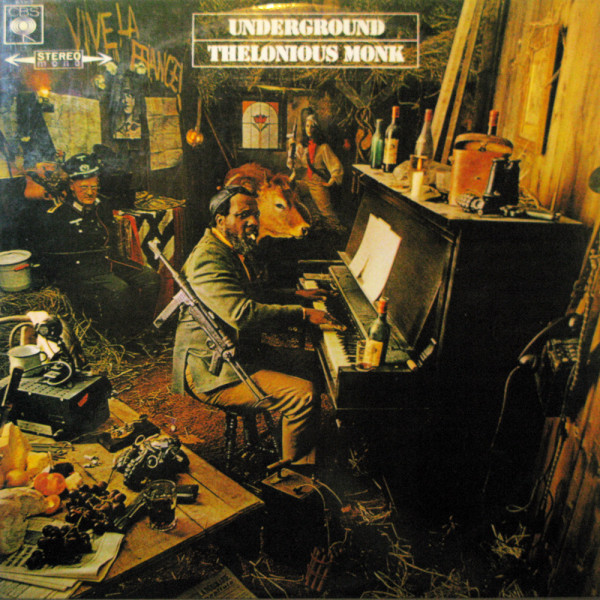
Metal is not the only genre to have an underground. Punk was originally underground but as it became fashionable in the late 1970s hardcore punk bands started vanishing into squats, playing midnight parties in abandoned foundries, and selling their music on 7″ records out of shirtsleeves. The noise movement in Japan remains underground to this day, with artists like K.K. Null constructing elaborate and beautiful pieces from raw noise, instead of making harsh blasting rebellious stuff like record labels had hoped. Robert Fripp, former guitarist of King Crimson, uses electronics to make his guitar sound like an organ and plays small concerts across the world. Underground is not a term specific to metal, but a term to describe any activity that is not encouraged in society at large yet believes it has ideological, artistic and/or political value.

thelonious_monk-underground

You aren’t going to hear about any of these artists in big media and you may not be able to buy their CDs in regular stores. However, that is the symptom, not the cause. The reason they’re not in regular stores is that they’re not only niche, but also not given to comfortable oblivion. In a time when people can choose the artistic equivalent of a cheeseburger over the more challenging and substantive art, people tend to do so, which marginalizes actual art. As a result, the actual art is alien and threatening to most people, which makes it a terrible product, which means that it ends up in small record stores, small zines, and small labels.

If anything, the internet has exacerbated this tendency. In an age when we can find anything by googling it, the real problem is knowing what to google. Even worse, Google uses a search engine algorithm that moves higher links up the chain, thus burying marginalized results. We have all the information in the world but without a guide to it, none of us know what to do with it. It is for this reason that traditional media has won out on the net and the sites that attract the most eyes are the ones that are promoting essentially mainstream music.

mayhem-dead

What Deafheaven represents to a metaler is the triumph of mainstream music. There is nothing in Deafheaven that challenges the listener to even a second of soul-searching or discovery, or whatever it is that art does — that’s a separate debate — in contrast to what death metal and black metal provoked in us. Deafheaven in fact is the listening equivalent of wallpaper, a pleasant series of repeated images that make us think about shopping, perhaps. Whether it is bad music or not is irrelevant. “The medium is the message,” we’re told, and in the case of Deafheaven, the medium is inoffensive pop pretending to be “extreme.”

As BasementGalaxy has revealed, Deafheaven represents aboveground genres invading metal:

Since then, anything “new” and “innovative” done in metal has involved musicians stepping outside the boundaries of the genre more and more. Shoegaze, industrial, post-punk, krautrock, progressive rock, jazz, trance, dubstep. It’s been happening gradually over the past ten years, but Deafheaven’s 2013 album Sunbather just might be the first major splintering that will eventually see “extreme music” separating completely from actual heavy metal. Although my opinion on the album has already been published and will not change, it remains the most critically acclaimed album of 2013, of any genre, marking the first time an album that has occupied that grey area between “metal” and “extreme music” has captured the attention of so many mainstream critics and audiences. Some critics still call Sunbather “metal”, but to do so is to forget what makes heavy metal heavy metal in the first place, merely clutching to the few metallic threads in an otherwise richly varied musical fabric. In reality, Sunbather is a tremendous example of extremity transcending the metal ethos entirely.

In other words, there’s a reason Deafheaven doesn’t sound like Beherit, Demoncy, Imprecation, Blaspherian or any of the other bands which have resurrected the underground sound over the past five years. Deafheaven represents the mixing of mainstream sounds into underground metal, while Beherit represents underground metal growing and developing on its own terms.

If anything, the underground is in a renaissance because it has finally escaped the old standard of lo-fi music sold on cassettes/vinyl through dodgy mail orders and reported on only by small zines. We have gone from alienated from society to accepted (grudgingly) by society, and so now we are “niche” music. But what defines this niche is that it is underground. We face the hidden truths and evoke concealed emotions, and thrust a fist in the face of oblivion. That is what makes us underground, and it’s why the masses chose Deafheaven over Demoncy to report on as a face of extreme music.

2 Comments

Tags: , , , , , , , ,

Oration of Disorder reviews 02-05-14

seance

What’s an oration of disorder? What most people think of as “order” consists in telling other people what they want to hear and then manipulating them. That’s how you sell them products. But the selling of products is the opposite of what art and listeners need, which is a harsh voice to tell us the truth.

apostolum-winds-of-delusionApostolum – Winds of Disillusion

Like Ras Algethi, this is a black-metal-influenced doom metal album that does not rely on detuned guitars to produce a low-end rumble. Instead, Apostolum shape their songs out of repetitive melodies like we might find in a horror movie soundtrack (shades of Damien Thorne) which cycle through repetition with frequent breaks for rhythmic or dynamic changes. The result is like a comforting background noise segmented into long enough pieces to tell a story, on top of riffs which themselves hint at a type of mood. Vocals add layers of lush intonation that flesh out the relatively sparse pieces, but one of the most important instruments here is silence. Riffs are slower but not uniform pace, so often pauses create gravity; pauses between riffs, and the interruptions in sound, create a sense of melody arising within darkness. The only real problem here is that much of what makes metal enjoyable is less present in this music. Its attempt at emotional depth leads it toward melodies that are periodically happy, so that they may be shattered, and the slowness is for lack of a better term not very exciting. I can appreciate this but I don’t think I’d listen to it.

human_infection-curvatures_in_timeHuman Infection – Curvatures in Time

When we say something is “stale” in music, we generally do not mean that it is old. We mean that it is derived from something obvious, like a first step in examining something. The thought process ended early, we think, because we can easily visualize first-level thought from our armchairs in a casual moment. What interests us is when someone takes something in a distinctive direction, which does not mean weird or unexpected so much as it means a direction expressive of something. At some point, riffs either sound like an event from life itself, an emotional event or resemble an idea, and if the riff does not show similarity to one of those but seems to be introductory thought on its own, we discern that it is purposeless. Human Infection have made a grand effort at the technicality required for a death metal release, although the abysmally hollow and loud drum sound may doom this production, but too much of this is death metal for death metal’s sake without real purpose, and too much of it uses first level thought, a/k/a really obvious and played-out (because they’re obvious, they’re frequently used) riff patterns. I appreciate the big doofus aesthetic of this brand of death metal/deathgrind hybrid, but here it goes too far without going anywhere. As with most situations like this, there is too much reliance on the vocals and drums leading the guitars, which creates a sound like repetitive noise with background texture. Give that guitarist more prominence in songwriting and make the riffs lead the song and this could be a powerful band.

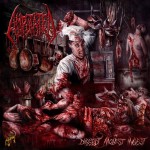
amputated-dissect-molest-ingestAmputated – Dissect, Molest, Ingest

What I like about this band is that they preserve the lineage of percussive death metal leading back to early Suffocation. It’s not that they clone riffs; it’s that they understand song conventions used by the originals and thus have to rely less on the post-Suffocation notions of breakdown to transition within the song. Other late model NYDM conventions make it in however including lots of pinch harmonics and sag-groove riffs. Luckily Amputated know how to put together a song so that it moves naturally and avoids lapsing into unrelated and thus pointless detours. At the same time, reliance on a style like this makes it very hard to distinguish songs since they are all similar in technique, rhythm and approach. This is going to be the challenge for Amputated, to distinguish “Skullfuck Lobotomy” from “Toolbox Abortionist” without relying on cheesy appearance tweaks. This band are tight, focused and have a good instinct for rhythm and song so this should not be a huge challenge for them.

esoterica-aseityEsoterica – Aseity

This is the droning wailing type of post-metal. It uses two-note black metal minor key riffs and drones those in a predictable loop while someone rants with an open-throated, slow vocal. It’s like a requiem performed by brain damage victims. The sense of purpose of classic black metal is lost; you could say Ildjarn took the same approach, and it wasn’t that Ildjarn was first, it’s that Ildjarn was good. Good means organized, purposeful, communicates something, and creates an experience the listener can partake in. Esoterica creates drone. If you want a background tone to go with some activity like ironing or fermenting fish guts this might be a good counterpart, but generally as it is without surprises or discernible idea, it fades into the city noises like planes overhead, trains long-hauling, trucks idling, domestic violence and identity theft.

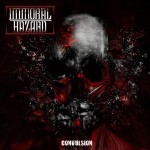
immoral_hazard-convulsionImmoral Hazard – Convulsion

Pantera vocals over Kreator-styled speed metal with worked in touches from American melodic heavy metal bands of the same era. If you can imagine Kreator with metalcore/bro-core vocals except that the chorus riffs were borrowed from a hybrid of Forbidden/Fates Warning, that would be a good approximation of the style here. The vocals are unfortunately impossible to overlook and I wouldn’t want to listen to this in public because listening to bro-core is the equivalent of screaming “Hello, I’m a fucking moron” at the world. These guys know their classic metal and it shows with allusions that are artfully done enough to not be appropriations but subtle tributes. Phil Anselmo, although a great guy to drink with, invented the worst form of metal vocals possible because they channel aggression to the surface and replace depth with an kind of outraged customer slash drunk frat boy outlook. The rage is all one-dimensional however. The riffs have to support these bouncy rap/rock/hXc bro-core vocals and so get dumbed down. If they could hook this vocalist up with some old Rigor Mortis tapes, this band could head to better places and be really good at it.

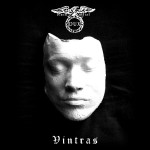
dux-vintrasDux – Vintras

Working both within the confines of Gallic metal and a mixed bag of influences from the past, Dux create what a metal writer might dub “national tragedy”: music with a strong national sound that nonetheless embraces melancholy on the far edge of despair, and in the almost depression-distracted gaps created fills in space with past influences, exemplifying the chaotic modern approach that is the source of their angst. Very much in the same style of dissonant minor key Solutrean droning, with a sound that resembles the wind flowing past ancient caves if it were given tone, Dux create in the space etched by Celestia and Vlad Tepes. These songs sound like they might come from the distant past and yet, they are new, and exhibit the same exuberant take on the ancient ways offered by bands like Enslaved, albeit with less technicality. When there are gaps, the band fills in with equal parts Slayer-inspired proto-death metal and bits of choppy heavy metal and death metal, but these parts are infrequent and are counterbalanced by more of the delicious flowing melody they do so well. With better study habits, this band could rank in the higher echelons of contemporary black metal, beating out all the people who lack what this band has: a grasp on the emotional and intellectual subject matter, and thus content, of the black metal genre.

snake_eyes-welcome_to_the_snake_pitSnake Eyes – Welcome to the Snake Pit

Covering the territory once ruled by the first couple Motley Crue albums, Snake Eyes create old fashioned heavy metal with an American tinge of sleaze and darkness. It’s heavy on catchy chorus activity and yet picks up the pace on the riffing more than a Sunset Strip band would have. These songs also try for the “epic” sound of European metal, where at some point the elemental pieces of the song clash and resolve in something with a greater affinity for the sense of the song than the original bits. There’s some bleedover speed metal technique at points, mostly use of muted strum and budget riffs for tempo changes. Clear and strong but higher-pitched vocals guide each song, and are often in that half-sung half-chanted style that rides a good rhythm riff. This style of metal has a lot of rock in it, so will not be for everyone. With bonus cover medley from Judas Priest (“Riding the Sentinel into Hell”).

sammal-no_2Sammal – No 2

Finland is boiling over with classic rock acts. They are all reallymusically competent and have a great sense of melody and rhythm. They have more trouble knowing how to pull a song together to make it highly distinctive, but that’s not from lack of ability, more a lack of internal drama. Dysfunctional people make the best rock ‘n’ roll for a reason, which is that they are not hampered by logic and that they have internal gestures of vast theatrical exuberance that make for really distinctive, evocative songs. Sammal do not have that kind of drama going inside of them. What they do have is a reverence for the 1960s-1970s rock and a way of writing good solid tunes that make you feel like you did not waste your time listening and want to think about them for a little bit. I am not sure what the lyrics are, as I think they’re in the voodoo-moonman language that is Finnish, but the songs themselves are quite powerful. Now why aren’t these guys making death metal?

GD30OB2-N.cdrCulted – Oblique to All Paths

No one wants to say all post-metal sounds the same but it is true. This is because post-metal limits itself both to non-phrasal riffing and a certain narrow range of power-chord based ambiguous minor key riffs and arpeggios, and simultaneously imposes on itself the demand the sometimes there be distortion and hoarse vocals. One might ask these bands why they bother with post-metal when obviously they want to play mainstream rock, but no matter what answer they verbalize, the truth is that it is easier to be a big fish in the small pond of a recent trend than to compete on the much broader highway of rock itself. And yet that is a form of cowardice. Why not tackle the audience that they naturally belong to? This band would be a lot more fun if they went Dave Matthews or Barenaked Ladies on stopped trying to cram some superficial aspects of “metal” into an unrelated genre. There is more actual metal on a Taylor Swift album than is present here even though Culted clone riffs from doom, black and death metal past. But seriously, why is this band wasting its time? Better to just become the rock band they want to be than to force themselves to be trendy and not make the cut.

zloslutZloslut – Zloslutni Horizont – Donosilac Prokletstva, Ocaja I Smrti

Part of black metal was its national tradition. Bands wanted to sound like they were from their homelands. This was harder to relate to in places that are more regional, like UK or USA (the “acronym nations”). Zloslut never quit with this idea. They sound like they are not only a band with their own voice, but they bring out some characteristics of national sound. This is not hyper-distinctive as Zloslut compose very much in the classic black metal vein, sounding much like a cross between early Gorgoroth and Immortal. Songs are melodic but not as an effect; they are based around underlying melodies with a distinctive old world flair, internally punctuated by the type of upturn that introduced a huge amount of ambiguity when metal bands first did it. Now it is worked into the melodic sense itself, like the melody is a series of questions exploding into a defiant statement, usually delivered in full toward the end of a song when it can expand into a promenade or march-style rhythm. These songs are designed to fit together like wooden puzzles, meaning that there must be some gap at all times, but the shapes can never be incompatible. The result develops underneath the ears and has subtlety like the original black metal bands. While 80-90% of it may be familiar with those who studied the early 1990s Northern black metal explosion, as with all things in life the distinction is in the details, and there’s a lot to listen to here that shows this band have their own voice and one for their homeland.

4 Comments

Tags: , , , , ,

Sadistic Metal Reviews 01-24-14

manatees
The Manatee: nature’s most useful animal.

What are Sadistic Metal Reviews? It’s when we decide that good things should happen to good people and bad things should happen to boring music. Most music is either imitating a trend, or totally without purpose or content, and that makes it boring. We can find trends and purposeless noise anywhere, for free. We are cruel to the stupid, and periodically, find something worthwhile to hold up above the river of feces…

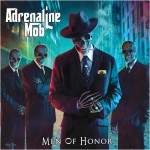
adrenaline-mob-_-men-of-honorAdrenaline Mob – Men of Honor

It’s grandad’s heavy metal, kids, but with a rhythmic kick and Alice in Chains vocals. A Pantera influence in the bouncy riffing represents a modern retrospective on glam and heavy metal from the 1970s. Droning diminished scale choruses and a similar riffs stacked in a way that is both not random and not song development fleshes out the mix. Songwriting emphasizes the Big Pop Industry tendencies toward hooky choruses and distracting, somewhat aggressive verses with emphasis on stitching out the chorus rhythm in as many forms as possible, so in case you missed it the previous sixty times it will pop up again to remind you that you’re listening to “music.” People have made heavy metal version of power pop before (like Yes’ 90125) but they aimed for quality; this aims for conformity with someone snapping their fingers and being ironic behind the scenes. Warmed-over 1970s riffs 1990s influences make this a classic record company attempt to make the present generations worship the cast-offs of the past. Despite attempts to be edgy, this is a museum piece from the Hall of Boredom.

disfiguring-the-goddess-depriveDisfiguring the Goddess – Deprive

There’s no death metal to be found on this supposedly “brutal death metal” release, nor any concept of songwriting. Choppy, percussive riffs are thrown next to nu-mu thudding in random sequences that do nothing but “groove.” It comes off as variations of rhythm guitar picking exercises played on an 8-string guitar and stitched together in ProTools. Like most of these rhythms, it’s only a matter of time before the “out there” becomes the predictable, so there’s no promise in these flights of fancy, only a return to something as mundane as the cycling rhythm of a diesel truck engine with a loose belt. Occasionally, an actual riff gets played for almost three seconds before more inconsequential rhythm chugging comes in to pacify the indie/Hot Topic demographic who use this stuff as a surrogate to nurture relationships with other idiots by sharing an interest in “wacky muzak” that makes them “different and unique”, but under the surface, is Korn with tremolo picking.

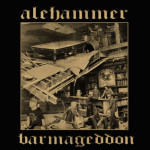
alehammer-barmageddonAlehammer – Barmageddon

Life is an IQ test. Your choices determine really how smart you are. If you picked this band, you failed. These guys should hang up the electrics, strap on acoustics and do children’s television. This is sing-song music for people without direction in life. Even when I was a clueless 14-year-old buying his first albums with grubby pennies I would not have considered this dung-heap of bad musical stereotypes. It sounds like the kind of stuff that characters at Disneyland would sing, or maybe a bad world music band from the background of a car commercial. It’s catchy vocal rhythms over guitars that basically serve as slaves to pounding out the catchy vocal rhythm, but it’s repetitive catchiness. It’s all hook to the degree that there’s no sweet spot, only cloying repetition. Most bands of this nature are basically bad heavy metal with jingle music at its core. Barmageddon is basically a grindcore take on the kind of simplistic fare that got called “Pirate Metal” recently. I propose a new name: Headshot Metal. If you get caught listening to this, you should be shot through the face with a high-powered rifle. It’s an insult to anyone in the genre who tries to get anything right.

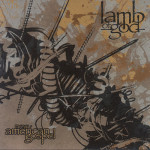
lamb-of-god-_-new-american-gospelLamb of God – New American Gospel

Upon viewing this title, the prospective listener might be intrigued to ask “what is this new gospel?” Answer: the gospel of insincere mediocrity. Half-assed guitar riffs combine the worst elements of a moron’s interpretation of hardcore (autistic caveman rhythms) and speed metal (obvious riff sequences) with a fruity veneer of constipated teenager vocals. Tracks start nowhere and lead nowhere, with nothing connecting one moment to the next; a stream of irrelevance. Expect plenty of repetition which Lamb of God, like all metalcore bands, tries to disguise by being as random as possible. You know who else uses that strategy? Nu-metal bands. This is basically a kissing cousin to nu-metal anyway. It’s music designed for distracted teenagers to distract themselves further until it’s time for a lifetime career in something brainless to match their braindead approach to life. How anybody with above a single-digit IQ could enjoy this escapes me. Sadly for all of us, this title is accurate: the future of America is a populace that considers this a valuable piece of music.

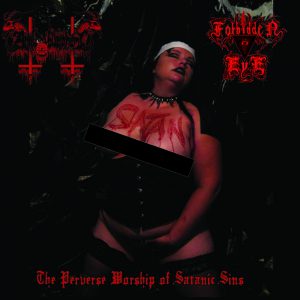
Anal Blasphemy / Forbidden Eye – The Perverse Worship of Satanic Sins
Anal blasphemy starts off with three tracks of simple death metal with a strong melodic hook. It is however rather straightforward in structure which leaves creates a sense of uniformity. Riffs are very similar. The final track uses a melodic lead-picked counter-riff which adds some depth but ultimately these songs are one step removed from their beginnings, so despite the compelling rhythm and melodic hooks they might not survive repeated listens. Forbidden Eye produces a more lush approach to melodic metal which is clearly in the droning black metal camp, but avoids the pure sugar-coated repetition common to the Eastern European variant. Its weakness is that there is not much in the way of a unique voice; we’ve heard these tropes before and recognize the song patterns well. If you can imagine a Dawn or Naglfar approach with more intensive drumming that is roughly what you’ll get here, well-executed but undistinctive both melodically and stylistically.

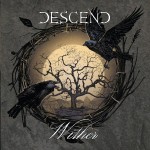
descend-witherDescend – Wither

The rock ‘n’ roll industry is a successful industry that attracts players who are highly professional. They know what the product is, and how to do do the minimum to achieve it; this practice, otherwise known as shaving margins, is based on the idea that the other guy will cut his costs to the minimum too in order to both lower price to make the product more competitive and maximize his own profit. If two guys make a widget, and one does it for five bucks less, that’s pure profit. In the same way, rock ‘n’ roll is based on fast turnover and following current trends so you can catch the media wave. I hear death metal is big now, like trendy. This album attempts a facial similarity to death metal with the whispery vocals of Unique Leader bands and lots of runaway blast beats followed by metalcore riffs, but after a while, they drop this and out come to the jazzy riffs based on a scale bent to a series of offbeats of offbeats in a complex pattern, and the soft-strummed ballad chord progressions and melodic hooks. The problem is that the guitar rhythms, like those of the vocals in hip-hop, are based on subdividing a rhythm and thus rapidly become highly repetitive, both internally and between songs. The result is that it all all fades into the background, as should this rather unambitious and directionless release.

reciprocal-new-order-of-the-agesReciprocal – New Order of the Ages

A “thinking man” band name written in a sterile font and a “politically informed” album cover. Is this more metalcore in death metal clothing? You bet. While this band is claiming influence from Deeds of Flesh and other Unique Leader bands for legitimacy, this has more in common with Necrophagist or The Black Dahlia Murder. Mechanical groove riffs are “spiced up” with sweep arpeggios and generic Slaughter of the Soul riffs appear over blast beats for the “brutality”. This is boring music with nothing to offer. Perhaps musicians this good need a better concept to work with than shouting out Alex Jones podcasts over Guitar World lessons from metalcore guitarists played at 220 bpm. I couldn’t tell the difference between this album and any other modern tek-deaf release. If these guys were to spend less time on conspiracy websites and more time thinking about why people still turn to their old Morbid Angel and Immolation albums instead of these tek-deaf bands (or how to structure their music to not be a series of discontinuous parts), maybe they could create something useful. Otherwise, this is Origin with propaganda attached looking to steal some time from metal fans while keeping Xanax addled brofist D&B homeys (Rings of Saturn fans) satisfied with more inconsequential ADHD music which will be forgotten a week later.

caliban-ghost-empireCaliban – Ghost Empire

Occasionally I’m amazed that something actually got signed because it’s so terrible and then later I see it on the bestseller list. The taste of the herd will never fail to shock and amaze, mainly because what they like is simple: (1) the same old stuff but (2) in some radical new format that’s easy to see through so they can appreciate the sameness of it. Modern society is about anonymity and personal convenience, so why not music that you can project yourself upon, that requires you to know or feel absolutely nothing except the most transient of emotions? Caliban have it for. Ranty Pantera verses over djent-inspired harmonically-immobile riffs lead to sung alt-rock style choruses with lots of hook and lengthy vocalizations, but essentially no melodic development. As a result this is super-repetitive in that its song structure is circular to the point of linearity and the songs at their core consist of two-note clusters in riffs stacked up against four-note chorus vocal lines. Every now and then they get tricky and play rhythm games with riffs that were well-known before Metallica formed. The main factor that kills me is the repetition. It’s as if the whole album is a conspiracy of details designed to hide the fact that it’s basically the words of a drunk, repeating himself unsteadily and then doubling his volume and saying the same thing. This might be good music to listen while doing laundry or some other task that numbs the brain because the effect of this music is to validate tedium, repetition and simplistic pounding. Unless your brain fell out long ago, avoid this reeking turd.

blutkult-die-letzen-wahren-deutschen-ritterBlutkult – Die letzten deutschen Ritter

I always wondered what would happen to the formal nationalists in metal. We knew that founding bands like Bathory, Darkthrone, Burzum, Mayhem, Immortal, et al were nationalistic in the sense of national pride and perhaps more. But it’s a leap from that to connect with the organized far-right parties and mentality, and for a long time, NSBM seemed like it would remain in that world. Then hipsters started like Arghoslent and Burzum and so now being a Nazi is a “lifestyle choice” like being vegan or buying a Prius… the hardcore nationalist music has changed too, as this album from Blutkult shows us. It’s a three-way split between the old Skrewdriver-styled sentimental punk music, Renaissance Faire styled Celtic-y noodly melodic music, and the droning of punk-influenced black metal such as Absurd. As someone of profoundly anti-racist and egalitarian character, I find this to be alarmingly catchy and emotional. Die letzten deutschen Ritter brings out feelings of hope in me, and I don’t like it. It’s like a surge of elegance and an old world emerging from the ruins of this one. But that makes me uneasy, as do the Wehrmacht soldiers on the cover, the black suns and the vocal samples that sound like the man with the funny moustache himself. Regardless, this is where Graveland and Absurd have been trying to go for years. If they got rid of the stupid spoken intros and just focused on letting the music rip, this might be a really compelling release.

amoral-wound-creationsAmoral – Wound Creations

While their current output is being lambasted for being radio friendly rock/metal, this “technical death metal” debut album is given unwarranted praise for being some kind of masterwork. Too bad this is just metalcore. Chugging groove riffs played in mechanical stop-start sequences make room for AOR “extreme” stadium metal melodies like Soilwork, and little else. While the playing is adept, the music is annoying and makes their latest album sound favorable by comparison for being honest commercial radio muzak that’s not congested with unnecessary ornamentation and fake aggression. If Nevermore made a mash up between Soilwork at it’s most commercial and Meshuggah at it’s most mechanical while Chimaira make MTV edits out of the recordings, you might end up with an album like this: sub-par music, but at least they know how to play. Too bad they sound like any other generic metalcore band signed to Century Media circa the 2000s with growl vocals (done in the metalcore faux-aggressive style). A terrible excuse for metal that without a doubt brings great shame to Finland.

2 Comments

Tags: , , , , , , , , , , , , , ,

Oration of Disorder reviews 01-19-14

nuclear_test

What’s an oration of disorder? What most people think of as “order” consists in telling other people what they want to hear and then manipulating them. That’s how you sell them products. But the selling of products is the opposite of what art and listeners need, which is a harsh voice to tell us the truth.

shroud-of-the-heretic-_-revelations-in-alchemyShroud of the Heretic – Revelations in Alchemy

From the latest attempt of the Incantation clone camp comes Shroud of the Heretic with an album that combines a subtle melodic sensibility and the roaring chordstream bassy tremolo riffs that define that style. What is great about this is that it brings out the doom metal aspects of doom-death and is willing to allow the thunder to build and create the sense of sonic tunnel vision that makes this style so crushing. Shroud of the Heretic specialize in letting the music breathe through two riffs in combat from which a third rises, allowing the majority of the song to be taken in the interplay between those two riffs and then connecting them to other possibilities before returning for the descent. Revelations in Alchemy aims more for a doom metal aesthetic than a death metal one, and so benefits from the kind of repetition and churn that would not have worked on an Incantation album. It does not offer the same intensity as the older albums its worships, but it provides an alternative to the modern metal of this time that is well-composed even if not outright thrilling and terrifying. Given that its goal is, like that of most doom metal, to slowly press you into earth with inescapable repetition, Shroud of the Heretic seems to be on a path toward that end.

james-labrie-_-i-will-not-breakJames Labrie – I Will Not Break

Coming to us from Dream Theater, James Labrie knows his audience likes jazzy heavy metal with a focus on positive themes. It makes sense that Dream Theater’s heritage is half Iron Maiden and half Rush, because they adopt the rhythms and harmonies of the former while using the quasi-prog stylings and outlook of the latter. Labrie continues in this vein but with more of an alternative rock sense of melody, creating something that sounds like a hybrid between Queensryche, Foo Fighters, and the kind of inspirational alt-rock-folk music that makes it into Lifetime Movie Network films at the end, when the girl hooks up with the right boy and apologizes to her mother and maybe even, finds Church (or God if she’s lucky). The result is probably a perfect commercial product in that it makes you feel good, with a “positive message found in the unlikeliest of places” (NPR) just like Rush, but has a basically good rhythm and is melodically compelling enough to hum along. But, like fellow Canadian artist Bryan Adams, Labrie has also indulged in a cheese fest that takes him firmly out of metal and plants him into the category of adult-oriented radio rock for people who want something a little cheerful and a little “edgy.” Thus he has left the hall and entered the suburban living room, while a vacuum runs or taxes are done, and the kids are upstairs listening to Dead Infection.

asgardsrei-_-dark-fears-behind-the-doorAsgardsrei – Dark Fears Behind the Door

The distinctive ambient intro that opens this album remains one of the high points. While all of the elements are correct, like many post-genre bands, this is essential a mishmash of styles put into the framework of faster abrupt death metal. Many of the tropes here are familiar from black metal and death metal of the past two decades, but are put into a uniform flow of high-speed tremolo picking. There are some bizarre riffs here, and the band specialize in horror movie-sounding lengthy power chord phrases, but these often seem to lead nowhere. There’s a good aesthetic idea there, but for it to become musical, it must arise from the other riffs. Instead, it’s more like a tour of compartments on a train where each one offers something different but in roughly the same style and so it seems to add up, but ultimately it’s a search for the compartment with the interesting riff and that’s fairly random. As far as style, these guys have a distinctive one that’s all their own, despite being very retro to the point of outright allusion, but because of the way riffs are contexted as part of the overall rhythmic composition nothing stands out as out of place.

subreality-_-endless-horizonsSubreality – Endless Horizons

Imagine Blind Illusion, kicked forward a half-generation and thus using deathy vocals over melodic but buoyantly regular speed metal. These six songs were recorded in 1996 and finally released in 2004 but they sound like they’re straight out of the days of later Kreator or any of the death-influenced speed metal of the late 1980s. If you live for 1980s speed metal and like the somewhat shaky instrumentals of the underground, as well as the hangovers from 1970s metal which infest this like a Dave Murray impersonators’ conference, this divergence into metal history might appeal. Rhythmically consistent, Subreality has found a few grooves it likes and stays within them, using the mid-paced beat to hang riffs from like tentpegs holding canvas. Many of these riffs anticipate patterns that Pantera would later use to make its own music, previously a glam hair band with extensive heavy metal stylings, seem more “tough” on its way to discovering bro-core. Like most speed metal that does not take the riff salad approach, this quickly heads toward repetition as a familiar comfort and sing-song choruses outlining the rhythms of the song title. Not only that, but in the worst of the European approaches to speed metal, this is strictly verse-chorus (w/occasional riff detours) music based on the pace of the vocals, so it develops slowly if at all and features heavy repetition. Some have said this is an underground classic. “Classic of what?” I might ask.

grace-disgraced-_-enthrallment-tracedGrace Disgraced – Enthrallment Traced

If you combined later Carcass’ Necroticism with later Suffocation, and decided that from modern metal you’d take the twisted riffs that converge on themselves through intricate lead rhythm patterns and discard the true randomness, you might be on a path to Grace Disgraced. Despite its fondness for internally rhyming names, this band makes a noodly type of death metal hybrid that emphasizes a contrast between spidery lead riffs and djent style percussive single-string riff texture. These songs do well once they get started and maintain a solid internal correspondence and tension; the real challenge this band is going to face in the future is figuring out how to make these songs distinctive. Much gets lost in the wash of riffs, blast beats and interludes; without shaping these songs around some distinctive trope, as Suffocation did (but Carcass ultimately did not) they’re going to find themselves getting lost in the background noise. In addition, many of the riff types are highly similar between songs which leads to a further loss of distinctiveness. All instruments are well-played and songs hold together without becoming random although often it’s difficult to discern what they’re trying to say.

adamus_exul-arsenic_idolsAdamus Exul – Arsenic Idols

The black metal that doesn’t sound like “post-metal” (emo, indie, shoegaze, metalcore) fully is generally built on the same model that later Gehenna and Gorgoroth built on, which is the churning sweep riff followed by a fast metal tremolo riff and over the top vocals. Adamus Exul makes a competent bid for this style and generally does it well but adorn it in so many other decorations that it becomes hard to tell where each song is going. In that there’s a revelation; these songs introduce themselves well, and deepen the experience with internal richness, but never manage to pick a place to go. Thus the band uses a lot of radical percussion and decoration to transition out of each song. By the last two tracks on the album, Adamus Exul have almost totally lost concentration and/or their hoard of ideas, and the release trails off into gibberish and leftover speed metal tropes. The first four tracks however show some potential as a musical experience but fall short of exposing themselves to the raw nihilism of black metal, in which they can no longer hide in the world of what is socially valued, but most confront the emptiness of life itself and the need to give it meaning through finding purpose which is not necessarily inherent. That is lost here and so what has promise ends up being an entertaining and aesthetically distracting experience but never leads to any profundity which might give this album staying power, even if it is better in technique and composition than most of what crosses my desk.

malevolent-supremacy-_-malevolent-supremacyMalevolent Supremacy – Malevolent Supremacy

Looking at this title, you might think: middle of the road death metal with deathgrind influences. That indeed describes Malevolent Supremacy, who write songs around the blast-beat buildup and breakaway much as the Skinless-style bands did, but instead of aiming for slouchy brocore grooves, Malevolent Supremacy like high-speed riffs and clattering drums racing to a conclusion. These riffs rip along at the high speeds you might expect from the second Vader album and do fall into grooves, just not the simplistic bouncecore ones favored in fraternity houses and meth dens worldwide. Songs are well staged and unravel with some subtlety. However, this band relies too much on vocals to lead the guitars, which is backwards, and have a tendency to build up perfectly good songs only to extrude them into repetition as a way of preserving whatever mood was created. Too many flourishes on guitar also interrupt what would be, if stripped down and allowed to breathe as themselves, some powerful death metal songs. The frenetic approach rarely works because it smooshes all of that nice death metal textural complexity into a single background drone, which then requires the vocals get dramatic to compensate, but that doesn’t work so perfectly workable song structures get interrupted with “contrast” that amounts to fast breaks and quick turns to evade the attention of the listener. This band has potential but should probably try another tack.

queen-v-_-decade-of-queen-vQueen V – The Decade of Queen V

Flopping into the metal pile because guitars are used, Queen V should be filed instead under 1968 style music: brassy female vocalist, ironic songs, lots of hook and some boom. This is music designed for movies in that I can’t imagine anyone sitting down to something this unsubtle and finding meaning in it, but it would be something that a brain-dead leech like a movie producer might use to symbolize a character having a rebellious moment in between blowing her boss and getting mugged by hipsters. The music itself is crass and obvious. It whallops you over the head and howls at you. Nothing in it is poorly-executed, but as a judgment call, it seems to be designed for either people who have trouble digesting five-note runs or who like to play loud music to assert their personalities while they shower, mow lawns, mope over breakups or other drama. That erects a barrier for metal fans who would probably find it unsubtle and repetitive, but this might appeal to people who like Tracy Chapman and Liz Phair and other strong female vocalists with very simplified points to make.

grave-_-endless-procession-of-soulsGrave – Endless Procession of Souls

On the surface, this album is like later Fleshcrawl or Dismember works, a big warm hug of fuzzy Swedish distortion and adorably principled misanthropy. It stays within the traditional death metal style, but imports a lot of its song structure and riff from speed metal, which means there’s more chugging and bounce on this one. There’s also too much reliance on vocals leading the rhythm guitar and, while contrast is generally a good thing, too much contrast that is wholly unrelated to what went before and therefore seems more like an unmarked subway stop than a discovery of something sublime and previously obscure. For many who remember the speed metal of the late 1980s, a lot of this will seem paint by number: riff etches out a chord progression, counter-balances it with some unique feature like a melodic hook, and chorus re-hashes what is implied by the riff. Songs rip along and might warm you up on a chilly day for their uptempo but not pointless faster consistency. Like At the Gates Slaughter of the Soul, most songs focus around a family of similar rhythms which gives this album a very consistent feel. Many of the patterns on here show a strong Celtic Frost influence, and there’s nothing wrong with that. As an album, it is not detestable and definitely is better than the majority of stuff out there, but it may lack the clarity and unique articulation that makes people want to throw it on the player in the first place, which is much how I feel toward later Fleshcrawl and Dismember.

nebiros-nekromanteion-splitNebiros / Nekromanteion – In Command Tenebrae split 7″

The new black metal underground has mixed the 1980s style of black metal with some of the more punk-influenced elements of death metal, creating a new style that is equal parts Angelcorpse and Venom, Bathory and GBH. Nebiros leads in with a track of fast storming proto-black metal in the Sarcofago style, complete with emulation of the “catch-up” drum fills which filled in the space between uneven length guitar tracks and the drums which were recorded later. This song rips through several quick riffs, then slides into a groove like one that early Samael might have used, before trailing out in a blaze of reprise of earlier riffs. Nekromanteion begins with a more melodic ripping death metal approach, using a grand riff to instill a sense of rhythm that explodes outward in a combination of two riffs, an open percussive riff more like something on a hardcore album, and a Norwegian-style minor key melodic riff. The result cycles after this point before ending in a processional riff that contrasts its initial theme. This goes for a softer approach with more atmosphere than the Nebiros track, which is why the two complement each other well. It’s hard to tell from this limited sample whether these bands are able to develop more material that maintains this level of interest, but for a starting gambit this 7″ shows a lot of what is missing in contemporary metal and two styles that can render it.

http://www.youtube.com/watch?v=TCH1RKRfp38

4 Comments

Tags: , , ,

Classic reviews:
A B C D E F G H I J K L M N O P Q R S T U V W X Y Z