Death Metal Album of the Week: Nocturnus - The Key

Album Reviews: Diocletian - Doom Cult

Live Reviews: July 21st 2010 - Inquisition in Vancouver, Canada

Book Reviews: Daniel Ekeroth - Swedish Death Metal

Film Reviews: Cannibal Holocaust

Essays and Research: Pyrrhic Victories - A Brief Study of Artistic Decline

Morbid Scriptorium: A Museum of Metal Zines

DeathMetal.Org is a joint project of the net's oldest underground metal resource Dark Legions Archive and collaborating writers who share the commitment to serious Death Metal. Bands, labels, zines, gig organizers and other parties working in the true spirit of Death Metal who wish to get the word out there through our site are invited to get in touch.


In order to establish a solid, even scientifical basis for the study and appreciation of Death Metal, we are collecting and digitizing diverse materials related to Death Metal history, such as zines, flyers and demo covers. The death metal zine reference center and the death metal art repository are at your disposal. If you appreciate the contents of these archives, please get in touch and contribute something from your own collections in order to preserve memory, information and knowledge and to save these rare gems from being buried by the sands of time: The Past is Alive. We also would like all our noble readers to stay active in their own productive manner and through their contacts spreading the word about all these projects, archives and analyses which ultimately achieve their meaning by the responsive awareness of the intelligent observers somewhere out there, who prowl as wolves among the sheep. Here are some Death Metal related flyers, links and banners you can spread like the plague in order for our hordes and communication networks to grow towards world domination and eternal victory.

100% Death Metal and Black Metal Forum: death metal, black metal, heavy metal and ambient philosophy, discussions and MP3100% Death Metal and Black Metal Forum: death metal, black metal, heavy metal and ambient philosophy, discussions and MP3

100% Death Metal and Black Metal Forum: death metal, black metal, heavy metal and ambient philosophy, discussions and MP3

Dark Legions Archive

Hessian Studies Society: Political Rights for Death Metal Fans Now

Abraxas Neoclassical Music Reviews

Death Metal, Punk, Heavy Metal, Classic Rock Features

Death Metal, Heavy Metal, Black Metal Encyclopedia

National Day of Slayer

Forest Poetry

Grindcore

Metaleros

Death Metal Album Of The Week: Possessed – Seven Churches

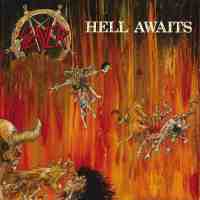
In the same year that Slayer unleashed the abyssic milestone that was ‘Hell Awaits‘, San Francisco’s occult warriors Possessed unleashed this pioneering work. This was 1985. Opening to a keyboard introduction that is a rendition of Mike Oldfield’s ‘Tubular Bells‘, opening track ‘The Exorcist’ gives way to whiplashed executions and instrumentalism that of course resembles the speed metal of it’s day, with more than an obvious nod in style to the sounds of Venom and early Slayer, but a more definably neo-classicist approach to their songwriting. This structural foundation is more or less enough to give this American act, along with Master and Deathstrike the quality of being the earliest examples of death metal on their continent, taking the anti-rock phrasings of hardcore punk and welding it together with the tonal extremes of speed metal and the progressive leanings of heavy metal.

The latter is prevalent in the lead guitar work, a series of instrumental blitzkriegs that resemble the playing heard on Judas Priest or Mercyful Fate‘s classic works, with the influence of blues music marginalized and the neo-classicist element retained in the execution, put through an industrial noise filter. The distinction on first hearing would not be too far off from when one hears the guitar work from Slayer’s axemen Kerry King and Jeff Hanneman, though pertaining more towards a dissonance that Morbid Angel would use as a basis for Trey Azagthoth’s technically dazzling leadwork. As this is the most distinct feature of the musical work on this album, there is honestly little for me to say of the bass and drum work, which work as an excellent anchor for the sonic fury conveyed here. A fearsome bark by Jeff Becerra is similar to Paul Speckmann of Deathstrike/Master, with a less hoarse and guttural delivery, occasionally pertaining to a cry that anticipates the vocal work of Chuck Schuldiner (Death) and John Tardy (Obituary).

The dark atmosphere conveyed by the production is well balanced, and like Slayer’s ‘Hell Awaits’ from the same year is given the same control of quality that allows the music to breath it’s sulphuric air, and spread it’s blasphemous wings. In the history of death metal, an absolutely essential pillar and in the eyes of the reviewer, the best metal album to be released in it’s year.

Filed under: Death Metal Album of the Week — Tags: , , , — Pearson @ May 9, 2010 23:59 — Comments (4)

Daniel Ekeroth – Swedish Death Metal

Swedish Death Metal by Daniel Ekeroth is an easy and enjoyable read that recounts the glory years of Swedish Death Metal told in large part through the mouths of those who actually lived it. Ekeroth presents the history of Swedish death metal, focusing mainly on the release of seminal albums and demos, and the means by which fanzines and tape trading played a role in the development and proliferation of the Swedish death metal genre.  This is definitely a worthwhile read if one is looking for a chronology of all of the important bands, namely Bathory, Nihilist/Entombed, Dismember, At the Gates, and Therion, that played an important role in the development and consolidation of Swedish Death Metal. Additionally, the layout of the book is such that it is easily navigable, making use of handy headings, subheadings and band headings, which also make this a great quick-reference text.  However compelling, it is a slight draw back that the various snapshots throughout the book interrupt the flow of the read, and are laid out in such a way as to provide a distraction.  One may be better off reading the book through and then returning to the snapshots at a later date.

In addition to analyzing the careers of many important Swedish Death Metal bands, Ekeroth indulges the curiosity of the reader and earns additional merit for mentioning important non-Swedish bands such as Master and Deathstrike, and for emphasizing the role of Morbid Angel in the overall development of Death Metal. Interestingly, the author seems at pains to make sure that the reader understands the relationship between Crustcore, Punk, and Metal and adds some welcome depth to his account of Swedish Death Metal by mentioning Discharge, whose strumming style and melody would influence countless metal bands. If you are looking for a chronology of the glory days of Swedish Death Metal, this book proves enlightening. Thankfully, there is little mention of “Slaughter of the Soul” and second rate Swedish bands such as In Flames and Soilwork that would later hijack, dilute and all but destroy this once living art form.

With that said, readers beware!  Ekeroth has a tendency to try and convince his reader that death metal was all about “fun” back in the day and tends to present the extracurricular activities, namely drinking and partying, as the highlights of many bands careers. Although Ekeroth’s goal was to tell the history of important bands, releases and tours, I believe this book could have been improved had Ekeroth attempted to explore the philosophical underpinnings of this genre and refrained from presenting Metal culture as simply an offshoot or replication of self-indulgent rock culture. New frontiers await those willing to explore this aspect of Swedish Death Metal and Ekeroth’s book may in fact prove to be a trailblazer. Time Shall Tell.

Filed under: Death Metal Book Reviews — Tags: , , — TheWaters @ March 23, 2010 21:01 — Comments (2)

Sarcophageous film on Finnish heavy metal culture

Promised Land of Heavy Metal is a documentary about the history and philosophy of Heavy Metal and how it became such a big deal in a small country called Finland.

We tell the story of Finnish Metal, from its early “underground” days to the present success stories, by interviewing famous musicians, experts and events organizers, a psychiatrist and a doctor of theology. The film takes us literally from the graveyard to the Finnish President’s palace!

Why is Metal a religion for so many? What are it’s links to satanism and ritualistic murders? What made Metal mainstream in Finland? Why does the Finnish Church have Metal Masses? What’s the future of Metal, after LORDI won the Eurovision song contest and even the President approves? We hear strong opinions: some see Metal as the new folk music, while others detest it’s commercial aspect.

The film is narrated by Kimmo Kuusniemi, a filmmaker, Sarcofagus guitarist and a forefather of Finnish Metal. Kimmo has lived in England for 16 years, and sees the current popularity of Heavy Metal as a strange phenomenon. He was the one who fought for the metal message 30 years ago! What happened in Finland in his absence?

One of our aims over the years has been to prove how the vital undercurrents of Finland produced cultivated metal sensations over the years from the earliest heavy metal days, best exemplified by the inimitable Sarcofagus, to thrash and the Finnish death metal movement, finally creating a discharge of consciousness that erupted in mainstream metal sensations all over the world, leaving most of the more focused and gloomy explorers to repose in the depths.

Kimmo Kuusniemi, the founder of Sarcofagus, the earliest Finnish metal band, has aggregated his unique vision into a documentary giving sporadic but meaningful glimpses into metal culture in search of the ultimate question: why?

Filed under: Death Metal News — Tags: , , , , , , — Devamitra @ March 11, 2010 21:17 — Comments (3)

Glorious times of death

Suffocation backstage pass

We’re definitely not alone creating a corpus of para-historical research and evaluation of death metal mythology. We’ve been in touch recently with the editors of a very interesting book to be published soon, apparently exhibiting similar tendencies to our own ongoing, arduous work of digging death metal relics and evidence from shadow-haunted attics, cellars and sealed archives.

Former ‘zine editors Alan Moses (Buttface ‘zine) and Brian Pattison (Chainsaw Abortions ‘zine) are nearing completion on a book unlike any other. Instead of the standard “history of” book, “Glorious Times” will showcase rare (many never before seen) pictures from the death metal scene (1984-1991) and instead of narration by an outside author, the stories contained in the book will come from the bands and ‘zine editors of the period. Who could be better at telling the inside stories of what really happened than those that were there and lived it.

The photos will come largely from the personal collections of Alan and Brian with other photos coming from the personal collections of such people as Kam Lee, Henry Veggian, Laurent Ramadier, and other stalwarts of the era. These pictures won’t be the standard lineup shots you’ve seen in magazines and fanzines over and over, instead these will be rare live pictures and candid images of bands in studio, hanging out and rehearsing, the types of images few people outside of the bands themselves have ever seen.

The stories will come largely from the bands themselves. We’ve got Kam Lee (Death/Massacre) telling about the forming of Death and their first gig, Alex Webster (Cannibal Corpse) telling about the Buffalo scene that spawned Cannibal Corpse, King Fowley (Deceased) telling of a road trip from Hell, all 3 original members of Nuclear Death telling personal tales, Chris Reifert (Death/Autopsy) recanting a tale on the recording of the legendary “Scream Bloody Gore” album, Vincent Crowley (Acheron) orating a tale involving fellow band Immolation… and many more personal stories never before told to or read by the fans.

Together these pictures and stories tell of an era gone by, the Glorious Times of the early death metal scene. You can go and pick up a history of book and read an authors interpretation of research he might have done, or you can pick this up and read what happened from the bands themselves, without filters, without someone else’s interpretation and all the while you can see images that have never been seen before. Send an email with “book updates” in the subject field to glorioustimesdeathbook@gmail.com for updates and insider info on this very limited, soon to be legendary book.

Crafting the Acid Depths

For more information go to: http://www.myspace.com/glorioustimesdeathbook

While it is common to remember death metal by its biggest commercial successes around ’93, I can’t help but agree with these authors that the era they have chosen to represent through their material is the one most vital, formative and interesting for death metal, as afterwards a collection of superficial, random sonic trends took over the more holistic immersion in death metal as serious business.

While waiting for this book and also a massive expansion to our virtual exhibits (including new exclusive interviews of course), spend your time by listening through each one of Austin Metal Music Examiner’s top death metal albums of all time.

Filed under: Death Metal News — Tags: , , , — Devamitra @ October 22, 2009 12:59 — Comments (0)

Death metal is good for you

So they think they can keep us blind
We must be aware to survive

Glen Benton

Our friend from Houston wrote recently a piece on why heavy metal is good for you while the Hessian Studies Center relentlessly works to get the Hessian cause and viewpoints matter in society and politics. Everyone with personal experience of death metal bands knows that the musicians are intelligent and often highly educated, so there is no reason the average fan would want anything else than live, join in action and search for knowledge. The intricate and mysterious subject matter of death metal is a conglomeration of the scientific and the occult, inspiring personal and social development and even creating multiple career choices far more useful than a menial job at Wal-Mart, if one is capable of dealing with the intellectual challenge of an academic institution.

Parents since the dawn of time have been skeptical about death metal and convinced that it magically makes youth into losers, because they are not prepared to accept the idea that one can “win” by critical thinking and penetration of the illusion that makes up the world of adults – the unholy trinity of propaganda (in advertising and politics), numbing of mind / evasion of challenge (entertainment and most of work life) and consumerism (egoistic individualism).

Science

It’s probably not big news to anyone that if you fight for the truth, you are going to offend people and you are going to get into problems. Parents, teachers and men of religion spent decades fighting against rock music that was basically about the problems concerning dating and loneliness, until heavy metal came along and changed matters for far worse. The songs dealt with social reality in a dark way and actually incorporated mythology and influence from philosophy. Progressive rock or psychedelic rock (The Doors, Pink Floyd…) might have opened the gates for heavy subject matter, but still there was something about Black Sabbath‘s demonic prophecies and Judas Priest‘s irreligious romanticism that was simply too much, particularly for reborn Christians involved in movements. Ironically, when death metal and black metal submerged into more and more extreme symbols, the PMRC and the preachers didn’t care so much anymore – because their agenda was mind control based on paranoia about hidden messages and symbols. Documentaries such as Decline of Western Civilization part 2 paints a picture of heavy metal as unintellectual hedonists, but the chosen interviewees, you might notice, are mostly shock rock and hard rock performers.

Organized satanism and blatantly satanic art didn’t give zealots any chance to exercise their status as messengers of God, who reveals hidden evil. The extreme death and black metal of Hellhammer and Bathory stimulated fantasy, circulated in the underground and was in all ways a separate phenomenon from mainstream youth culture, where always resided the “souls that needed saving”. That’s why WASP and Twisted Sister albums were burnt – they were supposed to corrupt the innocent, while the assumption was that no-one in their right mind would listen to death metal in the first place. The reputation was backed by misconceptions I’d like to examine.

War The morbid visuals of death metal, reminiscent at once of Gustave Doré, surrealism and satanic kitsch, were of course portraying the contortions of a soul writhing in the agony of Hell. Psychologists seem almost equivocal about the fact that this kind of feasts of gore fulfill a need in our personalities which can be repressed by formal, robotic upbringing and circumstance in a modern consumeristic society. Some of the lyrical content is focused on depictions of murder, satanic rituals and otherworldly visions. Like religious literature, mystical poetry and horror novels, dealing with powerful subjects seem evil and dangerous not because they would correlate with inspiring psychopaths, inciting youth violence or anything of the kind; the most frightening of scenarios is the journey – being taken outside of oneself to see reality from a cold, inhuman perspective, to grasp the freedom of a mind that exists beyond the boundaries of jurisdiction and morality. In other words, the slave is afraid to escape the master because out there is the world of predators and vastness, with no hand to feed him or slap him; survival requires action, not reaction, so the lazy and the ineffective choose never to test themselves, never to really engage.

The imaginative music of death metal, which incorporates chromaticism, atonalities and wild, untamed structures, incites unease, confusion and even revulsion. As when faced with a reasonably difficult piece of text or mathematical equation, the untrained human mind can develop surprising and irrational excuses in order to not deal with the challenge presented by the information at hand, such as claim that it is ugly or random or that “anyone can play that noise”.

Atheist‘s metaphysical, spatial vision of human existence is only thoroughly understood by the application of theoretical philosophy and psychology. Bolt Thrower‘s tactical war metal inspires one to study military history and even national defence. Carcass‘ satirical surgery of organisms is perfect listening when reading for your medical degree exams. Deicide and Immolation challenge the theologist‘s empty dreams and drives to contemplate the images of God and Satan throughout cultural forms. Nocturnus seeks for the limits in astronomy and physics while Napalm Death is pure sociology and economics. Amorphis and Nile practically force you into World History 101.

The PsychicYou catch my drift. Be useful. Study. Develop. Win. Sodomize the weak! The war rages on…

And so the Psychic Saw meaningful ends
Become the meaning of it all
To set the stage
For the fears that will be
To pull the curtain
For the whole world to see

Filed under: Death Metal Essays and Death Metal Research — Tags: , , , , , , — Devamitra @ October 15, 2009 21:41 — Comments (2)

Hellfires of the lands down under

Dust storm in Sydney

Does it seem to you that the days are shorter
And does it seem to you that the nights seem so much longer
Well it does to me, and in time you will see
That the fate of the world is burning in fire

In my visions of another age, Australia is a domain of rogues and devils, swept by sands and heat, a colony of fear. Aboriginals fight, mutated animals leap and grappling hooks are thrown from jeeps that speed with metallic roar across the wasteland. Humanity decays, but Australia preserves the instinct for survival, man against desert, taking pleasure in the primitive actions of hunting, fighting, lovemaking and getting drunk on bourbon. Nocturnal winds howl through the chasms, kangaroos leap over graves and tribal chants are raised amidst campfires as skull goblets are raised.

While I have never been to the country, the impressions of Australian black and death metal do nothing but strengthen the images of brutal frontier life. The sense of the wild is different, more internalized, almost Jack London -like, compared to the European romanticized walks in civilized Teutorburger woods or pure, silent Scandinavian nature. Australians are rebels who have tasted the whip of slavery and still remember it – with hate in their blood.

Razor of Occam Every rock fan knows AC/DC and Nick Cave, the astonishing twin pillars that represent total opposites of image and style roleplay in hard rock. Both of them influenced heavy metal around the world, but a mainstream fan would be hard pressed to name any other Australian bands of note. I’m not going to dwell on the early 80′s, but mention some events that were triggered by the resurgent death and black metal ideas of Europe and the USA.

Australia is characterized by geographical distance from the Western pop culture trends and so, death metal didn’t happen early but it was marked by a serious intensity from the beginning. As a perfect example, we can take Armoured Angel, who with their late 80′s series of demos gradually developed from a heavy and grinding version of speed metal into a technical artillery of militantly precise death metal akin to Polish innovators Vader. Hobbs’ Angel of Death, due both to their cult reputation and connections to later more visceral bands, proved definitive with their self titled album in establishing the early death metal attitude and sound of bands like Destruction and Slayer in Down Under. Hobbs’ raw, molten hot solo bends and breaks were like burning gasoline leaking from a bullet torn hole in a fighter plane. Meanwhile, Sadistik Exekution initiated their campaign of abuse against every known musical principle, which continues up to this day.

Bestial Warlust Influenced by hardcore and speed metal, these madmen from Sydney proceeded to destroy the reputability of Australian metal with their on-stage and off-stage antics, almost becoming performance art with their macabre, sarcastic terror campaign of pure noise. Already “The Magus”, recorded in 1986, suggested that this band would dare to go where others would not, the subconscious realm of damnations and mutations, yet containing the elements within an underground death metal rhythm and riff based format. Their second and best album, “We Are Death… Fukk You!” was already something else – a noisy freakshow of an album, with the catatonic, desperate screams of Rok and nearly fusion jazz-y random blasts of violence from the strings of Rev Kriss Hades and Dave Slave. Sadly, their later albums mostly devolved into using the madness as a gimmick instead of a mode to express actual items of perception.

The next generation produced more self-contained music but it also showed the blooming of the world wide death metal presence, as we are talking about the days when death metal was at its commercial heights, ’91-’93. Many bands wanted to be like their big brethren in Florida, as a shameful but popular example let’s mention Mortification, who aped the thrashy sound of early Death with some of the complex rhythms of Obituary or Suffocation, yet infiltrating the standard gore text with reborn Christian propaganda, which had a widespread presence in Australian metal at large. Meanwhile, a band like Anatomy, whose elegant use of melody as texture, akin to Swedish bands like Grave or maybe even At the Gates, remained unknown to most death metal fans. Anatomy’s constructions weren’t altogether as brilliant, but as with many Norwegian early death metal bands, it was a breeding ground for musicians and ideas that would fully develop into a wave of satanic, intense war metal. And if you read the diSEMBOWELMENT review we published some time ago, you already know that they were able to built a transcendentally blissful temple of Zen-like tranced out death metal from the simple basis of combining British style grindcore with British style doom.

The acid, sex and Satan obsessed wave of barbaric war metal, ca. 1994, was again closer to the sardonic “fighting man’s black metal” attitude of Beherit, Blasphemy and Impaled Nazarene, than Norwegian “top hat black metal”. This means that Bestial Warlust (“Vengeance War ’til Death”), Deströyer 666 (“Violence is the Prince of This World” and “Unchain the Wolves”) and Gospel of the Horns (“The Satanist’s Dream”) used Sarcofago and Destruction as templates to unleash a torrent of riffs which could have been untuned Motörhead on 45 rpm, emphasized by an artillery of ambient drumming to evoke images of blooddrenched hordes and endless streams of bombers. I remember how back in the day these bands were even widely detested in zines documenting the black metal phenomenon, but they proved crucial to bands which around the turn of the millennium clad in bullet belts and started wearing gas masks in “war metal” revival’s endless stream of clones.

Gospel of the HornsAll this might have you thinking that the Nordic and Romantic styles of black metal were obsolete in Australia, but this was not to be the case. Abyssic Hate (whose “Cleansing with an Ancient Race” was a perfect match for the Immortal related Det Hedenske Folk on their split album) intended to capture the harsh poetry of Burzum and Ildjarn. Later material was somewhat unsuccessful because of humanocentric (“suicidal”) terminology, despite ambient leanings in songwriting. Nazxul was the Australian counterpart to mysticist bands like Nåstrond or Osculum Infame, whose cloaked, symbolic stage presence was a source of controversy. Theatrical, esoteric and arrogant, Nazxul did not fail to clothe oblique satanism in suggestive and venomous fury, at times surprisingly cerebral – especially on the mini-album “Black Seed”. Samain‘s “Indomitus” recalled some of Enslaved‘s and Graveland‘s explorations in long songs influenced by folk and classical music, wandering through interludes and heavy, thunderous, emotional modes as if paralleling the documented trials of the ancient Indo-European tribes, whose mythological symbolism filled the lyrics.

NazxulGradually, we can note the presence of all the international metal trends and hypes increasing in Australia, filling the continent with meaningless bands. It would be a lie to say that the random band you hear from Australia is up to anything good. But there’s some you might like to hear. Asphyxia is a young technical death metal band, influenced by Nile, Kataklysm and the rest of the champions of convoluted hyperspeed – they are bit in love with the Necrophagist digital treachery fashion but they have room to develop and the players definitely deserve applause for their instrumental excursion. Midnight Odyssey uses oceanic layers of slow melody to transform black metal to a landscape of dark clouds, using keyboards in the evocative manner familiar from Schulze and Summoning. The best of the epics on “Firmament” rediscover a youthful, hopeful beauty that hasn’t been too fashionable in the image and commodity oriented latter days of black and death metal. Nazxul, who sadly lost a vital member to a motorcycle accident, released in 2009 their possible magnum opus, the immense “Iconoclast” which has established itself as one of my top black metal choices of the year despite initial skepticism towards the more standard imagery and vocabulary employed on the surface. Suggestively classical and elegant, as Emperor and Avzhia did it, Nazxul praise the unliving and the unknown with a Bach-ian playful sonority, adding themes, keyboards and guitar leads to basically simple songs the same way an alchemist adds prime materials to his boiling tincture of salvation. It is all, and much more, than most of Funeral Mist (and their ilk) tried to achieve with their experimental norsecore.

The old horde is still going strong, of course, as I got the initial inspiration for this writeup when interviewing Deströyer 666 (now based in Netherlands and the UK) elsewhere. With their latest album “Defiance”, they continue to quote the metal history all the way back to Judas Priest and the NWOBHM and this was of course much enjoyed by this writer even though it would be false to say that they would have reinvented, or even surpassed, their old selves in any manner. The scene is still brimming with offshoots of Anatomy and Bestial Warlust, such as Ignivomous, who on “Death Transmutation” have definitely listened their Incantation and Immolation, not without streamlining them to a more generic barbaric noise approach though, and Razor of Occam, whose “Homage to Martyrs” updates the violence of Sodom and Kreator to a new generation yet again, as wolves surrounding the throne room of Absu who stumbled and diluted their ancient black thrash in favor of “progressive” stylings that mostly only pleases reviewers in Terrorizer.

I know that mortals’ ears are already bleeding, but it’s impossible to escape this topic without mentioning a few curiosities from Adelaide group of total nutcases, starting the cult old school death metal band Martire back in the early 90′s. The early demos and EP’s have been re-released multiple times. Since that, members who call themselves “The Great Righteous Destroyer” and “The Serpent Inquisitor” have continued to baffle the hapless headbangers with one after the other more indescribable and twisted songs. Stargazer‘s Lovecraftian, off-center and racing death metal is what I personally consider the flagship band, whereas Cauldron Black Ram grooves like a joint venture of Celtic Frost and Running Wild members (in concept also). Misery’s Omen paints a hyper-dramatic curtain of dreamy black metal resembling Samael and a krautrock band on an endless bad acid trip, describing “Desolate Winds of Mars”, “Antarctic Ice Chasms” and other spectacles of consciousness awaking to the immense possibilities offered by nature itself, impersonal, cold but beautiful.

Gather ’round all you fire-starters
Whirlwind reapers and comet riders
Come to our mountain hall
Come and heed the call

Filed under: Death Metal Essays and Death Metal Research — Tags: , , , , , , , , , , — Devamitra @ October 2, 2009 15:20 — Comments (8)

Ur-Tod – on the birth of death metal

obscurity

Something like the problem of transubstantiation for the church fathers, the birth of death metal, who did it and where, is one of the prime causes of contention of metal messageboards across the world. Some give credit to Venom‘s blasphemies and chaos that were basically Motorhead with less technique and more sluts, ca. 1981. Thomas Gabriel Fischer‘s Hellhammer, formed in 1982, was an extreme entity from Switzerland that explored the furthest reaches of negativity and doom, guitars tuned low and vocals devolving into grunts and screams. Around this time the same guys also started a fanzine called “Death Metal”, later to lend their logo to a 1984 compilation of Noise Records bands, including Hellhammer. Around 1983, still not more than two years after Venom’s “Welcome to Hell” and the same year Mercyful Fate and Metallica would debut, Kam Lee of Mantas (pre-Death) and Jeff Becerra of Possessed were utilizing growled low vocals from the bottomless depths of Hell and elements of death metal guitar (tremolo and chromatics) and drum technique (blastbeat) that are staple elements of what consist a normal death metal album today.

I went to high school with Jeff Becerra and Larry Lalonde. They actually recorded and released ‘Seven Churches’ when we were in school. I even had a copy of the demo. I read all the time people citing that album as one of the first Death Metal albums and that they helped start all that. I seem to remember those guys being really into bands like Destruction, Venom and Celtic Frost… but I guess Possessed took it a little further. At the time I didn’t think it to be the start of anything. -Mark Peters

The above quote from the Peacedogman forum highlights the essence: bands were taking the influence of the previous generation of bands into areas that seemed so natural to them that they were not thinking of going out of their way to create another “experimental” genre. Thinking about thrash and thinking about death metal in their pre-trend incarnations is mostly an invention of the historians – it’s best to focus on the organic development of metal over time and remember how people unrelated to each other stumbled across the same kind of approach independent of each other. To celebrate the diversity and energy of this formational period when speed metal bands were discovering the praise of death and invocation of satanic forces, one could do worse than listen to this old school death metal compilation created by Fenriz for Vice Magazine – it’s in fact a good supplement to our article on the history of Norwegian death metal, because it represents both the contemporary sound of Sweden and the various evil conjuring voices from around the world that these kids heard by tapetrading, thus influencing their sound.

Filed under: Death Metal Essays and Death Metal Research — Tags: , , , , — Devamitra @ July 14, 2009 12:30 — Comments (1)

Forgotten death cults from Finland: Coprophilia and Necrobiosis

necrobiosis

Visitors remembers the Western shores of Finland mostly from their warm summer days, windstorms and chilly nights of Autumn. The dunes of the shore of Yyteri are unique in the whole Scandinavian region while most of the towns carry relics of past industries but have failed to establish themselves in modern or digital age, remaining secluded communities with little vital attractions to the youngsters. Thus it is not surprising that towns such as the historic Uusikaupunki, a weird silent nature-surrounded industrial port that has always baffled my spirit, gave birth to multiple demo level death metal insanities in the early 90′s.

Coprophilia described the twisted and tangled nature of woods, human remains and animal entrails on the four songs of their one and only demo, playing distinctive and intricate heavy metal influenced straightforward melodies to lend catchiness to songs that in their spontaneous clarity bring into focus the main influences for old Finnish death metal: heavy metal, Bay Area speed metal, horror music and UK bands in the vein of Napalm Death.

More sarcastic, irritant and grinding, Necrobiosis pummeled a simplistic punk-o-rama riffspace almost like Blasphemy or Archgoat would have done it except using the concluding expectancy common to dual vocal grindcore so that the grunts and screams echo exactly the phrases played by the rhythm guitar. Lead guitars often recall metal guitarists’ introductory practice pieces in the vein of Iron Maiden and Rainbow, as was the case with not only Coprophilia, but also Amorphis, Sentenced and many other greats. Curiously for a word I had never heard before, Necrobiosis was also picked as the band name around the same time by guys a couple of hundred kilometers away in Riihimäki. You might know this band better by a name they thought of later: Skepticism.

Filed under: Death Metal Essays and Death Metal Research — Tags: , , , , — Devamitra @ July 7, 2009 12:51 — Comments (0)

Echoes From Kali Yuga

150496

An ominous atmosphere of impending ruin pervaded the sound of many Death Metal bands, whose worldview afforded them an acute awareness of declining modernity. These artists understood that the course of civilization is subject to decay as much as any organic matter, despite the prevailing belief that human constructs are entirely seperate to the natural world that they operate within. Ancient Indo-European peoples predicted the nature of this downfall with great accuracy, as they believed in a cycle of creation and dissolution in which the same ego-principles slowly manifest time and time again. The 3000 year old Vedic text known as the Srimad Bhagavatam provides one of the more detailed explanations of how the last age of the cycle – the Kali Yuga – reaches it’s apex; extracts from which the Death Metal music in the video accompanies as inheritors to this cosmic vision of the world.

Filed under: Death Metal Art and Death Metal Images — Tags: , , — ObscuraHessian @ June 28, 2009 22:05 — Comments (0)

USBM: trailer trash or Western mystery school?

bayusik

When black metal became in popular perception “the next big thing”, around 1992, it was rightly considered an European phenomenon which contained a cultural bias based on tradition, arts and society impossible to spiritually clone in the American way of life, even in the underground which had spawned death metal. Bands like Profanatica and VON showed that it is possible to create the blasphemy spewing minimalistic barbaro-black metal in USA as well as anywhere else, but the Romanticist type of black metal bands from USA were for a decade, if not more, the laughing stock of even American BM maniacs themselves. There was something wholeheartedly absurd about Sumerian sorcerers from Texas, druids from Minnesota and vampires from California. David “Blackmoon” Parland of the insipid Dark Funeral waged verbal war in zines against Proscriptor of Absu, who cast curses and spells in return. Judas Iscariot printed Nietzschean statements in German and moustached overweight pro-wrestling fans took pictures of themselves corpsepainted in suburban woods. Whereas musical quality grew through the times, so did the amount of excess people circulating in the American BM underground, leading to the explosion of “bedroom black metal” in the turn of the millennium, while black metal messageboards became populated with people whose IQ would be statistically rather rare in Norway and Sweden.

The dilemma seems to lie in the artificial distance between the sophisticated intellectual and man of the street which characterizes also the separation between the art and entertainment of 20th century America. Whereas the Oslo or Bergen black metaller would have been raised with equal awareness of Ibsen’s plays, American movies and classical music as well as punk, the US black metaller often came from the background of very little cultural perception besides TV, baseball, horror movies and aggressive competitive values. The obsession with social standing is such that looking or behaving different would easily be seen as gay or the sign of a wimp or nerd, but what fan of black metal would want to represent normality in every piece of action? Scandinavian, Austrian or even Polish metalhead did not and does not share this pressure of having to be a regular conservative guy because there are more different roles and stereotypes available in the society to identify with. Thus most of the US youth involved in black metal came to view themselves as either depressive, perverted losers or occult maniacs oriented to conjure the otherworld dressed in robes and armed with litanies of every available ancient magick tradition and spellcasting culture.

As case studies, take for example Crimson Moon from San Diego and Night Conquers Day from New York. Both are bands with respectable instrumental skill, dedication to the black metal arts beyond the normal “scene kid” wannabe interest and an intuitive grasp of the Romantic and Faustian in black metal. Yet, both are bands hard to take seriously at face value, because there is so much absurdity, alienation from reality and bad aesthetic choices involved. Crimson Moon presented themselves as a magical collective of energy vampires but the music was often a too simplistic rip off of influences from Cradle of Filth to Ancient, damaging the beauty, while their reputation suffered a blow from public arguments on online messageboards not at all fitting for the sorceric image – even splitting the band in two factions, Gorgoroth-style. Night Conquers Day posed in full daylight near a storage building with one of the members wearing corpsepaint (and the infamous moustache!) and the personal history of the members included getting into headlines for stealing gravestones and a keyboard player who disappeared but returns now and then to play a piece over the phone (I think I would go that way too if I had to live in the American society) and the 10-15 minute epic songs quoting several eras of metal from Mercyful Fate to Burzum remained unmemorable because of sounding like too many parts had been stitched together with no spiritual theme arching to wrap up its diverse aspects into a continuous whole.

Filed under: Death Metal Essays and Death Metal Research — Tags: , — Devamitra @ June 19, 2009 17:21 — Comments (1)

Older Posts »

Death Metal and Black Metal Search Engine