How to buy friends and manipulate people

limp_bizkit-ironists

Metal — and everything else humanity-related — is like the first day of first grade. People are still using the same tactics they used then as the basis of their behavior, mainly because there are only so many options and the goal hasn’t changed.

What is the goal? Society is a cooperation for the sake of survival. We need to get other people to work with us. Most people do that through socializing, others use raw power, some others can only deal with it through the filter of money. But when you socialize, there are only a few paths. You can try to be the over-achiever, with all As and good at athletics. Or you can stand out another way, which is being The Opposite of what people expect. You see this in high school drama departments the clearest, but it’s also present in entertainment and politics among adults.

The tactic is this: stand out by being “different.”

The problem with this tactic of course is that it’s bone-headed, ignorant and predictable. They like blue? You like green. They turn right? You turn left. They like steak? You pick ice cream. Despite it being obvious as heck, this tactic continues to work. You “shock” people and then, using their reaction as a justification for the importance of what you do, rally everyone who hates them to your side. Even if that hatred is concealed.

In fact, we can see this in “black metal” today with an article entitled “Earning hipster act status, Deafheaven defies orthodoxy”:

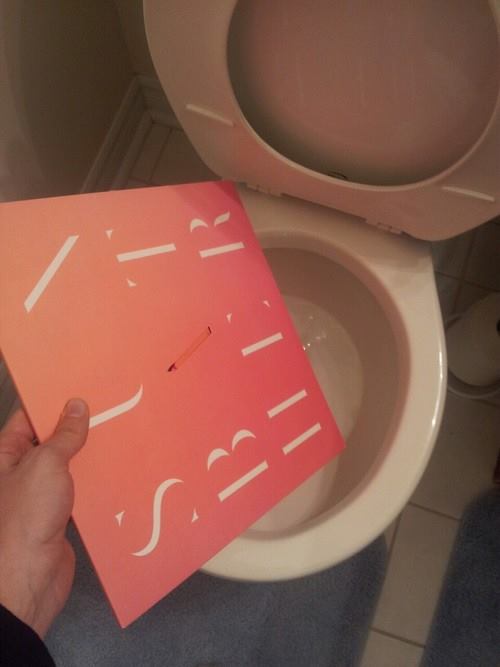
There are no pink album covers in black metal.

With their much-lauded second album, “Sunbather,” the group broadened the black metal palate with swelling, enveloping guitars oft-associated with the foot-asleep-on-the-distortion-pedal drone of the British shoegazer ranks.

The album won the band an audience beyond the traditional partisans of the harsh, love-it-or-leave-it sound, and as such, Deafheaven was quickly branded a hipster act by scene purists.

In the same passage, the article both calls Deafheaven “different” and then acknowledges that the band is basically ripping off British shoegaze, a genre from thirty years ago.

That’s “innovation”?

Since 1994, we haven’t really had much from black metal. The underground shot its wad, and since only a few dozen people understood it in the first place, it collapsed in on itself while the rest of us try to figure it out. This is one reason that metal academia is important, especially if they stop studying the easy stuff — the newer material and the hard rock like bands — and go to the roots of the genre: Bathory, Immortal, Hellhammer, Burzum, Emperor, Darkthrone, Enslaved, Sodom, Slayer, Mayhem.

Right now our over-written (“foot-asleep-on-the-distortion-pedal”? are you kidding?) media and adamantly clueless fanbase are churning through the ruins of the past. By being “different,” one claims an audience. Black metal was different in a different way, namely that it didn’t try to be different so much as it took off in its own path. So what’s the binary opposite of that? Well, being the same old thing but pretending to be black metal, for starters. Hence the invasion of metal by non-metal bands: Opeth, Boris, Necrophagist, Sonic Youth, Dillinger Escape Plan.

Most of these bands reverted to what was simple and easy to create, which was post-hardcore. With its compositional style that cherished the random over the orderly, and its tendency to drift off and suddenly return to a repetition of its major theme, it was easy to compose. That was probably why it developed the way it did, namely that the punk songwriters who couldn’t come up with Hard Times in an Age of Quarrel or Arise! had to make their also-ran status seem less pointless by “innovating,” or coming up with a half-cooked version of more musically adept genres. Imitators imitating imitators, by being “different,” all the way down.

Deafheaven is no exception. Gone are the complex song structures and the intelligent use of drone. Gone are the troublesome Nietzschean existential questions, where we wonder if life is totally empty of anything, or if we can find a clue to its significance in nature. Gone are even the overtones of Viking metaphysics and Pagan mysticism, the interesting sociopathy for art’s sake, and the rebellious streak that took aim at anything the instant it became accepted, knowing that whatever the crowd likes is a lie. Instead, we get the music you can play at a school dance. Easy beats, head-nodding go-nowhere melodies, symmetry and rock ‘n’ roll conventions from time immemorial. It’s the same old brand new thing.

But really, this act of “being different” can be seen everywhere. Nu-metal was based on being different, or at least on the perceived emotional contrast between sing-song verses and ragey choruses. Metalcore was based on being different in that the riffs had no relation to each other so it was like hearing carnival music on a fast-moving merry-go-round. Later punk was based on being different, in that it was punk but it got in touch with its softer side and went all progressivey and stuff. All different, all the same.

Metal will begin to recover from its 1994-2014 slump when it acknowledges that these easy ways of socializing are gone. Appearance is not reality. The kid who really got ahead in socializing was the kid no one noticed. He made friends by being genuine, made connections with teachers by learning something even if he didn’t get As at all, and everyone knew him because he didn’t fit into any of the easy slots that almost everyone else did.

Or the kid who got ahead because she had an interest that was very specific and just fit her personality, so instead of going for all the drama, she just spent her time on that. Or on being a good friend, and being there when people were in need. Those were the people like black metal, which was the genre that chucked socializing away and focused on both outside reality and the inner spirit in all of us instead. I miss those days. It wasn’t pure whore, all the way down.
deafheaven-disposal

53 Comments

Tags: , , , , , ,

Is all metal speed metal now?

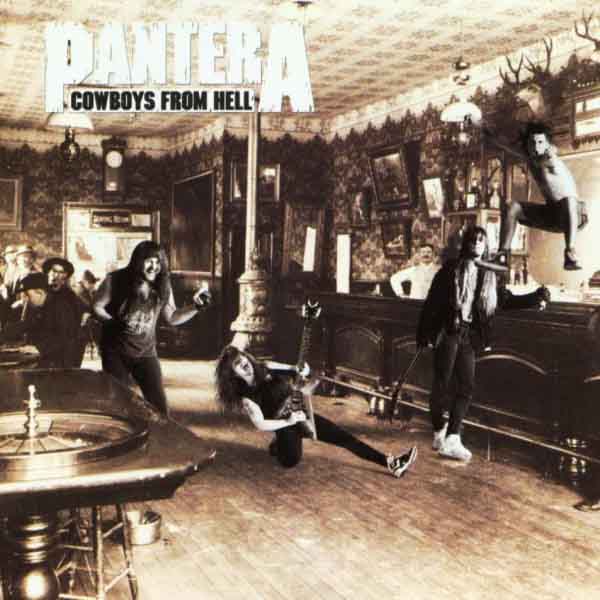
pantera-cowboys_from_hell

Tom G. Warrior is a relentless innovator and amazing composer. As he details in his book Only Death is Real: An Illustrated History of Hellhammer he grew up in an abusive, uncertain environment within a broken home. He also grew up in “perfect” Switzerland, a place that has more rules than people. These events shaped his personality or rather, the limitations that are still imposed upon it.

What happened was that young Tom G’s ego was crushed and doubt was introduced into his mind. Doubt about the purpose of life, or even his own life. Doubt of self-worth. Fear that at any moment he might find himself without a justification for existing, and be truly discarded and alone. That’s a heavy load for a young person to carry, but the sequential success of Hellhammer and then Celtic Frost lifted Tom out of it. It also pushed aside a healing process.

When Celtic Frost evaporated, Tom launched on a series of attempts to find popularity again, but on his own terms. First, his highly inventive industrial music, and later, attempts to be contemporary. The latest two are below, and they are marked by a duality: a great underlying talent, desperately attempting to ingratiate itself with newer metal audiences. Like all things that do not take a clear direction, they are thus lost on both fronts.

This is not a hit piece on Tom G Warrior. Like many metalheads, I hold him in the highest regard. He is one of the great innovators and farseeing minds in metal. However, his tendency to try to adapt to what is current shows what is currently happening in metal: in a dearth of ideas, the genre is recombining past successes that represent the culmination of earlier genres, and is trying to recapture its lead by offering a buffet of different influences. But alas, like the music of Triptykon, these forays are lost causes.

Currently a morass of subgenre names exist. We can call it metalcore, or modern metal, or math metal, or tech-deth, or even djent, but all of it converges on a single goal: to make a form of that great 1980s speed metal — Metallica, Anthrax, Testament, Exodus, Nuclear Assault — that used choppy riffs made up of muted chords to encode complex rhythms into energetic songs. To that, the modern metal bands have added the carnival music tendency to pick entirely unrelated riffs to add variety, the grooves of later speed metal, and the vocals and chord voicings of late hardcore and its transition into emo.

What this represents is not a direction, but lack of one. By combining all known successes from late in these subgenres, modern metal is picking up where the past left off before death metal and black metal blew through and rewrote the book. The problem is that making music that is intense like those underground genres is difficult, and even more, unmarketable. It approaches the issues in life that most of us fear, like mortality and failure in the context of powerlessness and meaninglessness, and thus presents a dark and obscure sound that makes us uncertain about life itself. Like Tom G Warrior living through a shattered marriage of his parents and a society too concerned with order to notice its own boredom and misery, black metal and death metal shatter stability and replace it with alienated existential wandering.

On the other hand, late punk offered ideological certainty and heavy doses of emotion. Late speed metal, which Pantera cooked up out of heaping doses of Exhorder, Prong and Exodus, offers a groove and a sense of a party on the wild side. Inserting bits of death metal, especially its technical parts, and some of the frenetic riffing of Discordance Axis allows these bands to create a new kind of sound. But at its heart, this music is still speed metal. Where death metal played riff Jenga and put it all together in a sense that told a story, modern metal is based in variety and distraction. It exists to jar the mind, explore a thousand directions, and without coming to a conclusion ride out in the comforting emulation of the chaos of society around it.

But at its heart, these bands are speed metal. Like Triptykon who revitalize the E-string noodling and riff texture of more aggressive speed metal bands, with the bounce of Exodus and the groove of Pantera, these bands offer a smorgasbord combined into one. They mix in melodic metal, derived from what Sentenced and later Dissection made popular, to give it a popular edge. However, what they’re really doing is regressing to a mean. This has happened in metal before, when mid-1970s bands recombined Led Zeppelin and Black Sabbath into rock-style metal, and in the mid-1980s when glam metal did the same thing but mixed in the gentler sounds of late 1970s guitar rock bands. When metal loses direction, it recombines and comes up with a mellower, less threatening version of itself.

All of this is well and good if we do one single but difficult thing: recognize that what we’re listening to now is a dressed-up version of what metal and punk were doing in the late 1980s. We’re walking backward in history, away from that scary underground death metal and black metal, and looking toward something less disturbing and more fun at parties. It seems no one has come out and said this, so I figured it must be said. Enjoy your weekend.

17 Comments

Tags: , , , , , , , , ,

Sadistic Metal Reviews 12-12-13

garbage_dump

What are Sadistic Metal Reviews? Heavy metal is either art, or like the rest it’s a product to make sad people feel better about their empty and pointless lives. Brutal honesty is all that separates us from that abyss. Remember, tears are a sign that you’ve really reached people…

evereve-seasonsEvereve – Seasons

Nuclear Blast, this is NOT “music to mangle your mind.” This is the AIDS of the music world. Cheap, hokey synths ramble under tepid saccharine guitar melodies while effete whiny crooning that makes Morrissey sound like Tom Warrior radiates in the background. You can just about hear the teenage bedrooms of America, reeking of self-pity and masturbation, where the obese and inbred listen to this. It’s OK, kid, everyone gets turned down by a fleshlight at least once. If you can imagine heavy metal with all of its soul removed, candied like one of those disgusting little fruits in a fruitcake, this would be it. There is nothing here that is metal except under the flimsiest of pretenses. “Evereve” is more like “Summer’s Eve.” Seasons could be a forerunner for HIM. If you ever hear a note of this, you’re going to need hormone replacement therapy.

covenant-nexus_polarisCovenant – Nexus Polaris (also released as The Kovenant – Nexus Polaris)

The cheese of “black metal” circa 1998 is on full display here in this one album. Considering the Dimmu Borgir membership and the touting of a drum performance by Hellhammer circa his “help, I need money and even joined Arcturus” days, you know this will be bad. The vaudevillian sideshow vibe of later Ancient and Cradle of Filth is tricked out to sound like a joyous PG rated sci-fi soundtrack is playing over a rock opera, making this all sound more absurd. Imagine the music from a children’s variety TV show but with some drunk guitarist in the background hammering out heavy metal riffs with black metal stylings as he copulates with close family members while wearing a tutu. If you heard a “black metal” parody in recent times, chances are it sounded like this.

immolation-majesty_and_decayImmolation – Majesty and Decay

This album brings to mind Dogwin’s Law for metal: as a metal band ages, the probability of it reverting to its influences becomes one. Immolation started out as a speed metal band, then detoured into death metal for a few albums, and now is back to heavy metal but in a simplified form using death metal technique. When they did that cover of Mercyful Fate, it shook something loose, and Immolation thought, “Why spend hours fitting twisty riffs into intricate combinations?” Verse, chorus, break, solo — done! Collect check, buy motorcycle parts. This is the metal equivalent of baby food: over-cooked, pre-ground, sweetened and without any difficult parts. Gone are the wildly imaginative riffs and catcomb-like song structures. Instead it’s The Jets covering Bryan Adams put into power chord riffs. Embarrassed by their own non-output, Immolation tries to hide the emptiness by getting emo on the choruses but nothing can save this pile of paint-by-numbers metal. This is metal’s equivalent of Bangerz with some guy howling along in the background about stuff he read on Infowars.com.

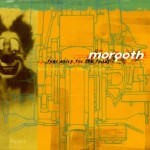
morgoth-feel_sorry_for_the_fanaticMorgoth – Feel Sorry for the Fanatic

Another case of mid-90s “evolution,” Morgoth ditch the Death Leprosy worship for a sound more akin to Voivod at their most commercial playing Killing Joke at their poppiest. Vocals sound like a parody of Amebix, lots of mumbling and tuneless sung-shouts. Verse-chorus structures and an industrial rock production suggest this band was attempting to cash in on the industrial/cyber image trend of Ministry, Godflesh, and Fetish 69. With waves of label hype behind it, Feel Sorry for the Fanatic failed as only the falsest of marketing hype can. Creating a neutered album with fringe-accessibility to an audience that didn’t exist the year this album was released left the band to fall on its face in embarrassment and dishonorably disband.

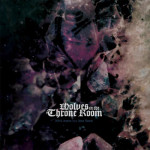
wolves_in_the_throne_room-bbc_session_2011_anno_dominiWolves in the Throne Room – BBC Session 2011 Anno Domini

This band of hippies in denial have improved in the songwriting department, but by so doing reveal the underlying emo to their music. It’s clearer than ever before that Wolves in the Throne Room were never black metal. This two-song release allows the “post-metal” to shine, but musically “post-metal” is identical to emo, a subset of late hardcore/indie rock hybrids of the late 1980s. Musically, nothing has changed since that time, so if you’ve been in a cave since 1984 you might enjoy this band. These two tracks are far less random than previous Wolves in the Throne Room output. While they try to ape black metal with heavy guitar distortion and howled vocals, in harmony and choice of scale this material would fit in on a Jawbreaker or Rites of Spring album more than any black metal album. In fact it’s a complete sham to ever list this band as black metal because it misses out on what they do well, which is a very slow version of emo. Droning emptiness portrayed with slighly dissonant tracks that sound like self-pity incarnate. It evokes a lot of different feelings that boil down to the same state of suspension, in which mixed-emotions and self-pity that brings self-doubt resolve all things to the same. I wouldn’t recommend this for any metal fan or anyone who remembers the late 1980s.

solar_deity-devil_worshipSolar Deity – Devil Worship

If you approached a black metal band as if it were a doom metal band, you might end up with something like Solar Deity. Very musically literate in a way that is reminiscent of Necrophobic, with understated melodic riffs and good rhythm, this band nonetheless suffers from a type of drone syndrome where just not enough changes to keep interest, although there’s nothing offensive. Clearly mostly inspired by the first two Gorgoroth albums, Solar Deity attempt to set up a number of songs to narrate and develop theme, and do a reasonable job of it, but their riffs are rather lukewarm and repetition-intensive as is their usage. The result would be great if designed for doom metal, but as black metal ends up being an abrasive drone and sense of confused purpose within otherwise well-composed music. It might be good background music for repetitive tasks. You know, really feel that tedium as you clean water heaters, file taxes or chase hipsters off your front lawn with a shotgun (aim for the knees).

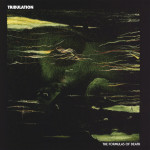
tribulation-the_formulas_of_deathTribulation – The Formulas of Death

Death metal isn’t hard rock. If it wanted to be hard rock, its members being honest people, it would have elected to simply be that instead. However, there’s a huge market in dressing up regular boring corporate product rock music as something “edgy” like death metal, which still hasn’t been conquered by the civilizing forces of socialization. Like previous Tribulation releases, The Formulas of Death is ambiguously in the death metal realm and in fact treats its death metal elements with ironic scorn. The result is a pretty good hard rock band embedded in a bunch of unnecessary stuff. Get a real vocalist, throw out the token chromatic riffs and d-beats, and re-style this album as something along the lines of early Queensryche or Cinderella and it would be great. This will make just about every “Best of 2013” because people can’t tell the difference between turd and steak tartare but also because it’s catchy. Simple music for simple minds.

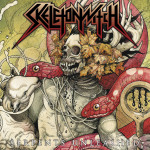
skeletonwitch-serpents_unleashedSkeleton Witch – Serpents Unleashed

If focus groups found a way to slam Sentenced Amok and At the Gates Slaughter of the Soul into a metalcore product that panders to Adult Swim viewers, then Skeleton Witch would be the abomination unleashed. Tired and generic riffs more bound to cliche than tradition power an interchangeable series of mellow-deaf parts stitched into galloping rhythms. Although it appears to be like metal from a distance, I suspect if MC Hammer knew how to play a guitar, he’d come up with something like this. Poppy and bouncy background noise for people who value video games and Comedy Central more than music, Serpents Unleashed might be the sonic equivalent of a middle schooler’s diary: covered in stickers and glitter, but the content within is more than predictable in essence even if not in particulars, and in ten years it will humiliate them if unleashed.

beyond-fatal_power_of_deathBeyond – Fatal Power of Death

The problem with retro works is context. What was once a whole context is broken down into techniques, “moments,” transitions, tempo changes, riff-archetypes and melodic frameworks, and then reconstituted. However, since there’s no motivation except to be retro, there’s no new context except appearance. Thus the bands doing this tend to default to the simplest elements possible, which are either age-independent but average stuff the original genre tried to escape or conventions of the present age. The result is that you get the same stuff, but someone has covered it in retro-feeling-stuff. The end result is like a bison spray-painted with corporate logos, a contextless mishmash that’s oblivious to its own true nature. Beyond make a credible effort but they are trying to fit riffs together, not use riffs like words or colors on a painting, and as a result, nothing is communicated by frenetic energy, doubt and disorganization. Moments of this release are stunning, but the whole does not add up to much because it’s not about anything.

12 Comments

Tags: , , , , ,

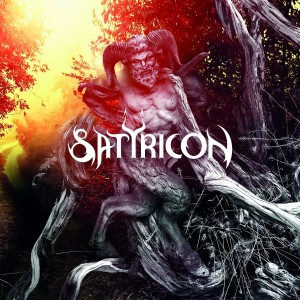
Satyricon – Satyricon

satyricon-satyriconWhat do musicians do when the drive to create has vanished?

When the label is clamoring for something new, does the band bow down and fulfill the request, or do they uphold standards? Black metal in particular has struggled with these questions for over a decade, with a myriad of responses. Some have chosen to retreat completely, seeking refuge in the wild.

Some have become exasperated with the genre, turning to electronic music before returning in glory. Others have waged war on modernity, risking well-being in pursuit of these goals. However, the greatest number have bowed to the wishes of the crowd and released a product that was quickly forgotten, which is where Satyricon’s self-titled album falls.

Embodying all that is lazy and lethargic, Satyricon is an excellent example of modern black metal ethos. Black metal only on the surface, the album is musically a hard rock/heavy metal album designed for max promotional appeal. Simple riffs with obvious sequencing, simple implementation, and solid production produce a well-shaped package that undoubtedly will allow the band to increase its commercial influence.

Sounding like a tribute to Fallen-era Burzum‘s minor-chord noodling but lacking even what little sense of spirit that album possessed, the band chucks in references to pop and blues cliches as if the label funded a study aimed at producing the most cookie-cutter album conceivable, then shared the results to the band…and let’s not delve into the collaboration with Sivert Høyem.

There is nothing here for readers of this site to enjoy, except for the more morbid members among us. This album goes nowhere. It has nothing to impart. And perhaps most damning, it’s not even terrible. It is simply a non-entity.

http://www.youtube.com/watch?v=HPXnnTUl48Q

18 Comments

Tags: , , , ,

Master signs with FDA Rekotz; will release new album in September

master-the_new_elite-band_photoEarly death metal band Master plan to release a new album on September and have a new label to host it on, having signed a deal with German extreme music label FDA Rekotz for what will be the band’s 12th full-length release.

“We are proud to be working with Rico and FDA and look forward to a solid future together. Watch for the next masterpiece to be unleashed on September 27th, 2013,” said Paul Speckmann, founding member and core of this band with oft-shifting personnel.

Combining the rhythms of punk music with the riffs of heavy metal, Master contributed an early style of death metal to the genre as it was forming and continued to be influential throughout the development of the genre. Many musicians point to Death Strike’s Fuckin’ Death or Master’s unreleased 1985 album as part of the origin of this genre, which became incarnate after Discharge’s 1982 album paved the way for technique and the following year Slayer, Bathory and Hellhammer released albums applying those ideas to metal.

This summer, Master embarks on a True Underground Warriors Tour with Entrapment and others. More details will be posted on the Master website at master-speckmetal.net/live.html.

4 Comments

Tags: , ,

The Ocean – Pelagial

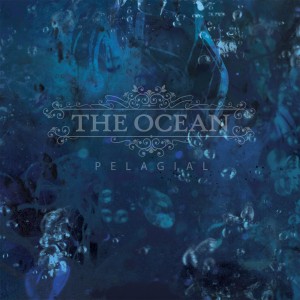
the_ocean-pelagialThe Ocean are usually described as “post-metal,” but a musical analysis shows that it’s from another tradition: progressive punk.

Remember that explosive trend from the middle 1990s? It’s back, just with more metal-styled riffs, but it’s very far from metal and calling it “post-metal” would only make sense if its origins were in metal. Progressive punk realized the limits of minimalism and so expanded the genre with more complex song structures, more use of harmony and key, and in other words, imported a lot of stuff from rock and the rising indie rock scene. In this way, post-hardcore, progressive punk, early metalcore, indie rock and even shoegaze were linked together by a common origin.

Pelagial resembles an instrumental jam between Led Zeppelin, Fugazi, Jawbreaker and later King Crimson thrown together in a musical blender. It’s jazzy, for the most part light and open, and when it gets dark, it’s dark through repetition of minor key phrases in the type of dissonant drone favored by indie bands. It builds intensity like an alternative rock band with melodies collapsing on themselves, layer in opposition. Like post-hardcore bands, The Ocean delights in putting jarringly different phrases together in the same key, which creates the “carnival music” effect for which metalcore and tech-deth are known.

The cool thing about this album is that its concept shows in the music. The ocean is designed in layers, so why not design an album in layers, getting heavier as you go deeper in the virtual ocean in your mind? That part is kind of cool, sort of like the Mastodon idea to ape Moby-Dick or some of the other nifty conceptual stuff to come out of alternative metal lately. It doesn’t get heavier per se as much as more active and more droning, with lots of use of “emo chords” to create a sense of constant suspense grinding against the narrow intervals used for the progressions.

Compare this to some progressive punk, and then its originator:

Notice the similarity of chord voicings and how they’re used in progressions, and how many of those progressions use similar melodies, and how those tend to fit together in exactly the same way. It’s a more complex, newer generation of the older, which is represented here in its 1990s and 1980s forms, respectively.

To the experienced listener, this will sound like Pelican or Kyuss with a bit more imagination applied, but it’s basically indie rock with a few metalisms thrown in. That’s not bad, at all, and in fact this is above average indie rock with far above average instrumental skills, but there’s nothing here to appeal to a metal fan.

No Comments

Tags: ,

Blinded by Faith – Chernobyl Survivor

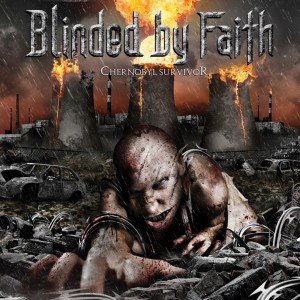
blinded_by_faith-chernobyl_survivorBlinded by Faith shape melodic metal out of the combined styles approach that The Haunted first used, complete with over-the-top vocals, and show an aptitude for writing fluid melodic riffs that don’t end up as saccharine floods of very similar patterns.

Chernobyl Survivor stands out for having these melodic patterns emerge from the otherwise chaotic stream of mixed-genre elements and dominating vocals. Within all of what’s going on, which is a lot of fast-fingered frenzied riffing in the style of technical metalcore bands like Ulcerate, what emerges is the ability that Blinded by Faith has to write melodies and then expand upon them. They also have a really good nose for rhythm and how to match riffs and rhythm to make a song.

The best bands to compare to Blinded by Faith are Ulcerate or Cosmogenesis-era Obscura, but Blinded by Faith appears to be pulling away from the strict metalcore approach that Obscura in particular has taken. I realize “metalcore” isn’t a definition and that most people refer to Ulcerate and Obscura as “tech-deth” bands. It’s an anti-definition, meaning stuff that uses metal riffs but isn’t metal, because it reflects how those riffs are put together. Metal bands use their riffs to glue each other together, commenting on each other and furthering evolution. Rock bands use riffs like foundations, as something to build upon with vocals and other instruments, and don’t expect them to comment on each other. In fact, they like them to be radically different for a sense of change, and rely on harmony (key, scale) to make them fit together. This is why all rock-based music with metal riffs is probably going to be metalcore, much like all rock-based music with punk riffs became post-hardcore and eventually developed all of the tropes we see in metalcore today. Blinded by Faith is reversing this metalcore tendency by making their metal riffs comment on each other, kind of like themes in 1950s musicals, but more intense!

This CD could be many things. Chernobyl Survivor could easily be made into an amazing power metal album. It has elements of the old (real) death metal as well, and could also go the other way and be a killer jazz-prog album like At War With Self. Right now, it’s searching for the next evolution of its voice somewhere in the middle of these.

On the whole, Blinded by Faith have put together an album that helps nudge this style closer toward figuring out who or what it is, which is good because the tech-deth/metalcore explosion is running out of steam. If they continue in this direction, they could claim a place in the next evolution of popular music and be recognized for their strength in writing melodic riffs.

19 Comments

Tags: , , ,

Is this the end of all music?

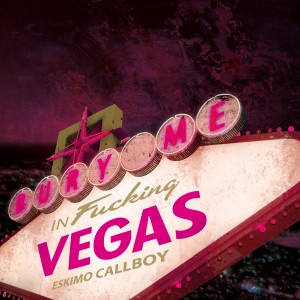
eskimo_callboy-bury_me_in_fucking_vegasFriedrich Nietzsche posited that at the end of human times there would be a “last man” who cared for nothing other than immediate personal pleasure, and in this vapidity would banish civilization to the abyss.

I believe in metal we have found this moment through the work of “Eskimo Callboy.” This band are metalcore/electro crossover. I use the term metalcore to differentiate music from metal that, unlike metal which likes to string riffs together into a continuity creating atmosphere, likes to make abrupt contrast like “protest songs” do through its jarring, discordant and deconstructed melodic structure.

However, that’s just the start of the description. Metalcore means metal riffs without metal composition, but it’s basically a catch all into which we’ve dumped the last forty years of music: rock, rap, punk, post-punk, post-hardcore, techno and even disco. As if emphasizing this, the song below “Is Anyone Up” fits the disco pattern that techno appropriated, and works into it a second layer where verses are doubled with one double being played as straight metalcore, and the other being autotuned vocals in a club music setting.

What continually amazes me about mass culture products is how competent and diligent they are. Not even in the way that some bands, like Ara or De Profundis (both of whom are metalcore, which is sometimes called “modern metal” to hide its hybrid origins), are competent, which is to say they write songs that on a musical level fit together. No, these bands are competent as products. A McBurger must be sweet, tangy and leave you wanting more; good pop must be oozing with consonance, but bittersweet and minor key in its “mixed emotions” that give it “profundity” or a feeling of “authentic” emotion, and leave you wanting more because for a moment you felt like something stirred actual emotion in your soul (when in fact, all you were feeling was your longing for such emotion).

What pop music represents is not a unique musical style in and of itself, but a style of music designed with a singular goal in mind, which is to be mass accessible. As a result, it has no rules per se, although it has many studied patterns it uses. It also has no soul, no style and no boundaries; it assimilates everything it can, and churns it into the same old stuff. Give it a genre like, say, reggae, and it will invent reggae-flavored pop that on the surface uses reggae rhythms and sounds, but underneath is composed just like all other pop. Give it jazz and you get Dave Matthews, Sting, Yanni or Richard Marx; give it punk and you get Blink 182, Avril Lavigne and Fall Out Boy. When you hand it metal, it can’t handle it, because on a musical level, metal breaks the mold. Metal insists that riffs fit together in some way that maintains atmosphere and mood, and thus that riffs address one another. Pop functions by having its “riffs” address only one thing, which is staying in key and being distractingly clingy and catchy.

The threat to genres like metal is that it will be assimilated. Eskimo Callboy assimilates metal through metalcore, which borrows metal styles and some metal riffing and puts it into the post-hardcore “carnival music” style, but also adds electro (disco/techno/trance fusion) and even a small part of broken suburban rap to the mix. The result is quite good, as pop. Every moment is catchy and simple, and while it seems immature to those who’ve heard more music than a teenager, it certainly isn’t amateur. In fact, it’s totally professional. Every instant on this record is calculated to make people like it, and through that, to make it make money. It’s not like more challenging material, which skims the line of what you can like and expands what you’re willing to recognize; it takes what you recognize, sweetens it and over-processes it, and then serves it to you in heaping spoonfuls. That’s just on a composition level. On a production level it’s really to be admired: everything is perfectly placed, the sound is loud and pure, but with enough effects to give it texture. This is the work of masters at their craft.

Those of you who caught the shocked reaction by the band Ara to being called “metalcore” may now see why the band reacted so badly. Eskimo Callboy is metalcore, unabashedly so, and even embrace the label. However, it’s correct to call both bands metalcore, because both betray the metal principle of riffs commenting on riffs, and as a result are at best metal-flavored rock. Metalcore is that which wishes to be metal on the surface without being metal underneath, and it’s a polite catch all that can be applied to “modern metal” (Necrophagist, Ulcerate), nu-metal, blackgaze, black punk, crabcore, etc. We don’t even need to address these bands as metal because even they don’t see themselves as metal.

As it turns out, the song “Is Anyone Up” has somewhat of a concept behind it. It’s dedicated to the (former) Is Anyone Up website, on which people posted anonymous nude pictures which were then linked to online profiles for ridicule and mockery. The site was like 4chan on steroids with a specific intent to be cruel to the foolish, unwise, promiscuous and generally ill-parented girls of the lost generations in the West. While it seems cruel and destructive to me, it’s hard to feel that much surprise when you people email nude pictures to their latest hookup and in the hope that he won’t become bitter when they move on and email them to a friend. Of course he will — treat a man like a disposable lighter, and he treats you like something that must burn.

Let’s look at these insightful lyrics:

and I tell you I’m sorry girl
it was nothing personal
is anyone up?
is anyone up?
your pussy
your boobies
on the world wide web
girl it’s nothing personal
I’m sorry for this
but I think you fuck anal so well
that everybody should know
your pussy deserves much more attention
than I could give to you
you said that I’d be the only one
-you are nothing more than a folder on my harddisk
and you are nothing more than the guys I’ve met before
-fuck you little whore I’ve got your cunt in HD
and I tell you I’m sorry girl
it was nothing personal
is anyone up?
is anyone up?
your pussy
your boobies
on the world wide web
oh lord ,shame on me!
gnargoyles everywhere
I’ve lost my ability
to infactuate hot chicks
you never will expose a girl again
your daddy will be proud of his stupid little girl
shut the fuck up
tonight I’m on a photo date
with the highschool-sexgrenade
and I tell you I’m sorry girl
it was nothing personal
is anyone up?
is anyone up?
your pussy
your boobies
on the world wide web
I’ve seen a lot of boobies
I’ve seen a lot of cunts
as long as there are hot chicks
there’ll be always men that hunt
#NBHNC
means a lot to me
we cannot stop to stare
so put your ass up in the air

If you live in a world of innocence like me, you probably have no idea what #NBHNC means. It’s a crass term from the above site, on par with the famous Deke chant “no means yes, yes means anal”. Basically, imagine rancid scorn, regret and longing wrapped up into one package of human emotional poison.

Metalcore is a pop genre, not a metal one. Like most pop genres, it is based in the principle of flattering the listener and hoping to appeal to both their egomania and their weakness at once, making them want to become part of your little club. Not surprisingly, the video for this song actually occurs in a club, but that’s not the type of club I’m speaking of. Instead, think of what psychologists call an “in-group.” It’s any group that (like Costco) requires some kind of token exchange to gain entrance as a member. In social circles, it’s often as easy as buying a pop song and knowing the words. Pop is generic music that makes you feel like you’re part of some mass movement for listening along with it, and so it seduces your brain.

All that is needed to complete this review is a bit of comparison. I was recently subjected to The Dark Knight Rises or at least the first twenty minutes of it. Like generic pop metalcore, it is well-produced and written to keep the attention of its audience. Unlike metal and a movie worth watching, the plot is unrealistic and the acting looks like acting, instead of camouflage of their real identities that allows actors to reveal the meaning of the script. More than anything else, the word for this movie is stupid. The script is dumb and implausible, the cartoony characters (“Bane” — LOL) are ridiculous and not threatening, and even every attempt to imbue it with nuance comes across as ham-handed like the truly phoned in acting by Anne Hathaway and Tom Hardy. And yet it is popular. The same is certainly true of Eskimo Callboy, which at last count had 75k “likes” on Facebook, where most underground death metal bands languish at 1,500. However, as if often true in life, the rare is the exceptional, which is fortunate as Eskimo Callboy is only exceptional in its endorsement of “last man” attitudes.

13 Comments

Tags: , , , , , ,

Heresiarch schedules recording of Wælwulf 7″ EP

heresiarch-waelwulfNew Zealand post-apocalyptic metal band Heresiarch, who sound like a cross between old Incantation/Demoncy and modern war metal, plan to release a new 7″ EP named Wælwulf which they have schedule recording time for in the last week of July.

The new release will feature 3 new tracks of Heresiarch’s customary onrushing doom and death and is to be released by Iron Bonehead Productions. As part of this anticipatory announcement, the band released a cryptic 1/8 of the cover by artist Nick Keller.

Hammer of Intransigence, the band’s 2011 CD, reflected the type of chromatic primitive riffing that bands like Incantation, Blasphemy, Demoncy and early Bathory used to create an atmosphere of total suspense of civilized pretense. It is believed the EP continues in that direction.

3 Comments

Tags: ,

Hypocrisy re-issues Penetralia and Osculum Obscenum

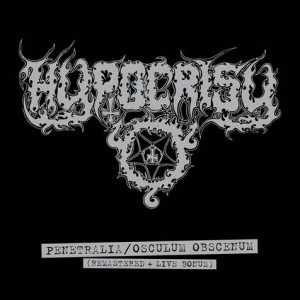
hypocrisy-penetralia_osculum_obscenumSwedish modern metal band Hypocrisy will re-issue their classic first two albums, Penetralia and Osculum Obscenum, as a CD box set for maniacs who remember when this blasphemous band were death metal.

In particular, Penetralia set the standard for aggressive riffing and an album format that many would follow, in which a series of intensely brutal songs peaked in a more epic song, and then resumed in order to fade out into a more intricate and melodic instrumental.

Hypocrisy also innovated the production of Swedish-style melodic metal, giving it an approach to texture and dynamics that is imitated to this day. In addition, the Hypocrisy band members created a black metal band called The Abyss whose album The Other Side became the template for melodic black metal after the second wave.

While it is great to see these two classics get re-issued, die hard fans are wondering if these CDs will remain in print in some form, and when or whether the material from the Inferior Devoties and Pleasures of Molestation EPs will be reissued, as this is some of the band’s strongest material.

Each CD contains bonus material in the form of live recordings of some of the classic tracks featured earlier on the album. As part of the classic death metal revival that started in 2009, this re-issue continues a postmodern habit of honoring the past when our lesser replacements burn out on us.

The box set will be released on July 12, 2013 on Nuclear Blast.

CD 1 – Penetralia (remastered + live bonus)
1 Impotent God
2 Suffering Souls
3 Nightmare
4 Jesus Fall
5 God Is A Lie
6 Left To Rot
7 Burn By The Cross
8 To Escape Is To Die
9 Take The Throne
10 Penetralia
Bonus tracks:
11 Left To Rot (live)
12 God Is A Lie (live)

CD 2 – Osculum Obscenum (remastered + live bonus)
1 Pleasure of Molestation
2 Exclamation of a Necrofag
3 Osculum Obscenum
4 Necronomicon
5 Black Metal (Venom cover song)
6 Inferior Devoties
7 Infant Sacrifices
8 Attachment to the Ancestor
9 Althotas
Bonus tracks:
10 Pleasure Of Molestation (live)
11 Osculum Obscenum (live)
12 Necronomicon (live)

1 Comment

Tags: ,

Classic reviews:
A B C D E F G H I J K L M N O P Q R S T U V W X Y Z