Interview with Shane and Amy Bugbee (Milwaukee Metalfest, The Suffering and Celebration of Life in America)

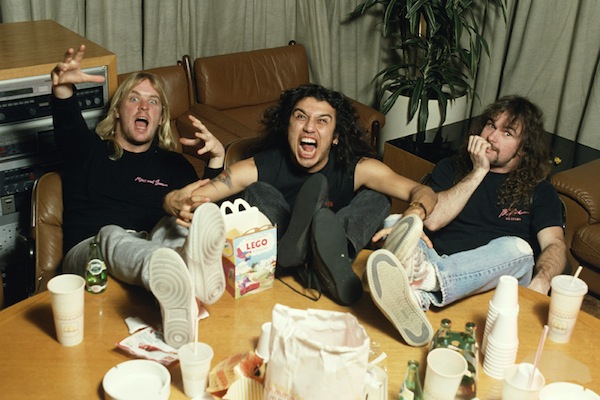
the_suffering_and_celebration_of_life_in_america-shane_and_amy_bugbeeShane Bugbee and Amy Bugbee, who wrote The Suffering and Celebration of Life in America which featured interviews with Possessed, Averse Sefira and Gene Hoglan, answered our interview request with a flotilla of good information.

These are the two writer-artist-metalheads who hopped into a decade-old Suburban with $200 and drove across America, spending a year touring the USA to figure out what Americans actually believe and where the soul of America rests.

During the process, they interviewed Possessed’s Jeff Becerra twice, Gene Hoglan, Ian Mackaye, Averse Sefira and many other underground figures who have featured prominently in the evolution of metal.

They also caught the spirit of metal in their critique of society and its tendency toward herdlike conformity, along with a refusal to join in. The resulting adventures were insightful and humorous, and you can read them in the book. But for now, the interview…

I’m here in Tampa, Florida questioning Shane Bugbee and Amy Bugbee about their new book, The Suffering and Celebration of Life in America. We are most definitely not firing shotguns, drinking whisky and listening to old Sarcofago bootlegs. Let’s see what they say when I whip out this list of questions written on an old receipt for ammonium nitrate and fuel oil…

AMY: Hi Brett, thank you for asking questions, glad to answer them, thanks so much!

When did you first become a metalhead? Why? I assume it would have been easier to get into AOR or country.

AMY: I have been a metalhead since I was little girl, and when I think back to where it began, I must have been in 3rd Grade. I had a sister 5 years older than me, and we grew up in a working class community on the industrial South Side of Chicago. We would pool our allowance ($3 a week each) and buy an album — AC/DC, Black Sabbath, Led Zeppelin, Judas Priest. The first time I heard Black Sabbath I was hooked. I can remember when Ozzy left Sabbath, I remember when Bon Scott died, I was 9 or 10 and I was devastated. 

We had a record store in downtown Hammond, Indiana that we walked to almost every Saturday, called Hegewisch Records. They used to put album art on black t-shirts with hundreds of bands, I started wearing them in 4th grade. That place was like a secret world, I loved it. (The owner was murdered in 1991 – shot five times, never solved – but that’s how it is where I grew up!)

SHANE: my uncle was digging on sabbath, led zeppelin, ac/dc & zz top when I was a wee lad, so, that was a start… the first 45 I was given as a gift was elvis, the first full record, kiss destroyer and, the first cassette, van halen/fair warning… seems like my uncle liking hard rock bands helped to influence and guide me, that and the clan-ish war beat of heavy metal/hard rock that naturally attracted me…. I think the metalhead is a lost culture/clan that is split up through kings or natural catastrophe… we find each other through the music… my earliest metal memories are listening to the radio in a chicago suburb and wanting the first ozzy solo record so bad I said out loud I’d sell my soul to the devil for it… I wound up with a copy the next week… kiss on TV, I can’t recall exactly, but maybe when kiss appeared on mainstream, prime time tv, I think is was CBS who aired phantom of the park… buying a bootleg led zeppelin record from the classified ads in rolling stone – these are some of my early metal memories.

What were your favorite metal bands? What made you like these more than others?

AMY: As I mentioned I really loved Black Sabbath, and a lot of what I would now call “Hard Rock” bands. At 14, I was introduced to Metallica, Slayer, and that whole second generation of metal through a crew of friends I’d begun running with. I thought Metallica, Motorhead, and all those bands were  great, but my real loves were Venom and Slayer. I remember running to the record store the day Slayer’s Hell Awaits came out. I was working my first job at a Dairy Queen in Harvey IL, and I got myself a decent stereo and bought albums with most of my paychecks that summer. I would immediately record the albums onto cassette tapes and I took them everywhere. I was the person everyone turned to for music after a while.

So much great music then — Mercyful Fate and King Diamond, Exodus’ Bonded by Blood.  I am lyrically inclined, so Venom was something I was really drawn to. Today, there is a lot of really good and a ton of really bad metal out there, as always probably. 

Sad to say, since I lost my entire music collection I have been less inclined to buy music, and listen instead to a lot of internet metal radio and even our local community station. 

SHANE: it’s impossible for me to make a list of favorites as they will move and change, sometimes daily… here’s a quick retrospective and some of those I’ve loved through-out the years…

  • van halen
  • ozzy ozbourne
  • deicide
  • obituary
  • slayer
  • ac/dc
  • black sabbath
  • king diamond
  • destroyer 666
  • dark funeral
  • electric wizard
  • sepultura w/max only.

that’s a hard thing for me to put a reason on taste… I’d say the overall thing that sticks with me through all art is aggression and honesty… be it a painting or a song. there is of course my influences as a child, influence from peers.

seems like my uncle liking hard rock bands helped to influence and guide me, that and the clan-ish war beat of heavy metal/hard rock that naturally attracted me…. I think the metalhead is a lost culture/clan that is split up through kings or natural catastrophe… we find each other through the music…

Shane, I remember that you were involved with the Milwaukee Metalfest. I don’t think metal fans today remember how important that event was, but it was like the industry conference for metal fans (not the metal industry, which didn’t exist). How did you get involved, and what did you take away from the experience?

SHANE:
the metalfest was quite the gathering point, wasn’t it. boy, those were the days… I got involved because I had a zine (Naked Aggression) and was trying to sell jack koshick (metal fest founder) some ads, I told him I could help with sales and wanted to sell vendors tables and publish a program book I could sell ads in… I felt they could profit off of the show without all the ticket buys (pay to play) they made low end, un-signed bands take part in… I really hated the pay-to-play deal and wanted to help make the fest better… it was cool, I made enough money to live off of for six months a year but the metal fest only crumbled due to too many pay-to-plays and the fest became less and less about the music and all about the money… funny thing is, I quit because so many brothers in metal came up to me during my final metal fest, they would yell and scream about the shitty pay to play bands and the schedule, telling me they’d never play the show again, so I quit thinking I’d give up the 6 months worth of payment working on the metal fest and I’d start a fest for all those bands that would never play the metal fest again… I was going to do it for the ‘scene’ !!! hehehe, yea, right… the scene!!! the second we put together the expo of the extreme, the scene turned its back on our show and each and every band that said they’d NEVER play the metal fest, RAN to play the metal fest, and if you told the promoter of the metal fest that you were going to play my show it became the fastest way for a band to not only get booked, you’d also get paid and a decent stage time on the metal fest stage… so, the biggest take away was the ‘scene’ or ‘art’ within the metal community had gone away – it became a business and was striving to be an above ground and exploitable job vs. a pure expression… I should have just continued to play along, fighting against it all was personally satisfying, but it didn’t help my bottom line and I lost a lot of friends over that war of principles.

the black metal underground gave me hope for a bit, and on the net I’ve re-found the metal underground, so it didn’t die, it just stays in the cave.

For “The Suffering and Celebration of Life in America,” which has one of the most metal titles of any book I’ve read recently, you interviewed a number of underground metal legends, including Jeff Becerra, Gene Hoglan and Averse Sefira. How did you manage to meet so many fascinating people? Why do you think they granted interviews to you as opposed to the rest of the metal press?

SHANE: we simply asked trusted sources, friends of friends… a lot of luck went into whomever we eventually spoke to… traveling with no $$$ meant that we would find work, then a place to crash, then a gas station, then the highway. if we were lucky an interview we planned from the beginning of the trip might fit in…

as far as the interviews with us VS the metal press??? I don’t see us as metal press, just press. The metal press talks metal, so they are by their nature, predictable… and about the business of their industry… me, us, our trip was something different and exciting and I think top tiered metal heads are always looking for excitement vs. business.

AMY: I think, as with everyone we spoke to on our road trip, we were coming at things from a unique angle or perspective. We were not asking about their latest record or whatever BS they hear all the time so they were interested in being represented in a different way maybe.

I had interviewed Jeff Becerra on my defunct radio show some time back, and Gene Hoglan we’d met while living briefly in LA after our “shunning” – I’d invited him to a porn party via myspace, he said he wouldn’t know anyone, I said we just moved here so we don’t know anyone either, and he actually stopped by. Turns out a bunch of metal guys were at the party, I remember one guy falling to his knees to praise him when he walked in. Averse Sefira was a recommendation from a wise internet friend, as I was unfamiliar with their work before that. They turned out to be one of our favorite interviews.

Amy, you started out as a teenage metalhead and still proudly wear the Possessed shirts of your youth. How did your friends and family react to you being a metalhead? Can people cope with it these days at all?

AMY: To be honest, I have nothing left from my youth, my t-shirts and my record collection were lost while on the road, Jeff gave me that shirt when we stayed with him, but I get what you are saying…

As I said my sister got me into metal, our crowd was metal. We were the hardest of the hardcore in our town, but not for metal, more for drugs and mayhem and stuff. Our crew included druggies, thieves, pimps, prostitutes, guys who worked for the biker gangs and other criminal syndicates. Most of them are dead or in prison nowadays.

Ironically, the very friends who got us into Slayer and that whole wave of metal hated it when my sister and I started going to lots of shows in Chicago – to see bands like Possessed, Dark Angel, and even some hardcore bands.  They said that was just noise — Silly boys, just could not handle we were more metal than they were!  In reality, getting deeper into metal and spending less time with those people in Calumet City probably saved my life.

As far as family reaction, I was raised Atheist in a Catholic community so we were always outside of society. I’ve never been baptized, read the bible, or attended church. My parents were logic minded, they were spiritual but not Christian. I was told I was going to hell for attending public school and biting my nails by the Catholic kids on my block.  In public school, when everyone was preparing to do communion or whatever they do in second grade, and kids realized I didn’t attend any of the local churches, I was called a devil and a witch, and they stopped talking to me, so I was never part of society. If you always live outside what is “the Norm” it has no meaning to you.

You two launched yourself out on the road with what, an old Suburban and $200? Were you afraid? I think most of us are afraid to leave the morphine drip of our paychecks and grocery stores. What motivated you to do this?

SHANE: when I look back I can see a lot of feelings… but I cannot feel those feelings. I’m not above being afraid, just don’t think of it that way… this was a reverberation, a creative reaction to an aggressive action against my family… so our expression to that aggressive action was survival and revenge all rolled up into one. so, the motivation was to stay sponsored as I had been with my newspapers and creative enterprises, while at the same time finding creative ways to enact revenge on the town of ely, but responsible revenge… I wanted the world to know about ely… I wanted the world to think about ely. not the town, but the mindlessness of the collective mind. I also felt it was time our art became understood, the stuff amy & I had been doing was so-misunderstood it was easy for the other side to paint us into a corner… my friendship with Dr. LaVey, the obscene books I published, the angry, pro violent art… for me, the nucleus of what I did has always politics, I have always seen stuff like my association with the church of satan to be an artistic and political movement and NOT a belief or a religion, more of a political expression… everything I express is based in politics… so one of the major reasons I wanted to do the trip was to let our politics/art speak for themselves and, not in such an abstract way as art sometimes expresses itself, I wanted our misunderstood expression to be communicated through visceral, real life, in the flesh action… so, it was time to hit the streets and meet the enemy.

AMY:  We were terrified! But even more terrifying was the thought of canceling after months of planning, and being failures. We already felt we had so much to prove, we’d just been shunned and run out of a town, we were sleeping on my in-laws basement floor. When our sponsor pulled out and left us every reason to cancel, the alternative of having to eat crow, and find shitty jobs, and get a shitty apartment, and be stuck in some awful suburb of Chicago while the in-laws gave us the “I told ya so” speech daily was more than we could deal with, if we died on the road that was just as well. Better to go and die than stay and be failures.

Plus, when we were tipped off Adam Curry was going to take our idea and replace us with some of his contract podcasters as soon as we signed the contract (he had it in the fine print thinking we would not read it), there was no way we were going to let that false metal loser do that to us.

I understand that you were involved in a community, and were accepted and valued there, until people found out that you’d written — not worshiped, written about — the dark lord himself. They ran you out of town. Oprah wants to know “How do you feel about that?” but I want to know how you think this reflects on the nature of religion and dogma. Does it make us into monsters, or does it take one monster to turn a town against people?

SHANE: one of the main questions we asked of americans was “is there a difference between religion and spirituality?”

I felt strongly that it was the religious, not the spiritual who were the flock of blind and ignorant followers who are ultimately soldiers for corporate buffoonery… maybe a simple question, big deal, the years leading up to our road trip and this question I assumed any and all religious/spiritual believers were harmful to the future of human evolution, but at that point in my life I had met a handful of decent christians and others who were spiritual and unshakable in their beliefs and it was always these kind of spiritual folks who would have no problem hanging out with amy & myself, but the religious… beyond fearful, so afraid, they didn’t want to know.

so, our trip and the “is there a difference between religion and spirituality” question, along with all of the great answers confirmed my thoughts that religion is for weak minded scared little sheep, but, now I was able to add to my philosophy a compassionate thought about the spiritual, those who find and define a personal spirituality are thoughtful, they think, they work at it, they listen to others, the exact opposite of the closed off religious. as far as the human animal being a monster, well, the human can be scary, and if enough of us humans get together with an idea to control and manipulate people we can certainly create a monster or two for use as a tool of fear, but you need blind followers to give a monster life, so I’d say it takes a manmade monster and a whole lot of ignorant followers to turn a town against people.

AMY: It did not matter that we’d moved to the northern Minnesota wilderness because my father, who had retired up there some 15 years earlier, had had a stroke.  Everyone in my family wanted to put him in a home or stick him in their basement, and I knew either choice would kill him, the only chance he had to recover was to be where he loved to be – in his home near Ely, MN. We gave up a lot to be there for him, we had just sold our house and were planning to move to NYC. This was the total opposite of that plan, but Shane made it work, he came up with a gourmet Blueberry soda pop and soon we were bringing in semi-trucks of it. It was really taking off.

Then, we decided it was weird a tourist town had not updated their visitor’s website in over three years, so we made our own, and that expanded to doing a podcast — the first one in the Northwoods, we started an arts paper. We didn’t make a dime off that website or paper, we did it to help.

We donated a pallet of soda to help the hockey team keep their ice maintained all season, and we were trying to save the school’s art program with an event for the movie A Christmas Story when the shunning began.  

None of those good deeds mattered to anyone. Those good Christians cared not for our deeds that they could see right in front of them, or the positive relationships we had built in the community. They decided we were bad based on online work we’d done, websites in the virtual world, interviews Shane had done, some a decade old.

Even the so-called artists and thinking people of the community turned on us because they did not want the finger pointed at them. 

It all came down to an anonymous letter that three or four people were behind, it called us devil worshippers. Because of it, stores pulled our soda from shelves, I was unhired from a new job, not because people even thought what was in the letter was true really, but because they did not want to go against the grain. 

We really did not have a chance. The worst part of all was leaving my dad. 

It has had terrible long lasting effects for us. I’ve still lost jobs over this stuff, it really follows you, it scares people, and it makes us seem paranoid.

A few years back I read that more than half of the kids in “gifted programs” listen to metal, and maybe that is just it, even metal it seeks its own level, there is metal for the not-too-bright, and there is metal for the kids who are too smart for the world they were born into. I think many kids who are super smart are pretty cynical about things, and if you are sensitive or compassionate the suffering of the world is crushing.

That being said, why do you think it is that metal is fascinated with evil, Satan, murder, war, sodomy, disease, power, control and torture? It sounds like the musings of either an abused child or a child abuser. Is there any connection to how our society chooses to organize itself?

SHANE: our tribe/clan may have been broken up by war or natural catastrophe, maybe metal is a base and visceral sound for the underclass tribe/clan we all seem to belong. … or maybe metal is the sound of war and those who are attracted to metal are either natural warriors or those individuals that have stepped into a mind for war based on circumstances beyond their control… I’ve always seen metal as a life force, a clannish beat that has once again brought us together by empowering the used and abused. so maybe you have a point, I’m not sure, for me, metal is in my earliest memories… it seemed natural to me and I was abused as a child and as I recall, the early metal shows did seem to be a place where all the abused and lost met up… either that or the punk rock shows, though, it’s always seemed to me punks have very different politics vs. metalheads so, maybe it’s not the abuse, or the warmth of a parent, or the lack of attention from a teacher that drove us to leather, spikes and denim, maybe it was our natural politics of might makes right/survival of the fittest that has brought us together.

AMY: That is just who we are as metal heads, we are the people from the wrong side of the tracks, we’ve seen too much too soon, and no one in society holds out any hope for us.  We are the throwaways.  

Bands sing about what they know and where they are from, and they sing to kids who know the same. If death and destruction is what you experience, that is what you will be attracted to musically. 

I never liked pop music, it just meant nothing to me. AC/DC’s ‘Problem Child’, now THAT I could relate to. A happy kid from a nice community is not gonna want to listen to Venom. 

A few years back I read that more than half of the kids in “gifted programs” listen to metal, and maybe that is just it, even metal it seeks its own level, there is metal for the not-too-bright, and there is metal for the kids who are too smart for the world they were born into. I think many kids who are super smart are pretty cynical about things, and if you are sensitive or compassionate the suffering of the world is crushing. You got to get that out somehow, and aggressive music is as good a way as any.

I started going to a lot of metal and hardcore shows when I was in high school in the mid to late 1980s, the scene then was really small, and everyone knew everyone. There was a kinship there because we were all messed up.  In those days, if you fell in the pit someone always picked you up. There was a unity in the metal scene, it felt safe. I can remember the most outrageous hardcore people being worried if we would get home okay, driving an hour out of their way to take me home, or offering a place to stay. 

Sure there are exceptions to every rule, but I would say most metal heads are smarter than their opportunities in life provide for, and that creates frustration. Not only are they smart, but they are sensitive, maybe more sensitive than most, kind of like how tribes can pick out the kids who will become the shaman, they have that added ability to feel the world around them, I think metal heads are a lot like that. Perhaps that is where the connection comes from.

If you had any advice for teenage metalheads, based on your successes and failures (we’ve all had them), what would it be?

SHANE: dream, but do the work to manifest the dream.

through out my time producing and publishing, a lot of folks will meet me and it seems they look me up and down and try to understand how I, a person they automatically discounted could, let’s say, own his own soda company or, publish books, and the big difference between me and them, I work long hours at it, I’m totally dedicated, and when the project no longer becomes fun, I continue to struggle through it and I work even harder.

as far as my failures go, they all stem from childhood issues that took me far too long to figure out, so I would advise the metal youth to understand themselves and the reasons they are angry and then work on re-directing those energies into something creative or at the very least productive… depression is for the food of the world, don’t be food.

AMY: The best advice Shane and I got on the road – “You don’t have to be what people say you are”. That came from an 88 year old lady who really knew about the world. It may be the best advice ever.

The world is vast, and the teen years matter so little once you get out of them. If your life sucks read a lot, learn how to manage your money, and plan your escape. The kids I knew who had no goals are mostly dead.

Don’t let yourself be trapped in stagnation from fear, we are all scared.  Standing still is way scarier than moving forward if you are on a tightrope, just keep moving forward. 

And, you know that saying “You got to have something to fall back on if ___ doesn’t work out?” It’s a lie. If you have something to fall back on you will. Give your true passion 100% then if it fails, and you have exhausted all possibilities, that is when you work on plan B.

9 Comments

Interview: Lecherous Nocturne

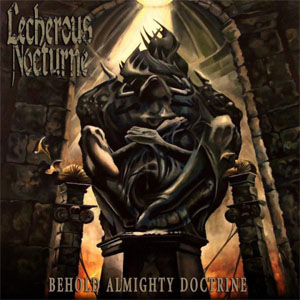
lecherous_nocturne-behold_almighty_doctrineLecherous Nocturne have a new take on blackened death. Instead of trying to be black metal with death metal riffs, be death metal with black metal melody. And instead of using happy melodic death metal, use frenetic blasting death in the Unique Leader style.

The result is an aural fusillade that withers even the strongest opposition. It is quickly simply designed to pummel the listeners with jagged and abrupt riffing, then lull them into complacency with melody, and then make even those melodies evil and vile.

What makes this band interesting is that despite their newer stylings, they are sticking very much to the old school ideal of music that makes sense, instead of discoordinated riffing designed to distract. Like it or hate it, the result stands apart from the rest by communicating a worldview that is both terrifying and makes you want to participate.

We were lucky to catch up with Lecherous Nocturne guitarist Ethan Lane. We asked him if he’d mind a few questions.

Thank you for your interest.

What made you decide to take this interpretation of blasting death?

Melody and harmony, coupled with meter and rhythm, form the very foundation of any piece of music, and the music of Lecherous Nocturne is no exception. Although the melody can be difficult to pick out in our music, it is actually the driving force behind it and always exists. If you were to isolate any small section of one of our songs, and hear it played by itself, you may be surprised by how melodic it actually is…

Next, another one of the daunting aspects of our music is the complex meter changes/combinations we employ… It may seem like it’s changing all the time (and in fact it usually is…) But a piece of music is a living, breathing thing, constantly growing and developing. We are not a “verse, chorus, verse, bridge, chorus, chorus” band… that constricting formula is not just sickeningly cliche, but inherently can’t fully let music be the art form it truly is. The musical masters of yesteryear always strove to break out of such restrictions and let their music grow, …even such a popular classical piece like Beethoven’s 5th Symphony (that everyone knows the melody to) would never allow itself to become trite in its constrictive complacency — it’s always moving… Sure, themes are revisited, but almost always are they in a different key or presentation. This is found throughout all higher forms of music.

Now, I realize that the unrelenting “blast-beat” is very predominant in our sound, and a common characteristic of many of the traditional schools of death metal (which, we of course are fans of), But also, it may be easy to overlook the very strong black metal aspects of the music as well, which are every bit as predominant. It is the Black/Death marriage which can, if properly employed, really bring out some of the most exciting results… What I would ask of any potential listener of our latest release, is to let the blast beat (in it’s many different incarnations) be a “guide” for your emotions as you absorb the melody… listen “through” the blast beast to the underlying melodic, harmonic & rhythmic realities of the music. When that is achieved, a whole new world is opened up, so much more appreciation is to be found, the break-downs hit so much harder, the blast-beats themselves so much more poignant, the music is punctuated by so much more color…

What would you identify as your primary influences?

This is always a difficult question to answer without just listing a bunch of bands that we like….First and foremost, every one of us is a die-hard metal fan. The music we play is “Metal” (we would never consider our style anything else but metal, and were never ashamed of the term “metal”, as so many were in the 90’s…We of course grew up listening to the classics of many, many genres of metal…

But it goes even further than that. Every one of us is also a serious musician as well, and always looking for ways to further develop that sense of musicianship… Obviously, we’re all influenced by the various schools of black metal, thrash metal & death metal (Trying to name individual bands would be pointless, as the list would go on and on), but in addition to the obvious metal influences, there is so much more… James’ bass technique draws a lot from Jazz playing styles, as does much of the poly-rhythmic work Alex does on the drums. I personally take most of my guidance from classical/romantic piano masters such as Chopin, Rachmaninoff & Beethoven (Those guys were melting face off with some of the most ferocious extreme music ever written, a hundred years before anyone figured out how to distort a guitar or play a blast beat).

And our influences are not all just “musical” ones either. We’ve all been part of this difficult journey called life, and life is indeed one of our primary influences. The feelings of bitterness, frustration, sadness, loss, cynicism, anger & skepticism life elicits … and the desperate need to exorcise these demons from ourselves through this music is perhaps one of the greatest needs we have as artists, and truly one of the most important aspects of doing what we do…. The “Spiritual development”, if you will, of ourselves as individuals, as musicians, and as performers of metal. Hopefully others will take encouragement from this, and be strengthened from it as well.

You’re from South Carolina, which both has a long history of metal bands and isn’t the first place name that comes to mind when we talk about death metal. What is your local scene like? Did you face adversity being in a city with fewer death metal bands?

It’d be more accurate to say that we’re from “The Carolinas” (three-fifths of the band actually lives in North Carolina). And you are certainly are correct in observing that the Carolinas haven’t been the most “nurturing” environment for extreme metal. (despite having quite a long history of metal bands) Yes, It has been extremely difficult to “stay the course” in an area with such little support.

To say we’ve constantly had to face adversity would be a monumental understatement. And that’s not to put down the “local scene” entirely… there have been countless valiant efforts by the local scene to make something out of it, but without that support (that area-wide enthusiasm), it’s easy to simply run out of steam and burn out… it’s really depressing how many great bands have had to call it quits, simply due to a lack of support or encouragement (I know this all too well from my own personal experiences struggling in this scene for well over 10 years).

I consider myself very fortunate to still be doing this. But I’m also aware of how this has turned out to be a blessing in disguise in another aspect. Because of this adversity and lack of support, the “wheat definitely gets separated from the chaff”… In fact, Lecherous Nocturne, as it has turned out to be, wouldn’t even exist without the constant disappointments and frustrations we’ve all had to deal with. It brought us together, strengthened our music, and throughout all of this adversity, we’ve learned to be self-sufficient, to turn to our music and each other to find encouragement and the strength to carry on…And that is a very positive thing.

We are not a “verse, chorus, verse, bridge, chorus, chorus” band… that constricting formula is not just sickeningly cliche, but inherently can’t fully let music be the art form it truly is.

Behold Almighty Doctrine sounds like it has some form of concept behind it. Can you tell us more about this?

Behold Almighty Doctrine isn’t a “concept album” in the traditional sense of the term (with each song telling a defined part of a greater story, lyrically, in “chapters” as it were), but this album in a sense, does tell a story; The story of the frustrations of its own creation. Lyrically, you could say we’re telling the story of our frustrations with life, bitter social commentary on the state of human existence, etc… But I think an even greater story is told in the music itself, without words, for those with ears to hear. I’ve actually been describing that story in little pieces this entire interview. It’s about what we stand for, ideologically & musically; what we get out of these struggles, how we can improve ourselves, and spread this message. This music is our “doctrine”. It’s an answer to the question “Why do we do this?”, a question that the songs themselves answer far better than words.

These songs are like complex mazes of riffs. How do human beings even compose such a thing? Do you use computers or higher mathematics to help you?

The complex nature of the composition and structuring of our songs is truly the heart of Lecherous Nocturne’s music (Aside from an unyielding dedication to the essence of “Metal”, of course…) It is this aspect of our music that is also the most time-consuming… It’s not uncommon for a single 2-minute song to take several months to write. We take great pains to challenge not only the listener but ourselves as musicians with what we write, constantly reworking sections, developing themes and transitions & tying the composition together as a whole in as many subtle ways as possible. In many cases, it takes several listens of a song to really start absorbing much of what has been painstakingly worked into each composition. Regardless of the seemingly chaotic manner of our music, I assure you that each note has been carefully placed, every time change, theme & phrase analyzed and re-analyzed until we feel that the piece has blossomed fully into the carefully constructed work of art we strive for it to be.

How did the band form, and how have you held together a lineup over the past decade?

Lecherous Nocturne was originally formed back in 1997, but there have been numerous lineup changes over the years. What Lecherous Nocturne is at present though, is a culmination of years of tempering. A combining of forces, a living metal entity, a group of people who have decided to keep playing without compromise, in the face of adversity, with little to no support, and a dedication to personal integrity to this music.

Do you think death metal now is stronger than when you started? Do people still listen to “real” death metal?

I’m not sure what people listen to anymore, why they do, or what the “metal scene” even means anymore…. And it’s ironic to me that I’m just as disappointed & disillusioned with the “metal scene” now as I ever was, despite the “resurgence” of the popularity of metal (in general, not just death metal). Honestly, I don’t pay much attention to the metal scene at all. I don’t really have time to, or frankly, much of a desire to.

Lecherous Nocturne, as it has turned out to be, wouldn’t even exist without the constant disappointments and frustrations we’ve all had to deal with. It brought us together, strengthened our music, and throughout all of this adversity, we’ve learned to be self-sufficient

What’s your advice to fans who want to find quality death metal in 2013?

That all depends on what an individual defines as “quality”… is it how many notes you can play? is it “brutality”? is it how shocking your lyrics are? is it on-stage gimmicks? is it how fast you can shred/blast? Of course not. it’s none of that. I believe that true quality comes from a sense of dedication to artistry, intuition, individuality, creativity, and personal integrity to yourself and your craft. I’d start by keeping those characteristics in mind when trying to find something with “quality”. If you can do that, then I think you’re on the right track.

Thank you for taking the time to answer our interview questions.

Thank you once again.

3 Comments

The Best Underground Metal of 2012

The year is done. It brought many things: a new wave of hipster metal that blipped and died, an old school revival that’s been percolating for years, drama and sadness with the recent death of Rigor Mortis’ Mike Scaccia. Above all else, however, it brought us some quality music, some of which is heavy metal and some of which is metal in spirit only. Enjoy this survey of the best of 2012.

The Best Metal (and related) of 2012

  • Abhorrence – Completely Vulgar This legendary band existed before Amorphis and plays a grittier style of the bold, warlike and heavy yet melodic music that graced Amorphis’ first album, The Karelian Isthmus. These Abhorrence tracks show the band that would later write that album as they emerge from early grind/death stylings and gradually work more melody into their work. This is metal’s holy grail: how to be both epic and amoral in the nihilistic sense of worshipping power, darkness and nature, but also use melody and harmony to give the works some staying power. As this collection of re-released demos progresses, the fusion of the two gets more confident and deft, leading us up to the point where the greatness of the first Amorphis album was inevitable.

  • Angel Witch – As Above, So Below After a lengthy absence, this classic NWOBHM band returns with an album that shows integration of more recent influences, specifically American heavy metal and progressive metal, but still keeps up the power. These songs are not as distinctive or as oddball as the heavily personalitied offerings from their self-titled album, but As Above, So Below is important because it takes disparate influences and places them under the control of one voice and style, which gives others room to build on. The oil-on-water aspect of bands switching between influences is gone and replaced by a smooth enwrapping of these styles into the substrate of Angel Witch’s lauded and learned evil heavy metal.

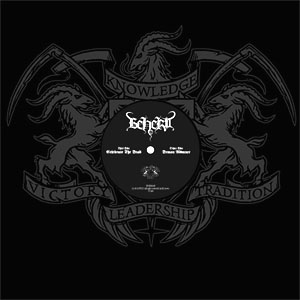
  • Beherit – Celebrate the Dead If death metal was modernism, with its emphasis on structure, black metal was postmodernism, or an attempt to show through atmosphere the many facets of an idea in a clarity which could not be confined to a single statement. This was a quest as old as humanity, which is how to communicate in such a way that people who do not understand it do not simply imitate it from the outside-in and make something that looks about like it, fooling most people. Since the late 1990s Beherit have been at work inventing the next wave or movement of metal, one in which multiple statements co-exist in contradictory opposites that reveal the shadow or silhouette of an underlying truth. Two forms are in tension here: the “loop” form of traditional ambient music, in which layers are poured on top of a basic dub to create a simple sonic tapestry, and the pure narrative form which electro-acoustic music (and even some dubstep) touches on, in which a story is told through the change of riffs. This is closer to the original death metal idea of structure, but it is structure created through atmosphere, like old Tangerine Dream and Brian Eno albums, or even classical music. To this end, Beherit has re-released two demo songs from Engram which are ambitious longer (13- and 15-minute) works which show a deepening and changing of atmosphere, using both looping and narrative constructs at the same time. This is a valiant and clear-headed attempt to resurrect black metal, which has fallen into the hands of those who imitate the “external” aspects of the early classics like simple riffs and fast songs, but understand none of the underlying ideas or songwriting methods. While it seems unconventional at first, Celebrate the Dead is a return to the truest form of black metal by expanding its orthodoxy to include the transcendental narrative of those more experienced in both this world, and the realms beyond. Be not fooled — evil pervades this release, so subtly that you will not know until it has seized your soul.

  • Dead Can Dance – Anastasis For their return after some absence, Dead Can Dance have taken the style on Spiritchaser and refined it even more with the sensibility of modern club music and soundtrack influences. Rhythms and tempo work like you might expect a big label ambient album to work, fitting very much into the slightly picked up chill-out range with gentle backing beats that are still identifiable enough to make it easy to listen to. Consistent with even earlier work, songs use extended structures, but they fit the pattern of an early MTV video or short film more than a musical one. The result is that these are immersive little sonic ventures that are both easy to hear and not surprising, and also, rewarding in their consistency and adept arrangements. Melodies themselves are not as adventurous or period/locale-specific as older Dead Can Dance, and in fact more lifts from earlier influences can be heard (check out the Doors “The end” inspirations on the first track). For a purist, this will not be the best Dead Can Dance album, but for something that has stepped into the Loreena McKennit or Enya range of “accessible,” this is far beyond what most would encounter otherwise and makes for a pleasant listen on its own.

  • Demoncy – Enthroned is the Night Along with Beherit, this shares the top spot as album of the year. In 2012, a wave of bands like Cruciamentum and Heresiarch rediscovered the sound of classic Incantation from the Onward to Golgotha area. Having come from the same school, joined to Incantation by Ixithra’s former band Havohej’s primary composer, Paul Ledney, having been an original member of Incantation, Demoncy launched into the same by creating a faithful followup to 1996’s Joined in Darkness. In this case, Demoncy add a bit of melody and atmosphere, channeling from first album Unleashed and other Swedish death metal classics, thus combining the two most intense areas of death metal into what is really a death metal album with a black metal sense of atmosphere. The result is a descent into a dark and primal place in which occult spiritual warfare transpires through the battling of motifs in this complex album made of simple parts. Like Joined in Darkness, it is otherworldly and foreboding, but a bit less purely alienated; instead, this album creates a sense of symbolic significance emerging like melody from the clouded obscure. Very little black metal of this intensity has been made since the mid-1990s which makes this both faithful to the spirit and pushing the boundaries of the genre, a simultaneous advancement that eludes most musicians and fans alike.

  • Derkéta – In Death We Meet Arising from the ashes of Mythic, the all-female doom-death band from the early 1990s, Derkéta follows in a more purely doom metal path including some of the juicy 1970s heavy metal style doom metal that audiences enjoy with bands like Pentagram and Witchfinder General. 24 years later, this album is the first for this promising band, and holds back nothing. Like Mythic, the music is formed of giant bolsters of tunneling power chords colliding slowly over a changing melodic landscape. Atmosphere emerges from within. The simplicity of it removes the glitz and contentless enhancement of current doom metal bands, and takes the listeners back to the essence of the genre, which is an unsettling sense of pervasive dread. A prominent Candlemass Ancient Dreams influence seems to be present in these compact and droning songs.

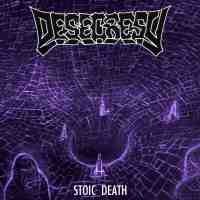
  • Desecresy – The Doom Skeptron Desecresy approach Finnish death metal the way others might approach doom metal, using melody and abstract song structures to convey an experience not unlike watching the helmet camera of a pilot flying through a vast and ancient underground cave in which demons seem to lurk behind every stalagtite. Comparable to a hybrid between Amorphis and Skepticism, this album nonetheless keeps up the umptempo riffing and lets its melodies emerge to construct an emanating atmosphere. The result is both aggressive and enjoyable from a purely death metal perspective, but where appropriate, it uses the moods of doom metal to complete that raging insanity to produce an experience that is like a journey. There are doubts, fears, joys, rage and sadness, but pervading all of it is a sonorous melancholy which indicates a change in viewing life from orientation toward what is safe, to prizing what is adventurous and as such being alone on a planet of people concerned with safety labels and microwave cooking.

  • Drawn and Quartered – Feeding Hell’s Furnace Imagine a hybrid between Angelcorpse and Num Skull. These songs are extremely basic, like the melodies of horror movies, but are put together with interlocking rhythms that propel them forward and give them atmosphere. As a result, their themes feel intuitive like paths through a forest remembered from a childhood story. There will not be surprise at the ways these tunes twist and bend, but appreciation for a well-done interpretation on a necessary idea. In the same way you might appreciate an excellent sword or well-executed painting of a familiar subject, these songs will be appreciated for how well they do what they love. Just as most musicians make their best work when they design it to be enjoyed repeatedly by people with their own tastes, this faithful and yet creative interpretation of the old school death metal genre will be shared among those who can appreciate it, for taking the past and making it live on by keeping it current to itself and through inventiveness, an enjoyable listen.

  • Faustcoven – Hellfire and Funeral Bells This release is not particularly metal, or at least underground metal, even though it aspires to the aesthetics of it. Rather, this is like Marilyn Manson interpreting classic heavy metal in a gothic doom metal context as informed by death metal aesthetics but not technique. It’s basically blues rock with short phrase power chord riffs and highly compelling rhythm, underneath leads that are reminiscent of a friendlier version of St. Vitus. Good use of theme allows this release to be a faithful listen and also have some staying power for those who like this style. Like most doom metal, it is designed to build a repetitive atmosphere that is part curl of enjoyment, and part linear path of a melancholic mood. The death metal vocals would normally be out of place here but with the heavy reverb they take a backseat and let the guitars talk, which is the point of this band. It will probably not delight those who like underground metal, but if you’re looking for someplace to go for your next Cathedral or Sleep fix, this furry doom band holds the ticket.

  • Grave – Endless Procession of SoulsGrave return to the Swedish style which they helped make famous. Like later Fleshcrawl, this music is simplified from the original riff-salad which was reverse-assembled to make a journey into darkness emerge from thin air, but although it uses plenty of verse-chorus segments, they are not the entirety of each song. There are enough labyrinthine twists and turns to be fun, a good motivational rhythm, and an atmosphere of darkness and aggressive that is also (oddly) comforting and natural. Although musically this is fairly basic, like early Grave, it shows more use of melody and harmony, which adds an appreciable dimension of compactness and centering without falling into standard rock music. The result is easy to listen to and yet brings out its power in moments of sudden clarity which, as in life, make the listener think there might be more afoot than the obvious.

  • Imprecation – Jehovah Denied This four-song EP shows the resurrected Imprecation: more consistent in its songwriting, slightly less manic, and more inclined to create a pervasive atmosphere of darkness. The occult death metal founders from Houston originally shone in the early 1990s, when their demos and later CD were released, but returned after inaction and the lending of band members to other acts. Their earlier material had more of a Morbid Angel influence and presented itself as clear occultism, where the newer material goes back more toward where Possessed and early old school death metal (Morpheus Descends, Massacre) were headed back in their day. Mood-enhancing use of background keyboards gives an aura of the mysterious to these dark melodies and the organic rhythms which suffuse them. Influences on this music span from pre-death metal, through the walking and stalking rhythms of speed metal, to the later black metal works in song structure and atmosphere. This EP presages a killer full-length but stands on its own as quality music with a voice particular to its worldview.

  • Incantation – Vanquish in Vengeance With new personnel and possibly the strongest sense of unity in a long time, Incantation very sensibly took influences deliberately from their own two greatest successes: Onward to Golgotha and Diabolical Conquest. The result is an album that self-consciously borrows from those albums in style but tries to create new songs to wrap in that style, and with the aid of new guitarist Alex Bouks (ex-Goreaphobia) shapes its works around melodic shapes but does not adorn them in melodic riffing, creating a sense of an inner region of hidden energy within the exterior of rugged chromatic shapes. The result is one of Incantation’s most conventional albums but also a festival of the methods that made early Incantation so distinctive and powerful, which combined makes for a good later death metal listen.

  • Legion of Doom – The Summoning of Shadows This oddity of an album begins with some form of sung prayer and launches into songs that are both adorned in the harmonic glaze of melodic playing and also possessed of the manic simplicity of early black metal. Like the primitive era of black metal, these songs are specific structures fitting the content of each song, with droning riffs that interact and build to a culmination before dissipating. On this album, Legion of Doom use more death metal and speed metal technique in with their Burzum-inspired black metal, ending in a result that sounds more like an ornate and elegant version of Gorgoroth’s Destroyer. Like all Legion of Doom releases, The Summoning of Shadows features songs that accelerate thematic intensity in layers and produce an immerse, ambient experience that suspends reality through the sheer dominating power of its riffs. This album is more efficient than the last couple of releases of this band, and by embracing a listenable style, makes the type of outsider album that Marduk or Watain wish they could.

  • Lord Wind – Ales Stenar If you want to immerse yourself in ancient sensation, Graveland axeman Rob Darken’s ambient/neofolk/soundtrack project Lord Wind is a good place to start. Unlike previous Lord Wind efforts, Ales Stenar mixes real vocals and violin with electronic music that is roughly inspired by the Conan and Red Sonja soundtracks. The goal however is less like the rock-ish folk songs of neofolk, or the grand accompaniment for cinema provided by soundtracks; this is music like Burzum or Graveland that is designed for the listener to lose themselves in its repetitive hypnotic surges, like a catechism or mantra. Its soaring melodies and plunging dynamics give it a familiarity like the rush of blood through veins in the ears, and the result feels natural and yet inspired to rise above the mundane at the same time. Like entering a forest, the songs open up to repeated listens and soon each part is distinct, but our natural way is to hear it all at once and derive a sentimental feeling, perhaps warlike, from it. This is the most proficient and perhaps most profound of the Lord Wind albums, proffering a complete escape from reality to a world that is both fantasy and more real than the stuporous dream of modernity.

  • Master – The New Elite Over the past few albums, punk/heavy metal hybrid Master has steadily been migrating toward late-1990s death metal. This new album presents a more technical view than the verse-chorus-exposition songs that Master (and related Speckmann projects) evolved from. Much like On the Seventh Day God Created…Master, riffs are strummed with precision at high speed and tend to lead away from stable grouping by adding riffs to the existing loop. These riffs use longer progressions and more chromatic fills, giving the music a mechanical terror that makes it sound like technocracy taking over. Speckmann’s vocals are tighter than in the past and urge the music along, but somewhere in this musical process of evolution, his overall tone has started sounding less like protest music and more like a cheering of the coming conflagration. Seeing that Master keep improving over time provides a great incentive to follow this band as they evolve further.

  • Profanatica – Sickened by Holy Host / The Grand Masters Sessions Sometimes, in order to reach your next aspiration, it is necessary to part with the past. Profanatica have done this in grand style by accumulating old tracks and re-working them in parallel, with one disc containing newer versions done in the early 1990s style, and the other containing older session takes on the same songs, interspersed with acoustic landscapes by Aragorn Amori, the band’s much-admired deceased former guitarist. Through its long history, the entity known as Profanatica/Havohej (or: Paul Ledney and friends) has consistently released material showcasing a truly artistic brilliance. Usually, between moments of brilliance there are experiments and less intense offerings that make it easy to forget that when they are in full swing, these musicians are unstoppable forces creating a unique type of black metal that is closer to ambient death metal but unlike most black metal at this time, possessed of a full mythos and unique view of the world. Like the best of Profanatica/Havohej, these two discs are ripping sonic terror that transcend daily life and divulge the essence of the feral spirit of pre-civilized humanity. In that vision of evil, Profanatica offer us something both inspiring and instructive, and do so through some of the best music of their career.

  • Terrorizer – Hordes of Zombies People love change if it is constant and hate it if not. Terrorizer misstepped with their first post-World Downfall album, but came back with a strong contender on Hordes of Zombies. It does not attempt to be World Downfall II which is intelligent since outward-in emulation of the past usually produces hollow shells, and a good many classic bands have gone to their graves in disgrace by doing the same thing. Instead, this aims more at the territory scoped by Napalm Death with Fear, Emptiness, Despair: a modern form of grindcore that is musical and listenable without being commercial, and aims less at creating an atmosphere of terror and misery than creating motivational, energetic and yet literalist/realist music. These songs convey a desire to look at a dangerous situation with hopeless odds, then jump in and fight it out. It’s war music, but music of a normalized war, like going out into a declining civilization and fighting for mundane survival. Hordes of Zombies does this through a somewhat overused metal metaphor, that of the zombie takeover of society, but as a movie/musical trope this theme has remained consistent since the 1960s because it so aptly describes egalitarian society. Consumerism, mass trends, fads, panics, elections, Black Friday sales, save-the-children; it’s all in there. Terrorizer may be brilliant satirists for transforming all of that mass neurosis into a simple symbol and then making these engaging songs about it. Each piece uses a combination of rhythmic and slight melodic hook to lure us in, then pits grinding riffs against one another while fitting them into bounding rhythms that unleash an inner fury in their conflict between the fear and the mundane. The result is a stream of ferocious riffs in songs that hold together as songs in the Terrorizer tradition, creating an experience of immersion in conflict that is both justified and everyday. For a genre such as grindcore, this more stable form is preferable to re-living the past or trying to “innovate” by including outside elements. As a result, Hordes of Zombies is not only a great listening experience but an archetype others will follow.

  • Thevetat – Disease to Divide One of the more interesting entries comes from ex-Ceremonium musician Thomas Pioli who has assembled a new team to make music that sounds like early NYDM mixed with the melodic undertones of heavy but intriguing bands like Montrosity, Malevolent Creation and Gorguts. The result hits hard with a rushing wall of chords and then drops into socketed rhythms that invoke a change in riffs, causing a twisted inner torment to emerge in Protean form. This gives old school death metal a new life without giving it a new form, since the form is the result of the content, which is essentially unchanged but slightly updated since 1992. No concessions to “modernization” (a/k/a mixing death metal with rock, jazz, metalcore, disco, punk, etc.) occur here, which allows this music to be in touch with its own spirit and flow freely from the source of its own inspiration. It is thunderous and yet perceptive, bringing with it the spirit of doom metal and its introspective melancholy. Although a three-song EP, this release beats out most albums released this year for pure death metal intensity.

  • Timeghoul – 1992-1994 Metal developed its own sense of “progressive” and “technical” music long before it imported jazz-fusion in order to help it. In fact, part of metal’s birth was from the original progressive rock in the 1970s and the soundtracks of horror movies, which gave it a predilection for this direction. “Progressive” itself is a misnomer since nothing new gets discovered in music, but probably more accurately means “complex”: music with unconventional song structures, extensive use of harmony, melody and key; possibly linked to some kind of story outside the music itself and the usual topics (love, sex, drama) of pop songs. These songs craft winding riffs and intricate structures, using embedded melody to transition between more chromatic riffs, and culminate in odd twists of fate that translate them into seemingly the reverse of their initial outlook. Culminating in the epic 10-minute “Occurrence on Mimas,” this collection of early works by this band showcase the enjoyably weird variety of death metal in its early days.

  • War Master – Pyramid of the Necropolis This modern band attempts to revive the death metal style, starting with the deathgrind of its namesake Bolt Thrower and incorporating influences from many of the bands of the era, and succeeds by staying true to its own enjoyment. As a result, it’s working in a style, and not from a template; the band want to create old school death metal, but aren’t doing it by imitating songs or styles, but by writing in that style based on similar inspirations. As a result, this band has its own voice despite being very familiar in technique, and has chosen its own path for subject matter and thus the arrangement of many of these songs and the types of riffs used. Its aesthetic mixes the grinding mid-tempo riffs and repetitive choruses of grindcore with the circuitous riffing of death metal and its tendency to unveil changes in layers of rhythm, guitar and vocals. While the style shows the influences of later death metal, its sensibility is firmly grounded in the early years, which makes this a great old-school death metal experience. However, its most salient factor is that it’s also interesting music. Songs are formed around their topic, with riffs and structure contorting to resemble the object, and riffcraft shows learning from the past but creation of its own new forms. Guttural vocals which maintain an ascetic detachment from the emotional content of the music help to give Pyramid of the Necropolis the ultimate death metal point of view, which is as a dispassionate observer amongs the ruins detailing the conflict that created this mess, and must endure after its collapse.

Disappointments of 2012

Abigor – Quintessence

Apparently this is new and old material. The shift between the new and old is like jumping out of a sauna into the snow. The newer material shapes itself to an expectation, much like the newer Swedishy bands in the style of Watain, that combines melodic punk with raw and random riffing in catchy rhythms. The result is like a painting made of painted dog turds, in that from a distance it is appealing, but as you get closer its mundane nature is revealed. Abigor have always suffered from being too quick-thinking and inventive for their own good, because they can always throw together a bunch of quality riffs and make most people think a song happened, but here that model breaks down. The songs feel more like slide-shows than organic wholes. The older material is good however.

Absurd – Asgardsrei

This remaster of the 1998 album was in theory supposed to improve sound quality. Had they simply done that, this would have been a shining victory. Instead, it has been standardized. The drums have been pumped up to emphasize rhythm, and the guitars doubled and bass-maximized, with vocals shrouded in reverb. Alone that removes much of the distinctive sound, but attempts have also been made to lower the volume on elements that are not orthodox black metal-cum-oi that Absurd makes now. The result is a loss of detail and an emphasis on the simpler parts of each riff, not the interesting interplay of riffs. They’ve made this album sound more like their remakes of earlier material and by pandering to one audience, lost a lot of what made Absurd interesting.

Acephalix – Deathless Master

A highly-praised release, this album purports to combine Swedish death metal and crustcore. What it ends up with is neither, but a mishmash of riffs around a rollicking beat, changing entirely at random. You hear a little bit of old Entombed, some Dismember, and a lot of filler riffing that really goes nowhere. For about three songs, it’s pleasant listening because you can tap your toes to it and it reminds you of Left Hand Path. Then you realize the songs never went anywhere. They’re like wallpaper. And to the horror of any crust fan, this is built on the bouncy beats and song structures of pop-punk. It’s closer to Blink 182 than Entombed or Amebix.

Aura Noir – Out to Die

Once upon a time, I referred to Aura Noir as a black metal Britney Spears because their music is pop dressed up as black metal. However, it’s normally fun pop with high energy and catchy riffs, even if in verse-chorus structures so repetitive that you have to background it. But with this album, they go into the boring zone. This is almost like a drone with a horse galloping in the background to keep up energy. And yet, like the lady that doth protest too much, the more “energy” you need to inject, the less the music is actually compelling. And on that level, this album is basically the same speed metal/Motorhead style riffs that bands were rehashing back in the 1980s, but now revived in an even more exhausted form.

Coffin Texts – The Tomb of Infinite Ritual

The people behind this band are good, and their intentions are good. The result of their efforts however is bog-standard death metal, not so because it imitates anything else, but because it is unreflective of any purpose outside being death metal. It’s predictable in the sense that nothing is surprising, and yet, it doesn’t really gesture at anything more than being death metal itself. I hope these guys stop trying to be whatever they think they should be, and find whatever they actually enjoy instead. Best yardstick for your music: what you enjoy and would listen to on your own, even if you knew no one in the band.

Graf Spee – Reincarnation

Some things should stay in the 1980s. This is prescient in that it emphasizes the kind of bouncy riffing that fits on the spectrum from Anthrax to Meshuggah and onward to metalcore, but it’s disorganized, inconsistent with the vocals, and feels more like a pile of spare parts than a smoothly running engine.

Hellevetron – Death Scroll of Seven Hells and Its Infernal Majesty

2012 was the year everyone rediscovered Onward to Golgotha. I agree, it’s a killer album. There’s nothing wrong with Hellvetron, who seem like competent musicians, but this album attempts to imitate the outward form of Onward to Golgotha without grasping the underlying tension in the music that makes it work. As a result, Hellvetron impose current song structures (loops) and standards onto the aesthetic of the past, which makes for a decent listen until it becomes apparent that it’s not really about anything except itself.

Impiety – Ravage and Conquer

It’s hard not to enjoy this album, which is like a hybrid between Angelcorpse and Mortem with a squidge more melody. However, it is highly repetitive because it doesn’t go much beyond that concept. Like Krisiun before it, the concept is full speed ahead skull-crushing aesthetic, and this is so powerful it squeezes out most artistic content. This leaves you with some creative riffs, some talented use of tempo, but nothing that holds together long enough to listen to for a decade.

Inverloch – Dusk | Subside

These ex-Disembowelment musicians have a bit of a cult formed around themselves. Part of the reason is that unlike almost every other band before black metal, they knew how to write melodic music, which they do here as well, in something that resembles a cross between death-doom like Asphyx and melodic doom like Candlemass or Paradise Lost. Crashing riffs coexist with gentle melodic fills and overlays that create a dense atmosphere of nocturnal wonder. However, beyond that, the direction seems confused, which is appropriate for a re-entry EP but excludes it from this year’s best of.

Mantas – Death by Metal

Before the first Death album, Chuck Schuldiner tried out his riffcraft in Mantas, named in tribute (by educated guess) to Venom. There’s a reason these sort of re-releases are confined to collectors, and that is that these demos show a young band trying to get the order of riffs in its songs correct and at the same time develop an image, sound and voice. The result is great, if you like listening to parts of the same six songs 18 times each. A true-blue die-hard ultra-kvlt collector will put this on the stereo next to “Scream Bloody Gore” and “Spiritual Healing” and start working out each riff until he’s sure how everything works. Then again, with the hindsight of nearly thirty years, we know exactly how it should turn out, which means that for the rest of us, this will sit on the shelf in perpetuity except as a conversation piece.

Maveth – Coils of the Black Elite

This album reminds me of middle period Immolation, in which creative riffing often fell into very similar rhythms and as such, the songs sort of became a continuum which resembled pulled taffy: cut off a length of Immolation, let’s listen to that. Oh look, sliced Immolation! It’s the same way here. Maveth has very creating riffing with excellent right-hand control, but the songs themselves are a muddle because the riffs are the direction and as such, there’s not really a way to put the riffs together that makes sense, so the band converges on a mean and drops into very similar trudge rhythms to make the songs catchy. At first listen, especially the first three tracks, promise is everywhere; by track five, it’s clear that circularity has occurred.

Purtenance – Sacrifice the King

This EP suffers from a primary flaw, which is disorganization. It’s not random, but it’s what happens when you decide to make death metal and so treat that as a container, and then “write to fill” and twist the riffs into place so they work with each other. It’s not about anything, and thus is “random” in the sense that it could mean anything. As a musical experience, it mostly conveys a sense of disorganization and frustration. The best bands mold that sort of raw emotion into something which rises above the confusion and achieves clarity. If not beauty, truth, goodness, etc. at least something that is desired more than it is hated, and so inspires them, even if that goal is hatred itself.

25 Comments

Tags: , , , , , , , , , , , , , , , , , , , , ,

Interview: Turner Scott Van Blarcum (Talon, Sedition, Pump’n Ethyl)

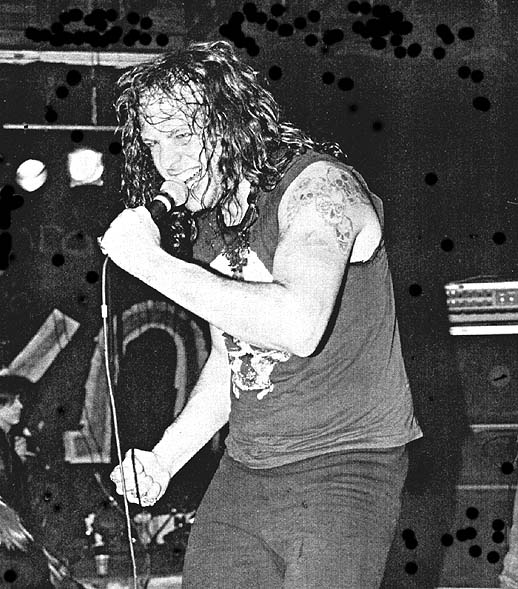
From 1986 through the early 90s Turner Scott Van Blarcum was easily the most recognizable, outspoken, memorable, and talked about local singer and figure of that that era. During those years Sedition became one of DFW’s earliest underground-breaking Metal bands as they helped this area’s Metal scene reach an all-time peak. I sat down with Turner one afternoon in March at the Bar Of Soap and we reminisced about those good ole band days he experienced with Talon, Sedition and Pump’n Ethyl. We even rapped about his enormous bone collection that would lead to him designing stage sets for the bands Ministry and Cypress Hill. He also talked in depth about that infamous night back in 1991 when he had an unforgettable confrontation with Nirvana’s Kurt Cobain (RIP) at Trees in Deep Ellum.

When did you first get into metal? What were some of the early bands that were an influence on you?

I was listening to Black Sabbath and Kiss and this and that. But, fucking… I gotta give props to Casey Orr man. Rigor Mortis dude… Haha! He turned me on and fuckin’ got me going… opened my mind up. That’s when we all started fuckin’ getting harder and faster.

Right, I agree… I mean I was always into the older stuff, too, until I started hanging around with those guys.

Yeah man, he turned me on to Motorhead, Riot, and Destruction and a lotta bands. Hey, Rigor Mortis is my influence.

So I know you were a drummer there for a while. Were you ever actually in any bands?

Oh yeah man, I played in bands. I played with my brother’s country bands. Me and Mike Scaccia did this uh… I think it was… I can’t think of the guy’s name. But anyway, we played with this Elvis impersonator cat. It never got off the ground… but that was about it.

Ok, so I remember it was probably around 1984 when you moved over there off of Hard Rock Road in Irving. You formed a new band with brothers Pete (guitar) and Phil (drums) Lee. Hard Rock Road became the temporary name for the band. That was when you first decided to become a singer. Do you remember what made you just say, “Man, it’s my turn to get up there and I wanna become a front man.”?

Well, I think I came to the rationalization that I was a shitty drummer… and I wasn’t getting any pussy… Hahaha! I figured I might get laid if I started singing…. Hahaha!

Y’all started out playing mainly covers in that band right? Like Alice Cooper, Steppenwolf and Black Sabbath right?

Yeah and Dio, Iron Maiden, and then we started doing Metallica right when Metallica started fucking poppin’.

Do you remember when y’all decided to change the name of the band from Hard Rock Road to Talon and started working on original songs?

Yeah, that was the high point. That was probably one of the best gigs we did, man. We opened up for you guys at New Year’s Evil … with Gammacide, Morbid Scream… I got the flier still on the wall. Anyway, we changed the name to Talon in 86/87. We were still doing covers but fuckin’ uh… ya know we started writing original music. But by the time Sedition rolled around it was all originals.

I know you started with Pete Lee (guitar) and Phil Lee (drums) and then you added Eddy Carter (bass), right?

Yeah, Eddie Carter was the original bass player. Then we got some kid… red-haired kid from Waco named Scott something… that was near the end of it. And Mike Dunn on drums, I forgot Mike Dunn joined up after Phil left… ya know everybody fell apart.

When you guys decided to change the name to Talon and go heavier, that was around the same time period after Slayer’s “Reign In Blood” came out and the underground thrash scene was starting to kick in. So do you think you guys were at the right age and right there at the right time to go along with that movement? Would you agree with that?

Oh fuck yeah… we fell right on in man. Also, Punk Rock started crossing over into metal… D.R.I. and all of that.

You released a demo under the name of Talon. What were some of the songs, lyrics and subjects on that demo?

I wrote one about Charles Manson. “Summer Of Hate” was the name it. There’s lines like uh… I actually took it from the actual words of Charles Manson right… that book about him talking about himself. {Doing an impression of Manson with his voice… Turner then begins to give me some lines from the song} “At the age of thirteen I raped the Preacher’s daughter and choked her little brother for snitching on me.” … Hahaha and that kind of shit. One song Pete Lee did called “Pestilence” was bad ass… he sang on that one. We were fuckin’ writing about all kinds of crazy shit. We didn’t start getting political until Sedition hit. That’s when we started seeing everything.

I am sure you remember the Deep Ellum scene back around that time. It was a lot different than it is today. There was a big Punk scene going on in some areas. There were also the more trendy types of bands like Edie Brickel and The New Bohemians in other parts of Deep Ellum. But there was no metal scene at all at the time. What are some of your memories back then as metal first started making its way into Deep Ellum?

Shit man, I will never forget the first time I saw Rigor Mortis play at the Circle A Ranch, man. That was before you joined the band and it was still a three-piece band. Man, that night was just intense, ya know? I had never seen all of that shit before. It blew my mind. I knew I was at home. That was when me and Mark Oberlander (RIP) started doing a sound company and running sound down there. But the most intense show that I saw was Rigor Mortis and Samhain. When Rigor Mortis played the cops showed up. The cops were outside busting everybody. Then when Samhain came on and they had two songs left, the cops came in fully armed, riot gear, Batman shields, all that shit and they stopped the show. But I have to say the best one we ever did was with you guys at the Arcadia Theater man… New Year’s Evil. That was the bomb! Do you remember that guy Gonzo? That was his nickname… we can say this because that was his nickname. He came up to me that night and said, “Man, I sold over 350 hits of acid tonight. We’re gonna have one hell of a party… I made a lot of money!” I was like, “Right on, now I can fuck with these motherfuckers.” It was fun man… that was the bomb back then. That was a great gig too, man. That night… fuckin’ Mike and Casey came up and played and Phil Lee sang a GG Allin song… “Now We’re All Gonna Die”.

Do you remember when and why you decided to change the name from Talon to Sedition?

Yeah, because when we released the Talon cassette there was a band in Europe called Talon. That’s when me and Pete Lee got our publishing company set up and we were trying to get the name copyrighted. Then we found out somebody else had already released a record under the name… some Glam band from Germany or something. So we had to change the name and the name Sedition just fit, because during this time period, ya know, Ronald Reagan was fucking things up and it was just a mess. It was time to secede. I used to say, “Man, if Texas would secede from the Union, I would fight every day and wouldn’t take a lunch break… Hahaha!”

After the band changed the name, you recorded two demos as Sedition, right?

Yeah, that was in ’87 and we recorded it out in our driveway in a mobile studio. To me the first Sedition tape… we call it “Sedition White”… because it was white and just said “Sedition”. That had only like 4 or 5 songs on it… that tape was the bomb to me. It had “Road Kill” on it, “Sedition”, “Product of Your Faith” and uh… I can’t remember the rest of ’em. Anyway, that was the shit! The second demo we did at Crystal Clear Studio with Keith Rust. I think that was also in ’87 around the same time period. We didn’t last very long, ya know? It sure seemed like a long time though.

When did Mike Dunn come into the band and replace Phil Lee on the drums?

That was in 87′ after Phil left. Mike Dunn did all of the Sedition stuff. Eddie Carter (Bass) was on the Talon and both Sedition demos. Then he quit ’cause him and Pete were fightin’ man, ya know? That was the whole deal. That is why Phil quit too… his brother… Hahaha! And that’s why I quit too! You can print that. I don’t give a fuck.

People fear death even more than pain. It’s strange that they fear death. Life hurts a lot more than death. At the point of death, the pain is over.

– Jim Morrison (The Doors)

How would you describe yourself back then as a singer and your stage persona?

Pissed off… Hahahaha! Pissed off, man… but having fun, though… fuck we had a blast back then. I don’t know man… it’s kind of hard to say. I know that at that time period, man, music was changing… there was change in the air. Punk Rock was crossing over into Speed Metal… Speed Metal was crossing over into Punk Rock. Yeah, I’d say I was pretty pissed off. I didn’t like what was going on with the government and to this day I don’t. I definitely had an attitude back then… Hahaha!

You used to take knives or swords or both on stage back then and cut your arms during the show. Was that something you thought about doing or did it just come out one night on stage?

No, actually, man, where I got that from is fuckin’ I remembered when Mike Scaccia and Rigor played at the Circle A Ranch, Mike carved an A on his arm. No, I’m sorry, somebody else did it to him. I thought… “Man… Fucking A!” Then, ya know, we all carved A’s on our arms. Then we started playing Tick Tack Toe… me and Big Jim Dolan, we were always playing with knives, man, ya know? Back then… do you remember that shit, man? … if it was your birthday everybody got beat to ever how old you were. Dog piled… taking a beatin’… playing Tick Tack Toe with knives…that’s where it all started. But carving an anarchy symbol on my arm, that’s where my mind was, ya know? Anarchy… and it’s still there too. It’s just the difference is… I’ve mellowed out a lot. Hey, you gotta pass the guns down and let somebody else do it. Let some young bucks come up and kick some ass!

What are some of your best memories of that time-period back then and some of your favorite places you played at?

Man, I thought the Tombstone Factory… regardless of what everyone wants to say about Jerry Warden… that was the shit! That was about as close as fuckin’ gettin’ to Hardcore… Punk Rock… Metal as you can get, man… and I fuckin’ dug it. It was alive… it was fun, and man… fucking hot chicks… it was all good… Hahaha!

It seemed like there was always some crazy shit happening at shows back then. Is there any wild shit that happened at any of y’alls shows that really stands out in your mind?

Well, not that much with Sedition, but with everybody else…Hahaha! What I would say sticks out in my mind is when that motherfucker stabbed you in the back at fuckin’ Goddamn Joe’s Garage. That was pretty much the highlight and the peak of stupidity.

Yeah, it was… and Harden getting stabbed that night too and also Dave Spivey. Y’all beat the shit out of that dude that did it and Shane ran over him in his truck… remember? Hahaha… That was some crazy shit…

Hahah… That was it… that was the highlight.

{After pondering for a second to realize how funny it is that my highlight in life was almost getting murdered… I continue with the interview} Soooo… when and why did Sedition come to an end?

I had had enough… I couldn’t fuckin’ take it no more. We couldn’t replace Eddy Carter. The truth of the matter was, when Eddy Carter and Phil Lee quit the band, that was it. That was the band. And everybody had problems with Pete Lee because of his attitude and this and that. There was no replacing Eddy Carter and the reason why he quit was that Pete was all about money. And what money? What money did we make? It was all about writing the music and whose name was gonna be on what. Ya know, when ya cut it down like that… I mean… it was just stupid… so Eddy quit. After Eddy, there was no replacing the guy… same way with Phil. Well, Mike Dunn filled Phil Lee’s shoes… big time! ‘Cause we were going in the direction of getting faster. But after Eddy quit, it just got stupid and I had enough of it, so I quit. That was in ’89 when everything busted up. The last gig that we did was with Agony Column and Dead Horse at Trees. Remember the big fight broke out? Out front with all the skinheads and all that shit and I was up there on stage getting a blowjob from a titty dancer. Please print that… thank you very much… Hahaha!

Did you ever get any label interest before the band broke up?

Oh, yeah. Oh, hell yeah, man. Metal Blade… man we were big overseas… we sold more tapes overseas, ya know… underground shit. And Hell…fuckin’ over here ya didn’t have enough to get a Popcorn fart, ya know?

Speaking of Dead Horse… what are some of the other bands that you guys did shows with back then?

Oh man, we had a blast. We had a blast playing with you guys. As far as local guys, we played with Gammacide, Rigor Mortis, Arcane, Utopia, Bliss, Shitface. Like as far as opening for major bands… Flotsam and Jetsam, Suicidal Tendencies, Circle Jerks and D.R.I. Yeah, it was a blast… you should have been there, kiddies!

After a few years away from being in bands you started singing for a Punk band called Pump’n Ethyl in the 90s. How did that band come together?

Well, man, I got sobered up, I quit drinking. I’d went out on the road with Ministry in ’91 and ’92 during the Lollapalooza and Psalm 69 tours and I about drank myself to death. I mean I had the time of my life… no regrets… it was a blast, man. Fuckin’ money was rollin’, hot chicks, the whole Rock N Roll package. But when I got off the road and got sobered up, I was itchin’ to play. Pete Lee and Casey Orr were playing with GWAR by then and they played at Dallas City Limits. It was after Pete Lee got shot and they did a benefit for him. Some crackhead shot him in a car or something. Anyway, I got up on stage and sang with The V Suckers… with Hank Tolliver… the future guitar player of Pump’n Ethyl. I got up there and sang a song with them and we did “I Wanna Be Your Dog” and “Cherry Bomb”. And man, it just felt so fucking cool just to be able to play again, because I hadn’t played in so long. I had got burned-out on it and I went out and did other things, ya know? So we started doing Punk Rock. Ya know, I just caught the tail end of Punk Rock… I got the see the Circle Jerks, Dead Kennedys, Exploited and this and that. But I wasn’t a Punk Rocker back then, man… I was a Metalhead and still am. But fuckin’ we started doing this Punk Rock stuff, and man, I just dug it. It was a total different thing. Instead of being agro or fighting, man, we were up there partying and throwing beer on everybody. And man, fuckin’ I got more pussy in that band than I did in Sedition…Hahaha!

I remember the band was originally called Ethyl Merman. How did you come up with that name and what year was the band actually formed?

Ethyl Merman started up in ’94 and that was a blast. We couldn’t come up with a fuckin’ name. We had beaten ourselves up for a name. And I had been working out, I’d gone sober and quit drinking. As you can see, under this party ball there is a 6 pack, but I was working out and wasn’t drinking then because my liver had gotten fucked up. But I am alright now… knock on wood. Anyway, we was watching “It’s A Mad Mad Mad World”… Jonathan Winters. We thought about calling the band Jonathon Winters. But we were making a joke about Ethel Merman. Ethel Merman was starring in the movie too, and I was singing like Ethel Merman, ya know… I can sing that song “I Don’t Wanna Go To The Betty Ford Clinic” like Ethel Merman… Hahaha! So we decided to go with that name, and we never thought in a million years that anybody would give a shit. We never thought in a million years that anybody would ever give a shit… PERIOD… about this band… and then we get signed… ya know? With Sedition, we fuckin’ya know, Goddamn did everything we could do to get signed. Then we form a band and nobody gives a fuck, it’s all a joke, then we get signed…Haha! And we got fucked on that deal too!

When the band got signed y’all had to change the name from Ethyl Merman to Pump’n Ethyl, right?

Yeah, we had to change the name because the estate of Ethel Merman was gonna sue the record label… or whatever the hell David Dennard was lying about.

What was the name of the label you signed with?

It was Dragon Street Records. It should be called Draggin’ Feet, is actually what it should be called. When we put our second record out he [David] goes, “Man, this is punkier than the first.” I was like, “Punkier? Like Punky Brewster? What do you mean ‘punkier’, man?” It was heavier, it was harder, and it was faster, ya know? It was more metal, ya know. So come out and say it. But he didn’t. And that album was called “Lone Star Police State”. And there are only a few of those still floating around. In which, eventually I’ll have a web site going and I’m gonna release all the Sedition, Talon and everything we’ve done… get it out.

You had 2 releases under Pump’n Ethyl and when were those released?

Actually three… The Ethyl Merman demo in ’94, Pump’n Ethyl’s “Thank God I’m Living In The U.S.A” in ’95 and “Lone Star Police State” in 97. To me, that was the fuckin’ shit! Hank Tolliver, Mark Schafer and Phil Lee… I mean it was like playing with MC5 or something. It was a lot of fun, man.

What are some of the cooler bands that Pump’n Ethyl did gigs with and did the band ever tour?

The best one we did was with Fear. We played with Fear, Rich Kids On LSD, Suicidal Tendencies and Chaos UK. We did a southern tour but we never got it off the ground. It was like a Bat bouncing its butt trying to get off the ground ya know? Bad luck was hittin’ every angle on that aspect. But you can still get Pump’n Ethyl’s “Thank God I’m Living In The U.S.A” off the internet on the Dragon Street web site. But, like I said though… we’ll be releasing our own shit soon enough.

Why did Pump’n Ethyl come to end?

Oh man, it was a fuckin’ freight train of doom… Hahaha! Everybody was all fucked up on drugs and alcohol except for me and Hank… we were sober. And the other two were all a mess and it just fell apart, ya know? Nobody gave a shit. Actually it came to an end in ’99 when me and my bro Larry Rosales were working WWF and got blown up by a concussion bomb explosion, so I had to step down. I got tinnitus in the ears from it, so I can’t do live music anymore. I can do voiceovers and I can do stuff in the studio, but you know that doesn’t come very often with Hardcore music. Because nobody has the money for that kind of shit, unless you’re fortunate enough to have friends in a rock band that’s making money. So I quit because my ears were racked and hopefully we’ll go to court and settle up. And start a management company, is what I’d like to do.

But currently, you are working on doing some vocals for a Blues project, right?

Yeah I’m doing some vocals for a guy named Jack Morgan. His project is called Whip N Shack and Hank Tolliver is playing in it. I’m sorry I don’t remember everybody’s names that are involved in this, but there are some heavy hitters from the 80s and 70s… guys that fell through the cracks. What this guy is doing is he is giving everybody a CD of his music to different musicians of different genres. I was honored, ya know. I couldn’t believe that he handed me one because I don’t have the blues. But this sounds like The Doors meets ZZ Top. Ya know, it’s faster. It’s not really Blues… it’s heavy Rock N Roll, rhythm Rock ‘N Roll, I guess. But it’s kind of hard to describe… it’s different and it’s good… I’ll tell ya that. But uh… he handed it out to different musicians and everybody is gonna do their mix on it and apparently he liked what I had the chance to do, ya know. I wrote three songs for him… one is about gambling, one is about a whiskey drinking woman and the other one is about about stepping up to bat… ya know?

So what are you doing for a living these days?

Man, I am doing the same thing I’ve been doing since you met me, man… doing stage work. But I finally joined the union back in ’87… a union stagehand. I’ve got a union card and I’ve worked with all kinds of bands. Nearly every band that’s came through Texas I’ve worked for.

How did you get started collecting bones and did that lead to you designing sets for Ministry and Cypress Hill?

That all started as a kid… I found a Beaver skull in Colorado. But in Talon and Sedition we were doing a song called Road Kill and I’d take actual road kill and throw it on the crowd. Ya know, I had bones and I would tie it on everything. And then when Mike… when Rigor Mortis disbanded… Mike hooked up with Ministry, they were saying, “Man, this crazy fuck has got all of these bones”, and this and that. So I did their set for Lollapalooza. Then that took off and I did a set for Cypress Hill. I did their set and I did their video set for the “Insane In The Membrane” video. Then I did the Psalm 69 tour with Ministry, and now I’m doing their new tour. I don’t know the name of the record, but ya know we’ve been listening to the new music today… and it’s off the hook!! Oh man, the new Ministry is off the fucking hook! They got John Monte from Mindfunk, the bass player… this guy is incredible. They might have Scott Ian from Anthrax, I am not sure if that’s the lineup or not. But [Dallas native] Mike Scaccia is on guitar, Al Jourgensen is on guitar and vocals, Mark Baker is on drums and Kol Marshall is on keyboards. I am gonna make this set so fucking creepy, ya know, you guys gotta come see it. I don’t wanna describe it… just come out and see it. And you definitely gotta buy the new Ministry record, man. I mean it’s the dawning of a new era in Punk Rock/Metal. It’s like MC5 meets Iggy Pop meets Rigor Mortis… BAM!! I mean right in your face when you hear it. Anybody that’s into Metal and into Speed Metal that knows about Rigor Mortis and knows about where Metal came from is gonna dig the shit out of this, man. It’s off the fucking hook!!

From what I have heard I agree. So do you know how many bones are in your collection, and what are some of the wilder bones that you have?

Oh man, I gotta shit-load of bones… never enough. On the way up to El Paso going to the Sonic Ranch where Ministry and Mike Scaccia from Rigor Mortis are recording their shit, I found a Bobcat, and the head on this Bobcat is the size of the head on my Pit Bull named “Pardner”… man, wait until you meet him.

Now I wanna hear your side of the story about the Kurt Cobain incident at Trees in 91.

Nooo problem! I was doubling and doing security for Trees, plus I was working for Creyton from Peak Audio. And he just got this brand new monitor board… paid 45 hundred bucks for it… state of the art shit and he was so proud of it… so happy with it, ya know? And then Nirvana shows up, and I remember I had worked one of their shows at Club Clearview. And I didn’t realize that they were that big. This was when they were just starting to take off. And I remember the record “Bleach” was bad ass, ya know? And believe it or not, I liked Nirvana. I liked their music. But the guy was a fuckin’ jack-off… but he was off, and he’s dead… God rest his soul. Ya know, I hate to talk shit about a dead man.

Yeah, I know. But of course you had no idea when this happened that he was gonna commit suicide later.

No, I had no idea what was gonna happen later. Anyway, that night he smashed the monitor board and he beat it with his guitar. He just smashed it and broke the guy’s hand… his own monitor man. First he was complaining that the kids were all over the stage. So they wanted me to double as security to help keep the kids off the stage. I made a lot of money that night… Haha! And then he got mad at his monitor man and smashed the monitor board, and then he jumped out into the crowd. Well, he had smashed the monitor board and I couldn’t believe he did it. So, ya know, I’m standing there and Creyton comes up to me… the owner… and he’s like, “Turner, what fuck!?” I was like, “Man, don’t worry about it… these guys aint getting out of here without paying for it. Ya know, even if I have to personally whoop all of them… because I am pretty sure I could take ’em all on… ya know?” But anyway the little bastard fuckin’ dove out into the crowd and was kicking his feet into the monitors. And I yanked him up by the hair of his head and tried to pick him up and throw him back on stage. And the kids were pulling his clothes off… they had a hold of his hair… everybody’s ripping on him. Right then the little fucker hit me on the head with a guitar. After he did that it knocked me out, so now I am going by the video footage. It knocked me out and I pulled back a handful of strings off his guitar. But he gets up and ya know, I see the blood on my head… so I fucking nailed his ass and kicked him. I think I kicked him in the head…to be honest I couldn’t tell if I had landed a good kick or not. But I waited in a parking lot afterwards for his ass when they were about to leave. Russell Turns is the monitor man down there… I think he’s the sound man now… I don’t know. He came up and said, “Turner, he’s going out back!” So I go running around the back and I hear… “Get in… get in cab… GET IN THE CAB!!” Ya know, they’re telling him to get in the cab and all these people just dog pile me man, and hold on to me. And I was watching the cab go and he was trying to get on Elm Street and I see the brake lights and the cab stop. So I go, “It’s cool… it’s cool, man…I’m alright… I’m alright… I’m dizzy.” Because I was bleeding profusely from the head. So uh… when they let go of me I went running across parked cars and I went over there and started kicking the cab and I kicked the taillights and headlight out of the cab. My plan… my objective… to take control of the situation… like our Nazi President George Bush does. And I was gonna kick the headlights out… and get the cab driver out… kick his ass… get the keys and then start workin’. Well, that didn’t work and I’m runnin’ around and there were a bunch of kids with us, too. I can’t remember this kid’s name, but he had real long hair… a Hispanic kid… a heavy metal kid… and he was right there, man. I wish I could remember his name. Man, I punched that cab’s window and it fell. I went right though it on top of them.

You smashed the cab’s windshield with your hand and what was Kurt Cobain doing?

Yeah, I went right through it… I mean I went in… all the way. He gave me a peace sign and that’s when I said… “Fuck it!” That mad me so fucking mad, I went through the window on him. I bit his nose, man… Haha…and I fuckin’ had his nose in my teeth and I’m telling him that I’m gonna walk through his dreams until he’s fucking dead… right. And everybody pulled me off of him and I got out of there unscathed. I thought I was gonna get sued by… I kept receiving letters from Geffen Records… this and that ya know and I’d throw them away. Then I talked to Jeff Liles… Jeff Liles, ya know the guy that worked with Rigor Mortis. He wrote this real sweet juicy letter to Geffen. And I kept thinking they were gonna sue me. Well, they sent me three grand to shut me up… and I wasn’t about suing this guy… I didn’t give a fuck… I wouldn’t piss on him if he was on fire.

Didn’t the video end up on one of those tabloid talk shows like Inside Edition or Hard Copy or something?

I have no idea… I know that asshole… well, the jerky that filmed it… I gave him a reenactment. I can’t remember his name… oh yeah… Brad Featherstone. I gave him a bitch-slap… fuckin’ when I saw him. He’d released it without telling me nothing … ya know? All I know is the next thing I know it’s being shown in Deep Ellum. It got released… all that kind of crap… because of that Brad Featherstone guy… I gave him a good slap. I wish I had some royalties off of it, I’ll tell ya that. I’d like to see… well somebody’s got footage of me pumping the window out… I’d like to see that… I don’t know who has it.

It looks like you landed a couple of good punches in the video… and he went down.

Yeah, I clocked him one good one…I didn’t throw it off the hip or off the shoulder…if you see it you can see… I was out…he knocked me out… I didn’t remember doing any of that. He clocked the shit out of me with that guitar, man. I had to go get staples in my head. I looked like Herman Munster with 13 staples in my head. It cut a vein on my forehead and it wouldn’t quit bleeding. So I remember when I came home and Biker Marc is like, “Man, did somebody shoot you?” I go, “No, man… some junkie Rock Star hit me on the head with a guitar.” So the next day they are waking me up going… “Dude, you’ve got to go to the hospital, man… you’re white…you look like you’re turning blue.” So they took me to look in the mirror and I had lost a lot of blood. So I go down there and Biker Marc is going, “Yeah, that’s right…it was Kurt Cobain from Nurvaana.” Hahahaha!

The TV business is uglier than most things. It is normally perceived as some kind of cruel and shallow money trench through the heart of the journalism industry, a long plastic hallway where thieves and pimps run free and good men die like dogs, for no good reason.

– Hunter S. Thompson, Generation of Swine: Tales of Shame and Degradation in the ’80s

Interview conducted by Bruce Corbitt

No Comments

Interview: Paul Speckmann (Master, Deathstrike)

People who come into a genre after its foundation often spend a good deal of time trying to find its roots. Because descent is not linear, but more resembles the roots of a tree converging on something that could later branch, there’s often a cloud of contributors from which this clarity emerges. In the early days of death metal, around 1982-1985, Master and Deathstrike took one approach to metal that combined Motorhead-style road metal with the insurgent political antagonist of anarchist punk music. The themes developed there reappear in both death metal and life at large. Mastermind Paul Speckmann was kind enough to answer a few questions for us on death metal, politics, art and the future.

You formed MASTER back in 1983, at a time when death metal wasn’t defined in most people’s minds. What led you to this style of music and when did you start calling it death metal?

I was playing in a band called Warcry playing sort of a Doom, Sabbathy kind of Heavy Metal. It was certainly before all these categories ever were pegged. We were just trying to be heavy, and in the end guys like Lee Dorrian from Cathedral have acknowledged bands like Warcry and Trouble also from Chicago as a major influence. This is actually quite a cool thing.

The original guitarist in Warcry, Marty Fitzgerald, turned me onto a seven-inch from the band Venom. At the time I was just starting to follow Lemmy and the career of Motorhead, but Venom was even more brutal for me. At this time the original drummer Bill Schmidt and I were also listening to GBH, The Exploited, Discharge, MDC and Batallion of Saints. The aggression of this music was very important to us. We decided that it was time to create our own music along these lines.

The term Death Metal was coined by the critics. I really just thought it was aggressive Metal, I never really thought of it as Death Metal. The bands Master and Deathstrike played music really geared toward an anti-Government stance as well as anti-religion, of course. I have always thought that belief in oneself is the most important thing in life. To create your own path and strike your idols down are the main things to mention here. This is the ideology I have always pursued personally, but people will and always have been led to the slaughter sacrificing their own free will. I refuse to do this.

Although band names have changed (ABOMINATION, SPECKMANN PROJECT, DEATH STRIKE, MASTER) you have consistently anchored each band and shaped the style of music, even as personnel have changed. How do you maintain this consistency yet keep developing with each album?

This is a rather difficult question, but let’s just say that I just write songs from the heart and try and capture what’s happening at the time in society as a whole. I guess I preach in some songs, people might say, but really it’s just my belief and maybe my beliefs are bit extreme for some at times. I really try to capture what I am feeling at a particular moment. Let’s face it, every album is not a success, and I have really had many failures, but this is of course from the perspective of the critics.

I put all my effort in each and every song, it’s just that at times the feelings are captured differently. Sometimes the produtions are shit or the budget is rather miniscule. But, since moving to the Czech Republic I have found professional studios, mainly Shaark Studios in Bzenec, and the engineers are more professional than most, and the rates are reasonable compared to the outrageous prices in America for mediocre studios. I mean why would anyone spend more than a few days in a studio. Either you can capture the music quickly or it’s worthless.

We usually record the tracks for an album in a few days. Slaves To Society had the drums and bass tracks finished in 6 hours complete. It took a few days for the guitars, but this is normal as I really concentrate on the guitarist’s playing during the process.

Reverence begins in a deep understanding of human limitations; from this grows the capacity to be in awe of whatever we believe lies outside of our control — God, truth, justice, nature, even death. The capacity for awe, as it grows, brings with it the capacity for respecting fellow human beings, flaws and all. This in turn fosters the ability to be ashamed when we show moral flaws exceeding the normal human allotment.

– Paul Woodruff, Reverence: A Forgotten Virtue

What distinguishes great music from bad? Can it be distilled into technique, or is it something less easily defined?

Feeling is certainly more important, because some of the most talented musicians in the world release shitty music for sure. Many bands today focus on how many riffs can be played per second and it’s rather silly if you ask me. I would rather listen to Saxon or old Judas Priest than any of the “New School Of Metal.” Back to basics I say. Sabbath, Deep Purple and Saxon are what it’s about.

I mean of course Beethoven and Bach were among the greatest composers without a doubt, but this is Metal we are talking about here. I am the first to say that I am not a fantastic bassist compared to the entire genre, but I know how to write great melodies and lyrics that say something and for me this is more important than technique. Lemmy for example is also a great songwriter, but he’s really a guitarist, not a bassist. Now Geezer on the otherhand is great at all he does. I of course respect both these Gods to the fullest.

Jim Morrison (THE DOORS) sang and wrote repeatedly of a “frontier,” or a chaotic no man’s land where danger was everywhere, but it was also possible to get away from rules and fears. How does this apply to music like death metal, which seems to accept death and disease as a normal part of life?

I suppose what you said about Morrison is true for him: it was an escape and then death was the next escape. He was a great lyricist of course, but a weakling in the end, but opinions are like assholes, everyone has one.

Death and disease are a part of everyone’s life of course. This is normal to look death in the face as we all live to die. Disease ravages people and countries every day; this is great food for thought for a writer. We are living on a disease-ridden planet and people are dropping dead while scientists play gods and help over-populate this god forsaken planet. Birth control is the key I suppose.

Are there any plans to release WAR CRY material on CD?

Original singer Rich Rozek has done this already; you can find the CD at his website, even though it was remastered and the thunderous bass was basically removed from the recording. Also Rich has re-recorded several tracks for your listening pleasure. I heard a clip of the re-recordings on myspace and thought it sucked. He never spoke with the original members including myself about the project, but this is water under the bridge and I wish him the best with his endeavor.

I really wish we could all get together and do a tour of this original legendary material, but this will unfortunately never happen as everyone hates each other. But I have no hard feelings and would be more than willing to tour with these guys for a few weeks in Europe. I still speak with Marty and have heard from Steve as well, but I really have no contact with Rich except for an argument on Blabbermouth some time back. I really wish everyone the best, no hard feelings. I am as busy as ever and everyone else has pretty much given up in the professional sense.

You maintain a relentless touring schedule and put on professional shows, even when facing adversity like no money and disorganized promoters. How do you do it?

It was never about the money. I always like sharing my musical vision with the world and continually do so. We will begin a tour of Europe on Friday the 23rd of January and finish March 1st, I then will join the tour with Waco Jesus for 26 dates as their merchandiser. I like to stay busy and this also keeps me in touch with the general public. I joined a company called Kraft Evention about six years ago and this has taken me on numerous tours with bands like Vital Remains, Benediction, Jungle Rot and Dissection with Watain. So, needless to say, I am quite busy every year and this works for me and helps support my art and life in general.

MASTER’s music shows the influences of not only NWOBHM and punk, but later aggressive bands like MOTORHEAD and VENOM, but there also seems to be an underlying influence from more idealistic 1960s rock, like a little bit of protest music in the mix. How do you feel this meshes with the blood ‘n’ gore themes of death metal?

I really am not interested in the blood and gore as you described so well. I realise that the gore and blood bands are making much more money than I, but fantasy is better left for books and imagination. I prefer to bring the truth as I see it to the music. Satan is also a great money maker for brainless kids that haven’t any direction in life. Religion has always been a great seller, and more power to these bands. If they can make a decent living, which many do, then good luck.

It’s really apparent that we are all being controlled by governments and we are all Slaves To Society, and the sooner the youth of today take a stand against this control the better. Forget the devil and concentrate on the liberation of the people. I think this is more important than Satan or other religious shit. You have to wonder what kind of God would just overlook this.

The idiots in the Middle East continually use their false Gods to terrorize and torture innocent people in the region. They need to learn to get along and accept the different ideologies and learn to forgive each other, and get on with the peace process. All the hatred must be squashed or the world will end over the next few years. These terrorists like Putin hoarding the natural gas, as the Eastern Europeans freeze to death, just to show how powerful Russia has become from all their corruption and greed.

You have to smile as all the people are complaining about the Israeli conquest in Gaza, when anyone with half an ounce of intelligence knows that the USA supplies the weapons and cash to these fanatics. Hell, the USA supplied the weapons for Afghanistan to fight off the Russians in the past and wonder why the region is so fucked up. It’s called creating your own enemies.

Nothing exists until or unless it is observed. An artist is making something exist by observing it. And his hope for other people is that they will also make it exist by observing it.

– William S. Burroughs, Cities of the Red Night

One thing that has always bowled me over about your outlook is that you never seem resentful — at all. You have spoken in the past about your contentment with day jobs, being glad to tour, and how to brush aside any things that went wrong in the past. Where do you get this inner strength and peace?

I believe in myself, and everyone knows that life is complicated for most and you just have to roll with the punches. Metal is not for everyone and I cherish the moments I have had over the years. It’s interesting to say the least that the band and I have been touring successfully since I moved to Europe in 2000. This was the best opportunity that ever arose for me. Now I am busy every year and Master has played more concerts in the last five years than we ever did before. I average roughly around 90 shows per year. Of course if we could play more I would, but you can only play the same regions so often unless you’re a supergroup, which is only a dream for most.

As for the day job, I work about an hour and a half per day about 8 hours per week when I’m not busy with the music, as an English conversationalist with some of the Directors of the biggest companies and their children in this region. This beats the hell out of moving furniture like in the past in the USA. It’s a bit funny as I am in demand and with all the touring the students are left wanting and anxious for my return to the lessons.

If sound is like paint, and we use different techniques and portray different things in our paintings, what does it say when a genre sounds similar and has similar topic matter and imagery? Can the genre be said to have a philosophy or culture of its own?

Yes, I suppose, there is no doubt that Metal is a culture within itself, and the governments of today could learn a few things from Metal-Heads. These people come from all backrounds, races, colors, creeds and get along fine at the concerts and festivals that are played every year across the globe. Only Metal matters at these festivals for example. One big family that eats, sleeps enjoys the music and shits together with only small problems like with any situation. Music is the main focus at these places and everyone leaves their problems behind them and looks to enjoy themselves. Isn’t this what life is about? Everyone needs an escape from the rigamorole of the every day grind, and what better way to escape then to go enjoy a great festival.

What do you think makes death metal separate from punk hardcore (THE EXPLOITED, DISCHARGE), heavy metal (IRON MAIDEN, MOTORHEAD) and speed metal (SLAYER, METALLICA)? Is it an entirely new genre, or an extension of previous genres?

Maybe this is true for some, but I personally try to incorporate many different aspects of these genres in my music. I like the different styles and try to be versatile in my writing. I would say this genre is just an extension of the original bands in my opinion. I rarely see anything new these days especially among the younger groups. I see nothing but rehashed riffs among the new generation, but I suppose it’s cool sometimes to recognise an old Slayer or Motorhead riff at a show played by someone else.

How did you approach learning to play the bass, and did you study music theory?

While in the band White Cross which was a cover band during my high school days I began to become fascinated with the bass and bought a cheap Epiphone, and taught myself to play it with long hours of practice. I began smoking more pot and ditching school in favor of practicing my bass in my bedroom. Finally my Dad said, “No School? Then it’s time to work; I want you pounding the pavement tomorrow morning!”

So after a few days of reading the paper, I began going back to bed after everyone left for school and work. Finally I found a shit job working for Chilton Research Services as a telephone interviwer, but this kept me around the house to practice more often. I had theory in school but after taking the class a second time because I was stoned the first time, I dropped out of school as I said earlier and really learned nothing about theory. Later I took a few lessons from a great bassist from the area called Jee Kapchek. After he couldn’t find the time to figure out the solo break in the song Killers, I figured it out myself that same day and said, I don’t need lessons, and the rest is history.

When the band HELLHAMMER said, “Only Death is Real,” it launched legions of death metal and grindcore bands who showed us through sickness, misery and sudden doom (in their lyrics) that life is short, manipulations are false, and we need to get back to reality. How do these themes influence your songwriting and imagery?

They are real, so these things influence the realities of song imagery, for myself and others to a great extent. There is nothing like the realities of life and death to stimulate the writing process.

A consistent theme in your lyrics has been how ideas like religion or politics can shape how we perceive the world and as a result can control us. What started you thinking along these lines?

When my grandmother died of cancer at the age of 72 and then my father died next of a brain tumor at 51, my eyes were opened. I wrote “Pay To Die” and “The Truth” shortly afterward. As for the governmental themes all anyone had to do was watch the news as I still do today to see how corrupt and hypocritical the world is. I remember standing next to my mother’s coffin a few years later as she died of cancer and the rest of my family was on the other side of the coffin as we didn’t agree on many issues about her death. I wrote “What Kind Of God” shortly after.

We have just returned the song to the set for the tour beginning this week, and it felt great to play this again at practice over this past weekend. It brought back many memories for me. I also remember watching Pastor Bartz arrive at St. Peter’s Lutheran Church in Arlington Heights, Illinois, when my father used to make my brothers and I go, and he was in a beautiful white Cadillac dressed in his cowboy hat and I thought, “wow, he must be raking in the bucks.” This was from the followers of the church of course and then a few years later he also died of cancer rather quickly around his early fifties and I thought wow, this God acts in peculiar ways. This Pastor was struck down in the prime of his life due to his greed and corrupt values.

Your album Slaves to Society has just been re-released through John McEntee’s (INCANTATION) label Ibex Moon Records. What are you going to write about for your next album? How have people responded to Slaves to Society?

The album was reviewed and critically acclaimed in many magazines across the globe and sells still, so I am quite pleased about this. Ibex Moon has done a superb job with promoting the album and getting it to the right people, but as always sales could be better. But, with all the illegal downloading, it is hard to sell as many units as I did in the past.

The next CD will deal with the issues facing society at the particular moment I begin writing lyrics. At this moment I am busy throughout 2009 and will focus on this in the fall I suppose. I and guitarist Nejezchleba have fifteen tracks written already, so we will have to find the time to pick and choose later. For the moment the tours are the most important thing.

You recorded the first MASTER/DEATH STRIKE albums in 1985. The world has changed a lot since then. Has your vision changed? Has it needed to, or is the same process going on that was happening then, in the world?

Everything is still the same only worse in the world. I still write and create songs as in the past. I let the world dictate my writing. The tapestry of this planet is my muse.

A man who has blown all his options can’t afford the luxury of changing his ways. He has to capitalize on whatever he has left, and he can’t afford to admit — no matter how often he’s reminded of it — that every day of his life takes him farther and farther down a blind alley… Very few toads in this world are Prince Charmings in disguise. Most are simply toads… and they are going to stay that way… Toads don’t make laws or change any basic structures, but one or two rooty insights can work powerful changes in the way they get through life. A toad who believes he got a raw deal before he even knew who was dealing will usually be sympathetic to the mean, vindictive ignorance that colors the Hell’s Angels’ view of humanity. There is not much mental distance between a feeling of having been screwed and the ethic of total retaliation, or at least the random revenge that comes with outraging the public decency.

– Hunter S. Thompson, Hell’s Angels

You must have a ton of stories stockpiled. Any plans to write a book?

I already have: it’s called “Speck Mann: Surviving the Underground”, but I have yet to find a serious publisher.

You’re touring the world through 2009. What’s happening after that? Any plans to re-release more older MASTER and DEATH STRIKE albums?

The first two releases from Master were re-issued on Displeased Records Holland in 2008 with bonus DVDs and Collection of Souls will be re-issued in March. Deathstrike may be re-issued along with Funeral Bitch on Ibex Moon early summer. It’s a chance to bring the releases to next generation of Metal-Heads.

Although your music is of the death metal generation, you are of the same age as the METALLICA/MEGADETH generation. Do you think this gives you an outlook others in death metal did not have?

Probably, I am older and more experienced and have seen many more things happen than the newer kids.

The author Kurt Vonnegut famously referred to art as a canary in a coal mine, or a warning signal for society. Other artists have claimed that art serves a necessary role in celebration of life. Still others believe it should celebrate the artist. Which among these describe your music?

The celebration of life and death are more important I believe.

Who cares about the artist?

“Insanity twisted the mind of the pigeon, reality clouded the eyes of decision.” – Paul Speckmann (2000)

Most bands we’ve talked to recognize MASTER and DEATH STRIKE as early influences. What do you think are your most significant contributions to death metal?

I think the riffs on the albums and the lyrics speak for themselves and I am happy that I was a part of the inception of the genre even if the money never arrived. At least I can go to bed with a clear conscience at night knowing I was an originator not a follower or copycat as many of the success stories in this genre are.

2 Comments

Beherit renews black metal with “Celebrate the Dead”

After a new genre establishes itself, bands try to stand out by either mixing other genres into their music or to expand upon the original idea, increasing its complexity and depth.

Beherit launches itself into this conflict first with the triumphant Engram, which connected the generations of black metal in a concept album that paid tribute to the past while evolving it into a new form, and now with the fertile landscape of ideas Celebrate the Dead.

This vinyl release contains two songs, a version of “Demon Advance” which is mostly faithful to the version on Engram. Some areas have less distortion, and the overall sound is a bit more raw and offhand, which gives this track a slightly different atmosphere.

“Celebrate the Dead” is another story. This lengthy (16:18) track shows Beherit experimenting with a fusion between ambient music, electro-acoustic, black metal and classical forms. Like most artists of statute, the composers behind Beherit know how to separate aesthetics (surface) from composition (structure and melody). As a result, while this track is a blueprint for an ambient or dubstep song played as if it were a metal one, it reaches for the greater objective of finding a mutual language among these music types.

While popular music (pop, rock, rap, blues, jazz, disco) songs vary wildly on the surface they rely on very similar underlying structures. These structures are based on cycles, or the back-and-forth between a verse and a chorus with a few detours to keep it interesting. The purpose of music in these genres is to equalize song structure so that surface traits, like using a flute or recording underwater, stand out and become interesting.

In narrative music (metal, classical, some ambient, electronica and electro-acoustic acts) the surfaces tend to be similar across songs and albums, but underlying song structure changes to fit the topic of each song. Riffs expand upon the context of previous riffs and force re-interpretation of both, expanding the storyline just as how each new clue in a mystery changes the direction of the book.

These are more like poems than cyclic sonic wallpaper or droning consistency; in fact what makes them great is that they’re inconsistent and based on change, not maintenance of a moment. This fits with the purpose of these genres, which is to show a change in character through the course of a journey or experience, so that the starting point is different from the end, and the people involved have a new strength or vision. They emphasize the difference between the start of a journey and its end, but also the many different types of journeys.

“Celebrate the Dead” shows Beherit deciding how to integrate these two types. It wants the ritual power of black metal and its own vision of occult dubstep or electro-acoustic ceremonial music, but with the ambient version comes a dose of the cyclic and layered that excludes the narrative. Beherit tries to keep the sense of the unique journey which is inherent to black metal, and enwrap it in the layered ambient approach, and as a result produces music that is every bit as much ritual as early black metal.

The song migrates through three major movements, in which pairs of riffs transfer potential energy between each other as layers of drums, vocals, samples and keyboards are applied to build an intense tapestry of hanging sound, complete with sonic breaks and metal-style interludes. The result is a deepening experience but in its non-linearity it loses the epic power of metal’s ability to tell a tale, which is what Beherit changed with their music for the Engram LP. On that album, the narrative wins out and the layering circular style is brought in slowly.

This is rough listening. In part because this is a demo of the laptop-and-guitar type, which means that it’s not so much an organic sound as a pastiche of recorded and generated sounds. However, what will throw most people off are the vocals which are fragile and yet shamanistic, in what music reviewers call “accessible” but is more likely an experiment in the deliberately immature, unformed and intellectually curious sound that diverse musicians such as Roky Erickson and Absurd have made popular. These are the anti-slick, and while hipster pop has ruined “accessible,” their child-like honesty gives them a weight that no polished vocal could achieve.

What is most impressive about this release is that it is a pathway to future development for metal. The best of the genre, like the first Enslaved album or the longer Burzum works, tended toward a type of ambient music that used guitars but did not fall into the loop-pattern of popular music, instead preferring the epic storytelling of metal and classical. Black metal backed down from the challenge offered by albums like Hvis Lyset Tar Oss and instead became a plaything, a hybrid of either indie-rock (“post-black-metal”) or a darker form of punk (“black crust”,”war metal”).

Beherit turned black metal back toward a sensible path with Engram, which cited forms and styles from the past (some in tribute to Venom and Bathory, from the sound of them) but worked those into a concept album that ended in the meditative “Demon Advance.” To include the ambitious “Celebrate the Dead” in the same album might have made it lopsided, but in this sample track we see a possibility of metal guitars and dynamic acoustics existing in a narrative style.

This release will not make it past the enthusiasts and diehards who are curious about what the most fertile minds in black metal are thinking for the future. This is a shame, as all metal musicians should study this work to find a pathway out of the current rock-style slump that grips metal, and also to find a new inspiration for connection to the ancient ways of both metal and music from time immemorial.

3 Comments

Forgotten Death Cults from Finland

1. Overview
2. Corpophilia and Necrobiosis
3. Necropsy
4. Rippikoulu


Written by Devamitra

Overview

Midsummer’s sylvan possession will claim many lives tonight by drowning, stabbing, hanging and other morbid rituals that cloud the light of the greatest Finnish celebration. It can be said that the spiritual conflict between the barrenness of the Finnish urban life and the sudden plunge into the freshness of nature undertaken by most at this time of the year, combined with the gargantuan intake of alcohol, causes a temporary collapse of the veil of the civilization, when festivals end as festivals must. Under the deceptive tolerance of the society, dark depths boil and murderous impulses become sublimated thoughts. Some of these undercurrents were illuminated and analyzed almost as topics of transcendental philosophy in the dark contemplative statements of Finnish Death Metal, one of the strongest musical movements that ever arose from Finnish soil and also unarguably one of the strongest Death Metal scenes of the period. It is a testament to creativity that it’s still very hard to pin down a certain easily recognizable ‘Finnish sound’, but this does not mean a lack of mental images connecting them.
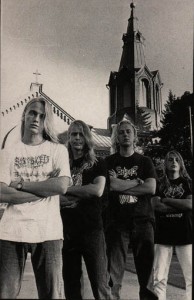
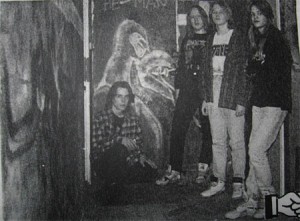
Among the first were the playful Death Metal / Grindcore crossover Xysma, the brutal Disgrace and the dreamier but less eloquent Funebre from the historic capital of Turku. In nearby Loimaa the discipline of Demigod and Adramelech formulated occult and mythological visions from these roots. The true monument of the early scene was created by Abhorrence from the modern capital of Helsinki, in their devastating demos that displayed the ferocity of old school black metal alongside articulate influences from British and Swedish Death Metal movements. Later the heritage of Abhorrence spawned into the more ‘professional’ folk influenced narratives of Amorphis des

pite the fact that the earlier band was far from amateurish itself. Besides Xysma, also bands from the wooded Birkaland county were heavily influenced by punk and thrash especially in anti-authoritarian spirit: Rippikoulu, Convulse, Purtenance and Lubricant. A counterpart were the quasi-Byronian melancholic poets of Ostrobothnia, heirs of the strict religious sects of the Bothnian coast: Sentenced, Cartilage and Wings. The same mystical traits combined with grindcore, Sarcofago and lots of booze in BeheritBelial (“Wisdom of Darkness”) and Impaled Nazarene, who composed the classics of Finnish Black Metal contemporaneously (not successively as in the world at large) to the Death Metal movement. The promising Necropsy from Lahti released a strong split album ‘Unholy Domain’ with Demigod but never managed to release a full-length album back in the day, while the cryptic and absolutely unique one album wonder Demilich from thrash capital Kuopio set the bar for Finnish ‘progressive’ Death Metal extremely high on ‘Nespithe’; only Unholy from Imatra or Paraxism from Jyväskylä (who did not release an album) could compete in sublime weirdness. Mordicus from North Karelia also left a legacy of one quality album, ‘Dances from Left’, while fellow Joensuu mystics Phlegethon only released demos and one EP before some of the same individuals surfaced in the Doomdeath tribute band Hooded Menace. The quest to bring back moments of old school Death Metal majesty brought about by later bands such as Devilry, Slugathor, Deathspawned Destroyer, Ascended and Lie in Ruins is discussed in more detail in our article “Ascension of Sepulchral Echoes: A Finnish Death Metal Revival”.

We are proud to present a sequence of tracks collected by Fenno-American Death Metal connoisseur Benjamin Tianen in tribute to Finland and its strain of artists and conjurers. This compilation of obscure quality Finnish Death Metal is recommended for listening in the twilit hours of day, preferably in rather uninhabited locations as most of Finland is. If there is one teaching one must bring home from Finnish artists and Finnish school of mental exploration, it is that one must not love happiness as much as one loves truth.

Corpophilia and Necrobiosis

Visitors remembers the Western shores of Finland mostly from their warm summer days, windstorms and chilly nights of Autumn. The dunes of the shore of Yyteriare unique in the whole Scandinavian region while most of the towns carry relics of past industries but have failed to establish themselves in modern or digital age, remaining secluded communities with little vital attractions to the youngsters. Thus it is not surprising that towns such as the historic Uusikaupunki, a weird silent nature-surrounded industrial port that has always baffled my spirit, gave birth to multiple demo level death metal insanities in the early 90′s.
Coprophilia described the twisted and tangled nature of woods, human remains and animal entrails on the four songs of their one and only demo, playing distinctive and intricate heavy metal influenced straightforward melodies to lend catchiness to songs that in their spontaneous clarity bring into focus the main influences for old Finnish death metal: heavy metal, Bay Area speed metal, horror music and UK bands in the vein of Napalm Death.

http://www.youtube.com/watch?v=OAqI9V0cUtY&feature=player_embedded

More sarcastic, irritant and grinding, Necrobiosis pummeled a simplistic punk-o-rama riffspace almost like Blasphemy or Archgoat would have done it except using the concluding expectancy common to dual vocal grindcore so that the grunts and screams echo exactly the phrases played by the rhythm guitar. Lead guitars often recall metal guitarists’ introductory practice pieces in the vein of Iron Maiden and Rainbow, as was the case with not only Coprophilia, but also AmorphisSentenced and many other greats. Curiously for a word I had never heard before, Necrobiosis was also picked as the band name around the same time by guys a couple of hundred kilometers away in Riihimäki. You might know this band better by a name they thought of later: Skepticism.

http://www.youtube.com/watch?v=-v_wYJOfJFM&feature=player_embedded

Necropsy

In an era when Finnish death metal was a freaky force of nature, punishing everything in its path, Necropsy from Lahti, Finland, was doomed to obscurity as many of their peers, the likes of Mordicus, Convulse, Funebre and Abhorrence. In five years (1989-1993) they created 7 demo tapes and appeared on one 7″EP and a split LP with Demigod on the infamous Seraphic Decay label. Thrashing and grinding, organic and brutalous death metal of this kind would freshen up the scene of today immensely and thus we welcome the rumours that Necropsy is staging a comeback in true old school spirit to show the weakened versions of Carcasses and Pestilences who still holds the true spirit of unholy death.

http://www.youtube.com/watch?v=RfxdKxkg-Ao&feature=player_embedded

Rippikoulu

What force in the inner core of man gives birth to death metal impulse? Is it fear, hatred, obstinence, passion, paranoia, vision or celebration of power? “Rippikoulu” is Finnish for “confirmation school”, which is an institution partaken by Finnish teenagers in order to be educated in the rituals and tenets of the Lutheran church. Celebrated usually in a camp away from the city and the participants’ homes, it ironically has a habit of devolving into a minor orgy of sin while the sole motivation of attendance for most is the hope of the meager sums of money elderly relatives usually bestow upon one, after the confirmation. When small town death metal cults produced their blasphemic demo output, it’s not far-fetched to say that it was this kind of absurd experiences with organized religion that led them to deny and spontaneously analyze the hypocritical, indoctrinating social customs that lead a child or a man to accept Christ for the sake of community and convenience, while at the same time materialistically mocking the values of the spiritual tradition.

Valkeakoski was another boring town even by Finnish standards which used to smell like feces because of the paper industry, an example of climate perfect for original death metal. At surface, the most notable characteristic of Rippikoulu was their use of Finnish language for invocation, which has often been abused but at the right hands and in the right mouth withholds the tremendous syllabic power feared by Nordic warriors since the Bronze Age, as recounted in Kalevalan mythos. The stupendous music of Rippikoulu’s two demos, “Mutaation Aiheuttama Sisäinen Mätäneminen” (“internal rotting by mutation”) and “Musta Seremonia” (“black ceremony”), bridge the grindcore influenced ecstatic physicality of Xysma with earthen, suffocated sludge in contorted, space-and-time stretching rhythmic dynamicism reminiscent of Winter‘s and diSEMBOWELMENT‘s most psychedelic lapses. It gives the impression of a blind, tormented prophet shouting fragmented glimpses of pure vision to the darkened, apocalyptic world with barely any ears left to listen to human voice amidst the collapse of industrial infrastructure. In the slow, emotional leads one could hear Paradise Lost, but in its warlike sparseness and logic, even nihilism, it’s something closer to the most doomed moments of Bolt Thrower’s “War Master” while the almost ridiculously disembodied parody of gloomy gothic organ in “Musta Seremonia” brings to mind Unholy‘s drugged haze; Faustian sorrow and blasphemous sense of humor united in one single strangely reverent and innocent package which is without question another forgotten jewel of the olden Finnish death metal scene.

http://www.youtube.com/watch?v=Ik4oNGK9cBE&feature=player_embedded

1 Comment

Tags: , , , , , , ,

The Best Metal of 2011

I’ve just completed reading the 2011 “best of” lists from a number of popular websites. The results are predictably dismal. Are these people incompetent or just deaf?
(more…)

33 Comments

Tags: , , , , , , , , , , , , , , , , , , , , , , , , ,

Kam Lee explains selling out

From a notoriously fractious and insightful source, a rant that nails it — on Facebook, of all places:

It’s from “formula” in metal music that has either been the downfall or the up rise in the genre and among many of the bands. When bands set a distinct genre – and a set “formula” is established, once those bands begin the mix or change that formula, is when they take a risk of failing.

Sure some newer fans may take to the new formula – but those already established fans in the formula have a certain “taste” for what they prefer. Change the ‘taste’ – take the risk of having the already established fan base spitting it out after the first bite. Sure, some will attempt to stick around and nibble at the edges… attempting to find a similair taste and familiar feeling…

They will even attempt to make excuses, attempt to rationalize it, and even go as far as to use controversial behaviors or feelings in an attempt to explain in a rational or logical manner their intrepid points. They wish to avoid any true explanation of the utter disgust and disappointment they are truly feeling, and thus hide behind pitiful excuses and whitewashed ideals and values.

However, in my opinion – when a band decides to forsake the formula that works, and forsakes integrity in exchange to gain “a piece of bread” (make $money) – I personally do not feel my loyalty is any longer of importance to the band. They have already decided that my personal opinion is no longer valid, and that other fans too that may share the same or similair opinions are also no longer important as well.

Integrity and pride more so than often get’s washed away in favor of the notoriety and tempting promise of “fame and glory”.

[…]

As well… with “formula” when a new genre is attempted to be made – by changing an already established genre, and trying to “mix” in something new to that genre. It is NOT likely to be accepted by those fans who already – as I said above – have an established taste for what the genre already has been dishing out.

Perfect example: DEATH-CORE is NOT DEATH METAL!

And as I said above –
some newer fans may take to the new formula – they will even attempt to make excuses, attempt to rationalize it…

even go as far as to pretend to accept is as inevitable change.

Translating into cause->effect logic:

Formula means repeating what others did.

However, that “what others did” is an effect, not a cause.

The cause of what they did was the need to translate an idea/mood into music.

The effect was how they did it.

You can’t get the same effect by imitating their effect; instead, you must rediscover their cause.

But if your motive is fame/notoriety/kvltstatus/$$$ instead of “making art” (to translate that idea/mood into music), you will not understand that cause.

Metal is the spawn of early punk, progressive rock and horror film soundtracks — it’s more Anton Bruckner than Chuck Berry, more King Crimson than Blue Cheer, more Jethro Tull and Procul Harum than Led Zeppelin, and more Iggy Pop than The Beatles.

As a result, it takes integrity/authenticity seriously — it is music of the Idea, and by that I do not mean dogma or the reality-detached idea, but an enmeshment with reality.

Like Romantic literature, it is born of a time in crisis… it is mixed-blood, with some blood being the feel-good prole average (rock) and some being the rising above (ambitious music->art).

Romantic literature had both Shelley and Blake, after all. Wordsworth and Keats; Coleridge and Bram Stoker (later Romantic literature sort of diverged into Gothic lit).

What does it mean?

When metal loses its honest intent to create art, and to translate an idea/mood into music, it becomes window-dressing: pandering to the crowd for popularity points.

And then, it becomes the same callow manipulation we’re running away from, and that running away got us into metal.

Beware the rock-n-roll formula.

No Comments

Interview with Alan Moses and Brian Pattison of Glorious Times: A Pictorial of the Death Metal Scene (1984-1991)

Alan Moses (Butterface zine) and Brian Pattison (Chainsaw Abortions zine) are the death metal zine editors who compiled Glorious Times: A Pictorial of the Death Metal Scene (1984-1991). They also promote the A Day of Death series of concerts and have been active in the death metal underground up through the present day.

Glorious Times: A Pictorial of the Death Metal Scene (1984-1991) covers the formative years of the death metal underground in the words of its participants and as a result, is not a slick product designed to hype the drama of the scene but an in-depth exploration for those who care to exert themselves to learn.

We are fortunate to get a few moments of their time and to hear how Alan and Brian got into metal, ended up starting their zines, and almost two decades later resurrected it all with Glorious Times: A Pictorial of the Death Metal Scene (1984-1991).

When did the idea hit you for this book, and when did you think, “this might actually work”? I understand that both of you published paper zines, and that you Alan worked for Morbid Angel (gods among men) and that you Brian had a radio show and promoted live shows, including the infamous A Day of Death. Would you have undertaken this book without that background?

Brian: The idea came about in an off the cuff remark Alan made in an email to me in May or June of 2009. He mentioned having a photo album on his coffee table with old pics he had in a collection. I like that idea, then just thought it would be cool to have something like that in actual book form. In later discussions we agreed it would be even cooler to have stories from friends (the bands and ‘zines of the era) to go with the pics. I would say by possibly early Sept of 2009 we thought the book might sell some. We had begun getting emails from bands we didn’t contact ourselves and other people who had heard what we were doing and wanted a copy for themselves – originally we intended to print two copies, one for Alan and one for me and that was to be it. it’s hard to know if we would have done this without having the backgrounds we do. it would have been a lot tougher for sure. doing what we did back then made people remember us so it was easy to get stories from Chris Reifert, Kam Lee, Henry Veggian, etc.

Alan: I was probably a world more skeptical than Brian about it. After all it was an off the cuff statement I’d made in an email to him, a single email among I don’t know how many others. I forgot about the subject, but Brian went away and mulled it over for a while. He doesn’t just step into things blindly so he’d been thinking of all the hypotheticals before he came back to me with his thoughts of actually making a physical book, beyond just 2 overpriced copies via an online publisher, which was the original idea.

My mindset was way more cemented to the ideas about digitizing our combined audio tape and video collections, than any book concept, at first that is. When he came back to me with “oh I have been thinking about….” and went into details, I remember thinking “holy f%!k the guy’s gone nuts” haha but the more he argued the case (so to speak) the more I warmed to it.

It’s hard to say whether those things from our pasts played any part in it or not, I don’t know how much background the creators of any other books had in this music – so I have no idea what their drives are. In the past I’ve often been asking about doing a book of some kind – but laughed it off, or even if I may have entertained the idea for a couple minutes at best, my life was not the sort to support any such endeavour until recently.

Maybe our collective contacts proved helpful in doing this, but then again many old friends have ignored or turned down the chance to be a part of GT as well, and some times it seems to me that an unknown newbie off the street has better success these days of reaching OUR old cronies than we do, especially if they have tits and whorish looking myspace profile photos haha.

What advantages does a cut-and-paste or photocopied zine have over its electronic counterparts? What disadvantages? Are paper zines still relevant in the same way, now that we have blogs and mp3 trading to make life easier?

Brian: A big advantage is price. Making a ‘zine the old way you didn’t have to print thousands; you could just run off a few copies and assemble them yourself, sometimes as needed. Biggest disadvantage to me would be all your pics would be in the lack of color for cheaper copying. Paper ‘zines could still be relevant if people bought them. The paper ‘zines of our day were often put out by people who became fans of their local scene first, so those ‘zines were great ways to find out about bands that didn’t get national exposure.

Alan: Well, for a start, paper zines can be brought to the shit-house, so for most men, that’s the place they get to read in peace anyways hehe – if they have a family anyway.

They can be brought back out at leisure, wherever, and don’t dictate the need for all this extra technology or internet connections to read – especially in countries that have the system dictating how much bandwidth you can have and at what speeds you can use it, such as Australia and other third-world-internet-countries.

In many ways the print zine might be making a comeback, or seems to me to be making one, as people are beginning to leave the textureless internet and return to a more biological physical based enjoyment of all the trappings that come with this music. On the other hand though, as many print zines as I see flyers and adverts for – how many do they sell? Is it the same concept as when we made them, the concept being that we didn’t even care about sales, it was a labor of love and devotion.

The disadvantages of printing and postage costs and garnering physical mailing addresses as opposed to email are the main issues I guess, whereas today anyone can be a blogger and start a webzine or start trading mp3 with little to no background in this music. Contacts were hard to come by back in the day, and it was an investment to buy cassettes and establish a good stable of quality traders – it was based on hard work and faith, and that was evident from the list you had to offer trades from.

The bottom line is though that for the most part, only glossy magazines get the business and they cater to the borderline or fully blown corporate bands and their fans, that’s where the money is. That type of fan would snub their nose at a photocopied zine without a doubt – they only know glossy music and images, so there’s not much to be done on that front but leave them to it. To transcend the money issues on an underground level, ofcourse digital means greater speed and coverage – but we are sacrificing an entire facet of the experience in so doing.

Do you think mp3 trading is superior to tape trading? Does it help people find music, overwhelm them with too many options, or both?

Brian: HELL NO, mp3 trading is not superior to tape trading! For one thing you’re dealing in crap files, anyone who truly loves music would not listened to their stuff in a crapped down format like mp3. Tape trading was great, you’d get the stuff you requested and then usually a little bonus material as tape filler. In ’89 that bonus stuff could have been short demos (like Immolation’s ’89 demo) or live stuff or rehearsals of new bands like Mortician and Incantation who didn’t have demos. With mp3 downloads you just get the tracks you’re looking for. MP3 trading may make it faster to get stuff, but it has help destroy the scene. The personal touch and friendships that were made through tape trading just don’t exist in mp3 trading.

Alan: No, I don’t think it’s superior per se, not for the most part.

The exclusiveness is totally gone now. Grandma can plug her dentures into any USB port and now obtain live audio which was reserved on trader lists as “not for trade” like the old Genocide recordings (pre-Repulsion) were and is instantly metamorphosed into an old school Genocide fan. Now that exclusiveness has been sacrificed, yes, it certainly does immeasurably help people find bands they really like, whatever the style is. I wouldn’t have found totally kick ass bands like Punch or Question otherwise (both amazing hardcore punk bands) – stumbling into a blog lead me to “try” them out, like you would that unknown band on a trader list, or put on a trade at the end to fill the blank tape and see if the recipient liked it or not – that’s the same concept, so it does works.

It’s only when they start mass messaging you to “vote” for them to become the next reality-concepted band and “win” a Myspace or whatever label contract that it gets abnormal. Conversely – from a corporate mentality you want to market what the plebs want to hear, so you want that newest Kelly Clarkson or Mr. Hanky band brought to the table, by the very plebs you want to fleece with it anyways.

Then we get to the whole push-pull thing, and face the issues of whole albums being ripped and copyright and the rest of it.

It has the capacity for both effects though, no matter what, and the serious adventurer into this music better be prepared by wearing a shit proof suit – because they are going to swim in shit before they find the gems.

What kind of audience does old school death metal and Glorious Times have, and how many of them are carryovers from the original days?

Brian: Old school death metal seems to be regaining favor, thankfully. As a guesstimate I would say roughly 1/3 of the people who bought our first printing were people from the old days. Our sales pretty much ran the full spectrum of fans, we sold to a few in their early teens and a few that were over 50 yrs old.

Alan: We have people from our era and younger, although the younger are far less represented. Mainly, we gather, because we haven’t had any corporate mechanism behind us to promote things – only the really attentive youngsters caught on so far, because we are out of their more cashcow oriented world at this time. Unless you really use myspace ALOT or saw a quick blurb at Blabbermouth one time, we would have missed GT pretty much, that’s because we had no money to promote and people are guarded about what they throw their money at.

If we had Shane Embury ‘endorse’ the book, haha, we would have been picked up by most of the publishers of metal oriented books probably before the thing was even out of the draft stage haha.

Musically speaking, there’s so much more folks drifting back to the old bands and the old feel of things, since they’ve got a bit wise to the genericisms of the music today. Don’t get me wrong, some of the bands coming out with stuff these days are phenomenal (cough Malignant Tumour cough Master cough) – but we see letters every single day from a vast array of age ranges wanting a return to the Glorious Times, and there is an undercurrent of feeling disatisfied with what the state of affairs has become.

No matter what, death metal fans have always been really die hard. I think most people realize that there’s more dedication in general, compared to other music styles. Hardcore and the derivatives is the same ofcourse. They might have dropped out of sight due to life’s circumstances, or come back and become more active, and the old classics are still classics to them. Some may continue to venture forth to try to find good bands from the newer generation, which is what Brian and I do (although we are both as into hardcore as well as other extreme music, not just death). But we are not so sure the new young bloods adopt a similar philosophy because the whole shebang is different for them. They have ease of access but the exclusiveness is tainted by their having been spoiled by the technology.

We rest well, in the knowledge that so many old hands at this have stated publicly that GT is something no true death metal fan should be without, and so far only the hardest core have it. We have yet to be able to change that, and give other people, with as keen an interest, a chance to check it out. Most of GT’s appreciation base understands the importance of hearing the individual memories from the very people who lived them rather from a stale 3rd party who either wasn’t really active back then, or was simply too young or not even born. I am the sort of person that would rather read an autobiography than a biography, and GT fans respond to the concept really well, they are whom we made this book more available for anyways. Nobody else.

What’s the difference between then and now in terms of what fans expect, how bands act, and what people expect from the music?

Brian: Most fans today expect everything for free. They won’t spend $3 to buy a band’s demo because someone else will and that person will upload it to a blog. Bands act differently, some just stay backstage and don’t mingle with the fans forgetting that they are nothing without the fans and that they too were once just fans. Some bands don’t though, Alex Webster (Cannibal Corpse) still goes out and mingles with the crowd and will talk to anyone. Nowadays with the rise of digital recording people expect every recording to be of great quality, which is a shame. There’s some special about getting a rehearsal tape or poorly recorded demo, you know the band is in it for the music/for the fans, not to try to get signed and make money.

Alan: I can think of a few major household names today, from the old days, whom have made a 360 degree turn around from their former mindsets, and have totally turned their backs on their old fan bases, in favour of the adorations of a generation raised on rock star worship again – like the thing got killed by the underground and has been brought back in some sort of grandiose version of itself. Similarly, others from the same fold are still as grass roots as ever in their mindset and haven’t been poisioned. Then there’s some that are just as indifferent to their fans as they were then, and have atleast remained consistent on that level.

The fans I think, have made a major political shift – because the bands are more accessible to them, yet the rock star worship has been elevated – you’d think that would be the other way around? It wasn’t like that before, there was more of an even playing ground between a band and the fans usually.

I guess that is a symptomology of having years and years of success that eventually there is another generation born that sees things with a different set of eyes, with different value systems. Entertainment-wise anyways.

Do you have any insight as to the relative importance of fanzines in different parts of the world, if any? Who were/are your favorite foreign correspondences?

Brian: Fanzines back in the day were hugely important. those were the early years of death metal so it didn’t get coverage in the glossy music mags. If you wanted to read an interview with Immolation, Prime Evil, Insanity, Nokturnel, etc you had to find it in a ‘zine. You didn’t just want ‘zines from your area or your country either, you wanted them from all over so you can discover new bands, remember it was before the internet and myspace so to discover a band like Death Courier from Greece you had to either read about them in a ‘zine or happen to get a flyer of them from a tape trader. now of course my favorite correspondence is Alan, back then it was probably Walter Garau (Ass Ache) from Italy.

Alan: Certain zines were vitally important. Blackthorn from Denmark, Uniforce, Total Thrash etc from the USA, Decibels Of Death and Ultimate Speedcore Dislocation from France, and the legions of zines from South America were vital in exposing bands from everywhere yet still had enough from their own countries to be interesting – well there were an abundance of interesting bands though back then too. I had penpals in so many countries and it was always magnificent to hear from them all, I used to hear from most of the editors from the zines above, and traded with a number of them directly – and they are just the tip of the iceberg. My favourite correspondences would have been Lars Sorbekk (Vomit (Norway)) and Trey back then, but that’s a bit unfair because I truly reveled in hearing from EVERYONE. It’s the same today really, but Brian is the doss because we are doing so much together there’s usually something exciting or frustrating or whatever every single day.

Did you expect the exposure to bands you received when starting your respective zines?

Brian: When I started my ‘zine I just wanted to expose local bands to people elsewhere and have something of my own to put out to give me access to bands from other areas to interview and to expose to my locality. In the end my ‘zine did much more than that for me, it created life long friendships.

Alan: Yes I did, because most of the contacts were already made well before I started Buttface. Things were really taking off in 89 and 90 but by 1990 everything was put on hold because I relocated to the US and Buttface was never kept alive either there or in Australia by my co-editor Stuart Maitland. It’s been funny explaining to 3 kids why people still call their Dad ‘Buttface’ haha

You’re planning on mailing a live CD with bands playing the A Day of Death festival to people who pre-ordered the book. Can you tell us more about this CD, what it sounds like, and what these performances will reveal to those who hear them now, especially fans who weren’t there for the original underground?

Brian: We had several ideas for CD companions to the first pressing of the book, all of which fell through because we were never able to get material from the bands. we did the A Day of Death download to go with the blog, not every band from the show, but a solid five. We were provided DVDs that John Verica recorded that day, since he only recorded some bands that’s all we had to work with. If we had every band it would have made one hell of a CD. Fans who weren’t there could have expected to hear bands that became legends playing in their infancy.

In other interviews, you’ve mentioned the negative presence of corporate labels, of glossy magazines and hype machines — in short, the nasty end of consumerism as it turns music into a product. Do you think it’s harder for bands to be authentic, sincere or legitimate when they go corporate? With people raised on corporate rock and slick radio pop, is there an “awakening” process as they leave behind that world? Do you think corporations will simply buy out the anti-corporate movements and make them “niche” markets?

Brian: The big labels have always done that. They find a fad, latch onto it then just kill it. In their view if one Entombed is great then 30 is even better. If one band makes it big after using Scott Burns as a producer then every band starts using him. It all became a big machine, bands getting signed that should not have been. Lots of cheese being passed off as the latest greatest when they were just shabby clones of the original. Some people are just sheep and don’t want to be awakened to what is out there; they’re perfectly happy being told what they should like. It’s hard for some bands to stay sincere after signing with a big corporate label because of a few things…they feel the pressure to sell more, they start writing stuff in studio instead of in rehearsals, they have people (A&R guys) to answer too, etc.

Alan: Definitely, if they were sincere at all to begin with, which really 99.9% of the founding fathers WERE. There’s definately an awakening process to be had, if the person has the right mental dexterity to unlock it though, alot of people simply don’t possess it and have to be told what to listen to or how to think on every single issue, it’s the nature of the sheep that must be herded. There’s a small percentage that slip through the gaps and they tend to crave more direct expression and more enthusiastic music – like extreme metal or punk. While I don’t think corporations could buy what the youngin’s call “d-beat” now days and have grandma shopping in a Besthoven shirt like she does a Slipknot or Morbid Angel shirt today – anything is possible, and with the correct conditioning and the appropraite funding they could possibly do it – let’s face it – they can convince people to buy and eat a s%!t sandwhich if they put their minds to it.

One of the topics bands seemed to mention in the book, but only directly, was the rarity of these glorious days you describe. After all, death metal was then like a young child growing up, and now it’s a well-known and accepted adult, so it can never be “re-discovered” in the rise from obscurity like it once was. Were those glorious days singular and limited to that time, or will they happen again?

Brian: You can get something similar to those days, but it can never be the exact same. It can never revert to being as fresh and uncontaminated as it was. It was a singularity: 1984 was the big bang with the next few years of dramatic growth being the formation of the heavier elements and then the years up to 1991 would be the planets forming and so on. Late 1991 and into 1992 would be the birth of man and as he did with the planet man ruined a good thing.

Alan: There’s no returning, and that’s not what we call for either. We’d simply like to see a recognition of the era, no different than all the weenies running about and calling this “classic rock” today. Personally I am gun shy of all the bands that the glossies really push and have been anyways – they spat at Morbid Angel back in the early days, but now stop short of getting on their knees infront of Trey’s pants. Makes me sick.

Alan, you talk about leaving the mainstream as a gradual process, like a seduction. What is it like to live with a mainstream consciousness, and how does your outlook on the world change when you go underground? Is mainstream music different in consciousness, spirit or idea, and is that what makes it “sound” different and have different effects on us than underground metal?

Alan: I don’t think mainstream music as such is the same since it’s created with an alien mindset to begin with. Music created by a bunch of kids today – or 30 somethings even – that is written with, how do they state it in their bios? “looking for a recording contract and world wide touring support” – that is laughable. What’s worse is that the label’s consciousness has infected them into thinking they are even remotely good enough to create such music. It’s feeling, and you have to wade through alot of junk to get anything of substance. The process of leaving the mainstream is usually gradual I think, or else it’s jumping on another band wagon. As much as “sound” is importan t I think it’s feeling that’s as important – music of any kind without feeling is piece work, and shallow and therefore mainstream.

Is death metal music different in consciousness/spirit/idea, so that when different people hit on that same idea, they make music that sounds similar, even if they haven’t heard each other? Did that happen in the underground (parallel evolution)? Do you think people have to be ready for metal before they find metal, or vice-versa?

Alan: There was definitely evolution and hybriding – out of respect and pure influence, like the infamous Scot Carlson bass on Shane or the Kam Lee wipeout on Barn to name 2 influences. It was pure though and not a contrived means to cash in, like viewing a cupped vocalist in a photo today and knowing that 99.9% of it will be Suffocation’s 2nd generation music, clone based upon a band’s success 20 years after they made a ripple in the waters. They definitely need to be craving something on a deeper unconscious level I think – much of what we enjoy appeals to the baser instincts, and those lay in the Id. On the other hand so many of the bands, whilst being into whomever they were really into, still evolved to their own standards and were not clones at all. So there was evolution but being paralleled can be argued I guess. Perhaps we can say no to that statement since nothing is equal or the same in nature, evolution embraces difference not similarity and clones are not evolved, they are premeditatedly produced.

You’re planning to re-release Glorious Times in a wider fashion. When’s this going to happen, and are we going to see it in bookstores across the world? Why did you decide to release it in a limited fashion first?

Brian: We don’t have a set date yet. I’m getting a new publishing program and we’re redoing every layout, changing some pics, adding some bands to improve the book. We’d love to see it in book stores, but given it will still be just 2 guys doing it that’s not likely. We will print more this time so people will find it at places like Century Media and other metal distros. The first pressing was so limited because it had to be. We had $0 starting balance and to get it printed at all we had to take pre-print orders and the money from those orders paid for us to print books for those orders. So, we had roughly 150 pre-print orders and that gave us the funds to print 153 books. This time it will be much different, no pre-print ordering, wewon’t make the books available for sale until we have them. Now we just have to raise the cash to reprint it.

Alan: Brian has hit this on the head and there’s little I can say to complement it other than indeed, it was limited out of sheer having to be since we had no money and we were turned down by every single publisher. Period. We’ve heard every rejection reason in the book now. We owe everything to our contributors and supporters – without them, there would have been 2 books nobody saw but me and Brian. I personally do not forsee any reprint in the near future.

I remember this being something talked about a lot: how musically literate were the early bands?

Alan: Most bands were self taught. That’s a fact. Self taught and on a learning mission. They pulled it off though, you can have some kid sent through private music school for 10 years and grows his hair out, buys a trendy t-shirt from Hot Topic and they still produce garbage.

Brian, A day of Death was in my view the ideal death metal concert; how did you get up the gumption to organize it, and death with the business side of things, and get the bands to agree? Do people ever contact you who were there?

Brian: First I have to say, my old friend from those days almost always gets overlooked for this and he should definitely get his credit – Joe Pristach (Mosh Central ‘zine). It didn’t take much gumption at all, remember at that time most of those bands were still just demo bands. The idea Joe and I had was just to get a show of out of town bands that we wanted to see and that we were for the most part friends with. I didn’t deal with the business end, the club did that. Joe and I just handled the promotions side of it. Getting the bands to agree was no problem at all, any band of the day would have killed to play with Autopsy on the east coast. I don’t get people contacting me out of the blue about that, but once they find out I did Chainsaw Abortions ‘zine and hand a hand in the show they ask a few questions or make a few comments.

One of the big fears I have, as a death metal freak, is that the record of our glorious times will perish. CDs are going out of print, and memorabilia and documents fade and disappear into attics or worse, dumpsters. Is there any way to keep the spirit alive?

Brian: The old spirit is still alive, it’s just on a much smaller scale. bands like Fondlecorpse, Swamp, Druid Lord and some others still do things in the old school ways. There are still a few ‘zines that do things like the old days – Deathrasher ‘zine as one example. It would be great if there was a sort of museum or storage facility where people could send their pics and flyers and memorabilia that they no longer wanted, that way it would be preserved for future generations – people could donate or lend materials to it (a sort of death metal smithsonian) then everything document could be scanned to a high resolution and saved to multiple discs, then as if it also acted as a library people could do research there or ask about things in the catalog.

Alan: Brian has hit this too – and all I can say is GT stands amongst the real few striving for rememberance the way we feel it should be, not just a few pages in a magazine as a result of us doing the book.

Brian, you say you haven’t heard any bands that grab you the way those 1980s bands did — is that because they have a different consciousness/spirit/idea? What about the late 1980s and early 1990s made that consciousness or idea so clear for these bands? Was it something random, or were they responding to the time around them? Do you think this spirit will rise again?

Brian: What made those times special was the music was new. Each area, each band providing a new take on extreme music. The 1st and 2nd generation death metal bands had different influences than the bands of today. todays bands are influenced by death metal, but of course the original bands weren’t influenced by that because it didn’t exist before them. I don’t know if i’d say it was clear for the bands of the late 1980’s and early 1990’s, they just all wanted to go heavier or faster or slower than their idols.

The spirit is still there; it’s the scene that’s gone. The internet has made some things easier and perhaps better, but it has also done a lot of damage. Almost all of the personal relationships that happened back in the day don’t happen now. Kids today will visit a myspace page and download songs so they don’t get to build relationships with bands like we did way back before the internet. I still have letters from bands from back then, will kids today save their emails and myspace messages to look back upon in 20 years — I don’t think so.

Do I think things will become as great as they were? With all honesty, I would say no. Is it possible, sure, but it requires a lot. The bigger bands have to stop doing 4 and 5 band package tours and go back to doing 1 and 2 band tours, leaving room for local openers at every show. Bands have to stop making their stuff available for download for free and either just release CDs or charge for the download (made available in flac and empty3), they have to wean fans off of expecting free stuff.

The free stuff should be a bonus, not a given. People have to start realizing that supporting a band doesn’t mean just friending them on myspace or hitting the “like” button on facebook, you need to buy their demos, shirts and other merch, you need to go and support your local scene, not just when the nationals come through.

1 Comment

Tags: , , , , , ,

Classic reviews:
A B C D E F G H I J K L M N O P Q R S T U V W X Y Z