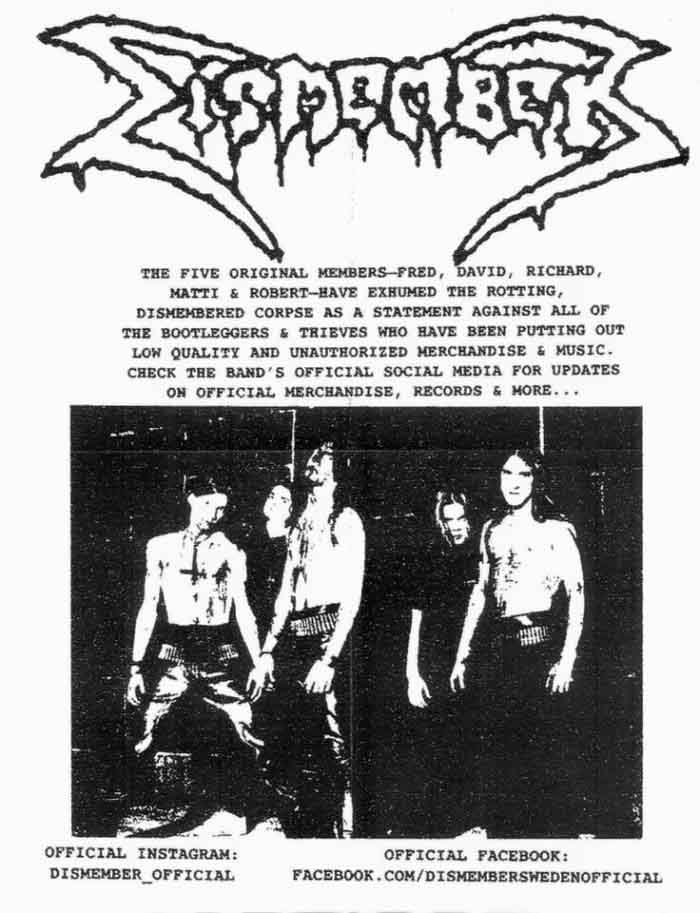
Dismember have started their own imprint, Sickening Arts.
7 CommentsTags: carnage, death metal, Dismember, news, Sickening Arts, Swedeath, Sweden, Swedish Death Metal
Dismember have started their own imprint, Sickening Arts.
7 CommentsTags: carnage, death metal, Dismember, news, Sickening Arts, Swedeath, Sweden, Swedish Death Metal
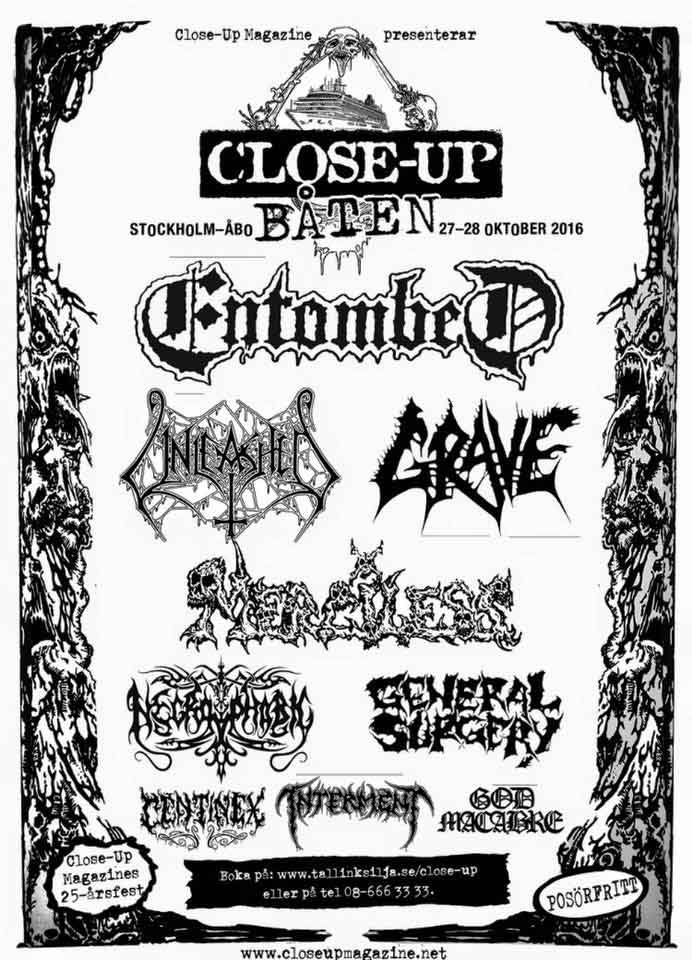
Close-Up Magazine is putting a mind-blowing group of Swedish death metal bands on a ferry cruise.
5 CommentsTags: Black Metal, Centinex, death metal, entombed, festivals, General Surgery, god macabre, grave, interment, Left Hand Path, merciless, necrophobic, news, Speed Metal, Swedeath, Sweden, Swedish Black Metal, Swedish Death Metal, Unleashed
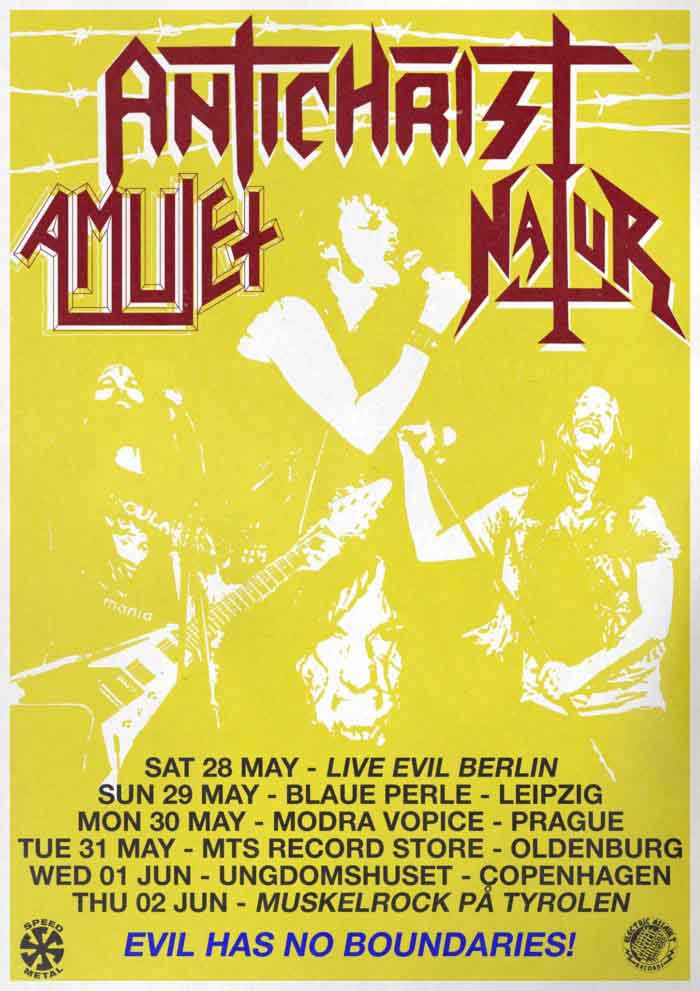
Swedish speed metal band Antichrist is embarking a small European tour inbetween some festival dates they are playing this summer.
No CommentsTags: Antichrist, news, Speed Metal, Sweden, tour dates, upcoming tours
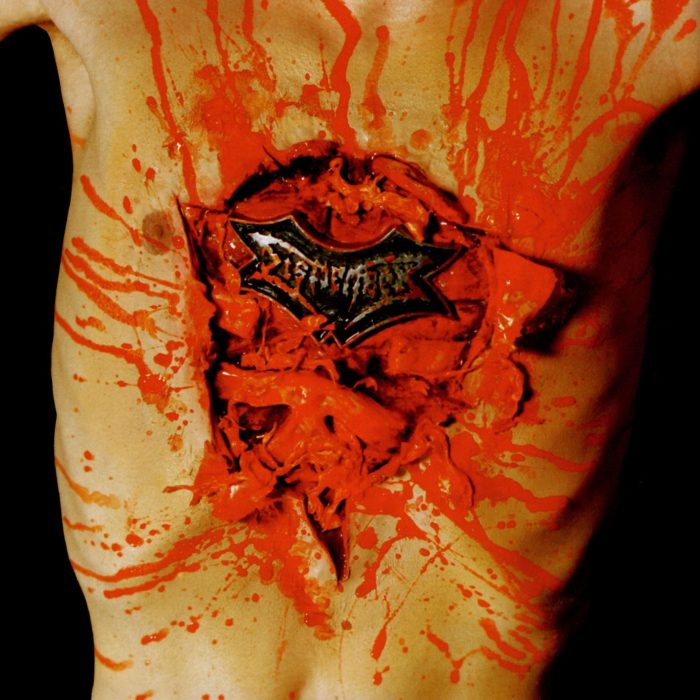
Almost all metal bands eventually run out of ideas and revert to imitating their influences or repeating themselves. The former usually results in songs that are Frankenstein’s monster mashups of old ideas hoping to hop across the finish line without their sutures bursting leading to loss of limbs. The latter have no raison d’être beyond releasing the expected new record every eighteen months or so to put a product on the shelves that the label can push and the band can tour to support on a James Bond series type release schedule. Even a teenager saying “I want to kill everyone, drink beer, masturbate, and be as fucking metal as possible” shows more purpose than such aimlessness.
Indecent and Obscene was Dismember proving that in 1993 they had became at least as proficient musicians as their seventies and eighties idols. Dave Blomqvist took over the leader guitar duties from Nicke Andersson and added Mercyful Fate-like sweep-picked leads to the bluesy, Ritchie Blackmore-influenced solos. The songs continued in the vein of filthy Pieces EP with verse chorus verse bashers. The problem was they were slowed down, less distorted, and more lazily constructed: Beneath the Remains Sepultura minus a standard deviation or two in IQ. Every time Dismember play an interesting riff on this album, they allow it to wear out its welcome through repetition in brain-dead pop song structures. That is only when they have a good, counterpointed Carnage/Dismember riff. Most of the rhythm riffs are generic Autopsy riffs; riffs Autopsy stole from Celtic Frost, who stole it from Metallica, who stole it from some NWOBHM band who took it from AC/DC or The Stooges. These riffs were used just so Dismember could construct a basic d-beat song and sweep pick Guitar World readers’ faces off.
Matti Karki sounded just as rabid as ever but in every song sprouted off the title of the song in the chorus of the song as a vocal hook. This is the same as an awful Hollywood action film script containing dialogue saying the name of the movie in the movie, eg: “This is Con Air!” or “You Only Live Twice Mr. Bond!” Idiotic bridges kill off any tension too. “Why don’t you just kill yourself?” followed by breakdown of the main rhythm riff so all the hardcore kids for whom Suffocation was too heavy could slamdance before the air guitarable solo.
Dismember on Indecent and Obscene was Nuclear-Blasted into Cannibal Corpse before Nuclear Blast mandated all their bands sellout into death/black ‘n’ roll for the Bic-flicking festival crowd. While superior to most of the later work out of Sweden, Indecent and Obscene never approaches the transcendent Dark Recollections and Like an Ever Flowing Stream. The only praiseworthy aspects beyond the superficial icing are Fred Estby’s creative tom fills on songs such as “Sorrowfilled”. His underrated percussion is the only part building and resolving tension in these mediocre songs. That’s simply not enough to hold hessian attention. Decent material must still be composed and Dismember didn’t bother writing any worthy of repeated listening here.
14 Comments
Tags: 1993, beer metal, David Blomqvist, death 'n' roll, death metal, Dismember, Fred Estby, Matti Karki, nuclear blast records, pop metal, review, Speed Metal, Swedeath, Sweden, Swedish Death Metal
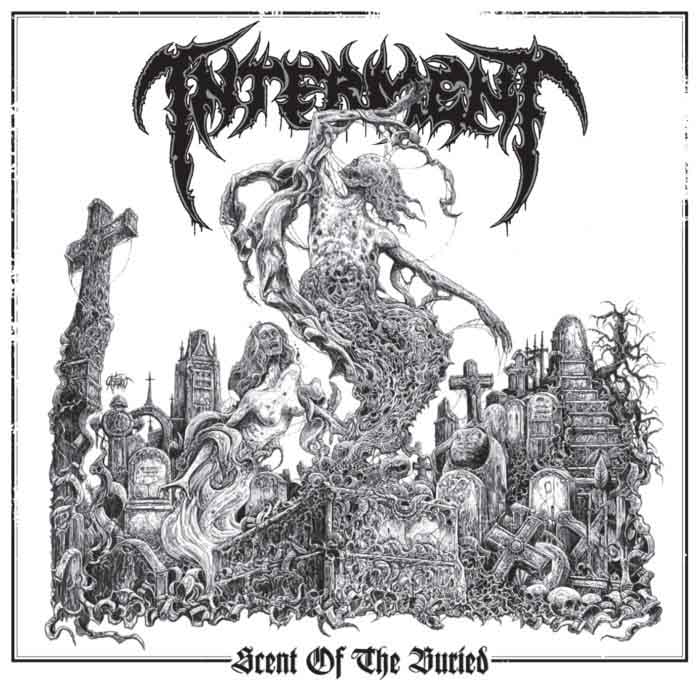
Article by David Rosales.
We tend to be skeptical when receiving a promo of a retro Swedeath band given the history of the style, but we can’t help but feel a vague and healthy excitement for the raw feeling this improved grindy sound can offer when done well. Despite the long history of shams, Dismember and Entombed followers receive an enthusiastic and welcoming reception here every time. This is also, perhaps, the reason why they also get beaten down with the most derisive of tones when found ‘guilty’.
Interment‘s Scent of the Buried is one of the best cases of the usually-unfortunate retro Swedeath we have seen in the last few years. While much praise is due, it is also interesting to try and understand when and how blatant such style appropriations fall short of the excellence of the originals. The band does a very good job at creating a flowing narrative in the style of Entombed, taking the best from the older band and approaching Dismember’s power chord and tremolo melodies in low tones while discarding the most overt poppisms of the first. After the first half of the album, the B-ness (the quality of being a B-grade album) of Interment’s release becomes obvious, after which it is easy to see that the band ran out of things to say.
While for some this has to do with style itself, and a superficial appreciation of music leads some to want stylistic variety, this is not what is meant here when pointing out the bands shortage of meaningful content. It has to do with a narrowness in the variety of patterns in melodies and riffs, not stylistic divergence itself. This is something that does not happen in the seminal works of Entombed and Dismember, whose style is natural-born from themselves, hence their whole effort is bent on trying to say something. In the case of stylistic followers and clones, which encompass the likes of Interment, there is a conscious will towards adhering to the stylistic conventions those older bands laid out.
This is much more confining and goes beyond genre style; these b-bands are not trying to reflect abstract ideas but the most superficial traits of the music. Hence, Scent of the Buried has enough excellent material for a 3-track EP, but not a full album. Despite the technical re-production of this vintage style being a success1, Interment doesn’t have much more to offer other than a passing pleasure for those who enjoy the hell out of the Swedeath sound.
Scent of the Buried may be listened to and purchased from Pulverized Records’ Bandcamp.
The CD may also be purchased in the US from Dark Descent Records.
1Scent of the Buried was actually recorded by Tomas Skogsberg at his legendary Sunlight Studio were most of the Swedish bands recorded back in the early nineties. – Editor
2 CommentsTags: 2016, dark descent, dark descent records, death metal, interment, Pulverized Records, review, Sunlight Studio, Swedeath, Sweden, Swedish Death Metal, tomas skogsberg
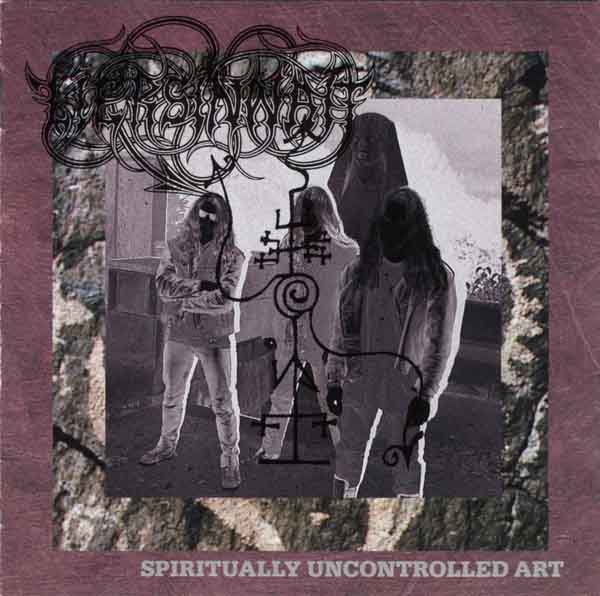
Article by Lance Viggiano
Liers In Wait cast chains of non-random riffs in the legato style of metal pioneered by Morbid Angel to no effective artistic purpose. Spiritually Uncontrolled Art comprised of rationally woven re-contextualization of familiar death metal patterns which never manage to take on a distinct character as individual tracks. The album as a whole doesn’t begin to approach a definable emotive personality because the subject of this work is the personality of the composer: a master of phrasing with an encyclopedic knowledge of metal so adept in his craft that self-editing would diminish the efficacy of his work. These streams of coherent yet cold consciousness are hewn to Necrolord’s own sense of bravado; made concrete by a vocal delivery that proffers dominance rather than dread.
This is neither music for music’s sake nor music for the sake of expressing a transcendental idea. It is entirely about the composer’s ability to write coherent music out of the first thing that comes to mind – a mind that is very much a wellspring. In some ways this album is analogous to Eighties shred which existed as a pure demonstration of superiority over its contemporaries by parasitizing familiar content that was then latticed to the listener through overly sentimental melodic hooks. Antithetically, Necrolord eschews hooks entirely as they would constitute breaks and disruptions in the stream by deploying recognizable moments and thereby give the impression of emphasizing the better material, and consequently highlighting the lesser ideas of which there are none to be found. Conceptually this seizes the middle ground between tuneless noise and the summa cum laude of ten-mile-long cock rock.
Lasting impressions, significance and meaning is for the sensitive feminine types, not the fucking overlord. In this sense, Liers in Wait is a resounding success. Those lamenting the fact that this music does not “Do something” gravely miss its point.
24 CommentsTags: 1992, cock rock, death metal, grotesque, Liers in Wait, morbid angel, necrolord, review, Sweden, Technical Death Metal
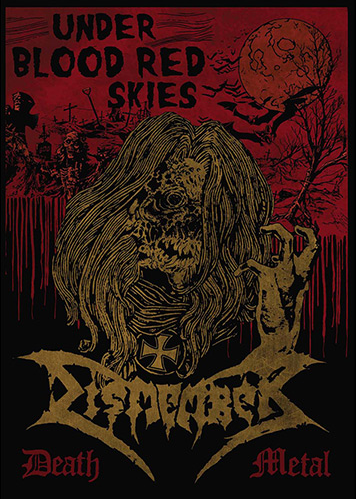
Review by Daniel Maarat
This DVD set of two filmed concerts and a documentary was the final release from “death metal legends and fucking idiots” Dismember. The sound quality and performances of the concerts are adequate, but fans will be disappointed that they aren’t from the prime period of the band in the early nineties; both were filmed after the departure of drummer, primary songwriter, and producer Fred Estby before the final, lukewarm album. Not entirely filling in his shoes was Thomas Daun of Repugnant and Ghost. Shitting in his shoes. I only made it all the way through both concerts and resisted the temptation to play Dark Recollections with the help of a six pack of Coors Banquet. More interesting is the included documentary, Death Metal and More Mental Illness. This also lacks contribution from Estby except for some footage from the 2006 Masters of Death tour with Grave, Entombed, and Unleashed. The performance of “Pieces” is better than the two included shows. The interviews with the Best Voice in Death Metal* Matti Karki and lead guitarist Dave Blomqvist provide good information for die hard fans.
Blomqvist says that Dismember never cheated with quantization, cut and paste digital trickery, or drum triggers while playing live. Live, they constantly had to stomp on the dimed Boss Heavy Metal 2 pedals at the end of guitar parts to prevent their ridiculous tone from frequency masking everything else. The only time they turned down the distortion was on their Nuclear Blast mandated sellout as death metal “was not in anymore” album, Massive Killing Capacity, which they admitted “sounds like shit.” Otherwise, Dismember never followed trends and kept true to their Autopsy, Sepultura, Repulsion, Morbid Angel, and Iron Maiden influences; Mental Funeral was their “riff bible.”
Karki reveals that most of his lyrics were written at the last minute; his vocals are from higher in the vocal registry than traditional Cookie Monster death growl, almost a harsher hardcore punk bark. Performing them in the studio “killed and devastated” him. We feel his pain through the presented footage of an overweight Swedish man in his underwear.
The drunken goofiness that satiated Dismember’s touring bleeds: A dozen minutes of the band headbanging, set lists written on bare backs, Swedish imitations American, and British accents. The film climaxes with a hen on the side of the road. Recommended for boredom.
*https://www.deathmetal.org/news/new-york-times-on-the-best-voices-in-heavy-metal/
No CommentsTags: 2009, death metal, Dismember, documentary, dvd, live shows, Sweden, Swedish Death Metal, under blood red skies
I. A brief introduction
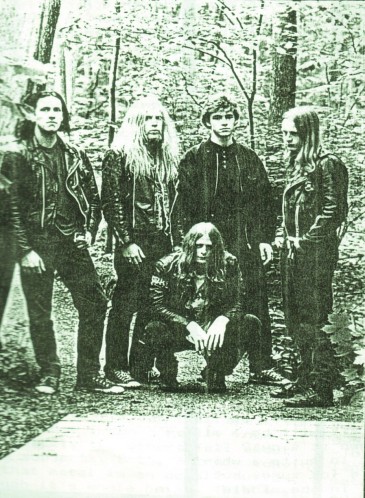
In 1992, At the Gates released their first full-length album after an earth-shaking demo of unprecedented refinement in composition. The full-length, titled The Red in the Sky is Ours, was to become not only the band’s magnum opus but also the greatest achievement of Scandinavian death metal then and since then. Hidden under distinct layers of complexity, ideas at different levels flourish, diverge and converge in ways that are not always easy to follow, throwing the less-than-adamant and less perceptive listener off at every turn and twist of the way. This is not a spurious claim but an observation based on deep acquaintance with the composition of the music in this album as it stands in contrast with the groove-banality of most Swedeath, including favorites of the populace like Entombed Left Hand Path.
According to Anders Björler, this early output was almost entirely arranged by the much aged (about 6 years older than the rest of the band members) founding member Alf Svensson, who painstakingly controlled the process even in the vocal department. To be fair, this debut album is definitely the result of the best talents of all the participating musicians directed in a very concentrated direction by a mastermind. In fact, a distinct At the Gates’ “sound” in this era comes from Tompa’s unique style and the exchange between the quirkiness of Svensson’s style and the melodic clarity and repose of Björler’s, without failing to mention the flexible, stellar and extremely appropriate tailor-made drum arrangements of Erlandsson. Among the often-commented and curious ways Svensson had of getting ideas for At the Gates’ music was playing folk music tapes backwards. The whispers, screeches and screams of the vocals were also carefully gauged by this guy who even pitched certain passages — a very uncommon practice in death metal.
Given the strange appearance and convoluted (almost perverted) character of the music that confirm the topic of insanity and inner journeys discussed in the lyrics, it has been overlooked in the same way that even the great genius of J.S. Bach may be deemed “no more than a composer with a penchant for writing minor-key melodies” by the blind and the ignorant. This complexity extends from technique to progressive structures all the way to motif and idea.
https://www.youtube.com/watch?v=Q8wvKcZp6NM
Lyrically, The Red in the Sky is Ours is very poetic, describing scenes and mixing these visions with colored allusions and evocation of feelings, creating a land between the image and the emotion where the two come together and mix, blend and crystallize into one or the other at a different points. This mystic poetry is not only present in the words of the album but is reflected and paralleled in the music. The concept here is strongly integrated and reinforced at several levels that remain elusive enough to create a sense of mystery yet concrete enough to be identified without a shadow of doubt.
The mention of the use of a violin in the album is in order but should not be overemphasized as gimmick-oriented audiences have often highlighted it as if it were the defining or most interesting thing going on here. The violin is appropriately used and adds a very eerie aura through its intensified fretless access to microtones which make the semitone emphasis and augmented intervals sound even more off than they sound on the distorted electric guitar. One can still detect an amateur performance at some level on the instrument, but it is not that notes were missed or that wrong notes were played, and more of a lack of finesse in performance.
II. Apparent influences
At the Gates was formed out of the ashes of Grotesque, a melodic-motif-based, riff-salad-propelled progressive death metal band. The creative and savage impulse of the younger band remains in At the Gates, but filtered through a matured and controlled thought process under the guiding hand of a visionary metal composer. In my opinion, the single greatest metal influence on the band were the Americans from Atheist, whose shadow looms over the fully-formed style of At the Gates in The Red in the Sky is Ours.
Atheist’s trademark is found in its jazz-inspired rhythmic playfulness, ever throwing the audience off balance through ploys in the music that never allow one to feel too at home, always carrying the imagination forth in river rapids that form part of a distinctive greater whole that flows in one direction. As good metal, it is composed and not improvised (though improvisation definitely always plays a role in any composition process, to one degree or another). The stability-instability interplay from section to section follows the Gang‘s and Satz‘s described by A.B. Marx conceptually and through examples of Beethoven piano sonatas.
What At the Gates The Red in the Sky is Ours took from Atheist was an informed fearlessness in the face of convention that did not destroy the music for the sake of innovation but introduced all sorts of pauses, tempo and time signature changes as well as other creative rhythmic gestures within a homogeneous framework that maintained a clear language that conspired to a strong concept rather than indulging any of the musicians. But the younger band took this further and deeper than veterans even in their masterpiece Unquestionable Presence, creating much more powerful and meaningful gestures by making them varied yet subservient to a layered concept.
III. Creating a language
Usually, one relates a band with a style. This style implies the use of not only certain instrumentation but also musical tropes that the audience can expect. A good reason for a band to adopt a particular style (rather than going rogue and define parameters completely on their own) is intelligibility. Unfortunately, more often than not this is not the reason why bands do this, but rather because they are not gifted in music creation and thus only choose a style as a suit to wear and not as what it actually is: a language to speak.
When it comes to this band’s early works, the first step in understanding just what exactly this style they chose is requires an acknowledging of the fact that At the Gates created a dialect of their own from the firm bases of contemporary underground metal at the time. This consisted in abandoning as much as possible stylistic tendencies in structure or composition and reducing their relation to death metal to rudimentary technique aspects such as blast beats, d-beats and other variations basic percussion patterns when it came to the drums, and “tremolo” picking for melodies, power chords (and absolutely no use of any other kind of chord in a single guitar), hammer-on’s and simple, non-tremolo picking mostly for syncopated passages.
It is not claimed here that all this was precisely calculated by the band, and it is acknowledged that in all possibility, it was the result of the unconscious result of musically talented minds searching for self-expression. The following section illustrates approaches in applications of typical then-contemporary death and black metal techniques in the framework of distinct songwriting procedures in The Red in the Sky is Ours.
https://www.youtube.com/watch?v=qOB_jvRGyOM
IV. Tainting the sky with red
https://www.youtube.com/watch?v=Q6O4QGtNbdk
https://www.youtube.com/watch?v=c20QaW5fXzw
https://www.youtube.com/watch?v=5ymtH87UuVA
“The term orchestration in its specific sense refers to the way instruments are used to portray any musical aspect such as melody or harmony.”
— Orchestration Wiki
V. Long-range planning
Now comes one of the most exciting and accomplished aspects of The Red in the Sky is Ours: its composition on the scale of whole pieces, rather than in a collection of disparaged cool-sounding passages. Without any assumption of a voluntary or conscious reference by the band to master composers, this writer feels the need to illustrate the outstanding crystallization of advanced thought processes in composition by making a connection between this great metal work to certain general procedures of Ludwig van Beethoven, Anton Bruckner and Antonio Vivaldi.
Structurally, the affinity to Beethoven’s method comes first as it refers to the encompassing of motifs and their tying-together by entanglement. The late German master would develop a first main motif, sometimes introducing a contrasting idea that may be mistaken as simple gimmicks for effect here and there. Now, he would not allow these to remain simple dead ends. These initial and apparently random passages that salted the presentation of a first motif would become the seeds for other areas of development, thereby revealing them as hints and vistas of what lay ahead. Like At the Gates, Beethoven sometimes introduced new ideas in a contrasting and almost transition-less manner, and then proceeded to slowly integrating them by interpolating them and already-established motifs, even using them together while always looking ahead in the development. Beethoven’s late quartets display everything one can look forward to in At the Gates The Red in the Sky is Ours in more advanced arrangements.
https://www.youtube.com/watch?v=XEZXjW_s0Qs
The reference to Anton Bruckner may not be as pervading and far-reaching as Beethoven’s, but it is still a key aspect of the character of At the Gates’ debut. This is a specific way of reusing and sometimes transforming a motif which works on a different dimension than the developmental variation. This is the attention to the color of a same idea, perhaps a theme or simply a motif in different contexts as it shines through different harmonies and textures. Brett Stevens has aptly described this as prismatic technique, alluding to the effect a crystal has over light going through it and exiting from different angles.
https://www.youtube.com/watch?v=gljRZ-3BlcM
Last comes the most general and slightly elusive comparison to Antonio Vivaldi’s music. The relation of any metal music which has separate guitar lines can be likened to a lot of Vivaldi’s music for two violins, as this revolves around two lines. The best melodic death metal uses this concept to its full potential. Also, the clarity and rhythmic straightforwardness and affirmative character of this pure, Italian baroque music is a template and reflection of good and simple progressive underground melodic metal such as the album under discussion. In the case of this metal masterpiece, I want to especially call attention to an section-expanding procedure in which a pattern is repeated while elements surrounding it add to its texture in increasing waves or in slide-shift manner that quickly takes one idea and juxtaposes it to a second as the second one takes precedence towards the end of the whole section. (Typical in At the Gates’ music -> G1: A A A’ A’ BBB’B’ B’B’, G2: AAAA A’BB’B’ B’harB’har)
Last of all, there is a high-level characteristic that gives this music a very organic feeling, that is how the number of repetitions adjust to the needs of the music, often avoiding sounding too squared, too even. Instead of a lot of the typical “repeat four times” formula we find in metal we find a lot of different combinations that nonetheless favor the even-ness traditional to the genre. What is achieved here is an element that lends unpredictability but does not detract from the music, a small tool used when music needs a little push from un-evenness: odd number of repetitions. This becomes especially powerful when combined with the riff-motif sliding technique just mentioned. A perfect exampled can be distinguished in the middle climax/breaking point of “City of Screaming Statues”.
While most would agree that most death and black metal need to be analyzed with a modal mindset, approaching The Red in the Sky is Ours with this more simple-minded preconception would be doing the masterpiece a great disservice. The powerful way in which harmony, implied or explicitly presented, is used here was unprecedented in its time and has largely remained unparalleled since in the death metal world. Yet it is not this or that aspect what makes it astounding, but the convergence of all the elements and the stacked up layers of refined aspects from playing technique to mind-numbing attention to composition technique in its vertical and horizontal dimensions and in its short and long ranges.
Crafting a unique album in the full sense of the expression, At the Gates gave us an example of how thinking that everything has already been done is just a scapegoat for people who were not meant to be creating artists in the first place. The Red in the Sky is Ours does not introduce new playing techniques or strange avant-garde-isms in strange influences that change the character of the music, but for those with the eyes to see it, they rose above the masses in producing a profound work of art that will remain immortal so long as its objective qualities, at least, are understood. This is an album that stands besides Burzum Det Som Engang Var and Cóndor Duin in showing us how excellent, original and forward-looking music can be created without resorting ignorant attempts at directly redefining paradigms or favoring nonsensical experimentation that results in garbage. Instead, what we have here is sure-footed creativity based on tradition that is carefully gauged through both technical knowledge in its Apollonian manifestation and its inner Dionysian sense to a both logical but unpredictable result.
95 CommentsTags: 1992, Adrian Erlandsson, Anders Björler, anton bruckner, Antonio Vivaldi, Arnold Schoenberg, At the Gates, atheist, death metal, entombed, Left Hand Path, Ludwig van Beethoven, Melodic Death Metal, Sweden, The Red in the Sky is Ours
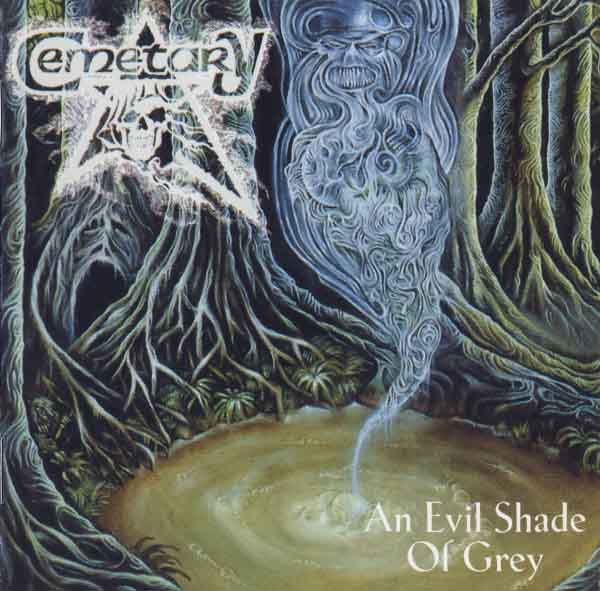
Some albums have an inherently nocturnal mood to them, a form of parent moods to all others; Cemetary combines the sensation of doom metal with a heavy metal twist with the lighter and more ethereal vein of death metal to create an album of suspension of the world to venture into an exploration of nocturnal, ambiguous and excitingly lawless worlds.
Like the primeval forest, the world of thought outside of what Society demands must be true is an unnerving place full of possibility and danger, and Cemetary tempers this with a more traditional heavy metal compositional style but uses some of the death metal method of song structure as a means of emotional conveyance, much like opera does in theater. Songs break to reconstruct themselves, and then burrow deeper into a circular wending of riffs that culminates in a collision of internal forces which forces the dormant mood to the surface, by reflexive contrast relegating the previous sensations of personable melancholy to the background and uncovering a more unsettling feel of indirect, invisible forces at work.
Featuring use of a left-hand technique that seems to achieve a two-note vibrato for a further ghostly sound, these songs betray an Iron Maiden-styled heavy metal background in both progression and harmonic structure, but augment this with extensive internal evolution in the death metal style. Many will recognize this band (and fellow travelers Tiamat) as the inspiration behind Opeth, who realized if they kept the death metal to choruses and added some bouncy self-pitying pretentious folk rock for the verses they could convince the basement NEETs of the world to pompously parade around telling others how Opeth was perhaps too deep for them, by reflex incarnating themselves as agents of profundity. Cemetary avoids that fate with a simple pragmatism in that its destabilizing obscurity and isolated emotion pairs itself with good times heavy metal, converting both so that the familiar becomes self-critical and the darkness warms so that it gains a friendly touch. This gives the album a perfect mental feel for an evening with friends and a pipe of dark tobacco, perhaps Dunhill Nightcap or one of the dark flakes that conceal their high strength behind matured harvest flavors.
As in a good tobacco, the power of An Evil Shade Of Grey blooms from within the darkness, appearing first as a light alternative but then taking on a demonic sense of perverting the familiar into the uncertain. This bloom then matures in its own darkness, and reintegrates with the more friendly sounds, creating a continuum which releases expectations and allows the blended moods of solitary introspection and vigilance against imminent camouflaged threats to become themselves a type of familiarity. Through that device, this simultaneously conventional and oddball album achieves a deep subconscious effect on the listener, like all good death metal unfolding so that past riffs shift context dramatically and create the sense of discovery for the listener.
Most remember this album for its selective use of acoustic guitar in with the death metal riffs, and its parallels of listenability and challenging emptiness, but its surface traits only serve to propel it deeper into its own brooding ambiguity. An Evil Shade Of Grey recently celebrated 23 years since its introduction, and remains as perfect for nighttime perambulation and contemplation as it did then, joining albums like the first Darkthrone and early doom metal in stimulating both the mind and the heart in a study of the dark spaces of existence.
8 CommentsTags: an evil shade of grey, article, cemetary, death metal, Heavy Metal, Sweden
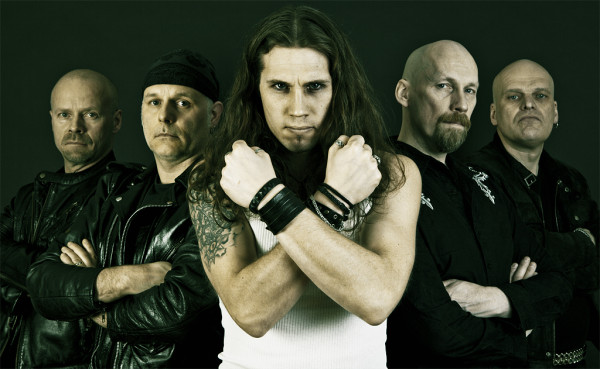
As far as books about metal go, there’s nothing more hardcore than an encyclopedic reference because by nature these attempt to include everything. Janne Stark wrote The Heaviest Encyclopedia of Swedish Hard Rock and Heavy Metal Ever! to keep track of the Swedish hard rock / heavy rock / metal scene, but we found it even harder to keep track of him.
For example, Stark is listed as participating in three dozens, including Overdrive, Overheat, Faith, M.O.B., Flash, TNT, Alyson Avenue, Sir Lord Baltimore, Thalamus, Chris Catena, Audiovision, Vii Gates, Narnia, Grand Design, Blinded Colony, Spearfish, Audiovision, Tower Of Stone, Teenage Rampage, From Behind, Planet Alliance, Balls, Constancia, Locomotive Breath, Mountain Of Power, Zello, Nicky Moore Blues Corporation. This is only a small slice of his participation in music, however, as he’s also a music journalist and author.
Stark was good enough to give us the time for a mid-length interview, which was conducted over coffee in the fashionable Swedish borough of Östermalm. Err… we wish. Stark was good enough to conduct this interview through old-fashioned 7-bit email, but we got some interesting answers.
Sweden has fewer people than the city I live in, yet produces more quality heavy rock, hard rock and metal bands. Is there something in the Swedish outlook that is responsible for this disparity?
I’ve had that question a lot of times. I think it has to do with several different things. Music has always been important in Sweden, folk music, singing in choirs etc. ABBA came along in the seventies showing Swedish musicians it was actually possible to break through on a big scale outside of our borders. We also have a really good (and cheap/free) tradition of music schools and the ability to learn an instrument in school. We also have the possibility to start a study circle, within a band, where you can get free/cheap rehearsal space, the possibility to record and even arrange gigs. I also think Swedish bands in general are about the music and learning to play, that getting an image and just pose.
Sweden may have partially invented death metal and black metal through Bathory. Are there are other contributions on the road towards death metal that you found interesting?
Yes, Bathory were definitely the forefathers of primitive sounding early black metal in Sweden. Later on there’s of course also the Gothenburg sound and bands like In Flames, Dark Tranquillity and At The Gates, where they started mixing more melodic and traditional metal influences with the traditional death metal sound. Swedish bands have always looked to the UK or US for influences, but I think a lot of the bands have managed to put a slightly different twist on it. Take for instance progressive bands like A.C.T or Pain Of Salvation, and then you have classic heavy metal bands like Hammerfall and Wolf who have mixed the German and UK styles of metal with a Swedish twist to it.
There’s something about the way Swedish bands write music that seems to lend itself to heavy metal, and it’s broader than the legendary Swedish melodic sense. Do you get the feeling such a thing exists?
I think it’s basically that we borrow a lot of influences from outside and blend it with the quite traditional Swedish folk touch that is in our mothers milk, whether we know/like it or not. On another note, it’s also quite interesting how several Swedish hard rock/metal musicians have become very successful in writing for pop and dance acts. People like Thomas G:son (Masquerade), Peter Carlsson (Bedlam), Anders Wickström (Treat) and not least Max Martin (It’s Alive) and Johan “Shellback” Schüster (Blinded Colony) have all become highly acclaimed pop composers who have written hits for N’Sync, Britney Spears, Pink, Lady Gaga etc.
You refer to this book as “the heaviest” encyclopedia of Swedish heavy rock and metal, and it definitely is heavy in two senses, both content and the physical weight of the book. How long did it take you to compile this monster?
It’s the heaviest in many senses. It’s definitely the heaviest when it comes to its sheer weight, 3.7 kilos (8.5 lbs) and the amount of bands featured in it (3,600), but it was also the heaviest one to get out of my system, to decide when it was time to wrap it up and get it out. When the second book was released in 2002, I simply continued compiling information. Not detailed information, but more like making notes to check this band out, check this site out, I made continuous notes of special releases and such. Then, a little more than three and a half years ago I decided Now it’s time. Then I started following up all the leads, compiling all info of the bands, took all the info from the first two books, updated and corrected and all the stuff I had noted about these bands. I made one document for each letter and just started all over again, from A to Z (well, actually the last letter is Ö in the Swedish alphabet). When I felt I was finished I started doing layout, but waited with the band pics etc until last as I was still adding last minute information and bands. I then had three people proof read it, an Englishman and a music nerd friend, plus my wife (also a hard rock nerd). In September 2013, I sent in the final PDF files to the publisher and it was off to the printers, and nothing more I could do. Sheer agony at that point!
What kind of research resources were available to you? Is there much printed information on rock music in Sweden, or did you have to spend most of your time interviewing people?
When I did the first book in 1996, there was no Internet and it was all phone calls, contacting bands, music clubs, record stores etc. Now the information is all over the place, the problem is to collect, find and sort out what is the CORRECT information. Anybody can write anything on sites like Wikipedia etc. and suddenly it’s the truth. It’s been as much about checking and double-checking this time around. I’ve listed the sources I’ve used in the book, but it’s anything from www.metal-archives.com, www.musikon.se and www.rockdetector.com, to Ebay, Tradera, Discogs and bands/labels sites to find all catalogue numbers, different pressings etc. There’s a couple of metal magazines and webzines here as well, plus books and websites covering local scenes, where I’ve found some additional information. I’ve also contacted a lot of people through Facebook etc. I’ve tried to get in touch with as many bands as possible.
From the looks of this massive book, you got every heavy band that Sweden has ever produced. Did you miss any? How did you find out?
I’m sure I’ve missed some, even though I do think I’ve covered 95% this time. There’s always going to be the local metal band that printed 250 copies of a single, sold it to some friends, tucked the remaining copies away in an attic and went on with life. These things pop up now and then, still! Plus some bands, especially when it comes to black metal, are intentionally secretive and only sell their limited vinyl release to “true” fans. But, that’s the beauty of it. Trying to find those hidden gems!
Swedish death metal won me over the minute I heard it. Do you normally listen to death metal? Did the sounds of Swedish death metal tempt you to go over to “the dark side”?
The thing is, when I wrote the previous books I wasn’t into death or black metal at all. But, for this book I’ve listened to ALL bands in it, and there’s a LOT of death and black metal. As a result I’ve actually come to like a lot of these bands, the more melodic stuff like Soilwork, The Haunted, Sterbhaus, In Flames and Unleashed, but also stuff like Watain I’ve come to like. My first choice of music is however still seventies influenced heavy rock/metal and bands like Spiritual Beggars, Mojobone, Grand Magus etc.
Can you tell us about your background as a writer and in music? This obviously isn’t your first project.
I got into music very early on and started playing guitar around the age of nine, made my first demo with the band TNT back in 1977, recorded my first single with the band Paradize in 1979 and formed Overdrive in 1980, with whom I’ve made a bunch of records. I also started doing some reviews for a local zine in 1982-83. My writing got more serious in 1989, when I started writing and reviewing for Backstage Magazine and since then I’ve written for a lot of magazines such as Hard Roxx, Kool Kat News, Sweden Rock Magazine, FUZZ Magazine etc. I did my first encyclopedia in 1996 and the second one in 2002. At the same time I’ve also made records with bands like Locomotive Breath, Mountain Of Power, Zello, Planet Alliance, Constancia etc. I still play in Overdrive, Constancia and Grand Design.
How did you get the confidence to tackle such a massive work? (It can’t all come from the writer’s famous “courage in a can” — coffee — itself, can it?)
Well, to be honest, it’s a combination of sincere interest for Swedish metal, being a music nerd and, yes, lots of strong, fine Swedish coffee. Besides beer and booze, it’s the only “drug” I’ve ever touched!
If you had to select five heavy and/or metal acts from Sweden to convince a newcomer that this scene is vital and worth investigating, what would they be?
As there are such a variety of styles within the Swedish scene I’d pick accordingly, so to check out the melodic death metal scene go for Soilwork, get some classic heavy metal with Grand Magus, some high class AOR with Eclipse, doom with Avatarium and progressive rock with A.C.T. To start with.
What’s next for you? Will you continue music journalism? Where do readers go to find out more about your work?
I still write and review for FUZZ, Metal Central and Metal Covenant when time allows it. I also have my own reviews blog and I’m now working on my next book entitled The History of Swedish Hard Rock and Heavy Metal, which will be as the title says, a more history-based book on the Swedish metal scene from the late 60s and until today with stories, interviews with prominent Swedish bands etc. Not sure when it will be finished, but I’m working on it. I’m currently also working on two new albums by Constancia and Grand Design for release in 2014. We’ve got lots of gigs booked for Grand Design as well as Overdrive. High Roller Records are also re-issuing the first Overdrive album on vinyl with an entire bonus LP of demos. No rest for the wicked!
http://www.youtube.com/watch?v=y4avfZnEDyQ
No CommentsTags: Black Metal, death metal, hard rock, Heavy Metal, janne stark, Sweden