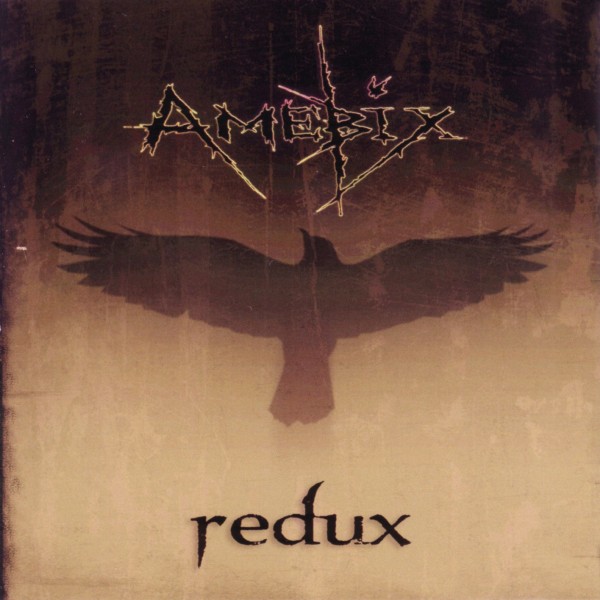
Amebix – Redux

amebix-redux

“You know kid, uhh, usually when someone pulls shit like that my first reaction is I want to punch his fucking lights out. But you know something? You’re all right!” Most re-visions of older works by popular musicians end in tears and terror. This one re-creates three classic Amebix tracks in a form the band suggested was always intended but was not possible owing to the primitive production and living conditions of the day, and Amebix surely knew that their fanbase — who grew up on the versions as they were — would approach this with trepidation and skepticism. But there is no easy review for this disk.

Redux does not fall into the usual trap of making a glamorized and overly-slick version of the past. Instead, Amebix restyle their foundational songs more as if Metallica and Prong had collaborated to emit a dystopian metal album. Double-picked muted downstrumming and faster tremolo strumming all make an appearance, along with approximately half the vocals which are a hybrid of the Amebix style of Motorhead-influenced distorted vocals and the bassier, gnarlier death metal vocals to follow. But what is really surprising here is how these songs work very well given the high intensity treatment, which transitions them from a kind of contemplative and mournful look at our world to a savage Nietzschean attack of those who want to hoist the black flag and slit some throats. There are times when, much as happened on the first Burzum LP, these vocals are simultaneously so vulnerable and savage that they convey a sense of total commitment to desperate acts.

In addition, the more rigid playing of these riffs and uptempo approach gives the entire EP a malevolent vibe. These songs were great in the past, and they would be known as great here as well had this been the past. That being said, it will offend many punk purists and metal purists alike, despite having faithfully upheld the spirit of both genres. Not only that, but the haunting and unsettling sense of peering under the skin of our society and seeing underneath the makeup and credentials a swarming mass of crawling horror remains and may be intensified by this more assertive re-creation. While I liked the album that followed, I would gladly sign up for a full album of Amebix songs in this style as well.

1 Comment

Tags: , , , , ,

Sadistic Metal Reviews 12-27-14

wolfgang_fleur

Nothing is less metal than accepting everyone and everything. Metal discriminates. Fundamentally, we recognize that most people have their head in their clouds and like craven mice prefer comforting illusions to even only moderately disturbing truths. In fact, over 90% of everything is simply disorganized garbage made by distracted mice. For this reason, we unleash our cruelty and separate the music from the squeaking with Sadistic Metal Reviews…

arkham-demo_2014

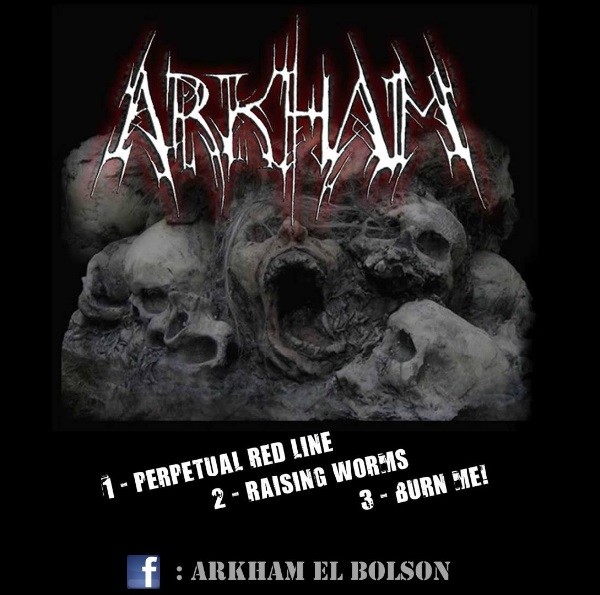
Arkham – “Demo 2014”

It may become necessary to invent a genre for this style because it shows up frequently. It might be called “narrative speed metal” for music that adds heavy metal and death metal into speed metal but fundamentally follows the vocal line for song development, as if narrated as background action by the lyrics. The dominant influence on Arkham seems to be Iron Maiden, whose harmonized riffing and song structures bleed through, but the band has chosen a death metal vocal and a basic speed metal verse-chorus approach with introductory riffs leading to change in the verse riff for each section of the song. Good riffs, and good sense of melody, but this band ends up being too linear in narrative and the chaotic vocals interrupt their melodic songwriting.

bloodscribe-prologue_to_the_apocalypse

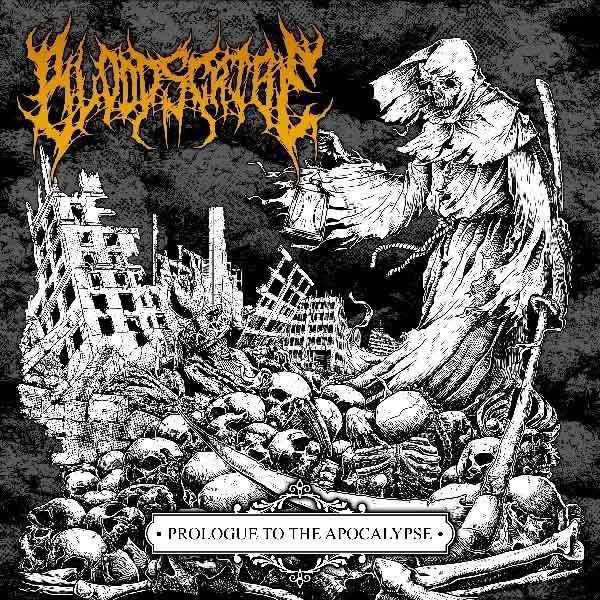
Bloodscribe – Prologue to the Apocalypse

Fairly standard brutal percussive death metal in the post-Internal Bleeding style that is essentially deathcore but with more internal coherence through simplicity. The problem with this genre is that, like Cannibal Corpse and the post-Suffocation clones that inspired it, it requires reducing itself to a catchy guttural vocal phrase and distracting riffs with lots of squeaks and squeals but very little put together into tremolo or complex textures. The result is that this is the musical equivalent of elevator music, just a lot more intense sonically and with far better technique. It misses (however) the mind-blowing aspects of death metal and replaces them with the toe-tapping, head-bouncing and brick-eating mental state of listening to someone force a jackhammer around a sewer line.

gnosis-the_third_eye_gate

Gnosis – The Third-Eye Gate

This band of some local repute comes to us playing the style that some call shuffle metal. In this genre, the vocalist chants and the drums race to catch up while guitars strobe a two chord riff in the background. It has the gratifying tremolo sound of early Florida death metal but the vocal dominance inevitably makes this combination sing-song and thus the foreboding sense comes apart, replaced by the feeling that one is in a local pub, drinking a warm brew, listening to the local band whose songs are as familiar as backyard dirt at this point and while improving, never seem to get good. Interesting ideas appear on this album but never develop because they are too busy keeping the chanty choruses going for the Budweiser drinkers who are wondering if they should pass out or vomit first. If this band wanted to get good, they would lose the vocal hook and replace it with monotone until the guitars sounded good, then re-write vocals to fit the guitars.

nameless_one-thousand_memories_and_nameless_sword

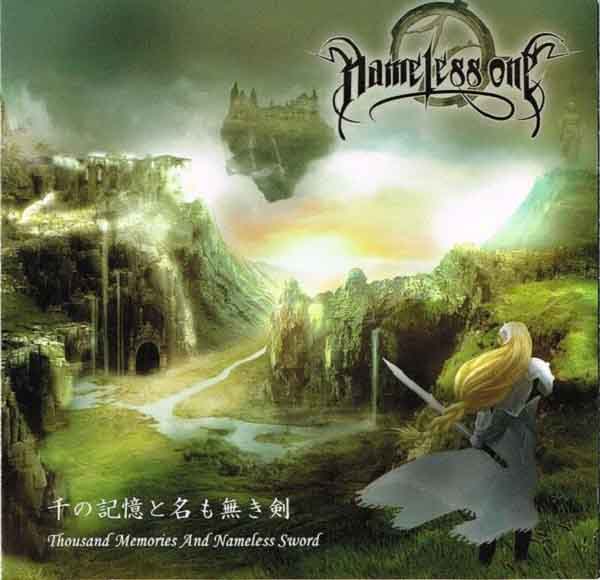
Nameless One – Thousand Memories and Nameless Sword

Essentially Iron Maiden styled heavy metal with death metal vocals and riffs thrown in for emphasis, Nameless One achieve a reasonable fusion of the genres but cannot hide the sickly sweet pop music underlying their Iron Maiden tribute composition. It is catchy and elegant in the way Iron Maiden is, but everything wraps up too nicely and the result is a sense of listening to one of those pop bands that pop up and vanish overnight in the dance music community. All instruments are executed with aplomb and solos are highly professional, and no song drops into lower-quality riffs, suggesting these guys have good quality control. Riffs are cut from archetypes, and the fusion is a little goofy, but the real sin here is making Iron Maiden into a candy pop band and thus making it as saccharine form of the irritation of nails on a chalk board.

winds_of_genocide-usurping_the_throne_of_disease

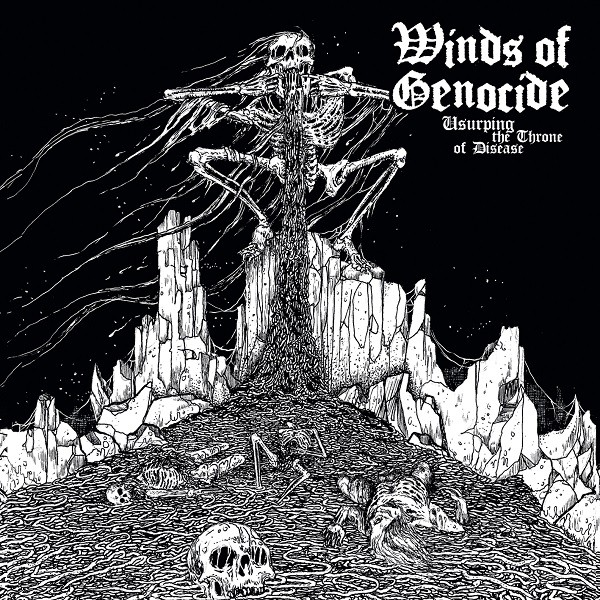
Winds of Genocide – Usurping the Throne of Disease

This album is hilarious. Imagine taking a standard hard rock album and trying to do it in the style of Blasphemy (yes, the Ross Bay one). Then add vocals which linger past the phrase or lead the vocals much like a pop band, and allow individual musicians to show off in the process. The result is unintentionally comedic as it sounds like Hollywood hired a bunch of Charles Bronson style tough guys to make Poison relevant again. In an attempt to hide the roots of this music, the band play fast and loud and layer it in vocals of several types, including the electronically processed chant and the barking chihuahua howl. For comedy’s sake they throw in citations to Sarcofago, Von and other ultra-basic bands, but no experienced listener will be able to get past the hard rock progressions and bouncy glam metal riffs even if played in detuned, double BOSS HM2 distortion’d power chords. Do not listen when stoned, as you might have a laugh attack.

98 Comments

Tags: , , , , , , , ,

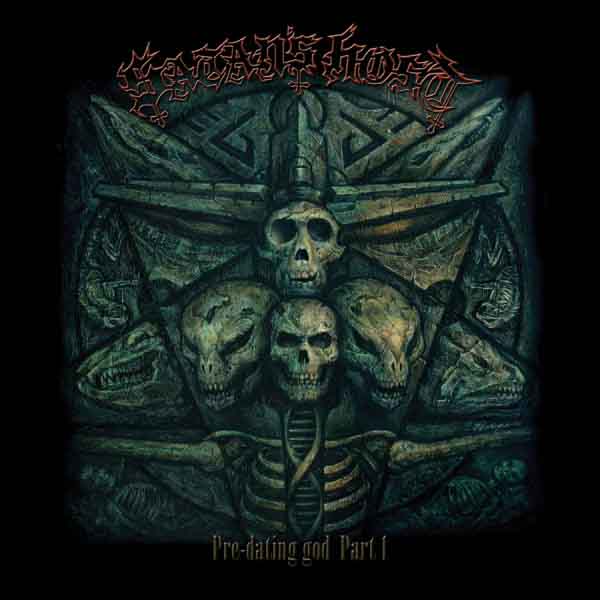
Satan’s Host – Pre-Dating God (2015)

satans_host-pre-dating_god

Satan’s Host create power metal with death metal influences like a hybrid of Kreator and Blind Guardian creating music in an Iron Maiden mold. Slight death metal influences intrude on riff construction in some of the songs but the majority are good old-fashioned heavy metal with speed metal technique periodically sparkled with some more extreme expressions here and there.
(more…)

1 Comment

Tags: , ,

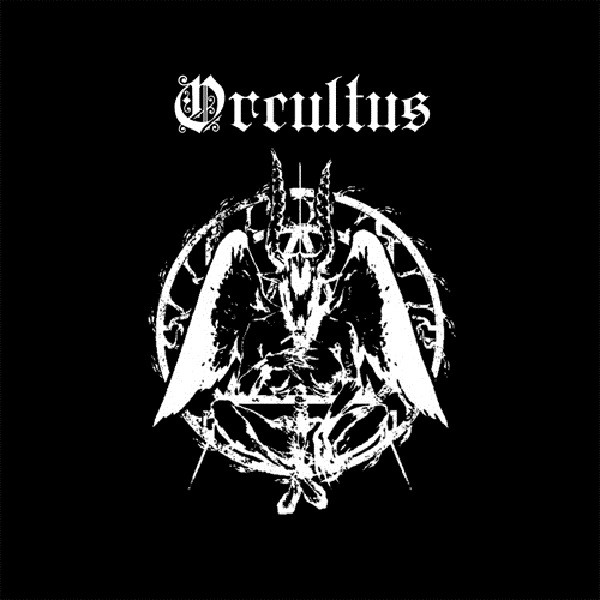
Orcultus – Orcultus

orcultus-orcultus

Orcultus returns to the days before black metal when NWOBHM band Venom created short, catchy songs but Orcultus runs this approach through a Norsecore filter and adds post-metal riffing for atmosphere. The result is both eminently listenable and unendurable because its simplistic approach misses everything that made the Norse strong, adds too much adornment to achieve the simple pleasures of Venom, and will never be accepted by post-metal because it is not trendy enough.

Songs tend to launch relatively simply in the Norsecore droning riff style, redouble that with catchy choruses, then fade out with either more Norsecore or the patented drunken people waving in the breeze as a sad note sounds and then falls style of post-metal. They then repeat this formula with different Norse riffs matched to opposite corresponding Venom-style rhythms and a slight variant on the post-metal drone. This creates an effect of transitioning through the life cycle of black metal in a single song, which brings up miserable reminders and ends in the nowhere man gentrified urban neighborhood entropy that post-metal uses to make hipsters of us all.

Worse than obliterating the past by ignoring it is to destroy it by adulterating it, and then to let the adulterated hybrid take the place of the original. Yet this is what happens in most cases. Orcultus represents this attempt in the black metal genre, mixing several generations of heavy metal and hybrids into an indecisive and contentless paradigm that produces a sensation of fatigue, ambiguity and confusion, but not the dark and rich melancholic emotions of black metal. As a result, despite having much of the old school in it, this one goes on the black ‘n roll heap and gets consigned to the bit bucket.

No Comments

Tags: ,

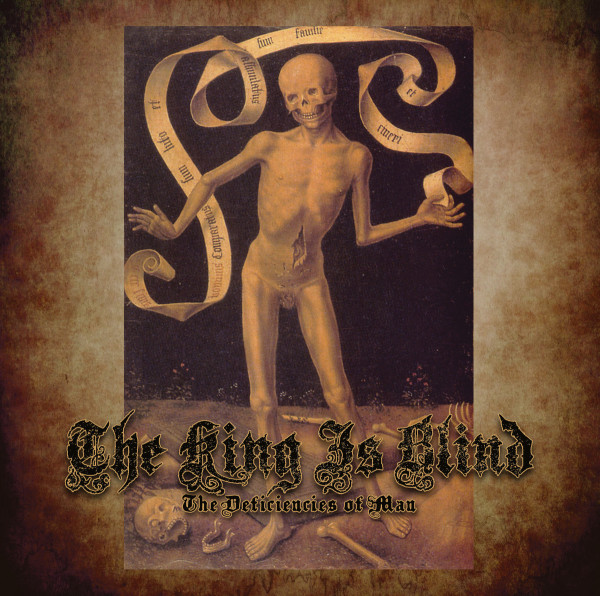
The King is Blind – The Deficiencies of Man

the_king_is_blind-the_deficiencies_of_man

Of all the modern metal tendencies that can be completely annoying, the insistence of vocals leading the piece takes the cake. Like rap, the music takes a backseat to whatever is being shouted at you like political slogans or advertising offers. Here the band writes a grind-death hybrid distilled to high-energy riffs under a slowly-enunciated cadence of vocals that makes for utter tedium. The problem is that the band is equipped to write two-riff songs and when they go beyond this they sense they are out of their depth and offer instead melodic metal fills.

Like all metalcore, which is as good a container as you will find for “modern metal” which follows hardcore songwriting with metal riffs, The King is Blind comes across as disorganized because it is in metal terms. In rock terms it is highly organized, with verses matching choruses in key and rhythm. The problem is that the riffs are unrelated so they serve the same role as a slow double-strummed open C in a Bruce Springsteen tune: they keep background harmony to the vocals, which are the real focus here. Except these vocals are mostly monotone. Throwing in simplified Slayer riffs just creates a circus atmosphere, as does the use of other metal technique to try to give momentum to this otherwise pointless music.

No Comments

Tags: ,

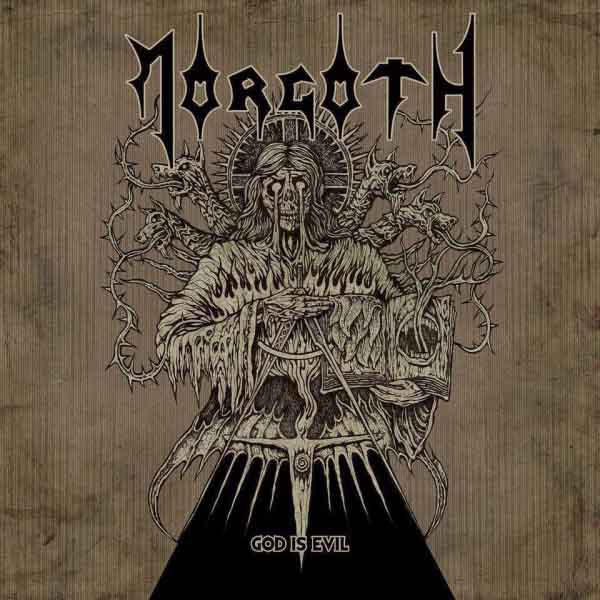
Morgoth – God is Evil

morgoth-god_is_evil

Morgoth defined its path in the 1990s with two EPs that combined the American and European death metal sounds, then deviated into a more contemporary sound with Cursed and ultimately Odium, at which point the band lay low for 18 years before returning with God is Evil, an EP of two songs which combine their early years with their middle-period work on Cursed, although the band consciously strives to make the aesthetic identification with the EPs stronger than anything else. That makes sense, since death metal and death metal nostalgia are both big business, with the younger audience wanting to hear the glory years come roaring to life again and the greybeards wanting to re-live some of their fond memories of what death metal meant back then.

“God is Evil” begins with the type of chord progression and accompanying constant double-bass drums that would have kicked off a classic Florida album, maybe Death Spiritual Healing, but with more of a European melodic flair. The Florida influences remained hidden to me until this release, where suddenly the influences from several big Florida bands including Deicide show in the riff rhythm and tempo changes as well as the choice of chord progression used. Death in particular specialized in these kind of storming extended riffs, but much like Death, Morgoth suffers from making the riffs too “pat” or too handily concluding on a symmetrical counterpart to their initiating phrase. The result makes this easy to nod along to. The song develops with slightly more melody in the guitar and some very Tampa downstroke triplet riffing, then fleshes out its theme expertly. This song strikes me as not only very well-done but as reflecting the kind of forward thought that a band can have when they stop worrying about how clear their influences are, and work instead on putting the song together like they would construct a building, engine or electronic gadget: each piece relating to one another with a function or design idea at the center.

“Die As Deceiver” fares slightly worse. Starting with a riff that might have come from “Pull the Plug” with a few modifications, in the same way ground effects make a Honda Civic a race car, this song launches into a series of chant-heavy choruses that require lots of downstroke barrages to create emphasize, before a melodic vocal leading the chorus in the best Destruction style. Then the song breaks into a classic-era Death style transition with more of a hard rock modality to it, then layers this with increasing drum and bass accompaniment before breaking to the original loop. This song sounds hastier or at least more hesitant in that the band clearly builds itself around a couple of tropes but is unclear how they relate outside of rhythm, which creates the impression of a play with the scenes shown in the wrong order. The use of heavy expectation in riff delivery here creates more of a pop influence on this song and makes it less likely to sustain repeated listens. The strained vocals of Mark Grewe attempt to emulate the The Haunted or later At the Gates style and do nothing for the music, because like all “modern metal” (read: lapsed metal) that style leads with vocals and relegates guitar to a sidekick role, at which point it quick becomes more like mainstream rock, which seems to have been the goal. More like the average, more audience. Morgoth shows they do not need to stay current or worry about their influences from the first song but almost seem to have lost confidence on the second and fallen back on crowd-pleaser technique which promptly swallowed up their quality songwriting.

On the whole, God is Evil shows a revitalized Morgoth making a credible attempt at restoring the power of its early years while incorporating some of the musical lessons learned with its more populist albums. My advice to this band is to trust your gut, not your spreadsheets, and focus on writing the music that comes most naturally. Cursed and Odium were the same mistake in opposite directions: trying to be current with the most underground stuff possible, and trying to catch up with the mainstream stuff (which was actually a regression from what death metal had done). These are clearly talented players who, when they let themselves, make amazing death metal that infuses European melody into the charging Florida style.

5 Comments

Tags: , ,

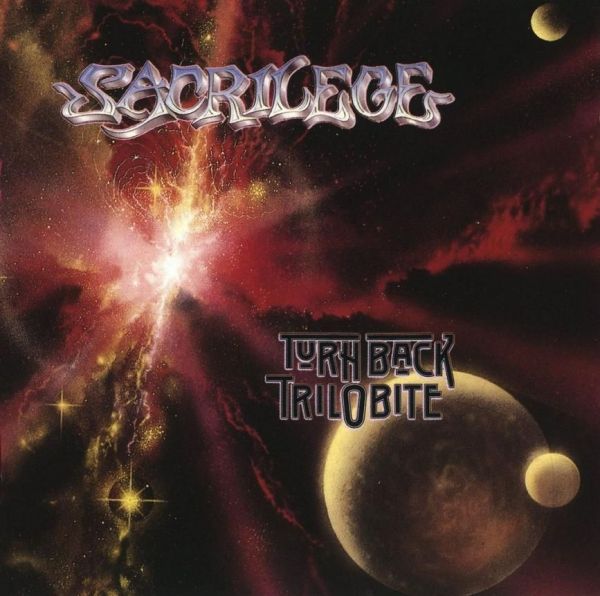
Sacrilege – Turn Back, Trilobite

sacrilege-turn_back_trilobite

During the 1980s, multiple metal movements existed in parallel. The genre birthed itself a decade before and almost immediately got merged with hard rock, only waking itself up with the NWOBHM in time to avoid total assimilation. In the next decade, it diversified.

Sacrilege emerged from the UK proto-crust scene and transitioned slowly into metal as most of these bands did when, musical basics familiar, they sought to use their new artistic powers for more precise communication. The band put out a trio of albums before lapsing in the early 1990s. Turn Back, Trilobite was the third of these and showed the band leaving its punk roots behind entirely to explore a doom metal style. This release prompts comparisons to Candlemass because in its pacing, use of percussion and even vocal melodies it evokes that long-standing doom band.

The notable differences here are that Sacrilege sometimes slides into ludicrous hard-rock riffing that immediately pushes it into the background, and that one of these guitarists clearly listens to quite a bit of Metallica Ride the Lightning which shows up in some of the muted-strum double downstroke work here as well as in the Hammett-inspired lead guitars which use falling scales to produce lengthy solos from relatively consistent structures. This effect works better with the shorter solos on Metallica but here often becomes too symmetrical and rambling, but otherwise, adds a greater efficiency to some of these songs.

People like this album, and it is hard not to, because it is ambitious. It touches on tropes from jazz, rock, folk and hard rock in addition to its basis in heavy metal, and by using doom metal pacing, allows itself more space over which to stretch out vocals and riffs, installing a greater range of rhythms. The problems with this approach are that in many ways the band were not ready for it. Too much of this album is comped in with 1970s hard rock riffs, the vocalist for all of her range tends toward very similar patterns (which fits with the Ozzy-Marcolin range of vocals), and too many of the rhythms and riff shapes are similar, causing navigational difficulties for the casual listener.

As a random find in a record store on a rainy Saturday, this album provides some good listening because its ambition creates a world our brains can explore despite its failings. Like most doom metal, Turn Back, Trilobite relies too much on predictable and repeated tropes for enjoyable regular listening. The greater emphasis on “emotion” in doom metal tends to mean a narrower range of mood, and as a result the album flows past like tapwater more than distinguishing itself with the cornucopia of tropes it applies. That and the obvious Metallica derivations paired up with mediocre riff patterns excluded this one from running for the big time and shortly afterward, the band members excluded themselves to do other things. With the right producer to enforce some editing and variety, this could have been a massive release.

http://www.youtube.com/watch?v=BOqcF2-41fc

8 Comments

Tags: , ,

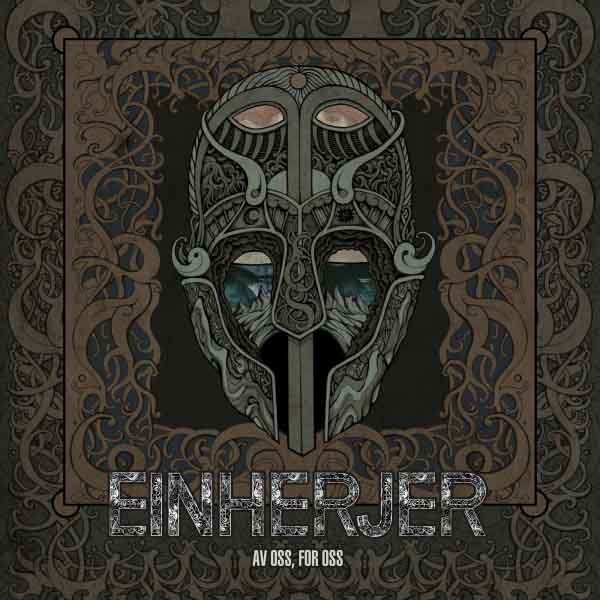
Einherjer – Av Oss, For Oss

einherjer-av_oss_for_oss

Very few albums are truly horrible in the sense of doing something every moment that repels the senses. Instead, they are just bad, meaning inept at achieving an effect, often to the point where you wonder why no one questioned the attempt somewhere in the process.

Av Oss, For Oss could well be the missing Alestorm album. Its songs always revert to bouncy faux-Nordic style that might fit a Disney ride or guest musicians on a motorized Viking longboat tour of the marshes of Louisiana. Musically, nothing here is incompetent, but it also lacks any inspiration and plods along with nothing to offer and then loses track of itself, and falls back on the same shorthand. There really is no point discussing the album beyond saying that because no album can redeem itself from that point.

I remember acquiring an early Einherjer album which people swore was just the bee’s knees. Hipsters really talked that way in the past but thankfully they’ve moved on to newer phrases like sui generis and “off the chain.” Back then it seemed unfocused but short. Av Oss, For Oss just seems like people sketching out a rough guideline and then writing to fill, and when they get something that qualifies, never looking back. Hit record, then print, and hope some money wanders in the door.

What is really missing here is a sense of proportion and of the parts relating to one another. Instead we get a random flow of boring riffs put together in nonsense order with heavy repetition and when the song goes nowhere, as said above, it falls back on a few patterns these guys really like. Individual parts are well-executed but without energy or flair, which makes me think this band should just break up and donate members to better bands who need competent people to fill basic roles. They are far from alone, since post-1994 black metal generally sucks, but this album just double-underlines the point and then writes it, Bart Simpson style, in endless repetitions down the chalkboard.

8 Comments

Tags: ,

Sadistic Metal Reviews 10-08-14

popularization_of_metal

What are Sadistic Metal Reviews? When fans, writers, radio presenters and musicians get fed up with the exhausting flood of imitators and demand that music have a purpose, because only music that has content can express something of beauty or horror about reality and thus be relevant to our lives, because unlike the herd that seeks escape, we seek a means of understanding and glorifying life. Death to the imitators, drowning in a sea of angsty tears.
edge_of_paradise-immortal_waltz

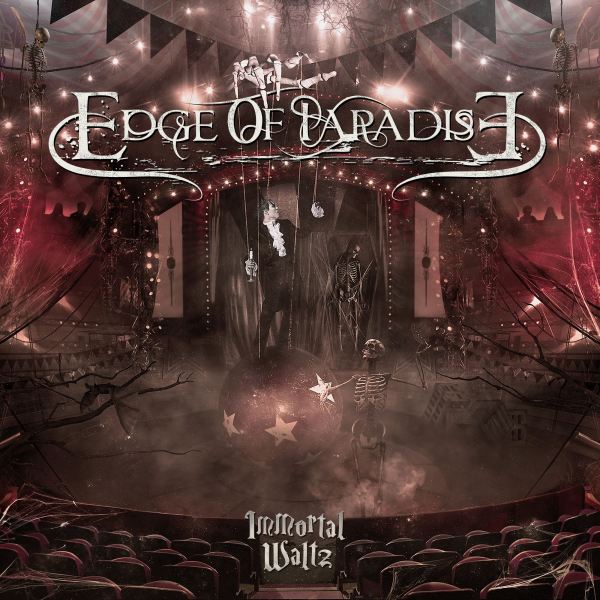
Edge of Paradise – Immortal Waltz

This jaunty take on a cross between burlesque music and hard rock with symphonic overtones seems designed to showcase the talents of vocalist Margarita, who layers her vocals in waves that create, along with the carnival horror show keyboards, a sense of being in some oddity of a dream. But this band really invites comparison to bands like Genitorturers and Marilyn Manson more than heavy metal; these songs are vehicles for the vocals and are designed to create a sensation of spectatorship more than have the music itself inundate the mind. Aesthetically, this will strike underground fans as cheesy; while not terrible musically, it also derives much of its compositional direction from riffing off known archetypes of the type of music it cites. That and the way songs are entirely driven by vocals places this outside the range of most expecting riff-based music, and the simplicity of its delivery ensures that it will sound like children’s music to most death metal fans. If this is symphonic metal, it is clearly not for me, but if you like the Marilyn Manson style spectacle and ironic deconstruction of cultural tokens, it might appeal.
krieg, bitches

Krieg – Transient

Krieg started as purely chaotic improvisational black metal, then organized itself into a ripping war metal variety, and finally detoured into indie/shoegaze. With Transient, the band returns to roots with a primitive type of death metal fused with a heavy amount of punk and garnished with varieties of its previous influences. The shoegaze influence is still here as are some classic black metal riffs but they are suspended in a gelatinous mass of punkish simple death metal riffs which keep an energetic uptempo charge. While it sculpts atmosphere with agreeable verve, most of modern Krieg consists of transitions into moods and then riding of those moods, which interrupts the frenetic energy this band once conveyed while simultaneously not building up to its transitions with enough groundwork to give them power beyond their own attributes. Black metal works its atmospheric magic by manipulating context and showing a progression between events like a battle scene, but this new style is more like visiting different rooms in a spooky hotel. That being said, Krieg is stronger in riff-writing and understanding of the dimensions of harmony and how to navigate them with a riff than other American black metal bands, and also beats the hell out of Sonic Youth.
english_dogs-the_thing_with_two_heads

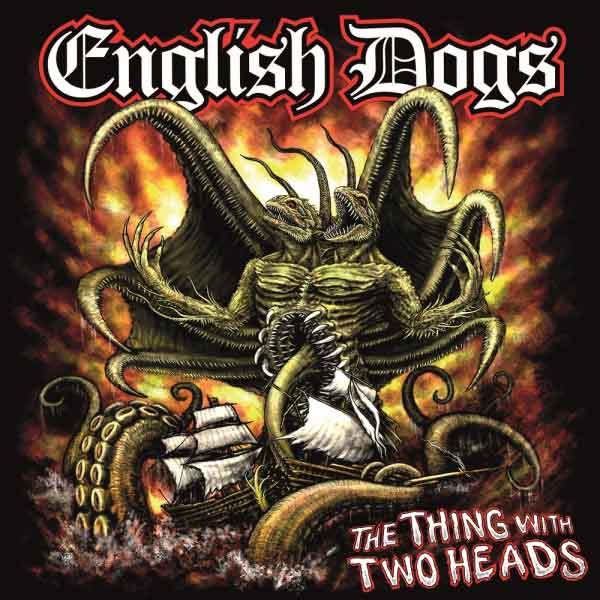
English Dogs – The Thing With Two Heads

This punk band uses a lot of metal riffs and rhythms in that it likes to interrupt continuity with abrupt internal collisions in its music, and uses the muted strum in a style spanning the spectrum from speed metal to Meshuggah. Unfortunately, it also mates this with a rock style of offbeat leading phrases that make this music bounce just like rock or hip-hop, which kills any gravitas or building of intensity. There are some great speed metal riffs on here and some moments of pure punk energy but the whole is torn apart by musical discontinuities which result in what sounds like a train crash between the 1980s and early 2000s that never resolves itself into a voice that can express anything. If this band dropped half the riffs and focused on making songs that generate momentum and then channel it somewhere, it would hit like a ton of bricks but as it is now, it sounds like something that should be on in the background during an LMN late-night movie about kids hanging with the wrong crowd and ending up in an organ harvesting gang.
horrified-descent_into_putridity

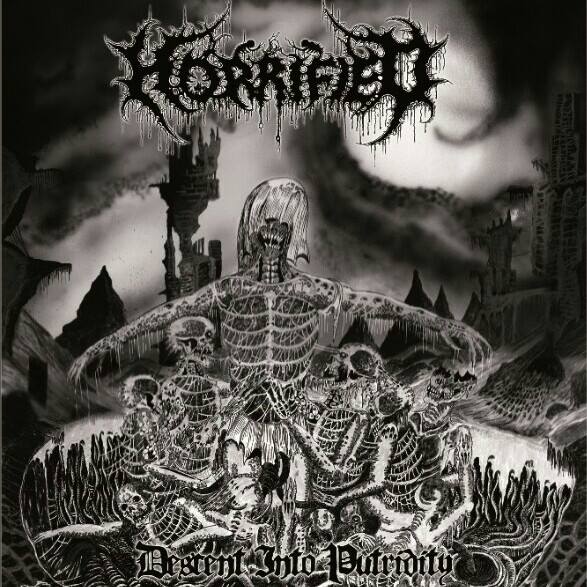
Horrified – Descent Into Putridity

This album shows a great deal of initial promise in its attempt to resurrect the old underground. It gets beyond the two-point riffs that hammer a rhythm and then answer it and go nowhere, preferring longer riffs that lead on to different points and at times in the Deathspell Omega way extend themselves into wandering melodies. Its combination of Swedish death metal and Autopsy power death metal worship works on the surface. But the nu-underground has never understood the purpose of death metal riffing which is to create subterranean structures that mirror what goes on in our subconsious minds; death metal is about looking beneath the surface to reveal structure and a subtext of motivation. Horrified in contrast has one layer, which is some riffy music on the surface that fits together nicely, but lacks a core of something which cuts between the mental state and the music. Thus over time this wears thin and repetitive at about the same time the listener starts noticing how many riffs are anchored with doubled downpicking and how few of these riffs, despite growing in their own right, amplify the subject matter of the song. Horrified come closer to the original than any others attempting this style recently but still miss the root of what makes the underground what it is, and so verge closer to the much more “face value” work of speed metal bands, at which point the repetition creates bad flashbacks of late 1980s metal and the repetition PTSD kicks in.
xerath-iii

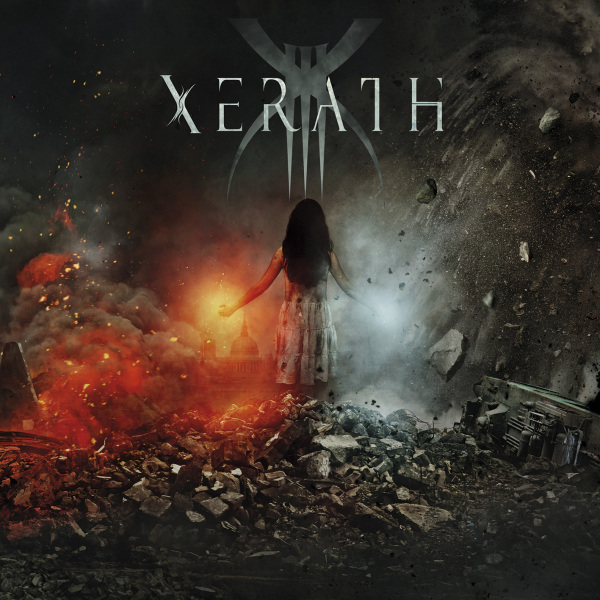
Xerath – III

The horror, the horror. Symphonic metal must be done gracefully but with aggression and force; Xerath approach it like hard rock and use it as a vehicle for over-dramatic vocals. This hurts to listen to because the keyboards drift, the riffs sound like a heavier version of Def Leppard, and the metal gets forgotten. Synthesizing two disparate things only works when a common ground and thus basis for a common voice is found, and otherwise what emerges is the oil-on-water effect that produces carnival music where random patterns contrast one another as if they were designed to accompany a cartoon and its wacky action. Xerath goes down all of these rabbit trails and comes out at a comical level. Distraction, deflection, recursion, confusion. Like Behemoth and other bands in this newer style, Xerath does great work at the level of detail, but when you add it up the only picture that emerges is confusion and haste resulting in an entirely random platter of stuff that is recognizable as metal but by depriving itself of continuity and context, entirely lacks the punch. It compensates for that lack by hammering extra hard on pounding rhythms and blasting passages which do nothing but highlight the sense of On Through the Night colliding with a roadside minstrel show on its way to play the outer reaches of Alaska and hope its luck changes there.

21 Comments

Tags: , , , , , , , , ,

Cloned: The Recreator Chronicles

cloned-the-recreator-chronicles

Horror films, like heavy metal, have drifted for the past two decades looking for a new path. A few trends have passed: violence porn, hipster zombie movies, and the incomparable Human Centipede series of dementia. But audiences have converged, and people seek horror films that are brainy and metaphorical like the roots of the genre, yet perhaps with a bit of the sci-fi and social paranoia of the newer genre.

Cloned: The Recreator Chronicles launches into this with a story spun from Mary Shelley’s Frankenstein: if science can make a better human, what happens if it’s a “better” (as envisioned by humans) version of you? For Generation X, this brings great trauma as we all know our parents would have “upgraded” in a moment. It also calls into question our relations with other people, namely would we hit a magic button to make our friends, lovers and coworkers smarter, faster and better?

Per the usual for horror films with aspirations to “atmosphere,” the movie begins slowly with an idyllic scene. Three average people go on vacation. The only glitch is that their chosen destination happens to be on top of an experimental genetics facility. The glitch has a subthread, which is that the facility is still active and samples from its environment for fresh humans to improve. The three fall into its trap and must confront their new doubles who are stronger, smarter and most of all, more confident.

The metaphorical nature of horror movies emerges in full flavor here. While the plot progresses, the questions hang in that dense atmosphere the movie creates. Perhaps if we encounter a better version of ourselves, we should just lay down and die. After all, they fix all that we find tragic and pointless about ourselves. But there are other issues here, much as there were in Frankenstein. Does greater ability alone convey the wisdom and moral character to use that ability well? Perhaps improvements make us more competent, but no more directed toward what we should be doing. Then again, it is hard to argue with a better version of yourself. And from the perspective of your clone, you appear as obsolete as a VHS tape, and if the clone can step into your life and make a better version of it, should it be allowed to happen?

Cloned: The Recreator Chronicles launches viewers down a path of extreme skepticism about humanity through a metaphor which can apply to technology, eugenics or even the cult of self-esteem. While much of the action fits the standard form of personal drama to further a plot, the writers skillfully layer cues to the darker issues beneath which unfold as the movie goes on. Nothing is as it seems. And as this plot races to its nihilistic conclusion, that is as should be.

No Comments

Tags: , , ,


A B C D E F G H I J K L M N O P Q R S T U V W X Y Z