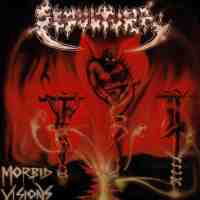
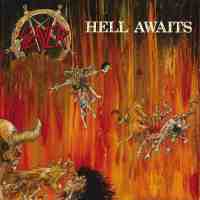
“I’m getting emails and telephone calls from people all over the world,” said Sammath guitarist/composer Jan Kruitwagen on the change that catapults them from a smaller metal label to worldwide distribution on par with Relapse and Nuclear Blast. The band is leaving its label of sixteen years, Folter Records, on amicable terms. “Joerg from Folter was actualy proud as fuck that we got signed to these guys and only wishes us well. It wasn’t easy telling him after 16 years on his label, but he understands.”
According to Kruitwagen, Hammerheart sought Sammath after hearing the demo tracks from the upcoming album and knowing the band for a long time. “The new tracks will destroy! Guido from Hammerheart knows what’s good,” he said. Believed by many to be the boldest step of the band’s career, Godless Arrogance combines the elegant melodies of Sammath‘s first album, Strijd, with the aggressive ripping death metal approach of their most popular work, Dodengang.
The band doesn’t plan to change a thing about their approach, which is old school technique and composition with an eye toward defiant independence. “We have lots of work left to do. All drums are recorded without triggers and everything is recorded live. Getting this all sounding like we want takes time. We do everything ourselves, no hands but ours will finnish this CD, except Peter Neuber for the master (Necrophobic, Revenge, Severe Torture),” Kruitwagen added.
Godless Arrogance will see release in “a couple of months at least,” but will not change its approach. “We need to make sure it all sounds up to mark, without losing the intense sound it already has,” said Kruitwagen. He added that despite a changing music industry, the band remains committed to its approach. He added, “let the music speak for itself.”
The tracklist for Sammath‘s Godless Arrogance will be:
1. Shot in mass
2. Fear upon them
3. Thrive in arrogance
4. Death (hunt them down)
5. This world must burn (hammer of supremacy)
6. Through filth and the remains of man
7. Nineteen corpses hang in the mist
As part of the burgeoning movement to understand metal and how it relates to the world, comes the first issue of Helvete: A Journal of Black Metal Theory. Although the title of the publication may imply that it is a technical analysis of black metal composition, this is not the case. As the back cover states, “Not to be confused with metal studies, music criticism, ethnography, or sociology, Black Metal Theory is a speculative and creative endeavor, one which seeks ways of thinking that count as Black Metal events — and indeed, to see how Black Metal might count as thinking.”
The book consists of about a half dozen short essays in a contemporary writing style, with full sourcing, complemented by some photographs of black metal musicians and landscapes. Subjects covered in the book range from suicide, ecocide, self-discovery, and more. Rather than treating black metal as both the beginning and end point of the book, it is instead the launching ground for exploration of how black metal’s spirit can find meaning in a cold and modernist world. The flaw in this is that some essays form a rather tenuous link to black metal, often distorted by what the authors want black metal to be, rather than what it actually is.
Of note for exploring this style is the essay by David Prescott-Steed with the admittedly disarming title of “Frostbite on my Feet: Representations of Walking in Black Metal Visual Culture”
Walking can be understood as a transitional practice whereby a person steps into, and through, a complex set of spatial and cognitive relationships. An example of such a theory of walking can be seen in the act of stepping through the doorway of a Gothic Cathedral (Notre Dame, for instance). Entering the westwork has long held physical and religious significance for Catholic devotees, symbolising one’s departure from a world in which a conceived God is incomprehensible and indeterminable (a transcendental space) into a space of communion with that God (an immanental space). Each step into the vast and ornate interior space of the nave, and beyond, comprises a transitional ritual that puts the walker in dialogue with the sacred.
The link to black metal given:
Truncated by the public’s engagement with the spectacle of Black Metal, the less exotic practice of walking nonetheless remains an important practice within the genre.Its significance can be seen in two recent documentaries on Black Metal: Vice Broadcasting System (VBS)’s True Norwegian Black Metal and Aaron Aites and Audrey Ewell’s Until the Light Takes Us. In the first instance, Gaahl (the documentary’s leading figure and the former frontman of Gorgoroth) insists that the film crew join him on a long trek into the Norwegian tundra. The hike draws our attention to the meaningfulness of the journey and speaks to the aura of solitude and endurance, of a confrontation with the unknown and human potential. Gaahl enforces: “I become what never fails, following the footsteps behind me.” In Until the Light Takes Us, slow-motion footage of Darkthrone’s Fenriz walking along a snowy forest path seems to evoke similar notions of the shadows of former selves seeking an obscured locus of self-authenticity. Both examples illustrate the capacity of walking to communicate a deeply planted Black Metal aesthetic.
This is indicative of the book’s tendency to have a coherent and intelligent view to convey in the essay, but have the given connection to black metal be suspect. A better idea would be to focus on the music, rather than aesthetics. (What’s more solitary than Transilvanian Hunger? Reference this instead.)
Other questionable choices include analyzing the compositions of Wolves in the Throne Room as being the last gasp of nature in an increasingly concrete world, the apparently transcendent lyrics of a band calling itself Make a Change…Kill Yourself, and how a slashed black t-shirt stuck to a wall is representative of “Ornament and crime (Hvis Lyset Tar Oss)”.
These flaws aside, the content of these essays can be interesting in itself, such as the idea that portable music represents a shield between us and a decaying word; where black metal heralds its deconstruction and the triumph of the wilderness, praise of the physical action of exploration, and how all worthwhile knowledge is achieved through struggle.
For people (like this author), who were hoping for a measured and academic analysis of black metal’s original music, meaning, and spirit, you will probably be disappointed. However, if one views the book as a collection of reasonably intelligent contemporary writers exploring unpopular subjects in the shadow of an often misunderstood genre, you will perhaps find something of interest.
With the arrival of A Blaze in the Northern Sky, Darkthrone presented a new musical evil with the help of a new visual evil. The first four of Darkthrone’s black metal albums depicted a sole band member in a state of aggression, triumph and/or despair, in black-and-white photos stripped of all decoration, reflecting the intentionally unaesthetic music of the band.
This minimalist approach culminated both visually and musically with Transilvanian Hunger, showing a photocopied, grainy picture of Fenriz dehumanized beyond recognition, holding a candelabrum and presumably screaming his lungs out in the night. Some of its appeal lies in its ambiguity; feelings of futility, anger and power are intermixed, widening its significance.
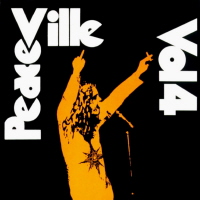
Although Darkthrone’s visual idea was immediately inspired by Mayhem’s Live in Leipzig, its monochromatic, Xeroxed quality also has an eerie resemblance to Black Sabbath’s Vol. 4 from twenty years earlier and its anguished enigmatic quality to Edvard Munch’s The Scream even further back in history. The parallel is not entirely farfetched: it echoes the troubled mind of Fenriz himself, who reportedly loves art that comes from “the exhaustion of easy life”. To black metal fans the Transilvanian Hunger cover is presumably the one archetypical image of what “necro” signifies, much like The Scream is still very much considered the face of existential anguish.
The “necro” imagery, however, may have been unintentional: In Precious Metal: Decibel Presents the Stories Behind 25 Extreme Metal Masterpieces, Fenriz asserts that mere photocopies from the TH photo session were the only thing he could find at the time to send to Peaceville Records, implying that the same picture could have been reproduced in a more polished fashion. But it doesn’t seem entirely unlikely that the use of a photocopy was inspired by Peaceville’s 1992 compilation album, Peaceville Volume 4, spoofing both cover art and title of the famous Black Sabbath album mentioned above and containing one of Darkthrone’s pre-TH songs, implying that the use was deliberate after all. (Rabid speculation is any fan’s right, right?)
In any case, the cover of Transilvanian Hunger effectively summarized its music by a single iconic image and was later emulated by hordes of lesser bands and is to this day worn on t-shirts by serious music lovers and the occasional hipster alike.
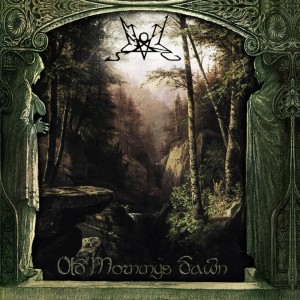
Tolkien ambient black metal project Summoning have unleashed their latest recording, Old Morning’s Dawn, via Napalm Records. The pre-order links are now active and the final product will be released June 27, 2013.
Napalm Records promises that “Despite the long break, the congenial duo Silenius and Protector did not stray an inch from their patch. Their distinctive melodies are the heart of all the songs on the latest longplayer, and bring the listeners directly into the fantastic world of Middle-Earth.”
Old Morning’s Dawn follows up on 2006’s Oath Bound, which united the epic spirit of power metal with the gentle melodic atmosphere and inner savagery of black metal, making the ideal soundtrack for medieval battle or spiritual occult warfare against the modern world.
Many know Absu as the band that transitioned from mythological death metal to heavy-metal tinged black metal to finally a progressive, jazzy, and eclectic blend of metal, Celtic folk and psychedelic fusion styles.
According to percussionist/vocalist Proscriptor, “We’re attempting to divide the concerts into two sections: the first act will showcase songs spanning from our entire discography, as the second act will focus on Phase Two from the album Tara: The Cythrául Klan’s Scrutiny. For the past couple of years, many of ABSU’s followers have requested specified songs from this chapter of Tara, so it is our aspiration to give the people what they want.”
The tour covers North America in the blood of the righteous, and gives Absu a chance to show off their psychedelic rock-metal fusion trilogy: Absu, Abzu and the upcoming Apsu. As always, it is expected that the tour will showcase fantastic musicianship, chaotic pits and manic scrambling of residents for talisman artifacts of protection against the summoned evil.
4/05/2013 Millcreek Tavern – Philadelphia, PA
4/06/2013 Roger’s – Chesapeake, VA
4/07/2013 Strange Matter – Richmond, VA
4/08/2013 The Windup Space – Baltimore, MD
4/09/2013 Middle East upstairs – Cambridge, MA
4/10/2013 St. Vitus – Brooklyn, NY
4/11/2013 St. Vitus – Brooklyn, NY
4/12/2013 El N Gee – Hartford, CA
4/13/2013 Theatre Plaza – Montreal, QC
4/14/2013 L’Agitte – Quebec City, QC
4/15/2013 Wreck Room – Toronto, ON
4/16/2013 Ace of Cups – Columbus, OH
4/17/2013 Mojoe’s – Joliet, IL
4/18/2013 Rocco’s – Milwaukee, WI
4/19/2013 Station 4 – St. Paul, MN
4/20/2013 Zoo Cabaret – Winnipeg, MT
4/22/2013 Dickens Pub – Calgary, AB
4/24/2013 Biltmore Cabaret – Vancouver, BC
4/25/2013 Highline – Seattle, WA
4/26/2013 Ash Street Saloon – Portland, OR
4/27/2013 Shinneybrook Creek Cabins @ Festum Carnis – Soda Springs, CA
We can only know the present by knowing the past. In the case of heavy metal, it is a murky past obscured by both the grandiose rockstar dreams of individuals and the manipulative fingers of a voracious industry.
Metal arose through a complicated narrative worthy of a lost empire, and by knowing this history, we can know more of the music we enjoy today.
Specifically of interest are a number of threads that interweave throughout the history of the genre, both as outside influences and later as internal habits, which influence its twisting path from something a lot like rock to a genre entirely separate.
This story then is a tale of how many became one, or how they found something in common among themselves, and how it has taken years of creative people hammering on the parts to meld them into one single thing, known as heavy metal.
However, no one really likes a lengthy essay. Instead, here’s metal’s history the best way it can be experienced: by listening to it.
1968-1970 — the origins
Three threads ran alongside each other: punk, proto-metal and progressive rock. All three are on the edge of being metal, since the type of progressive rock in question is raw and disturbing and not of the “everybody be happy love friends” hippie style. This is music that thinks our society is disturbed, and that therefore many of the values we reject are worth a closer look. Some is fatalist-nihilist, like the self-destructive tendencies of punk, where progressive rock is more clinical, and metal more epic (looking for meaning in the ancients, in nature, the occult and conflict).
Iggy and the Stooges – Raw Power
http://www.youtube.com/watch?v=6DIIPeUctP4
Black Sabbath – Black Sabbath
http://www.youtube.com/watch?v=C_wnmai0tjI
King Crimson – In the Court of the Crimson King
http://www.youtube.com/watch?v=H678XUB77OA
1971-1981 — maturation
A lot happened here, but basically, metal became more like its ancestors (hard rock), progressive rock faded out, and punk got more rock-music-like. The punk from this era is more like normal rock music than the outsider stuff it originally was, but also gains some aggression from Motorhead, who may technically be metal but were born of a progressive rock band (Hawkwind) and sounded very punk and inspired the next generation of punks to be louder, lewder, etc.
Punk music arose from the earlier work by Iggy and the Stooges, but formalized itself into a pop genre that used guitars more like keyboards than like the guitar fireworks of conventional guitar-intense bands like Cream and The Who.
An exception to the metal of the period was NWOBHM (New Wave of British Heavy Metal). DIY and extreme for the day, it left behind the Led Zeppelin-styled “hard rock” vein of metal and got away from Sabbath’s detuned doom and gloom to make energetic, mythological but also somewhat excited-about-life metal.
Iron Maiden – Killers
http://www.youtube.com/watch?v=0YKblxKglTY
Judas Priest – Sin After Sin
http://www.youtube.com/watch?v=DTBZK2-N_Gs
1982-1987 — the peak
Punk got its act together, in part inspired by the more commercial bands like Ramones and Sex Pistols. This is where hardcore punk really happened. That in turn spurred a revolution because music had finally left rock behind, and by mating the nihilistic (no inherent rules) composition of punk with the longer-phrase riffs of metal (derived from horror movie soundtracks), the riff styles of death metal and black metal were born, and the progressive song structures of speed metal evolved. At the same time, essentialist movements in punk hybrids (thrash) and metal (doom) emerged, sending many back to the roots of these subgenres.
Discharge – Hear Nothing, See Nothing, Say Nothing
http://www.youtube.com/watch?v=3DmSbqmJaig
The Exploited – Death Before Dishonour
Amebix – Arise!
A second generation arose in the USA (all of the above bands are UK):
Cro – Mags – The Age of Quarrel
http://www.youtube.com/watch?v=KUSzM9GB9s4
Black Flag – Damaged
http://www.youtube.com/watch?v=61q-yAtU5-E
Minor Threat – Discography
http://www.youtube.com/watch?v=pAEzAjFZPys
1983 — the big branching: speed, thrash and death/black
1983 is a crucial year, and so it gets its own entry. Metal and punk cross-influenced each other. The result was a lot more metal. If you’re familiar with nu-metal or more radio style metal, start with speed metal, as it’s the most like really violent rock music with influences from progressive rock in song structure. If you like messy punk (!!!) try some thrash. And if you’ve already given your soul to Satan, try death/black. With death/black, there’s also some influences from progressive rock, although they’re balanced with punk technique which makes for a chaotic spawn.
Speed metal took the complex song forms of progressive rock, the muted-strum guitar riffing of the NWOBHM bands like Blitzkrieg, and added to it the high energy of punk hardcore and came up with songs that kept getting faster and faster. This shocked people of the day, and was the primary reason speed metal bands were different from the NWOBHM that came before them, hence it was dubbed “speed metal.”
Metallica – Kill ‘Em All
Nuclear Assault – Game Over
http://www.youtube.com/watch?v=KrG8vQEVYwo
Megadeth – Rust in Peace
http://www.youtube.com/watch?v=4l9WbnqFSw8
Testament – The New Order
http://www.youtube.com/watch?v=VqE3wz1J1ik
Thrash is a hybrid genre that takes punk songs and puts metal riffs in them. Its name arises from “thrasher,” or skater, and those were the people who embraced this style of music that was more extreme than metal or hardcore at the time. While it leans toward punk, it used metal riffs, and wrote short songs that in the punk style lambasted society but in the metal style tended to mythologize the resulting conflict.
Carcass – Reek of Putrefaction
http://www.youtube.com/watch?v=Jz3l-5X4jLM
PROTO-DEATH/BLACK METAL
In 1983, these bands contributed just about equally to the new sound. In the largest part inspired by NWOBHM like Venom and Motorhead filtered through aggro-hardcore like GBH and Discharge, the unholy triad invented underground metal to come.
Bathory – The Return
http://www.youtube.com/watch?v=1xAVpAPHehc
Once proto-death/black metal had occurred, people began to expand on the formula. One side decided to make it more technical, and riffy, and taking after Hellhammer’s “Triumph of Death” and the increasingly mind-bending riffing of Slayer, made it use mazes of mostly chromatic phrasal riffs. On the other side, some wanted to preserve the atmosphere of the simpler songs that Bathory and Hellhammer had to offer, but injected melody and loosened up the drums to keep it from being as clear and rigid as death metal. While that latter group went off to figure out black metal, the death metal team experienced a boom of creativity and excess during 1985-1995.
Necrovore – Divus Te Mortuus
http://www.youtube.com/watch?v=R09JrN9aiso
Morbid Angel – Abominations of Desolation
http://www.youtube.com/watch?v=zCP-No1DcQI
PROTO-BLACK METAL
While death metal was just starting up, other bands were trying to figure out how to make melodic ambient metal, structured equally after early melodic metal and free-floating songs like Slayer’s “Necrophiliac.” The result had chaotic drums, deliberately bad sound quality to avoid becoming a trend or something which could be imitated, and high shrieking vocals to death metal’s guttural growl. Taking a cue from Bathory, Slayer and Hellhammer, it also embraced the occult and esoteric and rejected conventional social norms and religions.
As black metal matured, it moved into Norway, possibly inspired by the previous generation of melodic Swedish death metal bands who used high sustain through heavy distortion to make melodic songs which featured less constant riff-changing than the bigger bands from overseas.
Immortal – Diabolical Full Moon Mysticism
Mayhem – De Mysteriis Dom Sathanas
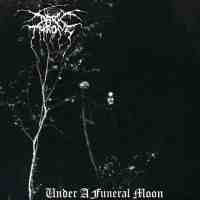
Darkthrone – Under a Funeral Moon
http://www.youtube.com/watch?v=h08zTR0F-qQ
This is just the beginning; there’s a lot more after this in all of the genres, which kept developing in their own ways. This is only an introduction to the history of it all, and is not designed to be comprehensive…
Von gained fame for the ultra-minimalist droning 1990s album Satanic Blood which raged forth in three-note songs that resembled air raid sirens of the soul going off in an infinite night of bestial darkness.
Returning after a long hiatus, the band conjure up Dark Gods: Seven Billion Slaves to bring us the greatest of rarities in metal: an honestly experimental album. Most “experimental” albums involve recycling avant-garde and progressive rock themes of the 1970s, but there isn’t anything at all like this album.
Perhaps recognizing that repeating the past would be tame, Von have instead chosen to make a form of ritual music that sounds like a collision between black metal, later Danzig and a horror movie soundtrack. The songs are just as simple but more musical, and are generally played more slowly but have a stronger sense of developing theme.
Like a soundtrack, these songs are designed to fade into the background and influence mood rather than command attention. Much like a few repeated notes signal a dark theme ahead in a movie, these songs use very similar melodies to horror movie soundtracks and presage a limitless and expanding fear. The mood is similar to Profanatica‘s Profanatitas de Domonatia or Demoncy‘s Enthroned is the Night. Much as in a horror movie we watch the characters go into the room where evil lurks, or prepare to yank aside the curtain covering what they fear, this album exudes a menacing sense of impending and inexorable threat.
Percussion works in a way that is rarely seen outside of opera. Its timekeeping functions are present when the music is uptempo, but for slower pieces it forms pure mood, a clomping footstep like the tread of an executioner. Guitars play very similar patterns repeatedly and nearly constantly, but are frequently overlaid with background chaotic noise that like distortion itself brings out submerged harmonics and gives the music added body and menace.
Melodies themselves sound like horror movie music tinged with the more listenable vein of occult or dark rock, sounding sometimes like Danzig’s later works and sometimes like the Sisters of Mercy. They fit together well and evoke moods clearly and strongly, which makes this album more interesting for repeated listens than Satanic Blood. The ritual nature of the pacing of song development, coupled with the uncanny ability that vocals had on the first album to trigger a sense of dread and despair by offsetting rhythm like an attacker outside the law, builds momentum behind this atmosphere.
Dark Gods: Seven Billion Slaves is going to take many by surprise. It’s sparse, meaning that it’s not a constant wall of sound; it is often slower and more theatrical; it is complex in that many simple riffs together tell a story more than cyclic complex riffs can. It is experimental, in that while this style could be called black metal, there’s a lot more going on, but unlike “kitchen sink” bands who throw in other genres at random, everything here is fused into one consistent and expressive style.
While this may not deliver conventional metal thrills, Dark Gods: Seven Billion Slaves shapes its minimalistic riffs into a changing atmosphere of morbid curiosity and onrushing fear. The result is overwhelming, like a vision of hell brought to earth, and with its convoluted and esoteric patterns shows us darkness revealing itself before our eyes, while we stare at the screen too scared to scream.
Sammath, Dutch-German furious black metal band, continues to work toward the release of its next album, Godless Arrogance.
To this end, the band released two tracks in demo form from the forthcoming album on Folter Records. These show the black/death thrashing hybrid that this band has become over the years.
On the new album, expect the instrumental prowess of 2009’s Triumph in Hatred with a stripped-down and vicious style more akin to 2006’s Dodengang. The band shows high confidence going into this album and it will be great to see it hit the shelves soon!
The year is done. It brought many things: a new wave of hipster metal that blipped and died, an old school revival that’s been percolating for years, drama and sadness with the recent death of Rigor Mortis’ Mike Scaccia. Above all else, however, it brought us some quality music, some of which is heavy metal and some of which is metal in spirit only. Enjoy this survey of the best of 2012.
The Best Metal (and related) of 2012
Abhorrence – Completely Vulgar This legendary band existed before Amorphis and plays a grittier style of the bold, warlike and heavy yet melodic music that graced Amorphis’ first album, The Karelian Isthmus. These Abhorrence tracks show the band that would later write that album as they emerge from early grind/death stylings and gradually work more melody into their work. This is metal’s holy grail: how to be both epic and amoral in the nihilistic sense of worshipping power, darkness and nature, but also use melody and harmony to give the works some staying power. As this collection of re-released demos progresses, the fusion of the two gets more confident and deft, leading us up to the point where the greatness of the first Amorphis album was inevitable.
Angel Witch – As Above, So Below After a lengthy absence, this classic NWOBHM band returns with an album that shows integration of more recent influences, specifically American heavy metal and progressive metal, but still keeps up the power. These songs are not as distinctive or as oddball as the heavily personalitied offerings from their self-titled album, but As Above, So Below is important because it takes disparate influences and places them under the control of one voice and style, which gives others room to build on. The oil-on-water aspect of bands switching between influences is gone and replaced by a smooth enwrapping of these styles into the substrate of Angel Witch’s lauded and learned evil heavy metal.
Beherit – Celebrate the Dead If death metal was modernism, with its emphasis on structure, black metal was postmodernism, or an attempt to show through atmosphere the many facets of an idea in a clarity which could not be confined to a single statement. This was a quest as old as humanity, which is how to communicate in such a way that people who do not understand it do not simply imitate it from the outside-in and make something that looks about like it, fooling most people. Since the late 1990s Beherit have been at work inventing the next wave or movement of metal, one in which multiple statements co-exist in contradictory opposites that reveal the shadow or silhouette of an underlying truth. Two forms are in tension here: the “loop” form of traditional ambient music, in which layers are poured on top of a basic dub to create a simple sonic tapestry, and the pure narrative form which electro-acoustic music (and even some dubstep) touches on, in which a story is told through the change of riffs. This is closer to the original death metal idea of structure, but it is structure created through atmosphere, like old Tangerine Dream and Brian Eno albums, or even classical music. To this end, Beherit has re-released two demo songs from Engram which are ambitious longer (13- and 15-minute) works which show a deepening and changing of atmosphere, using both looping and narrative constructs at the same time. This is a valiant and clear-headed attempt to resurrect black metal, which has fallen into the hands of those who imitate the “external” aspects of the early classics like simple riffs and fast songs, but understand none of the underlying ideas or songwriting methods. While it seems unconventional at first, Celebrate the Dead is a return to the truest form of black metal by expanding its orthodoxy to include the transcendental narrative of those more experienced in both this world, and the realms beyond. Be not fooled — evil pervades this release, so subtly that you will not know until it has seized your soul.
Dead Can Dance – Anastasis For their return after some absence, Dead Can Dance have taken the style on Spiritchaser and refined it even more with the sensibility of modern club music and soundtrack influences. Rhythms and tempo work like you might expect a big label ambient album to work, fitting very much into the slightly picked up chill-out range with gentle backing beats that are still identifiable enough to make it easy to listen to. Consistent with even earlier work, songs use extended structures, but they fit the pattern of an early MTV video or short film more than a musical one. The result is that these are immersive little sonic ventures that are both easy to hear and not surprising, and also, rewarding in their consistency and adept arrangements. Melodies themselves are not as adventurous or period/locale-specific as older Dead Can Dance, and in fact more lifts from earlier influences can be heard (check out the Doors “The end” inspirations on the first track). For a purist, this will not be the best Dead Can Dance album, but for something that has stepped into the Loreena McKennit or Enya range of “accessible,” this is far beyond what most would encounter otherwise and makes for a pleasant listen on its own.
Demoncy – Enthroned is the Night Along with Beherit, this shares the top spot as album of the year. In 2012, a wave of bands like Cruciamentum and Heresiarch rediscovered the sound of classic Incantation from the Onward to Golgotha area. Having come from the same school, joined to Incantation by Ixithra’s former band Havohej’s primary composer, Paul Ledney, having been an original member of Incantation, Demoncy launched into the same by creating a faithful followup to 1996’s Joined in Darkness. In this case, Demoncy add a bit of melody and atmosphere, channeling from first album Unleashed and other Swedish death metal classics, thus combining the two most intense areas of death metal into what is really a death metal album with a black metal sense of atmosphere. The result is a descent into a dark and primal place in which occult spiritual warfare transpires through the battling of motifs in this complex album made of simple parts. Like Joined in Darkness, it is otherworldly and foreboding, but a bit less purely alienated; instead, this album creates a sense of symbolic significance emerging like melody from the clouded obscure. Very little black metal of this intensity has been made since the mid-1990s which makes this both faithful to the spirit and pushing the boundaries of the genre, a simultaneous advancement that eludes most musicians and fans alike.
Derkéta – In Death We Meet Arising from the ashes of Mythic, the all-female doom-death band from the early 1990s, Derkéta follows in a more purely doom metal path including some of the juicy 1970s heavy metal style doom metal that audiences enjoy with bands like Pentagram and Witchfinder General. 24 years later, this album is the first for this promising band, and holds back nothing. Like Mythic, the music is formed of giant bolsters of tunneling power chords colliding slowly over a changing melodic landscape. Atmosphere emerges from within. The simplicity of it removes the glitz and contentless enhancement of current doom metal bands, and takes the listeners back to the essence of the genre, which is an unsettling sense of pervasive dread. A prominent Candlemass Ancient Dreams influence seems to be present in these compact and droning songs.
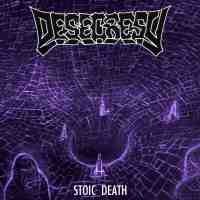
Desecresy – The Doom Skeptron Desecresy approach Finnish death metal the way others might approach doom metal, using melody and abstract song structures to convey an experience not unlike watching the helmet camera of a pilot flying through a vast and ancient underground cave in which demons seem to lurk behind every stalagtite. Comparable to a hybrid between Amorphis and Skepticism, this album nonetheless keeps up the umptempo riffing and lets its melodies emerge to construct an emanating atmosphere. The result is both aggressive and enjoyable from a purely death metal perspective, but where appropriate, it uses the moods of doom metal to complete that raging insanity to produce an experience that is like a journey. There are doubts, fears, joys, rage and sadness, but pervading all of it is a sonorous melancholy which indicates a change in viewing life from orientation toward what is safe, to prizing what is adventurous and as such being alone on a planet of people concerned with safety labels and microwave cooking.
Drawn and Quartered – Feeding Hell’s Furnace Imagine a hybrid between Angelcorpse and Num Skull. These songs are extremely basic, like the melodies of horror movies, but are put together with interlocking rhythms that propel them forward and give them atmosphere. As a result, their themes feel intuitive like paths through a forest remembered from a childhood story. There will not be surprise at the ways these tunes twist and bend, but appreciation for a well-done interpretation on a necessary idea. In the same way you might appreciate an excellent sword or well-executed painting of a familiar subject, these songs will be appreciated for how well they do what they love. Just as most musicians make their best work when they design it to be enjoyed repeatedly by people with their own tastes, this faithful and yet creative interpretation of the old school death metal genre will be shared among those who can appreciate it, for taking the past and making it live on by keeping it current to itself and through inventiveness, an enjoyable listen.
Faustcoven – Hellfire and Funeral Bells This release is not particularly metal, or at least underground metal, even though it aspires to the aesthetics of it. Rather, this is like Marilyn Manson interpreting classic heavy metal in a gothic doom metal context as informed by death metal aesthetics but not technique. It’s basically blues rock with short phrase power chord riffs and highly compelling rhythm, underneath leads that are reminiscent of a friendlier version of St. Vitus. Good use of theme allows this release to be a faithful listen and also have some staying power for those who like this style. Like most doom metal, it is designed to build a repetitive atmosphere that is part curl of enjoyment, and part linear path of a melancholic mood. The death metal vocals would normally be out of place here but with the heavy reverb they take a backseat and let the guitars talk, which is the point of this band. It will probably not delight those who like underground metal, but if you’re looking for someplace to go for your next Cathedral or Sleep fix, this furry doom band holds the ticket.
Grave – Endless Procession of SoulsGrave return to the Swedish style which they helped make famous. Like later Fleshcrawl, this music is simplified from the original riff-salad which was reverse-assembled to make a journey into darkness emerge from thin air, but although it uses plenty of verse-chorus segments, they are not the entirety of each song. There are enough labyrinthine twists and turns to be fun, a good motivational rhythm, and an atmosphere of darkness and aggressive that is also (oddly) comforting and natural. Although musically this is fairly basic, like early Grave, it shows more use of melody and harmony, which adds an appreciable dimension of compactness and centering without falling into standard rock music. The result is easy to listen to and yet brings out its power in moments of sudden clarity which, as in life, make the listener think there might be more afoot than the obvious.
Imprecation – Jehovah Denied This four-song EP shows the resurrected Imprecation: more consistent in its songwriting, slightly less manic, and more inclined to create a pervasive atmosphere of darkness. The occult death metal founders from Houston originally shone in the early 1990s, when their demos and later CD were released, but returned after inaction and the lending of band members to other acts. Their earlier material had more of a Morbid Angel influence and presented itself as clear occultism, where the newer material goes back more toward where Possessed and early old school death metal (Morpheus Descends, Massacre) were headed back in their day. Mood-enhancing use of background keyboards gives an aura of the mysterious to these dark melodies and the organic rhythms which suffuse them. Influences on this music span from pre-death metal, through the walking and stalking rhythms of speed metal, to the later black metal works in song structure and atmosphere. This EP presages a killer full-length but stands on its own as quality music with a voice particular to its worldview.
Incantation – Vanquish in Vengeance With new personnel and possibly the strongest sense of unity in a long time, Incantation very sensibly took influences deliberately from their own two greatest successes: Onward to Golgotha and Diabolical Conquest. The result is an album that self-consciously borrows from those albums in style but tries to create new songs to wrap in that style, and with the aid of new guitarist Alex Bouks (ex-Goreaphobia) shapes its works around melodic shapes but does not adorn them in melodic riffing, creating a sense of an inner region of hidden energy within the exterior of rugged chromatic shapes. The result is one of Incantation’s most conventional albums but also a festival of the methods that made early Incantation so distinctive and powerful, which combined makes for a good later death metal listen.
Legion of Doom – The Summoning of Shadows This oddity of an album begins with some form of sung prayer and launches into songs that are both adorned in the harmonic glaze of melodic playing and also possessed of the manic simplicity of early black metal. Like the primitive era of black metal, these songs are specific structures fitting the content of each song, with droning riffs that interact and build to a culmination before dissipating. On this album, Legion of Doom use more death metal and speed metal technique in with their Burzum-inspired black metal, ending in a result that sounds more like an ornate and elegant version of Gorgoroth’s Destroyer. Like all Legion of Doom releases, The Summoning of Shadows features songs that accelerate thematic intensity in layers and produce an immerse, ambient experience that suspends reality through the sheer dominating power of its riffs. This album is more efficient than the last couple of releases of this band, and by embracing a listenable style, makes the type of outsider album that Marduk or Watain wish they could.
Lord Wind – Ales Stenar If you want to immerse yourself in ancient sensation, Graveland axeman Rob Darken’s ambient/neofolk/soundtrack project Lord Wind is a good place to start. Unlike previous Lord Wind efforts, Ales Stenar mixes real vocals and violin with electronic music that is roughly inspired by the Conan and Red Sonja soundtracks. The goal however is less like the rock-ish folk songs of neofolk, or the grand accompaniment for cinema provided by soundtracks; this is music like Burzum or Graveland that is designed for the listener to lose themselves in its repetitive hypnotic surges, like a catechism or mantra. Its soaring melodies and plunging dynamics give it a familiarity like the rush of blood through veins in the ears, and the result feels natural and yet inspired to rise above the mundane at the same time. Like entering a forest, the songs open up to repeated listens and soon each part is distinct, but our natural way is to hear it all at once and derive a sentimental feeling, perhaps warlike, from it. This is the most proficient and perhaps most profound of the Lord Wind albums, proffering a complete escape from reality to a world that is both fantasy and more real than the stuporous dream of modernity.
Master – The New Elite Over the past few albums, punk/heavy metal hybrid Master has steadily been migrating toward late-1990s death metal. This new album presents a more technical view than the verse-chorus-exposition songs that Master (and related Speckmann projects) evolved from. Much like On the Seventh Day God Created…Master, riffs are strummed with precision at high speed and tend to lead away from stable grouping by adding riffs to the existing loop. These riffs use longer progressions and more chromatic fills, giving the music a mechanical terror that makes it sound like technocracy taking over. Speckmann’s vocals are tighter than in the past and urge the music along, but somewhere in this musical process of evolution, his overall tone has started sounding less like protest music and more like a cheering of the coming conflagration. Seeing that Master keep improving over time provides a great incentive to follow this band as they evolve further.
Profanatica – Sickened by Holy Host / The Grand Masters Sessions Sometimes, in order to reach your next aspiration, it is necessary to part with the past. Profanatica have done this in grand style by accumulating old tracks and re-working them in parallel, with one disc containing newer versions done in the early 1990s style, and the other containing older session takes on the same songs, interspersed with acoustic landscapes by Aragorn Amori, the band’s much-admired deceased former guitarist. Through its long history, the entity known as Profanatica/Havohej (or: Paul Ledney and friends) has consistently released material showcasing a truly artistic brilliance. Usually, between moments of brilliance there are experiments and less intense offerings that make it easy to forget that when they are in full swing, these musicians are unstoppable forces creating a unique type of black metal that is closer to ambient death metal but unlike most black metal at this time, possessed of a full mythos and unique view of the world. Like the best of Profanatica/Havohej, these two discs are ripping sonic terror that transcend daily life and divulge the essence of the feral spirit of pre-civilized humanity. In that vision of evil, Profanatica offer us something both inspiring and instructive, and do so through some of the best music of their career.
Terrorizer – Hordes of Zombies People love change if it is constant and hate it if not. Terrorizer misstepped with their first post-World Downfall album, but came back with a strong contender on Hordes of Zombies. It does not attempt to be World Downfall II which is intelligent since outward-in emulation of the past usually produces hollow shells, and a good many classic bands have gone to their graves in disgrace by doing the same thing. Instead, this aims more at the territory scoped by Napalm Death with Fear, Emptiness, Despair: a modern form of grindcore that is musical and listenable without being commercial, and aims less at creating an atmosphere of terror and misery than creating motivational, energetic and yet literalist/realist music. These songs convey a desire to look at a dangerous situation with hopeless odds, then jump in and fight it out. It’s war music, but music of a normalized war, like going out into a declining civilization and fighting for mundane survival. Hordes of Zombies does this through a somewhat overused metal metaphor, that of the zombie takeover of society, but as a movie/musical trope this theme has remained consistent since the 1960s because it so aptly describes egalitarian society. Consumerism, mass trends, fads, panics, elections, Black Friday sales, save-the-children; it’s all in there. Terrorizer may be brilliant satirists for transforming all of that mass neurosis into a simple symbol and then making these engaging songs about it. Each piece uses a combination of rhythmic and slight melodic hook to lure us in, then pits grinding riffs against one another while fitting them into bounding rhythms that unleash an inner fury in their conflict between the fear and the mundane. The result is a stream of ferocious riffs in songs that hold together as songs in the Terrorizer tradition, creating an experience of immersion in conflict that is both justified and everyday. For a genre such as grindcore, this more stable form is preferable to re-living the past or trying to “innovate” by including outside elements. As a result, Hordes of Zombies is not only a great listening experience but an archetype others will follow.
Thevetat – Disease to Divide One of the more interesting entries comes from ex-Ceremonium musician Thomas Pioli who has assembled a new team to make music that sounds like early NYDM mixed with the melodic undertones of heavy but intriguing bands like Montrosity, Malevolent Creation and Gorguts. The result hits hard with a rushing wall of chords and then drops into socketed rhythms that invoke a change in riffs, causing a twisted inner torment to emerge in Protean form. This gives old school death metal a new life without giving it a new form, since the form is the result of the content, which is essentially unchanged but slightly updated since 1992. No concessions to “modernization” (a/k/a mixing death metal with rock, jazz, metalcore, disco, punk, etc.) occur here, which allows this music to be in touch with its own spirit and flow freely from the source of its own inspiration. It is thunderous and yet perceptive, bringing with it the spirit of doom metal and its introspective melancholy. Although a three-song EP, this release beats out most albums released this year for pure death metal intensity.
Timeghoul – 1992-1994 Metal developed its own sense of “progressive” and “technical” music long before it imported jazz-fusion in order to help it. In fact, part of metal’s birth was from the original progressive rock in the 1970s and the soundtracks of horror movies, which gave it a predilection for this direction. “Progressive” itself is a misnomer since nothing new gets discovered in music, but probably more accurately means “complex”: music with unconventional song structures, extensive use of harmony, melody and key; possibly linked to some kind of story outside the music itself and the usual topics (love, sex, drama) of pop songs. These songs craft winding riffs and intricate structures, using embedded melody to transition between more chromatic riffs, and culminate in odd twists of fate that translate them into seemingly the reverse of their initial outlook. Culminating in the epic 10-minute “Occurrence on Mimas,” this collection of early works by this band showcase the enjoyably weird variety of death metal in its early days.
War Master – Pyramid of the Necropolis This modern band attempts to revive the death metal style, starting with the deathgrind of its namesake Bolt Thrower and incorporating influences from many of the bands of the era, and succeeds by staying true to its own enjoyment. As a result, it’s working in a style, and not from a template; the band want to create old school death metal, but aren’t doing it by imitating songs or styles, but by writing in that style based on similar inspirations. As a result, this band has its own voice despite being very familiar in technique, and has chosen its own path for subject matter and thus the arrangement of many of these songs and the types of riffs used. Its aesthetic mixes the grinding mid-tempo riffs and repetitive choruses of grindcore with the circuitous riffing of death metal and its tendency to unveil changes in layers of rhythm, guitar and vocals. While the style shows the influences of later death metal, its sensibility is firmly grounded in the early years, which makes this a great old-school death metal experience. However, its most salient factor is that it’s also interesting music. Songs are formed around their topic, with riffs and structure contorting to resemble the object, and riffcraft shows learning from the past but creation of its own new forms. Guttural vocals which maintain an ascetic detachment from the emotional content of the music help to give Pyramid of the Necropolis the ultimate death metal point of view, which is as a dispassionate observer amongs the ruins detailing the conflict that created this mess, and must endure after its collapse.
Disappointments of 2012
Abigor – Quintessence
Apparently this is new and old material. The shift between the new and old is like jumping out of a sauna into the snow. The newer material shapes itself to an expectation, much like the newer Swedishy bands in the style of Watain, that combines melodic punk with raw and random riffing in catchy rhythms. The result is like a painting made of painted dog turds, in that from a distance it is appealing, but as you get closer its mundane nature is revealed. Abigor have always suffered from being too quick-thinking and inventive for their own good, because they can always throw together a bunch of quality riffs and make most people think a song happened, but here that model breaks down. The songs feel more like slide-shows than organic wholes. The older material is good however.
Absurd – Asgardsrei
This remaster of the 1998 album was in theory supposed to improve sound quality. Had they simply done that, this would have been a shining victory. Instead, it has been standardized. The drums have been pumped up to emphasize rhythm, and the guitars doubled and bass-maximized, with vocals shrouded in reverb. Alone that removes much of the distinctive sound, but attempts have also been made to lower the volume on elements that are not orthodox black metal-cum-oi that Absurd makes now. The result is a loss of detail and an emphasis on the simpler parts of each riff, not the interesting interplay of riffs. They’ve made this album sound more like their remakes of earlier material and by pandering to one audience, lost a lot of what made Absurd interesting.
Acephalix – Deathless Master
A highly-praised release, this album purports to combine Swedish death metal and crustcore. What it ends up with is neither, but a mishmash of riffs around a rollicking beat, changing entirely at random. You hear a little bit of old Entombed, some Dismember, and a lot of filler riffing that really goes nowhere. For about three songs, it’s pleasant listening because you can tap your toes to it and it reminds you of Left Hand Path. Then you realize the songs never went anywhere. They’re like wallpaper. And to the horror of any crust fan, this is built on the bouncy beats and song structures of pop-punk. It’s closer to Blink 182 than Entombed or Amebix.
Aura Noir – Out to Die
Once upon a time, I referred to Aura Noir as a black metal Britney Spears because their music is pop dressed up as black metal. However, it’s normally fun pop with high energy and catchy riffs, even if in verse-chorus structures so repetitive that you have to background it. But with this album, they go into the boring zone. This is almost like a drone with a horse galloping in the background to keep up energy. And yet, like the lady that doth protest too much, the more “energy” you need to inject, the less the music is actually compelling. And on that level, this album is basically the same speed metal/Motorhead style riffs that bands were rehashing back in the 1980s, but now revived in an even more exhausted form.
Coffin Texts – The Tomb of Infinite Ritual
The people behind this band are good, and their intentions are good. The result of their efforts however is bog-standard death metal, not so because it imitates anything else, but because it is unreflective of any purpose outside being death metal. It’s predictable in the sense that nothing is surprising, and yet, it doesn’t really gesture at anything more than being death metal itself. I hope these guys stop trying to be whatever they think they should be, and find whatever they actually enjoy instead. Best yardstick for your music: what you enjoy and would listen to on your own, even if you knew no one in the band.
Graf Spee – Reincarnation
Some things should stay in the 1980s. This is prescient in that it emphasizes the kind of bouncy riffing that fits on the spectrum from Anthrax to Meshuggah and onward to metalcore, but it’s disorganized, inconsistent with the vocals, and feels more like a pile of spare parts than a smoothly running engine.
Hellevetron – Death Scroll of Seven Hells and Its Infernal Majesty
2012 was the year everyone rediscovered Onward to Golgotha. I agree, it’s a killer album. There’s nothing wrong with Hellvetron, who seem like competent musicians, but this album attempts to imitate the outward form of Onward to Golgotha without grasping the underlying tension in the music that makes it work. As a result, Hellvetron impose current song structures (loops) and standards onto the aesthetic of the past, which makes for a decent listen until it becomes apparent that it’s not really about anything except itself.
Impiety – Ravage and Conquer
It’s hard not to enjoy this album, which is like a hybrid between Angelcorpse and Mortem with a squidge more melody. However, it is highly repetitive because it doesn’t go much beyond that concept. Like Krisiun before it, the concept is full speed ahead skull-crushing aesthetic, and this is so powerful it squeezes out most artistic content. This leaves you with some creative riffs, some talented use of tempo, but nothing that holds together long enough to listen to for a decade.
Inverloch – Dusk | Subside
These ex-Disembowelment musicians have a bit of a cult formed around themselves. Part of the reason is that unlike almost every other band before black metal, they knew how to write melodic music, which they do here as well, in something that resembles a cross between death-doom like Asphyx and melodic doom like Candlemass or Paradise Lost. Crashing riffs coexist with gentle melodic fills and overlays that create a dense atmosphere of nocturnal wonder. However, beyond that, the direction seems confused, which is appropriate for a re-entry EP but excludes it from this year’s best of.
Mantas – Death by Metal
Before the first Death album, Chuck Schuldiner tried out his riffcraft in Mantas, named in tribute (by educated guess) to Venom. There’s a reason these sort of re-releases are confined to collectors, and that is that these demos show a young band trying to get the order of riffs in its songs correct and at the same time develop an image, sound and voice. The result is great, if you like listening to parts of the same six songs 18 times each. A true-blue die-hard ultra-kvlt collector will put this on the stereo next to “Scream Bloody Gore” and “Spiritual Healing” and start working out each riff until he’s sure how everything works. Then again, with the hindsight of nearly thirty years, we know exactly how it should turn out, which means that for the rest of us, this will sit on the shelf in perpetuity except as a conversation piece.
Maveth – Coils of the Black Elite
This album reminds me of middle period Immolation, in which creative riffing often fell into very similar rhythms and as such, the songs sort of became a continuum which resembled pulled taffy: cut off a length of Immolation, let’s listen to that. Oh look, sliced Immolation! It’s the same way here. Maveth has very creating riffing with excellent right-hand control, but the songs themselves are a muddle because the riffs are the direction and as such, there’s not really a way to put the riffs together that makes sense, so the band converges on a mean and drops into very similar trudge rhythms to make the songs catchy. At first listen, especially the first three tracks, promise is everywhere; by track five, it’s clear that circularity has occurred.
Purtenance – Sacrifice the King
This EP suffers from a primary flaw, which is disorganization. It’s not random, but it’s what happens when you decide to make death metal and so treat that as a container, and then “write to fill” and twist the riffs into place so they work with each other. It’s not about anything, and thus is “random” in the sense that it could mean anything. As a musical experience, it mostly conveys a sense of disorganization and frustration. The best bands mold that sort of raw emotion into something which rises above the confusion and achieves clarity. If not beauty, truth, goodness, etc. at least something that is desired more than it is hated, and so inspires them, even if that goal is hatred itself.
Bathory’s relation to the band’s fanbase is an infected story of contradictory interests concerning very human desires for truth and meaning. Oftentimes fans and creator pulled in opposite directions, fighting over whether to leave the Bathory mask on or reveal Bathory’s inner workings.
Debuting in 1984, Bathory’s cult status was rapidly acknowledged in the musical underground. But during a long time a certain air of mystery surrounded the band. It seemed beyond time, beyond space, and even out of national context (to a Swedish person this Stockholm wonder didn’t seem as typically Swedish as many of the later Death Metal bands). In general, main man Quorthon kept to himself, few pictures of the band existed, and there were hardly any live gigs at all, in particular once the music got closer to Wagner than to Motörhead. Bathory took one heavy metal tradition to extremes: it created a mythos out of nothing more than a few cover images and an interview or two. This obscure and ambiguous myth bound people together. They wanted to live out this vision as they found it more appealing than their world. When the fanbase went looking for answers, and found little else but songs of evil, darkness, destruction and conspiracies with Satan, imaginations ran wild and filled in the gaps with what they wanted to see, not what they saw.
People have a desire for continuity in an individual’s past. In this case, that desire was expressed among metal fans by trying to explain Bathory’s music through references to a heavy influence from a band which prior to Bathory was seen as the most extreme: Venom. In several interviews Quorthon himself has denied any Venom influence, but in many biographies the memory of early Bathory as a Venom clone is nevertheless quite persistent. (According to Quorthon, his main influences were Black Sabbath, Motörhead, The Exploited, and GBH, and later on Wagner, Beethoven, and Haydn among others.)
The will to interpret Bathory’s music as a logical continuation of Venom, and accordingly seek out a sense of “eternity” in the genre which these two bands (among others) officially created in the earliest of times, is hardly surprising. A consistent pattern which suggests some sort of intention is simply more attractive than a chaotic mess of a genesis produced by two groups entirely unknown to each other.
It is, however, easy to recognize among the authors of reviews of early Bathory albums an aspiration towards and an acknowledgement of a distinct identity of the band and its founder. Regarding Bathory’s self-titled debut album and its follow-up, a mantra is repeated: these records are the starting point for a whole genre and Quorthon is its first hero. This is, so to speak, the creation myth associated with Bathory.
Repetition of this myth is presumably what makes it go beyond historicity and is what makes it timeless. It’s a way for a metal fan to not only “create” Bathory, but also be a part of the phenomenon. Even repeated listens to Blood Fire Death is a repetition of a mythical Now, which gives us a sort of “vertical anchoring.” If myth is a celebration of life, a summary of the Past in the Now, then this is certainly what Bathory is to the band’s followers.
Quorthon himself seems to have had an enormous respect for the mythical power of Bathory. Referring to his fanbase as “The Bathory Hordes”, he tried to reach out to it in order to receive answers on how to deal with this beast:
[…] send me a letter of what you think, what you would want us to do in the future […] Remember, it is you the fans out there on whom we depend on. […] Stay united and may the northstar shine on you all, keep metal at heart!!
This kind of democratization most likely rendered him unable to control the myth of the band. As Quorthon “grew out” of Satanism, and myths surrounding his persona still insisted on his being a demonic devil worshipper, he wanted to set the record straight. And this is where things get interesting.
In 1996, Bathory released Blood On Ice, a retro album with liner notes containing a lengthy exposition on the band’s early history. Presumably, Quorthon had wished to update his biography and rid it of the misconceptions that according to him were abundant in the metal world, but it was probably also a way to pay tribute to the legend by contributing to it with a few “behind the scenes” stories.
This, however, proved to be a serious miscalculation of what the fans wanted. The unmasking threatened the consistent cultural memory of Bathory. And reactions weren’t long in coming: fans spoke of sacrilege and treachery in the many letters that were sent to Quorthon as a direct reaction to the liner notes. The memory of Bathory was now to a great extent a social concern and no longer only the creation of one man. Quorthon writes:
I realized then more than ever before that BATHORY was surrounded by the same sort of stuff only legends are made from. The element of mystery and suspense was still very important to a lot of die-hard BATHORY fans. [The truth] didn’t suit the image that a lot people had of BATHORY or myself.
Quorthon died in June 2004, but shortly before his death he founded an official Bathory website in which he denies the old image of himself as someone who eats children, drinks blood, and lives in a cage, an image that apparently still needed to be denied. Quorthon tells of an interview many years after he abandoned his satanic image: despite the time that had passed, he was still expected to pose for a photo session with pentagrams, skulls and cobweb.
Ironically, many fans have as of recently noted that Quorthon himself tampered with the truth quite deliberately. The iconic Bathory goat – which has become a sort of identity marker among fans – is, according to Quorthon, a collage created out of bits and pieces “from several horror comic magazines”. In fact, the goat is taken from a finished illustration in a book on witches from 1981. It wasn’t until 2007 that the originator, Joseph A. Smith, got to know that his drawings had been used as subject matter for tattoos and the like all around the world for decades. It also turns out that the lyrics and title to Bathory’s “For All Those Who Died” is more or less stolen from a feminist poem by Erica Jong.
The legacy of Bathory will nevertheless die hard. Quorthon created a legend so powerful neither he nor its fans could control it, an art that hovers above independently of its creator and its receivers. Yet we shouldn’t forget the core quality of its longevity: Quorthon’s compositions. These are what will always create very much alive “elements of mystery and suspense” in the mind of the listener. That’s where the magic happens. Hence the art of Bathory is stronger than both the fans’ myth-making and Quorthon’s myth-busting.
Going through Bathory’s albums again, experiencing the passionate evil melody of “The Return of the Darkness and Evil” or the haunting existential angst of “Twilight of the Gods,” they contain the same everlasting power they ever did and is what makes Bathory eternal. The mask is put back on. Continuity reappears and everything returns.


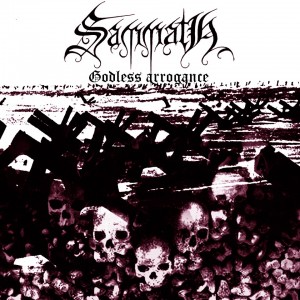 Dutch-German blazing black metal act Sammath, who are preparing to unleash their fifth album, Godless Arrogance, have signed to worldwide metal music label Hammerheart Records for the release of that album.
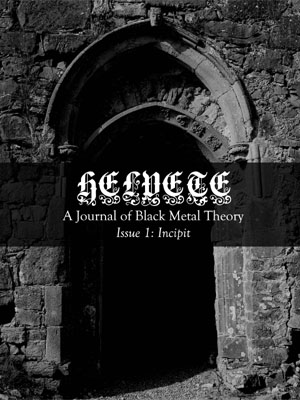 As part of the burgeoning movement to understand metal and how it relates to the world, comes the first issue of
 ![[AllCDCovers]_darkthrone_transilvanian_hunger_1994_retail_cd-front](https://www.deathmetal.org/wp-content/uploads/AllCDCovers_darkthrone_transilvanian_hunger_1994_retail_cd-front.jpg)
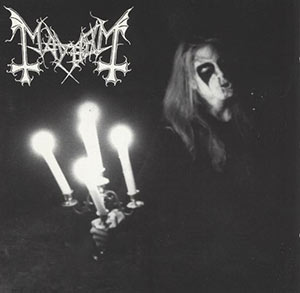 This minimalist approach culminated both visually and musically with Transilvanian Hunger, showing a photocopied, grainy picture of Fenriz dehumanized beyond recognition, holding a candelabrum and presumably screaming his lungs out in the night. Some of its appeal lies in its ambiguity; feelings of futility, anger and power are intermixed, widening its significance.
 The “necro” imagery, however, may have been unintentional: In Precious Metal: Decibel Presents the Stories Behind 25 Extreme Metal Masterpieces, Fenriz asserts that mere photocopies from the TH photo session were the only thing he could find at the time to send to Peaceville Records, implying that the same picture could have been reproduced in a more polished fashion. But it doesn’t seem entirely unlikely that the use of a photocopy was inspired by Peaceville’s 1992 compilation album, Peaceville Volume 4, spoofing both cover art and title of the famous Black Sabbath album mentioned above and containing one of Darkthrone’s pre-TH songs, implying that the use was deliberate after all. (Rabid speculation is any fan’s right, right?)
 Tolkien ambient black metal project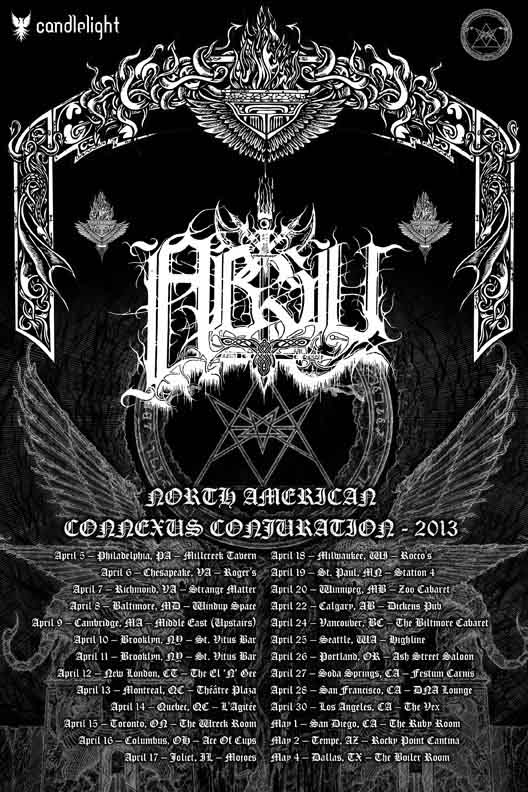
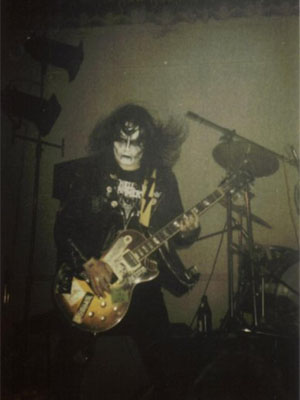 We can only know the present by knowing the past. In the case of heavy metal, it is a murky past obscured by both the grandiose rockstar dreams of individuals and the manipulative fingers of a voracious industry.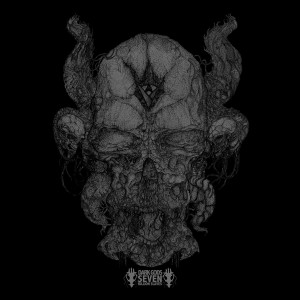
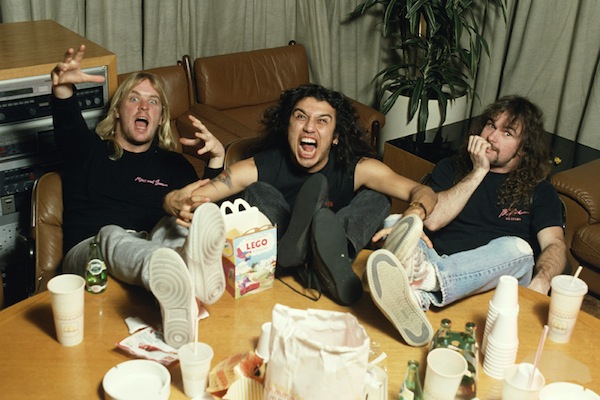
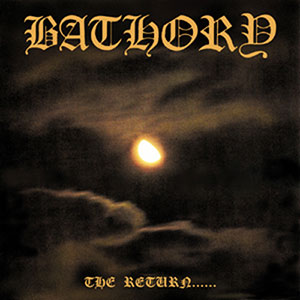 Bathory’s relation to the band’s fanbase is an infected story of contradictory interests concerning very human desires for truth and meaning. Oftentimes fans and creator pulled in opposite directions, fighting over whether to leave the Bathory mask on or reveal Bathory’s inner workings.
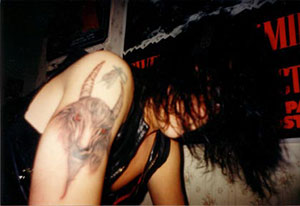 Ironically, many fans have as of recently noted that Quorthon himself tampered with the truth quite deliberately. The iconic Bathory goat – which has become a sort of identity marker among fans – is, according to Quorthon, a collage created out of bits and pieces “from several horror comic magazines”. In fact, the goat is taken from a finished illustration in a book on witches from 1981. It wasn’t until 2007 that the originator, Joseph A. Smith, got to know that his drawings had been used as subject matter for tattoos and the like all around the world for decades. It also turns out that the lyrics and title to Bathory’s “For All Those Who Died” is more or less stolen from a