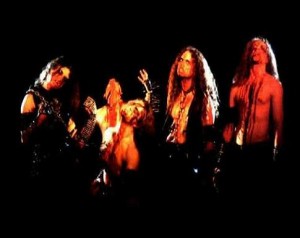
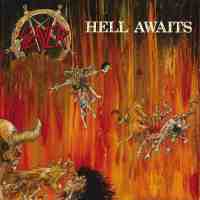
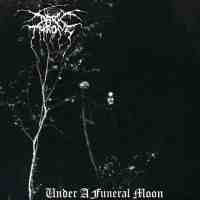
Hellfires of the lands down under

Does it seem to you that the days are shorter
And does it seem to you that the nights seem so much longer
Well it does to me, and in time you will see
That the fate of the world is burning in fire

– Deströyer 666, Genesis to Genocide

In my visions of another age, Australia is a domain of rogues and devils, swept by sands and heat, a colony of fear. Aboriginals fight, mutated animals leap and grappling hooks are thrown from jeeps that speed with metallic roar across the wasteland. Humanity decays, but Australia preserves the instinct for survival, man against desert, taking pleasure in the primitive actions of hunting, fighting, lovemaking and getting drunk on bourbon. Nocturnal winds howl through the chasms, kangaroos leap over graves and tribal chants are raised amidst campfires as skull goblets are raised.

While I have never been to the country, the impressions of Australian black and death metal do nothing but strengthen the images of brutal frontier life. The sense of the wild is different, more internalized, almost Jack London -like, compared to the European romanticized walks in civilized Teutorburger woods or pure, silent Scandinavian nature. Australians are rebels who have tasted the whip of slavery and still remember it – with hate in their blood.

Every rock fan knows AC/DC and Nick Cave, the astonishing twin pillars that represent total opposites of image and style roleplay in hard rock. Both of them influenced heavy metal around the world, but a mainstream fan would be hard pressed to name any other Australian bands of note. I’m not going to dwell on the early 80s, but mention some events that were triggered by the resurgent death and black metal ideas of Europe and the USA.

Australia is characterized by geographical distance from the Western pop culture trends and so, death metal didn’t happen early but it was marked by a serious intensity from the beginning. As a perfect example, we can take Armoured Angel, who with their late 80s series of demos gradually developed from a heavy and grinding version of speed metal into a technical artillery of militantly precise death metal akin to Polish innovators Vader. Hobbs’ Angel of Death, due both to their cult reputation and connections to later more visceral bands, proved definitive with their self titled album in establishing the early death metal attitude and sound of bands like Destruction and Slayer in Down Under. Hobbs’ raw, molten hot solo bends and breaks were like burning gasoline leaking from a bullet torn hole in a fighter plane. Meanwhile, Sadistik Exekution initiated their campaign of abuse against every known musical principle, which continues up to this day.

Influenced by hardcore and speed metal, these madmen from Sydney proceeded to destroy the reputability of Australian metal with their on-stage and off-stage antics, almost becoming performance art with their macabre, sarcastic terror campaign of pure noise. Already “The Magus”, recorded in 1986, suggested that this band would dare to go where others would not, the subconscious realm of damnations and mutations, yet containing the elements within an underground death metal rhythm and riff based format. Their second and best album, “We Are Death… Fukk You!” was already something else – a noisy freakshow of an album, with the catatonic, desperate screams of Rok and nearly fusion jazz-y random blasts of violence from the strings of Rev Kriss Hades and Dave Slave. Sadly, their later albums mostly devolved into using the madness as a gimmick instead of a mode to express actual items of perception.

The next generation produced more self-contained music but it also showed the blooming of the world wide death metal presence, as we are talking about the days when death metal was at its commercial heights, ’91-’93. Many bands wanted to be like their big brethren in Florida, as a shameful but popular example let’s mention Mortification, who aped the thrashy sound of early Death with some of the complex rhythms of Obituary or Suffocation, yet infiltrating the standard gore text with reborn Christian propaganda, which had a widespread presence in Australian metal at large. Meanwhile, a band like Anatomy, whose elegant use of melody as texture, akin to Swedish bands like Grave or maybe even At the Gates, remained unknown to most death metal fans. Anatomy’s constructions weren’t altogether as brilliant, but as with many Norwegian early death metal bands, it was a breeding ground for musicians and ideas that would fully develop into a wave of satanic, intense war metal. And if you read the diSEMBOWELMENT review we published some time ago, you already know that they were able to built a transcendentally blissful temple of Zen-like tranced out death metal from the simple basis of combining British style grindcore with British style doom.

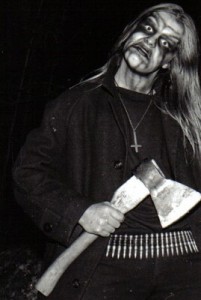
The acid, sex and Satan obsessed wave of barbaric war metal, ca. 1994, was again closer to the sardonic “fighting man’s black metal” attitude of Beherit, Blasphemy and Impaled Nazarene, than Norwegian “top hat black metal”. This means that Bestial Warlust (“Vengeance War ’til Death”), Deströyer 666 (“Violence is the Prince of This World” and “Unchain the Wolves”) and Gospel of the Horns (“The Satanist’s Dream”) used Sarcófago and Destruction as templates to unleash a torrent of riffs which could have been untuned Motörhead on 45 rpm, emphasized by an artillery of ambient drumming to evoke images of blooddrenched hordes and endless streams of bombers. I remember how back in the day these bands were even widely detested in zines documenting the black metal phenomenon, but they proved crucial to bands which around the turn of the millennium clad in bullet belts and started wearing gas masks in “war metal” revival’s endless stream of clones.

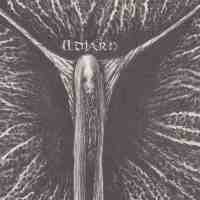
All this might have you thinking that the Nordic and Romantic styles of black metal were obsolete in Australia, but this was not to be the case. Abyssic Hate (whose “Cleansing with an Ancient Race” was a perfect match for the Immortal related Det Hedenske Folk on their split album) intended to capture the harsh poetry of Burzum and Ildjarn. Later material was somewhat unsuccessful because of humanocentric (“suicidal”) terminology, despite ambient leanings in songwriting. Nazxul was the Australian counterpart to mysticist bands like Nåstrond or Osculum Infame, whose cloaked, symbolic stage presence was a source of controversy. Theatrical, esoteric and arrogant, Nazxul did not fail to clothe oblique satanism in suggestive and venomous fury, at times surprisingly cerebral – especially on the mini-album “Black Seed”. Samain’s “Indomitus” recalled some of Enslaved’s and Graveland’s explorations in long songs influenced by folk and classical music, wandering through interludes and heavy, thunderous, emotional modes as if paralleling the documented trials of the ancient Indo-European tribes, whose mythological symbolism filled the lyrics.

Gradually, we can note the presence of all the international metal trends and hypes increasing in Australia, filling the continent with meaningless bands. It would be a lie to say that the random band you hear from Australia is up to anything good. But there’s some you might like to hear. Asphyxia is a young technical death metal band, influenced by Nile, Kataklysm and the rest of the champions of convoluted hyperspeed – they are bit in love with the Necrophagist digital treachery fashion but they have room to develop and the players definitely deserve applause for their instrumental excursion. Midnight Odyssey uses oceanic layers of slow melody to transform black metal to a landscape of dark clouds, using keyboards in the evocative manner familiar from Schulze and Summoning. The best of the epics on “Firmament” rediscover a youthful, hopeful beauty that hasn’t been too fashionable in the image and commodity oriented latter days of black and death metal. Nazxul, who sadly lost a vital member to a motorcycle accident, released in 2009 their possible magnum opus, the immense “Iconoclast” which has established itself as one of my top black metal choices of the year despite initial skepticism towards the more standard imagery and vocabulary employed on the surface. Suggestively classical and elegant, as Emperor and Avzhia did it, Nazxul praise the unliving and the unknown with a Bach-ian playful sonority, adding themes, keyboards and guitar leads to basically simple songs the same way an alchemist adds prime materials to his boiling tincture of salvation. It is all, and much more, than most of Funeral Mist (and their ilk) tried to achieve with their experimental norsecore.

The old horde is still going strong, of course, as I got the initial inspiration for this writeup when interviewing Deströyer 666 (now based in Netherlands and the UK) elsewhere. With their latest album “Defiance”, they continue to quote the metal history all the way back to Judas Priest and the NWOBHM and this was of course much enjoyed by this writer even though it would be false to say that they would have reinvented, or even surpassed, their old selves in any manner. The scene is still brimming with offshoots of Anatomy and Bestial Warlust, such as Ignivomous, who on “Death Transmutation” have definitely listened their Incantation and Immolation, not without streamlining them to a more generic barbaric noise approach though, and Razor of Occam, whose “Homage to Martyrs” updates the violence of Sodom and Kreator to a new generation yet again, as wolves surrounding the throne room of Absu who stumbled and diluted their ancient black thrash in favor of “progressive” stylings that mostly only pleases reviewers in Terrorizer.

I know that mortals’ ears are already bleeding, but it’s impossible to escape this topic without mentioning a few curiosities from Adelaide group of total nutcases, starting the cult old school death metal band Martire back in the early 90s. The early demos and EP’s have been re-released multiple times. Since that, members who call themselves “The Great Righteous Destroyer” and “The Serpent Inquisitor” have continued to baffle the hapless headbangers with one after the other more indescribable and twisted songs. Stargazer’s Lovecraftian, off-center and racing death metal is what I personally consider the flagship band, whereas Cauldron Black Ram grooves like a joint venture of Celtic Frost and Running Wild members (in concept also). Misery’s Omen paints a hyper-dramatic curtain of dreamy black metal resembling Samael and a krautrock band on an endless bad acid trip, describing “Desolate Winds of Mars”, “Antarctic Ice Chasms” and other spectacles of consciousness awaking to the immense possibilities offered by nature itself, impersonal, cold but beautiful.

Gather ’round all you fire-starters
Whirlwind reapers and comet riders
Come to our mountain hall
Come and heed the call

– Deströyer 666, The Calling

Written by Devamitra

No Comments

Tags: , , , , , , , , , , , , , , ,

Interview: Omid (Fearless Iranians From Hell)

Some artists like to tell you what to think, and others make you meet them halfway. These provocateurs are both more artistic and more realistic than the others, who are usually using those bold political opinions to mask a lack of direction otherwise. Of the metal-influenced genres to exist, thrash (crossover between hardcore punk and metal) was the most playfull provocative, and of all the thrash bands, the Fearless Iranians From Hell were the arch-jesters of making people think. During their reign in the 1980s, America freshly smarting from the OPEC debacle of the 1970s was convinced its next big enemy was Islamic fundamentalism while at the same time becoming more politically fundamentalist itself; it took some balls to tweak that self-righteous outlook by the nose, and even more to do so by mocking the American vision of democracy, justice and history — by appearing to endorse Islamic fundamentalism from within America’s borders. We were fortunate enough to catch Omid (drums, guitar, art direction, producer, and co-writer of both music and lyrics) while he was cleaning his gold-plated AK-47 in San Antonio, Texas.

Rumor has it that members of the Fearless Iranians From Hell were in an early thrash band called The Marching Plague. Was your interest always in thrash and extreme hardcore, or did you get introduced to music through other genres?

Check out the Texas hardcore compilation that Gibby Haynes (Butthole Surfers) released in the 80’s called Cottage Cheese from the Lips of Death, and the harder-to-find punk compilation on Matako Mazuri Records that Jeff Smith (The Hickoids) released called Metal Moo Cow. You’ll find all of Fearless Iranians From Hell’s members previous bands there: The first Fearless Iranians From Hell line-up consisted of members of The Marching Plague and the future lead guitarist for the band Toejam (on bass). The Fearless Iranians From Hell line-up that recorded for Boner Records was comprised of ex-members of The Marching Plague, The Butthole Surfers, Prenatal Lust, and Toejam.

The members of Fearless Iranians From Hell grew up listening to all kinds of music: pop, punk, synth, industrial, avant-garde, reggae, rap, classical, and especially disco. Many a disco party was held at Fearless Iranians From Hell headquarters. In fact, Fearless Iranians From Hell recorded, but never officially released a disco record called Dance for Allah. It’s pretty hard to find, though there are a few warbly cassette copies of it floating around out there. Although Fearless Iranians From Hell’s guitars are loud and often out of tune, and the vocals are shouted, you can still hear that pop sensibility in the songs.

In politics, we usually hear about The Other of some form or another being a threat to our way of life. Rock music has traditionally grasped for “authenticity” by identifying itself with an other, whether African-Americans, drug users, gender-ambiguous individuals or criminality/gangsters. The Fearless Iranians From Hell seem to have inverted this formula, by embracing a larger-than-life vision of The Other in order to show us more about ourselves. How did you hit on this doubly ironic technique?

We were influenced by The Martial Arts. Seriously. It was a Judo strategy: Turning your enemies’ power against themselves.

How do you feel when you turn on CNN or your favorite news service, and see headlines that could well have come straight from Fearless Iranians From Hell lyrics?

Not suprised, unfortunately. While the band was still together, we had the ultimate punk PR man: The Ayatollah Khomeini. Every time you opened the paper, or turned on the news, there he was, stirring up the shit. World News doubled as advertisments for our band.

You were appearing to endorse the Ayatollah Khomeini, radical Islam and jihad against Americans during the Reagan 1980s in the heart of Texas. How did people react? Were there differences based on their alignment in the political spectrum? Do people still react the same way?
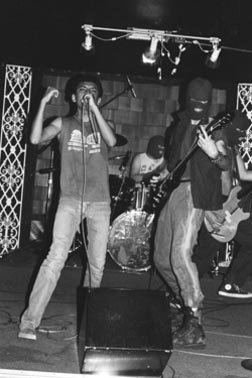
How do you think they reacted? Hahahaha! They HATED us. Especially in the South. The more intelligent people figured out it was political satire, and that what we were doing was ridiculously over-the-top. But we were banking on the more thick-headed ones getting it wrong, being offended, thus drawing more attention to the band. We were attacked by police, protesters, skinheads, right-wing radio hosts, left-wing college boy bands who were too caught up in their seriousness to get what we were doing, gangs, religious organizations, promoters…hell, Fearless Iranians From Hell album covers were even featured in PTA slide-shows portraying the evils of rock ‘n’ roll. Mission accomplished.

Political views varied between our band members, but Fearless Iranians From Hell didn’t have a specific political agenda. We did however have a common creative agenda. We purposefully garbled political rhetoric, so it was confusing to all ends of the spectrum. The band refused to do interviews at the time, which helped further the misinformation and confusion + there was no internet, so it was a lot harder for people to get the facts straight about who we were and where we were coming from.

We eventually went on tour, and did a few radio interviews in ’88 and ’89, and thought we had let the cat out of the bag. However, it appears many have remained uninformed. For instance, just a couple of years ago, some idiot posted a bounty on the heads of the band members on his web page. One of our lawyers had the site removed.

How did the fearless Iranians in your mythos (the world of characters created by your lyrics and cover art) end up being hash-smoking maniacs? Is this part of a satire of American artists who endorse drugs in their music?

The song “Iranian Hash” is a reference to Hassan-i Sabbah, who founded a group known as the Hashshashin. Hassan-i Sabbah was a Persian Nizari Isma’ili missionary who converted a northern Iran community in the late 11th century. Part of his indoctrination technique was to keep his young assassins stoned out of their minds on hashish. Of course, it’s also a jab at Reagan’s “War on Drugs”…a turn-of-the phrase, as the Hashshashin literally went to war on drugs.

You had four releases: a self-titled EP, the Die For Allah LP, Holy War LP and Foolish Americans LP. What were the differences between them, how did they “progress” if at all, and which is your favorite?

The 7″ EP was more mid-tempo punk. Lyrically, it was an almost rap-like introduction to the band, and featured the horrifyingly prophetic “Blow up the Embassy.” The first album, Die For Allah, was like a soundtrack to a movie. Much harder hitting, and faster-paced. The second album, Holy War, was the most raw and explosive. Having played live together for a couple of years at that point, the band were at the top of our game and were pushing everything to its extreme both musically and lyrically.

The third album was more studio-fied, verged on heavy metal at times, and along with the usual outrageous lyrics, contains some “serious” non-tongue-and cheek songs like “A Martyr in Every Home.” The band went into the recording studio knowing it was going to be our last album, planning to break up before we started repeating ourselves. Amir’s Farsi-spoken vocals on the last song, “Decade” were decidedly our final words to the world. No favorites. I look at all the albums as one single body of work, to be listened to in order.

Evolution of life, and the emergence of man, is a natural process in which chance, failure, waste, disorder and death will ultimately prevail. The entire destiny of the upsurge of life and all of its efforts have been enshrouded, from the beginning, by a cloak of “heat-death,” which, one day, will cut off the source of life — the sun. The very air we breathe is drawn from a thin film of atmosphere which hovers precariously over the seas and mountains and praises that have been pushed up for us to stand on.

– Raymond Nogar, The Lord of the Absurd (1966)

In an interview, you talked about an important concept — not “taking music at face value.” Face value, we assume, is what the music projects; are you saying that little in this world matches up to what it projects, or that its actual causes are different than what it tells you are its causes?

Americans, as a whole, have an underdeveloped sense of irony.

How did you get involved in playing and writing music?

We all came from different levels of musical appreciation and education. Our lead guitarist always had to tune our rhythm guitarist’s axe, because he never learned how. But that didn’t matter, because the music we were into at the time favored creative ideas over virtuousity. The Sex Pistols playing in our hometown, San Antonio, and the DIY punk aesthetic are what brought it all together.

How did the members of the Fearless Iranians From Hell meet?

Fearless Iranians From Hell’s first singer, Amir, moved to Texas with his family after the fall of the Shah of Iran, to flee the reign of the Ayatollah Khomeini. Amir made friends with the other outcasts in his American high-school, punk rockers who were in a band called The Plague. The Plague rotated lead vocalists a few times ( Amir may have even been the singer for a show or two ) before settling on a line-up and changing their name to The Marching Plague. The lead singer for The Marching Plague appeared as the voice of Anus Presley on the first Butthole Surfers EP ( the tracks “The Shah Sleeps in Lee Harvey’s Grave” and “The Revenge of Anus Presley” ) and, after joking with Amir that he should have his own punk band, wrote the first Fearless Iranians From Hell songs.

The first Fearless Iranians From Hell line-up, comprised mainly of Marching Plague members, would wear ski masks to both enhance the terror-rock concept, and so they could open for The Marching Plague without the audience knowing they were watching the same band twice. This line-up recorded “Burn the Books” for the “Metal Moo Cow” compilation, with Amir on lead vocals. Around this time, The Marching Plague, having released an EP chock full of notorius, made-to-offend lyrics, took an about-face, and influenced by the more positive DC scene, headed in an emo direction. Shortly thereafter, the Marching Plague’s lead singer left the band, devoting his full attention to Fearless Iranians From Hell, calling on ex-members of Prenatal Lust and Toejam to fill out the roles of his ex-bandmates.

Maximum Rock ‘n’ Roll magazine’s Tim Yohannan, who hated The Marching Plague’s un-PC lyrics, actually loved the live Fearless Iranians From Hell demo sent to him for review and recommended, “Get thee to a studio, or off with thy hands”. Fearless Iranians From Hell obliged, securing a record deal with the California label, Boner Records, home of Fang, The Melvins, Tales of Terror, etc. Before Fearless Iranians From Hell entered the studio, Amir suggested he be replaced by a more capable lead vocalist. Amir stayed on board as a songwriter, manager, information source, and spokesman. Amir also contributed vocals (the ones that were sung in Farsi) to the 1st and 3rd album. Before recording our debut album, the bassist who played on the Fearless Iranians From Hell 7″ was replaced by the Butthole Surfer’s first bass player.

How do you think our society uses icons like the Ayatollah Khomeini to make us live in fear, how does it benefit from that, and how does using those icons in over-the-top satire (like Jonathan Swift’s A Modest Proposal) change how things are done?

It’s the age-old cult tactic of making people feel that they are in imminent danger. It’s an instrument of control, and an insult to our intelligence. The Ayatollah Khomeini was bad news. No doubt about it. But the danger is in mimicking his behavior in our own free country, villianizing an entire race, and simplifying complex issues into a battle between “good” and “evil.” I’m not quite sure if “A Modest Proposal” or Die For Allah actually changed anything, or if we were just preaching to, and entertaining, the choir. You’ll have to find some Fearless converts out there to answer that one.

Do you feel genre is important, and that specific genres have specific conventions that make them distinct from others? What genre would you identify as that which encloses the Fearless Iranians From Hell? Did you call yourselves skatethrash, thrash, crossover punk or punk hardcore, or something else?

Conforming to a particular genre can be a good starting point…taking advantage of a popular movement to get people’s initial attention, but from that point you have to carve out your own identity, and leave the genre behind. When Fearless Iranians From Hell emerged, the flavor-of-the-day was hardcore punk. It’s arguable that we were an art-rock band, but we definitely wouldn’t have classified ourselves as that at the time.

Though I didn’t consider us skatethrash, half of the band were actually skateboarders, and our record label worked out a deal with Thrasher Magazine where you’d get a free Fearless Iranians From Hell album when you bought a subscription. We thought that was pretty funny: Fearless Iranians coming to America, getting infected by capitalism and selling out. It added to the confusion.

Did thrash music, which is what I’m calling the metal/punk hybrids like DRI and CRYPTIC SLAUGHTER, have its own style and val, ues that were separate from its “ingredients,” both metal and punk?

Living in San Antonio, which is known as “The Heavy Metal Capital of the World”, there was no escaping the influence of Heavy Metal. Being fairly isolated, the Texas punks took whatever info we could get on punk rock and often played it using the Metal musical vocabulary we were raised on, quite often parodying metal at the same time ( as on the Marching Plague EP, “Rock and Roll Asshole”). So it was kind of a love-hate thing.

Early Fearless Iranians From Hell, much like early DRI (circa The Dirty Rotten EP) didn’t have as much an obvious metal influence, but the Judas Priest-style riffing is still there. At the outset of Texas punk, the Punks, the Jocks and the Metalheads were all opposed to each other. I’m not sure if the fusion of the two genres/audiences was a good or bad thing. Maybe a bit of both, as Crossover brought people together, but resulted in a generic, cookie-cutter playing style for many bands.

What distinguishes art from entertainment, and if they overlap, is there a difference in goals between the two?

Funny you should mention that. At the time of the band, I was getting my degree in fine art, and approached Fearless Iranians From Hell as a work of art, so here’s the party line: Art can be entertainment, and entertainment can be art, but ultimately, art serves a greater purpose…well, at least that’s what the artist will tell you!

Do you believe music should be mimetic, or reflect what’s found in life, or ludic, and show a playfulness with life that encourages us to experience it in depth? Do the two ever cross over?

All of the above. Music should have no boundries in purpose, style, or subject matter. No rules.

In one interview, you say your goal is to insult every last person and every nation on earth; what do you hope to achieve with this act?

We did it for our own amusement.

The modern propaganda of commodities and the good life has sanctioned impulse gratification and made it unncessary for the id to apologize for its wishes or disguise their grandiose proportions. But this same propaganda has made failure and loss unsupportable. When it finally occurs to the new Narcissus that he can “live not only without fame but without self, live and die without ever having had one’s fellows conscious of the microscopic space one occupies upon this planet,” he experiences this discovery not merely as a disappointment but as a shattering blow to his sense of selfhood. “The thought almost overcame me,” Exley writes, “and I could not dwell upon it without becoming unutterably depressed.

– Christopher Lasch, The Culture of Narcissism (1979)

Should people be less ready to get offended? Are you trying to innoculate them against being offended?

Good point. Maybe so. Perhaps people should become more aware of their “buttons,” and how easily they can be pushed, so they won’t be manipulated by the button pushers.

Do you think Muslims and Westerners share any values, and are they misunderstanding each other? Is fundamentalism more of a religion than the specific religion it inhabits, or is it just another way of saying “conservative interpretation”?

Though there are obvious differences, I think we share more values than we’re often led to believe, however, it is convenient for many, particularly those seeking some kind of power, to perpetuate our misunderstanding of each other.

Did you ever study music theory or take lessons? Did this help you or slow you down in achieving your musical goals?

Our lead guitarist was taking Music Theory in college at the time. I had some formal training on guitar, but was a self-taught drummer. Our singer had piano training. The rest of the band were 100% self-taught. Since Fearless Iranians From Hell had both trained and self-taught musicians, there was always a tug-of-war between being a bit brainy, and keeping it simple. I think that yielded interesting results. Our basic concept was that any kid who picked up a guitar for the first time should be able to bang out one of our songs. The idea being that if you could play one of our songs on your guitar, you instantly related to our band, and felt like an insider.

Some have said that rock music is about individualism, or escaping the rules of society and nature to do whatever the individual wants to do. However, some have also said that heavy metal breaks with that tradition with its “epic” and impersonal view of life. Where do you fit on the scale?

Our goal was to tip the scale over on both sides.

Will Fearless Iranians From Hell ever re-unite to play shows, tour or write more material?

Do we really need to re-unite? I’ve received emails from several modern punk groups with 100% Iranian-American membership who claim that we inspired them to start their own hardcore bands. Some of them even cover our songs. But, hey…you never know! We’ve been offered some pretty good money to re-unite, but at the moment, we really don’t need the money. We’ve become business owners (you’d NEVER guess which businesses), teachers (That’s right, PTA, the Fearless Iranians From Hell have now infiltrated your educational system and are directly influencing YOUR children), and doctors (hey, our lyrics still hold true: Your life IS in our hands!).

Personally, I’m not a big fan of reunions. Especially punk band reunions. Who wants to see a punk “oldies-but-goodies show”? To me, it’s a contradiction of the punk aesthetic. Reunions are for bands like The Eagles. Fearless Iranians From Hell are a band from a certain time of history, about a certain time of history, but as you hinted at earlier, history keeps repeating itself, so our albums are still relevant today. Maybe even moreso than when they came out. Also, even though they deal with serious subject matter, the records have a sense of humor, and that has kept fans coming back to them over the years, as well as creating new fans.

Are you going to release the Fearless Iranians From Hell EP as well? Will the compilation of the 3 LPs stay in print?

Although Boner Records has not been putting out any new albums by new artists, it has continued to re-issue several of its top-sellers, so our first three albums can still be purchased on CD. For how long? — I guess as long as they keep selling. All three albums and the Fearless Iranians From Hell EP can be purchased in MP3 format from iTunes, etc. Also an album of Fearless Iranians From Hell demos and outtakes called Peace Through Power has just been released, and is now available from CD Baby and iTunes. Although there’s no talk of writing or recording any new material at the moment, there have been discussions about starting up an official Fearless Iranians From Hell website and selling t-shirts and other merch online.

Any plans to write books or articles about your experiences as the Fearless Iranians From Hell?

We’re being approached more and more often these days about doing interviews and telling our story, so who knows, if there’s enough interest maybe someday there’ll be an “I Was a Fearless Iranian” tell-all book…available at Wal-Mart! Stranger things have happened.

Open your chest welcoming death in the path of God and utter your prayer seconds before you go to your target. Let your last words be, “There is no God but God and Mohammad is His messenger.” Then, inshallah, you will be in heavens.

– Osama bin Laden

We are grateful to the Fearless Iranians From Hell for this interview. From the internet archives, we’ve pulled fragments of other interviews to keep alive the spirit of this iconic band. The text of those interviews follows.

SOUNDS magazine April 23, 1988

“Sam King talks terrorism with hardcore fanatics, FEARLESS IRANIANS FROM HELL”

The pop prophets of Fleet Street, ever anxious for a true story, appear to have found a new bete noire.

Fearless Iranians From Hell, an aggressive American hardcore band from San Antonio, are the latest victims of the Street’s pop pundits, having tastefully titled their debut LP “Die For Allah” and released it just in time for the recent hijack.

The band aren’t doing themselves any favours. Song titles include the title track, ‘Ultraviolence’, and ‘Blow Up The Embassy’. Lyrically, too, it’s hot, with lines like, “You will see that terrorism is the key” and “I’m going to hijack a plane / Won’t do it for glory or fame / when they catch me they’ll say I’m insane.”

Are FIFH provocateurs or just plain insensitive? Amir Mamori, an Iranian exile and the band’s singer, explains

“We want to show the Americans just how foolish they are. They want to see Iranians in a specific way and we’re taking their bigotry and stupidity and spitting it back in their faces.

“We may inadvertently be doing a lot of harm to the image of ordinary Iranians, by sticking so closely to the American stereotypical vision of them, but I’m not that worried. I have higher goals to consider.”

Do you feel driven to this?

“Definitely, I’m driven in the sense that there are points which I have to make. The funny thing is that people seem to think that we’re not really serious. In fact, we could hardly be more serious. At the moment there’s no bigotry in America that comes close to their feelings about Iran. Americans can’t understand or cope with the Iranian fanaticism and so they’re afraid of it.”

What about lines like “Terrorism is the key”?

“I don’t think terrorism is the answer, but I would say that I think it goes on on both sides. Innocent people are killed all the time.

“But if all people believe that all Iranians are beasts, then we will give them their ridiculous stereotypes and sit back and watch them make fools of themselves.”

NEW MUSICAL EXPRESS magazine April 30, 1988

“Gulf Balls”

NME kinda wondered if there’s anything you can do to help us with regard to Mr Terry Waite’s continued captivity in the Lebanon?

“I suppose”, muses the slightly foreign accent across the transatlantic phone-static, “We could do a benefit gig for him…in Beirut.”

Whaaaat??

Something’s gone sadly awry here. I rang Amir (main mullah of San Antonio’s FEARLESS IRANIANS FROM HELL) fully expecting to be scorched by a Koran – crazed, hostage eating psycho-child of the Ayatollah – and now the bugger’s gurgling about bloody charity shows!…

The source of this confusion is the Fearless Iranians’ LP which Big Takeover Records have just released on an unsuspecting Europe. Its cover is dominated by the glowering features of the Khomeini-monster and the unambiguous command / title ‘Die For Allah’.

The record itself — a procession of hardcore grunges with names like ‘Deathwish’, ‘Iranians On Bikes’, ‘Ultraviolence’ and ‘Blow Up The Embassy’ — crystallizes the worst nightmares of Ronnie’s America; wave upon relentless wave of death-defying Iranians traversing the USA (on bikes and in “Turbo Trans-Ams”), exploding in a ceaseless orgy of fanatical hatred and terrorism. It’s both mad and hilarious.

Could these guys, I trembled after a single hearing, be serious? Amir, Iran-born but US-educated, hoses down my wilder imaginings:

“Our stuff is not to be taken at face value. It’s designed to let an audience react in the predictable ways, to make fools of themselves.”

So you’re not the mad-eyed blood-caked Yank-slayers suggested by the record? Not even a teeny bit?

“No, not at all. We love what we do, but we don’t take it too seriously.”

Other people, however, most certainly do. A brief over-the-phone recitation of some of some of the choicer Fearless Iranian lyrics ( “Nuke the people / Kill’em dead / Come on, Ronnie / Give me head !” ) elicited a frothing reaction from Tory MP Harry Greenway : “They’re sick!…It’s an obscenity!…We don’t want them spreading their filth in Britain…”

Same story with something called the National Movement Of The Iranian Resistance: “To find a so-called pop group promoting terrorism is just appalling and revolting. If they were ever allowed into this country, we’d seriously consider picketing concert venues.”

Amir sniggers sheepishly down the phone: “So it sticks up people’s ass – that’s good. We have trouble over here, too – Americans are just so stupid. The Marine-types think we’re insulting their country and their president: the liberals think we’re insulting Iranians!”

So what’s the point of it all?

“Our ultimate aim is to insult every last person, and nation, in the world.”

No Comments

Sadistic Metal Reviews 9-11-09

In the United States at least, there’s a lot of talk about “death panels” and “eugenics” because of some political thing or another. We just have to ask: if we’re talking about metal bands, what’s so wrong with having a death panel to clear out the garbage? As long as you appoint competent people to the death panel, they’re going to kill off the stupid, bland, symmetrical, tasteless and blockhead bands, and leave behind the interesting, talented, insightful and visionary. If you support good metal, please use this link to tell President Barack Obama that you want death metal death panels.

Cock Sparrer – Here We Stand

With age, comes self-referentiality: scenes no longer write to the world at large, but comment on themselves to themselves. This album manages to avoid the staleness of that fate, and like middle period Iron Maiden, is melodic and exercise-inspiringly rhythmic in a way that the best power pop is, but it keeps itself rooted in a hybrid between The Clash-style light punk and the more pungent Oi from which this band originated. Every second of this record is highly crafted and without an ounce of extra fat, both hitting hard and being gratifyingly fun to listen to in an emotional but not maudlin way like the best of punk. Lyrics are positive, encouraging people to take a stand and move past the destruction around them, but it’s not a wallowing as much as a dismissal. This band has not just aged, but matured, and they’re riding a fine line between pop punk and truly dangerous music, but in the meantime, it’s here for us to enjoy and anyone who likes a good insurgent punk tune will love this.

Bahimiron/Unchrist – Last of the Confederates

Trying to forge a sound out of black metal is difficult because like a new universe, it expanded and diversified so rapidly as to become a wide field of options formed from the same basic elements. Bahimiron have taken the grimy, gnarled, ugly and digestive black metal of their debut EP and infused it with an Impaled Nazarene-style sense of all-ahead-go, taking the best of “war metal” and making out of it simple melodic hooks like were found on the first two Gorgoroth albums and other classics of violent, primitive black metal. About every other song really captures a sense of epic emotion rising out of disorder, and the others, like the first Krieg album, succumb to their own chaos and fade into the background noise. There’s a good sense of dynamic here, especially on the majestic “Blackest Morning Coming Down” and “Texas Witch Hammer,” which are the real reasons to own this CD. The latter ends with a Burzum-style lead rhythm solo that sounds straight out of Ancient and an Oi band making sweet love. Unchrist, on the other hand, are trying to be — much like Phil Anselmo’s project Christ Inverted — a classic deconstruction act, tearing music down into its very basics and doing so at high speed with unique aesthetic. Like all things deconstructive, it converges on the ghetto into which punk fit itself, and despite catchy rhythms never goes anywhere. This fits it squarely into that place reserved for all extreme bands that are competent but never found anything to express, where we all shrug and ask “Why would I listen to that?”

Red Fang – Red Fang

Imagine making a modern version of the punk/blues hybrid of early Motorhead, like mixing in 20% more Z.Z. Top and then rendering the whole thing through a computer programmed in modern indie album-oriented rock. There’s a fair amount of metal, except in song composition; there’s a lot of bluesy fills, bouncy driving hard rock rhythm and solos, punk riffs and then vocals straight out of the more recent Phrase For a Name style bands. A good deal of the vocal delivery and riff styling comes from the hard-driving honky-tonk blues/hard rock bands of the 1970s, and this rounds out this style to make a listenable and high intensity stream of sound, although over time it does not develop depth (like, we presume, a fine wine). Forget progress, subtlety, sincerity, emotion or artistry: This is straightforward gritty bar fight hard rock for your inner beast, designed for you to want to start drinking hard and smashing skulls. Don’t question it.

Atrocity – Contaminated

I love metal, but see no need for about 98% of the genre. The reasons for discarding this majority vary with each release, from artistic irrelevance, incompetence, vapidity, and simple boredom. In the case of Atrocity (US), I’d like to like this CD but it’s like a droning fever in the background. The primary influences on this are probably Repulsion and Slaughter; there’s a lot of two-chord riding rhythms and chaotic noise, interspersed with Slayer-style chiasmatic chord exchanges. Active bass really guides these songs, forming a doppler convergent nightmare sound, but repetition is high. The album is really high energy. It’s not high on organization or form however, which makes it sound like a less advance version of Angelcorpse.

Taranis – Flandriae

Black thrash…is like Destruction, but twenty years too late, with a full black metal rasp. If you’re looking for nostalgia, this does OK, but the Slaughterlord album or later Merciless is more powerful. Like Destruction, there’s so much emphasis on a foot-tapping, shout-chanting chorus that everything else gets simplified. However, this band use chords like an American band: sparsely, emphasizing a few clear notes and then dropping the rest into fast muted strum of open strings. It’s not terrible, just simple-minded, and you already have that Destruction album. Rasp to it and you’re ahead of the game.

Stinking Lizaveta – Sacrifice and Bliss

Postmodern fragmented rock jams that maintain a hard-driving rock rhythm but try to do the unexpected, the songs on this CD are spacious and noisy and tempting to like, but they try so hard to be “different” they forget a voice of their own. In fact, much of the music on this CD seems to be having its own dialogue such that each time a change occurs, the song must comment on that change to obscure any similarities it has with other music. These changes however are aesthetic; underneath the skin, this is standard indie rock that has been broken and re-arranged with a cut-up technique that leaves us peering toward its inner structure through layers of repetition. There’s not much to dislike, but the whole is formless and so becomes an exercise in trying to extract a motif from something whose technique is its own outlook.

Thor’s Hammer – Three Weeds From the Same Root

This fusion of skinhead punk music with simple, Darkthrone-cum-Graveland style black metal mirrors the early development of Graveland, but takes a punk direction instead of a metal one. The result is punk improved: while most of it is riff chorus, transition material gets us past binary riffs to three melodic fragments in motion in some cases; riffs vary pacing and use tremolo to better melodic effect; dynamic and pacing vary to create contrast. If you like Discharge, Cock Sparrer, GBH or any other classic punk hardcore, this CD represents a huge improvement on that style. Subtle melodies interweave with riot-incitement percussion and classic hardcore riffs, giving depth to music that is otherwise pure muscle on the street power. The problem is that it’s still highly repetitive punk-based music, so while much of the majesty of black metal is transferred, many of the people who enjoyed black metal for its depth will find this one-dimensional.

Anael – From Arcane Fires

Channeling early Samael and Darkthrone’s “Goatlord” in the same moment, Anael make a CD that is half indie-rock like Wolves in the Throne Room but uses its open tonal leaps to create waves of atmospheric harmony. It is a good effort; despite its repetition, this CD keeps the sense of feeling high. Unfortunately, that feeling goes nowhere, so it is like entering and exiting an atmosphere, and when the song ends, another repeats the process in highly similar ways. However, it’s a welcome break from the chromatic flailing of burst intensity bands.

Corpus Rottus – Ritual of Silence

Energetic death metal similar to a cross between Deicide and Malevolent Creation, the music of Corpus Rottus keeps momentum and charges forward in constant pummeling roar, but never manages to anchor this energetic rhythm into the sense of tonal dynamic that could give songs distinctiveness. Like Fallen Christ, this music seems to blur together because songs use similar patterns, tempi and textures. All of it is extremely well-played and better than anything from the deathcore era, but this will remain a B-level band for lacking a topography of harmonic meaning or poetic configuration to each song.

Sotajumala – Teloitus

Metalcore is the leftovers of the punk and metal movements. Like a hipster, it thinks it can hide emptiness with external adornments like costume, details of technical playing, and even outlandish behavior, but nothing can hide the lack of clarity in thinking. It’s like a politician who makes speeches about how he organizes files in his office. It’s a withdrawal from life itself. This band is straight down the middle metalcore, sticking in random metal riffs from four generations of metal, but its basic organization is that of punk, or deconstructionism. See how different this riff is from the last. Here’s a guitar solo to distract you. Now we’re going to chant. This riff goes in circles; this next one goes straight ahead. It’s basically random except for key and tempo, and those fail to compel.

Pensees Nocturnes – Vacuum

What if we crossed Mutiilation with progressive symphonic metal? That is the question asked by this rather interesting release. If it has a weakness, it’s a lack of solidly distinctive metal riffs, mainly because it is focused on making the whole thing work together. This artist does best when letting the melodies expand and doesn’t limit them in length or ambition “just because” they’re played on a guitar. Like many symphonic bands, Pensees Nocturnes unleash some of their best work in synthesized keyboards or violins, accenting some metal riffs that are now cut from archetype, namely influences as diverse as Gorgoroth, Ancient and Kvist. However, what this band really understands is the theatrical nature of metal: how each song must tell a story with internal conflict resolving into new contexts, like a poem, and it must do it through dramatic gestures that reinforce this story in a way that we feel it and know it at the same time. This can become a container for generic music, however, since the centrality of guitars is de-emphasized. For this reason, this release is head and shoulders above the rest of the genre, and if it more distinctive guitar riff voices can be built into the mix, will be a powerful force in the genre.

Ninth Kingdom – Where No Kings Shall Roam

This band has great potential, but hovers over a great pitfall as well. Their power is a facile ability to write riffs within several different styles and fit them together into a clean narrative. The pitfall is that this enables them to string together just about anything without some central direction, or narrative of some kind, which leads perilously close to the “circus music” that all deathcore and Cradle of Filth-style metal ends up being, where random riffs form a song without contributing to a central meaning. The melodic technical metal aspects of this CD fit in shoulder to shoulder with the best bands coming out of Europe in this style, and their wise use of faster death metal riffs to break up song development keeps them from falling into either uniformity or too much “hard rock” like, say, COF. It makes more sense to compare these guys to later At the Gates than the latest crop of Dimmu-inspired melodic disorganized black metal. For Ninth Kingdom however, their strength is their weakness; they are good at writing riffs and transitions, but need to slow down and shape their abundance of music into clearly-defined songs that communicate something unique to each song. The most conventional song on this CD, “A Storm on the Horizon,” is probably their most powerful statement. I will be watching this local band as they grow.

Sepultura – A-lex

Taking a slightly different approach to metalcore, Sepultura stick punchy punk rock riffs onto rigid drumbeats and then finish them off with metal touches like basic harmonization, layered rhythm, and chaotic interlude riffs of a chord or two. Like that genre of bands that tried to update death metal without becoming reliant on expectation of complements to offbeat emphasis, Sepultura just keep driving ahead with ranting vocals over a guitar/drum interplay that is extremely linear. Occasional sung choruses drift in randomly; so do noisy, squealing transitions. Drums keep trucking. Songs are simple and begin and end well, but it’s the middle part that runs long. Verse/chorus song structures are the norm, interruptions the adornment. If you can imagine Chaos A.D. with less bombast and more mechanistic forward drive, that’s about where this once great band is now.

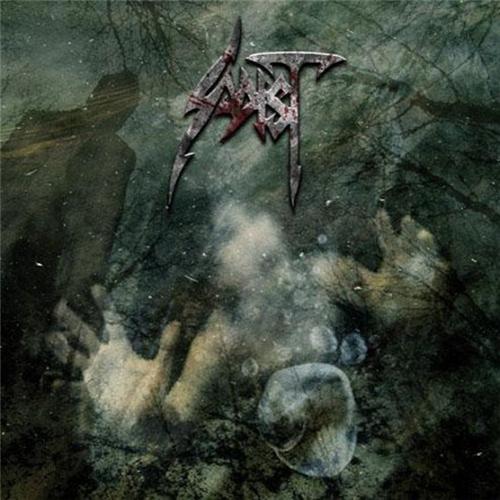
S.V.E.S.T. – Urfaust

One man does something, another man sees, and he imitates, then tries to figure out a way to put the meaning into what he’s doing. Unfortunately, meaning comes from intent. S.V.E.S.T. carefully pidgin imitate the Norse and Black Legions past, and make some noisy melodic stuff that is very sweetly poignant, if you listen to the parts, but adds up to a whole bunch of nowhere.

Origin – Antithesis

Once you get past the fireworks, this album is wallpaper. It displays techniques in the same order and adapts them to whatever fragmentary notion of song differentiates each of these. Sweep, sweep; fill; chug-chug; offtime chord chiasmus; sweep sweep; squeal; fast riff, repeat. I consider this album the definitive deathcore archetype because it shows us mixed death metal, melodic death metal, heavy metal and rock riffs in a cycle of randomness that resembles the way punk bands liked to assemble their riffs, not the period doubling style of death metal where each riff makes each previous riff make sense in an expanding context. As a result, it’s highly literate circus music, and joins later Behemoth, Cradle of Filth, Cannibal Corpse and others in writing incoherent stuff and making people like it because it’s technical and has catchy rhythms. Deathcore, unlike death metal before it, is deconstructionist like punk, and leaves us with a sense of the helpless, although some of these sweeps are excellent guitar practice for a moderately advanced player.

Asag – Asag

This is black metal in the Funeral Mist style, which is to put really raw sawing riffs on top of very danceable rhythms and hope no one notices. The result is messy on the surface but if you start tabbing it out, tends toward the ridiculous. They tend to stay within a very narrow harmonic range as well, which makes this essential rhythm music with a few melodic intervals and harmonized chord progressions to keep your attention. There is as the old cliche goes “Much sound and fury, signifying nothing.” They know their black metal moves and put them in a semi-sensible order, but you don’t actually get much out of it as a listener on than the sensation that somewhere, black metal is occurring.

Samael – Above

A painful kind of harmonic symmetry emerges in rock music when bands do not design melodies, but tail basic riffs with melodic fills. As a result, there is a great temptation of beauty, and then a sense of disappointment when one realizes that complementary phrases end in very basic differences. This makes the music breathe boredom like alcohol from a whisky drunk as he sweats, even if the stuff on the surface seems interesting. Samael have returned to metal here by combining Gothenburg, late-model black metal and really basic punk/death metal hybrid riffs. It’s a commendable return to form but musically it’s boring, something they try to counterbalance by keeping a driving rhythm going, which tends to normalize the experience. This is where music is different than passing a test: this CD passes all tests, but still is nothing you will reach for time and again. A better example of this style is the final Sacramentum album.

Cadaver – Necrosis

Bands returning to the death metal genre after a long absence try to update it in some way or another to distinguish themselves, show they’ve progressed, and find a way to appeal to a wider audience. Here, Cadaver try to combine the deathcore sound with the kind of charging technical take on d-beat punk that Impaled Nazarene used to do. If you can imagine Disfear, Impaled Nazarene and Neuraxis in a blender, that’s about corrupt — punk riffs levitate verses, tightened death metal riffs conduct choruses, technical fills end each, and songs fade out into melodic punk alternating with death metal rhythm riffs of the single- or double-chord variety much like later Master. It’s a musically impressive album and catchy as all hell, but when compared to old Cadaver, it lacks the mysterious atmosphere and sense of joyful exploration. This is much more of an adult album, meaning that it aims to be consistent and to remember the milk at the grocery store, but its sense of wonder at the world has been absorbed by a functionalism that is both the source of its consistency and the gateway to its missing openness.

Obscura – Cosmogenesis

I really wanted to like this, but it’s circus music. Technical circus music, but still, it has ludicrous happy melodies that would fit been played from an ice cream truck. These are played in challenging rhythms, but because that involves so much emphasizing and complementing offbeats, they are played at a bouncy pace like Iron Maiden and Parliament writing video game music together. It bounces. It flounces. It knows its scales and chord construction, but it goes nowhere because it’s looking outside-in: it’s trying to use technicality to make art, instead of making art and finding a voice in technicality for that impetus. The circus music aspects come also from their tendency to throw as many diverse possibilities into a song as possible, ending up with a tour of unrelated elements tied together by key and rhythm, yet having no significance other than that proximity. This is far better than the recent Cynic, but that’s like shooting fish in a barrel.

Infernum – Farewell

If later Graveland albums had been less opulent in layers of keyboards, battle noises, and guitars, they might sound like this: a stripped-down and more melodic Graveland reminiscent of Thousand Swords and Following the Voice of Blood merged in an early Emperor filter. Because it’s stripped down, it doesn’t get lost in working through all those layers, and instead develops a very simple point. Like most Graveland, it repeats themes in an attempt to find their ultimate evolution, which keeps it from falling into irrelevance. It’s like the old themes become starter cultures and from it grows a mass of new themes, like throwing yeast into a vat of corn syrup. As a result however, this album seems instantly familiar, and brings on that reality distortion field that is one of the most glorious things about Graveland: you forget you’re listening to amplified guitars conveyed through MP3 on a 2009 personal computer, and think you’re in a deep valley hearing the voice of the wind forming figures around the rocks above.

Suffocation – Blood Oath

Much of what we know of death metal now came from Monstrosity, Malevolent Creation, and Suffocation, who invented the style that Cannibal Corpse distilled and popularized. Suffocation, in particular, was the first band to come roaring out of obscurity with intensely percussive songs where drums led guitars in a series of complex riff conglomeration and destruction. When Doug Cerrito left, a lot of that got replaced by faster riffing and more straight-ahead songwriting. In use of harmony, especially use of scalar harmony to hold songs together, Suffocation has improved to the point where rock and jazz musicians can recognize their musicality more easily. However, they’ve dropped out the focus on rhythmic work; Mike Smith’s excellent drum work now plays along with melodic guitars and muted strum speed metal style full stops. Songs are built around a vocal chant, usually with a creeping rhythm, and the ensuing repetition loses much of the power this band once had. If they return to making the intricate structures, and consequent theatre of pummeling dynamics, that distinguished their best work, Suffocation could easily be the top death metal band performing today.

Asphyx – Death…The Brutal Way

A good summary is that this album upholds the style and feel of the first two Asphyx albums, but more resembles the last few in that while it’s well done, it’s restating known themes. It sometimes does this in a self-aware way, like an artist looking at a past work and trying to copy it from outside. Where it thrives however is in delivering rushing rhythms, like combatants sizing each other up at a run, that ride forward into thunderous climactic theatre. Where most death metal is dusty from the city, this album surges with a post-human viewpoint that creates legitimate fear amongst the herd. However, it never loses sight of making enjoyable rolling thunder music that beats us with the most reductionist approaches to music and yet makes us like them and see them as artful. This band has never released anything but solid music, and although this CD probably lags toward the non-essential end of their release spectrum, it crushes all of the other death metal band comeback albums handily.

Nidrike – Blodsarv

You know how people will take a tiny little Mazda and give it ten grand of ground effects? This band is an improvement on Deathspell Omega, who have the same style: create a harmonically simple song and trick it out with melodies, long discursive passages that seem exciting in their radical leaps of tone but ultimately converge on the same spot, like a tetherball wacked by a retard on meth. Clearly a lot of effort went into this CD but it all went into building up the songs, not coming up with some insightful or unique angle of attack, so at the end of the day you’re back to the same essential chord progressions most black metal uses, even if there’s lots of finger-wiggling to make it seem like an epic melody is going to bust out of that Mazda and pwn your ass.

Death – Scream Bloody Gore

The more experience I have in life, the more I like this album. For starters, Chuck wasn’t left alone on songwriting: he had scene legends like Chris Reifert (Autopsy) and Kam Lee (Massacre) to help him, but also, had just completed jaunts with Repulsion and Slaughter (the proto-death metal band, like a cross between early Master and Necrophagia, but better). What’s great about this CD is that it’s the same old Death, which is a fusion between speed metal and nascent proto-Death like Master, but that it’s pure spirit. There are no pretensions to musicality here, so it’s pure rigid chord progressions and thunderous rhythms, but unlike later Death, it uses the death metal “riff salad” that tells a story better than any modulating-harmonic but static-form rock music could. True, there’s a wipeout or two in the solos, and often these very basic riffs are pretty messy, but the CD keeps up the high energy pace and inventive transitions between riffs that are variations on known themes from NWOBHM and punk, which makes it solid as hell. The second half sort of runs together into mush; I’m guessing that it was partially written or refined in the studio. But unlike the other great Death album, Human, this CD is chaotic and organic like a tradesman’s riot. Human is good but it’s like an introductory textbook to music theory because each song has two parts — (1) getting ready for the big picture and (2) here’s the big picture — and so for all its “musical complexity” it’s a simpler, easier and less interesting composition than this early fire-spitting version of Death.

Karnarium – Karnarium

When conducting audience surveys, it’s easy to confuse a desire for primal music with music that is so basic it becomes boring. The point is to “sound” primitive, not to be primitive. Karnarium confuse the two; it’s a hybrid of early Grave and Cannibal Corpse, resulting in alternating blasts of percussive riffing and fast death metal riffs which limit themselves to four notes. We would all like to like this, but it does not provide any lasting enjoyment of the style, only a battering repetition of discontinuous themes which leaves life more confusing and less coherent than before. Songwriting needs to be focus for this band because they have their technique down but fail to stitch together a meaningful code of these fragmented riffs.

Conjuration – Funeral of the Living

Let’s try being Barathrum or Countess, except as a doom metal/black metal band. Are you excited yet? Umm… yeah, we’ll toss in the extra evil, extra loud and extra repetitive spells, and try for a saving throw with a bluesy undertone to our chord progressions a lot like Cathedral. Are we having fun yet? It ends up sounding like Saint Vitus as if created by Cianide. It’s not bad but song development occurs with typical metal harmonization and abrupt breaks, and the riffs and rhythms are straight out of the late 1970s. Guitar sound is flamingly awesome however. The only problem is the whole MCD is kind of boring. I think they should play this in old age homes and have everyone clap in time.

Inveracity – Extermination of Millions

So that’s where Suffocation went: they got reincarnated as Inveracity. This band is not as fully coherent as Suffocation was for their first three albums, but captures the essence of their technique with a powerful forward drive, much like Deeds of Flesh. They could get from B+ to A by making their songs more clearly express a central theme and a journey toward a concluding mood, which would give them more than a sound a personality and a vision of reality that others could participate in. As it stands, the technique speaks for too much, but it’s done well — an A+ — with more of the melodic leads stitched in among fast ripping power chording, as Deeds of Flesh started doing with Inbreeding the Anthropophagi. Watch this band for future development.

Mordicus – Dances From Left

An interesting hybrid of death metal and speed metal, this album sounds like Destruction riffs put in the less disjointedly repetitive song structures of American speed metal bands like Testament. It flows quite well. The riffs are not unusual to someone familiar with Destruction, Kreator and Forbidden, but they fit cleanly into well-constructed songs. Clearly thought went into this record, which makes it unusual for the speed metal genre. In use of layers and lead melodic riff accents, this album shows a heritage of death metal. Like later Merciless, it is highly melodic and often quite graceful, but the tendency of this genre to like percussive guitar strumming and pounding chorus rhythms may drive away listeners accustomed to the greater subtlety of black and death metal. Still, this is a good record.

Chord – Flora

This project reminds me of the Mitch Harris project Lull, except that Chord have an appreciation for slow-building development through contrast and dynamic variation in songs, where much of Lull was either too abrupt or too linear. However, they’re still facing the challenge of noise (which, since it’s a type of communication using sound for its inherent properties, is probably music, but noise devotees freak out if you call it “noise music”) which is making something that a listener could enjoy repeatedly and not as a novelty. Like Justin Broadrick’s epic Final, Chord choose the distorted guitar and possibly modded electronics as their medium, and specialize in making reverb waves and then harmonizing to them. In the background, dark metallic abrasion noises churn far below the waves of light and atmosphere that are the feedback and sustain-fed echoes of the secondary notes and harmonics in chords and notes, creating a mental scene of a moribund industrial city at war under a vivid sunrise. There are overtones of the Fripp/Eno projects and their tendency to pit counterpoint noises against steadily increasing but repetitive patterns, creating a sense of cosmic order through creation and destruction that is quite beautiful. Of all the noise releases I’ve heard, this is probably the most listenable outside of middle-period K.K. Null.

Himinbjorg – Europa

A tribute to Bathory in a style halfway between Blood Fire Death and Hammerheart, with some updated technique borrowed from the early 1990s Norse revolution, this CD is what Viking heavy metal should be if we update it for the current era. Immediately evident is the restrained musicianship; these gents are not playing at the top of their technique, but have chosen a simplified version to achieve direct communication. The music resembles nothing else except in style, and maintains a good sense of harmony while creating the epic rhythm and melodic riffs that give metal its power. Vocals are probably going to be too Donald Duck for some, and the music is too heavy metal for the black metal fanbase, which could explain why this otherwise excellent CD remains undernoticed.

Electrocution – Inside the Unreal

Welcome to good B+ grade old school underground metal. Thankfully, this band have avoided the “modern death metal” (read: metalcore with death metal riffs) trap and just gone for old school material in the vein of Necrophiliac, Morpheus Descends or Oppressor but have upped the ante with technical improvements. Drums lead songs more accurately through more permutations of riff, and maintain an atmosphere of cadence and not kickhappy offbeat-anticipation patterns. Guitars collaborate tightly and deliver variations on the known styles of death metal riffs from the simple booming patterns fit into complex textures mold. Where this CD could improve is in some variation of the intervals used in writing riffs; too much of it falls into the whole-half variation that eventually gives it a feeling of tendency and an ashen lack of melodic or harmonic potential. For pure rhythm riffing however, this solid death metal album delivers the thrills.

The Warlocks – The Mirror Explodes

Mix Lou Reed, Sonic Youth and early REM and you get this indie for indie’s sake release. It’s quite good power pop wrapped in an aesthetic of decay and loneliness. As with most things, I don’t see the fucking point in the posing. Just be the The Beatles II and write songs about life with a nuance of the positive. I like their ability to stretch out a verse with noise and subtle variations on their main riff, creating a drone in layers that expands Ride-style to wrap a vocal track in lush sound. Unlike most bands, The Warlocks know how to draw out tension like moments before orgasm, keeping the sugar lust explosion of pop away until we’re good and exhausted by their waves of shuddering guitars softened by a lazy room mix. Musically, I like this. Artistically, I fear it’s going to get lost in a horde of others with the same “aesthetic” and “outlook” on life.

Katharsis – Fourth Reich

Unknown to most of us, this band resurrected the war metal tradition: speed up Bathory, mix in some Blasphemy, and make frenetic music which goes nowhere. True, this is more explicitly in the house that Darkthrone built, but even the longer songs cannot hide the lack of direction. Good songs throw pieces on the table like clues to a mystery, and slowly bring out a response to that mystery, so the listener feels as if they are in a combat situation and want a good outcome — but are learning what that would be from the experience conveyed by the music. Instead, this is “hot tub” black metal — it has two stages, getting into the hot tub, and getting out. The song begins and then you’re in the midst of it, with some fairly gratifying riffs, but then it ends without having anything changed in the listener’s mind. You were in the hot tub. In the hot tub, you found life exactly as it was before. Now towel off, and skip this record.

No Comments

Man and Technics

The Hessian guide to the proper care and maintenance of your records and sound equipment.

Part I – Digital

Throughout the years, I have met many hessians that, despite the passion for metal music that is so common among them, haven’t yet learned how to take care of their records and sound equipment of which they depend so much.

Being part of a culture means, among many other things, maintaining the material manifestations of that culture. We get stronger, as individuals and as a culture, by learning good habits and applying our energies towards the preservation of the things that we care the most.

So it is imperative for us at the Hessian Studies Center, in our efforts to improve the well-being of metalheads worldwide, that we provide our readers with a comprehensive guide to the proper care of your music records and reproduction system.

CDs

Compact discs are by far the recording medium of preference for hessians of all ages and inclinations, and it is easy to see why: it is small, so it’s easily transportable and manageable, provides great, clean sound, and doesn’t degrade with use since the reproduction of sound doesn’t involve the constant friction of a needle or a cassette tape head. Of course, this medium has its detractors, and much more in the metal culture than other music-oriented human groups, for reasons we’ll explain later on.

Despite its advantages, CDs are very easy to damage if mistreated, so you must take the following cautions:

  • Never touch the readable surface of the CD. Grab the discs by its edges, never by the middle. It could get fingerprints on it, resulting in bad playback.
  • Always keep the CD in a protective jewelcase if you ain’t playing it. Other storing devices, such as wallets and cakeboxes, are not recommended since they could easily scratch the discs. Make sure that you have the inner tray of the CD case as clean as possible, removing all particles of dust, before storing the CD.
  • If the CD gets some dirt or dust on it, clean with a dry cloth, gently so that you barely touch the surface of the CD.
  • Keep your CDs away from humidity or high temperatures. If your CD gets splashed with water, gently dry it with a soft cloth, from center to edge, in a careful fashion so that you don’t scratch it.
  • Never use solvents or liquids of the sort to clean the CD, save for those cleaning kits available in commerce. Better yet, Just try your best to keep your CDs from getting dirt on them and they’ll be fine.
  • If your CD ever gets scratched, and those aren’t too deep into the surface, you can try one of those machines that refinish the readable surface, meaning they remove the scratches by polishing the acrylic plastic that is the transparent layer of the CD. If the scratch is too deep, or in the label side of the disc, it probably damaged the silver layer (where the audio is recorded). In that case you’re screwed. Repair kits aren’t too efective, so I wouldn’t mind with them if I’m you. DVD renting or used CD stores usually keep one of the aforementioned machines handy, and charge a small fee for the repair of a disc or several.

Also, keep in mind that straight scratches from the center to the edge of the CD are much less likely to cause your CD to malfunction when compared to scratches paralel to the circumference of the disc, for obvious reasons – a CD reproduction system can afford to lose one or a few bits without any problems, but not several of them, in which case the information (audio) might be impossible to read by the equipment.

CDRs

To record a sample from your recordings, compilations and rare albums you know you won’t easily get otherwise, CDRs are very practical. They are also cheaper than they were years ago, but the average in price have lowered in great part because of cheap quality CDRs flooding the market. In choosing your recording medium, pick a good brand of CDR: Sony, Zykon, Kodak, Mitsui. Buying the CDRs in packs of 20, 25 or 50 is cheaper in the long term as well (less value per unit).

Make sure you buy a good brand of CD burner. Favorites among the public are Asus, Sony, Samsung, LG and AOpen.

For recording, use a good software such as Nero Burning Rom 9. Always record your CDRs at the lowest speed possible. Preferably, you should never burn the disc faster than 4x of speed.

The bad combination of low quality CDs, cheap CD burner equipment and excessive burning speed may cause your CDRs to fail to reproduce on the short or the long term, so be sure to spend a little more and be a bit more patient. That way your burned CDRs will last for a long time (+5 years, at least, if you pick a good brand).

For storing the CDRs, you can use either a jewelcase or a slim case, the latter tending to be more practical if you have way too many CDRs. In the last case, it is also a good idea to have an Excel sheet of all your recorded CDs so you can find them, since you can’t easily label the side of slim cases.

Care tips for CDs are equally applicable to the recorded sort. Another thing that should be considered, though, is the damage that heat can produce to the special chemical properties particular to a CDR. So, you should never place a CDR in direct sunlight. More info here.

To label your CDRs, use a water-based marker with a non-sharp tip.

Digital formats

Not much to say here. Preferred audio formats for PC playback are mp3 and FLAC. The latter allows one to keep a CD quality, lossless reproduction of the recording, with its downside being a lot heavier in individual file size than mp3. Other formats, such as .ogg, are also preferred by certain digital audio aficionados.

One thing that should be mentioned, though: if you keep a large collection of digitalized music, it is convenient to store them on a separate external hard drive in case your computer crashes or fails, like they do so often these days.

Some links on the subject you may find useful:

  • Foobar 2000 – best damn audio playback software for your computer with lots of different options for amateur and expert audio freaks.
  • FLAC codec home – to download the program/codec that allows your PC to reproduce and burn FLAC files. It includes a coding/decoding software that is light and easy to use.
  • Fraunhofer mp3 audio codec – One of the best mp3 encoders, allows to get a better quality or definition of sound.

Part II – Analog

Members of the metal culture have a natural preference for analog formats, such as tape and vinyl. Other musical subcultures share this inclination with headbangers, whether out of audio resolution considerations (electronica fans seem to be of this camp) or simply out of an indescribable mystic feel that the listener captures out of enjoying or simply owning an album on analog format. I’ve seen that most hessians prefer this for the last consideration, that is, the special aura it invokes.

Not that there aren’t any practical considerations for preferring analog over digital formats. Tapes, for example, are sturdier than CDs, which give them an advantage on physical resistance. Besides, tapes permit multiple recordings as long as its sound quality lasts (which depends on the type of cassette…more about that later).

As you all most know, the main disadvantage of analog formats is their weariness. Since sound reproduction in their case involves the use of either a head or needle which is mechanically attached to the source of the recording, the latter slowly experiences a wearing of the surface layer where the audio is recorded, resulting all of this in a progressive loss of sound quality.

Yet, as with CDs, there are certain tips that can help increase the lifespan of your tapes and CDs in order for them to provide the maximal amount of listening time and enjoyment.

Tapes

Tapes were (and still are, for some) tremendously practical for the active listener, in great part due to its portability and endurance. Besides, who didn’t start out on its metal journey without a Black Sabbath or Iron Maiden cassette on one’s walkman? Few, I guess.

  • First of all, keep your tapes from extreme temperature and humidity conditions. The recommended range is within 59 and 77° F and 40% to 60% relative humidity (that is, not wet, but not too dry either).
  • Keep your tapes away from any sort of magnetic field. Those include not only magnets, but also home appliances such as refrigerators, speakers and anything containing an electric motor.
  • Keep your tapes evenly wound, otherwise they get easily stuck on their casing and it may bring problems to sound reproduction, screwing with the tape itself and your deck as well! If your tape has a see-through casing, you should easily see uneven woundings in the rolled tape. If not, then try to roll the tape by hand to check if it presents difficulties or if it gets stuck. Solve the problem by fully rewinding your tape several times until it gets looser. If the tape is stuck in the casing, it would be better to do the process by hand, carefully so that you don’t break it. Also, be sure to rewind tapes completely after each use to maintain high performance.
  • Don’t leave your tapes in the car or other places where they may get direct sunlight or excessive heat. Remember the first tip.
  • It’s recommendable that you make quality copies of an original so that the latter lasts as long as it possibly can.

Vinyl

The LP and EP formats are a favorite for hessians and the one that carries most “mystique”. A lot of it has to do, in great part, with nostalgy: after all, in the classic era of metal the LP was THE format for albums that got released at the time, and most cover art was done specifically to fir into the large sleeves of LPs: if you want examples, you should look into Iron Maiden’s, Morbid Angel, Carnage, Dio and many, many others…the list goes on and on.

However, this particular medium requieres a lot more care to it, as vinyl is a very delicate material and the discs have some significant weaknesses that, with the arrival of the compact disc, were no longer an issue for listeners.

  • First things first: clean your records thoroughly. That is by far the most important detail you should think about. Not only the disc’s lifespan depends on it, but also its sound quality. Playing dirty records can eventually cause permanent damage to the disc, not to mention that the stylus on your record player wears more rapidly. Distilled water is recommended by many sources to be ideal for cleansing of the plastic in the record, it being a non-abrasive liquid, doesn’t leave any residues and the bottle is inexpensive. Besides, it disperses static charges and counteracts the increased conductivity from the pick-up of salt deposits form finger prints. Nonetheless, water isn’t enough. Surfactants are used as additives to enable water to be a grease solvent. Clean with a soft, anti-static cloth. Discs should be cleaned before and after each performance for the best results.
  • Handle your vinyl records as follows: keep finger contact with the edge and the labeled surface of the disc, never with the grooved surface. Remove the record from the jacket with the inner dust sleeve by bowing the jacket open by holding it against the body and applying a slight pressure with a hand. Hold a corner of the inner dust sleeve and pull the record out. Avoid pressing down onto the disc with the fingers as any dust caught between the sleeve and the disc will be pressed into the grooves. Remove the disc from the inner sleeve by bowing the sleeve and letting it slip gradually into an open hand so that the edge falls on the inside of the thumb knuckle. The middle finger should reach for the center label. Never reach into the sleeve.
  • Use inner sleeves made of polyethylene. Do not use record sleeves made of PVC. Paper made sleeves may scratch the surface of records.

Part III – Sound Equipment and Storage

We won’t stop here to review all kind of sound reproduction systems available in the market, for that would take many lines of text. A general rule that can be said about sound equipment shall, instead, be mentioned: that is, when you buy a new piece of equipment, give it a try at the store. Bring one of your CDs and check for the following:

  • Bass and mids response.
  • Speaker response @ full volume, although many stores won’t be so enthusiast about that test.

The ideal would be for you to buy one of those multi-unit hi-fi equipments that can be mounted on top of each other. Those usually are the best, for the reason that you can buy each unit from different sources and assemble your own, personalized system.

Your system needs to be dusted periodically, optimally once a day, to prevent particles of dust to reach any delicate part of the equipment, such as the lens from the CD player or the tape head. I’ve found that keeping a disc inside the CD player and a tape inside the deck while not using the stereo prevents this, in part. Also, be sure to put a piece of cardbox on top of the ventilation holes of the equipment so that dust and others don’t penetrate through them. Just make sure that you take the cardbox out when you’re using the stereo! Those ventilation holes are there for a reason, and if you obstruct them, your system may malfunction out of the heating of the components.

Your CD unit should be cleaned periodically. Electronics stores sell a kind of special CDs with little brushes on them that are made specially for the task of cleaning the lens of the unit. Using those with a once-a-month frequency can greatly augment the lifespan of the CD player.

For the tape deck, regular cleansing of the head with isopropyl alcohol is recommended. Buy a box of cotton buds and use it to apply a small amount of alcohol on the playback and recording heads. If there’s oxide, apply the cotton tip until it is removed. Give it a few seconds to dry out. Also, in the same way clean the tape guides and capstan (if you don’t know what I’m talking about, refer to this diagram). The pinch roller should also be cleaned in the same manner, this time using a mixture of water with a pinch of washing-up liquid. Do not use alcohol for the pinch roller, as it is made of rubber.

Demagnetizing the tape decks is also recommended. With use, the tape heads and guides tend to accumulate a magnetic charge that not only can interfere with the appropiate playback of the cassette, but an also destroy its high frequency content (remember what we learned about the sour relationship between tapes and magnets?). There are cassette-shaped, battery-powered demagnetisers available in commerce. Those should be applied to your decks once a month.

On vinyl record players, the following tips should be followed:

  • The stylus should be cleaned with a special kind of brush. This should be applied along the cantilever, in the direction pointed by the stylus (see here).
  • As stylus wears out, it eventually needs to be replaced. Have yours checked once a year by a specialist – usually someone who sells record players and related equipment. He will tell you if your stylus needs to be changed.
  • Place your record player on a stable, solid surface.
  • Dust it every once in a while.

Storage

This one is simple: keep your vinyl, CDs and tapes in their respective cases, and always store and stack them vertically, that way you avoid the deformation of the cases and the disc itself, in the case of vinyl. Obviously, the environment in which you store your records should have respectable temperature and humidity rates and be as clean as possible.

No Comments

Tags: , , , ,

Sadistic Metal Reviews 8-2-09

On May 21, 2008, a man got into a bus in Seattle, Washington. Upon seeing the blind woman sitting up front, he shouted “The sick must die,” and began pounding her at full force. Before being restrained by bystanders, he made a powerful statement that shocked all who saw it. Here at Sadistic Metal Reviews, we apply his logic to bad metal. 99.9% of everything in this world is shit, metal included. Our job is to beat, rape, slash, punch, pummel, gut, pound and rip into the bad metal, and tip our hats to the good metal. Because if you love metal… you want the best to prevail! Help us kill the sick with this week’s update.

The Bakerton Group – El Rojo

This album really nails what Phish wanted to be all those years ago. Instead of going into the easy Grateful Dead retro jams, this band sums up the 1960s and 1970s by making a funkier version of King Crimson and the Doors, without vocals, so the open jams can expand like a jazz album — and in doing so, they’ve created a work of intense but thoughtful semi-improvised music that is what the brainier rock listeners have been seeking all these years. It’s easier jazz fusion with more structure, or instrumental rock with a soul. Songs start with basic riffs that expand as guitar and then organ takes the lead, finally culminating in a fusion of lead and rhythm guitar not like what Satriani was trying to do, but with more of an influence from the rich and yet offbeat sounds of the late 1960s. It’s not quite prog but it takes many of the best elements of prog, like the lacing of King Crimson style aggro riffing that pulls it back from the happy void, and puts them into a format that lures you in before you realize you’ve left the vocals behind and in doing so, gained a more flexible, varied and nuanced style of music. This is my pick of this review batch.

Israthoum – Monument of Brimstone

Although this band is listed as being from the Netherlands, they are Portguese in origin and sound like a cross between Primigenium and Gehenna. The second-wave black metal sound dominates this record, with cleanly picked chords and notes using updated versions of Darkthrone rhythms under vocals that owe their rhythms and pacing to the slicker versions of At the Gates-inspired death metal that came out in the late 1990s. Musically, Monument of Brimstone competes with the best of its generation, building its songs from basic riffs that through variations harmonize and rise to a peak of intensity. Even though there are newer touches on here like clean vocals and precision, the pacing of each song and their indulgence in a lush atmosphere of melody reveals the heritage of this band among the ideals of the past. In keeping with its style, this music is simple sometimes to the point of being simple-minded, but much of that perception lies in the refusal of the band to dress up simple songs in all sorts of tech wiz trickery that goes nowhere (metalcore, I’m looking at you). This disc may never approach the all-seeing personality of a Beherit, but stands neck-to-neck with the new Profanatica.

Goes Cube – Another Day Has Passed

Imagine crossing Corrosion of Conformity’s “Animosity” with Soundgarden and assorted punk bands, and you get this mixture of rock, metal riffs and newer generation punk aesthetics. Most sounds are founded in the sludgy crossover riffs and bounding, energetic choruses of later COC, but clean-voiced punk and alternative style bittersweet verses really accelerate these songs, giving them sweet pop hooks while backing that up with some surging guitar. This band is more musical than most, having a better sense of harmony and order, but that can’t save them from the lack of direction their basic style endorses. Clean/dirty dualism benefits Linkin Park, but Goes Cube clearly have higher ambitions. My advice is just to make a harmonically-interesting version of later COC and ditch the alt-rock pretensions; that crowd isn’t going to like anything with a metal riff, anyway.

Carpticon – Master Morality

Of all the attributes required to have a killer album, this CD exhibits 95% of them but doesn’t make it on the final 5%. That final bit is the most important: the science of writing melody and putting together melodies to make a song that resembles an attitude toward reality. Everything else is perfect: production, appropriation from Marduk and Antaeus of their strengths in riffing and rhythm, guitar sound, vocals. This album is like a finely made Swiss watch, with perfect appearance and beautiful shiny gears, but it’s always five minutes off. We want to like it but when it turns off we forget it was on, and never somehow manage to reach for it again. Oof.

Asphyx – Death… The Brutal Way

Metal bands coming back from the dead (the old school, swallowed up by the demand of metalcore fans for digestible products) either try to re-state the past, as our Editor kontinual is fond of saying, or they try to pick up where they left off, either trying to “modernize” their sound or develop their old sound. Asphyx go right down the middle. This is a poppier, more bombastic, simpler verse/chorus version of the sound on their self-titled album, and makes nods to some of the song constructions (epic breaks, staggered processionals) from their earlier works. It’s halfway to the Hail of Bullets sound without the metalcore-styled insistence on constant high intensity and chaotic style, and halfway to older Asphyx, but although it is simplified it is nonetheless powerful. If you can imagine The Rack, Asphyx and On the Wings of Infero hybridized with Hail of Bullets or the new Seance, you have the basic idea. Interestingly, at these mid-tempo speeds and simpler arrangements, the punk roots of Asphyx show through, but their punk is also old school, specifically old school hardcore. They break out enough doom metal riffs and slamming death metal riffs to be satisfying, but the ethereal cloudless sky traveling tremolo speed riffs are gone, as are the more involved theatrical constructions that mimicked the topics of song and actually sounded like a march to an altar of doom, or an unhonoured funeral. As a result, I can wholeheartedly recommend this album with the caveat that it’s an A+ take on Asphyx “lite” and as such, a B+ version of older Asphyx that loses some of the great subtlety and grandeur the old school had.

Virus – The Black Flux

It’s really easy to fool metal fans. Just tell them something is unique, and point out what it does that “most metal” doesn’t, and they’ll buy it like labradors eyeing a hot dog. This is goofy, pseudo-gothic rock with semi-technical playing, but shows no distinction in melody or rhythm; in short, it’d be thrown out if it tried to compete in its genre. But you get a bunch of underconfident metalheads looking for mainstream affirmation, and apparently, they buy it, although they will only enjoy it for two weeks of telling other people they “just don’t get it” due (the implication goes) to their inferior mentation. How tiresome. It’s like Opeth but even less distinguished from normal rock music. Fail.

United Nations – United Nations

When nu-metal died, it went straight into alternative rock and picked up that post-Descendents clean-voice punk sound. United Nations start with really gentle punk songs and then put in raging, distorted-vocals choruses, and pick up the pace with adept jazz/metal drumming. The ensuing lack of direction means the band sounds like a punk band that runs into hard times and confusion every thirty seconds, and as a result, the band fails to strengthen either their punk side or their more rock ‘n’ roll side, leaving us the listeners stranded in a middle ground that is quite honestly really simply annoying on an aesthetic level. While musicianship is at a higher level than average, it is also not particularly directed, and so ends up being just very competent guitar playing. I’ll take the punk with spirit and incompetence instead.

Fatal – Retrospective from Hell

Like that kid in the back of your sophomore year English class, Fatal create a true retrospective from Hell by throwing too much into their music all at once. I can appreciate bits of it but I hope I never have to listen to it again (it’s how al-Qaeda will torture me, no doubt). These songs rush at you with vocals and guitar rhythm synchronized, or restate their themes too apparently and too repetitively, hoping the speed will rocket you past the repetition. Lead guitar is surprisingly versatile, sounding like a cross between Thanatopsis and Gorefest. Often times this band sounds like a young Brutal Truth, and indeed one of its more interesting factors is how much it gets away from the heavy metal queso that blights most early death metal attempts, and there’s a clearly interesting convergence of cultural influences from the different metal subgenres here but it’s unclear whether any direction it produces can communicate something eternal, or even something I’d like to hear again. Essentially, this band is a heavy metal band that has disguised itself in death metal camouflage. If you’re one of those fucking idiots who think death metal only got good when it started resembling the rock music it painfully broke away from, you might think this is “progress,” but to the rest of us, it’s a staggering cliche sliding out from a husk of real metal.

Don the Reader – Humanesque

This is off the shelf metalcore. Percussion section is better than average, and there’s a slight Pantera influence that leads to some Southern fried sound bends added to otherwise rigidly square-cut material. The problem this band faces is that it is flamingly obvious. You can pretty much guess not only where every song is going to go, but also, the riffs are just extremely obvious variations on known patterns. If these guys know what’s good for them, they’ll just become a doom metal version of Pantera. We all know metalcore has entered its twilight days, so why not buck the trend and jump the curve?

Creepmime – Chiaroscuro

Every artist has “go to” albums when they run out of ideas, and many of them are obscure works that were full of ideas but for some reason never found an audience. For technical metal, Chiaroscuro must be a go-to for many others, because this band wrote the book on this style far before it became popular. Creepmime on this CD inevitably compare to later Obliveon, Cynic, Voivod, Supuration and Samael: this is technical music using jazzy drumming, indie rock minor-key progressions, death metal lead rhythm riffing and periodically, technical heavy metal flair. It is far better than the second Cynic album because each song here is centered around exploring and expressing an idea, so they remain distinct in our minds. Like Voivod, an infectious rhythm guides us between open chords or sweep-picked fills, with dissonant and inverted chording guiding us through a bouncy but linearly-directed rhythm. Tempi shift not abruptly but sensibly, like undertow tucked into a wave. While each song uses varied basslines, techniques, and multiple riffs, they hold together because Creepmime know how to keep the focus on content. While this early experiment in “modern metal” never caught on, it kept the faith of older metal in the newer style better than anyone save perhaps Demigod, and if re-released today would find its audience finally grew into it.

Mictlantecuhtli – Warriors of the Black Sun

This melodic death metal band writes from the perspective of ancient Amerindian warriors, and while using a modern style, convey that spirit through high-intensity music that makes good use of the template bands like Unanimated, Dissection and Intestine Baalism created to immerse us in a mood of thoughtful, aggressive, and serious engagement with the world. Not without personality, Mictlatecuhtli carefully weave the punchy motivational riffing of later Sepultura into this format, giving it a compelling forward direction. While there’s nothing here that will surprise a metal fan, this release stays closer to the heart of the motivation behind this type of metal music than any recent release. At the very least, there’s no excuse for your Dark Tranquility, In Flames, and Amon Amarth CDs when the real deal comes to you from Mictlantecuhtli.

Solstafir – Köld

Remember when it was really hip and trendy to use the word “shambolic” a year or so ago? Metal has its trends to as people look for some direction that’s proven to “work,” or get them on the bestseller list. Solstafir stumble in with last year’s trend, which is to mix a whole lot of shoegaze into your metal. However, the band make one salient and brilliant decision, which is to keep the pace fast and thus not aggressive as much as energetic and seemingly important. Yet chord progressions and general sensibility tell another tale, as do the production and “why, God, why” vocals. The problem is that metal is so distinctive and clear in its motivations, like a headstrong style, that mixing it with just about anything results in that anything “with a few metal riffs.” That’s about what it sounds like here. Unfortunately, they do so without any real grace, using well-known chord progressions and rhythmic changes in atmospheric songs that hold together mainly because of the rote pounding of that atmosphere. This will not satisfy metal fans, but people accustomed to shoegaze might find it an interesting deviation of aesthetic.

Divine Heresy – Bringer of Plagues

Modern death metal is a lot like the modern time: throw everything into a bowl, pour dressing over it, and call the resulting salad “distinct” even though it has made itself as generic as possible. With too many different tastes, you end up with a background hum of all the same intensity. This CD is no exception, with metalcore composition and generally melodic technical death metal riffing, but vocal chanting like a combination between Pantera and Biohazard; then, each song must break into clean vocals that are a combination between the cheesiest moments of (new) Metallica and something like Coldplay. It tries to be emotional, but since there’s no direction and every different ingredient in its salad is turned up to 11, you end up with a wash of different stuff that never forms into a shape or takes a stand. You could compare it to a sitcom: the story (songwriting) is the background, but you need a different scene or distraction every two minutes so the audience can keep laughing even though they’re only watching with one eye. I think this CD like so many modern metal ones is designed to be heard with half an ear, with the TV and GAIM going in the background, maybe while eating something really sticky. Flee.

Negura Bunget – Maiastru Sfetnic

When people talk about how black metal has been “band of the month” since 1994, this album comes to mind because it was massively feted, and then fell off the radar. In it we can see why most second-wave black metal failed, which is that these bands try to mix so many different styles into one they end up with an ambiguous voice, in addition to by emulating the past having nothing to do but recombine older elements, which further dilutes any idea for a song they might have had. Songs should be like poetry; based on a feeling, or about an experience, they are there to convey the change in mood that made that experience memorable. This album conveys the experience of flipping through a catalog of metal CDs, and hearing samples of random parts of each, which are then tied together into a dramatic black metal style that has so little contrast it’s like going through Disney’s “The Haunted Mansion” at 60 mph, repeatedly. Dangerous because it’s so close to good, at least if you listen to a minute at a time, this album goes nowhere ultimately and so leaves us feeling like we’ve just eaten 3,000 calories of junk food — like a steak, but less satisfying. There’s a good reason this was popular: they can play their instruments, and the production is good if primitive. But there’s an equally good reason we so quickly forgot it.

Ajattara – Noitumaa

This all-acoustic album resembles the attempts of other black metal bands to rediscover a folk-ish sound, like Wardruna and Lord Wind, by leaving behind the rock instrumentation and focusing on writing melodies like those in the indigenous cultural songs of their youths. Interestingly, their refusal to ditch the black metal vocals makes them stand out further as harsh and unyielding, and slices a vicious element deep into this music, which is about as far from the blues-folk of radio indie that you can get. These are simple songs with savage rhythms and complex emotions. While song structures are cyclic and so wear down the listener after some time, and many of the riffs here sound like they were originally composed for distorted guitar, the acoustic guitar offers dynamics unavailable to black metal and this enables this band to immerse themselves in a musical subtlety that gives these songs depth. By far better than this band’s black metal releases, this album of occult, pagan, primitive campfire songs is worth hearing.

Weapon – Drakonian Paradigm

The first track, “Weapon,” uses an introductory riff/solo pair that resembles the first track on Unanimated’s In the Forest of the Dreaming Dead album, a minor-key bluesy sound; the rest of the album does not improve on this: Weapon are trying to merge heavy metal and war metal and as a result have made a kind of pop music that might be interesting if it’s your first metal album. This album is musically well-executed, but that’s only a means of tying together its parts, not make them express anything. And express nothing they do, except that sense of “you’re listening to some kind of metal” that comes with simple beats, solos so fast they sound like eunuchs on speed mumbling, and raspy vocals. Every single song here uses well-known patterns with no new interpretation. It panders to the audience by delivering what they expect, in sloppy underground fashion aping a version of the same mainstream heavy metal most of us hide from if given a chance. The problem is that it’s boring. It’s basically 1970s heavy metal, kind of sloppy like Venom, with bouncy rhythms. If I wanted to listen to pop music disguised as the avantgarde, I’d just hook up with some DEERHOOF and tight jeans. This is everything I hate about heavy metal: an insular culture that rewards repetitive pointless music so they can have an identity, clustered in products like jean jackets and CDs, that has nothing to do with experiencing life — but rather, hiding from it.

Monstrosity – Spiritual Apocalypse

Take the faster parts from earlier Cannibal Corpse, put bluesy solos on half of them, and have them rush into foreboding riffs like Immolation makes, complete with the pinch harmonics and harmonizing that gives that band its dark sound. Toss in a few bouncy heavy metal riffs. The real problem with this CD is that songs don’t fit into songs. They are cyclic riff pairs joined by the aforementioned dark rushing riffs. The intensity of percussion and speed confuses the direction of songs as well by compressing their dynamics and limiting their vocabulary of tempos, so riffs sound similar by the sheer basis of rushing by so quickly. Some of the riff writing and melodic work on this is fantastic, reminiscent of early Brutality, but the “modern death metal” tendency to shift randomly between riffs and styles creates a headache in the making, which is why old schoolers are probably going to avoid this thing. The album is catchy and hookish but the sensation is dulled as it pounds its way into your head. The individual riffs, rhythms and transitions are of quality, but they are assembled without subtlety, making this hard to listen to for long.

Satyricon – Now, Diabolical

This CD reminds me of Coroner’s “Grin” meeting later Samael. The beats are groovy, with a strong disco influence that extends to song structure, and riffs are pleasantly arranged around harmonic structures of a basic nature, making it really easy to listen to, but hard to really immerse yourself in, because it’s basically no different than alternative metal like later Prong or Filter. Unlike early Satyricon, which tried long melodies it couldn’t quite pull off, this album rushes headfirst into rock and, like early Danzig albums, delivers a pleasant listening experience, even if not one memorable enough to reach for time after time.

Massacre – The Second Coming

Huge for a moment in the 1990s because they inherited Death’s rhythm section and lead rhythm guitarist, Massacre somehow dropped off the radar with The Promise, a CD so bad it defies description. Now they’ve released this tribute to their early years with a demo of an album from before their post-death lineup. It’s in a different style that can be best described as a fusion of technical speed metal (Dark Angel) and old school death metal like Master or Nunslaughter, which results in a periodically very musical work that nonetheless plods ahead with heavy repetition and little harmony. The sense of this music being unformed, like most death metal from the 1980s, is palpable; there are bits of heavy metal, speed metal, punk and nascent death metal in a kind of salad that makes no sense, like a journey through radically different terrain. Interestingly, it sounds a lot like the Mantas demos from the early 1980s, which also had Kam Lee on them. Which way did the influence flow? We will probably never know. It is also worth mentioning that after they recorded this, they stored it underwater near a radio transmitter, so the sound quality is slightly worse than the average demo. Songwriting shows promise but is not mature. In contrast, the live recording of “From Beyond” seems otherwordly good. If I could send a wish into the universe, it’s that Kam Lee re-records/re-constructs this album with musicians more versed in early 1990s death metal.

Vorum – Grim Death Awaits

Mix old Seance with the Funeral Mist style of forward-grinding death metal, and you get Vorum: almost a tribute to Grave-cum-Florida-DM, but rapidly degenerating into heavy metal cliches. The problem with bands of this level is that they don’t understand that turning everything up to 11 sounds really cool but gets completely uniform after awhile, as does the inability to make a melody longer than three notes, because it condemns them to repeating known riff patterns at top speed. All of this is thoroughly competent, mind you, but it’s what Michael Crichton called “thin intelligence”: a large amount of ability, but thinking limited to that ability, and so no ability to get the bigger picture and make art of it. Spare me.

Mgla – Presence

Black metal “standards” since 1994 have plummeted like a rock, which is why year to year, people mention different favorite bands. It’s as if memory has been erased in information overload. Mgla have studied the canon of black metal carefully, and then, have made the same boring rock music you can find in a million other forms — but it’s dressed up as black metal. For starters, they have no conception of how black metal melodies are written, but they know how to use different chord shapes for that “black metal effect”! Next, there’s zero ability to comprehend black metal dynamics. This CD is like a cage of monkeys constantly shouting for attention. There is no lead-up, no building, no suspense and no contrast — just constant shrieking and Burzum technique wrapped around melodies and happy offbeat riffs that would be apt for a Coldplay album. Burn this farce.

Kroda – Towards the Firmaments Verge of Life

These guys produce their vocals like Summoning, and their guitar distortion like the band down the street. Who convinced them this cheap, hollow digital sound would go anywhere? Their songwriting is great except for two factors: (1) a dependency on verse chorus and every third iteration, an interruption with an interlude or non-harmonic bridge; (2) the melodies they write are both happy and simple, like pop with ancient overtones. It’s not bad but it’s somewhat irritating and not a resonant keeper, although it’s fair to mention this band is more interesting than 98% of what comes over my desk. I hope they fix the production, write in varying modes, and fit song structure to the form of its content, and then they’ll be rocking.

Abaroth – The Mountain Gate

So many people grasp so much of black metal but not the ability to use it expressively. This excessively rhythmically chant-aligned album shows a good working knowledge of the black metal aesthetic — and songs that go nowhere. They start, enter us into a cycle of two riffs, interrupt the cycle and return and then end, seemingly abruptly, without much having changed. They are like summer electrical storms from a distance in that there’s a bunch of flickering and frenetic activity, and then everything is just as it was. It’s hard to summon the courage to down releases like this, and there are many, because there’s nothing “wrong” with them — but there’s also nothing so right you’d want to pull it off the shelf and listen to it, and the core of that “tl;dr” impulse is that they don’t express anything unique. They’re variations on the known, and even if they’re more competent there’s nothing to make you want to return to them.

Militia – The Sybling

Someone mentioned this as a classic of great rarity. It may be rare — but it should be rarer. Did you want 1980s style power metal, with disconnected vocals floating above some standard riffs spewed from downtuned guitars? Yeah, it’s about like that. The result is dischordant and not particularly memorable, although I’m certain it’s rare. Hopefully they’ll box up the remaining copies and exile them to Skull Island so no one has to hear this. It’s NWOBHM with speed metal riffs and none of the grace.

Isis – Wavering Radiant

The hardest part about modern society is keeping a straight face. Someone will hand you something misbegotten, tell you it’s good and that many people really dig it. Your job is then to keep from laughing or crying until you’re out of the room. Isis sounds to me like Jawbreaker’s Bivouac — lots of different stuff going on, but none of it develops on the other stuff; it’s all just a sampler plate, and it relishes the “differentness” of its parts as proof that it has great breadth and thus universal wisdom — as done by an indie rock band or shoegaze allstar. I guess that’s what floors me most: how little “different” is going on here, and how much of well-camouflaged “same” is present. There are periodic indie metal riffs, meaning they’re not twisty phrases of interest like death metal but a lot of strumming with sudden breaks. But it’s different, you see, because it’s all mixed together, and even though everything else is made of mixed-together stuff, this mix is different. The clean singing reminds me of Christian rock bands. The melodies are jazzy pop but stay localized in different parts of each song, making the whole thing an incoherent salad of bits that try so hard to be like a style that they end up being stylish but having no distinct voice of their own. This album is truly the triumph in metal of insincere people — call them poseurs, scenesters, hipsters or consumers if you’d like — who can only see surface appearance because they fear what lurks beneath, so they specialize in making the same old stuff but accessorizing it as something cosmic and groundbreaking. Apparently this is popular and I should not laugh at it.

Mayhem – Ordo ad Chao

For some reason this reminds me of Portal or Molested: a lush texture of harmony, in which variances drop out some sounds and augment others, like a pure harmonic tuner of mood. This de-emphasizes rhythm, although there’s plenty of rhythm work present, but usually to work the song up to that state of harmonic wall of noise. I think it’s a response to Burzum’s rhythmic sweep-picking technique. Either way, it is a really interesting sound that approximates some of the odd chord shapes and thus non-standard harmony to semi-standard progressions that defined Thorns; it gives this music a depth and mystery that no previous Mayhem album has had. In fact, this is the best thing they’ve done since De Mysteriis Dom Sathanas, although artistically it’s probably only about a quarter as powerful as that album. Its Achilles heel is that repetition of technique and similar rhythms makes the songs indistinguishable from each other and ruins the dramatic effect of contrast. Like many black metal releases post-1994, I don’t mind this but feel no reason to take it off the shelf and listen to it.

Impiety – Terroreign

The trends come and go. One year it’s Velvet Caccoon, the next Cemetary, and then everyone wants to get back to their roots so the trend is the anti-trend. Impiety tuned in to the anti-trend by going back to Grave, Repulsion and other really simple versions of the death metal paradigm. They do OK at this because they are able to write really compelling rhythms. Unfortunately, no melody or sense of structure emerges from that, so these are very box-cut songs with rather predictable progressions. The band themselves seem to know this, and kill as much time as possible with guitar squeals, noise, and stop/start rhythmic passages designed to make us think something exciting is going to happen. It doesn’t.

There you have it — another set of reviews that accurately reflects like: 90% of it sucks, 9% is OK, and 1% is what you really live for. It’s the same with metal. Unlike other review sites, we can’t be bought and won’t write a lie in a review, so you get the pure skinny on what sucks and the occasional floater that rises above the dense, shadowy turds that lurk in the murky shallow pool of metal. If you go out there and buy only the best, the weak will starve and metal will be stronger, which is why we write sadistic metal reviews.

No Comments

Sadistic Metal Reviews, 2007

P – The Larch Returns (Music Abuse, 2005)

As metal continues, like a snowball rolling over open ground it assimilates all that went before it and thrusts it forward in recombinations hoping to find another powerful aesthetic voice for the eternal metal spirit (which also picks up details, but rarely additions, to its sense of being). P is the side project of Alchemy member P and can be described as a black metal-informed death-doom band, with influences primarily in the Asphyx and Cianide camp with touches from Paradise Lost and Master. Its strengths are its booming, bassy, cinderblock-simple riffs that thunder through repetition in a trancelike resonance. Where many simple riffed bands can be irritating, these are sustaining. Songs move from one perspective to a final response to it without ado because the goal of this music is to carve tunnels of explosive sound through the rock face of silence, enacting mood more than drama. P needs to work on its rhythmic transitions and vocals, the former being stiff and the latter overacted; the local-band style of shout/rasp does nothing for a listener who might prefer to not be reminded of vocals at all should the question arise. Influence might also be gained by pacing riffs, especially introductory ones, differently to radically offset each other and effect a smoother convergence of forces. Three songs are of solid death/doom, and then there’s junk — an Aldo Nova cover that is unconvincing, a duet with a young girl that is amusing, and a comic song about baseball that dilutes the mood — but this is followed by a final instrumental that is beautiful like an unfocused eye, being a careless-sounding collection of sounds so natural that it is both unnoticed and profound in its emotional impact. Should this band ever decide to take a direction and master it, they will be a potent force in the death/doom field.

Alchemy – Alchemy (Alchemy, 2004)

Reminiscent of Abyssic Hate and Xasthur and I Shalt Become, Alchemy creates Burzum-styled ambient drone in a song format that seems inspired by Dark Funeral more than anything else. It is elegant and embraces the listener but beyond getting into said mood, goes nowhere: it is not directionless but each song is monodirectional to the point it might not be said to be a narrative or even statement as much as observant glimpse. If this band wishes to go to the next level, it needs to divide the formative material of each song into two parts, and layer the first one for 2/3 of the song until an apex, at which point it can switch into the conclusion for the last third and be more effective and satisfying to a listener. Far from incompetent, it is best viewed as something in transition.

Lubricant – Nookleptia (1992)

After the initial solidification of the the sound of death metal (1988-1990) a number of up-and-coming bands caused it to, like the dendritic expansion of a leafed branch, to explore every possible combination with past elements and stylistic possibility. Among the products of that tendency was Finland’s Lubricant, who sound like a progressive death metal band hybridized with hardcore punk under the direction of a hard rock conductor. Like countrymen Sentenced produced on Amok, these bouncy songs use a melodic core to create two-part expansions, bouncing between not call and response but hypothesis and counterpoint. Riffing makes extensive use of dissonant chords, some voicings in contexts familiar in both black metal and emo, and strip death metal riffs of much of the downstrum-empowered, recursive rhythm complexity so that they ride on a few notes and the rhythms of their presentation like a hardcore band. Although goofy experimentation like spoken and sung vocals in opposition to death growls are now rarities, in part thanks to the overuse of this technique by dreaded nu-metal bands, they occur here with enough ingenuity to be presumed innocent and not MTV in intent. Yet style is only half of a band; the melodies and rhythms here are simple but unencumbered and often beautiful in their spiralling cycle around a fragment of vision, in a way reminiscent of both Ras Algethi and Discharge. They are not quite decisive enough to encapsulate the sensation of a generation or era as some of the greater bands did, but they achieve a powerful observational facility from the periphery. My guess is that this band was overlooked because of its bouncy hard rock rhythm and its tendency to structure songs around breakdowns that filter through past riffs like computer code comparing arrays and finally reduce to a simple riff measurably more poignant than its counterparts. In other words, this is not only unfamiliar ground for death metal listeners, but is less discretely concise like beaded water sliding down plastic sheeting, and therefore, harder to identify and appreciate.

Bethzaida – Nine Worlds (1996)

In both guitar tone and composition this resembles Eucharist with a death metal sense of percussion and tempo, spindly melodic lead lines arching through a rhythm to enforce it in offset, but borrows from the short-lived “dark metal” genre that was transitional between death and black (its most persistent artifact is the first Darkthrone album): cyclic arpeggiated riffs give way to either racing fire of chromatic progressions or looser, short melodies repeated at different intervals in the scale comprising the foundation of each piece. Like Dissection, there is a tendency to etch out a dramatically even melody architected across levels of harmony, and then to curl it back around a diminishing progression to achieve closure; while this is effective, it must be used sparingly to avoid audience saturation with its effect, and it isn’t here. What kept this band from the big time might indeed be something similar, which is its tendency to set up some form of constant motion and, after descending into it, failing to undergo dynamic change. Much of its phrasing celebrates symmetry between resolution and inception, creating a squeaky clean obviousness that in metal unlike any other genre becomes tedious fast, and there is like Dissection a tendency to break a melodic scale into a counter direction and a counter to that, then regurgitate it in the dominant vector, then its opposite, then in turn its antithesis, producing a flow of notes that like a river bends in order to go straight. Zoom back on the scale function, and view the album as a whole: like most postmodern art, it is replacing lack of internal strength (encouragement toward self-sacrificial or delayed-gratification values, e.g. heroism and adventure) with a surplus of external embellishment, including flutes dressing up elaborate versions of tedious patterns and keyboards. Like Dissection it achieves a sheath of immersive aesthetic, and like Metallica (occasional similarities in chord progression) it maintains an internally resurgent energy, but when one peels back this externality, there is less of a compelling nature here than a flawless but overdone, directionless aesthetic.

Depression – Chronische Depression (1999)

Although aesthetically this band resembles a more dominating version of the early percussive death metal bands like Morpheus (Descends) or Banished, in composition it is most like grindcore: one thematic riff repeated unless interrupted by detouring counterpoints, then a series of breakdowns and transitions working back to the point of harmonic inception and rhythmic wrapper of the original riff. Like countrymen Blood this band specializes in the simple and authoritative in roaring noise, but musical development from repetition is even sparser and the anthemic factor of repeating a motif at different tempos and key-locations wears thin after some time. Undeniably, this band have talent and apply it well, but are limited by their conception of music to make sonic art that while forceful is so repetitive that few outside those who delight in the shock of its pure and total deconstruction of music will listen again to these mostly two-riff songs. Vocals are of the guttural alternation with shrieking whisper type and rather than counteracting this effect, bring it into prominence, but that seems to be the intent — this band desire to become the unrelenting assault of early Napalm Death but with rigid and not “organic” chaotic structure, and thus they take a concept sometimes unknown and sometimes built as a subset of known variants (Dies Irae themes, monster movie music, old hardcore progressions) and hammer it home over a sequence of staggered tempos, interweaves with oppositional riffs, and rhythmic breaks. Underneath it all is the kind of sly iconoclasm and gleeful weirdness that comes naturally in times when one must be careful about which truths one tells unmasked. Probably this grinding death CD is the closest we will have in this era to an updated version of DRI/COC-style thrash, and true to this form, it incorporates a number of figures from hardcore music. This will not be for everyone and will not be heard every week, but for an approach to this ultra-deconstructed style, Depression are one of the better efforts on record.

Phlegethon – Fresco Lungs (1992)

Many of the early contributors to death metal were heavy metal fans who wanted to avoid the sickening glossy vocals, dramatic love songs, and moronically one-dimensional aesthetic of heavy metal, so they incorporated the aesthetic and artistic direction of death metal, but underneath made music that could compete with Van Halen if applied to FM radio. Phlegethon is one such act; like “Symphony Masses: Ho Drakon Ho Megas” from Therion, this is a heavy metal album that uses the riff salad wrapped around a narrative thematic development of death metal, accented with keyboards and unusual song structures, to create epic music that eschews the mainstream cheese. Each song is gyrationally infectious and yet understated, like throwing the grenade of an irresistible rhythm into a room and then skipping down the hall whistling (one track deliciously parodies techno). Keyboards guide the root notes of power chords but vary harmony for conclusion or emphasis. Song structures bend out of introductory material into a sequence of candidates for introduction or transition to verse and chorus, and the result is an architectural feel like that of fellow Finns Amorphis as the listener progresses between riffs of different shape and sonic impact, like a flash of light outlining the features of a vast room — similarly, there are lengthy offtime melodic fretruns highlighting descending power chord riffs as that band also used to great effect. Admirably, drums migrate through layers which silhouette the current riff in contrast and foreshadow adept tempo changes; vocals are low guttural death growls that stretch themselves to the point of fragmentation, spearing the beat in each phrase and decaying after each emphatic syllable to create a reference frame of surreal incomplete rhythm. The rampant creativity and pulsingly infectious rhythms of this CD give it presence which so powerfully hints at a more complete musical language that the intrusions of heavy metal-derived music often seem like dilutions, but it is clear from even this glimpse that the world missed out on the future evolution of this band.

Avathar “Where Light and Shadows Collide” (CD, 2006)

A cross between In Battle and Summoning, this band attempts to make epic music but in the uptempo style of black metal such as Mayhem or Abigor. Like The Abyss, this band wield such a lexicon of technique that tendencies in their music become evident early on and seem repetitive by the end of the album. For background listening it is preferrable to the disorganized noise and posing produced by the black metal underground, but one wonders if this is not like most art in the modern time good with technique/appearance but poor at confronting the inner world of meaning.

Order From Chaos “Dawn Bringer” (Shivadarshana Records, 1994)

At the nexus of several rising conceptual directions in underground music, Order From Chaos fuses them sublimely into a subconscious manipulation by music that remains stranded in the older generations of punk and metal by its refusal to integrate longer melodies; it is pure rhythmic pattern and song structure, a Wagnerian demonstration of a course of thought developed through the sensation represented by riffs that like scenes guide listeners through the acts of the drama. It is this theatrical sense that interrupts the verse-chorus spiralling of riffs layered with accompaniment of increasing intensity from drums and vocals and bass, with songs dropping to moments of presentation and equalization when forward action ceases and a quietude of sorts drops over the action. In this, like early Krieg, the music is an improvisational theatre acting out the raw id of human experience when that experience represents those brainy enough to see how modern society and its assumptions (order, legality, morality) are completely bankrupt, but it is a scream of protest and not, as is needed, a counter-construction. Thus while no piece of this is in error, the whole is discohesive and with a good augmentation could become far better; among Nationalist bands (it is fair to note allusions to nationalism on this record, with “Die Fahne Hoch” making an appearance on track two) Skrewdriver remains pre-eminent because they wrote melodic, expressive — while as cheesy, overblown and dramatic as those from the Ramones or the Sex Pistols — songs that gave people something to live for as much as a knowledge of what is lacking in our world. With luck in future albums, this band will approach structure with as much pure energy as they unleash here. Track fourteen (Golgotha) contains a riff tribute lifted from the nether moments of “Reign in Blood.”

Vordven “Woodland Passage” (CD, 2000)

Hearing this album is like running into Boston and screaming “The British are coming!” in 2006: completely irrelevant. A mixture of old Emperor and Graveland stylings, it is perfectly competent but by emulating the past, both fails to uphold that spirit and precludes itself from finding its own direction. We don’t need new styles; we don’t need “progress”; we do need music that has some idea of what it wants to communicate, and can make that experience meaningful. This sounds like retro or a coverband in that everything is bureaucratically plotted: after the keyboard interlude comes the pre-theme, then the main theme, then break for demonic scream and drum battery to drive it all home. Clearly better musicians than many of the original bands, Vordven are lesser artists and thus have less of interest to give us. It feels less dishonest to listen to Muzak versions of Metallica hits from the 1980s.

Warhorse “Warhorse” (CD, 2000)

Sounding like a hybrid between old Confessor and middle-period Motorhead, Warhorse is a rock band playing doom metal with a sensibility for both slow pumplike riffs over which vocals suddenly slow, causing a relative shift that makes the entire song seem to stand still, and the type of pick-up transitions and breakdowns for which both Motorhead and death metal bands are famous. In the sense of bands like Saint Vitus or Cathedral this band is intensely mated to the rock culture and its dramatic self identity, adding over it high pitched vocals that sound like a whisky-soaked Sigur Ros in an Alabama bar. For this reviewer it is a question of relevance: what does one need express in this style that would take a band beyond the level of background music for a local bar? However, among those who undertake this format, Warhorse keeps a sense of style and intensity, even if by appropriately keeping its horizons forshortened in the ambition department.

Revenge “Victory. Intolerance. Mastery.” (Osmose, 2004)

Although in fundamentally the same style as previous releases, the latest from Revenge improves upon it by simplifying the chaotic stew of impulses diverging into every conceivable direction, therefore achieving a greater coherence and thus listenability. That being said, the same problems that plague previous releases are here: distracting directionless percussion, riff salad, a tendency to deconstruct without a replacement ideal. However, by dropping all but the most necessary elements of their music, Revenge have come closer to making an expressive black metal album.

Ankrehg “Lands of War”

Oh, neat: someone hybridized Impaled Nazarene with Gorgoroth and made a band that balances between sawing punk riffs and trills of melodic scale fretruns. Having mastered that technique, this band was left neurotic and clueless as they attempted to find a direction; barring that, they settled on a generalized path and threw everything but the kitchen sink into it, creating songs that leap at every conceivable point of the compass but seize nothing. Their technique is to distract the listener with this constant stream of chaos and hope it is not noticed as irrelevant; with this reviewer, it was, and thus the listening session ended. Worse than shit, this is confusion masquerading as profundity.

Revenge “Triumph. Genocide. Antichrist.” (Osmose, 2003)

Whenever one is handed a piece of music or writing, it makes sense to ask, “What are the artistic aims of this work?” Art does not exist in a vacuum, much as conversation does not; there has to be some joy in it, something shared between listener and creator. Revenge is blasting drums that chase a pace with successive lapses and then catch-up intensifying speed, harsh harmonized vocals that surge overhead like rainbows of oil in floodwaters, and riffs of often high quality; like the first Krieg album however, it arrays these in an incoherent order which results in the stream of consciousness sensation without imparting greater wisdom of any form. As such, this album is a stepping back from what black metal achieved, which was an arch grace and continuity in expressing a meaning to darkness, and a descent into the disorganized deconstructionism that denotes modern grindcore (as if to underscore this, the drumming here is highly reminiscent of Derek Roddy’s work on Drogheda’s “Pogromist”). To communicate breakdown, one does not portray breakdown in its literal form, necessarily – here we see good raw material – powerful percussion, adroit riffcraft – converted into a melange of confusion by its lack of deliberation and planning. No single part of it has anything wrong with it. The whole is a death of ambition, of heroism, of tragedy and meaning.

Vinterland “Welcome My Last Chapter” (2003)

This band is like The Abyss a template of black metal technique recombined around the most fundamental songwriting techniques, but to that mixture it adds lifts from Gorgoroth and Sacramentum to make it a flowing but gracefully intricate and arcane metal style. Nothing here is bad and it listens well, but it manages less suspension of disbelief than The Abyss (first album; the second one is random riffs and screaming) because although its songs are well-written and flow expertly it is hard to find a statement to any of them; what are they about? They’re about being melodic black metal songs. Undoubtedly Vinterland is far better than almost all of what has been called “melodic black metal” since 1996, but it’s only because our standards have fallen that such a band is construed as good listening. Preferrable would be a simpler more honest band trying to communicate an experience rather than partake of membership; in this Vinterland and Deathspell Omega are similar in that while both are at the top of their genre in formal ability, neither captures the essence of this music because they are trying to be the music, not trying to be something that ultimately will express itself in music. Hoarse whispery Dimmu Borgir vocals dive and glide over sheeting melodic guitar riffs, replete with fast fretruns and descending arpeggiations; the band know when to break from meaty riffs into calming simplicity like a ship exiting rapids. Those familiar with black metal history will hear lifts from Ancient, Dimmu Borgir, Sacramentum, The Abyss, Satyricon and Sacramentum, as well as hints of At the Gates and later Emperor. It is not badly done, but that’s not the point: this CD never takes any direction but tries to use summarizes of past paths as a condensed variety show of black metal; while it is an enjoyable listen the first time, it does not hold up as these other bands have, as there is nothing to center all of this technique and its moments of beauty, creating the impression of a sequence of distractions instead of deliberate craftsmanship helping to reveal a secret beneath the skin.

Regredior “Forgotten Tears” (Shiver Records, 1995)

This band of highly talented musicians have created an album that is half excellence and half disaster by focusing too much on individual instruments, and thus failing to organize songs by composition instead of playing, have been forced to rely on stitching together disconnected pieces of music with two-part attention span grabbers: a repeated pattern to seize attention, and then a pause and an “unconventional” response to fulfil that expectation. If that is a desired compositional style, one wonders why this band did not simply make grunge music and derive actual profit from the endeavor? They mean well and play well — the acoustic instrumentals here are beautiful, many of the riffs top-notch in the slumberlike earthmoving simplicity of older Therion, and concepts for songs are great — but the final product is marred by its own showiness and awkward assimilation of different musical impulses. Squeals, offtime drum hits, dissonant guitar fills and rhythmic jolts do not move compelling music along; they advance by inches and drain away the energies that allow bands to make the world-redefining musical statements required for songs to be distinctive and expressive enough to be great. For those who like later Carcass, this band utilizes many of the same techniques and has similar technicality.

Sombrous “Transcending the Umbra” (CD, 2005)

Imagine Biosphere executed with the sensibilities of Dead Can Dance: the same implications of melody in sonic curve rising to full volume and then pulsing like a wave before disappearing to form a cycle, with songs arising from the piling of successive layers at offset rhythms on top of one another. It is slow, percussionless, delicate, and in part thanks to the heavy reverberations used, as melancholic as the echo of one’s lonely voice in an abandoned cellar. The more style-heavy music gets and the farther it gets from something that can be easily played on one or two acoustic instruments, paradoxically, the easier it gets to create once one has mastered aesthetic, and if this music has a weakness it is the tendency to use four-note melodies as the basis of a song and only occasionally complement them with others. Biosphere helpfully used found melodies and instrumentals of greater detail to do this; Sombrous could actually go further within their own aesthetic and layer keyboards as they have but give them more to play than rising or falling modal lines. It would also help to even further vary the voices/samples used here, as too many echoed stringplucks or keyboard throbs start to sound the same; sometimes, one slips too far into the mood generated and boredom sets in. Yet there is something undeniable here in both aesthetic and composition, in that unlike almost all “ambient” releases from the underground this has grace and a sense of purpose that unites these tracks into a distinct musical entity. It is not unwise to watch this band for future developments.

Emit/Vrolok “Split”

Emit is ambient soundscapes made from guitar noise, sampled instruments and silences; it is good to see this band branch out into a greater range and artistic inspiration, but they would do well to remember the listener should be both learning and enjoying the experience of listening: what differentiates art from philosophy is that art is made to be a sensual tunneling through knowledge, where philosophy is a description of knowledge. Vrolok is of the Krieg/Sacramentary Abolishment school of fast noisy guitars over drums that outrace themselves and then catch up with flying chaotic fills. Nothing is poorly executed, but this recording seems to be an artist’s impression of what his favorite bands would do; there are some nice touches like background drones and bent-string harmonics of a sickening nature, but to what end? If black metal has another generation it’s not going to be in retrofitting the past in form, but in resurrecting the past in content, even if all the aesthetics are (like with the early Norse bands) garbage Bathory/Hellhammer ripoffs.

Nightbringer “Rex Ex Ordine Throni”

This is a competent black metal release with a Darkthrone/Graveland hybrid melodic guitar playing style, kettledrum flying battery in the Sacramentary Abolishment canon, vocals like later Dimmu Borgir and composition that, like that of Satyricon, assembles all of the correct elements but does not understand melody intuitively enough to keep the illusion going. If this band delved more deeply into composition and had something to say, this CD would be one of the best of the year because its aesthetic formula is perfect, but its melodies go nowhere and barely match harmonic expectation between phrases, when they’re not outright symmetrical and blatantly obvious; in short, it falls apart when one goes deeper than skin-level. If an ambitious melodic thinker gets transplanted into this band or its members grow in that direction (a big leap), it will be a major contribution.

Polluted Inheritance “Ecocide” (CD, 1992)

This is one of those CDs that came very close and with a little more focus and depth of thought could have been a classic of the genre. It is death metal in a hybrid style that includes jaunty post-speed metal expectant rhythms, such that incomplete rhythmic patterns provide a continuity through our anticipation of the final beat established through contrast of offbeats as necessary, and sounds as a result somewhere between Exhorder and Malevolent creation, with verse riffs that resemble later work from Death. Songs operate by the application of layers of instrumentation or variation on known riff patterns in linear binary sequence, driven by verse/chorus riffs and generally double bridges that convey us from the song’s introduction to the meat of its dispute to a final state of clarity. Probably too bouncy for the underground, and too abrasive for the Pantera/Exhorder crowd, this CD is very logical and analytic to the point that it makes itself seem symmetrical and obvious. With luck this band will continue writing, and will offer more of the ragged edge of emotion or concept which could make this a first-class release.

The Tarantists “demo 2004” (CD, 2004)

From the far-off land of Iran comes a band with a new take on newer styles of metal. Incorporating influences from Metallica, progressive and jazz-influenced heavy metal, and some of the recent grunge-touched modern metal, the Tarantists render something true both to themselves and to metal as an ongoing musical culture. Prominent jazzy drums lead riffs that are not melodic in the “style” of constant melodic intervals popular with cheesy Sentenced-ripoff bands, but use melodic intervals at structural junctures in riffs that smoothly branch between phrasal death metal styled riffs and bouncy recursive heavy metal riffs. Over this lead guitar winds like a vine and favors the bittersweet sensation of melodies that decline in harmonic spacing until they trail off in melted tendrils of sound; riffing is most clearly influenced by the NWOBHM style hybridized with speed metal’s adept use of muffled and offtime strums to vary up what are otherwise harmonically static riffs. The Tarantists can achieve this melding of motion-oriented and pure rhythm riffing through their tendency to change song structure rapidly after having made their point, such that listening to this resembles going between different parts of a complex city, climbing stairs and finally entering a destination, then jumping back in the car for a manic deviation to another location. Highly listenable, this is impressive work for a demo band and represents a brighter future for metal than the kneejerk tedium of nu-metal or the repetition of past glories offered blankfacedly by the underground. It is unabashedly musical, and takes pride in interlocking melodic bass and lead guitar lines that exchange scale vocabularies as freely as rhythm. The only area that seems unresolved are the gruff Motorhead-style vocals, which might be either updated or discarded for pure singing, as there’s enough sonic distance within this work to support such a thing. The clearest influences here are Iron Maiden and Metallica, but a familiarity with recent metal of almost every genre is also audible. Of the recent demos sent this way, this is the one most likely to gain repeated listening because it focuses on music first and aesthetics second… more

Beyond Agony “The Last of a Dying Breed” (CD, 2005)

Trying to mix the high-speed melodic riffing of black metal with the thunderous bassy trundle of mainstream death metal/nu-metal riffing, this band produce something that sounds like Acid Bath without the variation or singing, and resembles Pantera in its tendency to match riffs with clear poised expectant endphrases to rapped vocals and shuffle drumming. It’s a variation on a pattern seen many times before. It’s impossible to tell what kind of musical ability exists in these musicians because these riffs are rhythmic and aharmonic, since their melodic trills exist only to emphasize the E-chord noodling at the low end. Some Meshuggah fans might appreciate this, as might the hordes of people who think Slipknot and Disturbed are OK, but to an underground death metal fan there’s nothing here. These guys are clearly professional and have studied all of the other offerings in the field, and mixed in enough melody to distinguish themselves, and clearly these songs hold together better than your average nu-metal, but when one picks a dumbshit conception of music — which really, the entire Pantera/nu-metal genre is: music for morons to bounce around to while working off their frustration at having their democratic right to be spoiled and bratty constrained by reality — one limits oneself to making things that no matter how smart they get, have the dominant trait of being aimed at supporting and nurturing stupidity. I might even wax “open-minded” if I didn’t know that devolving metal into pure angry, pointless, rhythmic ranting has been the oldest tendency of the genre, and one that always leads it astray, because bands that do this have no way of distinguishing between each other except aesthetic flourishes and therefore end up establishing a competition on the basis of external factors and not composition. Some riffs approach moments of beauty but tend to come in highly symmetrical pairs which demand bouncy stop-start rhythms to put them into context. It’s all well-executed, but it’s standard nu-metal/late Pantera, with touches of Iron Maiden and Slayer. Should we care? Some of the celebrities who paid tribute to the late guitarist of Pantera/Damageplan noted that he had the ability to play well beyond the style which he’d chosen; it sounds like the same thing is evident here, and that seems to me a tragedy, because this style is so blockhead it absorbs all of the good put into it in its desire to provide a frustration condom for burnt-out suburban youth.

Fireaxe “Food for the Gods” (CD, 2005)

If you’ve ever wished that old-style heavy metal would be just a little less effete and self-obsessed, and take the literal attitude that hardcore punk had toward the world but give it that grand lyricism for which metal is famous, you might find a friend in Fireaxe. It’s low-tech, with basic production without the touches of tasty sound that make big studio albums so richly full, and it is often a shade short of where it needs to be in content – often repetitive or too basic in the logic that connects sections, as if it suffers from a surfeit of symmetry brought about by too much logical analysis – but it is what heavy metal could be if it grew up, somewhere between Mercyful Fate and Queensryche and Led Zeppelin, an epic style with a desire to be more of a kingshearth bard than a stadium ego-star. Brian Voth does the whole thing, using electronics for percussion and his trusty guitar, keyboards and voice to pull it off. His voice is thin like his guitar sound, and his solos are clearly well-plotted but do not let themselves go into chaos enough; his use of keyboards is reminiscent of a sparing take on Emperor. This 3-CD set is an attempted historiography of humanity and its religious symbolism, with a cynical outlook on such things as originally perhaps healthy ideas gone perverse and become manipulators. “On Truth and Lies in a Non-Moral Sense”? Perhaps, but this is earthier; in true heavy metal form, “Food for the Gods” delights in the literal manifestations of spacy otherworldly “truths.” Overall musical quality is high, and artistic quality is immaculate, but the CD is often designed less for the listener than to complete its thought cycle, and here it could use an edit; it is so analytical it is almost apoetic, and so literal it is almost a stab against symbolism itself (already in vogue for 90 years with the postmodernists, alas). My advice to Fireaxe would be to stop looking so deeply into causes and to start looking into spiritual solutions, e.g. to “sing” in the oldest sense of praising the beauty of life even in darkness, and lifting us up not into educated obligation but into ignorant but healthy spirits. Think of a bard singing by his cup of mead, looking for a way to console and encourage those who might on the morrow die in battlefields, all through the symbols, song and sense of ancient tales. This album could be cut to a single CD with proper editing gain some denseness and unpredictability it lacks; right now, although its patterns vary its delivery is of such an even mien that it is nearly predictable. The roots of excellent music are here, including Voth’s creative and playful leads, but need discipline into a more advanced and yet less progressive form for Fireaxe to have the full range of voice it requires. It is a welcome diversion from the insincere and manipulative stadium metal, and the guilelessly fatalistic underground music that shadows it (although it will not admit it), and while it waxes liberal in philosophy, does not go toward the eunuch extreme of emo; the heart is behind the music, and the flesh is competent, but somehow, the soul has not yet lifted its wings and flown, yet sits contemplating the right flightpath in radiant detail.

Gnostic “Splinters of Change” (5 song demo, 2005)

Upon hearing of the reemergence of pioneering Atheist drummer Steve Flynn, my curiousity was piqued immediately. I’d always appreciated his slippery brilliance behind the kit, forever giving the impression of struggling not to become caught in the tornado of bizarre rhythmic patterns he himself was creating. I was pleasantly surprised to discover that thirteen years between major recordings and immersion within the materialistic modern-day workplace had not dulled his creativity. In fact, his refreshingly brazen yet occultish approach to rhythmic structuralization is very reminiscent of his previous output, a fact which initially inspired hope. Further, Gnostic is composed of talented players. Former Atheist vocalist Kelly Shaefer produced the album. A concern nags silently: can this band escape the shadow of its predecessor?

As it turns out, no. The band has missed the fundamentally esoteric application of that theory which lends such timelessness to Atheist; say what you will about such a loaded term as “populist” being utilized in musical review, but this is merely music written to “sound good” from a quasi-prog perspective. The musical framework has each component part of the equation stepping all over every other part to prove that the instrumentalists are capable, losing the transcendence which Atheist channeled through their controlled chaoticism. Gnostic is all over the map structurally, with Flynn doing everything he can to hold the ship together at the seams. There is no message here, other than one-dimensional instrumentalism. We’ve already heard these same songs from the same bands for fifteen years now. It seems to this reviewer that this demo chalks yet another victory up to Redundant Mediocrity over Art. Consume, consume, consume. – blaphbee

Therion “A’arab Zaraq Lucid Dreaming” (Nuclear Blast, 1995)

It’s hell on metal bands who want to leave the underground. In trying to popularize their style, they usually kill whatever appeal it had, because those who enjoy their music have found truth somewhere in the alienation and whatever values the band managed to sustain under that assault. Further, the band usually confuse themselves, and end up prostrating themselves as whores, thus losing the respect of their fans. This CD is a collection of outtakes from Theli, a soundtrack and some Therion odds and ends that chronicle this band’s descent into commerciality and simultaneous rise in the esteem of metal fans as a whole. The first two tracks represent everything disgusting about trying to make popular neoclassical music, in that they focus first on making foot-stomping crowd-pleasing music, and adorn it with bits of classical allusion and the like, creating in the end a carnival of confusion. The next track, “Fly to the Rainbow,” is apparently a cover of an old Dio tune, which is amusing considering how similar it is to “The Way” from Therion’s epic second album. This is followed by one of the cheesiest Iron Maiden covers ever, with overdone vocals drowning out the subtlety of the original, and a Running Wild
song that comes across as blockheaded, but is less dramatically re-enacted, and therefore is more welcome. It sounds very much like punk hardcore with a metal chorus. Next is an off-the-cuff cover of “Symphony of the Dead,” from the second album as well, but its mix emphasizes the keyboards to the point where it becomes muzak. Good song, terrible version, and as fully meaningless as the Emperor keyboard-only Inno A Satana. The band have lost their grasp of what made their earlier material great, that it blended the raw and the beautiful, not that it standardized itself for radio airplay as this CD clearly does. All finesse is gone, all artistry, and what replaces it is the populist heavy metal mentality. There’s no class to this, or self-respect, and while any of its elements are quite powerful, the whole is tediously directionless. This syndrome blights the remaining Therion tracks on this CD, which then takes us to the soundtrack portions – these are actually promising. Like a synthesis between Dead Can Dance and Summoning, these are wandering keyboard background musics that maintain a mood and are kept in check by the need to be less disruptively attention-seeking. Although plenty of cliches and obvious figures work their way into this music, it’s clear that (were Swedes to control Hollywood) soundtracks are where the “new” Therion belong.

Aletheian “Dying Vine” (Hope Prevails, 2005)

This album demonstrates how if you mix great ingredients randomly, you end up with something disgusting. About half of the riffs on this album are excellent, and the sense of rhythm the band has is wonderful. But it’s garish, gaudy and overblown. Like a metalcore band, they mix riffs in a merry-go-round of directionless ideas, never actually stating anything. In this case the riffs are of the melodic Swedish death metal meets technical speed metal style, with influences from “modern metal” and showboat heavy metal. Any one part of this could be great, but it says nothing and thus ends up being random elements stitched together in a circus show of diverse and incompatible fragments of ideas. Some goofy modern touches, like synthesized voices, put nails in the coffin. There’s a lot to like here but the whole is not worth loving. My advice to these dudes: meditate and work on your band politics, because the raw material in this album if presented differently would be listenable, but right now it’s a technical mash that has no artistic or aesthetic statement.

Harkonin “Sermons of Anguish” (Harkonin, 2005)

The good news is that Harkonin have good concepts, write good riffs, and understand something of gradual mood shifts. The bad news is that they compress this process, remove the anticipation, and hammer it out in repetitive endurance tests that hide the actual talent of the members of this band. None of the elements are bad; in fact, they’re far above average, and the band has an aesthetic vision – the CD skirts metalcore but incorporates some of the newer urban and rock influences into metal – that outpaces most of their contemporaries. However, they need to find some inner calm, and let it out slowly, and discover the poetry of their own vision, as right now, this album is unrelenting violence that becomes perceived as a single unchanging texture because of its emotional disorganization. Luckily this experienced band has time to take some of their more intense moments of riffing and put them at the end of each song, then re-arrange the other riffs (and maybe develop them by another layer, meaning for each good riff, split out two complementary ones that can resolve into it, Suffocation style) to lead up to that point. If they do that, they will be on the path toward conveying meaning through their music – right now, what it conveys is abrasion, and too much of that will pass in the listener’s mind into a sense of unchanging mood.

Dug Pinnick “Emotional Animal” (
Magna Carta, 2005)

Former King’s X member comes out with new album. Any guesses? It sounds like a heavier, groovier King’s X, which seems to be an attempt to make metal sound more like rock music. It’s jazzy and funky, and has some grunge-meets-prog metal riffing, but on the whole, the composition is the same stuff that gets played on the radio. Pinnick would do better applying his talents to something fully proggy like Gordian Knot.

Aphotic/Dusk “Split” (Cursed Productions, 2005)

Like most releases from Cursed Productions, this CD showcases regular guy songwriting enclosed in an unusual form. Aphotic is a fusion of soundtrack doom metal like My Dying Bride and Katatonia, fused with a progressive edge like that of Gordian Knot, creating a listenable package with plenty of depth to its instrumentation. Many of these riffs sound like something borrowed from a Graveland album, but on top of the basic guitar, flourishes of lead guitar and synthesized instruments accent the dominant theme, as does offbeat guitar playing with an emphasis on the internal rhythms for which metal is famous. Although these songs generate a great deal of atmosphere, and are at heart hook-laden and listenable to an extreme, they may be too sentimental for progressive rock fanatics and too straightforward for early 1990s black metal fans. An underpinning of old-fashioned foot-stomping heavy metal may make these popular in the contemporary metal audience, and if there’s any criticism here, it’s that this band could give their instrumentalism greater reign. Dusk, on the other hand, is a much clearer fusion of doom metal and classic heavy/power metal, with growling voices guiding bouncy riffs to their targets. It is proficient but on the whole not fully developed enough to either have its own voice or rise above metal cliche, but it is inoffensive listening especially for one who wouldn’t mind being locked in a room with Cathedral and Prong re-learning their formative material.

Odious Sanction “Three Song Demo” (2005)

These few cuts from the upcoming album “No Motivation to Live” feature the talents of Steve Shalaty, now drumming for Immolation, but that’s about the whole of their appeal. Much like his work in Deeds of Flesh, Shalaty’s percussion is ripe with a precision interplay between double bass and an ongoing breakdown of fills, but the music over it is numbingly empty of anything but relentless interrupted cadence rhythm. Somewhere between metalcore and deathgrind, it lacks most dimensions of harmony and any of melody, resulting in a whirring and battering mechanistic noise that offers little to the experienced listener.

Emit “A Sword of Death for the Prince” (2005)

The microgenre of blacknoise is what happens when one fuses the abrasive Beherit-style cacophonious assault of minimal black metal and the droning sonic collages of acts like Mz. 412 or Claustrum. Where this CD is excellent are the moments when being shockingly extreme and unlistenable are forgotten, and overlapping patterns of melodic or textural fragments knot the listener into moods of darkness and contemplation. Here, Emit has found an outlet for its style, as the guitar is liberated from rigid hardcore/black metal style riffing and can focus on the mournful and regal use of ambient, repetitive melody, hiding it amongst distorted voices and sampled aural experiences of modern life. The pretenses of black metal should be discarded, as this release has more in common with Tangerine Dream and Godflesh than anything else. If this reviewer has anything to suggest, it is that this band not hold itself back, but plunge forward in the direction it is exploring, and use its dense layers of sonorous noise-guitar and vocals to develop a sense of melody and composition, as that is the strength of both this band and non-instrumental music in general, and — well, nothing’s been “shocking” for some time.

No Comments

Tags: , , , , , , , , , , , , , , , , , , , , , , , , , , , , , ,

Pedal to the Metal – The Future of Composition

Guitar distortion is a fundamental asset of metal music. Yet it also has a great disadvantage that represents a big limitation to musical composition: it doesn’t give much of a dynamic range, like an acoustic instrument or an electric guitar on the clean channel do, which doesn’t open possibilities for a greater range of expression and subtlety.

For those unfamiliar with sound theory or musical concepts, dynamic range means variations in volume and emphasis in sound. In developed musical genres, such as classical, the concept can make a difference in the expression of a certain piece: for example, a nice melody played “piano”, or soft, can sound sweet, while another played “fortissimo”, or really loud, can sound powerful and bombastic. It is really a means to drive the point across, to enhance what a certain piece tries to express.

Thinking about this problem while surfing the Internet, I ran into this:

This device restores the dynamic range which is lost when an electric guitar is played through a distortion box. It employs precision analog multiplier circuitry which samples the raw guitar input and varies the distortion box output accordingly

Hicks Engineering – Electric guitar distortion box

Probably not an optimally functional design, but the idea itself is very good and, if perfected, can open a whole new future for the modern music world and to metal specially, giving the style brand new fields to explore and expand. Instead of constant, all-out aggression, metal musicians could be allowed to explore subtlety and different moods, giving metal more emotional range. The possibilities are quite interesting if one thinks about them.

No Comments

Tags:

Heavy Metal Record Stores in Texas

heavy_metal_record_store

Metal-friendly record stores are a blast. These wonderful places keep the metal on the shelves so people can browse. If you’re buying metal on the internet, you need to know what you’re looking for. Go to a store and you can see what’s there and try new things. You can get that feeling of finding something you really want on the first day it’s released. You can also get expert opinions from Hessians who work there.

Although many media figures have been howling bloody murder about mp3s, metal has remained relatively untouched. This is because metalheads are obsessive collectors who like to have all of the music from their favorite artists close at hand. Buying a metal CD means getting artwork, lyrics and the experience of striving for something and then getting it, and also lets you place a vote for what bands you think should be more appreciated.

Austin

Nuclear War Now! Productions Eastern Front
3607 San Antonio Street
Austin, Texas 78734

San Antonio

Hogwild Records
1824 N Main Ave
San Antonio, TX 78212
(210) 733-5354

This place is Hessian heaven. They have two long aisles of metal CDs, a huge rack of metal LPs, and tshirts hanging like tapestries, not to mention rarities found in glass cases and behind the counter. The staff are mostly Hessians, speak the language and seem to love the music. Also has a good hardcore punk collection.

Houston

Houston is fortunate to have three stores with active and thriving metal sections. Two are in the Montrose area, and the third is out near Spring. However, they’re each worth visiting and good places to get some killer metal.

Sound Exchange
101 N. Milby #3
Houston TX 77003
(713) 666-5555
Hours: Mon-Sun, 11:00 to 7:00
http://www.soundexchangehouston.com/
store@soundexchangehouston.com

This store has been around forever, and has always had a brilliant metal section. It used to be on Westheimer right before Dunlavy, where the antiques place is now. Currently, it’s at Woodhead and Richmond in a solid, comfy brick house. I think the owners live upstairs. If you go in the front door and head straight to the back right-hand side of the house, there’s a small room that may once have been a kitchen, and it has two racks of metal. One is for new and used CDs, and the second is for vinyl and DVDs.

Although the rack is only six feet wide, it has a good selection of new metal as well as classics, with an emphasis on death metal and black metal. Two rows are reserved for local bands, which are sold at highly reasonable prices. Prices for new CDs are $14-17. Before you leave, check under the counter by the register — they stock metal rarities and box sets there. At least one staff member loves metal and likes to chat it up with local bands. The staff are very supportive, knowledgeable about metal and content to let you browse.

Sound Waves
3509 Montrose
Houston, Tx 77006
(713) 520-9283
Hours: Monday through Saturday, 10-9 pm
http://soundwaves.com/

Soundwaves hovers between selling surf gear and music, but it’s worth going for the used CD section. The store is divided with the left two-thirds being music and the right third filled with surfboards, shoes, lycra swimsuits, goggles, etc. Right on the border between these sections are used CDs and DVDs. If you scan through the general rock section, you will almost always find underground metal because whoever buys for them seems to like it.

Going back to the rows of new CDs, you’ll find the third row from the left, facing away from the sportsgear part of the store, is about 25′ of metal CDs. These are generally priced at $15-17, which is a reversal from how Soundwaves used to be — an inexpensive high-volume store. They stock a wide variety of stuff from the more extreme heavy metal through the metalcore/nu-metal stuff, but whoever buys for them tries to keep representative CDs of classic death metal and black metal bands in stock.

When they find a band they like, they stick with it, which is why you can get CDs from each segment of Prong’s 20-year career any day of the week. Although this is the busiest of the stores we mention in this review, it also has the highest-profile metal section which could easily be replaced with more indie, electronica or hip-hop to bring in the bucks. Make sure to check the sale racks fronting each aisle as periodically they throw some more mainstream death metal on sale.

Vinal Edge
239 W 19th St, Houston, TX 77008
(281) 537-2575
(832) 618-1129
Hours: Mon-Thurs 10AM-7PM, Fri-Sat 10AM-9PM, Sun 12-6
http://www.vinaledge.com/
retail@vinaledge.com

This store is an old school Hessian shop. The front display is a disaster, and it’s piled high with boxes of records and CDs. You have to step over stuff to navigate through the cramped aisles. It is not a large shop. It is not a clean shop. In fact, it’s a giant pile of stuff that people don’t bother to move much. However, they take their metal seriously, even putting notations in grease pencil on used CDs. I don’t understand the misspelled name either.

Having moved recently from North Houston to a trendier location in The Heights, this store remains a metal institution because although it stocks many kinds of music, it loves its metal. Right by the front door is the metal section; about 15′ of new CDs in racks, and a flat shelf storing used metal spine-up. This store does the best job of represented every era of metal. There’s a ton of old heavy metal, a dedicated “stoner doom” section, and then as much new black metal as you can shake a stick at.

Death metal is there as well but less prevalent. They seem to love labels like Southern Lord. However, they also carry a wide selection of death metal and black metal classics on vinyls, have a 7″ section dedicated to metal, and the best metal used CDs selection seen at a Houston store. Staff were friendly, liked metal and played it in the store, and were obvious metalheads. It’s a friendly place to shop for metal.

No Comments

Tags: , , , , , , , , , , ,

Status in metal

Part of being a metalhead is observing other metalheads. At concerts, in record stores, or in public. I was first attracted to the idea of “status,” or social rank within a community, above and beyond normal status when I observed how brazenly metalheads wore their tshirts, and how much they selected as a group by what was on each shirt.

Some guy dodging through a crowd at a metal show is going to look for a tshirt that appeals to his “type” of metalhead, and he may scorn the guy wearing the Cannibal Corpse shirt as an idiot while wanting to know the dude wearing a Demilich shirt. Your shirt signifies your taste, which signifies where you’re going in life.

Metalheads don’t like to talk about this, but each group has its goods and evils. Power metal people fear the kvlt black metal tshirt; death metallers scorn the power metal people; in black metal, your tshirt marks your political identity as well as whether you like mainstream black metal or kvlty underground stuff.

Even in social groups, metalheads tend to prefer people who share their taste in music or at least approximate it. Social networks like last.fm capitalize on this tendency among music fans in general, but among metalheads, the competition is even fiercer. If you like power metal, you may scorn black metal for its low technique. If you like black metal, you may scorn power metal for being crowd-friendly.

The first person to really bring status into the public eye was the author Tom Wolfe, who explained in social terms what sociologists tried to explain in academic prose. These definitions resonated with me as I immediately thought of metalhead status:

I was by no means the first person to get excited over Weber’s “status.” The concept was well known within the field of sociology, although it was more often expressed in such terms as “social class,” “social stratification,” “prestige systems,” and “mobility.” Six years later Weber’s terms “status-seeking” and “status symbols” began showing up in the press. Soon they were part of everyday language.

The great American sociologists of the 1950s, W. Lloyd Warner, the Lynns, August B. Hollingshead, E. Digby Baltzell, C. Wright Mills, David Riesman, were turning out studies of how Americans rated others and themselves, often unconsciously, according to race, ethnic group, address, occupation, vocabulary, shopping habits, bill-paying habits (personal checks in lump sums as opposed to installment payments in cash), bureaucratic status symbols (corner offices, fine wooden desks as opposed to metal ones, water carafes, sofas as well as chairs, speaker phones, etageres of brass and glass), education (the great divide existing between those who had bachelor’s degrees from a respectable four-year college as opposed to those who didn’t), even sexual practices. The upper orders made love with the lights on and no bed covers. The lower orders–in the 1950s–found this perverted.

Sociologists never rejected Karl Marx’s brilliant breakdown of society into classes. But his idea of an upper class–the owners of “the means of production”–and their satellites, the bourgeoisie, in a struggle with the masses, the working class, was too rigid to describe competition among human beast in the 20th century. Weber’s entirely novel concept of “status groups” proved to be both more flexible and more penetrating psychologically.

Status groups, Weber contended, are the creators of all new styles of life. In his heyday, the turn of the 19th century, the most stylish new status sphere, no more than 30 years old, was known as la vie boheme, the bohemian life. The bohemians were artists plus the intellectuals and layabouts in their orbit. They did their best to stand bourgeois propriety on its head through rakish dishabille, louder music, more wine, great gouts of it, ostentatious cohabitation, and by flaunting their poverty as a virtue. And why? Because they all came from the bourgeoisie themselves originally and wanted nothing more desperately than to distinguish themselves from it.

Tom Wolfe, The Human Beast, 2006 Jefferson Lecture

In many ways, metal itself was a status-driven offshoot of rock. While rock musicians worshipped simple blues songs and had a hippie ideology of hedonism and universal tolerance, metal was dark and embraced the “historical” view, in which universal tolerance was a failed idea and individuals were flotsam in a sea of larger forces, ideas and ideologies.

I’ve identified three general ways that metalheads use memes, or ideas conveyed through language or image, to manipulate each other through status:

(a) Convince people their lives as they are constitute the best option for them;
(b) Convince people that by picking a “higher” form, they are raising their status;
(c) Convince people that they can raise their status by construing another group as stupid or destructive.

Included in this is “anti-status,” where one trades rising in social ranks for a desire to dive to the bottom of them in the idea that being more Satanic, more impoverished, more intoxicated, or more violent makes one more authentic or “real.” Like Bohemians, they are trying to escape the direction everyone else is going, which is heading upward to bourgeois contentment and wealth in the suburbs, so that they can be “real.”

Here’s a short list of status trends in metal:

Category A:

  • Pantera – Want to feel like your hard-working blue collar life, and hard-partying weekend lifestyle are the best it gets? Pantera affirms this through its projected masculinity, defiance and disrespect for social order. At its heart, Pantera is a revolutionary band: screw the people in charge, we’re doing fine right here, because this is our identity.
  • Venom – Venom makes people feel good about treating life like a joke. Its humorous Satanism and poppy songs convey a basic message that the world is a farce, and it’s fun to oppose it, but nothing’s really going to change so let’s hang out and praise Satan ironically. It is no surprise this band is the favorite of hipsters.

Category B:

  • Cynic and Opeth – With a single CD purchase, you can feel like a guitarist on the rise. People love Cynic and Opeth because the purchase of a few CDs gives them an excuse to feel more musically literate than others. They believe they are raising their status by going “higher” in musical complexity. At the same time, at the core of their compositions, both of these bands are very poppy and often discontinuous. This technique is valuable because it is baffling, and that allows the Opeth or Cynic fan to tell people, “You just don’t understand it” and feel smug as a result.
  • Kvlty black metal – Ever wonder why someone is listening to incomprehensible, chaotic, droning dreck that sounds like ten thousand other bands? They’re competing for anti-status by trying to pick the most obscure, violent, primitive and dirty metal they can. They frequently one-up each other in contests for naming the most obscure band, and have created a cottage industry out of recording engine noises and selling them on eBay in 7″ format.

Category C:

  • Political bands – Some band like Rage Against the Machine or Arghoslent wears their political ideology on their sleeves. The point is to find an absolute political “truth,” and to construe themselves as higher in status than those who oppose it or are ignorant of it. The main objective is to make others feel politically illiterate and thus inferior to these altruistic, seemingly wise bands. While we deliberately mention a rightist band, this phenomenon is far more prevalent among leftist bands because they are inherently altruistic.
  • Manowar – “True metal it is or no metal at all, wimps and poseurs leave the hall” says it all. Listen to Manowar, because it’s the true and authentic experience, and by definition, others are poseurs and wimps who may need beating down. Either way, you raise your status by finding the true authentic experience while others flog on in ignorance. (Note: this doesn’t mean that there aren’t wimps and poseurs out there, just that the division may not be as simple as envisioned in Manowar lyrics).

Does this make these bands any less artistic? Possibly; it varies from case to case. What it is, however, is smart marketing. You want someone to buy your product again and again, even if it’s unsatisfying? Convince them it makes them smarter than others. Most television ads work by this principle: one housewife muddles through with her broom, while another has a super-vacuum that cleans it all. Same principle.

Does this negate the truth of say, a political band? Not necessarily. However, it’s a great way to market your political ideology. Just vote for this guy, and you’re automatically smarter than others, and therefore have raised your status. Other people think they know the truth? You’ve got a higher truth, or in rare cases a lower truth (libertarian Social Darwinism zealots, raise your hands!). Either way, you’re smarter and have higher status as a result.

Status-raising products are popular because they’re easy. There’s no initiation or lengthy learning process. Instead, you find a place that has the CD, and they’re never more than two steps away from the neighborhood record store, and buy it. Some erect barriers like demanding cash only, using obscure formats like CD and tape, or even screaming fascist rhetoric at you, but still: the stuff’s for sale and they need to sell it. Ka-ching! Thanks, you’re now elite.

Socioeconomic status is not the same as status, as Wolfe points out. If “all you do is” earn a bunch of money, many people are going to view you as another ignorant bourgeois fool, unaware of the authenticity of true kvlt black metal as well as the legitimacy of popular revolt in crustcore. You may also earn very little money, but claim you’re “keeping it real” by living in violent primeval poverty with your true kvlt black metal or crustcore.

Status can also compensate for other factors. You’re starting out on guitar, and the kids who know more really shake you up. Go get an Opeth CD and ram it down their throats. They may have years on you in playing, but you figured out the game ahead of them because you’re a smarter monkey. They like Pink Floyd? Opeth and Cynic to the rescue: they’re more syncopated, technical, harmonized, or something, and that kicks your status above theirs. Take that!

By the very nature of this compensation for both socioeconomic status and ability, status is addictive. Once you buy one status-raising product, it’s not enough. Time passes; it’s not new: you need to buy another. So you do, and you keep doing it, because your identity is now wrapped up in the status-raising properties of these products. Some call it cognitive dissonance, or using status to “compensate” for real-world disappointments.

When you walk into a crowd of metalheads, and see them assessing each others tshirts and knowledge, you’re seeing a battle as old as nature: a quest for dominance. In the case of most teen metalheads, they’re just trying to grow up and emulate the adult world. But in others, especially career metalheads, you’re seeing a gambit for social power that will define their relationship to this music for life.

1 Comment

Iconoclasm Sweeps Norvegia: Impressions of Norwegian Death Metal

1. Introduction
2. Pure Fucking Metal: The 80′s Underground
3. Vomit: Still Rotting CD
4. Mayhem: Deathcrush MLP
5. Cadaver: Hallucinating Anxiety LP
6. Darkthrone: Soulside Journey LP
7. Mortem: Slow Death EP
8. Old Funeral: The Older Ones CD
9. Thou Shalt Suffer: Into The Woods Of Belial CD
10. Arcturus: My Angel EP
11. Thyabhorrent: Death Rides At Dawn EP
12. Generalization: A Statement Of The End

Written by Devamitra with Fenriz (Darkthrone), Anders (Cadaver) and Manheim (Mayhem)

Introduction


I have had this Vision
of a voyage in mind and soul
Through silent Somniferous scenes
within the enclosed chambers of my
untouched spiritual experiences
Soaring through damp air
Seeing faces, twisting, plunging through my colour

– Darkthrone, Soulside Journey


From the downbeat plays by Henrik Ibsen to the introverted nightmare paintings of Edvard Munch, the Expressionist era of Norwegian art had a hundred years ago remembered the voices of the dead and listened to the weeping of the living.

Art connoisseurs took note of the summoned ancestors and the frozen shades of the Norse era, that had been united into jagged juxtapositions of a modern life and an industrializing society – a world of pain. As Norway rose in material wealth throughout the 20th century and discovered the dubious ideals of social democracy, the nation was forced to hide their deep embedded pride, honour and dignity into the bottomless domains of subconscious and hidden symbolism. Ghosts of the Nazi occupation haunted and shame caused people to understand moral problems. If grandmothers and grandfathers still had remembered the rites of witchcraft, the oaths spoken to the wallowing mist of the fjords, they were now abandoned to a worldview committed to science, humanism and well-being.

Pure Fucking Metal: The 80’s Underground

Young minds were seething with fury, anxiety and barely contained stellar potency of creation. Norway around them was filled with McDonalds, idiotic TV programs and insipid pop by A-Ha. The generation between 16 and 19 years of age had integrated into their worldview the stylistic tenets of punk, thrash and heavy metal, whose nexuses in the beginning were the heavy capitalist societies of the USA and the UK. The resulting chemistry was to inspire the manifestation of the most evil and brutal sounds possible, in retaliation towards the satiated ideal of “peace” that reeked of old, dying people and blasphemed the Viking ideal of death through battle.

Sweden, always ahead in trends of Western Europe and America, had led the path towards the Scandinavian idea of death metal with the original black metal sorcery of Bathory and followed with a string of demo-level bands (Corpse, Hellfire, Obscurity, Morbid and Sorcery to name some) years before death metal mania exploded. Finland lagged behind with Norway until Xysma and Abhorrence opened the gates of Hell there and death metal bands formed by school pals and neighbours surged from even the quietest suburbs that barely knew about heavy metal, as in Sweden.

Fenriz: There was no scene in Norway. For instance the Swedish punk scene wasn’t only 10 times as strong as Norway in early 80′s… try thirty times bigger! Finland was just a bit better with metal, but much better with punk. So we were like a third world country, and it was Mayhem and the Slayer mag that put us on the map originally in ’84-’88 (more intensely ’85-’87). Then a bunch of us others joined the underground with our bands too.

One without the experience of death metal life without public attention can not dive into the extreme and alienated emotion of a morbid artist who is intent on creating noisy demos with batches of cruel artwork, releasing only tapes or meager 7″ EP’s on mostly rip-off labels and this has to be kept in mind when the eternal “rock star” accusations are levelled towards the same people now. The spiritual impact of what these misfits created in the 80′s was as extreme of a phenomenon, if not more, than to commit crimes known to everyone in the vicinity. They were practically admitting to being insane.

Fenriz: There weren’t any fans. Everyone had own bands and were because of this isolation of course total maniacs. We had to make our own fans here, ha ha. But punks liked us, and we played good show at Blitz, famous Oslo punk house in 1990. Norway was not important, it was only underground work with snail mail that was important to me. That was 90% of my work.

Anders: This was before the Internet and to get a hold of an album like “Reek of Putrefaction” by Carcass meant
you had something truly extreme in your hands. The whole idea of being true and anti-normal came mostly from Euronymous and his developing Black metal philosophy. He had a strong impact on all of us and it was hard to get away from his force so to speak.

Manheim: It felt good, I can tell you that much. People didn’t understand it much. A lot of musicians and friends around us told us that we wasted our talent, and it wasn’t music that the average listener liked. But we didn’t make the music for the masses, we did it for our selves and for the few around the world that liked extreme music. We tried to make something new, and I do think we succeeded on that one.

In musical respect, the kickstart of the scene was from the capital Oslo, a violent clash between the anti-social, minimalist riff of hardcore and the agility exercise of speed metal; these sounds can particularly be heard in the demos of Vomit. Mayhem, also from Oslo, initially represented a similar style of music and Vomit members sometimes filled positions in Mayhem and vice versa, but it was soon to be conjoined with the extreme attitudes belonging to black metal, far before any other band in the world adhered to them. Small town (Kolbotn) thrash kids Gylve Fenris, Ivar and Anders created Black Death, which combined the speed metal of Destruction or Dark Angel with humorous lyrics relating to their daily life and later developed into the extreme entity that is Darkthrone.

Fenriz: 80′s metal scene was nothing in Norway, we made it ourselves, and broke away from all (lack of) standard here. Global underground was everything to us. Norway was not important, but became much better in ’89. Impostor was also a cool band, but had nothing to do with death metal.

Vomit: Still Rotting CD

The hyperactive Vomit was never to get a professional release for their material back in the day; this recent compilation hosts demos and rehearsals and the same line-up also reformed as Kvikksolvguttene in the 90′s to play some old and new songs. This CD contains several demo versions of the same tracks but it’s easy to listen all the way to such basic, catchy and hilarious manifests. Surprisingly sensitive, like a much simpler Slayer, this hyper-organic sequence of thrash aims its nuclear warheads towards society because of the realization that it is malfunctioning. It gives memories of early COC and Cryptic Slaughter, even Minor Threat in its high energy fueled rebellion – just check “Demonoid”‘s violence. The assaulting harsh vocals ranting about the legions from Hell remember Venom.

Musical cues from Kreator and Sodom in tracks such as “Rotting Flesh”, while rudimentary, suggest the evil power of proto death metal — confrontational punk metal in the spirit of Sepultura’s first album: non-produced and immature. When slowing down to groovy and grinding, the chaotic leads and chromatic chord progressions sound like a band from the old Earache catalogue. The primal energy in tracks such as “Armies of Hell” is simply infectious, inspiring to action for the sake of feeling, thrill and power, like this was a middle finger against the city, these kids were hanging out, overturning police cars and breaking windows. Overall it’s much better than today’s retro bands in a similar style.

FenrizVomit was the rawest well played band in mid-80′s, death thrash, completely awesome, as good as “Hell Awaits” or Dark Angel’s “Darkness Descends”.

AndersThe first Mayhem EP “Deathcrush” came out in 1987 and this is by far the most interesting release of the time.

Mayhem: Deathcrush MLP

Mayhem overturned the Norwegian underground with their maniacal proto-black metal, with an air reeking of chainsaw murders, snuff movies and glue sniffing. The barbaric simplicity of the songs defies even the logic of Hellhammer. We are witnessing the birth-gasps of the BM underground here as krautrock’s Conrad Schnitzler’s magniloquent, twisted avantgarde intro leads into an infernal journey through vistas of butchered early black metal. The recipe is mixing together the primal elements of speed metal and punk, then mangling them as unrecognizable traces of rock music that used to be “fun” but now torn to sarcastic pieces in the hands of bestial psychopaths. Any kind of elegance or progression was unknown to these guys. They make up for this bluntness by organizing with raw vitality and a clear purpose for doing it this way as the pieces of the image fit together. While Euronymous’ riffing is primitive-inventive and Manheim’s heavy drumming is perfect for the material, one can hear that the songs are still mostly in the level of demo versions for a band of Mayhem’s stature developing slowly towards their full potential. The impudently vicious lyrical side centered on gore and blasphemy would fare better through the mouth of the next vocalist Dead while on these recordings Messiah (not Marcolin!) stands out as the superior of Maniac of the two featured voices, as his Sodom-influenced pacing lends power to the old demo track “Pure Fucking Armageddon”.

ManheimThe band image and style was something that came quite early. But it wasn’t the reason for the formation of the band. We started the band because we shared the same ambition to make something different and extreme. I’ve tried to explain it on my blog post “Am I evil”. I recommend that you watch the documentaries “Pure Fucking Mayhem” and “Once Upon a Time in Norway”. The main musical influences were of course metal related, in combination with extreme musical genres. Lyrics were inspired by many sources, but were specifically designed to fit the musical soundscape and the aggressive image surrounding the Mayhem concept. The interest for avantgarde music was something Euro and I shared. We also formed a project we called L.E.G.O. where we explored ideas and concepts within noise and experimental music.

FenrizMayhem was unique, but not an inspiration for death metal. Euronymous only liked death metal up to “Scream Bloody Gore”. He was sceptical to Autopsy when I played him the demo in ’89. But we loved and still love Autopsy of course.

Cadaver was the next major band to heed the call to arms, from the small coastal town of Råde nearer to Sweden, playing a version of death metal not too far removed from the bass heavy, electric sound that was already becoming huge in Sweden and not surprisingly, Cadaver was to be the first Norwegian death metal band to release a full-length album on a label, racing past Darkthrone who still continued developing through a serious of demos in death, doom and black metal style incorporating a psychedelic tendency that was unique, Norwegian and unforgettable, actually sounding more like the Munch paintings come to life than loud rock rebels. By this time various other death metal bands were spawned by the soil which had absorbed the blood of the sacrifices to Odin. Like mushrooms bands such as Old Funeral from the pagan and occultist infested Bergen, Thou Shalt Suffer from the sports and music obsessed Telemark countryside and Mortem from “global” Oslo sprung up, all being practicing grounds for a legion of musicians destined to fame and glory in future projects.

Cadaver: Hallucinating Anxiety LP

The viral and persistent Cadaver took the death metal art in Norway to a new level: besides violating the listener with speed, the intricate composition aims to rip through artificial examinations of reality through morbid revelations. This controlled and logical death metal experience is not quite the absolute psychic expressionism of Darkthrone’s masterpiece but musically soars high above the previous releases and most of what was to follow. Quoting Celtic Frost and Morbid Angel for listenability, hardcore influenced beats underpin a consistently brutal and bludgeoning riffwork in Carcass’ minimalist vein, bringing to mind images of an industrial age wasteland. Vocals are harsh, grating commands in the rhythm of Brazilian bands, promising continuity of experience all the way into grim death. While hateful, arrogant and mid-paced, centered around gore and loss of hope, some of the most beautiful tendencies of Scandinavian death metal already arise on this release and are made all the better by incorporating the best of the deconstructivist tendencies from grindcore music. Twisted and narrative in arrangement, the barbarous and thundering old school death metal riffs of Cadaver proceed to explain the magic of reality in their series of devastating conclusions, proving the album a long lasting gem.

AndersWe had a variety of favorite bands that inspired us at the time. Apart from the bands mentioned we were all into Napalm Death, Kreator, Sodom, Slayer, Death, Autopsy, Paradise Lost, Mayhem, Equinox and not forget Voivod. We were a part of the scene and into all the stuff that came out on demos etc. too so it is not right to say we were influenced by just a few bands. We were into hardcore stuff like A.O.D., S.O.D., Carnivore etc. as well as black metal bands. It was a wild mix.

FenrizCadaver was absolutely great in ’88 and ’89, we played with them and saw them live many, many times! Cadaver was the first Norwegian death metal release, we came right after with the 2nd.

Darkthrone: Soulside Journey LP

An album released 20 years ahead of its time, it’s one of those timeless classics that defy description and comparison. Even today it’s impossible to find death metal that sounds quite like it. It somewhat escaped people’s attention back in the day and has existed on the verge of rediscovery with the sporadic bootleg and official releases of the Darkthrone demos but is still not very widely known among the Darkthrone fanbase. Resembling Celtic Frost taken by the hand of a witch doctor through a series of cosmogonic explanations while on an LSD trip, what starts as gnarly and crawling doomdeath becomes an experience from the beyond. The album has very little in the way of the overbearing brutality of Florida death metal or the catchy Slayer-punk riffing of the Swedes, but it is full of parts that stick to mind and make you come back to its sequences of mystical, foreboding and inconclusive themes and landscapes. Some of the resolutions of its parts are almost disgusting in their divergence from habitual speed metal, death and thrash and they wrack the mind. The evil and brooding melodies crawl over your neck like alien insectoids. Nocturno Culto’s vocals already show their depth and power and so do Fenriz’ inimitable lyrics. On this release Fenriz’ unique drumming skills are the most apparent; pure cult in the making. The eerie use of synths heard on this album would undoubtedly have spiced up some of the later Darkthrone material too. This is the birth of “death metal for the intellectual”.

FenrizThere’s only one Celtic Frost riff on “Soulside Journey”! We were inspired by Possessed, Autopsy, Death, Nihilist, Sepultura (“Schizophrenia” album only), Nocturnus (2nd demo), Devastation (Chicago) and such, Black Sabbath too… but most importantly we had a mission statement: all the riffs should be able to slow down and play on a synth as horror movie effects. So we played technical horror death metal with doom elements and also our eternal inspiration, visions of the universe: even our first demo in early ’88 had an outer space painting as cover.

AndersThe Darkthrone debut album has some great songs in it and it blew me away at the time. It sounds very Swedish and if it had the grim sound of lets say Autopsy it could have showed a different path for Norwegian death metal along with us for young bands at the time. Who knows?

Mortem: Slow Death EP

Mortem’s seldom heard EP boasted some of the most catchy riffs of Norway’s early death metal and one of drum legend Hellhammer’s earliest performances on record. Mortem joins the company of Vomit in aiming to produce the death metal experience with hardcore-like simplicity. Tracks such as “Milena” and “Slow Death” are pure headbanging mania, not much else, though the latter also has an interesting modal type of guitar solo. Considering the general sound quality, drums are surprisingly clear and powerful and show Hellhammer’s early skill in arranging rhythm. Such elements and the beautiful intro to “Nightmare” leave one wondering a bit how it would have been if this band had recorded an album. The heavily distorted vocal performance is of a dubious benefit, like an overblown imitation of Maniac’s already annoying screams on “Deathcrush”. However, they lend a chaotic, absurd and insane element to the proceedings of what is rather usual demo level death metal from a young band.

Old Funeral: The Older Ones CD

At times nearly reminiscent of “Soulside Journey” in enwrapping the listener with pure twisted melody riffs, its surprising that this compilation of material from some of the most interesting line-ups (future Immortal, Burzum and Hades members) of death metal is not too much celebrated. It’s easy to already hear traces of the epic ambient guitar that would characterize the members’ later bands – the Wagnerian “My Tyrant Grace” could easily be an early Immortal recording. Old Funeral’s recordings do often fall short of brilliance, songs having good parts but being incomplete. Old Funeral had potential to be a magnificent band but sadly never got a stable enough line-up or enough work and attention to make it happen. At worst (“Lyktemenn”) the material is unorganized and thrashy, emotionally anguished in a selfish way and using half written heavy metal influenced melodies in a despicable way, inconclusively jumping from one phrase to the next – obscure but not visionary or evolving, just a collection of moods. “Into Hades” approximates early doomdeath. “Abduction of Limbs” is inspired by technical US death metal and succeeds in building an evil ambience. “Devoured Carcass” is more obviously Scandinavian in manufacture, akin to the barbarous blasphemies of Treblinka or Beherit as microbic riffs intone trances of darkness in a nightmare of lost souls. Slower funereal passages on the compilation echo traces of ancient Cemetary and Therion. The black thrashing of “Skin and Bone” reminds of Bathory or early Voivod while throwing some sparkling, clever leads into the mix, creating a surprisingly war metal-like high energy plutonium explosion. This ripping and rocking track manages to approximate brilliance. The core simplicity of most of Old Funeral’s material will hinder the pleasure of the elitist metal listener, but much of it remains highly listenable as even the live recordings work surprisingly well.

Thou Shalt Suffer: Into The Woods Of Belial CD

Thou Shalt Suffer was the product of an already long development from band formations such as Dark Device, Xerasia and Embryonic, composed of future music-magicians who would form Emperor, Ildjarn and the Akkerhaugen sound studio. Mostly early 90′s Swedish satanic death metal in style, Thou Shalt Suffer assaulted the listener with disorganized yet compelling demo level death metal noise with submerged, intense and evil soundscape. Seriously brutal in nature, interlocking chromatic riffs in the vein of Incantation or early Amorphis race on, sporadically bursting into uncontrolled grind. Vocals are super-dramatic in Ihsahn’s craziest early style, ranging from humorously weird to total evil and synths repeat a few doomy patterns, foreshadowing Ihsahn’s later neo-symphonic obsessions. The songs are expectedly not quite there and everything sounds unplanned and spontaneous but for pure spirit it can be quite exhilarating to listen to it today. The discordant, fractured and genius stream of melody of the main riffing recalls ideas later developed further in beautiful way while the expert rhythm guitar is able to create the texture of an infernal landscape. Fragmented but compelling, it should go without saying that it has already done more than most of today’s death metal releases. A special award should be presented for the long experimental outro track “Obscurity Supreme”, seething with a truly avantgarde ambition beyond the later “art metal” habits, worthy of its title.

Arcturus: My Angel EP

The Mortem line-up returned with this piece of madness before plunging into black metal sounds using this band name. Arcturus started its career reminiscent of Swedish second tier satanic death metal bands in the vein of Tiamat, cutting through the intricacies of the narrative death metal of Cadaver and Darkthrone to hammer out Wagnerian power chord doom, with not much appreciation for subtle nuances. The first track “My Angel” starts out psychedelic and impressive, foreshadowing the deep symbolic exploration of the internal cosmos done later by bands such as Tartaros. However, in Arcturus it remains as just another eclectic act, as the dramatic development proceeds in an expected way. While the impressive parts are there it doesn’t reach the magnanimous stature it’s trying to achieve, with the keyboard melodies from film soundtracks and the evil vocals reminiscent of early Samael. “Morax” is a track with gothic, Cathedral-inspired doomdeath wrapped in a synth layer of Nocturnus. Arcturus attempted to obtain a complex, insane atmosphere of invocation but it was not to be their forte; the careening splendour of “Aspera Hiems Symfonia” would be better music.

Thyabhorrent: Death Rides At Dawn EP

Thyabhorrent, led by Occultus (another figure from the early black metal history around Mayhem and Helvete), specialized in simple death metal which used some speed metal riffs and emotive lead guitar interludes. Occasionally similar to Dissection, it seems to carry an eerie foreshadow of Gothenburg and today’s mainstream death metal style while still proudly enwrapped in the mystique of the Norwegian underground. The catchy metal riffing and try-hard vocals in “Condemnation” are halfway to serious power, falling short of the atmosphere obtained by almost all other works of the era. The good riffs are wasted by the very simplistic construction of songs and the unfortunate tendency to rip a wrong context: heavy metal. “Occultus Brujeria” displays an elegantly romantic tendency which could have been something with more development: doomy clean vocals herald simple black metal of expressive, gothic, über-dramatic character. Some of the interludes suggest ideas that could have turned this into an elaborate progressive black metal band but as it stands, it’s a much weaker and tamer version of the kind of material released by Necromantia, Burzum or Isengard early on.

Generalization: A Statement Of The End

The original death metal underground of Norway was alienated, silent and private and thus gave a chance to develop all these ideas towards their full fruition. When the scene burst into the attention of a million of trendy fans, it dealt a blow to the atmosphere that could not be recovered from it. The sanity of the fragile artistic mindset required that the adherents move away towards new areas of quietude and purity (“away from the noise of the marketplace” in the words of Nietzsche) to continue the serious contemplation of darkness. What follows is the history of the early 90′s black metal phenomenon; Cadaver remains the sole band of the ancient underground that is still around cranking out evil death metal.

Anders: We split up in 2004 – so no, we are not around. To call Death Metal trendy is a sidetracking of the whole thing. I don’t share the idea that we ever played something trendy. To play death metal in 1999 was as un-trendy as it could be. I call what I play death metal still because it is my playing style. Death metal can mean much more that most people think. I am a death metal man by hand and a black metal man by soul.

Fenriz: I can with my hand on my heart say that I only bought like 5-6 death metal releases in 1990, and maybe 2 in 1991… or none. The studios like Morrisound and Sunlight were fresh in the very beginning, but organic sound is the best and I quickly learnt to hate these click click bass drum sounds that started to ruin metal in ’89 and have completely ruined generations of metalheads later on. In ’89 death metal compilation tapes were overflowing the underground, I had already been through hard rock and heavy metal and power and thrash and everything possible, then I saw that thrash metal got boring and too copied and the same thing happened with death metal, it was too many bands, but the sound was good in ’89. But to me, I heard Hungarian Tormentor on one of those tapes, and got back into more “evil” sound again, like Destruction “Infernal Overkill” and such, as I hadn’t listened to them for a while. I saw it as just thrash, but after getting an evil revelation with Tormentor, I saw a lot of the thrash I had from before in a new black light, and I got more and more into Bathory. And in 1990 I mostly listened to the more primitive stuff, but our craft was technical death metal and we needed to complete our album. Even after our album we had lots of material pouring out of us (became “Goatlord” album) but it had to stop with this technical style, we were all agreeing on this except Dag. We took a U-turn unto the primitive lane in 1991.

Even a cursory investigation to the workings of the early Norwegian metal underground should dissolve one of the most persistent illusions about Norwegian black metal bands such as Burzum and Immortal: that they did not know how to handle their instruments, or did not have an extensive background in musical expression. Do you think they simply wanted to pose evil with corpsepaint? They were talented musicians who had years of experience playing technical styles of death metal before the black metal explosion. The simplified sound of black metal was due to the ethics of black metal and the spirit of black metal. The black metal resurgence intended to develop metal music to a new level of intensity and create a purer atmosphere, unpolluted by the social agreements of the new death metal people.

For most metal fans Norwegian death metal means either black metal or the new digitally produced bands in the vein of Zyklon and Blood Red Throne. The intent of this excursion has been to show how pure death metal was the fundamental force in establishing the original Norwegian underground metal scene and how it ultimately grew into the most vital and archaic musical movement of the 90′s, Norwegian black metal.

Anders: The bands such as Darkthrone, Mayhem and Immortal were in fact very inspired by death metal. If you listen to the latest Emperor, Satyricon, Dimmu Borgir albums they all have strong elements of death metal in them. The scene that was to become the Norwegian black metal scene was never a “one-way-street”. The issues with Swedish bands in ’91-’93 was mainly about the fact that death metal became conformed, predictable and non-dangerous. The strong standing of the black metal scene overshadowed any death metal band for many many years and this is still the case.

Manheim: I of course felt and feel proud of being responsible for giving people inspiration. That so many people in Norway and around the globe have taken this further is of the good. Of course there’s a lot of bands that appeared that didn’t do anything else than copying those before them, but the development of genres like Norwegian BM and others shows that there’s a lot of creativity and wonderful musical contribution that has been done after Mayhem released its first demos and “Deathcrush”. My personal favorite releases are Darkthrone’s early works – and if I have to choose, “Under a Funeral Moon”.

Fenriz still works on Darkthrone, promotes his favorite underground bands and speaks against forest industry. Anders has been playing live guitar and bass for major bands such as Celtic Frost and Satyricon. Manheim composes and performs experimental music and writes a good blog on culture and music. Deathmetal.org thanks them all for their kind contribution.

Cosmic Fear arrives, I hold a dead one,
Surrounded by my many candles
(I burn to cleanse the air)
Rotten Unclean Sacrifice Nightmares
Unreal Psychedelic Journey
Ride The Darkside
Search The Soulside

– Darkthrone, Soulside Journey

No Comments

Tags: , , , , , , , , , , , , , , , ,

Classic reviews:
A B C D E F G H I J K L M N O P Q R S T U V W X Y Z